• Skip to main content
  • Skip to header right navigation
  • Skip to after header navigation
  • Skip to site footer
MyZA

MyZA

News, Directory, Events and Other Stuff

  • Social Media
  • Sport
  • World News
  • Home
  • Submit News
  • Directory
  • Events
  • Stratlec
  • TFSA
  • News
    • APO
    • Today’s Sport News
    • Todays Social Media and Tech Headlines
    • Today’s World News
    • Today’s SA Financial News
  • Contact
You are here: Home / Archives for new

new

31 October 2024

Green Building Trends in Africa: Africa’s Urbanization Provides the Opportunity to Embrace Green Building
Location: News
Bureau Veritas

By Julien Fouilliart-Building & Infrastructure Growth Leader Middle East, Caspian and Africa, Bureau Veritas (https://group.BureauVeritas.com)​.

Globally, buildings are responsible for a substantial share of energy, electricity, water and materials consumption using between 35-40% of energy demand and contributing 37 per cent of world carbon dioxide (CO2) emissions. Including the manufacturing of building materials.

The 2022 updated Global Buildings Climate Tracker (GBCT) (https://apo-opa.co/3YLJiZG) shows that there is a significant gap between the current state and the desired decarbonization path which is concerning. In effect it means that to align with the 2030 milestone, an annual increase of ten decarbonization points is now necessary which is a substantial jump from the six points per year anticipated starting in 2015.

In 2019 in Africa, buildings accounted (https://apo-opa.co/4e8NIhN) for 57% of total final energy consumption and 32% of total process-related CO2 emissions.

Despite continental issues of poverty, unemployment and rapidly developing informal settlements among other issues, many countries in Africa are embracing green, sustainable building practices.

With its burgeoning population, expected to add some  1.2 billion people by  2050 (https://apo-opa.co/3AxgxXo) Africa faces rapid urbanization.

Urbanization provides an opportunity for countries across Africa to embrace green building practices, access available international green funding opportunities, and set a foundation for sustainability for future generations.

In 2023 the Africa Regional Network of World Green Building Council (WorldGBC) launched the Africa Manifesto for Sustainable Cities and the Built Environment, which sets out the actions that  policymakers and businesses across the continent need to take to achieve a net zero carbon, healthy, resilient, equitable, socially- and economically-inclusive built environment for everyone, everywhere.

Achieving these goals requires policymakers and business leaders across the continent to recognise the untapped potential of the built environment. But this can only be realized with the implementation of policies that support transformative action, through intense collaboration between governments, city and regional leaders, businesses and investors. 

South Africa is leading Africa's green building sector (https://apo-opa.co/3YLdq7N). It has over two million square meters certified green buildings that reduce water consumption, electricity, and waste disposal; 50 certified projects are projected to result in an annual saving of 76 million kilowatt hours which is equivalent to the electricity needs of 5,300 households every year.

South Africa has its own National Standard 10400 Part XA that deals with optimizing energy efficiency in buildings and in the light of this the Green Star South Africa and EDGE green building tools have been adapted and are widely used in the country. International rating systems like LEED and WELL are also used.

The scope of green construction in Egypt has been slow to grow but Egypt has two local rating systems in place called TARSHEED and the Green Pyramid Rating System. These, along with EDGE, LEED and WELL are used in various projects.

The Nigerian government has pledged to achieve a 20% reduction in its greenhouse gas emissions by 2030 and 45% with international support. Green building will likely be a big part of this change.

This country's National Building Code, developed by the National Council on Housing and Urban Development, and the Building Energy Efficiency Guideline (BEEG), also support the agenda of sustainable development by setting requirements for occupant health and safety, use of local and safe building materials and energy efficiency among other criteria.

Morocco has several legal provisions in place to promote sustainability and environmental protection through construction impact assessments for new building projects as well as energy-efficient construction requirements applicable to most residential and commercial projects. Several projects in the country have also achieved LEED green building credentials.

It also has several renewable energy projects such as the Noor Midelt Solar Plant and Tarfaya Wind Farm, one of the biggest wind farms in the continent.

As the drive towards Net-Zero heightens more African countries are joining the African Regional Network of the World Green Building Council. NGOs and other industry professionals are setting up green building councils in South Africa, Egypt, Tunisia, Nigeria, Botswana, Zimbabwe, Namibia, Mauritius, Tanzania, Kenya, Cameroon and Uganda.

One of the big hurdles restraining a sustainable development movement in the construction industry is a lack of awareness for practical sustainable actions among many developers and investors.

In South Africa there is a broad awareness of Green Buildings and the market share of certified buildings among all new builds is increasing. The 2021 International Finance Corporation's (IFC) Green Building Market Stakeholder Assessment for South Africa showed that on the supply side, key motivating factors for Green Buildings are their reduced carbon footprint increased end user demand and increased marketability.

From the occupier's perspective the motivating factors for buying or leasing a Green Building are lower utility bills and lower operating costs. Yet, at a residential level occupiers are only willing to pay a two percent premium for these benefits.

The IFC report points out that the perceived cost of construction and certification of green buildings are also considered major obstacles to the expansion of certified Green Buildings in South Africa (https://WorldGBC.org/). Its research indicates that those in the know estimated the additional construction cost to be 10% or higher, while those unfamiliar with Green Buildings are likely to significantly overestimate costs.

Currently, four out of six financial institutions provide financing for Green Building projects in some form or another and three require a certification to approve the loan. The portfolios of two consist of retrofitting existing buildings into Green Buildings; two of commercial and industrial Green Building construction finance and only one residential Green Building construction finance. Of the two FI's that currently do not fund any Green Building one plans to do so in the future while the other does not see this as part of their strategy.

The investment into green construction (https://apo-opa.co/4e8NYgL) has multiple benefits; it facilitates growth while addressing issues like employment, climate change, and poverty.

However, more needs to be done to improve the understanding of the benefits of green buildings such as lower operational costs, increased ROI as well as an overall improvement in occupant health and wellbeing. Financial institutions need to do more to support green construction. Those which have pledged to lower their investments in carbon producing industries could create green bonds or funds for the African construction sector. Government's need to provide policy support along with incentives to catalyze market development.

 All this suggests that there is still a sizable information gap regarding the cost, certification and benefits of Green Building and that further knowledge dissemination efforts are needed to close it.

Distributed by APO Group on behalf of Bureau Veritas.

About Julien Fouilliart:
Julien Fouilliart is a seasoned business development professional with 15 years of experience in international, multicultural, and cross-sector environments. He currently leads the growth of Bureau Veritas' Building & Infrastructure market across the Middle East, Caspian, and Africa regions. Julien holds a degree in Mechanical Engineering from Belfort University in France. He is based in Kenya and has a deep passion for the African continent. Julien has played a key role in the development of large and iconic infrastructure projects across the region. He has an extensive international background, having worked in France, China, Spain, Belgium, and the United Kingdom. His experience includes collaborating with global companies and public institutions to drive business growth in sectors such as aerospace, IT, rail, building, and transport infrastructure.
Media files
Bureau Veritas
Download logo
Read moreGreen Building Trends in Africa: Africa’s Urbanization Provides the Opportunity to Embrace Green Building
31 October 2024

Cape Town Is Losing Its Trees

Location: News

As global temperature records continue to be broken, cities need to move fast to protect residents from heat stress. Planting trees seems the simplest solution

Read moreCape Town Is Losing Its Trees
31 October 2024

Treasury optimistic about economic outlook

Location: News

Treasury optimistic about economic outlook

National Treasury expects improved growth prospects for the South African economy, despite slowing projected growth of some 1.1% in 2024 – down from the projected 1.3% earlier this year.

Real Gross Domestic Product (GDP) growth is projected to improve at some 1.1% in 2024, up from the 0.7% in 2023.

In its Medium-Term Budget Policy Statement (MTBPS), National Treasury said economic growth was being “weighed down by stop-start economic growth and stubborn inflation in the first half of the year”.

“The economy has since strengthened in response to the suspension of power cuts since March 2024, improved confidence following the formation of the Government of National Unity in June, better than expected inflation outcomes in recent months and reduced borrowing costs. All these factors are expected to continue supporting the economy over the period ahead.

“The pace of [GDP] growth is still being limited by persistent – though gradually easing – constraints, particularly in logistics infrastructure. Faster growth depends largely on maintaining macroeconomic stability, the continued implementation of structural economic reforms, improving State capabilities and supporting higher infrastructure investment,” the MTBPS stated.

Treasury explained that although risks persist, global risks are “weighted to the downside, while risks to the domestic outlook appear more balanced compared with the 2024 Budget Review assessment”.

“Global growth may weaken due to financial market volatility, tightening conditions for developing economies, slower disinflation from rising commodity prices and a prolonged contraction in China’s property sector. On the domestic front, food prices are vulnerable to weather-related shocks and logistical challenges. 

“Positive domestic risks include the possibility of a quicker pace of disinflation and interest rate reductions than assumed in the baseline forecast, which would boost demand. Stable electricity supply and faster progress on reforms could boost business and consumer confidence,” Treasury said.

The department warned, however, that fiscal risks “remain significant though somewhat more balanced than a year ago” and that the materialisation of these risks could be a threat to “fiscal projections, with negative consequences for investment and economic growth”.

“Despite the downward revision to growth for the current year, there is cautious optimism for the medium-term outlook as the early benefits of reform implementation continue to materialise. 

“The stabilisation of electricity supply has improved the overall investment climate. This positive momentum will be sustained by a new phase of Operation Vulindlela, which aims to accelerate structural reforms implementation. 

“To support these efforts, it will be essential to maintain clear and stable macroeconomic policies while strengthening state capability and supporting investment in growth-enhancing public infrastructure,” the MTBPS stated.

Global outlook

On the international front, global growth is projected to slow marginally from 3.3% in 2023 to 3.2% in 2024 and 2025.

“Slowing inflation has opened the way for major central banks to ease monetary policy. Lower interest rates and strong investment in technology, particularly in emerging Asia, are expected to support growth,” Treasury said.

The department added that overall risks to growth are “to the downside”.

“Fiscal policy has begun to contract in some countries, in part to manage the rapid increase in sovereign debt levels since the COVID-19 pandemic, and some countries are in debt distress.

“Persistent geopolitical tensions continue to flare, with potentially far-reaching effects on global trade, and the threat of escalating conflict in the Middle East remains a concern. The years-long downturn in China’s property sector, notwithstanding new stimulus support, could continue to weaken Chinese growth,” the MTBPS stated.

Economic growth in advanced economies is forecast to reach some 1.8% in the same period with growth in emerging and developing economies – including South Africa’s BRICS partners – projected at 4.2%.

In Sub-Saharan Africa, this is projected at 3.6% in 2024 and 4.2% in 2025.

“Global equity prices have risen as inflation decelerates, accompanied by interest rate cuts that are expected to continue into 2025. Further declines in bond yields are consequently anticipated, creating a favourable environment for emerging market assets. 

“Declining production and shipping of commodities, particularly oil, has dampened the outlook for some emerging and developing economies, including in Sub-Saharan Africa. Oil prices are anticipated to fall slightly in 2024, given weak global demand, despite production cuts agreed by major producers. 

“Global food prices are also projected to fall, supported by record-high grain production, reducing inflationary pressures,” the MTBPS explained. – SAnews.gov.za

Matona
Thu, 10/31/2024 - 05:44

2 views
Read moreTreasury optimistic about economic outlook
31 October 2024

Treasury Defends SRD Grant Regulations

Location: News

The Institute of Economic Justice is challenging regulations for the Social Relief of Distress grant which it says are unconstitutional.

Read moreTreasury Defends SRD Grant Regulations
30 October 2024

Government to launch next phase of Operation Vulindlela

Location: News

Government to launch next phase of Operation Vulindlela

Government is expected to launch the next phase of Operation Vulindlela, which is aimed at accelerating the implementation of structural reforms.

This is according to the Medium-Term Budget Policy Statement (MTBPS) released by National Treasury on Wednesday.

Treasury explained that the country’s economic growth prospects are closely tied to Operation Vulindlela and structural reforms to “improve competitiveness and productivity and boost investment”.

“In its first phase, this initiative implemented 35 reform actions in five network industries, including reducing power cuts, improving the performance of the logistics system, lowering data costs, improving water supply and enabling the country to attract critical skills.

“The next phase of reforms will support higher medium-term growth, which is required to significantly expand employment. New initiatives aim to reverse local government decline, tackle spatial inequality and advance digital government to improve large-scale service delivery,” National Treasury said.

Operation Vulindlela is a joint initiative of the Presidency and National Treasury to accelerate the implementation of structural reforms and support economic recovery.

Government has set its focus on Eskom’s restructuring as a priority and to establish a bustling energy market, with adequate supply for a growing economy.

“The cumulative effects of reforms include improved power station performance and no ‘load shedding’ since 26 March 2024. The Electricity Regulation Amendment Bill was signed into law in August of this year. 

“This, together with the creation of the National Transmission Company of South Africa, which began operating on 1 July 2024, is establishing rules and procedures for a competitive electricity market. 

“The ongoing Energy Action Plan has boosted efforts to restore energy availability and procure new generation. By end-August 2024, project registrations with South Africa’s energy regulator exceeded 8500 megawatts,” the MTBPS stated.

The critical sector of freight rail logistics is also receiving attention.

“Transport reforms that open the freight rail network to private operators will reduce inefficiencies and costs, helping firms offer lower prices and boosting economic growth. To this end, the Economic Regulation of Transport Bill – enabling private-sector use of the rail network – was signed into law in June 2024. 

“Transnet freight volumes grew from 149.5 million tonnes at the end of the previous financial year to approximately 151.7 million tonnes by end-March 2024, supported by the implementation of a recovery plan from October 2023 and reversing a years-long decline. Port cargo handled has stabilised relative to 2023 levels,” National Treasury stated.

Treasury emphasised that reforms in the water sector are critical for economic growth and water security.

“The National Water Resources Infrastructure Agency Bill, signed on 27 August 2024, creates an independent agency to oversee bulk water resources. The Water Services Amendment Bill, allowing for intervention in failing municipalities, has received public comment and will soon be submitted to Cabinet for approval,” Treasury said.

Reforms in that sector target supply and infrastructure challenges.

“Water sector reforms being prioritised by Operation Vulindlela include independent regulation, strengthening local water services by licensing water service providers, legal proceedings on non-compliance by municipalities and trading services reforms. 

“Trading services reforms refer to governance, institutional, management and financial reforms to improve essential services, enabled by a new performance-based grant. The National Treasury is also working closely with the Water Partnerships Office to identify opportunities for private sector participation, such as non-revenue water projects. Non-revenue water refers to the revenue lost from leaking water infrastructure.

Elsewhere, the visa system has been reformed by the Department of Home Affairs to attract skills and boost tourism while the rollout of 5G infrastructure has tapered data costs, expanded connectivity and improved access to network services. – SAnews.gov.za

NeoB
Wed, 10/30/2024 - 14:46

418 views
Read moreGovernment to launch next phase of Operation Vulindlela
30 October 2024

Afreximbank Calls for Increased Collaboration to Accelerate the Green Energy Transition in Africa

Location: News
Afreximbank

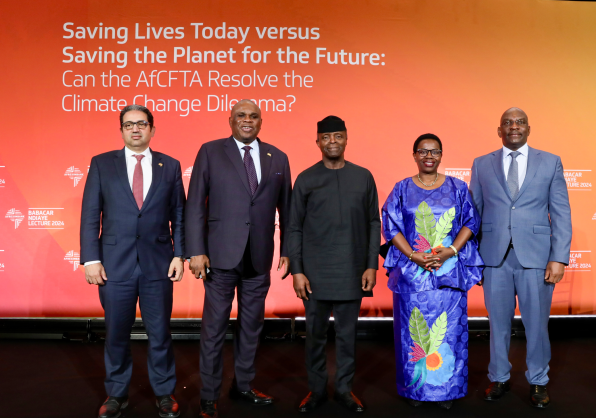
The eighth Babacar Ndiaye Lecture held at the Four Seasons Hotel in Washington D.C., on 26 October 2024, under-scored the need for African nations to strike a balance between short-term development imperatives and long-term climate goals. 

Under the theme “Saving Lives Today versus Saving the Planet for the Future: Can the AfCFTA Resolve the Climate Change Dilemma” discussions centred on how the African Continental Free Trade Area (AfCFTA), Africa's most ambitious trade initiative, could serve as a vehicle for economic growth and environmental sustainability, positioning the continent as a leader in the global green transition.  

The Lecture drew a distinguished audience of policymakers, academics, financial experts and climate advocates.  

Speaking about Dr. Babacar Ndiaye in his opening remarks, H.E. Professor Benedict Oramah, President and Chairman of the Board of Directors of Afreximbank Group, said “Dr Babacar Ndiaye was most concerned by the long-term threats posed to humanity by climate change. He once said, "Climate change is the greatest threat to development, particularly in Africa, where millions of people depend on the environment for their livelihoods … Africa's economic transformation cannot happen without addressing climate change.”  

Dr. Ndiaye's reflection on the impact of climate change was spot-on and intellectually deep.” But, “disappointingly, the global debate on climate has been so much focused on emissions reduction with the question of reducing its impact on Africa and other developing countries always reduced to a footnote. A call for Africa to decarbonise, when the continent has not even carbonised, poses a serious threat to the socio-economic development of a gas-rich continent that has at least six hundred million people without electricity.” 

The African Continental Free Trade Area Agreement “is seen as a potent means of reducing carbon emissions as it is helping to domesticate industrial activities and minimise the carbon emissions caused by shipping of commodities to far-away lands for value addition and reshipping to Africa and elsewhere. We believe that The AfCFTA could offer a pathway to a just transition, enabling local industrial value addition while protecting the planet.”  

Professor Yemi Osinbajo, SAN, GCON, the Immediate Past Vice President of the Federal Republic of Nigeria, delivered a powerful address titled “Sustainable Infrastructure for Africa's Future: Harnessing Innovation and Partnerships.” He spoke passionately about the advantages of the AfCFTA and its potential to transform Africa's trade landscape, reduce carbon emissions and foster innovation in green industries. 

“There are two obvious advantages to a fully operational AfCFTA.The first is that 42% of African countries, aside from North Africa, now have legislation prohibiting the export of raw ores or minerals before being processed. This legislation gives African countries the benefit of jobs and revenues from local processing and manufacturing.  

“The second advantage of the AfCFTA is that shipping is a major source of carbon emissions. Under current trade practices, a large share of African raw materials are exported to other regions, where they are processed or manufactured into finished products, usually using fossil fuel power sources, before being shipped back to Africa for consumption. This cycle contributes to higher emissions and constitutes a loss for African countries that do not reap the value chain gain from beneficiation. Intra-African trade in finished goods will substantially reduce this massive cause of global emissions,” he said. 

The reduction of emissions by intra-African trade has been the subject of several empirical studies. Professor Osinbajo referred to a recent ECA/ CEPII study titled “Greening the African Continental Free Trade Area Agreement's Implementation" published in December 2023, which found, inter alia, that implementing the AfCFTA can boost intra-African trade by 35% in 2045 while increasing GHG emissions by less than 1%, compared to no AfCFTA or climate policies.  

These studies do not factor in using renewable energy sources in the processing and manufacturing of traded goods, an assumption of the Climate Positive Growth paradigm, which would again substantially reduce emissions.  

Professor Osinbajo cited mining bauxite in Guinea as an example. If Guinea, which has 25% of global deposits of bauxite, processed the bauxite it mines to aluminium with renewable energy in readiness for export, Guinea could save the world 335 million tonnes of carbon dioxide equivalent (CO2e) per year, which is approximately 1% of global emissions, and create 280,000 jobs and generate $37 billion of additional revenue. If it chooses to sell the aluminium within Africa, it will again save the huge shipping cost to countries thousands of miles away.  

A Bloomberg study done for the African Development Bank (AfDB) in 2021 on the manufacture of battery precursors found that manufacturing battery precursors in the Democratic Republic of the Congo (DRC), which has plenty of lithium and cobalt, is three times cheaper than manufacturing it in the US, EU and China. Manufacturing in the DRC would extend value chain opportunities to other African countries, they would need manganese from Zambia, Tanzania, Gabon and South Africa to contribute to its capacity to produce these battery precursors. Manufacturing using renewable energy could significantly reduce the cost of manufacturing. Africa's abundant renewable energy has very low seasonality or intermittency, making it possible to reliably provide a renewable baseload to power continuous industrial production.  

“The AfCFTA empowers African countries first to add value to materials and specialise in areas of national comparative advantage, and also to work together to trade more beneficially with the rest of the world,” said Prof Osinbajo. 

He futher said that “Most African countries depend on fossil fuels for their energy needs and for fossil fuel rich African countries, this is also a major source of export earnings and fiscal revenues. Ostensibly in keeping with their net zero obligations, there has been a growing trend amongst development finance institutions to withdraw from fossil fuel investment. These actions include the World Bank's decision to cease funding for upstream oil and gas development in Africa and the restrictions on financing downstream gas development by the European Union, the United Kingdom, and the United States. Clearly, the implications of these actions are dire, where there are no immediate alternative sources of power and the cost of the transition to cleaner fuels may be prohibitive. Some studies show that divesting from fossil fuels could reduce GDP by as much as USD$30 billion for Nigeria, USD$22 billion for Algeria, and USD$19.3 billion for Angola.” 

H.E. Dr Rania A Al-Mashat, Minister for Planning, Economic Development and International Co-operation, Arab Republic of Egypt said that while the “African continent is the least responsible for carbon emissions, it has the biggest burden in terms of financing climate change for developmental needs - such as food and water security, and access to energy. 

She called for greater collaboration with national and international stakeholders “We need to work together; we need to bring the experiences from other places so that Africa can push forward with respect to development and sustainable economic growth.” 

In her Goodwill Message, Ms. Amina J. Mohammed, Deputy Secretary-General of the United Nations and Chair of the United Nations Sustainable Development Group, spoke about the rapidly closing window to prevent the worst impacts of climate change. She addressed the fact that many African countries are mired in debt, exacerbated by extended crises with little access to long-term concessional financing to invest in sustainable development. 

“With adequate access to financial resources at a reasonable cost, renewables can dramatically boost economies, grow new industries, create jobs and drive development, including by reaching the over 600 million Africans living without access to power,” said Ms Mohammed. 

She also stressed the importance of prioritising inclusive policies that empower women and youth when building climate-resilient economies.  

“By harnessing the collective might of the AfCFTA, Africa can make strides in addressing both climate action and sustainable development by promoting regional integration and fostering green industrialisation.  

“The AfCFTA can help build climate-resilient economies while creating jobs, reducing poverty and strengthening food security.”  

The eighth Babacar Ndiaye Lecture also reinforced Afreximbank's commitment to leadership in financing sustainable infrastructure and trade policies across the continent. 

Distributed by APO Group on behalf of Afreximbank.

Media Contact: 
Vincent Musumba 
Communications and Events Manager (Media Relations) 
Email: press@afreximbank.com 

For more information, visit: www.Afreximbank.com  
Follow us on X | Facebook (https://apo-opa.co/3YJR7iS)| LinkedIn (https://apo-opa.co/3Cet3eR) | Instagram (https://apo-opa.co/4ht2qDa)

About the Babacar Ndiaye Lecture 
The Babacar Ndiaye Lecture is an annual event designed to foster dialogue around Africa's development challenges and explore practical solutions through policy, trade and diplomacy.  

The Lecture honours Babacar Ndiaye, a former President of the African Development Bank, for his visionary leadership in advancing Africa's economic growth. 

Afreximbank has hosted this Lecture every year since 2017 in honour of the late Dr. Babacar Ndiaye, the fifth President of the African Development Bank. Dr. Ndiaye transformed the Bank during his decade-long leadership and was also instrumental in establishing several other enduring Pan-African institutions, including Afreximbank, Shelter Afrique and the African Business Roundtable. 

About Afreximbank 
African Export-Import Bank (Afreximbank) is a Pan-African multilateral financial institution mandated to finance, facilitate and promote intra and extra-African trade. For over 30 years, the Bank has been deploying innovative instruments to deliver financing solutions that support the transformation of the structure of Africa's trade, accelerating industrialisation and intra-regional trade, thereby boosting economic expansion in Africa. A stalwart supporter of the African Continental Free Trade Area (AfCFTA), Afreximbank has in partnership with the African Union Commission and the AfCFTA Secretariat launched the Pan-African Payment and Settlement System (PAPSS) that was adopted by the African Union (AU) as the payment and settlement platform to underpin the implementation of the AfCFTA agreement. The AfCFTA Secretariat and the Bank have created a US$10 billion Adjustment Fund to support countries to effectively participate in the AfCFTA.  

At the end of December 2023, Afreximbank's total assets and guarantees stood at over US$37.3 billion, and its shareholder funds amounted to US$6.1 billion. Afreximbank has investment grade ratings assigned by GCR (international scale) (A), Moody's (Baa1), Japan Credit Rating Agency (JCR) (A-) and Fitch (BBB). Afreximbank has evolved into a group entity comprising the Bank, its impact fund subsidiary the Fund for Export Development Africa (FEDA), and its insurance management subsidiary, AfrexInsure, (together, “the Group”). The Bank is headquartered in Cairo, Egypt.  

Media files
Afreximbank
Download logo
Read moreAfreximbank Calls for Increased Collaboration to Accelerate the Green Energy Transition in Africa
30 October 2024

Reforms to attract infrastructure investment

Location: News

Reforms to attract infrastructure investment

Minister of Finance Enoch Godongwana has announced reforms that will create conditions to attract greater infrastructure investment by private sector participation.

“Collectively, the infrastructure reforms will strengthen planning, appraisal, contracting, financing, and monitoring and evaluation. The outcome will be faster delivery of infrastructure that supports economic growth, the expansion of access to basic services and boosting job creation,” Godongwana said on Wednesday.

Tabling the 2024 Medium Term Budget Policy Statement (MTBPS) in Parliament, the Minister said one of the strategies aimed at lifting the economy to higher and towards a more inclusive growth path is supporting growth enhancing infrastructure.

“Pillar three is about effective infrastructure investment, to boost economic activity and enable higher growth over the medium term. In this regard, we are implementing reforms that will create conditions to attract greater private sector participation,” Godongwana said.

The reforms include:
• Mobilising significant private sector financing and technical expertise to augment the limited public sector capacity and capability.
• We are amending the PPP regulations to simplify requirements for undertaking these projects.
• The amended Treasury Regulation 16 will be published before the end of November for implementation in 2025/26. The Municipal PPP Regulations 309 will be finalised by June next year.

“We are establishing dedicated capacity to plan, prepare and design programmes that will generate a credible pipeline of projects that can be taken to the market.

“The Department of Water and Sanitation’s Water Partnerships Office has two priority programmes for non-revenue water and recycling wastewater that require private investments.

“Similarly, the Department of Transport, Transnet and the Passenger Rail Agency of South Africa are finalising a list of priority projects that will be issued to the market in 2025/26,” the Minister said.

The resolution of the Gauteng Freeway Improvement Project has unlocked a project pipeline to the value of R85 billion for the non-toll network over the next three years.

The Minister said government is improving the capital budgeting process.

The Budget Facility for Infrastructure is being reconfigured into a centralized gateway for all large infrastructure projects that require fiscal support to advance.

From 2025, the facility will have a continuous evaluation process instead of one window per annum. The National Treasury will, in January 2025, publish a circular to guide the submission of proposals.

“Lastly, government is making a concerted effort to increase the pool of funders to diversify public infrastructure financing through new mechanisms and instruments,” the Minister said.

These include build-operate-transfer (BOT) structures and other concessions.

“We are developing a blended finance risk-sharing platform that includes a credit guarantee vehicle that will help de-risk public-sector projects while reducing government’s contingent liabilities. Fiscal support is proposed for the projects evaluated in the 2024 BFI window,” the Minister said.

This includes, but is not limited to: two hospital projects, including a district hospital in Limpopo; landside capacity expansions at the Cape Town Container Terminal; capacity upgrades on the rail network from Watloo to Gqeberha; rehabilitation of water infrastructure in eThekwini; and Student housing accommodation at six higher education institutions.

“A request for proposals will be issued this year for funders who are interested in supporting these projects, as well as projects for urban rail revitalisation, disaster relief and metropolitan trading services. Funding for these will be separated from broader sovereign borrowing and be accounted for separately,” the Minister said. - SAnews.gov.za

nosihle
Wed, 10/30/2024 - 14:49

123 views
Read moreReforms to attract infrastructure investment
30 October 2024

Rail: A Masterplan Will Only Be Ready by Next Year, Says Ramaphosa

Location: News

City of Cape Town expresses disappointment at the slow pace of change

Read moreRail: A Masterplan Will Only Be Ready by Next Year, Says Ramaphosa
30 October 2024

United Kingdom (UK) Visa Services in South Africa Are Now Available in PE/GQ Through VFS Global

Location: News

VFS Global
Download logo

VFS Global (www.VFSGlobal.com) are proud to announce that residents of South Africa, travelling to the UK can now book appointments to submit their visa applications through VFS Global's new state-of-the-art Visa Application Centres located in Cape Town, Durban, Johannesburg, Port Elizabeth and Pretoria.

Effective 22 October 2024, customers applying for a UK visa will be directed to VFS Global to book an appointment to complete their visa application. Customers will also have the option to choose additional services designed to make the application process easier.

Commenting on the launch of the new Centres, Mr. Alok Singhal, Head- Sub-Saharan Africa, VFS Global, said, “We are excited to embark on this new journey with UK Visas and Immigration here in South Africa. We have enjoyed a long-standing partnership with UK Visas and Immigration since 2003 and look forward to now bringing travellers from South Africa our best-in-class services.”

UK visa customers can now choose from a range of optional services offered by VFS Global to provide enhanced comfort and convenience. These include document upload assistance, Prime Time for application submission outside of business hours, SMS notifications, document checking service, and courier return of the passport once a decision has been made.

Customers can also submit their UK visa applications from the comfort and safety of their home, office or any other preferred location with our On Demand Mobile Visa service. VFS Global's Keep My Passport While Applying service allows customers to keep their passports once their application is submitted and biometrics have been enrolled. Customer will only need to re-submit their passport when a decision is reached.

The services can be booked in advance on https://apo-opa.co/4f4Yw1G or at the Visa Application Centre at the time of the appointment. These services are completely optional and have no bearing on the processing timeline and outcomes of visa applications.

As a partner to the UK Visas and Immigration since 2003, VFS Global offered visa services in 58 countries before the new contract and has now been awarded the contract to provide UK visa services in 142 countries worldwide. In the African region, VFS Global will provide Visa Application Centres for the UK in 31 countries, from October 2024.

UK Visa Application Centres in South Africa

Cape Town: 2 Long Street, 9th floor, nr 2 on Long Street, 8001

Port Elizabeth: Greyville House, 3rd Floor, Greyville House Building, Corner of Ring Road, Caper Road & Greyville Road, Greenacres

Durban: Glass House, 309 Umhlanga Rocks Drive, Umhlanga

Johannesburg: Rivonia Village, 3rd, Cnr Rivonia Boulevard and Mutual Road, Sandton, 2128

Pretoria: The Podium at Menlyn - 4th Floor, 43 Ingersol Rd, Lynnwood Glen, 0081

Website: https://apo-opa.co/4f4Yw1G

Business hours: 8 AM to 5 PM (Mon to Fri, except public holidays)

Application submission: 9 AM to 4 PM (Mon to Fri, except public holidays)

Passport collection: 12 PM to 3 PM (Mon to Fri, except public holidays)

Primetime submission and collection: 8 AM to 9 AM & 4 PM to 5 PM (Mon to Fri, except public holidays)

Distributed by APO Group on behalf of VFS Global.

Media Contact:
George Cherian
georgec@vfsglobal.com
communications@vfsglobal.com

About VFS Global:
As the world's leading outsourcing and technology service specialist, VFS Global embraces technological innovation including Generative AI to support governments and diplomatic missions worldwide. The company manages non-judgmental and administrative tasks related to applications for visa, passport, and consular services for its client governments, increasing productivity and enabling them to focus entirely on the critical task of assessment.

With a responsible approach to technology development, adoption and integration, the company prioritizes ethical practices and sustainability while serving as the trusted partner to 69 client governments.  Operating over 3,400 Application Centres in 153 countries, VFS Global has efficiently processed more than 297 million applications since 2001.

Headquartered in Zurich and majority owned through investment funds managed by Blackstone Inc, along with the Swiss-based Kuoni and Hugentobler Foundation and EQT, VFS Global is committed to creating value for all stakeholders and leading in responsible, innovative solutions making government services more effective and efficient.

Read moreUnited Kingdom (UK) Visa Services in South Africa Are Now Available in PE/GQ Through VFS Global
29 October 2024

NLC strategy to be implemented over a six-year period

Location: News

NLC strategy to be implemented over a six-year period

The National Lotteries Commission (NLC) says its organisational turnaround strategy is under way and will be fully implemented over a six-year period. 

The strategy includes modernisation and streamlining processes, stronger oversight mechanisms and built-in fraud prevention.

Addressing the media in Pretoria on Tuesday afternoon, NLC Commissioner Jodi Scholtz said they have been working hard on the strategy.

“We have worked diligently to respond to the frustrations of our stakeholders around the long wait for funding, while ensuring that we build fraud-prevention into our processes, increase the efficiency and enhance the impact of our work through the development of a new grant application and management system,” said Scholtz.

Scholtz announced the readiness of the commission’s reparative measures programme to address harm caused to individuals and communities by previous actions of maladministration and to rehabilitate the identified community infrastructure projects to their intended state.

While the interactions with the affected parties would largely be behind closed doors, she said, a commitment was made to share milestones of the reparative measures publicly, with an emphasis that each community infrastructure project would be addressed based on the Special Investigative Unit (SIU) report, community engagement and other relevant reports.

The SIU was, in terms of Proclamation R32 of 2020, authorised by President Cyril Ramaphosa to investigate allegations of corruption and maladministration in the affairs of NLC and the conduct of NLC officials and to recover any financial losses suffered by the State.

The SIU said in February it had made eight criminal referrals to the National Prosecuting Unit and 11 disciplinary referrals to NLC officials.

The unit said the investigation in its totality is worth approximately R1.4 billion, which the State and the NLC have allegedly lost due to corruption at the organisation.

Grant funding processes

Scholtz touched on continuing enhancements to its grant funding processes aimed at increasing efficiencies and improving the service experience of applicants and grantees.

This was alongside continuing engagements with the Department of Trade, Industry and Competition (the dtic) to facilitate the appointment of additional members for the Distributing Agencies in order to increase the pace of adjudications.

With the Call for Applications for 2024/25 intended to open at the tail end of 2024, the NLC announced the revival of Section 2A(3) of the Lotteries Act following the 2022 moratorium on what was then known as Proactive Funding.

Now renamed Research-Based Funding (RBF), and with a strengthened policy that ensures transparency at all stages that will mitigate the internal control deficiencies that existed under Proactive Funding, the RBF is to be launched with two critical programmes aimed at addressing pressing societal needs in South Africa - food security and primary health care. 

The Eastern Cape province will serve as a pilot province.

Scholtz noted that while the Request for Proposals for the appointment of the Fourth National Lottery Operator was the subject of much interest, engagement with the public and media in that regard would only take place once the process had been concluded in its entirety by Trade, Industry and Competition Minister Parks Tau.

“Our journey to restore trust and achieve operational excellence is just that – a journey and it requires agility. We have started from within, and the team’s dedication to our turnaround has been commendable so far. 

“We know that we have much to do, and notwithstanding the challenges we face, we are committed to achieving what we have set out to do.

“The work is gaining momentum, and we fully intend to maintain it. We are delighted at the determination and positive energy of the team at the NLC,” Scholtz said. – SAnews.gov.za

Edwin
Tue, 10/29/2024 - 15:26

107 views
Read moreNLC strategy to be implemented over a six-year period
29 October 2024

One Week to Go Until Investors Unite at AEW

Location: News
African Energy Chamber

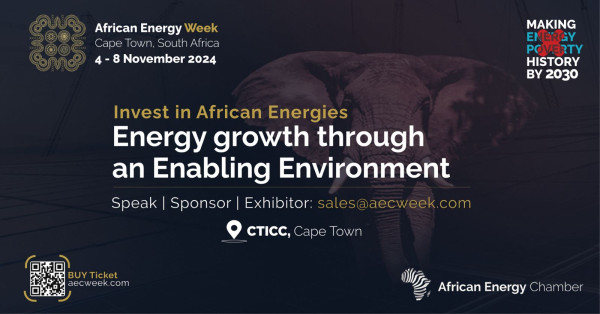
The largest gathering of energy stakeholders on the African continent is gearing up to welcome global and African energy stakeholders for five days of dialogue and deals. African Energy Week (AEW): Invest in African Energy 2024 – dubbed the premier event for the African energy sector – will take place from November 4-8 in Cape Town, South Africa. The foremost platform to sign deals and further the agenda towards making energy poverty history by 2030, the conference will feature seven stages, including five content stages, two technical hubs and a full day of pre-event workshops.

With over 125 million barrels of proven oil reserves, 620 trillion cubic feet of natural gas and abundant opportunities in solar, wind and green hydrogen, Africa has the potential to become a global hub for energy. African energy demand is projected to more than double by 2050, with fossil fuels anticipated to account for up to 60% of the continent's energy mix by 2040. As such, this year's conference promises to drive a new wave of investment across the African energy sector, with industry experts and thought-leaders, African governments and national oil companies (NOCs), and energy investors leading discussions on the challenges and opportunities found on the continent.

AEW: Invest in African Energy is the platform of choice for project operators, financiers, technology providers and government, and has emerged as the official place to sign deals in African energy. Visit www.AECWeek.com for more information about this exciting event.

Africa's energy industry is both the backbone of the continent's economy and a catalyst for sustainable growth worldwide. As such, the AEW: Invest in African Energy 2024 conference will feature a series of pre-event interactive workshops, providing an opportunity for companies to share in-depth knowledge and exchange ideas with a targeted group of delegates. The workshops, hosted by companies such as Rystad Energy, NCDMB, CLG, Energeo Alliance and S&P Global Commodity Insights, will cover various topics including energizing Africa amid the global energy transition; legislative and regulatory context for promoting investment in exploration; and facilitating investments and mergers and acquisitions across the continent.

A high-level opening ceremony will kick off at the Cape Town International Convention Center (CTICC) on the first day of the event. The opening ceremony will feature addresses from Angola's Minister of Mineral Resources and Petroleum Diamantino Azevedo and South Africa's Minister of Electricity and Energy Kgosientsho Ramokgopa, and discussions with the likes of Dr. Omar Farouk, Secretary General of the African Petroleum Producers' Organization and Chairman and CEO of upstream oil company Kosmos Energy Andy Inglis. The AEW: Invest in African Energy 2024 opening will kick off a week of intense dialogue on the future of the African energy industry. The opening will also feature a number of panel discussions focusing on the vital role Africa plays in addressing global energy security, as well as keynote addresses from the heads of some of the largest energy companies in the world.

Representing the entire energy value chain from oil and gas to renewable energy to power and infrastructure, AEW: Invest in African Energy 2024 will feature a massive slate of regional ministers with the aim of unpacking the continent's strategies to make energy poverty history by 2030. Ministers from Libya and Algeria are poised to showcase North Africa's ambitious production targets while aiming to plug Europe's energy gap and enhance domestic energy access. Southern Africa's ripe opportunities in energy and mining will be put on display by ministers from Mozambique, Angola, South Africa, Zambia and Namibia while West African ministers from the MSGBC region, Nigeria, Ghana and Burkina Faso will provide updates on ongoing projects. With major producers such as Equatorial Guinea, Gabon and the Republic of the Congo (ROC) inviting investors to support diversification efforts in production and refining, regional ministers from Central Africa will share insight into available opportunities in oil and gas, mining and infrastructure. Meanwhile, as a frontier market, East Africa is incentivizing exploration in both on- and offshore basins while driving infrastructure and field development projects forward and will be represented by energy and mining ministers from Ethiopia, Uganda, and South Sudan.

Africa is accelerating the pace of upstream projects with the aim of boosting production and intra-African petroleum distribution. Across both mature and emerging hydrocarbon markets, investment opportunities continue to emerge, and as such, AEW: Invest in African Energy 2024 will feature a strong lineup of VIP speakers from energy supermajors Eni, bp, Chevron and TotalEnergies. The event will also feature representatives from some of the continent's most important energy players including Azule Energy, ReconAfrica, Etu Energias, Africa Oil Corp., Wood Mackenzie and Adarco Energy, among many more. The oil industries of African countries will be represented by NOCs from Angola, Namibia, South Africa, Tanzania, Uganda, among others.

With two technical hubs on the exhibition floor of the CTICC, the conference serves as a prime platform for companies to provide presentations on various industry-leading technical themes. The AEW: Invest in African Energy 2024 technical track features a dedicated stage for asset owners, engineers and technology innovators to present projects, provide deep insights into cutting-edge solutions, and share best practices to foster knowledge. Attendees will gain valuable insights into the future of energy and learn about ground-breaking projects while discovering new opportunities for collaboration and investment. An exclusive exhibition-only pass grants delegates access to both the innovative exhibition floor and the technical track.

Rounding off AEW: Invest in African Energy 2024's strong program, a series of technical excursions and site visits across Cape Town offer participants the unique opportunity to gain insight into ongoing projects and developments in South Africa. A guided tour of the Hydrogen Project at the University of the Western Cape will focus on industry technology and development. The tour will also take delegates to the South African Renewable Energy Technology Center at the Cape Peninsula University of Technology, which stands as the country's inaugural sustainable energy development technology facility. The excursion will feature a tour of the Atlantis Special Economic Zone, which stands as a promising landmark in Africa's energy landscape while showcasing advancements in sustainable energy solutions, economic development and innovation. Rounding off the site visits, the tour will also take participants to the Eskom Palmiet Power Station, a hydroelectric pumped storage facility that plays a key role in stabilizing the national power grid.

“AEW 2024 stands at the center of African energy and provides an unparalleled platform to forge partnerships, share knowledge and drive progress in the continent's energy sector. It is our collective responsibility to prioritize energy poverty alleviation and sustainable development, ensuring a brighter future for all Africans. We look very much forward to kicking off this exciting event and welcoming hundreds of delegates from all over the world to drive Africa's energy needs,” states NJ Ayuk, Executive Chairman of the African Energy Chamber.

During the AEW: Invest in African Energy 2024 conference, delegates will be exposed to project updates, industry highlights, investment opportunities and strategies that address the continent's goals for eradicating energy poverty and promoting environmental sustainability. With one week to go, the conference is already stacking up to become the foremost energy event of its kind once again on the African continent.

Distributed by APO Group on behalf of African Energy Chamber.

Media files
African Energy Chamber
Download logo
Read moreOne Week to Go Until Investors Unite at AEW
29 October 2024

Trusted Tour Operator Scheme to boost tourism from China, India

Location: News

Trusted Tour Operator Scheme to boost tourism from China, India

In a ground-breaking move to enhance the job creation that flows from increased tourism, the Department of Home Affairs has announced the gazetting of the Trusted Tour Operator Scheme (TTOS), just two months after work began on this scheme. 

The scheme was conceptualised by the Minister of Home Affairs, Dr Leon Schreiber, following consultations with the tourism sector and the Minister of Tourism about the way in which visa inefficiency and red tape throttles South Africa’s ability to attract more tourists from these two burgeoning source markets.

The department said research indicates that boosting tourism by only 10% per year can increase annual economic growth by 0.6% and create thousands of new jobs for South Africans.

“To resolve bottlenecks and reposition Home Affairs as an economic enabler, the department has [on Monday] gazetted a call for expression of interest by established tour operators from South Africa and abroad, who wish to sign up to the scheme to bring more tourists from China and India to our country. 

“Chinese tourists made over 100 million outbound trips in 2023, with South Africa receiving only 93 000 of these arrivals. In comparison, a country like Australia attracted over 1.4 million visitors from China in 2023. 

“At the moment, Indian tourists account for only 3.9% of all international visitors to South Africa, and China for only 1.8%,” said the department.

The TTOS is designed to overcome concrete problems, including challenges with processing group visa applications from these countries, capacity constraints at foreign missions, and language barriers. 

“Approved tour operators will benefit from reduced red tape and enhanced turnaround times on visa applications they submit for large tour groups. 

“All TTOS applications will be handled by a dedicated team of adjudicators to ensure swift and reliable processing. In turn, operators will be held liable for any legal transgressions committed by tourists travelling under their banner,” said the department.

The qualifications criteria for the scheme were drawn up through public consultation with the tourism sector and other key stakeholders.

All applications to TTOS will be fairly and transparently adjudicated according to a points-based system that allocates points on the basis of a company’s legal compliance, operating experience, proof of operational capacity, and cross-country collaboration. 

A minimum of 12 months’ operational experience will be a prerequisite for an applicant to be considered.

The call for expression of interest will be open for a period of 30 days, whereafter Home Affairs will, in collaboration with other departments, assess and security vet applications, with the aim of enrolling the first group of tour operators.

South Africa’s target remains to welcome the first tourists, brought to South Africa through TTOS, in January 2025. Home Affairs will consider further intakes for the scheme in the future, depending on internal capacity and the success of the rollout.

To build awareness around this scheme, the department has launched a distinctive TTOS logo that communicates its commitment to growing tourism to South Africa in a secure and efficient manner. 

As a contribution towards the apex priority of digital transformation, Home Affairs has digitised the application process for TTOS.

Instead of e-mail applications that result in drawn-out manual and paper-based decision-making processes, a user-friendly online portal will enhance transparency and improve turnaround times.

Companies that wish to express an interest in the scheme simply need to visit https://touroperator.dha.gov.za:8443 or access the portal via the TTOS banner on www.dha.gov.za.

“I salute the officials who have been working overtime to bring this pathbreaking scheme to life. The speed at which Home Affairs has moved from conceptualisation to execution on TTOS demonstrates our deeply-held commitment to supporting our colleagues in the Department of Tourism and in the tourism sector, in order to create thousands of new jobs for the people of South Africa,” said Schreiber.

He thanked the Minister in the Presidency and the Minister of Tourism for their support and collaboration on this work. 

“Our country should be one of the premier tourism destinations on earth, and we at #TeamHomeAffairs are playing our part to turn this vision into reality.

“The introduction of TTOS is part of the significant interim reforms we are putting in place to enhance the efficiency of Home Affairs while we work towards our five-year vision of delivering Home Affairs @ home through digital transformation.

“I am confident that this scheme will make an immediate contribution towards growing tourism and job creation, and I look forward to welcoming the first tour groups facilitated through TTOS as early as January 2025,” Schreiber said.

The gazette can be accessed at https://www.dha.gov.za/images/PDFs/Gazette51437_20241028.pdf. - SAnews.gov.za

Edwin
Tue, 10/29/2024 - 10:42

215 views
Read moreTrusted Tour Operator Scheme to boost tourism from China, India
29 October 2024

dtic to fund 35 companies to participate in China’s import expo

Location: News

dtic to fund 35 companies to participate in China's import expo

The Department of Trade, Industry and Competition (the dtic) says it will fund 35 South African companies, through the Export Marketing and Investment Assistance (EMIA) group scheme, to participate in the China International Import Expo (CIIE) 2024.

The expo is to take place in Shanghai from 5 to 10 November 2024.

South Africa is participating in this event to showcase products and services from local companies to potential buyers in China and from across the globe. The South African companies will also be exposed to the culture of doing business with Chinese enterprises.

The Deputy Director-General of Exports at the dtic, Lerato Mataboge, said the 35 participants this year will represent a range of sectors, including agro-processing and agriculture, textiles, clothing and leather, oil and gas, the rail industry, electro-technical, chemicals, metal fabrication, ICT and mining.

“The exhibition is aligned with our strategic objectives of advancing South African exports through assisting new and existing South African exporters to penetrate international markets.

“The CIIE 2024 is one of the leading import-themed fairs in China, and a key platform to profile our offerings to South Africa’s largest trading partner and the second largest economy in the world. The Chinese economy is seeing increasing levels of consumption, which also reflects growing potential and demand for certain imported products,” Mataboge said. – SAnews.gov.za

Edwin
Tue, 10/29/2024 - 10:59

60 views
Read moredtic to fund 35 companies to participate in China’s import expo
29 October 2024

Call to ensure safety of initiates ahead of initiation season

Location: News

Call to ensure safety of initiates ahead of initiation season

To ensure the integrity of the upcoming customary initiation season in December, the safety and well-being of all initiates must be prioritised, as required by the Customary Initiation Act of 2021.

This is according to the Minister of Cooperative Governance and Traditional Affairs (CoGTA), Velenkosini Hlabisa, who made the remark during a media briefing on South Africa’s preparedness for the upcoming summer season and disaster response.

The Customary Initiation Act established the National Initiation Oversight Committee (NIOC) and Provincial Initiation Coordinating Committees (PIOCs). 

These committees work together with traditional leaders, parents and communities to oversee initiation practices, ensuring they adhere to legal and health standards.

“The Act is a vital tool for eliminating abuse and dangerous practices, aiming to safeguard young initiates through clearly defined norms and safety protocols,” he said at Monday’s briefing.

Initiation is a sacred and respected custom practised as a rite of passage to adulthood. In South Africa, it is observed by various traditional communities, especially in the Eastern Cape.

With the forecast of extreme summer heat, Hlabisa urged that all initiates undergo pre-season health checks, stay hydrated and have access to medical care. 

To further protect the youth, he called on initiation schools to secure parental consent, comply with health guidelines, and register at least three months before each initiation season. 

“We call on all South Africans to work with us and play their part by reporting illegal schools to law enforcement to prevent the exploitation and endangerment of young initiates,” Hlabisa said.

He called on all stakeholders to act responsibly and to ensure the initiates experience this tradition with dignity, safety and respect for cultural heritage.

“While the risks posed by the upcoming summer season are significant, we face them with a solid plan, a unified response, and a deep commitment. 

“The path to resilience is paved with collaboration, preparedness and dedication. Together, we will overcome the challenges ahead and emerge more robust as a nation to face and mitigate climate change effects that we are experiencing.” 

Funding for disasters

Meanwhile, the Minister announced that CoGTA and National Treasury are working together to explore new funding mechanisms, as the country experiences more disaster events.

He said a funding request has been submitted to Treasury to support affected groups and organisations with the reconstruction and rehabilitation of damaged infrastructure.

“We acknowledge the challenges faced by the country in funding disaster interventions, mainly due to increased disaster damages, fiscal deficit and competing priorities.

“The Department of Cooperative Governance and Traditional Affairs is currently engaging National Treasury on other funding mechanisms to ensure sustainability,” he said.

Government is also working around the clock to enhance the weather early warning system, which is core to the State’s preparedness for disaster events. 

“We have strengthened our collaboration with the SAWS [South African Weather Service] to ensure accurate, timely weather warnings reach every corner of our country, especially vulnerable communities,” Hlabisa said.

By providing early information about potential hazards like thunderstorms, flash floods, lightning and heat waves, the Minister said citizens can be empowered to take the necessary precautions and protect their lives and properties. 

READ | CoGTA, Treasury work together on disaster relief funding

“Early warnings and early action are the most effective means of saving lives," he stressed. – SAnews.gov.za

Gabisile
Tue, 10/29/2024 - 09:35

99 views
Read moreCall to ensure safety of initiates ahead of initiation season
29 October 2024

African Penguins Now Officially “Critically Endangered”

Location: News

The bird is facing rapid population decline from competition with commercial fisheries and climate-mediated shifts in prey populations

Read moreAfrican Penguins Now Officially “Critically Endangered”
29 October 2024

SA prepares for UNFCCC COP29

Location: News

SA prepares for UNFCCC COP29

As South Africa prepares to participate in the UN Climate Change Conference (UNFCCC COP29), government has indicated that it will advocate for climate finance for developing nations, adaptation and international cooperation.

Addressing the national stakeholder consultation session on Monday in Johannesburg, Minister of Forestry, Fisheries and the Environment, Dr Dion George, said there is a pressing need for large-scale financial support to enable developing economy nations to meet their climate targets and progress toward sustainable, low-carbon development.

“The current financing mechanisms have proven insufficient in scale and effectiveness, highlighting the urgency for a new financing model. COP29 presents an opportunity to advocate for innovative and improved financial frameworks that can mobilise substantial resources more efficiently.

“Such a model must ensure predictable, accessible and adequate funding, and address the shortcomings of existing systems and empowering countries like South Africa to implement ambitious climate actions.

“It is furthermore crucial that COP29 accelerates the application of financial, technical and capacity-building resources that will enable developing countries to meet the conditional targets outlined in their NDCs [Nationally Determined Contributions] and National Adaptation Plans (NAPs),” the Minister said.

These resources are instrumental in the efforts of developing economies' capabilities to mitigate climate risks, enhance resilience and pursue inclusive, sustainable development.

“The new collective quantified goal on finance must provide a clear and ambitious quantification of the financial support needed by developing economy countries to implement their climate commitments and development plans — including NDCs, NAPs, low-emission development strategies, and other relevant policy frameworks, as well as key multilateral goals endorsed since Glasgow,” the Minister said.

He said this goal should also reflect inclusive just transition pathways, aligned with each country's nationally determined socio-economic development priorities.

“Access to finance must be significantly scaled up to offer new additional and predictable funding that is fit for purpose. Specifically, we need grants and highly concessional financing that can be effectively allocated to create enabling environments for rapid investments.

“By de-risking investments and creating new asset classes for clean technologies, we can unlock and leverage greater amounts of public and private finance,” the Minister said.

The UNFCCC COP 29 will convene from 11 - 22 November 2024 in Baku, Azerbaijan.

COP29 will in addition aim to resolve outstanding issues under Article 6 of the Paris Agreement.

“Finalising the operational details of both market-based and non-market-based mechanisms will be crucial. These cooperative frameworks are vital not only for reducing emissions globally, but also for fostering international collaboration that can spur innovation and help developing economy countries achieve their climate objectives.

“By establishing transparent and robust mechanisms under Article 6, we can enable countries to work together more effectively,” the Minister said.

This cooperation will facilitate technology transfer, attract additional finance, and support sustainable development initiatives.

“For South Africa and other developing nations, resolving these issues is essential to unlocking new opportunities for climate action, enhancing our capacities and accelerating progress toward our NDCs,” the Minister said. - SAnews.gov.za
 

nosihle
Mon, 10/28/2024 - 11:16

229 views
Read moreSA prepares for UNFCCC COP29
29 October 2024

Opposition to Open Cast Coal Mining in Midvaal

Location: News

For years residents have been objecting to the Springfield and Vlakfontein mining project

Read moreOpposition to Open Cast Coal Mining in Midvaal
29 October 2024

CoGTA, Treasury work together on disaster relief funding

Location: News

CoGTA, Treasury work together on disaster relief funding

The Department of Cooperative Governance and Traditional Affairs (CoGTA) and National Treasury are working together to explore new funding mechanisms, as the country experiences more disaster events.

On Monday, CoGTA Minister Velenkosini Hlabisa announced that a funding request has been submitted to Treasury to support affected groups and organisations with the reconstruction and rehabilitation of damaged infrastructure.

“We acknowledge the challenges faced by the country in funding disaster interventions, mainly due to increased disaster damages, fiscal deficit and competing priorities.

“The Department of Cooperative Governance and Traditional Affairs is currently engaging National Treasury on other funding mechanisms to ensure sustainability,” the Minister said.

He assured those affected and South Africans generally that government remains committed to partnering with local and national entities to strengthen disaster preparedness and response, and rebuilding communities.

Hlabisa was speaking during a media briefing in Pretoria, where he focused on South Africa’s readiness for the upcoming summer season and disaster preparedness.

He said the Finance Minister will announce a substantial allocation to grants to deal with past disasters, at the municipal and provincial levels, when he tables his Medium-Term Budget Policy Statement on Wednesday.

“... After that, we will give details in as far as the funding that will be available, and how it will be allocated,” said Hlabisa.

The Minister highlighted the devastating floods in the Eastern Cape and KwaZulu-Natal recently, which led to significant displacement and loss of life.

He said relief measures are being implemented, including housing for displaced households and food assistance.

The Minister said communities, infrastructure and the economy face significant threats from natural hazards such as floods, heat waves, wildfires and droughts.

“While the pressing realities of climate change have exacerbated some of these risks, others are unfortunately man-made, stemming from unsustainable practices and inadequate planning. We believe that recognising these risks is the first step towards addressing them comprehensively.”

Hlabisa acknowledged that emerging hazards require attention, and that the National Disaster Management Centre is working around the clock to mitigate the effects.

“Given the continued negative impact of these hazards on the lives of South Africans, we understand that it cannot be business as usual. We understand that we must act decisively to safeguard the wellbeing of all citizens and protect our vulnerable communities.”

The implementation of relief measures is underway in all the affected areas, particularly in the Nelson Mandela Bay Municipality, which is one of the most affected.

These relief measures, Hlabisa said, are a collaborative effort by organs of the State, the private sector, and non-governmental organisations. The measures include housing of displaced households in temporary evacuation facilities, providing hot meals, food parcels, blankets and mattresses, as well as psychosocial support to the affected.

In addition, the Minister said assessments are underway to establish the extent of the damage and required interventions.

CoGTA has been working tirelessly with disaster management structures, including the Provincial Disaster Management Centre, to coordinate the response efforts to the recent heavy rains.

“We are also working closely with municipalities, the provincial government and other stakeholders to ensure that affected communities receive the necessary support, including food, shelter, and other essential services. 

"The department will continue to monitor the situation and support affected communities.” – SAnews.gov.za

Gabisile
Mon, 10/28/2024 - 13:55

48 views
Read moreCoGTA, Treasury work together on disaster relief funding
28 October 2024

Presidency asserts stance on South Africa’s foreign policy 

Location: News

Presidency asserts stance on South Africa’s foreign policy 

The Presidency has reaffirmed South Africa’s commitment to a foreign policy grounded in solidarity, peace, equality, human rights and sustainable development for the benefit of all.

In a statement on Sunday, the Presidency emphasised that President Cyril Ramaphosa is dedicated to strengthening political and trade ties, while supporting the rights of oppressed communities globally.

“As President Cyril Ramaphosa continues to lead the 7th administration in strengthening all key political and trade ties, working in solidarity with the oppressed peoples of the world in Palestine and Western Sahara, while advocating for peaceful resolution of conflicts around the globe, South Africa will maintain a foreign policy that is informed by solidarity, peace, equality, human rights and sustainable development for the benefit of all. 

"This is the responsibility that President Ramaphosa will continue to exercise without any undue pressure and in line with South Africa’s national sovereign interest,” the Presidency said.

In an August 2023 address preceding the South African-hosted 15th BRICS Summit, President Ramaphosa outlined the values underpinning the country’s foreign policy. 

In the address, President Ramaphosa articulated the principles and values that shape the country’s foreign policy and inform its international relations.

“Before the dawn of democracy in 1994, the apartheid South African state was a pariah in the international community, condemned for committing a crime against humanity," President Ramaphosa said at the time.

He highlighted that the foreign policy of apartheid South Africa was defined by coercion, destabilisation and military aggression. 

“Since the advent of democracy, South Africa’s foreign policy has been based on what our forebears inscribed in the Freedom Charter in 1955, when they declared that: 'South Africa shall be a fully independent State, which respects the rights and the sovereignty of all nations; South Africa shall strive to maintain world peace and the settlement of all international disputes by negotiation – not war'."

The President further affirmed South Africa’s foreign policy as a vital element of the nation's progress. South Africa’s strong relations with other countries manifested through investment and trade relations that can contribute to the growth of the economy, create more opportunities for new businesses and create jobs. 

“President Ramaphosa has been steadfast in maintaining South Africa’s commitment to the policy of active non-alignment. South Africa has resisted pressure to align with any one of the global powers or with influential blocs of nations in their pursuit of power contestations that are unfolding in countries across the globe. 

“The President observed during his foreign policy address that, 'during the Cold War, the stability and sovereignty of many African countries was undermined because of their alignment with the major powers. This experience has convinced us of the need to seek strategic partnerships with other countries rather than be dominated by any other country. 

“While some of our detractors prefer overt support for their political and ideological choices, we will not be drawn into a contest between global powers. Instead, our country strives to work with all countries for global peace and development,” the Presidency said. 

The Presidency noted that it is this resolute adherence to the policy of non-alignment and to the prescripts of the Freedom Charter which informed the nation’s Constitution that South Africa continues to contribute towards the attainment of world peace and silencing the guns on the continent.

The Presidency clarified that President Ramaphosa’s recent remarks declaring President Putin and the people of Russia as “valuable friends and allies”, he was not projecting any particular country or bloc of countries as the enemy. 

“Similarly, as a country that has no enemies, South Africa regards the members of BRICS as friends. It is through the policy of non-alignment that South Africa has been able to constructively engage with both Russia and Ukraine.

“In several engagements, President Ramaphosa has emphasised the centrality of the United Nations Charter and the need for peaceful dialogue in resolving conflict. In the process South Africa has also maintained its strong historical ties with the Russian Federation, whilst enjoying cordial diplomatic bilateral relations with Ukraine. 

“South Africa has also been unwavering in advocating for a peace process that includes the full participation of both countries,” the Presidency said. 

Today, International Relations and Cooperation Minister, Ronald Lamola, will host his Ukrainian counterpart, Minister Andrii Sybiha. 

Amongst the highlights of the visit will be the signing of an Agreement on Visa Waiver for Diplomatic Service or Official Passports. 

This will enable South African officials to travel to Ukraine for peace formula meetings without visa logistical impediments. This development, which has been in the making since 2020, signals South Africa’s commitment to growing diplomatic relations with Ukraine.  

South Africa will soon host the South Africa-European Union summit as part of its G20 presidency, strengthening its strategic partnership with the EU. 

South Africa is the only partner in Africa amongst the European Union’s 10 bilateral strategic partnerships.

The summit will further enhance the existing partnership with the European Union. 

South Africa will continue working towards strengthening the strategic, trade and political bilateral relationships with key partners including the Peoples Republic of China, United States of America, Germany, Japan, India and others. 

South Africa will further consolidate the full implementation of the African Continental Free Trade Area, which is set to eliminate trade barriers, boost intra African trade and achieve prosperity for all of Africa. The African Continental Free Trade Area will also accelerate manufacturing and industrial capacity on the continent. – SAnews.gov.za

DikelediM
Mon, 10/28/2024 - 09:55

390 views
Read morePresidency asserts stance on South Africa’s foreign policy 
28 October 2024

Olver’s appointment to climate commission welcomed

Location: News

Olver's appointment to climate commission welcomed

The Presidential Climate Commission has welcomed the appointment of Dr Crispian Olver as the new deputy chairperson of the commission.

Olver’s appointment was announced by President Cyril Ramaphosa on Sunday.

He will take over the position from outgoing deputy chairperson, Valli Moosa, from January 2025.

Moosa said Olver will bring a “wealth of skills and expertise” and experience to the position.

“He has served in the first democratic government in various capacities and was instrumental in the early development of climate policy and environmental legislation, as well as the establishment of the local government system in South Africa.

“Collectively, as the commission, we congratulate Dr Olver in his new role and express our confidence in him to continue to strengthen the commission, particularly during this critical period as the PCC transitions into a public entity in terms of the Climate Change Act recently enacted by President Ramaphosa,” Moosa said.

Olver thanked President Ramaphosa for the expression of confidence through the appointment.

“As I take up this new responsibility, I want to express my thanks to the President for his vote of confidence, and importantly, the outgoing Deputy Chairperson, Mr Valli Moosa, who provided us with leadership and vision in the initial stages of the commission and positioning it as a highly transparent and engaging multi-stakeholder platform in the country’s climate action discourse.

“The PCC will continue to forge social dialogue and ensure that our country’s climate change response and just transition is inclusive and champions our socio-economic interest. In the same vein, I would like to encourage our social partners to continue to take a keen interest and actively participate in our work, so that we can build a just and inclusive society, together,” Olver said. – SAnews.gov.za

NeoB
Mon, 10/28/2024 - 11:16

248 views
Read moreOlver’s appointment to climate commission welcomed
28 October 2024

Government Must Protect Legitimate Srd Grant Applicants, Say Activists

Location: News

Universal Basic Income Coalition say fraudulent applications only represent a “small proportion of applications”

Read moreGovernment Must Protect Legitimate Srd Grant Applicants, Say Activists
28 October 2024

SA on the right track towards improved public transport

Location: News

SA on the right track towards improved public transport

President Cyril Ramaphosa says while there is still much work to do, South Africa is on track “towards a public transport system that is safer, more efficient and more affordable”.

He was addressing the nation through his weekly newsletter on Monday.

“While we have achieved important progress in restoring our freight and passenger rail systems, we have much further to go. We will need far more investment, more effective use of technology and closer collaboration between all stakeholders.

“We are now on the right track towards a public transport system that is safer, more efficient and more affordable – and that supports the growth of an inclusive economy, reduces poverty and creates employment,” said the President.

The President highlighted that an “efficient, safe and affordable movement of people and goods around the country is essential” for the country’s economic growth and jobs.

“Goods that are produced by our workers need to move from mines, factories and farms to our country’s markets and international markets through our ports. People need to be transported to workplaces, clinics, hospitals and schools. When our transport system works well, then the cost of doing business is lowered and our country’s products and services are more competitive,” he said.

President Ramaphosa acknowledged that transport costs are too high which keeps some South Africans having to spent large portions of their income on transport.

“Affordable public transport helps to reduce the cost of living for millions of South Africans. Our public transport system is in a poor state due to a lack of investment over many years, as well as theft and vandalism, especially during the COVID pandemic.

“Without affordable and reliable alternatives, households spend a large proportion of their income on transport. Fixing public transport therefore plays a big role in reducing poverty.

“Much progress has been made in restoring urban passenger rail to full service. The Passenger Rail Agency of South Africa (PRASA) has to date restored 31 out of 40 priority rail corridors back to operation. By March this year, 40 million passengers were using public trains, nearly three times more than the year before,” he said.

Looking to the future

President Ramaphosa said although government is hard at work dealing with the current challenges, work is also underway to secure the future of transport through the development of a National Rail Masterplan.

This, the President said, will “cover passenger rail in our cities, including rapid rail” and high-speed rail. This work required for the development of the plan is expected to conclude by the end of next year.

“The achievement of our ambitious targets will require considerable investment in infrastructure, rolling stock and signalling. We will need to make use of new technologies, including artificial intelligence, in areas like cargo tracking, passenger ticketing and securing critical infrastructure.

“The government alone will not be able to carry the scale of the investment needed. That is why we are working to mobilise private sector investment in rail and port operations, while ensuring that the infrastructure remains State-owned,” he said. – SAnews.gov.za


NeoB
Mon, 10/28/2024 - 09:52

94 views
Read moreSA on the right track towards improved public transport
28 October 2024

Investment in water infrastructure key to growth of economy

Location: News

Investment in water infrastructure key to growth of economy

Water and Sanitation Deputy Minister, David Mahlobo, says with the right investments in water and sanitation infrastructure, the full potential of any region can be unlocked, attracting new businesses, creating jobs, and improving the quality of life.

Mahlobo made the remarks during a business dinner held recently at the Mkhambathini Local Municipality in Camperdown, KwaZulu-Natal.

The business dinner aimed to engage captains of industry on possible investment and expansion, and to discuss and explore the significant opportunities for growth and development in Camperdown.

Mahlobo said water and sanitation services are foundational to the development of any region, and “Mkambathini Local Municipality is no exception”.

He emphasised that these services not only impact public health but also have a direct influence on industrial growth and economic sustainability.

“Reliable access to water is essential for attracting businesses and ensuring that they can operate efficiently. This, in turn, drives job creation and economic activity, which benefits the entire community.

“However, we face significant challenges in ensuring that the demand for treated water can be met, especially given the rapid population growth and the aging infrastructure in certain areas,” Mahlobo said.

The Deputy Minister said there were a few projects that are currently being initiated to assist with water challenges in the region, and these include uMkhomazi Water Project, which has been stalled due to financial constraints.

“This ambitious project, which includes the construction of a dam and extensive pipelines, is expected to increase the amount of available water by 55%, allowing the region to meet the growing demand. While this project is crucial, it comes at a significant cost.

“We are, however, pleased to report that the affordability challenges surrounding this project have been resolved through a blended finance solution approved by National Treasury. This financing arrangement ensures that the project can move forward, and it is expected to be completed by 2030/32,” Mahlobo announced. – SAnews.gov.za

GabiK
Mon, 10/28/2024 - 10:24

15 views
Read moreInvestment in water infrastructure key to growth of economy
28 October 2024

Presidency Asserts Responsibility and Stance on South Africa’s Foreign Policy

Location: News

The Presidency of the Republic of South Africa
Download logo

On the 20th of August 2023, ahead of the South African Chaired 15th BRICS Summit, President Cyril Ramaphosa delivered an address to the nation on South Africa's foreign policy.  

In the address, President Ramaphosa articulated the principles and values that shape our foreign policy and inform our international relations when he said: “Before the dawn of democracy in 1994, the apartheid South African state was a pariah in the international community, condemned for committing a crime against humanity.

The foreign policy of apartheid South Africa was defined by coercion, destabilisation and military aggression. Since the advent of democracy, South Africa's foreign policy has been based on what our forebears inscribed in the Freedom Charter in 1955, when they declared that: “South Africa shall be a fully independent state which respects the rights and the sovereignty of all nations; South Africa shall strive to maintain world peace and the settlement of all international disputes by negotiation – not war”.

The President further affirmed South Africa's foreign policy as vital element of our nation's progress. South Africa's strong relations with other countries manifested through investment and trade relations that can contribute to the growth of our economy, create more opportunities for new businesses and create jobs.

President Ramaphosa has been steadfast in maintaining South Africa's commitment to the policy of active non-alignment. South Africa has resisted pressure to align with any one of the global powers or with influential blocs of nations in their pursuit of power contestations that are unfolding in countries across the globe.

The President observed during his foreign policy address that, “during the ‘Cold War', the stability and sovereignty of many African countries was undermined because of their alignment with the major powers. This experience has convinced us of the need to seek strategic partnerships with other countries rather than be dominated by any other country.

While some of our detractors prefer overt support for their political and ideological choices, we will not be drawn into a contest between global powers. Instead, our country strives to work with all countries for global peace and development."

It is this resolute adherence to the policy of non-alignment and to the prescripts of the Freedom Charter which informed our constitution that South Africa continues to contribute towards the attainment of world peace and silencing the guns on our continent.

In declaring President Putin and the people of Russia as “valuable friends and allies”, President Ramaphosa was not projecting any particular country or block of countries as the enemy. Similarly, as a country that has no enemies, South Africa regards the members of BRICS as friends. 

It is through the policy of non-alignment that South Africa has been able to constructively engage with both Russia and Ukraine.

In several engagements, President Ramaphosa has emphasised the centrality of the United Nations Charter and the need for peaceful dialogue in resolving conflict. In the process South Africa has also maintained its strong historical ties with the Russian Federation, whilst enjoying cordial diplomatic bilateral relations with Ukraine. 

South Africa has also been unwavering in advocating for a peace process that includes the full participation of both countries.  

On Monday, 28 October 2024, South Africa's International Relations and Cooperation Minister, Hon. Ronald Lamola, will host his Ukrainian counterpart, Minister Andrii Sybiha. Amongst the highlights of the visit will be the signing of an Agreement on Visa Waiver for Diplomatic Service or Official Passports.

This will enable South African officials to travel to Ukraine for peace formula meetings without visa logistical impediments. This development, which has been in the making since 2020, signals South Africa's commitment to growing diplomatic relations with Ukraine.  

Within the first six months of 2025, the year of South Africa's G20 Presidency, our country will also host the South Africa-European Union summit. South Africa is the only partner in Africa amongst the EU's 10 bilateral strategic partnerships. The summit will further enhance the existing partnership with the European Union.

South Africa will continue working towards strengthening the strategic, trade and political bilateral relationships with key partners including the Peoples Republic of China, United States of America, Germany, Japan, India and others.

South Africa will further consolidate the full implementation of the African Continental Free Trade Area, which is set to eliminate trade barriers, boost intra African trade and achieve prosperity for all of Africa. The AFCFTA will also accelerate manufacturing and industrial capacity on our continent.

As President Cyril Ramaphosa continues to lead the 7th Administration in strengthening all key political and trade ties, working in solidarity with the oppressed peoples of the world in Palestine and Western Sahara, while advocating for peaceful resolution of conflicts around the globe, South Africa will maintain a foreign policy that is informed by solidarity, peace, equality, human rights and sustainable development for the benefit of all.

This is the responsibility that President Ramaphosa will continue to exercise without any undue pressure and in line with South Africa's national sovereign interest.  

Distributed by APO Group on behalf of The Presidency of the Republic of South Africa.

Read morePresidency Asserts Responsibility and Stance on South Africa’s Foreign Policy
  • Previous
  • Page 1
  • Interim pages omitted …
  • Page 81
  • Page 82
  • Page 83
  • Page 84
  • Page 85
  • Interim pages omitted …
  • Page 212
  • Next

Copyright © 2026 · MyZA · All Rights Reserved · Powered by Stratlec Online