Walking Joburg’s Biggest Baddest River: A Very Old Church and a Mermaid
Klip River Day 3: Eldorado Park to the Lido Hotel

MyZA
News, Directory, Events and Other Stuff
Klip River Day 3: Eldorado Park to the Lido Hotel
Replacement with the new Postbank Black Card has begun in KwaZulu-Natal, Gauteng, the Northern Cape and North West
In a powerful demonstration of democratic integrity, Mozambique's President Filipe Nyusi has pledged to step down amid the country's ongoing political crisis, promising a peaceful transfer of power to President-elect Daniel Chapo. This commitment, a rare decision in a region where political transitions are often marked by strife, is a significant move for Mozambique and a message for African leaders facing similar pressures. Nyusi's actions, aimed at reinforcing democracy and stability, echo the sentiment expressed by U.S. Vice President Kamala Harris following a contentious election, emphasizing the critical role of peaceful transitions in sustaining democracy.
Nyusi's decision comes at a crucial time. Mozambique's recent election has been fraught with accusations of voter intimidation, ballot inconsistencies, and alleged interference, which have fueled unrest and raised doubts about the credibility of the electoral process. Opposition protests have erupted in response, with clashes breaking out between demonstrators and security forces. As the situation escalates, Nyusi's decision to step down offers the possibility of restoring public trust in Mozambique's democratic institutions, demonstrating that democratic principles can prevail even under intense political scrutiny.
The gravity of this moment in Mozambique's political journey cannot be understated. Historically, African leaders have often clung to power by altering constitutions or manipulating elections, leading to stagnation and, in some cases, internal conflict. The aftermath of prolonged political battles can be devastating, as seen in Zimbabwe and Côte d'Ivoire, where contested elections led to violence and economic hardship. By pledging to transfer power peacefully, Nyusi breaks from this pattern, underscoring a culture of governance that values institutional integrity, stability, and public trust over personal ambition.
This pledge aligns with Mozambique's recent strides toward democratic reform and economic restructuring. Over the past few years, the country has made notable progress in building a foundation for growth by increasing transparency and establishing frameworks for development. Yet, these gains hinge on political stability, and Nyusi's peaceful transfer of power is critical in sustaining these reforms. By ensuring continuity, he allows President-elect Chapo to inherit a stable environment to address the pressing economic and social issues that face the nation. Economic disparity, insurgency in the north, and internal divisions will require focused attention, which would be difficult to achieve in an atmosphere of continued political conflict.
Nyusi's move is also pivotal for regional stability. Mozambique's role in southern Africa makes its stability critical for neighboring countries. Political instability in Mozambique risks not only stalling its own progress but also destabilizing the broader region. In southern Africa, where democratic challenges are ongoing in countries such as Zimbabwe and South Africa, Nyusi's decision sets a powerful precedent for peaceful power transitions, strengthening democratic norms that benefit the entire region. His choice demonstrates that a leader's commitment to the nation's future can eclipse personal political ambitions, offering an example that other leaders might follow to foster peace and democratic integrity in their own nations.
Yet, Nyusi's commitment to a peaceful transition does not come without its challenges. As opposition groups continue to contest the election outcome, clashes with security forces raise concerns about ongoing unrest. The Southern African Development Community (SADC) has called an emergency meeting to address the post-election turmoil, underscoring the potential risks to national and regional stability. While political accountability is central to democratic engagement, the opposition's continued protests pose the risk of prolonged instability. Precedent across Africa has shown that when political actors resist peaceful power transitions, it often leads to violent and economically devastating consequences. By supporting a calm transition, opposition leaders have an opportunity to contribute to the nation's stability and help Mozambique move forward.
The legacy Nyusi leaves is one rooted in democratic values, with his choice to step aside standing as a testament to his respect for Mozambique's future and for the rule of law. In a world where populism and authoritarianism are on the rise, Nyusi's actions serve as a reminder that leadership should prioritize the health of the nation over the ambitions of the individual. His decision may inspire future Mozambican leaders and those across the continent to uphold democratic values and approach governance as a service to the people. By respecting the limits of power, Nyusi sets an enduring standard for African leadership, reminding both current and future generations of the value of putting the nation's stability and democratic integrity above all else.
As Mozambique navigates this transition, it has a chance to model responsible governance and maintain the trajectory of democratic reform. Nyusi's actions have set Mozambique on a path that, if followed, could allow the nation to emerge from this period of uncertainty stronger, more united, and more stable. For Mozambique, for the region, and for Africa as a whole, Nyusi's decision holds lessons that underscore the power of leadership dedicated to the democratic process and the well-being of the nation over individual gain.
Distributed by APO Group on behalf of The Zimbabwe Advocate.
For Information and Commentary:
Adenike Adeodun,
Senior Editor
The Zimbabwe Advocate
+254781435462
news@zimadvocate.com
The second day of the Critical Minerals Africa (CMA) Summit began with a Ministerial Forum, where mining ministers from Eswatini, Malawi, Argentina and representatives from Tanzania highlighted initiatives to advance the mining sector.
HRH Prince Lonkhokhela, Minister of Natural Resources and Energy for the Kingdom of Eswatini, described mining as a foundational pillar of economic growth for the country.
“Our recent high-resolution aerial survey has indicated the presence of copper, nickel and cobalt in the western regions, along with lithium and tantalum in the south,” he stated.
Eswatini is developing a Critical Minerals Strategy in collaboration with the Commonwealth Group, slated for completion by mid-next year, according to the minister.
Lonkhokhela stated that Eswatini is revamping its regulations to align with neighboring nations such as Mozambique and South Africa, aiming for knowledge sharing, resource pooling and regional cooperation on value addition.
Monica Chang'anamuno, Minister of Mining for the Republic of Malawi, emphasized the need for Malawi and Africa to align with the global conversation on critical minerals and the energy transition to seize emerging opportunities.
Chang'anamuno highlighted Malawi's vision to diversify its agriculture-dependent economy through its Agriculture, Tourism and Mining Strategy, prioritizing critical minerals as a driver of growth.
Malawi currently has several rare earth and lithium projects, including the Kasongo rare earth project, which employs 1,200 people, with plans to engage up to 10,000 throughout its lifespan, according to the Minister.
Malawi also discovered one of the world's largest lithium deposits, in partnership with a Korean firm and Rio Tinto, the Minister told delegates at CMA. Additionally, the nation aims to double its energy production to 1,000 MW by next year, with 232 MW allocated to support mining operations.
Maria Alejandra Vlek, Minister of Economic and Commercial Section of Embassy of Argentina in South Africa, highlighted the country's significant lithium potential, holding 22% of global lithium resources, with 180 critical mineral projects currently underway.
She said the country is deploying some 50 lithium projects, including an $800 million lithium facility, and seeks to leverage expertise and investment from African mining countries such as South Africa.
Venace Mwasse, Director of Tanzania's State Mining Corporation, stated “We are aware of the need to reduce emissions through critical mineral production and are committed to ensuring this while benefiting our communities.”
He added that only 16% of Tanzania's land has been surveyed, with a target to reach 50% as part of the country's Vision 2030 Strategy.
Distributed by APO Group on behalf of Energy Capital & Power.
Two bridges linking KwaNobuhle to the town were badly damaged by floods in June and October
Plans in place to temporarily repair the N2 Bridge ahead of festive season
President Cyril Ramaphosa has inspected the damaged Ezimbokodweni River Bridge on the N2 in KwaZulu-Natal today, following the bridge’s partial collapse on Monday, forcing the closure of the southbound carriageway and a major traffic diversion.
The President did the inspection ahead of the District Development Model (DDM) Presidential Imbizo held at Umnini Sportsfield in Umgababa.
Transport Minister Barbara Creecy, who accompanied the President, announced that the Department of Transport, with the South African National Roads Agency (SANRAL), aims to temporarily repair the bridge, targeting a December reopening to accommodate the festive season rush.
“I am here with a team of SANRAL engineers, who have inspected the bridge, and we’ve agreed on a temporary repair that will reopen the bridge at the start of December,” Creecy told SAnews.
She said more extensive work would follow next year, explaining that a permanent stabilisation plan is essential to ensure long-term safety for road users.
“Next year, further work will be done. It is quite complicated engineering work that will be done to stabilise the bridge on a permanent basis so that it can then be safe for road users.
“I am told by engineers that even when a solution is being put in place, we will not have another closure such as this one we are experiencing now. We will be able to work on this bridge installing a permanent solution with nighttime closures,” Creecy said.
The Minister noted that the situation at the moment poses incredible discomfort on motorists.
Highlighting the impact on motorists, Creecy noted that the situation is incredibly uncomfortable, as she was stuck in the traffic herself today, which underscores the urgency to provide a short-term solution, especially with heavy holiday traffic expected.
SANRAL CEO Reginald Demana explained to SAnews that initial inspections revealed structural damage to a support pillar, necessitating innovative temporary repairs on the aging bridge, which was built in 1964 using old technology.
“We’re planning to use hydraulic jacks to realign the bridge deck temporarily, allowing traffic flow, while we implement a lasting solution by early next year,” Demana said.
Demana said that passenger vehicles are currently being rerouted via the R102, while heavy trucks are directed further south to avoid overloading the provincial road. Long-term repairs involving modern engineering will proceed with nighttime closures scheduled for February and March 2025 to minimise disruption to road users. - SAnews.gov.za
DikelediM
Fri, 11/08/2024 - 15:25
BMA to meet with Mozambican leadership on border post closure
The Border Management Authority (BMA) says it expects to start engaging with the Mozambican government following the closure of the Lebombo Border Post due to security concerns.
This amid protests owing to political tensions in that country, which have culminated in reports of vehicles being burnt on the Mozambican side of the border.
Speaking to media at the border post on Friday, BMA Commissioner Dr Mike Masiapato reiterated that the border remains closed at this stage.
“The status quo remains… where, the port is closed as we speak... We are [now] busy engaging with the Mozambicans to... make a determination about the way forward.
“The only difference is that the people here at the port, the leaders at the port levels, say that these issues are now getting more complicated, and they will not be able to make any significant determinations,” Masiapato said.
He advised travelers to use alternative ports to travel.
“We have advised them to use the Mananga port of entry. It is 60km from [Lebombo border post] and most taxi drivers have actually started doing that.
“[This] will enable them to enter into Eswatini and ultimately enter into Mozambique, so basically, those are Mozambicans trying to go back home. Th iiss the best we could have done.
“Once we have met with the people from [the Mozambique] side, we will be able to make a final determination,” he said.
Masiapato strongly advised South Africans not to travel into that country.
“South Africans are discouraged from planning any kind of travel into Mozambique, that is a very clear one. When talk about even a partial re-opening for the movement of persons, we are talking about Mozambicans who are going back home.
“We cannot keep them [Mozambicans] unless they want to be kept like the immigration officers that we kept here for their safety (sic). But for the ordinary Mozambicans who say ‘I want to go back home’, we should not necessarily continue to refuse them to do so.
“But for us to be able to do so, it must be an agreement between us and the Mozambicans primarily on their ability to receive them and to do border management activities on them – particularly immigration activities,” he said.
Masiapato said that on the Mozambican side, the BMA has not received any indication of South Africans “who are under siege”.
“The only issue that we had on Wednesday was the issue of the… South African trucks that were empty that wanted to come back.
“When we did a partial re-opening, all those trucks came back. We were also able to repatriate around six petroleum trucks that carry fuel and all of those. We had to take them out of… the Mozambican side because of the danger that such kind of trucks have,” Masiapato said. – SAnews.gov.za
NeoB
Fri, 11/08/2024 - 13:09
Eskom serves City of Johannesburg with power interruption notice
Eskom has served the City of Johannesburg (CoJ) and its power utility, City Power, with a notice of intention to interrupt power supply at certain pre-determined times of the day.
This in accordance with the Provision of Promotion of Administrative Justice Act (PAJA).
According to Eskom, the CoJ and City Power owe nearly R5 billion in unpaid bulk electricity supply, plus a further R1.4 billion, which Eskom said will become due and payable at the end of this month.
“Despite all the avenues that Eskom explored and efforts to accommodate the CoJ, the matter has reached a point where Eskom can simply no longer afford to accommodate the CoJ without putting further financial strain on and harming its own business.
“In terms of the Constitution and the Intergovernmental Relations Framework, the CoJ is supposed to cooperate and assist Eskom with fulfilling its mandate of ensuring that citizens have access to affordable electricity.
"The CoJ has breached these obligations by not paying Eskom for the bulk electricity it supplies, making it almost impossible for Eskom to fulfil its mandate,” the power utility said.
Eskom is expected to issue a public notice to those affected to submit comments on why the power utility “should or should not proceed to interrupt electricity supply to the points mentioned in the PAJA notice”.
“A final decision on whether Eskom will proceed with the interruption will be communicated after a review of the representations received through the PAJA process on 12 December 2024,” the power utility said.
Eskom explained that municipal debt – which currently stand at some R90 billion – forces it to “borrow additional money... to fund operational costs”.
“Operational costs should be funded by revenue generated from electricity sales and not by borrowings. Borrowing money to fund operational cash shortfalls caused by the failure of municipalities, such as the CoJ, to pay Eskom for bulk electricity increases the costs of providing electricity exponentially.
“Eskom’s financial sustainability and ability to supply electricity at affordable prices is contingent upon its ability to improve its balance sheet by increasing revenue and reducing expenses. Revenue can only be increased by collecting electricity debts and/or increasing electricity tariffs,” the power utility said.
Power struggle
Eskom has said the CoJ has “acknowledged its indebtedness to Eskom, but it refuses to pay the full amount of its monthly bill”.
“The CoJ alleged, without substantiating their claim, that Eskom is overbilling it on some of its supply points.
“It is for this reason that the CoJ is applying, set-off against the monthly bills raised by Eskom, which is contrary to the electricity supply agreement and the agreements reached with its Chief Financial Officer (CFO), Rendani Sadiki, and the Chief Executive Officer (CEO) of City Power, Tshifularo Mashava, and City of Johannesburg Management.
“In more than one meeting, it was agreed that the CoJ would continue to pay whilst the alleged overbilling is investigated. This undertaking has been reneged on,” Eskom said.
The CoJ and City Power hit back and said the city “strongly condemns this move as unjust, counterproductive, and potentially harmful to the residents and businesses of Johannesburg”.
“The CoJ has consistently demonstrated its commitment to meeting its financial obligations and has engaged with Eskom to address billing issues. However, Eskom has failed to provide clarity on disputed billing charges, forcing the city to seek legal recourse to protect the rights and interests of its citizens.
“Contrary to Eskom’s claims, there are ongoing disputes regarding overbilling of over R3.4 billion, with a pending appeal and monthly declarations since July 2024. The city has repeatedly raised concerns about this continued overbilling, which Eskom has failed to address, placing additional strain on the city’s resources,” a statement from the City read.
Furthermore, the CoJ called on the national electricity provider to engage in “genuine, good-faith negotiations to resolve these matters constructively”.
“Eskom’s approach of ‘pay now and resolve disputes later’ in its dealings with the City of Johannesburg can no longer go unchallenged. There is also an option of [Intergovernmental Relations] to resolve intergovernmental disputes, which Eskom keeps disregarding. The City, in consultation with its legal counsel, will explore all available legal avenues to prevent any disruptions to the electricity supply.
“We urge Eskom to reassess its stance and engage with the City in finding a mutually beneficial resolution. In the meantime, the City has formally requested that Eskom retract the Public Notice within five days.
“The people of Johannesburg deserve reliable and efficient services, and we will not let Eskom's actions compromise their well-being. We remain committed to serving the best interests of our citizens and will take all necessary steps to protect their rights,” the statement concluded. – SAnews.gov.za
NeoB
Fri, 11/08/2024 - 10:20
E Cape’s Elundini residents urged to be on high alert for rabies
The Eastern Cape Department of Rural Development and Agrarian Reform (DRDAR) is urging anyone who may have been bitten by a donkey suspected of being infected with rabies in Nqanqarhu, Elundini Local Municipality, to get post-exposure prophylaxis (PEP) for rabies.
This is after a donkey exhibiting signs of rabies, including aggression and unusual behaviour, was reported to have bitten several individuals, including a child, on Wednesday.
The donkey was subsequently put down by members of the South African Police Services (SAPS) after DRDAR veterinarians were unable to euthanise it due to its aggressive behaviour.
The DRDAR State veterinarian in Elundini, Dr Chanelle Kyle, said: “The animal was clearly suffering and posed a risk to the community at large.”
She said after the donkey was put down by the police, samples from the animal were taken and sent to the laboratory for testing.
“The local clinic confirmed that at least two individuals had presented to the clinic with bite wounds from the donkey, one of which is a young child. We also received an unconfirmed report that an individual was hospitalised. The hospital has also been contacted and informed about the situation,” said Kyle.
She said several reports indicate that more people were bitten by the donkey, but did not seek medical treatment.
Kyle stressed that every effort is being made to locate these individuals and spread awareness so that they can receive rabies PEP.
PEP is a series of vaccinations and medications that can prevent the development of rabies if administered promptly after exposure.
To prevent the spread of rabies, the DRDAR is urging communities to take all necessary precautions, such as vaccinating all their pets against rabies, avoiding contact with wild animals, especially those that appear sick or injured, and refraining from handling or feeding wild animals. – SAnews.gov.za
Gabisile
Fri, 11/08/2024 - 10:25
Last night, the five 2024 Earthshot Prize Winners were announced at a star-studded awards ceremony in Cape Town, South Africa, hosted by Emmy, Grammy and Tony Award winner Billy Porter and award-winning television presenter Bonang Matheba. The 2024 Winners, selected from this year's 15 Earthshot Finalists, will be awarded £1 million each to accelerate and scale their game-changing environmental solutions.
Following a rigorous selection process focused on identifying impactful, inspiring and inclusive environmental solutions, the five Winners are:
Speaking during the Awards Ceremony, Prince William said:
“I believe our world can be rich in possibility, in hope, and in optimism. That is why The Earthshot Prize exists. To champion the game-changers, the inventors, the makers, the creatives, the leaders; to help them build upon the amazing things they've already achieved; to speed their innovations to scale and to inspire the next generation to create the future we all need."
Descriptions of the five Winners, by category:
WINNER for Fix Our Climate:
Advanced Thermovoltaic Systems (https://apo-opa.co/48EySP6), USA
Nominated by: Herbert Smith Freehills LLP
Advanced Thermovoltaic Systems (ATS) has developed a simple, safe and scalable technology to capture waste heat and convert it into electricity, offering a game-changing solution for heavy industries like cement and steel production. These industries require extremely high temperatures, which generate vast amounts of waste heat that is typically lost. ATS's technologies have the potential to save gigatonnes of CO2.
“At ATS, we are proud to lead the way in converting this waste into clean, usable electricity. Winning the 2024 Earthshot Prize underscores the transformative potential of our technology. Tonight is a key moment for us as we focus on scaling up production in larger manufacturing facilities.” – Kelly Adams, CEO, Advanced Thermovoltaic Systems.
WINNER for Revive Our Oceans:
High Ambition Coalition for Nature and People (https://apo-opa.co/3AxM7Ew), Global
Nominated by: Campaign for Nature
A groundbreaking alliance of 119 countries with the ambitious goal to protect 30% of land and oceans by 2030, High Ambition Coalition identifies technical, financial and knowledge gaps and connects governments with technical assistance and funding. They've already achieved a major milestone with the adoption of the “30×30” target in the 2022 UN Global Biodiversity Framework.
Rita Maria El Zaghloul, Director, High Ambition Coalition for Nature and People said, “On behalf of the alliance, we are deeply humbled to be a Winner of this year's Earthshot Prize. Today's award validates the hard work and dedication of all involved in the 30x30 initiative and fuels our excitement and determination to protect 30 percent of the world's land and oceans by 2030. Together, we can achieve a more sustainable and biodiverse future.”
WINNER for Build a Waste-Free World:
Keep IT Cool (https://apo-opa.co/3AAGjdr), Kenya
Nominated by: Draper Richards Kaplan Foundation, Katapult Ocean
Keep IT Cool (KIC) addresses the challenge of food spoilage by providing sustainable, localized refrigeration systems that help small farmers and fishers preserve their produce. By installing solar-powered cold storage units where fish are landed, KIC significantly reduces spoilage and waste by ensuring the catch stays fresh and managing its transport to market. With plans to grow into East Africa and beyond, KIC is now working to expand their activities in poultry, fruit and vegetables and aims to bring their solution to more communities.
Francis Nderitu, Founder and Managing Director of Keep IT Cool said, “We are on a mission to revolutionise the food supply chain in East Africa. We are grateful for the recognition from The Earthshot Prize, and it is an important milestone for Keep IT Cool. We will continue to enhance market access, reduce waste and build climate resilience for small-scale fish and poultry farmers throughout the region.”
WINNER for Protect and Restore Nature:
Altyn Dala Conservation Initiative (https://apo-opa.co/3NWG3Zk), Kazakhstan
Nominated by: United Nations Environment Programme
Altyn Dala Conservation Initiative has achieved the almost unprecedented feat of saving the critically endangered Saiga antelope from extinction. This mission has grown into one of the world's largest conservation projects and is focused on protecting and restoring Kaakhstan's Golden Steppe, one of the world's least protected natural ecosystems.
Vera Voronova, Executive Director, Altyn Dala Conservation Initiative said, “We are thrilled to be receiving the 2024 Earthshot Prize for Protect and Restore Nature. Altyn Dala demonstrates that when governments and civil society work together with a shared vision, we can achieve remarkable results. The restoration of the Saiga antelope population and the revival of the Central Asian steppe are not just triumphs for wildlife but for the local communities that depend on these ecosystems.”
WINNER for Clean Our Air:
GAYO, Green Africa Youth Organization (https://apo-opa.co/3NVrpSe), Ghana
Nominated by: Clean Air Fund
A youth-led, gender-balanced organisation, GAYO uses its “Zero Waste Model” to drive behavioural change in waste management practices across Africa that cut greenhouse gas emissions and particle pollution, while also bringing additional income to communities. Their goal is to reduce greenhouse gas emissions and particle pollution in Ghana by 70%, compared to open burning, as well as divert a total of 4,000 tonnes of waste by 2030. GAYO's plans to scale would make them the leading model for waste management on the continent.
Desmond Alugnoa, Co-Founder of the Green Africa Youth Organization (GAYO) said, “We are incredibly honored to be winning the Prize, which is a testament to the power of community-driven solutions and the importance of empowering those most affected by climate challenges. Our work in Ghana demonstrates that sustainable waste management isn't just a possibility—it's a necessity. The recognition by The Earthshot Prize fuels our commitment to replicating these models across Africa, proving that local solutions can have global impacts.”
The five Winners of the 2024 Prize cohort were selected by Prince William and The Earthshot Prize Council, a diverse group of experts, advocates and individuals dedicated to championing urgent and innovative action to protect our planet. The Earthshot Prize Council is chaired by The Earthshot Prize Board of Trustees Chair, Dame Christiana Figueres, architect of the Paris Agreement.
Members of The Earthshot Prize Council include: His Royal Highness Prince William, Her Majesty Queen Rania Al Abdullah, José Andrés, Sir David Attenborough, Cate Blanchett, Ernest Gibson, Hindou Oumarou Ibrahim, Wanjira Mathai, Stella McCartney, Nemonte Nenquimo, Luisa Neubauer, Indra Nooyi, Dr. Ngozi Okonjo-Iweala and Naoko Yamazaki.
In addition to the five £1 million prizes supporting the growth of Winners' solutions, each of the 15 Earthshot Prize Finalists will receive dedicated mentorship, resources and technical support through the year-long Earthshot Prize Fellowship Programme.
That support includes access to the Prize's robust network of influential experts and partners, including The Earthshot Prize's Global Alliance of Partners (https://apo-opa.co/4fh0E6D), comprised of some of the world's largest businesses, donors, investors and environmental organisations committed to climate action.
Finalists will also have access to Launchpad (https://apo-opa.co/3O1bhi2), Earthshot's bespoke online finance platform to matchmake Earthshot solutions to a growing community of members made up of mission-aligned donors and investors seeking to speed proven environmental solutions to scale.
The Earthshot Prize is already gearing up for the 2025 Earthshot Prize. Nominations for the Prize's fifth cohort of innovative solutions and entrepreneurs are now open.
If you missed last night's spectacular live event you can watch repeat broadcasts of the star-studded ceremony from 07 November on DStv Catch Up, Showmax, and on multiple DStv channels across Africa from 08 November. Check your local television schedules for more details.
Distributed by APO Group on behalf of MultiChoice Group.
NOTES FOR EDITORS:
Follow The Earthshot Prize on:
Instagram: https://apo-opa.co/3UKashj
Twitter: https://apo-opa.co/4fEHeZ8
LinkedIn: https://apo-opa.co/3AA6uB4
Facebook: https://apo-opa.co/3YU9tNY
YouTube: https://apo-opa.co/3UGroFo
TikTok: https://apo-opa.co/4fFj00P
About The Earthshot Prize:
Founded by Prince William and incubated in the The Royal Foundation in 2020 for a year before becoming an independent platform/organisation, The Earthshot Prize is a global environmental prize and platform designed to discover, accelerate and scale ground-breaking solutions to repair and regenerate the planet. Inspired by President John F. Kennedy's Moonshot, which united millions of people around the goal of reaching the moon, The Earthshot Prize aims to catalyse an Earthshot challenge to urgently encourage and scale innovative solutions that can help put the world firmly on a trajectory towards a stable climate, where communities, oceans and biodiversity thrive in harmony by 2030. The five challenges are: Protect and Restore Nature; Clean Our Air; Revive Our Oceans; Build a Waste-Free World; and Fix Our Climate.
The Prize aims to turn the current pessimism surrounding environmental issues into optimism by championing inspiring leadership and helping to scale incredible cutting-edge solutions. It will discover 50 winners over 10 years with the power to repair the planet. More than an award, The Earthshot Prize works in partnership with a Global Alliance of Partners to support the scaling of the solutions discovered and selected each year.
The Global Alliance Founding Partners are a group of leading global organisations and philanthropists, which act as strategic funding partners to the Prize, including Aga Khan Development Network, Bezos Earth Fund, Bloomberg Philanthropies, Breakthrough Energy Foundation, Coleman Family Ventures, DP World in partnership with Dubai EXPO 2020, Eleven Eleven Foundation, Giving Grousbeck Fazzalari, Holch Povlsen Foundation, Jack Ma Foundation, Law Family Charitable Foundation, Mastercard Center for Inclusive Growth, Marc and Lynne Benioff, Paul G. Allen Family Foundation, Rob Walton Foundation, Sandy and Paul Edgerley, Standard Chartered Bank, Temasek Trust, and Uber.
Global Alliance Partners are non-profit environment and sustainable development organisations that bring expertise, global reach and serve as nominating organisations each year. For a full list of our Global Alliance Partners, visit: https://apo-opa.co/4fh0E6D.
Global Alliance Members are some of the world's largest and most influential companies and brands that will support The Earthshot Prize, implement ambitious changes within their businesses and accelerate the advancement of the solutions of Prize Finalists and Winners. They are Arup, Bloomberg L.P., Deloitte, Herbert Smith Freehills, Hitachi, Ingka Group (IKEA), Microsoft, The Multichoice Group, Natura &Co, Safaricom, Salesforce, Unilever, Vodacom Group, and Walmart.
For more information about The Earthshot Prize, visit: www.EarthshotPrize.org.
Spirit of Endeavour Fisherfolk Women was formed to share skills and help protect the environment from damage
Fishers and activists want government to reverse environmental authorisation
Luvuyo Vimba died after a clash with police
Casual worker claims he did not get any training before he got the job
Investing in tech key to improving life for people with disabilities
Women, Youth and Persons with Disabilities Deputy Minister, Mmapaseka Steve Letsike, has emphasised the need to invest in the promotion of new technologies and the advancement of assistive technologies to improve the quality life for people with disabilities.
“We must invest in research and development of affordable and accessible technologies that aid communication, mobility and access to information,” Letsike said.
Letsike made the call at the Information and Communication Technologies (ICT) symposium in Umgababa, south of Durban, as part of the build-up to the District Development Model (DDM) Presidential Imbizo that will take place on Friday.
Collaboration between government, private enterprises, academic institutions and organisation of and for people with disabilities, can foster innovation in the ICT field, ensuring that people with disabilities can benefit from the rapid pace of technological progress, the Deputy Minister said.
“This includes promoting digital accessibility and ensuring that emerging technologies, such as artificial intelligence and automation, are designed with inclusivity in mind. Our emphasis is on a fundamental shift in how we view persons with disabilities, away from the individual medical perspective, to a human rights and developmental perspective.
“It is with this understanding in mind that we affirm supporting autonomy and independent living by promoting policies that enable access to community-based services, personal assistance, and affordable, adaptable housing,” Letsike said.
The Deputy Minister noted ICT's significant contribution to the advancement of disability rights, offering tools that enhance accessibility, inclusion and independence for individuals with disabilities.
Letsike maintained that ICT is not just "a set of tools", but a bridge to a more inclusive, accessible and fair world for people with disabilities.
“By supporting accessible technology, promoting inclusive policies, and advocating for the rights of all, we can continue to break down barriers and build a society that truly values each individual’s unique abilities,” she said.
Reformed social protection scheme
Letsike highlighted the need for a reformed social protection scheme to provide financial support, which will allow individuals with disabilities to live independently, make personal decisions about their care and avoid institutionalisation, where possible.
“This also entails removing barriers to education and employment, enabling persons with disabilities to contribute to society in ways that promote self-sufficiency and empowerment.
"We must remember that human rights are universal principles that protect every individual’s dignity, freedom and equality. They are not privileges or special considerations but inherent to every person simply because they are human,” Letsike said.
Disability Rights Awareness Month
The symposium coincided with Disability Rights Awareness Month (DRAM), observed from 3 November to 3 December.
Held under the theme, “Celebrating 30 Years of Democracy: Creating a Disability-Inclusive Society for a Better Quality of Life and Protection of the Rights of Persons with Disabilities”, this year’s DRAM reflects on government’s commitment to creating a barrier-free society, where people with disabilities are full and active participants in the country’s economy and society at large.
Each week of DRAM is linked to national strategic priorities and the White Paper on the Rights of Persons with Disabilities.
During week one of DRAM, focus will be on growing an economy aligned with the empowerment of persons with disabilities. Week two advocates for the inclusion of every child with a disability. Week three builds a working government with a progressive disability rights agenda, and week four focuses on creating safer communities for persons with disabilities.
“We hope that each one of us, in our respective corners where we operate, will do our bit toward raising awareness on the rights of persons with disabilities during this period,” Letsike said. - SAnews.gov.za
GabiK
Thu, 11/07/2024 - 15:12
Fans can look forward to thrilling cricket and entertainment across 30 group matches and are encouraged to book early Thursday,...
SA’s G20 Education Working Group Presidency to focus on skilling young people
South Africa’s G20 Education Working Group Presidency will focus on equipping young people with skills for the Fourth Industrial Revolution.
Basic Education Minister Siviwe Gwarube said this includes training in artificial intelligence (AI) and robotics.
The Minister gave details of her recent visit to Fortaleza, Brazil, where she accepted the handover of the 2025 Presidency of the G20 Education Working Group on behalf of South Africa.
“This is a historic moment for our nation, and it places South Africa at the center of the global education agenda for the coming year. The G20 Education Working Group is a powerful platform for collaboration, bringing together some of the world’s leading economies to address the most pressing issues in education today.
“Under our presidency, we will focus on ‘Educational Professionals for Solidarity, Equality and Sustainable Development," she said at media briefing on Wednesday.
This she added, reflects the country’s commitment to advancing education in a way that supports economic growth, social equity, and a future-ready workforce.
These priorities include quality foundational learning, mutual recognition of qualifications across borders, and the development of educational professionals equipped to meet the needs of a rapidly changing world.
“Each of these areas is critical not only for South Africa but for developing nations around the world, as we all prepare our learners for the challenges and opportunities of an AI-powered future.
“Our presidency will emphasise the importance of preparing our young people with the skills needed for the Fourth Industrial Revolution, including artificial intelligence, large language models, robotics, and other emerging technologies,” Gwarube said.
In an era defined by rapid technological change, Gwarube said it is essential that education systems adapt and evolve to equip learners with relevant, future-ready skills.
Through the G20 platform, she said the sector aims to foster greater international cooperation, allowing them to share best practices, resources, and innovations that support this goal.
“One of the key goals of our presidency will be to advocate for an inclusive and equitable approach to education that reflects the diverse needs of all learners. We will prioritise the voices and perspectives of developing nations, ensuring that the G20 Education Agenda aligns with the aspirations of learners worldwide.
“By addressing the challenges faced by resource-constrained regions, we can create an educational framework that leaves no learner behind. We believe that every young person deserves the chance to succeed in a world that increasingly relies on digital and technological proficiency,” the Minister explained adding that this leadership role is both a responsibility and a tremendous opportunity for South Africa.
“As a country, we are committed to advancing education that is not only accessible but transformative education that empowers individuals, supports communities, and drives sustainable development.
“By taking on this role, we are not only supporting South African learners but contributing to a global movement that prioritizes the growth, safety, and wellbeing of all children,” she said.
As the country steps into the presidency of the G20 Education Working Group, the Minister said: “We are reminded of the immense potential for education to change lives, drive innovation, and build a resilient, future-ready nation.
“I look forward to engaging with our global partners and advancing an agenda that will equip our learners and learners around the world for the demands of tomorrow,” she said.
South Africa will hold the G20 Presidency from 1 December 2024 to 30 November 2025.
READ | Government assigns funding for G20 Summit
The G20 brings together the countries with the largest economies in the world. The Member States meet annually to discuss economic, political and social initiatives. – SAnews.gov.za
DikelediM
Wed, 11/06/2024 - 15:36
The investment platform under scrutiny since April has had its license suspended
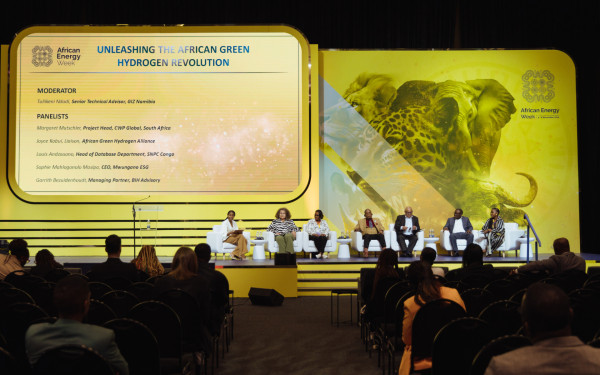
Africa's abundant energy potential, coupled with Europe's ambitious production and import goals, have resulted in the development of a burgeoning global green hydrogen economy. Africa currently has 125 GW of hydrogen capacity with major contributors including Egypt, Mauritania, South Africa, Morocco, Namibia and Kenya – a group of nations that form part of the Africa Green Hydrogen Alliance group.
A dedicated panel session titled, Hydrogen Summit: Unleashing the African Green Hydrogen Revolution, at this year's African Energy Week: Invest in African Energies 2024 conference explored the significant role that hydrogen plays in the future of African energy. The panel noted that the EU market represents the largest commercial opportunity for hydrogen projects on the continent, with international collaboration being highlighted as a key strategy towards driving the sector forward.
“We need to see more countries establish key terms to create a platform for knowledge sharing,” stated Africa Green Hydrogen Alliance liaison Joyce Kabui, adding, “The support here depends on the scale of collaboration in the green hydrogen space.”
Mauritania has emerged as one of the world's top green hydrogen investment destinations. The country has effectively captured 1.5% of the global hydrogen market with 3 of its major hydrogen developments – the 30 GW AMAN development, 35 GW Megaton Moon project and 10 GW Project Nour development by renewable energy developer Chariot Energy Group, which collectively contribute to the country's objective of producing 12.5 million tons of green hydrogen annually by 2035.
“In Mauritania, we've managed to prove renewable resources and understand energy profiles available from natural resources to supply the value chain,” stated CWP Global Vice President of Project Development Africa, Margaret Mutschler, adding, “We've conducted environmental studies and baseline studies in countries like Mauritania that is relevant in other countries as well.”
Meanwhile, South Africa's government has recognized green hydrogen as a key aspect of the country's just energy transition. It has introduced the Hydrogen Society Roadmap to serve as the industry's framework to facilitate large-scale investments in the sector.
“If you look at hydrogen as a source, it's underpinned by the hydrogen roadmap that the government has begun to drive,” stated General Manager of Energy Projects at South Africa's state-owned Central Energy Fund, Sifiso Msabala. “There is a focus on hydrogen in this country and we understand the issues that are inhibiting progress. We know that South Africa is a great country to contribute to the global hydrogen industry.”
Louis Andzouono, Head of Database Department at the Republic of the Congo's state-owned Société National des Pétroles du Congo (SNPC), expressed his country's commitment to driving a sustainable green hydrogen sector. The parastatal company received authorization from the government last year to explore the development of a green hydrogen market in the country.
“The SNPC is confident that its promotion of green hydrogen will succeed and thrive,” Andzouono stated, adding, “We assume the missions and projects of the state will guarantee a serene future for the Congolese people through structure and eco-friendly projects.”
The panelists noted that supportive policies and international collaboration will bolster Africa's green hydrogen economy, potentially attracting investments and improving resource capacity.
Distributed by APO Group on behalf of African Energy Chamber.
Mashatile chairs inaugural meeting of newly appointed Human Resource Development Council
Deputy President Paul Mashatile has stressed the importance of reigniting efforts to drive human resource development initiatives, so as to urgently tackle the three critical challenges of unemployment, poverty and inequality.
The Deputy President was speaking as the Chairperson of the Human Resource Development Council (HRDC), where he led the inaugural meeting of the newly appointed council on Tuesday.
The newly appointed HRDC members include representatives from government, organised labour, organised business, as well as civil society.
According to the Deputy President’s office, the council’s main strategic mandate is to advise government on initiatives to develop the necessary skills to meet labour market demands over the next five years, ending in 2029.
“We look forward to your invaluable contribution and are convinced that your unique talents, abilities, and experiences will further assist to re-energise efforts to realise the strategic goals of the HRDC,” Mashatile said.
The meeting received presentations on the reconceptualised HRD Strategy and the Master Skills Plan, which will anchor policy documents for all human resource development interventions in the country.
The plan outlines four strategic, outcome-oriented goals. These include enhancing early learning and educational outcomes, as well as increasing the employability of youth, who are not engaged in education, employment, or training (NEET).
The plan also highlights the need to enhance the responsiveness of the Post-School Education and Training (PSET) system to skill demands and improve governance, leadership and management within the public sector.
In addition, the meeting received updates on the establishment of the Just Energy Skills Forum, which is aimed at contributing to the transformation of the energy landscape in the country, in line with the dictates of climate change.
This follows the commitment made by government to launch the Just Energy Transition (JET) Investment Plan 2023-2027 in 2022, where President Cyril Ramaphosa mandated the Presidential Climate Commission to engage with various key stakeholders in developing common approaches for South Africa.
A key element for the implementation of the JET Skills Portfolio is the establishment of a National Skills Advisory Forum, which is planned to be launched at the 5th HRDC Summit scheduled to take place this month.
The 5th HRDC Summit will bring together civil society groups, government, labour and business to deliberate on critical skills challenges facing the country.
The summit’s theme will focus on developing the emotional, intellectual and technical capabilities needed to succeed. The gathering will also touch on the reconceptualised HRD Strategy and the Master Skills Plan, as well as the launch of the JET National Skills Advisory Forum.
The summit will also discuss building foundations for learning and skills for a transformed economy, as well as building a capable State.
The HRDC is a national, multi-stakeholder advisory body chaired by the Deputy President and managed by the Ministry of Higher Education and Training.
The HRDC was established in 2010 to facilitate conditions that promote the optimal participation of all stakeholders in the planning, stewardship, monitoring and evaluation of HRD activities in the country.
One of the council’s key responsibilities is to build the HRD base required to ensure a prosperous and inclusive South African society and economy, focusing on the development of strategy. – SAnews.gov.za
Gabisile
Wed, 11/06/2024 - 10:48
President Ramaphosa to conduct multi-pronged KZN visit
President Cyril Ramaphosa is expected to embark on a visit to KwaZulu-Natal over the next three days.
The visit will start with the unveiling of the King Shaka Zulu statue at the King Shaka International Airport in Durban, where both the President and King Misuzulu KwaZwelithini will deliver addresses.
“His Majesty King Misuzulu KwaZwelithini and Premier Thamsanqa Ntuli will join the President in officiating this tribute to King Shaka kaSenzangakhona, the founding father of the Zulu nation, whose leadership and military strategy forged one of the most powerful kingdoms in Southern Africa.
“The unveiling of this statue aims to honour the King’s legacy and preserve his memory for future generations. The monument will serve as a symbol of unity, strength, and pride for the people of KwaZulu-Natal and the entire nation, celebrating King Shaka's contributions to Zulu history, culture, and identity,” the Presidency said in a statement.
The unveiling of the statue will be followed by discussions with the provincial executive.
“The President will be accompanied by relevant Ministers and Deputy Ministers in this engagement, which is part of a new series of interactions between the President and provinces aimed at enhancing intergovernmental coordination and improving service delivery, in line with the priorities of the 7th Administration.
“The provincial leadership will present to the President its five-year programme that will respond to the national priorities of securing inclusive economic growth, reducing poverty and building a capable and ethical State.
“The meeting will also discuss interventions to improve service delivery at local government level,” the statement said.
This engagement will conclude with a meeting with the Presidential eThekwini Working Group.
“[President Ramaphosa] will be updated on the work being done to support and accelerate efforts by the eThekwini Municipality to improve service delivery, improve business confidence, and reposition eThekwini as an investment and tourism hotspot.
“Established in February 2024, the Working Group represents an intergovernmental collaborative approach to addressing challenges in local government, and includes active participation from all levels of government, the private sector, State-owned enterprises, organised labour and civil society,” the Presidency explained.
The visit to the province will culminate with an engagement with residents at the Presidential Imbizo.
“On Friday, 8 November, President Ramaphosa and members of national, provincial and local government will hear directly from citizens and organised civil society formations during the Presidential District Development Model (DDM) Imbizo, held under the theme 'Leave No One Behind'.
“The imbizo is a platform that allows citizens to make proposals and ventilate problems directly to the leadership, who in turn respond to these inputs and set out plans for developing communities and the economy in the area visited by the President,” the statement concluded. – SAnews.gov.za
NeoB
Wed, 11/06/2024 - 12:14
Young leaders encouraged to apply for NYDA Board positions
The Department of Women, Youth and Persons with Disabilities (DWYPD) has encouraged young leaders to consider applying for positions at the National Youth Development Agency (NYDA) Board.
Deputy Minister in the Presidency responsible for Women, Youth and Persons with Disabilities, Mmapaseka Steve Letsike, said the department is seeking individuals who are passionate, capable, and committed to creating meaningful change.
“[We are seeking] youth with a deep understanding of community needs and a drive to uplift and empower their peers. This is a valuable opportunity to be part of a transformative journey, shaping policies and leading initiatives that will impact the lives of young people across our country,” Letsike said.
Letsike’s call comes after the Portfolio Committee on Women, Youth and Persons with Disabilities invited members of the public to apply, and organisations or individuals to nominate suitable candidates for appointment to serve on the Board of the NYDA, as mandated by the National Youth Development Agency Amendment Act, (No. 11 of 2024).
According to the application invite posted on 20 October 2024, all applicants/nominees will be required to complete an online application, https://forms.gle/prJNFC7kAezFmV439 on the parliamentary website.
All applicants and nominees are required to upload certified copies (not older than six months) of their identity document and academic qualifications.
A list of shortlisted candidates and their resumes will be published on the parliamentary website to allow members of the public to comment on the suitability of candidates. Disclosure of personal information of candidates is subject to lawful processing and secure storage.
All shortlisted candidates will be subject to pre-employment screening by the State Security Agency and verification of qualifications by Parliament’s Human Resources. All applications will be in line with the Protection of Personal Information Act (No. 4 of 2013), and the Employment Equity Act (No. 55 of 1998).
On the recommendation of Parliament, President Cyril Ramaphosa will appoint members of the National Youth Development Agency Board for a term of office not exceeding three years.
“Members of the National Youth Development Agency Board may be appointed on full-time or part-time basis. Any person, whose term of office as a Board member of the National Youth Development Agency has expired, may be reappointed for one additional term, and may not be re-appointed for more than two terms,” the DWYPD said.
Requirements
Candidates must be:
Nominations or applications must contain the full name, address/email address and contact details of the person or organisation making nomination, as well as a signed acceptance of the nomination by the nominee, including the nominator.
Applicants should also have relevant experience or qualifications aligned with the NYDA’s mandate.
Applications will close at midnight on 18 November 2024. – SAnews.gov.za
GabiK
Wed, 11/06/2024 - 12:18
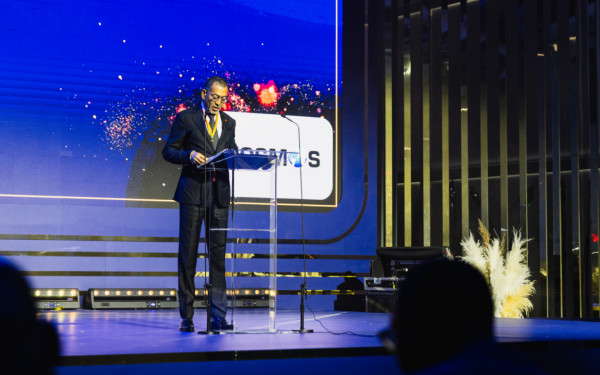
The African Energy Week (AEW): Invest in African Energies 2024 conference officially opened with calls from the industry to ‘drill baby drill.' Citing the need to enhance climate justice through the development of domestic energy resources, industry leaders from across the continent underscored the need to sign deals, foster partnerships and drive projects forward.
With over 600 million people living without access to electricity and 900 million people without access to clean cooking solutions, the AEW: Invest in African Energies opening ceremony – sponsored by Kosmos Energy – positioned the oil and gas industry as the catalyst for making energy poverty history.
“Our priority must continue to be to end energy poverty for all Africans as well as to create an enabling environment where the oil and gas industry can thrive,” stated Diamantino Pedro Azevedo, Minister of Mineral Resources, Petroleum and Gas, Angola. “That is also our priority in Angola. The oil and gas industry will be a fuel for socioeconomic development.”
For the African Petroleum Producers Organization (APPO), prioritizing the development of domestic markets will be integral for eliminating energy poverty. APPO Secretary General Dr. Omar Farouk Ibrahim stated that “Today, APPO is focused on creating an integrated, regional and continental energy market. To create markets, we need to create cross-border, regional and inter-regional infrastructure. One of our projects we are working on is the Central African Pipeline System, which aims to link countries through crude oil and gas pipelines.”
Adding to these remarks, Kgosientsho Ramokgopa, Minister in the Presidency, Energy and Electricity, South Africa, said that “Today, Africa's path forward lies in seizing control of our energy destiny. Our resources make us capable of not just powering our homes and industries but a new Africa. This will require unity of purpose and a collective resolve.”
Despite project progress, financing remains a central challenge to oil and gas development in Africa. According to Mary Bruce Warlick, Deputy Executive Director of the International Energy Agency, “African countries account for 20% of the world's population but only 4% of global investment. Energy investment has been falling across the continent over the past decade. Africa needs $200 billion to achieve its climate and energy goals by 2030.”
To address these challenges, the African Export-Import Bank (Afreximbank), in collaboration with APPO, established the Africa Energy Bank, an institution which offers financing for African oil and gas projects. According to Benedict Oramah, President & Chairman of the Board, Afreximbank, “The Africa Energy Bank is the first multilateral sector bank in Africa. We expect the bank to significantly contribute towards bridging the funding gap in the African energy sector. It will be open for business to have access to funding by February in 2025. We invite you to send in your applications to be the first transaction by the Africa Energy Bank, which will be ready in a few months' time.”
The Africa Energy Bank supports energy companies drive projects forward. For independents such as Oando, this presents a strategic opportunity to expand their oil and gas portfolios in Africa. Wale Tinubu CON, Group Chief Executive Officer, Oando PLC, said that “The oil and gas landscape is changing. Between 2015 and 2023, there have been more than $7 billion of divested assets in Africa. In terms of M&A activity, there have been a focus on onshore and shallow water acquisitions and we have seen a rise of indigenous joint ventures and collaborations.”
Stepping into this picture, the AEW: Invest in African Energies conference convenes under a goal to make energy poverty history. By uniting the industry in Cape Town, the event fosters partnerships, promotes deal-signing while creating a collaborative environment for companies to do business in Africa's energy sector.
“It is the time for us to tell the African story, written from Cape to Cairo and Kampala to Dakar. We will forge a path that shapes the future. We have work to do in Africa. We sign baby sign so that we can drill baby drill. Let's not stop getting projects signed,” stated NJ Ayuk, Executive Chairman, African Energy Chamber.
Distributed by APO Group on behalf of African Energy Chamber.
Matric Exams progressing smoothly despite some minor disruptions
Basic Education Minister Siviwe Gwarube says the administration of the National Senior Certificate (NSC) exams has been progressing well thus far, showcasing the strength and resilience of the education sector systems.
Today marks the 12th day of the matric exams which commenced on 21 October 2024.
“I am delighted to report that so far, the administration of this year’s NSC exams has been progressing well, showcasing the strength and resilience of our systems.
“These exams mark a critical milestone for our learners, who have spent years working toward this moment, and I am pleased to say that, so far, our systems are holding up well under the pressure,” Gwarube said.
The Minister held a press briefing on Wednesday to provide an update on the progress of the NSC exams, among other issues.
She emphasised that the department has taken comprehensive measures to safeguard the integrity of the exams, ensuring that every learner receives a fair, consistent, and supportive experience.
Turning to statistics so far, Gwarube announced that 104 of the 181 question papers have been written as of today, that represents 58% of exams. The exams are now over the halfway point.
Five schools in the Jan Kemdorp area were affected by a taxi strike, however, all candidates from the schools were able to write their exams.
There was also protest action in Limpopo. However, with the help of the South African Police Service, matric candidates were escorted to the school and were able to write.
KwaZulu Natal, Eastern Cape, Limpopo and Mpumalanga faced disruption caused by inclement weather. The department activated contingency plans and learners were able to write and complete their papers.
Power outages were experienced in some areas and back-up generators were relied on for learners to complete their exam papers.
There was one learner who could not finish their paper as they were arrested inside the exam venue as a suspect in an armed robbery case.
The Minister told the media briefing that cellphones and crib notes were found and confiscated from a very small number of learners and that this was being investigated. Additionally, two imposter candidates were detected and arrested for attempting to take an exam.
“Our operational systems have been designed to preempt and resolve challenges quickly and effectively. From the distribution of exam papers to the management of security and supervision, our dedicated teams are actively monitoring each phase of the exam process.
“We are leveraging technology to maintain real-time oversight, which enables us to detect any irregularities and address them before they can substantially impact the examination process,” she said.
For example, Gwarube said any suspected security issues with exam papers are immediately escalated, allowing the department to take swift action to uphold the credibility of the exams.
“While we are encouraged by the overall success of the exams thus far, we are also mindful of the need to adapt to unforeseen challenges, particularly those related to the environment and climate.
“Recent storms in areas like Bushbuckridge and flooding in parts of the Eastern Cape have impacted some learners’ ability to sit their exams as scheduled. In response, the department quickly implemented alternative arrangements, including the use of alternative venues and the rescheduling of exams to later dates,” Gwarube said.
The Minister said these decisions were made in collaboration with local authorities to ensure minimal disruption to learners' lives.
“We recognise that the final leg of exams is crucial, and we are committed to providing every learner with the opportunity to complete their exams without unnecessary obstacles.
“I commend the resilience of the affected learners and their families, and I appreciate the dedication of our teachers and officials who worked to support these alternative arrangements in such a challenging time,” Gwarube said. – SAnews.gov.za
DikelediM
Wed, 11/06/2024 - 14:58