Expert Defends Sexual Harassment Finding Against Judge President Mbenenge
Mbenenge was persistent in his requests for nude pictures, says Dr Lisa Vetten

MyZA
News, Directory, Events and Other Stuff
Mbenenge was persistent in his requests for nude pictures, says Dr Lisa Vetten
Multinational firms are benefitting from “just transition” funding while serving the world’s largest fossil fuel companies
JOHANNESBURG: Cricket South Africa (CSA) and New Zealand Cricket (NZC) are excited to announce a white-ball tour that will feature...
The Sidewalk Specials team has built up trust in the community
The Freedom Front Plus’s (VF Plus) bilateral visit to the US to engage with White House officials and other stakeholders begins today with a discussion at the Hudson Institute in Washington, DC. The theme of the discussion is “An Afrikaner Perspective on US–South Africa Relations” and will take place from 13:00 to 14:30, Washington time […]
The post Freedom Front Plus’s bilateral visit to the US kicks off today with discussion at influential Hudson Institute appeared first on Freedom Front Plus.
Rapist’s DNA has been linked to two open cases
Still no arrests after mob displaces hundreds of immigrant families
These workers don’t get paid leave and they can be dismissed arbitrarily
Immigration official rejected the asylum application of a man from Chad who was imprisoned solely for homosexuality
Department of Social Development says there were “payment system challenges” and some organisations are non-compliant
“We are now working closer with the police and the community to make sure that the emergency services workers are protected at all costs”
GOOD Statement by Brett Herron,GOOD Secretary-General 30 May 2025 US President Donald Trump’s spiritual adviser may just have saved South Africa’s faltering relationship with the Western superpower. In a statement published while visiting South Africa, today, Pastor Mark Burns, the televangelist and board member of Pastors for Trump, who is widely described as President Donald […]
The post DONALD TRUMP’S SPIRITUAL ADVISER HAS JUST DEBUNKED CLAIMS OF AFRIKANER GENOCIDE appeared first on For Good.
South Africa clarifies position on Tanzanian banana imports
The Department of Agriculture has dismissed speculations regarding an alleged ban on the import of bananas from Tanzania into South Africa.
This follows recent media reports suggesting that Tanzanian authorities are considering banning South African agricultural imports, based on speculations that South Africa does not permit banana imports from Tanzania.
In a statement issued this week, the department stressed that there is a strong and cooperative relationship between the two countries regarding agricultural trade, and that South Africa has never imposed a ban on banana imports from Tanzania.
The department explained that the National Plant Protection Organisation of South Africa (NPPOZA), operating under the department’s authority, hase previously been working closely with its Tanzanian counterpart to negotiate market access for various plant and plant product commodities between the two nations.
“Tanzanian avocados have been exported to South Africa over the past four years and have a counter seasonal advantage to local produce, which closes the gap for local consumption. The two technical counterparts from both South Africa and Tanzania are currently in negotiations to facilitate market access to allow the safe trade of banana from Tanzania into South Africa,” the department said.
According to the department, in February 2025, the department received an official market access application from Tanzania to export bananas to South Africa. This triggered the scientific pest risk analysis (PRA) process by NPPOZA, which is a mandatory step in determining phytosanitary import requirements to prevent the spread of harmful pests and diseases.
“The processes will be conducted in accordance with relevant phytosanitary regulatory frameworks and relevant standards of the International Plant Protection Convention (IPPC). It is mutually beneficial for both nations to allow the PRA process to proceed, so that scientifically justified phytosanitary import conditions can be developed, conditions which aim to safeguard biosecurity,” the department explained.
The department highlighted the critical need to ensure biosecurity in agricultural trade, citing the example of Fusarium oxysporum f. sp. cubense Tropical Race 4 (TR4), the most destructive banana disease recorded in history, which poses a serious threat to the banana industry globally.
Once the envisaged PRA process has been concluded, the department said, a draft phytosanitary import requirements will be finalised and officially notify Tanzanian authorities. Only after both countries agree with the drafted phytosanitary import requirements, will the importation of bananas from Tanzania commence.
“As a requirement and in accordance with the World Trade Organisation (WTO) and IPPC’s international prescripts, when dealing with agricultural trade matters, parties officially notify each other in case there will be a ban or lifting of a ban of a particular imported produce, or product,” the department said.
The department reiterated that South Africa has never issued any ban on Tanzanian banana imports, as market access had never been formally granted or denied. South Africa has never received any official notification or intent from Tanzanian authorities indicating a ban on South African exports. – SAnews.gov.za
GabiK
Fri, 05/16/2025 - 13:29
Jonas pledges to do his best to strengthen US-SA ties as Special Envoy
Former Deputy Finance Minister Mcebisi Jonas has pledged to do his utmost as President Cyril Ramaphosa’s Special Envoy to the United States (US) to promote a healthy working relationship between South Africa and the US.
This follows the President’s announcement on Monday of Jonas’s appointment as his Special Envoy to the United States, where he will serve as the official representative of the President and the government of South Africa.
“I would like to thank President Cyril Ramaphosa for entrusting me with this important but challenging role. I will do my best to promote a healthy working relationship between South Africa and the United States.
“I will do my best to promote a healthy working relationship between South Africa and the United States,” he said in a statement issued by the Department of International Relations and Cooperation (DIRCO).
The former Deputy Minister acknowledged the challenges ahead due to recent global developments.
“I am fully cognisant of the difficulties that lie ahead, considering recent global developments. However, I believe that areas of commonality and mutual interest could be embraced to reaffirm the long-standing ties between our two countries.
“There are no quick fixes in such a complex situation. I appeal that, in the national interest, South Africans exercise patience and allow us time and space to engage fully with different stakeholders in the United States and South Africa.”
Jonas indicated that any updates regarding his work would be communicated through the Presidency and DIRCO.
The President has described Jonas as an eminent South African leader who served as one of four Presidential Investment Envoys that he appointed in 2018 to facilitate investment into South Africa.
As a former Deputy Finance Minister of South Africa, the President said Jonas brings extensive governmental experience to his new diplomatic role.
Jonas currently holds the position of Independent Non-Executive Chairman of the MTN Group, a role he will maintain alongside his responsibilities as Special Envoy. – SAnews.gov.za
Gabisile
Mon, 04/14/2025 - 13:42
76 views
President Ramaphosa appoints Mcebisi Jonas as Special Envoy to the United States
President Cyril Ramaphosa has appointed former Deputy Finance Minister, Mcebisi Jonas, as his Special Envoy to the United States.
In his new role, Jonas will serve as the official representative of the President and the government of South Africa.
“In this capacity, Mr Jonas is entrusted with the responsibility to advance South Africa’s diplomatic, trade and bilateral priorities. He will lead negotiations, foster strategic partnerships and engage with US government officials and private-sector leaders to promote our nation’s interests,” President Ramaphosa said in a statement on Monday.
The Head of State described Jonas as an eminent South African leader, who served as one of four Presidential Investment Envoys that he appointed in 2018 to facilitate investment into South Africa.
“As a former Deputy Finance Minister of South Africa, Mr Jonas brings extensive governmental experience to his new diplomatic role. Concurrently, he holds the position of Independent Non-Executive Chairman of the MTN Group, a role he will maintain alongside his responsibilities as my Special Envoy,” the President said.
In addition, the President believes that this appointment underscores his distinguished career and continued commitment to advancing South Africa’s national and economic interests.
“For decades, South Africa and the United States of America have maintained a historical and strategic relationship. In the interest of our country, our region and the rest of our continent, I remain committed to rebuilding and maintaining this relationship for more decades based on mutual respect, recognition of each other’s sovereignty and benefit for our respective peoples,” he added.
Meanwhile, a delegation of senior officials, led by South Africa’s Group of 20 (G20) Sherpa and the Director-General of the Department of International Relations and Cooperation (DIRCO), Zane Dangor, recently met with United States officials to clarify the country’s expropriation and equity laws.
During the visit, the delegation engaged with their counterparts in Washington, including senior officials at the White House and the State Department, to address key bilateral priorities. – SAnews.gov.za
Gabisile
Mon, 04/14/2025 - 12:06
21 views
Prime Minister says his government is removing obstacles to US investment, including Starlink, in the wake of the tariff hike
South Africa's Strategic Adaptation to US Tariffs: Advancing National Interests through Policy and Strategy
The new tariff regime arising from the decision by the United States of America, which have been directed not only to South Africa, but the entire world necessitates strategic responses to maintain and grow our industrial base, as a crucial avenue to pursue inclusive growth.
In response to the US Government's imposition of tariffs, South Africa will continue to navigate the challenges and opportunities these measures present with resilience and innovation. Guided by its national interests and aligned with its broader trade and industrial policy, South Africa is committed to ensuring economic growth, industrial development, and the well-being of its citizens.
South Africa intends to:
1. Negotiate Favourable Agreements
South Africa will work to secure opportunities, in a context of a rapid withdrawal of favourable arrangements giving our exports preferential access to the United States of America. This might involve securing additional exemptions and favourable quota agreements, ensuring our industries maintain critical access to the US market, including through sectoral cooperation. This aligns with the national interest of promoting economic prosperity and safeguarding the livelihoods of South Africans.
2. Diversify and Expand Trade Relations
Efforts will intensify to diversify export destinations, targeting markets across Africa, as well as in Asia, Europe, Middle East, and Americas.
Moreover, such efforts will also, where deemed appropriate involve bilateral arrangements where these allow for the pursuance of our national interest. In our presidency of the G20, as the recent engagements at the G20 trade and investment working group (TIWG) indicate, the issue of supply chain geographical diversification is a challenge confronting all open market economies the world over.
This diversification supports South Africa's industrial strategy and reduces dependency on single destination markets for our exports or single sources for our intermediate input requirements. Fostering resilience in line with national economic priorities.
3. Enhance Regional Trade Collaboration
South Africa will leverage the African Continental Free Trade Area (AfCFTA) to bolster intra-African trade, fostering stronger regional economic integration and cooperation. This approach aligns with the national interest of contributing to a better Africa and world.
4. Focus on Value-Added Production
Industries will prioritise transforming raw materials into higher value finished goods, reducing tariff exposure and driving innovation to improve profitability. This supports South Africa's industrial policy objectives of boosting local manufacturing and creating jobs.
5. Stimulate Domestic Growth
The government will invest strategically in industries impacted by the tariffs, supporting economic growth through modernisation and targeted infrastructure development. This aligns with the national interest of ensuring the well-being of South African citizens.
6. Forge Global Alliances
South Africa will continue to build strategic partnerships with other nations enhancing collaboration and our influence in international trade negotiations. This reflects the national interest of strengthening global diplomatic and economic ties.
South Africa's tariff and industrial strategy are designed to support industrial development, employment growth, and economic resilience. By aligning these policies with the national interest, South Africa will ensure that its economy emerges stronger, more diversified, and resilient in the face of global trade complexities.
This approach will also apply to the 7 February Executive Order, which is currently being attended by an interdepartmental team which includes the departments affected by the executive order.
The 31% tariff implemented by the US Administration will be effective from 9 April 2025. South Africa's average tariff is 7.6% and therefore South Africa needs clarity on the basis for the 31% to be implemented by the US.
It is important to note that products such as copper, pharmaceuticals, semiconductors, lumber articles, certain critical minerals, and energy and energy products have been exempted from the reciprocal tariffs. Some of these materials are already key parts of the United States of America's sourcing requirements. According to the United States Geological Survey, 97% of their chrome ore requirements come from South Africa, 6% of fluorspar import requirements and 24% of the United States manganese requirements. These reciprocal tariffs will not apply to products already facing Section 232 tariffs of 25% such as steel, aluminium, automobiles and auto parts.
The reciprocal tariffs effectively nullify the preferences that Sub-Saharan Africa countries enjoy under the Africa Growth and Opportunity Act (AGOA). The sweeping tariff measures will affect several sectors of our economy, including automotive industry, agriculture, processed food and beverage, chemical, metals, and other segments of manufacturing, with implications for jobs and growth.
The US represented 7.45% of South Africa's total exports in 2024, while South Africa accounted for only 0.4% of US total imports. As such, South Africa does not constitute a threat to US and where there is a trade imbalance in favour of South Africa, it is mainly on agriculture products which are counter-cyclical and on minerals which are inputs in US industries.
South Africa will continue building domestic supply resilience, reducing cost of doing business and increasing competitiveness of our economy. Further, South Africa will continue with efforts to diversify export markets as part of its resilience building strategy.
The significant market access opportunities both through trade agreements and through strategic partnerships with countries across the globe present huge opportunities for our exports. The recently concluded Africa Continental Free Trade Area (AfCFTA) remains untapped, beyond the Southern Africa Development Community (SADC).
Furthermore, South Africa enjoys preferential market access through the Southern Africa Customs Union, SADC, SADC-EU Economic Partnership Agreement (EPA), SACU+Mozambique-UK EPA, the European Free Trade Association (EFTA), MERCUSUR (that includes Argentina, Brazil, Paraguay and Uruguay) and Japan Generalised System of Preferences. In addition, government is strengthening relations with countries in Asia and the Middle East to open new market access opportunities. Some of these efforts are bearing fruit with new market access opportunities for our agriculture products.
To re-iterate the Presidency, whilst South Africa remains committed to a mutually beneficial trade relationship with the United States, unilaterally imposed and punitive tariffs are a concern and serve as a barrier to trade and shared prosperity. The tariffs affirm the urgency to negotiate a new bilateral and mutually beneficial agreement with the US, that will establish more fair-trade relations with the US as an essential step to secure long-term trade certainty.
Distributed by APO Group on behalf of Republic of South Africa: Department of International Relations and Cooperation.
The Presidency has noted with concern the newly imposed tariffs on South African exports to the United States of America (USA).
Whilst South Africa remains committed to a mutually beneficial trade relationship with the United States, unilaterally imposed and punitive tariffs are a concern and serve as a barrier to trade and shared prosperity.
The tariffs affirm the urgency to negotiate a new bilateral and mutually beneficial trade agreement with the US, as an essential step to secure long-term trade certainty.
Distributed by APO Group on behalf of The Presidency of the Republic of South Africa.
Companies and officials are using legal measures meant for domestic violence victims, to gag reporters
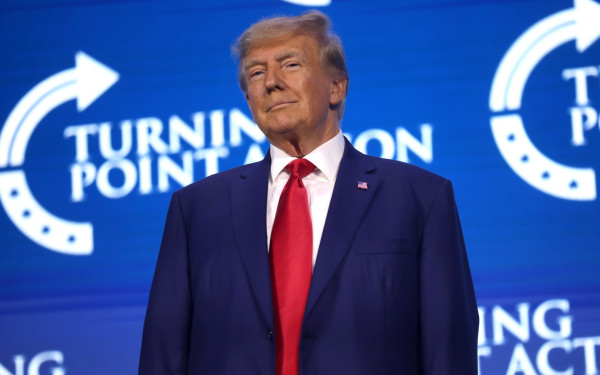
By NJ Ayuk, Executive Chairman, African Energy Chamber (https://EnergyChamber.org)
Donald Trump's return to the White House in 2025 represents a pivotal moment for Africa's fossil fuel industry. His administration's swift reapproval of a USD4.7 billion loan from the U.S. Export-Import Bank (Exim) for TotalEnergies' liquefied natural gas (LNG) project in Mozambique — initially greenlit in 2020 during his first term but sent into deep-freeze for the full duration of the Biden years — sets the tone for what could be a transformative era for Africa's energy sector.
Despite Mozambique's stabilization of security issues and concerns that the transfer of power in America would delay receipt of the loan even further, the Biden Administration refused to release the funds ahead of Trump's inauguration, a decision reflective of the administration's reluctance to support new fossil fuel initiatives throughout Biden's time in office. In contrast, Trump's decisive action within weeks of taking office signals a renewed, positive working relationship between the United States and Africa — one that prioritizes energy development over ideological objections and the Green Agenda's influence.
The African Energy Chamber (AEC) contends that Africa should seize this potentially brief moment in history and embrace the Trump administration as a partner rather than an opponent. For too long, global pressures have insisted that African nations move toward green energy projects only and leave their fossil fuel resources behind.
While renewable energy has its place, and will be important to Africa's future, fossil fuels still clearly constitute the backbone of any realistic efforts for African industrialization and economic growth — goals we simply cannot afford to sideline.
Alignment with Trump's energy-first ethos would mean that Africa could unlock significant funding for wide-ranging fossil fuel projects, and not just the offshore oil and gas ventures that dominate the headlines. The continent should capitalize on all opportunities in onshore projects, wildcat wells (exploratory drilling in unproven areas), and the proliferation of numerous small operators. These avenues lead the way to diversity in Africa's energy portfolio, job creation, and massively strengthened energy security.
The reapproval of funding for Mozambique LNG is a case in point. The project's revival under Trump demonstrates how quickly thick bureaucratic congestion can dissolve when political will aligns with economic practicality. This USD4.7 billion infusion will boost Mozambique's economy while sending a message to other African nations: Under Trump, at long last, America is open for business.
In contrast to the previous administration, which openly regarded fossil fuel development with skepticism and disdain, Trump's “drill baby drill” mantra — while rooted in an “America First” agenda — pairs seamlessly with the ambitions of the African oil and gas industry. Africa should adopt a similar mindset and position itself as an attractive destination for American investment dollars.
Coal's Comeback
Another of Trump's domestic priorities, no doubt a response to China's unabashed expansion of coal production within its borders, is to revive clean coal production in the U.S. This initiative offers a compelling blueprint for Africa. While coal remains a contentious, harshly criticized resource globally, its advantages are undeniable: It's cheaper to produce, often doesn't require big bank financing, and is abundant across the continent. For African nations grappling with energy poverty, coal can serve as a means to an end, delivering affordable power to millions in the interim while the infrastructure for other energy sources matures. Simply put, Africa deserves to be the last global holdout on coal production and should leverage its coal reserves to meet domestic needs and export demands. Trump's willingness to disregard the international campaign against coal should embolden African leaders to reopen their abandoned coal mines and rest assured that this time around, they'll be able to operate freely, without fear of U.S. opposition.
Fossil Fuels Unleashed
Looking beyond coal, over the next four years, Africa has the rare chance to pursue an aggressive fossil fuel agenda. The continent should unite under an “Africa First” banner and adopt its own “drill baby drill” mentality in support of every promising oil exploration and production project, every possible natural gas project, and a multinational effort to slash through regulatory red tape.
In Nigeria, for instance, the wheels of progress moved agonizingly slowly when it came to passing the Petroleum Industry Act, first proposed in 2008 and not signed into law until 2021. Even after the law was passed, Nigeria has been slow to fully implement it. This kind of inertia deters investment and slows development. A Trump-inspired push to clean up such bureaucratic roadblocks could unleash a wave of prosperous development. Similarly, addressing security issues — like those that drove U.S. firms out of Libya — will be critical to restoring confidence and attracting capital from abroad.
While the offshore sector will undoubtedly remain a cornerstone of Africa's fossil fuel strategy, the continent's onshore potential is equally vast. Wildcat wells offer high-risk/ high-reward prospects that could uncover new reserves. Meanwhile, instead of relying solely on multinational oil and gas giants, empowerment of more independent companies and indigenous small operators could diversify the industry, build up local entrepreneurship, and ensure the economic benefits are more widespread. It is highly unlikely that the Trump administration, with its emphasis on deregulation and energy independence for its own shores, would obstruct such efforts on ours. Conversely, it may actively encourage them through financing and technical support, as seen with the Exim loan.
Balancing Development and Climate Realities
Though critics will argue that this push for fossil fuel proliferation contradicts global climate goals, at the AEC, we insist that the calculations for Africa are simply different.
Africa accounts for a fraction of global emissions but bears a disproportionate burden when it comes to energy poverty. Fossil fuels offer a realistic and relatively quick path to electrification and industrialization, the proven prerequisites for lifting millions out of poverty. Trump's indifference to international climate orthodoxy, while controversial, gives Africa the much-needed breathing room to prioritize development over decarbonization. This is in no way an outright rejection of renewables but a recognition that fossil fuels can and will facilitate a just transition to green technologies once their capabilities catch up to Africa's current needs.
Seizing the Moment
The next four years under Trump could redefine Africa's energy landscape. With U.S. interference a thing of the past, Africa can pursue a multi-pronged energy strategy. With a ramp-up in natural gas to meet global demand, a coal revival to power its own grids, and on and offshore opportunities tapped into, Africa could finally secure its full resource base.
However, this approach will require bold leadership. Governments will have to eliminate obstructive policies and address security challenges head-on to secure foreign investments. The payoff could be immense: energy abundance, economic growth, and a partnership with the U.S. that is stronger than ever before.
For example, Nigeria's oil and gas sector has been hampered by regulatory uncertainty and security threats in the Niger Delta. A Nigerian “drill baby drill” mindset could accelerate regulatory, social, and economic reforms needed to address the Niger Delta's deep-rooted instability. This kind of mindset could restart stalled projects and attract American firms eager to invest in a Trump-approved climate. Likewise, in Libya, a resolution to security concerns could lure back U.S. companies that fled during years of instability, reviving a once-thriving oil industry. Across the continent, small operators could flourish under a lighter regulatory touch, drilling wildcat wells and tapping into overlooked reserves.
South Africa, with its vast coal deposits, could take the lead on clean coal technologies to balance affordability and environmental concerns. Smaller nations with untapped coal reserves could follow Trump's lead in defying global pressures against production. The result would be a continent less dependent on foreign aid and more capable of powering its own future.
Trump's presidency offers Africa a chance to unapologetically double down on its fossil fuel potential. The USD4.7 billion Mozambique loan is just the beginning — a proof of concept for what collaboration with the U.S. can achieve. By embracing this partnership, Africa can shed the shackles of the Biden era and chart a course toward energy sovereignty.
The tools are all there: offshore rigs, onshore fields, wildcat wells, established mines, and a willing ally in Washington. The question that remains is whether Africa's leaders have the courage to stand up to the anti-carbon lobby.
Trump's second term could be remembered as the moment Africa's fossil fuel industry came into its own — as a partner to the U.S. in a shared vision of energy abundance. With four years of clear skies ahead, there is no question that Africa should build, mine, and yes, drill, baby, drill like never before.
If we don't act now, it might be a very long wait for an opportunity like this one to present itself again.
Distributed by APO Group on behalf of African Energy Chamber.
Two-thirds of South Africans express strong interest in science and technology
The 2022 South African Public Relationship with Science (SAPRS) survey, a first of its kind for the country, has found that two-thirds (66%) of the public were “very” or “quite” interested in South African science and technology (S&T).
This was among the highlights of the SAPRS, which is the focus of a conference underway at the Birchwood Hotel in Boksburg, Gauteng.
The Minister of Science, Technology and Innovation, Professor Blade Nzimande, released the report in December 2024 at the annual Science Forum South Africa.
This week various stakeholders have convened to discuss the survey and its implications for science engagement programmes, among others.
The Principal Investigator of the SAPRS Survey and a Distinguished Research Specialist at the Human Sciences Research Council (HSRC), Dr Vijay Reddy, stated that the survey’s purpose is to monitor the public’s relationship with science, focusing on knowledge, attitudes, and engagement.
The Department of Science, Technology and Innovation (DSTI) collaborated with the Equitable Education and Economies Research Programme of the HSRC on the survey.
The survey was conducted among adults aged 16 and older, selected from 500 areas across all nine provinces.
The survey showed that 71% of the public has confidence in universities and research organisations that produce S&T information.
According to SAPRS, 51% of those surveyed believed that scientists were honest about their work, which highlighted the need for greater transparency and public engagement.
The majority (76%), however, agreed that scientists make life better for people and provide answers that explain the world we live in (75%).
“The survey also showed that South African adults have a notable understanding of science knowledge,” the statement read.
Meanwhile, six in 10 adults reported they were aware of S&T and had some formal S&T knowledge, while three-quarters (75%) of the public had been exposed to at least one post-grade 9 science or mathematics subject in school.
The two-thirds of South African adults (66%) reported they were interested in S&T or wanted to know or learn more.
When it came to the country’s research priorities, those polled had the highest knowledge (79%) about the quality of education in South Africa.
Meanwhile, clean and efficient water supply ranked second (77%), energy supply third (76%), and access to good-quality food came in fourth (75%).
The lowest-ranked priorities were advanced technologies such as robotics (57%) and space science and astronomy (44%).
Acting Director-General of the DSTI, Gugulethu Zwane, said that the SAPRS survey results reflect that more needs to be done to provide equitable resources to all communities.
She said there was a need to move from temporary improvements to permanent solutions that ensure inclusive science engagement and science literacy.
“As we have said many times before, science affects everyone, and so – according to the ’nothing about us without us’ principle – all communities need to have at least some exposure to science. We need to rethink our approaches and ramp up our science outreach,” said Zwane.
In its 2019 White Paper on Science, Technology and Innovation, the DSTI has committed to carrying out this survey every five years.
Preparations for the next survey will begin in the 2025/26 financial year.
“The report on the second survey should be completed and released by the end of the current administration’s term. The first survey has shown us where we stand as a nation and given us data that will serve as the foundation for future efforts. The work to improve the situation starts here, in this conference, today,” she added. – SAnews.gov.za
Gabisile
Fri, 03/28/2025 - 12:41
44 views
Thabo Khumalo makes R70 a day renting out his buckets to passers-by
Cabinet welcomes strengthened ties between SA and Japan
Cabinet has expressed its support for the strengthened relationship between South Africa and Japan following Deputy President Paul Mashatile’s working visit to Japan earlier this month.
The visit, held from 17 to 19 March 2025, aimed to enhance cooperation between the two countries in areas of mutual interest.
“Engagements were also held with the Japan International Cooperation Agency to explore areas of economic collaboration, the Association for African Economic Development in Japan to discuss trade and investment opportunities, and the Japan Organisation for Metals and Energy Security to highlight investment opportunities in the mining sector,” said the Minister in the Presidency Khumbudzo Ntshavheni.
She was addressing the media during at a post-Cabinet media briefing in Pretoria on Thursday.
SAnews reported that Deputy President Mashatile successfully concluded his working visit to Japan last week.
The two nations commemorated 115 years of strong diplomatic relations, with 2025 marking a significant milestone as both countries chair key multilateral organisations.
South Africa currently holds the Presidency of the Group of 20 (G20), while Japan will lead the Ninth Tokyo International Conference on African Development (TICAD-9) Summit in August this year.
During the working visit, Mashatile met with Japanese government officials, including a courtesy call to Prime Minister Ishiba Shigeru and Chief Cabinet Secretary Yoshimasa Hayashi.
The country’s second-in-command also met with the Japan-African Union Parliamentary Friendship League to strengthen bilateral relations and parliamentary cooperation between South Africa and Japan.
During these engagements, the Deputy President highlighted South Africa’s favourable business environment, skilled workforce, and strategic location, making it an attractive destination for Japanese investment.
The Deputy President expressed his appreciation for Japan’s support of South Africa’s Presidency of the G20, stating that he looks forward to collaborating with Japan to ensure the TICAD-9 Summit is successful. – SAnews.gov.za
Gabisile
Thu, 03/27/2025 - 11:10
101 views
SA-EU relations flourishing
By Nomonde Mnukwa
South Africa’s first democratic elections on 27 April 1994 signalled not only the end of the brutal system of apartheid, but also a change in the country’s international image.
The country’s struggle for liberation and reconciliation has shaped its identity and global standing. South Africa has positioned itself as a champion of international solidarity.
South Africa’s unique approach to global issues has found expression in the concept of Ubuntu. These concepts inform our approach to diplomacy and shape our vision of a better world for all.
This philosophy translates into an approach to international relations that respects all nations, peoples, and cultures. It recognises that it is in our national interest to promote and support the positive development of others.
As we celebrate our over 30 years of freedom and democracy, South Africa’s global repositioning can be seen with the strong strategic partnership with the European Union that is premised on values such as democracy, human rights and the rule of law.
Immediately after his release from prison thirty-five years ago, President Nelson Mandela, our first democratic President, travelled to the European Parliament to receive the Sakharov Prize for Freedom of Thought. This honorary award is the highest tribute given by the European Union (EU) to individuals who contributed to the fight for human rights.
During this visit, the former president, who is affectionately known as Madiba addressed the European Parliament and thanked the European countries for their contribution towards our fight for freedom. He also called on them to support us as we set about rebuilding the country and reversing the legacy of apartheid, which continues to be felt up to this day.
This visit marked the beginning of official relations between South Africa and the EU in pursuit of our national interests, especially to tackle pressing challenges we inherited under apartheid. In 1999 for instance, we became the first African country to sign a Free Trade Agreement (FTA) with the EU known as the South Africa-European Union (EU) Trade, Development and Cooperation Agreement (TDCA).
In 2007 we further deepened our relations through the adoption of the South Africa – EU Strategic Partnership Joint Action Plan. The plan is essentially a roadmap for cooperation in various key areas such as trade, climate change, science and technology as well as regional and global issues.
The TDCA agreement has helped our country to integrate into the global economy and it established a Political Dialogue between South Africa and the EU at the Ministerial level. This high-level dialogue advances the EU-South Africa strategic partnership across key areas such as trade, energy, peace and security and multilateralism.
We are pleased that as we celebrate 30 years of democracy and thirty-five years since Madiba’s release and visit to the EU Parliament, our relationship with the EU continues to flourish and is mutually beneficial. South Africa remains the EU's key trade partner on the African Continent, and the EU as a bloc is South Africa's largest trading partner.
Total trade between South Africa and EU has increased by 44 percent over the past five years; recording an increase from R586 billion in 2019 to R846 billion in 2023. The EU accounts for 41 percent of total Foreign Direct Investment (FDI) in the country and over 2,000 EU companies operate in South Africa, supporting more than 500,000 direct and indirect jobs.
To further discuss shared priorities and foster stronger ties between South Africa and EU, in February this year, we successfully hosted the 16th Ministerial Political Dialogue. The Dialogue was co-chaired by the Minister of International Relations and Cooperation, Ronald Lamola and Kaja Kallas, the EU High Representative for Foreign Affairs and Security Policy and Vice President of the European Commission.
During this dialogue, both parties reiterated their commitment to multilateralism, rules-based international order, and the centrality of the United Nations Charter. They agreed on the need to make the UN Security Council more representative, inclusive, transparent, efficient, democratic and accountable. They further discussed issues of trade and investment, along with greater mutual cooperation and reinforced bilateral relations between South Africa and the EU.
The dialogue also served as preparatory meeting for the EU-South Africa Summit which was held in South Africa on 13 March 2025. Our national priorities of reducing poverty, unemployment and inequality underpin our work at the SA-EU Summit. In line with commitments in the National Development Plan we engage with our EU counterparts to further grow our economy and develop our society.
The summit was also an opportunity to set new priorities for the Strategic Partnership, including in trade and investment, and to reinforce the shared values underpinning the partnership. During the summit, the EU announced a 4.7-billion-euro investment package to support mutually beneficial investment projects. The investment package covers areas such as critical raw mineral processing, green hydrogen, renewable energy, transport and digital infrastructure, local vaccine and pharmaceutical production, and resources for skills development.
The two parties further agreed to launch negotiations towards a Clean Trade and Investment Partnership to support the development of cleaner value chains for raw materials and local beneficiation, renewable and low carbon energy, and clean technology. Both parties committed to work together to address existing challenges in trade in animal and plant products. South Africa committed to find a solution to facilitate the imports of poultry from disease-free areas in the European Union into South Africa.
The Summit was also an opportunity for South Africa to influence international policies that could have an impact on our own economy. Both parties agreed to support a just, comprehensive, and lasting peace on conflicts around the globe including Ukraine, the Democratic Republic of the Congo and Palestine. This includes a need to reform the UN Security Council.
Furthermore, the European Union expressed support for South Africa's G20 Presidency in 2025, and our hosting of the G20 Summit at the end of the year. The EU also pledged to strengthen the G20 Compact with Africa.
Government welcomes the visit by the EU leaders to the country and we are confident that the agreements signed will not only accelerate economic growth but will help South Africa eradicate the triple challenge of unemployment, poverty and inequality.
*Nomonde Mnukwa is the Acting Director General of the GCIS
Janine
Thu, 03/27/2025 - 09:37
77 views