• Skip to main content
  • Skip to header right navigation
  • Skip to after header navigation
  • Skip to site footer
MyZA

MyZA

News, Directory, Events and Other Stuff

  • Social Media
  • Sport
  • World News
  • Home
  • Submit News
  • Directory
  • Events
  • Stratlec
  • TFSA
  • News
    • APO
    • Today’s Sport News
    • Todays Social Media and Tech Headlines
    • Today’s World News
    • Today’s SA Financial News
  • Contact
You are here: Home / Archives for Renewable

Renewable

5 March 2025

Totalenergies’ Mike Sangster to Headline Invest in African Energy Forum in Paris

Location: News
Energy Capital & Power

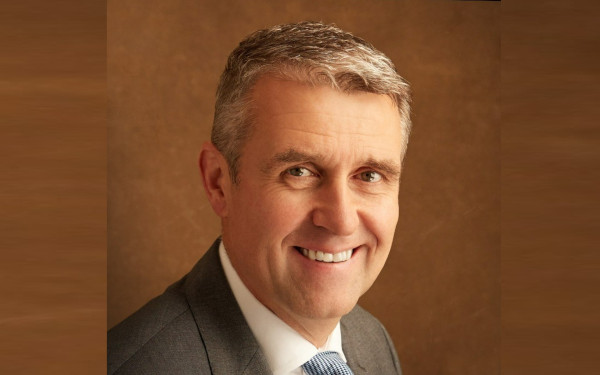
Mike Sangster, Senior Vice President for Africa at TotalEnergies, will deliver a keynote address at the Invest in African Energy (IAE) Forum in Paris this May. Sangster will also participate in an exclusive fireside chat, offering critical insights into the company's vision for Africa's energy future, its ongoing projects and the evolving role of oil and gas in the continent's energy mix.

TotalEnergies continues to drive oil and gas development across Africa, with a strong focus on both emerging and mature markets. In Namibia, the company is advancing its Venus-1 discovery, targeting first oil by the decade's end, with an FID expected in early 2026 for a development producing 150,000 barrels per day. TotalEnergies is also exploring additional prospects in the Orange Basin, having recently drilled the Marula-1X and Tabmoti-1X wells. In the Republic of Congo, the company is investing $600 million to expand deepwater production at the Moho Nord field, while in Libya, it plans to complete an onshore exploration project and lead new drilling campaigns in the Waha and Sharara fields in 2025.

IAE 2025 (www.Invest-Africa-Energy.com) is an exclusive forum designed to facilitate investment between African energy markets and global investors. Taking place May 13-14, 2025 in Paris, the event offers delegates two days of intensive engagement with industry experts, project developers, investors and policymakers. For more information, please visit www.Invest-Africa-Energy.com. To sponsor or participate as a delegate, please contact sales@energycapitalpower.com.

Meanwhile, TotalEnergies is expanding its gas processing and midstream infrastructure across Africa, strengthening its role in the continent's evolving energy landscape. In Mozambique, the company is progressing with the Mozambique LNG project, a $20 billion development expected to secure renewed financial backing from export credit agencies. I Uganda, TotalEnergies is gearing up for first oil from its Tilenga field in 2025, with crude transported via the East African Crude Oil Pipeline (EACOP). Once operational, EACOP will be the longest heated crude oil pipeline globally, significantly enhancing East Africa's ability to monetize its hydrocarbon resources and attract further investment into the region's energy sector.

TotalEnergies is also expanding its renewable energy footprint in Africa through strategic investments in solar, wind, hydropower and green hydrogen. The company is advancing its 500 MW Sadada solar project in Libya and acquired Scatec's hydropower portfolio on the continent in July 2024, including the 250 MW Bujagali Hydropower Plant in Uganda and stakes in projects in Malawi, Rwanda and the DRC. In South Africa, TotalEnergies is constructing a 216 MW solar plant with battery storage, along with a 140 MW wind farm and a 120 MW solar facility, set to supply green electricity to Sasol's industrial operations. In Morocco, the company is developing the Chbika project, a 1 GW wind and solar farm designed to produce 200,000 metric tons of green ammonia annually for export to Europe. These initiatives align with TotalEnergies' strategy to integrate renewables into its portfolio while supporting Africa's energy transition.

Sangster's participation at IAE 2025 comes at a pivotal time for Africa's energy sector, as investors and policymakers navigate a shifting global energy landscape. His keynote address and fireside chat will provide valuable perspectives on the role of private investment in African energy, strategies for unlocking new upstream opportunities and how TotalEnergies is adapting to the continent's long-term energy needs.

Distributed by APO Group on behalf of Energy Capital & Power.

Media files
Energy Capital & Power
Download logo
Read moreTotalenergies’ Mike Sangster to Headline Invest in African Energy Forum in Paris
27 February 2025

Call to intensify efforts to improve early childhood learning 

Location: News

Call to intensify efforts to improve early childhood learning 

President Cyril Ramaphosa has called on educators to intensify efforts to improve early childhood learning, emphasising the urgent need to strengthen foundational skills in reading and mathematics.

The President was addressing the 2025 Basic Education Sector Lekgotla, at OR Tambo Conference Centre, in Ekurhuleni on Thursday. 

He highlighted concerning literacy and numeracy statistics, warning that failure to address these gaps could have long-term consequences for learners.

Citing the 2021 Progress in International Reading Literacy Study (PIRLS), he noted that more than 80% of Grade 4 learners in South Africa cannot read for meaning in any language, including their home language. 

Additionally, the country ranked low in a recently published study on Trends in International Mathematics and Science Study (TIMSS), which surveys capabilities in Grades 4 and 8.  

“Not having mastered basic skills in reading and maths at foundation level sets the tone for how a learner will perform in high school and beyond. That is why Early Childhood Development [ECD] education has become the key foundation and bedrock.

“So, correcting these shortcomings is the most urgent of tasks. It must be front and centre of our efforts in basic education,” he explained.

In the same breath, the President lauded the achievements of the Class of 2024 saying it reinforces government’s commitment to developing the nation’s young people as the most valuable resource.

He said this achievement shows that the country is steadily undoing the apartheid legacy of intergenerational poverty, disadvantage and indignity. 

“Our learners, teachers, parents and caregivers deserve our appreciation, alongside school governing bodies and partners in business, trade unions and academia. However, these impressive outcomes stand in stark contrast to what we see in the early years of education.”

To address these challenges, the President welcomed the Department of Basic Education’s review and realignment of the curriculum, including teacher development programmes and a focus on the Mother-Tongue Based Bilingual Education approach. 

He also stressed the importance of inclusive education, calling for greater access to quality learning for children with disabilities.

“We are encouraged by the department’s efforts to review and realign our existing curriculum, including assessment, learning and teaching support material and teacher development programmes,” the President said. 

Embracing AI and technology

The first citizen warned that globalisation, automation, and artificial intelligence (AI) are reshaping the job market, making it critical for South Africa’s education system to evolve.

He said that the theme of this year’s lekgotla – ‘Strengthening Foundations for a Resilient, Future-Fit Education System’ – is therefore most appropriate and timely. 

He highlighted that the World Economic Forum’s 2025 Future of Jobs Report showed the world’s fastest growing and fastest declining jobs. 

The report showed that jobs that are growing fastest are big data specialists, user interface and user experience engineers, data warehousing specialists and renewable energy engineers. 

At the bottom of the pyramid, some of the jobs that are in decline include bank tellers, data entry clerks, cashiers, admin assistants, book-keeping and payroll clerks, and telemarketers, among others. 

The President noted that many of these occupations that are in decline are entry level positions for young people entering the job market after school. 

He noted that AI and advanced language models are significantly reshaping various industries.

One such tool, ChatGPT, now has approximately 300 million weekly active users worldwide. The number of students relying on ChatGPT for school assignments has doubled between 2023 and 2024. 

The President emphasised the need for the education system to embrace technology while maintaining a strong foundation in human-led learning. 

“We have to adapt to this new reality or risk the consequences of last century methods that cannot deliver new century outcomes. As impressive as technological advances have been, technology is but a complement to human endeavour. 

“There is no substitute for solid foundational education led by committed and capable educators that sets the stage for a more effective and equitable educational system,” the President said. 

The President further highlighted that the first generation to grow up with the internet, Gen Z, are already in their thirties. Generation Alpha, the first fully digital generation, are now in high school. 

The babies born this year are the start of Generation Beta and will begin school in 2030. 

“These Generation Beta children will be mastering the use of AI tools for schoolwork, problem solving and life advice before they even reach high school. 

“This is to say nothing of their future career paths. There are now tools that can build a website in 10 seconds and compile a fully referenced research paper in about a minute. 

“So, when we speak of equipping our young people with the skills for a changing world, we are not only talking about the structure of education needing to be transformed, but its methods of delivery as well. I am pleased that this is an issue that is prioritised at the Basic Education Lekgotla,” the President said. 

Vocational and Entrepreneurial Pathways

President Ramaphosa also called for greater emphasis on technical and vocational education as viable alternatives to traditional academic pathways. He pointed to Germany, where 47% of the workforce holds vocational qualifications, compared to just 17% with university degrees.

“As stakeholders in the sector we need to work together to address the prevalent bias towards general academic education, and even the stigma that exists around choosing vocational occupations. 

“Vocational training should not be seen as a fall-back option for learners who have been identified as unlikely to obtain the marks needed for university entry. It should be seen as an attractive proposition for all learners.”

The President also highlighted the importance of fostering entrepreneurship to support young people in an economy with limited job opportunities. 

Agenda for education 

The 2025 Basic Education Sector Lekgotla, tcomes at a pivotal time as South Africa enters the implementation phase of the Medium-Term Development Plan and nears the five-year countdown to achieving the Sustainable Development Goals.

As South Africa chairs the G20, President Ramaphosa noted the opportunity to drive a progressive global education agenda under the theme of “solidarity, equality, and sustainability.”

“As the host of the G20 Education Working Group, we have a unique opportunity to drive a progressive agenda for inclusive and equitable education within the framework of the G20,” he said. – SAnews.gov.za


DikelediM
Thu, 02/27/2025 - 15:35
92 views

Read moreCall to intensify efforts to improve early childhood learning 
27 February 2025

Government concludes talks on Sectoral Emission Targets 

Location: News

Government concludes talks on Sectoral Emission Targets 

The Minister of Forestry, Fisheries and the Environment, Dr Dion George, has announced that the first round of consultations on the Sectoral Emission Targets (SETs) have been concluded, marking an important step forward in the country’s climate action journey. 

Published for public comment in May 2024, the SETs are a key component of South Africa’s broader climate change strategy, aligning sector-specific emissions reductions with economic growth and job creation.

“The feedback received through the public consultations has been invaluable, helping to ensure that the Sectoral Emission Targets are both effective in addressing climate change and conducive to sustainable economic development. 

“We are committed to ensuring that the final SETs create clear, actionable goals that will foster green innovation, attract investment, and create job opportunities across key sectors such as energy, manufacturing, and agriculture,” the Minister said on Thursday.

Following a thorough review and consultation process, the Department of Forestry, Fisheries and the Environment (DFFE) is now in the process of refining the SETs, incorporating valuable feedback from stakeholders and the public. 

This inclusive approach ensures that the targets are not only ambitious but also achievable, providing a balanced pathway that supports both climate objectives and economic resilience.

In March 2025, the revised SETs will be shared with the Minister to initiate Inter-Ministerial discussions, as outlined by section 25(3) of the National Climate Change Act. 

“These discussions will focus on aligning the SETs with national development goals, ensuring that South Africa’s climate response supports the creation of jobs in emerging industries while promoting long-term economic growth and accelerating the implementation of existing sectoral policies.

“The SETs will provide a clear framework for sectors to reduce their emissions, which in turn will drive the transition to a low-carbon economy. This transition is expected to create significant employment opportunities in sectors such as renewable energy, energy efficiency, and sustainable agriculture,” the department said.

The DFFE, under the leadership of Dr George, has asserted its commitment to working collaboratively with all stakeholders to ensure that the SETs contribute to building a resilient, low-carbon economy that drives sustainable growth and job creation for all South Africans. -SAnews.gov.za


nosihle
Thu, 02/27/2025 - 15:09
60 views

Read moreGovernment concludes talks on Sectoral Emission Targets 
26 February 2025

The Future of Africa’s Energy Sector

Location: Business
African Energy Chamber

By NJ Ayuk, Executive Chairman, African Energy Chamber (www.EnergyChamber.org).

There's a promising future for African renewables as the continent strives to balance its current reliance on fossil fuels.

That's the prediction of the African Energy Chamber's 2025 Outlook Report on the State of African Energy.

As I have said before, Africa will eventually rely primarily on renewable energy, as much of the rest of the world strives to — but on its own timetable, not that of Western countries who have benefited for centuries from the exploitation of fossil fuels.

To achieve a carbon neutral future, African nations must have the underlying infrastructure and industry to make the dominance of renewables possible. As things currently stand, most African states lack said infrastructure and industry, and the most feasible and expedient way for them to achieve both is through leveraging the abundant oil and gas resources so many of them possess.

As our report finds:

  • Fossil fuels account for 72% of Africa's power generation. South Africa and Egypt are Africa's leading producers, and their dominance will continue into the next decade.
  • Renewables account for over 27% of Africa's power generation and are projected to increase to 43% by the end of this decade.
  • Africa accounts for 3.3% of the global power generation, with a total power generation of over 980 terawatt hours.
  • 13 GW of utility-scale solar PV and wind projects are under construction – South Africa, Egypt, Morocco, Ethiopia and Algeria account for over 75% of this capacity.

No Electricity at All

There are also significant challenges facing Africa's energy sectors, as we cover in detail in our report.

The most pressing of those challenges is the fact that many rural areas across Africa are underserved and lack the necessary power infrastructure to access any electricity at all. In fact, of the 685 million people worldwide living without access to electricity, 590 million (86%) live in Africa. Conversely, even in well-served areas electricity is not cheap and reliable, as population and urbanization growth have outpaced the growth of power infrastructure, placing additional strain on the existing power systems. Many African households still rely on alternative, less efficient energy sources such as biomass, kerosene, etc., for heating and cooking.

One practical solution to these challenges is Western investment.

Western investment — providing both funds and technology — will help expand our existing infrastructure into underserved areas and harness our natural resources, and that will go a long way toward improving economic conditions across the continent. This will in turn improve energy affordability for many Africans as it becomes both more widely available and cheaper to access.

But where and in what should the West invest? That is up to them, but there are many development opportunities across the continent right now. I will cover just a few of the most promising, according to our outlook report.

What we found is that most North African countries see 90% access rates for electricity and are looking to enhance their power sectors while reducing reliance on fossil fuels. The bulk of renewable power share increases by the end of the decade will almost certainly be seated in this region. In contrast, sub-Saharan countries will continue to fight low electricity access for some time. They have been able to increase access to 55% currently, up from 38.3% in 2010. These countries will be ripe for investment, expanding the grid and production infrastructure to improve electrical access.

We also found that hydropower continues to dominate in East Africa, which has some of the largest dams in the world generating 19% of Africa's overall power generation and providing up to 90% of the available power for countries such as Ethiopia and the Democratic Republic of Congo. Africa's largest hydroelectric project, the Grand Ethiopian Renaissance Dam (GERD) is nearing completion and is expected to generate 15,760 GWh annually once fully operational. The project is of such importance to the region that it has sparked diplomatic cooperation between the Nile-bound countries of Ethiopia, Egypt, and Sudan in an effort to ensure equitable sharing of the river's precious waters. Other currently ongoing projects such as Ethiopia's Gibe III Dam (1870 MW), Zambia and Zimbabwe's Kariba Dam (1830 MW) and Ghana's Akosombo Dam (1020 MW) also speak to promising future growth and development opportunities for those willing to get their feet wet in the central and eastern parts of the continent along the Congo and Nile rivers, where nearly 90% of the continent's hydroelectric potential remains untapped.

Geothermal power in Africa is currently dominated by Kenya, which to date is the seventh largest producer of geothermal power. Kenya's estimated geothermal power potential is roughly 10 GW, but current operation capacity only allows 1 GW to be harnessed.

International investment is what launched Kenya's geothermal power in the first place, with the United Nation's development program providing the requisite research and funds in 1972 to establish the country's first geothermal plant by the 1980s. Since then, Kenya has expanded independently, creating the state-owned Geothermal Development Company (GDC) in 2008 to both speed up geothermal advancements and lower the initial investment risk for foreign investment.

Solar Power: A Light in the Dark

Solar power offers a veritable gold mine of opportunity given Africa's high irradiance levels: nearly 80% of the continent receives more than 2 MWh per square meter. This amounts to a solar PV potential of 1 million terawatt hours per year and a solar thermal potential of over 500,000 terawatt hours (for reference, a single terawatt hour is enough to light over 1 million homes for a year). Yet to date, Africa only generates over 35 TWh and 3.3 TWh from solar PV and solar thermal, respectively. Over 13 GW of utility-scale solar PV and wind projects are currently under construction, with hundreds more GW of capacity in the concept phase..

I would like to reiterate: Africa will reach a point where we will rely primarily on low carbon and renewable energy. But we cannot get to that point without building the proper infrastructure, and we cannot fund the building of said infrastructure without leveraging our natural resources, oil and gas being chief among them. If the west wishes to speed along Africa's progress on this front, the best way is to work with African as partners and investors working towards common goals. 

Distributed by APO Group on behalf of African Energy Chamber.

Media files
African Energy Chamber
Download logo
Read moreThe Future of Africa’s Energy Sector
26 February 2025

South Africa leads G20 science and innovation drive

Location: News

South Africa leads G20 science and innovation drive

South Africa is taking the lead in global scientific collaboration as it assumes the G20 Presidency, with a strong focus on pandemic preparedness, emerging technologies and sustainable development. 

Science, Technology and Innovation Minister, Professor Blade Nzimande, opened the inaugural meeting of the G20 Research and Innovation Working Group (RIWG) at the University of the Free State in Mangaung, emphasising the need for ambitious and lasting contributions to the global scientific landscape.

Addressing approximately 150 delegates from G20 countries, Nzimande stressed the importance of collaboration in ensuring that all nations benefit from scientific advancements. 

Nzimande envisions the RIWG as a driving force for solidarity, providing science-based policy advice for sustainability. Discussions from this meeting will shape key resolutions for the G20 ministerial gathering scheduled for September 2025.

A major highlight of the meeting was the focus on the bioeconomy -- a transformative economic system that uses renewable, plant-based raw materials for energy and industry. 

Free State Premier, Maqueen Letsoha-Mathae, underscored the bioeconomy’s potential to drive economic growth, while mitigating environmental impacts. She introduced the G20 Initiative on Bioeconomy (GIB), which outlines 10 voluntary, high-level principles promoting sustainable development, inclusivity, climate change mitigation and responsible innovation.

South Africa has long been at the forefront of bioeconomy initiatives. The country’s Bioeconomy Strategy, launched in 2013 as an evolution of the 2001 Biotechnology Strategy, aims to establish and expand bio-based industries. 

This strategy seeks to enhance international competitiveness, create sustainable jobs, improve food security, and promote a greener, low-carbon economy.

As one of the world’s most biologically diverse nations, South Africa is a prime location for bioprospecting investments. It boasts 10% of known plant species, 15% of all recognised coastal marine species, and the globally unique Cape Floristic Region -- making it a key player in the future of sustainable innovation.

With its G20 leadership this year, South Africa is positioning itself as a hub for research and innovation, ensuring that scientific advancements translate into tangible, impactful outcomes for human development and environmental sustainability. – SAnews.gov.za

Gabisile
Wed, 02/26/2025 - 09:29
622 views

Read moreSouth Africa leads G20 science and innovation drive
26 February 2025

Ghana’s Mining in Motion Summit Gains Support From Key Leaders

Location: News
Energy Capital & Power

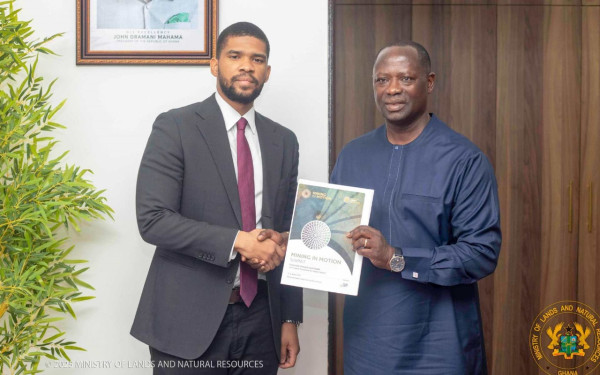
Otumfuo Osei Tutu II, King of the Ashanti Kingdom; Hon. Emmanuel Armah Kofi Buah, Minister of Lands and Natural Resources of Ghana; and Oheneba Kwaku Duah, the son of Otumfuo Osei Tutu II and Managing Director of the Ashanti Green Initiative recently met to discuss the upcoming Mining in Motion Summit in Ghana.

They explored the summit's potential to improve the artisanal and small-scale gold mining (ASGM) sector in Ghana and the role of government, international partners and major mining firms in accelerating the sector's growth. Hon. Kofi Buah endorsed the event, emphasizing its significance in connecting small-scale miners with technology providers, financiers, regulatory bodies and global industry stakeholders to improve their operations and impact.

Organized by the Ashanti Green Initiative along with the World Bank, the World Gold Council and other international partners, Mining in Motion will take place from June 2 - 4 in Accra.

The summit is held under the theme Sustainable Mining & Local Growth – Leveraging Resources for Global Impact, uniting key decision-makers, including H.E. John Dramani Mahama, President of the Republic of Ghana, as well as representatives from public and private sector mining institutions from South Africa, the Republic of Guinea, the African Union, ECOWAS and the United Nations.

The three-day event will highlight the role of traditional authorities in shaping artisanal and small-scale mining practices, emphasizing the sector's contribution to employment and economic growth. In 2024 alone, Ghana's artisanal miners generated $5 billion in foreign exchange earnings through gold exports. Providing direct employment for over one million Ghanaians and accounting for 35% of domestic gold output, the sector has the potential to significantly shape socioeconomic development in the west African country.

As Ghana's mining sector increasingly supports sustainable development, the Mining in Motion Summit will highlight best practices for integrating ASGM into the global financial system. Representatives from prominent international financing organizations will share their insights.

In a significant move to boost earnings for small-scale miners, Ghana has announced plans to establish a Gold Board. This new entity will simplify the process of purchasing gold from small-scale miners, providing them with easier access to global markets. With Samuel Adu Gyamfi, who was appointed Acting Managing Director of Precious Minerals Marketing Company last month and tasked with setting up the Ghana Gold Board, playing a pivotal role in shaping the summit, Mining in Motion is set to have a sizable impact on the growth of Ghana's gold sector.

Through a series of high-level panel discussions, deal signings, project showcases and exclusive networking, Mining in Motion serves as the ideal platform to connect Ghanaian miners with regional counterparts and global investors for forge industry-changing partnerships.

Stay informed about the latest advancements, network with industry leaders and engage in critical discussions on key issues impacting ASGM and medium- to large-scale mining in Ghana. Secure your spot at the Mining in Motion 2025 Summit by visiting https://MiningInMotionSummit.com. For sponsorship opportunities or delegate participation, contact sales@energycapitalpower.com.

Distributed by APO Group on behalf of Energy Capital & Power.

About Ashanti Green Initiative:
The Ashanti Green Initiative is a foundation dedicated to promoting environmental restoration, advocating for climate-related issues, and fostering community development in Ghana and beyond. Guided by a commitment to sustainability, the foundation undertakes projects aimed at rehabilitating degraded lands, restoring water bodies, and promoting responsible natural resource management. The initiative also champions regenerative practices in mining, agriculture, and energy, aligning with global efforts to combat climate change while uplifting local communities through education, capacity-building, and economic empowerment programs. The Ashanti Green Initiative is led by Nana Kwaku Duah, son of His Majesty Otumfuo Osei Tutu II, King of the Ashanti Kingdom. Under his leadership, the foundation applies forward-thinking approaches and innovative solutions, creating impactful partnerships with local and international stakeholders to drive meaningful change.

About Energy Capital & Power:
Energy Capital & Power is an Africa-focused global leading investment platform for the energy and mining sectors. Through a series of events, online content and investment reports, we unite the entire energy and mining value chains – from oil and gas exploration to renewable power – and facilitate global and intra-African investment and collaboration.

Media files
Energy Capital & Power
Download logo
Read moreGhana’s Mining in Motion Summit Gains Support From Key Leaders
25 February 2025

Energise Mzansi campaign to empower South Africans on energy transition

Location: News

Energise Mzansi campaign to empower South Africans on energy transition

The Energy Council of South Africa has launched a nationwide campaign to empower South Africans to gain a better understanding of and engage in the energy transition.

South Africa has committed to lowering carbon emissions to net-zero by 2050 and usher in a green economy.

In that regard, government has also committed to an energy transition which is just, inclusive and which responds to South Africa’s developmental needs – leaving no one behind.

“Energy literacy is more than just understanding the basics, it’s the foundation for informed decision-making, constructive collaboration, and ultimately driving investment and economic growth through gained public positive sentiment.

“Through this campaign, we aim to connect South Africans with the factual information they need to make sense of the challenges and take advantage of the opportunities presented by the energy transition,” Energy Council CEO James Mackay said.

According to the council, the campaign focuses on six technical energy topics.

 These are:

  • Energy is an integrated system: Shifting from a polarised “supply mix” ideology to a practical, integrated system planning and delivery approach. This aims to balance supply side actions with demand response and changing trends, the increasing importance of infrastructure and digital integration and the critical issue of a competitive marketplace.
  • Vital emissions obligations: South Africa has an intensive carbon footprint and is now exposed to carbon tax and carbon border adjustments from 2026 with its biggest trade partner, Europe.
  • Ongoing coal dependency: Examining coal’s critical role in South Africa’s energy mix, which is still planned to be in operation well beyond 2026. The need for cleaner, reliable and more efficient use, and the pathway to a strategic, balanced transition not compromising energy security and economic stability.
  • Bridging the transition with gas: Exploring how gas could provide crucial support to South Africa’s energy system by meeting fluctuating demand, system variability and bridging the gap as renewable energy grows and large coal stations are decommissioned.
  • Scaling renewables and storage: Evaluating the growing adoption of solar and wind energy as well as battery storage, focusing on the advantages of renewable energy, the barriers to widespread deployment, and the role of technology in making renewables a central part of South Africa's energy future.
  • Reforming the Energy Market: Understanding the critical need and benefits of a competitive wholesale electricity market to unlock investment, drive efficiency and lower prices, as well as anchor South Africa's future power sector eco-system

“The Energy Council estimates that R2 trillion will be required by 2035 for new technology financing and system upgrades. Government policy and commitment is clear. The two key drivers of our energy reform agenda are now anchored in law: The Electricity Regulation Amendment Act, 2004 and the Climate Change Act, 2024. 

“It is critical that informed responses lead the transition, ensuring collaboration across all stakeholders to create sustainable, long-term solutions for South Africa’s energy future,” the Energy Council said. – SAnews.gov.za


NeoB
Tue, 02/25/2025 - 12:19
8 views

Read moreEnergise Mzansi campaign to empower South Africans on energy transition
25 February 2025

SA crafts guidelines for green hydrogen development

Location: News

SA crafts guidelines for green hydrogen development

In a major step towards cementing South Africa’s position as a global leader in green hydrogen, the Minister of Forestry, Fisheries, and the Environment, Dr Dion George, has overseen the launch of two game-changing environmental planning mechanisms. 

The Environmental Impact Assessment (EIA) Guideline for green hydrogen projects and the South African Green Hydrogen Potential Atlas will remove regulatory uncertainty, drive investment, and accelerate South Africa’s transition to a green hydrogen economy.

Developed in partnership with the Deutsche Gesellschaft für Internationale Zusammenarbeit (GIZ), the Council for Scientific and Industrial Research (CSIR), and GFA Consulting Group, these mechanisms will provide critical guidance for responsible and sustainable green hydrogen development.

In a statement of Tuesday, the Minister hailed the mechanisms as a victory for South Africa’s economic and environmental ambitions, reinforcing his commitment to positioning the country as a leader in clean energy innovation. 

“This is a defining moment for South Africa’s green economy. By taking proactive steps to provide regulatory clarity and scientific insights, we are ensuring that green hydrogen becomes a major driver of sustainable economic growth, investment, and job creation. This is about unlocking South Africa’s potential while protecting our environment for future generations,” he said.

Under the Minister’s leadership, the Department of Forestry, Fisheries, and the Environment (DFFE) has strengthened the central role it plays in developing clear, science-based guidelines that provide certainty for investors and developers. 

“The EIA Guideline will ensure that projects are planned responsibly, while the Green Hydrogen Atlas offers a powerful, interactive tool for mapping the country’s most promising locations for green hydrogen production.

“With abundant solar and wind resources, strategic port infrastructure, and a central location on global shipping routes, South Africa is uniquely positioned to become a green hydrogen powerhouse. 

“Green hydrogen, which is produced using renewable energy, has the potential to replace fossil fuels in industries like steel, cement, and heavy transport, reducing emissions while creating new economic opportunities,” the department said.

The department said the launch of these mechanisms sends a clear message to international investors, industry leaders, and policymakers.

“South Africa is ready to lead in green hydrogen innovation and production,” the department said.

The EIA Guideline can be accessed at: https://bit.ly/SAGH2eia. - SAnews.gov.za


nosihle
Tue, 02/25/2025 - 11:09
41 views

Read moreSA crafts guidelines for green hydrogen development
25 February 2025

Kholo Capital Mezzanine Debt Fund I Reaches Final Close at R1,4 Billion

Location: Business

Kholo Capital
Download logo

Kholo Capital Mezzanine Debt Fund I (“Kholo Capital” or “the Fund”) (www.KholoCapital.com/), has reached final close at R1,4 billion in commitments, in order to make long-term mezzanine debt investments in small and medium sized businesses in Southern Africa (i.e., South Africa, Botswana, Namibia, Lesotho and Swaziland). The funding provided to these businesses will positively impact communities and support economic growth, job creation, alleviation of poverty and advancement of transformation in the Southern African region. The Fund provides growth capital, BEE Financing and acquisition funding into sectors of the Southern African economy with high social impact including social housing, healthcare, education, renewable energy, food and food security, ICT, financial technology and infrastructure. The Fund follows the United Nation's 17 Sustainable Development Goals as guiding principles with key focus on those linked to Job Creation (i.e., Decent work and Economic growth, Reduced Inequalities and Gender Equality) and those linked to Sustainable Growth (i.e.; Affordable and Green Energy, Sustainable Cities and Communities and Climate Action). The R1,4 billion in commitments was secured from leading South African institutional investors.

Kholo Capital believes that mezzanine debt funding, being a subordinated loan position that sits between senior debt and equity in the capital structure of a business, is attractive because it plugs any equity funding gaps and provides businesses with a tailored and flexible loan solutions in support of their growth requirements. Kholo Capital's investment criteria include investing in small and medium sized businesses generating minimum R25m EBITDA across various growth sectors of the Southern African economy, thereby providing much needed access to capital within a preferred range of R70m to 200m per investment. The benefit of mezzanine debt loan funding lies not only in the ability to tailor funding terms like debt servicing requirements (e.g., providing capital repayment moratoriums), and also because it is a loan funding instrument it avoids the significant equity dilution which is sometimes the sad reality when businesses try to fund their growth ambitions by raising pure equity funding.

Mokgome Mogoba, Founder and Managing Partner at Kholo Capital, said: “We are very bullish about South Africa, the South African economy and the future prospects of this beautiful country and the surrounding region. We are heartened and motivated by the optimism and the resilience of its people. We aim to create in excess of 500 new jobs at a rate of more than 40 nett jobs created per investment and we have committed to investing more than 50% of the Fund in black empowered companies. We are excited at the opportunity to bring creative funding solutions to the Southern African market and to form long term sustainable partnerships with businesses over a 4 to 7-year investment horizon, realising not only strong commercial returns for our investors, but also providing transformational funding that has a positive ESG impact on businesses and surrounding communities as we also look to boost our rural and township economies.”

Zaheer Cassim, Founder and Managing Partner at Kholo Capital, added: “Mezzanine debt funding is non-dilutive by nature and therefore is an attractive funding option for family-owned businesses, BEE companies or any business that needs to raise capital and hold onto the equity in the business. And with the banks becoming more risk averse due to regulatory requirements, lending to small and medium sized businesses has reduced, creating a great opportunity for flexible mezzanine debt structures.  We are grateful that our investors recognise the opportunity and have shown us tremendous support.”

With a strong pipeline of opportunities, Kholo Mezzanine Debt Fund I is well positioned to advance its investment objectives, and make a sustainable impact in support of the real economy. 

Distributed by APO Group on behalf of Kholo Capital.

For more information contact:
Mokgome Mogoba
Managing Partner
Kholo Capital Mezzanine Debt Fund I
mokgome@kholocapital.com
Tel: +27-79-631-5860                                     

Zaheer Cassim
Managing Partner
Kholo Capital Mezzanine Debt Fund I
zaheer@kholocapital.com
Tel: +27-83-786-0845

About Kholo Capital Mezzanine Debt Fund I:
Kholo Capital is a specialist alternative investment fund management company with deep experience and track record in private markets. It was founded in 2020 by Mokgome Mogoba and Zaheer Cassim. The Kholo Capital investment team has more than 100 years of collective credit and investment experience and is highly skilled in senior debt, mezzanine debt and private equity. The investment team has a strong track record in the credit and investment space and has invested in excess of R50bn of mezzanine debt, private equity and senior debt investment transactions in over 90 transactions in more than 10 African countries. Kholo Capital Mezzanine Debt Fund I is managed by a cohesive, dynamic and nimble team and the management team has worked together over the last 21 years.

Website: www.KholoCapital.com

Read moreKholo Capital Mezzanine Debt Fund I Reaches Final Close at R1,4 Billion
24 February 2025

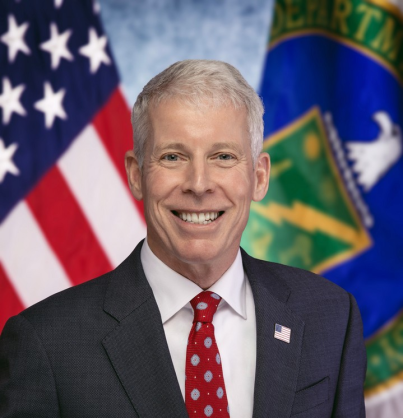
u.s. Secretary of Energy Chris Wright to Deliver Keynote Address at 10th Powering Africa Summit

Location: News
EnergyNet Ltd.

Secretary Chris Wright, U.S. Department of Energy, has been confirmed as a speaker and guest of honour at the 10th Powering Africa Summit (PAS), taking place at JW Marriott Washington, D.C. across March 6-7. This is an important step to provide an answer to the question that all of African energy is now asking: how will the new Administration approach the strategic energy relationship between the U.S. and Africa

Under the Summit theme, The Future of the US & Africa Energy Partnership, U.S. Secretary of Energy Chris Wright will deliver a keynote address at the 10th annual Powering Africa Summit. Wright will be joined by representatives from the U.S. Department of State: Ambassador Troy Fitrell, Senior Bureau Official, Bureau of African Affairs; Kimberly Harrington, Acting Principal Deputy Assistant Secretary, Bureau of Energy Resources; and Stephen Banks, Acting Deputy Assistant Secretary for Energy Diplomacy, Bureau of Energy Resources. All will share their vision for this future relationship between African countries and the US-based investors that are so vital to realizing their energy ambitions.

“As Secretary of Energy, I am committed to unleashing all forms of affordable, reliable and secure energy here at home and advancing that mission of energy security around the world – and nowhere is that more critical than the continent of Africa. I look forward to joining the Summit to reaffirm the strategic energy partnership between the U.S. and Africa and share my vision for advancing innovation and removing barriers to energy access, both at home and around the world,” Secretary Wright said.

Ministers and governments from 19 African countries will arrive in Washington D.C., where the Africa Welcome Address will be given by H.E. Honourable Adebayo Adelabu, Minister of Power, Nigeria. Together with H.E. Honourable Jeremiah Kpan Koung, Vice President, Liberia; H.E. Honourable Dr. Dele Alake, Minister for Solid Minerals Development, Nigeria; H.E. Honourable Mahmoud Mustafa Esmat, Minister of Electricity & Renewable Energy, Egypt; H.E. Honourable Karim Badawi, Minister of Petroleum & Mineral Resources, Egypt; H.E. Honourable Bogolo Joy Kenewendo, Minister of Minerals & Energy, Botswana; H.E. Honourable Alex Wachira, Principal Secretary, Ministry of Energy & Petroleum, Kenya; and Amina Benkhadra, Director General, Office National des Hydrocarbures et des Mines (ONHYM), Morocco, he will meet distinguished Ministers and leaders from South Africa, Senegal, Ethiopia, Zimbabwe, Togo, Sierra Leone and more to drive energy development across the continent.

Flagship ministerial boardrooms and regional energy cooperation sessions will discuss and debate   derisking projects, South Africa's energy future, the need for West African regulatory reforms, and the role of hydrogen in North Africa. New areas of opportunity such as bitcoin mining and data centers will be discussed through an East African lens. The Mission 300 initiative, set to provide electricity access to 300 million people in sub-Saharan Africa by 2030, is also high on the agenda.

The 10th Anniversary Gala Drinks Reception sponsored by Genesis Energy, will celebrate International Women's Day, ahead of March 8.

Critical to the week's discussions will be a host of private players including Alliant Insurance Services, GE Vernova, ARM-Harith Infrastructure Investment, Globeleq, Africa50, Nextracker, Schneider Electric, Newmarket Capital and the summit's general sponsor, Sun Africa, who are looking to a new future for the U.S.-Africa relationship.   

Sun Africa CEO, Adam Cortese said: “We are seeing a sea change in how the U.S. participates in foreign infrastructure development and our unique model of development is an excellent illustration of how U.S. energy companies can thrive in emerging markets on a strictly commercial basis. Sun Africa remains committed to harnessing Africa's immense energy resources through innovative structures, state-of-the-art technology and strong alliances while maintaining our long-standing market-based approach to development.  At Sun Africa, we believe energy development on the continent truly represents an opportunity for win-win partnerships and look forward to sharing our experience.”

Simon Gosling, MD of EnergyNet added: “This summit has always been about bringing together African countries seeking investment with U.S.-based investors who see the vast potential on the continent.  It is more important than ever to establish the crucial energy projects that Africa needs. PAS25 will put the continent center stage and make sure that both sides have a future relationship to be excited about.”

Media Credentials Requited for Powering Africa Summit

The Secretary will open the Summit on 6 March, delivering a Keynote Speech at 09:45, followed by a Fireside Chat with Mission 300 Accelerator CEO, Andrew Herscowitz.

Distributed by APO Group on behalf of EnergyNet Ltd..

For more information, please get in touch with 
Poliana@EnergyNet.co.uk
Senior Marketing Manager

Media files
EnergyNet Ltd.
Download logo
Read moreu.s. Secretary of Energy Chris Wright to Deliver Keynote Address at 10th Powering Africa Summit
24 February 2025

Solarafrica Secures R1.8 Billion Solar Investment, Advancing Wheeling Adoption in South Africa

Location: Business
Starsight Energy

SolarAfrica (https://SolarAfrica.com/) is proud to take another major step forward in the development of its flagship utility-scale solar project, SunCentral, by successfully reaching financial close on the first 114 MW component of the project alongside funding partners Investec and RMB. The R1.8 billion investment into SunCentral marks the start of the project's rollout in South Africa.

SunCentral is a large-scale solar photovoltaic (PV) plant located between Hanover and De Aar in South Africa's Northern Cape province. The project will be developed in three phases.

Phase 1, consisting of 342 MW, will be delivered through a staged roll-out of three 114 MW facilities and will deliver renewable energy to a diverse range of off-takers by wheeling it through South Africa's power grid. Phase 2 and 3 will increase SunCentral's capacity to 1 GW.

Unlike similarly sized projects that offer wheeling on a one-to-one basis (with one generation plant supplying one off-taker), SolarAfrica's project will offer wheeling on a one-to-many basis, making it available to a wider pool of businesses in South Africa.

SolarAfrica's Chief Investment Officer Charl Alheit, who spearheaded the financial close, explains: “Reaching financial close on the first 114 MW of our utility-scale wheeling development and Main Transmission Substation (MTS) investment marks a significant milestone in our commitment to advancing sustainable energy solutions for our customers in the commercial and industrial sectors.”

He adds that the substantial size of SunCentral will unlock access to cheaper, greener power for even more businesses across the country. “We are excited to see this project move forward as we continue contributing to the energy transition while delivering long-term value to our customers."

SolarAfrica is part of the greater Starsight Energy Africa Group. The success of SunCentral will act as a blueprint for similar (and possibly smaller) off-site generation projects in other key African markets in which the Starsight Energy Africa Group companies operate.

“The construction of SolarAfrica's SunCentral is a critical step in our journey to expand clean energy adoption across Sub-Saharan Africa, says Paul van Zijl, Group CEO of Starsight Energy Africa Group. “We are excited to move this project forward and continue delivering long-term value to our customers,” he says.

SolarAfrica is backed by world-class investors African Infrastructure Investment Managers (AIIM) and Helios Investment Partners who both hold decades-long track records of bringing investment to support African innovation.

“Reaching Financial Close on the first 114 MW on SunCentral is a fantastic milestone for SolarAfrica, says Thor Corry, Investment Director at AIIM.

“The modular approach to construct the MTS and plug in subsequent 114 MW modules provides a superb platform for SolarAfrica to scale at pace to meet the needs of the C&I customers in South Africa who want to secure price certainty and cost efficiencies while furthering South Africa's Just Energy Transition. With South Africa requiring up to 30 GW of new capacity by 2030 to meet its climate commitments and energy needs, projects like this are crucial,” Corry concludes.

Distributed by APO Group on behalf of Starsight Energy.

About SolarAfrica:
Founded in 2011, SolarAfrica provides a suite of capex-free green energy solutions to the commercial and industrial sectors in Southern Africa. The holistic suite includes on-site solutions such as solar energy and battery storage together with virtual solutions like wheeling, trading and aggregation.

SolarAfrica partners with businesses in South Africa seeking an energy solution that provides power security, cost savings and carbon reduction – building towards long-term sustainability.

The company has evolved into an ambitious team who are passionate about what they do and the core values they uphold. SolarAfrica has been named the continent's leading solar energy firm twice, scooping the Africa Solar Industry Association's African Solar Company of the Year award in 2021 and 2023.

About Starsight Energy:
Across the continent, Starsight Energy is redefining what it means for businesses to be energy efficient. Starsight Energy provides premier clean on-grid and off-grid energy services to commercial and industrial clients in Africa.

Serving the commercial and industrial, financial, residential, educational and agricultural sectors, Starsight Energy delivers tailored power and cooling solutions to meet client requirements while optimising consumption through energy-efficient appliances and environmentally friendly practices and recommendations.

From load analysis and modelling to demand management and customised solution design, Starsight Energy helps clients optimize energy efficiency and cost savings across the board.

About African Infrastructure Investment Managers (“AIIM”):
AIIM, a member of Old Mutual Alternative Investments* (“OMAI”), has been investing in the African infrastructure sector since 1999 with a track record extending across seven African infrastructure funds. AIIM's team of 40+ investment professionals are based out of five locally staffed offices across the continent in Cape Town, Johannesburg, Nairobi, Lagos and Abidjan providing direct on-the-ground coverage of our key markets.

AIIM is Africa's largest dedicated infrastructure private equity manager and currently manages an aggregate AUM of USD2.9 billion in assets across the power, renewable energy, digital infrastructure, mid-stream energy and transport sectors with operations in 19 African countries.

AIIM is a licensed FSP approved by the Financial Sector Conduct Authority in South Africa.

*Old Mutual Alternative Investments (OMAI) is a private alternative investment manager in Africa, with over USD7.6 billion (ZAR139.4 billion) under management in infrastructure, private equity, hybrid equity and impact funds. It is a member of Old Mutual Investment Group, the investment management arm of Old Mutual.

About Helios Investment Partners:
Established in 2004, Helios Investment Partners is the largest Africa-focused private investment firm, with a record that spans creating start-ups to providing expanding companies with growth capital and expertise. The firm has over $3.0 billion in assets under management and is led and managed by a predominantly African team based in London, Lagos, Nairobi and Paris, with the language skills and cultural affinity to engage with local entrepreneurs, managers, and intermediaries on the continent.

Helios leverages its local and global networks to create attractive proprietary investment opportunities, with an emphasis on building market leaders in core economic sectors and driving performance through a highly engaged approach to portfolio operations. The firm's unique combination of a deep knowledge of the African operating environment, a singular commitment to the region and a proven capability to manage complexity, is reflected in its diverse portfolio of growing, market-leading businesses, and its position as a partner of choice in Africa.

Helios is the second mainstream private equity firm globally, and the largest emerging markets focused private equity firm, to achieve B Corp certification. B Corp status recognizes the firm's longstanding commitment to sustainability and responsible business practices.

Media files
Starsight Energy
Download logo
Read moreSolarafrica Secures R1.8 Billion Solar Investment, Advancing Wheeling Adoption in South Africa
21 February 2025

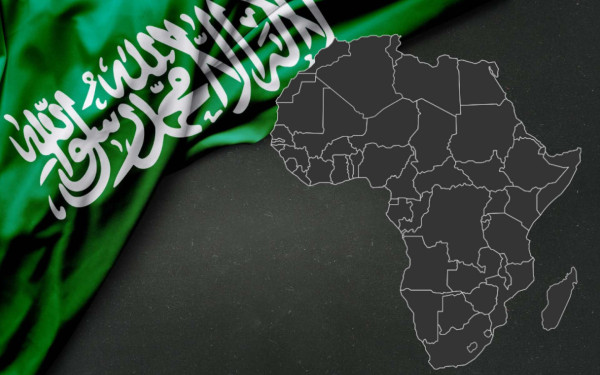
Saudi Arabia Expands Energy Ties With Africa

Location: News
African Energy Chamber

Earlier this week, Egypt's Minister of Petroleum and Mineral Resources Karim Badawi and Saudi Arabia's Minister of Energy Abdulaziz bin Salman Al Saud signed an agreement to develop an executive plan for energy efficiency cooperation, strengthening bilateral ties in the energy sector and fostering sustainable development. This follows another significant development in September, in which Egyptian Prime Minister Mostafa Madbouly secured a $5 billion pledge from Saudi Arabia's PIF, representing the “first phase” of a larger investment strategy. 

As a leading global energy giant, Saudi Arabia has been actively investing in Africa's energy sector, aiming to expand its energy reserves, advance energy diplomacy and compete with other global superpowers. This strategic push not only strengthens Saudi Arabia's influence in the region, but also paves the way for deeper economic and political ties with African nations. 

To date, the lion's share of investment in Africa's energy sector has focused on clean energy advancements. With total project costs reaching $7 billion across the continent, Saudi developer ACWA Power stands as the leading private-sector investor in African renewable energy. In October 2024, the company announced that its Redstone solar plant in South Africa was set to achieve its full 100 MW capacity, while its Kom Ombo solar PV plant in Egypt successfully reached its full capacity of 200 MW. ACWA Power is also leading Project DAO, South Africa's largest hybrid renewable power plant, with an $800 million investment. The project is expected to come online by 2026 and aligns with the Kingdom's broader Vision 2030 goals.  

In addition to renewable energy, Saudi Arabia is diversifying its investments to secure critical minerals for clean energy technologies. In October, Saudi Arabia's Manara Minerals, a joint venture between Ma'aden and the Public Investment Fund (PIF), entered advanced talks to acquire a minority stake in First Quantum Minerals' Zambian copper and nickel assets. The potential investment, valued between $1.5 billion and $2 billion, underscores Saudi Arabia's strategy to secure critical minerals that are vital for the global clean energy transition. 

Turning to broader regional commitments, Saudi Arabia's financial support for Africa's energy infrastructure has grown. In October, the Kingdom announced a major funding initiative, pledging at least $41 billion for sub-Saharan African nations. This includes $1 billion for development, $5 billion for startups, $10 billion in financing from the Saudi Export-Import Bank and $25 billion in private sector investments over the next decade.  

Meanwhile, the Saudi Ministry of Energy has established the "Empowering Africa" initiative as part of its broader commitment to supporting sustainable development across the continent. In collaboration with the Ministries of Communications and Information Technology and Health, the initiative aims to deliver clean energy, connectivity, e-health and e-learning solutions to enhance lives and promote long-term growth in Africa. Building upon the Clean Fuel Solutions for Cooking Program, it focuses on providing cleaner cooking solutions to vulnerable populations, aiming to reduce reliance on traditional biomass fuels and improve health outcomes for millions of households. Minister bin Salman Al Saud has emphasized energy as a fundamental human right and is spearheading efforts to improve access to clean cooking technologies across the continent. 

Additionally, state-owned petroleum company Saudi Aramco is strengthening its partnerships with African nations to support energy investments and mobilization. These collaborations are expected to drive infrastructure development, enhance oil and gas production capacity and facilitate knowledge transfer between Saudi and African energy stakeholders, while aligning with broader energy security and sustainability goals.  

In the multilateral arena, the African Energy Chamber is working with Saudi Arabia to support South Africa's G20 energy investments and mobilization. This partnership is set to facilitate greater financing and policy coordination, ensuring Africa's energy priorities are well-represented in global energy discussions. The upcoming African Energy Week: Invest in African Energies conference in Cape Town serves as a key platform to facilitate and support these investments, bringing together Saudi stakeholders, African governments and global energy leaders to advance new projects, strengthen partnerships and accelerate the continent's energy transition. These collaborations are essential in addressing energy challenges, driving economic growth and fostering long-term sustainability. As Saudi investments expand – alongside those of other G20 nations – their impact on Africa's energy landscape will only deepen.  

AEW: Invest in African Energies is the platform of choice for project operators, financiers, technology providers and government, and has emerged as the official place to sign deals in African energy. Visit www.AECWeek.com for more information about this exciting event. 

Distributed by APO Group on behalf of African Energy Chamber.

Media files
African Energy Chamber
Download logo
Read moreSaudi Arabia Expands Energy Ties With Africa
21 February 2025

AEW 2025 to Fuel Regional Investment as Southern Africa Advances (O & G) Development

Location: News
African Energy Chamber

From significant oil deposits in Namibia's Orange Basin to untapped potential in South Africa to gas frontiers onshore Zimbabwe and developments in Mozambique and Angola, Southern Africa has emerged as a highly-promising oil and gas market. However, to unlock the full potential of the industry, investors need to rally, providing the much-needed capital and technology to boost energy development across the region.

African Energy Week: Invest in African Energies – taking place September 29 to October 2, 2025 - will highlight Southern Africa's energy potential, from major projects and exploration campaigns to investment opportunities and emerging challenges. By uniting regional governments, major operators and global stakeholders, the event fosters collaboration, serving as a catalyst for South African energy development.

Angola Drives Exploration Towards Near-Term Production

Sub-Saharan Africa's second-largest oil producer, Angola continues to leverage industry reform to accelerate exploration and development. Seeking to maintain oil output above one million barrels per day while increasing natural gas production, the country is preparing to launch the final bid round of its six-year licensing strategy in Q1, 2025. Offering nine blocks for exploration in the deepwater Kwanza and Benguela basins, the round is expected to entice major deepwater players to expand their portfolios offshore Angola. To further support production growth, the country introduced five marginal fields for exploration in 2024 and continues to promote blocks available on direct negotiation. Major projects such as the Cabinda Oil Refinery (2025); the New Gas Consortium (early-2026); and the Agogo Integrated West Hub Development (mid-2026) are also set to fuel production.

Mozambique Targets LNG Advancement

With over 100 trillion cubic feet (TCF) of gas resources in the Rovuma Basin, Mozambique is pushing ahead with several large-scale LNG projects. These include the operational 3.4 million ton per annum (MTPA) Coral South FLNG project; the under-development 3.37 MTPA Coral North project; the 18 MTPA Rovuma LNG project; and the 13 MTPA Mozambique LNG project. Despite delays, operators are committed to accelerating development. While pushing the Mozambique LNG project timeline from 2027 to 2029/2030, TotalEnergies expects a U.S. loan approval to be restored under the Trump administration in the coming weeks. ExxonMobil also anticipates FID for the Rovuma project by 2026, paving the way for advanced development.

Namibia: The Next Deepwater Oil Producer

Following a string of discoveries in the offshore Orange Basin, Namibia is working towards first oil production by 2029. The Venus-1X discovery by TotalEnergies is at the forefront of this goal, with the French major seeking to finalize its phase one development plan in 2025 and make FID in 2026. However, the development of the Mopane well – situated in PEL 83 and operated by oil and gas firm Galp - could bring the timeline to first production much closer. Two discoveries were made at the Mopane 1-A well and the Mopane 2-A well, and the operator is now seeking a farm-in partner to develop the asset. Other companies such as Shell, Petrobras, Africa Oil Corp, Chevron and more are also investing offshore while independents including ReconAfrica and Sintana Energy are conducting exploration and appraisal drilling onshore.

South Africa Prioritizes Gas Exploration, Renewable Expansion

Two offshore basins have generated significant interest by foreign player in South Africa: the Southern Outeniqua Basin and the Orange Basin. Southern Outeniqua featured two major gas discoveries made by TotalEnergies (Luiperd and Brulpadda) in 2019 and 2020, representing some of Africa's biggest finds made during the period. While TotalEnergies exited the Southern Outeniqua basin in 2024, the company has turned its attention to South Africa's Orange Basin, hoping to mirror upstream success in neighboring Namibia. Other firms including Africa Oil Corp, Shell and Petrobras are investing in the Orange Basin, and all eyes are on future discoveries offshore South Africa.

Zimbabwe: An Onshore Gas Frontier

Zimbabwe made headlines in 2022 when Invictus Energy announced successful drilling activities at the Mukuyu-1 well at the onshore Cabora Bassa Project. This was followed by the discovery of gas at the Mukuyu-2 well in 2023, with the find revealing the potential for 20 TCF of gas resources. In 2025, the company completed an independence review of the Petroleum Production Sharing Agreement, which would enable the Invictus Energy to unlock value-sharing from the project. Going forward, the company is pursuing a 3D seismic survey alongside appraisal drilling and well testing to further delineate the resource potential while refining development plans and improving the operational efficiency. All eyes are on the project as Zimbabwe strives to bring its first natural gas development to fruition.

Distributed by APO Group on behalf of African Energy Chamber.

About AEW: Invest in African Energies:
AEW: Invest in African Energies is the platform of choice for project operators, financiers, technology providers and government, and has emerged as the official place to sign deals in African energy. Visit www.AECWeek.com for more information about this exciting event.

Media files
African Energy Chamber
Download logo
Read moreAEW 2025 to Fuel Regional Investment as Southern Africa Advances (O & G) Development
13 February 2025

South Africa’s G20 Presidency for 2025: A Catalyst for Energy Investment in Africa

Location: News
African Energy Chamber

In 2025, South Africa will hold the rotating presidency of the G20. Given its position as Africa's most industrialized nation and an energy hub, South Africa's leadership could play a pivotal role in attracting investment to the continent's energy sector. By leveraging its G20 platform, South Africa can push for increased funding from global partners, particularly for natural gas projects, which are critical for Africa's energy security and economic development.

While renewable energy is rapidly expanding across the continent, Africa continues to rely heavily on coal, oil and natural gas to meet growing demand and drive economic growth. Gas is increasingly viewed as a cleaner transitional fuel in Africa's energy mix, and many G20 nations are leading investment in gas exploration and production across the continent. For instance, the U.S. Export-Import Bank, U.K. Export Finance, China Development Bank and Japan Bank for International Cooperation, among other lenders, have played a key role in financing TotalEnergies' $20 billion Mozambique LNG project. Additionally, several G20 countries are driving further investment, with Italy's Eni developing new LNG facilities in the Republic of Congo, bp expanding operations in Senegal and Mauritania, Norway's Equinor advancing the Tanzania LNG development and ExxonMobil spearheading Rovuma LNG in Mozambique. South Africa can advocate for G20 nations to increase their financial backing for new gas projects, which have the potential to boost production, enhance energy security and attract much-needed investment to the continent.

While natural gas is essential for Africa's energy security, combining it with renewable energy sources could help diversify Africa's energy mix. South Africa's own experience with large-scale energy projects, such as its successful Renewable Energy Independent Power Producer Program, can serve as a model for blending financing and developing both gas and renewable projects. By advocating for mixed investment, South Africa can show G20 nations that supporting a variety of energy sources will allow Africa to meet its energy demands while transitioning toward greener energy.

In addition to advocating for investment in specific projects, South Africa can focus on creating favorable conditions for financing. One way to achieve this is by encouraging the G20 to support debt relief or concessional financing for African countries with high debt burdens. This would free up resources for governments to invest in energy infrastructure and allow them to prioritize projects that will improve energy access and support economic growth. South Africa could work closely with organizations like the World Bank, IFC, BRICS Bank, European Investment Bank and more to unlock financing mechanisms that reduce the risk for international investors.

The role of South Africa's G20 presidency in facilitating greater engagement between G20 nations and African energy markets cannot be overstated. By using its platform to promote key energy projects, South Africa can attract much-needed investment for both traditional oil and gas and clean energy developments. At the same time, it can help establish new financing structures that make these projects more attractive to investors. African countries like Nigeria, Angola, the Republic of Congo, Senegal, Namibia and Mozambique stand to benefit from increased G20 support for their oil and gas sectors, and other African nations can follow suit by aligning their own energy priorities with the goals set forth by South Africa during its presidency.

This year's African Energy Week (AEW): Invest in African Energies conference in Cape Town serves as a key platform for attracting global attention and investment to Africa's energy sector, facilitating discussions among G20 nations, financial institutions and energy companies. AEW acts as a conduit for driving investment into critical energy projects, positioning South Africa as a catalyst for sustainable development across the continent while ensuring Africa's energy needs are met. With South Africa's G20 presidency presenting a unique opportunity to secure crucial investments in Africa's energy sector, the 2025 edition of AEW is more significant than ever. By leveraging this platform to advocate for financing and foster partnerships between G20 nations and African energy producers, South Africa can play a pivotal role in advancing the continent's energy future and contributing to global energy security.

AEW: Invest in African Energy is the platform of choice for project operators, financiers, technology providers and government, and has emerged as the official place to sign deals in African energy. Visit www.AECWeek.com for more information about this exciting event.

Distributed by APO Group on behalf of African Energy Chamber.

Media files
African Energy Chamber
Download logo
Read moreSouth Africa’s G20 Presidency for 2025: A Catalyst for Energy Investment in Africa
12 February 2025

Minister George announces actions to grow SA’s green economy

Location: News

Minister George announces actions to grow SA’s green economy

The Minister of Forestry, Fisheries and the Environment, Dr Dion George, has announced key actions to accelerate South Africa’s green economy, create sustainable jobs, and to stimulate economic growth.

These actions focus on renewable energy, energy efficiency, and circular economy initiatives.

In a statement on Wednesday, the Minister said these actions will contribute to environmental targets while fostering economic opportunities.

The Department of Forestry, Fisheries and the Environment (DFFE) is prioritising renewable energy projects, including solar, wind, and hydropower. 

It has streamlined environmental authorisation processes to speed up project approvals, including the exclusion of solar and battery facilities from environmental authorisation in low and medium environmental sensitivity areas.

Furthermore, 11 renewable energy zones and five transmission corridors for incentivised green energy projects have been identified.

“Efforts to incentivise renewable energy development include identifying strategic zones where the environmental review will take just 194 days, instead of the usual 300.

“These measures will stimulate job creation in installation, maintenance, and in other related sectors, specifically targeting underserved communities,” the department said.

The Minister emphasised the importance of improving energy efficiency across sectors. 

“Through energy-saving programmes and technology incentives, we aim to reduce consumption and cut costs,” George said.

The DFFE is also investing in waste management to support the transition to a circular economy. 

The circular economy refers to a model in which products are re-used and recycled, waste is reduced, and products are re-designed.

“Initiatives like the Recycling Enterprise Support Programme (RESP) and e-waste projects in Bushbuckridge and Nkomazi municipalities are providing economic opportunities for communities while addressing waste,” the department said.

Earlier this month, government launched two E-Waste Recycling pilot projects in Mpumalanga that will enable residents to bring their old and unused electronic waste, such as cell phones, computers, televisions, and other electrical appliances.

Another green economy initiative that the department is driving is the launch of a Green Hydrogen Guideline, which will be launched on 17 February 2025. 

The guideline will help to streamline approvals for green hydrogen projects, which will support the country’s energy transition.

The Minister said that all of these initiatives are not only designed to preserve the environment but will also create much-needed jobs, especially in disadvantaged areas, while driving long-term economic growth. 

“By focusing on the green economy, we’re not just protecting the environment, but creating a sustainable future with meaningful jobs,” he said. -SAnews.gov.za


nosihle
Wed, 02/12/2025 - 09:32

100 views
Read moreMinister George announces actions to grow SA’s green economy
12 February 2025

How AEW is Driving Energy Investments Between G20 Nations and Africa

Location: News
African Energy Chamber

The development of Africa's energy sector is at a critical juncture, with several high-profile projects poised to drive economic growth and transformation across the continent. However, the success of these initiatives hinges on securing vital funding from international institutions from G20 countries. The U.S. Export-Import Bank (EXIM), in particular, is expected to play a significant role in supporting American energy companies operating in Africa. TotalEnergies is anticipating approval of EXIM financing for its $20 billion Mozambique LNG project in the coming weeks, while ExxonMobil aims to reach a final investment decision for its $30 billion Rovuma LNG project by 2026, underscoring the pivotal role of U.S. financial support in advancing these critical developments. 

Conversely, concerns have emerged that the U.K. is reassessing its $1 billion funding commitment to Mozambique LNG, potentially impacting the project's timeline and broader development of the country's energy sector. As a result, securing and disbursing financing for these projects promptly is crucial to keeping Africa's energy ambitions on track. 

African Energy Week (AEW): Invest in African Energies – taking place in Cape Town this September 29 - October 3 – has emerged as the premier platform for fostering energy investments between Africa and G20 nations with significant energy interests on the continent. By uniting government officials, financial institutions and energy sector leaders, AEW plays a pivotal role in driving strategic collaborations that promote energy security, sustainability and economic growth. 

At last year's AEW, a dedicated U.S.-Africa Energy Partnerships Roundtable outlined how the two actors can further collaborate on technology, policy and investment, along with a Saudi-Africa Partnerships Roundtable that unpacked Saudi Arabia's plans to position itself as a long-term partner to Africa's energy sector growth. TotalEnergies' LNG developments in Mozambique, Nigeria and Egypt, along with the East African Crude Oil Pipeline, drove discussions on energy security, while Eni's upstream projects in the Republic of Congo, Angola and Libya contributed to dialogues on regional supply resilience and investment opportunities. 

AEW has been instrumental in facilitating financial agreements that support Africa's energy infrastructure, often backed by G20 nations. Key highlights include China's Belt and Road Initiative investments in Africa's energy sector, under which Chinese firms have funded and built major energy projects, including hydroelectric dams, solar parks and oil refineries, reinforcing Africa's energy security. Germany's KfW Development Bank has supported renewable energy initiatives, including off-grid solar solutions and green hydrogen projects in South Africa and Algeria, with AEW serving as a critical forum for advancing these discussions. Brazil's state-owned Petrobras led a delegation of Brazilian companies at last year's AEW to unlock new avenues for partnerships in oil and gas exploration and production.  

AEW continues to serve as a marketplace for energy deals, with a specific focus on attracting investment from G20 economies. The African Farmout Forum, a dedicated platform within AEW, has attracted interest from G20-based companies seeking to acquire or partner in African exploration and production assets. Global firms from Australia, the U.S., the U.K., Canada and more have participated, looking to expand their footprint in Africa's oil and gas sector. 

As Africa navigates the energy transition alongside growing demand, AEW plays a vital role in aligning G20 investments with the continent's long-term sustainability goals. Timely funding from international institutions, including EXIM Bank, is essential to realizing Africa's energy potential. As the continent works to expand energy access and drive economic growth, support from these institutions will be instrumental in bringing transformative projects to fruition. By fostering collaboration between Africa and G20 nations, AEW ensures that investments enhance energy access and economic development while addressing global climate commitments. 

AEW: Invest in African Energy is the platform of choice for project operators, financiers, technology providers and government, and has emerged as the official place to sign deals in African energy. Visit www.AECWeek.com for more information about this exciting event. 

Distributed by APO Group on behalf of African Energy Chamber.

Media files
African Energy Chamber
Download logo
Read moreHow AEW is Driving Energy Investments Between G20 Nations and Africa
10 February 2025

TNPA signs milestone agreements

Location: News

TNPA signs milestone agreements

Transnet National Ports Authority (TNPA) has achieved a key milestone in the development of the South Dunes Precinct at the Port of Richards Bay by signing two major Terminal Operator Agreements (TOA). 

The first agreement for Liquefied Natural Gas (LNG) has been signed with Zululand Energy Terminal, while the other agreement is signed with FFS Tank Terminals.

The agreements represent a leap forward in advancing South Africa’s energy and maritime sectors, underscoring TNPA’s strategic objectives to foster sustainable development and investment in critical infrastructure.

Speaking at the signing ceremony held at South Pier in the South Dunes Precinct at Port of Richards Bay in KwaZulu-Natal, Andile Sangqu, Transnet Board chairperson, said the agreements signify Transnet’s commitment to support South Africa’s crucial pathway to economic growth and industrialisation through energy transformation and enhanced energy security.

“They represent a dual achievement, the introduction of a pioneering LNG import facility and the enhancement of our liquid bulk capacity through the redevelopment of FFS Tank Terminals,” Sagqu said.

Sangqu said the LNG terminal is a critical response to the nation’s energy challenges.

“Overall, the TNPA LNG project is aligned with the Department of Mineral Resources and Energy (DMRE) plans to deliver 6 000 MW of Gas-to-Power in South Africa. 

“This 6 000 MW is split into 3 000 MW as per Integrated Resource Plan (IRP) and 3 000 MW for Eskom new generation in the UMhlathuze region. 

“By enabling the importation of Liquefied Natural Gas, we are promoting the development of sustainable source of energy to meet limited and depleting gas supplies,” he said. 

Sangqu said the initiative positions Transnet as a key player in South Africa’s nascent LNG market.

Sangqu said with the LNG Import Terminal expected to generate approximately 1 000 jobs and additional opportunities emerging during the construction of berth 207 and the necessary pipeline infrastructure, they are committed to building a sustainable workforce for the future.

In his remarks, Tshokolo Nchocho, TNPA Board Chairperson, said the agreements mark significant progress in advancing the country's energy security, economic growth and the transformation of our port infrastructure.

“The establishment of South Africa’s first LNG Import Terminal represents a strategic response to our nation’s energy challenges,” Nchocho said.

Nchocho said the establishment of South Africa’s first LNG Import Terminal represents a strategic response to the nation’s energy challenges.

“By securing a stable and diversified energy supply, we are ensuring that our industries and communities have the power they need to thrive. 

“By modernising existing infrastructure, this project not only enhances maritime fuel services but also plays a critical role in supporting global shipping operations, ensuring efficiency and competitiveness in an evolving energy landscape,” he said.

KwaZulu-Natal Premier Thami Ntuli hailed the signing of the two multibillion rand Terminal Operator Agreements (TOA), saying they will advance South Africa’s energy and maritime sectors and help grow the country’s economy and spur the creation of much-needed jobs.

“As detailed by Transnet already, this is a significant milestone in the development of the South Dunes Precinct at the Port of Richards Bay and is set to support the Gas-to-Power Programme of South Africa,” Ntuli said.

Ntuli said the signing ceremony aligns quite solidly with the DMRE’s Strategic Plan (2020-25) that charts ambitions to become a country that is not only energy secure, but one that is unrolling a decarbonisation strategy, as the country steadily transitions towards cleaner energy sources.

“Natural gas is becoming increasingly accepted as a viable alternative or transitional source of power which although not a renewable, is far cleaner and less expensive in capital cost than coal which currently supports our base load,” Ntuli said.

Ntuli said the country has learnt that gas can negate pollution output from other fossil fuel sources and at the same time, halve the carbon emissions.

“These two agreements are welcomed, as they are the fruit born out of the Zululand Energy Terminal (ZET), a strategic partnership between Vopak Terminal Durban (PTY) Ltd and Transnet Pipelines to develop, construct and operate a new Liquefied Natural Gas (LNG) Terminal in Richards Bay,” the Premier said.

Ntuli said one of the most pleasing aspects of the agreement is expected to generate significant employment opportunities, while also fostering skills development and driving transformation in the maritime and energy sectors.

“In this regard, the projects are expected to generate approximately 1 000 jobs, with additional opportunities created during the construction of berth 207 and pipelines,” he said.

Acting TNPA Chief Executive, Phyllis Difeto, said this milestone underscores the commitment to transforming the country’s logistics sector and being responsive to national energy goals.

Difeto said collectively, the projects contribute to the economic resilience of the uMhlathuze region, with significant job creation in construction, operations and port-related industries.

“These initiatives highlight our commitment to transformation and workforce empowerment,” she said.

The signing of the agreements aligns with Transnet’s strategic pursuit of partnerships with the private sector and signifies a leap towards delivering Transnet's objectives to align its freight logistics business with key commodities of the South African economy.

On 15 December 2022, TNPA issued a Request for Proposal (RFP) to secure a terminal operator for the development of a LNG terminal in the South Dunes Precinct.

Following a thorough evaluation process in compliance with Section 56 of the National Ports Act (Act No. 12 of 2005), Zululand Energy Terminals was appointed as the preferred bidder.

The project involves the design, development, financing, construction, operation and maintenance of the LNG terminal over a 25-year concession period.

The initiative supports the Gas to Power Programme of South Africa, aligning with the Department of Mineral Resources and Energy’s Strategic Plan (2020-25) to enhance energy security and transition to cleaner energy sources.

TNPA has also finalised a 25-year concession TOA with FFS Tank Terminals for the development and operation of a liquid bulk terminal specialising in bunker fuels at the Port of Richards Bay.

The facility, located at the former Engen bunker terminal, will focus on enhancing the port’s capacity for handling liquid bulk and fostering economic growth.

TNPA is responsible for the safe, effective, and efficient economic functioning of the national port system, which it manages in a landlord capacity. 

It provides port infrastructure and marine services at the eight commercial seaports in South Africa in the cities of Richards Bay, Durban, Saldanha, Cape Town, Port Elizabeth, East London, Mossel Bay and Ngqura. It operates within a legislative and regulatory environment and is governed by the National Ports Act (Act No. 12 of 2005). 

The development of these two terminals is a game changer in the economic landscape of the region. 

The LNG terminal alone is projected to create over 1,000 job opportunities during construction, operations including downstream business for communities surrounding the uMhlathuze region, while the bunkering services terminal aims to generate around 50 direct and indirect jobs from the project initiation phase. – SAnews.gov.za

Edwin
Mon, 02/10/2025 - 14:48

232 views
Read moreTNPA signs milestone agreements
10 February 2025

Government creates enabling environment for investors

Location: News

Government creates enabling environment for investors

In an effort to create an enabling environment for investors, the Department of Forestry, Fisheries and the Environment (DFFE) is prioritising cutting red tape and boosting investor confidence by removing bureaucratic delays that prevent businesses from investing in sustainable industries.

“South Africa is uniquely positioned to become a leader in the green economy. Our vast renewable energy potential, our forestry-based carbon markets, and our sustainable fisheries sector all present opportunities for attracting much-needed investment. However, to fully unlock this potential, we must remove obstacles that hinder growth,” Forestry, Fisheries and the Environment Minister, Dr Dion George, said on Monday.

According to the Minister, countries that create an enabling environment for green investment will be at the forefront of economic growth and job creation in the coming decade.

He made this observation after his participation at the recent World Economic Forum (WEF), held in Davos, Switzerland, as discussions reaffirmed that global investors are actively seeking opportunities in sustainable industries.

During his engagements, George met with global leaders, investors, and policymakers to discuss how South Africa can attract investment in key sectors, such as renewable energy, sustainable forestry, and marine conservation. 

These sectors hold immense potential, not only to protect our environment, but also to drive economic expansion and employment opportunities, particularly in rural and coastal communities.

“The DFFE has also gone to great lengths to leverage forestry and fisheries for economic expansion. South Africa’s forests are not just an environmental asset, they are a key economic driver in carbon trading and sustainable wood production. 

“The department is working to enhance carbon sequestration initiatives that will allow South Africa to benefit from global climate finance mechanisms. Sustainable fisheries are central to food security and economic development. The department is actively working on policies that will protect marine ecosystems while creating sustainable jobs in the fishing industry,” the Minister said.

The DFFE is also aligning with the Global Green Finance Movement. 

“Investors at Davos made it clear that capital is moving toward sustainable projects. Our government must ensure that South Africa is positioned as a leading destination for climate finance and green investment, which includes partnering with the private sector to scale up renewable energy projects and green infrastructure,” George said.

The Minister’s engagements at WEF Davos underscored the critical message that South Africa must act decisively to secure its place in the global green economy. 

“We cannot afford to lag behind while other emerging markets capitalise on the shift toward sustainability,” he said. -SAnews.gov.za


nosihle
Mon, 02/10/2025 - 09:16

18 views
Read moreGovernment creates enabling environment for investors
7 February 2025

SA powering on with AfCFTA to boost African trade

Location: News

SA powering on with AfCFTA to boost African trade

President Cyril Ramaphosa says government is working towards the full implementation of the African Continental Free Trade Area (AfCFTA), which will tear down the barriers to trade on the continent.

“As the most industrialised economy in Africa, we are positioning ourselves to be at the centre of this new and growing market,” President Ramaphosa said.

In his State of the Nation Address (SONA) delivered in Cape Town on Thursday, President Ramaphosa said government is harnessing the sun and the wind to make the country a leader in renewable energy and green manufacturing.  

“With an abundance of cheap, green energy, we can produce products that are competitive anywhere in the world and create hundreds of thousands of new jobs in the process. We are making sustainable use of the rich abundance of the South African earth.

“By supporting our farmers, improving our logistics network and rural supply chains, and opening new export markets for products we can significantly expand our agricultural sector. We want South Africa to be leading in the commercial production of hemp and cannabis. 

“We are breathing new life into the mining industry, which remains one of our most important and valuable endowments,” the President said.

The agreement establishing the AfCFTA came into force on 30 May 2019.

The AfCFTA agreement will create the largest free trade area in the world measured by the number of countries participating.

The AfCFTA is the engine for African economic and regional integration. The agreement establishing the AfCFTA includes in its general objectives the creation of a liberalised market for goods and services, and laying the foundation for the establishment of a continental customs union at a later stage. – SAnews.gov.za 

Edwin
Fri, 02/07/2025 - 09:50

48 views
Read moreSA powering on with AfCFTA to boost African trade
7 February 2025

Government puts shoulder to the wheel to build a thriving economy

Location: News

Government puts shoulder to the wheel to build a thriving economy

Growing the economy and job creation are at the top of the seventh administration’s agenda, President Cyril Ramaphosa said on Thursday.

“We want a nation with a thriving economy that benefits all. To create this virtuous cycle of investment, growth and jobs, we must lift economic growth to above three percent,” the President said, as he delivered the State of the Nation Address (SONA) in Cape Town.

In the first SONA of the seventh administration, the President said government has adopted the Medium-Term Development Plan, which sets out a clear and ambitious programme for the next five years.

The actions contained in the plan advance three strategic priorities: driving inclusive growth and job creation; reducing poverty and tackling the high cost of living as well as building a capable, ethical and developmental state.

“To achieve higher levels of economic growth, we are undertaking massive investment in new infrastructure while upgrading and maintaining the infrastructure we have.

“We are engaging local and international financial institutions and investors to unlock R 100 billion in infrastructure financing. A project preparation bid window has been launched to fast-track investment readiness.

“This includes revised regulations for public private partnerships, which will unlock private sector expertise and funds,” the President explained.

Focus on infrastructure

Over the next three years, government will spend more than R940 billion on infrastructure. This includes R375 billion in spending by state owned companies.

“This funding will revitalise our roads and bridges, build dams and waterways, modernise our ports and airports and power our economy. Through the Infrastructure Fund, 12 blended finance projects worth nearly R38 billion have been approved in the last year.

The aim of the Infrastructure Fund is to use committed government funding to leverage much higher levels of private sector investment in public infrastructure. Managed by Infrastructure South Africa, the fund is a portfolio of blended finance projects and programmes. 

“These are projects in water and sanitation, student accommodation, transport, health and energy. Construction of the Mtentu Bridge continues. This bridge will rise above the river between Port Edward and Lusikisiki, and will become the tallest bridge in Africa,” the President said.

The Polihlali Dam will feed 490 million cubic metres of water a year from the Lesotho Highlands into the Vaal River System, securing water supply to several provinces for years to come.

In addition, government is working with international partners to revitalises small harbours and unlock economic opportunities for coastal communities.

“We are steadily removing the obstacles to meaningful and faster growth,” he said.

Operation Vulindlela

As government continues to implement economic reforms through Operation Vulindlela, the President said a new sense of optimism and confidence in the economy has been created.

“We have made progress in rebuilding and restructuring a number of our network industries. We are seeing positive results in the improvement of the functioning of our network industries as well as the investment opportunities that are opening up and are being taken by investors leading to job creation. 

“Working together with business, labour and other social partners we must now finish this work. Over the coming year, we will initiate a second wave of reform to unleash more rapid and inclusive growth,” the President said.

Operation Vulindlela is a joint initiative of the Presidency and National Treasury to accelerate the implementation of structural reforms and support economic recovery.

The initiative aims to modernise and transform network industries, including electricity, water, transport and digital communications.

“Our immediate focus is to enable Eskom, Transnet and other state-owned enterprises that are vital to our economy to function optimally. 

“We are repositioning these entities to provide world-class infrastructure while enabling competition in operations, whether in electricity generation, freight rail or port terminals.

“We continue with the fundamental reform of our state-owned enterprises to ensure that they can effectively fulfil their social and economic mandates."

READ | New wave of reforms to propel SA economy

This includes the work underway to put in place a new model to strengthen governance and oversight of public entities. 

“We will ensure public ownership of strategic infrastructure for public benefit while finding innovative ways to attract private investment to improve services and ensure public revenue can be focused on the provision of public services,” the President said.

Meanwhile, government is in the process of establishing a dedicated State-Owned Enterprise (SOE) Reform Unit to coordinate this work. 

Energy Action Plan

“The measures we have implemented through the Energy Action Plan have reduced the severity and frequency of load shedding, with more than 300 days without load shedding since March 2024.

“While the return of load shedding for two days last week was a reminder that our energy supply is still constrained, we remain on a positive trajectory. 

“We now need to put the risk of load shedding behind us once and for all by completing the reform of our energy system to ensure long-term energy security.”

The President said the Electricity Regulation Amendment Act, which came into effect on 1 January, marks the beginning of a new era.
 

READ | President Ramaphosa signs Electricity Regulation Amendment Act into law

The act sets out far-reaching reforms of the country’s electricity sector, including the establishment of a competitive electricity market.

“This year, we will put in place the building blocks of a competitive electricity market. Over time, this will allow multiple electricity generation entities to emerge and compete.

“We will mobilise private sector investment in our transmission network to connect more renewable energy to the grid,” Ramaphosa said.

Rail network

The President said Transnet’s performance has stabilised and is steadily improving.

“We released a Network Statement in December 2024 which, for the first time, will enable private rail operators to access the freight rail system

“Open access to the rail network will allow train operating companies to increase the volume of goods transported by rail, while our network infrastructure remains state owned,” the President said.

This will ensure that South African minerals, vehicles and agricultural produce reach international markets, securing jobs and earning much needed revenue for the fiscus.

New cranes and other port equipment are being commissioned to speed up the loading and unloading of cargo and reduce waiting times for ships at ports. -SAnews.gov.za

nosihle
Thu, 02/06/2025 - 21:22

235 views
Read moreGovernment puts shoulder to the wheel to build a thriving economy
6 February 2025

Government to ‘breathe new life’ into mining

Location: News

Government to 'breathe new life' into mining

President Cyril Ramaphosa has announced that government will pour efforts into re-energising the mining industry.

He said this when he delivered the State of the Nation Address at the Cape Town City Hall on Thursday.

According to the Minerals Council of South Africa, the mining industry contributed approximately 6.3% to South Africa’s nominal Gross Domestic Product (GDP) in 2023.

It also commands a large share of South Africa’s exports by value.

“We are breathing new life into the mining industry, which remains one of our most important and valuable endowments,” the President said.

He added that the Department of Mineral and Petroleum Resources was implementing modern mining rights systems. 

While that work is underway, the backlog in prospecting and mining applications was also being attended to, with at least 114 mining rights, 982 prospecting rights, and 385 mining permits and ancillaries processed and finalised.

“We are on track to implement a new, modern and transparent mining rights system this year, which will unlock investment in exploration and production. 

“We will put in place an enabling policy and regulatory framework for critical minerals. 

“By beneficiating these minerals here in South Africa, we can make use of the extraordinary wealth that lies beneath our soil for the benefit of our people,” President Ramaphosa said.

Renewable energy

Although mining remains a key pillar in the South African economy, President Ramaphosa emphasised that a new growth sector in renewable energy was emerging which South Africa was well positioned to leverage.

“To create jobs, we must leverage our unique strengths and our unrealised potential to build the industries of the future – green manufacturing, renewable energy, electric vehicles and the digital economy,” he said.

Furthermore, South Africa is abundant in the natural resources linked to renewable energy.

“We are harnessing the sun and the wind to make our country a leader in renewable energy and green manufacturing. 

“With an abundance of cheap, green energy, we can produce products that are competitive anywhere in the world and create hundreds of thousands of new jobs in the process,” President Ramaphosa said. – SAnews.gov.za

NeoB
Thu, 02/06/2025 - 21:46

26 views
Read moreGovernment to ‘breathe new life’ into mining
6 February 2025

New wave of reforms to propel SA economy

Location: News

New wave of reforms to propel SA economy

Over the next year, government will unleash a second wave of reforms aimed at unlocking the potential of South Africa’s economy.

This is according to President Cyril Ramaphosa who delivered the State of the Nation Address (SONA) – the first of the seventh administration – at the Cape Town City Hall, on Thursday evening.

“The [current] economic reforms that we are implementing through Operation Vulindlela have created a new sense of optimism and confidence in our economy. We have made progress in rebuilding and restructuring a number of our network industries.

“We are seeing positive results in the improvement of the functioning of our network industries as well as the investment opportunities that are opening up and are being taken by investors leading to job creation.

“Working together with business, labour and other social partners we must now finish this work. Over the coming year, we will initiate a second wave of reforms to unleash more rapid and inclusive growth,” President Ramaphosa said.

The President explained that the first point of focus for these reforms lies with state-owned enterprises (SOEs), particularly Eskom and Transnet, which he described as “vital to our economy to function optimally”.

To propel this work forward, a dedicated SOE Reform Unit is in the process of being established. 

“We are repositioning these entities to provide world-class infrastructure while enabling competition in operations, whether in electricity generation, freight rail or port terminals.

“We continue with the fundamental reform of our state-owned enterprises to ensure that they can effectively fulfil their social and economic mandates. This includes the work underway to put in place a new model to strengthen governance and oversight of public entities,” President Ramaphosa explained.

Electricity reform

A key reform is in South Africa’s energy sector, with the implementation of the Electricity Regulation Amendment Act which came into effect this year.

The President described this Amendment Act as the “beginning of a new era” that will unlock a competitive electricity market.

“We now need to put the risk of load shedding behind us once and for all by completing the reform of our energy system to ensure long-term energy security. The Electricity Regulation Amendment Act, which came into effect on the 1st of January, marks the beginning of a new era.

“This year, we will put in place the building blocks of a competitive electricity market. Over time, this will allow multiple electricity generation entities to emerge and compete. We will mobilise private sector investment in our transmission network to connect more renewable energy to the grid,” he said.

With the current and a new wave of reforms, the President said, “we are steadily removing the obstacles to meaningful and faster growth”. – SAnews.gov.za


NeoB
Thu, 02/06/2025 - 20:58

36 views
Read moreNew wave of reforms to propel SA economy
6 February 2025

Trump’s Aid Review Is a Win for Africa – Nations Must Reject Aid and Handouts

Location: News
African Energy Chamber

By NJ Ayuk, Executive Chairman, African Energy Chamber (wwwEnergyChamber.org).

After President Trump announced a 90-day overseas spending freeze, Secretary of State Marco Rubio said "every dollar" must be "justified" by evidence that it makes the US safer, stronger and more prosperous.

I acknowledge that stance may sound ungrateful. At first blush, many might counter that starving people have no agenda. Destitute parents still need to feed their children. Turning a blind eye to their plight is inhumane.

Let me explain why the African Energy Chamber (AEC) continues to push for free-market solutions rather than good-will handouts from USAID. There was an era when Africa and Western pop music were closely linked.

Western entertainers spearheaded a number of internationally renowned events to raise awareness about the plight of starving Africans and generate funds for famine relief.

In December 1984, the supergroup Band Aid sang about feeding the world, asking “Do They Know it's Christmas?” Within a year, the group had raised over $9 million. Three months later, USA for Africa released “We Are the World” and banked $44.5 million after one year for its African humanitarian fund. Then on a hot July day in 1985, the worldwide concert event Live Aid raised more than $150 million for famine relief in Africa.

These are just a handful of grand and noble gestures intended to lift Africa out of poverty. These famous events arguably raised both awareness and funds. Unfortunately, the efforts — and others like them — fall far short of making any real socioeconomic change. In fact, some argue that injecting monetary aid into Africa, time and time again, has actually done more harm than good.

History of ‘Help'

Even aid genuinely given to help Africa tends to do more harm than good.

Since 1960, more than $2.6 trillion has been pumped into Africa in the form of aid. From 1970 and 1998, when aid was at its peak, poverty actually rose alarmingly — from 11% to 66% — due in large part to this massive influx of foreign aid that counteracted its intended good.

Aid decreased long-term economic growth by fuelling systemic corruption, in which powerful aid recipients funnelled foreign funds into a personal stash instead of public investment. Many leaders realized that they no longer needed to invest in social programs for their constituents because of the revenues from foreign donors.

Large inflows of aid also caused higher inflation, hindering African nations' international competitiveness in exporting. That resulted in diminishing the manufacturing sector – which is critical in helping developing economies grow — across the continent. And well-intentioned Westerners who saw the economic shrink just kept pouring more and more money at “the problem” — leading to a vicious cycle that furthered corruption and economic decline.

But here's the kicker: The World Bank has admitted that 75% of the agricultural projects it implemented to help Africa failed. So why do they and other aid providers continue to fund these failing efforts?

Examples of Failure

Across the continent, we see example after example of failed aid projects, with agricultural projects routinely providing little or no benefit to African farmers.

In Mali, the U.S. Agency for International Development (USAID) injected $10 million into “Operation Mils Mopti” to increase grain production. The government imposed “official” prices on the grain, which forced farmers to sell their crops at these below-market rates and resulted in grain production falling by 80%. 

USAID also spent $4 million to help livestock producers grow the number of cattle in the Bakel region from 11,200 to 25,000 — but ultimately only succeeded in increasing it by 882 head. Another $7 million was injected into the Sodespt region, but that investment managed to sell only 263 cattle and failed to sell any goats or sheep.

Then we see example after example of Westerners wastefully “helping” without any understanding of the local situation. Norwegian aid agencies built a fish-freezing plant to improve employment in northern Kenya — a region where the local people traditionally do not fish because of their semi-nomadic pastoralist lifestyle. Couple the lack of fishing experience with the unfortunate reality that the plant required more power than was available in the entire region, and the result was that the brand-new processing plant sat idle.

The World Bank financed a $10+ million expansion of Tanzania's cashew-processing capabilities, which resulted in 11 factories with the capacity to process three times as many cashews as the country was growing on a yearly basis. The plants were too efficient for the available workforce and cost so much to run that it was cheaper to process the raw nuts in India. Half the plants were inoperable, and the other half only ran at about 20% capacity.

I'm not saying that we Africans are ungrateful for the outpouring of heartfelt care. The compassion of the West is certainly real. However, the outcome of said compassion is the concern: The more foreign aid African governments receive, the worse they perform. As long as the aid keeps flowing, government leaders and their employees who administer development programs may prosper while the rest of the citizenry continues to suffer the effects of a mismanaged economy.

Questionable Benefits

We also must acknowledge that, in far too many cases, aid has also been given to African nations and communities in attempts to manipulate and control.

“While hungry faces are used on posters and in media reports to sell the virtues of foreign aid, it is the hungry who rarely see any of the funds,” James Peron, executive director of the Institute for Liberal Values in Johannesburg, South Africa, lamented in a piece for the Foundation for Economic Education. “Poverty may be used to justify the programs, but the aid is almost always given in the form of government-to-government transfers. And once the aid is in the hands of the state it is used for purposes conducive to the ruling regime's own purposes.”

And now we witness the international community talking about aid for African countries as a substitute for our oil and gas activities. Western environmentalists argue that Africa should keep all of its petroleum resources in the ground to prevent further climate change. In exchange for that sacrifice, African nations would be compensated and inject that money into other opportunities like developing their sustainable energy technologies.

I've said it before, and I'll say it again: What a horrible idea!

I‘m offended by foreign stakeholders feeling that providing humanitarian assistance gives them the right to influence our domestic decisions. With Africa poised to participate in the worldwide energy transition, my fear is that international donors will feel justified to dictate Africa's policy regarding the lengths to which, and speed with which, our energy transition occurs. This would be a huge step backward in our energy, economic, and even individual independence.

Aid packages to incentivize giving up our oil and gas operations will be detrimental to Africans. Because let's be honest: History has shown that this assistance could never replace the oil and gas industry's ability to create jobs and business opportunities, grow local capacity, open the door to technology sharing, facilitate economic growth, and alleviate energy poverty.

Instead of continuing a pattern that clearly does more harm than good, why aren't African nations encouraged to leverage the wealth of resources at our feet?

The AEC is determined to make a case for African nations harnessing their oil and gas solutions to help themselves. We will not be bullied, or manipulated with aid, into a path that is not in our best interests.

Use What We Have!

One reason why the AEC is an outspoken advocate for Africa's oil and gas industry is because it represents more than big revenue for African governments. It is a free-market solution that creates pathways for Africans to help themselves. And, ultimately, empowering Africans is our number one goal.

We endorse an energy mix approach that allows Africa to use and sell our own hydrocarbon reserves to alleviate energy poverty, while at the same time moving toward a future in which renewable energy sources power the continent. The energy mix method can help more people more quickly because it takes a practical, people-first approach to helping those who have traditionally been left behind by the energy sector, while moving us toward greener energy sources.

Natural gas, in particular, can transform African lives and communities. Its potential benefits range from eradicating energy poverty to allowing Africans to develop skills for good jobs to creating hope for our youth.

Ramping up gas production to help alleviate the lack of access to electricity will create thousands of new employment opportunities in Africa. In addition, the new sources of energy can be exported to Western countries and also used to industrialized Africa. Then, as Europe transitions to alternative energy, a larger portion of Africa's natural gas can power domestic needs. By the time other countries complete their transitions to carbon-neutral sources, Africa will have a much more expansive and reliable grid system, which will allow for an easier transition.

And before we argue about the evils of hydrocarbons, let me point out that, although it might seem counterintuitive, it is possible for Africa to make use of its abundant fossil fuels while moving toward a future sustained by renewable energy sources. In fact, I believe that African nations must do everything they can to ensure that these two things work in tandem. Considering that 600 million people on the continent have no access to electricity and 900 million people lack access to clean cooking technologies, it's impossible — if not altogether inhumane — to discuss climate change without looking at energy poverty.

As I recently wrote in an article published by Medium, we cannot transition from the dark to the dark. We must deliver energy to the people of Africa and then worry about transitioning to environmentally friendly alternatives, just like we have everywhere else in the world.

This has been our platform, and we will continue to stand by it in 2025 and beyond. Looking at Africa and only pushing for aid is not in the interest of the everyday Africans. It caters to the egos of the elites and latte intellectuals who believe they have the solutions to why the continent is still poor.

Distributed by APO Group on behalf of African Energy Chamber.

Media files
African Energy Chamber
Download logo
Read moreTrump’s Aid Review Is a Win for Africa – Nations Must Reject Aid and Handouts
5 February 2025

Economic growth, job creation expected to take centre stage in President’s SONA

Location: News

Economic growth, job creation expected to take centre stage in President’s SONA

Economic growth, service delivery, infrastructural development, and job creation are some of the key issues that President Cyril Ramaphosa is expected to address in his highly anticipated State of the Nation Address (SONA) scheduled for Thursday, 6 February 2025.

Professor Dirk Kotze from the University of South Africa’s (Unisa) Department of Political Sciences, noted that economic growth will take centre stage in the President’s speech.

“I think first of all, what President Ramaphosa will focus on is, as always, on the economic matters - economic growth; the economic plan that he has developed since 2018,” Kotze told SAnews.

In addition, the Professor believes that the country’s commander-in-chief will zoom in on the water and electricity issues. 

“Yes, electricity is definitely becoming more of a success story, but he will continue with that,” he added. 

According to the political analyst, other important areas, including health, education, defence, and Home Affairs, will also be addressed. 

Kotze explained that SONA focuses on the current year and outlines the government’s plans and the legislative agenda for Parliament.

This includes the introduction of new legislation, as well as a medium-term plan covering the next three years.

“He will also refer to some matters that will later be presented in more detail in the budget speech by the Minister of Finance [Enoch Godongwana]. So, these two, the budget speech and the SONA address, are very much linked to each other.

“I don’t think one can expect new issues,” he added. 

In addition, the Professor stated that the President's address will reaffirm the government’s position on issues, such as climate change.

“Renewable energy will receive, I think, a lot of attention, given the developments in the US, President [Donald] Trump, who wants to move away from that,” he told SAnews.

According to the analyst, international relations will be specifically addressed, particularly in light of the recent incidents in the eastern Democratic Republic of Congo (DRC).

Several soldiers serving with peacekeeping forces in the DRC have been killed by the M23 rebel group in recent days amid fierce fighting, including 14 members of the South African National Defence Force (SANDF).

The recent deadly clashes have intensified in eastern DRC after Kinshasa withdrew its diplomats from Kigali in Rwanda. Rebels have advanced toward the strategic city of Goma, which is rich in minerals.

The SANDF soldiers are part of the mission which aims to help restore peace, security, and stability in Africa’s second-largest country.

Tomorrow’s SONA will mark the President’s first SONA as the Head of the Government of National Unity (GNU) in the seventh administration.

This address holds particular significance as it coincides with the 30th anniversary of freedom and democracy in South Africa, as well as the country’s Presidency of the Group of 20 (G20). 

Tomorrow's address also marks the official start of the parliamentary programme, which is followed by a debate in the National Assembly and the President’s response to that debate.

In an interview with SAnews on Tuesday, Deputy Minister in the Presidency, Kenny Morolong, emphasised the importance of this year’s SONA. 

He noted that President Ramaphosa will be addressing the nation following an election that led to the formation of a GNU, as no single political party received enough support to govern independently.

“This SONA will outline the three priorities and strategic direction of the GNU which are to drive inclusive growth and job creation, to reduce poverty and tackle the high cost of living, and to build a capable, ethical and developmental State.” 

Morolong said it was important for South Africans to tune in and watch the President and hear him deliver the plans of government that he leads, as the Head of State. – SAnews.gov.za
 

Gabisile
Wed, 02/05/2025 - 07:03

212 views
Read moreEconomic growth, job creation expected to take centre stage in President’s SONA
  • Previous
  • Page 1
  • Page 2
  • Page 3
  • Page 4
  • Page 5
  • Page 6
  • Interim pages omitted …
  • Page 18
  • Next

Copyright © 2026 · MyZA · All Rights Reserved · Powered by Reach Trust