• Skip to main content
  • Skip to header right navigation
  • Skip to after header navigation
  • Skip to site footer
MyZA

MyZA

News, Directory, Events and Other Stuff

  • Social Media
  • Sport
  • World News
  • Home
  • Submit News
  • Directory
  • Events
  • Stratlec
  • TFSA
  • News
    • APO
    • Today’s Sport News
    • Todays Social Media and Tech Headlines
    • Today’s World News
    • Today’s SA Financial News
  • Contact
You are here: Home / Archives for Senegal

Senegal

13 November 2024

Dismissed and Ignored: Keys to an African Lobby Group’s Success Being Overlooked by Climate Activists and Africa Oil Week

Location: News
African Energy Chamber

By Ajong Mbapndah L.

In 2021, the citizen-driven African Energy Chamber-AEC (www.EnergyChamber.org), and its unapologetic position in support of the right of African countries to produce oil and gas spread like wildfire. They adopted a narrative of Drill Baby Drill shocking most western political establishment, African elites and pundits.

Within a short time, well funded backers were leaping at the chance to harness this new display of African public power backing the oil and gas industry led by a charismatic and well-connected US trained lawyer NJ Ayuk. He talks like a southern Baptist preacher and trial lawyer and religiously wears only cowboy boots. Ayuk had been mentored at the University of Maryland by Dr. Ron Walters, who was Jesse Jackson's campaign Manager and at William Mitchell College of Law by John Radsan who was Assistant general counsel of the C.I.A under George W Bush. In 2013, he became part of Global Shapers, a non-profit foundation created by the World Economic Forum to unite a community of young leaders. In 2015, he was named among the 10 most influential men in Africa by Forbes magazine.

Eventually, hundreds of energy groups across Africa translated their collective strength into substantial results, putting a message engineered by the African Energy Chamber to influence African political establishment to back the oil and gas industry during COP and also provide incentives for oil drillers. Oil and natural gas is not a dirty word in Africa thanks in large part to the crusade of the African Energy Chamber.  

It's true that the AEC's anger at western wokeness and transition plans sometimes came across as extreme. While they showed that African voices can impact energy policy and international discourse, they may have also set the stage for increased divisiveness in a polarised energy discussion across the world. In some instances, observers believe the AEC pressured African leaders into backing a capitalist driven oil and gas industry at the expense of green energy. They gave home to Trump loyalist who wanted to deal with Africa. 

Given even sharper language in 2021 and 2022, it's perhaps more important than ever to understand that the AEC's success wasn't dependent solely on hostility. Behind the scenes, the story is a bit more complex. And love them or hate them, the AEC showed that African voices really can add up to something big.

So, how did the AEC turn regular, even highly cynical, Africans into an army of engaged people defending the interest of Africa and oil and gas investors in Namibia, Nigeria, Angola, South Africa, Equatorial Guinea, Libya, Senegal, Algeria, Mauritania, Ghana, Mozambique, Uganda and many more countries? Here are some strategies that set the AEC apart, gained it instant attention, and built—in short order—real power.

These strategies aren't really secret, of course, or even necessarily new, but the AEC offers lessons that any grassroots group would be wise to review even when it is a capitalist organisation. After attending African Energy Week in Cape Town and talking to observers you understand a few things.

The AEC Gave Good Content And Sweets To The Media

The AEC content and position or energy transition and oil and gas were irresistible political theater for news media. Some of the early success was about novelty. An unusual African protest movement, featuring not only Africans but older, whiter, more conservative Europeans and Americans who weren't used to taking their views in public (that kind of action was considered by many whites, the domain of hippies and Lefties).

But beyond that, members' intensity and authenticity were key factors: their heart and soul, their true colors were on display and the media couldn't get enough. The AEC got massive coverage. Their members loudly embraced slogans and symbols, and most were extremely passionate and vocal. They demonstrated their commitment in authentic, home-spun ways that made great TV footage—that is, by brandishing provocative Drill Baby Drill signs. The attention they earned was tremendously exciting for participants, and when events garnered headlines, they encouraged others to join in and start AEC groups of their own in Nigeria, Namibia, Ghana, Equatorial Guinea, Angola, Senegal and Algeria.

The AEC Gave Africans A Safe Haven To Oppose A Western Driven Anti Oil And Gas Agenda

Many Africans were anxious about longstanding cultural shifts they felt were occurring in the climate change culture and strong calls to abandon oil and gas. Africans still have to deal with energy poverty issues and also industralisation that is lagging behind in the continent.

According to the International Energy Agency (IEA), more than 600 million Africans lack access to energy, around 900 million are without clean cooking. To solve this the African Energy Chamber has aggressively lobbied and pushed African nations to embrace an “All of the Above” energy strategy—which supports greater domestic production of oil and natural gas, renewable and nuclear energy, and critical mineral mining—would help to provide energy access and encourage development  and job creation.

For many Africans, speaking their minds in public was daunting and unfamiliar. The AEC events prompted many people to speak out in public for the first time. People who had felt shut out, misunderstood, and alienated were encouraged to vent their frustrations and talk about themselves, their families, and what they wanted—and into a microphone, no less! Great early set up and as crazy as it sounds it worked.

Africans and oil industry for once felt safe. The western oil companies had found “their people.” Their voices finally mattered. Western oil companies felt for once that an African organisation spoke to their issues. The AEC spoke from the heart through their press releases.

Most importantly, speaking out made them feel like proper, boisterous Africans having their say. 

The AEC Kept It Simple And Never Strayed Away From Its Core Purpose

The AEC has been laser focused on its core message around free markets, Drill Baby Drill, individual liberty, fiscal responsibility, and limited government intervention in the energy markets. They have been virtually lock stepped in agreement that these issues—and only these—were their primary focus.

Motivated largely by opposition to a radical energy transition that does not consider Africa's energy poverty needs and development, they built a solid and well-structured case against what they saw as a radical overreach by western governments. These values resonated powerfully with conservative whites and corporations in America and Europe who rallied support for the AEC, help sharpened their message and represent an agenda that any group could buy into. By sticking to these values, they avoided getting bogged down in arguments over more contentious issues that could divide, delay, or sidetrack their core base.

You need to watch how NJ Ayuk the Executive Chairman Keeps a clear and narrow focus and invites more people in and avoids alienating others over inevitable differences. By experimenting with this stripped-down approach, they have been able to avoid quibbles about top priorities and fast-forward to high-impact activities across Africa.

The AEC Built Its Muscle By Picking Fights It Could Win

While the rhetoric of the AEC favored sweeping Pan African change on how oil and gas industry is viewed and a rejection of western climate action, their actual achievements were huge, and they basically got the IEA and western governments to start listening to Africans. They got African Presidents and Ministers to be bold in their defence for oil and gas sector. They became the premier lobbying house for the oil and gas sector in Africa. They figured out where they could have an immediate impact and put their energies into small wins. Case in point, in 2021, Hyve group made a brutal and arrogant move of taking Africa Oil Week (AOW) to Dubai. The AEC saw an opportunity and produced a textbook rebuke of this British group. It recruited Blackwater's Erik Prinz, Robert Stryk Ryan Zinke (Trump's interior secretary) various American congressmen and former US Ambassadors to speak at its rival African Energy Week in Cape Town. They quietly built a relationship with the American Petroleum Institute and other US oil and gas groups and support came strong from the oil and gas companies like ExxonMobil, Total Energies, Chevron and many others. Since then, the Africa Oil Week brand by Hyve group has seen a gradual death with most of its staff defecting to the AEC or other companies. In 2023, sensing change the Biden administration deployed Joshua Volz, Deputy Assistant Secretary for Africa to attend the African Energy Week and meet with the African energy sector. American official Joseph McMonigle, Secretary General, International Energy Forum also gave a keynote speech at the event.

Small wins like African Energy Week or getting governments to approve projects for oil companies in a speedy format, gave the AEC the taste of victory and built momentum. And all the little victories tallied around Africa added up to a greater voice for the AEC. The AEC also scored strong victories across Africa for incentives to oil companies, getting them permits, license extensions, reduction in taxes, and passion oil friendly reforms.

Most organizations have broad, high-level goals, but it's worth remembering that every small victory can help pave the way in the direction you're going. In fact, you may want to purposefully pick a small, winnable fight, especially as you're getting started.

Climate Group Reaction

Climate activist have been stunned because they dismissed and overlooked the AEC. Climate activist and their allies ignore the AEC as it built a 4 million membership base something of a dream for any group. They decided to pummel the AEC and its leadership with a volley of attacks on the media then demonstrations at the AEC office and also in Cape Town. And yet from the blowback that erupted once the attacks started Africans rallied around the AEC and supported the AEC.  Climate activists were surprised that an oil lobby group in Africa was being seen as innocent civilian under assault by a drone western activist. Green groups and their negativity were self-destructive and made it difficult for them to push a green energy message in Africa which a continent that has great potential for renewables.

Only at the African Energy Week will you have a closing panel with Oil and Gas stalwarts like Bruno Jean-Richard Itoua, Minister of Hydrocarbons of the Republic of Congo, Heineken Lokpobiri, Minister of State for Petroleum Resources (Oil) of Nigeria, NJ Ayuk of the AEC, Florival Mucave, Executive Chairman of the Mozambique Oil & Gas Chamber, Eric Williams, Principal Consultant and President at Royal Triangle Energy Solutions inviting climate change zealots like David Le Page, Director-Coordinator at Fossil Free South Africa.

When I come to your events, I am booed and vilified, but here at the African Week, we welcome debates and diverse opinions and people even cheer for you when you make points, NJ Ayuk reminded David Le Page who looked flummoxed at the buoyant atmosphere and civility that greeted his presence.

“There is an amazing opportunity to transition as quickly as possible to renewable energy – if we can find the finance, and any new developments of oil and gas, no matter where they are developed in the world, risk the chance of pushing us past the point of stability, Le Page said.

Africa only accounts for 3% of global greenhouse gas emissions, NJ Ayuk schooled Le Page. “We need oil. We are not saying that we do not welcome solar, wind and renewable energy, but we understand the intermittent nature of these technologies. With oil and gas, you create a market where people do things for themselves rather than relying on others,” Ayuk said.

The Bottom Line: Restore Africans' Trust In Their Own Energy Sector.

So many people in the Africa and its energy sector feel isolated, frustrated, and powerless. Despite this, no matter how cynical or checked out they get, and no matter how divisive things seem, the vast majority of Africans still have faith in a foundational part of the oil and gas industry thanks to the AEC. Africa Oil Week has been sold to Paul Sinclair and he exited quietly to Ghana as the brand faces a natural death. Many observers wait to see what the AEC opinion on Hyve Group and Mining Indaba is. Will the AEC make a move?

Whatever you think of the AEC, one thing it did was restore trust in Africa's oil industry, showing that the grassroots—the public—can make a difference. Regular people who had long felt shut out of the process flexed their civic muscle in the AEC, and they saw quick and enormously satisfying results.

Distributed by APO Group on behalf of African Energy Chamber.
Media files
African Energy Chamber
Download logo
Read moreDismissed and Ignored: Keys to an African Lobby Group’s Success Being Overlooked by Climate Activists and Africa Oil Week
8 November 2024

NBA Africa and AFD Launch Youth Development Program in Senegal

Location: Sport
National Basketball Association (NBA)

- The “Jr. NBA & AFD Basketball Experience” Will Feature Weekly Basketball and Life-Skills Sessions to Educate Senegalese Youth About the Importance of Physical and Mental Wellness -

- AFD and NBA Africa Unveil Two Refurbished Basketball Courts in Guediawaye, Senegal -

- Former NBA Player and 2015 FIBA AfroBasket Champion Olumide Oyedeji Attends Launch - 

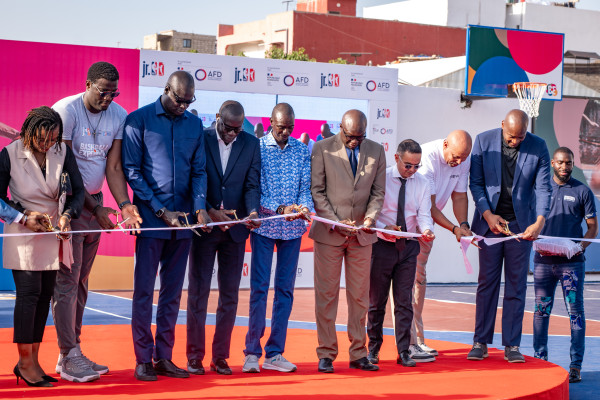
NBA Africa (www.Africa.NBA.com) and Agence Française de Développement (AFD), France's public development bank institution committed to financing and technical assistance for projects that improve the lives of people in developing and emerging economies, yesterday launched the “Jr. NBA & AFD Basketball Experience” youth development program in Guediawaye, Senegal.

The Jr. NBA & AFD Basketball Experience, launched in 2021 in Nigeria and subsequently also held in Kenya and Morocco, uses basketball as a platform to promote social inclusion and youth empowerment amongst primary and secondary school children.  In Senegal, the program will be operated by nongovernmental organization (NGO) Sports for Education and Economic Development (SEED) Project and feature weekly basketball and life-skills sessions that will educate thousands of Senegalese boys and girls about the importance of physical and mental health, wellness and social cohesion.

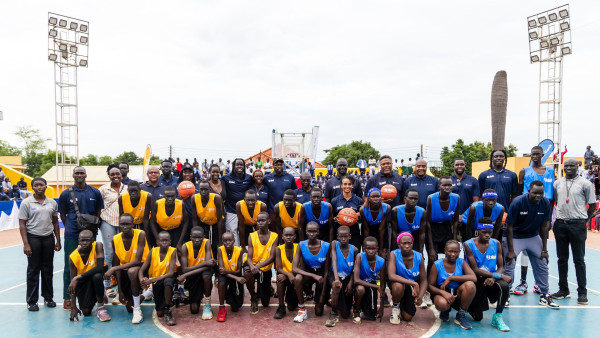
As part of the program's launch in Senegal, NBA Africa and AFD unveiled two basketball courts at The Hamo 4.5.6. Courts in Guediawaye and held a clinic for 150 boys and girls ages 16 and under.  The launch was attended by AFD Senegal Country Director Mihoub Mezouaghi; Basketball Africa League (BAL) President Amadou Gallo Fall; NBA Africa Director of Basketball Operations Kita Matungulu; and former NBA player and 2015 FIBA AfroBasket champion Olumide Oyedeji.

“Aware of the potential of sport as a vector of social cohesion, AFD has made it a strategic axis of its action to support the achievement of the Sustainable Development Goals,” said Mezouaghi. “It is in this dynamic that our collaboration with the NBA is part of what aims to promote the practice of sport in Africa through the provision of local infrastructure, the professionalization of sports educators and the organization of sports sessions, and education for young people.”

“The collaboration between NBA Africa and AFD continues to grow as we extend this initiative to reach more young people in new countries on the continent,” said Matungulu.  “The Jr. NBA & AFD Basketball Experience reflects our commitment to investing in the next generation of African youth and our belief that basketball teaches life lessons like the importance of physical and mental wellness that help children succeed on the court and in life.”

The refurbished courts, part of NBA Africa's commitment to build 1,000 basketball courts in Africa over the next decade, are expected to benefit thousands of boys and girls from the surrounding communities.

The Jr. NBA & AFD Basketball Experience is part of AFD and NBA Africa's collaboration to support basketball infrastructure and youth development across the continent and builds on the program's previous editions in Morocco and Nigeria, and its recent launch in Kenya.  To date, the program has reached nearly 90,000 boys and girls ages 12-17 and 460 coaches and physical education teachers.

The Jr. NBA/Jr. WNBA, the league's global youth basketball participation program for boys and girls, teaches the fundamental skills as well as the core values of the game at the grassroots level in an effort to help grow and improve the youth basketball experience for players, coaches and parents.  Jr. NBA/Jr. WNBA programming has directly reached more than 250,000 youth across Africa this year.

Distributed by APO Group on behalf of National Basketball Association (NBA).

Contacts:
Chumani Bambani,
NBA Africa PR & Communications,
cbambani@nba.com,
+27 65 548 1031

Francine Pipien,
AFD Senegal,
pipienf.ext@afd.fr

About NBA Africa:
NBA Africa is an affiliate of the National Basketball Association (NBA), a global sports and media organization with the mission to inspire and connect people everywhere through the power of basketball. NBA Africa conducts the league's business in Africa, including the Basketball Africa League (BAL), and has opened subsidiary offices in Cairo, Egypt; Dakar, Senegal; Johannesburg, South Africa; Lagos, Nigeria; and Nairobi, Kenya.  The league's efforts on the continent have focused on increasing access to basketball and the NBA through youth and elite development, social responsibility, media distribution, corporate partnerships, NBA Africa Games, NBA Stores, the BAL, and more.

NBA games and programming are available in all 54 African countries, and the NBA has hosted three sold-out exhibition games on the continent since 2015. The BAL, a partnership between the International Basketball Federation (FIBA) and NBA Africa, is a professional league featuring 12 club teams from across Africa that concluded its fourth season in June 2024. Fans can follow @ NBA_Africa and @ theBAL on Facebook, Instagram, X and YouTube.

About AFD:
Agence Française de Développement (AFD) Group finances, supports and accelerates the transitions necessary for a more just and resilient world. It thus contributes to implementing France's policy on sustainable development and international solidarity. It is with and for communities that we build, with our partners, solutions in more than 160 countries, as well as in 11 French overseas departments and territories.

Our objective: to reconcile economic development with the preservation of common goods: the climate, biodiversity, peace, gender equality, education and health. Our teams are involved in more than 3,600 projects in the field, which are part of the commitment of France and the French people to fulfilling the Sustainable Development Goals. For a world in common.

AFD strongly believes in the power of sport as a lever to achieve the sustainable development goals. Since the launch of its sport for development strategy in 2019, AFD has invested more than €130 million in over 160 projects that use sport as a tool to promote access to education, gender equality, youth empowerment, health and social cohesion. In Senegal, the AFD group puts its entire range of financial instruments at the service of local economic and social development actors (state, public companies, private and financial sector, NGOs, etc.) to support an inclusive development model, creating jobs, promoter of sustainable infrastructure, and respectful of the environment.  Since 2012, 115 projects have been funded, representing a commitment of more than 2.2 billion euros.

AFD.fr

Media files
National Basketball Association (NBA)
Download logo
Read moreNBA Africa and AFD Launch Youth Development Program in Senegal
7 November 2024

Afreximbank President Professor Benedict Oramah Receives Prestigious Mohammed Barkindo Lifetime Achievement Award

Location: News
Afreximbank

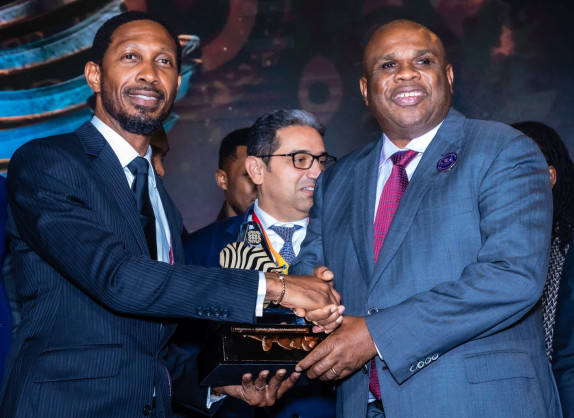
Professor Benedict Okey Oramah, President and Chairman of the Board of Directors at African Export-Import Bank (Afreximbank) (www.Afreximbank.com), has been awarded the prestigious Mohammed S. Barkindo Lifetime Achievement Award at the African Energy Awards, held on the sidelines of the African Energy Week (AEW) 2024: Invest in African Energy conference, happening between 4-8 November in Cape Town, South Africa.  

The award, named in honour of the former Secretary-General of OPEC, the late Dr Mohammed Barkindo, recognizes individuals who have made exceptional and lasting contributions to Africa's oil, gas, and energy sectors. This honour represents the highest accolade in African energy, awarded to individuals whose work has had a transformative impact on the continent's energy sector. Notable past recipient of the Mohammed S. Barkindo Lifetime Award in 2023 is Keith Hill, former President and CEO of Africa Oil Corp. 

For over three decades, Prof. Oramah has played a critical role in driving sustainable development across Africa by channelling essential funding into major oil, gas, and infrastructure projects. Since assuming leadership of Afreximbank in 2015, he has pioneered innovative financing structures that have democratised energy access and accelerated industrialization and the growth of Africa's strategically critical energy sector. 

Under Prof. Oramah's leadership, Afreximbank has made substantial contributions to the growth of Africa's energy sector. Under his stewardship, the Afreximbank has facilitated the mobilization of over USD 70 bn to support Africa's energy sector. Included in this is more than USD 5bn for refineries in Nigeria, Angola and Senegal, to further Africa's refined product independence and reduce the continent's Foreign Exchange drain.  

In Nigeria, Afreximbank now acts as Adviser and Settlement Bank for NGN denominated crude sales to Nigerian refineries. Replicated across the oil producing states in Africa, this will save several USD 100mn per annum in transactional charges alone. Ranking among President Oramah's most significant achievements is the historic signing of the Establishment Agreement and the Charter of the Africa Energy Bank (“AEB”) in Egypt in June 2024, in partnership with the African Petroleum Producers Organization (APPO). This landmark initiative aims to mobilize funding to support investments across Africa's entire energy system, aligning with the continent's energy needs and its environmental sustainability goals. 

Professor Oramah has led the energy transition agenda through the Bank's support in renewable energy transactions including, but not limited to, the EUR1.3 bn ECA import facility Project Gleam in support of the import of sonar panels for rural electrification in Angola, the EUR 147mn Government of Cameroon solar power project and the US$363 million Gasmeth Energy Rwanda gas extraction and processing project.  

Significantly, the majority of the above-mentioned transactions received numerous industry awards for their impact on the continent, their complexity and their unique structures.   

Prior to joining Afreximbank, Professor Oramah distinguished himself in international trade finance and development. Beginning his career at the Nigerian Export-Import Bank (NEXIM), he played an instrumental role in shaping Nigeria's export development strategies. Prof Oramah holds a Ph.D. in Agricultural Economics from Obafemi Awolowo University in Nigeria.  

Acknowledging the award, Prof. Oramah commented: 

“It is a great honour to be awarded the Mohammed S. Barkindo Lifetime Achievement Award. Whilst a great honour for me personally, this award reflects the work and dedication of many others, including my colleagues at Afreximbank and our various partners. At Afreximbank, we remain deeply committed to reducing energy deficit on the continent and ensuring we are self-sufficient. 

Distributed by APO Group on behalf of Afreximbank.

Media Contact: 
Mr Vincent Musumba 
Manager, Communications and Events (Media Relations) 
Email: press@afreximbank.com 

Follow us on: 
Twitter: https://apo-opa.co/4fwz0D3
Facebook: https://apo-opa.co/4emjUyg
LinkedIn: https://apo-opa.co/4feURPa
Instagram: https://apo-opa.co/3CjGevc

About Afreximbank : 
African Export-Import Bank (Afreximbank) is a Pan-African multilateral financial institution mandated to finance and promote intra-and extra-African trade. For 30 years, the Bank has been deploying innovative structures to deliver financing solutions that support the transformation of the structure of Africa's trade, accelerating industrialization and intra-regional trade, thereby boosting economic expansion in Africa. A stalwart supporter of the African Continental Free Trade Agreement (AfCFTA), Afreximbank has launched a Pan-African Payment and Settlement System (PAPSS) that was adopted by the African Union (AU) as the payment and settlement platform to underpin the implementation of the AfCFTA. Working with the AfCFTA Secretariat and the AU, the Bank is setting up a US$10 billion Adjustment Fund to support countries to effectively participate in the AfCFTA. At the end of December 2023, Afreximbank's total assets and guarantees stood at over US$37.3 billion, and its shareholder funds amounted to US$6.1 billion. The Bank disbursed more than US$104 billion between 2016 and 2023. Afreximbank has investment grade ratings assigned by GCR (international scale) (A), Moody's (Baa1), Japan Credit Rating Agency (JCR) (A-) and Fitch (BBB). Afreximbank has evolved into a group entity comprising the Bank, its impact fund subsidiary called the Fund for Export Development Africa (FEDA), and its insurance management subsidiary, AfrexInsure, (together, “the Group”). The Bank is headquartered in Cairo, Egypt. 

For more information, visit: www.Afreximbank.com 

Media files
Afreximbank
Download logo
Read moreAfreximbank President Professor Benedict Oramah Receives Prestigious Mohammed Barkindo Lifetime Achievement Award
30 October 2024

Tanzania President, Merck Foundation Chairman and CEO with 15 First Ladies inaugurate their 11th Africa Asia Luminary 2024

Location: News
Merck Foundation

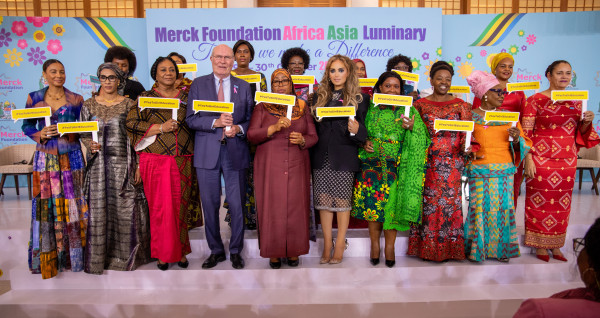
  • The 11th Edition of Merck Foundation Africa Asia Luminary was officially inaugurated by The President of the United Republic of Tanzania, H.E. Dr. SAMIA SULUHU HASSAN, Chairman of Merck Foundation Board of Trustees, Prof. Dr. Frank Stangenberg-Haverkamp and Merck Foundation CEO, Senator, Dr. Rasha Kelej.

  • The First Ladies of Burundi, Cabo Verde, Central African Republic, Democratic Republic of The Congo, Gabon, The Gambia, Ghana, Kenya, Liberia, Malawi, Maldives, Mozambique, Democratic Republic of São Tomé and Príncipe, Zimbabwe and Zanzibar were the Guests of Honor and Keynote Speakers for the 11th Edition of Merck Foundation's Annual Conference.
  • More than 6,000 healthcare providers, policymakers and media from over 70 English, French, Spanish and Portuguese speaking countries attended the Luminary through hybrid model to benefit from five parallel scientific and social sessions to advance healthcare capacity and awareness in 44 critical and underserved medical specialties.
  • Celebrating 7th Anniversary of Merck Foundation and marking 12-year journey of their development programs, during 2024 Luminary. 
  • Link to Live Stream of Inaugural Session of Merck Foundation Africa Asia Luminary 2024: https://apo-opa.co/40tsLex

Merck Foundation (www.Merck-Foundation.com), the philanthropic arm of Merck KGaA Germany, conducted the 11th Edition of their annual conference, “Merck Foundation Africa Asia Luminary”, under the patronage of The President of Tanzania, and in partnership with the Government of Tanzania on 29th and 30th October, in Dar es Salaam, Tanzania. The conference was officially inaugurated by H.E. Dr. SAMIA SULUHU HASSAN, The President of the United Republic of Tanzania together with Prof. Dr. Frank Stangenberg-Haverkamp, Chairman of Merck Foundation Board of Trustees and Senator, Dr. Rasha Kelej, CEO of Merck Foundation, along with First Ladies of 15 Countries, who joined as the Guests of Honor and Keynote Speakers.

While inaugurating the conference, The President of United Republic of Tanzania, H.E Dr. SAMIA SULUHU HASSAN emphasized “I am delighted to host this prestigious conference in Tanzania. It is a great honor to inaugurate the conference alongside the First Ladies of Africa and Asia. I am certain that this conference will help us to achieve our shared mission — to make a transformation in the health and well-being of our people. I deeply appreciate the programs of Merck Foundation that are building healthcare capacity, breaking infertility stigma, and supporting girl education.”

Senator Dr. Rasha Kelej, CEO of Merck Foundation and Chairperson of Merck Foundation Africa Asia Luminary emphasized, “I am delighted to have Her Excellency, Dr. SAMIA SULUHU HASSAN, The President of the United Republic of Tanzania, inaugurate our annual conference. I also extend my heartfelt thanks to our partner, the Government of Tanzania, for their unwavering support in making it a success. Moreover, I am honored to welcome our esteemed Guests of Honor and Keynote Speakers, the First Ladies of African and Asian Countries, also the Ambassadors of the “Merck Foundation More Than a Mother”. Together, we shared experiences and engaged in meaningful discussions on the impact of our programs, aimed at transforming patient care and raising awareness on a wide range of critical social and health issues."

Prof. Dr. Frank Stangenberg Haverkamp, Chairman of Merck Foundation Board of Trustees added, “I would like to thank H.E. Dr. SAMIA SULUHU HASSAN, The President of Tanzania, our partners, The First Ladies of Africa and Asia, along with African Ministers, Health Experts, Policy Makers, Government Officials, Academia and Media from over 70 countries for joining hands with us to realize the Merck Foundation's vision that  “Everyone can lead a Healthy and Happy life.”

The First Ladies of 15 Countries, who joined as the Guests of Honor and Keynote Speakers are:

  • H.E. Madam ANGELINE NDAYISHIMIYE, The First Lady of the Republic of Burundi
  • H.E. Dr. DÉBORA KATISA CARVALHO, The First Lady of the Republic of Cabo Verde
  • H.E. Madam BRIGITTE TOUADERA, The First Lady of Central African Republic
  • H.E. Madam DENISE NYAKERU TSHISEKEDI, The First Lady of the Democratic Republic of The Congo
  • H.E. Madam ZITA OLIGUI NGUEMA, The First Lady of the Gabonese Republic
  • H.E. Mrs. FATOUMATTA BAH-BARROW, The First Lady of the Republic of The Gambia
  • H.E. Mrs. REBECCA AKUFO-ADDO, The First Lady of the Republic of Ghana
  • H.E. Mrs. RACHEL RUTO, The First Lady of Kenya
  • H.E. Mrs. KARTUMU YARTA BOAKAI, The First Lady of the Republic of Liberia
  • H.E. Mrs. MONICA CHAKWERA, The First Lady of the Republic of Malawi
  • H.E. Mrs. SAJIDHA MOHAMED, The First Lady of the Republic of Maldives
  • H.E. Mrs. ISAURA FERRÃO NYUSI, The First Lady of the Republic of Mozambique
  • H.E. Mrs. MARIA DE FATIMA VILA NOVA, The First Lady of the Democratic Republic of São Tomé and Príncipe
  • H.E Mrs. MARIAM MWINYI, The First Lady of Zanzibar
  • H.E. Amai Dr. AUXILLIA MNANGAGWA, The First Lady of the Republic of Zimbabwe

“I am proud to share that Merck Foundation has provided more than 2080 scholarships to young doctors from 50 countries in 42 critical and underserved specialties such as Oncology and Cancer care, Diabetes, Endocrinology, Cardiovascular, Fertility Care, Embryology, Sexual & Reproductive Medicine, Internal Medicine, Respiratory Medicine, Acute Medicine, Critical Care, Pediatric Emergency, Gastroenterology, Rheumatology, Clinical Psychiatry, Urology, Ophthalmology, General Surgery, Trauma & Orthopedic, Dermatology, Neonatal Care, Pain Management, Clinical Microbiology & Infectious Diseases, Advanced Surgical Practice, Neuroimaging for Research and more. Many of them are becoming the first specialists in their countries”, added Senator Kelej.  

During the 11th Edition of Merck Foundation Africa Asia Luminary, two important occasions were marked; the 7th Anniversary of Merck Foundation and 12 years of Merck Foundation's development programs that started in 2012.

On the first day of the conference, the Plenary Session of the Merck Foundation Africa Asia Luminary 2024 took place, featuring a high-level panel discussion with the participating First Ladies of Africa and Asia. Moreover, two high-level ministerial panel discussion were held with African Ministers and top healthcare experts from across the globe.

The Day 2 of the conference will have five key parallel medical and scientific sessions, covering topics such as oncology, diabetes and hypertension, fertility and reproductive care, and medical capacity building in other specialties like respiratory care, acute care, emergency pediatric and neonatal care, and more. Additionally, a community awareness session, Merck Foundation Health Media Training, will be conducted for African journalists. This session will emphasize the critical role of the media in influencing communities and driving cultural change, with regards to a wide range of social and health issues like Breaking Infertility Stigma, Supporting Girls' Education, Stopping GBV, Ending Child Marriage & FGM, Empowering Women, Diabetes and Hypertension Awareness.

Countries participating in the 11th Edition of Merck Foundation Africa Asia Luminary include:

Angola, Bangladesh, Benin, Botswana, Burkina Faso, Burundi, Cameroon, Canada, Central Africa Republic, Cambodia, Chad, Côte d'Ivoire, Republic of the Congo, Democratic Republic of the Congo, Egypt, Ethiopia, France, Gabon, Germany, Ghana, Guinea – Bissau, Guinea – Conakry, India, Indonesia, Kenya, Lesotho, Liberia, Malawi, Malaysia, Mali, Mauritania, Mauritius, Mexico, Mozambique, Myanmar, Namibia, Nepal, Niger, Nigeria, Peru, Philippines, Russia, Rwanda, Senegal, Sierra Leone, Somalia, South Africa, Sri Lanka, Sudan, Tanzania, Thailand, The Gambia, Togo, Tunisia, U.A.E, UK, Uganda, US, Vietnam, Zambia, Zimbabwe and more.

The 11th Edition of Merck Foundation Africa Asia Luminary 2024 is streamed live on the social media handles of Merck Foundation and Senator, Dr. Rasha Kelej, CEO of Merck Foundation:

@ Merck Foundation: Facebook (http://apo-opa.co/3Yq65sX), X (http://apo-opa.co/40p49nc), Instagram (http://apo-opa.co/3Uwqqvl), and YouTube (http://apo-opa.co/3NLGJAS).

@ Rasha Kelej: Facebook (http://apo-opa.co/3Uulqrf), X (http://apo-opa.co/3Yq65Jt), Instagram (http://apo-opa.co/40krkip), and YouTube (http://apo-opa.co/40nOp3t).

Link to the Facebook live stream of Inaugural Session of Merck Foundation Africa Asia Luminary & African First Ladies High Level Panel: https://apo-opa.co/40tsLex

Merck Foundation is transforming the Patient care landscape and making history together with their partners in Africa, Asia, and beyond, through:

• 2080+ Scholarships provided by Merck Foundation for doctors from 52 Countries in 42 critical and underserved medical specialties.  

Merck Foundation is also creating a culture shift and breaking the silence about a wide range of social and health issues in Africa and underserved communities through:

• 3500+ Media Persons from more than 35 countries trained to better raise awareness about different social and health issues

• 8 Different Awards launched annually for best media coverage, fashion designers, films, and songs,

• Around 30 songs to address health and social issues, by local singers across Africa

• 8 Children's Storybooks in three languages - English, French, and Portuguese

• 7 Awareness Animation films in five languages - English, French, Portuguese, Spanish and Swahili to raise awareness about prevention and early detection of Diabetes & Hypertension and supporting girl education.

• Pan African TV Program "Our Africa by Merck Foundation” addressing Social and Health Issues in Africa through “Fashion and ART with Purpose” Community

• 700+ Girls from 15 African countries supported through scholarships or school items, annually.

• 15 Social Media Channels with more than 6 Million Followers.

Distributed by APO Group on behalf of Merck Foundation.

Contact details:
Mehak Handa
Community Awareness Program Manager
+91 9310087613 / +91 9319606669
mehak.handa@external.merckgroup.com

Join the conversation on our social media platforms below and let your voice be heard!
Facebook: https://apo-opa.co/3Yq65sX
X (Twitter): https://apo-opa.co/3O4YBa5
YouTube: https://apo-opa.co/3NLGJAS
Instagram: https://apo-opa.co/3Uwqqvl
Flickr: https://apo-opa.co/40nL051
Threads: https://apo-opa.co/3NJN9jN
Website: www.Merck-Foundation.com
Download Merck Foundation App: https://apo-opa.co/40njaFK

About Merck Foundation:
The Merck Foundation, established in 2017, is the philanthropic arm of Merck KGaA Germany, aims to improve the health and wellbeing of people and advance their lives through science and technology. Our efforts are primarily focused on improving access to quality & equitable healthcare solutions in underserved communities, building healthcare & scientific research capacity, empowering girls in education and empowering people in STEM (Science, Technology, Engineering, and Mathematics) with a special focus on women and youth. All Merck Foundation press releases are distributed by e-mail at the same time they become available on the Merck Foundation Website.  Please visit www.Merck-Foundation.com to read more. Follow the social media of Merck Foundation: Facebook (https://apo-opa.co/3UrWznZ), X (https://apo-opa.co/3NLcqtQ), Instagram (https://apo-opa.co/3UtDmlT), YouTube (https://apo-opa.co/3UqOAaF), Threads (https://apo-opa.co/3UvSCP8) and Flickr (https://apo-opa.co/3Yo1jfw).

The Merck Foundation is dedicated to improving social and health outcomes for communities in need. While it collaborates with various partners, including governments to achieve its humanitarian goals, the foundation remains strictly neutral in political matters. It does not engage in or support any political activities, elections, or regimes, focusing solely on its mission to elevate humanity and enhance well-being while maintaining a strict non-political stance in all of its endeavors.

Media files
Merck Foundation
Download logo
Read moreTanzania President, Merck Foundation Chairman and CEO with 15 First Ladies inaugurate their 11th Africa Asia Luminary 2024
11 October 2024

African Energy Chamber Reaffirms Commitment to Host AEW in Cape Town Through 2030

Location: Business
African Energy Chamber

The African Energy Chamber (AEC) (www.EnergyChamber.org) – the voice of the African energy sector – is proud to announce that the African Energy Week (AEW): Invest in African Energy conference remains committed to hosting the African continent's most successful energy event in Cape Town. AEW was established in 2021 under the premise to make energy poverty history by 2030 and, now in its fourth immensely successfully edition, we remain devoted to keeping the event at Cape Town's International Conference Center (CTICC) until 2030. 

Africa Oil Week (AOW) recently confirmed it will hold its 2025 edition in Accra, Ghana, and while we wish them the best in their endeavors, the Chamber is steadfast in its commitment to hosting AEW – the continent's premier energy event – in Cape Town. In 2021, AOW made the decision to take its conference to Dubai, citing the fact that Africa was not equipped to host a large-scale conference in a safe manner due to the COVID-19 pandemic. AOW claimed that the event is focused on supporting Africa's needs, and yet the decisions to leave Cape Town for Dubai contradicted this very ambition. 

AEW: Invest in African Energy is the platform of choice for project operators, financiers, technology providers and government, and has emerged as the official place to sign deals in African energy. Visit www.AECWeek.com for more information about this exciting event. 

What AEW sought to prove, and was successful in doing, is that Africa has always been capable of hosting large-scale events. Under very strict COVID-19 safety measures, AEW 2021 hosted delegations from both the African and global energy sector. In 2022, the conference attracted thousands of delegates, while in 2023, the conference supported an even bigger and better event. When Africa needed investment, AEW was quick to respond, providing a platform where stakeholders could meet, and deals be made. 

Now, in 2024, AEW: Invest in African Energy continues our mandate to eradicate energy poverty by 2030 and serves as the official meeting place for Africa's energy elite. At the forefront of the African energy industry, the conference promotes the role Africa plays in global energy matters, centered around Africa-led dialogue and decision making. That's why we remain committed to Cape Town, a city that represents an industrial, business and socioeconomic hub for the entire African continent. Furthermore, AEW's focus transcends South Africa, with the event recognizing and supporting the development of various oil and gas projects across the continent.  

South Africa, and notably Minister Gwede Mantashe and the Department of Mineral Resources and Energy have been steadfast supporters of AEW since its inception in 2021. Through our partnership with the City of Cape Town and the government, we have created numerous job opportunities in Cape Town, contributing significantly to the local tourism industry and Cape Town-based vendors alike. We remain committed to our promise to position Cape Town as the hub for oil, gas and energy discussions in Africa. 

We reaffirm our pledge to maintain AEW's presence in Cape Town, rather than relocating to Dubai or other destinations outside of Africa. Our focus is on addressing key issues surrounding the African energy sector, ensuring that South African service providers, small business, local enterprises and stakeholders continue to benefit from our efforts. AEW not only generates jobs, but also stimulates economic growth. 

As the largest energy conference in Africa, we acknowledge the challenges faced by Cape Town and are dedicated to making a positive impact on the community. 

Meanwhile, outside of South Africa, the continent is seeing monumental growth. In Senegal and Mauritania, first production is soon expected for the Greater Tortue Ahmeyim conventional gas development while Senegal, just this year, achieved first oil production, thus showcasing the potential for offshore exploration and production investment. In Uganda, progress continues to be made on the Lake Albert Development, a multi-faceted project that promises new opportunities for energy security and industrialization in East Africa. In the Republic of the Congo, marginal projects are making headway as the government prioritizes gas investment and development while Libya recently announced that oil production has reached 1.217 million barrels per day. 

Meanwhile, South Africa's neighbor, Namibia, has made a litany of major oil and gas discoveries since 2022 and is making significant strides to develop these major finds. Mozambique is gradually making progress with its three major gas projects, opening new opportunities for regional trade. All of these projects and many more are showcased at AEW: Invest in African Energy, with investment opportunities made clear to existing and potential investors. AEW promotes the African position on the future of Africa's energy sector. By advocating personal responsibility, free markets, individual liberty and an enabling environment for investors, AEW ensure that Africa's oil and natural gas industry benefits Africans, rather than continuing a reliance on foreign aid and assistance.  

Therefore, we stand wholly committed to leveraging all Cape Town has to offer, a city that has been good to every edition of our conference since 2021. At the CTICC, we will continue to host panel discussions, investor forums, industry summits and one-one-one meeting opportunities and driving the discussions that will reshape the trajectory of the continent's energy development. 

“The Chamber is unwavering in our commitment to hosting AEW in Cape Town, a city that embodies the spirit of opportunity and innovation. The city is a hub for Africa's energy dialogue and, by staying here, we reinforce our mission to make energy poverty history by 2030. Cape Town has proven to be a premier venue for fostering critical dialogue and investment in Africa's energy sector and we believe that this vibrant city is the perfect backdrop for our mandate. Together, we will continue to drive progress and empower local stakeholders for sustainable growth,” states AEC Executive Chairman NJ Ayuk. 

Distributed by APO Group on behalf of African Energy Chamber.
Media files
African Energy Chamber
Download logo
Read moreAfrican Energy Chamber Reaffirms Commitment to Host AEW in Cape Town Through 2030
11 October 2024

AEW 2024 Ministerial Lineup to Foster Strategies to Alleviate Energy Poverty in Africa

Location: News
African Energy Chamber

Energy and hydrocarbon ministers from across Africa have joined the African Energy Week (AEW): Invest in African Energy conference to discuss investment opportunities while engaging with financiers and project developers. Representing the entire energy value chain from oil and gas to renewable energy to power and infrastructure, regional ministers will unpack the continent's strategies to make energy poverty history by 2030.  

North African countries such as Libya and Algeria have set ambitious production targets for the coming years, aiming to plug Europe's energy gap while enhancing domestic energy access. Libya aims to boost output to 2 million barrels per day (bpd) in the next two to three years while Algeria aims to produce over 1.5 million bpd in 2025. Meeting production goals requires accelerated exploration, with both countries promoting investments in upstream drilling. At AEW: Invest in African Energy 2024, North African energy and hydrocarbon ministers will provide insight into these opportunities. They are joined by ministers representing global and African oil and gas organizations, including:  

  • Khalifa Abdulsadek, Minister of Oil & Gas, Libya 
  • Mohamed Arkab, Minister of Energy and Mines, Algeria 
  • Haitham Al Ghais, Secretary General, OPEC 
  • Omar Farouk Ibrahim, Secretary General of APPO 

In Southern Africa, the region is ripe with opportunity. An estimated 11 billion barrels has been found off Namibia's coast since 2022; over 100 trillion cubic feet (tcf) of gas found offshore Mozambique; and an estimated 200 tcf likely held onshore South Africa. While Angola - the second largest oil producer in sub-Saharan Africa – still offers significant potential in both on- and offshore basins, Southern African countries such as Zambia are largely underexplored, presenting strategic opportunities for exploration companies. At AEW: Invest in African Energy 2024, Southern African energy and hydrocarbon ministers will outline strategic basins and upcoming projects. Speakers include:  

  • Carlos Zacarias, Minister, Ministry of Natural Resources & Energy, Mozambique 
  • Diamantino Pedro Azevedo, Minister of Mineral Resources and Petroleum, Angola 
  • Gwede Mantashe, Minister, Ministry of Mineral Resources and Energy, South Africa 
  • Kgosientsho Ramokgopa, Minister of Electricity, South Africa 
  • Situmbeko Musokotwane, Minister of Finance and National Planning, Zambia 
  • Tom Alweendo, Minister of Mines and Energy, Namibia 

Recent offshore projects have positioned West Africa as a global hydrocarbon hotspot. Mauritania and Senegal's Greater Tortue Ahmeyim LNG project will start production this year, following the start of operations at Senegal's Sangomar Oil Project in mid-2024. Nigeria's Dangote Refinery – the largest in Africa at 650,000 bpd – recently secured a 400,000-bpd feedstock supply from the government a year after its start while Ivory Coast's Belaine project – the first net-zero upstream development in Africa – plans to commence phase two operations this December. Regional ministers will provide an update on ongoing projects, future investments and efforts to unlock additional reserves at AEW: Invest in African Energy 2024. Ministers include:  

  • Aboubacar Camara, Minister of Energy, Hydropower and Hydrocarbons, Guinea Conakry 
  • Birame Soulèye Diop, Minister of Energy, Oil and Mines Republic of Senegal 
  • Chief. Adebayo Adelabu, Minister of Power, Federal Republic of Nigeria 
  • Collins Adomako-Mensah, Deputy Minister of Energy in Charge of Power, Ghana 
  • Ekperikpe Ekpo, Minister of State for Petroleum Resources (Gas), Nigeria 
  • Foday Mansaray, Director General, PDSL 
  • Heineken Lokpobiri, Minister of State for Petroleum Resources (Oil), Nigeria 
  • Matthew Opoku Prempeh, Minister of Energy, Ghana 
  • Mohamed Ould Khaled, Minister of Petroleum & Energy, Ministry of Petroleum, Mines & Energy, Mauritania 
  • Nani Juwara, Minister of Energy and Petroleum, The Gambia 
  • Viriato Luis Soares Cassama, Minister of Environment & Biodiversity, Guinea-Bissau 
  • Yacouba Zabré Gouba, Minister of Energy and Mines, Burkina Faso 

Central Africa – with major producers such as Equatorial Guinea, Gabon and the Republic of Congo – are inviting investors to support diversification efforts in production and refining. Leveraging natural gas, these markets aim to unlock reserves in both domestic and regional basins while boosting export capacity and intra-African trade. The Republic of Congo exported its first LNG cargo in 2024 from the Tango FLNG facility, targeting 3 million tons per year by 2025, while Equatorial Guinea forged an agreement with Nigeria to import and process gas at its Punta Europa facility. At AEW: Invest in African Energy 2024, regional ministers will outline these initiatives, while sharing insight into available opportunities in natural gas. Ministers include:  

  • Antonio Uburu Ondo, Minister of Mines and Hydrocarbons, Equatorial Guinea 
  • Bruno Jean-Richard Itoua, Minister of Hydrocarbons, the Republic of Congo 
  • Marcel Abeke, Minister of Petroleum, Republic of Gabon 

As a frontier market, East Africa is incentivizing exploration in both on- and offshore basins while driving infrastructure and field development projects forward. Uganda inked a deal with Ethiopia in 2024 to export crude via pipeline while South Sudan is seeking diversified export routes and promoting exploration onshore. Regional ministers will share more insights at AEW: Invest in African Energy 2024. Speakers include:   

  • Ing Habtamu Itefa Geleta, Minister of Water and Energy, Ethiopia 
  • Okasaai Sidronious Opolot, Minister of state for Energy, Ministry of Energy and Mineral Development, Uganda 
  • Puot Kang Chol, Minister Petroleum, South Sudan 

AEW: Invest in African Energy is the platform of choice for project operators, financiers, technology providers and government, and has emerged as the official place to sign deals in African energy. Visit www.AECWeek.com for more information about this exciting event.  

Distributed by APO Group on behalf of African Energy Chamber.
Media files
African Energy Chamber
Download logo
Read moreAEW 2024 Ministerial Lineup to Foster Strategies to Alleviate Energy Poverty in Africa
8 October 2024

NBA Africa and Opportunity International to Build Basketball Courts and Conduct Youth Clinics in Kenya and Rwanda

Location: Sport
National Basketball Association (NBA)

NBA Africa (https://Africa.NBA.com/) and Opportunity International, a global nonprofit organization that develops innovative programs that use financial services, training and support to address some of the greatest challenges facing those living in poverty around the world, today announced a collaboration to build outdoor basketball courts and conduct youth clinics in Nairobi, Kenya and Kigali, Rwanda next year.  The collaboration will support NBA Africa's commitment to build 1,000 courts in Africa over the next decade, including 100 in Kenya.

As part of the collaboration, NBA Africa and Opportunity International will also hold a development program for coaches and teachers in both cities aimed at providing them with skills and best practices in coaching, refereeing, game operations, event management, program administration, and more.

The announcement was made today by NBA Deputy Commissioner and Chief Operating Officer Mark Tatum, Opportunity International CEO Atul Tandon and five-time NBA champion Derek Fisher at a press conference in Nairobi.

“Our collaboration with Opportunity International reflects our commitment to investing in local basketball ecosystems across Africa and providing youth with the resources and opportunities to develop their leadership and basketball skills,” said Tatum.  “We look forward to working together to create safe spaces where Kenyan and Rwandan youth can play the game and participate in programs that help develop the next generation of coaches and mentors.”

“We are absolutely thrilled to work with NBA Africa to bring world-class basketball courts and coaches to Africa,” said Tandon.  “This initiative is key to our longstanding commitment to bring more education and more opportunities to the youth of Africa, and we are grateful to NBA Africa, NBA Deputy Commissioner Tatum, and our longtime friend and partner Sam Garvin for coming together to help build a rising Africa.”

The Jr. NBA, the league's global youth basketball participation program for boys and girls, teaches the fundamental skills as well as the core values of the game at the grassroots level in an effort to help grow and improve the youth basketball experience for players, coaches and parents.  Last year, Jr. NBA programming directly reached more than 170,000 youth across Africa.

Distributed by APO Group on behalf of National Basketball Association (NBA).

About NBA Africa:
NBA Africa is an affiliate of the National Basketball Association (NBA), a global sports and media organization with the mission to inspire and connect people everywhere through the power of basketball. NBA Africa conducts the league's business in Africa, including the Basketball Africa League (BAL), and has opened subsidiary offices in Cairo, Egypt; Dakar, Senegal; Johannesburg, South Africa; Lagos, Nigeria; and Nairobi, Kenya. The league's efforts on the continent have focused on increasing access to basketball and the NBA through youth and elite development, social responsibility, media distribution, corporate partnerships, NBA Africa Games, an NBA Store, the BAL, and more.

NBA games and programming are available in all 54 African countries, and the NBA has hosted three sold-out exhibition games on the continent since 2015. The BAL, a partnership between the International Basketball Federation (FIBA) and NBA Africa, is a professional league featuring 12 club teams from across Africa that concluded its fourth season in June 2024. Fans can follow @ NBA_Africa and @ theBAL on Facebook, Instagram, X and YouTube.

About Opportunity International:
Opportunity International is a global non-profit that has been equipping people to build sustainable livelihoods and educate their children for 53 years.  Opportunity works across 30 countries to provide over 20 million families with innovative financial resources, training, and support to grow their small businesses and send their children to school.

Media files
National Basketball Association (NBA)
Download logo
Read moreNBA Africa and Opportunity International to Build Basketball Courts and Conduct Youth Clinics in Kenya and Rwanda
26 September 2024

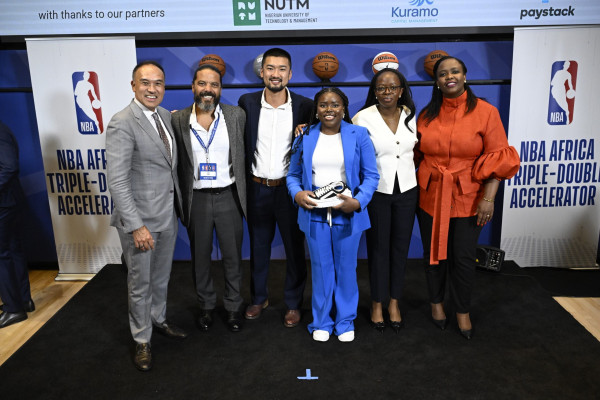
National Basketball Association (NBA) Africa Announces Four Prize-Winning Companies at First Startup Accelerator Demo Day

Location: Sport
National Basketball Association (NBA)

Festival Coins (Nigeria), Salubata (Nigeria), HustleSasa (Kenya) and UBR VR (Egypt) Win Top Prizes, including Financial Support and Mentorship; Paystack Payments Ltd., Kuramo Capital Management and Nigerian University of Technology and Management Join Demo Day as NBA Africa Triple-Double Accelerator's First Official Partners (www.NBA.com).

NBA Deputy Commissioner and Chief Operating Officer Mark Tatum today announced the four prize-winning startup businesses from “NBA Africa Triple-Double Accelerator” (http://apo-opa.co/3ZLmNoC), which NBA Africa launched in April 2024 to support the continent's technology ecosystem and the next generation of African entrepreneurs.  The four winning businesses – Festival Coins (Nigeria), Salubata (Nigeria), HustleSasa (Kenya) and UBR VR (Egypt) – will be awarded financial support and mentorship, including an opportunity to participate in workshops and development programs facilitated by NBA Africa or its partners. 

The 10 finalists, shortlisted from more than 700 early-stage African startup businesses that applied to participate, pitched their products to a panel of international industry leaders at a Demo Day at the NBA headquarters in New York City yesterday. The judges included Accelerate Africa Co-Founder and CEO Iyinoluwa Aboyeji; NBA Assistant General Counsel, Technology, Software Licensing and Digital Platforms Franciscus Diaba; Managing Director, Centre for the Fourth Industrial Revolution Rwanda Crystal Rugege; Chegg Inc. Executive Chairman Dan Rosensweig; and Partner at Development Partners International Joanne Yoo.  NBA Commissioner Adam Silver also delivered opening remarks and met the 10 finalists.

Below are the four winning businesses:

  1. Festival Coins (Nigeria), an event technology company that offers a customizable, no-code event registration and ticketing platform called Tix Africa for events in Nigeria and Ghana, won the first-place prize and $50,000. 
  2. Salubata (Nigeria), a company that creates modular shoes repurposed from plastic waste to reduce the global carbon footprint through its environmentally friendly products, won the second-place prize and $40,000. 
  3. HustleSasa (Kenya), which provides live event services that support payment processing, attendee check-in, merchandise sales, customer data management, influencer tracking, and more, won the third-place prize and $30,000.
  4. UBR VR (Egypt), which delivers state-of-the-art, fully immersive, in-person virtual reality (VR) experiences across Egypt, won the fourth-place prize and $20,000.

The six other finalists each received a $10,000 prize. 

The Demo Day was supported by three official partners: Paystack Payment Ltd. (http://apo-opa.co/3XHn75j), Kuramo Capital Management (http://apo-opa.co/3ZGroJ2) and Nigerian University of Technology and Management (NUTM) (http://apo-opa.co/3XHn1dX).  

“Congratulations to all of the incredibly talented entrepreneurs who participated in this year's program, with special recognition to the 10 finalists and four distinguished winners,” said NBA Africa CEO Clare Akamanzi.  “These outstanding companies have demonstrated the creativity, drive and determination to shape the future of sport in Africa and will help the continent take its rightful place on the world stage.  We look forward to following their successes for many years to come.”

“NBA Africa Triple-Double Accelerator” is open to early-stage startups in Africa that develop solutions in event management and ticketing, youth development, AI, and digital marketing. 

Distributed by APO Group on behalf of National Basketball Association (NBA).

About NBA Africa:
NBA Africa is an affiliate of the National Basketball Association (NBA), a global sports and media organization with the mission to inspire and connect people everywhere through the power of basketball.  NBA Africa conducts the league's business in Africa, including the Basketball Africa League (BAL), and has opened subsidiary offices in Cairo, Egypt; Dakar, Senegal; Johannesburg, South Africa; Lagos, Nigeria; and Nairobi, Kenya. The league's efforts on the continent have focused on increasing access to basketball and the NBA through youth and elite development, social responsibility, media distribution, corporate partnerships, NBA Africa Games, NBA Stores, the BAL, and more. 

NBA games and programming are available in all 54 African countries, and the NBA has hosted three sold-out exhibition games on the continent since 2015. The BAL, a partnership between the International Basketball Federation (FIBA) and NBA Africa, is a professional league featuring 12 club teams from across Africa that concluded its fourth season in June 2024.  Fans can follow @ NBA_Africa (https://apo-opa.co/3XytCXW) and @ theBAL (https://apo-opa.co/3N01pod) on Facebook, Instagram, X and YouTube.

Media files
National Basketball Association (NBA)
Download logo
Read moreNational Basketball Association (NBA) Africa Announces Four Prize-Winning Companies at First Startup Accelerator Demo Day
18 September 2024

Payretailers Expands Further Into Africa, Boosting Financial Inclusion Across Eight Additional Key Markets

Location: Business
PayRetailers

Expansion includes Burkina Faso, Cameroon, Kenya, Ivory Coast, Ghana, Senegal, South Africa, Nigeria; Leveraging success in Latin America to provide underbanked populations in Africa with efficient payment functions. 

PayRetailers, the leading payment processor for Latin America, has today announced further expansion into Africa. With coverage now across 12 countries, the company offers a unified simple payment solution that will be a game changer for cross-border online merchants looking at Africa as their next move for strategic growth.

PayRetailers offer a simple, user-friendly, and scalable experience to businesses looking to grow their regional operations and give them access to major local payment methods like MPESA, Airtel, and MTN. The further expansion includes Burkina Faso, Cameroon, Kenya, Ivory Coast, Ghana, Senegal, South Africa and Nigeria, having recently launched in Rwanda, Zambia, Uganda, and Tanzania three months ago.

This expansion effort further solidifies PayRetailers' ability to unlock new growth opportunities for their clients, giving them easy access to additional emerging markets. For existing clients, in fact, this process requires zero integration efforts, as it is all handled via the same API.

With many populations across Africa being underbanked, PayRetailers accelerates financial inclusion across the region by supporting businesses with their growth journey. The market is increasingly mobile and connected, with global businesses seeking to tap into the strong growth opportunities across Africa.

The expansion marks a significant milestone in PayRetailers' ambitious growth plans, with further expansion planned into more African countries as well as Europe. Leveraging its extensive experience in Latin America, the company is well equipped to address the unique needs of African consumers and businesses.

Jonathan Vintner, Global Head of Sales at PayRetailers, said:

“Expanding into eight new markets marks a significant milestone for PayRetailers as we continue our mission to bring tailored payment solutions to diverse regions. Africa is a vibrant and varied continent, with payment preferences that differ from region to region. For example, our launch in Kenya enables merchants to access M-Pesa, the country's leading mobile money provider, while in South Africa, we're offering a blend of card and cash solutions to meet local demands. All of this is seamlessly integrated into our existing API, allowing merchants to access the top payment methods across Latin America and now Africa through a single connection—with more countries on the horizon”.

Distributed by APO Group on behalf of PayRetailers.

For media inquiries, please contact:
Issie Rees-Davies
Account Manager
Lansons
payretailers@lansons.com
07712447161

About PayRetailers: 
Founded in 2017, PayRetailers is a global payment processing solution for secure and efficient transactions in Latin America and Africa. The company is a trusted partner for businesses seeking customized payment solutions. With a flexible platform supported by a direct API and commercial agreements, PayRetailers provides access to 300+ local payment methods, adapting rapidly to market demands. Its own technological architecture is highly flexible and scalable, allowing rapid innovation to meet the demands of constantly evolving markets. For more information about PayRetailers, visit www.PayRetailers.com

Media files
PayRetailers
Download logo
Read morePayretailers Expands Further Into Africa, Boosting Financial Inclusion Across Eight Additional Key Markets
13 September 2024

Mandela Washington Fellowship for Young African Leaders

Location: News

U.S. Embassy in Namibia
Download logo

The Mandela Washington Fellowship, begun in 2014, is the flagship program of President Obama's Young African Leaders Initiative (YALI) that empowers young leaders through academic coursework, leadership training, and networking. In 2016, the Fellowship provided nearly 1,000 outstanding young leaders from Sub-Saharan Africa with the opportunity to hone their skills at a U.S. higher education institution with support for professional development after they return home.

Ideal candidates are self-identified leaders, aged 25 to 35, with proven accomplishment in promoting innovation and positive change in their organizations, institutions, communities, and countries.

U.S.-based Activities

Academic and Leadership Institutes: Each Mandela Washington Fellow takes part in a six- week academic and leadership institute at a U.S. university or college in one of three tracks: business and entrepreneurship, civic leadership, or public management.

Summit: Following the academic component of the Fellowship, the Fellows visit Washington, D.C. for a summit. During the three-day event, Fellows take part in networking and panel discussions with U.S. leaders from the public, private, and non-profit sectors.

Professional Development Experience: Selected Fellows remain in the U.S. to participate in a six-week professional development experience with U.S. non-governmental organizations, private companies, and governmental agencies related to their professional interests and goals.

Africa-based Activities

Upon returning to their home countries, Fellows continue to build the skills they have developed during their time in the United States through support from U.S. embassies, Regional Leadership Centers, the YALI Network, and customized programming from affiliated partners. Mandela Washington Fellows have access to ongoing professional development opportunities, mentoring, networking and training, and seed funding to support their ideas, businesses, and organizations.

Application Information

The application includes basic information and questions about the applicant's professional and academic experience, including educational background; honors and awards received; extracurricular and volunteer activities; and English language proficiency.  A résumé is also requested (with dated educational and professional background), and personal information (name, address, phone, email, country of citizenship). Additional elements, such as letters of recommendation or university transcripts, are OPTIONAL and may supplement your application.

Who is eligible to apply?

Applicants will not be discriminated against on the basis of race, color, gender, religion, socio-economic status, disability, sexual orientation, or gender identity.  The Mandela Washington Fellowship is open to young African leaders who meet the following criteria:

  • Are between the ages of 25 and 35 on or before the application deadline, although exceptional applicants ages 21-24 will be considered;
  • Are not U.S. citizens or permanent residents of the United States;
  • Are eligible to receive a United States J-1 visa;
  • Are not employees or immediate family members of employees of the U.S. Government (including a U.S. embassy or consulate, USAID, and other U.S. Government entities);
  • Are proficient in reading, writing, and speaking English (applicants who are deaf should refer to the English Language instructions on the Resources page);
  • Are citizens of one of the following countries: Angola, Benin, Botswana, Burkina Faso, Burundi, Cameroon, Cabo Verde, Central African Republic, Chad, Comoros, Democratic Republic of the Congo (DRC), Republic of the Congo, Cote d'Ivoire, Djibouti, Equatorial Guinea, Eritrea, Eswatini, Ethiopia, Gabon, The Gambia, Ghana, Guinea, Guinea-Bissau, Kenya, Lesotho, Liberia, Madagascar, Malawi, Mali, Mauritania, Mauritius, Mozambique, Namibia, Niger, Nigeria, Rwanda, Sao Tome and Principe, Senegal, Seychelles, Sierra Leone, Somalia, South Africa, South Sudan, Sudan, Tanzania, Togo, Uganda, Zambia, or Zimbabwe;
  • Are residents of one of the above countries; and
  • Are not Alumni of the Mandela Washington Fellowship.

Please note that Fellows are not allowed to have dependents, including spouses and children, accompany them during the Fellowship. The U.S. Department of State and IREX reserve the right to verify all information included in the application.  In the event of a discrepancy, or if information is found to be false, the application will immediately be declared invalid and the applicant ineligible.

Selection Process

The Mandela Washington Fellowship selection process is a merit-based open competition.  After the deadline, all eligible applications will be reviewed by independent readers.  Following this review, chosen semi-finalists will be interviewed by the U.S. embassies or consulates in their home countries.  Selected semi-finalists will be required to participate in these in-person interviews in their home country within Africa.  If advanced to the semi-finalist round, applicants must provide a copy of their international passport (if available) or other government-issued photo identification at the time of the interview.  Selected Finalists are required to attend the mandatory Pre-Departure Orientation in their home country within Africa. The following criteria will be used to evaluate applications (not in order of importance):

  • A proven record of leadership and accomplishment in business or entrepreneurship, civic engagement, and/or public/government service;
  • ​A demonstrated commitment to public or community service, volunteerism, or mentorship;
  • ​The ability to work cooperatively in diverse groups and to respect the opinions of others;
  • ​Strong social and communication skills;
  • ​An energetic, positive, and flexible attitude;
  • ​A demonstrated knowledge of, interest in, and professional experience in the preferred sector/Fellowship track and concrete goals for applying lessons knowledge and skills gained from the Fellowship to current and/or future work; and
  • ​A commitment to return to Sub-Saharan Africa and contribute skills and talents to build and serve their communities.

Learn More

Application Resources

Got questions? Visit our Frequently Asked Questions about the Fellowship application to learn answers to common queries.

Check out our Resources page to download and learn more about:

  • Instructions for the Fellowship Application
  • Information for Prospective Fellows with Disabilities
  • Information for Prospective Fellows Who Are or May Become Pregnant

Distributed by APO Group on behalf of U.S. Embassy in Namibia.

Read moreMandela Washington Fellowship for Young African Leaders
11 September 2024

National Basketball Association (NBA) Africa Announces Finalists for Triple-Double Startup Accelerator Demo Day

Location: Sport

NBA Africa (www.NBA.com) today announced the 10 startup companies from seven African countries that have been selected to pitch their products to a panel of international industry leaders at a Demo Day at the NBA headquarters in New York City on Wednesday, Sept. 25 as part of “Triple-Double: NBA Africa Startup Accelerator (http://apo-opa.co/47lTICe),” which the league launched in April 2024 to support Africa's technology ecosystem and the next generation of African entrepreneurs.

The panel will then determine the four winning companies that will be awarded financial support and mentorship, including an opportunity to participate in workshops and development programs facilitated by NBA Africa or its partners.  Below are the 10 startups that will compete for the four prize-winning spots.

  • Backrest (Rwanda) provides a wearable technology solution called WristWrist for venues and event organizers to facilitate cashless payments at event venues.  WristWrist provides a payment system whereby attendees can load money onto wristbands before an event and spend it at the event venue through seamless, quick transactions.
  • Buzza (Nigeria) helps sports organizations improve their operations through digital solutions, including enabling organizations to transition from paper-based to digital management, setting up websites, collecting payment, and growing revenue.  Athletes can also sign up for the platform to track their matches and scores and build their profiles to become more prominent sports figures and influencers across Africa.
  • Festival Coins (Nigeria) is an event technology company that offers a customizable, no-code event registration and ticketing platform called Tix Africa for events in Nigeria and Ghana.  It enables event organizers to sell tickets online, process payments, and handle on-site registrations.
  • Gara (Côte d'Ivoire) is a pan-African video gaming and comics platform that encourages and facilitates the distribution of digital entertainment experiences on the continent.  Through culturally relevant products, including games featuring local celebrities and adaptable payment systems for local currencies, Gara aims to facilitate greater reach and monetization of the creative and cultural industries on the continent.
  • HustleSasa (Kenya) provides live event services that support payment processing, attendee check-in, merchandise sales, customer data management, influencer tracking, and more.
  • Naemo Global (Nigeria) aims to revolutionize sports scouting on the African continent through its proprietary scouting software Afriskaut, which utilizes data analytics and AI.  The Afriskaut platform processes football match videos and extracts critical data, which it makes available to clients via a platform and application programming interface (API) to support scouting the next generation of elite talent.
  • Power to Girls Foundation (Ghana) provides a social connection and mentorship platform called My Power App dedicated to empowering and supporting girls and women ages 13-20.  The platform provides educational resources, connects users with mentors, offers a confidential helpline, and fosters a supportive community of like-minded girls, addressing critical growth areas such as education, mental health, and personal development.
  • Salubata (Nigeria) creates modular shoes repurposed from plastic waste.  With a global patent and two design rights for its innovation, the company aims to reduce the global carbon footprint through its environmentally friendly products.
  • UBR VR (Egypt) delivers state-of-the-art, fully immersive, in-person virtual reality (VR) experiences across Egypt.  Its rich historical and fantasy VR worlds are culturally relevant and localized, allowing players to roam freely in enclosed spaces and interact with each other in a designated play area.  These VR experiences are unparalleled in the country and foster a sense of connection to both the local community and fellow players.
  • Vambo Technologies (South Africa) provides a digital language technology platform that leverages AI to provide real-time translation, content creation, and language learning technology.  Not only does Vambo AI offer widely spoken languages such as Amharic, Yoruba, French and Portuguese, it also offers more niche languages spoken across Africa to facilitate true digital inclusion on the continent.

“We have been inspired by the level of talent and creativity from all of the applicants, and we congratulate the 10 deserving finalists who will showcase their innovative solutions at Demo Day later this month,” said NBA Africa CEO Clare Akamanzi.  “NBA Africa is committed to supporting the continued growth of startups on the continent, including the four prize-winners whose innovative solutions will further elevate the sport and creative industries in Africa for years to come.”

Operated by ALX Ventures, “Triple-Double: NBA Africa Startup Accelerator” was open to early-stage startups in Africa that develop solutions in event management and ticketing, youth development, AI, and digital marketing.  The initiative will support Africa's tech ecosystem and the next generation of African tech entrepreneurs by providing them with access to mentorship and capital that will help drive growth in the sports and creative industries.

The four prize-winning startups will be announced at Demo Day.

Video (http://apo-opa.co/4d2bY4w): Triple-Double: NBA Africa Startup Accelerator Reveals 10 Finalists for Demo Day

Distributed by APO Group on behalf of National Basketball Association (NBA).

Contact:
Pawel Weszka
NBA Africa Communications
pweszka@nba.com
+27 10 0072666

About NBA Africa:
NBA Africa is an affiliate of the National Basketball Association (NBA), a global sports and media organization with the mission to inspire and connect people everywhere through the power of basketball.  NBA Africa conducts the league's business in Africa, including the Basketball Africa League (BAL), and has opened subsidiary offices in Cairo, Egypt; Dakar, Senegal; Johannesburg, South Africa; Lagos, Nigeria; and Nairobi, Kenya.  The league's efforts on the continent have focused on increasing access to basketball and the NBA through youth and elite development, social responsibility, media distribution, corporate partnerships, NBA Africa Games, NBA Stores, the BAL, and more. 

NBA games and programming are available in all 54 African countries, and the NBA has hosted three sold-out exhibition games on the continent since 2015.  The BAL, a partnership between the International Basketball Federation (FIBA) and NBA Africa, is a professional league featuring 12 club teams from across Africa that concluded its fourth season in June 2024.  Fans can follow @ NBA_Africa and @ theBAL on Facebook, Instagram, X and YouTube

Media files
National Basketball Association (NBA)
Download logo
Read moreNational Basketball Association (NBA) Africa Announces Finalists for Triple-Double Startup Accelerator Demo Day
29 August 2024

Season Two of NBA Africa’s “Born & Bred” Original Content Series Featuring Raptors’ Ulrich Chomche and Jazz’s Babacar Sané Premieres on the NBA App

Location: Sport

Second Season Tells the Stories of Five Current and Former NBA Academy Africa (www.NBA.com) Prospects from Cameroon, Central African Republic, Egypt and Senegal; All Five Episodes Will Be Available on the NBA App with One Episode Releasing Weekly Throughout September. 

NBA Africa announced the return of its first original documentary series “Born & Bred” which will premiere its second season on the NBA App today.  The docuseries returns with five episodes telling the stories of current and former NBA Academy Africa student athletes from Cameroon, Central African Republic, Egypt and Senegal as they pursue their basketball dreams at the academy and beyond. 

Season two of “Born & Bred” features the first NBA Academy Africa prospect drafted to the NBA Ulrich Chomche (Toronto Raptors; Cameroon), former NBA G League Ignite players Babacar Sané (Utah Jazz; Senegal) and Thierry Darlan (Central African Republic), and current NBA Academy Africa prospects Ali Assran (Egypt) and Modou Fall Thiam (Senegal). 

Chomche became the first prospect from one of the three NBA Academies around the world to be drafted directly to the NBA when he was selected 57th overall by the Memphis Grizzlies and traded to the Toronto Raptors in the 2024 NBA Draft.  During his time at NBA Academy Africa, he was named the Defensive Most Valuable Player (MVP) at the 2022 Basketball Without Borders (BWB) Africa camp and participated in the Basketball Africa League's (BAL) Elevate program, representing Rwanda Energy Group Basketball Club (REG BBC) in 2023 and Cameroon's Forces Armées et Police in 2022. 

The first episode, “Small Village. Big Dreams”, features Chomche and is available to watch today on the NBA App.  All five episodes will be available to stream on the NBA App, with one episode releasing each week throughout September.

Descriptions of each season two “Born & Bred” episode are included below:

  • Episode 1 (Aug. 29): “Small Village. Big Dreams” features Ulrich Chomche, an 18-year-old forward from Bafang, Cameroon, who is set to make his NBA debut later this year during the 2024-25 NBA season.  Chomche joined NBA Academy Africa in 2019.  He represented Team World at the 2024 Nike Hoop Summit in Portland, Oregon in April, before declaring for the 2024 NBA Draft.  He became the seventh Cameroonian to be drafted, joining Ruben Boumtje-Boumtje (NBA Draft 2001), Luc Mbah a Moute (NBA Draft 2008), seven-time NBA All-Star and 2022-23 Kia NBA MVP Joel Embiid (NBA Draft 2014), two-time NBA All-Star Pascal Siakam (NBA Draft 2016), Christian Koloko (NBA Draft 2022) and Yves Missi (NBA Draft 2024).

  • Episode 2 (Sept. 5): “Birth of Young Ossoko” features Babacar Sané, a 20-year-old forward from Ziguinchor, Senegal.  Following his breakthrough performances during the BAL's second season, he spent two years with NBA G League Ignite, before going undrafted in the 2024 NBA Draft and signing with the Jazz earlier this month.  

  • Episode 3 (Sept. 12): “Breaking Ground” features Ali Assran, a 17-year-old forward from Cairo, Egypt.  Assran represented the U17 Egyptian national team at the 2024 FIBA Basketball World Cup and joined the NBA Academy Africa in 2023.  The episode follows him as he continues to discover his passion for basketball while channeling his struggles into determination and finding solace on the court.

  • Episode 4 (Sept. 19): “The Quiet Leader” features Modou Fall Thiam, a 19-year-old from Senegal who joined NBA Academy Africa in 2023.  Hailing from Yeumbeul, the athletic dunker faced an early injury which saw the young point guard sidelined in his second year at the academy.  Thiam details his journey of playing in several international tournaments, participating in the BAL's third season as a BAL Elevate member of Nigeria's Kwara Falcons, and the adversity of dealing with an injury as a young athlete.

  • Episode 5 (Sept. 26): “Against All Odds” features Thierry Darlan, who as a 20-year-old guard from Bangui, Central African Republic became the sixth NBA Academy graduate and third from the NBA Academy Africa to sign with NBA G League Ignite.  Named the MVP of the 2022 BWB Africa camp in Egypt, Darlan also led the academy team to a championship at the NBA Academy Games in Atlanta, Georgia the same year.  Following his BAL debut with Angola's Petro de Luanda in 2022 as part of the BAL Elevate program, Darlan returned to the BAL in 2024, making his professional debut during the Nile Conference for Central African Republic's Bangui Sporting Club.  

“Born & Bred” season one (https://apo-opa.co/4e2kQbl) premiered on the NBA App last November, featuring current and former NBA Academy Africa prospects Nigeria's Rueben Chinyelu, Egypt's Seifeldin Hendawy, South Sudan's Khaman Maluach, Senegal's Khadim Rassoul Mboup, and Angola's Aginaldo Neto, spotlighting each prospect's basketball journey, including the communities where they were raised and the moments that have shaped them as players and young men. 

NBA Academy Africa is an elite basketball training center in Saly, Senegal for the top high-school-age prospects from across Africa and the first of its kind on the continent.  Since its launch in 2017, more than 40 male and female participants have committed to NCAA Division I schools in the U.S. or signed professional contracts.

The NBA App is free to download here (https://apo-opa.co/3T9WrZA).

Distributed by APO Group on behalf of National Basketball Association (NBA).

Contact:
Chumani Bambani
NBA Africa Communications
cbambani@nba.com
+27 65 548 1031

About NBA Africa:
NBA Africa is an affiliate of the National Basketball Association (NBA), a global sports and media organization with the mission to inspire and connect people everywhere through the power of basketball.  NBA Africa conducts the league's business in Africa, including the Basketball Africa League (BAL), and has opened subsidiary offices in Cairo, Egypt; Dakar, Senegal; Johannesburg, South Africa; Lagos, Nigeria; and Nairobi, Kenya. The league's efforts on the continent have focused on increasing access to basketball and the NBA through youth and elite development, social responsibility, media distribution, corporate partnerships, NBA Africa Games, NBA Stores, the BAL, and more. 

NBA games and programming are available in all 54 African countries, and the NBA has hosted three sold-out exhibition games on the continent since 2015.  The BAL, a partnership between the International Basketball Federation (FIBA) and NBA Africa, is a professional league featuring 12 club teams from across Africa that concluded its fourth season in June 2024.  Fans can follow @ NBA_Africa and @ theBAL on Facebook, Instagram, X and YouTube.

Media files
National Basketball Association (NBA)
Download logo
Read moreSeason Two of NBA Africa’s “Born & Bred” Original Content Series Featuring Raptors’ Ulrich Chomche and Jazz’s Babacar Sané Premieres on the NBA App
29 August 2024

AEW 2024 to Place Leadership at the Forefront of Africa’s Just Energy Future

Location: News
African Energy Chamber

As the global energy landscape shifts towards sustainability, Africa faces the unique challenge of balancing energy access, economic development and environmental stewardship. At African Energy Week (AEW): Invest in African Energy 2024, the Just Energy Leader Dialogue – sponsored by bp South Africa – will gather industry figures to explore how Africa's leaders can balance competing priorities and harness technology, policies and best practices to overcome energy access challenges.

The dialogue brings together key voices, including CEO of bp South Africa Taelo Mojapelo; Chief Investment Officer at the African Development Bank (AfDB) Wole Lawuyi; and Vice President and Country Manager, Senegal at Kosmos Energy, Khady Ndiaye. Moderated by Vice President at S&P Global, Michael Wynne, the session will explore how African leaders are navigating the complex intersection of social justice, economic growth and environmental sustainability in energy policymaking.

AEW: Invest in African Energy is the platform of choice for project operators, financiers, technology providers and government, and has emerged as the official place to sign deals in African energy. Visit www.AECWeek.com for more information about this exciting event.

African countries are leading the charge toward a just energy transition through a mix of enabling policy and investment promotion activities. Under its Department of Mineral Resources and Energy (DMRE), South Africa has rolled out its Integrated Resource Plan (IRP) outlining the country's strategy for energy diversification. The IRP provides for the accelerated adoption of renewable energy, while recognizing the continued role of coal and gas in national energy security. The DMRE has consistently advocated for a balanced energy approach, ensuring that the transition does not come at the expense of jobs and economic stability.

In Nigeria, the Federal Government has announced $585 billion in energy sector investment opportunities, aligning with the Nigerian Energy Transition plan, which focuses on increasing renewable energy, reducing methane emissions and achieving net-zero goals. Investments include $272 billion toward renewable power and infrastructure, $96 billion toward optimizing oil and gas processes, energy efficiency and carbon capture, $80 billion toward zero-emissions technologies and $2.8 billion toward clean cooking solutions. Nigeria will also host the $5-billion African Energy Bank, established by the African Petroleum Producers Organization (APPO) and African Export-Import Bank and set to accelerate access to capital for oil and gas projects across the continent. The initiative affirms Nigeria's leadership and commitment to ensuring energy security in Africa, as well as improving energy project financing.

Last month, APPO held discussions to help identify transition strategies, focusing on reducing gas flaring, enhancing local content and promoting research and development. Thought leaders like NJ Ayuk, Executive Chairman of the African Energy Chamber and Chief Academic Officer of Maarifa Education Olubayi Olubayi, united to explore pathways to more sustainable energy practices across the continent.

In West Africa, Senegal is also prioritizing the simultaneous development of fossil fuel and renewable resources, striking a balance among other, single resource-centric economies.  The country is set to begin gas production from the Greater Tortue Ahmeyim LNG project later this year, creating opportunities in gas processing, gas-to-power and infrastructure and establishing itself as a key regional energy hub. In 2024, Senegal expanded its focus on renewable energy by launching new initiatives aimed at integrating renewables into its energy mix and aligning with its Just Energy Transition Partnership with France, Germany, the EU, the UK and Canada. High-level international cooperation supports Senegal's goal of universal energy access through a low-carbon energy mix and has established the country as a regional pioneer.

Distributed by APO Group on behalf of African Energy Chamber.
Media files
African Energy Chamber
Download logo
Read moreAEW 2024 to Place Leadership at the Forefront of Africa’s Just Energy Future
27 August 2024

Scaling up Financing Is Key to Accelerating Africa’s Structural Transformation

Location: News
African Development Bank Group (AfDB)

By Adamon Mukasa and Anthony Simpasa, African Development Bank Group (www.AfDB.org).

Document 1: http://apo-opa.co/4g3EVzM
Document 2: http://apo-opa.co/473xTHm
Document 3: http://apo-opa.co/4gcshPk
Document 4: http://apo-opa.co/4gcsi5Q
Document 5: http://apo-opa.co/471DE8y
Document 6: http://apo-opa.co/4gcskL0
Document 7: http://apo-opa.co/47361TE

Document 8: http://apo-opa.co/4dXk53t

The calls for structural economic transformation in Africa date back to the 1960s when newly independent nations aimed to eliminate poverty through economic diversification, sustained growth, and job creation. This agenda persists today, as Africa continues to face significant developmental challenges.

Pursuing post-independence economic agendas was particularly important because, behind the euphoria (http://apo-opa.co/4dZMCVX) of independence, laid significant developmental challenges in several African countries: unskilled labor force, political and institutional fragilities, poor health conditions, rapid population growth, wide income disparities, and the legacy of colonialism and exclusion from the modern world. The establishment of the Organization of African Unity (OAU) (http://apo-opa.co/4g3EVzM) in 1963 and the African Development Bank (http://apo-opa.co/473xTHm) a year later aimed to tackle these other challenges in a more coordinated and impactful manner. The African Union (http://apo-opa.co/475z3Sz), successor of the OAU, developed Agenda 2063 (http://apo-opa.co/4g3EQMu) in 2013 as a blueprint for turning Africa into the global growth pole and powerhouse of the future.

Africa's Economic Development Paradox

More than sixty years after independence (http://apo-opa.co/3AzLutK), Africa's structural transformation – the shift of workers from lower to higher productivity employment and intra-sectoral productivity growth (http://apo-opa.co/4dQj0KK) – has not progressed as quickly as hoped. Both policymakers and analysts within and outside the continent are genuinely concerned that achieving structural transformation could remain a mirage for many African countries in the absence of bold structural reforms and financing to support implementation of these policies. Why being so pessimistic? Because historical facts tend to support their pessimism. The African Economic Outlook (AEO) 2024 (http://apo-opa.co/4g2RATW) report, released in May by the African Development Bank, reveals that Africa's transformation has been slow and uneven. In countries showing signs of transformation, the process has been characterized by low industrialization and predominantly by employment in low-skill, low-productivity services. The agriculture sector, employing 42% of Africa's workforce, is 60% less productive than the economy-wide average. Consequently, many workers remain trapped in low-productivity, low-wage jobs, unable to escape poverty.

As a result, Africa was the only region of the world where the average real GDP per capita contracted in the 1980s and 1990s, the so-called lost decades (http://apo-opa.co/4fYqm0D).

Africa is off-track in achieving almost all SDG targets by 2030, consistently showing the lowest SDG performance globally since the 2000s (Figure 1). Without intervention, it is predicted that by 2030, nearly 9 out of 10 of the world's extremely poor will be in Africa (http://apo-opa.co/4e2weEn) and under current conditions[1], it could take African countries over a century on average to reach high-income status.


[1] This scenario assumes that real GDP per capita of each African country will grow according to its post-COVID-19 (2022–25) average growth rate as computed by the African Development Bank's Statistics Department.

But Africa is a very large, diverse, heterogeneous, region. Some countries have, over the past four decades preceding the COVID-19 pandemic, experienced episodes of growth accelerations, growth spikes and failed take-offs (http://apo-opa.co/4gcshPk). Cases of consistent good performance include Botswana, Seychelles, and Mauritius, routinely ranked among the top 10 fastest-growing economies globally. African countries have indeed exhibited remarkable resilience amid confounding shocks, and in 2024, 10 countries[1] in Africa are projected to be among the world's top 20 fastest-growing economies, sustaining the trend observed during the past four decades pre-COVID-19.

Importantly, over the past quarter century, thanks to strong economic reforms and macroeconomic stability, enhanced governance, relative peace and improved political environment and, public investments in soft and hard infrastructure, some African countries[2] have managed to transform their economies and recorded economic growth rates above the global average.

The role of finance in fast-tracking Africa's structural transformation

Many factors, both internal and external, could explain the relatively slow progress in structurally transforming African economies. Among them: over-reliance on commodity-led growth (http://apo-opa.co/4fZJTxI), inadequate infrastructure (http://apo-opa.co/4dV5DZE); insufficient pool of skilled workers (http://apo-opa.co/4g49x4g) and low access to affordable finance (http://apo-opa.co/47361D8); weak institutional governance (http://apo-opa.co/4e0O5LG), recurrent conflicts (http://apo-opa.co/4g49rtq), effects of climate change (http://apo-opa.co/3ABuuTU), tightening of global financial conditions (http://apo-opa.co/4fZSFvC) and rising debt vulnerabilities (http://apo-opa.co/4724oWk).

While all these factors are equally important and call for urgent actions from policymakers, financing Africa's transformation (http://apo-opa.co/4fTo1Uy) is a multi-layered overarching challenge that demands special attention and a pragmatic approach to move from billions to trillions. The cost of achieving the SDGs by 2030 in Africa is estimated at about $1.3 trillion (http://apo-opa.co/4gcsi5Q) annually, equivalent to 42% of Africa's 2023 GDP. Infrastructure needs alone are estimated by the African Development Bank at $181-$221 billion per year over 2023-2030.  The climate finance gap is approximately $213.4 billion (http://apo-opa.co/4gcsiTo) annually through 2030.

Insufficient domestic resources (http://apo-opa.co/471DE8y), compounded by the failure of the global financial architecture (http://apo-opa.co/471zU6K) to mobilize and at scale, affordable finance for sustainable development (http://apo-opa.co/4gcskL0), have led many African countries to resort to commercial borrowing on unfavorable terms. This has resulted in increased debt vulnerabilities. Africa's Public and Publicly Guaranteed external debt has nearly tripled since 2010, reaching $656 billion in 2022, accounting for 22.4% of the continent's GDP and exceeding Africa's public revenue-to-GDP ratio of 20.4%. In 2024, African countries are expected to spend around $74 billion on debt service, up from $17 billion in 2010. Out of the projected debt service, $40 billion is owed to private creditors.

Even more concerning, debt service payments now account for about 11% of the continent's total revenues. High debt service is diverting resources from crucial investments in infrastructure, education, and health – all critical for economic transformation and long-term growth. As of April 2024, 20 African countries[3] (http://apo-opa.co/47361TE) were either in external debt distress or at high risk of external debt distress.

The AEO 2024 report estimates that to accelerate Africa's structural transformation, the continent needs to close an annual financing gap of $402.2 billion (about 13.7% of its projected 2024 GDP) by 2030. Figure 2 shows that transport[4] infrastructure accounts for the largest share of the gap (72.9%), followed by education (10.4%), energy (9.9%), and productivity-enhancing technologies (6.8%). These figures reflect decades of underinvestment in critical areas for development.

The level of financing gap in transport infrastructure reflects the continent's shortfall explained by decades of public underinvestment to upgrade existing road infrastructure or open new roadways, to match the growing population and economic dynamism across the continent. For instance, Africa's median road density is about 12 km per 100 km2, compared with 42.5 km in high-performing developing countries and 136 km in high-income countries. Only about 27% of African roads are paved, far behind the rest of the world (about 49%) and other developing countries (35.4%).


[1] Niger, Senegal, Libya, Côte d'Ivoire, Ethiopia, Rwanda, Benin, Djibouti, Gambia, and Uganda

[2] Algeria, Comoros, Djibouti, Egypt, eSwatini, Lesotho, Libya, Mauritius, Sao Tome and Principe, Senegal, Seychelles, and Tunisia

[3] Burundi, Cameroon, Central African Republic, Chad, Comoros, Congo, Djibouti, Ethiopia, Gambia, Ghana, Guinea-Bissau, Kenya, Malawi, Mozambique, São Tomé and Príncipe, Sierra Leone, South Sudan, Sudan, Zambia, and Zimbabwe

[4] Proxied by roads as road transport is the most frequently used means of transporting goods and people across the continent, carrying at least 80 percent of goods and 90 percent of passengers.

On education, vital for equipping the current and future workforce with the required skillset for structural transformation, African countries' median SDG index score was only 51.5 (out of a maximum of 100) in 2022, while other low-income developing countries reached a median score of 87. In addition, according to World Bank's World Development Indicators (http://apo-opa.co/3AGXw4N), African governments currently spend on average $312 annually per student in primary education, $473 on secondary education, and $2,227 on tertiary education, or about, respectively, 3, 2.3, and 1.1 times lower than high-performing developing countries on  SDG 4. On energy, Africa's median SDG 7 index score was 38.8 in 2022, suggesting that a typical African country was 61.2% further away from achieving the best possible outcome on SDG 7 targets. Despite its vast energy potential, electric power consumption per capita in Africa is still the lowest in the world, estimated at 638.4 kilowatt-hours (kWh) in 2021, versus 2,056 kWh in other developing countries. Due to poor energy infrastructure, over 600 million Africans have no access to electricity http://apo-opa.co/46YZuJT and this is despite progress in recent years[1]. On productivity-enhancing technology and innovation, the continent lags other regions too. This impedes its ability to either innovate and introduce new products, technologies, and/or services that could support its structural transformation. African countries' average Gross Domestic Expenditure on R&D (GERD) represents about 0.4% of their GDP (against about 1% in the rest of the world) and they spend on average $10.7 per capita on GERD (compared to $403.2 per capita in other regions of the world). Furthermore, the continent displays the lowest concentration of researchers in R&D, with an average of 221 researchers per million people, against 742 researchers in other developing countries.

The financing gap varies significantly across countries. The cross-country heterogeneity is mainly explained by differences in current SDG performance related to structural transformation as well as differences in demographics (current and projected population size and composition, land size, and the like) and socioeconomic characteristics (current and projected GDP per capita, and spending on education, infrastructure, and so on). As shown in Figure 3, the estimated annual financing gap represents at least 10 % of 2024's projected GDP in 36 African countries, and in nine of these, at least 50 % of GDP. For such countries, closing the financing gap by 2030 is, therefore, realistically impossible.


[1] For instance, the average share of people with access to electricity increased from about 38 percent in 2000 to about 59 percent in 2022. In 28 African countries, the percent of people with access to electricity has more than doubled between 2000 and 2022, out of which it has increased at least fivefold in 8 countries (Kenya, Lesotho, Mali, Mozambique, Rwanda, Somalia, Tanzania, and Uganda).

Note: COG: Congo; CPV: Cabo Verde; GHA: Ghana; CIV: Cote d'Ivoire; GAB: Gabon; GNQ: Equatorial Guinea; MUS: Mauritius; SYC: Seychelles; ZAF: South Africa. Source: Authors' computation based on the African Economic Outlook (AEO) 2024 database

A more realistic approach would be to allow for a gradual but steady transformation process over a longer period, aligning with the African Union's Agenda 2063. This would enable countries to mobilize more resources domestically and externally, without jeopardizing debt sustainability.

What next?

Scaling up finance to accelerate Africa's structural transformation should be a key priority for policymakers. While implementing structural reforms is crucial for sustainable growth, success depends on the availability, timeliness, and scale of long-term development financing and enhancing spending efficiency. African countries should therefore, inter alia, focus on: i) scaling up investment to build requisite human capital suited to local realities, circumstances, and development priorities; ii) boosting domestic resource mobilization and improving efficiency of public finance management; iii) creating targeted and streamlined incentives to attract private capital for key transformation sectors; and iv) launching ambitious national infrastructure programs with assured positive returns to attract affordable financing.

The international community should reform the global financial architecture (http://apo-opa.co/4dXk53t) to facilitate African countries' access to long-term, concessional development financing at scale, complementing domestic resources.

By addressing these financing challenges and implementing targeted reforms, Africa can accelerate its structural transformation and move closer to achieving its development goals as espouses in Agenda 2063.

Distributed by APO Group on behalf of African Development Bank Group (AfDB).

Media files
African Development Bank Group (AfDB)
Download logo
Read moreScaling up Financing Is Key to Accelerating Africa’s Structural Transformation
26 August 2024

Applications Now Open for the Meltwater Entrepreneurial School of Technology (Mest) Africa Challenge 2024

Location: News
The Meltwater Entrepreneurial School of Technology (MEST Africa)

The Meltwater Entrepreneurial School of Technology (MEST Africa) (www.Meltwater.org), in collaboration with the Norwegian Embassy, proudly announces the launch of the 6th edition of the MEST Africa Challenge (MAC). This year's challenge seeks to identify and support exceptional AgriTech entrepreneurs who are addressing critical agricultural challenges in West Africa. 

In the rapidly evolving world of AgriTech, innovation needs the right conditions to flourish. While many African entrepreneurs possess bold visions, they often face challenges in accessing the necessary resources and networks to bring their ideas to fruition. MAC 2024 is here to bridge that gap, offering startups the opportunity to “Find Their Soil” by providing critical support, funding, and mentorship. 

"‘Find Your Soil' is a call to action for AgriTech innovators to discover the ideal environment where their vision can flourish. Through the MEST Africa Challenge, we aim to support this ecosystem by providing the necessary resources, visibility, and strategic support for these entrepreneurs to thrive,” said Ashwin Ravichandran, Portfolio Advisor, MEST Africa. 

MEST Africa is committed to fostering job creation and economic growth across the continent through software entrepreneurship. By offering specialized tech entrepreneurial training and investment opportunities, the organization empowers Africa's brightest minds to build and scale impactful businesses. 

The MEST Africa Challenge 2024, centered on the AgriTech sector, is open to startups from key West African markets, including Benin, Cape Verde, Côte d'Ivoire, Gambia, Ghana, Guinea, Guinea-Bissau, Liberia, Mauritania, Nigeria, Senegal, Sierra Leone, Mali, and Togo. The winning startup will receive $50,000 in equity funding along with access to MEST's extensive global network, unlocking valuable partnerships, mentorship, and investment opportunities to accelerate their growth and global presence. 

Since its inception, MEST has invested over $30 million into training more than 2,000 entrepreneurs and has supported the launch of 90 early-stage tech startups across sectors including AgriTech, FinTech, SaaS, eCommerce, Digital Media, and Healthcare. This year presents an unparalleled opportunity for AgriTech entrepreneurs to “Find Their Soil” and take their businesses to the next level. 

Eligibility Criteria for MEST Africa Challenge 2024: 

  • Early-stage technology startup 
  • Monthly Recurring Revenue: A minimum of $5k 
  • Funding raised: $0 to $1M cumulative 
  • Years in existence: 3 years and below 
  • Traction: At least 6 months of recurring revenue 
  • Founding team: At least 2 founding team members 
  • Registered in Delaware (This is preferred) 
  • Any industry 
  • Any business model (B2B, B2C, B2B2C, B2G etc…) 
  • All participants must pitch in English 

Interested AgriTech entrepreneurs can learn more and apply here https://apo-opa.co/3yUlSr6.

Distributed by APO Group on behalf of The Meltwater Entrepreneurial School of Technology (MEST Africa).

Media Contact: 
Ophesmur Adjei 
Communications and Community Manager 
Mobile: +233 242 8171 174 
Email: marketing@meltwater.org or Ophesmur@meltwater.org 

About MEST Africa: 
The Meltwater Foundation, established in 2008, is the non-profit arm of the global media intelligence company, Meltwater. With a clear mission to foster job opportunities and stimulate economic growth in Africa through software entrepreneurship, the Foundation is based in Accra, Ghana. The flagship program, MEST, offers a 1 year specialized tech entrepreneurial training to high caliber talent from over 22 countries including Nigeria, Kenya, South Africa and Senegal; and invests in early to growth stage startups.  

MEST Programs was launched in 2020 to focus on partnerships with other foundations and organizations who share our mission of creating wealth and jobs in Africa through digital skills training and startup acceleration.   

To learn more about MEST Africa, visit our website https://apo-opa.co/4cBTfwx.

Media files
The Meltwater Entrepreneurial School of Technology (MEST Africa)
Download logo
Read moreApplications Now Open for the Meltwater Entrepreneurial School of Technology (Mest) Africa Challenge 2024
22 August 2024

Acting President Paul Mashatile to Officiate Signing of Second Presidential Health Compact

Location: News

The Presidency of the Republic of South Africa
Download logo

Deputy President Paul Mashatile will, in his capacity as Acting President, lead the signing by multiple stakeholders of the Second Presidential Health Compact at the Union Buildings, Pretoria, at 12h30 today, Thursday, 22 August 2024.

President Ramaphosa has appointed Deputy President Mashatile as Acting President, based on medical advice that President Cyril Ramaphosa, who is in good spirits otherwise, allow an eye infection to clear.

Immediately after the Health Compact signing, Acting President Mashatile will receive Letters of Credence from Heads of Mission and Ambassadors-Designate of 11 countries.

The incoming members of the Diplomatic Corps have been nominated by their respective governments to serve as official representatives to South Africa.

The presentation of credentials to the Acting President will take place at the Sefako Makgatho Presidential Guest House on the Bryntirion Estate at 14h00.

Representatives of the following countries will be welcomed to South Africa by Acting President Mashatile:

The Republic of Nicaragua; the Republic of Guinea; the Republic of Peru; the People's Republic of China; the Bolivarian Republic of Venezuela; the Holy See; the Kingdom of Saudi Arabia; the Republic of Gabon; the Republic of Finland; the Republic of Senegal, and the Republic of Ghana.

Distributed by APO Group on behalf of The Presidency of the Republic of South Africa.

Read moreActing President Paul Mashatile to Officiate Signing of Second Presidential Health Compact
22 August 2024

TikTok Announces Industry-First Sub-Saharan Africa Safety Advisory Council

Location: News
TikTok

TikTok (www.TikTok.com) is taking major steps to boost safety on its platform across Sub-Saharan Africa with the launch of its inaugural Safety Advisory Council and the expansion of its #SaferTogether community education campaign. By partnering with key stakeholders, including policymakers, members from academia, NGOs, and community leaders, TikTok aims to foster a collaborative approach to ensuring a secure and positive platform environment. This announcement was made at TikTok's Safety Summit held in Nairobi, Kenya. 

A Continuous Investment: The Safety Advisory Council 
Since 2020, TikTok has established nine regional Safety Advisory Councils alongside the U.S. Content Advisory Council, each composed of experts in areas such as youth safety, free expression, and hate speech. These councils play a vital role in shaping TikTok's policies, product features, and safety processes, ensuring the platform remains responsive to evolving challenges. 

The newly launched Sub-Saharan Africa Safety Advisory Council will further this effort by bringing together local experts who will collaborate with TikTok to develop forward-looking policies and address regional safety concerns. Their input will help TikTok manage current issues and anticipate future challenges, reinforcing the platform's commitment to user safety and fostering a positive online environment. 

Members of the Sub-Saharan Africa Safety Advisory Council are: 

  • Prof Guy Berger, Rhodes University (South Africa)  
  • Dennis Coffie, Content creator (Ghana)  
  • Peter Cunliffe-Jones, University of Westminster Visiting Research Fellow (UK)  
  • Aisha Dabo, Co-Founder and coordinator of AfricTivistes (Senegal)  
  • Lillian Kariuki, Founder and Executive Director of Watoto Watch Network (Kenya)  
  • Dr Akinola Olojo, Expert on preventing and countering violent extremism (Nigeria)  
  • Prof Medhane Tadesse, Policy academic on peace and security issues (Ethiopia) 
  • Berhan Taye, Independent Researcher (Ethiopia)  

"With the launch of the Sub-Saharan Africa Safety Advisory Council, we are demonstrating our commitment to including expert African voices in our Trust and Safety work. This group of leaders was chosen for their broad range of expertise and experience, and we look forward to working with them over the coming years." - Valiant Richey, Global Head of Outreach and Partnerships, Trust and Safety, TikTok 

#SaferTogether: A Community-Centric Approach 
This iteration of the #SaferTogether campaign is designed to engage the community actively in promoting a basic understanding of the platform's community guidelines and safety features. This initiative will include workshops, social media outreach, and partnerships with key stakeholders to raise awareness about the importance of following TikTok's community standards. The campaign aims to foster a collaborative effort to ensure a secure environment for creative expression. 

Fortune Mgwili-Sibanda, Director of Government Relations & Public Policy for Sub-Saharan Africa emphasised, “The community empowerment campaign highlights the importance of safety being a shared responsibility. This part of the campaign will speak directly to the TikTok community, to join us in making TikTok a safer space for all by ensuring they follow the Community Guidelines and use the safety features available to them. With the additional layer that the Safety Advisory Council presents, we believe that safety can be achieved, collectively.” 

Understanding TikTok's Community Guidelines 
TikTok's Community Guidelines (https://apo-opa.co/4dT5vdm) are integral to the platform's safety efforts. Developed through comprehensive research and input from various stakeholders, including safety experts and community members, these guidelines set the standard for acceptable behaviour and content on the platform. They are designed to foster a safe and welcoming environment, ensuring that everyone can express themselves freely and creatively while staying protected from potential harm. The guidelines are continuously updated to address emerging safety concerns and support a respectful online community. 

Impact of the #SaferTogether Partnerships in Sub-Saharan Africa 
In Kenya, TikTok has so far achieved remarkable milestones with its flagship #SaferTogether workshops (https://apo-opa.co/3Ayt4cZ).  

  • Reaching students and youth aged 13 to 24 from secondary schools to universities 
  • Conducting workshops in 26 out of 47 counties across Kenya, these workshops continue to encourage best practices on online platforms 
  • Workshops have also benefitted over 64,000 students, more than 467 parents, and 346 teachers 

In 2022, the #SaferTogether workshops and campaign launched in Nigeria. 

Earlier this year, TikTok announced the official partnership with the African Union Commission's Women, Gender, and Youth Directorate (https://apo-opa.co/3XhbDGU) (WGYD) at the inaugural TikTok Safer Internet Summit in Ghana. This partnership will help deliver digital literacy programmes across Africa, guiding young people and their caregivers on how to diversify their livelihoods using digital platforms, in a safe and engaging way.  

Safaricom has been a long-standing strategic partner of TikTok, collaborating on a number of mobile and network initiatives over the past several years, including TikTok data bundles and participating in the #LevelUpAfrica Creator event. In light of these ongoing collaborations, Safaricom expressed strong support for TikTok's recent efforts to enhance online safety in Africa. "At Safaricom, we see the internet as a resource that everyone should have access to, safely. Having witnessed the announcement of the TikTok Safety Advisory Council and the launch of the #SaferTogether campaign, we commend TikTok's efforts in bringing together various stakeholders for a common goal – ensuring online safety and promoting the safe use of its platform across Africa," said Fawzia Ali, Chief Consumer Business Officer, Safaricom PLC. 

More information about the work of the Safety Advisory Councils can be found on TikTok's Transparency Centre (https://apo-opa.co/3MmsGAJ). 

Distributed by APO Group on behalf of TikTok.

Media files
TikTok
Download logo
Read moreTikTok Announces Industry-First Sub-Saharan Africa Safety Advisory Council
20 August 2024

African Development Bank Group Supports Study Tour to Brazil to Inspire African Cities

Location: News
African Development Bank Group (AfDB)

From August 5 to August 13, 2024, representatives from seven African cities visited the Brazilian cities of Sao Paulo, Fortaleza and Curitiba, to discover inspiring solutions being implemented by local authorities to promote sustainable urban development. 

The Study Tour, organised as part of the African Development Bank's African Cities Program (ACP) (http://apo-opa.co/3Azu2pl), launched in 2020, was financed by the South-to-South Cooperation Trust Fund (SSCTF) in collaboration with the Bank Group's Urban and Municipal Development Fund (UMDF), with the participation of the C40 Cities Climate Leadership Group (http://apo-opa.co/4fUnhyo).

The trip was inspired by the idea that peer exchanges between cities in the Global South can enrich the urban planning approaches and strategies of decision-makers in African municipalities.

"Africa's rapid urban transition has many similarities with that experienced by Latin America in the 1950s and 60s,” said Darline Tognia, UMDF Coordinator and leader of the delegation. “By visiting Brazil today, we can see firsthand, and with hindsight, how cities have absorbed this growth; which solutions have worked, and which have not.”

The delegation consisted of 19 high-level municipal staff drawn from planning departments, finance departments, transportation services, and others, working in eight African cities which are already benefiting from the Urban and Municipal Development Fund and C40: Nairobi (Kenya), Beira (Mozambique), Tshwane (South Africa), Lomé (Togo), Dakar (Senegal), Addis Ababa (Ethiopia) and Freetown (Sierra Leone). 

The visit started in Sao Paulo, the largest city in South America, where innovation and sustainability coexist with complex urban and environmental challenges. At Parque Bristol, a popular neighbourhood, participants visited a publicly run multipurpose facility for children, which benefits from a “School Feeding Program”, a large-scale municipal effort to promote healthy eating, while also supporting urban agriculture.

As part of the tour, the group also met with waste recycling cooperatives, visited an electric bus maintenance center, learnt about public transport by river-boats, and how informal settlements are being upgraded by the municipality trough the provision of basic infrastructure, improved transport integration, social housing programs and environmental protection measures.  

In Fortaleza, a coastal city in north-east Brazil, and the second leg of the tour, the delegation saw various initiatives that have significantly improved the cityscape; in sustainable mobility, youth engagement and climate resilience.

The tour came to an end in Curitiba, a city of 2 million inhabitants, renowned for its innovative approach to sustainable development and urban mobility. The delegation learnt about the Bus Rapid Transit (BRT) system implemented by the city, as well as its slum upgrading, urban planning and solid waste management programs.

The Urban and Municipal Development Fund envisioned the trip as a means of consolidating a network of African cities interested in adopting urban solutions with an inclusive and human-centered approach.

The Brazil tour follows previous ones organized in 2022 to Copenhagen (Denmark) and Malmo (Sweden) (http://apo-opa.co/4fKPMih), to discover the renowned sustainable urban planning strategies of Nordic countries.

Distributed by APO Group on behalf of African Development Bank Group (AfDB).

Media files
African Development Bank Group (AfDB)
Download logo
Read moreAfrican Development Bank Group Supports Study Tour to Brazil to Inspire African Cities
20 August 2024

Tributes continue for Prof Muxe Nkondo

Location: News

Tributes continue for Prof Muxe Nkondo

Science, Technology and Innovation Minister, Prof Blade Nzimande, has expressed his shock and great sadness at the news of the passing away of Professor Muxe Nkondo. 

Nkondo, who passed away at the age of 83 on Sunday, has been described as a friend, colleague, and fellow intellectual in the struggle against apartheid and the development of the democratic order in the post-1994 period. 

“Prof Nkondo has a special place in the history of both the struggles leading up to the fall of apartheid and the emergence of a democratic order in the early 1990s. 

“I remember him as a radical scholar, organic intellectual, activist, and a leading figure amongst the first generation of Vice-Chancellors who led our higher education system through its difficult first decades of transformation,” the Minister’s statement read. 

According to Nzimande, Nkondo placed great importance on the recognition of African liberation as a process of not only overcoming the legacies of political disempowerment but one of cultural, social, economic and intellectual emancipation.

“In other words, for him, attainment of formal, political rights must be matched by transformations in all other aspects of human life.” 

The Professor was said to be deeply influenced by radical post-independence and liberation thinkers such as Walter Rodney, Franz Fanon, Amilcar Cabral, CLR James and Steve Biko. 

“He framed the importance of cultural and intellectual freedom at the centre of his work – an orientation that perhaps explains his lifelong commitment to higher education and intellectual work which spanned a wide range of fronts, from higher education, arts and culture, public administration, rural development civil society and economic development.” 

The late academic occupied senior roles as Deputy Vice-Chancellor at the University of the North and Vice-Chancellor of Venda University. 

He was also a leading figure in the association of historically Black universities and campaigned relentlessly for recognition of their distinctive role and place within the higher education landscape, and redress and equity.

At the University of Venda, according to the department, Nkondo pioneered a vision emphasising the rural development mission of the university, rooted in its social context. 

He also promoted a science, technology and innovation agenda of the university that tackled pressing development issues such as water security, food production, sanitation, small business development and cultural production, working closely with local communities.

Indigenous Knowledge Systems

The Professor also served as Chairperson of the technical team and reference group that drafted the Indigenous Knowledge Systems (IKS) National Policy for the Department of Science and Technology (DSI).

“It is hard to pigeon-hole the intellectual contribution of Prof Nkondo as he was truly a polymath, whose contributions spanned a stunning range of areas including science and technology, higher education, arts and culture, public administration, human settlements, tourism, and rural development.” 

According to the Minister, he was not only an African intellectual focusing on the local and national questions of development in South Africa but was also, par excellence, a pan-African intellectual who worked actively across the continent to advance a new African agenda for the African Union (AU) and New Partnership for Africa’s Development (NEPAD). 

He was among 500 African scholars invited by the AU in 2004 to Dakar, Senegal, to speak on the role of intellectuals in Africa’s development.  

“The Department of Science and Innovation will surely miss his seminal contributions to our understanding of the role of science and technology in the emancipation of South Africa’s most marginalised communities.” 

Nzimande stated that his contributions to IKS continue to resonate in the DSI’s White Paper on Science and Innovation and Decadal Plan. 

READ | President Ramaphosa mourns passing of Prof Muxe Nkondo

“I wish to join our President, Cyril Ramaphosa, in expressing my heartfelt condolences to the wife of Professor Nkondo, Professor Olga Nyondo and their children and extended family,” he added. – SAnews.gov.za

Gabisile
Tue, 08/20/2024 - 10:32

259 views
Read moreTributes continue for Prof Muxe Nkondo
19 August 2024

Stanbic Bank, NBA Africa and Luol Deng Foundation Celebrate First Jr. NBA/Jr. Women’s National Basketball Association (WNBA) Finals in South Sudan

Location: Sport
National Basketball Association (NBA)

Stanbic Bank in South Sudan, NBA Africa (www.NBA.com) and the Luol Deng Foundation today hosted the first edition of the Stanbic Jr. NBA/Jr. WNBA Finals, which took place at the Nimra Talata Basketball Stadium in Juba, South Sudan.  Juba One 76ers were crowned the inaugural season's champions, with Khalid Jibrin named the finals' Most Valuable Player.

Notable attendees included Stanbic Bank South Sudan Head of Business Fred Ouko, Luol Deng Foundation Founder and two-time NBA All-Star Luol Deng, Luol Deng Foundation CEO Arek Deng, 1995 NBA All-Star and 1992 Slam Dunk champion Cedric Ceballos, Basketball Africa League President Amadou Gallo Fall, and South Sudan national team members Wenyen Gabriel, Kuany Kuany and Nuni Omot.  The event builds on Stanbic Bank and NBA Africa's multiyear collaboration, which launched in 2022 and featured the unveiling of a new outdoor basketball court at St. Mark's Orthodox School in Juba last December.

“The remarkable performance of the South Sudan national basketball team at the Paris Olympics highlighted the tremendous sporting talent within South Sudan,” said Stanbic Bank Chief Executive for Kenya and South Sudan Dr. Joshua Oigara.  “Through our collaboration with NBA Africa and the Luol Deng Foundation, we are supporting the country to build on this potential and remain committed to driving South Sudan's growth through meaningful collaborations and initiatives.”

“The success of the first Jr. NBA/Jr. WNBA league season in Juba speaks to the great passion for the game of basketball in South Sudan and its impact on local communities,” said NBA Africa CEO Clare Akamanzi.  “The South Sudan national team's performance on a global stage in recent months demonstrated how much the sport is growing in the country and we look forward to further collaborating with Stanbic Bank and the Luol Deng Foundation to make the game even more accessible for young people here.”

“I knew South Sudanese children had what it takes when the stage is set right for their learning, so I was not surprised about the talent,” said Deng.  “What impressed me the most is the improvement in coaching and seeing how each school showed up to support players.  The joy, the competitive, but yet peaceful spirit that the spectating students showed was so amazing to see.” 

“This is my first visit to South Sudan, and it was incredible to see all the excitement on the court this afternoon,” said Ceballos.  “I have seen firsthand the impact basketball can make on young people's lives and continuing to build on such platforms for boys and girls to play the game will be paramount to their success on the court, and in life.”

The Jr. NBA/Jr. WNBA is the league's global youth basketball program for boys and girls that teaches the fundamental skills and core values of the game – teamwork, respect, determination and community – at the grassroots level in an effort to help grow and improve the youth basketball experience for players, coaches and parents.  The Jr. NBA/Jr. WNBA program has been launched in 19 African countries, reaching more than 170,000 youth from across the continent last year.

Distributed by APO Group on behalf of National Basketball Association (NBA).

Contacts:
Rachel Nderitu
Stanbic Bank
NderituR@stanbic.com
+254723710540

Pawel Weszka
NBA Africa
pweszka@nba.com
+27 10 007 2666

About Stanbic Bank:
Stanbic Bank is a member of the Standard Bank Group, Africa's largest bank by assets.  Stanbic Bank is licensed and regulated by the Bank of South Sudan and has provided banking services in South Sudan since 2004, before the signing of the Comprehensive Peace Agreement (CPA) in 2005.  The bank provides corporate, business and personal banking services to the key sectors that drive the South Sudan economy, including Oil & Gas, Power & Infrastructure, Humanitarian & Development Assistance, Government, Telecommunications and Insurance.  

About NBA Africa:
NBA Africa is an affiliate of the National Basketball Association (NBA), a global sports and media organization with the mission to inspire and connect people everywhere through the power of basketball.  NBA Africa conducts the league's business in Africa, including the Basketball Africa League (BAL), and has opened subsidiary offices in Cairo, Egypt; Dakar, Senegal; Johannesburg, South Africa; Lagos, Nigeria; and Nairobi, Kenya.  The league's efforts on the continent have focused on increasing access to basketball and the NBA through youth and elite development, social responsibility, media distribution, corporate partnerships, NBA Africa Games, NBA Stores, the BAL, and more. 

NBA games and programming are available in all 54 African countries, and the NBA has hosted three sold-out exhibition games on the continent since 2015.  The BAL, a partnership between the International Basketball Federation (FIBA) and NBA Africa, is a professional league featuring 12 club teams from across Africa that concluded its fourth season in June 2024.  Fans can follow @ NBA_Africa and @ theBAL on Facebook, Instagram, X and YouTube.

About Luol Deng Foundation:
The Luol Deng Foundation (LDF) was established in 2005 to empower youth to realize their limitless potential through sport and development.  LDF creates pathways to opportunity through sport, education, wellness, and equality.  Over the years, LDF has grown beyond basketball and expanded its reach into areas of education, wellness, and equality for young South Sudanese.  We believe youth are the key to transforming our country and our world.

For more information visit www.LuolDeng.org, follow @ ldengf on Facebook, Instagram, Twitter and YouTube.

Media files
National Basketball Association (NBA)
Download logo
Read moreStanbic Bank, NBA Africa and Luol Deng Foundation Celebrate First Jr. NBA/Jr. Women’s National Basketball Association (WNBA) Finals in South Sudan
15 August 2024

Ecobank Group Announces the Top Finalists for the 2024 Ecobank Fintech Challenge at its first ever Semi-Finals event in Lagos, Nigeria

Location: Business
Ecobank Transnational Incorporated

Ecobank (www.Ecobank.com), the pan-African Bank, has announced the top finalists for the first-ever and inaugural 2024 Ecobank Fintech Challenge Hybrid Semi-Final event held at the Ecobank Pan African Centre in Lagos, Nigeria. The finalists were selected from a cohort of 40 highly competitive Fintechs that made it to the semi-final stage of the competition. This year's challenge attracted over 1,550 applications from 70 countries in Africa and other global regions.

The finalists will showcase their innovative solutions at the Ecobank Fintech Challenge Grand Finale, scheduled for 27 September 2024, at the Ecobank Pan African Centre in Lomé, Togo. The event will be streamed live on Ecobank Group's social media channels, allowing a global audience to participate. Finalists of the challenge will compete for the US$50,000 ultimate prize during this highly anticipated event. 

Speaking at the Semi-Final, Jeremy Awori, Chief Executive Officer of Ecobank Group, remarked, "The finalists in this year's Ecobank Fintech Challenge have showcased exceptional talent and innovation; and we look forward to welcoming them to the Finale. At Ecobank, we're committed to collaborating with these business builders to develop products and services that will benefit our customers and contribute to our continent's progress”.

Showcasing the future of African fintech, here are the exceptional finalists of the 2024 Ecobank Fintech Challenge:

  • BuuPass, Kenya
  • Daba Finance,Ivory Coast
  • EasyEquities, South Africa
  • Exuus, Rwanda
  • Melanin Kapital Neobank, Kenya
  • MiaPay, Togo
  • PaySika, Cameroon
  • PROBOUTIK, Senegal
  • Sawport Video Banking as a Virtual Branch, Nigeria
  • Sproutly, Nigeria
  • Vaultpay, Democratic Republic of the Congo
  • YMO Africa, Guinea

The Ecobank Fintech Challenge, a flagship initiative of the Ecobank Group, organised for seven consecutive years, continues to serve as a premier continental platform for promoting innovation and collaboration between Fintechs and the pan-African Bank's cross-border markets spanning 35 countries. The challenge remains a significant event, attracting key players within the fintech ecosystem and beyond. It provides a unique opportunity for fintech entrepreneurs to address challenges such as reaching scale, navigating an uncertain regulatory environment, and managing scarcity of funding. In addition to financial rewards, the challenge offers Ecobank's expertise in diversified market operations and the right solutions to scale across its pan-African footprint and international presence.

Since inception, 60 fintech startups have been inducted into the Ecobank Fintech Fellowship.

The Ecobank Fintech Challenge is designed in partnership with international advisory firm Konfidants and is supported by various partners including Huawei, Proparco, TechCabal, BlueSpace, Afrilabs, Africa Fintech Network, MEST Africa, Naija Startups, Expand In Africa and Founders Africa.

This year's Grand Finale will bring together fintechs, regulators, investors, financial institutions, global technology companies, tech hubs, entrepreneurs, and industry experts.

Ecobank invites all key stakeholders within the Fintech ecosystem, and members of the general public to register for the Grand Finale via this link: https://apo-opa.co/4cndn5H.

Streaming platforms:

  • YouTube: Ecobank Fintech Challenge & Ecobank Group
  • Facebook: https://apo-opa.co/3WO7Q21

Distributed by APO Group on behalf of Ecobank Transnational Incorporated.

Media Contact:
Christiane Bossom
Group Communications
Ecobank Transnational Incorporated
Email: groupcorporatecomms@ecobank.com
Tél.: +228 22 21 03 03
Web: www.Ecobank.com

About Ecobank Group (or ‘Ecobank Transnational Incorporated' or ‘ETI'):
Ecobank Group is the leading private pan-African banking group with unrivalled African expertise. Present in 35 sub-Saharan African countries, as well as France, the UK, UAE and China, its unique pan-African platform provides a single gateway for payments, cash management, trade and investment. The Group employs over 14,000 people and offers Consumer, Commercial, Corporate and Investment Banking products, services and solutions across multiple channels, including digital, to over 32 million customers. For further information, please visit www.Ecobank.com.

Media files
Ecobank Transnational Incorporated
Download logo
Read moreEcobank Group Announces the Top Finalists for the 2024 Ecobank Fintech Challenge at its first ever Semi-Finals event in Lagos, Nigeria
13 August 2024

African Energy Week (AEW) 2024 Launches Upstream Oil & Gas Forum Amid African Liquefied Natural Gas (LNG) Market Expansion

Location: News
African Energy Chamber

Africa's upstream oil and gas sector is attracting substantial investments, with an $800-billion capital expenditure program focusing on LNG alongside traditional deep-water oil projects currently underway. This investment cycle is expected to boost Africa's LNG production capacity at a time when global gas demand is on the rise.

Responding to this environment, African Energy Week (AEW): Invest in African Energy 2024 will host a two-day Upstream Exploration & Production (E&P) Forum spotlighting Africa's LNG prospects. The forum will feature a series of strategic sessions and presentations, highlighting major LNG and floating LNG (FLNG) developments and investment opportunities shaping the sector.

AEW: Invest in African Energy is the platform of choice for project operators, financiers, technology providers and government, and has emerged as the official place to sign deals in African energy. Visit www.AECWeek.com for more information about this exciting event.

Mozambique is at the forefront of Africa's LNG growth, with the $20-billion Mozambique LNG project led by TotalEnergies set to produce 12.8 million tons of LNG per annum by 2028. Eni's second FLNG production project in the country – Coral Norte – and ExxonMobil's Rovuma LNG development are anticipated to reach FID by 2025. The country achieved natural gas sales of $1.7 billion in revenue in 2023, mostly driven by the start up of the Coral Sul FLNG project in November 2022.

The Nigeria LNG (NLNG) Train 7 expansion project is approaching completion, set to boost the country's LNG capacity by 35%, adding roughly 8 million tons per annum. The project is part of Nigeria's broader strategy to enhance its LNG production capabilities to meet both local and regional demand. In June 2024, the Nigerian National Petroleum Corporation signed a Project Development Agreement (PDA) with marine infrastructure company Golar LNG to deploy a FLNG vessel in the offshore Niger Delta region. The PDA plans to monetize 400-500 million standard cubic feet of gas per day, producing LNG, LPG and condensate, with FID expected by Q4 2024.

Under the Upstream E&P Forum, a session on The Demand Economics Driving the Growth of African LNG and FLNG will explore Africa's LNG portfolio, shedding light on supply and demand dynamics and future investment opportunities. Speakers will include Managing Director & General Manager of Eni Rovuma Basin Marica Calabrese, Africa Finance Corporation Vice President Taiwo Okwor, and senior representatives from Golar LNG, Angola LNG, and UTM Offshore.

In West Africa, Equatorial Guinea is also establishing itself as a major LNG player through its Gas Mega Hub (GMH) initiative, which aims to pool regional gas resources to become a central hub for gas processing, liquefaction and distribution. Last October, US oil and gas company Marathon Oil entered into an LNG sales agreement with commodity trader Glencore for Equatorial Guinea's Alba field, positioning the company for the GMH's next phase of development. Meanwhile, the Greater Tortue Ahmeyim (GTA) LNG project, spanning Mauritania and Senegal, is set to reach first production by Q4 2024, with a capacity of 2.3 million tons per year.

In southern Africa, Angola's LNG market is also growing, launching the second phase of the Falcão natural gas project last December, as well as developing the country's first non-associated gas development project in Soyo. South Africa's Virginia Phase 2 project is set to produce commercial quantities of LNG and liquid helium, with a capacity of 670,000 cubic meters of LNG per day. Meanwhile, the country's Port of Ngqura FLNG project involves the installation of a floating storage and regasification unit, gas-to-power infrastructure, cryogenic pipelines and a terminal for processing, storing, on-site exploitation and distribution of gas acquired from the country's on- and offshore fields.

A session on The Game Changer: Examining African Gas will outline Africa's natural gas reserves, production capacities, infrastructure development and export potential, highlighting potential for transitional energy, power generation and diversified growth. The session will feature senior representatives from Equatorial Guinea's national oil company (NOC) GEPetrol, Seplat Energies, and Mozambican NOC Empresa Nacional de Hidrocarbonetos.

With these developments on the horizon, Africa's leading upstream markets are positioning themselves as key players in the global LNG industry. AEW: Invest in African Energy 2024 will provide a pivotal platform for stakeholders to engage in discussions, forge partnerships and explore new opportunities within Africa's growing LNG sector.

Distributed by APO Group on behalf of African Energy Chamber.
Media files
African Energy Chamber
Download logo
Read moreAfrican Energy Week (AEW) 2024 Launches Upstream Oil & Gas Forum Amid African Liquefied Natural Gas (LNG) Market Expansion
8 August 2024

Africa’s Energy Sector to Litigate Banks and Financiers for Financial Apartheid in Oil and Gas Sector

Location: News
African Energy Chamber

In recent years, several Western banks and financial institutions have implemented policies aimed at reducing support for fossil fuel projects, especially in Africa. This has led to a sharp decline in investment in the continent's oil and gas industry, a sector that is crucial for its economic future and energy needs. The African Energy Chamber (AEC) (https://EnergyChamber.org) argues that these institutions are practicing “financial apartheid,” arguing that while similar projects receive support in Europe, Africa's high-cost energy projects are being neglected.

The decline in investment is already having a noticeable impact, exacerbated by global shifts towards cleaner energy and prioritizing of ESG practices. Major international oil companies are reducing their presence in Africa. For instance, Equinor has withdrawn from offshore exploration in South Africa and ExxonMobil has exited a deep-water oil prospect in Ghana. This decline is contributing to a bleak outlook for Africa's energy sector.

“As the international community moves to boycott investments in the African energy sector, African people and African development stand to suffer,” says NJ Ayuk, Executive Chairman of the AEC. “The role of oil in Africa's energy and economic future is apparent, and consequently, should be defended as Western elites move to disrupt African progress.”

The broader implications of financial divestment are profound. Many African governments rely on fossil fuels as a cost-effective means to alleviate energy poverty and boost state revenues. However, the increasing pressure on financial institutions to cut funding for high-carbon projects creates uncertainty about the future of Africa's energy sector.

The International Energy Agency (IEA) has added to these challenges with its calls to cease funding for oil and gas projects, highlighting a disparity: while natural gas is considered a ‘green' energy source for Europe, it does not receive the same treatment in Africa. According to Ayuk, “The IEA has lost its relevance and its authority.” Originally focused on managing oil supply disruptions, the IEA now prioritizes policies aimed at achieving net-zero emissions by 2050. Its 2019 projection that no new investments in oil, gas, or coal are needed if the world continues on this path has been particularly controversial.

Several key African projects are at risk due to the withdrawal of financial support. Significant initiatives like TotalEnergies' Mozambique LNG project, ExxonMobil's Rovuma LNG project, Nigeria's Train 7 LNG expansion, Senegal's Sangomar oil field, Uganda's Tilenga project and the East African Crude Oil Pipeline (EACOP) require substantial financing to advance.

Despite these setbacks, some projects are progressing. TotalEnergies is advancing its $20 billion Mozambique LNG project, aiming to develop the Golfinho and Atum fields with a production capacity of 12.88 million tonnes per year. Eni's Coral South FLNG project in Mozambique has achieved a production capacity of 3.4 million tonnes per year. Additionally, the Greater Tortue Ahmeyim (GTA) LNG project, which started gas production in November 2022, is being developed by bp, Kosmos Energy and the national oil companies of Senegal and Mauritania. This project includes an FLNG facility with an initial capacity of 2.5 million tonnes per year.

Meanwhile Nigeria's Train 7 project, an expansion of the existing NLNG facility on Bonny Island, aims to boost production by 8 million tonnes per year, bringing the total to about 30 million tonnes per year. This development is crucial for Nigeria's growing population and its ability to meet its energy needs.

However, delays persist. The Tanzania LNG project, involving Equinor and Shell, is stalled due to proposed government changes. UTM Offshore's FLNG project in Nigeria, initially planned for 2023, has been postponed. Additionally, the EACOP faces significant criticism from financiers and environmental groups, complicating its development and financing.

Namibia, experiencing heightened interest from recent oil discoveries, is facing delays with the Kudu Conventional Gas Development. The Kudu Gas Project, an offshore initiative, has faced setbacks related to financing and project development challenges. As a result, the project is still pending FID and anticipated to commence production by 2026.

“Today, African Energy Poverty numbers are skyrocketing. Nine hundred million Africans lack access to clean cooking technologies, while 600 million lack access to electricity, most of them women. African families are facing high energy cost and inflation is going up,” Ayuk emphasizes. “It is shocking that financial institutions that do business in Africa continue to practice financial apartheid by cutting off capital and financing to oil and gas companies operating in Africa because of climate concerns. These same institutions fund gas development in Europe, where natural gas is deemed green and a fossil fuel for Africans.”

The disparity in financing not only undermines Africa's ability to harness its natural resources for its development but also perpetuates a cycle of energy deprivation. The AEC urges a re-evaluation of this approach and calls on global financiers to support Africa's energy projects, recognizing their critical role in advancing economic development, enhancing energy security, and improving living standards across the continent.

Distributed by APO Group on behalf of African Energy Chamber.
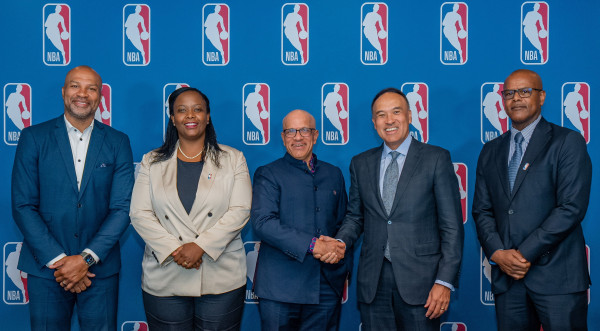
Media files
African Energy Chamber
Download logo
Read moreAfrica’s Energy Sector to Litigate Banks and Financiers for Financial Apartheid in Oil and Gas Sector
6 August 2024

The RMB Where to Invest in Africa 2024 report highlights Africa’s top investment economies

Location: Business
Rand Merchant Bank

RMB (www.RMB.com) has released the highly anticipated 2024 edition of its Where to Invest in Africa report, a comprehensive analysis of the top investment destinations on the continent. The report, which has been developed in collaboration with the Gordon Institute of Business Science (GIBS), leverages a robust methodology that has been updated to reflect new data sources, taking into account a variety of factors that have been proven to determine a country's progress and therefore its investment potential. 

“Africa is not a country, but a vast, diverse and complex continent with different cultures, economies and investment potential. Our report therefore is not a definitive guide, but rather it is designed to provide insight to uncover the underlying drivers of a country's performance that inform its ranking. This offers invaluable insights for investors, policymakers, and business leaders looking to navigate Africa's dynamic economic landscape,” says Isaah Mhlanga, Chief Economist at RMB.  

Expanded data, extended granularity 

Investment decisions need to be viewed through both an economic performance lens and an operating environment lens. As a result, the methodology used for this edition of the Where to Invest in Africa report builds and expands on previous editions, taking into account new data sets as well as changing geopolitical and macroeconomic climates.  

The scorecard for the 2024 issue highlights 31 countries that collectively represent 92% of the continent's economic activity (measured by GDP), and more than one billion people (three quarters of the continent's population). It draws on publicly available data sets from global institutions, including the World Bank, the IMF, the African Development Bank, the United Nations, and the International Labour Organisation.  

The model is constructed from 20 metrics across four measurement pillars: economic performance and potential; market accessibility and innovation; economic stability and investment climate; and social and human development. Each metric is weighted, which translates into a weight for each pillar, and based on these metrics a standardised scorecard is produced, with rankings that enable effective comparison across Africa's complex and heterogeneous environment.  

Africa's top five investment destinations 

Combining these elements results in a ranking across the 31 countries measured. The results of the report show that the two small island economies of Seychelles and Mauritius rank first and second as the most attractive investment destinations on the continent, while the significantly larger economies of Egypt, South Africa, and Morocco rank in third, fourth and fifth places respectively. 

Seychelles leads the rankings thanks to high levels of personal freedom, human development, and a stable economic environment. Seychelles offers a unique and attractive investment climate. Despite scoring lower on economic size and potential, Mauritius is known for innovation, economic freedom, and high GDP per capita. It continues to be a top destination for investors seeking stability and growth opportunities in a well-regulated environment.  

Egypt represents Africa's largest economy by GDP (2023), offering a substantial market with diverse opportunities in sectors like technology, manufacturing, and services. Its strategic location and economic complexity further enhance its attractiveness. Despite facing significant challenges, South Africa remains a crucial hub for investment in Africa. Its robust financial sector, diverse economy, and potential for infrastructure development make it a key player. Finally, Morocco's strong performance in connectedness, innovation, and economic stability positions it as a top investment destination. Its strategic proximity to European markets adds to its appeal. 

Distilling diversity – investment archetypes explained 

Africa is an incredibly diverse continent, and no two markets are the same, which means there is no such thing as a universal success story. However, when we zoom out and view nations through the lenses of size and the relevant investability score, it becomes apparent that they fall into distinct groupings with shared traits. The 2024 edition of Where to Invest in Africa suggests five potential investment archetypes based on shared characteristics revealed through the four measurement pillars.  

‘Highflyers' represent the large, well-established economies that offer stability and a range of investment opportunities, such as Nigeria, South Africa, Egypt and Ethiopia. Those ‘Cleared for Take-off' are countries with high economic growth and innovation potential thanks to factors like a young population and abundant resources, including Senegal and Côte d'Ivoire. ‘People Potential' are markets with a young and growing demographic, creating a sizeable consumer base and a future workforce, such as Kenya, DRC and Uganda. ‘Global Connectors' are more advanced economies with a strong international presence, such as Morocco, Mauritius, Tunisia and Seychelles. ‘Low-Base Boomers' are smaller markets with high potential for explosive growth but a corresponding higher degree of risk, including Rwanda, Mozambique, and Benin. 

Additional insights unpacked

The report also highlights a number of trends across the various markets, and the role of innovation and economic complexity in driving growth is a central theme. Countries such as South Africa, Kenya, and Ghana are noted for their strides in technological innovation and diversification of their economic bases, making them attractive destinations for investment. 

The African Continental Free Trade Agreement (AfCFTA) holds significant potential for boosting intra-African trade, enhancing economic integration, and creating a more competitive continental market. Effective implementation of the AfCFTA is expected to drive economic growth and development across the continent. Africa's young and rapidly growing population also presents a unique opportunity for economic growth, with countries like Ethiopia, Tanzania, and Uganda poised to benefit from this demographic dividend, provided they can create sufficient employment opportunities and foster a conducive environment for economic participation.  

In addition, there are a number of emerging markets with significant growth potential, including Nigeria, Ghana, and Kenya. Despite facing challenges such as political instability and infrastructural deficits, these countries offer substantial opportunities due to their large and youthful populations, improving business climates, and diversification efforts. Africa's vast natural resources, including minerals and arable land, are pivotal for sustainable economic growth. However, the report cautions against the "resource curse" and underscores the importance of good governance and strategic management. Angola, Mozambique, and the Democratic Republic of Congo are highlighted for their rich resources and potential for sustainable development. 

One area that requires critical attention across the continent is the need for infrastructure investment. Improved transportation, energy, and digital infrastructure are essential for unlocking Africa's economic potential, and South Africa, Kenya, and Nigeria are identified as key markets where infrastructure development could yield significant returns. 

Beyond the rankings – a deeper look at African investment 

Looking beyond metrics and scorecards, Africa holds massive potential but equally faces numerous challenges. The continent is rich in natural resources, which can be a major driver of economic growth, but they also present challenges in the form of corruption and environmental degradation. Increased activity around trade agreements can open new markets for foreign investors and boost economic activity, but lack of adequate infrastructure is a major hurdle for many African economies. Investment in this space will improve connectivity and create new opportunities, while rapid and increasing urbanisation will prove attractive to investors in consumer goods, retail, and financial services. Finally, countries in Africa are embracing new technologies, leapfrogging traditional development stages and creating new investment opportunities in the tech sector. 

“The richness of Africa's diversity makes fully analysing its nuance and contrast a challenging task, but an important one when it comes to understanding the varied markets that make up this vast regional economy. The 2024 RMB Where to Invest in Africa report aims to develop a balanced, robust and actionable view of the drivers, challenges and opportunities that characterise each of the 31 African markets included in the analysis,” Mhlanga concludes.  

Download the full report here to uncover the insights and drive more informed investment decisions. 

  • https://apo-opa.co/4dyoUQm
  • https://apo-opa.co/46CBs7c

Distributed by APO Group on behalf of Rand Merchant Bank.

Media files
Rand Merchant Bank
Download logo
Read moreThe RMB Where to Invest in Africa 2024 report highlights Africa’s top investment economies
  • Previous
  • Page 1
  • Page 2
  • Page 3
  • Page 4
  • Page 5
  • Page 6
  • Page 7
  • Next

Copyright © 2026 · MyZA · All Rights Reserved · Powered by Reach Trust