CSA To Host SA U19 Women CAMPS To Launch Journey Towards 2027 World Cup
TSHWANE: Cricket South Africa (CSA) is gearing up to host two national training camps for the South Africa Under-19 Women’s team...

MyZA
News, Directory, Events and Other Stuff
TSHWANE: Cricket South Africa (CSA) is gearing up to host two national training camps for the South Africa Under-19 Women’s team...
The Food and Agriculture Organization of the United Nations (FAO) has welcomed a contribution of nearly USD 1.2 million (£ 950 000) from the United Kingdom of Great Britain and Northern Ireland which will support the implementation of the Africa Phytosanitary Programme (APP).
APP is an initiative of the International Plant Protection Convention (IPPC) and is designed to strengthen the technical capacity of personnel in national plant protection organizations - government agencies responsible for phytosanitary work. The programme equips them to use scientific approaches and advanced digital technologies to improve monitoring, detection, response and recovery from pest outbreaks.
Annually, pests cause between 30 to 60 percent of crop losses in Africa, resulting in an economic cost of about USD 65.58 billion. These losses leave millions of people at risk of food insecurity, impact small-scale and commercial farmers' livelihoods and hinder regional and international trade of agricultural commodities.
“This contribution to the APP will strengthen Africa's phytosanitary capacity, enhancing our collective efforts to combat plant pests. Robust plant health systems are essential for safeguarding food security, enhancing biosecurity, facilitating trade, and protecting livelihoods across the continent,” said Beth Bechdol, FAO Deputy Director-General and interim IPPC Secretary.
The APP implementation targets all 54 African countries, with phase one underway in Cameroon, the Democratic Republic of the Congo, Egypt, Guinea-Bissau, Kenya, Mali, Morocco, Sierra Leone, Uganda, Zambia and Zimbabwe. Phase two will be launched in 2025 with eight countries: Algeria, Cabo Verde, Chad, the Republic of the Congo, Liberia, Malawi, South Africa and Tunisia.
A partnership for sustainable and resilient agriculture
Since becoming a Member of FAO in 1945, the United Kingdom has helped to promote sustainable agriculture and global food security by supporting the Organization's strategic work in areas such as agricultural statistics, nutrition and food security analysis, development cooperation, resilience and peacebuilding, and climate change. The most recent contribution from the UK's International Biological Security Programme will bolster a key area of FAO's work, helping to prevent, detect and manage plant pests that have the potential to move quickly and easily across borders and cause significant economic and environmental damage.
“We applaud the support of the United Kingdom of Great Britain and Northern Ireland to strengthen phytosanitary systems across Africa,” said Alexander Jones, Director of FAO's Resource Mobilization Division. “As global travel and trade increase, improving the technical capacities of national plant protection organizations so that they are able to identify and respond to threats as they emerge is an investment whose impacts will be felt at a global level.”
The United Kingdom has been a strong advocate for plant health throughout the years, lending support to various IPPC initiatives such as the International Year of Plant Health, the first International Plant Health Conference, the IPPC ePhyto Solution, and assessment and management of climate change impacts on plant health. The United Kingdom is also closely engaged in the development and implementation of the International Standards for Phytosanitary Measures (ISPMs), which provide the basis for countries to make national legislation, guidelines, and measures to protect their plant resources from pests.
Distributed by APO Group on behalf of FAO Regional Office for Africa.
Motsoaledi urges all to help fight against ’silent killer’ TB
Minister of Health, Dr Aaron Motsoaledi, says Tuberculosis (TB) has resulted in more deaths than all other infectious diseases combined but receives less attention.
In 2023 alone, TB claimed over 56 000 deaths in South Africa, despite being a preventable and treatable disease.
The Minister emphasised the urgent need to tackle this public health crisis and announced that the soon-to-be-launched End TB campaign aims to reduce TB-related deaths by 41% by 2035.
“TB is one of the oldest and deadliest diseases, yet it continues to be a silent killer,” said Motsoaledi on Wednesday.
“TB doesn’t make noise. And that’s the problem that we’re faced with. That’s why I’m saying we are faced with a very difficult job.”
The Minister called on everyone to act now to end this epidemic and save lives.
The Minister’s remarks come as Chairperson of the South African National AIDS Council (SANAC), Deputy President Paul Mashatile, will deliver the keynote address at the national World TB Day commemorative event on Monday, 24 March 2025.
World TB Day is commemorated annually on the 24th of March to raise public awareness about the global epidemic of TB and highlight efforts to eliminate the disease.
During the event on Monday, the Deputy President will also launch the national End TB campaign in Gamalakhe Township, Ugu District, KwaZulu-Natal.
According to the Minister, the End TB initiative aims to test five million people for the disease, leveraging the success of HIV treatment strategies to control disease and prevent drug resistance.
“When we say you want to test five million people, if one family member tested positive, we want to test the whole family. That’s what we are going to do.”
He noted that this infectious disease has killed more people than all other infectious including Ebola, malaria, yellow fever, smallpox, HIV/AIDS, COVID-19, influenza, and mpox.
In addition, Motsoaledi emphasised several key elements of the campaign, including the need for those who test positive to receive immediate treatment to prevent further transmission.
The Minister acknowledged the strong link between TB and HIV/AIDS and announced that the campaign will integrate the management of these two diseases, noting that TB kills 80% of people with HIV.
He highlighted the success of SANAC in bringing HIV/AIDS under control, observing the reduction in funerals over the past 15 years.
He suggested changing the name of SANAC to the South African National AIDS and TB Council to reflect the co-infection.
Meanwhile, he said the End TB campaign was a critical step in South Africa’s efforts to address the longstanding TB epidemic and improve the health and well-being of its citizens.
He also touched on the promising new M72/AS01E TB vaccine, funded by the Gates Foundation and Wellcome, with the trial being conducted by the Bill & Melinda Gates Medical Research Institute (Gates MRI), with preliminary results expected in 2027.
The Minister called on the media to be an ally in shaping public perceptions, creating awareness, and influencing action around the TB campaign.
He was of the view that by amplifying the message, the media can play a crucial role in mobilising communities to participate in the fight against TB.
“We cannot succeed in this battle without the support and engagement of the media.
“Together, we can raise awareness, dispel misconceptions, and empower people to take action against this preventable disease,” he stressed. – SAnews.go.za
Gabisile
Wed, 03/19/2025 - 15:02
94 views
Developing oil and gas resources can boost economy
Mineral and Petroleum Resources Minister Gwede Mantashe says developing the country’s gas and oil potential could be a game changer for economic growth.
“The South African government wants accelerated oil exploration in the country’s waters, we believe developing the country’s oil and gas resources could boost the country’s economic growth rate to 5% and possibly 8%.
“Government took a decision to rationalise some of our State-owned Entities [SOEs] to form the South African National Petroleum Company [SANPC]. The SANPC is a strategic intervention by government to create a State-owned national company to actively pursue oil and gas projects,” the Minister said in his speaking notes at the 4th Annual Southern Africa Oil and Gas (SAOG) Conference in Cape Town on Wednesday.
Exploration has found that South Africa’s coastal and adjoining waters hold approximately nine billion barrels of oil and a further 11 billion barrels oil equivalent of natural gas, although there remains uncertainty about the extent.
Mantashe noted that considering increasing demand for natural gas, “government has moved with speed to finalise the Gas Master Plan to achieve a stable and growing economy”.
“The Gas Master Plan is designed to complement existing energy policies and contribute to an integrated energy planning approach for the country as outlined in the updated Integrated Resources Plan. It provides a framework for the role of natural gas in the energy mix and gives policy direction to industry.
“Its objective is to ensure that government is able to diversify supply options from local and international markets. Furthermore, to facilitate the development an efficient, competitive and responsive energy infrastructure network, such as gas storage facilities, liquefied natural gas import facilities, pipeline networks and regasification plants.
“Through this, the Plan would also enhance localisation, create jobs and enable inclusive economic growth,” Mantashe said.
He noted that the European bloc of nations is looking to Africa to “diversify its gas supplies”.
“While this presents an opportunity to earn foreign revenue, we should ensure that we do not export our gas at the expense of domestic and regional markets. It is imperative for SADC [Southern African Development Community] countries to be resolute in their efforts to unlock oil and gas exploration and development.
“This further presents SADC countries with an opportunity to determine conditions that will alleviate global oil and gas prices by developing their own resources.
“There must be a concerted effort among African nations to ensure that the oil and gas sector grows and thrives through investments in the upstream development for the economic prosperity of our nations,” he said. – SAnews.gov.za
NeoB
Wed, 03/19/2025 - 13:44
31 views
The European Union (EU) and International Trade Centre (ITC) launched a unique competition to empower Eswatini's artisans by providing game-changing support to small businesses. This collaboration, with a Toyota 2.8 GD6 vehicle as the grand prize, aimed at driving innovation, market expansion, and new opportunities.
When Bafanabethu ‘Bethu' Gina, Managing Director of Favourite Designs, entered the competition, he saw it as more than just an opportunity to win a vehicle worth close to €18,000 – it was a chance to accelerate his company's expansion.
Favourite Designs, a fast-growing furniture and décor manufacturing enterprise in Eswatini, has been paving its way in the artisan industry. He uses traditional techniques like grass weaving to create baskets, lamp shades and other homewares with a modern sensibility.
‘This vehicle is more than just a mode of transport – it's a game-changer for our business,' says Bethu. ‘It will allow us to reach new customers, access rural suppliers more efficiently, and expand into the South African market. Our goal is to triple our market size by leveraging this opportunity to grow beyond Eswatini.'
Preserving culture with innovation
Founded in Matsapha, Eswatini, Favourite Designs combines modern design principles with traditional Swati craftsmanship. The company works closely with rural artisans, particularly women, sourcing raw materials and helping to preserve Swati cultural identity through handcrafted pieces. Bethu sees his role not only as a designer and entrepreneur but as someone who inspires fellow artisans to integrate design thinking into their craft, making their products more competitive in the global market.
‘I love how Emaswati artisans have preserved our culture through beautiful, handcrafted work, passing down traditions from generation to generation,' he says. ‘I see Eswatini's artisan and design industry growing substantially in the next five years. But we need to inspire artisans – both aspiring and practicing – to intentionally apply design principles from conceptualization to realization. This will enhance product quality and make Eswatini crafts globally competitive while preserving our cultural heritage.'
Plans to scale are in motion
Favourite Designs is a key participant in the EU, ITC, and House on Fire Artisanal Incubator Programme, which nurtures emerging businesses in the handcraft and artisanal food sectors. Through this initiative, Bethu's company has:
The new Toyota 2.8 GD6 vehicle will expand these opportunities. It will help Favourite Designs connect with international buyers, attend trade shows, and access key regional markets like South Africa. He'd already been saving for a vehicle so that he can meet with his rural suppliers and make deliveries to customers. Now he can use those savings to invest in other parts of his business.
The EU seeks to foster space for enterprise creativity
The EU and ITC structured this competition not just as a giveaway but as an opportunity to reward resilience and innovation.
‘Rather than a simple donation, we designed a competition to reward an entrepreneur who has demonstrated resilience and innovation,' said EU Ambassador to Eswatini, Karsten Mecklenburg. ‘Favourite Designs has shown exceptional growth potential, and we are confident this vehicle will be instrumental in their success.'
Bethu's winning competition entry video creatively told the company's story while addressing the competition's objectives. He structured the submission like a design brief, integrating a script, storytelling elements, and real footage from his journey with ITC since 2023.
‘I wanted to demonstrate the progress we've made as a result of ITC's intervention and how the vehicle would boost our operations and growth,' he explains. ‘The first minute of the video is a skit showcasing how we would use the vehicle, followed by three minutes of our ITC-supported journey, and a final call-to-action statement. I shot and edited everything using just my mobile phone.'
Favourite Designs is a shining example of how local businesses can scale internationally with the right support, vision, and innovation.
With a new vehicle and growing recognition, Favourite Designs is well on its way to becoming an international success story.
Distributed by APO Group on behalf of International Trade Centre.
SA gears up for Water Investment Summit
Water and Sanitation Minister Pemmy Majodina is set to host the preparatory meeting for the African Union-Africa Water Investment Programme (AU-AIP) Water Investment Summit 2025.
The meeting is scheduled to take place on the sidelines of the International Water Association (IWA) Congress, currently underway in Cape Town.
The department said the preparatory meeting, to take place on Thursday, is a critical step towards the AU-AIP Water Investment Summit, scheduled to take place at Cape Town in August.
“The summit aims to mobilise at least USD 30 billion annually for climate-resilient water and sanitation initiatives across Africa, aligning with South Africa’s G20 Presidency priorities on economic growth, climate sustainability, and enhanced financing for development,” the Department of Water and Sanitation (DWS) said on Wednesday.
The preparatory meeting will bring together key stakeholders, including government representatives, international development agencies, private sector investors, and civil society organisations, to refine the objectives, thematic areas, and expected outcomes of the summit scheduled for August.
“The meeting will also serve as a platform to consolidate bilateral partnerships and secure commitments. Additionally, it will ensure that the summit aligns with South Africa’s G20 Presidency goals and effectively contributes to water security and investment mobilisation in Africa,” the department said.
Among the delegates expected to participate at the summit, include:
• Jakaya Kikwete, former President of the United Republic of Tanzania, chair of the Global Water Partnership Southern Africa (GWPSA), and co-chair of the Africa Water Investment Panel, which includes sitting and former Presidents and eminent leaders (President Cyril Ramaphosa of South Africa is also a member of the AIP Panel).
• Arif Alkalali, General Supervisor of the General Directorate for Water Resources in the Ministry of Water, Environment, and Agriculture, Kingdom of Saudi Arabia.
• Anxious Jongwe Masuka, Minister of Lands, Agriculture, Water, and Rural Resettlement, Zimbabwe.
• Collins Nzovu, Minister of Water Development and Sanitation, Republic of Zambia.
• Dr Cheikh Tidiane Dièye, Minister of Water and Sanitation, Republic of Senegal, and President of the African Ministers’ Council on Water (AMCOW). – SAnews.gov.za
GabiK
Wed, 03/19/2025 - 13:20
14 views
Bail hearing for SASSA fraud accused postponed to April
The bail hearing for seven South African Social Security Agency (SASSA) officials and three accomplices accused of fraud has been postponed to 1 April 2025.
The accused appeared before the Lenasia Magistrate’s Court on Tuesday, facing more than 1 000 fraud-related charges.
Four of the accused were arrested last month, while another four were taken into custody on Friday. Two more suspects handed themselves over on Sunday and Monday, respectively.
SASSA Acting Chief Executive Officer, Themba Matlou, welcomed the arrests, emphasising the agency’s commitment to eradicating all forms of fraud and corruption elements within its ranks.
“What we have seen in the last few weeks is a culmination of the hard work of our officials, working with the South African Police Service (SAPS) in clamping down on fraud and corruption at SASSA,” Matlou said.
He further urged the public to report any suspicious activities related to social grants.
“We cannot win this fight alone. We appeal to members of the community to assist us to root out the scourge.”
SASSA has urged members of the public to work together with the agency and report grant fraud or corruption to 0800 60 10 11 or the National Anti-Corruption Hotline on 0800 701 701. – SAnews.gov.za
DikelediM
Wed, 03/19/2025 - 09:21
432 views
Mashatile to lead official World TB Day and National End TB campaign
The Chairperson of the South African National AIDS Council (SANAC), Deputy President Paul Mashatile, will deliver the keynote address at the national World TB Day commemorative event on Monday, 24 March 2025.
World TB Day is commemorated annually on the 24th of March to raise public awareness about the global epidemic of tuberculosis (TB) and highlight efforts to eliminate the disease.
The day is also designated to highlight the devastating health, social and economic impact of TB.
During the event on Monday, the Deputy President will also launch the National End TB Campaign at the Ugu Sports and Leisure Centre in Gamalakhe Township, Ugu District, KwaZulu-Natal.
According to the Presidency, South Africa is one of the countries most affected by TB and remains the leading cause of death in the country, claiming approximately 56 000 lives each year, with 54% of these deaths among people living with HIV.
This year’s official country theme for World TB Day is “Yes! You and I Can End TB – Commit, Invest, Deliver".
“This is a clarion call for leaders to champion TB efforts in their respective constituencies and encourage individual action from all South Africans to contribute to the national effort against TB.“
The Deputy President’s Office said the significance of this year’s commemoration will be marked by the launch of the National End TB campaign designed to substantially reduce TB incidence and mortality in South Africa by 2035.
This campaign will be carried out in phases, beginning with a focus on case finding and linking patients to care in the year 2025/26.
The campaign aims to diagnose 250 000 new TB cases by 2025/26 through targeted testing of five million people.
This will be accomplished by implementing Accelerated Targeted Universal TB Testing (TUTT) to reach individuals living with HIV and household contacts with confirmed TB cases.
The Deputy President will be joined by the Minister of Health Dr Aaron Motsoaledi, Premier of KwaZulu-Natal Thamsanqa Ntuli, SANAC Civil Society Chairperson Solly Nduku, Chairperson of the SANAC Private Sector Forum Mpumi Zikalala, and SANAC CEO Dr Thembi Xulu.
They will also be joined by representatives from development partners inclusive of the United Nations agencies, United States government agencies, research entities, civil society movements and the private sector. – SAnews.gov.za
Gabisile
Wed, 03/19/2025 - 10:13
102 views
DURBAN: The Division 1 4Day Series resumes this week after a near three-month break for the limited-overs leg of the...
CPI remains unchanged in February
Consumer price inflation has remained at 3.2% in February – unchanged from January.
According to Statistics South Africa, the main contributors to the annual inflation rate were:
“Recreation, sport and culture, food and non-alcoholic beverages, alcoholic beverages and tobacco and communication recorded higher annual inflation rates in February.
“Inflation cooled for several product categories, most notably, personal care and miscellaneous services, health, restaurants and accommodation, furnishings, household equipment and routine maintenance and transport,” Stats SA Director: CPI Operations, Lekau Ranoto, said.
The annual rate for food and non-alcoholic beverages accelerated to some 2.8% in February from 2.3% in January.
“Fruit and nuts, vegetables, hot beverages, seafood, meat and cereals recorded higher rates. On the down side, cold beverages milk, dairy and eggs, oils and fats and sugar confectionary and desserts witnessed slower price increases,” she said.
Ranoto said inflation in maize meal – a staple in South African households – reached a 17-month high, with samp inflation also reaching a 19-month high in February.
“The rise in prices is driven by inflationary pressure from the farming and manufacturing of maize according to the latest producer price index data. On average, consumer prices for meat stayed the same in February, compared with January, resulting in a monthly change of 0%. The annual rate was also 0%.
“While meat remained subdued, inflation for hot beverages continues to accelerate. The annual change in the price index for hot beverages was 14.6% in February, up from 13.7% in January,” Ranoto said.
Meanwhile, Stats SA has also recorded a 10.5% increase in medical aid premiums this year and health services rose by 6.1%, compared with a 5% rise last year. – SAnews.gov.za
NeoB
Wed, 03/19/2025 - 11:26
40 views
Macpherson takes on second leg of listening tour in Upington
Public Works and Infrastructure Minister Dean Macpherson will on Thursday launch the next leg of his Expanded Public Works Programme (EPWP) listening tour in Upington in the Northern Cape.
Following the EPWP Listening Tour, the Minister will conduct an oversight visit to the construction site of a new Magistrate’s Court in Keimoes, which was requested by the Department of Justice and Constitutional Development.
The Minister will be joined by the Northern Cape Member of the Executive Council (MEC) for Public Works, Fufe Makatong and the ZF Mgcawu District Municipality Mayor, Maryna Basson.
READ | Macpherson takes EPWP listening tour to KZN
“Through the nationwide listening tour, the Minister aims to hear from communities about their experiences with the EPWP to bring attention to issues encountered within the programme.
“This will inform the Minister’s vision towards the reimagined EPWP, which will have long-term socio-economic empowerment within the communities.
“Through the listening tour, which will be rolled out nationwide in the coming months, the Minister aims to hear from communities about their experiences with the EPWP to bring attention to issues encountered within the programme.
“The tour and engagement with communities will also shape the Minister’s vision to reimagine the EPWP,” the department said,” the department said. – SAnews.gov.za
Edwin
Wed, 03/19/2025 - 10:10
116 views
The African Energy Week (AEW): Invest in African Energies conference has officially launched its 2025 program, covering strategic topics from upstream oil and gas to downstream infrastructure and distribution to the energy transition, power industry, energy finance and more. The program offers insight into what this year's edition will offer, as industry leaders, global investors, major operators and think-tanks convene in Cape Town to discuss Positioning Africa as the Next Global Energy Champion.
As the largest event of its kind in Africa, AEW: Invest in African Energies serves as a vital platform to sign deals and drive energy projects forward. This year's event offers an expanded program, featuring a variety of stages covering the entire energy value chain. Additional features include pre-conference workshops, a deal room, the return of the African Farmout Forum, technical hubs, fireside chats and more. The Just Energy Transition concert returns to kick off the week while the African Energy Awards & Gala Dinner celebrates movers and shakers in African energy.
One of the highlights of this year's conference is the G20 Energy Leaders Roundtable, which comes as South Africa hosts the 20th meeting of the G20 group this year. A series of country spotlights will also take place during the course of the week, covering markets such as South Africa, Senegal, Equatorial Guinea, Namibia and the Republic of Congo, as well as an OPEC roundtable featuring major OPEC-producers. A BRICS roundtable will examine the impact the group has on Africa's energy future while a COP 30 roundtable will discuss Africa's position ahead of the conference this year.
Africa's energy sector is more attractive than ever, as regulatory reforms, ambitious policies and long-term development strategies continue to entice spending. Total capital expenditure for the oil and gas industry alone is estimated to reach $43 billion in 2025, with spending set to reach $54 billion by 2030. AEW: Invest in African Energies 2025 features an energy finance stage, with discussions covering the African Energy Bank; investment trends in Africa and reducing barriers to entry. The stage will unpack Mergers & Acquisitions; financing cross-border projects; energy access and equity, among other topics.
As one of the final frontiers for oil and gas exploration, Africa is seeing a plethora of projects advance. West Africa is projected to lead oil and gas spending in 2025, accounting for over 50% of the continent's total expenditure. While established producers such as Nigeria remain dominant, emerging producers such as Senegal and Mauritania are attracting high levels of investment. In Southern Africa, Namibia targets first oil by 2029 while South Africa seeks to unlock discoveries in both its offshore basins and onshore shale prospects. Zimbabwe targets onshore gas production while Mozambique advances its pipeline of large-scale LNG projects. AEW: Invest in African Energies Upstream E&P Forum will examine the continent's exploration hotspots. Panels include onshore and shallow water potential; the resurgence of Libya; onshore basins to watch; the outlook for LNG; and deepwater plays.
Amid the continent's oil and gas drive, Africa also seeks to advance a just energy transition, Countries such as Mauritania, Namibia and South Africa are spearheading large-scale green hydrogen developments while solar and wind developments offer increased accessibility for remote communities. Gas-to-power is a central feature of the continents just energy transition, with Algeria, Nigeria and Egypt leading the charge. The AEW: Invest in African Energies Energy Transition stage will unpack strategies for decarbonizing while boosting industrialization. Topics include addressing energy security and climate commitments; clean cooking opportunities; local content; integrated ESG, and more.
As Africa seeks to make energy poverty history by 2030, a fundamental industry is the power sector. Efforts are underway across the continent to revitalize power infrastructure, with both grid-connected and off-grid projects advancing. International partners have a role to play in supporting power projects and the AEW: Invest in African Energies Powering Africa stage will address this. Topics include energy leaders dialogue; energy efficiency; bridging the electricity gap; energy diversification; and integrating renewables into the energy mix.
“Africa is on the cusp of an energy revolution, and AEW: Invest in African Energies is where the deals that will define our continent's future are made. We remain committed to making energy poverty history by 2030, and through this event, we are accelerating the partnerships and policies that will make that vision a reality,” states NJ Ayuk, Executive Chairman of the African Energy Chamber.
Visit www.AECWeek.com to download your copy today.
AEW: Invest in African Energies is the platform of choice for project operators, financiers, technology providers and government, and has emerged as the official place to sign deals in African energy. Visit http://www.AECWeek.com for more information about this exciting event.
Distributed by APO Group on behalf of African Energy Chamber.
Action taken against Harties Dam invasive alien plant
Water and Sanitation Deputy Minister, Sello Seitlholo, and the Rhodes University Centre for Biological Control (CBC) have released weevil species to tackle the invasive alien aquatic plant at Hartbeespoort Dam in the North West.
The salvinia weevil insect is a biological control agent known as Cyrtobagous salviniae, used to manage the Salvinia minima, an invasive floating alien aquatic weed (known as the common salvinia).
The weevil species is a subaquatic herbivorous insect that feeds on the common salvinia. The species were imported from Florida State in the United Sates of America (USA), and it has proven to be effective and successful to control the aquatic plant in the USA.
Joined by Professor Julie Coetzee, the Deputy Director of the Centre for Biological Control and Principal Scientist at the National Research Foundation’s South African Institute for Aquatic Biodiversity, Seitlholo officially released the salvinia weevil insect on Monday at Mogi Adventures, located next to the Crocodile River.
The invasive alien plant was initially recorded at Hartbeespoort Dam in 2011, and has since spread through areas of the North West and Gauteng Provinces, and has reached the Limpopo River, which marks the border with the neighbouring country of Botswana, threatening South Africa’s water bodies.
According to Coetzee, the weevils multiply quickly and their impact of controlling the aquatic plant can be observed in a year.
She said the CBC, in collaboration with community partners, will rear the weevil and facilitate releases at various sites across the country where water is invaded by the common salvinia.
“This biological control programme will be monitored and the progress of the weevil and its impact on common salvinia will be noted. The weevils only feed on the salvinia minima plant and their entire life cycle depends on the plant, thus they do not have a threat of infesting other ornamental plants, crops or even the water hyacinth plants,” Coetzee said.
Seitlholo emphasised the importance of securing the country’s water resources by partnering with scientific institutes like the CBC.
“What is also important is for us to get into serious conversations with municipalities in the upper catchment that are largely responsible for causing the high nutrient load in the water due to their substandard effluent discharged from their wastewater treatment works, which is being released into the river, eventually landing in the dam.
“This results in high nutrient levels in the water, which gives rise to the spread of these alien invasive aquatic plants, compromising the ecosystem, recreation and the general local economy,” Seitlholo said.
He said the use of the weevils will run concurrently with the other remediation programme currently underway at the dam, which is being implemented by Magalies Water to eradicate alien invasion species that have negatively impacted the ecosystem in the water.
The remedial programme includes the physical removal of the water hyacinth at the dam. This also includes the pilot project of nanobubbles technology, which increases dissolved oxygen in the water, activates the decomposition of microorganisms in water and river sediment.
Given that the quality of water is affected by the discharge of effluent and raw sewage from the municipalities of Tshwane, Johannesburg and Ekurhuleni, Seitlholo said municipalities ought to play a role in the remediation programmes undertaken by the department to rehabilitate the water resource.
Despite the department’s Compliance, Enforcement and Monitoring Directorate engaging the municipalities, Seitlholo said the department has also proposed amendments to Section 19 of the National Water Act (NWA), which focuses on preventing and remedying the effects of pollution, ensuring the protection of water resources and addressing pollution.
Seitlholo said the proposed amendments to the NWA, which are currently with the State Law Advisor, enable the department to directly hold the executive mayor and the municipal manager liable for the transgressions of the municipality in terms of the pollution of the country’s water courses.
“These legislation measures are taken by the department to fundamentally deal with issues of water pollution in the country,” Seitlholo said. – SAnews.gov.za
GabiK
Wed, 03/19/2025 - 10:12
48 views
Government welcomes agreement on protecting penguin populations
The Department of Forestry, Fisheries and the Environment (DFFE) has welcomed the finalisation of a historic settlement agreement -- in the form of a court order -- securing critical protections for South Africa’s penguin populations.
The landmark agreement -- reached between the fishing industry and conservation organisations BirdLife South Africa and the Southern African Foundation for the Conservation of Coastal Birds (SANCCOB) -- establishes island closures to safeguard the critically endangered African Penguin, while supporting sustainable fishing practices.
“Today marks a triumph for conservation and sustainable development. This court-ordered settlement realises the DFFE’s long-standing commitment to protecting our penguins and biodiversity, while ensuring the fishing industry’s viability.
“I am immensely proud of the collaborative spirit that has brought us here, a model for how industry and conservation can work hand in hand for the greater good,” Minister of Forestry, Fisheries and the Environment, Dr Dion George, said on Tuesday.
The order, issued by the Pretoria High Court on Tuesday, includes the following island closures:
The DFFE said it is committed to overseeing the effective implementation of these closures and will collaborate with stakeholders to monitor their impact on penguin populations.
“With this court order, South Africa sets a global standard for environmental stewardship, proving that unity and science-based solutions can secure a thriving future for both nature and livelihoods.
“We extend our heartfelt thanks to the fishing industry, BirdLife South Africa, SANCCOB, and all involved parties for their dedication to this process,” the department said. -SAnews.gov.za
nosihle
Wed, 03/19/2025 - 09:39
43 views
SA condemns Israeli airstrikes on Gaza
South Africa has condemned the extensive Israeli airstrikes carried out across Gaza dron Tuesday, resulting in the deaths of over 350 Palestinians.
The deadly airstrikes occurred following a failure to implement the second stage of the peace agreement with Israel, despite ongoing negotiations aimed at ensuring the ceasefire remains in effect.
The fatal attacks were reportedly authorised by the Israeli leadership more than a week ago.
According to the Department of International Relations and Cooperation (DIRCO), this raises concerns about the commitment to the permanent ceasefire outlined in the plan negotiated by the United States, Egypt and Qatar.
The Palestinian Health Ministry said many of those killed were children and several victims remain under the rubble.
Reports suggest that airstrikes were concentrated on heavily built-up neighbourhoods, makeshift schools and residential buildings where people have been sheltering, which is a "blatant violation of international law, including international humanitarian law".
“South Africa is gravely concerned by the military onslaught and the fact that millions of people in Gaza are facing severe food and water shortages, as Israel continues to block aid and cut off energy supplies to the strip,” DIRCO said in a statement.
Meanwhile, the department said Israel, which has enforced a total blockade of Gaza, has now issued new forced displacement orders for several areas.
The department said the provisional orders issued by the International Court of Justice (ICJ) oblige Israel to take all measures within its power to prevent acts of genocide, ensure humanitarian assistance reaches Gaza, and preserve evidence related to alleged genocide.
The United Nations’ Humanitarian Coordinator for the Occupied Palestinian Territory, Muhannad Hadi, has urged that the ceasefire in Gaza be immediately reinstated. He called the waves of airstrikes across the Gaza Strip since the early hours of the morning “unconscionable.”
South Africa has also condemned the four targeted Israeli military strikes launched against southern Syria overnight, which killed at least two and wounded 19 others on the outskirts of the southern Syrian province of Deraa.
“The Syrian Observatory for Human Rights said Israel targeted a military site previously used by former President Bashar al-Assad’s forces, but which is now used by the army of Syria’s transitional government.
“Israel’s airstrikes and previous statements that it does not want any Syrian military presence in the south of Syria is a violation of Syria’s sovereignty and territorial integrity,” DIRCO said. – SAnews.gov.za
Gabisile
Wed, 03/19/2025 - 08:55
62 views
Large clinical trials several years in and with millions of rands already spent are at risk
On March 18, Mr. FUJII Hisayuki, State Minister for Foreign Affairs, hosted a dinner with the Honourable Mr. Paul Mashatile, Deputy President of the Republic of South Africa, who is visiting Japan upon the invitation of the Ministry of Foreign Affairs. The overview of the dinner is as follows.
Distributed by APO Group on behalf of Ministry of Foreign Affairs of Japan.
By agreement between all parties pelagic fishing permits must be amended within 14 days to protect six key penguin breeding areas
South Africa strengthens ties with Japan
Deputy President Paul Mashatile has reaffirmed the country’s commitment to strengthening diplomatic and economic ties with Japan during a working visit marking 115 years of relations between the two nations.
Speaking at United Nations University in Tokyo, the Deputy President underscored South Africa’s ongoing collaboration with Japan, highlighting the Strategic Cooperation Partnership established in 2010.
“This year, the two countries celebrate a significant milestone of 115 years of relations,” he said.
He also praised Japan’s significant investment in South Africa, with 273 firms currently operating in the country and sustaining over 200,000 local jobs.
“These ties have particularly flourished in the fields of trade and investment, science and technology, and education and skills development assistance. Japan is a significant investor in the South African economy, with 273 firms operating in the country, hence sustaining over 200 000 local employment opportunities for many South Africans,” he said.
Earlier on Tuesday, the Deputy President held fruitful engagements with the Prime Minister as well as with the Chief Cabinet Secretary of Japan. He said these meetings were a sign of the significant people, and trade relations between the two sister countries.
Beyond economic ties, cultural exchanges were also in focus. The Deputy President visited the historic Meiji Jingu forest, where he reflected on the importance of nature in fostering societal development, linking it to the African philosophy of Ubuntu.
“This visit served as a reminder of how the forest and nature more cements the importance of connecting with nature what has been appreciated as Kami.
“We have a lot in common as a people, hence we will continue to invest in people-to-people cultural exchange programmes. This is already happening through the number of rugby players that are playing in various teams here in Japan. We are emphasising the importance of people to people because it becomes easier to do business when you know each others' cultures,” the Deputy President said.
Strengthening economic cooperation
The visit comes at a time when South Africa is looking to bolster international partnerships in light of current geopolitical challenges confronting the nation and the global community.
The Deputy President emphasised that his delegation’s trip was aimed at fortifying economic collaborations, particularly in inclusive economic development and trade balance.
“We want our two nations to collaborate with a particular emphasis on promoting inclusive economic development and ensuring a balance and increase in trade between the two nations.
“This has also been one of the priorities of South Africa’s 7th Administration, popularly known as the Government of National Unity (GNU). The formation of the Government of National Unity is a momentous development in South Africa’s democracy,” he said.
South Africa’s leadership in the G20 was also highlighted, with the Deputy President reiterating the country’s vision for its presidency under the theme “Solidarity, Equality, Sustainability.”
“We want to make a meaningful contribution to the expressions of the continent through Vision 2063 towards the Africa we want. Such an Africa is one that is more integrated into the global community and acts as a key player in the economy and the socio-political landscape more broadly.
“We believe that in an interconnected world, the challenges faced by one country have an impact at a global level,” he said.
Call for global cooperation
The Deputy President concluded his address by emphasising the importance of global cooperation in addressing challenges such as climate change, rising nationalism, and economic instability.
“As I conclude, let me emphasise that our challenges can only be resolved through cooperation, collaboration, and partnership; no challenge and no triumph exist in isolation. Cooperation is our greatest strength and our most powerful weapon.
“Under the guiding principle of Ubuntu - the profound belief that ‘I am because you are’ – we are reminded of the interconnectedness of humanity. It is this principle of Ubuntu that underpins South Africa’s leadership and vision for our G20 Presidency, and our future,” the Deputy President said.
He further urged everyone to remember that true progress is achieved not through words alone but through meaningful action and collaboration.
“We should be deliberate in our conversation and find more meaningful ways to strengthen our relations, both in trade, and investment. Let us work hand in hand towards a more just, equitable, and sustainable world for all,” he said.
The Deputy President arrived in Japan on Sunday and will conclude his visit on Wednesday, 19 March.
READ | Deputy President Mashatile arrives in Japan for a working visit
– SAnews.gov.za
DikelediM
Tue, 03/18/2025 - 14:33
446 views

The African Development Bank Group (www.AfDB.org) participated in the third edition of the Africa's Green Economy Summit (AGES) (https://apo-opa.co/4izmWCf) in Cape Town, South Africa, from 18 – 21 February, 2025.
The annual Summit, hosted by the African Union, brought together policy makers, stakeholders, private sector and experts who discussed Africa's green transition and the urgent need for increased investment in climate resilience. The conference was held under the theme, “Building a Climate Resilient Africa: Catalysing Investment and Innovation in the Green and Blue Economies”. Discussions over the four days cut across five key areas: climate finance, biodiversity and nature, green reforms, resilient cities and green industrialisation.
With its vast renewable energy potential, abundance of critical minerals essential for the global energy transition, and a growing commitment to climate-smart solutions, Africa is very well placed to lead the way toward sustainable global growth. As it navigates a path towards fully realizing these boundless possibilities, against the backdrop of mounting climate challenges, there is increasing focus on the urgency of resource mobilization.
Dr. Anthony Nyong, Director of Climate Change and Green Growth at the African Development Bank and keynote speaker at the summit's opening ceremony, touched on this in his remarks. Affirming that “Africa has enormous opportunities to lead global efforts to transition to a green economy”, he added that, “To build a climate-resilient Africa, adaptation must be at the heart of our strategies. While global climate finance continues to prioritize mitigation efforts, adaptation remains significantly underfunded, receiving less than 10 percent of total climate finance flows.”
Calling for a tripling of Africa's climate finance flows and green investments, and for the right partnerships to underpin the financing, Nyong concluded that “Together, we can build an Africa that thrives in harmony with nature.”
A “platinum sponsor” for the summit, the Bank featured in a range of activities, discussions and roundtables, consistently demonstrating its leadership role in supporting Africa's countries transition to climate resilience and low carbon development, as articulated in the its Climate Change and Green Growth Framework 2021 – 2030.
Harsen Nyambe, Director of Blue Economy and Sustainable Environment at the African Union, emphasized the summit's role as “a vital link between global capital and sustainable projects on the continent.”
Barbara Buchner, Global Managing Director of Climate Policy Initiative, stressed the critical need for private sector engagement, highlighting that existing funding amounts to only about 23 percent of Africa's estimated climate finance needs, while only 18 percent of the continent's climate finance is from the private sector – a figure “much lower than in other regions.”
Maxwell Gomera, South Africa Resident Representative of the United Nations Development Programme, highlighted another key issue: “We've sent people to the moon, yet we still haven't solved the challenge of clean cooking. This is a business problem.”
“For the African Development Bank, driving green growth in Africa comes with challenges but also significant opportunities. In this regard, AGES presents a unique platform to spotlight Africa as a land of green economic opportunities in a range of sectors such as renewable energy, critical minerals, climate-smart agriculture, green cities, low-carbon and climate-resilient infrastructure, among others,” said Al Hamndou Dorsouma, Manager of Climate and Green Growth at the African Development Bank.
On Tuesday, 18 February, the Bank Group hosted a Masterclass on Carbon Markets in Africa, explored how carbon markets are becoming more stable and attractive for growth, and offering new opportunities for market entry and project development.
By leveraging platforms like AGES, Africa can strengthen partnerships, unlock funding, and implement policies that drive a sustainable and resilient future. With targeted investments and bold commitments, the continent has the potential to lead the way in shaping a low-carbon, climate-smart economy that benefits both its people and the planet.
Read and watch Anthony Nyong's interview, here (https://apo-opa.co/4bAIT1g)
Distributed by APO Group on behalf of African Development Bank Group (AfDB).
Social Media:
EMBED FLICKR ALBUM https://apo-opa.co/4iXi7Cx
LINK TO CARBON MARKET BLOG
Team SA commended for performance at 2025 Special Olympics World Winter Games
The Department of Women, Youth and Persons with Disabilities has congratulated the Special Olympics South Africa (SOSA) athletes for their outstanding performance at the 2025 Special Olympics World Winter Games in Turin, Italy.
This comes after team South Africa brought home one gold medal, three silver medals, and two bronze medals.
The athletes Bianca Basson, Frankfort Mokabo, Naledi Hlalele and Tyrell Sykes competed in figure skating, while Shane Bentley and Shirnel Swarts competed in short track speed skating.
They received a hero’s welcome at OR International Airport during their return home on Monday with their medals around their necks.
The department commended the athletes for their resilience, dedication, and true spirit of sportsmanship on the international stage.
“The Department of Women, Youth and Persons with Disabilities [DWYPD] recognises the critical role that sports play in empowering persons with disabilities and fostering social cohesion. The achievements of our athletes serve as an inspiration to the youth of our country, proving that with determination and opportunity, greatness can be achieved,” the department said on Tuesday.
The DWYPD also called on South Africans to join in celebrating their achievements, and to continue supporting inclusive sporting initiatives.
“Let us recognise and honour these champions who have made our nation proud on the global stage. The success of the Special Olympics team underscores the urgent call for South Africans to foster an inclusive society that will embrace sports as a vehicle to drive societal change.”
African Bank Group Chief Transformation and Sustainability Officer, Edna Sathekga-Montse, also commended the team’s accomplishments.
African Bank was among the SOSA 2025 National Team’s sponsors.
" As a long-standing partner of Special Olympics South Africa, we are incredibly proud of our athletes’ accomplishments. Their victories embody the spirit of courage and determination.
“We are honoured to play a role in their journey towards excellence. Through continued investment in initiatives like SOSA, we reinforce our commitment to transformation, inclusivity, and sustainable empowerment,” Montse said.
The Winter Olympics Games brought together more than 1 500 athletes for the games that were held from 8-15 March 2025. – SAnews.gov.za
GabiK
Tue, 03/18/2025 - 14:33
219 views
Deputy President stresses importance of coordinated approach to challenges
Deputy President Paul Mashatile has stressed the need for a coordinated approach to peacebuilding and economic resilience.
This as he highlighted that the conflicts between Russia and Ukraine and conflicts in the eastern Democratic Republic of Congo, Sudan, in the Sahel, and in Gaza, continue to exert a heavy human toll while heightening global insecurity.
The Deputy President was speaking at the United Nations University (UNU) in Tokyo, Japan on Tuesday.
The UNU, in partnership with the Embassy of South Africa in Japan, is co-hosting a symposium exploring South Africa's G20 Presidency and steps to ensure solidarity, equality and sustainability for all.
Touching on the deepening conflict and instability across Africa and the world, the Deputy President said this requires coordinated preventive action including dedicated intervention on peace building that is programmatic in nature.
“We are encouraged by the partnership between the United Nations University and the University of South Africa (UNISA) in cooperation with other relevant partner organisations to co-design and co-deliver required capacity building programmes for African leaders and mediators for resolving conflicts and blazing a path towards achieving peace, security and prosperity, “the Deputy President explained.
He further emphasised the urgent need for comprehensive, African-centred peace-building research and training programmes that span throughout Africa to address the urgent demand for capacity for conflict management and resolution, as well as society reconstruction.
G20 Presidency
“In our G20 Presidency, South Africa will continue to advocate for diplomatic solutions. Inclusive dialogue is the foremost guarantor of sustainable peace.
“South Africa has shown a firm resolve in its foreign policy by promoting principles of justice, solidarity, equality, peace, and respect, underpinned by its commitment to human dignity and leaving no one behind,” he said.
This was the reason South Africa has placed solidarity, equality, sustainability at the centre of its G20 Presidency.
As part of South Africa’s G20 intention to place Africa’s development at the top of the agenda, Mashatile outlined four key priorities which are strengthening disaster resilience, ensuring debt sustainability for developing economies, mobilising finance for a just energy transition, and harnessing critical minerals for sustainable growth.
“Our hosting of the G20 Finance Ministers and Central Bank Governors Meeting, and the Business 20 provided an opportunity for us to promote South Africa and Africa as a business and investment destination and for the country to take the lead on providing solutions to global economic challenges,” he said.
He emphasised the country’s commitment to driving economic reforms, increasing investor confidence, and enhancing structural efficiencies in energy, water, and transport sectors.
“We believe that addressing structural concerns is essential to maintaining investor confidence and ensuring long-term economic stability. It is only by accelerating structural reforms and harnessing the power of the private sector that the country can sustain economic momentum and attract further foreign investment.
“As the South African government, we are implementing extensive structural, policy, and regulatory reforms to enhance the economy's performance,” he said.
AI role in shaping Africa’s economic future
The Deputy President also emphasised the role of artificial intelligence (AI) and digital transformation in shaping Africa’s economic future, calling for greater collaboration between African institutions and international organisations.
Quoting Professor Tshilidzi Marwala, he noted the need for South Africa to embrace AI while also ensuring ethical considerations remain central to its deployment.
He urged institutions like UNU to partner with African universities to foster digital skills development and AI-driven innovation.
As the G20 Presidency has shifted to South Africa, the Deputy President said that AI has emerged as a key area of focus.
Through the G20 Presidency, he said the country aims to harness AI to advance the Sustainable Development Goals agenda and address global challenges.
“We encourage the United Nations University to work alongside Africa in the development of AI, which has the potential to considerably boost the continent's economies. You must cooperate with additional universities in South Africa and throughout Africa to help overcome digital barriers, promote equality, and support inclusive sustainable development,” he said.
Mashatile added that African governments are also recognising the importance of the digital economy, which is heavily influenced by artificial intelligence. He noted that the digital economy and AI are becoming more important drivers of economic and social value creation throughout the world.
“We are investing in digital infrastructure, skills development, and entrepreneurship to assist Africa's digital economy to expand,” he said. – SAnews.gov.za
DikelediM
Tue, 03/18/2025 - 14:36
98 views
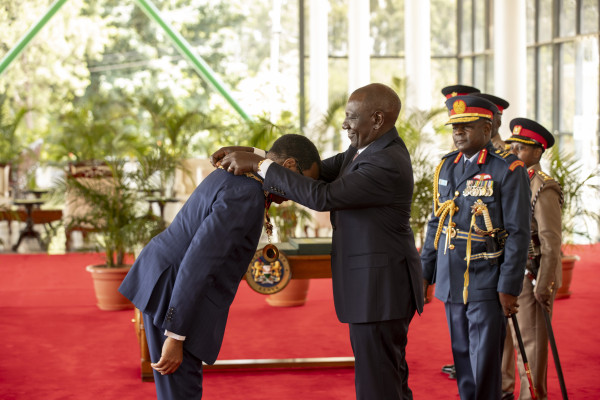
Kenya's President H.E. William Samoei Ruto has conferred the country's highest honour, Chief of the Order of the Golden Heart CGH, on the President of the African Development Bank Group, Dr Akinwumi Adesina (www.AfDB.org).
Dr Adesina becomes the 20th recipient of the honour that was established in 1967 and first awarded to Kenya's founding father and former President, H.E. Jomo Kenyatta. Others include globally renowned leaders such as former UN Secretary General Kofi Annan, South Africa's Nelson Mandela, Queen Elizabeth II of the United Kingdom, Uganda's Yoweri Museveni and Kenya's subsequent Presidents Daniel arap Moi, Mwai Kibaki, Uhuru Kenyatta and Dr Ruto.
During a colourful investiture ceremony at Nairobi's State House, President Ruto praised Dr Adesina's distinguished service, commitment, and passion for the economic development of Kenya and Africa.
President Ruto congratulated Adesina and told him, “You are amazing. You are a great leader. You deserve this honour and investiture.”
The two leaders share a warm relationship that dates back 20 years when Adesina lived and worked in Kenya for the Alliance for Green Revolution in Africa, AGRA. At that time Ruto was Kenya's Minister for Agriculture. Both recalled how they worked together to provide subsidies to farmers despite opposition at the time from some donors and global financial institutions.
President Ruto said under his presidency he has continued with the same policy of offering subsidies to farmers, leading to an increase in the country's food production.
“Our maize production increased from 40 million to 70 million bags last year. Our sales from tea, generated more than 220 billion shillings [approximately $1.7 billion], the highest ever earnings.”
“I am proud of the journey we started together ten years ago; I can see its fruits. Kenyans can feel its benefits,” President Ruto told Adesina who was accompanied by his wife, Mrs Grace Yemisi Adesina.
In its citation, the Kenya government recognized Adesina as a distinguished economist and a global development leader.
“He transformed the African Development Bank into a globally recognized institution for financial innovation and development impact and grown the Bank's general capital from $93 billion to $318 billion,” the citation reads.
In his acceptance speech, Adesina said: “I am greatly humbled by your incredible kindness! What a great honour! What a rare privilege! What a historic recognition!”
Adesina spoke about Kenya's special place in the history of the Bank which was established in 1964. Since then, the Bank has financed a total of 167 projects, with financial commitment of $7.8 billion.
He said the Bank's current portfolio in Kenya consists of 45 projects worth $4.09 billion. They include, among others:
President Ruto said the Bank's support to the country's mortgage sector has boosted the government's national housing programme, with 150,000 houses under construction, generating jobs for 260, 000 youth.
Speaking about Kenya's high youth unemployment, Adesina pointed to several youth riots that shook the country last year.
In addition to providing $309 million for eight on-going projects targeting skills development, Adesina said the Bank is preparing for Board approval, financial support for the establishment of a Youth Entrepreneurship Investment Bank of Kenya.
“This will be a stand-alone financial institution, that will be 100 percent dedicated to providing technical assistance, debt and equity financing for youth businesses in Kenya.”
Adesina was accompanied by Vice President for Power, Energy, Climate and Green Growth Dr Kevin Kariuki, the Vice President for Regional Development, Integration and Business Delivery Nnenna Nwabufo; the Director General for East Africa, Kennedy Mbekeani; the Executive Director for Eastern Africa, Jonathan Nzayikorera; and his Senior Advisor to the President for Communication and Stakeholder Engagement Dr Victor Oladokun, who delivered the opening prayer for the ceremony.
“This is an honour that I will cherish for life,” Adesina said. “It will be a constant reminder that the country I love so much, Kenya, loves me back, appreciates and celebrates my leadership at the African Development Bank, and values and honours the incredible contributions of the Bank to its development. I accept this honour with great humility.”
Distributed by APO Group on behalf of African Development Bank Group (AfDB).
To look at the album click here (apo-opa.co/3FzwNt7).
About the African Development Bank Group:
The African Development Bank Group is Africa's premier development finance institution. It comprises three distinct entities: the African Development Bank (AfDB), the African Development Fund (ADF) and the Nigeria Trust Fund (NTF). On the ground in 41 African countries with an external office in Japan, the Bank contributes to the economic development and the social progress of its 54 regional member states. For more information: www.AfDB.org
Opportunities presented by green economy must be a shared prosperity
Trade, Industry and Competition Deputy Minister Andrew Whitfield says there is a need for global consensus to ensure that the new opportunities presented by the green economy result in shared prosperity.
He was leading a delegation of officials from the Department of Trade, Industry and Competition (the dtic), in briefing a joint session of the Portfolio and Select Committees on the policy priorities of South Africa’s G20 Presidency and the dtic’s role in this regard.
Tuesday's session was held ahead of the first Trade and Working Group meeting which will be held virtually later in the day.
The working group is expected to hold further meetings later in the year before the main ministerial meeting in October.
Its primary focus will be on four priority areas, namely, trade and inclusive growth, a responsive trade agenda to address global commons, green industrialisation and the reform of the World Trade Organization.
The Deputy Minister told the Parliamentarians that the G20, as a forum of the largest economies in the world, bears a unique responsibility in ensuring a response to the environmental, social and economic challenges that continue to affect stability and hamper the pursuit of sustainable development.
“A particularly worrisome prospect is the lack of multilateral solutions and cooperative approaches and widening punitive approaches to addressing the issues of global commons and the rise in risks of fragmentation of international trade in the context of the transition to cleaner energy sources.
“We need to ensure that trade and climate/environmental policies should be mutually supportive and are consistent with World Trade Organisation principles contribute to the objectives of sustainable development.
“Mobilising support and resources to tackle the internal disparities driven by the uneven distributional effects of trade and globalisation is critical,” he said.
He said investments into developing countries must move away from “pit to port” activities that promote resource extraction.
“There is a need to promote beneficiation and local value addition of resources at source resulting in an additive rather than an extractive relationship.
“This necessitates finding a requisite balance that ensures that resource-rich countries benefit greatly from their endowments and that investments that contribute to structural transformation and industrial development while there is also a flow of resources to ensure the integrity of global and regional value chains.
“By strengthening and reforming multilateral mechanisms and institutions; by deepening International economic cooperation, we can indeed realise a better world free from the twin scourges of inequality and underdevelopment,” he said. – SAnews.gov.za
Edwin
Tue, 03/18/2025 - 14:15
152 views