Final Showdown: Clash of Top Boys and Girls Talent in Schools SA20 National Finals
All eyes will be on the Tuks cricket fields in Pretoria as the inaugural Schools SA20 National Champions are crowned...

MyZA
News, Directory, Events and Other Stuff
All eyes will be on the Tuks cricket fields in Pretoria as the inaugural Schools SA20 National Champions are crowned...
Cabinet approves submission of AfCFTA Protocol to Parliament
Cabinet has approved the submission of the African Continental Free Trade Area (AfCFTA) Protocol on Women and Youth in Trade to Parliament for ratification.
The protocol aims to enhance the participation of women and youth in trade under the AfCFTA, and it outlines specific objectives such as helping women and youth traders to effectively participate in the market.
It also strives to foster value addition and innovation for increased imports and exports by women and youth as well as their inclusion in regional and continental value chains.
“The protocol also advocates for measures to eliminate discrimination, promote equality and inclusivity to ensure that women and youth benefit from trade opportunities,” Minister in the Presidency, Khumbudzo Ntshavheni told reporters on Thursday.
At the media briefing held following Cabinet’s meeting on Wednesday, the Minister said that other significant provisions of the protocol include eliminating non-tariff barriers affecting women and youth in trade, promoting their participation in policy formulation, and improving their access to finance.
“The protocol is expected to support women and youth in trade to take advantage of the opportunities presented by the AfCFTA and enhance their inclusive participation in intra-Africa trade.
Additionally, Cabinet has also approved the submission of the Protocol on Competition Policy under the AfCFTA to Parliament for ratification.
The protocol is an agreement by African Union (AU) member states to ensure that competition on the continent contributes to trade, inclusive growth, industrialisation and sustainable economic development.
The protocol focuses on preventing anti-competitive practices by providing a framework for addressing market concentration, abuse of power and other competition-related issues.
“The AU acknowledges that the absence of continental competition policies results in anti-competitive practices such as cartels and monopolies that abuse their market position,” said the Minister.
Cabinet said the protocol will apply to all economic activity within the AfCFTA market and will target anti-competitive practices including international and cross-border cartels that are not effectively regulated, as well as competitive practices initiated by larger enterprises operating outside the continent. -SAnews.gov.za
Edwin
Thu, 02/27/2025 - 12:33
39 views
Cabinet welcomes reduction in crime levels
While South Africa’s crime levels remain unacceptably high, Cabinet has welcomed the decline in some categories of the country’s crime statistics.
“While overall levels of crime continue to remain unacceptably high, the decline shows that interventions by the South African Police Service (SAPS) to make South Africa safer are making a difference,” Cabinet said in a statement on Thursday.
In its statement following its meeting on Wednesday, Cabinet stated that “Fighting crime is a shared responsibility between the police, the community and the business sector.”
This as the Minister of Police, Senzo Mchunu presented the Quarterly Crime Statistics for the third quarter of the current financial year (1 October 2024 – 31 December 2024) on Friday.
The stats showed that there had been a decline across multiple crime categories, including a notable decline in carjackings and robberies.
The third quarter showed a 9.8% decrease in murder, a 3.3% reduction in rape, and a 3.2% drop in attempted sexual offences
At the time, the Minister said that while there was a reduction in several categories, more still needs to be done to reduce the country’s crime levels.
“We are positioning ourselves accordingly in terms of policing whilst we continue our work throughout the whole country,” Mchunu said.
READ | Crime Stats reveal reduction in some categories of crime
On Thursday, Cabinet called on South Africans to play their part in the fight against crime by reporting any criminal activity to their nearest police station or calling the Crime Stop number: 08600 10111.
Mchunu appealed to communities to work hand in hand with law enforcement. – SAnews.gov.za
Edwin
Thu, 02/27/2025 - 12:14
63 views
PAARL: Goldrush Boland captain, Clyde Reeves-Fortuin, believes ‘everyone pulling in the same direction’ has been a key reason for their early...
Call for urgency in assisting KZN flood victims
Officials responsible for emergency housing within the Department of Human Settlements have been directed to speed up the process of assisting flood-affected households in KwaZulu Natal.
The areas affected by the inclement weather include eThekwini townships such as Lamontville, Umlazi, uGu and King Cetshwayo District Municipalities.
“We regret that the floods have resulted in the loss of life. Our deepest condolences to the families that lost their loved ones. I have impressed upon our team to work with other spheres of government and relevant institutions to assist the affected households.
“Key to this is the provision of emergency shelter. Our team will conduct the necessary assessment that will inform our intervention in line with our Emergency Housing Policy,” Human Settlements Minister Thembi Simelane said in a statement.
A team from the department is expected to conduct preliminary technical assessments and beneficiary registration.
These will inform possible interventions such as rebuilding the damaged structures, relocating the affected households and providing building materials to enable the affected to restore their damaged houses or structures.
Simelane appealed for maximum cooperation between government and other stakeholders including communities.
“It is only through cooperation that we will be able to effectively respond to housing emergencies such as this one,” the Minister said.
Accordingly, the department is already working with the provincial structures to ensure that affected households are assisted with adequate shelter.
Meanwhile, in a statement on Facebook, the MEC for Transport and Human Settlements in the province, Siboniso Duma expressed his condolences to the families who have lost loved ones following the adverse weather.
This as he together with the provincial Department of Cooperative Governance and Traditional Affairs MEC Thulasizwe Buthelezi and eThekwini Mator Cyril Xaba among others, visited the bereaved families on Wednesday.
“This follows last night's heavy rainfall that resulted in the collapse of houses, destruction of roads and people being washed away.An intergrated approach involving all spheres of government has been adopted to assist affected families,” said the KwaZulu-Natal Department of Human Settlements.
In addition, the eThekwini Municipality will assist with burials.
“Importantly, a decision has been made to move families living in flood prone areas around Ward 74,” it said.
Duma announced that Temporary Residential Units are being arranged for families whose houses collapsed.
Earlier this week, the South African Weather Service (SAWS) issued a yellow level 2 heavy rain warning for the province following widespread flooding.
READ | Level 2 heavy rain warning issued for KwaZulu-Natal
On Tuesday, KwaZulu-Natal Premier Thami Ntuli visited the families of those affected by the recent severe weather conditions in the KwaMakhutha Township, south of Durban. -SAnews.gov.za
Edwin
Thu, 02/27/2025 - 11:04
74 views
Community media plays a vital role in promoting social change
In a world where information is power, community media stands as a vital force in empowering marginalised voices, driving social change and strengthening democracy.
Deputy Minister in the Presidency, Kenny Morolong, has underscored the significance of this sector, emphasising its role in fostering community engagement and supporting local development.
Speaking during Parliament’s Portfolio Committee on Communication and Digital Technologies oversight visit to the Government Communication and Information System in Pretoria on Wednesday, Morolong urged the GCIS to harness the power of strategic partnerships to inform South Africans about government’s social transformation agenda.
"We have a network of communicators across all three spheres of government to ensure effective coordination," Morolong said, highlighting the need to build professional capacity in government communication.
He stressed the importance of adapting to the rapid growth of new media to bridge the gap between government and citizens.
According to Morolong, communication is not just a bureaucratic function but a constitutional responsibility.
"An appreciation of this premise will ensure that we fulfil the prescripts of the Constitution, including upholding political, social and other rights," he said.
GCIS Deputy Director-General: Intergovernmental Coordination and Stakeholder Management, Michael Currin, echoed this sentiment, explaining that effective government communication plays a crucial role in shaping national sentiment, fostering social cohesion and inspiring positive behavioural change.
"Through a coordinated communication system, government proactively responds to the evolving political and socio-economic landscape, fostering a direct relationship with citizens," Currin said.
He emphasised that clear and coherent messaging is essential to building public confidence and national unity.
Portfolio Committee commends GCIS's efforts
Portfolio Committee on Communication chairperson, Khusela Diko, expressed her satisfaction with the GCIS’s performance.
"I was impressed with the presentations [on the GCIS operations and its programmes], especially those involving community print media. These discussions help us, as lawmakers, understand the core issues that affect our citizens," she told SAnews.
Diko affirmed that lessons learned from these engagements would shape the committee’s oversight efforts.
"We hope that GCIS and its partnerships will continue to empower people with vital information, enabling them to improve their lives," she said.
Diko further stressed the importance of citizens knowing how to access job opportunities, start businesses, and benefit from government programmes.
"When South Africans can confidently say: 'I know what my government is doing for me and how I can access services', we will have achieved our goal," she said.
Established in 1998 and operating under the Presidency, the GCIS has a clear mission: to strengthen government communication, ensure transparency, and keep citizens informed about policies, programmes, and achievements. By embracing innovation and leveraging new media, it continues to play a crucial role in fostering a well-informed and engaged society.
Bringing government closer to the people
The Portfolio Committee is committed to ensuring that government communication is effective and accessible. As part of its mandate, the committee is conducting oversight visits to various entities in Gauteng, engaging with staff members and reviewing government communication strategies.
The committee has also listened to presentations from the Media Development and Diversity Agency (MDDA) and other entities, evaluating their effectiveness in delivering critical information to the public. – SAnews.gov.za
Edwin
Thu, 02/27/2025 - 09:25
300 views
Final countdown for spaza shop owners to register
The clock is ticking for spaza shop owners and food businesses to register with their municipalities or face legal repercussions.
The deadline for registration is Friday 28 February 2025.
📢 Why shop owners must register now
In November 2024, President Cyril Ramaphosa announced that spaza shop owners and food businesses had 21 days to register their businesses with their respective municipalities.
This followed hundreds of cases of foodborne illnesses in parts of the country, where nearly 30 people, including children, passed away after consuming snacks purchased at some spaza shops last year.
SAnews Report | Law enforcement urged to act on shops selling expired food
After the directive was issued by the President in November, an extension was granted for spaza shops and other food handling outlets to register by 28 February 2025, as reported by SAnews.
READ | Deadline for spaza shop registrations extended to February 2025
The directive to register spaza shops is meant to prevent dangerous foodborne illnesses and protect communities.
📍 Where to register
✅Business owners must visit their municipal registration centre on business days only (public holidays & weekends excluded).
✅ Call the Small Enterprise Development and Finance Agency (SEDFA) at 086 010 3703 or 012 748 9600 for support.
🚫 Non-compliance will not be tolerated. Law enforcement and health inspectors will deal with unregistered businesses and ensure strict food safety regulations are followed.
🚨Register today and protect your business, your customers, and your community. - SAnews.gov.za
Matona
Thu, 02/27/2025 - 11:02
22 views
CAPE TOWN: Lhuan-dre Pretorius and Matthew Boast both starred to help the Momentum Multiply Titans secure their first win of the...
Unclear why same investigators, with unclear qualifications for the job, have presented more or less the same obvious findings to Parliament a second time
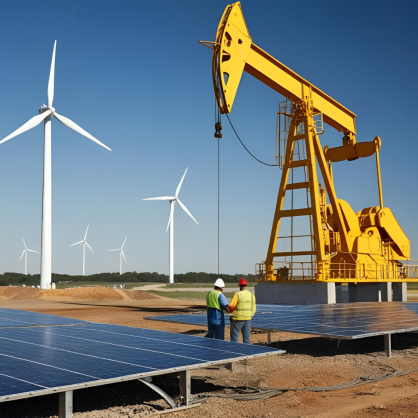
By NJ Ayuk, Executive Chairman, African Energy Chamber (www.EnergyChamber.org).
There's a promising future for African renewables as the continent strives to balance its current reliance on fossil fuels.
That's the prediction of the African Energy Chamber's 2025 Outlook Report on the State of African Energy.
As I have said before, Africa will eventually rely primarily on renewable energy, as much of the rest of the world strives to — but on its own timetable, not that of Western countries who have benefited for centuries from the exploitation of fossil fuels.
To achieve a carbon neutral future, African nations must have the underlying infrastructure and industry to make the dominance of renewables possible. As things currently stand, most African states lack said infrastructure and industry, and the most feasible and expedient way for them to achieve both is through leveraging the abundant oil and gas resources so many of them possess.
As our report finds:
No Electricity at All
There are also significant challenges facing Africa's energy sectors, as we cover in detail in our report.
The most pressing of those challenges is the fact that many rural areas across Africa are underserved and lack the necessary power infrastructure to access any electricity at all. In fact, of the 685 million people worldwide living without access to electricity, 590 million (86%) live in Africa. Conversely, even in well-served areas electricity is not cheap and reliable, as population and urbanization growth have outpaced the growth of power infrastructure, placing additional strain on the existing power systems. Many African households still rely on alternative, less efficient energy sources such as biomass, kerosene, etc., for heating and cooking.
One practical solution to these challenges is Western investment.
Western investment — providing both funds and technology — will help expand our existing infrastructure into underserved areas and harness our natural resources, and that will go a long way toward improving economic conditions across the continent. This will in turn improve energy affordability for many Africans as it becomes both more widely available and cheaper to access.
But where and in what should the West invest? That is up to them, but there are many development opportunities across the continent right now. I will cover just a few of the most promising, according to our outlook report.
What we found is that most North African countries see 90% access rates for electricity and are looking to enhance their power sectors while reducing reliance on fossil fuels. The bulk of renewable power share increases by the end of the decade will almost certainly be seated in this region. In contrast, sub-Saharan countries will continue to fight low electricity access for some time. They have been able to increase access to 55% currently, up from 38.3% in 2010. These countries will be ripe for investment, expanding the grid and production infrastructure to improve electrical access.
We also found that hydropower continues to dominate in East Africa, which has some of the largest dams in the world generating 19% of Africa's overall power generation and providing up to 90% of the available power for countries such as Ethiopia and the Democratic Republic of Congo. Africa's largest hydroelectric project, the Grand Ethiopian Renaissance Dam (GERD) is nearing completion and is expected to generate 15,760 GWh annually once fully operational. The project is of such importance to the region that it has sparked diplomatic cooperation between the Nile-bound countries of Ethiopia, Egypt, and Sudan in an effort to ensure equitable sharing of the river's precious waters. Other currently ongoing projects such as Ethiopia's Gibe III Dam (1870 MW), Zambia and Zimbabwe's Kariba Dam (1830 MW) and Ghana's Akosombo Dam (1020 MW) also speak to promising future growth and development opportunities for those willing to get their feet wet in the central and eastern parts of the continent along the Congo and Nile rivers, where nearly 90% of the continent's hydroelectric potential remains untapped.
Geothermal power in Africa is currently dominated by Kenya, which to date is the seventh largest producer of geothermal power. Kenya's estimated geothermal power potential is roughly 10 GW, but current operation capacity only allows 1 GW to be harnessed.
International investment is what launched Kenya's geothermal power in the first place, with the United Nation's development program providing the requisite research and funds in 1972 to establish the country's first geothermal plant by the 1980s. Since then, Kenya has expanded independently, creating the state-owned Geothermal Development Company (GDC) in 2008 to both speed up geothermal advancements and lower the initial investment risk for foreign investment.
Solar Power: A Light in the Dark
Solar power offers a veritable gold mine of opportunity given Africa's high irradiance levels: nearly 80% of the continent receives more than 2 MWh per square meter. This amounts to a solar PV potential of 1 million terawatt hours per year and a solar thermal potential of over 500,000 terawatt hours (for reference, a single terawatt hour is enough to light over 1 million homes for a year). Yet to date, Africa only generates over 35 TWh and 3.3 TWh from solar PV and solar thermal, respectively. Over 13 GW of utility-scale solar PV and wind projects are currently under construction, with hundreds more GW of capacity in the concept phase..
I would like to reiterate: Africa will reach a point where we will rely primarily on low carbon and renewable energy. But we cannot get to that point without building the proper infrastructure, and we cannot fund the building of said infrastructure without leveraging our natural resources, oil and gas being chief among them. If the west wishes to speed along Africa's progress on this front, the best way is to work with African as partners and investors working towards common goals.
Distributed by APO Group on behalf of African Energy Chamber.
Beware of fake COVID-19 SRD application sites
The Department of Social Development and it's entity the South African Social Security Agency (SASSA), have warned the public of fake sites and links for applications for the COVID-19 Social Relief of Distress (cSRD) grants.
The correct and authentic application platform for all applications for the COVID-19 Social Relief of Distress is https://SRD.sassa.gov.za .
The following links: https://srd-sassa.org.za and https://srdsassagov.co.za are fake and are used to collect data from unsuspecting applicants, stealing personal information from applicants of the grant of R370.
This was revealed in Parliament on Wednesday when the Portfolio Committee on Social Development received an update into the investigation on alleged weaknesses and fraud in the application and payment system of social grants.
The Minister of Social Development Sisisi Tolashe instituted an investigation into vulnerabilities of the applications and systems used by SASSA for the payment of social grants.
The Portfolio Committee on Social Development had made recommendations to conduct an investigation on alleged vulnerabilities after claims of fraud in the application system of the cSRD were made by two students from the University of Stellenbosch.
“Phase 1 of the investigation consisted of a comprehensive audit into the SRD application system administered by SASSA to determine the extent to which the system was exposed to Fraud.
“The findings of this audit will serve as input as a basis for Phase 2, which will be an investigation into alleged fraud and weaknesses in the broader social grant system that results in ineligible beneficiaries receiving social grants,” said the Department of Social Development in a statement.
The Final Report on the Vulnerability Assessment (VA) and Penetration Testing (PT) on the SRD online system administered by SASSA made the following findings, among others:
- That there are unidentified, malicious websites with .org and .co.za domain names that purport to be the authentic SRD application websites that are used to harvest applicants information for fraud purposes
- That the SRD web application has weaknesses, such as unencrypted communications, that present threats to the security of the platform and the safety of users. These weaknesses are classified as medium risk by the Final Audit Report.
The Final Audit recommends a communication campaign warning beneficiaries and applicants about the unofficial and fake sites that are used to harvest their information for fraudulent purposes.
The department said SASSA has developed an action plan to respond to the recommendations of the Final Audit Report. It has the following activities:
- It has replaced the HTTPS: method with a POST method to protect communications between the applicant and the server that processes their information.
-To implement a Rate Limit to limit the abnormal number of requests made to the SRD application system
- Update outdated software, and
- Implement regular patch updates and introduce biometric
In the long term, and within 18 months, SASSA will take down the fake websites and other content that violates its brand, copyright or right to information and privacy.
Minister Tolashe has assured the committee of her commitment in addressing the vulnerabilities and weaknesses identified in the system. – SAnews.gov.za
Janine
Wed, 02/26/2025 - 15:38
184 views
The world class research conducted in SA is vital for everyone
Government welcomes provisional outcomes of the media market inquiry
Government says it acknowledges and welcomes the provisional outcomes of the Media and Digital Platforms Market Inquiry (MDPMI), led by the Competition Commission of South Africa.
This week, the preliminary report from the commission regarding the MDPMI) garnered attention for its strong recommendation that Google should pay as much as R500 million yearly to compensate South Africa’s news industry.
The commission believes that South Africa should impose a digital tariff of 5% to 10% on major tech companies such as Google, Meta and Microsoft if they fail to fairly compensate media organisations for the content they distribute on their platforms.
The MDPMI began on 17 October 2023 and aims to investigate the characteristics of digital platforms that distribute news media content.
The focus is on identifying features that may hinder, distort, or restrict competition, or that undermine the objectives of the Competition Act.
The Government Communication and Information System (GCIS) has since described the inquiry as a crucial step in ensuring a fair and competitive digital media environment that supports the sustainability of local journalism and promotes media diversity.
“The South African media landscape is evolving rapidly, with digital platforms playing an increasingly dominant role in content distribution and advertising revenue,” a statement from the GCIS on Wednesday read.
Adjunct Faculty Member and Head of the GIBS Media Leadership Think Tank, Michael Markovitz, stated that the report aims to address the root causes of anti-competitive behaviour among big tech companies, and seeks to fundamentally reshape the digital market to foster fairer competitive dynamics.
The inquiry assessed the impact of global digital giants on local media businesses, ensuring that South African publishers, broadcasters and digital content creators can compete on a level playing field.
Government - through the GCIS, in partnership with members of the Print and Digital Media Transformation Steering Committee - said it remains committed to supporting an independent, pluralistic and sustainable media sector, recognising its fundamental role in strengthening democracy and ensuring access to diverse sources of information.
Deputy Minister in the Presidency, Kenny Morolong, said the GCIS will work with all stakeholders, including media houses, digital platforms, advertisers, and the public on the implementation of the final outcomes of the MDPMI.
“We will also contribute to the solutions proposed for addressing the challenges facing the media sector while unlocking opportunities for innovation and growth,” Morolong said.
The GCIS said the inquiry’s provisional outcome supports efforts for media transformation and sustainability, promoting economic participation and safeguarding public interest journalism, which is vital for a fair and diverse media landscape in South Africa.
White paper
Meanwhile, the Chairperson of the Portfolio Committee on Communication and Digital Technologies, Khusela Diko, has welcomed the recommendations of the provisional report.
Diko believes that the recommendations strengthen the committee’s call for an urgent publication of a White Paper on Audio and Audiovisual Media Services and Online Content Safety by the Department of Communication and Digital Technologies (DCDT).
“For a very long time, over-the-top (OTT) digital platforms exploited the regulatory gap in the sector to the detriment of the public broadcaster, the South African Broadcasting Corporation, which operates under stringent regulations. We further welcome the recommendation that media houses be remunerated for the content they produce that gets to be exploited by OTT and digital platforms,” Diko explained.
She further said that the recommendations on Google and YouTube, amongst others, will hopefully serve as a deterrent to everyone that the lack of direct regulation in the sector is not "licencee for unscrupulous business practices". – SAnews.gov.za
Gabisile
Wed, 02/26/2025 - 15:45
81 views

inDrive (www.inDrive.com), the ride-hailing app known for its transparent and fair pricing model, has secured its position as the second most downloaded app in its category globally, and it continues to make waves in Africa, where it ranks as the third-largest ride-hailing service in South Africa, second in Nigeria, and number one in Zimbabwe and Botswana and North African countries.
inDrive's success story in Africa reflects its remarkable growth trajectory, driven by its unique approach to mobility. With an innovative, peer-to-peer pricing model and a mission to challenge the traditional fare structures in the ride-hailing industry, inDrive is setting new standards in customer-centric mobility.
The inDrive Advantage: Why It's the Most Downloaded Ride-Hailing App
What sets inDrive apart is its unwavering commitment to creating an ecosystem that benefits both riders and drivers. Unlike other ride-hailing platforms, inDrive empowers users by allowing them to negotiate the fare before confirming the ride, giving both drivers and passengers the freedom to agree on a price that works for them. This model fosters trust, increases satisfaction, and has contributed to record-breaking app downloads in 2025.
InDrive's approach goes beyond just competitive pricing; it has built an environment where driver welfare is prioritized. The company operates with the lowest commission structure in the market, enabling drivers to keep more of what they earn, which in turn has fostered strong loyalty from local drivers across Africa.
Record Growth in Africa: inDrive's Expanding Footprint
Why Africa Chooses inDrive
inDrive's approach is rooted in equity and inclusivity. The app's growth in Africa is not just a result of its innovative pricing structure, but also its deep understanding of the diverse needs of African consumers and drivers. As the most downloaded ride-hailing app globally, inDrive's popularity is fueled by its customer-centric model, empowered drivers, and fair pricing system.
By offering a solution that works for everyone, inDrive is reshaping the future of mobility across the African continent. Whether it's ensuring driver safety, fair compensation, or increased access to affordable transportation, inDrive is positioning itself as the most reliable, convenient, and transparent ride-hailing option in Africa.
Distributed by APO Group on behalf of inDrive.
Press Contact:
Public Relations Manager - inDrive Africa
Lineo Thakhisi
Phone: +2781 3636 872
Email: lineo.thakhisi@indriver.com
About inDrive:
inDrive is a global mobility and urban services platform. The inDrive app has been downloaded over 240 million times, and was the second most downloaded mobility app in 2022 and 2023. In addition to ride-hailing, inDrive provides an expanding list of urban services, including intercity transportation and delivery. In 2023, inDrive launched New Ventures, a venture and M&A arm.
inDrive operates in 888 cities in 48 countries. Driven by its mission of challenging social injustice, the company is committed to having a positive impact on the lives of one billion people by 2030. It pursues this goal both through its core business, which supports local communities via a fair pricing model; and through the work of inVision, its non-profit arm. inVision's community empowerment programs help to advance education, sports, arts and sciences, gender equality and other vital initiatives.
For more information visit www.inDrive.com
SA positioned to navigate challenging geopolitical situation – WEF President
Amidst a fragmented geopolitical landscape, the President and CEO of the World Economic Forum, Børge Brende, has expressed support for South Africa’s Group 20 (G20) Presidency.
“In such a polarised, fragmented world as [the] backdrop of this G20 leadership, I think South Africa is especially well positioned to handle this very complicated geopolitical situation,” Brende said on Tuesday.
Brende was addressing the Business 20 (B20) -- the official dialogue forum for domestic and international business communities.
In his address, he stated that South Africa has extensive experience in managing competition and its history.
“It’s not an easy G20 to take on but that’s a reality with the geopolitical backdrop that [it] is happening against,” Brende said.
He said the current geopolitical situation is a priority for everyone, making the global business voice more crucial than ever.
“The last weeks have shown us we have to fasten our seat belts and even getting people that don’t agree [with us] in the same room is not almost an achievement. I saw that in Davos this year when people don’t agree [with you] they don’t want to even discuss [matters]. But to break impasses at least, you must start with the dialogue and sit in the same room and say, ‘this is important to me’.
“Sherpas can then try to find some solutions, because the solutions are so incredibly important…,” he said.
With South Africa set to host the G20 Leaders' Summit later this year, Cape Town hosted the two-day B20, which began on Monday.
Western Cape Premier Alan Winde previously said that the province and Cape Town look forward to welcoming the world once again.
READ | Cape Town to host B20 meeting
The gathering focused on the theme “Inclusive Growth and Prosperity through Global Participation.”
Brende said the private sector has a key role to play in mobilising investment, driving innovation, and finding solutions to shared challenges.
“That means that if you want to get anything done, you also must work with the business sector. That’s the only way to also get investments and fresh money,” he explained.
He described Africa, with its fast-growing economies and young workforce, as poised to shape the future.
The African Continental Free Trade Area (AfCFTA) alone has the potential to unlock $450 billion in economic gains over the next decade.
The World Economic Forum, he said, has a long-fostered collaboration between business and government, and is committed to supporting this effort through initiatives such as the First Movers Coalition that pushes for green technologies.
“Now is the time for the B20 and G20 to work together to accelerate sustainable growth, strengthen global trade, and ensure that economic progress benefits all.
“South Africa’s long-standing commitment to cooperation serves as a powerful example of what is possible when we find common ground.”
Brende also touched on the key challenges including climate change, cybercrime, and the need for global consensus on issues like carbon dioxide (CO2) emissions and cybersecurity.
Despite the geopolitical tensions, Brende stated that the global economy is expected to grow by over 3% this year.
“Trade is expected to grow by 3%, however, the growth we are seeing in trade is not coming from traditional manufacturing goods. Digital trade and services are projecting significant growth. The biggest game changers over the next few years will be new technologies.”
He said the technological advancements, particularly in artificial intelligence (AI) and machine learning, could boost productivity by 10% in a decade.
– SAnews.gov.za
Gabisile
Wed, 02/26/2025 - 13:58
16 views
South Africa leads G20 science and innovation drive
South Africa is taking the lead in global scientific collaboration as it assumes the G20 Presidency, with a strong focus on pandemic preparedness, emerging technologies and sustainable development.
Science, Technology and Innovation Minister, Professor Blade Nzimande, opened the inaugural meeting of the G20 Research and Innovation Working Group (RIWG) at the University of the Free State in Mangaung, emphasising the need for ambitious and lasting contributions to the global scientific landscape.
Addressing approximately 150 delegates from G20 countries, Nzimande stressed the importance of collaboration in ensuring that all nations benefit from scientific advancements.
Nzimande envisions the RIWG as a driving force for solidarity, providing science-based policy advice for sustainability. Discussions from this meeting will shape key resolutions for the G20 ministerial gathering scheduled for September 2025.
A major highlight of the meeting was the focus on the bioeconomy -- a transformative economic system that uses renewable, plant-based raw materials for energy and industry.
Free State Premier, Maqueen Letsoha-Mathae, underscored the bioeconomy’s potential to drive economic growth, while mitigating environmental impacts. She introduced the G20 Initiative on Bioeconomy (GIB), which outlines 10 voluntary, high-level principles promoting sustainable development, inclusivity, climate change mitigation and responsible innovation.
South Africa has long been at the forefront of bioeconomy initiatives. The country’s Bioeconomy Strategy, launched in 2013 as an evolution of the 2001 Biotechnology Strategy, aims to establish and expand bio-based industries.
This strategy seeks to enhance international competitiveness, create sustainable jobs, improve food security, and promote a greener, low-carbon economy.
As one of the world’s most biologically diverse nations, South Africa is a prime location for bioprospecting investments. It boasts 10% of known plant species, 15% of all recognised coastal marine species, and the globally unique Cape Floristic Region -- making it a key player in the future of sustainable innovation.
With its G20 leadership this year, South Africa is positioning itself as a hub for research and innovation, ensuring that scientific advancements translate into tangible, impactful outcomes for human development and environmental sustainability. – SAnews.gov.za
Gabisile
Wed, 02/26/2025 - 09:29
622 views
South Africa and Japan foster relations
The friendship and collaboration between Japan and South Africa – as an essential factor in the advancement of peace, prosperity and mutual understanding – have been reflected upon at Deputy President Paul Mashatile’s meeting with Japanese Ambassador to South Africa, Fumio Shimizu.
The Deputy President received a courtesy visit from newly appointed Ambassador Shimizu at Mashatile Tuynhuys office in Parliament, Cape Town, on Tuesday.
Shimizu is hosting a high-powered Japanese delegation in South Africa to attend the G20 Foreign Ministers’ Meeting and the meeting of the G20 Finance Ministers and Central Bank Governors, alongside a number of G20 workstream meetings.
At Tuesday’s meeting, South Africa and Japan reaffirmed their strong diplomatic and economic partnership, with Mashatile emphasising Japan’s role in South Africa’s economic growth and investment landscape.
“In particular, the Deputy President appreciated the continued strengthening of South Africa-Japan cooperation in several sectors, including politics, trade and investment, science and innovation, education, energy and development cooperation,” the Presidency said in a statement on Tuesday.
Mashatile highlighted Japan’s role as one of South Africa’s most significant economic partners, particularly in the automotive industry, technology, skills development and mineral beneficiation. He expressed optimism about increasing Japanese investments in local manufacturing, job creation and infrastructure projects.
“In Japan, we see the potential for the increase of already sizable investment in our economy, especially in the automotive industry, technology and skills development, commercialisation and manufacturing, as well as machinery for mining and mineral beneficiation, which are among the key economic drivers in South Africa,” Mashatile said.
The Deputy President and Shimizu committed to strengthening cooperation in various sectors, including science and innovation, education and energy.
Mashatile will undertake a working visit to Japan next month to solidify trade relations and attract further investment.
South Africa also eagerly anticipates the 9th Tokyo International Conference on African Development (TICAD 9) in Yokohama this August, which is expected to further bolster economic ties between Japan and the African continent. – SAnews.gov.za
Gabisile
Wed, 02/26/2025 - 11:26
332 views
Global minimum tax crucial to strengthen tax base in developing countries
Finance Minister Enoch Godongwana says a global minimum tax is crucial to strengthening the tax base of developing countries and developing a fairer global tax system.
The Minister was addressing a panel discussion on tax on the sidelines of the ongoing G20 Finance Ministers’ and Central Bank Governors’ meeting held in Cape Town on Wednesday.
“Over the past decade or so, much has [been] done to try and achieve a more transparent fair and efficient global tax system. We note the work done by the G20 OECD [Organisation for Economic Co-operation and Development] on base erosion and profit shifting.
“[This] work needs to be commended as it…has compelled us to think about how to work together towards a fairer and more sustainable tax system that will benefit all countries.
“The introduction of the global minimum tax is an important step towards achieving this goal. We believe it offers all countries, developed and developing economies, the opportunity to strengthen their tax base in cases where multinationals operating in those countries are not taxed sufficiently in other jurisdictions. This will enable better domestic resources mobilisation for all countries,” he explained.
Godongwana noted that although progress has been made, “much still needs to be done in ensuring that international tax reforms are implemented by all countries”.
“Concerns remain about the level of complexity in the global tax system. This is especially true for developing countries where capacity constraints…limit their ability to effectively administer transfer pricing to cite but one example.
“Capacity constraints also limit developing countries from participating in the information sharing which is crucial to unlocking transparency in respect of capital flows, asset allocation and beneficial ownership.”
Furthermore, he added that improvement in international cooperation and access to information are “key to limiting the effect of complex and aggressive tax structuring”.
Godongwana told the gathering that the United Nations also has a role to play in giving developing countries a “voice to express their challenges and concerns”.
“The UN [United Nations] process should never be seen as an alternative or opposing process to that of the G20 nor should it lead to division. Both processes can be beneficial to all countries…as more cooperation and more inputs will ultimately lead to a more sustainable outcome.
“We can all recognise that working together as a diverse group to find common solutions is very challenging. However, we have learnt as a country that embracing diversity results in better solutions,” he said. – SAnews.gov.za
NeoB
Wed, 02/26/2025 - 12:11
20 views
Global challenges require G2O countries to work together
President Cyril Ramaphosa has emphasised the importance of the Group of 20 (G20) members working together to overcome unprecedented challenges, including slow and uneven growth, rising debt burdens, persistent poverty and inequality, and the existential threat of climate change.
“We are not moving quickly enough or boldly enough to address these global challenges. We must collectively target a step-change in our efforts to improve the lives of all of our people and protect future generation,” the President said on Wednesday.
Addressing the opening of the first meeting of the Group of 20 (G20) Finance Ministers and Central Bank Governors in Cape Town, the President said at this time of global uncertainty and escalating tension, it is now more important than ever that the members of the G20 work together.
“The erosion of multilateralism presents a threat to global growth and stability. We know from the experience of past decades that a fair, transparent and inclusive rules-based international order is an essential requirement for economic stability and for sustained growth.
“At this time of heightened geopolitical contestation, a rules-based order is particularly important as a mechanism for managing disputes and resolving conflict. It is vital to ensuring that the rights and interests of the vulnerable are not trampled beneath the ambitions of the powerful,” he explained.
The first citizen said one of the greatest impediments to growth, development and stability is the persistence of inequality within and between countries.
“The pursuit of the United Nations Sustainable Development Goal on reducing inequality is as much of an economic imperative as a social imperative. As the G20 we need deliberate and coordinated efforts to focus on inclusive growth based on responsive trade and investment to grow the incomes of poor nations and the poorest in society.
“We need to ensure equal access to opportunities, especially for women and young people. For nations to flourish, equality and prosperity must be available to everyone – regardless of gender, race, religious beliefs or economic status.
“The pursuit of equality is an imperative for wealthy and poor countries alike. That is why South Africa has placed solidarity, equality and sustainability at the centre of its G20 Presidency,” the President said.
Priorities
In line with the original mandate of the G20 to promote strong, sustainable, balanced and inclusive growth, South Africa has identified four priorities for its G20 Presidency.
The first priority is to take action to strengthen disaster resilience and response.
“The increasing rate of climate-induced natural disasters is disproportionately affecting countries that can least afford the costs of recovery and rebuilding.
“When repeated disasters lead to widespread damage of infrastructure, economic activity is disrupted and livelihoods are destroyed,” the President said.
He said innovative financing and insurance mechanisms must be put in place by the global community – including international financial institutions, development banks and the private sector – to scale up funding for disaster prevention and post-disaster reconstruction.
“Our second priority is to ensure debt sustainability for developing economies. In recent years, low- and middle-income countries have seen their levels of sovereign debt and the cost of servicing that debt rise substantially.
“The combined external debt stock of low-income countries more than doubled in the decade to 2022. Debt service costs are increasingly crowding out spending on education, healthcare and other social services, as well as infrastructure needed for economic development,” the President said.
He stressed that the work of the International Financial Architecture Working Group and other working groups will be particularly important in improving the Common Framework for Debt Treatment, accelerating the reform of multilateral development banks, and strengthening capital flows to emerging markets.
“Our G20 Presidency will be addressing the high cost of capital faced by developing economies as one of the main barriers to sustainable growth. The G20 must show leadership in addressing the imbalances that persist in the global economy and filling the significant gap in funding required to achieve the Sustainable Development Goals.
“The third priority of South Africa’s G20 Presidency is to mobilise finance for a just energy transition. Significantly more funding is required to limit global temperature rise in line with the goals of the Paris Agreement, and to do so in a manner that is equitable and just.”
South Africa has pioneered the use of country platforms to coordinate funding through the Just Energy Transition Partnership.
“We continue to advocate for greater concessional and grant funding to support the energy transition in developing economies. G20 member countries should lead the way in demonstrating ambition on climate action in the lead-up to COP30 in Brazil later this year.
“The need to rapidly scale up adaptation funding is particularly important, as those countries which have contributed the least to climate change are now most vulnerable to its effects. We must also scale up the use of innovative financing instruments, improve coordination among funders, and unlock the potential of carbon markets to create new and diverse sources of funding,” the President said.
South Africa’s fourth priority for the G20 Presidency is to harness critical minerals for inclusive growth and sustainable development.
“We need a G20 framework on green industrialisation and investment that promotes value addition to critical minerals close to the source of extraction. We need to promote the development of low-carbon manufacturing value chains which can support decarbonisation while promoting growth.
“As minerals extraction accelerates to match the needs of the energy transition, the countries and local communities endowed with these resources must be the ones to benefit the most,” said President Ramaphosa. - SAnews.gov.za
nosihle
Wed, 02/26/2025 - 09:39
175 views
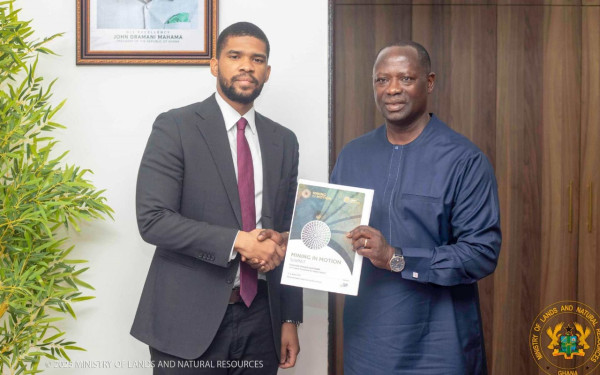
Otumfuo Osei Tutu II, King of the Ashanti Kingdom; Hon. Emmanuel Armah Kofi Buah, Minister of Lands and Natural Resources of Ghana; and Oheneba Kwaku Duah, the son of Otumfuo Osei Tutu II and Managing Director of the Ashanti Green Initiative recently met to discuss the upcoming Mining in Motion Summit in Ghana.
They explored the summit's potential to improve the artisanal and small-scale gold mining (ASGM) sector in Ghana and the role of government, international partners and major mining firms in accelerating the sector's growth. Hon. Kofi Buah endorsed the event, emphasizing its significance in connecting small-scale miners with technology providers, financiers, regulatory bodies and global industry stakeholders to improve their operations and impact.
Organized by the Ashanti Green Initiative along with the World Bank, the World Gold Council and other international partners, Mining in Motion will take place from June 2 - 4 in Accra.
The summit is held under the theme Sustainable Mining & Local Growth – Leveraging Resources for Global Impact, uniting key decision-makers, including H.E. John Dramani Mahama, President of the Republic of Ghana, as well as representatives from public and private sector mining institutions from South Africa, the Republic of Guinea, the African Union, ECOWAS and the United Nations.
The three-day event will highlight the role of traditional authorities in shaping artisanal and small-scale mining practices, emphasizing the sector's contribution to employment and economic growth. In 2024 alone, Ghana's artisanal miners generated $5 billion in foreign exchange earnings through gold exports. Providing direct employment for over one million Ghanaians and accounting for 35% of domestic gold output, the sector has the potential to significantly shape socioeconomic development in the west African country.
As Ghana's mining sector increasingly supports sustainable development, the Mining in Motion Summit will highlight best practices for integrating ASGM into the global financial system. Representatives from prominent international financing organizations will share their insights.
In a significant move to boost earnings for small-scale miners, Ghana has announced plans to establish a Gold Board. This new entity will simplify the process of purchasing gold from small-scale miners, providing them with easier access to global markets. With Samuel Adu Gyamfi, who was appointed Acting Managing Director of Precious Minerals Marketing Company last month and tasked with setting up the Ghana Gold Board, playing a pivotal role in shaping the summit, Mining in Motion is set to have a sizable impact on the growth of Ghana's gold sector.
Through a series of high-level panel discussions, deal signings, project showcases and exclusive networking, Mining in Motion serves as the ideal platform to connect Ghanaian miners with regional counterparts and global investors for forge industry-changing partnerships.
Stay informed about the latest advancements, network with industry leaders and engage in critical discussions on key issues impacting ASGM and medium- to large-scale mining in Ghana. Secure your spot at the Mining in Motion 2025 Summit by visiting https://MiningInMotionSummit.com. For sponsorship opportunities or delegate participation, contact sales@energycapitalpower.com.
Distributed by APO Group on behalf of Energy Capital & Power.
About Ashanti Green Initiative:
The Ashanti Green Initiative is a foundation dedicated to promoting environmental restoration, advocating for climate-related issues, and fostering community development in Ghana and beyond. Guided by a commitment to sustainability, the foundation undertakes projects aimed at rehabilitating degraded lands, restoring water bodies, and promoting responsible natural resource management. The initiative also champions regenerative practices in mining, agriculture, and energy, aligning with global efforts to combat climate change while uplifting local communities through education, capacity-building, and economic empowerment programs. The Ashanti Green Initiative is led by Nana Kwaku Duah, son of His Majesty Otumfuo Osei Tutu II, King of the Ashanti Kingdom. Under his leadership, the foundation applies forward-thinking approaches and innovative solutions, creating impactful partnerships with local and international stakeholders to drive meaningful change.
About Energy Capital & Power:
Energy Capital & Power is an Africa-focused global leading investment platform for the energy and mining sectors. Through a series of events, online content and investment reports, we unite the entire energy and mining value chains – from oil and gas exploration to renewable power – and facilitate global and intra-African investment and collaboration.
Seven Chinese nationals found guilty of human trafficking
The seven Chinese nationals standing trial for human trafficking and child labour have been found guilty on 160 counts in the Gauteng South Division Court in Johannesburg.
Judge David Mhango said it was common course that the accused were in charge of Beautiful City and managing its operations; that the factory employed foreign nationals - mainly Malawians; that a number of employees sustained injuries during operations of Beautiful City and that the Malawians were illegal in South Africa.
He further said employees at the factory worked from Monday to Sunday and the company paid wages below the National Minimum Wage (NMW) which is a statutory requirement in the country.
Kevin Tsao Shu-Uei, Chen Hui, Qin Li, Jiaqing Zhou, Ma Biao, Dai Junying, and Zhang Zhilian were facing schedule six offences.
The Chinese nationals were found guilty on not registering with the Compensation Fund and declaring their operations; failure to keep records of their earnings; failure to submit their return on earnings; failure to pay and declare assessments; failure to maintain a safe workplace; failure to report incidents; failure to register and declare with the Unemployment Insurance Fund Commissioner; failure to inform the Commissioner on Unemployment Insurance changes; guilty of human trafficking; aiding/facilitating human trafficking; bondage; benefiting from victims of human trafficking and assisting illegal persons to remain in South Africa.
The Chinese nationals were arrested on 12 November 2019 in a joint operation carried out at their premises Beautiful City Pty Ltd based at Village Deep in Johannesburg.
They were arrested during the joint inspection blitz carried out by the Department of Employment and Labour’s Inspection and Enforcement Services (IES) branch together with the South African Police Service (SAPS)/ Hawks Unit and the Department of Home Affairs.
The factory produced cotton fibre sheets.
“The joint operation uncovered illegal immigrants some of whom were minors working under horror conditions and kept in the locked premises of Beautiful City,” said the Department of Employment of Labour.
the department's Gauteng Provincial Chief Inspector, Advocate Michael Msiza said the judgment was a landmark ruling for labour laws.
He said the judgment sent a strong message to those that continue to employ illegal immigrants, that illegality will not be tolerated.
All the accused were remanded in custody except for number six, Dai Junying who is still out on bail and was kept outside on medical grounds.
Sentencing proceedings will resume on 7 March 2025. – SAnews.gov.za
Janine
Wed, 02/26/2025 - 10:13
175 views
JOHANNESBURG: Cricket South Africa (CSA) today announce a multi-year partnership with Marriott Bonvoy, Marriott International’s award-winning travel programme, and Protea...
Hawks, BMA arrest two immigration specialists
The Commissioner of the Border Management Authority (BMA), Dr Michael Masiapato has applauded the arrest of two immigration specialists at the Beitbridge port of entry by the Directorate for Priority Crime Investigation (Hawks).
The arrests on Monday evening followed an ongoing investigation linked to the case of immigration specialist Dorah Ncube, who was arrested last year for fraud and corruption related to the illegally processing of six Malawian nationals at Beitbridge.
According to the BMA, Ncube remains in police custody.
The arrested officials appeared before the Musina Magistrate’s Court on Tuesday.
The authority said it has continuously reiterated its zero-tolerance stance on corruption and remains committed to upholding the integrity of South Africa’s border management systems.
“We continue to fully cooperate with law enforcement agencies in their investigations to ensure that those involved in corrupt activities are held accountable.
“The BMA will not tolerate any misconduct that undermines the rule of law and the security of the country. We assure the public that decisive action will be taken against any official found to be involved in unethical practices,” said Masiapato.
The BMA continues to curb corruption within its systems. Currently, it is processing 45 cases that are still to be concluded with transgressions including aiding and abetting as well as illegal processing of travellers and goods.
About 27 officials have been dismissed since the BMA’s inception on 1 April 2023.
Further updates on the arrests of the two officials will be provided as investigations progress. – SAnews.gov.za
Janine
Wed, 02/26/2025 - 10:37
84 views
Mashatile to commemorate Harvest Day with Free State apple farmers
Strategies for enhancing the agricultural sector, fostering economic growth, and promoting job creation will form part of Deputy President Paul Mashatile’s visit to the Free State.
Mashatile will commemorate Harvest Day at the Remmoho Investment in Agriculture Farm in Bethlehem on Thursday, 27 February.
According to a statement from the Deputy President’s Office, the event will highlight key milestones in agricultural development, underscoring government’s dedication to fostering an inclusive agricultural sector and creating job opportunities within the community.
As chairperson of the Inter-Ministerial Committee on Agriculture and Land Reform, the Deputy President will meet with approximately 400 local farmers, agricultural stakeholders and commodity organisations.
“During his visit, the Deputy President will witness firsthand the investments in apple export and processing facilities in the province, which showcases the innovative efforts to enhance agricultural production and support local farmers, especially black farmers, in growing production,” the statement read.
The visit will also highlight the role of Remmoho Investment in Agriculture, which contributes to government’s vision of growing an inclusive agricultural sector, as enshrined in the Agriculture and Agro-processing Master Plan (AAMP).
“The company’s investments in the agricultural space are pivotal in breaking new frontiers to create employment opportunities and achieve food security in South Africa," the statment said.
The Presidency said the event will also be a celebration of agricultural success stories and an opportunity to underscore how such initiatives align with government efforts to foster economic development and food security.
Agriculture Minister John Steenhuisen and Land Reform and Rural Development Minister Mzwanele Nyhontso will accompany the Deputy President on his visit.
Free State Premier Maqueen Letsoha-Mathae and the Executive Mayor of Thabo Mofutsanyana District Municipality, Conny Msibi, will receive the Deputy President. – SAnews.gov.za
Gabisile
Wed, 02/26/2025 - 08:30
28 views