• Skip to main content
  • Skip to header right navigation
  • Skip to after header navigation
  • Skip to site footer
MyZA

MyZA

News, Directory, Events and Other Stuff

  • Social Media
  • Sport
  • World News
  • Home
  • Submit News
  • Directory
  • Events
  • Stratlec
  • TFSA
  • News
    • APO
    • Today’s Sport News
    • Todays Social Media and Tech Headlines
    • Today’s World News
    • Today’s SA Financial News
  • Contact
You are here: Home / Archives for Sustainability

Sustainability

11 November 2024

Mining industry a “sunrise industry”

Location: News

Mining industry a “sunrise industry”

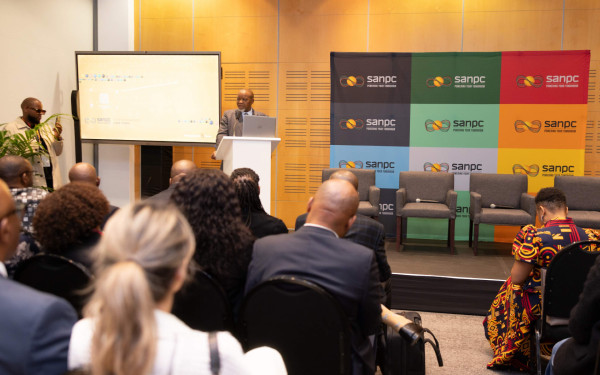
Mineral and Petroleum Resources Minister Gwede Mantashe has described the mining industry as a “sunrise industry” that is diversifying from bygone eras.

The Minister said this during his address at the Mintek @90 Conference held in Sandton on Monday.

Mintek is, among other things, the national research and development entity specifically focused on mining and metallurgy.

“Mintek continues to focus on conducting research that will not only have impactful outcomes for the industry but drive technological innovations that will have a positive societal impact, stimulate economic growth, reduce unemployment and inequality, as well as eradicate poverty in South Africa.

“Thanks to the work that is being pioneered by the entity, in collaboration with the industry and various research institutions, that we can now confidently describe the South African mining industry as a sunrise industry that is diversifying from the gold mining era to a diversified industry with the world’s largest reserves of platinum group metals [PGM], manganese, chrome, coal, vanadium, and rare earth minerals,” Mantashe said.

The Minister highlighted that as the need for transition towards renewable energy sources builds up steam, so will the need for PGM rise and this is where Mintek can become a “significant player” on a national, continental and global stage. 

“The need for the world to transition from high carbon emissions to low carbon emissions has increased the demand for ‘green’ minerals. As the world’s largest producer of manganese and chrome, the South African manganese and chrome sectors are equally poised to play a significant role in the global automotive and construction industries given the expected demand for green technologies and electric vehicles.

“As we continue to engage the manganese and chrome producers on mineral value-addition close to the point of production, given its existing pioneering research capabilities, Mintek can be a significant player in the global clean energy economy.

“While there is no universal consensus on the “critical minerals”, the approach by Mintek in developing South Africa’s critical minerals strategy is poised to guide not only South Africa’s, but Africa’s responsible exploration, processing, and exporting of these essential resources,” he said.

Turning to the challenge of illegal mining in the country, Mantashe revealed that Mintek is playing a role in “tackling ownerless and derelict mines by closing the holes that were left behind, thereby help in combating illegal mining and trading in ores”.

He added that the entity is also engaged in work to improving mining processes and efficiency.

“Although funding for this project is not sufficient, there is visible progress which aligns with the government's commitment to addressing environmental sustainability and fostering sustainable growth within the industry.

“Furthermore, Mintek continues to lead the way in driving technological innovations that enhance metal recovery from both conventional and emerging processes. 

“Its focus on continually improving these processes and ensuring the efficient utilisation of energy and water resources by developing technologies to minimise environmental pollution, reflect government’s commitment to safe reclamation of waste, and further promotes broader environmental sustainability within the sector,” the Minister said.

Mantashe emphasised that the success of South Africa’s mining sector – which has contributed at least 6.3% to the nominal Gross Domestic Product this year – rests on not only on research and development but also on collaboration between government, the private sector and academia.

“These collaborations are essential for driving progress and fostering innovation, thereby enable us to tackle the complex challenges we face. By working together, we can leverage diverse expertise and resources, thus ensuring that our collective efforts are aligned with the industry's pressing needs.

“Such synergy not only enhances our ability to respond effectively to market demands but also promotes sustainable practices that benefit the economy and the environment.

“For the next 90 years, Mintek is poised to continue its trajectory of innovation and excellence in mineral technology. The ongoing commitment to advancing techniques in mineral extraction, refining, and processing will be pivotal in addressing both the current and emerging challenges in the industry,” Mantashe said. – SAnews.gov.za


NeoB
Mon, 11/11/2024 - 11:57
42 views
Read moreMining industry a “sunrise industry”
11 November 2024

TNPA appointed Zutari for implementation plan for the Port of Durban

Location: News

TNPA appointed Zutari for implementation plan for the Port of Durban

The Transnet National Ports Authority (TNPA) has appointed Zutari, a leading infrastructure and advisory firm, as the transaction advisor to validate the Island View Precinct Strategy and implementation plan for the Port of Durban. 

This appointment is a pivotal move aimed at transforming the liquid bulk sector in South Africa while ensuring security of supply.

“The Island View Strategy, originally approved in 2019, is set to undergo a comprehensive revision to ensure it remains relevant in today’s rapidly evolving landscape. 

“Zutari’s role will be to analyse current market trends, review existing strategies and develop a revised comprehensive plan aimed at enhancing the sector's sustainability and operational efficiency. This initiative aligns with TNPA's commitment to implementing global best practices,” it said in a statement.

The Port of Durban’s Island View precinct is a South African national key point, managing approximately 74% of South Africa's liquid bulk imports. 

With 12 terminal operators over a 1 545 000 m² area, it handles a variety of products, including petroleum, chemicals and agricultural goods. As part of the country’s transition to sustainable energy, the port will also facilitate the handling of liquefied petroleum gas (LPG) and other cleaner energy sources.

Zutari’s role includes ensuring that the strategy benefits both TNPA and the liquid bulk industry while safeguarding supply chain integrity, especially in this major petrochemical hub. 

TNPA is committed to ensuring security of supply, improved terminal operational efficiencies, operational continuity, risk management and job preservation with the precinct supporting nearly 2 000 direct and indirect jobs as of 2022.

Mpumi Dweba-Kwetana, Acting TNPA Managing Executive for the Eastern Region, said the Island View Strategy aims to accelerate transformation, ensure a reliable supply of liquid bulk commodities, and increase throughput efficiency. 

“The appointment of Zutari is a significant milestone towards achieving these goals. Our collaborative engagement with stakeholders, including Fuels Industry Association of South Africa (formerly known as SAPIA), the National Energy Regulator of South Africa (NERSA), the Chemical and Allied Industries’ Association (CAIA), and terminal operators, has been crucial in building confidence and identifying areas for cooperation in safeguarding the liquid bulk sector,” said Dweba-Kwetana. 

Transnet National Ports Authority is responsible for the safe, effective, and efficient economic functioning of the national port system, which it manages in a landlord capacity. It provides port infrastructure and marine services at the eight commercial seaports in South Africa – Richards Bay, Durban, Saldanha, Cape Town, Port Elizabeth, East London, Mossel Bay and Ngqura. 

It operates within a legislative and regulatory environment and is governed by the National Ports Act (Act No. 12 of 2005). 

For more information visit www.transnetnationalportsauthority.net – SAnews.gov.za

Edwin
Mon, 11/11/2024 - 10:43

44 views
Read moreTNPA appointed Zutari for implementation plan for the Port of Durban
11 November 2024

Statement by the Chairperson of the Portfolio Committee on Communications and Digital Technologies on the Withdrawal of the SABC Bill by Minister Malatsi

Location: News

Republic of South Africa: The Parliament
Download logo

The Chairperson of the Portfolio Committee on Communications and Digital Technologies, Ms Khusela Sangoni Diko, has noted with grave concern the decision of the Minister of Communication and Digital Technologies, Mr Solly Malatsi, to withdraw the South African Broadcasting (SABC) Bill from Parliament, as reported in the Sunday Times today, 10 November 2024. The Portfolio Committee has not yet been formally notified of the withdrawal of the proposed legislation in line with the Rules of the National Assembly.

Nonetheless, the report states that the minister has decided to withdraw the Bill, believing it is “totally flawed”, does not address the funding model of the public broadcaster and assigns too much power to the minister in appointing board members. While appreciative of the fact that as the executive authority, the minister may rescind the Bill for whatever reason before its second reading in the House, the Chairperson holds that this decision by the minister would be highly ill-advised, and it is no exaggeration to say it would sound the death knell for the South African Broadcasting Corporation.

The challenges facing the SABC require a considered and urgent response, not trigger-happy action, which serves no purpose but to frustrate and disrupt processes already underway. To withdraw the Bill at this stage means to delay the implementation of crucial reforms necessary to save yet another crucial and strategic public institution. Initiated by the government in 2018 and only introduced to Parliament in October 2023, the SABC Bill seeks to, among others, provide for the continued existence of the SABC, provide for its governance and consequently amend the Independent Communications Authority of South Africa (ICASA) Act and the Electronic Communications Act (ECA). To date, the Bill has undergone a thorough public participation process, with the sixth Parliament having received about twenty written submissions from the SABC itself, academia, youth representatives, organised labour, and other interested parties. The 7th Parliament, understanding the urgent challenges facing the public broadcaster, prioritised this critical legislation and held oral hearings into the submissions in September 2024. The committee diligently studied and interrogated these submissions, and all concerns raised by stakeholders were attended to. The Department of Communications and Digital Technologies (DCDT), which the minister leads, was expected to have responded to the issues raised during the public participation process by the 17th of October 2024.

This process underway and agreed to by the committee and in the Minister's presence would have provided the committee with a clear way forward to amend the Bill as provided for in the Rules of Parliament and subvert any unnecessary delays in the processing of this sorely needed legislation. The Chairperson remains convinced that the issues raised by civil society, including the Democratic Alliance, relating to a lack of clarity on the funding model of the public mandate of the SABC, time limits on the President on the appointment of the SABC Board, the creation of a subsidiary Commercial Company and Board and the potential “lack of independence” in the appointment of the subsidiary Commercial Company, were not insurmountable and could have been remedied through an amendment by the committee. Rule 286 of the National Assembly Rules explicitly confers authority on parliamentary committees to amend or, where necessary, redraft bills before them. Thus, the Chairperson strongly believes that an attempt to withdraw this Bill from Parliament will delay and derail the transformative and developmental interventions the government has been pursuing in state institutions.

Ms Diko said that the committee has been at pains to put in place a fast-tracked process to finalise the SABC Bill, the absence of which has created a serious legislative vacuum that has dire consequences. “To this end, the government and even the committee itself had initiated various engagements with stakeholders on the possible funding model for the public mandate of the SABC – the most substantive and urgent of the concerns raised against the Bill.” Another of the major concerns coming from the public participation process was the need for the speedy finalisation of the Audio and Audio-Visual White Paper, and Ms Diko would like to urge the Minister to prioritise the finalisation of the White Paper before canning a process underway as this has a bearing on the amendment of the Bill.

She further said that the public broadcaster could not be allowed to fail because its demise would spell unmitigated disaster also for SENTECH, the country's signal distributor, with a ripple effect to over 130 community radio stations, several private broadcasters including commercial radio and TV stations and ICT service providers. Ultimately, the most affected stakeholders would be communities across the country, which rely on public broadcasters to provide them with news and public information that impacts their lives and is delivered in all official languages, including sign language. It is undisputed that SABC is the only broadcaster with the capacity, reach and ability to deliver on this important mandate.

Ms Diko commends the SABC leadership and staff for the immense strides recorded over the last two years, saying that they are a testament to the dedication and patriotism of the hardworking men and women of the public broadcaster, who, despite enormous pressure and financial constraints, were resolute that the show would go on. In the 2023/24 financial year, the SABC has turned the corner on its financial management, achieving an unqualified audit opinion once again after nine years.

“Should the reports of the minister's decision to withdraw the Bill be true and due to the gravity of the situation at the public broadcaster, we urge the DCDT to accelerate the process of reworking the Bill and reintroduce a new version to Parliament within the current financial year. In the meantime, the committee will invite the minister to indicate how, in the interim, the financial situation at the public broadcaster shall be improved to ensure sustainability until this much-needed legislation is amended and the issues attendant to it are resolved. Failure to reintroduce the Bill timeously will leave individual members of the committee or the committee itself with no option but to entertain introducing a committee or Private Members' Bill in the best interest of the SABC for consideration by Parliament,” said Ms Diko.

Distributed by APO Group on behalf of Republic of South Africa: The Parliament.

Read moreStatement by the Chairperson of the Portfolio Committee on Communications and Digital Technologies on the Withdrawal of the SABC Bill by Minister Malatsi
10 November 2024

SANPC Launches Global Investor Roadshow

Location: News
African Energy Chamber

The newly-sanctioned South African National Petroleum Company (SANPC) kicked off its global investor roadshow at African Energy Week: Invest in African Energies on Thursday, inviting investors and governments to engage with South Africa's oil and gas prospects, while showcasing strategic plans for the new entity.

Speaking on the rationale behind the creation of the SANPC, South Africa's Minister of Mineral and Petroleum Resources, Gwede Mantashe, emphasized the need to rationalize and consolidate the country's many state-owned enterprises. The aim is to maximize efficiencies, streamline the sector, reduce costs and prioritize petroleum development as a catalyst for economic growth.

“The focus is to drive economic growth and development. We want it to grow – we want to get into fossil fuels. We must do it. [We want to] improve operational efficiencies, scale of market and market share,” said Minister Mantashe.

The SANPC operates under a broad mandate to acquire, generate, manufacture, market and distribute all forms of energy, including crude oil, natural gas, coal, renewable energy and biofuels. South Africa's extensive coal bed methane and shale gas resources were highlighted, including the gas-rich Karoo Basin and the Saldanha Bay gas-to-power project. The country also benefits from deep-sea ports, robust infrastructure and a favorable regulatory framework, with the potential to create synergies with nearby oil and gas producers such as Mozambique and Angola.

“We need to start thinking as a region instead of as countries,” said Godfrey Moagi, CEO of SANPC.

South Africa's refining capabilities were also emphasized as a critical priority, with enhancing the country's liquid fuels security identified as a matter of national security and strategic interest. The SANPC stated that in 2024, South Africa is expected to import 70% of its manufactured liquid fuel needs.

“This has put the country at risk, and we are dealing with issues of security of supply. We need to prioritize commercial sustainability for the entire CEF Group to drive economic recovery,” said Moagi. “In South Africa, we import $2.5 billion of crude oil and products. The SANPC is going to change this, so that South Africa looks differently.”

“[Reviving] refining capacity reduces the risk on petroleum supply. We must cushion it with our own refining capacity,” said Minister Mantashe.

Following its formation in 2024, the SANPC will enter its second phase of operationalization in 2025, which includes forming strategic partnerships and alliances, operationalizing its assets, and optimizing its business and service model. Starting in 2026, the company plans to enter its growth phase, deploying an integrated “New Energy” growth strategy, developing and optimizing assets, expanding its portfolio, diversifying revenue streams and advancing its technology and innovation strategy.

The SANPC will host a series of upcoming roadshows spanning Africa, Europe and the Middle East, organized by Energy Capital & Power.

Distributed by APO Group on behalf of African Energy Chamber.

Media files
African Energy Chamber
Download logo
Read moreSANPC Launches Global Investor Roadshow
10 November 2024

Local Manufacturing Key to Advancing Green Technologies

Location: News
African Energy Chamber

The African continent is developing promising green technologies to address energy access disparities and to foster economic growth. Its countries should take an active role in local sustainable energy solutions, rather than merely being consumers of these technologies.

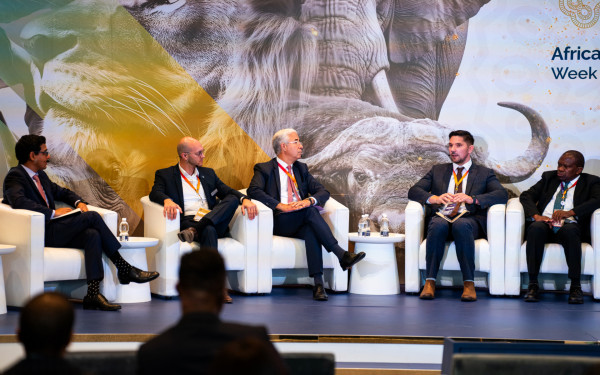
At a dedicated panel session at African Energy Week: Invest in African Energies 2024, panelists emphasized the need for countries already producing oil and gas to utilize local energy resources for the purposes of enhancing value and meeting domestic needs, particularly for secluded and rural areas that do not have access to energy on the grid. They agreed that green technology and innovation could not be advanced without significant investments in local capacity, particularly in manufacturing and grid infrastructure.

Moderated by S&P Global Head of Energy Transition, Ashutosh Singh, panelists of the Advancing Green Technology and Innovation in Africa session further agreed that while renewable energy may not create immediate large-scale jobs, strategic planning by policymakers could lead to millions of new opportunities as the sector evolves.

James White, CEO of Comet Energy, highlighted that legislative barriers also exist in many African nations. In South Africa, for instance, larger solar installations connected to the grid need a generation license from National Energy Regulator of South Africa (NERSA). This, White believes, adds an additional layer of complexity and can deter potential investors or developers from pursuing solar projects.

Although recent amendments to policies have raised the threshold for embedded generation projects without a license to 100 MW, navigating these regulations still poses significant challenges, he noted. “We also need to look at developing local supply chains, which are needed to further drive down costs and improve accessibility to technologies,” he said.

Dennis Bauer, Senior Executive Energy Transition Advisor, Neuman & Esser discussed the potential of hydrogen as key to Africa's energy transition.

By 2035, more than 50 million tons per year of cost-competitive green hydrogen can be produced on the continent by blocks in Morocco, Egypt and South Africa. However, Bauer emphasized that localized supply chains are necessary to support these developments. “Developing local manufacturing capabilities for battery components and other technologies can significantly reduce costs and enhance sustainability,” he said.

The panel discussion also touched on advancements in solar technology, noting improvements in efficiency and flexibility that can facilitate deployment in remote areas.

CEO of South African National Energy Development Institute (SANEDI), Dr Zwanani Titus Mathe, stressed the importance of learning from successful models surrounding new green technologies, like China's investment in research and development (R&D).

“We need to establish centers of competence across Africa focused on R&D, manufacturing and skills development to position the continent as a leader in green technology. As African nations commit to investing in green innovation, collaboration among governments, businesses, and communities is also essential,” he said.

Director of International Relations at IFP Energies nouvelle (IFPEN), Dr Said Nachet, concluded that Africa has the potential to lead in green technology. “By harnessing local resources and fostering innovation, the continent can emerge as a hub for green technology and sustainable energy solutions,” he said.

Distributed by APO Group on behalf of African Energy Chamber.

Media files
African Energy Chamber
Download logo
Read moreLocal Manufacturing Key to Advancing Green Technologies
8 November 2024

Africa’s Mineral Wealth and Path to Economic Transformation Showcased at CMA 2024

Location: News
Energy Capital & Power

Africa's holds significant reserves of minerals critical for the global energy transition. The continent boasts roughly 30% of the world's mineral reserves, including immense deposits of cobalt, manganese, natural graphite, copper, nickel, lithium and iron ore.  

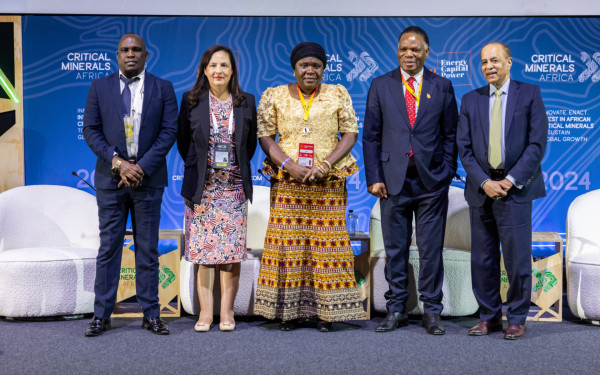
As such, this year's Critical Minerals Africa (CMA) 2024 Summit – held from November 6-7 in Cape Town – convened industry leaders, policymakers, service providers and investors to address the urgent demands of Africa's critical mineral value chain. The Summit featured a robust agenda that sought to shine a spotlight on opportunities for Africa to accelerate its mining sector while utilizing its natural resources to promote value addition and drive socioeconomic development. 

CMA 2024 featured a Ministerial Forum that included the participation of mining ministries from Eswatini, Malawi and Argentina, as well as representatives from Tanzania. High-level speakers during the forum showcased a number of projects aimed at maximizing mineral production while discussing how to leverage mineral resources to promote economic growth and sustainability. 

The Republic of Malawi's Minister of Mining Monica Chang'anamuno highlighted several ongoing projects in the country, such as the Kasongo Initiative, which aims to increase the production of rare earth metals, graphite and lithium resources. 

Meanwhile, Eswatini's Minister of Natural Resources and Energy Prince Lonkhokhela announced ambitious targets to raise to the contribution of the country's mining sector to its GDP. With aims to increase the share from 1% to 50% in the short- to medium-term, the strategy is supported by new surveys revealing commercial deposits of lithium, copper, cobalt and other base metals.  

To bolster investment in mid- and downstream infrastructure, the Summit also featured the participation the President of the Chamber of Mines of Zimbabwe Thomas Gono, who stated, “Historically, we exported raw materials, missing out on the potential benefits. With Africa's young workforce, we now have an opportunity to drive revenue and create jobs through skills development and local beneficiation.” 

With the participation of Tanzania's Chamber of Mines, it was announced that the country aims to expand exploration in critical mineral-rich basins from 16% to 50% as part of a strategic push into rare earths, lithium and tanzanite production. Meanwhile, Zambia's Chamber of Mines discussed ongoing strategies aimed at helping the country address logistics and energy deficit challenges in the mining sector. 

The Summit featured a panel discussion with high-level representatives from mining companies and development institutions including Pensana, the Africa Policy Research Institute and the U.S. Development Finance Corporation. The panel also featured the participation of Clifford Chance, Frost & Sullivan and Chatham House and explored how regional initiatives – such as the Lobito Corridor – have the potential to fast-track Africa's critical minerals market expansion.  

An Investment Forum held during the Summit showcased innovative financing measures to advance the flow of capital across the African market. The session featured representatives from finance institutions the World Bank, ABSA, Moshe Capital, the African Finance Corporation and ASAFO & Co. 

Additionally, midstream and downstream opportunities were showcased during a panel session that featured the participation of organizations such as Orion Minerals, AZ Arnaturen, Women in Green Hydrogen, Isondo Previous Metals and the Southern African – German Chamber of Commerce and Industry. The panel also featured representatives from Konrad Adenauer Stiftung, the SA-DRC Chamber of Commerce, the Curtin Institute for Energy Transition, the Electric Mobility Association of Kenya and the Congolese Battery Council. 

At CMA 2024, research firms including Rystad Energy, Moore Global and Project Blue presented insights on market trends in the global mining industry, while Tronic Metals, Tanzania's State Mining Corporation and South Sudan's state-owned Nilepet provided updates on their activities across the mining value chain. 

A Leaders Forum during the Summit featured the participation of international mining companies Glencore DRC and KoBold Metals as well as representatives from the University of Cape Town and the Minerals Council of South Africa. The forum showcased how governments across Africa can promote innovation in the continent's mining space to attract new investment and increase critical minerals production to drive socioeconomic and GDP growth.  

Distributed by APO Group on behalf of Energy Capital & Power.

Media files
Energy Capital & Power
Download logo
Read moreAfrica’s Mineral Wealth and Path to Economic Transformation Showcased at CMA 2024
8 November 2024

Eskom serves City of Johannesburg with power interruption notice

Location: News

Eskom serves City of Johannesburg with power interruption notice

Eskom has served the City of Johannesburg (CoJ) and its power utility, City Power, with a notice of intention to interrupt power supply at certain pre-determined times of the day.

This in accordance with the Provision of Promotion of Administrative Justice Act (PAJA).

According to Eskom, the CoJ and City Power owe nearly R5 billion in unpaid bulk electricity supply, plus a further R1.4 billion, which Eskom said will become due and payable at the end of this month.

“Despite all the avenues that Eskom explored and efforts to accommodate the CoJ, the matter has reached a point where Eskom can simply no longer afford to accommodate the CoJ without putting further financial strain on and harming its own business. 

“In terms of the Constitution and the Intergovernmental Relations Framework, the CoJ is supposed to cooperate and assist Eskom with fulfilling its mandate of ensuring that citizens have access to affordable electricity. 

"The CoJ has breached these obligations by not paying Eskom for the bulk electricity it supplies, making it almost impossible for Eskom to fulfil its mandate,” the power utility said.

Eskom is expected to issue a public notice to those affected to submit comments on why the power utility “should or should not proceed to interrupt electricity supply to the points mentioned in the PAJA notice”.

“A final decision on whether Eskom will proceed with the interruption will be communicated after a review of the representations received through the PAJA process on 12 December 2024,” the power utility said.

Eskom explained that municipal debt – which currently stand at some R90 billion – forces it to “borrow additional money... to fund operational costs”.

“Operational costs should be funded by revenue generated from electricity sales and not by borrowings. Borrowing money to fund operational cash shortfalls caused by the failure of municipalities, such as the CoJ, to pay Eskom for bulk electricity increases the costs of providing electricity exponentially. 

“Eskom’s financial sustainability and ability to supply electricity at affordable prices is contingent upon its ability to improve its balance sheet by increasing revenue and reducing expenses. Revenue can only be increased by collecting electricity debts and/or increasing electricity tariffs,” the power utility said.

Power struggle

Eskom has said the CoJ has “acknowledged its indebtedness to Eskom, but it refuses to pay the full amount of its monthly bill”.

“The CoJ alleged, without substantiating their claim, that Eskom is overbilling it on some of its supply points. 

“It is for this reason that the CoJ is applying, set-off against the monthly bills raised by Eskom, which is contrary to the electricity supply agreement and the agreements reached with its Chief Financial Officer (CFO), Rendani Sadiki, and the Chief Executive Officer (CEO) of City Power, Tshifularo Mashava, and City of Johannesburg Management. 

“In more than one meeting, it was agreed that the CoJ would continue to pay whilst the alleged overbilling is investigated. This undertaking has been reneged on,” Eskom said.

The CoJ and City Power hit back and said the city “strongly condemns this move as unjust, counterproductive, and potentially harmful to the residents and businesses of Johannesburg”.

“The CoJ has consistently demonstrated its commitment to meeting its financial obligations and has engaged with Eskom to address billing issues. However, Eskom has failed to provide clarity on disputed billing charges, forcing the city to seek legal recourse to protect the rights and interests of its citizens. 

“Contrary to Eskom’s claims, there are ongoing disputes regarding overbilling of over R3.4 billion, with a pending appeal and monthly declarations since July 2024. The city has repeatedly raised concerns about this continued overbilling, which Eskom has failed to address, placing additional strain on the city’s resources,” a statement from the City read.

Furthermore, the CoJ called on the national electricity provider to engage in “genuine, good-faith negotiations to resolve these matters constructively”.

“Eskom’s approach of ‘pay now and resolve disputes later’ in its dealings with the City of Johannesburg can no longer go unchallenged. There is also an option of [Intergovernmental Relations] to resolve intergovernmental disputes, which Eskom keeps disregarding. The City, in consultation with its legal counsel, will explore all available legal avenues to prevent any disruptions to the electricity supply. 

“We urge Eskom to reassess its stance and engage with the City in finding a mutually beneficial resolution. In the meantime, the City has formally requested that Eskom retract the Public Notice within five days. 

“The people of Johannesburg deserve reliable and efficient services, and we will not let Eskom's actions compromise their well-being. We remain committed to serving the best interests of our citizens and will take all necessary steps to protect their rights,” the statement concluded. – SAnews.gov.za

NeoB
Fri, 11/08/2024 - 10:20

85 views
Read moreEskom serves City of Johannesburg with power interruption notice
7 November 2024

Afreximbank President Professor Benedict Oramah Receives Prestigious Mohammed Barkindo Lifetime Achievement Award

Location: News
Afreximbank

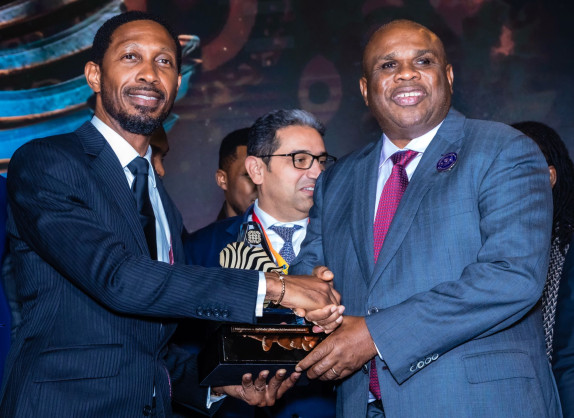
Professor Benedict Okey Oramah, President and Chairman of the Board of Directors at African Export-Import Bank (Afreximbank) (www.Afreximbank.com), has been awarded the prestigious Mohammed S. Barkindo Lifetime Achievement Award at the African Energy Awards, held on the sidelines of the African Energy Week (AEW) 2024: Invest in African Energy conference, happening between 4-8 November in Cape Town, South Africa.  

The award, named in honour of the former Secretary-General of OPEC, the late Dr Mohammed Barkindo, recognizes individuals who have made exceptional and lasting contributions to Africa's oil, gas, and energy sectors. This honour represents the highest accolade in African energy, awarded to individuals whose work has had a transformative impact on the continent's energy sector. Notable past recipient of the Mohammed S. Barkindo Lifetime Award in 2023 is Keith Hill, former President and CEO of Africa Oil Corp. 

For over three decades, Prof. Oramah has played a critical role in driving sustainable development across Africa by channelling essential funding into major oil, gas, and infrastructure projects. Since assuming leadership of Afreximbank in 2015, he has pioneered innovative financing structures that have democratised energy access and accelerated industrialization and the growth of Africa's strategically critical energy sector. 

Under Prof. Oramah's leadership, Afreximbank has made substantial contributions to the growth of Africa's energy sector. Under his stewardship, the Afreximbank has facilitated the mobilization of over USD 70 bn to support Africa's energy sector. Included in this is more than USD 5bn for refineries in Nigeria, Angola and Senegal, to further Africa's refined product independence and reduce the continent's Foreign Exchange drain.  

In Nigeria, Afreximbank now acts as Adviser and Settlement Bank for NGN denominated crude sales to Nigerian refineries. Replicated across the oil producing states in Africa, this will save several USD 100mn per annum in transactional charges alone. Ranking among President Oramah's most significant achievements is the historic signing of the Establishment Agreement and the Charter of the Africa Energy Bank (“AEB”) in Egypt in June 2024, in partnership with the African Petroleum Producers Organization (APPO). This landmark initiative aims to mobilize funding to support investments across Africa's entire energy system, aligning with the continent's energy needs and its environmental sustainability goals. 

Professor Oramah has led the energy transition agenda through the Bank's support in renewable energy transactions including, but not limited to, the EUR1.3 bn ECA import facility Project Gleam in support of the import of sonar panels for rural electrification in Angola, the EUR 147mn Government of Cameroon solar power project and the US$363 million Gasmeth Energy Rwanda gas extraction and processing project.  

Significantly, the majority of the above-mentioned transactions received numerous industry awards for their impact on the continent, their complexity and their unique structures.   

Prior to joining Afreximbank, Professor Oramah distinguished himself in international trade finance and development. Beginning his career at the Nigerian Export-Import Bank (NEXIM), he played an instrumental role in shaping Nigeria's export development strategies. Prof Oramah holds a Ph.D. in Agricultural Economics from Obafemi Awolowo University in Nigeria.  

Acknowledging the award, Prof. Oramah commented: 

“It is a great honour to be awarded the Mohammed S. Barkindo Lifetime Achievement Award. Whilst a great honour for me personally, this award reflects the work and dedication of many others, including my colleagues at Afreximbank and our various partners. At Afreximbank, we remain deeply committed to reducing energy deficit on the continent and ensuring we are self-sufficient. 

Distributed by APO Group on behalf of Afreximbank.

Media Contact: 
Mr Vincent Musumba 
Manager, Communications and Events (Media Relations) 
Email: press@afreximbank.com 

Follow us on: 
Twitter: https://apo-opa.co/4fwz0D3
Facebook: https://apo-opa.co/4emjUyg
LinkedIn: https://apo-opa.co/4feURPa
Instagram: https://apo-opa.co/3CjGevc

About Afreximbank : 
African Export-Import Bank (Afreximbank) is a Pan-African multilateral financial institution mandated to finance and promote intra-and extra-African trade. For 30 years, the Bank has been deploying innovative structures to deliver financing solutions that support the transformation of the structure of Africa's trade, accelerating industrialization and intra-regional trade, thereby boosting economic expansion in Africa. A stalwart supporter of the African Continental Free Trade Agreement (AfCFTA), Afreximbank has launched a Pan-African Payment and Settlement System (PAPSS) that was adopted by the African Union (AU) as the payment and settlement platform to underpin the implementation of the AfCFTA. Working with the AfCFTA Secretariat and the AU, the Bank is setting up a US$10 billion Adjustment Fund to support countries to effectively participate in the AfCFTA. At the end of December 2023, Afreximbank's total assets and guarantees stood at over US$37.3 billion, and its shareholder funds amounted to US$6.1 billion. The Bank disbursed more than US$104 billion between 2016 and 2023. Afreximbank has investment grade ratings assigned by GCR (international scale) (A), Moody's (Baa1), Japan Credit Rating Agency (JCR) (A-) and Fitch (BBB). Afreximbank has evolved into a group entity comprising the Bank, its impact fund subsidiary called the Fund for Export Development Africa (FEDA), and its insurance management subsidiary, AfrexInsure, (together, “the Group”). The Bank is headquartered in Cairo, Egypt. 

For more information, visit: www.Afreximbank.com 

Media files
Afreximbank
Download logo
Read moreAfreximbank President Professor Benedict Oramah Receives Prestigious Mohammed Barkindo Lifetime Achievement Award
7 November 2024

(B)energy Relaunches Africa-Focused Clean Cooking Solution

Location: News
African Energy Chamber

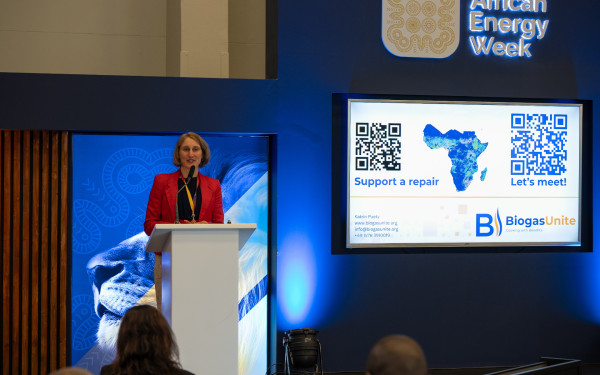
Africa-focused biogas company (B)energy re-launched BiogasUnite, a digital platform designed to boost the use of biogas for clean cooking in Africa, during a technical workshop at African Energy Week: Invest in African Energies 2024 on Tuesday. 

Katrin Puetz, Founder and Managing Director of (B)energy, said the company is seeking £780,000 from African and global investors to fund the adoption of BiogasUnite across the continent. Currently under trial in Uganda, the platform will provide a streamlined approach to connecting biogas consumers, technicians and energy stakeholders, according to Puetz. 

The initiative targets the repair of approximately 175,000 biogas cooking systems currently out of service due to maintenance challenges.  

(B)energy established partnerships for the platform with fifteen organizations in countries such as Nigeria, Sierra Leone, Benin, Ghana, Mali, South Africa, Zimbabwe, Kenya and Mozambique 

“Around 200,000 biogas cooking systems were installed in Africa since 2012, yet nearly 60% are now non-functional due to inadequate maintenance,” Puetz explained. 

The platform, enabled with a smart meter and app, provides users with direct access to technicians for stove maintenance, while enabling business owners to rent and monetize their cooking stoves, reducing the previously high upfront costs that hindered biogas adoption and scalability, according to Puetz. 

“Fifteen years ago, about 700 million people lacked access to clean cooking, and this number has since grown to nearly a billion,” stated Puetz, adding “The African Energy Chamber, with its extensive data and connections across the African energy sector, would be an ideal partner.”  

She said having governments as partners will help with job creation and drive sustainability of the oil and gas industry. 

Distributed by APO Group on behalf of African Energy Chamber.

Media files
African Energy Chamber
Download logo
Read more(B)energy Relaunches Africa-Focused Clean Cooking Solution
6 November 2024

Walking Joburg’s Biggest, Baddest River: Gold Dust and Gunk

Location: News

Day 1 on the Klip River: Selby to Riverlea

Read moreWalking Joburg’s Biggest, Baddest River: Gold Dust and Gunk
5 November 2024

Leaders in energy, investors converge for Africa Energy Week

Location: News

Leaders in energy, investors converge for Africa Energy Week

The African continent’s vast energy-related resources have the potential to forge a prosperous path for the continent. 

This is according to Minister of Energy and Electricity, Dr Kgosientsho Ramokgopa’s written notes for his address at the African Energy Week (AEW), which is underway at the Cape Town International Convention Centre.

AEW brings together Africa’s leaders in energy, investors and executives in the sector.

“Africa’s path forward lies in seizing control of our energy destiny. Our continent’s vast resources, rich potential, and resilience make us capable not just of fueling our homes and industries but of powering a new African century. 

“But this will require unity of purpose, a commitment to innovation, and a collective resolve to harness Africa’s energy to serve African needs,” Ramokgopa said.

Powering the future

The Minister insisted that the continent – despite its challenges, including energy poverty – has the “potential to lead the world in renewable energy and innovative energy solutions”.

“Africa’s potential for renewable energy is unmatched globally. The continent is rich in diverse renewable resources, each offering a path toward sustainable growth that is less dependent on fossil fuels and more aligned with global climate commitments,” Ramokgopa said.

Going further, the Minister cited the number of renewable energy sources available to the continent including solar and wind energy and hydropower.

“With vast stretches of land bathed in sunlight year-round, Africa has some of the highest solar irradiation levels in the world, especially across regions in the Sahara and Sub-Saharan Africa. Solar energy has the potential to power communities, businesses, and industrial zones, especially in off-grid and rural areas.

“From the coastal winds of Egypt to the strong inland gusts in Kenya and Ethiopia, Africa’s wind corridors hold immense potential for generating clean electricity. Expanding wind energy capacity offers not only a path to sustainability but also an opportunity for job creation in turbine manufacturing and maintenance.

“Africa has significant untapped potential, especially in countries with major rivers, such as the Congo, Nile, and Zambezi. Hydropower projects, when sustainably managed, can provide baseload power to support industrialisation and rural electrification, helping reduce energy costs for industries,” the Minister explained.

African Energy Agenda

Ramokgopa told the conference that as South Africa takes up its leadership of the G20 later this year, it is “positioned to champion Africa’s energy priorities on a global platform”.

“South Africa will advocate for energy policies that bridge the development gap, recognising the continent’s need for clean energy and affordable access. In leading the G20, South Africa will focus on strategic interventions to address Africa’s unique energy needs and support a resilient, inclusive future,” he said.

In relation to this, Ramokgopa emphasised that solutions to Africa’s energy challenges must “accelerate sustainable growth, while considering African economies' unique challenges”. 

“Through our G20 leadership, South Africa is committed to championing an African energy agenda that is bold, just, and rooted in an African value system. Together, let us light up Africa with power and the promise of progress, sovereignty, and sustainable prosperity for every African citizen.

“As South Africa leads the G20, we are dedicated to championing an African energy agenda that addresses our challenges, harnesses our resources, and reflects our vision for self-reliance and prosperity.

“Let us seize this moment to build an energy secure Africa, where every community is empowered, every economy is strengthened, and our shared commitment to the future is unwavering. Together, we can light up Africa not just with power, but with the promise of a brighter, more equitable future for all,” Ramokgopa said. – SAnews.gov.za

NeoB
Tue, 11/05/2024 - 12:33

123 views
Read moreLeaders in energy, investors converge for Africa Energy Week
4 November 2024

Committee established to address issues at Hartbeespoort Dam

Location: News

Committee established to address issues at Hartbeespoort Dam

A multi-stakeholder steering committee has been established to address issues at Hartbeespoort Dam.

Water and Sanitation Deputy Minister, David Mahlobo, and North West Premier, Lazarus Mokgosi, launched the committee to look into different issues affecting the stakeholders operating their business at state-owned land around Hartbeespoort Dam and settlements around the water resource.

By bringing together stakeholders from various sectors, the committee seeks to encourage economic development and opportunities for all and to ensure the sustainability and health of the Hartbeespoort Dam.

The committee will also address disputes among businesses operating at the dam and will strive to promote the harmonious use of the state-owned land and access to dam economy.

The committee, to be co-chaired by the Department of Water and Sanitation and North West Provincial Government, will include the representatives from the North West House of Traditional and Khoi-San Leaders, Madibeng Local Municipality, civic organisations, non-profit organisations and non-governmental organisations, as well as business, environmental and religious organisations.  

Mahlobo emphasised the importance of collaboration and mutual understanding in addressing the complex challenges facing the Hartbeespoort Dam community.

“The Department of Water and Sanitation views this initiative as a critical step towards resolving long-standing issues and promoting inclusive economic growth and development in the area.

“As the steering committee begins its work, stakeholders and communities can look forward to positive transformations in the Hartbeespoort Dam area. The committee will further contribute to the ongoing efforts to restore the dam's ecosystem and ensure its long-term health,” Mahlobo said.

Mahlobo added that the collaborative effort demonstrates government's commitment to engage with various stakeholders and work towards solutions that benefit all.

He said the Department of Water and Sanitation remained committed to transparency and open communication and will continue to provide updates on the progress of the steering committee and its initiatives, ensuring that the members of the public are informed about developments in the Hartbeespoort Dam area.

The department has developed a comprehensive lease policy to manage leases in the area and all its dams.

The policy seeks to address previous gaps and ensure transparency for the businesses and individuals utilising state-owned land under the custodianship of the department.

The department advertised an Expression of Interest with a closing date of 31 July this year, inviting all interested parties to apply for the use of state land at its dams.

Mokgosi highlighted the province's commitment to support initiatives that will bring development and improvement to the area for local residents. – SAnews.gov.za

GabiK
Mon, 11/04/2024 - 11:08

123 views
Read moreCommittee established to address issues at Hartbeespoort Dam
4 November 2024

Kubayi leads SA delegation to World Urban Forum in Egypt

Location: News

Kubayi leads SA delegation to World Urban Forum in Egypt

Human Settlements Minister, Mmamoloko Kubayi is leading a government delegation to the 12th World Urban Forum (WUF12)’s Summit taking place from 04-08 November 2024, in Egypt, Cairo.

The 12th World Urban Forum, a high-level forum established by the United Nations (UN) in 2021, is convened by the UN Human Settlements Programme (UN-Habitat) and hosted by member states every two years on a rotational basis.

Held under the theme: “It All Starts at Home. Local Actions for Sustainable Cities and Communities”, the summit brings together delegates, including Ministers from across the globe to explore how the different spheres of government can work better together to achieve vision 2030 Agenda for Sustainable Development Goals (SDGs).

The summit places particular attention on multilevel governance arrangements and partnerships for adequate housing, climate action, finance systems, digital technology, and urban crises response.

It will seek to address one of the currently pressing issues in the world, rapid urbanisation and its impact on communities, cities, economies, climate change and policies.

WUF12 aligns with this year's theme, emphasising the vital role local action plays in accelerating urban sustainability.

The department said, while at the summit, the Minister will participate in a number of sessions as a panellist and address a number of other sessions, including the session on localising the Implementation of the Global Action Plan for Accelerating the Transformation of Slum and Informal Settlements.

The Minister will also participate in a number of ministerial sessions and have bilateral meetings with global leaders on the sidelines of the summit.

“The networking session will create a dialogue space between India, Brazil and South Africa (IBSA) countries and development partners around the Global Action Plan to share visions and actions for slum transformation, localised prioritisation, and multi-partnership approaches,” the department said in a statement.

The South African delegation includes officials from all spheres of government, Human Settlements entities, Members of the Executive Councils responsible for Human Settlements, representatives from the South African Local Government Association (SALGA), Mayors and Members of Mayoral Committees of Human Settlements. – SAnews.gov.za


GabiK
Mon, 11/04/2024 - 11:37

126 views
Read moreKubayi leads SA delegation to World Urban Forum in Egypt
3 November 2024

Deputy Minister Letsike addresses Village Economy Indaba

Location: News

Deputy Minister Letsike addresses Village Economy Indaba

Deputy Minister in the Presidency for Women, Youth and Persons with Disabilities, Mmapaseka Letsike, says more than 60% of jobs and 25% of the Gross Domestic Product (GDP) of the African continent comes from the agricultural sector which is rooted in the rural areas.

“This presents an opportunity for boundless growth through the potential that is inherent in the rural economy and for expansion to industries that ordinarily have not proliferated in rural areas,” Letsike said.

Speaking at the Village Economy Indaba ceremony held in the North West province, Letsike said over half of the population resides in rural regions, yet these areas often face higher poverty rates, lower access to basic services and limited economic opportunities.
“This divide is not only a matter of geography, it concerns social justice, economic necessity, and national progress.”

Letsike said rural areas in South Africa hold an enormous but often overlooked potential for lifting people out of poverty.

“When we invest in rural economies, we create jobs and boost incomes in areas where they are needed most. Imagine empowering smallholder farmers with access to better technology, training, and markets. 

“Not only could they increase their production, but they could also improve their livelihoods, leading to better education, healthcare, and overall well-being for their families and communities,” Letsike said on Friday.

The Deputy Minister said it was reported that about 75% of food produced on the continent is from small farms of less than 20 hectares, while 80% of the 51 million farms on the continent have an area less than two hectares.

“Developing rural economies helps curb urban migration. Every year, thousands of people leave rural areas, hoping for better opportunities in the big cities.

“By creating viable economic opportunities in rural areas, through initiatives such as The Village Economy Indaba whether in agriculture, renewable energy, tourism, or small-scale manufacturing, we can reduce the strain on our cities while enhancing quality of life in the countryside,” the Deputy Minister said.

Letsike said vulnerable groups such as women, youth, LGBTI (lesbian, gay, bisexual, and transgender or intersex), persons and persons with disabilities are the hardest hit by climate change.

“Therefore, renewable energy projects, like solar and wind farms in areas such as the Northern and Eastern Cape, to eco-tourism in Limpopo and the Western Cape, rural South Africa holds immense potential for green growth and sustainability, particularly as we engage the Just Energy Transition.

“By focusing on sustainable practices, we can preserve our environment for future generations while creating jobs today. 

“Many of us who have a rural background will understand that even our indigenous agricultural practices such as companion planting have been proven to promote soil health and maximise production on small pieces of land and it is still used by many farmers in rural areas,” Letsike said.  -SAnews.gov.za 


Edwin
Fri, 11/01/2024 - 14:03

55 views
Read moreDeputy Minister Letsike addresses Village Economy Indaba
31 October 2024

SARS welcomes MTBPS, increases its compliance focus

Location: News

SARS welcomes MTBPS, increases its compliance focus

The South African Revenue Service (SARS) has welcomed the Medium-Term Budget Policy Statement (MTBPS) presented in Parliament by Finance Minister Enoch Godongwana on Wednesday. 

The MTBPS revised the February 2024 Budget net tax revenue forecast from R1.863 trillion to R1.8408 trillion.

SARS said as of 30 September 2024, it has collected gross revenue of R1 070.4 billion, yielding a net revenue of R846.2 billion and R224.3 billion in refund payments. 

The revenue performance was bolstered by stronger collections from CIT Provisional tax and lower-than-expected VAT and PIT refund payments. 

This was offset by lower-than-expected collections from Customs taxes, PAYE, and the General Fuel Levy. 

The areas that were adjusted downward are: 

  • Lower-than-expected previous year salary adjustments, reducing the nominal wage bill estimate from 8.4% in the 2024 Budget to 5.5% in the MTBPS 2024. 
  • Slower growth on capital projects across general government, public corporations and private sector, with gross capital formation anticipated to decline from 9.5% in the 2024 Budget to 5.2%.
  • Downward revision in outlook of nominal exports from 5.2% to 3.5%, as well as nominal imports from 6.0% to 3.8%.
  • At Budget 2024, a 13.8% growth in PAYE, based on the 8.4% growth in the wage bill, was assumed. PAYE collections for year-to-date (September 2024/25) amount to R340.0bn, lower than the PE by R12.0bn (3.4%) and higher than previous year by R30.8bn (10.0%).

SARS highlighted that the deficit in revenue collections was partially offset by strong collections in CIT provisional tax collections (at R150.2 billion) against an expectation of R141.4 billion, yielding a surplus of R8.8 billion, up by 2.7% or R3.9 billion from the previous year. 

The fuel levy has faced challenges this financial year due to a year-on-year decrease in fuel consumption, with 1.333 million litres less fuel used. SARS said that this decline, attributed to factors like reduced load shedding and a shift to alternative energy sources, has directly impacted the Net Fuel Levy, resulting in a 3.9% year-on-year contraction and a R7.2 billion shortfall.

Trade taxes also underperformed, as imports, which were expected to grow by 1.9%, have instead declined by 5.1% year-to-date. Total trade flows have decreased by R39.2 billion (or -2.0%) compared to the same period last year, primarily due to lower import flows of electrical machinery and vehicles.

SARS noted that Provisional Corporate Income Tax (CIT) collections reached R150.2 billion, recording a surplus of R8.8 billion (6.2%) and a year-on-year growth of R3.9 billion (2.7%), driven by the Finance, Electricity, and Manufacturing sectors. 

Collections exceeded the Budget 2024 target rate of -3.3%. However, the Mining sector continues to struggle with volatile commodity prices, particularly in Platinum Group Metals, Coal and Iron Ore, which has negatively impacted profitability and provisional payments. Additionally, the sector faces ongoing transport, logistics, and border crossing issues, leading to delays and higher export costs.

Despite having finalised ± 1.3 million more debt cases, which is almost 290% more than the previous year, SARS said its debt compliance efforts have yielded lower returns year-on-year by R9.3 billion, which equals to a 23.6% year-on-year contraction. 

SARS further recorded significant year-on-year increases in deferred payment arrangements, requests for suspension of payments, and final demands, highlighting the financial hardship taxpayers are experiencing and its impact on their ability to meet tax obligations.

“The SARS Strategic Intent will continue to focus on Voluntary Compliance, ensuring that taxpayers and traders have clarity and certainty regarding their obligations, along with the necessary tools to facilitate easy and straightforward compliance. Conversely, SARS will impose significant legal and administrative costs on taxpayers and traders who deliberately fail to meet their obligations,” the revenue service said.

SARS said that its compliance efforts continue to yield success in dealing with non-compliance in particular segments and tax products. To date, compliance revenue secured R110.1 billion, reflecting a growth of R8.1 billion (8.0%). 

The Revenue Service emphasised that it will continue to intensify its efforts to maintain visibility and reinforce compliance, with plans to invest further on compliance initiatives to close the tax gap by targeting various taxpayer segments. 

SARS Commissioner Edward Kieswetter said that in pursuing the attainment of the 2024/25 tax revenue estimate of R1 840.8 billion, SARS will be unrelenting in its drive to engender voluntary compliance. 

“Critical in this pursuit is to ensure that intermediaries charged by law to collect taxes on behalf of SARS pay it over. Importantly, SARS is ready to act against those who willfully and defiantly ignore their legal obligations by misrepresenting their true economic status. Those who enable this conduct are equally culpable. 

“Taxpayers who abdicate their legal obligations place a disproportionate burden on honest taxpayers. Taxes play a critical role in cushioning the most vulnerable and destitute in our society. In this respect, voluntary compliance is sacrosanct,” Kieswetter said.   

The Commissioner further emphasized that SARS will continue to intensify and deepen its existing administrative efforts. 

“We will continue to use sophisticated data science and artificial intelligence, to maintain the balance between service to taxpayers/traders, whilst managing risks to the fiscus by detecting dishonest taxpayers,” he said. 

SARS will deploy more data science and artificial intelligence (AI) to step up its focus on the following areas of compliance risk:

  • Broadening the tax base via third-party data sources: Leveraging data from both formal and informal sectors to widen the tax base.  
  • Work to register all taxpayers and traders, through predictive modelling, who ought to be on the register and ensure that they honestly file their declarations and pay their dues where necessary. 
  • Build its detection capability using machine learning models and Artificial Intelligence (AI) to significantly improve service and offer a seamless service to honest taxpayers. This will also be used to detect dishonest taxpayers, improve debt collection while expanding the tax base and deal with tax avoidance.
  • Enforcing trade laws against the illicit economy (Customs and Excise): Strengthening tools to detect and prevent illicit activities, including those related to tobacco, fuel, and illicit financial flows.
  • Focusing on dispute prevention and resolution: Prioritising products and strategies that prevent disputes that can be resolved.

“SARS is the nation’s treasure; a well-functioning tax and customs administration is a cornerstone to our vibrant democracy and should never be taken for granted. SARS seeks to ensure revenue sustainability by securing appropriate investment in SARS, and funding certainty. 

“From a human capital perspective, SARS will continue to attract, develop and sustain a workforce that is future ready. We will be building the leadership bench strength of SARS and protect the autonomy of the institution,” the tax revenue said. 

Despite the tough operating environment, SARS said it expects that the start of a cycle of interest rate cuts will spur consumption expenditure. This expansion is expected to drive economic growth and widen the tax base, resulting in buoyant corporate tax, and VAT revenues. 

Additionally, the introduction of the “Two-Pot” system is expected to increase the tax base in the short to medium term. 

“The 12 821 SARS staff, to whom we express sincere appreciation, will continue to work diligently in achieving the revised revenue estimate as presented by the Minister of Finance,” SARS said. – SAnews.gov.za

DikelediM
Thu, 10/31/2024 - 11:03

299 views
Read moreSARS welcomes MTBPS, increases its compliance focus
31 October 2024

Green Building Trends in Africa: Africa’s Urbanization Provides the Opportunity to Embrace Green Building

Location: News
Bureau Veritas

By Julien Fouilliart-Building & Infrastructure Growth Leader Middle East, Caspian and Africa, Bureau Veritas (https://group.BureauVeritas.com)​.

Globally, buildings are responsible for a substantial share of energy, electricity, water and materials consumption using between 35-40% of energy demand and contributing 37 per cent of world carbon dioxide (CO2) emissions. Including the manufacturing of building materials.

The 2022 updated Global Buildings Climate Tracker (GBCT) (https://apo-opa.co/3YLJiZG) shows that there is a significant gap between the current state and the desired decarbonization path which is concerning. In effect it means that to align with the 2030 milestone, an annual increase of ten decarbonization points is now necessary which is a substantial jump from the six points per year anticipated starting in 2015.

In 2019 in Africa, buildings accounted (https://apo-opa.co/4e8NIhN) for 57% of total final energy consumption and 32% of total process-related CO2 emissions.

Despite continental issues of poverty, unemployment and rapidly developing informal settlements among other issues, many countries in Africa are embracing green, sustainable building practices.

With its burgeoning population, expected to add some  1.2 billion people by  2050 (https://apo-opa.co/3AxgxXo) Africa faces rapid urbanization.

Urbanization provides an opportunity for countries across Africa to embrace green building practices, access available international green funding opportunities, and set a foundation for sustainability for future generations.

In 2023 the Africa Regional Network of World Green Building Council (WorldGBC) launched the Africa Manifesto for Sustainable Cities and the Built Environment, which sets out the actions that  policymakers and businesses across the continent need to take to achieve a net zero carbon, healthy, resilient, equitable, socially- and economically-inclusive built environment for everyone, everywhere.

Achieving these goals requires policymakers and business leaders across the continent to recognise the untapped potential of the built environment. But this can only be realized with the implementation of policies that support transformative action, through intense collaboration between governments, city and regional leaders, businesses and investors. 

South Africa is leading Africa's green building sector (https://apo-opa.co/3YLdq7N). It has over two million square meters certified green buildings that reduce water consumption, electricity, and waste disposal; 50 certified projects are projected to result in an annual saving of 76 million kilowatt hours which is equivalent to the electricity needs of 5,300 households every year.

South Africa has its own National Standard 10400 Part XA that deals with optimizing energy efficiency in buildings and in the light of this the Green Star South Africa and EDGE green building tools have been adapted and are widely used in the country. International rating systems like LEED and WELL are also used.

The scope of green construction in Egypt has been slow to grow but Egypt has two local rating systems in place called TARSHEED and the Green Pyramid Rating System. These, along with EDGE, LEED and WELL are used in various projects.

The Nigerian government has pledged to achieve a 20% reduction in its greenhouse gas emissions by 2030 and 45% with international support. Green building will likely be a big part of this change.

This country's National Building Code, developed by the National Council on Housing and Urban Development, and the Building Energy Efficiency Guideline (BEEG), also support the agenda of sustainable development by setting requirements for occupant health and safety, use of local and safe building materials and energy efficiency among other criteria.

Morocco has several legal provisions in place to promote sustainability and environmental protection through construction impact assessments for new building projects as well as energy-efficient construction requirements applicable to most residential and commercial projects. Several projects in the country have also achieved LEED green building credentials.

It also has several renewable energy projects such as the Noor Midelt Solar Plant and Tarfaya Wind Farm, one of the biggest wind farms in the continent.

As the drive towards Net-Zero heightens more African countries are joining the African Regional Network of the World Green Building Council. NGOs and other industry professionals are setting up green building councils in South Africa, Egypt, Tunisia, Nigeria, Botswana, Zimbabwe, Namibia, Mauritius, Tanzania, Kenya, Cameroon and Uganda.

One of the big hurdles restraining a sustainable development movement in the construction industry is a lack of awareness for practical sustainable actions among many developers and investors.

In South Africa there is a broad awareness of Green Buildings and the market share of certified buildings among all new builds is increasing. The 2021 International Finance Corporation's (IFC) Green Building Market Stakeholder Assessment for South Africa showed that on the supply side, key motivating factors for Green Buildings are their reduced carbon footprint increased end user demand and increased marketability.

From the occupier's perspective the motivating factors for buying or leasing a Green Building are lower utility bills and lower operating costs. Yet, at a residential level occupiers are only willing to pay a two percent premium for these benefits.

The IFC report points out that the perceived cost of construction and certification of green buildings are also considered major obstacles to the expansion of certified Green Buildings in South Africa (https://WorldGBC.org/). Its research indicates that those in the know estimated the additional construction cost to be 10% or higher, while those unfamiliar with Green Buildings are likely to significantly overestimate costs.

Currently, four out of six financial institutions provide financing for Green Building projects in some form or another and three require a certification to approve the loan. The portfolios of two consist of retrofitting existing buildings into Green Buildings; two of commercial and industrial Green Building construction finance and only one residential Green Building construction finance. Of the two FI's that currently do not fund any Green Building one plans to do so in the future while the other does not see this as part of their strategy.

The investment into green construction (https://apo-opa.co/4e8NYgL) has multiple benefits; it facilitates growth while addressing issues like employment, climate change, and poverty.

However, more needs to be done to improve the understanding of the benefits of green buildings such as lower operational costs, increased ROI as well as an overall improvement in occupant health and wellbeing. Financial institutions need to do more to support green construction. Those which have pledged to lower their investments in carbon producing industries could create green bonds or funds for the African construction sector. Government's need to provide policy support along with incentives to catalyze market development.

 All this suggests that there is still a sizable information gap regarding the cost, certification and benefits of Green Building and that further knowledge dissemination efforts are needed to close it.

Distributed by APO Group on behalf of Bureau Veritas.

About Julien Fouilliart:
Julien Fouilliart is a seasoned business development professional with 15 years of experience in international, multicultural, and cross-sector environments. He currently leads the growth of Bureau Veritas' Building & Infrastructure market across the Middle East, Caspian, and Africa regions. Julien holds a degree in Mechanical Engineering from Belfort University in France. He is based in Kenya and has a deep passion for the African continent. Julien has played a key role in the development of large and iconic infrastructure projects across the region. He has an extensive international background, having worked in France, China, Spain, Belgium, and the United Kingdom. His experience includes collaborating with global companies and public institutions to drive business growth in sectors such as aerospace, IT, rail, building, and transport infrastructure.

Media files
Bureau Veritas
Download logo
Read moreGreen Building Trends in Africa: Africa’s Urbanization Provides the Opportunity to Embrace Green Building
31 October 2024

100 days in office: Advancing the strategic priorities of the GNU

Location: News

100 days in office: Advancing the strategic priorities of the GNU

By Deputy Minister Bernice Swarts

The first 100 days as Deputy Minister of Forestry, Fisheries, and the Environment, under the Government of National Unity (GNU), have been a period of significant learning and action. 

It has allowed me to engage closely with stakeholders in the sector, developing a blueprint to drive the implementation of the GNU's strategic priorities which are to fostering inclusive growth and job creation, reducing poverty and addressing the high cost of living, and building a capable, ethical, and developmental state.

The experience has been invaluable, providing me with a deeper understanding of the department’s mandate, core operations, and both domestic and international context.

Alongside Minister Dr Dion George and fellow Deputy Minister Narend Singh, we recently briefed the media on our progress in the department during this period. 

A key highlight of these 100 days has been the opportunity to engage with staff and various stakeholders, including the forestry sector, traditional leaders, firefighting personnel, community forest owners, young beneficiaries of departmental programs, field rangers from entities such as South African National Parks (SANParks), and industry players like the South African Weather Service (SAWS). These engagements have helped shape a shared vision for the department's future.

We kicked off our 100 days in the office by presenting the department's Budget Vote to Parliament on July 15, 2024. We delivered our department’s budget vote in a month where we celebrated our national unifying figure in the form of uTata Madiba – which seemed to tie in well with our mandate of unifying our people through the Government of National Unity.

In the first 100 days, we have initiated efforts to reengineer and repackage the department’s approach to wildland fire management. This involves building firefighting skills, especially in vulnerable rural communities, with a focus on women and youth. We aim to strengthen stakeholder engagement across both state and non-state actors to better deliver on our critical priorities.

As part of this initiative, I hosted stakeholder engagements with on the National Veld and Forest Fires Act, 1998 (Act No. 101 of 1998). These engagements were hosted with various stakeholders within the wildland fire management sector from both the North West and Free State. Some of the stakeholders who attended these engagements included local and provincial government departments, fire protection associations (FPAs) and other key players in the sector. 

Through these stakeholder engagements, I have instructed the officials to address challenges raised in these interactive engagements such as payment delays for FPAs, challenges on the use of government firefighting vehicles, training of FPA members as well as the clarification of the roles of different stakeholders. I am satisfied with the honest discussions and note the commitment of all parties to find practical solutions.

I have recently led the 2024 Forestry Summit at the Freedom Park in Pretoria. The Summit brought all stakeholders within the forestry sector under one roof to discuss pertinent issues within the sector such as the growth and transformation of the sector, forestry sustainability and the contribution of the sector in addressing climate change.

The Summit was interactive as it provided role players with an opportunity to freely engage with us on the challenges they face in the sector. What was even more fascinating was the involvement of traditional leaders who came from various parts of the country to raise issues their communities were facing. I am pleased with the decision that came out of this frank engagement, which includes plans to go to communities to address issues they have raised.

In the month of September, I had the privilege to lead both the launch and closing ceremonies of the 2024 National Arbor Month campaign. The launch was hosted at Freedom Park in Pretoria and the closing ceremony at Fort Cox Agriculture and Forestry Training Institute in Middledrift, Eastern Cape. A total of 6000 trees were planted in both the localities that hosted these ceremonies.

The Arbor Month campaign is aimed at raising awareness among South Africans about the importance of conserving, protecting, and planting trees for the benefit of both the environment and society.

As part of the Arbor Month launch, I planted the first tree to officially initiate the Forest of Freedom at the designated site at Freedom Park in honour of the heroes and heroines who contributed to South Africa's democracy and liberation struggle. The first 30 trees planted at the Forest of Freedom marks the 30 years of Freedom and Democracy in South Africa. World leaders and other luminaries visiting Freedom Park will get an opportunity to plant a tree in the Forest of Freedom, when it is ready. 

During the Arbor Month, I also took a deliberate decision to heighten the Presidential Ten Million Tree Programme, which is a clarion call by President Cyril Ramaphosa to all sectors of society led by DFFE. As the Deputy Minister of Forestry, Fisheries and the Environment, I am currently driving an ambitious campaign to relaunch the Presidential Ten Million Tree Programme by planting 1 million trees in one day, on a day to be announced soon.

I want to call on all South Africans – the three spheres of Government, forestry sector, private sector, labour, academia, civil society and many others to join this ambitious campaign by pledging and committing to providing and planting trees on that specific day and going forward. 

Trees are important for life. I call on all South Africans to plant trees today and build a better future for generations to come!
On July 31, we celebrated World Ranger Day at Kruger National Park, honoring the dedication of rangers who protect our natural heritage. Their commitment inspires our ongoing conservation efforts.

I also participated in the National Consultative Workshop on Early Warnings for All (EW4ALL), a UN initiative aimed at protecting people from hazardous weather events by 2027. We are committed to developing systems that not only safeguard the economy and infrastructure but also protect the lives and well-being of our people.

The first 100 days have been marked by hard work and significant strides towards delivering the priorities of the GNU. 
I look forward to continuing our work, confident that together we will achieve our shared goals for a prosperous, inclusive, and sustainable South Africa.

*Bernice Swarts is the Deputy Minister of Forestry, Fisheries and the Environment

Janine
Thu, 10/31/2024 - 10:24

61 views
Read more100 days in office: Advancing the strategic priorities of the GNU
30 October 2024

Government looks into insurance for climate-related disaster events

Location: News

Government looks into insurance for climate-related disaster events

Government is exploring options for purchasing insurance for certain climate-related disaster events, where such a practice would not undermine budget sustainability.

Tabling the 2024 Medium-Term Budget Policy Statement (MTBPS) in Parliament, Finance Minister Enoch Godongwana said climate-related disasters have intensified, damaging infrastructure and disrupting life.

“The increasing frequency and intensity of climate disasters is costly, and we must proactively work to reduce their impact on the fiscus and on society,” the Minister said on Wednesday.

National Treasury’s document on the 2024 MTBPS indicated that methods previously developed by the public and private sectors to manage disaster response and recovery are becoming unrealistic in terms of their costs.

“National Treasury is undertaking a detailed analysis of the experience of local governments regarding their access to emergency financing and their ability to disburse it.

“This analysis will help us better understand their capacity to manage a multi-layered, disaster risk finance approach.

“It will look into the willingness of municipalities to independently manage their financial response to disasters, existing incentives to invest in readiness, and their ability to set aside sufficient funds for their response,” the Minister said.

He said the recommendations of the disaster risk financing strategy will be implemented from 2025 to improve readiness and response time.

Rebuilding and rehabilitation of infrastructure damaged by floods

The 2024 Adjustments Budget includes unforeseeable and unavoidable adjustments dedicated to support the rebuilding and rehabilitation of infrastructure damaged by floods across multiple municipalities and provinces.

“Provincial allocations include an additional R948 million for infrastructure reconstruction in the Western Cape due to flood damage, with funds allocated to the provincial roads’ maintenance grant, the health facility revitalisation grant, the comprehensive agricultural support programme grant and the education infrastructure grant. 

“Additionally, R35.7 million is rolled over for the school infrastructure backlogs grant in the Eastern Cape, and R251 million is added in the education infrastructure grant for the Western Cape Rapid School Build Programme through the Budget Facility for Infrastructure,” National Treasury said.

Local government allocations include R684 million for the municipal disaster recovery grant to repair flood-damaged infrastructure across several provinces, with specific amounts allocated to Eastern Cape, Free State, KwaZulu-Natal, Limpopo and Mpumalanga municipalities. - SAnews.gov.za
 

nosihle
Wed, 10/30/2024 - 14:19

331 views
Read moreGovernment looks into insurance for climate-related disaster events
30 October 2024

Government anchors economic growth strategy on four key areas

Location: News

Government anchors economic growth strategy on four key areas

Over the medium term, government will anchor its economic growth strategy on four key areas in order to support inclusive growth.

This as Finance Minister Enoch Godongwana announced in the Medium Term Budget Policy Statement (MTBPS) speech that economic growth projections have been revised down from 1.3% to 1.1%.

Godongwana delivered the MTBPS speech in Parliament on Wednesday.

“[Our] fiscal strategy sets to out to achieve the fiscal sustainability needed to support inclusive economic growth.

“It carefully weighs competing demands, making the necessary trade-offs between what is most urgent and what must wait given the fiscal constraints. The strategy also supports critical social services and addresses the significant fiscal and economic risks that lie ahead,” he said.

The four key pillars are:

  • Maintaining macroeconomic stability
  • Implementing structural reforms
  • Building state capability
  • Supporting growth-enhancing public infrastructure investment.

“Pillar one is about a stable, transparent and predictable macroeconomic framework that creates a conducive environment for businesses and households to save, spend, invest and grow.

“The National Treasury has the responsibility for oversight and implementation of the macroeconomic policy framework. Anchoring inflation expectations is important for our macroeconomic policy framework, and this what the Reserve Bank is responsible for.

“To strengthen this framework, we continue to work on assessing the suitability of monetary policy targets, and to improve the levers of macroeconomic policy coordination,” Minister Godongwana said.

The second pillar is aimed at the implementation of structural reforms and accelerating Operation Vulindlela.

“These will continue to strengthen the economy to be more productive and internationally competitive, accelerate inclusive economic growth and foster much-needed job creation.

“The first phase of Operation Vulindlela provides tangible evidence that structural reforms can reduce economic bottlenecks. It also demonstrates that government can collaborate effectively with business for the collective good,” he said.

In terms of supporting growth-enhancing infrastructure, Godongwana said this is about “effective infrastructure investment, to boost economic activity and enable higher growth over the medium term”.

“In this regard, we are implementing reforms that will create conditions to attract greater private sector participation. The reforms include mobilising significant private sector financing and technical expertise to augment the limited public sector capacity and capability.

“We are amending the PPP [Public Private Partnership] regulations to simplify requirements for undertaking these projects. The amended Treasury Regulation 16 will be published before the end of November for implementation in 2025/26. The Municipal PPP Regulations 309 will be finalised by June next year.

“We are establishing dedicated capacity to plan, prepare and design programmes that will generate a credible pipeline of projects that can be taken to the market,” he said.

Pillar four, according to the Minister, seeks to “build a capable state that delivers a reasonable and reliable standard of public service that will foster the necessary environment for more growth and jobs”.

“For this reason, additional funding is proposed for Parliament and the Office of the Chief Justice, mostly to enhance operational capacity in the running of these important institutions. With the Local Government Elections due in 2026, funds have been set for the Independent Electoral Commission to conduct smooth elections. 

“Additional funding for the South African Revenue Service is proposed. This is to help the organisation build on its successes by driving programmes to enhance the efficiency of revenue collection, whilst enhancing compliance and facilitating legitimate trade,” he said. – SAnews.gov.za

NeoB
Wed, 10/30/2024 - 14:41

344 views
Read moreGovernment anchors economic growth strategy on four key areas
30 October 2024

Afreximbank Calls for Increased Collaboration to Accelerate the Green Energy Transition in Africa

Location: News
Afreximbank

The eighth Babacar Ndiaye Lecture held at the Four Seasons Hotel in Washington D.C., on 26 October 2024, under-scored the need for African nations to strike a balance between short-term development imperatives and long-term climate goals. 

Under the theme “Saving Lives Today versus Saving the Planet for the Future: Can the AfCFTA Resolve the Climate Change Dilemma” discussions centred on how the African Continental Free Trade Area (AfCFTA), Africa's most ambitious trade initiative, could serve as a vehicle for economic growth and environmental sustainability, positioning the continent as a leader in the global green transition.  

The Lecture drew a distinguished audience of policymakers, academics, financial experts and climate advocates.  

Speaking about Dr. Babacar Ndiaye in his opening remarks, H.E. Professor Benedict Oramah, President and Chairman of the Board of Directors of Afreximbank Group, said “Dr Babacar Ndiaye was most concerned by the long-term threats posed to humanity by climate change. He once said, "Climate change is the greatest threat to development, particularly in Africa, where millions of people depend on the environment for their livelihoods … Africa's economic transformation cannot happen without addressing climate change.”  

Dr. Ndiaye's reflection on the impact of climate change was spot-on and intellectually deep.” But, “disappointingly, the global debate on climate has been so much focused on emissions reduction with the question of reducing its impact on Africa and other developing countries always reduced to a footnote. A call for Africa to decarbonise, when the continent has not even carbonised, poses a serious threat to the socio-economic development of a gas-rich continent that has at least six hundred million people without electricity.” 

The African Continental Free Trade Area Agreement “is seen as a potent means of reducing carbon emissions as it is helping to domesticate industrial activities and minimise the carbon emissions caused by shipping of commodities to far-away lands for value addition and reshipping to Africa and elsewhere. We believe that The AfCFTA could offer a pathway to a just transition, enabling local industrial value addition while protecting the planet.”  

Professor Yemi Osinbajo, SAN, GCON, the Immediate Past Vice President of the Federal Republic of Nigeria, delivered a powerful address titled “Sustainable Infrastructure for Africa's Future: Harnessing Innovation and Partnerships.” He spoke passionately about the advantages of the AfCFTA and its potential to transform Africa's trade landscape, reduce carbon emissions and foster innovation in green industries. 

“There are two obvious advantages to a fully operational AfCFTA.The first is that 42% of African countries, aside from North Africa, now have legislation prohibiting the export of raw ores or minerals before being processed. This legislation gives African countries the benefit of jobs and revenues from local processing and manufacturing.  

“The second advantage of the AfCFTA is that shipping is a major source of carbon emissions. Under current trade practices, a large share of African raw materials are exported to other regions, where they are processed or manufactured into finished products, usually using fossil fuel power sources, before being shipped back to Africa for consumption. This cycle contributes to higher emissions and constitutes a loss for African countries that do not reap the value chain gain from beneficiation. Intra-African trade in finished goods will substantially reduce this massive cause of global emissions,” he said. 

The reduction of emissions by intra-African trade has been the subject of several empirical studies. Professor Osinbajo referred to a recent ECA/ CEPII study titled “Greening the African Continental Free Trade Area Agreement's Implementation" published in December 2023, which found, inter alia, that implementing the AfCFTA can boost intra-African trade by 35% in 2045 while increasing GHG emissions by less than 1%, compared to no AfCFTA or climate policies.  

These studies do not factor in using renewable energy sources in the processing and manufacturing of traded goods, an assumption of the Climate Positive Growth paradigm, which would again substantially reduce emissions.  

Professor Osinbajo cited mining bauxite in Guinea as an example. If Guinea, which has 25% of global deposits of bauxite, processed the bauxite it mines to aluminium with renewable energy in readiness for export, Guinea could save the world 335 million tonnes of carbon dioxide equivalent (CO2e) per year, which is approximately 1% of global emissions, and create 280,000 jobs and generate $37 billion of additional revenue. If it chooses to sell the aluminium within Africa, it will again save the huge shipping cost to countries thousands of miles away.  

A Bloomberg study done for the African Development Bank (AfDB) in 2021 on the manufacture of battery precursors found that manufacturing battery precursors in the Democratic Republic of the Congo (DRC), which has plenty of lithium and cobalt, is three times cheaper than manufacturing it in the US, EU and China. Manufacturing in the DRC would extend value chain opportunities to other African countries, they would need manganese from Zambia, Tanzania, Gabon and South Africa to contribute to its capacity to produce these battery precursors. Manufacturing using renewable energy could significantly reduce the cost of manufacturing. Africa's abundant renewable energy has very low seasonality or intermittency, making it possible to reliably provide a renewable baseload to power continuous industrial production.  

“The AfCFTA empowers African countries first to add value to materials and specialise in areas of national comparative advantage, and also to work together to trade more beneficially with the rest of the world,” said Prof Osinbajo. 

He futher said that “Most African countries depend on fossil fuels for their energy needs and for fossil fuel rich African countries, this is also a major source of export earnings and fiscal revenues. Ostensibly in keeping with their net zero obligations, there has been a growing trend amongst development finance institutions to withdraw from fossil fuel investment. These actions include the World Bank's decision to cease funding for upstream oil and gas development in Africa and the restrictions on financing downstream gas development by the European Union, the United Kingdom, and the United States. Clearly, the implications of these actions are dire, where there are no immediate alternative sources of power and the cost of the transition to cleaner fuels may be prohibitive. Some studies show that divesting from fossil fuels could reduce GDP by as much as USD$30 billion for Nigeria, USD$22 billion for Algeria, and USD$19.3 billion for Angola.” 

H.E. Dr Rania A Al-Mashat, Minister for Planning, Economic Development and International Co-operation, Arab Republic of Egypt said that while the “African continent is the least responsible for carbon emissions, it has the biggest burden in terms of financing climate change for developmental needs - such as food and water security, and access to energy. 

She called for greater collaboration with national and international stakeholders “We need to work together; we need to bring the experiences from other places so that Africa can push forward with respect to development and sustainable economic growth.” 

In her Goodwill Message, Ms. Amina J. Mohammed, Deputy Secretary-General of the United Nations and Chair of the United Nations Sustainable Development Group, spoke about the rapidly closing window to prevent the worst impacts of climate change. She addressed the fact that many African countries are mired in debt, exacerbated by extended crises with little access to long-term concessional financing to invest in sustainable development. 

“With adequate access to financial resources at a reasonable cost, renewables can dramatically boost economies, grow new industries, create jobs and drive development, including by reaching the over 600 million Africans living without access to power,” said Ms Mohammed. 

She also stressed the importance of prioritising inclusive policies that empower women and youth when building climate-resilient economies.  

“By harnessing the collective might of the AfCFTA, Africa can make strides in addressing both climate action and sustainable development by promoting regional integration and fostering green industrialisation.  

“The AfCFTA can help build climate-resilient economies while creating jobs, reducing poverty and strengthening food security.”  

The eighth Babacar Ndiaye Lecture also reinforced Afreximbank's commitment to leadership in financing sustainable infrastructure and trade policies across the continent. 

Distributed by APO Group on behalf of Afreximbank.

Media Contact: 
Vincent Musumba 
Communications and Events Manager (Media Relations) 
Email: press@afreximbank.com 

For more information, visit: www.Afreximbank.com  
Follow us on X | Facebook (https://apo-opa.co/3YJR7iS)| LinkedIn (https://apo-opa.co/3Cet3eR) | Instagram (https://apo-opa.co/4ht2qDa)

About the Babacar Ndiaye Lecture 
The Babacar Ndiaye Lecture is an annual event designed to foster dialogue around Africa's development challenges and explore practical solutions through policy, trade and diplomacy.  

The Lecture honours Babacar Ndiaye, a former President of the African Development Bank, for his visionary leadership in advancing Africa's economic growth. 

Afreximbank has hosted this Lecture every year since 2017 in honour of the late Dr. Babacar Ndiaye, the fifth President of the African Development Bank. Dr. Ndiaye transformed the Bank during his decade-long leadership and was also instrumental in establishing several other enduring Pan-African institutions, including Afreximbank, Shelter Afrique and the African Business Roundtable. 

About Afreximbank 
African Export-Import Bank (Afreximbank) is a Pan-African multilateral financial institution mandated to finance, facilitate and promote intra and extra-African trade. For over 30 years, the Bank has been deploying innovative instruments to deliver financing solutions that support the transformation of the structure of Africa's trade, accelerating industrialisation and intra-regional trade, thereby boosting economic expansion in Africa. A stalwart supporter of the African Continental Free Trade Area (AfCFTA), Afreximbank has in partnership with the African Union Commission and the AfCFTA Secretariat launched the Pan-African Payment and Settlement System (PAPSS) that was adopted by the African Union (AU) as the payment and settlement platform to underpin the implementation of the AfCFTA agreement. The AfCFTA Secretariat and the Bank have created a US$10 billion Adjustment Fund to support countries to effectively participate in the AfCFTA.  

At the end of December 2023, Afreximbank's total assets and guarantees stood at over US$37.3 billion, and its shareholder funds amounted to US$6.1 billion. Afreximbank has investment grade ratings assigned by GCR (international scale) (A), Moody's (Baa1), Japan Credit Rating Agency (JCR) (A-) and Fitch (BBB). Afreximbank has evolved into a group entity comprising the Bank, its impact fund subsidiary the Fund for Export Development Africa (FEDA), and its insurance management subsidiary, AfrexInsure, (together, “the Group”). The Bank is headquartered in Cairo, Egypt.  

Media files
Afreximbank
Download logo
Read moreAfreximbank Calls for Increased Collaboration to Accelerate the Green Energy Transition in Africa
30 October 2024

United Kingdom (UK) Visa Services in South Africa Are Now Available in PE/GQ Through VFS Global

Location: News

VFS Global
Download logo

VFS Global (www.VFSGlobal.com) are proud to announce that residents of South Africa, travelling to the UK can now book appointments to submit their visa applications through VFS Global's new state-of-the-art Visa Application Centres located in Cape Town, Durban, Johannesburg, Port Elizabeth and Pretoria.

Effective 22 October 2024, customers applying for a UK visa will be directed to VFS Global to book an appointment to complete their visa application. Customers will also have the option to choose additional services designed to make the application process easier.

Commenting on the launch of the new Centres, Mr. Alok Singhal, Head- Sub-Saharan Africa, VFS Global, said, “We are excited to embark on this new journey with UK Visas and Immigration here in South Africa. We have enjoyed a long-standing partnership with UK Visas and Immigration since 2003 and look forward to now bringing travellers from South Africa our best-in-class services.”

UK visa customers can now choose from a range of optional services offered by VFS Global to provide enhanced comfort and convenience. These include document upload assistance, Prime Time for application submission outside of business hours, SMS notifications, document checking service, and courier return of the passport once a decision has been made.

Customers can also submit their UK visa applications from the comfort and safety of their home, office or any other preferred location with our On Demand Mobile Visa service. VFS Global's Keep My Passport While Applying service allows customers to keep their passports once their application is submitted and biometrics have been enrolled. Customer will only need to re-submit their passport when a decision is reached.

The services can be booked in advance on https://apo-opa.co/4f4Yw1G or at the Visa Application Centre at the time of the appointment. These services are completely optional and have no bearing on the processing timeline and outcomes of visa applications.

As a partner to the UK Visas and Immigration since 2003, VFS Global offered visa services in 58 countries before the new contract and has now been awarded the contract to provide UK visa services in 142 countries worldwide. In the African region, VFS Global will provide Visa Application Centres for the UK in 31 countries, from October 2024.

UK Visa Application Centres in South Africa

Cape Town: 2 Long Street, 9th floor, nr 2 on Long Street, 8001

Port Elizabeth: Greyville House, 3rd Floor, Greyville House Building, Corner of Ring Road, Caper Road & Greyville Road, Greenacres

Durban: Glass House, 309 Umhlanga Rocks Drive, Umhlanga

Johannesburg: Rivonia Village, 3rd, Cnr Rivonia Boulevard and Mutual Road, Sandton, 2128

Pretoria: The Podium at Menlyn - 4th Floor, 43 Ingersol Rd, Lynnwood Glen, 0081

Website: https://apo-opa.co/4f4Yw1G

Business hours: 8 AM to 5 PM (Mon to Fri, except public holidays)

Application submission: 9 AM to 4 PM (Mon to Fri, except public holidays)

Passport collection: 12 PM to 3 PM (Mon to Fri, except public holidays)

Primetime submission and collection: 8 AM to 9 AM & 4 PM to 5 PM (Mon to Fri, except public holidays)

Distributed by APO Group on behalf of VFS Global.

Media Contact:
George Cherian
georgec@vfsglobal.com
communications@vfsglobal.com

About VFS Global:
As the world's leading outsourcing and technology service specialist, VFS Global embraces technological innovation including Generative AI to support governments and diplomatic missions worldwide. The company manages non-judgmental and administrative tasks related to applications for visa, passport, and consular services for its client governments, increasing productivity and enabling them to focus entirely on the critical task of assessment.

With a responsible approach to technology development, adoption and integration, the company prioritizes ethical practices and sustainability while serving as the trusted partner to 69 client governments.  Operating over 3,400 Application Centres in 153 countries, VFS Global has efficiently processed more than 297 million applications since 2001.

Headquartered in Zurich and majority owned through investment funds managed by Blackstone Inc, along with the Swiss-based Kuoni and Hugentobler Foundation and EQT, VFS Global is committed to creating value for all stakeholders and leading in responsible, innovative solutions making government services more effective and efficient.

Read moreUnited Kingdom (UK) Visa Services in South Africa Are Now Available in PE/GQ Through VFS Global
29 October 2024

100 days in office: Labour Minister focuses on job creation, improved services

Location: News

100 days in office: Labour Minister focuses on job creation, improved services

Employment and Labour Minister Nomakhosazana Meth says her first 100 days in office signify not an "endpoint" but rather the beginning of numerous initiatives aimed at better serving clients and the country as a whole.

In addition, Meth said her department was consumed by fulfilling the mandate of job creation and protection of vulnerable workers.

The Minister was speaking at the Cape Town Labour Centre, where she was unpacking the first 100 days in office following the establishment of the Government of National Unity (GNU). 

“We are seized with the mammoth task of changing the trajectory of our economy into one that resonates with the resolve of the GNU to nudge actions that will advance the three priorities.” 

These, she said, include driving inclusive economic growth and job creation, reducing poverty and tackling the high cost of living, and building a capable, ethical and developmental State. 

Meth said they hit the ground running with the Deputy Ministers getting acquainted with the department, and strengthening cooperation with organised labour, organised business, social partners and civil society.

The leaders have also been participating in parliamentary processes, and ensuring accountability to the Portfolio Committee, Cabinet and Cluster Committee meetings. 

The last three months have also been characterised by the Strategic Plan 2025/2030 of the department, which sets out the GNU strategic priorities and principles espoused by the statement of intent of the GNU.

Inspections and enforcement activities

Meth took the time to delve into the role of inspection and enforcement, saying these were critical to safeguarding workers' rights, ensuring compliance with labour laws and upholding fair practices. 

According to the Minister, the department has jointly conducted more successful inspections, leading to 81 arrests of employers and undocumented immigrants.

The high-impact inspections and compliance raids targeted the hospitality, road and freight, textile, car manufacturing, and farming sectors, as these have high non-compliance with labour laws. 

“During these inspections, we addressed non-standard employment practices that render workers vulnerable. We contributed to job preservation by ensuring that employed individuals enjoy the protection of their rights, which in turn enhances productivity and economic growth,” Meth said.

She announced that 17 662 national inspections were conducted during this period. 

Out of the 17 662 inspections, 12 195 workplaces were compliant, while 5 494 workplaces were found to be non-compliant, with enforcement notices issued as a result.

TERS budget

Meth said during this period, there was an increase in the budget for the Temporary Employer-Employee Relief Scheme (TERS), from R400 million to R2.4 billion for the current financial year. 

“This significant boost aims to shelter companies in distress and prevent employee layoffs amid unstable economic conditions.”

Meth was of the view that the increase in the TERS budget was a proactive response to volatile economic trends that threaten the livelihoods of impoverished workers and the sustainability of businesses. 

“Our goal is to preserve jobs and support companies facing financial difficulties. Furthermore, increasing the scheme's capacity aims to reduce the risk of further retrenchments and support economic stability.”

During the COVID-19 pandemic, R65 billion was made available for TERS.

Meanwhile, Meth said Phase 3 of the “Follow the Money” project started in October 2024.  
The project aims to verify the payment of R65 billion to 215 companies under the COVID-19 relief scheme.

To date, Meth said the project has recovered R1.2 billion since inception. 

“Initially, the aim was to verify 50% of the amount paid, and now we want to verify the entire amount. Consequently, 27 audit firms have been appointed, and Phase 3 commenced in October 2024."

Ninety-six fraud cases were identified, 40 were presented to the court, and all were finalised. The highest conviction was 20 years of direct imprisonment. – SAnews.gov.za


Gabisile
Tue, 10/29/2024 - 15:17

162 views
Read more100 days in office: Labour Minister focuses on job creation, improved services
29 October 2024

One Week to Go Until Investors Unite at AEW

Location: News
African Energy Chamber

The largest gathering of energy stakeholders on the African continent is gearing up to welcome global and African energy stakeholders for five days of dialogue and deals. African Energy Week (AEW): Invest in African Energy 2024 – dubbed the premier event for the African energy sector – will take place from November 4-8 in Cape Town, South Africa. The foremost platform to sign deals and further the agenda towards making energy poverty history by 2030, the conference will feature seven stages, including five content stages, two technical hubs and a full day of pre-event workshops.

With over 125 million barrels of proven oil reserves, 620 trillion cubic feet of natural gas and abundant opportunities in solar, wind and green hydrogen, Africa has the potential to become a global hub for energy. African energy demand is projected to more than double by 2050, with fossil fuels anticipated to account for up to 60% of the continent's energy mix by 2040. As such, this year's conference promises to drive a new wave of investment across the African energy sector, with industry experts and thought-leaders, African governments and national oil companies (NOCs), and energy investors leading discussions on the challenges and opportunities found on the continent.

AEW: Invest in African Energy is the platform of choice for project operators, financiers, technology providers and government, and has emerged as the official place to sign deals in African energy. Visit www.AECWeek.com for more information about this exciting event.

Africa's energy industry is both the backbone of the continent's economy and a catalyst for sustainable growth worldwide. As such, the AEW: Invest in African Energy 2024 conference will feature a series of pre-event interactive workshops, providing an opportunity for companies to share in-depth knowledge and exchange ideas with a targeted group of delegates. The workshops, hosted by companies such as Rystad Energy, NCDMB, CLG, Energeo Alliance and S&P Global Commodity Insights, will cover various topics including energizing Africa amid the global energy transition; legislative and regulatory context for promoting investment in exploration; and facilitating investments and mergers and acquisitions across the continent.

A high-level opening ceremony will kick off at the Cape Town International Convention Center (CTICC) on the first day of the event. The opening ceremony will feature addresses from Angola's Minister of Mineral Resources and Petroleum Diamantino Azevedo and South Africa's Minister of Electricity and Energy Kgosientsho Ramokgopa, and discussions with the likes of Dr. Omar Farouk, Secretary General of the African Petroleum Producers' Organization and Chairman and CEO of upstream oil company Kosmos Energy Andy Inglis. The AEW: Invest in African Energy 2024 opening will kick off a week of intense dialogue on the future of the African energy industry. The opening will also feature a number of panel discussions focusing on the vital role Africa plays in addressing global energy security, as well as keynote addresses from the heads of some of the largest energy companies in the world.

Representing the entire energy value chain from oil and gas to renewable energy to power and infrastructure, AEW: Invest in African Energy 2024 will feature a massive slate of regional ministers with the aim of unpacking the continent's strategies to make energy poverty history by 2030. Ministers from Libya and Algeria are poised to showcase North Africa's ambitious production targets while aiming to plug Europe's energy gap and enhance domestic energy access. Southern Africa's ripe opportunities in energy and mining will be put on display by ministers from Mozambique, Angola, South Africa, Zambia and Namibia while West African ministers from the MSGBC region, Nigeria, Ghana and Burkina Faso will provide updates on ongoing projects. With major producers such as Equatorial Guinea, Gabon and the Republic of the Congo (ROC) inviting investors to support diversification efforts in production and refining, regional ministers from Central Africa will share insight into available opportunities in oil and gas, mining and infrastructure. Meanwhile, as a frontier market, East Africa is incentivizing exploration in both on- and offshore basins while driving infrastructure and field development projects forward and will be represented by energy and mining ministers from Ethiopia, Uganda, and South Sudan.

Africa is accelerating the pace of upstream projects with the aim of boosting production and intra-African petroleum distribution. Across both mature and emerging hydrocarbon markets, investment opportunities continue to emerge, and as such, AEW: Invest in African Energy 2024 will feature a strong lineup of VIP speakers from energy supermajors Eni, bp, Chevron and TotalEnergies. The event will also feature representatives from some of the continent's most important energy players including Azule Energy, ReconAfrica, Etu Energias, Africa Oil Corp., Wood Mackenzie and Adarco Energy, among many more. The oil industries of African countries will be represented by NOCs from Angola, Namibia, South Africa, Tanzania, Uganda, among others.

With two technical hubs on the exhibition floor of the CTICC, the conference serves as a prime platform for companies to provide presentations on various industry-leading technical themes. The AEW: Invest in African Energy 2024 technical track features a dedicated stage for asset owners, engineers and technology innovators to present projects, provide deep insights into cutting-edge solutions, and share best practices to foster knowledge. Attendees will gain valuable insights into the future of energy and learn about ground-breaking projects while discovering new opportunities for collaboration and investment. An exclusive exhibition-only pass grants delegates access to both the innovative exhibition floor and the technical track.

Rounding off AEW: Invest in African Energy 2024's strong program, a series of technical excursions and site visits across Cape Town offer participants the unique opportunity to gain insight into ongoing projects and developments in South Africa. A guided tour of the Hydrogen Project at the University of the Western Cape will focus on industry technology and development. The tour will also take delegates to the South African Renewable Energy Technology Center at the Cape Peninsula University of Technology, which stands as the country's inaugural sustainable energy development technology facility. The excursion will feature a tour of the Atlantis Special Economic Zone, which stands as a promising landmark in Africa's energy landscape while showcasing advancements in sustainable energy solutions, economic development and innovation. Rounding off the site visits, the tour will also take participants to the Eskom Palmiet Power Station, a hydroelectric pumped storage facility that plays a key role in stabilizing the national power grid.

“AEW 2024 stands at the center of African energy and provides an unparalleled platform to forge partnerships, share knowledge and drive progress in the continent's energy sector. It is our collective responsibility to prioritize energy poverty alleviation and sustainable development, ensuring a brighter future for all Africans. We look very much forward to kicking off this exciting event and welcoming hundreds of delegates from all over the world to drive Africa's energy needs,” states NJ Ayuk, Executive Chairman of the African Energy Chamber.

During the AEW: Invest in African Energy 2024 conference, delegates will be exposed to project updates, industry highlights, investment opportunities and strategies that address the continent's goals for eradicating energy poverty and promoting environmental sustainability. With one week to go, the conference is already stacking up to become the foremost energy event of its kind once again on the African continent.

Distributed by APO Group on behalf of African Energy Chamber.

Media files
African Energy Chamber
Download logo
Read moreOne Week to Go Until Investors Unite at AEW
29 October 2024

Governance and compliance essential for community media sustainability

Location: News

Governance and compliance essential for community media sustainability

A study on community media has highlighted the importance of addressing governance and compliance challenges, to strengthen the foundation and enhance public trust in community media and small commercial media.

The Research and Development of a Sustainability Model for Community and Small Commercial Media (CSCM), conducted by the Media Development and Diversity Agency (MDDA), has shown that the majority of CSCM organisations - 74% - are partially sustainable.

The study highlighted that while they have access to some of the necessary skills, including resources and financial capacity to be self-sustainable, some CSCM are currently facing challenges, including a lack of financial resources, effective governance structures, an enabling environment and skills, being among the main challenges facing the media organisations.

According to the study which was launched in Johannesburg on Tuesday, a lack of finances was as a result of various factors including difficulty in attracting advertisers, which the study raised as a concern, given that most organisations within the CSMC sector rely on advertising revenue.

“It was found that private sector advertisers are reluctant to advertise with CSCM organisations due to the perception that the organisations are unstable and unprofessional, in addition to these organisations having limited audience reach which is seen to limit the potential exposure of the advertiser’s product to target audiences.

“The challenge in attracting advertisers also extended to government advertising, with representatives from CSCM organisations, as well as representatives from the MDDA, noting that local government appeared to be reluctant to advertise with CSCM platforms,” the study found.

Responding to the findings, MDDA Board Member, Hoosain Karjiekar, emphasised that governance was essential for community media to be sustainable, as it provides the structure and processes that ensure accountability, transparency and ethical management.

However, Karjiekar noted that many community media outlets are often operating with limited resources, struggle with governance due to skill gaps, unclear policies, or competing responsibilities.

Karjiekar emphasised the importance for community media sector bodies and leadership of the media institutions to commit to promoting strong governance practices and streamlining compliance requirements.

“Training for board members and community media leaders in ethical leadership, strategic decision-making, and resource management can go a long way. Strong governance not only improves operations but builds trust with the community, which is essential for long-term support.

“Many community media outlets are also constrained by complex compliance standards that can seem overwhelming. Regulatory frameworks must adapt to the realities of community media, acknowledging their smaller operational capacities while still promoting transparency. Simplified compliance pathways can help these organisations adhere to important standards without stifling their work,” Karjiekar said.

Enhancing revenue generation for financial sustainability

On financial sustainability, which was one of the biggest hurdles facing the community media, Karjiekar said that to fulfil their mission in the longterm CSCM need diversified revenue streams beyond traditional advertising, “which may not always be viable”.

“As the Community Media Sustainability Research Report proposes; community media must explore some of the strategies [including] building partnerships and community sponsorships, leveraging grant funding and crowdfunding, implementing membership programs, [and] hosting community events and workshops,” he said.

He reiterated that ensuring community media sustainability meant fortifying the communities, supporting democracy, and safeguarding voices that might otherwise go unheard.

“Through improved governance, adaptive compliance, and creative revenue strategies, community media can not only survive but thrive, continuing to champion the stories, struggles and successes of the communities they serve,” Karjiekar said.

The study launch coincided with the month that marks the anniversary of Black Wednesday on 19 October 1977, when the apartheid regime silenced critical voices for the marginalised by banning influential newspapers The World and Weekend World. – SAnews.gov.za

GabiK
Tue, 10/29/2024 - 13:36

41 views
Read moreGovernance and compliance essential for community media sustainability
  • Previous
  • Page 1
  • Interim pages omitted …
  • Page 12
  • Page 13
  • Page 14
  • Page 15
  • Page 16
  • Interim pages omitted …
  • Page 31
  • Next

Copyright © 2026 · MyZA · All Rights Reserved · Powered by Stratlec Online