• Skip to main content
  • Skip to header right navigation
  • Skip to after header navigation
  • Skip to site footer
MyZA

MyZA

News, Directory, Events and Other Stuff

  • Social Media
  • Sport
  • World News
  • Home
  • Submit News
  • Directory
  • Events
  • Stratlec
  • TFSA
  • News
    • APO
    • Today’s Sport News
    • Todays Social Media and Tech Headlines
    • Today’s World News
    • Today’s SA Financial News
  • Contact
You are here: Home / Archives for Tanzania

Tanzania

22 May 2024

The Coca-Cola System in Kenya Announces Major Investment
Location: Business
Coca Cola Beverages Africa

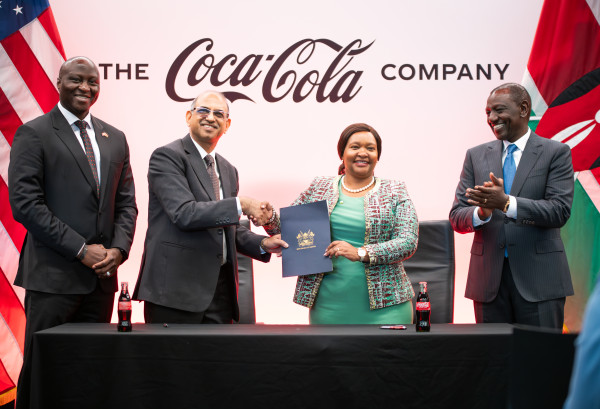
The Coca-Cola system, consisting of The Coca-Cola Company and its authorised bottler Coca-Cola Beverages Africa (https://www.CCBAGroup.com), has announced its intention to grow its investment in Kenya by up to $175 million over the next five years, should the business achieve its anticipated growth targets in the country.

Hosting Kenyan President H.E. Dr William Ruto at The Coca-Cola Company's headquarters in Atlanta, Sunil Gupta, CEO of Coca-Cola Beverages Africa, said, “The Coca-Cola system has been an integral part of Kenya's landscape for more than 75 years. Today, we are excited to announce our intention to strengthen this legacy through a substantial investment.”

“This investment is aimed at accelerating the Coca-Cola system's capacity and capability expansion over the next five years. Our decision to invest underscores our belief in the long-term potential of Kenya's economy,” Gupta said.

Luisa Ortega, President of The Coca-Cola Company's Africa Operating Unit, emphasized the importance of collaboration with the government to create a stable policy environment. "The Coca-Cola system has been part of communities in Kenya for more than seven decades. We are excited to continue growing our business and supporting communities across Kenya for many years to come," said Ortega.

The Coca-Cola system has a rich legacy of refreshing Africa and making a difference in the East Africa region, where it is a major employer, directly employing 10,000 people.

The Coca-Cola system also works with over 500,000 Micro, Small and Medium Enterprises across the region, giving the company a direct connection to the experiences shared by many businesses in Kenya and across the East African region.

“Our value chain supports livelihoods for over a million people in distribution, sales and other roles,” said Gupta. “We source close to 8,000 metric tons of mango puree from East African farmers. We believe in the region's potential and its ability to achieve significant growth through collaboration between public and private sectors. Our business in Kenya is centered on a local approach - we hire locally, produce locally, distribute locally and source locally.”

“We are optimistic and fully committed to Kenya's future. We foresee great social and economic advancement, and this is why we continue to invest in our Kenyan business as well as community programs that help strengthen Kenya's prosperity,” Ortega concluded.

Distributed by APO Group on behalf of Coca Cola Beverages Africa.

ISSUED BY:
Wendy Thole-Muir
Group Head of Reputation and Communication
Coca-Cola Beverages Africa
Tel: +27 83 795 8524
Email: WThole-Muir@ccbagroup.com

Clifford Machoka
Senior Director
Public Affairs
Communication & Sustainability
East & Central Africa
Coca-Cola Africa
Tel: +254 734 109 260/1
Email: cmachoka@coca-cola.com

About The Coca‑Cola Company:
The Coca‑Cola Company (NYSE: KO) is a total beverage company with products sold in more than 200 countries and territories. Our company's purpose is to refresh the world and make a difference. We sell multiple billion-dollar brands across several beverage categories worldwide. Our portfolio of sparkling soft drink brands includes Coca‑Cola, Sprite and Fanta. Our water, sports, coffee, and tea brands include Dasani, smartwater, vitaminwater, Topo Chico, BODYARMOR, Powerade, Costa, Georgia, Gold Peak and Ayataka. Our juice, value-added dairy and plant-based beverage brands include Minute Maid, Simply, innocent, Del Valle, fairlife and AdeS. We're constantly transforming our portfolio, from reducing sugar in our drinks to bringing innovative new products to market. We seek to positively impact people's lives, communities and the planet through water replenishment, packaging recycling, sustainable sourcing practices and carbon emissions reductions across our value chain. Together with our bottling partners, we employ more than 700,000 people, helping bring economic opportunity to local communities worldwide. Follow us on Instagram (https://apo-opa.co/42DbAWX), Facebook (https://apo-opa.co/4bKvZ0m) and LinkedIn (https://apo-opa.co/4bpOQ03).

About Coca-Cola Beverages Africa:
Coca-Cola Beverages Africa is the 8th largest Coca-Cola bottling partner in the world by revenue, and the largest on the continent. It accounts for over 40% of all Coca-Cola products sold in Africa by volume. With over 18,000 employees in Africa, CCBA services more than 720,000 customers with a host of international and local brands. The group was formed in July 2016 after the successful combination of the southern and east Africa bottling operations of the non-alcoholic ready-to-drink beverages businesses of The Coca-Cola Company, SABMiller plc and Gutsche Family Investments. CCBA shareholders are currently: The Coca-Cola Company 66.5% and Gutsche Family Investments 33.5%. CCBA operates in 15 countries, including its six key markets of South Africa, Kenya, Ethiopia, Uganda, Mozambique, and Namibia, as well as Tanzania, Botswana, Ghana, Zambia, the islands of Comoros and Mayotte, Eswatini, Lesotho and Malawi.

Learn more at  https://www.CCBAGroup.com

Follow us on LinkedIn (https://apo-opa.co/4dfq8AC)
Media files
Coca Cola Beverages Africa
Download logo
Read moreThe Coca-Cola System in Kenya Announces Major Investment
17 May 2024

Ethel Kuuya: Visionary Leader, Founder and CEO of Advisory Kulture, and Author, Pioneers a New Era of Leadership with “Leading Beyond Now: Five Commitments for Africa to Thrive

Location: MyPR

Ethel Kuuya, a dynamic force in the realms of leadership and entrepreneurship, is igniting a transformative movement across Africa with her visionary leadership philosophy. In her profound book, “Leading Beyond Now,” Ethel Kuuya presents a new standard—a new way of being for Africa. At its heart, “Leading Beyond Now” embodies the essential commitments required to …

Read moreEthel Kuuya: Visionary Leader, Founder and CEO of Advisory Kulture, and Author, Pioneers a New Era of Leadership with “Leading Beyond Now: Five Commitments for Africa to Thrive
17 May 2024

Friends of the Earth but not Friends of Africa: How an Environmental Group is Deepening African Energy Poverty

Location: News
African Energy Chamber

The second annual Invest in African Energy Forum was held in Paris from May 14-15, uniting over 750 African officials and global investors with the aim of increasing investment in African energy projects. The event served as a clarion call to accelerate sustainable energy in Africa, with discussions centered on financing African renewable energy projects, advancing clean gas projects and mapping a just energy transition in Africa.

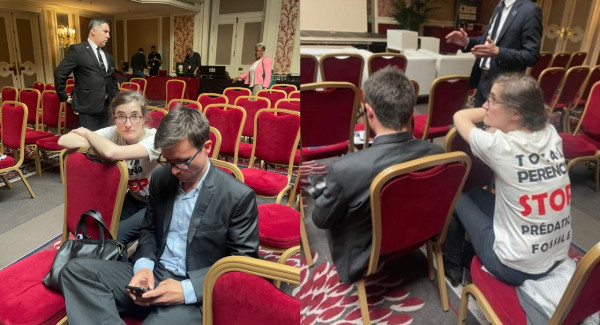
Despite the rallying support by Europe and the U.S. to make energy poverty history in Africa, environmental organization Friends of the Earth chose to disrupt proceedings at the end of the two-day event, causing panic by deploying fake grenades and driving delegates and officials out of the venue. This blatant attack on the companies and authorities that are making great strides towards developing Africa is a blatant attack on the continent itself, and shows the biased and anti-African agenda of the organization.

This is not the first time that Friends of the Earth has taken direct action towards keeping Africa undeveloped and in the dark. In Mozambique, the organization has been fighting against the development of the country's natural gas projects – a clean, widely available and affordable energy resource for the country. The group sued the UK government over its financial support for Mozambique LNG – a 43 million ton per annum offshore project developed by France's TotalEnergies. It is worth noting that since the start of production at the Eni-led Coral Sul FLNG project in 2022, Mozambique's GDP grew 6% in just one year, highlighting the role just one gas project can play in the country. Fortunately for Mozambique, the UK Supreme Court rejected the organization's application to appeal its case against a decision by the UK government to fund the gas project.

The organization's legal battles and obstruction doesn't stop there. In South Africa, their actions extend to opposing projects by companies like Shell, impeding financial support for these ventures, and therefore, deepening the country's energy crisis. Shell is trying to explore for oil and gas offshore South Africa, in a basin where major discoveries have been made in Namibia. Organizations such as Friends of the Earth continue to disrupt this, instigating legal battles that stand to deepen the country's energy crisis even further. Is eight to ten hours of loadshedding not enough for the organization?

Meanwhile, the organization continues to disrupt the development of the East African Crude Oil Pipeline (EACOP) in Uganda – a project which stands to transform both the country and neighboring Tanzania. In 2020, the organization issued a legal case against TotalEnergies for the development of the project, a battle which it continues to wage despite the support by the countries themselves for the project.

However, the African Energy Chamber (AEC) remains undeterred. Representing the voice of the African energy sector, the AEC remains committed to engaging with communities, investors and like-minded individuals who support Africa's right to choose its energy sources.

“The AEC advocates for a pragmatic approach that embraces all forms of energy, including coal, natural gas, renewables and oil. We stress the importance of constructive engagement with all parties involved and oppose actions that hinder Africa's energy progress,” stated NJ Ayuk, Executive Chairman of the AEC. “We believe that companies like TotalEnergies and Perenco, along with other international firms, are contributing positively by creating jobs and opportunities. Attacking or demonizing these companies, does not address the climate crisis.” According to Friends of the Earth's website, the vision of the organization is a “peaceful and sustainable world based on societies living in harmony with nature.” The irony here is that the organization continuously shows aggressive acts towards people, companies and events advocating for equality, justice and progress. If the organization has bothered to take part in the Paris event, listen to the discussions and witness the topics, they would realize that the very companies and projects they are attacking are the ones promoting a sustainable and clean energy future. Friends of the Earth Africa – its African-based group – calls on world governments to adopt their plan to achieve 100% renewable energy in Africa by 2050. Yet, this group's parent organization attacked an energy event that sought to promote investments in African energy – specifically, clean energy.

Friends of the Earth has proven time and time again that they are not friends of Africa. They would rather see the continent remain in the dark than developed through sustainable energy.

Distributed by APO Group on behalf of African Energy Chamber.

Media files
African Energy Chamber
Download logo
Read moreFriends of the Earth but not Friends of Africa: How an Environmental Group is Deepening African Energy Poverty
16 May 2024

Women in Africa face widespread discrimination in family laws

Location: News
Equality Now

Discrimination against women and girls remains widespread in family laws across Africa, finds new research by Equality Now (www.EqualityNow.org). Analysis of twenty African countries reveals gender inequality in marriage, divorce, custody, and property rights is being perpetuated by sex discrimination institutionalized within legal systems and customary laws. While some significant legal reforms have been achieved, progress has been slow, inconsistent, and hampered by setbacks, lack of political will, and weak implementation.

The report, Gender Inequality in Family Laws in Africa: An Overview of Key Trends in Select Countries (http://apo-opa.co/3V0dD4R), identifies how overlap and contradictions in legal frameworks make the interpretation and application of family laws confusing, creating complex challenges for harmonizing legal systems. 

The impacts of discriminatory family laws can be profound, putting women and girls at greater risk of sexual and gender-based violence and making them more dependent and vulnerable by curtailing their economic opportunities and reducing their decision-making power.

Full equality in family laws has not been achieved in any of the countries reviewed, namely Algeria, Angola, Botswana, Burundi, Cameroon, Côte d'Ivoire, the Democratic Republic of the Congo (DRC), Egypt, Ethiopia, Kenya, Malawi, Mozambique, Nigeria, Senegal, South Africa, South Sudan, Sudan, Tanzania, The Gambia, and Tunisia.

Pressing need for comprehensive legal reforms

Africa is home to diverse ethnic, linguistic, and religious groups with varied family law structures. Historically, communities developed intricate and deep-rooted systems of customary laws governing family relations. The introduction of European legal systems and religion resulted in a blend of customary, religious, and statutory laws that still shape legislation and practice through legal pluralism.

This complex patchwork is influenced by evolving social dynamics. Civil, customary, and religious law, such as Islamic or Christian canon law, sometimes encroach or conflict, and many provisions in religious and customary laws discriminate against women and girls.

Esther Waweru, report co-author and a Senior Legal Advisor at Equality Now, explains, “Culture and religion frequently act as major impediments in the struggle for family law equality, stalling reforms. Claw-back clauses and retrogressive practices water down the positive impact of progressive laws, and there is backlash from anti-rights movements seeking to reverse hard-won gains in areas such as eliminating child marriage and female genital mutilation.”

“Stagnation is also a problem, with governments pledging to reform discriminatory laws but failing to take meaningful action. In some instances, progressive family codes remain in limbo awaiting enactment.”

Progress on child marriage, but shortfalls remain

Child marriage is one area of notable progress. Absolute bans on marriage under 18 exist in Côte d'Ivoire, DRC, Egypt, The Gambia, Kenya, Malawi, and Mozambique. However, the persistence of child marriage in certain communities underscores the need for a multi-sectoral approach (http://apo-opa.co/3UFhEKR) incorporating awareness raising about the legal consequences and harms of child marriage.

Concerningly, laws in Cameroon, Nigeria, Senegal, South Sudan, Sudan, and Tanzania still allow child marriage, while in Algeria, Angola, Botswana, Burundi, Ethiopia, South Africa, and Tunisia, the legal age of marriage is 18, but exceptions are permitted.

Marital rape

Countries need greater protections against gender-based violence, especially intimate partner violence. Marital rape is not prohibited in Algeria, Kenya, Sudan, and The Gambia, while Northern Nigeria's Penal Code allows marital rape and “corrective” assault within marriage.

Marital rape is only criminalized upon separation in Tanzania, and in Burundi, the penalty is under 30 days imprisonment or a fine. Tunisia's law states a wife must fulfill her duties in line with ‘usages and customs,' putting women at risk of marital rape as a wife's traditional role includes pleasing her husband sexually.

Malawi's courts have stated that rape does not extend to marriage. Customary law presumes perpetual consent to sex within marriage, and Malawi's civil law appears to support this by providing only limited circumstances in which a wife can deny her husband sex, such as poor health or when legally separated.

Countries like Côte d'Ivoire, Mozambique, and South Africa can be commended for explicitly criminalizing marital rape. It's imperative that all nations introduce bans, accompanied by awareness-raising campaigns and accessible support services for survivors. Effective legal enforcement is also crucial, as is providing comprehensive training for officials in the criminal justice, healthcare, and social service sectors.

Discriminatory marriage practices

In most African countries, registration of civil marriages is a legal requirement governed by specific laws formalizing marriage. Women in customary and religious marriages are at greater risk of discrimination as they don't have the same legal protection as people in civil marriages. Same-sex partners also experience this, as marriages and civil unions are largely reserved for heterosexual couples.

Polygamy is legally permitted in Cameroon, Egypt, Kenya, Senegal, and South Sudan, with men allowed four wives in Sudan and Senegal. Côte d'Ivoire, Mozambique, and South Africa have statutory laws for monogamy, but customary and religious laws and practices continue to recognize polygamy without adequate protections for women in polygamous marriages. Other harmful traditional practices, such as widow inheritance and surrogate marriage, treat women as property.

Discrimination in divorce and child custody laws

Countries such as Sudan discriminate by granting husbands more powers to initiate divorce. In Algeria, women can only request a divorce in cases of abandonment, violation of the marriage contract, or if alimony is unpaid. In both Sudan and Egypt, in some no-fault divorces, a woman must pay financial compensation to her ex-husband.

Child custody laws have been reformed in Angola, Botswana, Burundi, Cameroon, Côte d'Ivoire, DRC, Mozambique, and Senegal, ensuring guardianship rights for both parents, irrespective of marital status.

Sex discrimination remains in countries like Senegal, where the father is the legal guardian regardless of the mother's caregiving role. In Tunisia and Algeria, fathers retain legal guardianship even if the mother has custody. Algeria and Sudan strip a mother's rights to custody upon remarriage, but this doesn't apply to men.

Matrimonial property and inheritance

Matrimonial property laws is another area that has undergone considerable reforms. Côte d'Ivoire, Kenya, Malawi, and South Africa have introduced legal provisions for equitable distribution of matrimonial property. In Ethiopia, Nigeria, South Africa, and The Gambia, laws recognize the right of married women to acquire, own, maintain, and dispose of their property.

However, some customary and religious laws undermine women's inheritance rights. In Algeria, Cameroon, Côte d'Ivoire, Egypt, Nigeria, South Sudan, Sudan, and Tunisia, women and girls receive less inheritance than men and boys.

Women are disadvantaged by cultural biases that influence judicial decisions, with unequal distribution particularly evident in divorce and widowhood. In some countries, wives can be excluded from inheriting their husbands' property. One example is Angola, where customary laws exclude wives from inheriting their deceased husband's property, and widows are sometimes forced from their matrimonial home.

Aligning family laws with international human rights standards

Family laws in Africa must align fully with international human rights standards. Many countries have ratified key treaties like the Convention on the Elimination of All Forms of Discrimination against Women (CEDAW) and the Protocol to the African Charter on Human and Peoples' Rights on the Rights of Women in Africa (Maputo Protocol). However, implementation and enforcement of these treaties remain inconsistent, with discriminatory family laws and policies remaining in statutes and practices.

Waweru concludes, “It's especially concerning that in most countries where national judiciaries and African Union judicial bodies have explicitly called for law reform in their decisions, governments haven't implemented these changes. And even where laws are equitable, enforcement is frequently inadequate and biased against women, and women may not know their legal rights.”

“To safeguard women and girls within family law, it is imperative for all African nations to promptly enact robust legislative and policy frameworks that align with international and regional human rights obligations.”

Distributed by APO Group on behalf of Equality Now.

Notes to editors
For media requests, please contact
Tara Carey
Global Head of Media
at Tcarey@equalitynow.org
T. +44 (0)7971556340 (WhatsApp)

About Equality Now: 
Equality Now is an international non-governmental human rights organization that works to protect and promote the rights of all women and girls around the world by combining grassroots activism with international, regional, and national legal advocacy.

Our international network of lawyers, activists, and supporters achieve legal and systemic change by holding governments responsible for enacting and enforcing laws and policies that end legal inequality, sex trafficking, online sexual exploitation, sexual violence, and harmful practices such as female genital mutilation and child marriage.

For more information about Equality Now go to www.EqualityNow.org, and follow on X (Twitter) at http://apo-opa.co/3yiYRgN and Linkedin at http://apo-opa.co/3wrGPIT.

About Africa Family Law Network (AFLN): 
Gender Inequality in Family Laws in Africa: An Overview of Key Trends in Select Countries is a critical data source informing legal, policy, and practice reforms to end sexism and discrimination in family laws in Africa. It will be used by Equality Now, the Africa Family Law Network (AFLN) (http://apo-opa.co/4bkc0ot), and partners to help facilitate work with the policy and judicial organs of the African Union, particularly the Special Rapporteur on the Rights of Women in Africa to influence change.

AFLN was launched in October 2022 and aims to formulate a regional alliance in Africa amongst national advocates and groups to raise collective action and accelerate organizing and mobilization efforts toward family law reform.

AFLN is led by founding partners Equality Now, The African Women's Development and Communication Network (FEMNET) (http://apo-opa.co/3WIinxt), Musawah (http://apo-opa.co/3UZrM2h), and the Strategic Initiative for Women in the Horn of Africa (SIHA Network) (http://apo-opa.co/4bkz5r2).

AFLN is part of the Global Campaign for Equality in Family Law (http://apo-opa.co/4bDdSbF), which calls on all states to ensure equality for women and men under the law in all matters relating to the family, regardless of religion, culture, and tradition.

Media files
Equality Now
Download logo
Read moreWomen in Africa face widespread discrimination in family laws
15 May 2024

Collaborative Workspaces To Dominate Africa

Location: MyPR

Africa’s two leading providers in the shared workspace industry, KOFISI and Workshop17, have announced a strategic partnership to provide a wider range of services and locations across Africa. The demand for shared workspace continues to grow faster in Africa than the rest of the world – fueled by the growth in the working age population …

Read moreCollaborative Workspaces To Dominate Africa
7 May 2024

Johannesburg: Data centre hub for big operators in South Africa

Location: MyPR

Cushman & Wakefield | BROLL says operators seek sites to the north and east of Johannesburg, in well-located nodes with power supply, while in the smaller Cape Town market data centres are expanding, and there’s growing interest in Nigeria and Kenya. The surge in AI technology deployment and demand for more efficient cloud storage drives …

Read moreJohannesburg: Data centre hub for big operators in South Africa
25 April 2024

Launch of cutting-edge recycling facility in Namibia

Location: News
Coca Cola Beverages Africa

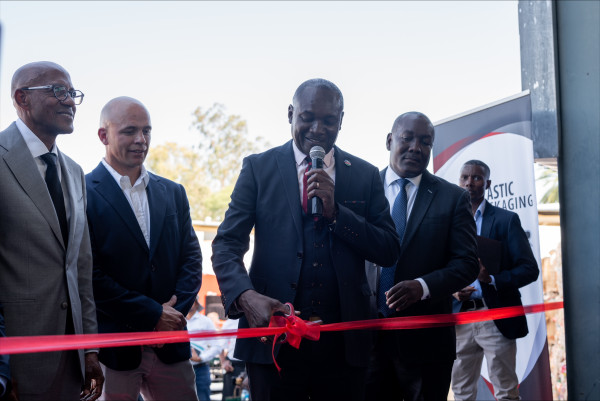
A N$24 million (over US$1.2million) investment through a partnership between Coca-Cola Beverages Africa (CCBA) (www.CCBAgroup.com) in Namibia and Plastic Packaging has culminated in the opening of a new polyethylene terephthalate (PET) flaking plant in Okahandja which will double the capacity of the only mechanical recycler of plastic waste in the country.

The plant was officially inaugurated by the Minister of Environment, Forestry and Tourism, Pohamba Shifeta.

“The Coca-Cola system aims to drive systemic change through a circular economy for packaging. We are leading the industry to help collect and recycle a bottle or can for every one we sell by 2030. We have a responsibility to help solve complex plastic waste challenges facing our planet and society, and we're leveraging our scale and reach to achieve our sustainability goals and reduce packaging waste,” said CCBA Chief Public Affairs, Communication and Sustainability Officer, Tshidi Ramogase.

“This facility is an example of how we work with partners across business, government and civil society to support or create closed loop systems to ensure our packaging is collected and recycled or reused.

“Supporting the establishment of a circular economy for packaging has both environmental and economic benefits since recycling has the potential to create jobs and to empower the informal waste collection sector in a circular economy.

“Unlike a traditional linear economy in which packaging is made, used and disposed of; a circular economy preserves the economic value of packaging through robust collection and recycling systems,” said Ramogase.

The completion of this cutting-edge recycling facility will enable Namibia Polymer Recyclers (NPR), a subsidiary of Plastic Packaging, to recycle up to 500 tons per month.

The recycling plant transforms discarded beverage bottles made from PET material into PET flakes with an international market value. The flaking process of post-consumer PET bottles involves sorting, shredding it into PET flakes, hot-washing and drying of flakes, which are then sent for further processing into recycled PET pellets and other end-uses.

This reduces the need to use virgin PET, while diverting waste from landfills and the environment.

“We are investing in infrastructure and exploring ways to support additional recycled PET capacity in each of the regions where we operate. These investments not only provide a source of recycled content for our packaging but also create additional demand for empty packages, driving increased collection.

“At CCBA, we are a proud industry leader in developing increasingly sustainable ways to produce, distribute and sell our products. We use our industry leadership to be part of the solution to achieve positive change and to build a more sustainable future for our planet,” said Ramogase.

Distributed by APO Group on behalf of Coca Cola Beverages Africa.

Issued By:
Enid Johr
PACS Director
CCBA in Namibia
Tel: +264 81 778 5381
Email: ejohr@ccbagroup.com

Wendy Thole-Muir
Head: Reputation and Communication
Coca-Cola Beverages Africa
Tel: +27 83 795 8524
Email: WThole-Muir@ccbagroup.com

Follow us on:
LinkedIn: https://apo-opa.co/4dfq8AC

About CCBA: 
CCBA is the 8th largest Coca-Cola bottling partner in the world by revenue, and the largest on the continent. It accounts for over 40% of all Coca-Cola products sold in Africa by volume. With over 18,000 employees in Africa, CCBA services more than 720,000 customers with a host of international and local brands. The group was formed in July 2016 after the successful combination of the southern and east Africa bottling operations of the non-alcoholic ready-to-drink beverages businesses of The Coca-Cola Company, SABMiller plc and Gutsche Family Investments. CCBA shareholders are currently: The Coca-Cola Company 66.5% and Gutsche Family Investments 33.5%. CCBA operates in 15 countries, including its six key markets of South Africa, Kenya, Ethiopia, Uganda, Mozambique and Namibia, as well as Tanzania, Botswana, Ghana, Zambia, the islands of Comoros and Mayotte, Eswatini, Lesotho, and Malawi.
Learn more at https://www.CCBAgroup.com

Media files
Coca Cola Beverages Africa
Download logo
Read moreLaunch of cutting-edge recycling facility in Namibia
15 April 2024

SAHPRA recalls two batches of Benylin paediatric cough syrup

Location: News

SAHPRA recalls two batches of Benylin paediatric cough syrup

The South African Health Products Regulatory Authority (SAHPRA) has recalled two batches of Benylin pediatric cough syrup.

On 10 April 2024, the Nigerian National Agency for Food and Drug Administration and Control (NAFDAC) reported to the concerned party that a batch of Benylin paediatric cough syrup had high levels of diethylene glycol detected in it.

According to the SAHPRA, diethylene glycol is toxic to humans when consumed and can prove fatal. 

Toxic effects can include abdominal pain, vomiting, diarrhoea, inability to pass urine, headache, altered mental state, and acute kidney injury that may lead to death.

“SAHPRA immediately contacted the South African manufacturer, Kenvue, formerly Johnson and Johnson, for a response. Following engagements with the manufacturer and in the best interest of the public, it was resolved that affected batches would immediately be recalled while an investigation is ongoing,” the local drug watchdog explained.

SAHPRA, in collaboration with Kenvue, has identified the affected batch numbers as 329304 and 329303.

These affected batches have been distributed to several countries including South Africa, Eswatini, Rwanda, Kenya, Tanzania and Nigeria.

SAHPRA CEO, Dr Boitumelo Semete-Makokotlela, said as a national regulatory authority, the recalling of medical products is a crucial measure to address safety concerns or quality issues so that they protect the health of the public. 

“SAHPRA is recalling these two batches from the market due to reported high levels of diethylene glycol, with the potential to cause serious adverse events,” Semete-Makokotlela explained.

Benylin paediatric is a bright red syrup with a raspberry smell and taste, packaged in a 100ml amber glass bottle with a plastic measuring cup.

It is used to relieve cough and congestive symptoms and treat hay fever and other allergies affecting the upper respiratory tract.

“SAHPRA wishes to inform the public not to panic, as the matter is being handled with priority. Batch recalls are batch-specific and do not necessarily apply to other batches or similar products. The manufacturer is a SAHPRA-licenced manufacturer and complies with Good Manufacturing Practices (GMP),” said Semete-Makokotlela.

The drug watchdog stressed that the recall is limited to two batches and that the public should not panic regarding the range of products bearing the same name.

“SAHPRA is alerting healthcare professionals and the public to discontinue the use of the two batches mentioned, remove them from their inventory and return them to their normal distribution channels immediately,” said Semete-Makokotlela.

The recall is classified as a Class 1, Type A recall, which is associated with a serious product quality concern that may have severe consequences. 

According to SAHPRA, this is a countrywide recall. 

The product is being recalled from hospitals, retail outlets, healthcare professionals, authorised prescribers and individual customers or patients.

Those who have consumed these two batches and experienced any adverse reaction or witnessed it in children should consult their healthcare professional and report this using the Med Safety App or send an email to adr@sahpra.org.za. – SAnews.gov.za

Gabisile
Mon, 04/15/2024 - 10:02

243 views
Read moreSAHPRA recalls two batches of Benylin paediatric cough syrup
10 April 2024

Unlocking Malawi’s Trade Barriers Through One-Stop Border Posts

Location: News

The World Bank Group
Download logo

Malawi's economy suffers from a lack of investment and high trade costs due to poor logistics and infrastructure; Clearing goods at the Malawi-Dedza border post with Mozambique previously took an average of three days; One-Stop Border Posts (OSBPs) reduce border waiting times and the cost of cross-border transactions.

The Dedza border post, situated between Malawi and Mozambique, is a busy place. On average, more than 80 trucks are cleared daily, carrying shop merchandise from South Africa to Malawi including fertilizers for Malawi's agriculture sector.

For the past few years, before the construction of the new One-Stop Border Post (OSBP) facility, it took about 24 to 36 hours to clear a truck carrying items such as wheat, fertilizers, groceries, and raw materials for Malawi's manufacturing industry. Drivers and clearing agents had to dash from one office to another between the two countries to clear the goods. Malawian traders traveling to and from South Africa through the Dedza–Mozambique border had difficulty locating the appropriate offices to present the required paperwork. In addition, the lack of parking facilities meant that the road leading to the border post was always congested, as trucks scrambled for space to park while waiting to be cleared.

Establishing One-Stop Border Posts

In 2015, the Government of Malawi embarked on an ambitious program to construct border posts in Dedza and Mwanza (both bordering Mozambique) and Songwe (bordering Tanzania), set up OSBPs with these neighboring countries, and establish the National Single Window (NSW). The NSW is an electronic platform system connecting international trade and transport stakeholders to fulfill all imports, exports, and transit border control procedures. World Bank support of $91.7 million was provided through the Southern Africa Trade and Transport Facilitation Project. The objective was to reduce the cost of cross-border transactions by supporting the modernization, simplification, and harmonization of the trade and transit procedures and policies.

The Dedza One-Stop Border Post, which was completed in 2023, boasts two examination bays for goods, parking spots for 100 freight trucks, and a modern passenger terminal.

“We now take less than half a day to process all the paperwork to clear the goods that we have carried, which is far less than the minimum of three days that we used to spend here,” says Flatella Makwakwa, a truck driver who has been using the Dedza border for more than three years. He also acknowledges the benefits of the new system when it comes to facilitating the passing of trucks and making life more comfortable for the users.

The new office infrastructure has made the process of clearing goods easier for the Malawi Revenue Authority (MRA), various other border officers, and users. The OSBP concept requires border officers from adjacent countries to be hosted in the same building. “It now feels good to go to work as the environment looks spacious and comfortable and we are looking forward to hosting our Mozambique counterparts very soon,” says Lucy Chikhawo, the MRA Station Manager for the Dedza border post which hosts more than a hundred government officers—including those from the Malawi Bureau of Standards, Immigration, Police, Agriculture and Health.

Traders also have access to better sanitation facilities as they wait for their goods to be cleared.

“From the feedback we have received so far about the Dedza OSBP, we feel encouraged to support the government in fast-tracking the completion of the other two border posts at Mwanza and Songwe in Karonga. Our main goal is to support initiatives that reduce time to clear passengers and goods, as any impediments are costly to the economy of the country,” says Chikondi Nsusa, Senior Transport Specialist at the World Bank Malawi Country Office, who is also the Task Team Leader for the project.

Improving Malawi's Trade, Logistics, and Infrastructure

The latest Malawi Country Economic Memorandum report highlights that Malawi's economy suffers from a lack of investment and high trade costs. Key reasons include poor logistics and infrastructure, compounded by being a small and landlocked country, as well as other non-tariff barriers at the borders.

According to the document, “the presence of non-tariff barriers at the border and in neighboring transit countries such as Mozambique, Tanzania, and Zambia add to the costs of trade for Malawian exporters and importers and there is lack of coordination between Malawi and its neighbors to address this issue that likely reduces both the number of firms exporting and the total value of exported goods.” In this context, establishing more OSBPs is a big step in the right direction.

Distributed by APO Group on behalf of The World Bank Group.

Read moreUnlocking Malawi’s Trade Barriers Through One-Stop Border Posts
7 April 2024

President Ramaphosa to receive Letters of Credence

Location: News

President Ramaphosa to receive Letters of Credence

President Cyril Ramaphosa will on Tuesday receive Letters of Credence from Heads of Mission-designate at a Credentials Ceremony to be held in Pretoria.

Letters of Credence are official diplomatic documents presented to the President by Heads of Mission-designate, who have been nominated by their respective governments to serve as ambassadors to South Africa.

President Ramaphosa will receive Heads of Mission-designate from the following countries:

1. The Republic of Rwanda

2. The Swiss Confederation

3. The Federation of Malaysia

4. The Republic of Italy

5. Mongolia

6. The United Republic of Tanzania

7. The State of Kuwait

8. The Republic of Belarus

9. The Dominican Republic

10. The Republic of Korea

11. The Republic of Kenya

12. New Zealand

13. The Islamic Republic of Iran

14. The Republic of Suriname

- SAnews.gov.za


Edwin
Sun, 04/07/2024 - 09:12

123 views
Read morePresident Ramaphosa to receive Letters of Credence
5 April 2024

Globeleq to build Africa’s largest standalone battery energy storage system in South Africa

Location: Business

British High Commission Pretoria
Download logo

UK company Globeleq, the leading independent power company in Africa, today announced that its Red Sands project in the Northern Cape has been awarded Preferred Bidder status in South Africa's Energy Storage Capacity Independent Power Producer Procurement Programme (ESIPPPP). Globeleq is majority-owned by British International Investment (BII), the Development Finance Institution of the UK Government.

Battery storage is an essential enabler of renewable-energy generation, and the market for these systems is growing rapidly in South Africa and worldwide as a means of resolving energy crises and tackling climate change. These systems provide reliable power supply on demand, even when the energy grid is unstable, overcoming the challenges of intermittent wind and solar sources. They store energy at times of excess generation so that it can be released into the grid when generation falls short of demand, helping to mitigate the need for load-shedding.

Experts say that widespread energy storage is vital to expanding the reach of renewables and speeding the transition to a carbon-free power grid - this is key to helping reduce South Africa's reliance on fossil fuels as it seeks to transition to clean energy. This R5.7 billion (US$300 million) investment therefore represents a flagship project financed by the UK as part of its commitment under the Just Energy Transition Partnership agreed at COP26.

The Red Sands project is in the Northern Cape, about 100km southeast of Upington, and was originally developed by African Green Ventures, a South African renewable project development company owned by Norwegian based energy firm Magnora ASA. The project will cover approximately 5 hectares (12 acres) and will connect to the grid through the Eskom Garona substation. The substation will be upgraded by the Red Sands project to ensure that full network support capabilities of the project's batteries can be utilised.

Working closely with leading global battery and balance-of-plant suppliers, Globeleq estimates that the project will require an investment of approximately US$300 million and will take 24 months to construct after financial close, which is expected in 2024.

Globeleq is the largest independent power produce in Africa, providing nearly 1,800 MW of energy in South Africa, Mozambique, Kenya, Tanzania, Cote d'Ivoire, Egypt and Cameroon. Globeleq is a UK company based in London and backed entirely with Official Development Assistance (UK aid).

Red Sands will be Globeleq's first Battery Energy Storage Solutions (BESS) project in South Africa but the Group owns and operates a combined solar and BESS plant at Cuamba in Mozambique, and is developing BESS projects across the African continent. Globeleq also owns and operates 8 renewable plants (6 solar PV, 2 wind) in South Africa with a total generating capacity of 384 MW.

Mike Scholey, Globeleq's CEO commented:

"I am delighted that we have received Preferred Bidder status for this very important project, and I look forward to working with the government and our partners to take Red Sands to financial close and into operations. Electricity storage is going to be key not only in helping South Africa meet its considerable industrial and domestic demand for energy but also across Africa as more renewable energy projects benefit from the advances our industry has made with BESS technology."

British High Commissioner to South Africa, Antony Phillipson said:

"This is a significant investment in South Africa's future. The UK is proud to play such a vital role in helping to tackle the energy crisis with new technology that will bring power supply stability and most importantly support South Africa's ambition to reduce carbon emissions."

Distributed by APO Group on behalf of British High Commission Pretoria.

Read moreGlobeleq to build Africa’s largest standalone battery energy storage system in South Africa
3 April 2024

ExxonMobil Foundation Collaborates with JA Africa on $300,000 science, technology, engineering and mathematics (STEM) Program

Location: News
JA Africa

Program to provide STEM and problem-solving skills to students across continent; Students to compete for chance to attend major regional industry conference; Aims to develop the next generation of African thinkers and workforce.

The ExxonMobil Foundation and JA Africa have launched the "ExxonMobil STEM Africa” initiative, a $300,000 program to promote science, technology, engineering and mathematics (STEM) for approximately 3,000 African students across Nigeria, Namibia, Angola and Mozambique.

The program will prepare middle and high school students for future STEM careers through immersive quizzes and hands-on experiences at Innovation Camps. The camps, delivered by JA Africa, will teach new approaches to addressing STEM-related challenges.

“Growing students' STEM skills is key in developing the next generation of problem solvers across Africa,” ExxonMobil Foundation President Alvin Abraham said. “We're excited to see how these young minds apply what they've learned through our program.”

Teams who present the best STEM solutions will represent their countries at a major regional industry conference in Cape Town, South Africa. Students will gain cross-cultural exposure, learn about energy from a global perspective and showcase their ideas while connecting with industry leaders.

“In an era where technology and innovation propel the global economy forward, Africa's position at the forefront of technological advancements is crucial for maintaining competitiveness and sustainable development,” said JA Africa President and CEO Simi Nwogugu. “We are grateful to the ExxonMobil Foundation for this partnership to nurture STEM competencies to shape Africa's future."

To learn more about the program, visit https://ExxonMobilSTEMsAfrica.org/

Distributed by APO Group on behalf of JA Africa.

About ExxonMobil Foundation:
The ExxonMobil Foundation is the primary philanthropic arm of Exxon Mobil Corporation in the United States. The Foundation engages in a range of philanthropic initiatives in areas where the company operates around the world, with a strategic focus on science, technology, engineering, and math (STEM) education.

About JA Africa:
As one of Africa's largest and most impactful youth-serving NGOs, JA Africa delivers hands-on, immersive learning in work readiness, financial health, entrepreneurship, sustainability, STEM, economics, citizenship, ethics, and more. JA Africa has a presence in 16 countries in Sub-Saharan Africa and collectively we reach more than 900,000 youth in more than 3,000 schools each year. JA Africa Works in Burkina Faso, Côte d'Ivoire, DRC, Eswatini, Ghana, Kenya, Madagascar, Mauritius, Nigeria, Rwanda, Senegal, South Africa, Tanzania, Uganda, Zambia, and Zimbabwe. Learn more at www.JA-Africa.org.

Media files
JA Africa
Download logo
Read moreExxonMobil Foundation Collaborates with JA Africa on $300,000 science, technology, engineering and mathematics (STEM) Program
26 March 2024

Egypt and the Big 5 Dominate Hotel Development in Africa

Location: Business
Africa Hospitality Investment Forum (AHIF)

When it comes to hotel development across Africa in 2024, just five words tell the story, “Egypt and the Big 5”. In this context, “the Big 5” does not refer to Africa's major wildlife attractions, (lion, leopard, rhinoceros, elephant and buffalo) but to the global hotel chains – Accor, Hilton, IHG, Marriott International and Radisson Hotel Group. This year's African Hotel Chain Development Pipeline report, widely acknowledged as the industry's most authoritative source, documenting and analysing the number of hotels being planned and built across the continent, reports a market share of 28% for Egypt and 71% for the Big 5 global chains.

The survey, conducted by Lagos-based W Hospitality Group, in association with the Africa Hospitality Investment Forum (AHIF), is based on responses from 47 global and regional (African) hotel chains, reporting on a pipeline of hotel development activity totalling around 92,000 rooms in 524 hotels, in 41 of Africa's 54 countries.

Significant trends to emerge in the past year include strong growth, over 9%, in both North and sub-Saharan Africa, an increase in very large hotels (the average size of the largest 10 hotels is 770 rooms, up from 723 rooms in 2023) and a rapid growth in resorts, up by 32% on 2023. In this respect, Zanzibar has performed particularly strongly. There, the pipeline has grown from seven resorts with 983 rooms in 2023 to 14 resorts and 2,048 rooms in 2024, a sure sign of confidence in these beautiful Indian Ocean islands.

The extent to which Egypt dominates the African hotel development pipeline each year, with almost 26,250 rooms in 109 hotels, is quite remarkable. The country's pipeline, up by 19 hotels and about 5,200 rooms in 2023, is larger than the next four countries put together. It has well over three times the number of rooms as second-placed Nigeria, which has 7,622 rooms in 50 hotels. Third-placed Morocco has 7,169 rooms in 52 hotels and Ethiopia, in fourth place, has 5,128 rooms spread across 31 properties.

There has been an extremely strong increase in the number of resort projects in the pipeline, growing from 24% of the total in 2023 to 30% in 2024.  In addition, around half of the rooms in hotels and resorts that opened last year were in resorts. Both Boa Vista (Cape Verde) and Sharm El Sheikh (Egypt) score highly because of the very large average size of the resorts there. The largest hotel in the entire pipeline is a Rixos resort being planned in Sharm El Sheikh, with over 1,800 rooms.

The Big 5 global chains – Marriott International, Hilton, Accor, Radisson Hotel Group and IHG Hotels & Resorts – account for 66% of hotels and 71% of rooms in the entire African pipeline.

Marriott International, the world's largest hotel chain, remains in the lead for the third consecutive year, in a seemingly unassailable position as number one, with almost twice the number of pipeline hotels and rooms as second placed Hilton, and it has the largest number of rooms added in the year.

Looking back at previous years, there used to be a neck and neck race between Accor and Marriott International but, for the second year running, Accor's pipeline has actually decreased, from a high of about 20,250 rooms in 2022 to 13,375 rooms today. Executives say that they are focused on having a “clean and achievable pipeline, rather than numbers for numbers sake”.

Accor's quote highlights a key issue in tracking hotel development in Africa, which is differentiating between hotel projects that are proposed from those that are under construction and from those that have been completed. Typically, the length of time between signing and opening is between four and five years. However, the report identifies 35 projects in the pipeline that are 10 or more years old, including one hotel that was signed 16 years ago.

When it comes to hotels under construction, Marriott International leads the way, with 138 hotels (15,011 rooms) currently being built. It is followed by Hilton (72 hotels, 5,955 rooms), Radisson Hotel Group (35 hotels, 5,748 rooms) and Accor (70 hotels, 3,346 rooms). TUI Hotels & Resorts has charged into the rankings in fifth place with 12 hotels (2,208 rooms) under construction.

As well as looking at deals, which may or may not materialise, W Hospitality Group also looked at who was opening hotels in Africa in 2023, and where. Of the total 29 chain hotels and resorts that opened in Africa in 2023, the split was 10 in North Africa and 19 in sub-Saharan Africa.  Of those 19 openings, 11 were in East Africa, including six new hotels and resorts in Tanzania, which had the most openings of any African country. It is clear evidence of the attractiveness of both the mainland and Zanzibar to investors and operators.

Accor came out top of the list for openings last year, and it also tops the number of hotels and rooms opened over the past five years (2019-2023), with 34 hotels opening, comprising around 5,500 rooms. 

In terms of “actualisation”, 2023 was an exceptionally slow year. However, that is likely to be offset by a strong 2024, during which the top 10 chains expect to open 139 hotels with 19,122 rooms.

Trevor Ward, Managing Director, W Hospitality Group, said: "Our report contains very positive data, with the pipeline expanding by more than 9 per cent in 2023.  This is the largest increase since 2018 and, according to data produced by CoStar/STR, is one of the highest increases globally, surpassed only by the Americas. We look not just at signed deals and their status, but also at the historical actualisation of these deals. This year, we've placed greater emphasis than we have in the past on the actualisation, because if the deals don't become operating businesses, generating profits for the owners and paying fees to the hotel chains, no one's objectives are being met, are they?"

“We're looking forward to some 139 hotels and resorts opening in Africa in 2024, with expectations of a far greater actualisation rate than in recent years, as Africa strives to achieve its fair share of the global hotel industry”.

When one considers existing hotels, as well as hotels in the development pipeline, the continent's current king of the jungle is Accor, with 165 hotels, containing 29,041 rooms, open and trading. Marriott International is in second place, 25,451 rooms in 143 hotels, Hilton is third, 12,525 rooms in 47 hotels and Radisson Hotel Group is close behind with 12,179 rooms in 61 properties. However, if Marriott International delivers all the rooms in its pipeline, it is on course to overtake Accor and become pack leader, with 51,816 rooms in operation.

Matthew Weihs, Managing Director of The Bench, which organises the Africa Hospitality Investment Forum (AHIF), concluded: “The report reveals some very positive trends, including strong growth in new hotel projects, the emergence of high-quality white label hotel operators and governments successfully attracting investment into their tourism industries. All this bodes well for deal-making discussions at AHIF.”

An update to the pipeline development survey, along with in-depth insights, will be presented by Trevor Ward at AHIF, which takes place at the Mövenpick Hotel, Windhoek, Namibia, from 25th – 27th June 2024.

The event is the most influential gathering of hospitality executives in Africa, connecting business leaders and fuelling investment in tourism projects, infrastructure, and hotel development across the continent.

Distributed by APO Group on behalf of Africa Hospitality Investment Forum (AHIF).

Media contact:
For further information and high-resolution images, please contact:
David Tarsh
+44 (0) 20 7602 5262 / +44 (0) 7770 816 070
Email: David@Tarsh.com

About W Hospitality Group:
The W Hospitality Group, a member of Hotel Partners Africa, specialises in the provision of advisory services to the hotel, tourism and leisure industries, providing a full range of services to clients who have investments in the sector, or who are looking to enter them through development, acquisition or other means. In sub-Saharan Africa W Hospitality Group is regarded as the market leader due to the market and financial expertise of its staff, its worldwide knowledge, and its commitment to its clients.  In Africa, W Hospitality Group has to date worked in 40 countries on the continent, from its Lagos and Addis Ababa offices.

www.W-Hospitalitygroup.com

About the Africa Hospitality Investment Forum (AHIF): 
AHIF is the premier hotel investment conference in Africa, attracting many prominent international hotel owners, investors, financiers, management companies and their advisers. It is organised by The Bench (www.TheBench.com), which has a long track record of delivering multiple premium hotel investment conferences and forums across Europe, the Middle East, Africa, Asia and Latin America. The Bench's mission is enabling prosperity by facilitating growth, networking, and thought leadership in the hospitality industry worldwide.

www.TheBench.com

Sponsors of AHIF are Host Sponsor: Namibia Investment Promotion and Development Board (NIPDB); Host Partner: Kasada Capital Management; Platinum Sponsors: ClubMed, Radisson Hotel Group; Gold Sponsors: Accor, Aleph Hospitality, BWH Hotels, CHIC, CityBlue, hansgrohe, IHG Hotels and Resorts, Knight Frank, Kofisit, LEVA, Marriott International. Millennium Hotels and Resorts; Silver Sponsors: Gondwana Collection, HVS, STR, TIME Hotels, TV5Monde; Tuck Shop Sponsor: Profica; Bar Sponsor: Zia Travel Atelier; Exhibitor: MultiChoice Namibia; Networking Sponsor: Talinda; Official Carriers: Discover Airlines, FlyNamibia, South Africa Airways. 

Media files
Africa Hospitality Investment Forum (AHIF)
Download logo
Read moreEgypt and the Big 5 Dominate Hotel Development in Africa
22 March 2024

Team SA Bow Out Of African Games With Tightly Contested Defeat To Uganda

Location: Sport

ACCRA: Team South Africa suffered a narrow two-wicket loss against Uganda in a low-scoring thriller at the Achimota Cricket Oval on...

Read moreTeam SA Bow Out Of African Games With Tightly Contested Defeat To Uganda
20 March 2024

Minor Hotels Announces the Signing of Anantara Zanzibar Resort – Anantara to continue its expansion in Africa, adding Tanzania to the pipeline

Location: MyPR

Minor Hotels, an international hotel owner, operator and investor with more than 540 hotels in 56 countries in Asia Pacific, the Middle East, Africa, the Indian Ocean, Europe and the Americas, announces the signing of a new Anantara resort to be developed in Zanzibar, Tanzania. Located on the northern coast of Zanzibar Island, the group …

Read moreMinor Hotels Announces the Signing of Anantara Zanzibar Resort – Anantara to continue its expansion in Africa, adding Tanzania to the pipeline
20 March 2024

Inaugural Jonsson Workwear Luxe Travel Awards Celebrate South African Hospitality Excellence

Location: MyPR

On the enchanting evening of 19 March 2024, the opulence of South African luxury hospitality took centre stage as the winners of the inaugural Jonsson Workwear Luxe Travel Awards were unveiled. Amidst the splendid ambiance of SIBA the Restaurant in Cape Town, 100 luminaries from the world of luxury hospitality congregated to celebrate the pinnacle …

Read moreInaugural Jonsson Workwear Luxe Travel Awards Celebrate South African Hospitality Excellence
19 March 2024

Kenya Canter To Comfortable Win Over Team SA

Location: Sport

ACCRA: Team South Africa slipped to a 70-run defeat against Kenya in their second match of the African Games at...

Read moreKenya Canter To Comfortable Win Over Team SA
18 March 2024

Van Heerden’s Maiden T20 Ton Steers Team SA To Opening Win Against Ghana

Location: Sport

ACCRA: Captain George van Heerden struck his maiden T20 century as Team South Africa got their African Games campaign off...

Read moreVan Heerden’s Maiden T20 Ton Steers Team SA To Opening Win Against Ghana
15 March 2024

Starbucks launches Summer A.S.A.P. (As Summer As Possible)

Location: MyPR

Starbucks launches Summer A.S.A.P. (As Summer As Possible): Last Friday, 8 March 2024, Starbucks kicked off the arrival of the second half of our South African summer. From 9-13 March, Gold Members were invited to indulge in the much-anticipated return of the limited edition Salted Caramel Cream Cold Brew before its nationwide release on 14 …

Read moreStarbucks launches Summer A.S.A.P. (As Summer As Possible)
14 March 2024

Zimbabwe Clinch African Games Gold After Thrilling Super Over Win Over Team SA

Location: Sport

ACCRA: Zimbabwe emerged as the inaugural champions of the Women’s T20 Cricket tournament at the 13th African Games, clinching the gold...

Read moreZimbabwe Clinch African Games Gold After Thrilling Super Over Win Over Team SA
13 March 2024

Climate activists refuse to be silenced by arrests

Location: News

Pickets outside Standard Bank will continue, says Extinction Rebellion

Read moreClimate activists refuse to be silenced by arrests
13 March 2024

Team SA Women’s Success Motivates Men’s Squad Ahead Of African Games

Location: Sport

ACCRA: The Team South Africa Men’s squad has arrived in Ghana as they seek to emulate the women’s team in qualifying...

Read moreTeam SA Women’s Success Motivates Men’s Squad Ahead Of African Games
11 March 2024

Shangase, Reyneke Lead Team SA To Women’s T20 Final At African Games

Location: Sport

ACCRA: Team South Africa stands on the brink of glory after captain Nondumiso Shangase and all-rounder Kayla Reyneke shone in the...

Read moreShangase, Reyneke Lead Team SA To Women’s T20 Final At African Games
11 March 2024

Team Sa Qualify For African Games Semi-Finals After Nigeria Triumph

Location: Sport

ACCRA: Thanks to stellar performances from spinner Seshnie Naidu and top-order batter Faye Tunnicliffe, Team South Africa secured their spot in...

Read moreTeam Sa Qualify For African Games Semi-Finals After Nigeria Triumph
  • Previous
  • Page 1
  • Interim pages omitted …
  • Page 6
  • Page 7
  • Page 8
  • Page 9
  • Page 10
  • Page 11
  • Next

Copyright © 2026 · MyZA · All Rights Reserved · Powered by Stratlec Online