• Skip to main content
  • Skip to header right navigation
  • Skip to after header navigation
  • Skip to site footer
MyZA

MyZA

News, Directory, Events and Other Stuff

  • Social Media
  • Sport
  • World News
  • Home
  • Submit News
  • Directory
  • Events
  • Stratlec
  • TFSA
  • News
    • APO
    • Today’s Sport News
    • Todays Social Media and Tech Headlines
    • Today’s World News
    • Today’s SA Financial News
  • Contact
You are here: Home / Archives for The Conversation

The Conversation

18 September 2024

Deputy Minister Morolong calls on media to adapt to digital era to survive

Location: News

Deputy Minister Morolong calls on media to adapt to digital era to survive

The Deputy Minister in the Presidency, Kenny Morolong, has emphasised the media’s necessity for long-term self-sustainability strategies as many traditional publications struggle with declining readership and closure.

According to Morolong, the media sector has a significant role in holding government and corporate leaders accountable to the citizens.

“Newspaper companies are also at the forefront of driving economic development in terms of their contributions to a country’s Gross Domestic Product (GDP), employment creation, general literacy, and skills development.”

The Deputy Minister delivered a keynote address via a virtual platform at the second Meta for Government Summit in Johannesburg on Wednesday.

Meta, in partnership with the Ministry of the Presidency and the Government Communication and Information System (GCIS), is hosting this year’s summit which is currently underway.

He bemoaned the impact of the digital industrial revolution on the media industry.  

“We have seen newspaper closures, and the decline in advertising revenue, circulation and readership figures means that the sector needs long-term self-sustainability strategies.” 

According to the Deputy Minister, profits and the emergence of digital content distribution platforms continue to impact on companies’ traditional profit, which is based on an advertising-based business model.

He announced that the ministerial-appointed Print and Digital Media Transformation and Revitalisation Steering Committee, which he hopes Meta will join, will assist government in addressing issues of mutual interest among all stakeholders.

Meanwhile, he said government has resolved to work with all stakeholders to develop legislative frameworks regarding freedom of the press. 

“This approach acknowledges the role of all media in a democracy, and confirms that media and new media fulfil an extremely critical role in the realisation of the right to receive and impart information.” 

According to the Deputy Minister, the partnership between government and Meta represents a significant opportunity to create lasting change in South Africa. 

The discussion also focused on the integration of artificial intelligence (AI) and communication tools in government to enhance citizen engagement. 

The Deputy Minister emphasised the importance of digital platforms like Meta in connecting citizens and empowering them through educational content and job opportunities. 

The conversation also addressed the challenges of misinformation and the need for media sustainability.

The government’s commitment to inclusive economic growth, job creation, and ethical digital tool usage was underscored, with a call for collaboration to ensure safe and effective digital engagement.

“Together, we can ensure that digital platforms are not just tools for communication but enablers of economic growth, empowerment, and social cohesion. Let us embrace this opportunity to build a digitally inclusive, safe and empowered South Africa.” – SAnews.gov.za

Gabisile
Wed, 09/18/2024 - 12:05

319 views
Read moreDeputy Minister Morolong calls on media to adapt to digital era to survive
16 September 2024

BeiGene South Africa Shines a Light on Blood Cancer Awareness Month

Location: MyPR

BeiGene, Ltd. (NASDAQ: BGNE; HKEX: 06160; SSE: 688235), a global oncology company with a growing presence in South Africa, is proud to support both global and local initiatives for Blood Cancer Awareness Month. The company is focused on raising awareness about B cell malignancies, a group of cancers that affect B lymphocytes. These include mantle …

Read moreBeiGene South Africa Shines a Light on Blood Cancer Awareness Month
12 September 2024

Nuclear build will follow the science – Ramokgopa

Location: News

Nuclear build will follow the science - Ramokgopa

The South African government will pursue a new nuclear build that is led by scientific evidence.

This is according to the Minister of Energy and Electricity, Dr Kgosientsho Ramokgopa, who addressed the Nuclear Seminar hosted by the Ministry on Thursday.

“We are going to be evidence led in terms of our policy choices. The beauty about evidence and science is that it removes emotion. It’s important that those who can bring the political dimension, bring it to the fore [and] marry it with the science and we find solutions.

“We have a duty to ensure that as many people as possible or those who have an interest must understand what the science [of nuclear] is so that we are able to dispel these myths [about nuclear], we are able to undermine and push back against those who have no clue about the conversation we are having today,” he said.

Ramokgopa insisted that the withdrawal of the ministerial determination for government’s planned procurement of at least 2 500MW was to protect the process from legal challenges.

“We made the point that we have nothing to hide. So if there are complexities or the process of the 2 500MW build programme is compromised…we have a duty to pull it back, to clean it so that you don’t conflate the science and the process.

“Then on the basis of the science we’ll be able to make a compelling story to the South African people. [We want to] clean the process, make it as democratic as possible. Those who have objections, raise those objections on the basis of the science because the process would have allowed you an opportunity to do exactly that,” he said.

The Minister noted that the global move towards the use of nuclear energy is a “return to realism”.

“We will converge on the science that this is the path that must be pursued for us to be able to achieve energy security to ensure that we are able to green the sources of energy generation.

“Nucelar is part of the energy mix…it’s part of the future. It’s indispensable to the resolution of an attainment of energy sovereignty in this country. We will answer the question of at what scale, what pace that will not undermine the issues of affordability and not compromise the fiscus. I am more than confident that nuclear has got a place, has a got a role,” Ramokgopa said. – SAnews.gov.za

NeoB
Thu, 09/12/2024 - 12:30

389 views
Read moreNuclear build will follow the science – Ramokgopa
12 September 2024

Minister Buthelezi pledges to revitalise public service amid eroded trust and challenges

Location: News

Minister Buthelezi pledges to revitalise public service amid eroded trust and challenges

At a juncture when public trust in government institutions is tattered and pessimism is perverse, Public Service and Administration Minister Inkosi Mzamo Buthelezi, has the unenviable task of reversing the tide. 

It is one that he does not consider insurmountable, mammoth as it is.

This much was apparent during an interview with Public Sector Manager (PSM) magazine at his Batho Pele House  office in Pretoria. 

September, celebrated as Public Service Month in South Africa, was a focal point of the discussion.

During the interview the Minister outlined his vision for the revitalisation of the Public Service, emphasising the need for the restoration of professionalism and ethical standards that have deteriorated in recent years. 

With that said, he is adamant that the 30 days of September should not be used to admonish public servants, but rather to celebrate their efforts.

“We are not going to use Public Service Month to highlight the wrongs that are happening within departments, it is not about that... We must not create a perception ourselves that suggests that everything is rotten in the Public Service,” said the Minister.

He stated that the annual event will instead be dedicated to honour those who have taken a conscious decision to serve in the public sector even when more lucrative opportunities were in the offering in the private sector. 

“They chose not to go that route... they chose a route that is serving their people. That is what we are going to do,” he said, adding that the period will also be used to ignite enthusiasm among public servants and revive commitment to service.

“Most of us when we take office, [whether] as a police [officer] or a nurse, there is an oath that you take which commits you to whatever work you are going to do. So, as we go, all those seem to fade into the background because of a number of challenges,” he reiterated.

He said that Public Service Month should serve as a reminder of the valuable contributions public servants make to the country and encourage them to persist in their efforts, even when faced with challenging circumstances.

Not shying away from endemic challenges that continue to plague the sector, the Minister said it was important to address these issues if meaningful progress was to be made. 

Professionalising the Public Service

In February 2024, the Department of Public Service and Administration (DPSA) released Volume 1 of the Directive on Human Resources Management and Development for Public Service Professionalisation. The initiative is designed to enhance the efficacy, integrity and accountability of the Public Service.

This is in line with the government's efforts to combat corruption in the country, including within the Public Service.

For Minister Buthelezi, the conversation starts with a question that has weighed heavily on many South Africans: “How did the country’s public service, once lauded for its professionalism and integrity, lose its way?” 

For him, the answer is rooted in a gradual yet troubling shift in the relationship between politicians and public servants.

“The Public Service was professional,” the Minister recalls, with a mixture of pride and concern. “But somewhere along the way, we, as politicians, started to politicise public servants. Now, there is this call for professionalisation, as if the Public Service was never professional. I dispute that notion.”

For him, the decline in standards is not a reflection of a systemic failure, but rather the result of external pressures that have distracted public servants.

“Public servants were professional, they were ethical and had a keen interest to serve. That is why most of us when we were growing up, we aspired to be public servants,” he asserted.

His responsibility and that of the DPSA, he added, is to try and depoliticise the Public Service. 

“That means we are not introducing something new but we are removing something that I consider alien, we are asking public servants to go back to their core values,” he said. 

Rebuilding public trust 

The Minister believes that the effective utilisation of the Public Service Commission (PSC) and the National School of Government (NSG) will go a long way in restoring the diminished trust in the Public Service. 

While the PSC coordinates government’s efforts to eradicate corruption and maladministration in the State and develops and improves policy on ethics for the Public Service, the latter is tasked with ensuring that all public servants participate and complete education, training and development initiatives.

“The NSG comes to play a particular role when it comes to training public servants in a number of things, which includes ethics, among others. That is one initiative that the department has undertaken to make make sure that we professionalise the Public Service and bring back the public trust. If people are led  by leaders who  are unethical, who are not committed to the cause and leaders who neglect their duty and do not take serving people as a calling, that is a problem,” he said. 

Lifestyle audits

Turning his attention to accomplishing an ethical public service, he is adamant that lifestyle audits are not the holy grail. 

“All that I want to see happening is that, as we try to deal with corruption through lifestyle audits, people should be encouraged to do the right thing without there being someone following them. We must also try to develop a culture within the public service that repels such elements and only attract people who are interested in serving.”

Innovation

The Minister said in his first two months in the role,  he has been impressed by the innovation demonstrated by public servants. 

“Public servants are coming up with new ways of how government can do things better and become efficient.”

However, he stressed that innovation should not leave behind the majority of the population.

Wage bill 

In recent years, the general public has raised concerns on the country’s perceived “ballooning” public service wage bill. The Minister is , however, not convinced that this perception is accurate. 

“I do not believe that the wage bill is ‘ballooning’. We must be very honest in analysing the status quo. You have almost 1.3 million public servants serving a population of over 60 million. You go to the police, and they will tell you [that] they should have one police officer serving a certain number of people, but that is not happening,” explained the Minister. 

The genesis of the problem, for him, is the country’s stunted economic growth of recent years. However, he acknowledged that there are challenges within the system that need to be addressed. 

“That (slow economic growth) should not be equated to the problem of the wage bill, because it is not. If the economy was growing as much as it should have, and if our population increase was not increasing in a manner that is not aligned with our economic growth, we would not be where we are,” he explained.

He noted that the public sector is not bursting at the seams with excess staff, instead the limited human resources are mostly being overstretched. 

Suspensions 

Another challenge within the Public Service is the issue of long-standing unresolved suspensions. This problem is widespread, yet there are no specific statistics available on the exact number of cases.

These include the number of staff members spending excessive time on suspension as well as deadwood in some departments. 

“We are told that some of them are not even in the country; some have been on suspension for over a thousand days; some have gone on to study and obtain degrees; some are owning businesses elsewhere. There is a serious problem in relation to that.”

He mentioned that the DPSA is working on a report to determine the exact number of suspended staff members in an effort to finalise the investigations.

The Minister stated that he aimed to leave a legacy of public servants returning to basics, where the principles of Batho Pele are not merely displayed on the walls of government departments but are actively practiced.

“You will know that there is Batho Pele because of your personal experience with every public servant. I would like to leave behind public servants that keep keeping on, no matter what.” 

This article first appeared in Public Sector Manager (PSM) Magazine

Janine
Thu, 09/12/2024 - 09:23

106 views
Read moreMinister Buthelezi pledges to revitalise public service amid eroded trust and challenges
9 September 2024

Proudly South African Teams up With FNB, Orapeleng Modutle, Jessica Jane Molebatsi, Mzukisi Mbane, and Ole Ledimo to Search for Local Fashion Supporters

Location: MyPR

Proudly South African is back on the fashion scene with the relaunch of the Local Fashion Police, a consumer-powered campaign championing homegrown talent. This local fashion movement in its 4th year, now in partnership with FNB, is in support of the Retail, Clothing, Textile, Footwear, and Leather (R-CTFL) sector highlighting its significance in creating jobs …

Read moreProudly South African Teams up With FNB, Orapeleng Modutle, Jessica Jane Molebatsi, Mzukisi Mbane, and Ole Ledimo to Search for Local Fashion Supporters
16 August 2024

Showmax.com hijacks Matchday Live to revolutionise Premier League viewing across Africa

Location: News
Showmax

In an awkward, live conversation with Manchester United legend, Eric Cantona - in his debut appearance on Matchday Live - host Julia Stuart and Owen Hargreaves attempted to placate the notorious Red Devils' captain. Their efforts were in vain, as the Frenchman eventually tired of the conversation and stormed off the set. He offered a rambling monologue about revolution as his parting shot.

https://apo-opa.co/4fK4XrR  

Stuart says, "What can you and the millions of Manchester United fans around the world expect; what will be unfolding as the season progresses on their television sets?"

Cantona sarcastically chuckles and says, "television" a few times before standing and removing his microphone, jacket and tie, and proceeding to deliver a concluding monologue to camera.

He says, "How many people in this world don't even own a television? What of [sic] them? To be truly beautiful, the game should be everywhere. It cannot be stuck on the wall - or just in the bar - no, it must fly. Then my friends, no one, no one should believe the Premier League is out of their league. It must be for everyone."

He concludes, "And this marks the beginning; the revolution has begun."

As he walks off-camera, we hear Julia Stuart asking Owen Hargreaves, "what must I do?", before the broadcast cuts to a test pattern.

https://apo-opa.co/4fK5aeD

The show returns after the ad break with what appears to be a Cantona-led pirate broadcast.

Cantona defiantly declares, "The revolution will not be televised; the revolution will be live."

In what is possibly the greatest live TV stunt ever staged, Showmax.com revealed to all 44 of its African markets - simultaneously, via linear TV, its streaming platform and YouTube Live - that football will never be the same again. Quite literally, because it has the most compelling Premier League offering in the world.

GSMA Intelligence data (https://apo-opa.co/3M8cl2B) suggests there are more than half a billion unique mobile subscribers in sub-Saharan Africa, alone. This is seven times greater than the predicted number of television sets in the same region (74.76m according to Statista.com).

Hundreds of millions of people will finally be able to consume the greatest football league on the planet, for a fraction of what it costs to attend a live match in England, while cheering on hundreds of African players, in real time.

It's the Premier League in your pocket. Welcome to the revolution!

Pricing structure:

Country

Showmax Entertainment

Showmax Entertainment Mobile

Showmax Premier League

Showmax Entertainment + Premier League

Showmax Entertainment Mobile + Premier League

South Africa

ZAR 99

ZAR 45

ZAR 69

ZAR 140

ZAR 99

Nigeria

NGN 3500

NGN 1600

NGN 3200

NGN 5400

NGN 4000

Kenya

KES 650

KES 300

KES 500

KES 1000

KES 700

Namibia

N$ 99

N$ 45

N$ 69

N$ 140

N$ 99

Botswana

BWP 70

BWP 36

BWP 55

BWP 110

BWP 80

Ghana

GSH 59

GSH 27

GSH 55

GSH 105

GSH 75

Tanzania

TSH 12000

TSH 7300

TSH 9800

TSH 19800

TSH 15000

Uganda

UGX 19000

UGX 11400

UGX 15200

UGX 31200

UGX 24000

Zambia

ZMW 110

ZMW 90

ZMW 70

ZMW 175

ZMW 135

Rest of Africa

USD 5

USD 3

USD 4

USD 8

USD 6

Distributed by APO Group on behalf of Showmax.

About Showmax.com:
Showmax, launched in 2015 and available in more than 40 markets across the continent, is a leading African streaming service. It offers a unique combination of original African content, first and exclusive international series, popular movies, premium documentaries, and the best kids' shows, as well as a world-first Premier League live-streaming mobile plan. 

SA ONLY: 
Get your Showmax Premier League mobile subscription for just R69 at https://apo-opa.co/4fQryD2. Capitec customers can subscribe to Showmax Premier League via their Capitec app for just R34 per month.

Media files
Showmax
Download logo
Read moreShowmax.com hijacks Matchday Live to revolutionise Premier League viewing across Africa
7 August 2024

2023/24 CSA Awards Nominations Announced

Location: Sport

JOHANNESBURG: Cricket South Africa (CSA) is thrilled to unveil the nominees for the annual CSA Awards, set to take place on...

Read more2023/24 CSA Awards Nominations Announced
1 August 2024

Just Energy Transition must not leave communities behind – Ramokgopa

Location: News

Just Energy Transition must not leave communities behind - Ramokgopa

Minister of Energy and Electricity, Dr Kgosientsho Ramokgopa, has insisted that as South Africa continues to transition from a carbon intensive economy to a green economy, communities must be informed, consulted and educated on what the transition will mean to them.

The minister was delivering an address at the Institute for the Future of Work (IFOW) seminar on South Africa’s Just Energy Transition and the Future of Work in Tshwane.

Ramokgopa emphasised the importance of consultations with and education of communities  as South Africa transitions and, by implication, some coal fired power stations wind down operations.

“We need to answer that question by what we mean by [Just Energy Transition]. It’s also about the democratisation of the conversation. It’s important that when you move into [communities] you don’t undermine the agency and the ability of people in those areas to comprehend and understand the implications of the decisions that you want to take.

“You don’t suggest that you have the authority to decide on their behalf. We don’t have that authority. It’s important that they get to be educated [on] the impact of not transitioning to the environment, to their own health, what it means and the impact of doing that suddenly.

“And they must contribute to the generation of how best to do that Just Transition and don’t treat those people as unthinking [and] as people who don’t have a view. As we move this just transition, we [must] take communities with us,” he said.

The minister highlighted that South Africa’s Just Energy Transition is expected to be an expensive process which – he added – should be subsidised by developed nations who are responsible for the vast majority of greenhouse gases causing climate change.

“There’s a ticket that’s assigned to the transition…the financing ticket. We are talking about R1.6 trillion over a period of five years. The South African balance sheet is very weak; it will not be able to carry this. So you need to design bespoke financing instruments…to help us to go this route.

“But also more significantly, what is the contribution of the developed world? Those parties that are largely responsible for the kind of damage that we are seeing to the environment. Africa in total contributes about 4% to the greenhouse gas emissions. We can’t carry the same responsibility. The industrialised and developed north have got both a moral and ethical duty to ensure that they are able to finance this transition,” he said.

Turning to South Africa’s renewable energy sector, Ramokgopa reiterated President Cyril Ramaphosa’s stance that the sector is undergoing a revolution that will create jobs and growth.

“Without any hesitation, renewables are going to see the biggest exponential growth of any form of fuel in the energy mix. We are tilting towards green forms of energy. Nuclear, solar PV, hydro and wind are going to be the mainstay of this transition. Of course, we do all of these things at the pace and scale that we can afford.

“We know that on solar PV and wind, these are some of the cheapest forms of generation. So we are going that route with its own weaknesses that this is not dispatchable power. So it’s not available all the time. It’s important that we do this configuration of what constitutes the various forms of fuel sources…understanding that the backbone of our energy generation will still be baseload,” he said. – SAnews.gov.za

NeoB
Thu, 08/01/2024 - 10:31

91 views
Read moreJust Energy Transition must not leave communities behind – Ramokgopa
29 July 2024

MAGGI launches “Cook the Difference” campaign introducing new flavours to SA kitchens

Location: MyPR

Mzansi’s most preferred noodle brand, MAGGI, as recognised by the Ask Afrika Icon Awards, is set to elevate South African kitchens with its latest campaign, “Cook the Difference!” Unveiled at an exclusive media luncheon on 25 July, VIP media guests experienced the brand’s magic and versatility. MAGGI showcased its potential to be both a complete …

Read moreMAGGI launches “Cook the Difference” campaign introducing new flavours to SA kitchens
17 July 2024

Society Cappuccinos honours Community Heroes with special giveaway

Location: MyPR

South Africans have been through the wringer the last few years, with Covid-19, crazy weather, and riots compounding existing challenges. But South Africans are tenacious, and these hard times have revealed some incredible Community Heroes who deserve to be rewarded – and Society Cappuccinos is here to do just that! “South Africans have always been …

Read moreSociety Cappuccinos honours Community Heroes with special giveaway
1 July 2024

South African coffee brand wins big in the Product of the Year Awards

Location: MyPR

2024 marks the 30th anniversary of Joekels Tea – a KZN-based business that went up against the tea giants and is now a leading tea manufacturer. What many may not know, however, is that Joekels Tea entered the coffee game several years ago with the launch of their Society Cappuccinos brand. And to make their …

Read moreSouth African coffee brand wins big in the Product of the Year Awards
28 June 2024

Senator, Dr. Rasha Kelej focuses on Breaking Infertility Stigma in the Third Episode of “Our Africa by Merck Foundation” TV program

Location: News
Merck Foundation

Merck Foundation (www.Merck-Foundation.com), the philanthropic arm of Merck KGaA Germany has launched the Third Episode of their first-ever TV program – ‘Our Africa by Merck Foundation' on their social media handles.

‘Our Africa by Merck Foundation' is a pan African TV program that is conceptualized, produced, directed, and co-hosted by Senator, Dr. Rasha Kelej, CEO of Merck Foundation to feature African Fashion Designers, Singers, and prominent experts from various domains with the aim to raise awareness and create a culture shift across Africa.

The TV program is currently broadcasting on KTN Home in Kenya, every Saturday at 5 pm and repeated every Thursday at 6:30 am.

It has also been broadcasted on prime TV stations of many countries like BTV (Botswana) Mashariki TV (Burundi), GHOne & TV3 (Ghana), QTV (The Gambia), LNTV (Liberia), Mibawa Limited (Malawi), Defi Media (Mauritius), AYV TV (Sierra Leone), NTV (Uganda), ZNBC TV (Zambia), and ZBC (Zimbabwe) and it immediately captured the attention and hearts of millions of viewers across Africa. “Our Africa” TV Program will soon be broadcast on GTV in Ghana, NBC in Namibia, and ZTN in Zimbabwe. “Our Africa” TV Program is also currently on social media handles of Senator, Dr. Rasha Kelej (Facebook: http://apo-opa.co/3RdVvT8, Instagram: http://apo-opa.co/3RcCFeZ, Twitter: http://apo-opa.co/3x5PUY2 and YouTube: http://apo-opa.co/4aJfWy0) and Merck Foundation (Facebook: http://apo-opa.co/3Xbc4D0, Instagram: http://apo-opa.co/3x7ius3, Twitter: http://apo-opa.co/4aTy5sW and YouTube: http://apo-opa.co/4ejGIjF).

Watch the Promo of ‘Our Africa by Merck Foundation' here:

https://apo-opa.co/3L8inj6

The theme for the Third Episode is Breaking the Infertility Stigma, particularly around women, in Africa.

Watch the Third Episode promo here: https://apo-opa.co/4clWEAl

Watch the Third Episode here: https://apo-opa.co/3xCfMuK

Senator, Dr. Rasha Kelej, CEO of Merck Foundation expressed, “Firstly, I would like to thank all the viewers and followers for the amazing response we have received for our TV Program ‘Our Africa'. Our social media is flooded with lovely and inspiring messages from the viewers! This episode is indeed close to my heart as an African woman, as it is part of our signature campaign “More than a Mother”, the work we have created by our fashion designers and artists all over Africa was very encouraging and kept pushing us to work harder to address this sensitive issue and empower infertile women through information, health and change of mindset. And of course, we will keep addressing more sensitive social and health issues to be the voice of the voiceless in our beloved Africa”.

Senator, Dr. Rasha Kelej, CEO of Merck Foundation further emphasized, “The messages of the designs are also focusing on the issue of male infertility and how fertility is a shared responsibility as it takes a man and woman to have a child. We have addressed this issue through our Fashion and Art with Purpose community. Together we can create a culture shift that will help our communities better understand and act on different issues. Through this episode, I also got a chance to thank my dear sisters, the African First Ladies who I have worked very closely with Merck Foundation for this Movement, as Ambassadors of Merck Foundation More Than a Mother.

I would also like to thank our viewers for the amazing response we have been receiving, this is indeed very inspiring and encouraging. Moreover, I would especially like to acknowledge the love we have been receiving from our social media followers, it is phenomenal.”

Merck Foundation's iconic “More Than a Mother” campaign started and led by Senator, Dr. Rasha Kelej is a rallying movement to Break Infertility Stigma faced by women across the African continent.

“More Than a Mother' Movement is very close to my heart. Along with all the initiatives under this Movement, Merck Foundation also supports building healthcare capacity in Africa, therefore, I am happy to share that Merck Foundation has provided more than 574 scholarships to doctors from 39 countries, with the aim to advance women's health by building Reproductive & Sexual care and Fertility Care Capacity in Africa and beyond. Moreover, we have trained more than 3200 media representatives from more than 35 countries to raise community awareness, creating a culture shift and breaking the stigma around infertility and infertile and childless women” explained Senator, Dr. Rasha Kelej.

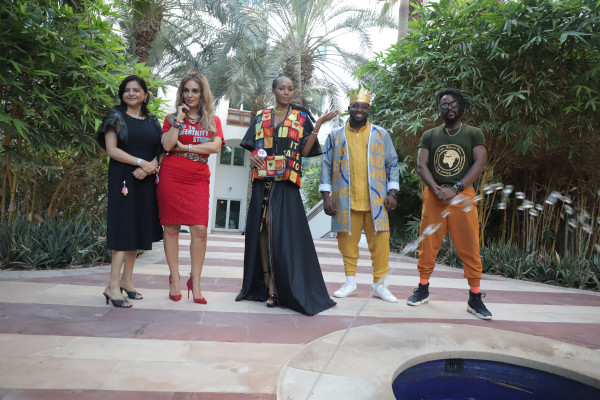
This third episode featured prominent personalities like Nontando Mposo, Editor-in-Chief, Glamour Magazine, South Africa and popular Singer Blaze from Mozambique. Fashion designers Anuja Bharti from Ghana and Alberto from Mozambique showcased their designs that displayed strong messages on #NoToInfertilityStigma and #MenToo can be the cause of infertility.

Merck Foundation has also been empowering childless and infertile women through their “Empowering Berna” initiative under Merck Foundation's “More Than a Mother” movement. This initiative helps women who cannot be treated for infertility anymore by helping them to get trained to establish small businesses so that they can be independent and re-build their lives. Through ‘Empowering Berna', the lives of many infertile women have been transformed in many African countries like Kenya, Uganda, Nigeria, Central African Republic, Niger, Malawi and many more.

Merck Foundation in partnership with African First Ladies have also launched children's storybook “More Than a Mother”, to emphasize strong family values of love and respect from a young age which will reflect on eliminating the stigma of infertility and resulted domestic violence in the future. The book has been also adapted to an animation film. Watch More than a Mother Animation Film here:

https://apo-opa.co/4cbefLj

Merck Foundation has also released many songs to raise awareness about infertility stigma under their “More Than a Mother” campaign. Listen to some of the songs here:

  1. Watch, share & subscribe to the 'Plus qu'une MERE' composed and sung by Ms. Lucky-Lou, the daughter of The President and The First Lady of Burundi: https://apo-opa.co/3L5eQT0
  2. Watch, share & subscribe to the “More Than a Mother” song by Cwesi Oteng and Adina from Ghana: https://apo-opa.co/3ziuKH0

Listen to all “More than a Mother” songs here:

  • https://apo-opa.co/3RwVPMR

“To address this important issue of breaking infertility stigma and also a wide range of other social issues, we annually launch Merck Foundation ‘More Than a Mother' Awards in partnership with African First Ladies. I would also like to invite the African Community of Media, Fashion, Film making, and Musicians, students and potential talents in these fields to apply for the awards this year, in order to create a culture shift and break the silence about one or more of the following topics: Breaking Infertility Stigma, Supporting Girl Education, Women Empowerment, Ending Child Marriage, Ending FGM, and/ or Stopping GBV at all levels. I am looking forward to receiving their creative work on submit@merck-foundation.com”, added Senator, Dr. Rasha Kelej.

Distributed by APO Group on behalf of Merck Foundation.

Contact details:
Mehak Handa
Community Awareness Program Manager
+91 9310087613/ +91 9319606669
mehak.handa@external.merckgroup.com

Join the conversation on our social media platforms below and let your voice be heard: 
Facebook: https://apo-opa.co/3Xbc4D0
Twitter: https://apo-opa.co/4aTy5sW
YouTube: https://apo-opa.co/4ejGIjF
Instagram: https://apo-opa.co/3x7ius3
Flickr: https://apo-opa.co/4ejGKbh
Website: www.Merck-Foundation.com
Download Merck Foundation App: https://apo-opa.co/45ourGB

About Merck Foundation:
The Merck Foundation, established in 2017, is the philanthropic arm of Merck KGaA Germany, aims to improve the health and wellbeing of people and advance their lives through science and technology. Our efforts are primarily focused on improving access to quality & equitable healthcare solutions in underserved communities, building healthcare and scientific research capacity and empowering people in STEM (Science, Technology, Engineering, and Mathematics) with a special focus on women and youth. All Merck Foundation press releases are distributed by e-mail at the same time they become available on the Merck Foundation Website.  Please visit www.Merck-Foundation.com to read more. Follow the social media of Merck Foundation: Facebook: https://apo-opa.co/3Xbc4D0, Twitter: https://apo-opa.co/4aTy5sW, Instagram: https://apo-opa.co/3x7ius3, YouTube: https://apo-opa.co/4ejGIjF and Flicker https://apo-opa.co/4ejGKbh.

Media files
Merck Foundation
Download logo
Read moreSenator, Dr. Rasha Kelej focuses on Breaking Infertility Stigma in the Third Episode of “Our Africa by Merck Foundation” TV program
27 June 2024

DFFE drives transformation within the biodiversity sector for economic growth

Location: News

DFFE drives transformation within the biodiversity sector for economic growth

By Mohlago Flora Mokgohloa

Transformation of the Biodiversity Sector remains sacrosanct and is a major lever to ensure that the sector makes a significant contribution to the Gross Domestic Product (GDP) of the country whilst conserving valuable natural resources. 

The Department of Forestry, Fisheries and the Environment (DFFE) is entrusted with the constitutional mandate to manage, protect, and conserve South Africa’s environment and natural resources, has made significant strides in conserving our natural resources and ensuring sectoral transformation.

This progress is highlighted by the recent revision of the National Biodiversity Economy Strategy (NBES) which seeks to advance an inclusive biodiversity sector that locally beneficiate the reach indigenous biological and genetic resources for a thriving people and nature. This renewed focus on transformation was central to discussions during the 2024 Biodiversity Economy and Investment Indaba (BEII) held earlier this year in March in Ekurhuleni east of Johannesburg, Gauteng.

Many of the over 1000 participants at the BEII reiterated that the Biodiversity Sector as a whole urgently requires transformation. This transformation must ensure the meaningful and equitable inclusion of rural communities and previously disadvantaged individuals into the biodiversity economy, and biodiversity conservation and sustainable use in general.

The aim of the BEII was to enhance the conversation on the NBES and its contribution to addressing poverty, unemployment, and inequality. It also aimed to promote multi-stakeholder commitment to strengthening the biodiversity economy sector and enriching the dialogue among industry players around the goals of the White Paper on Conservation and Sustainable Use of South Africa's Biodiversity (the White Paper 2023). The Indaba promoted cooperative governance and whole of society approach for effective policy implementation and business-to-business trading, networking, and sustainable partnerships and showcasing market-ready biodiversity products and services from across the biodiversity economy value chains through exhibitions.

Consistent with the policy context of the White Paper, the revised NBES is founded on the key pillars of conservation, sustainable use, beneficiation of biodiversity business value chains, and transformation. These pillars promote sustainable and inclusive socio-economic growth and development. This requires growing and sustaining conservation land and seascapes while promoting and facilitating inclusive biodiversity-based businesses that drive the transformation of the biodiversity sector.

South Africa’s approach to biodiversity is holistic, recognizing the benefits that intact ecosystems, healthy species populations, and genetic diversity bring to the economy and society for people and nature to thrive. The country promotes a diverse biodiversity-based economy, balancing ecological, social, and economic elements. This is not about exploiting natural resources for short-term gains but ensuring healthy ecosystems and long-term survival of species, inclusive growth where benefits are shared equitably and people live in harmony with nature.

The NBES, informed by the Kunming-Montreal Global Biodiversity Framework and the White Paper, expands on previous strategies to include marine, coastal, estuarine, and freshwater opportunities. Another vital part of the strategy is ecosystem restoration and the recognition of the importance of ecological infrastructure ensuring that both nature and people can thrive sustainably.

Transformation is a crucial theme in the NBES, aiming to include rural communities and previously disadvantaged individuals in the biodiversity economy for rural socio-economic development. Successful examples of biodiversity transformation like the Tshivhula Communal Property Association (CPA), the Makuleke in the Limpopo section of the Kruger National Park, and Babanango in KwaZulu Natal Province showcase how land restitution can lead to socio-economic benefits. These projects demonstrate the potential for community-owned land to be used for conservation businesses while promoting sustainable rural development.

The story of Tshivhula Game Farm-Ndou Safaris in Limpopo is a testament to the positive impact of such initiatives. With 20,000 hectares of land restored to the Tshivhula community, the farm has become a model of biodiversity stewardship, focusing on hunting and ecotourism. Basic infrastructure and capacity support from, national and provincial governments, and public entities like South African National Parks (SANParks)  and further investment from private partners has been crucial to this success.

The DFFE's efforts to invite various media houses to witness the success of the Tshivhula Game Farm-Ndou Safaris illustrate the department’s success in transforming the sector. The media group that attended the BEII Post-Indaba Media Excursion at the facility was able to engage with the CPA, the private partner, employees at Tshivhula Game Farm-Ndou Safaris, SANParks officials, Limpopo Land Claims Commissioner officials, and DFFE officials. The excursion concluded with a visit to Mapungubwe National Park which is also a World Heritage Site and part of the Transfrontier Conservation Area shared with Zimbabwe and Botswana, where the media group had another opportunity to engage with officials during the game drive and a tour of the museum.

As South Africa continues its journey under the 7th administration, the revised NBES provides a framework for growth and transformation in the biodiversity sector. By balancing conservation with sustainable use and ensuring inclusive socio-economic development, South Africa is demonstrating how natural resources can be used responsibly and in a manner that benefits all citizens and grow the economy.

*Mohlago Flora Mokgohloa is the Deputy Director-General: Biodiversity and Conservation at the Department of Forestry, Fisheries and the Environment.

Matona
Thu, 06/27/2024 - 13:03

507 views
Read moreDFFE drives transformation within the biodiversity sector for economic growth
27 June 2024

DFFE drives transformation within the nature conservation sector for economic growth

Location: News

DFFE drives transformation within the nature conservation sector for economic growth

By Mohlago Flora Mokgohloa

Transformation of the Biodiversity Sector remains sacrosanct and is a major lever to ensure that the sector makes a significant contribution to the Gross Domestic Product (GDP) of the country whilst conserving valuable natural resources. 

The Department of Forestry, Fisheries and the Environment (DFFE) is entrusted with the constitutional mandate to manage, protect, and conserve South Africa’s environment and natural resources, has made significant strides in conserving our natural resources and ensuring sectoral transformation.

This progress is highlighted by the recent revision of the National Biodiversity Economy Strategy (NBES) which seeks to advance an inclusive biodiversity sector that locally beneficiate the reach indigenous biological and genetic resources for a thriving people and nature. This renewed focus on transformation was central to discussions during the 2024 Biodiversity Economy and Investment Indaba (BEII) held earlier this year in March in Ekurhuleni east of Johannesburg, Gauteng.

Many of the over 1000 participants at the BEII reiterated that the Biodiversity Sector as a whole urgently requires transformation. This transformation must ensure the meaningful and equitable inclusion of rural communities and previously disadvantaged individuals into the biodiversity economy, and biodiversity conservation and sustainable use in general.

The aim of the BEII was to enhance the conversation on the NBES and its contribution to addressing poverty, unemployment, and inequality. It also aimed to promote multi-stakeholder commitment to strengthening the biodiversity economy sector and enriching the dialogue among industry players around the goals of the White Paper on Conservation and Sustainable Use of South Africa's Biodiversity (the White Paper 2023). The Indaba promoted cooperative governance and whole of society approach for effective policy implementation and business-to-business trading, networking, and sustainable partnerships and showcasing market-ready biodiversity products and services from across the biodiversity economy value chains through exhibitions.

Consistent with the policy context of the White Paper, the revised NBES is founded on the key pillars of conservation, sustainable use, beneficiation of biodiversity business value chains, and transformation. These pillars promote sustainable and inclusive socio-economic growth and development. This requires growing and sustaining conservation land and seascapes while promoting and facilitating inclusive biodiversity-based businesses that drive the transformation of the biodiversity sector.

South Africa’s approach to biodiversity is holistic, recognizing the benefits that intact ecosystems, healthy species populations, and genetic diversity bring to the economy and society for people and nature to thrive. The country promotes a diverse biodiversity-based economy, balancing ecological, social, and economic elements. This is not about exploiting natural resources for short-term gains but ensuring healthy ecosystems and long-term survival of species, inclusive growth where benefits are shared equitably and people live in harmony with nature.

The NBES, informed by the Kunming-Montreal Global Biodiversity Framework and the White Paper, expands on previous strategies to include marine, coastal, estuarine, and freshwater opportunities. Another vital part of the strategy is ecosystem restoration and the recognition of the importance of ecological infrastructure ensuring that both nature and people can thrive sustainably.

Transformation is a crucial theme in the NBES, aiming to include rural communities and previously disadvantaged individuals in the biodiversity economy for rural socio-economic development. Successful examples of biodiversity transformation like the Tshivhula Communal Property Association (CPA), the Makuleke in the Limpopo section of the Kruger National Park, and Babanango in KwaZulu Natal Province showcase how land restitution can lead to socio-economic benefits. These projects demonstrate the potential for community-owned land to be used for conservation businesses while promoting sustainable rural development.

The story of Tshivhula Game Farm-Ndou Safaris in Limpopo is a testament to the positive impact of such initiatives. With 20,000 hectares of land restored to the Tshivhula community, the farm has become a model of biodiversity stewardship, focusing on hunting and ecotourism. Basic infrastructure and capacity support from, national and provincial governments, and public entities like South African National Parks (SANParks)  and further investment from private partners has been crucial to this success.

The DFFE's efforts to invite various media houses to witness the success of the Tshivhula Game Farm-Ndou Safaris illustrate the department’s success in transforming the sector. The media group that attended the BEII Post-Indaba Media Excursion at the facility was able to engage with the CPA, the private partner, employees at Tshivhula Game Farm-Ndou Safaris, SANParks officials, Limpopo Land Claims Commissioner officials, and DFFE officials. The excursion concluded with a visit to Mapungubwe National Park which is also a World Heritage Site and part of the Transfrontier Conservation Area shared with Zimbabwe and Botswana, where the media group had another opportunity to engage with officials during the game drive and a tour of the museum.

As South Africa continues its journey under the 7th administration, the revised NBES provides a framework for growth and transformation in the biodiversity sector. By balancing conservation with sustainable use and ensuring inclusive socio-economic development, South Africa is demonstrating how natural resources can be used responsibly and in a manner that benefits all citizens and grow the economy.

*Mohlago Flora Mokgohloa is the Deputy Director-General: Biodiversity and Conservation at the Department of Forestry, Fisheries and the Environment.

Matona
Thu, 06/27/2024 - 13:03

159 views
Read moreDFFE drives transformation within the nature conservation sector for economic growth
18 June 2024

IEC clears results dashboard confusion

Location: News

IEC clears results dashboard confusion

The Electoral Commission of South Africa (IEC) has moved to clear any confusion regarding its results dashboard update related to the National and Provincial Elections held last month.

“The Electoral Commission notes the conversation and some confusion with the update of the Elections Dashboard last week to reflect the total number of votes from the two National Assembly ballots and final seat allocation (out of 400 seats) for the 2024 National and Provincial Elections,” the electoral body said.

The electoral body explained that the change to the results dashboard is done to ensure that the “regional strength” of political parties is taken into account.

“In the 2024 elections, registered voters received two ballots for the National Assembly elections: 1 National ballot and 1 Regional ballot. [The] 3rd election ballot was for the provincial elections. Just over 16 million registered voters voted, casting some 31.92 million ballots across the 9 regional and 1 national ballot.

“The Electoral Act prescribes that for the calculation of compensatory seats, both national compensatory (N) ballots and regional (R) ballots are taken into account. Hence the demotion of N + R on the results dashboard.

“This is done to ensure that the allocation of compensatory seats take into account the regional strength of all political parties - thus, meeting the proportional representation in general demanded by the constitution,” the statement read. – SAnews.gov.za

NeoB
Tue, 06/18/2024 - 09:54

69 views
Read moreIEC clears results dashboard confusion
14 June 2024

Unleashing Conversational Alchemy The Ursula Mariani Perspective

Location: Entertainment, MyPR

In the dynamic realm of podcasting, where voices transcend boundaries and ideas spark revolutions, one name stands out as a beacon of conversational alchemy: Ursula Mariani. Host, co-producer, devoted mother, lecturer, and relentless podcaster, Ursula embodies the essence of meaningful dialogue and transformative encounters. At the core of Ursula’s ethos lies a simple yet profound …

Read moreUnleashing Conversational Alchemy The Ursula Mariani Perspective
11 June 2024

Two for Joy Triumphs in 2024 Khabba Cup

Location: MyPR

Two for Joy have emerged as the champions of the 2024 Khabba Cup, defeating Star Pirates on 4-2 penalties after a 1-1 draw in a thrilling final and thus concluding an exciting weekend of top-tier youth football sponsored by South Africa’s premier sports betting operator, Hollywoodbets. They walk away with R 120 000 while the …

Read moreTwo for Joy Triumphs in 2024 Khabba Cup
28 May 2024

The future of digital identity in South Africa (By Gur Geva)

Location: News
iiDENTIFii

By iiDENTIFii (https://iiDENTIFii.com/) CEO and co-founder Gur Geva. 

When it comes to accessing essential services, such as national medical care, grants and the ability to vote in elections to shape national policy, a valid identity document is critical. 

In South Africa, undocumented citizens are restricted in their ability to collect social grants or go to a hospital. Even those with valid IDs spend hours in queues owing to inefficient and protracted identification processes.

Faster, digitised services would have a transformative impact on the level of financial inclusion of the country's citizens. iProov's report (https://apo-opa.co/3VfYD37), "Unlocking financial inclusion with digital identity and biometric verification," emphasises that digital identity programmes open essential pathways for the unbanked and disenfranchised to access financial and welfare services and, in the case of governments, offer a reduced administrative burden and increased economic growth.

In theory, the positive impact is evident, but how can South Africa with its infrastructural challenges and high levels of inequality put this verification system into practice?

The challenge

An estimated 500 million (https://apo-opa.co/4aFwdEf) people in Africa are living without any form of valid legal identification. In response to this crisis, the African Union Commission is working on an initiative (https://apo-opa.co/3KmsnVP) to develop an interoperability framework for digital identity. The need for this is clear.

In South Africa, for example, lengthy identification processes see citizens queueing for up to three hours to renew a driver's license. Many people (https://apo-opa.co/452hke4) leave their homes in the dark and queue from dawn for their social security grants only to be turned away when the queue is cut because of system failures.

In an address to Parliament (https://apo-opa.co/3wU9pCU), Dr Aaron Motsoaledi, Minister of Home Affairs of South Africa, states that the main reason for the long queues lies in the State Information Technology (SITA) system often being down. The DHA relies on SITA for connectivity, especially in rural villages. Branch Appointment System (BAPS) kiosks that facilitate the live capture of IDs and passports have been set up to bridge this gap. While these efforts are useful, digital identity could transform these processes, whittling down lengthy queues by authenticating identity in a matter of seconds.

In fact, South Africa is pursuing digital identity in some form, through the form of a Smart ID card that stores face and fingerprint biometrics. However, this pioneering initiative is being held back by a restrictive, lengthy onboarding process. Smart ID cards can only be issued from a selection of offices with a ‘live capture system' as well as through certain banks that use the system in-house. This is not enough to implement secure digital identity at scale.

Reframing the identity conversation

Many of South Africa's challenges stem from systemic inequality. This inequality in access across gender, location and education lines has real implications for identity management (https://apo-opa.co/3KmsnVP). For this reason, the conversation needs to shift from identity being an administrative tool to identity being an essential human right (https://apo-opa.co/3KmsnVP).

Whether a person is applying for legal employment, registering at an address, setting up a phone contract, or opening a bank account, a proven identity that can be authenticated is an essential part of the process. Widespread, effective digital identification benefits citizens and generates significant economic value for governments and financial institutions as well.

As a result, a growing number of governments are teaming up with organizations worldwide to develop digital identity programmes that are not only convenient, but open up essential pathways for previously disadvantaged or marginalized individuals to help them access financial and welfare services.

Ground-breaking identity verification in practice

iProov and iDENTIFii have seen the positive impact of Dynamic Liveness Technology in delivering fast, secure and effortless passive face biometric authentication. In addition to being a strong digital alternative to historic forms of identity verification, its anti-spoofing technology is also effective in detecting and protecting against future cyber threats. The U.S. Federal Government lists iProov as a Synthetic Identity Fraud Mitigation Provider and government clients include the U.S. Department of Homeland Security, the UK Home Office, the Australian Tax Office, and GovTech Singapore.

The UK Home Office EU Settlement Scheme, a digital application process for EEA nationals living in the UK post-Brexit, is a powerful example of the impact of digital identity on public services. The scheme was developed by iProov, WorldReach Software, and InnoValor, and provides a simple, secure, and usable solution for applicants to apply for settlement status online. The app includes key features such as remote identity documentation checking using NFC or OCR, and biometric identity authentication via iProov's Dynamic Liveness technology. The app has been extremely successful, with over 4.2 million applications completed, high levels of identity assurance, and an average satisfaction rating of 4.1 stars.

How open are citizens to digital identity?

The Digital Transformation Strategy (https://apo-opa.co/3KmsnVP) for Africa (2020-2030) highlights both the potential social and economic implications of digital IDs for Africans, noting that digital IDs not only support social development, but also enable meaningful participation in productive processes to generate economic growth, spur innovation, and support entrepreneurship. Besides being viewed as an enabler for realising all these policy objectives, digital IDs are seen as critical for the successful implementation of the African Continental Free Trade Area (AfCFTA).

Digital identity programmes can bridge the identity gap by being accessible through even basic smartphones, thus eliminating barriers such as cost and complex application processes that often require travel. A case in point is the European Union Digital Identity Wallet (EUDIW) a decentralised, interoperable digital tool that aims to provide all 447 million EU citizens with the ability to easily store and exchange identity documents and credentials securely, while having full control over their data. Using identity verification will see important public and private services, such as online government services, online banking, remote prescriptions, and SIM registration become significantly more accessible.

The importance of inclusive and safe digital identity

For South Africans to truly embrace and reap the rewards of digital identity, accessibility and security are two critical factors government and other essential service providers must consider.

Adopting accessible verification models maximises inclusivity of digital identity programmes. Traditional remote verification methods, such as video calls or passwords, lack user convenience and may exclude individuals with language barriers or disabilities. By contrast, biometric face verification uses a front-facing camera and does not rely on the end user's technical abilities.

Security is also key as these initiatives must provide the maximum number of people with digital identities and financial access, while consistently mitigating the risks of cybersecurity threats. As with any technology that enables access to a broad range of secured data and financial services, there is a risk of digital identities being compromised for fraud, money laundering, or other illicit activities.

With generative AI contributing towards the sophistication of tools such as deepfakes, this risk is higher and the crime is easier to perpetrate than ever before. Liveness confirms that the person verifying their identity exists and is a live human being with the right to access the online account or service. It also assures that it is a real person and not a photo or mask or other presentation attack. It does not protect against scalable digital attacks like deepfake where synthetic images can be injected into device sensors.

Successful digital identity schemes, such as Estonia's, yield economic benefits for the government and businesses, and demonstrate the positive impact of such initiatives. Similarly, as the European Union's (EU) initiative progresses, other nations can learn valuable lessons from them and adopt strategies that foster a society characterised by enhanced inclusivity and economic prosperity.

Looking forward

While the local government is still rolling out digital identity, the financial services industry in South Africa has been an early adopter. Not only has it proven the ability of digital identity to be more efficient and safer, but it has also shown that it is possible to use biometrics at scale.

Several of iiDENTIFii's South African banking clients have been able to address downtime issues by using subsequent authentication. iiDENTIFii has prioritised this based on the understanding that an authentication process that keeps customers secure and engaged, is a successful one. For this reason, its platform is able to process individuals by storing their reference templates and enabling subsequent authentication. If financial institutions and the government collaborate in digitising government systems, it could make true financial inclusion and accessible digital identity at scale a reality, in a way that reaches all South Africans.

Distributed by APO Group on behalf of iiDENTIFii.

About iiDENTIFii: 
iiDENTIFii (https://iiDENTIFii.com/) is an award-winning face authentication and identity verification platform that distinguishes itself through its use of 3D and 4D Liveness® detection. Purpose-built for enterprises across Africa and the Middle East, iiDENTIFii enables frictionless, scalable customer onboarding in seconds from anywhere and on any device. Founded in 2018, iiDENTIFii has become a proven key partner in multiple tier 1 African banks. The technology plugs seamlessly into existing infrastructures, including mobile and web-based platforms.

Media files
iiDENTIFii
Download logo
Read moreThe future of digital identity in South Africa (By Gur Geva)
21 May 2024

Mzansi Magic launches Sounds of Khelovedu to celebrate the rich heritage of Queen Modjadji

Location: Entertainment, MyPR

Celebrating Cultural Heritage: The Rain Queen viewers to create Sounds of Khelovedu lip-syncing content. Johannesburg, 21 May 2024 – Mzansi Magic is proud to announce the launch of “Sounds of Khelovedu”, an exciting social media campaign aimed at celebrating the rich cultural heritage of Queen Modjadji and the Valovedu people ahead of the show which …

Read moreMzansi Magic launches Sounds of Khelovedu to celebrate the rich heritage of Queen Modjadji
21 May 2024

President Ramaphosa, EU Council President hold bilateral call

Location: News

President Ramaphosa, EU Council President hold bilateral call

President Cyril Ramaphosa has held a bilateral telephone conversation with the President of the European Council, Charles Michel.

According to a statement by the Presidency, the conversation was a positive and constructive discussion on bilateral, regional, and global issues.

The statement said the two leaders also discussed the need for more engagement to address global peace and reaffirmed shared respect for international law.

“They both welcomed the recent bilateral South Africa-European Union Political and Security Dialogue Forum, and the Human Rights Dialogue held in Pretoria on 26 and 27 February 2024, and they agreed to continue stepping up cooperation to support stability and prosperity.

“In this regard, both Presidents discussed the importance of upholding the UN Charter and the principles of sovereignty and territorial integrity notably in Ukraine. Furthermore, both Presidents stressed the importance of addressing urgently the situation in the Middle East, notably reaching a ceasefire in Gaza, release of hostages as well as the provision of humanitarian assistance, recalling the orders of the International Court of Justice in this respect,” the Presidency said.

On matters relating to tensions in the East of the Democratic Republic of Congo, “both underlined the importance of a political solution” in that country and also called for an “immediate and durable ceasefire” in Sudan.

Globally, the two leaders agreed to closer working relations in the run up to and during South Africa’s upcoming Presidency of the G20 in 2025 “including on the protection and advancement of multilateral cooperation and the international rules-based order”.

The strategic partnership between South Africa and the European Union – which has brought economic and social dividends for both parties – also came under discussion.

“They welcomed recent engagements in Brussels and in Pretoria to deepen and expand the partnership to new areas of mutual interest, such as strategic value chains in the sectors of green hydrogen, critical minerals and vaccines, which will also support progress in regional integration and the implementation of the African Continental Free Trade Agreement.

“Against this framework of close and regular cooperation, both Presidents agreed to hold a bilateral Summit at earliest convenience,” the statement concluded. – SAnews.gov.za


NeoB
Tue, 05/21/2024 - 09:39

391 views
Read morePresident Ramaphosa, EU Council President hold bilateral call
13 May 2024

When Conversations and Creativity Collide: SA Podcast & Music Festival to Unleash Media Powerhouses

Location: Entertainment, MyPR

Get ready for an electrifying celebration at the SA Podcast & Music Festival, where industry titans in podcasting and music are set to converge under one dynamic roof. Hosted during South Africa’s vibrant Youth Month on June 14th and 15th, this festival promises an unforgettable experience for aspiring and established podcasters alike. The festival lineup …

Read moreWhen Conversations and Creativity Collide: SA Podcast & Music Festival to Unleash Media Powerhouses
9 May 2024

Fabulous Woman Awards 2024 Entries Now Open Celebrating Change Agents Across South Africa

Location: Entertainment, MyPR

Fabulous Woman Awards is thrilled to announce that nominations across all categories are now open, ready to honour agents of change making a difference in communities throughout South Africa. Celebrating its twelfth year, and themed Ethical Leadership, the annual Fabulous Woman Awards are back and will again shine the spotlight on outstanding women in the …

Read moreFabulous Woman Awards 2024 Entries Now Open Celebrating Change Agents Across South Africa
3 May 2024

Calling Women Entrepreneurs! Pitch your business at the EmpowHER Entrepreneur Development Series 2024

Location: MyPR

Standard Bank renews headline sponsorship for Top Women 2024 Johannesburg, South Africa, May 2024 – Topco Media is proud to announce that Standard Bank will continue its partnership as the headline sponsor for Top Women. This partnership underscores Standard Bank’s ongoing dedication to support the growth and development of female entrepreneurs and business leaders across …

Read moreCalling Women Entrepreneurs! Pitch your business at the EmpowHER Entrepreneur Development Series 2024
1 May 2024

Tackling the Mental Health Pandemic: Change the Narrative

Location: MyPR

Post Covid-19, the conversation about mental health has opened up in many companies. They have wellness days to coincide with World Mental Health Day, put on lunches and give out goodie bags. Employees get a breather to attend talks from experts, dance, laugh, and learn stress relief techniques. But have you ever wondered why, despite …

Read moreTackling the Mental Health Pandemic: Change the Narrative
  • Previous
  • Page 1
  • Interim pages omitted …
  • Page 16
  • Page 17
  • Page 18
  • Page 19
  • Page 20
  • Next

Copyright © 2026 · MyZA · All Rights Reserved · Powered by Reach Trust