Government responds to report on solitary confinement
Prisoners are held according to the law, writes the Department of Correctional Services spokesperson

MyZA
News, Directory, Events and Other Stuff
Prisoners are held according to the law, writes the Department of Correctional Services spokesperson
By Jason Mitchell
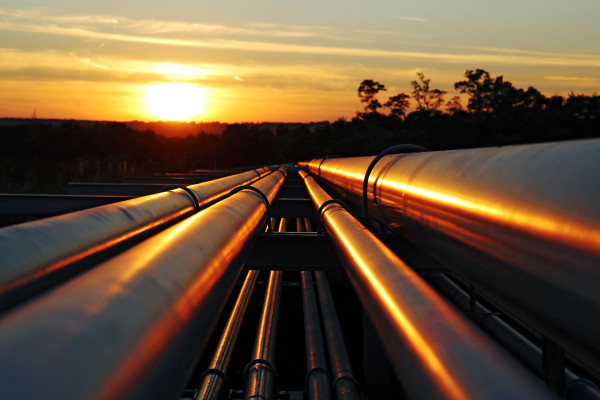
Africa's vast natural gas reserves are key to bringing energy to Africa's poorest countries, to a solid industrialisation process throughout the region and to significant poverty reduction.
The region is home to 33 of the world's 46 least-developed countries (LDCs) with an average income per head of less than $1,018 a year. The continent's poorest countries must expand at 6-7% a year if poverty is to be reduced in a big way and if the life chances of hundreds of millions of people are to be improved. To achieve this goal, these countries require abundant and cheap energy. Luckily, for many African states, the answer lies on their own doorstep — natural gas. Gas has remained a niche fuel in sub-Saharan Africa — contributing only 5% of the total energy mix against a global average of 20-25% — but its potential is enormous.
A new vision for Africa is required — a criss-crossing network of natural gas pipelines that brings energy to all corners of the region. The continent's contribution to global greenhouse gas emissions is tiny and will only become slightly bigger if the region's natural gas reserves are exploited. There is also a massive opportunity to wean poor Africans away from the use of biomass fuel and to help protect the region's forests through the rollout of small, liquified petroleum gas (LPG) stoves. Climate change is an issue in Africa but poverty reduction is a bigger one. Poverty is the biggest killer in Africa today.
It's very hard for Europeans and North Americans to imagine what it's like to live on under $1,018 a year, to not have readily available electricity, to not have a refrigerator or a washing machine, to not have a car, to not have a lawnmower, to not be able to fly from one country to another cheaply, to not have electricity in the school or the workplace and to have to use firewood or charcoal for cooking purposes. Fossil fuels have been at the heart of the Industrial Revolution that has brought prosperity and better living standards to the developed world. People in the First World must be very careful if they decide to deny Africans the same chance to prosper.
Africa has the lowest energy use per capita in the world — the average electricity use of a sub-Saharan African resident is lower than that of a household fridge in the United States. Average consumption per person in sub-Saharan Africa, excluding South Africa, is a mere 185 kilowatt-hours (kWh) a year, compared with about 6,500kWh in Europe and 12,700kWh in the US. Every year San Antonio, Texas, with a population of 1.5m people, uses as much electricity as the whole of Nigeria, with 203m people. Golden, Colorado, a small town with only 19,000 people, uses as much electricity as Chad, a country with 16m people.
The UN's Sustainable Development Goal Seven aims to “ensure access to affordable, reliable, sustainable and modern energy for all” by the year 2030. That's a tall order. In 2019, 917m people in Africa (around 80% of the region's population) relied on wood, charcoal, kerosene, animal and crop waste or other solid fuels to cook their food and heat their homes. The International Energy Agency (IEA) reports that almost 490,000 people die prematurely every year in sub-Saharan Africa from household air pollution-related causes — stemming from the lack of access to clean cooking facilities. Gas is a much cleaner form of cooking than biomass and its use should be encouraged. Biomass burning-power plants emit 300-400% more CO2 than natural gas per unit energy produced. Natural gas emits almost 50% less carbon dioxide than coal.
Africa has one-fifth of the world's population but contributes only 3% to global greenhouse gas emissions. Incredibly, some 48 sub-Saharan African countries, excluding South Africa, have an estimated share of global emissions of only 0.55%. The fact is that many African states are already at net zero. If the continent were to use an additional 90bn cu m of natural gas per year — or 50% more than today — the resulting emissions would only raise Africa's cumulative contribution to global carbon emissions to 3.5% (ten gigatonnes) by the year 2050, according to the IEA. It really is a tiny increase compared to the chance of reducing poverty levels for hundreds of millions of poor people. If Africa is to provide universal electricity access by 2030 it would have to almost double its total generation capacity from around 260gw today to 510gw.
Almost half the continent's 55 countries have proven natural gas reserves. Across the region, natural gas reserves amount to around 17.5trn cubic metres (cu m), making up around 9% of the world's total gas reserves. They are considerable in northern Africa (accounting for 45% of African reserves) and western Africa (32%), in particular. Commercial quantities of natural gas have been found in many African countries.
Previously, only four countries from the region have been major natural gas production hubs: Nigeria (with total gas reserves of 5.8trn cu m), Algeria (4.5trn cu m), Egypt (2.2trn cu m) and Libya (1.5trn cu m). These four accounted for 78% of African gas reserves in 2021 (https://apo-opa.info/48gDBWG), according to the United States Energy Information Administration.
However, seven African countries — Mozambique, Senegal, Tanzania, Mauritania, South Africa, Ethiopia and Morocco — with no history of fossil gas exploitation have now opened up their doors to gas projects. Some 84% of new reserves in the pre-production stage are found in these states — total new reserves amount to 5.1trn cu m. Mozambique has re-production reserves of 2.3trn cu m, Senegal 779bn cu m, Mauritania 575bn cu m, Tanzania 512bn cu m, South Africa 96bn cu m, Ethiopia 42bn cu m and Morocco 39bn cu m.
Furthermore, major untapped reserves have been discovered in Angola, Cameroon, Ghana, Equatorial Guinea, the Republic of the Congo, Kenya and Uganda. A number of these states — including Mozambique, Tanzania, Mauritania and Senegal — are actively marketing natural gas to capitalise on recent discoveries. In fact, the IEA has declared Africa the ‘new frontier' in global oil and gas.
The big four gas-producing countries will continue to dominate gas production in the near term but experts estimate that Mozambique and the other new entrants will contribute more than 50% of the region's gas production by 2038.
Natural gas can be used for electricity generation, industry and domestic use. Crucially, harnessing Africa's gas could provide the baseload power needed to boost Africa's capacity to process its raw materials locally. It could provide enough energy for industrial processes, including steel and cement production and paper and pulp manufacturing. It could be also used to make fertiliser to raise agricultural yields. Renewables, including solar and wind, cannot yet provide enough energy for these purposes.
The huge reserves of gas can play a significant role in the continent's energy transition, as natural gas has a much lower carbon footprint than oil and coal. Critically, natural gas development and renewable power are not mutually exclusive. If Africa were to triple its use of natural gas, the United Nations Economic Commission for Africa (Uneca) estimates that the region would be able to increase its use of renewable energy eight-fold. Reliable forms of energy such as gas can be used to stabilise a grid powered by intermittent sources such as wind and solar. It can play a key role in a ‘just' energy transition.
However, expanding gas supply across Africa would require a whole web of new gas pipelines and that does not come cheap. A lot of the gas from the new projects already under way in Africa is destined for international markets, including the European Union — which have been seeking new sources of energy since the Ukraine crisis — but it is vital that the region's gas reserves are deployed for domestic use, as well. Nigeria, for example, sits on the continent's largest known natural gas reserves but only 55% of the population had access to secure electricity in 2020.
Multilateral financial institutions (MFIs) — many of which are headquartered in the developed world — are now shying away from investing in natural gas projects in Africa because of pressure from a vociferous green lobby. In 2021, 20 countries — including almost all the world's big, rich democracies — pledged to stop almost all financing of new fossil fuel projects internationally by the end of 2022. Furthermore, under the Glasgow Financial Alliance for Net Zero (GFANZ), 450 financial firms across 45 countries, responsible for over $130trn in assets, committed to accelerate the global decarbonisation process. The problem is that most Western governments and financial institutions do not distinguish between coal, oil and gas, and the pressure to stop funding all hydrocarbons has negatively impacted gas projects in Africa in a big way.
Some of the continent's biggest financiers — including the African Development Bank (AfDB) — are finding it increasingly difficult to support gas project developments that require loan syndication and foreign partners. The World Bank is pulling back, too. Local banks cannot finance major gas projects on their own, as they are limited by their capital base. In particular, the fossil fuels divestment campaign is having a big impact on the amount of development and concessional finance available. This kind of finance used to support a number of gas projects for their poverty-reducing and economic development value.
For example, without the guarantees of development finance institutions (DFIs), most of Africa's recent gas-to-power plants would have never been built in the first place. The withdrawal of development finance from downstream gas and gas-to-power projects is a serious cause for concern for Africa's electrification effort and moving the needle on energy access.
Furthermore, there is a glaring double standard — many European countries have increased their use of hydrocarbons (coal as well as gas) since Russia's invasion of Ukraine. They are constructing new fossil fuel pipelines at home. The EU recently classified natural gas a ‘green' fuel, which will allow Europe's projects to be backed by investors committed to environmental, social and governance (ESG) principles. European countries are now looking towards African states for new sources of gas. However, they are not prepared to back new gas projects in Africa that would supply the fuel to the region itself. That smacks of hypocrisy of the worst kind. How can you deny the poorest people in the world the sort of energy that you want to use yourselves?
Lumping all hydrocarbons together is a blunt policy mechanism that is not good from an emissions perspective either. In poorer places, like sub-Saharan Africa, the available alternative to gas is not renewable electricity but rather coal, diesel and, most of all, polluting biomass. In sub-Saharan Africa, demand for biomass fuels is expected to surge by 40% by the year 2040 if ‘business as usual' continues. The burning of biomass is a major contributor to global carbon emissions and charcoal has been a top driver of tropical forest loss during the past two decades, with the greatest footprint in Africa. The continent's carbon sinks need protecting and the irony is that the greater use of gas would achieve that.
Africa is home to 18% of humanity but receives less than 5% of global energy investment. And much of this investment goes on producing oil and gas for export. There must be much more investment in the region for the domestic use of gas. Gas projects could play an absolutely vital role in bringing energy to Africa but obviously the projects require financing. DFIs must think again about their decision to limit investment in new projects in Africa. The financing of a network of gas pipelines throughout Africa would be one of the quickest and surest ways of industrialising the region in a big way and of alleviating poverty on a large scale. Renewables just cannot do that how ever much wishful thinking takes place.
In fact, development institutions should go one step further and consider subsiding a massive roll out of small LPG stoves to millions of poor households in the region. It could be one of the biggest moves in contributing to Africa's decarbonisation effort by arresting the pace of deforestation in the region. LPG is recovered from ‘wet' natural gas (gas with condensable heavy petroleum compounds) by absorption and reaches the domestic consumer in cylinders under relatively low pressures. The widespread adoption of LPG stoves would reduce the amount of pollutants in the air from biomass fuels. Poor households that currently depend on woodfuel for cooking require a cleaner cooking alternative — LPG is one of the solutions.
LPG stoves are also suitable for domestic use in rural settings — a key consideration in Africa where energy poverty is greatest in the countryside. For instance, in 2016, electricity access in urban and rural areas in Nigeria was 86% and 34%, respectively, according to the World Bank.
Africa only needs to look to Asia for examples. In 2006, Indonesia implemented a ‘mega-programme' to induce a large-scale transition from kerosene to LPG stoves in order to reduce government spending on kerosene subsidies. The initiative invested in LPG infrastructure, domestic cylinder production and consumer awareness. By 2012, 93% of the target had been reached and LPG consumption had grown by almost 350%.
In India, LPG access expanded through the early-2000s but it was still not reaching most poor families. To boost access among the poor, the Indian government introduced the Pradhan Mantri Ujjwala Yojana (PMUY) Scheme. Under it, the country's oil marketing companies provide subsidies to reduce the cost of both LPG connections and cylinder refills to women in households classified as below the poverty line. In 2016, the cost of a connection was about Rupees 3,200 ($48) and included the first full cylinder (plus deposit), deposit for a regulator, an LPG stove and administrative fees.
Furthermore, African governments must consider increasing domestic gas allocations from liquified natural gas (LNG) export projects. These are an effective way to ensure that even if developers prioritise lucrative exports over local sales, they must reserve part of their production for the domestic market. Upcoming LNG terminals in sub-Saharan Africa — for example, in Mozambique — now make it compulsory to allocate a specific amount of gas to the domestic market. The availability of domestic gas from export facilities can encourage gas-based industrialisation (for example, in Senegal) or additional gas-to-power capacity (Mozambique, Mauritania and Senegal). In August 2022, for instance, Senegal's Petrosen Trading & Services signed an MoU with Turkey's Çalık Enerji and Japan's Mitsubishi for the pre-feasibility study of a gas-based ammonia and urea manufacturing unit.
It is a huge mistake to lump all hydrocarbons together and for Western environmentalists to argue that no new new fossil fuel projects should happen in Africa whatsoever. Deforestation is one of the biggest issues in Africa today. Poor Africans must be weaned off the use of wood-based fuels. The widespread adoption of small LPG stoves would be one of the surest ways of reducing deforestation. Natural gas could also form the basis for a solid, large-scale industrialisation process in Africa — something that is essential if the region is to achieve the sort of economic growth needed to lift hundreds of millions of people out of poverty.
Distributed by APO Group on behalf of African Energy Chamber.
“When life gives you lemons, buy a freaking jet” - Lesley Ramulifho
Episodes to air daily from Monday 2 October at 22:00 premiering on Telemundo Africa with episodes available immediately after on Universal+ NBCUniversal International Networks & Direct-To-Consumer today announced the return of Lord of the Skies, with Season 8 premiering on Monday 2 October 22:00 (CAT) on Telemundo Africa, with episode available immediately after on Universal+. …
The Medicines Act is being misused while Parliament dithers
Security Council must reform - UN Secretary General
Continued exclusion of developing countries from holding permanent seats in the United Nations Security Council and under representation in world institutions, is a recipe for serious world fragmentation which could lead already existing tensions to boil over.
This is according to the United Nations Secretary-General António Guterres who was addressing the media on the last day of the 15th BRICS (Brazil, Russia, India, China and South Africa) Summit held at the Sandton Convention Centre in Johannesburg.
“I believe, two areas require a particularly important reform effort. One is the Security Council; the second, the Bretton Woods system. If we are not able to reform our institutions to make sure they reassume a truly universal character, we risk fragmentation, and fragmentation can be one day, a factor of confrontation.
“[History] has shown time and again that multi-polarity without strong multilateral institutions is no guarantee for stability; it might even become a catalyst for chaos. We must urgently restore trust and reinvigorate multilateralism. This requires the courage to compromise for the common good,” Guterres said on Thursday.
The UN Security Council, considered one of the world body’s most powerful groups, is made up of 15 permanent and non-permanent members. The five permanent members are the United States of America, the United Kingdom, France, China and Russia.
Africa’s 54 states are represented on the council by three non-permanent seats currently held by Gabon, Ghana and Mozambique.
Driving home his point further, Guterres added that reforms in powerful global institutions require “a special focus on Africa”.
“The Security Council, the Bretton Woods system and other international organisations reflect the world of 1945 when many African countries were still part of European empires. To this day, the continent is under represented in the global financial architecture just as it lacks a permanent seat on the Security Council.
“The world has changed and so, global governments, must change with it. It must represent today’s power and economic relations and not the power and economic relations of 1945,” he said.
He further emphasised that these reforms must transverse institutions “at every level” and also bear greater inclusion of long marginalised groups such as women and youth.
“My message to the leaders assembled here was clear. Our world is in dire straits. We face existential challenges from the worsening climate emergency and escalating conflicts to the global cost of living crisis, soaring inequalities and dramatic technological disruptions. So this is the time to come together and work together,” he said. – SAnews.gov.za
NeoB
Thu, 08/24/2023 - 16:11
Rich countries urged to honour $100-billion climate finance goal
United Nations (UN) Secretary-General, António Guterres, has urged developed countries to keep their promises to developing nations by meeting the climate finance commitment of US$100 billion.
This is after rich nations made a pledge in 2009 to the less wealthy countries at a UN Climate Change Conference in Copenhagen, Denmark, to assist them in adapting to climate change and alleviate rises in temperature by 2020.
Guterres also called on the wealthy nations to double adaptation finance, replenish the Green Climate Fund, and operationalise the loss and damage fund this year.
“As a matter of justice, Africa must be considered a priority in all these efforts,” he stressed.
He delivered the remarks at the BRICS-Africa Outreach and BRICS Plus Dialogue, which was held during the 15th BRICS Summit at the Sandton Convention Centre, Johannesburg.
Guterres said the climate crisis was spiralling out of control and urged world leaders to step up their efforts to tackle it.
“I have put forward a Climate Solidarity Pact in which developed countries provide financial and technical support to help emerging economies – in Africa and beyond – to promote an equitable and just transition to renewable energy.”
He told delegates that he presented an Acceleration Agenda, which aims to see developed countries committing to reach net zero by 2040 and developing nations as close as possible to 2050.
The Secretary-General also touched on the crisis of cost of living.
He stated that poverty, hunger, and inequalities are growing against the Agenda 2030 for Sustainable Development’s objectives.
“Geopolitical divides and conflicts are multiplying with profound global implications, especially the impacts from the Russian invasion of Ukraine.”
Multipolar world
While nations were eyeing a multipolar world, he said multipolarity was not enough to guarantee a peaceful or global community.
“To be a factor of peace, equity, and justice in international relations, multipolarity must be supported by strong and effective multilateral institutions.”
Guterres is advocating for a strengthened and reformed multilateral architecture based on the UN Charter and international law.
“Today’s global governance structures reflect yesterday’s world. They were largely created in the aftermath of World War II when many African countries were still ruled by colonial powers and were not even at the table.
“This is particularly true of the Security Council of the United Nations and the Bretton Woods institutions.”
For multilateral institutions to remain universal, he said they must reform to reflect today’s power and economic realities.
“In the absence of such reform –– fragmentation is inevitable.”
Cooperation
Guterres said the world cannot afford a divided global economy and financial system, diverging strategies on technology, and conflicting security frameworks.
“The IMF [International Monetary Fund] estimates that such a fracture could cost 7% of global GDP [gross domestic product] – a cost that would be disproportionately borne by low-income countries, mainly in Africa.
“And so I have come to Johannesburg with a simple message, in a fracturing world with overwhelming crises, there is simply no alternative to cooperation.”
He advised leaders to urgently restore trust and reinvigorate multilateralism for the 21st century.
“This requires the courage to compromise in the reforms necessary for the common good.
“It requires full respect for the UN Charter, international law, universal values, and all human rights – social, cultural, economic, civil, and political. And it requires much greater solidarity,” he stressed, admitting that none of this was easy.
“But it is essential. And is essential, especially for Africa.”
He acknowledged that Africa, a historical victim of slavery and colonialism, continues to confront grave injustices.
“On average, African countries pay four times more for borrowing than the United States and eight times more than the wealthiest European countries.”
Guterres also noted that African states account for just 4% of global greenhouse gas emissions, but are an epicentre of climate chaos.
“Looking ahead, I see two priorities for action and justice. First, on the economic front. Redesigning today’s outdated, dysfunctional, and unfair global financial architecture is necessary, but I know it won’t happen overnight. Yet we can – and must – take practical action now.”
He has since proposed an effective debt workout mechanism, and other steps necessary to multiply the resources available for developing countries are vital for sustainable development in Africa and its people. – SAnews.gov.za
Gabisile
Thu, 08/24/2023 - 13:42
The high-security prison is in the spotlight again after the suicide of an inmate this week
Cape Town, South Africa – Specialist Commercial Legal consultancy Caveat Legal has announced a new programme to help African companies comply with the myriad different Data Protection Laws across the multiple jurisdictions on the African continent. The last two years have seen a massive uptake in data protection laws and regulations in Africa with South …
President Ramaphosa sets pace ahead of BRICS Summit
The expansion of the Brazil, Russia, India, China, South Africa (BRICS) grouping is expected to be one of the key issues to dominate discussions as leaders of the bloc gather in South Africa this week.
More than 30 Heads of State and Government from across Africa will be attending the summit. Furthermore, over 20 countries have formally applied to join BRICS and several others have expressed an interest in becoming part of the BRICS family.
In his address to the nation on Sunday, President Ramaphosa said South Africa supports the expansion of the membership of BRICS.
This is a sentiment shared by China, whose Ambassador to South Africa Chen Xiaodong on Friday said that the body is “a big family of good partners, based on mutual assistance for a win-win cooperation”.
“The value of BRICS extends beyond the interests of its current members. For its efforts to be more effective, BRICS needs to build partnerships with other countries that share its aspirations and perspectives,” President Ramaphosa said, with less than two days to go before the all-important summit.
As a formation, President Ramaphosa said, BRICS plays an important role in the world due to its economic power, market potential, political influence and development cooperation.
“BRICS countries can collectively shape global dynamics and acting together, have the potential to drive significant changes in the world economy and international relations.
“An expanded BRICS will represent a diverse group of nations with different political systems that share a common desire to have a more balanced global order,” President Ramaphosa said.
The South African Head of State said collectively, BRICS members have used their voice to call for a world that is more equitable, balanced and governed by an inclusive system of global governance.
“Being a BRICS member has created positive opportunities for South Africa. It has enabled our country to have a strategic relationship with China.
“Based on the strategic relationship between South Africa and the People’s Republic of China, we will be signing several agreements during President Xi’s State visit.
“We have steadily strengthened trade and investment ties with other BRICS countries alongside collaboration in areas like development, skills, technology, security and innovation,” President Ramaphosa said.
Funding development
The President said South Africa has benefited from the New Development Bank, which was established by the BRICS countries in 2015.
“Our country has been funded by the bank in several infrastructure projects to the value of R100 billion in sectors such as roads, water, transport and energy. South Africa has always championed the interests of Africa within BRICS.
“We want to build a partnership between BRICS and Africa so that our continent can unlock opportunities for increased trade, investment and infrastructure development.
“There are great opportunities for other BRICS countries to participate in the African Continental Free Trade Area by locating production and services in various countries on the African continent, including our own, by partnering with local companies and entrepreneurs,” President Ramaphosa said.
President Ramaphosa explained that the BRICS Summit is particularly important as it is being held as the world is confronted by fundamental challenges that are bound to determine the course of international events for years to come.
“Our world has become increasingly complex and fractured, as it is increasingly polarised into competing camps. Multilateralism is being replaced by the actions of different power blocs, all of which we trade with, invest with, and whose technology we use.
“It is for this reason that South Africa continues to advocate for an open and rules-based global governance, trade, financial and investment system.
“In addition to the other African leaders in attendance, we will also be welcoming leaders from several countries of the Global South. These include countries from the Caribbean and South America, from the Middle East, from West Asia, South Asia and South-East Asia,” President Ramaphosa said.
Supporting global stability
President Ramaphosa reiterated that South Africa is directly involved in a number of efforts to bring peace to Africa.
“We are currently involved in supporting the people of Mozambique and the DRC to ensure that there is peace and stability in their countries,” the President said.
To further strengthen economic ties between African countries and the United States, President Ramaphosa said South Africa is inviting more than 30 African trade ministers and senior US Administration and Congressional representatives to the next forum of the African Growth and Opportunity Act (AGOA) scheduled for November this year.
President Ramaphosa said that South Africa is a member of the Non-Aligned Movement, a forum of 120 countries that are not formally aligned with or against any major power bloc.
“Our decision not to align with any one of the global powers does not mean that we are neutral on matters of principle and national interest. Our non-aligned position exists alongside our active support for the struggles of the oppressed and marginalised in different parts of the world.
“We have always believed that the freedom we won – and the international solidarity from which we benefited – imposes a duty on us is to support the struggles of those who continue to experience colonialism and racial oppression,” the President said.
On Tuesday, President Ramaphosa will host His Excellency President Xi Jinping of the People’s Republic of China on a State Visit to South Africa.
The welcome ceremony will take place at the Union Buildings in Pretoria ahead of the 15th BRICS Summit set to take place from 22 – 24 August 2023.
Relations between South Africa and the People’s Republic of China are governed by a Comprehensive Strategic Partnership (CSP), whose programme of action is set out in a Ten-Year Strategic Programme of Cooperation (2020–2029). – SAnews.gov.za
Edwin
Sun, 08/20/2023 - 21:53
Citizens urged to vaccinate amid confirmed case of COVID Eris variant in Gauteng
The National Department of Health on Wednesday confirmed the first case of the new COVID-19 “Eris” variant from a sample taken in Gauteng.
The department has since used this opportunity to remind citizens that they can still access life-saving vaccines at public healthcare facilities, although the World Health Organisation (WHO) has indicated that the new variant presents a low risk to the public.
“This doesn’t mean we should lower our guard because the virus mutates, which means there is no guarantee that its low severity status will remain unchanged to become a higher risk,” the department said, calling on people, especially the elderly and those living with comorbidities, to get the jab.
WHO has now designated Eris, also known as EG.5, as a variant of interest (VOI), a subvariant of the Omicron lineage that originally emerged in November of 2021.
The organisation said there has been a steady increase in this variant’s prevalence, with over 7 000 sequences shared from 51 countries as of 7 August 2023.
EG.5 was first reported on 17 February 2023 and designated as a variant under monitoring (VUM) on 19 July 2023.
The largest portion of EG.5 sequences, according to WHO, are from China, followed by the United States, Korea, Japan, Canada, Australia, Singapore, the United Kingdom, France, Portugal and Spain.
Globally, WHO said there has been a steady increase in the proportion of EG.5 reported.
However, based on the available evidence, the agency said the public health risk posed by EG.5 is evaluated as low at the global level, aligning with the risk associated with XBB.1.16 and the other currently circulating variant of interests (VOIs).
“While EG.5 has shown increased prevalence, growth advantage, and immune escape properties, there have been no reported changes in disease severity to date.
“While concurrent increases in the proportion of EG.5 and COVID-19 hospitalisations, lower than previous waves, have been observed in countries such as Japan and the Republic of Korea, no associations have been made between these hospitalisations and EG.5.”
However, due to its growth advantage and immune escape characteristics, the organisation said EG.5 may cause a rise in case incidence and become dominant in some countries or even globally. – SAnews.gov.za
Gabisile
Thu, 08/17/2023 - 13:21
The use of crypto for illegal activities has been a topic of concern since the early days of this new form of digital currency. The public’s perception of cryptocurrencies as being inherently linked to criminal activities (such as money laundering, drug trafficking, and cybercrime) can largely be traced back to the early media coverage around …
What are Annual Financial Statements? Annual financial statements are comprehensive reports that companies prepare at the end of their fiscal year to summarise their financial performance over the past 12 months. These statements typically include a balance sheet, income statement, cash flow statement, and notes to the financial statements. Annual financial statements are …
Jake Paul will star in and executive produce his first foray into feature films. Today, Mandalay Pictures and Wonder Street announce they will partner with international superstar Jake Paul on a feature film project. The multi-hyphenate talent who has achieved immense success in various industries including social media, boxing, entrepreneurship, and entertainment, is making his …