• Skip to main content
  • Skip to header right navigation
  • Skip to after header navigation
  • Skip to site footer
MyZA

MyZA

News, Directory, Events and Other Stuff

  • Social Media
  • Sport
  • World News
  • Home
  • Submit News
  • Directory
  • Events
  • Stratlec
  • TFSA
  • News
    • APO
    • Today’s Sport News
    • Todays Social Media and Tech Headlines
    • Today’s World News
    • Today’s SA Financial News
  • Contact
You are here: Home / Archives for United States

United States

25 October 2023

Pandor responds to UNSC’s failure to agree on resolution calling for ‘humanitarian pauses’ in Israel-Palestine war

Location: News

Pandor responds to UNSC's failure to agree on resolution calling for 'humanitarian pauses' in Israel-Palestine war

International Relations and Cooperation Minister, Dr Naledi Pandor, says South Africa is not pleased with the failure of the United Nations Security Council (UNSC) to agree on a unified resolution that signals a full commitment to ending the killing and suffering in the Israel-Palestine war. 

This comes after the UNSC failed to adopt a resolution calling for humanitarian pauses in the Israel-Palestine crisis, on account of a veto by the United States. 

“There can be no compromise when this Council is faced with a crisis of such proportion. We urge the Council to do its work,” she said on Tuesday. 

Pandor was speaking during the open debate of the UNSC on the situation in the Middle East, including the Palestinian question. 

She told the Member States that the country agreed with many speakers who said the ultimate solution to the conflict is finalising the question of the two-State solution. 

“We must work hard through the UN to create two States, Palestine and Israel, living side by side in peace and security, and this must be in accord with the established UN resolutions on the two-State solution. The Palestinian State should be created along the 1967 borders with East Jerusalem as its capital.” 

She told the Member States that the conflict has again illustrated the “inadequacy” of the UN, especially the UNSC, which has the mandate of maintaining international peace and security. 

“We all recall that in 1994 a genocide occurred on the African continent with much of the whole world watching as innocent people were massacred.  

“History cannot keep repeating such cruelty; we should establish a system of global governance that is fair, equitable, and can respond to the needs of all persons in situations of threat and harm – a system that is not just a tool for the most powerful countries of the world but that provides protection for the most vulnerable.”

South Africa, she said, would join urgent calls for an immediate ceasefire and for humanitarian corridors to open for aid and other basic services. 

“Most importantly we call on all parties to exercise restraint and to desist from fuelling this patently unjust war and human suffering,” she pleaded. 

She also expressed her condolences to the Palestinians and Israelites for the lives lost during the past two weeks.

According to reports, at least 5 791 Palestinians, including 2 360 children, have been killed since the Israeli strikes on 7 October.  

Over 1 400 people in Israel have been killed, according to Israeli officials, mostly civilians who died in the initial Hamas rampage.

“We are horrified at the blatant targeting of civilians, a clear violation of International Humanitarian Law, the Geneva Convention, and its protocols. Both Hamas and Israel have committed these violations,” Pandor said. 

Meanwhile, she said the killing of civilians and destruction in Gaza by Israeli forces goes against the tenets of international law, which forbid the targeting of non-combatants, especially women, the aged and children. 

“There is an added obligation on an occupying power over the people and territory it occupies in terms of the Geneva Conventions, including a prohibition against collective punishment. 

“This does not detract from South Africa’s concern at the actions of Hamas, which also targeted non-combatants.” 

Pandor said while South Africa is concerned about the current violence and deaths, the State cannot ignore the fact that one more day of continued occupation has bred hatred, suffering and pain. 

“Just as Israel deserves peace and security, so are Palestinians deserving of sovereignty, peace and security. For international law to be credible, it should be uniformly applied and not selective.” – SAnews.gov.za
 

Gabisile
Wed, 10/25/2023 - 10:00
458 views
Read morePandor responds to UNSC’s failure to agree on resolution calling for ‘humanitarian pauses’ in Israel-Palestine war
25 October 2023

Farmers placed on alert as El Nino takes effect

Location: News

The South African Weather Service warns of possibly hot and dry summer ahead

Read moreFarmers placed on alert as El Nino takes effect
22 October 2023

President Ramaphosa appeals for more action from the international community in reviving the Israeli-Palestinian peace process

Location: News

The Presidency: Republic of South Africa
Download logo

President Cyril Ramaphosa has concluded his working visit to the Arab Republic of Egypt with an appeal to the international community to do more in enabling the revival of the Israeli-Palestinian peace process.

The President traveled to Cairo, Egypt on 21 October 2023, to attend the Cairo Summit for Peace at the invitation of Egyptian President, His Excellency Abdel Fattah El-Sisi.

In his plea to the international community, President Ramaphosa said more energy and focus must be directed at supporting the resumption of the peace process.

“Influential countries like the United States of America, have a duty and a responsibility to support processes that will deliver a long lasting and durable peace between the Israelis and the Palestinians. The international community cannot afford to squander the opportunity that has been presented by the current conflict to decisively push for a two state solution. There is unanimity across the globe that peace is viable when a free and independent state of Palestine exists alongside a secure state of Israel,” said President Ramaphosa.

President Ramaphosa decried the escalation of the conflict by those arming either of the warring parties and called on state actors to immediately stop the provision of weapons as it undermines the promise of peace.

“The fighting must end. Israel must stop its siege and shelling of Gaza. Hamas must stop launching rockets into Israel. Hostages must be returned. We must discourage any action that fuels this conflict and threatens to engulf the entire region. Humanitarian corridors must be opened to alleviate human suffering,” said President Ramaphosa.

The President expressed his gratitude to President El-Sisi for convening the summit, marking it as the beginning of many efforts that will rally the Israelis and Palestinians and the world behind a concerted attempt aimed at finding peace in the Middle East.

Distributed by APO Group on behalf of The Presidency: Republic of South Africa.

Read morePresident Ramaphosa appeals for more action from the international community in reviving the Israeli-Palestinian peace process
19 October 2023

Cabinet welcomes White House response to Lady R matter

Location: News

Cabinet welcomes White House response to Lady R matter

Cabinet has welcomed the acknowledgement of the US National Security Advisor, Jake Sullivan, of the seriousness with which President Cyril Ramaphosa has addressed the Lady R matter. 

This is according to the Minister in the Presidency, Khumbudzo Ntshavheni, who was addressing media on the outcomes of Wednesday’s Cabinet meeting.

This is after Sullivan’s call with President Cyril Ramaphosa’s National Security Advisor, Sydney Mufamadi, early this month. 

The two officials, according to Ntshavheni, also reaffirmed the strong relations between the two countries.

According to the statement released by the White House, the two advisors reaffirmed the strong partnership between South Africa and the United States. 

The parties also recommitted to advancing shared priorities, including trade and investment, infrastructure, health and climate.  

This is after the United States Ambassador, Reuben Brigety, accused South Africa of having weapons, intended for Russia, loaded onto the Lady R when the container ship docked near Cape Town in December.

However, the independent panel appointed by President Ramaphosa found no evidence that weapons had been loaded.

Sullivan, according to the White House, also thanked the South Africans for hosting the African Growth and Opportunity Act (AGOA) Forum in early November. 

He also underscored the importance of this landmark legislation for United States relations with the region.  

“In addition, he expressed his condolences on the passing of South African politician, diplomat, and anti-apartheid activist, Aziz Pahad, who inspired both South Africans and Americans for his unwavering commitment to peace, justice, and racial equality,” the White House statement read. 

Just Energy Transition 

Meanwhile, Cabinet said it noted progress on developing the Just Energy Transition Investment Plan (JET IP) implementation plan.

“Cabinet further welcomed the Kingdom of the Netherlands and the Kingdom of Denmark as members of the JET IP International Partners Group (IPG) and welcomes the new JET IP pledges made by these countries, as well as by Canada, Spain and Switzerland in 2023.” 

Meanwhile, the Executive Authority, said it remains concerned about the non-commitment of developed countries to meaningful funding through grants to the JET and reiterated South Africa’s commitment to a just transition in line with its energy needs. – SAnews.gov.za
 

Gabisile
Thu, 10/19/2023 - 11:56

175 views
Read moreCabinet welcomes White House response to Lady R matter
9 October 2023

Entrepreneurial sisters venture into US market

Location: News

Entrepreneurial sisters venture into US market

It was a drive to explore international trade that saw entrepreneurial sisters, Michelle and Mo Mokone, grabbing an opportunity to venture into the United States of America market.

The pair are the co-owners of Mo’s Crib, a company that produces a range of handmade home décor products. 

Their product range includes handwoven baskets, planters, trays, wall art and home outdoor items. It was in 2021 that the pair decided to take advantage of the African Growth and Opportunity Act (AGOA), a United States Trade Act, which was enacted in May 2000.  

AGOA allows 35 qualifying Sub-Saharan countries to export 1 835 tariff lines - duty-free - to a significant consumer market in the US.

Michelle Mokone, who is the Operations and Supply Chain Director of Mo’s Crib, says their products are manufactured from unique materials such as ultra-durable polyvinyl chloride plastic, reclaimed from landfills and construction sites throughout South Africa, and various types of grass. 

All this is underpinned by a particular interest in the protection of the environment.

“Our mission is to leverage the craftsmanship of South African artisans to help accelerate awareness about the most pressing environmental and social issues faced today.

“With every sale, we are creating economic and educational opportunities for South African men and women, while diverting plastic waste from the natural resources of our hometown of Pretoria,” Michelle said.

In addition to safeguarding the natural environment, the Mokone sisters are deeply committed to the development of the people in their community.

“We are striving to create opportunities and make a meaningful impact. We would like to grow our footprint beyond the USA and enter new markets, such as Europe and the United Arab Emirates. We have our own internal plan to create 20 new jobs within the next two to three years,” Michelle said.

She said a forwarding agent assisted them with the compliance and administration process to booking various containers.

“Since 2021, we have shipped a total of eight containers to the USA. We are on track to ship two more containers before year end of 2023.  We also regularly ship a container to fulfil our orders for our online store, which is fulfilled through our warehouse in New Jersey.

“Although shipping is relatively expensive, especially for a small business that is 100% self-funded, we have benefited from the AGOA Act through significant market access.  Currently, the USA orders constitute 60% of our overall revenue,” she said.

South Africa is working to secure a renewal and extension of AGOA, including through direct engagement between government and business representatives, as well as with members of the US Senate and Congress across party-political lines. 

During a recent parliamentary briefing, Trade, Industry and Competition Minister, Ebrahim Patel, told Members of Parliament that South Africa’s participation in AGOA benefits neighbouring countries through shared value chains. – SAnews.gov.za

Edwin
Mon, 10/09/2023 - 10:54

408 views
Read moreEntrepreneurial sisters venture into US market
9 October 2023

Parliament should Strengthen Oversight to Ensure Acceleration of Socio-Economic Development

Location: News

Republic of South Africa: The Parliament
Download logo

The Chief Whip of the National Council of Provinces, (NCOP), Mr Seiso Mohai, has called on Parliament to strengthen its oversight over the Executive to ensure that best practices and governance models from other countries translate into the acceleration of socio-economic development in South Africa.

Mr Mohai participated as a South African delegate in the 66th Commonwealth Parliamentary Conference held in Accra, in Ghana from 30 September to 6 October 2023. He emphasised the importance of Parliament in ensuring that trade agreements that are brought to Parliament by the Executive should indicate how they address national interests.

Mr Mohai participated in the workshop under the theme: “What does sustainable trade and economic development mean for small jurisdictions?”. He said the conference deliberated extensively on the issue of unbalanced trade relations in the African continent particularly in countries that are in the North of Africa and the bigger economies such as the United States.

The deliberations sought to encourage countries in the Africa region so they can address the economic imbalances in the region. He said addressing these challenges is crucial particularly as Africa focuses on Agenda 2063, which focuses on Africa continental free trade which requires the continent to be more coherent and emerge with a common approach in order to deal with common challenges that face it.

Mr Mohai said these deliberations call for South Africa to develop industrial policies that address inequality, promote inclusive economic activity to allow for greater economic opportunities and exploration and provision of new industries through progressive funding models.

The challenge of inequality and unemployment still prevails in the Africa region. It necessitates the industrialisation of the economy to manage trade relations amongst the South-to-South countries. Mr Mohai believes that it is only through the expansion of industrialisation that job opportunities would be created where the majority of people would benefit in the developing countries. This means Africa needs to open its borders to ensure that free continental trade becomes a success.

Mr Mohai added that Parliament will need to have an efficient monitoring and evaluation model that ensures that resolutions taken at these multi-lateral forums are implemented. As an activist Parliament, it is important that the South African Parliament finds resonance with the concerns and frustrations of the people. Economic issues are dominant in the minds of the people and discussions on trade and trade agreements and the laws that govern them should be a priority for the country.

Distributed by APO Group on behalf of Republic of South Africa: The Parliament.

Read moreParliament should Strengthen Oversight to Ensure Acceleration of Socio-Economic Development
9 October 2023

AfricaIgnite Hosts the African Leg of the Start-up World Cup at Africa Tech Festival

Location: News
Africa Tech Festival

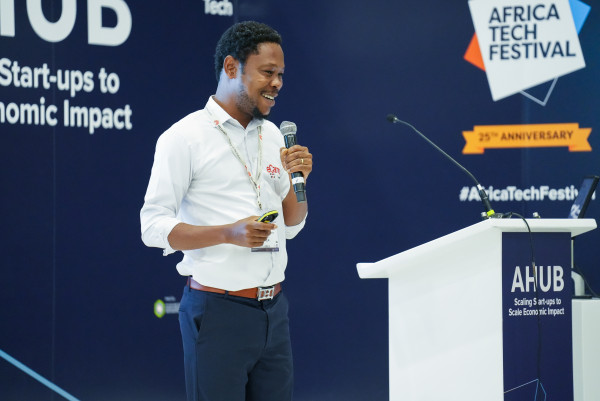
Wait for it…AfricaIgnite, formerly AHUB, Africa Tech Festival's (https://tmt.knect365.com/Africa-Tech-Festival/) flagship event for the African continent's start-ups and innovators, has been announced as the host for the African leg of the globally prestigious Start-Up World Cup 2023, and 10 African start-ups will have the opportunity to pitch for a spot at the grand finale to be held in San Francisco, USA on 1 December 2023.

USD1 million up for grabs – The AfricaIgnite Start-up Pitch showcase will take place at Africa Tech Festival in November in Cape Town, South Africa.  To enter, African early-stage start-ups and scale-ups with seed fundings of up to $15million will need to apply (https://apo-opa.info/3PGV3Lz) by 15 October.  The finalists, to be unveiled on 30 October, will then need to make their way to Cape Town and pitch in front of hundreds of investors and tech leaders on 16 November.

The winner of Africa Tech Festival's pitch competition will then be invited to compete in the grand finale of the Startup World Cup, to be held in San Francisco on 1 December, for that impressive 1 million US dollar investment, in front of industry greats such as ABC's Shark Tank Barbara Corcoran, Sundeep Jain, Chief Product Officer at Uber, Daniel Sturman CTO at Roblox and more.

Since launching in 2016, the festival's start-up platform has been committed to supporting the growth of Africa's nascent entrepreneurs and innovators.  The interest in the offering has grown significantly to the point where AfricaIgnite has now taken on a life-force of its own. 

James Williams, Director, Events | Connecting Africa | Informa Tech: “Africa's bright and forward-thinking minds need a platform to network, get inspired, and co-build a stronger tech start-Up investment ecosystem, which is exactly what AfricaIgnite offers. As Africa Tech Festival, we are excited to be partnering with The Startup World Cup to offer our African colleagues the opportunity they deserve to present their businesses on a global stage. This is a very exciting partnership, and the first, we hope, of many as the continent's innovation sector gathers momentum.”

Investment by the numbers

In 2022, Africa was the only region where start-up investment grew with around USD4.8 billion put into around 1,000 businesses.  That said though, this sum still only represents a paltry 1.2% of all start-up funding raised globally.  However, this is predicted to change quite rapidly in the years ahead as the continent's entrepreneur, start-up and SMME ecosystem fully embraces the digital revolution and connectivity, whilst Africans create the solutions to many of their own, and the world's challenges.

In the 2021 – 2022 period, 37% of investment was channelled to the FinTech space, but its dominance is now being challenged by innovation and new business ideas that solve Africa's energy and waste difficulties.  Other sectors that are attracting interest also include the likes of the telecoms, media and entertainment space, logistics and transport, retail, agriculture, and food, as well as the growing proliferation of deep tech.

“We are very happy to partner up with AfricaTech Festival for the Startup World Cup South Africa Regional and are delighted by the quality and enthusiasm of the start-ups who are competing,” said Anis Uzzaman, Founder and CEO of Pegasus Tech Ventures, who created the Startup World Cup competition in 2016. “Each year we have been able to reach more entrepreneurs in more cities around the world and, in turn, connect more innovation ecosystems to Silicon Valley and the rest of the world.

“We hope this partnership creates new valuable opportunities for the competing start-ups from Africa.”

In good company

Africa Tech Festival also holds its own when it comes to the investor community, with databases of several thousand investors and venture capitalists predominantly spanning Africa and the United States, as well as a strong community of founders, entrepreneurs, and start-ups. 

Aside from the exciting early-stage start-up Pitch Showcase, AfricaIgnite in 2023 is looking to up the ante with a curation of content that is exciting, informative, and definitely going to take participants places.  The AfricaIgnite space located in the AfricaTech Hall will be a centre of activity with an offering of excellent networking and matchmaking between founders and investors, a start-up marketplace and demo area (no pitching required), along with a host of dedicated workshops and masterclasses presented by top professionals.

Delegates, start-ups, and those considering taking a leap of faith into the new world of business, can explore content that covers useful topics such as what to expect from year one as a founder – what to do, get good at and what to ignore; the power of collaboration in building a global company; perfecting the next “X”-tech for future generations; founding, funding and running your start-up in economically challenging times; concept to company – demystifying the entrepreneurial process plus a raft of funding talks and presentations, as well as the all-important insight into exit planning 101!

Never has the time been more right to head to Cape Town 13 – 16 November to be part of the action at Africa Tech Festival, the world's largest and most influential Africa-focused technology, telecoms, and media gathering.  In 2023, expect big things to happen in this space. 

For more information, please see website here: Africa Tech Festival 2023 - The Home of AfricaCom & AfricaTech (https://apo-opa.info/3myppVu)

To apply for the pitch competition, please click here: Africa Tech Festival 2023 – pitch competition (https://apo-opa.info/3PGV3Lz)

View all ticket options for Africa Tech Festival, including start-up passes, here (https://apo-opa.info/3Q04o2r)

Distributed by APO Group on behalf of Africa Tech Festival.

For media enquiries, interviews and/or images please contact: 
Kaz Henderson 
kaz@networxpr.co.za or call on +27 (0) 82 339 1199. 

(Please note that all requests are adjudicated and there may be some delay before you hear back from us).

Social Media Handles:
Facebook: https://apo-opa.info/3LIdCxG
Twitter: https://apo-opa.info/3EZ7RYB
LinkedIn: https://apo-opa.info/3EcywR6

About Startup World Cup:
Startup World Cup is a global conference and competition with the goal of bridging start-up ecosystems worldwide. The competition gives start-up companies from all over the world a chance to win a US $1,000,000 prize in the form of an investment. This year, there will be 50+ regional events across North America, South America, Europe, Africa, and Asia, leading up to the Grand Finale in San Francisco in September. Startup World Cup is organized by Pegasus Tech Ventures, a Silicon Valley-based global venture capital firm.

About Africa Tech Festival 2023:
Africa Tech Festival, including anchor events AfricaCom, AfricaTech and AfricaIgnite is part of the Informa Tech Connecting Africa event series.  A vibrant celebration of Africa's diverse community of tech champions, Africa Tech Festival is the largest tech and digital connectivity conference and exhibition in Africa, attracting hundreds of exhibitors, more than 400 speakers and more than 12000 delegates.

Key themes for 2023 continue to explore the creation and sustainability of a connected Africa and the impact this can have for the people of the continent but also the commercial prospects for local and global businesses and governments.  Topics will include Telcos of Tomorrow, Connecting the Next Billion, Digital Infrastructure Investment, Sustainability & Climate Resilience, ICT Policy and Regulation, Fintech & MFS, Broadcast Media & Entertainment, Pioneer Tech, the Future of Work and Talent and Skills Development. Africa Tech Festival also incorporates and the Africa Tech Festival Awards, an exclusive ceremony celebrating Africa's tech pioneers and held at the luxury 5-star The Bay Hotel, as well as the LeadersIn Africa Summit, an exclusive, VIP-only feature offering high-level presentations and roundtable discussions to Africa's tech elite.

Media files
Africa Tech Festival
Download logo
Read moreAfricaIgnite Hosts the African Leg of the Start-up World Cup at Africa Tech Festival
5 October 2023

Critical Minerals Africa Summit to Explore Current Investment Landscape

Location: News
Energy Capital & Power

A dynamic panel discussion on the second day of the Critical Minerals Africa (CMA) 2023 summit will explore the current landscape for investing in Africa's critical minerals sector, as the global energy transition, geopolitical considerations and supply chain disruptions continue to impact the development of new projects.  

Under the theme, Investing in African Critical Minerals and Rare Earths Projects Today, the panel will address the challenges, opportunities and strategies associated with investing in Africa's critical minerals – and specifically, the Rare Earth Elements (REE) – sector, providing unparalleled insights into the region's resource potential and its role in meeting rising demand for these essential resources. 

Panelists include Jude Kearney, Chair of the Sub-Saharan Africa Committee for the Export-Import Bank of the United States and Managing Partner of ASAFO & Co., US Office; Lloyd Pengilly, Chairman of Qora Capital, South Africa; Patricia Rodrigues, Associate Director at Control Risks; Nick Mitchell, Chief Operating Officer of Renergen; Jonathan Veeran, Partner at Webber Wentzel, South Africa; and Petur Georgesson, Founder and CEO of Technology Metals Market. The panel will be moderated by Olivier Barbeau, Managing Partner and EMR Leader for Africa at Moore Global.

Uniting multi-sectoral expertise from financiers, project developers, consultants and trading platforms, the panel will discuss forecast shifts in critical minerals supply and demand curves between now and 2050, identify the most interesting critical minerals projects taking place on the continent and evaluate how these projects have been able to progress through various stages of development to generate returns for investors.

Panelists will also examine the role of partnerships among governments, companies and local communities in ensuring successful and responsible investments in the sector, as well as fiscal and policy incentives conducive to attracting and retaining investments in the sector.

The Critical Minerals Africa 2023 summit on October 17-19 serves to position Africa as the primary investment destination for critical minerals. The event is organized by Energy Capital & Power and is held alongside the African Energy Week 2023 conference (https://AECWeek.com/) on October 16-20, offering delegates access to the full scope of energy, mining and finance leaders in Cape Town. Sponsors, exhibitors and delegates can learn more by contacting sales@energycapitalpower.com

Distributed by APO Group on behalf of Energy Capital & Power.

Media files
Energy Capital & Power
Download logo
Read moreCritical Minerals Africa Summit to Explore Current Investment Landscape
29 September 2023

BRICS offers SA prospects to deepen relations

Location: News

BRICS offers SA prospects to deepen relations

The expansion of the BRICS not only gives weight to the bloc but also grants South Africa the opportunity to deepen ties with the countries that are expected to join the formation next year.

South Africa hosted the 15th BRICS Summit in Johannesburg last month where President Cyril Ramaphosa as chair of the bloc announced that Argentina, Egypt, Ethiopia, Iran, Saudi Arabia, and the United Arab Emirates will join the BRICS.

 “It gives the bloc more weight politically [and] economically in an international space. Domestically, we can gain from ensuring that there’s deepened trade ties with these countries which would expand economic opportunities within South Africa itself and the other emerging markets you find in the BRICS bloc.

“It increases your momentum within the global stage itself,” assistant lecturer at the Department of Politics and International Relations at the University of Johannesburg, Ndzalama Mathebula told SAnews.

The six developing countries are set to become full members of the BRICS [Brazil, Russia, India, China and South Africa] bloc from January 2024.

Senior research associate at the think tank, Institute for Global Dialogue, Sanusha Naidu said there could be other developments leading up to the new year.                                                                   

“…when we come to January 2024, what will be some of the issues? Will countries automatically accept the invitation to become members of the expanded BRICS  or what will be some of the strategic orientation that will influence and the factors that will shape this?,” remarks Naidu.

Naidu adds that this poses “some serious questions, introspection and reflection around South Africa’s BRICS strategy going forward.”

She adds that South Africa now needs to be much more coherent about its strategy.

In his address to Members of Parliament earlier this month, President Ramaphosa said South Africa’s trade with the bloc has increased by an average of 10% every year over the period 2017 to 2021. According to the President, the country’s total trade with other BRICS nations stood at R830 billion in 2022 from R487 billion in 2017.

During the Questions for Oral Reply session held at the National Assembly, the President explained that BRICS is an important source of foreign direct investment in key areas such as mining, automotive, transportation, clean energy, financial services and information technology (IT).

New chapter

In his address to the nation post the summit, the President described the summit—which was attended by the five BRICS member countries and representatives of 61 other countries-- as a success that “heralded a new chapter” for the group.

Naidu said the expansion of the BRICS is very much part of the interest in Washington right now.

 “I don’t think it’s because [and] I say this with the most respect for the South African government and for South Africa. I don’t think it is because of South Africa that there’s interest in the BRICS. The interest in the BRICS right now is because the BRICS is expanding but it is not because of South Africa.”

The country on the southernmost tip of the African continent, was invited to join the bloc in 2010 and in 2011, South Africa attended its first summit of the group of leading emerging markets and developing countries.

Having been part of the bloc for over a decade, it was interesting to see other countries invited to join the bloc on African soil.

She notes that the first expansion of the BRICS that happened was with South Africa being invited to join the formation but that “didn’t get the attention” because the world at that time was not as “volatile, unpredictable and inflamed as it is now.”

The summit called for a comprehensive reform of the United Nations (UN) including the Security Council. Speaking at the summit, Secretary-General of the United Nations, António Guterres said the Security Council and the Bretton Woods system are two areas which require a ”particularly important reform effort.”

He said if reform fails, “we risk fragmentation, and fragmentation can be one day a factor of confrontation.”

Naidu agrees with the Secretary-General’s comments.

“If reform is not happening; it is fragmenting and you can see that happening in a very real way. I think the expansion of the BRICS actually brings about a regionalisation of the geopolitics of the international system and you see that with the countries that are being invited to expand [the group].

Naidu said that this time around, the reform of the UN Security Council was not just a broad statement.

“My view was that for the first time in a long time, I think since the BRICS inception [that] the issue of the UN Security Council reform wasn’t just a broad statement. It kind of referred to the developing world and especially India, Brazil and South Africa.

“I feel that was a bit of a broad win in a way that [gets] Russia and China to kind of not to explicitly endorse, but to implicitly support the membership of India, Brazil and South Africa into the Security Council … where I didn’t previously see them doing that.”

Mathebula said that 15-years ago when the BRICS was formed, it was not thought that the group would one day challenge the United States.

“We never thought that it would challenge US hegemony but what we are seeing right now, is that we have this challenge of the US hegemony using emerging economies like South Africa [with] these countries being central to the global stage and determining policies instead of inheriting it.

“So considering that Russia and China are permeant members of the UN, it is an important indication of the changing global order,” Mathebula said.

Meanwhile, Naidu said South Africa must align its foreign policy to the new chapter.

“Yes the President was right that it brings a new chapter, but is South Africa understanding what that new chapter is? Is it aligning its foreign policy to the new chapter? You’ve got to think about the alignment of your strategic interests in where you want to position yourself in global affairs.”

The African voice

While the African voice was heard at the gathering, Mathebula said the question was whether or not “Africa will take what it needs.”

“Will Africa use the bloc in the right way to ensure that there’s development within their domestic markets?” she asked.

This year’s summit was held under the theme: ‘BRICS and Africa: Partnership for mutually accelerated growth, sustainable development and inclusive multilateralism’.

Both analysts were of the view that South Africa did a good job in hosting the summit.

“Overall I think it was from a technical, transactional perspective, yes [South Africa] hosted the summit well. It showed that South Africa can host summits and has done so in the past and I think it will be difficult to nit-pick. The summit in itself did give some kind of transactional value to South Africa,” said Naidu.

Asked about what the country could have done better in hosting the summit, Mathebula said while a lot of people had something to say about the summit, there was also plenty of misinformation going around on platforms like TikTok.

“Not many people understood what it was about, the youth don’t know. [I] don’t know if its ignorance… the ignorance that you find in African states are [sic] actually the engineers of underdevelopment … I urge everyone to read on what [the] BRICS is,” said Mathebula. –SAnews.gov.za


Neo
Fri, 09/29/2023 - 14:31

37 views
Read moreBRICS offers SA prospects to deepen relations
29 September 2023

Mathu Joyini (South Africa) Chair of Fourth Committee

Location: News

United Nations (UN)
Download logo

The Fourth Committee (Special Political and Decolonization) elected Mathu Joyini (South Africa) Chair on 1 June. (See Press Release GA/12504.)

Prior to her appointment in 2021 as Permanent Representative to the United Nations, Ms. Joyini served as Deputy Director-General of her country's Department of International Relations and Cooperation and Head of its Diplomatic Academy and Policy Research and Development Unit, since 2016.  Previously, she was Permanent Representative to the International Seabed Authority from 2010 to 2015.

Among other diplomatic assignments, Ms. Joyini served as High Commissioner and Ambassador to six countries in Latin America and the Caribbean, from 2010 to 2015. She was the International Relations Department's Deputy Director-General for Human Resources from 2008 to 2010.  Before joining the Government in 2001, she held senior private sector positions in mining, finance, petroleum and consulting, among other fields.

Ms. Joyini holds master's degrees in social work from the University of Pennsylvania in the United States and in business administration from Wits Business School in South Africa, where she also earned a bachelor's degree.

She was born in 1968.

Distributed by APO Group on behalf of United Nations (UN).

Read moreMathu Joyini (South Africa) Chair of Fourth Committee
22 September 2023

On World Rhino Day, The United States (U.S.) Celebrates its Propitious Conservation Partnership with the World Wildlife Fund (WWF) and the Government of Namibia

Location: News

U.S. Embassy in Namibia
Download logo

The population of black rhinos declined dramatically in the 20th century at the hands of European hunters and settlers. Between 1960 and 1995, black rhino numbers dropped by a sobering 98%, to less than 2,500 individuals. Since then, the species has made a tremendous comeback from the brink of extinction. Thanks to persistent conservation efforts across Africa, black rhino numbers have doubled from their historic low 20 years ago to more than 6,000 today. However, the black rhino is still considered critically endangered, and a lot of work remains to bring their population up to even a fraction of what it once was—and to ensure that it stays there. Wildlife crime—in this case, poaching of rhinos for the illegal international market for their horns—continues to plague the species and threaten its recovery.

The Namibian government and its partners in conservation, including communal conservancies have been at the cutting edge of efforts to relocate, protect and expand the range of rhinos in the country. While the threat of poaching persists, the impact of these efforts is dramatic. Namibia is now home to the largest population of black rhino left on earth.

TACKLING WILDLIFE CRIME

Poaching remains the deadliest and most urgent threat to black rhinos. WWF is working with government agencies, local communities and other partners in Namibia, Kenya, and South Africa to support law enforcement agencies, develop and build on innovative tech solutions, and equip and train rangers to stop poachers.

In Namibia, WWF, with support from the USAID funded Combatting Wildlife Crime Project and INL projects, is working across sectors, agencies, and borders to help implement the country's ambitious law enforcement strategy to combat wildlife trafficking. WWF also supports the Namibian government in the implementation of its national black rhino strategy, in part by moving rhinos from parks with significant populations to other areas that historically held rhinos but currently do not—a process known as translocation. WWF is also working with the Ministry of Environment, Forestry and Tourism and other conservation partners to protect both black and white rhinos, including the maintenance of a comprehensive DNA databank used for forensic investigations and research, and the use of sniffer dogs.

PROTECTING AND MANAGING KEY POPULATIONS

WWF supports aerial population surveys at key sites such as Etosha National Park in Namibia. The surveys are critical for evaluating breeding success, deterring poachers, and monitoring rhino mortality. WWF is also working with partners to develop and implement cutting-edge technologies in range states to closely monitor key populations. When paired with boots-on-the-ground, innovative solutions like electronic identification and tracking tags, radio and satellite collars, night vision cameras, and camera traps provide critical data that is used to make important decisions for black rhino populations going forward.

COMMUNITY-BASED CONSERVATION

Namibia was the first African country to incorporate protection of the environment into its constitution. In 1996, the new Namibian government granted communities the right to create conservancies — areas with defined borders and governance and management structures outside of parks — where communities have the right to manage and benefit from their natural resources. With long-term support from IRDNC, NNF, SRT, WWF and other NACSO partners, robust conservation efforts including community game guards, monitoring, community engagement campaigns, partnerships between the communities and private sector tourism, and translocation projects, which relocate species into new habitats so that they have more space to breed, have made enriched landscapes and lives in rural Namibia.

On World Rhino Day, we join our Namibian partners in recognizing their efforts to protect black rhinos – against tremendous odds. Not only does Namibia have the largest population of black rhinos in the world, but communal conservancies have allowed rhinos to roam free, outside of national parks. These communal conservancies—working with the government, nonprofit organizations and others—have restored populations of black rhinos, creating a rhino-based economy that benefits both people and wildlife!

For more information on WWF Programs in Namibia, visit https://www.wwfnamibia.org.

For more information on U.S. global climate and environmental priorities, visit Climate and Environment – United States Department of State.

Distributed by APO Group on behalf of U.S. Embassy in Namibia.

Read moreOn World Rhino Day, The United States (U.S.) Celebrates its Propitious Conservation Partnership with the World Wildlife Fund (WWF) and the Government of Namibia
21 September 2023

President Ramaphosa concludes participation in UNGA78

Location: News

President Ramaphosa concludes participation in UNGA78

President Cyril Ramaphosa has concluded his working visit to the United States of America, where he led South Africa’s participation in the 78th Session of the United Nations General Assembly (UNGA78) in New York.  

President Ramaphosa was accompanied by a delegation of Ministers, including the Minister of International Relations and Cooperation, Dr Naledi Pandor; Minister of Trade, Industry and Competition, Ebrahim Patel; Minister of Environment, Forestry and Fisheries, Barbara Creecy; Minister of Health, Dr Joe Phaahla; Minister in The Presidency, Khumbudzo Ntshavheni, and Minister in The Presidency for Planning Monitoring and Evaluation, Maropene Ramokgopa. 

The President delivered South Africa’s National Statement on Tuesday under the theme: 'Rebuilding trust and reigniting global solidarity: Accelerating action on the 2030 Agenda and its Sustainable Development towards peace, prosperity, progress and sustainability for all'.

On Wednesday, President Ramaphosa participated in the Financing for Development Summit.

The President joined United Nations Secretary-General António Guterres and the President of the UN General Assembly, Ambassador Dennis Francis, in advocating for the strengthening and reform of the international financial architecture. 

President Ramaphosa said developing countries must participate equally and meaningfully in the decision-making process of the international economic world order. 

"Four decades since the right to development was established by the United Nations as a human right, the failure to act on commitments to support development is deepening the divide between the global north and south," said President Ramaphosa. 

The President also addressed the Climate Change Summit, hosted by the UN Secretary-General António Guterres, where he joined the call by African leaders for action in the implementation of the recently adopted Nairobi Declaration on Climate Change and Call to Action.

The declaration recognises that decarbonising the global economy is an opportunity to contribute to equality and shared prosperity.

President Ramaphosa said that financing for climate action should respect the right of all countries to pursue their own development pathways while taking into account their specific national circumstances.

“As South Africa implements its ambitious Nationally Determined Contribution, which is aligned to the Paris Agreement temperature goals, we see new opportunities for green growth and development.

“With abundant solar and wind resources, with significant reserves of critical minerals, South Africa is positioning itself to be a leader in renewable energy, green hydrogen, and sustainable industrialisation,” the President said. 

The President described South Africa's participation at the UNGA78 as progressive, as it continued to advocate for the reform of the United Nations Security Council and reiterated South Africa’s support for the United Nations Secretary-General's ambition of U$ 500 billion a year to meet the UN-driven global sustainable development goals.

On the sidelines of UNGA78, President Ramaphosa held several bilateral meetings aimed at strengthening strategic political, diplomatic and trade ties.

These included discussions with the President of the Federal Republic of Nigeria, Bola Tinubu; Ukraine President Volodymyr Zelenskyy; President Abdelmadjid Tebboune of the People's Democratic Republic of Algeria; President Recep Tayyip Erdoğan of Türkiye, and President Emmerson Mnagangwa of the Republic of Zimbabwe. 
 
Another highlight of the President’s working visit to the United States was the joint announcement by the South African and United States governments of South Africa’s hosting of the 20th US-Sub-Saharan Africa Trade and Economic Cooperation Forum, (AGOA Forum) in Johannesburg from 2 - 4 November 2023.

President Ramaphosa welcomed this development as an expression of South Africa's intention to remain part, beyond 2025, of the trade partnership enabled by the United States’ Africa Growth and Opportunity Act. 

This trade relationship carries mutual benefit for South Africa and the United States, as part of the broader cordial and strong relations between the two countries.

In his assessment of UNGA78, President Ramaphosa said: “The United Nations General Assembly is an important and strategic platform for South Africa, where we are able to interact at a high level multilaterally and bilaterally. 

“We have engaged in meaningful discussions that will contribute to the development of our country and our continent. I go home with my spirits lifted and enthused that the challenges we face will be resolved as we continue working with our social partners and business at home, and our trade and diplomatic partners globally." – SAnews.gov.za

DikelediM
Thu, 09/21/2023 - 11:47

212 views
Read morePresident Ramaphosa concludes participation in UNGA78
21 September 2023

Ramaphosa concludes participation in 78th United Nations General Assembly

Location: News

The Presidency: Republic of South Africa
Download logo

President Cyril Ramaphosa has concluded a working visit to the United States of America, where he led South Africa's participation in the 78th Session of the United Nations General Assembly (UNGA78) in New York.

The President delivered South Africa's National Statement on Tuesday, 19 September 2023, under the theme “Rebuilding trust and reigniting global solidarity: Accelerating action on the 2030 Agenda and its Sustainable Development towards peace, prosperity, progress and sustainability for all”.

On Wednesday, 20 September 2023, President Ramaphosa participated in the Financing for Development Summit.

The  President joined United Nations Secretary-General António Guterres and the President of the UN General Assembly, Ambassador Dennis Francis, in advocating for the strengthening and reform of the international financial architecture. 

President Ramaphosa said developing countries must participate equally and meaningfully in the decision-making process of the international economic world order. 

"Four decades since the right to development was established by the United Nations as a human right, the failure to act on commitments to support development is deepening the divide between the global north and south," said President Ramaphosa. 

The President also addressed the Climate Change Summit, hosted by the UN Secretary-General António Guterres, where the President joined the call by African leaders for action in the implementation of the recently adopted Nairobi Declaration on Climate Change and Call to Action.

The declaration recognises that decarbonising the global economy is an opportunity to contribute to equality and shared prosperity.

President Ramaphosa said: “Financing for climate action should respect the right of all countries to pursue their own development pathways while taking into account their specific national circumstances.

“As South Africa implements its ambitious Nationally Determined Contribution, which is aligned to the Paris Agreement temperature goals, we see new opportunities for green growth and development.

“With abundant solar and wind resources, with significant reserves of critical minerals, South Africa is positioning itself to be a leader in renewable energy, green hydrogen, and sustainable industrialisation.”

The President described South Africa's participation at the UNGA78 as progressive as it continued to advocate for the reform of the United Nations Security Council and reiterated South Africa's support for the United Nations Secretary-General's ambition of  U$ 500 billion a year to meet the UN-driven global sustainable development goals.

On the sidelines of UNGA78, President Cyril Ramaphosa held several bilateral meetings aimed at strengthening strategic political, diplomatic, and trade ties.

These included discussions with the President of the Federal Republic of Nigeria, Bola Tinubu; Ukraine President Volodymyr Zelenskyy; President Abdelmadjid Tebboune of the People's Democratic Republic of Algeria; President Recep Tayyip Erdoğan of Türkiye, and President Emmerson Mnagangwa of the Republic of Zimbabwe. 

Another highlight of the President's Working Visit to the United States was the joint announcement by the South African and United States governments of South Africa's hosting of the 20th US-Sub-Saharan Africa Trade and Economic Cooperation Forum,  (AGOA Forum) in Johannesburg from 2 to 4 November 2023.

President Ramaphosa welcomed this development as an expression of South Africa's intention to remain part, beyond 2025, of the trade partnership enabled by the United States' Africa Growth and Opportunity Act.

This trade relationship carries mutual benefit for South Africa and the United States, as part of the broader cordial and strong relations between the two countries.

In his assessment of UNGA78 President Ramaphosa said: “The United Nations General Assembly is an important and strategic platform for South Africa, where we are able to interact at a high level multilaterally and bilaterally. 

“We have engaged in meaningful discussions that will contribute to the development of our country and our continent. I go home with my spirits lifted and enthused that the challenges we face will be resolved as we continue working with our social partners and business at home, and our trade and diplomatic partners globally." 

The President was accompanied by a delegation of Ministers that included the Minister of International Relations and Cooperation, Dr Naledi Pandor; Minister of Trade, Industry and Competition, Ebrahim Patel; Minister of Environment, Forestry and Fisheries, Barbara Creecy; Minister of Health, Dr Joe Phaahla; Minister in The Presidency, Khumbudzo Ntshavheni; and Minister in The Presidency for Planning Monitoring and Evaluation, Maropene Ramokgopa. 

Distributed by APO Group on behalf of The Presidency: Republic of South Africa.

Read moreRamaphosa concludes participation in 78th United Nations General Assembly
20 September 2023

Does Branded Merchandise Still Maintain A Space In Modern Marketing?

Location: MyPR

In today’s ever-evolving marketing landscape, where digital strategies often dominate the conversation, one element continues to stand the test of time – that of branded merchandise. International research shows that this steadfast pillar of modern marketing, commonly known as promotional products, has remained a powerhouse in successful campaigns for decades. In fact, according to Chris …

Read moreDoes Branded Merchandise Still Maintain A Space In Modern Marketing?
19 September 2023

World leaders called to champion women, children health agenda

Location: News

World leaders called to champion women, children health agenda

President Cyril Ramaphosa has called on Heads of State and Government to join the Global Leaders Network to champion the women, children and adolescent health agenda. 

The President was addressing the High Level Partnership for Maternal, Newborn and Child Health (PMNCH) event on Monday at the UNICEF headquarters in New York, USA. 

“As Heads of State, we can provide leadership and inspire ambitious action. We have the convening power to mobilise our peers and advance policies, programmes and financing initiatives for improved outcomes.

“As part of our agenda, we must challenge the disregard in many communities and countries for the sexual and reproductive health and rights of women,” President Ramaphosa said. 

The President spent the first and second day of his working visit to the United States - for the 78th United Nations General Assembly - discussing sustainable development goals and investments in South Africa. 

On Sunday, President Ramaphosa held a bilateral meeting with Professor Klaus Schwab, CEO of the World Economic Forum (WEF), to discuss South Africa’s participation at WEF and the progress the country is making on the reforms aimed at advancing inclusive economic growth. 

The President also met with United States Congressman, Gregory Meeks. Both President Ramaphosa and Congressman Meeks acknowledged the need for greater cooperation between the US and South Africa in tackling global issues that are impacting the African continent, primarily, the impact of the Russia-Ukraine conflict on Africa. 

“Congressman Meeks welcomed the briefing on the conclusion of the investigation into the docking of the LadyR vessel in Simmons Town, South Africa, and expressed his commitment to contributing to the strengthening of US-Africa diplomatic and trade relations, and to attending the AGOA forum in South Africa later this year,” the Presidency said. 

President Ramaphosa concluded his first day of engagements with a meeting with the United Nations Secretary General, Antonio Guterres.

The two leaders discussed developments related to the reform of the international financial architecture and other initiatives in support of the Sustainable Development Goals, as well as the reform of the United Nations Security Council. The Secretary General commended South Africa for its important role in advancing these efforts.  

The President also delivered remarks at the Sustainable Development Goals Summit, where he joined the call to address the fundamental development challenges that have long characterised an unequal world. 

“The President emphasised the need for targeted investment, technology transfer and capacity building support especially in key areas such as industralisation, infrastructure, agriculture, water, energy, education and health. The President further underscored the requirement for sustained financial support, including supportive trade policies from the international community,” the Presidency said. 

Later on Monday, President Ramaphosa led the business roundtable discussions with the US Chamber of Commerce and the US-Africa Business Center. 

President Ramaphosa used the occasion to position South Africa’s economic reform agenda, which is focused on expanding industrial capacity as an opportunity for more US investment that can leverage off the demonstrated manufacturing base of South Africa. – SAnews.gov.za


DikelediM
Tue, 09/19/2023 - 12:01

117 views
Read moreWorld leaders called to champion women, children health agenda
18 September 2023

You Could Be Drinking Water That Once Passed Through a Dinosaur – And Other Intelligent Facts

Location: MyPR

World Water Monitoring Day (WWMD) is celebrated on 18 September each year. The South African Department of Water and Sanitation, under the slogan; “Enhancing accountability and sustainability for every drop!” says that World Water Monitoring Day is an international education and outreach program that builds public awareness of the importance of protecting water resources around …

Read moreYou Could Be Drinking Water That Once Passed Through a Dinosaur – And Other Intelligent Facts
14 September 2023

President Ramaphosa to deliver eulogy at Prince Buthelezi’s funeral

Location: News

President Ramaphosa to deliver eulogy at Prince Buthelezi's funeral

President Cyril Ramaphosa will deliver the eulogy at the special official funeral of the late Prince Mangosuthu Buthelezi in Ulundi, KwaZulu-Natal on Saturday. 

Presidential spokesperson Vincent Magwenya confirmed this during a press briefing with media houses to update them about the President’s diary at the Union Buildings on Thursday. 

Buthelezi passed away on 9 September 2023, at the age of 95. 

President Ramaphosa has honoured Buthelezi by declaring his funeral a special official funeral category 1. 

“In accordance with the state, official, and provincial official funeral policy of the government, a special official funeral category 1 is a recognition reserved for individuals of extraordinary distinction as designated by the President of the Republic of South Africa,” Magwenya explained. 

The funeral, according to the President’s spokesperson, will include elements of military honours. 

“The President has directed that flags be flown half-mast at flag stations around the country until the evening of Saturday, which is the day of the funeral,” he added. 

G77+China Summit 

The First Citizen has delegated International Relations and Cooperation Minister, Dr Naledi Pandor, to lead South Africa’s delegation to the Summit of Heads of State and Government of the Group of 77 and China. 

The gathering, which will be held on 15 and 16 September, will focus on the role of science, technology and innovation. 

“President Ramaphosa values the importance of the Group of 77 and China as the largest intergovernmental organisation of developing countries in the United Nations (UN).” 

The platform, according to Magwenya, is where Global South countries can articulate, promote collective economic interests and enhance their collective negotiating capacity. 

“This capacity is brought to bear on global issues that are deliberated within the UN system and on the advancement of South-South cooperation for development. 

“The President welcomes the opportunity for South Africa to contribute to the Group’s debates, analysis and consensus on the main challenges facing the South,” he added. 

UNGA78

Meanwhile, it was announced that President Ramaphosa will lead South Africa’s delegation to the General Debate of the 78th Session of the UN General Assembly (UNGA78) which takes place from 18 to 26 September 2023 in New York, in the United States. 

The President will deliver the South Africa statement to the UN General Assembly on Tuesday, 19 September 2023. 

A number of high-level engagements will precede the address to the UN General Assembly.

These include summits on Partnership for Maternal, Newborn and Child Health; Sustainable Development Goals; a High-Level Dialogue on Financing for Development; Pandemic Prevention, Preparedness and Response; and Climate Ambition to be hosted by the UN Secretary-General. 

President Ramaphosa will also lead discussions during the Presidential Roundtable that will hosted by the United States Chamber of Commerce and the US-Africa Business Centre.

His programme will also include several bilateral meetings on the sidelines of UNGA. 

South Africa’s participation at the UN, Magwenya said, is directed by its international relations policy objectives, among others. – SAnews.gov.za


Gabisile
Thu, 09/14/2023 - 15:22

202 views
Read morePresident Ramaphosa to deliver eulogy at Prince Buthelezi’s funeral
12 September 2023

Decoding Foreign Tax Withholding on Dividends

Location: MyPR

For international investors, the allure of global diversification is often marred by the complexity of foreign tax obligations. One of these obligations is dividend withholding tax, which can vary considerably depending on the jurisdiction. This blog post aims to demystify the dividend withholding tax policies of four major economies: Germany, France, the Netherlands, and the …

Read moreDecoding Foreign Tax Withholding on Dividends
11 September 2023

Rideshare Mechanic Revolutionizes Convenience with Online Vehicle Inspections for Uber and Lyft

Location: MyPR

Rideshare Mechanic Revolutionizes Convenience with Online Vehicle Inspections for Uber and Lyft Online Car Inspection Service Offers a Hassle-Free Solution for Rideshare Drivers United States of America (USA), 11 September 2023 –  In a rapidly evolving world where convenience is king, Rideshare Mechanic emerges as a game-changer in the ridesharing industry with its innovative online …

Read moreRideshare Mechanic Revolutionizes Convenience with Online Vehicle Inspections for Uber and Lyft
10 September 2023

AU joins G20 as a permanent member

Location: News

AU joins G20 as a permanent member

President Cyril Ramaphosa has welcomed the admission of the African Union as a member of the Group of Twenty (G20).

“We are delighted that the G20 has accepted the African Union as a member of the G20,” the President said on Saturday.

G20 is the premier forum for international economic cooperation and it plays an important role in shaping and strengthening global architecture and governance on all major international economic issues. 

The group comprises of 19 countries (Argentina, Australia, Brazil, Canada, China, France, Germany, India, Indonesia, Italy, Japan, Republic of Korea, Mexico, Russia, Saudi Arabia, South Africa, Türkiye, United Kingdom, and United States) and European Union.

The G20 members represent around 85% of the global GDP, over 75% of the global trade, and about two-thirds of the world population.

In his statement on the Working Session I: One Earth G20 Leaders’ Summit, which took place in New Delhi, India, President Ramaphosa called for countries to respond collectively, decisively and with urgency to climate change.

“No country is spared the effects of climate change. It is vital that industrialised countries, which have the means and which carry the greatest responsibility for climate change, support sustainable development in developing economies.

“For us to realise the vision of People, Planet and Prosperity, we need to meet our respective commitments and responsibilities. In so doing, we will be helping to create a world that is more equitable, more resilient and more sustainable,” the President said.

He said global reconstruction in the wake of the COVID-19 pandemic presents a unique opportunity to accelerate the transition to low-carbon, climate resilient, sustainable societies.

“Developing economies are bearing the brunt of climate change, despite carrying the least responsibility for this crisis. As African and other developing economy countries, we face the task of meeting our climate commitments in the midst of significant developmental challenges like poverty, inequality and unemployment.

“Climate change, environmental degradation, unsustainable consumption and production and resource scarcity are challenges that can only be addressed collectively and with a great deal of solidarity. South Africa calls for an enhanced and expanded Global Partnership for Sustainable Development,” the President said.

He said these efforts must be supported by the concrete policies and actions outlined in the Addis Ababa Action Agenda on Financing for Development.

“Access to adequate and predictable financial resources from a variety of public and private sources is critical if we are to achieve the Sustainable Development Goals.

“Development partners need to both meet their existing commitments and upscale Official Development Assistance. Ordinary people see billions of dollars being spent on the weapons of war instead of addressing development challenges.

“In particular, development partners need to meet their commitments to capacity building and infrastructure development in low- and middle-income countries,” the President said. – SAnews.gov.za


nosihle
Sun, 09/10/2023 - 09:34

178 views
Read moreAU joins G20 as a permanent member
7 September 2023

Government responds to report on solitary confinement

Location: News

Prisoners are held according to the law, writes the Department of Correctional Services spokesperson

Read moreGovernment responds to report on solitary confinement
7 September 2023

The key to Africa’s industrialisation process and ending the region’s massive energy poverty

Location: News
African Energy Chamber

By Jason Mitchell

Africa's vast natural gas reserves are key to bringing energy to Africa's poorest countries, to a solid industrialisation process throughout the region and to significant poverty reduction.

The region is home to 33 of the world's 46 least-developed countries (LDCs) with an average income per head of less than $1,018 a year. The continent's poorest countries must expand at 6-7% a year if poverty is to be reduced in a big way and if the life chances of hundreds of millions of people are to be improved. To achieve this goal, these countries require abundant and cheap energy. Luckily, for many African states, the answer lies on their own doorstep — natural gas. Gas has remained a niche fuel in sub-Saharan Africa — contributing only 5% of the total energy mix against a global average of 20-25% — but its potential is enormous.

A new vision for Africa is required — a criss-crossing network of natural gas pipelines that brings energy to all corners of the region. The continent's contribution to global greenhouse gas emissions is tiny and will only become slightly bigger if the region's natural gas reserves are exploited. There is also a massive opportunity to wean poor Africans away from the use of biomass fuel and to help protect the region's forests through the rollout of small, liquified petroleum gas (LPG) stoves. Climate change is an issue in Africa but poverty reduction is a bigger one. Poverty is the biggest killer in Africa today.

It's very hard for Europeans and North Americans to imagine what it's like to live on under $1,018 a year, to not have readily available electricity, to not have a refrigerator or a washing machine, to not have a car, to not have a lawnmower, to not be able to fly from one country to another cheaply, to not have electricity in the school or the workplace and to have to use firewood or charcoal for cooking purposes. Fossil fuels have been at the heart of the Industrial Revolution that has brought prosperity and better living standards to the developed world. People in the First World must be very careful if they decide to deny Africans the same chance to prosper.

Africa has the lowest energy use per capita in the world — the average electricity use of a sub-Saharan African resident is lower than that of a household fridge in the United States. Average consumption per person in sub-Saharan Africa, excluding South Africa, is a mere 185 kilowatt-hours (kWh) a year, compared with about 6,500kWh in Europe and 12,700kWh in the US. Every year San Antonio, Texas, with a population of 1.5m people, uses as much electricity as the whole of Nigeria, with 203m people. Golden, Colorado, a small town with only 19,000 people, uses as much electricity as Chad, a country with 16m people.

The UN's Sustainable Development Goal Seven aims to “ensure access to affordable, reliable, sustainable and modern energy for all” by the year 2030. That's a tall order. In 2019, 917m people in Africa (around 80% of the region's population) relied on wood, charcoal, kerosene, animal and crop waste or other solid fuels to cook their food and heat their homes. The International Energy Agency (IEA) reports that almost 490,000 people die prematurely every year in sub-Saharan Africa from household air pollution-related causes — stemming from the lack of access to clean cooking facilities. Gas is a much cleaner form of cooking than biomass and its use should be encouraged. Biomass burning-power plants emit 300-400% more CO2 than natural gas per unit energy produced. Natural gas emits almost 50% less carbon dioxide than coal. 

Africa has one-fifth of the world's population but contributes only 3% to global greenhouse gas emissions. Incredibly, some 48 sub-Saharan African countries, excluding South Africa, have an estimated share of global emissions of only 0.55%. The fact is that many African states are already at net zero. If the continent were to use an additional 90bn cu m of natural gas per year — or 50% more than today — the resulting emissions would only raise Africa's cumulative contribution to global carbon emissions to 3.5% (ten gigatonnes) by the year 2050, according to the IEA. It really is a tiny increase compared to the chance of reducing poverty levels for hundreds of millions of poor people. If Africa is to provide universal electricity access by 2030 it would have to almost double its total generation capacity from around 260gw today to 510gw. 

Almost half the continent's 55 countries have proven natural gas reserves. Across the region, natural gas reserves amount to around 17.5trn cubic metres (cu m), making up around 9% of the world's total gas reserves. They are considerable in northern Africa (accounting for 45% of African reserves) and western Africa (32%), in particular. Commercial quantities of natural gas have been found in many African countries.

Previously, only four countries from the region have been major natural gas production hubs: Nigeria (with total gas reserves of 5.8trn cu m), Algeria (4.5trn cu m), Egypt (2.2trn cu m) and Libya (1.5trn cu m). These four accounted for 78% of African gas reserves in 2021 (https://apo-opa.info/48gDBWG), according to the United States Energy Information Administration.

However, seven African countries — Mozambique, Senegal, Tanzania, Mauritania, South Africa, Ethiopia and Morocco — with no history of fossil gas exploitation have now opened up their doors to gas projects. Some 84% of new reserves in the pre-production stage are found in these states — total new reserves amount to 5.1trn cu m. Mozambique has re-production reserves of 2.3trn cu m, Senegal 779bn cu m, Mauritania 575bn cu m, Tanzania 512bn cu m, South Africa 96bn cu m, Ethiopia 42bn cu m and Morocco 39bn cu m.

Furthermore, major untapped reserves have been discovered in Angola, Cameroon, Ghana, Equatorial Guinea, the Republic of the Congo, Kenya and Uganda. A number of these states — including Mozambique, Tanzania, Mauritania and Senegal — are actively marketing natural gas to capitalise on recent discoveries. In fact, the IEA has declared Africa the ‘new frontier' in global oil and gas.

The big four gas-producing countries will continue to dominate gas production in the near term but experts estimate that Mozambique and the other new entrants will contribute more than 50% of the region's gas production by 2038.

Natural gas can be used for electricity generation, industry and domestic use. Crucially, harnessing Africa's gas could provide the baseload power needed to boost Africa's capacity to process its raw materials locally. It could provide enough energy for industrial processes, including steel and cement production and paper and pulp manufacturing. It could be also used to make fertiliser to raise agricultural yields. Renewables, including solar and wind, cannot yet provide enough energy for these purposes.

The huge reserves of gas can play a significant role in the continent's energy transition, as natural gas has a much lower carbon footprint than oil and coal. Critically, natural gas development and renewable power are not mutually exclusive. If Africa were to triple its use of natural gas, the United Nations Economic Commission for Africa (Uneca) estimates that the region would be able to increase its use of renewable energy eight-fold. Reliable forms of energy such as gas can be used to stabilise a grid powered by intermittent sources such as wind and solar. It can play a key role in a ‘just' energy transition.

However, expanding gas supply across Africa would require a whole web of new gas pipelines and that does not come cheap. A lot of the gas from the new projects already under way in Africa is destined for international markets, including the European Union — which have been seeking new sources of energy since the Ukraine crisis — but it is vital that the region's gas reserves are deployed for domestic use, as well. Nigeria, for example, sits on the continent's largest known natural gas reserves but only 55% of the population had access to secure electricity in 2020.

Multilateral financial institutions (MFIs) — many of which are headquartered in the developed world — are now shying away from investing in natural gas projects in Africa because of pressure from a vociferous green lobby. In 2021, 20 countries — including almost all the world's big, rich democracies — pledged to stop almost all financing of new fossil fuel projects internationally by the end of 2022. Furthermore, under the Glasgow Financial Alliance for Net Zero (GFANZ), 450 financial firms across 45 countries, responsible for over $130trn in assets, committed to accelerate the global decarbonisation process. The problem is that most Western governments and financial institutions do not distinguish between coal, oil and gas, and the pressure to stop funding all hydrocarbons has negatively impacted gas projects in Africa in a big way.  

Some of the continent's biggest financiers — including the African Development Bank (AfDB) — are finding it increasingly difficult to support gas project developments that require loan syndication and foreign partners. The World Bank is pulling back, too. Local banks cannot finance major gas projects on their own, as they are limited by their capital base. In particular, the fossil fuels divestment campaign is having a big impact on the amount of development and concessional finance available. This kind of finance used to support a number of gas projects for their poverty-reducing and economic development value.

For example, without the guarantees of development finance institutions (DFIs), most of Africa's recent gas-to-power plants would have never been built in the first place. The withdrawal of development finance from downstream gas and gas-to-power projects is a serious cause for concern for Africa's electrification effort and moving the needle on energy access.

Furthermore, there is a glaring double standard — many European countries have increased their use of hydrocarbons (coal as well as gas) since Russia's invasion of Ukraine. They are constructing new fossil fuel pipelines at home. The EU recently classified natural gas a ‘green' fuel, which will allow Europe's projects to be backed by investors committed to environmental, social and governance (ESG) principles. European countries are now looking towards African states for new sources of gas. However, they are not prepared to back new gas projects in Africa that would supply the fuel to the region itself. That smacks of hypocrisy of the worst kind. How can you deny the poorest people in the world the sort of energy that you want to use yourselves?

Lumping all hydrocarbons together is a blunt policy mechanism that is not good from an emissions perspective either. In poorer places, like sub-Saharan Africa, the available alternative to gas is not renewable electricity but rather coal, diesel and, most of all, polluting biomass. In sub-Saharan Africa, demand for biomass fuels is expected to surge by 40% by the year 2040 if ‘business as usual' continues. The burning of biomass is a major contributor to global carbon emissions and charcoal has been a top driver of tropical forest loss during the past two decades, with the greatest footprint in Africa. The continent's carbon sinks need protecting and the irony is that the greater use of gas would achieve that.

Africa is home to 18% of humanity but receives less than 5% of global energy investment. And much of this investment goes on producing oil and gas for export. There must be much more investment in the region for the domestic use of gas. Gas projects could play an absolutely vital role in bringing energy to Africa but obviously the projects require financing. DFIs must think again about their decision to limit investment in new projects in Africa. The financing of a network of gas pipelines throughout Africa would be one of the quickest and surest ways of industrialising the region in a big way and of alleviating poverty on a large scale. Renewables just cannot do that how ever much wishful thinking takes place.

In fact, development institutions should go one step further and consider subsiding a massive roll out of small LPG stoves to millions of poor households in the region. It could be one of the biggest moves in contributing to Africa's decarbonisation effort by arresting the pace of deforestation in the region. LPG is recovered from ‘wet' natural gas (gas with condensable heavy petroleum compounds) by absorption and reaches the domestic consumer in cylinders under relatively low pressures. The widespread adoption of LPG stoves would reduce the amount of pollutants in the air from biomass fuels. Poor households that currently depend on woodfuel for cooking require a cleaner cooking alternative — LPG is one of the solutions.

LPG stoves are also suitable for domestic use in rural settings — a key consideration in Africa where energy poverty is greatest in the countryside. For instance, in 2016, electricity access in urban and rural areas in Nigeria was 86% and 34%, respectively, according to the World Bank.

Africa only needs to look to Asia for examples. In 2006, Indonesia implemented a ‘mega-programme' to induce a large-scale transition from kerosene to LPG stoves in order to reduce government spending on kerosene subsidies. The initiative invested in LPG infrastructure, domestic cylinder production and consumer awareness. By 2012, 93% of the target had been reached and LPG consumption had grown by almost 350%.

In India, LPG access expanded through the early-2000s but it was still not reaching most poor families. To boost access among the poor, the Indian government introduced the Pradhan Mantri Ujjwala Yojana (PMUY) Scheme. Under it, the country's oil marketing companies provide subsidies to reduce the cost of both LPG connections and cylinder refills to women in households classified as below the poverty line. In 2016, the cost of a connection was about Rupees 3,200 ($48) and included the first full cylinder (plus deposit), deposit for a regulator, an LPG stove and administrative fees.

Furthermore, African governments must consider increasing domestic gas allocations from liquified natural gas (LNG) export projects. These are an effective way to ensure that even if developers prioritise lucrative exports over local sales, they must reserve part of their production for the domestic market. Upcoming LNG terminals in sub-Saharan Africa — for example, in Mozambique — now make it compulsory to allocate a specific amount of gas to the domestic market. The availability of domestic gas from export facilities can encourage gas-based industrialisation (for example, in Senegal) or additional gas-to-power capacity (Mozambique, Mauritania and Senegal). In August 2022, for instance, Senegal's Petrosen Trading & Services signed an MoU with Turkey's Çalık Enerji and Japan's Mitsubishi for the pre-feasibility study of a gas-based ammonia and urea manufacturing unit.

It is a huge mistake to lump all hydrocarbons together and for Western environmentalists to argue that no new new fossil fuel projects should happen in Africa whatsoever. Deforestation is one of the biggest issues in Africa today. Poor Africans must be weaned off the use of wood-based fuels. The widespread adoption of small LPG stoves would be one of the surest ways of reducing deforestation. Natural gas could also form the basis for a solid, large-scale industrialisation process in Africa — something that is essential if the region is to achieve the sort of economic growth needed to lift hundreds of millions of people out of poverty.

Distributed by APO Group on behalf of African Energy Chamber.

Media files
African Energy Chamber
Download logo
Read moreThe key to Africa’s industrialisation process and ending the region’s massive energy poverty
30 August 2023

Lottery looter is living the jet set life

Location: News

“When life gives you lemons, buy a freaking jet” - Lesley Ramulifho

Read moreLottery looter is living the jet set life
29 August 2023

Hit series Lord of The Skies returns to Telemundo this October

Location: Entertainment, MyPR

Episodes to air daily from Monday 2 October at 22:00 premiering on Telemundo Africa with episodes available immediately after on Universal+ NBCUniversal International Networks & Direct-To-Consumer today announced the return of Lord of the Skies, with Season 8 premiering on Monday 2 October 22:00 (CAT) on Telemundo Africa, with episode available immediately after on Universal+. …

Read moreHit series Lord of The Skies returns to Telemundo this October
  • Previous
  • Page 1
  • Interim pages omitted …
  • Page 15
  • Page 16
  • Page 17
  • Page 18
  • Next

Copyright © 2026 · MyZA · All Rights Reserved · Powered by Reach Trust