• Skip to main content
  • Skip to header right navigation
  • Skip to after header navigation
  • Skip to site footer
MyZA

MyZA

News, Directory, Events and Other Stuff

  • Social Media
  • Sport
  • World News
  • Home
  • Submit News
  • Directory
  • Events
  • Stratlec
  • TFSA
  • News
    • APO
    • Today’s Sport News
    • Todays Social Media and Tech Headlines
    • Today’s World News
    • Today’s SA Financial News
  • Contact
You are here: Home / Archives for United States

United States

11 December 2024

Big investment needed to drive sustainable development

Location: News

Big investment needed to drive sustainable development

National Treasury Director-General (DG), Dr Duncan Pieterse, has called for large scale and sustainable investments to ensure the global community meets its commitments to end poverty, protect the planet and build prosperous societies.

“Financing gaps for sustainable development are large and growing. The estimates by our international organisations indicate that around $4 trillion in additional investments is needed annually for developing countries,” Pieterse said on Wednesday in Johannesburg.

He was speaking during the two-day Group of Twenty (G20) Joint Sherpa and Finance Track meeting.

According to the United Nations (UN), the world may miss many of the Sustainable Development Goals (SDGs) targets by 2030 due to the delay in development progress, which may even be reversed under the combined weight of climate disasters, conflict, economic downturn and the lingering aftermath of the COVID-19 pandemic.

The Sustainable Development Goals are a universal call to action to end poverty, protect the planet and improve the lives and prospects of everyone, everywhere. 

“To achieve the SDGs by the 2030 deadline, an urgent large scale and sustainable investments push is needed,” Pieterse said.

The DG said South Africa’s G20 Presidency will strongly focus on the challenges facing emerging markets and developing countries, especially those on the African continent.

“We will also focus our attention on policies and mechanisms that support sustainable development. Many developing countries, including those in Africa experience growth that is insufficient to reduce poverty, as well as tough financing conditions and high levels of public debt that crowd out resources or development spending

“During our Presidency, there will be a very strong focus on enhancing debt sustainability through a comprehensive approach, which will include... finding ways to improve debt structuring, supporting countries with liquidity challenges and encouraging the development of local currency markets to attract domestic savings and improve debt transparency,” Pieterse said.

South Africa will also continue to obtain borrower country perspectives on debt, including through an African outreach event, with broad participation of the borrower countries.

On 1 December 2024, South Africa assumed the Presidency of the G20 group of countries, which comprises many of the world's largest developing and developed economies.

“The global economy has been put to the test over the last four years, marked by an unprecedented pandemic, escalation in geopolitical conflict and extreme weather events that have disrupted supply chains. 

“The latest assessment by the International Monetary Fund that global growth is expected to remain stable, yet underwhelming, remains a concern. Higher growth is essential to improve prosperity and living standards to reduce debt, and create policy space to tackle our spending pressures,” Pieterse said.

In 2025, South Africa’s G20 Presidency will focus on strengthening macroeconomic fundamentals, accelerating climate transition and boosting productivity growth.

This week's discussion under the South Africa G20 Presidency takes place ahead of two very important events -- the 5th Finance in Common Summit (FiCS), taking place in Cape Town in February 2025, and the Fourth International Conference on Financing for Development (FfD), which will take place in Spain in June 2025.

“We see these events as very important opportunities to strengthen the development finance ecosystem, scale up and redirect financing to meet our global sustainable challenges, and bring impactful changes in relation to climate and biodiversity needs.

“As we prepare to submit our Nationally Determined Contribution (NDC) in 2025, it is clear that our very ambitious climate action goals cannot be achieved without unlocking a similarly ambitious set of climate instruments.

“The G20 must continue to play a leading role to address the critical issues of our age, so that we can achieve both global sustainable development and development that is inclusive, equitable and leaves no one behind,” Pieterse said.

South Africa's G20 Presidency is the fourth consecutive emerging market Presidency, and it is also the first African Presidency, followed by the admission of the African Union (AU) as the second permanent African member. 

The G20 was established to tackle pressing global economic and financial issues. Together, G20 members account for around 85% of global GDP and 75% of international trade. 

The G20 comprises 19 countries including Argentina, Australia, Brazil, Canada, China, France, Germany, India, Indonesia, Italy, Japan, Republic of Korea, Mexico, Russia, Saudi Arabia, South Africa, Türkiye, United Kingdom, and United States and two regional bodies, namely the European Union and the African Union.

The grouping therefore plays a critical role in influencing global policy making and fostering global economic stability. - SAnews.gov.za

nosihle
Wed, 12/11/2024 - 11:19
231 views
Read moreBig investment needed to drive sustainable development
9 December 2024

Lamola advocates for the evolution of multilateral institutions

Location: News

Lamola advocates for the evolution of multilateral institutions

With the world facing complex issues such as climate change, economic inequality, global health crises, and geopolitical tensions, International Relations and Cooperation Minister Ronald Lamola says multilateral institutions must evolve to meet the global challenges of today.

“While international cooperation and multilateralism are currently confronted with divisive geopolitics and unprecedented challenges such as climate change, slow economic growth and deepening poverty, the G20 must make strides in forging practical, mutually beneficial cooperation that champions an international order that is fairer, just, inclusive and representative,” the Minister said on Monday in Johannesburg.

He was addressing the first G20 Sherpas Meeting, as South Africa commenced with the first engagement of the more than 130 meetings that will precede the G20 Summit in 2025.

WATCH | 


The Sherpa Track is led by the personal representatives of G20 leaders, and oversees negotiations and discusses the points that form the summit’s agenda, and coordinates most of the work.

On 1 December 2024, South Africa assumed the Presidency of the G20 group of countries, which comprises many of the world's largest developing and developed economies. 

READ | G20 South Africa news articles

It was established to tackle pressing global economic and financial issues. Together, G20 members account for around 85% of global GDP and 75% of international trade. 

The G20 comprises 19 countries including: Argentina, Australia, Brazil, Canada, China, France, Germany, India, Indonesia, Italy, Japan, Republic of Korea, Mexico, Russia, Saudi Arabia, South Africa, Türkiye, United Kingdom, and United States and two regional bodies, namely the European Union and the African Union.

The grouping therefore plays a critical role in influencing global policy making and fostering global economic stability.

“The multilateral institutions with economic and developmental mandates must be strengthened, as the need for their intervention is even much bigger now. We all know that many countries, especially the developing world, are still recovering from the economic shock of COVID-19. 

“Poverty and weak economic growth remain a challenge for many countries, especially in Africa and the developing world; thus, the themes of our temporary Task Forces focus on these matters,” Lamola said.

According to studies from the International Monetary Fund, trade has been a major contributor to global growth over the past decades, helping to promote economic development, increase economic opportunity and lift millions out of poverty.

“It is for this reason that South Africa supports international cooperation and multilateralism. We also know of the benefit this would bring us, as we seek to grow our economy and support the development of the African continent.

“As the premier forum for international economic cooperation, South Africa seeks to amplify the continued value of the G20 as a forum of the world’s largest developing and developed economies; a forum that provides leadership and momentum towards greater global economic growth and sustainable development; a forum whose work serves to complement and foster the broader processes of the various multilateral spheres,” Lamola said.

He said the global community must remain committed to multilateralism and upholding international law and ensure that the United Nations (UN) remains the centrepiece of this multilateralism. 

“Its central role in the international system ensures that sovereign States cooperate to maintain international peace and security, advance sustainable development, and ensure the promotion and protection of democracy, human rights, and fundamental freedoms for all.

“Whereas G20 leaders set the agenda for our partnership, we rely on the immense efforts of our Sherpas to translate these commitments into practical cooperation,” the Minister said.

South Africa’s G20 Presidency is being held under the theme: "Solidarity, Equality, Sustainability" - a theme that seeks to harness global will and capabilities to confront the enormous challenges the world is facing.

“In the spirit of Ubuntu, our shared humanity, we will address these challenges through our high-level deliverables and priorities, which lie at the core of the original G20 mandate of promoting strong, sustainable, balanced and inclusive growth, and by building partnerships across all sectors of society to find collective solutions.

“As we build on the past and set the tone for the future, we must accentuate the need to adhere to universal values, shared norms, and strong multilateral institutions. Now more than ever, multilateral institutions must be strengthened and reformed to deliver broad global consensus and serve as platforms to resolve disputes,” the Minister said. - SAnews.gov.za

nosihle
Mon, 12/09/2024 - 11:37

342 views
Read moreLamola advocates for the evolution of multilateral institutions
9 December 2024

SA kicks off first G20 engagement

Location: News

SA kicks off first G20 engagement

South Africa has set the agenda for its Group of Twenty (G20) Presidency with the commencement of the fist engagement of the more than 130 meetings that will precede the G20 Summit in 2025.

The Minister of International Relations and Cooperation, Ronald Lamola, officially opened the first G20 Sherpas Meeting in Johannesburg, on Monday.

The Sherpa Track is led by the personal representatives of G20 leaders. The Sherpa Track oversees negotiations and discusses the points that form the summit’s agenda, and coordinates most of the work.

“The first Sherpa Meeting of the G20 is important traditionally, as it sets the stage for the upcoming Presidency and the critical conversations on some of the most vital issues of our time.

“In the spirit of Ubuntu, our shared humanity, we will address these challenges through our high-level deliverables and priorities, which lie at the core of the original G20 mandate of promoting strong, sustainable, balanced and inclusive growth and by building partnerships across all sectors of society to find collective solutions,” Lamola said on Monday.

WATCH | 


South Africa’s G20 Presidency is being held under the theme: "Solidarity, Equality, Sustainability", a theme that seeks to harness global will and capabilities to confront the enormous challenges the world is facing.

South Africa will use its G20 Presidency to secure urgent progress on shared goals through several priority actions, which include strengthening disaster resilience and response; ensuring debt sustainability for low-income countries; mobilising finance for a just energy transition and harnessing critical minerals for inclusive growth and development.

As part of its efforts to bring the Sherpa and the Finance tracks closer together, three temporary Task Forces, an Initiative and a Commission will be established during South Africa’s G20 Presidency.

South Africa’s priorities include Inclusive Economic Growth, Industrialisation, Employment and Reduced Inequality; Food Security and Artificial Intelligence, Data Governance and Innovation for Sustainable Development.

“A review of the work of the G20 -- The G20 at 20 years: A Reflection on Key Achievements and the Way Forward -- will also feature as one of South Africa’s deliverables through a Sherpa Track Initiative. South Africa also proposes the establishment of a Cost of Capital Commission during its G20 Presidency,” Lamola said.

The three Task Forces, the Initiative and Commission will be established to deliver tangible results during South Africa's G20 Presidency. All of the priorities, as well as the overall theme, will influence Working Groups’ priorities and work plans.

South Africa assumed its G20 Presidency on 1 December 2024, following the astute and successful leadership of Brazil.

“The South African government also recognises the significant strides made by the Brazilian G20 Presidency in enhancing the G20 as a site of democratic global engagement. The South African Presidency will continue this trajectory. 

“A comprehensive dialogue with civil society and other State and non-State institutions will be conducted through the existing Engagement Groups.

“Following the approach of the Brazilian Presidency, a G20 Social Forum will be convened, which will precede the Leaders’ Summit in November 2025, to bring together representatives of the existing engagement groups and other segments of civil society that may offer meaningful contributions to the G20,” Lamola said.

The G20 group comprises many of the world's largest developing and developed economies. It was established to tackle pressing global economic and financial issues. Together, G20 members account for around 85 percent of global GDP and 75 percent of international trade. 

The G20 comprises 19 countries including Argentina, Australia, Brazil, Canada, China, France, Germany, India, Indonesia, Italy, Japan, Republic of Korea, Mexico, Russia, Saudi Arabia, South Africa, Türkiye, United Kingdom, and United States and two regional bodies, namely the European Union and the African Union.

The grouping therefore plays a critical role in influencing global policy making and fostering global economic stability.

“I trust that this meeting will set the trend for our subsequent meetings and that, as much as we celebrate the landmark achievements of the G20, we will also, during the course of the year ahead, begin to look ahead toward the strategic imperatives for the next cycle of G20 cooperation,” Lamola said. -SAnews.gov.za

nosihle
Mon, 12/09/2024 - 12:08

163 views
Read moreSA kicks off first G20 engagement
9 December 2024

Fentanyl Is Here: South Africans Test Positive for Potent Opioid

Location: News

Preliminary research shows people are using fentanyl, a lab-made opioid over 30 times as potent as heroin, responsible for thousands of deaths in the US

Read moreFentanyl Is Here: South Africans Test Positive for Potent Opioid
6 December 2024

NPA reaches resolution with McKinsey South Africa

Location: News

NPA reaches resolution with McKinsey South Africa

The National Prosecuting Authority (NPA) has secured a resolution with infamous multinational company, McKinsey South Africa, to pay back some R1.1 billion to state coffers for its role in State Capture.

NPA Asset Forfeiture Unit Head, Deputy National Director of Public Prosecutions, Ouma Rabaji-Rasethaba, has called the resolution a “significant step that takes South Africa forward in fighting crime”.

“The NPA remains committed not only to prosecuting criminals but also to contributing to the economic recovery of the country through restitution. Corporate alternative dispute resolutions address both of these mandates of the NPA in a cost-effective impactful way.

“Such resolutions are a globally recognised and proven crime fighting method. This strategy is to be embraced as South Africa recovers from the effects of state capture,” Rabaji-Rasethaba said.

According to the prosecutorial body, McKinsey will also assist the NPA Investigating Directorate Against Corruption in its “criminal investigations by continuing to hand over information and material in its possession”.

“The Resolution is the product of international co-operation between the NPA and the United States Department of Justice [US DOJ] and was co-ordinated with US criminal justice processes that resulted in a settlement agreement confirmed today by a US Federal Court.

“In terms of the Resolution, McKinsey admits, accepts and acknowledges responsibility under South African law for the criminal actions and conduct of Vikas Sagar, who was a former partner of McKinsey, during the relevant period. As a result of Sagar’s corrupt actions, McKinsey was awarded contracts with Transnet and Eskom amounting to nearly R2 billion.

“McKinsey has already made financial restitution to these entities by returning all fees paid to it, with interest. This Resolution has already greatly assisted in moving investigations concerning implicated individuals forward for decisions to be made regarding any prosecutions,” the NPA said.

Furthermore, the company is also obliged to “continue investing in its extensive local and international corporate compliance anti-corruption programme to prevent and detect future corrupt practices”.

“A dedicated senior compliance official is required who reports to the Board on compliance matters and who holds significant independence. McKinsey previously fulfilled this obligation by hiring a Global Chief Ethics and Compliance Officer in 2021. There are also anti-corruption requirements when contracting with third parties such as supplier development partners.

“Significant due diligence must be carried out before the conclusion of such deals. Compliance is to be monitored and audited on an ongoing basis.

Importantly, the NPA added, McKinsey is bound by conditions in the resolution or risk the re-opening of the investigation against it.

“To ensure fulfilment of these commitments, the Resolution permits the NPA to reopen its investigation concerning McKinsey should it fail to implement that programme, fail to provide the necessary co-operation with the ongoing South African investigations into the relevant conduct referred to in the Resolution, or in the event that it provides materially false, incomplete or misleading information to the NPA,” the prosecutorial body explained. – SAnews.gov.za


NeoB
Fri, 12/06/2024 - 11:40

57 views
Read moreNPA reaches resolution with McKinsey South Africa
5 December 2024

Cabinet hopeful G20 hosting will boost local tourism

Location: News

Cabinet hopeful G20 hosting will boost local tourism

South Africa is looking forward to a boost in its hospitality sector, as support staff and families of the Group of 20 (G20) member countries are expected to attend over 130 meetings in the Leaders’ Summit next year.

This is according to Minister in the Presidency, Khumbudzo Ntshavheni, who briefed the media on the outcomes of the Cabinet meeting on Wednesday, 4 December 2024.

On 1 December 2024, South Africa officially assumed the G20 Presidency from Brazil, becoming the first African country to lead the premier forum with the theme of ‘Solidarity, Equality, Sustainability’.

“Hosting the G20 offers our nation an unprecedented opportunity to position South Africa as a global force for driving inclusive economic growth, employment, and reduced inequality in a sustainable manner,” Ntshavheni said.

The members of the G20 are Argentina, Australia, Brazil, Canada, China, France, Germany, India, Indonesia, Italy, Japan, the Republic of Korea, Mexico, Russia, Saudi Arabia, South Africa, Türkiye, the United Kingdom, the United States, the African Union and the European Union.

Ntshavheni said all provinces will benefit from hosting either the Ministerial or Working Group Meetings.

Following Brazil's example, Ntshavheni said South Africa will host the G20 Social Summit to encourage broader involvement of civil society and will introduce a new engagement group called, Township20 (TS20).

The Minister stated that the TS20 will showcase South Africa's township economies' creative, cultural, financial, and innovative strengths.

The initial meetings for South Africa's Presidency will include the first Sherpa and Finance Track meetings, scheduled from 9 to 12 December 2024 in Sandton.

The official website for South Africa's G20 Presidency was launched on Tuesday, featuring the King Protea as its logo. This national flower symbolises the country's identity, landscape, and cultural significance.

VIEW | G20 South Africa 2025

The Department of International Relations and Cooperation (DIRCO said the King Protea embodies resilience, cultural pride, hope, and natural beauty.

“The King Protea’s ability to regenerate after fires mirrors the country’s spirit of renewal and hope.

“The flower serves as a reminder that even in the darkest times, there is always a chance for new beginnings. Just like the people of South Africa, who have faced historical struggles and triumphs, King Protea stands tall even in adversity,” the department said.

Cabinet has invited potential sponsors to partner with government in supporting the G20 in South Africa.

Interested parties are encouraged to submit their expressions of interest to g20sponsorship@dirco.gov.za. The deadline is 31 March 2025. – SAnews.gov.za


Gabisile
Thu, 12/05/2024 - 13:20

347 views
Read moreCabinet hopeful G20 hosting will boost local tourism
3 December 2024

From Caps to Needles: Durban’s Whoonga Drug Culture Is Changing

Location: News

People who use heroin in Durban are increasingly switching from smoking to injecting, causing public health concerns

Read moreFrom Caps to Needles: Durban’s Whoonga Drug Culture Is Changing
28 November 2024

Health Department launches app dedicated to youth health services

Location: News

Health Department launches app dedicated to youth health services

The Department of Health is reactivating the B-Wise platform by launching a new progressive app designed to provide adolescent and youth-friendly health services (AYFHS) and information. 

The event is happening today in East London, Eastern Cape, and will include a lively youth march starting from Premier Bakery in Southernwood, then proceeding along Oxford Street to the stadium.

“This exciting development reinforces our commitment to empowering young people with accessible, reliable, and youth-centred appropriate health resources,” the department said. 

The new B-Wise app brings innovative features, including interactive tools for sexual and reproductive health and rights, promotion of health and wellness, education, and HIV and tuberculosis prevention. 

The new app will be downloadable on cellphones and tablets from the App Store and other apps after the launch.

B-Wise is an interactive digital platform developed by the Department of Health in partnership with stakeholders including the United States President's Emergency Plan for AIDS Relief (PEPFAR). 

The aim is to improve the uptake of health services amongst adolescents and young people in South Africa, especially HIV prevention, mental health, family planning, and contraceptive use to make informed choices about their sexual and reproductive health.

The launch will be attended by leaders and representatives from various sectors, including health, local government, the youth sector, and non-governmental organisations.

The programme will entail a youth-led panel discussion where social challenges affecting young people, especially with regards to access to health services together with recommendations will be made. 

“Young people in South Africa continue to face barriers to healthcare access and information. The reactivation of B-Wise and the introduction of this innovative app address these challenges head-on, providing a digital space where youth can access life-saving health information and services without stigma or barriers,” the department explained. 

Government is calling on young people, community leaders, healthcare workers, and media partners to join us in this march and at the launch event to celebrate the power of technology in transforming lives and breaking down healthcare barriers. 

“Together, we can ensure that every young person has the tools they need to make informed decisions about their health and wellbeing.” – SAnews.gov.za


Gabisile
Thu, 11/28/2024 - 11:20

89 views
Read moreHealth Department launches app dedicated to youth health services
28 November 2024

President Ramaphosa to launch South Africa’s G20 Presidency

Location: News

President Ramaphosa to launch South Africa's G20 Presidency

President Cyril Ramaphosa will on Monday brief the media on South Africa’s Group of Twenty (G20) Presidency at the Media Centre, Union Buildings, in Tshwane. 

President Ramaphosa officially accepted South Africa’s responsibility for the G20 Presidency for 2025 during the recent G20 Rio Leaders’ Summit in Brazil. 

This will be the first time an African economy leads the G20 for a rotational, one-year term.

Brazil held the G20 Presidency during 2024, and South Africa will at the end of its term hand over the G20 Presidency to the United States of America.

The G20 is a forum of the largest economies in the world, who meet regularly to discuss the most pressing issues facing the global economy.

Representing nearly 60% of the global population, 80% of global gross domestic product (GDP), and 75% of global exports, the G20 stands as a vital platform for international economic cooperation and sustainable development. 

“Under its G20 Presidency, South Africa seeks to provide strategic direction in establishing a more equitable, representative and fit-for-purpose international order, in-line with the main multilateral processes under the United Nations,” the Presidency said in a statement. 

The G20 is expected to have significant economic benefits for South Africa, notably for the tourism, transport, restaurant, entertainment and hospitality industries, with global visibility in all nine provinces. 

South Africa will host approximately 130 meetings (both virtual and in-person) from 1 December 2024 - 30 November 2025, across the country, and on the margins of major international conferences and meetings. – SAnews.gov.za 

DikelediM
Thu, 11/28/2024 - 11:00

22 views
Read morePresident Ramaphosa to launch South Africa’s G20 Presidency
21 November 2024

ICC Pre-trial Chamber I Rejects the State of Israel’s Challenges to Jurisdiction and Issues Warrants of Arrest for Benjamin Netanyahu and Yoav Gallant

Location: News
International Criminal Court (ICC)

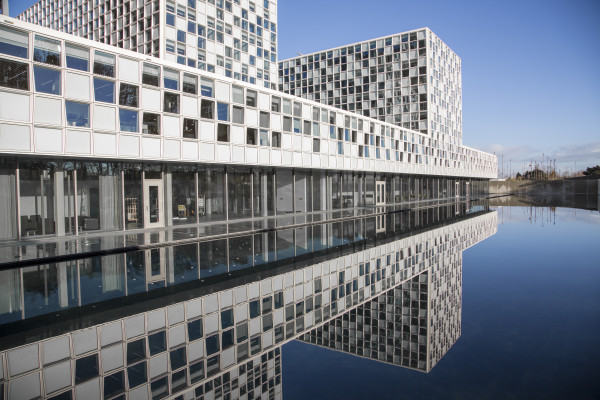
Today, on 21 November 2024, Pre-Trial Chamber I of the International Criminal Court (‘Court') (www.ICC-cpi.int), in its composition for the Situation in the State of Palestine, unanimously issued two decisions rejecting challenges by the State of Israel (‘Israel') brought under articles 18 and 19 of the Rome Statute (the ‘Statute'). It also issued warrants of arrest for Mr Benjamin Netanyahu and Mr Yoav Gallant.

Decisions on requests by the State of Israel

The Chamber ruled on two requests submitted by the Israel on 26 September 2024. In the first request, Israel challenged the Court's jurisdiction over the Situation in the State of Palestine in general, and over Israeli nationals more specifically, on the basis of article 19(2) of the Statute. In the second request, Israel requested that the Chamber order the Prosecution to provide a new notification of the initiation of an investigation to its authorities under article 18(1) of the Statute. Israel also requested the Chamber to halt any proceedings before the Court in the relevant situation, including the consideration of the applications for warrants of arrest for Mr Benjamin Netanyahu and Mr Yoav Gallant, submitted by the Prosecution on 20 May 2024.

As to the first challenge, the Chamber noted that the acceptance by Israel of the Court's jurisdiction is not required, as the Court can exercise its jurisdiction on the basis of territorial jurisdiction of Palestine, as determined by Pre-Trial Chamber I in a previous composition. Furthermore, the Chamber considered that pursuant to article 19(1) of the Statute, States are not entitled to challenge the Court's jurisdiction under article 19(2) prior to the issuance of a warrant of arrest. Thus Israel's challenge is premature. This is without prejudice to any future possible challenges to the Court's jurisdiction and/or admissibility of any particular case.

Decision on Israel's challenge to the jurisdiction of the Court pursuant to article 19(2) of the Rome Statute (https://apo-opa.co/4i2p05M)

The Chamber also rejected Israel's request under article 18(1) of the Statute. The Chamber recalled that the Prosecution notified Israel of the initiation of an investigation in 2021. At that time, despite a clarification request by the Prosecution, Israel elected not to pursue any request for deferral of the investigation. Further, the Chamber considered that the parameters of the investigation in the situation have remained the same and, as a consequence, no new notification to the State of Israel was required. In light of this, the judges found that there was no reason to halt the consideration of the applications for warrants of arrest.

Decision on Israel's request for an order to the Prosecution to give an Article 18(1) notice (https://apo-opa.co/40Y6DsN)

Warrants of arrest

The Chamber issued warrants of arrest for two individuals, Mr Benjamin Netanyahu and Mr Yoav Gallant, for crimes against humanity and war crimes committed from at least 8 October 2023 until at least 20 May 2024, the day the Prosecution filed the applications for warrants of arrest.

The arrest warrants are classified as ‘secret', in order to protect witnesses and to safeguard the conduct of the investigations. However, the Chamber decided to release the information below since conduct similar to that addressed in the warrant of arrest appears to be ongoing. Moreover, the Chamber considers it to be in the interest of victims and their families that they are made aware of the warrants' existence.

At the outset, the Chamber considered that the alleged conduct of Mr Netanyahu and Mr Gallant falls within the jurisdiction of the Court. The Chamber recalled that, in a previous composition, it already decided that the Court's jurisdiction in the situation extended to Gaza and the West Bank, including East Jerusalem. Furthermore, the Chamber declined to use its discretionary proprio motu powers to determine the admissibility of the two cases at this stage. This is without prejudice to any determination as to the jurisdiction and admissibility of the cases at a later stage.

With regard to the crimes, the Chamber found reasonable grounds to believe that Mr Netanyahu, born on 21 October 1949, Prime Minister of Israel at the time of the relevant conduct, and Mr Gallant, born on 8 November 1958, Minister of Defence of Israel at the time of the alleged conduct, each bear criminal responsibility for the following crimes as co-perpetrators for committing the acts jointly with others: the war crime of starvation as a method of warfare; and the crimes against humanity of murder, persecution, and other inhumane acts.

The Chamber also found reasonable grounds to believe that Mr Netanyahu and Mr Gallant each bear criminal responsibility as civilian superiors for the war crime of intentionally directing an attack against the civilian population.

Alleged crimes

The Chamber found reasonable grounds to believe that during the relevant time, international humanitarian law related to international armed conflict between Israel and Palestine applied. This is because they are two High Contracting Parties to the 1949 Geneva Conventions and because Israel occupies at least parts of Palestine. The Chamber also found that the law related to non-international armed conflict applied to the fighting between Israel and Hamas. The Chamber found that the alleged conduct of Mr Netanyahu and Mr Gallant concerned the activities of Israeli government bodies and the armed forces against the civilian population in Palestine, more specifically civilians in Gaza. It therefore concerned the relationship between two parties to an international armed conflict, as well as the relationship between an occupying power and the population in occupied territory. For these reasons, with regards to war crimes, the Chamber found it appropriate to issue the arrest warrants pursuant to the law of international armed conflict. The Chamber also found that the alleged crimes against humanity were part of a widespread and systematic attack against the civilian population of Gaza.

The Chamber considered that there are reasonable grounds to believe that both individuals intentionally and knowingly deprived the civilian population in Gaza of objects indispensable to their survival, including food, water, and medicine and medical supplies, as well as fuel and electricity, from at least 8 October 2023 to 20 May 2024. This finding is based on the role of Mr Netanyahu and Mr Gallant in impeding humanitarian aid in violation of international humanitarian law and their failure to facilitate relief by all means at its disposal. The Chamber found that their conduct led to the disruption of the ability of humanitarian organisations to provide food and other essential goods to the population in need in Gaza. The aforementioned restrictions together with cutting off electricity and reducing fuel supply also had a severe impact on the availability of water in Gaza and the ability of hospitals to provide medical care.

The Chamber also noted that decisions allowing or increasing humanitarian assistance into Gaza were often conditional. They were not made to fulfil Israel's obligations under international humanitarian law or to ensure that the civilian population in Gaza would be adequately supplied with goods in need. In fact, they were a response to the pressure of the international community or requests by the United States of America. In any event, the increases in humanitarian assistance were not sufficient to improve the population's access to essential goods.

Furthermore, the Chamber found reasonable grounds to believe that no clear military need or other justification under international humanitarian law could be identified for the restrictions placed on access for humanitarian relief operations. Despite warnings and appeals made by, inter alia, the UN Security Council, UN Secretary General, States, and governmental and civil society organisations about the humanitarian situation in Gaza, only minimal humanitarian assistance was authorised. In this regard, the Chamber considered the prolonged period of deprivation and Mr Netanyahu's statement connecting the halt in the essential goods and humanitarian aid with the goals of war.

The Chamber therefore found reasonable grounds to believe that Mr Netanyahu and Mr Gallant bear criminal responsibility for the war crime of starvation as a method of warfare.

The Chamber found that there are reasonable grounds to believe that the lack of food, water, electricity and fuel, and specific medical supplies, created conditions of life calculated to bring about the destruction of part of the civilian population in Gaza, which resulted in the death of civilians, including children due to malnutrition and dehydration. On the basis of material presented by the Prosecution covering the period until 20 May 2024, the Chamber could not determine that all elements of the crime against humanity of extermination were met. However, the Chamber did find that there are reasonable grounds to believe that the crime against humanity of murder was committed in relation to these victims.

In addition, by intentionally limiting or preventing medical supplies and medicine from getting into Gaza, in particular anaesthetics and anaesthesia machines, the two individuals are also responsible for inflicting great suffering by means of inhumane acts on persons in need of treatment. Doctors were forced to operate on wounded persons and carry out amputations, including on children, without anaesthetics, and/or were forced to use inadequate and unsafe means to sedate patients, causing these persons extreme pain and suffering. This amounts to the crime against humanity of other inhumane acts.

The Chamber also found reasonable grounds to believe that the abovementioned conduct deprived a significant portion of the civilian population in Gaza of their fundamental rights, including the rights to life and health, and that the population was targeted based on political and/or national grounds. It therefore found that the crime against humanity of persecution was committed.

Finally, the Chamber assessed that there are reasonable grounds to believe that Mr Netanyahu and Mr Gallant bear criminal responsibility as civilian superiors for the war crime of intentionally directing attacks against the civilian population of Gaza. In this regard, the Chamber found that the material provided by the Prosecution only allowed it to make findings on two incidents that qualified as attacks that were intentionally directed against civilians. Reasonable grounds to believe exist that Mr Netanyahu and Mr Gallant, despite having measures available to them to prevent or repress the commission of crimes or ensure the submittal of the matter to the competent authorities, failed to do so.

Background

On 1 January 2015, The State of Palestine lodged a declaration under article 12(3) of the Rome Statute accepting jurisdiction of the Court since 13 June 2014.

On 2 January 2015, The State of Palestine acceded to the Rome Statute by depositing its instrument of accession with the UN Secretary-General. The Rome Statute entered into force for The State of Palestine on 1 April 2015.

On 22 May 2018, pursuant to articles 13(a) and 14 of the Rome Statute, The State of Palestine referred to the Prosecutor the Situation since 13 June 2014, with no end date. 

On 3 March 2021, the Prosecutor announced the opening of the investigation into the Situation in the State of Palestine. This followed Pre-Trial Chamber I's decision (https://apo-opa.co/4fYvUHo) on 5 February 2021 that the Court could exercise its criminal jurisdiction in the Situation and, by majority, that the territorial scope of this jurisdiction extends to Gaza and the West Bank, including East Jerusalem. 

On 17 November 2023, the Office of the Prosecutor received a further referral of the Situation in the State of Palestine, from South Africa, Bangladesh, Bolivia, Comoros, and Djibouti, and on 18 January 2024, the Republic of Chile and the United Mexican State additionally submitted a referral to the Prosecutor with respect to the situation in The State of Palestine.

Distributed by APO Group on behalf of International Criminal Court (ICC).

For further information, please contact Fadi El Abdallah, Spokesperson and Head of Public Affairs Unit, International Criminal Court, by telephone at: +31 (0)70 515-9152 or +31 (0)6 46448938 or by e-mail at: fadi.el-abdallah@icc-cpi.int

You can also follow the Court's activities on Twitter (https://apo-opa.co/3CE1oV7), Facebook (https://apo-opa.co/4fUFF9J), Tumblr (https://apo-opa.co/40ZF16K), YouTube (https://apo-opa.co/3OnCATX), Instagram (https://apo-opa.co/4g1UEyR) and Flickr https://apo-opa.co/3CHEUT9).

Media files
International Criminal Court (ICC)
Download logo
Read moreICC Pre-trial Chamber I Rejects the State of Israel’s Challenges to Jurisdiction and Issues Warrants of Arrest for Benjamin Netanyahu and Yoav Gallant
21 November 2024

De Lille highlights the power of tourism 

Location: News

De Lille highlights the power of tourism 

The tourism sector is a dynamic economic force that contributes significantly to worldwide gross domestic product (GDP) while creating jobs and fostering human development.

“As South Africa, we are acutely aware of the transformative power of tourism and business events and we are working hard to elevate the profile of tourism and attract more business events and visitors to our beautiful and diverse country,” Tourism Minister Patricia de Lille said.

The Minister was addressing the Incentives, Business Travel & Meetings (IBTM) World Trade Show 2024 in Barcelona, Spain, on Wednesday. Tourism was for too long, seen as a “secondary” sector, its full potential often underestimated, she said.

“We come to IBTM World this year with excitement as in a few days’ time South Africa will officially take [the] Presidency of the 2025 G20 Summit, following Brazil’s hosting of the summit this year and ahead of the United States of America who will host the summit in 2026.”

She said as the leading business events destination in Africa and the Middle East as affirmed in the latest International Congress and Conventions Association (ICCA) rankings, South Africa stand proud and ready to host the G20 Summit and showcase all our diverse offerings in business and leisure tourism.

“South Africa hosting the G20 Summit marks a significant milestone and it is important both for our country and the greater African continent.

“As the only African country in the G20, South Africa brings a unique perspective to discussions, particularly those affecting developing nations and the African continent.

“Hosting the summit allows South Africa to not only spotlight issues such as economic inequality, development, climate change, and fair-trade practices but it is also helps to once again helps to connect countries to grow tourism and highlights South Africa’s capability to host successful incident-free global big events,” she explained.

READ | Brazil officially hands over G20 Presidency to South Africa

De Lille said the South African meetings, incentives, conferences, and exhibitions (MICE) industry was valued at 6.6 billion US dollars (R121.8 billion) in 2023, and it is projected to grow fourfold over the next eight years, reaching 25.9 billion US dollars (R477.9 billion) by 2032.

“I am confident that, with our dedicated efforts, we can even exceed these projections and this is why being at this crucial platform at IBTM World is important to us as we are committed to growing this sector beyond projections.

SA's hosting prowess 

“South Africa has consistently demonstrated its capability to host high-profile local and international events, showcasing our expertise and commitment to excellence.

“I can confidently assure you that, as a country we are looking forward to welcoming all the visitors including world leaders, delegates, media personnel and support staff to our shores.”

She added that South Africa has a formidable track record of hosting successful major business events annually and that the country’s hosting prowess will once again be on show for the world to see.

“We are excited to be able to share our unique stories with the world’s media as we also share with them our vast tapestry of cultures, award winning cuisine, natural beauty, diverse attractions and infrastructure.

“There is no doubt that as more of the world gets to see our country through the G20 Summit lens, we are confident that they too will be interested in coming to meet in South Africa and exploring our country.

“We are therefore looking forward to hosting even more international conferences, trade shows, and business events in future because certainly if the world still did not believe it, the G20 Summit cements our country as a capable host for large-scale events.”
De Lille told delegates attending the summit that South Africa is not just a destination, it is the gateway to the future of global collaboration and unforgettable experiences.

“The G20 Summit provides South Africa many gains and we are excited to use this event to grow global visibility, showcase our infrastructure improvements, and a strengthen our brand as a tourism and business events destination,” she said. – SAnews.gov.za


Edwin
Wed, 11/20/2024 - 15:11

113 views
Read moreDe Lille highlights the power of tourism 
20 November 2024

President Ramaphosa reflects on ’successful’ G20 Leaders’ Summit

Location: News

President Ramaphosa reflects on ’successful’ G20 Leaders' Summit

By Gabisile Ngcobo

Rio de Janiero - President Cyril Ramaphosa says that the two-day G20 Leaders’ Summit held in Rio de Janeiro, Brazil, has been a success. 

He noted that, despite some members holding dissenting views, a broad consensus was ultimately reached.

“The beauty of this summit is that it allowed everyone to express their views and articulate dissenting views or voices on issues. What we established at this summit is that even as a member or country dissents it will not stop the show,” the President said on Tuesday. 

The news broadcaster CNN reported that despite signing the G20 final declaration on Monday, Argentine President Javier Milei told the other Heads of State that he disagreed with some aspects of the document. 

Reports said President Milei opposed several issues, including the restriction of freedom of expression on social media, vulnerabilities to the sovereignty of global governance institutions, unequal treatment under the law, and the belief that increased state intervention is the solution to fighting hunger.

He also distanced himself from some text related to the 2030 Agenda.

“What we are learning is that in the end, when there is broad consensus - what we would call sufficient consensus - a declaration should be adopted,” President Ramaphosa said.

South Africa’s commander-in-chief said he would want this practice to be adopted by G20 countries.

The President addressed the media at the conclusion of the G20 Leaders’ Summit, which ended yesterday.

“Yes, there’s always an opportunity to have frank discussions about geopolitical issues, some of them quite testing and touching, such as what is happening in Palestine and Gaza, particularly in the Middle East and Ukraine.” 

He argued that there was no avoidance of the key and thorny issues in discussions. 

The President highlighted several key “takeaways” from the gathering and the achievements of the G20 Brazil Presidency. These include a focus on taxing the super-rich, reforming the governance of global institutions and financial organisations, as well as addressing climate change.

“Overall, this has been a very successful G20 Summit, and it lays a very good foundation for us as South Africa, as we now focus on having the next G20 Summit in Johannesburg, South Africa,” he added. 

Yesterday, Brazil officially handed over the historic G20 Presidency to South Africa at the closing ceremony of the annual summit.

READ I Brazil officially hands over G20 Presidency to South Africa

President Ramaphosa announced that South Africa had adopted the G20 Presidency theme of “Solidarity, Equality, and Sustainability”.

“Whatever pressure we may be facing is a pressure that is exerted on us by the conditions in which people in the world find themselves, particularly in the Global South, poverty, inequality, and joblessness.

“Those are the pressures that we are under, which we’ve got to address,” he told journalists. 

He said key priorities include ending hunger, addressing climate change, and focusing on digital technology, particularly artificial intelligence.

South Africa will also advocate for the African agenda and the interests of the Global South.

“We expect to have a successful summit in Johannesburg, and we’re really glad that many countries that were here are keen and willing to come and support us as we lead up to the summit in Johannesburg.”

He expressed eagerness to collaborate with United States President-elect Donald Trump as South Africa prepares for the summit and handover to the United States in 2026.

“We’re going to be working together for a solid two years, if not three. I’m hoping that diplomacy and the various protocols that exist amongst global leaders as well as countries are going to underpin the way that we work.

“I think we’ll have a good summit in South Africa, with the participation of the United States, and with President Donald Trump coming to South Africa. 

“I’ve already invited him for a State Visit, and we look forward to welcoming him.” – SAnews.gov.za


Gabisile
Wed, 11/20/2024 - 12:00

6 views
Read morePresident Ramaphosa reflects on ’successful’ G20 Leaders’ Summit
18 November 2024

World leaders pledge to help developing countries fight poverty

Location: News

World leaders pledge to help developing countries fight poverty

By Gabisile Ngcobo

Rio de Janeiro - Chinese President Xi Jinping has announced initiatives to support global development and strengthen the Global South as a significant player within the Group of 20 (G20).

Speaking at the G20 Leaders’ Summit on Monday in Rio de Janeiro, Brazil, President Xi emphasised that China was committed to fostering a fair world centred on mutual development.

The President commended Brazil’s G20 Presidency for placing fighting hunger and poverty at the top of the agenda and the decision to establish a Global Alliance Against Hunger and Poverty.

“From Hangzhou to Rio, we have been working for the same goal, that is, to build a just world of common development,” he said. 

However, he said to build such a world, leaders needed to channel more resources to such fields as trade, investment and development cooperation, as well as strengthen development institutions. 

“There should be more bridges of cooperation, and less ‘small yard, high fences’, so that more and more developing countries will be better off and achieve modernisation.” 

He called on the opening, inclusive and non-discriminatory environment for international economic cooperation and integration in digital, smart and green development to bridge the North-South gap.

President Xi said China was committed to ensuring that the Global South research centre currently under construction is effective. 

He emphasised that the US$20 billion allocated for development funds would be utilised effectively to support developing countries and enhance practical cooperation in key areas, including poverty reduction, food security, and the digital economy.

“China has decided to join the Global Alliance Against Hunger and Poverty. We support the G20 in continuing to convene the Development Ministerial Meeting and will stay a committed host of the International Conference on Food Loss and Waste.” 

Meanwhile, he announced that China, alongside Brazil, South Africa and the African Union, was proposing an Initiative on International Cooperation in Open Science to help the Global South gain better access to global advances in science, technology and innovation.

“China is pursuing high standard opening up and unilaterally opening our doors wider to the least developed countries (LDCs),” he explained, adding all LDCs having diplomatic relations with China zero-tariff treatment for 100% tariff lines. 

“From now to 2030, China’s imports from other developing countries are likely to top US$8 trillion.”

He called on leaders to promote a universally beneficial and inclusive economic globalisation to bridge the North-South gap.

United States President Joe Biden highlighted his administration’s efforts to combat global hunger and poverty.

On Sunday, as part of his historic trip to the Amazon, President Biden announced that the United States had fulfilled the historic pledge to increase the country’s international climate finance to over $11 billion a year by 2024 – making the United States the largest bilateral provider of climate finance in the world. 

Indian Prime Minister Narendra Modi discussed poverty, saying it was an important issue and that achievements in this area would significantly contribute to sustainable progress.

During his remarks, he spoke about India’s efforts, notably how the country collectively worked to remove 250 million people from the clutches of poverty.

The Prime Minister highlighted how India was providing free rations to 800 million people, thus strengthening the fight against hunger. 

He touched on the initiatives being undertaken to ensure top quality and affordable healthcare for the poor and elderly, steps to boost financial self-reliance among women and ensure food as well as nutritional security.

“India believes in the approaches of ‘Back to Basics’ and ‘March to Future’. That is why we are emphasising organic farming, popularising millets and encouraging climate-resilient crop varieties.” 

The G20 leaders will discuss global solutions to eradicate hunger, reduce social inequality, and promote sustainable development and food security to ensure a fairer and more equal future. 

Read I Two-day G20 Summit kicks off in Brazil

French President Emmanuel Macron said they were counting on Brazil's leadership to ensure that the G20 moves forward to address global crises and challenges. 

“No country should choose between fighting poverty and protecting the planet,” he said, adding that France will do everything in their power to address these issues. – SAnews.gov.za


Gabisile
Mon, 11/18/2024 - 21:51

77 views
Read moreWorld leaders pledge to help developing countries fight poverty
18 November 2024

Two-day G20 Summit kicks off in Brazil

Location: News

Two-day G20 Summit kicks off in Brazil

By Gabisile Ngcobo

Rio de Janeiro - The long-awaited Group of 20 (G20) Leaders’ Summit has kicked off with Heads of State and their delegates being welcomed at the Museum of Modern Art in Rio de Janeiro, in Brazil on Monday. 

The venue, located in the heart of the city and showcasing a collection of Brazilian and international masterpieces, is hosting Heads of State from the 20 largest economies, along with representatives from the European Union and the African Union, over the next two days. 

Located within the iconic Flamengo Park, the museum boasts tranquil, lush green surroundings. 

This prominent gathering of world leaders has been convened to discuss critical issues affecting the globe, with a specific focus on climate change. 

Several roads will be closed to the public for the duration of the summit, which will conclude on Tuesday, 19 November 2024, as many visitors return home. 

Visitors are welcomed by clean streets adorned with billboards and posters featuring the G20 Summit logo. 

Security personnel, including local police and army members, are ensuring the venue is secure as they line the streets on a warm spring day, leading to the main venue and the media centre. 

Law enforcement personnel, many of whom are armed, are conducting security patrols and bag checks. 

The city has deployed 130 traffic operators along with 55 motorcycles and 22 operational vehicles in areas directly related to the event and along the city’s main traffic routes. 

President Cyril Ramaphosa, Indian Prime Minister Narendra Modi, United States President Joe Biden, and Chinese President Xi Jinping are among the leaders in attendance. 

Brazilian President Luiz Inácio Lula da Silva welcomed the leaders of the G20 guest countries, while his wife, Janja Lula da Silva, greeted spouses of guest nations and G20 members. 

Da Silva delivered welcoming remarks before the first session, which will discuss social inclusion and the fight against hunger and poverty. 

United Nations (UN) Secretary-General António Guterres is also attending the gathering and expressed gratitude to President da Silva for hosting him in his country for this year’s G20 Leaders’ Summit. 

“Our times are tumultuous, and we need to race much faster to tackle fundamental common challenges. The climate crisis has burned through another record, with 2024 likely to be the hottest year in history.

“We see the impacts everywhere. Look no further than the drought in the Amazon and horrible floods in southern Brazil,” he told the media. 

Meanwhile, he said conflicts are raging and impunity spreading, with repeated violations of international law and the UN Charter. 

“Inequality is growing, and progress on poverty and hunger has stalled. The Sustainable Development Goals are off-track.” 

He challenged the G20 leaders to lead and tackle key global problems including peace. 

He advocated for the strengthening of the global financial safety net to ensure that all countries are protected when shocks occur. In addition, he urged nations to agree on an ambitious climate finance goal that addresses the significant challenges faced by developing countries. 

“Many challenges, but also many possible solutions. The G20 must lead by example. 

“This is fundamental to restoring trust, credibility, and legitimacy of every government and our global system in these turbulent times. We need to seize every opportunity to lead transformative action for a safer, more peaceful and sustainable world,” the General Secretary added. – SAnews.gov.za


Gabisile
Mon, 11/18/2024 - 17:00

59 views
Read moreTwo-day G20 Summit kicks off in Brazil
17 November 2024

President arrives in Brazil to lead SA’s participation at G20 Summit

Location: News

President arrives in Brazil to lead SA’s participation at G20 Summit

President Cyril Ramaphosa arrived in Brazil on Saturday night to lead South Africa’s participation in the Group of Twenty (G20) Leaders’ Summit in Rio de Janeiro.

The G20 Leaders’ Summit, which will be held between 18 and 19 November 2024, will focus on “Building a Just World and a Sustainable Planet”. 

“Brazil’s G20 Presidency continues the global south rotating Presidency and during its tenure prioritises social inclusion and the fight against hunger and poverty, energy transitions and the promotion of sustainable development in its economic, social, environmental dimensions and the reform of global governance Institutions,” the Presidency said in a statement.

On Sunday, 17 November 2024, President Ramaphosa will participate in the launch of the Leveraging the Potential of Renewables – The Road to Johannesburg Campaign. 

On Monday, 18 November 2024, at the beginning of the Leaders’ Summit, the President will present South Africa’s statements during plenary sessions. These statements will focus on the fight against hunger and poverty and the reform of global governance institutions.

South Africa will officially receive the G20 Presidency during the Leaders’ Summit and will continue to build on the initiatives of its Global South predecessors starting from 1 December 2024, under the rallying call of “Solidarity, Equality, and Sustainability”. 

The G20 is the leading forum for global economic cooperation and governance, representing 85% of the world’s Gross Domestic Product (GDP), 75% of global trade, and two-thirds of the global population. 

It serves as a platform to promote effective multilateral cooperation by uniting the world’s major economies to ensure economic stability and sustainable growth worldwide.

The G20 consists of 19 countries: Argentina, Australia, Brazil, Canada, China, France, Germany, India, Indonesia, Italy, Japan, South Korea, Mexico, Saudi Arabia, South Africa, Russia, Türkiye, the United Kingdom and the United States. Additionally, it includes two organisations: the African Union and the European Union.

The President is expected to hold bilateral meetings on the margins of the Leaders’ Summit. 

According to the Presidency, South Africa’s participation in the G20 is guided by the four strategic foreign policy pillars.

These include advancing national interests to attain domestic objectives, enhancing the African agenda and promoting Africa’s sustainable development, South-South Cooperation and influencing the global multilateral architecture by advancing the agenda of the South through North-South dialogue. 

“South Africa’s participation in the G20 therefore seeks to provide strategic direction in establishing a more equitable, representative and fit-for-purpose international order, in support of the main multilateral processes under the United Nations.”

President Ramaphosa is accompanied by Minister of International Relations and Cooperation Ronald Lamola and Minister in the Presidency Khumbudzo Ntshavheni. – SAnews.gov.za

Gabisile
Sun, 11/17/2024 - 05:58

64 views
Read morePresident arrives in Brazil to lead SA’s participation at G20 Summit
16 November 2024

Commission Confirms Probe Into Magistrate Blose’s Appointment

Location: News

Blose was once an accused in a high profile corruption matter

Read moreCommission Confirms Probe Into Magistrate Blose’s Appointment
14 November 2024

SA condemns Israeli government’s annexation orders for the West Bank

Location: News

SA condemns Israeli government’s annexation orders for the West Bank

South Africa has expressed dismay at a statement attributed to Israel’s Finance Minister Bezalel Smotrich, who called for the annexation of the West Bank on Monday.

Reports indicate that Smotrich has initiated preparations for the annexation of the occupied West Bank, anticipating the inauguration of United States President-elect Donald Trump in January 2025.

The Department of International Relations and Cooperation said the development was compounded by a decision adopted by the Israeli Cabinet on 18 June 2024, which gave Smotrich approval to plan construction in the Occupied Palestinian Territory (OTP). 

“It should be recalled that soon after his appointment to his current position, Mr Smotrich moved quickly to approve thousands of new settlement homes and legalised previously unauthorised settlements, which practically made it more difficult for Palestinians to build homes and move around.” 

The department believes that the Israeli government has long sought to find ways to permanently seize or annex the occupied West Bank. 

“South Africa calls on the international community to unequivocally oppose the Israeli government’s continued violation of its obligations under international law and resolutions relating to its belligerent occupation.

“The Israeli government’s provocative policies and actions are extreme and warrant a decisive response by the international community. South Africa is opposed to the Israeli illegal annexation and settlement expansion on Palestinian lands.” 

South Africa, said the department, believes these developments go further than just a de facto annexation of the OPTs and entrenching illegal Israel’s presence in the OPT, particularly in the West Bank. 

“This latest move illustrates the lack of any meaningful effort directed at achieving peace or any hope for a two-state solution,” the statement read. 

On 23 December 2016, the United Nations Security Council (UNSC) adopted Resolution 2334, which condemned Israeli settlements in Palestinian territories and called for an end to settlement construction

In addition, South Africa further calls for concrete actions aimed at reviving a political process, leading to the establishment of a viable Palestinian State, in compliance with all relevant UN resolutions, International Law and international agreements. – SAnews.gov.za

Gabisile
Thu, 11/14/2024 - 11:04

96 views
Read moreSA condemns Israeli government’s annexation orders for the West Bank
13 November 2024

Cabinet congratulates Botswana, Mozambique and the USA

Location: News

Cabinet congratulates Botswana, Mozambique and the USA

Cabinet has extended its congratulations to the governments and people of the Republic of Botswana, Mozambique and the United States of America (USA) on the successful conclusion of their recent elections.

“Cabinet commends the Umbrella for Democratic Change coalitions in Botswana on its success under the leadership of President-elect Duma Boko, and welcomed the establishment of transitional plans between the outgoing administration and the incoming administration of President-elect Boko,” Minister in the Presidency Khumbudzo Ntshavheni said in a post-Cabinet briefing on Wednesday.

Cabinet has also congratulated Mozambican President-elect Daniel Chapo and his party, FRELIMO, on their victory following the country’s historic election, which was held 32 years following the signing of the General Peace Agreement. 

The agreement brought an end to the civil war and introduced multi-party democracy in Mozambique.

US Election outcome

Cabinet has further congratulated President-elect Donald Trump following the US elections held on 5 November 2024. 

“South Africa looks forward to working very closely with President-elect Trump over the next 12 months when President Cyril Ramaphosa assumes the Presidency of the G20 on 1 December 2024,” Cabinet said. 

Answering a question on whether the US Presidential election outcome will change anything between South Africa and the US, Ntshavheni said government has indicated that it relates with the US government and that "it doesn’t matter which administration is in place". 

“Our trade relationship is with the government of the day, and we continue to engage with them and whether there are trade issues or other diplomatic issues. Our view is that our participation in AGOA [African Growth and Opportunity Act] is anchored by the value that South Africa adds in the AGOA process, and how its participation adds value for the American economy – that is the position we maintain,” the Minister said. – SAnews.gov.za


DikelediM
Wed, 11/13/2024 - 15:01

246 views
Read moreCabinet congratulates Botswana, Mozambique and the USA
13 November 2024

Ongoing post-election violence in Mozambique a concern – Cabinet

Location: News

Ongoing post-election violence in Mozambique a concern – Cabinet

Cabinet has expressed concern over the ongoing post-election violence in Mozambique, urging all parties involved to use established legal channels to address their election-related grievances.

“The ongoing post-election violence is a concern, and all the disaffected parties should exhaust established legal remedies to resolve their election grievances and continue to build on the foundations of peace laid in the Maputo Accord for Peace and National Reconciliation,” Minister in the Presidency Khumbudzo Ntshavheni said during a post-Cabinet briefing on Wednesday. 

The Minister explained that SADC and AU representatives were present during the elections in Mozambique and that these structures indicated that despite a few hitches the elections were generally free. There were no incidents of violence or intimidation reported during elections. 

READ I South Africa calls for calm amid post-election tensions in Mozambique

“Mozambique, just like South Africa, the United States and Botswana, has a mechanism and a system of disputing elections. It is the view of South Africa that all parties that are not happy with the election’s outcome, like we had in South Africa, must do so using the right channels.

“The parties in Mozambique must submit their grievances and their evidence of displeasure or dissatisfaction through the constitutional counsel and allowed the counsel to adjudicate on the matter. There is a period allowed for that.” 

The Minister expressed concern over the recent violence, particularly those inciting unrest, saying it “sets a dangerous precedent”. 

She said diplomatic channels have been engaged to ensure security forces do not use disproportionate force against those who are demonstrating. – SAnews.gov.za

DikelediM
Wed, 11/13/2024 - 15:04

255 views
Read moreOngoing post-election violence in Mozambique a concern – Cabinet
11 November 2024

Lebanese Community Protests Outside Israeli Embassy

Location: News

Call for South Africa to cut coal exports to Israel

Read moreLebanese Community Protests Outside Israeli Embassy
7 November 2024

Pensioner Loses Everything on Banxso

Location: News

The investment platform under scrutiny since April has had its license suspended

Read morePensioner Loses Everything on Banxso
30 October 2024

Afreximbank Calls for Increased Collaboration to Accelerate the Green Energy Transition in Africa

Location: News
Afreximbank

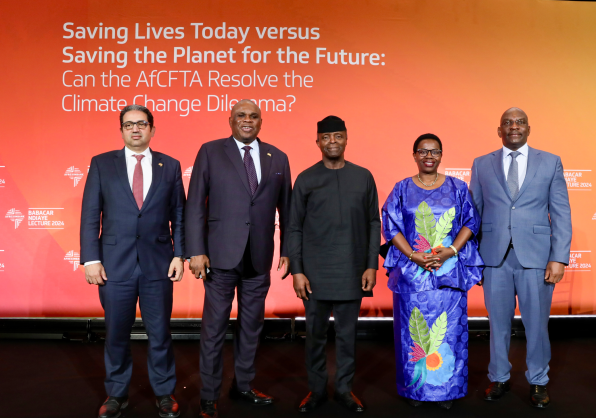
The eighth Babacar Ndiaye Lecture held at the Four Seasons Hotel in Washington D.C., on 26 October 2024, under-scored the need for African nations to strike a balance between short-term development imperatives and long-term climate goals. 

Under the theme “Saving Lives Today versus Saving the Planet for the Future: Can the AfCFTA Resolve the Climate Change Dilemma” discussions centred on how the African Continental Free Trade Area (AfCFTA), Africa's most ambitious trade initiative, could serve as a vehicle for economic growth and environmental sustainability, positioning the continent as a leader in the global green transition.  

The Lecture drew a distinguished audience of policymakers, academics, financial experts and climate advocates.  

Speaking about Dr. Babacar Ndiaye in his opening remarks, H.E. Professor Benedict Oramah, President and Chairman of the Board of Directors of Afreximbank Group, said “Dr Babacar Ndiaye was most concerned by the long-term threats posed to humanity by climate change. He once said, "Climate change is the greatest threat to development, particularly in Africa, where millions of people depend on the environment for their livelihoods … Africa's economic transformation cannot happen without addressing climate change.”  

Dr. Ndiaye's reflection on the impact of climate change was spot-on and intellectually deep.” But, “disappointingly, the global debate on climate has been so much focused on emissions reduction with the question of reducing its impact on Africa and other developing countries always reduced to a footnote. A call for Africa to decarbonise, when the continent has not even carbonised, poses a serious threat to the socio-economic development of a gas-rich continent that has at least six hundred million people without electricity.” 

The African Continental Free Trade Area Agreement “is seen as a potent means of reducing carbon emissions as it is helping to domesticate industrial activities and minimise the carbon emissions caused by shipping of commodities to far-away lands for value addition and reshipping to Africa and elsewhere. We believe that The AfCFTA could offer a pathway to a just transition, enabling local industrial value addition while protecting the planet.”  

Professor Yemi Osinbajo, SAN, GCON, the Immediate Past Vice President of the Federal Republic of Nigeria, delivered a powerful address titled “Sustainable Infrastructure for Africa's Future: Harnessing Innovation and Partnerships.” He spoke passionately about the advantages of the AfCFTA and its potential to transform Africa's trade landscape, reduce carbon emissions and foster innovation in green industries. 

“There are two obvious advantages to a fully operational AfCFTA.The first is that 42% of African countries, aside from North Africa, now have legislation prohibiting the export of raw ores or minerals before being processed. This legislation gives African countries the benefit of jobs and revenues from local processing and manufacturing.  

“The second advantage of the AfCFTA is that shipping is a major source of carbon emissions. Under current trade practices, a large share of African raw materials are exported to other regions, where they are processed or manufactured into finished products, usually using fossil fuel power sources, before being shipped back to Africa for consumption. This cycle contributes to higher emissions and constitutes a loss for African countries that do not reap the value chain gain from beneficiation. Intra-African trade in finished goods will substantially reduce this massive cause of global emissions,” he said. 

The reduction of emissions by intra-African trade has been the subject of several empirical studies. Professor Osinbajo referred to a recent ECA/ CEPII study titled “Greening the African Continental Free Trade Area Agreement's Implementation" published in December 2023, which found, inter alia, that implementing the AfCFTA can boost intra-African trade by 35% in 2045 while increasing GHG emissions by less than 1%, compared to no AfCFTA or climate policies.  

These studies do not factor in using renewable energy sources in the processing and manufacturing of traded goods, an assumption of the Climate Positive Growth paradigm, which would again substantially reduce emissions.  

Professor Osinbajo cited mining bauxite in Guinea as an example. If Guinea, which has 25% of global deposits of bauxite, processed the bauxite it mines to aluminium with renewable energy in readiness for export, Guinea could save the world 335 million tonnes of carbon dioxide equivalent (CO2e) per year, which is approximately 1% of global emissions, and create 280,000 jobs and generate $37 billion of additional revenue. If it chooses to sell the aluminium within Africa, it will again save the huge shipping cost to countries thousands of miles away.  

A Bloomberg study done for the African Development Bank (AfDB) in 2021 on the manufacture of battery precursors found that manufacturing battery precursors in the Democratic Republic of the Congo (DRC), which has plenty of lithium and cobalt, is three times cheaper than manufacturing it in the US, EU and China. Manufacturing in the DRC would extend value chain opportunities to other African countries, they would need manganese from Zambia, Tanzania, Gabon and South Africa to contribute to its capacity to produce these battery precursors. Manufacturing using renewable energy could significantly reduce the cost of manufacturing. Africa's abundant renewable energy has very low seasonality or intermittency, making it possible to reliably provide a renewable baseload to power continuous industrial production.  

“The AfCFTA empowers African countries first to add value to materials and specialise in areas of national comparative advantage, and also to work together to trade more beneficially with the rest of the world,” said Prof Osinbajo. 

He futher said that “Most African countries depend on fossil fuels for their energy needs and for fossil fuel rich African countries, this is also a major source of export earnings and fiscal revenues. Ostensibly in keeping with their net zero obligations, there has been a growing trend amongst development finance institutions to withdraw from fossil fuel investment. These actions include the World Bank's decision to cease funding for upstream oil and gas development in Africa and the restrictions on financing downstream gas development by the European Union, the United Kingdom, and the United States. Clearly, the implications of these actions are dire, where there are no immediate alternative sources of power and the cost of the transition to cleaner fuels may be prohibitive. Some studies show that divesting from fossil fuels could reduce GDP by as much as USD$30 billion for Nigeria, USD$22 billion for Algeria, and USD$19.3 billion for Angola.” 

H.E. Dr Rania A Al-Mashat, Minister for Planning, Economic Development and International Co-operation, Arab Republic of Egypt said that while the “African continent is the least responsible for carbon emissions, it has the biggest burden in terms of financing climate change for developmental needs - such as food and water security, and access to energy. 

She called for greater collaboration with national and international stakeholders “We need to work together; we need to bring the experiences from other places so that Africa can push forward with respect to development and sustainable economic growth.” 

In her Goodwill Message, Ms. Amina J. Mohammed, Deputy Secretary-General of the United Nations and Chair of the United Nations Sustainable Development Group, spoke about the rapidly closing window to prevent the worst impacts of climate change. She addressed the fact that many African countries are mired in debt, exacerbated by extended crises with little access to long-term concessional financing to invest in sustainable development. 

“With adequate access to financial resources at a reasonable cost, renewables can dramatically boost economies, grow new industries, create jobs and drive development, including by reaching the over 600 million Africans living without access to power,” said Ms Mohammed. 

She also stressed the importance of prioritising inclusive policies that empower women and youth when building climate-resilient economies.  

“By harnessing the collective might of the AfCFTA, Africa can make strides in addressing both climate action and sustainable development by promoting regional integration and fostering green industrialisation.  

“The AfCFTA can help build climate-resilient economies while creating jobs, reducing poverty and strengthening food security.”  

The eighth Babacar Ndiaye Lecture also reinforced Afreximbank's commitment to leadership in financing sustainable infrastructure and trade policies across the continent. 

Distributed by APO Group on behalf of Afreximbank.

Media Contact: 
Vincent Musumba 
Communications and Events Manager (Media Relations) 
Email: press@afreximbank.com 

For more information, visit: www.Afreximbank.com  
Follow us on X | Facebook (https://apo-opa.co/3YJR7iS)| LinkedIn (https://apo-opa.co/3Cet3eR) | Instagram (https://apo-opa.co/4ht2qDa)

About the Babacar Ndiaye Lecture 
The Babacar Ndiaye Lecture is an annual event designed to foster dialogue around Africa's development challenges and explore practical solutions through policy, trade and diplomacy.  

The Lecture honours Babacar Ndiaye, a former President of the African Development Bank, for his visionary leadership in advancing Africa's economic growth. 

Afreximbank has hosted this Lecture every year since 2017 in honour of the late Dr. Babacar Ndiaye, the fifth President of the African Development Bank. Dr. Ndiaye transformed the Bank during his decade-long leadership and was also instrumental in establishing several other enduring Pan-African institutions, including Afreximbank, Shelter Afrique and the African Business Roundtable. 

About Afreximbank 
African Export-Import Bank (Afreximbank) is a Pan-African multilateral financial institution mandated to finance, facilitate and promote intra and extra-African trade. For over 30 years, the Bank has been deploying innovative instruments to deliver financing solutions that support the transformation of the structure of Africa's trade, accelerating industrialisation and intra-regional trade, thereby boosting economic expansion in Africa. A stalwart supporter of the African Continental Free Trade Area (AfCFTA), Afreximbank has in partnership with the African Union Commission and the AfCFTA Secretariat launched the Pan-African Payment and Settlement System (PAPSS) that was adopted by the African Union (AU) as the payment and settlement platform to underpin the implementation of the AfCFTA agreement. The AfCFTA Secretariat and the Bank have created a US$10 billion Adjustment Fund to support countries to effectively participate in the AfCFTA.  

At the end of December 2023, Afreximbank's total assets and guarantees stood at over US$37.3 billion, and its shareholder funds amounted to US$6.1 billion. Afreximbank has investment grade ratings assigned by GCR (international scale) (A), Moody's (Baa1), Japan Credit Rating Agency (JCR) (A-) and Fitch (BBB). Afreximbank has evolved into a group entity comprising the Bank, its impact fund subsidiary the Fund for Export Development Africa (FEDA), and its insurance management subsidiary, AfrexInsure, (together, “the Group”). The Bank is headquartered in Cairo, Egypt.  

Media files
Afreximbank
Download logo
Read moreAfreximbank Calls for Increased Collaboration to Accelerate the Green Energy Transition in Africa
28 October 2024

Presidency asserts stance on South Africa’s foreign policy 

Location: News

Presidency asserts stance on South Africa’s foreign policy 

The Presidency has reaffirmed South Africa’s commitment to a foreign policy grounded in solidarity, peace, equality, human rights and sustainable development for the benefit of all.

In a statement on Sunday, the Presidency emphasised that President Cyril Ramaphosa is dedicated to strengthening political and trade ties, while supporting the rights of oppressed communities globally.

“As President Cyril Ramaphosa continues to lead the 7th administration in strengthening all key political and trade ties, working in solidarity with the oppressed peoples of the world in Palestine and Western Sahara, while advocating for peaceful resolution of conflicts around the globe, South Africa will maintain a foreign policy that is informed by solidarity, peace, equality, human rights and sustainable development for the benefit of all. 

"This is the responsibility that President Ramaphosa will continue to exercise without any undue pressure and in line with South Africa’s national sovereign interest,” the Presidency said.

In an August 2023 address preceding the South African-hosted 15th BRICS Summit, President Ramaphosa outlined the values underpinning the country’s foreign policy. 

In the address, President Ramaphosa articulated the principles and values that shape the country’s foreign policy and inform its international relations.

“Before the dawn of democracy in 1994, the apartheid South African state was a pariah in the international community, condemned for committing a crime against humanity," President Ramaphosa said at the time.

He highlighted that the foreign policy of apartheid South Africa was defined by coercion, destabilisation and military aggression. 

“Since the advent of democracy, South Africa’s foreign policy has been based on what our forebears inscribed in the Freedom Charter in 1955, when they declared that: 'South Africa shall be a fully independent State, which respects the rights and the sovereignty of all nations; South Africa shall strive to maintain world peace and the settlement of all international disputes by negotiation – not war'."

The President further affirmed South Africa’s foreign policy as a vital element of the nation's progress. South Africa’s strong relations with other countries manifested through investment and trade relations that can contribute to the growth of the economy, create more opportunities for new businesses and create jobs. 

“President Ramaphosa has been steadfast in maintaining South Africa’s commitment to the policy of active non-alignment. South Africa has resisted pressure to align with any one of the global powers or with influential blocs of nations in their pursuit of power contestations that are unfolding in countries across the globe. 

“The President observed during his foreign policy address that, 'during the Cold War, the stability and sovereignty of many African countries was undermined because of their alignment with the major powers. This experience has convinced us of the need to seek strategic partnerships with other countries rather than be dominated by any other country. 

“While some of our detractors prefer overt support for their political and ideological choices, we will not be drawn into a contest between global powers. Instead, our country strives to work with all countries for global peace and development,” the Presidency said. 

The Presidency noted that it is this resolute adherence to the policy of non-alignment and to the prescripts of the Freedom Charter which informed the nation’s Constitution that South Africa continues to contribute towards the attainment of world peace and silencing the guns on the continent.

The Presidency clarified that President Ramaphosa’s recent remarks declaring President Putin and the people of Russia as “valuable friends and allies”, he was not projecting any particular country or bloc of countries as the enemy. 

“Similarly, as a country that has no enemies, South Africa regards the members of BRICS as friends. It is through the policy of non-alignment that South Africa has been able to constructively engage with both Russia and Ukraine.

“In several engagements, President Ramaphosa has emphasised the centrality of the United Nations Charter and the need for peaceful dialogue in resolving conflict. In the process South Africa has also maintained its strong historical ties with the Russian Federation, whilst enjoying cordial diplomatic bilateral relations with Ukraine. 

“South Africa has also been unwavering in advocating for a peace process that includes the full participation of both countries,” the Presidency said. 

Today, International Relations and Cooperation Minister, Ronald Lamola, will host his Ukrainian counterpart, Minister Andrii Sybiha. 

Amongst the highlights of the visit will be the signing of an Agreement on Visa Waiver for Diplomatic Service or Official Passports. 

This will enable South African officials to travel to Ukraine for peace formula meetings without visa logistical impediments. This development, which has been in the making since 2020, signals South Africa’s commitment to growing diplomatic relations with Ukraine.  

South Africa will soon host the South Africa-European Union summit as part of its G20 presidency, strengthening its strategic partnership with the EU. 

South Africa is the only partner in Africa amongst the European Union’s 10 bilateral strategic partnerships.

The summit will further enhance the existing partnership with the European Union. 

South Africa will continue working towards strengthening the strategic, trade and political bilateral relationships with key partners including the Peoples Republic of China, United States of America, Germany, Japan, India and others. 

South Africa will further consolidate the full implementation of the African Continental Free Trade Area, which is set to eliminate trade barriers, boost intra African trade and achieve prosperity for all of Africa. The African Continental Free Trade Area will also accelerate manufacturing and industrial capacity on the continent. – SAnews.gov.za

DikelediM
Mon, 10/28/2024 - 09:55

390 views
Read morePresidency asserts stance on South Africa’s foreign policy 
28 October 2024

Presidency Asserts Responsibility and Stance on South Africa’s Foreign Policy

Location: News

The Presidency of the Republic of South Africa
Download logo

On the 20th of August 2023, ahead of the South African Chaired 15th BRICS Summit, President Cyril Ramaphosa delivered an address to the nation on South Africa's foreign policy.  

In the address, President Ramaphosa articulated the principles and values that shape our foreign policy and inform our international relations when he said: “Before the dawn of democracy in 1994, the apartheid South African state was a pariah in the international community, condemned for committing a crime against humanity.

The foreign policy of apartheid South Africa was defined by coercion, destabilisation and military aggression. Since the advent of democracy, South Africa's foreign policy has been based on what our forebears inscribed in the Freedom Charter in 1955, when they declared that: “South Africa shall be a fully independent state which respects the rights and the sovereignty of all nations; South Africa shall strive to maintain world peace and the settlement of all international disputes by negotiation – not war”.

The President further affirmed South Africa's foreign policy as vital element of our nation's progress. South Africa's strong relations with other countries manifested through investment and trade relations that can contribute to the growth of our economy, create more opportunities for new businesses and create jobs.

President Ramaphosa has been steadfast in maintaining South Africa's commitment to the policy of active non-alignment. South Africa has resisted pressure to align with any one of the global powers or with influential blocs of nations in their pursuit of power contestations that are unfolding in countries across the globe.

The President observed during his foreign policy address that, “during the ‘Cold War', the stability and sovereignty of many African countries was undermined because of their alignment with the major powers. This experience has convinced us of the need to seek strategic partnerships with other countries rather than be dominated by any other country.

While some of our detractors prefer overt support for their political and ideological choices, we will not be drawn into a contest between global powers. Instead, our country strives to work with all countries for global peace and development."

It is this resolute adherence to the policy of non-alignment and to the prescripts of the Freedom Charter which informed our constitution that South Africa continues to contribute towards the attainment of world peace and silencing the guns on our continent.

In declaring President Putin and the people of Russia as “valuable friends and allies”, President Ramaphosa was not projecting any particular country or block of countries as the enemy. Similarly, as a country that has no enemies, South Africa regards the members of BRICS as friends. 

It is through the policy of non-alignment that South Africa has been able to constructively engage with both Russia and Ukraine.

In several engagements, President Ramaphosa has emphasised the centrality of the United Nations Charter and the need for peaceful dialogue in resolving conflict. In the process South Africa has also maintained its strong historical ties with the Russian Federation, whilst enjoying cordial diplomatic bilateral relations with Ukraine. 

South Africa has also been unwavering in advocating for a peace process that includes the full participation of both countries.  

On Monday, 28 October 2024, South Africa's International Relations and Cooperation Minister, Hon. Ronald Lamola, will host his Ukrainian counterpart, Minister Andrii Sybiha. Amongst the highlights of the visit will be the signing of an Agreement on Visa Waiver for Diplomatic Service or Official Passports.

This will enable South African officials to travel to Ukraine for peace formula meetings without visa logistical impediments. This development, which has been in the making since 2020, signals South Africa's commitment to growing diplomatic relations with Ukraine.  

Within the first six months of 2025, the year of South Africa's G20 Presidency, our country will also host the South Africa-European Union summit. South Africa is the only partner in Africa amongst the EU's 10 bilateral strategic partnerships. The summit will further enhance the existing partnership with the European Union.

South Africa will continue working towards strengthening the strategic, trade and political bilateral relationships with key partners including the Peoples Republic of China, United States of America, Germany, Japan, India and others.

South Africa will further consolidate the full implementation of the African Continental Free Trade Area, which is set to eliminate trade barriers, boost intra African trade and achieve prosperity for all of Africa. The AFCFTA will also accelerate manufacturing and industrial capacity on our continent.

As President Cyril Ramaphosa continues to lead the 7th Administration in strengthening all key political and trade ties, working in solidarity with the oppressed peoples of the world in Palestine and Western Sahara, while advocating for peaceful resolution of conflicts around the globe, South Africa will maintain a foreign policy that is informed by solidarity, peace, equality, human rights and sustainable development for the benefit of all.

This is the responsibility that President Ramaphosa will continue to exercise without any undue pressure and in line with South Africa's national sovereign interest.  

Distributed by APO Group on behalf of The Presidency of the Republic of South Africa.

Read morePresidency Asserts Responsibility and Stance on South Africa’s Foreign Policy
  • Previous
  • Page 1
  • Interim pages omitted …
  • Page 7
  • Page 8
  • Page 9
  • Page 10
  • Page 11
  • Interim pages omitted …
  • Page 18
  • Next

Copyright © 2026 · MyZA · All Rights Reserved · Powered by Reach Trust