Promise Mabilo’s Child Has Asthma. She Is Fighting for Cleaner Air in Mpumalanga
“Living in Emalahleni is like living in a closed bottle. It’s difficult to breathe.”

MyZA
News, Directory, Events and Other Stuff
“Living in Emalahleni is like living in a closed bottle. It’s difficult to breathe.”
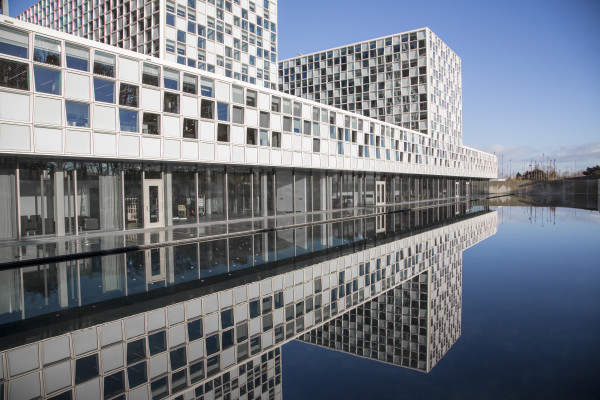
Today, on 21 November 2024, Pre-Trial Chamber I of the International Criminal Court (‘Court') (www.ICC-cpi.int), in its composition for the Situation in the State of Palestine, unanimously issued two decisions rejecting challenges by the State of Israel (‘Israel') brought under articles 18 and 19 of the Rome Statute (the ‘Statute'). It also issued warrants of arrest for Mr Benjamin Netanyahu and Mr Yoav Gallant.
Decisions on requests by the State of Israel
The Chamber ruled on two requests submitted by the Israel on 26 September 2024. In the first request, Israel challenged the Court's jurisdiction over the Situation in the State of Palestine in general, and over Israeli nationals more specifically, on the basis of article 19(2) of the Statute. In the second request, Israel requested that the Chamber order the Prosecution to provide a new notification of the initiation of an investigation to its authorities under article 18(1) of the Statute. Israel also requested the Chamber to halt any proceedings before the Court in the relevant situation, including the consideration of the applications for warrants of arrest for Mr Benjamin Netanyahu and Mr Yoav Gallant, submitted by the Prosecution on 20 May 2024.
As to the first challenge, the Chamber noted that the acceptance by Israel of the Court's jurisdiction is not required, as the Court can exercise its jurisdiction on the basis of territorial jurisdiction of Palestine, as determined by Pre-Trial Chamber I in a previous composition. Furthermore, the Chamber considered that pursuant to article 19(1) of the Statute, States are not entitled to challenge the Court's jurisdiction under article 19(2) prior to the issuance of a warrant of arrest. Thus Israel's challenge is premature. This is without prejudice to any future possible challenges to the Court's jurisdiction and/or admissibility of any particular case.
Decision on Israel's challenge to the jurisdiction of the Court pursuant to article 19(2) of the Rome Statute (https://apo-opa.co/4i2p05M)
The Chamber also rejected Israel's request under article 18(1) of the Statute. The Chamber recalled that the Prosecution notified Israel of the initiation of an investigation in 2021. At that time, despite a clarification request by the Prosecution, Israel elected not to pursue any request for deferral of the investigation. Further, the Chamber considered that the parameters of the investigation in the situation have remained the same and, as a consequence, no new notification to the State of Israel was required. In light of this, the judges found that there was no reason to halt the consideration of the applications for warrants of arrest.
Decision on Israel's request for an order to the Prosecution to give an Article 18(1) notice (https://apo-opa.co/40Y6DsN)
Warrants of arrest
The Chamber issued warrants of arrest for two individuals, Mr Benjamin Netanyahu and Mr Yoav Gallant, for crimes against humanity and war crimes committed from at least 8 October 2023 until at least 20 May 2024, the day the Prosecution filed the applications for warrants of arrest.
The arrest warrants are classified as ‘secret', in order to protect witnesses and to safeguard the conduct of the investigations. However, the Chamber decided to release the information below since conduct similar to that addressed in the warrant of arrest appears to be ongoing. Moreover, the Chamber considers it to be in the interest of victims and their families that they are made aware of the warrants' existence.
At the outset, the Chamber considered that the alleged conduct of Mr Netanyahu and Mr Gallant falls within the jurisdiction of the Court. The Chamber recalled that, in a previous composition, it already decided that the Court's jurisdiction in the situation extended to Gaza and the West Bank, including East Jerusalem. Furthermore, the Chamber declined to use its discretionary proprio motu powers to determine the admissibility of the two cases at this stage. This is without prejudice to any determination as to the jurisdiction and admissibility of the cases at a later stage.
With regard to the crimes, the Chamber found reasonable grounds to believe that Mr Netanyahu, born on 21 October 1949, Prime Minister of Israel at the time of the relevant conduct, and Mr Gallant, born on 8 November 1958, Minister of Defence of Israel at the time of the alleged conduct, each bear criminal responsibility for the following crimes as co-perpetrators for committing the acts jointly with others: the war crime of starvation as a method of warfare; and the crimes against humanity of murder, persecution, and other inhumane acts.
The Chamber also found reasonable grounds to believe that Mr Netanyahu and Mr Gallant each bear criminal responsibility as civilian superiors for the war crime of intentionally directing an attack against the civilian population.
Alleged crimes
The Chamber found reasonable grounds to believe that during the relevant time, international humanitarian law related to international armed conflict between Israel and Palestine applied. This is because they are two High Contracting Parties to the 1949 Geneva Conventions and because Israel occupies at least parts of Palestine. The Chamber also found that the law related to non-international armed conflict applied to the fighting between Israel and Hamas. The Chamber found that the alleged conduct of Mr Netanyahu and Mr Gallant concerned the activities of Israeli government bodies and the armed forces against the civilian population in Palestine, more specifically civilians in Gaza. It therefore concerned the relationship between two parties to an international armed conflict, as well as the relationship between an occupying power and the population in occupied territory. For these reasons, with regards to war crimes, the Chamber found it appropriate to issue the arrest warrants pursuant to the law of international armed conflict. The Chamber also found that the alleged crimes against humanity were part of a widespread and systematic attack against the civilian population of Gaza.
The Chamber considered that there are reasonable grounds to believe that both individuals intentionally and knowingly deprived the civilian population in Gaza of objects indispensable to their survival, including food, water, and medicine and medical supplies, as well as fuel and electricity, from at least 8 October 2023 to 20 May 2024. This finding is based on the role of Mr Netanyahu and Mr Gallant in impeding humanitarian aid in violation of international humanitarian law and their failure to facilitate relief by all means at its disposal. The Chamber found that their conduct led to the disruption of the ability of humanitarian organisations to provide food and other essential goods to the population in need in Gaza. The aforementioned restrictions together with cutting off electricity and reducing fuel supply also had a severe impact on the availability of water in Gaza and the ability of hospitals to provide medical care.
The Chamber also noted that decisions allowing or increasing humanitarian assistance into Gaza were often conditional. They were not made to fulfil Israel's obligations under international humanitarian law or to ensure that the civilian population in Gaza would be adequately supplied with goods in need. In fact, they were a response to the pressure of the international community or requests by the United States of America. In any event, the increases in humanitarian assistance were not sufficient to improve the population's access to essential goods.
Furthermore, the Chamber found reasonable grounds to believe that no clear military need or other justification under international humanitarian law could be identified for the restrictions placed on access for humanitarian relief operations. Despite warnings and appeals made by, inter alia, the UN Security Council, UN Secretary General, States, and governmental and civil society organisations about the humanitarian situation in Gaza, only minimal humanitarian assistance was authorised. In this regard, the Chamber considered the prolonged period of deprivation and Mr Netanyahu's statement connecting the halt in the essential goods and humanitarian aid with the goals of war.
The Chamber therefore found reasonable grounds to believe that Mr Netanyahu and Mr Gallant bear criminal responsibility for the war crime of starvation as a method of warfare.
The Chamber found that there are reasonable grounds to believe that the lack of food, water, electricity and fuel, and specific medical supplies, created conditions of life calculated to bring about the destruction of part of the civilian population in Gaza, which resulted in the death of civilians, including children due to malnutrition and dehydration. On the basis of material presented by the Prosecution covering the period until 20 May 2024, the Chamber could not determine that all elements of the crime against humanity of extermination were met. However, the Chamber did find that there are reasonable grounds to believe that the crime against humanity of murder was committed in relation to these victims.
In addition, by intentionally limiting or preventing medical supplies and medicine from getting into Gaza, in particular anaesthetics and anaesthesia machines, the two individuals are also responsible for inflicting great suffering by means of inhumane acts on persons in need of treatment. Doctors were forced to operate on wounded persons and carry out amputations, including on children, without anaesthetics, and/or were forced to use inadequate and unsafe means to sedate patients, causing these persons extreme pain and suffering. This amounts to the crime against humanity of other inhumane acts.
The Chamber also found reasonable grounds to believe that the abovementioned conduct deprived a significant portion of the civilian population in Gaza of their fundamental rights, including the rights to life and health, and that the population was targeted based on political and/or national grounds. It therefore found that the crime against humanity of persecution was committed.
Finally, the Chamber assessed that there are reasonable grounds to believe that Mr Netanyahu and Mr Gallant bear criminal responsibility as civilian superiors for the war crime of intentionally directing attacks against the civilian population of Gaza. In this regard, the Chamber found that the material provided by the Prosecution only allowed it to make findings on two incidents that qualified as attacks that were intentionally directed against civilians. Reasonable grounds to believe exist that Mr Netanyahu and Mr Gallant, despite having measures available to them to prevent or repress the commission of crimes or ensure the submittal of the matter to the competent authorities, failed to do so.
Background
On 1 January 2015, The State of Palestine lodged a declaration under article 12(3) of the Rome Statute accepting jurisdiction of the Court since 13 June 2014.
On 2 January 2015, The State of Palestine acceded to the Rome Statute by depositing its instrument of accession with the UN Secretary-General. The Rome Statute entered into force for The State of Palestine on 1 April 2015.
On 22 May 2018, pursuant to articles 13(a) and 14 of the Rome Statute, The State of Palestine referred to the Prosecutor the Situation since 13 June 2014, with no end date.
On 3 March 2021, the Prosecutor announced the opening of the investigation into the Situation in the State of Palestine. This followed Pre-Trial Chamber I's decision (https://apo-opa.co/4fYvUHo) on 5 February 2021 that the Court could exercise its criminal jurisdiction in the Situation and, by majority, that the territorial scope of this jurisdiction extends to Gaza and the West Bank, including East Jerusalem.
On 17 November 2023, the Office of the Prosecutor received a further referral of the Situation in the State of Palestine, from South Africa, Bangladesh, Bolivia, Comoros, and Djibouti, and on 18 January 2024, the Republic of Chile and the United Mexican State additionally submitted a referral to the Prosecutor with respect to the situation in The State of Palestine.
Distributed by APO Group on behalf of International Criminal Court (ICC).
For further information, please contact Fadi El Abdallah, Spokesperson and Head of Public Affairs Unit, International Criminal Court, by telephone at: +31 (0)70 515-9152 or +31 (0)6 46448938 or by e-mail at: fadi.el-abdallah@icc-cpi.int
You can also follow the Court's activities on Twitter (https://apo-opa.co/3CE1oV7), Facebook (https://apo-opa.co/4fUFF9J), Tumblr (https://apo-opa.co/40ZF16K), YouTube (https://apo-opa.co/3OnCATX), Instagram (https://apo-opa.co/4g1UEyR) and Flickr https://apo-opa.co/3CHEUT9).
SARB announces repo rate cut
The South African Reserve Bank’s Monetary Policy Committee (MPC) has - in a unanimous decision - decided to cut the repo rate by 25 basis points, bringing it down from 8% to 7.75% with effect from Friday.
This is the second consecutive repo rate cut announced by Reserve Bank Governor Lesetja Kganyago following a meeting of the bank’s MPC.
“The committee agreed that reducing the level of policy restrictiveness is still consistent with achieving the inflation target,” Kganyago said.
He warned, however, that the risk outlook “requires a cautious approach”.
“Global interest rates could well shift higher again and the recent Rand depreciation demonstrates how rapidly changes in the global environment can affect South Africa.
“The forecast sees rates easing further in future, stabilising a bit above 7%. But this rate path from the Quarterly Projection Model remains a broad policy guide. The MPC would like to emphasise that its decisions will be made on a meeting-by-meeting basis, with no forward guidance and no pre-commitment to any specific rate path.
“Such decisions will continue to be outlook dependent, responsive to data developments, and sensitive to the balance of risks to the forecast,” he said.
Kganyago’s announcement comes on the heels of an announcement by Statistics South Africa that inflation had dipped to 2.8% - its lowest since June 2020.
This is also below the SARB’s inflation target range of between 3 – 6%.
In this regard, Kganyago said the SARB has assessed risks to inflation outlook as “balanced”.
“[We] anticipate inflation expectations will moderate further. These expectations have been quite backward-looking, with higher past inflation projected well into the future. Survey expectations remain above our midpoint objective.
“We expect that our policy stance, and the experience of lower inflation, will anchor expectations more firmly at lower levels.
“In the near term, inflation appears well contained. However, the medium-term outlook is highly uncertain, with material upside risks. These include higher prices for food, electricity and water, as well as insurance premiums and wage settlements,” Kganyago said. – SAnews.gov.za
NeoB
Thu, 11/21/2024 - 15:26
“They wanted us to go and rescue these guys, but it’s impossible.”
Clarity given after City’s claim that it is still limited by historic licence conditions
Payment dispute between City of Ekhurhuleni and cleaning contractors has left several communities with dirty, smelly toilets
Call for collaboration to use technological innovations to address sanitation challenges
Water and Sanitation Deputy Minister, David Mahlobo, has called for enhanced collaboration between government, the private sector and civil society to use technological innovations to help tackle the sanitation-related challenges experienced in parts of the country.
Mahlobo made the call at the Next Generation Water-Efficient Sanitation Technologies Investment Summit held in Sandton, Johannesburg, on Tuesday.
The summit, which coincided with World Toilet Day, was hosted by the Water Research Commission (WRC) in conjunction with South African Sanitation Technology Enterprise Programme (SASTEP) to highlight the various innovative solutions for sustainable sanitation and water security.
Mahlobo called for the investment of sanitation infrastructure and technological improvements to address sanitation challenges.
“We need significant investments in modern sanitation infrastructure and creative, forward-thinking solutions. Together, we can drive the change required to overcome the challenges in the sanitation sector,” Mahlobo said.
Mahlobo acknowledged the WRC for its contribution in initiating innovative projects geared towards finding alternative sanitation solutions.
The innovations include, among others, the aptly-termed Next Generation Sanitation Technologies which will not only address the basic human right to sanitation but also align with environmental, social, and governance (ESG) objectives.
Mahlobo said the reinvented toilets will offer significant advantages over traditional sanitation methods such as water-efficient and energy-neutral systems, which drastically reduce the environmental footprint of sanitation infrastructure.
The reinvented toilets will also safely treat human waste without the need for conventional sewage systems, protecting communities from waterborne diseases and can be deployed in schools, clinics, and public spaces where sanitation infrastructure is often inadequate.
“Furthermore, adding to the technological innovations, the Department of Water and Sanitation has developed the National Faecal Sludge Management Strategy.
“The strategy is aimed at providing guidance to the sector on safe management of faecal sludge to enhance operation and maintenance of on-site sanitation systems, prevent groundwater contamination, safeguard public health, and protect the environment from pollution throughout the sanitation service chain,” Mahlobo said.
More work to be done to bring dignified sanitation services
While noting significant progress made towards addressing the sanitation backlog and providing appropriate sanitation to poor households since 1994, Mahlobo said much more work still needs to be done to bring about more dignified sanitation services to the communities.
Through government and stakeholders’ efforts, the number of households with access to proper sanitation has improved by 22.4% between 2002 and 2021, an increase from 61.7% to 84.1%, with most improvement made in Eastern Cape and Limpopo provinces.
“Despite the notable work, we do admit as government that we need to keep our sleeves rolled up to ensure that all citizens of this country get to experience the pleasure of dignified sanitation facilities,” Mahlobo said. – SAnews.gov.za
GabiK
Wed, 11/20/2024 - 10:56
Government urges citizens to save water
Government has reiterated its call for all citizens to play their part in saving water, as the country’s water resources are under severe pressure.
“Government acknowledges the impact of water supply challenges in our communities, particularly households, hospitals and schools. It is for all of us in the country to take this situation very seriously,” government said in a statement.
Government urged citizens to save water by fixing any leaks in their homes and report leaking or broken pipes and infrastructure to the local municipalities.
“Play your part in saving water by following measures, such as not leaving the tap to run while washing your face or brushing teeth, filling kettles with just enough water for the specific need and not rinsing dishes under a running tap. Invest in a rainwater harvesting system and use it to water gardens, car washing and cleaning of paving, etc.”
Government said it is also working with municipalities to improve the maintenance and performance of water distribution infrastructure by building additional reservoirs and pumping stations to improve the resilience of their systems.
“South Africa remains a water scarce country. Let us protect and conserve the country’s water resources.”
To report illegal water connections and people who damage water infrastructure, the public can visit police stations close to their areas, or call Crime Stop number on 086 00 10111 or report through MySAPS App. – SAnews.gov.za
GabiK
Wed, 11/20/2024 - 12:28
Government considers intervention in Eskom electricity tariff hike application
Government is preparing to present an intervention regarding Eskom’s proposed tariff hike.
This according to Minister of Electricity and Energy, Dr Kgosientsho Ramokgopa, who briefed the media on Wednesday.
The power utility has asked the National Energy Regulator of South Africa (Nersa) to approve its multi-year price determination which would mean, for direct Eskom customers, a 36.15% electricity tariff hike for 2025/26, an 11.81% increase in 2026/27 and a 9.10% rise in 2027/28 – sharply bringing into focus electricity affordability and upping the cost of living.
Nersa is currently holding public hearings on Eskom’s application.
“As government, we will be fashioning interventions to ensure that we provide relief. It’s still a process that is underway inside government. Before Nersa makes that determination, we’d have made our submissions.
“I want to say – with a degree of confidence – that we will get to a situation where we don’t realise a 36, 40% tariff increase. It should be something significantly lower than that. [This will be] taking into account the need for the industry to be competitive; the pressures that the households are experiencing,” he said.
The Minister reminded South Africans that the seventh administration has committed to ensuring that “we fight poverty and reduce the cost of living”.
“We know that the cost of utilities – electricity and water – is a big component of the spending of households and in fact, it’s more disproportionate when you get to low income households.
“I want to say to the country that: rest assured, we will be making interventions that will provide significant amount of relief. What that percentage [tariff increase] that will be, Nersa will make that determination,” he said.
Ramokgopa insisted that despite government’s intervention, “we will not undermine the ability of Eskom to continue to operate”.
“Some of the assumptions and basis of the application of Eskom has got some justification.
“[However] we think we can do both…Eskom’s ability to execute on its mandate and on the other side, the need for us to provide some degree of relief to households and industry. I am confident, we can find that,” he said.
The Minister implored South Africans to continue making their voices heard at Nersa’s public hearings on Eskom’s proposed tariff increases.
Public hearings continue as follows:
“What is important is that all of us…let’s subject ourselves to the [Nersa hearings]. So that we allow Nersa the opportunity to have the benefit of the mulitiplicity of views,” Ramokgopa said.
Nersa’s decision on Eskom’s application is expected to only be made on 20 December this year. – SAnews.gov.za
NeoB
Wed, 11/20/2024 - 12:06
Residents take legal action
At least maintenance on the Lesotho Highlands Water Project is on track
Construction mafia disrupts projects worth R63bn
Since 2019, construction site disruptions by criminal syndicates have disrupted over 180 projects worth R63 billion, using tactics such as extortion, intimidation, violence and sabotage.
“Their demands for up to 30% of contract value undermine the integrity of our procurement systems and delay critical infrastructure delivery,” the Deputy Minister of Finance, Ashor Sarupen, said on Tuesday in Durban.
Addressing the National Construction Summit on site disruption, the Deputy Minister said while the construction industry faces numerous challenges, none is more urgent than the persistent site disruptions by criminal syndicates and community protests.
South Africa’s construction industry is a vital cog in the economy as it contributes around 3% to gross domestic product (GDP), employs over 1.3 million South Africans, with 176 000 jobs added just in the third quarter of 2024.
This sector is a lifeline for low-skilled workers, who often struggle to find opportunities elsewhere, however the disruptions undermine the sector’s potential.
“Construction projects also have an unmatched multiplier effect. For every R1 million invested in construction, more than three jobs are created. This is the highest multiplier across all sectors in our economy.
“It is no surprise that the government has identified infrastructure development as a cornerstone of our economic recovery. The 2024 Medium-Term Budget Policy Statement (MTBPS) reaffirmed our commitment to shifting government spending from consumption to investment.
“This aligns with the President’s call to transform South Africa into a “construction site” to drive inclusive growth and job creation,” the Deputy Minister said.
Over the next three years, government plans to invest over R900 billion in the construction sector.
“Our reforms in procurement, infrastructure investment, and structural economic transformation are concrete commitments to changing the lived realities of millions of South Africans.
“However, to fulfill these ambitions, we must recognize that the construction mafia and site disruptions reveal deeper socio-economic fractures within our country.
“These disruptions are not merely an operational challenge. It is not only businesses that are being disrupted but the lives and livelihoods of our people,” the Deputy Minister said.
They also represent a critical stress test for the broader economic governance architecture, revealing the fragile interdependencies between formal institutional frameworks and reality on the ground.
“For now, these disruptions show how easily our carefully planned economic rules break down when they meet real-world challenges.
“They show just how difficult it is to conduct honest business in an environment of deepening unemployment, poverty, and the desperation it often leads to.
“To address this crisis, we need a holistic response—one that combines stricter law enforcement, improved governance, and community engagement to address the root causes of these disruptions,” Sarupen said.
Government’s intervention
To address these challenges, the government is pursuing a three-pronged strategy, which includes Reforming Public Procurement; Expanding Public-Private Partnerships (PPPs) and Increasing Infrastructure Investment.
“The Public Procurement Act, signed into law earlier this year, lays the foundation for a more transparent, efficient, and inclusive procurement system.
“Under the new regulations, subcontracting will be allowed only where feasible and must follow due process to prevent abuse.
“Government entities will have the option to pay subcontractors directly, eliminating the delays and exploitation often experienced under the current system,” the Deputy Minister said.
He said these reforms are designed to empower small and emerging contractors while safeguarding the integrity of our procurement processes.
Government’s R900 billion in planned investments is supported by capital budgeting reforms to ensure that projects are well-planned and implemented on time, mobilising private sector funding to augment limited public resources and prioritising integrated urban development to create dynamic cities that enable economic activity.
“This is not just about bricks and mortar; it is about transforming lives by providing the infrastructure needed for housing, education, healthcare and transport.
“Our efforts to revitalize the construction sector are part of the broader reform agenda under Operation Vulindlela, a joint initiative between the National Treasury and the Presidency,” Sarupen said.
Since its launch in 2020, Operation Vulindlela has delivered significant progress in:
1. Stabilising the electricity supply.
2. Reducing the cost and improving the quality of digital communications.
3. Securing sustainable water supply.
4. Enhancing the efficiency of freight transport.
5. Reforming the visa regime to attract skills and grow tourism.
“Phase 2 of Operation Vulindlela focuses on creating dynamic and integrated cities to support urbanization and economic growth. This will require substantial contributions from the construction sector to build the housing, schools, and transport infrastructure needed for our rapidly growing urban population,” the Deputy Minister said. - SAnews.gov.za
nosihle
Tue, 11/19/2024 - 11:08
Zama zamas search for gold in a vast and unmapped underground network of tunnels
Residents say water tanks and trucks are insufficient after the municipality cut their illegal connections
Human Rights Commission found significant backlogs in water supply at uMzinyathi District municipality, KwaZulu-Natal
Environment minister has lifted quantity restrictions on the city’s three marine outfalls
SA’s participation in the G20 reaffirms country’s values, says analyst
By Gabisile Ngcobo
Rio de Janeiro - South Africa’s participation in the Group of Twenty (G20) reaffirms the country’s values enshrined in the Constitution and, given the ongoing global geopolitical tensions, every effort to foster cooperation must be pursued.
This is according to Research Professor of International Politics at the University of South Africa (Unisa) Jo-Ansie van Wyk.
The G20 is a group of developed and emerging market economies that are dedicated to promoting economic cooperation, environmental sustainability, social inclusion and global equity.
“These are values that South Africa has enshrined in its foreign policy and, of course, are enshrined in our Constitution.
“For South Africans, our government’s participation is a reconfirmation of these values. Therefore, we can hold government democratically accountable if there is a disjuncture between its domestic and foreign policies,” she told SAnews.
She said the summit was an opportunity for leaders to engage with their peers and counterparts.
“These intergovernmental forums express a commitment to and the practice of global cooperation, rather than conflict. It offers states an opportunity to address matters of mutual concern, share responsibilities and serve as a communication medium to foster further international cooperation.”
On November 18 and 19, leaders of the G20 nations will meet in Rio de Janeiro to discuss an agenda set by Brazil, with the African Union (AU) participating as a full member for the first time.
Read I President arrives in Brazil to lead SA’s participation at G20 Summit
According to Van Wyk, this means that the Global South and the AU have an important task to communicate their needs and positions for the first time.
“Moreover, it is an opportunity to bring our resources as limited as they are to the table. We have, for example, excellent diplomats and astute businesspeople. Therefore, the Global South should promote the message it offers to global cooperation.”
She urged the Global South to negotiate mutually beneficial commitments and agreements.
In addition, the Global South must ensure that at each state’s domestic level, it complies with good governance and human rights, she said.
“This will add to our status when we speak at these forums. In this way, we can hold the Global North accountable to the same standards.”
Van Wyk argued that gatherings like the G20 and BRICS Summits serve their purpose, emphasising that diplomacy is an ongoing process rather than a one-time event, such as signing an agreement.
“It takes time for states to adjust to new ideas and domesticate new ideas and agreements due to each state’s unique constitutional system. Moreover, governments come and go, but states do not.”
BRICS stands for a group of significant emerging-market nations: Brazil, Russia, India, China, and South Africa.
Recently, additional countries have joined the group, which now represents an increasing share of the global economy.
She emphasised that a significant outcome of BRICS+ is its expansion, along with its formalisation and institutionalisation through the New Development Bank, summits, and interactions among academics and business professionals.
She cited Eskom, which has benefitted from a loan from this new bank.
Reports indicate that the bank approved a R18 billion loan to enhance water and sanitation services in South Africa, along with a R5 billion loan to support Transnet’s recovery program.
However, the Professor explained that the outcomes of these summits are often aligned with states’ existing international commitments at bilateral and multilateral levels.
She said past G20 Summits achieved tangible results. This includes South Africa joining the intergovernmental forum and the historic inclusion of the AU.
“All these developments are concretely giving South Africa and the AU a seat at the table.”
Last year, government faced criticism for spending R180 million on the BRICS Summit, which some referred to as a “talk shop”.
The Professor recognised that intergovernmental gatherings and summits are expensive; therefore, their outcomes must be concrete and align with South African interests.
“Our economy is not growing as expected, investment is not flowing in as expected, state capture has depleted the fiscus and DIRCO’s [Department of International Relations and Cooperation] budget is not sufficient to realise all our foreign policy ideals, commitments and responsibilities.
“Therefore, it is very important that South Africans experience these summits as beneficial to us.”
She emphasised that if funds are allocated for this purpose, equal amounts must also be directed towards domestic needs.
“This is difficult. Besides the status and prestige value of hosting the summit, we will be able to host world leaders and benefit from cooperation. Therefore, South Africa’s Presidency must be innovative, produce tangible results and grip the imagination of South Africans.” – SAnews.gov.za
Gabisile
Sat, 11/16/2024 - 20:13
A billion rand later, the department will either repurpose the complex or get rid of it
Municipalities warned against water tanker mafias
With maintenance of the Lesotho Highlands Water Project (LHWP) underway, the Department of Water and Sanitation has warned municipalities to be aware of the so-called “water tanker mafias” who deliberately sabotage water systems to attract business from municipalities.
The warning came during an inspection of the maintenance operation of the Lesotho Highlands Water Project tunnel in Clarens, in the Free State.
Water and Sanitation Deputy Minister, Sello Seitlholo, said in any crisis, particularly when it relates to water, there are opportunists.
“I want to warn mayors very strongly …. I want us to guard against that. In situations like this, the water tanker mafia is going to come in steam rolling, because to them this is pay day,” Seitlholo warned.
Seitlholo led the led an inspection of the maintenance operation along with Deputy Minister, David Mahlobo, on Friday.
The joint maintenance operation by Trans Caledon Tunnel Authority (TCTA) and the Lesotho Highlands Development Agency (LHDA) is currently underway, following the tunnel system closure on 1 October 2024.
The TCTA is undertaking the maintenance operation on Delivery Tunnel North within South Africa, and LHDA will focus on the transfer tunnels at the Muela hydro power station in Lesotho.
Seitlholo urged the municipalities to undertake the necessary community education on what was happening.
“We must constantly communicate with our communities, using social media so that people are aware of what is happening, particularly in around consumption of water,” the Deputy Minister said.
READ I Government commends progress made in Lesotho Highlands Water Project maintenance
Mahlobo reminded those who are providing water to communities with water tankers that the situation was temporary.
“It is not a permanent thing…. let them give water to our citizens [but] do not let them exploit our people. If they break the law and try to interfere with the municipal systems, by vandalising the valves, the long arm of the law will reach them,” Mahlobo warned.
Acting Free State Premier, Jabu Mbalula, said the province was happy with the progress of the project, saying it will go a long way towards assisting the people of the province.
Mbalula assured citizens that the provincial government, working together with national government, was attending to the challenge of water.
He said water leaks were one of the most critical issues facing the province. – SAnews.gov.za
GabiK
Fri, 11/15/2024 - 17:00
Government commends progress made in Lesotho Highlands Water Project maintenance
Water and Sanitation Deputy Minister, David Mahlobo, has commended the progress made in the Lesotho Highlands Water Project (LHWP) tunnel maintenance operations, which started last month.
Mahlobo and Deputy Minister Sello Seitlholo led an inspection of the maintenance operation at the Lesotho Highlands Water Project tunnel in Clarens, Free State, on Friday.
The joint maintenance operation by Trans Caledon Tunnel Authority (TCTA) and the Lesotho Highlands Development Agency (LHDA) is currently underway, following the tunnel system closure on 1 October 2024.
The TCTA is undertaking the maintenance operation on Delivery Tunnel North within South Africa, and LHDA will focus on the transfer tunnels at the Muela hydro power station in Lesotho.
Speaking at the inspection, Mahlobo commended the TCTA for the quality of the work delivered since the tunnel shutdown on 1 October 2024.
Mahlobo emphasised the ability of the two nations to cooperate and share the resources, noting that there are rivers that are flowing in between the neighbouring countries of South Africa, Lesotho, Eswatini, Namibia and Botswana.
“This trans-boundary cooperation is one of the things that we need to promote because in other parts of the world, there’s conflict around the issue of sharing water,” Mahlobo said.
Mahlobo highlighted the other advantages, which benefit both South Africa and Lesotho.
“In Lesotho, they have a hydro power station to power the system. It’s clean energy… At the very same time, this side, we are able to supply [water] for domestic use and other economic uses, whether it is agriculture industries, powering a number of communities and provinces (sic).
“The water… touches more than 13 million beneficiaries because it touches the province of Free State, Northern Cape, North West, Gauteng, and it also touches Mpumalanga. That is the scale of it and it is massive,” Mahlobo said.
The Deputy Minister said the Lesotho Highlands Water Project was completed by the democratic government, as it was commissioned in 1998.
South Africa’s richness in engineering
Mahlobo said South Africa is rich with skilled people in engineering, science and technology.
“[The LHWP] is a very sophisticated and complex system, where you have to go through the mountains, and you can see very serious engineering just to put [up] infrastructure of this nature. You can see the technology that is used…
“There is a need for continuous maintenance when you have assets. Therefore, investing in an asset gives you a longer life span and this one is going to extend the life span for the additional 20 years,” Mahlobo said.
The Deputy Minister called for reduced water losses, reiterating that every drop of water counts.
Support for municipalities
Mahlobo reiterated government’s support for all the municipalities that are directly or indirectly affected by the LHWP system.
“We are satisfied that the system will be managed, [but we acknowledge] it will remain vulnerable because it is a life system. It must be monitored from time to time, [hence] the weekly meetings happening every Wednesday to oversee the work. We want to encourage the workers to continue to do a good job and we are very proud of the work they do.
“Our call for citizens to use water sparingly still remains. In as much as water will continue to be available, it must be used sparingly,” Mahlobo said.
The LHWP maintenance is expected to be completed on 31 March 2025. – SAnews.gov.za
GabiK
Fri, 11/15/2024 - 14:59
Deputy Ministers to inspect Lesotho Highlands Water Project
Water and Sanitation Deputy Ministers, David Mahlobo and Sello Seitlholo, together with Deputy Minister of Performance, Monitoring and Evaluation, Seiso Mohai, will today lead an inspection of the maintenance operation of the Lesotho Highlands Water Project (LHWP) tunnel in Clarens, Free State.
A joint maintenance operation by Trans Caledon Tunnel Authority (TCTA) and the Lesotho Highlands Development Agency (LHDA) is currently underway, following a tunnel system closure on 1 October 2024.
TCTA is undertaking the maintenance operation on Delivery Tunnel North within South Africa, and LHDA will focus on the transfer tunnels at the Muela Hydro power station in Lesotho.
“Following a de-watering process of the tunnel, technical inspections have been conducted and the repair work inside the tunnel resumed and will take place until 28 February 2025. The tunnel will remain closed for six months and will be operational again next year in March,” the Department of Water and Sanitation said ahead of Friday’s tour.
READ | Lesotho Highlands Water Project Tunnel undergoes maintenance
During the inspection of the maintenance tunnel, the Deputy Ministers will take members of the media to different sites of the tunnel, including Little Caledon Tunnel and Ash River Outfall.
The Deputy Ministers will be accompanied by the Executive Mayors of theThabo Mofutsanyana and Fezile Dabi District Municipalities, and Setsoto, Mafube, Mantsopa and Nketoane Local Municipalities.
Klipdrift Package Plant
Meanwhile, as part of the government’s ongoing efforts to ensure access to safe drinking water and uninterrupted water supply to the people of Hammanskraal, in Gauteng, DWS Minister, Pemmy Majodina, will on Saturday unveil phase 1 of the Klipdrift Package Plant.
READ | Cabinet updated on SA’s water challenges
The launch follows the Ministerial visit that took place in August, where the Ministry of Water and Sanitation received an update report on the work done on the Klipdrift potable Water Treatment Works Project.
READ | Thumbs up for Hammanskraal and Vereeniging water projects
Ministerial Spokesperson, Cornelius Monama highlighted that in order to improve water provision to residents of Hammanskraal, the department last year allocated R758 million for the upgrading of the 40 megalitres (ml/d) per day Klipdrift Water Treatment Plant to provide additional water into the existing bulk water infrastructure.
Monama said the additional 50 ml/d will bring the total capacity to 92 ml/d after completion.
He acknowledged that the Hammanskraal community has experienced continuous water supply challenges which necessitated intervention by the DWS.
Monama explained that the potable water treatment plant is being implemented in four phases, and the current completed phase will bring in 12.5 megalitres of potable water into the bulk supply scheme.
“The first package plant will supply water to parts of Mandela Village, Marokolong, Ramotse, Kekana Gardens, Kudube Unit 9 and Babelegi Industrial and Bridgeview informal settlement. The next phases of the project will continue into 2025,” Monama said.
The Minister, accompanied by Deputy Ministers, Mahlobo and Seitlholo, will unveil the first package plant at Klipdrift Package Plant in Mandela Village, Hammankraal, north of Pretoria. – SAnews.gov.za
GabiK
Fri, 11/15/2024 - 06:26
Tickets now available for 15th edition of Simola Hillclimb which takes place in Knysna from 1 to 4 May 2025 General Entry tickets along with upgrades for Pit Access, Turn 2 and The Esses Grandstands, plus VIP Parking – all available on simolahillclimb.com Hospitality packages offer exclusive VIP experience with 1, 2 or 3-day packages […]
Police urge illegal miners still underground to resurface
The South African Police Service's (SAPS) Operation Vala Umgodi task team in the North West province has reiterated the call to those illegal miners who are still underground in the Stilfontein area, to return to the surface.
In line with safeguarding lives, the SAPS and the South African National Defence Force (SANDF) have allowed for water and food to be delivered to those underground so that they can safely resurface.
The police and other safety officials will remain in place in the North West until all illegal miners resurface and are arrested.
The SAPS, in a statement, called on the illegal miners to resurface so that they can get relevant help or aid, including any medical attention that may be required.
“We appeal to the community in the area to allow the police space to do their job. The SAPS will not allow criminality to thrive,” the police said.
To date, more than 1000 individuals have resurfaced from the illegal mining activities and officials said efforts are ongoing to ensure that those who remain underground resurface.
“Today, only three illegal miners have resurfaced. The SAPS will continue to stamp the authority of the state without fear or favour,” the police said.
This week, Cabinet commended the police on work done to clamp down on illegal mining in the North West. – SAnews.gov.za
Edwin
Thu, 11/14/2024 - 14:24
Mashatile to address Knysna Regional 2024 Investment Conference
Deputy President Paul Mashatile is expected to attend and deliver the keynote address at the Knysna Regional 2024 Investment Conference in the Western Cape on Friday.
The Knysna Regional 2024 Investment Conference is organised through a partnership between government, the private sector as well as civil society.
The theme of this year’s gathering is “Investments through Skills and Capacity building in the broader region”.
The initiative, led by partners that include the Greater Knysna Business Chamber, the Garden Route District Municipality, the Yona Yethu initiative, and the Knysna Local Municipality, is aimed at promoting Knysna as an attractive investment destination in the Western Cape and South Africa.
According to the Presidency, the conference will be attended by delegates from various industries in tourism, telecommunication, logistics, finance, and the food and beverage sectors.
The gathering will zoom into the Economic Development and Opportunities for Small, Medium and Micro Enterprises (SMMEs), which the Presidency said is a critical force in addressing economic challenges such as poverty and unemployment.
The attendees will talk about investment promotion aimed at attracting both domestic and foreign direct investment vital for stimulating the local economy, and skills development and training.
They will also touch on meaningful networking and collaboration opportunities to support SMME growth and investment initiatives. The gathering will also highlight investment in key economic sectors promoting sustainable development and addressing critical economic drivers.
“Government continues to champion partnership with the private sector, labour and civil society in tackling some of the most immediate challenges facing the South African economy,” the statement read.
Deputy President Mashatile will, amongst other government-led investment drives, update the conference on Operation Vulindlela, a joint initiative led by the Presidency and National Treasury to accelerate the implementation of structural reforms and support for economic recovery.
Through this initiative, the Presidency stated that government aims to modernise and transform network and infrastructure industries, including electricity, water, transport and digital communications to improve the living conditions of the people.
Deputy President Mashatile will be accompanied by the Deputy Minister of Higher Education, Dr Mimmy Gondwe, Deputy Minister of Finance Ashor Sarupen and the Deputy Minister of Forestry, Fisheries and the Environment Narend Singh.
In attendance will also be the Garden Route District Municipality Executive Mayor Andrew Stroebel and Knysna Local Municipality Executive Mayor Aubrey Ndoda Tsengwa. – SAnews.gov.za
Gabisile
Thu, 11/14/2024 - 13:07