Learners Pay R150 to Fill Water Tanks at Overcrowded, Dilapidated Limpopo School
There are two boreholes at Kutsakeni Primary, but staff say they dried up in 2021

MyZA
News, Directory, Events and Other Stuff
There are two boreholes at Kutsakeni Primary, but staff say they dried up in 2021
“Christmas is coming. I don’t want to be homeless”
The City of Johannesburg says the land occupation is stopping a housing development
Cabinet updated on SA’s water challenges
Government has urged the residents of Hammanskraal in Gauteng to exercise patience while work is underway to install a new water treatment plant at the Klipdrift Water Treatment Works.
The call was made by Minister in the Presidency, Khumbudzo Ntshavheni, during a post-Cabinet media briefing held in Cape Town on Wednesday.
“In 2023, the Ministry of Water and Sanitation directed Magalies Water to urgently intervene in terms of the Water Services Act, 1997 (Act 108 of 1997) and to design and install a new water-treatment plant at its Klipdrift Water Treatment Works near Hammanskraal.
“This will help ease the water challenges and provide long-term solutions. This additional water treatment plant will supply water to certain reservoirs in the city’s water distribution system to increase the supply of clean drinking water to Hammanskraal.
“Government urges the people of Hammanskraal and surrounding areas to be patient while this work is underway. The first phase is expected to be completed by 15 November 2024. This will allow the City of Tshwane to deliver potable water to some areas of Hammanskraal,” she said.
Ntshavheni acknowledged that the water challenges facing the community continue to negatively affect the lives of the people, including the provision of healthcare services at local facilities such as the Jubilee Hospital.
She moved to assure residents that Cabinet had received and considered a report from the Water and Sanitation Department on Hammanskraal.
“The City of Tshwane is currently implementing a R278 million project to repair the previously dysfunctional Rooiwal Wastewater Treatment Works (WWTW).
“It is expected that increasing the capacity of the Rooiwal WWTW will cost about R2 billion. Cabinet was informed that the City of Tshwane will have to fund this project through revenue, borrowing or its Urban Settlements Development Grant allocations from the Department of Human Settlements,” she said.
Water restrictions
Meanwhile, the Minister said Cabinet was given an update on the level 1 water restrictions in Johannesburg which are due to begin on Thursday.
The restrictions were announced earlier this week and will see water supply throttled from 9am to 4pm daily.
READ | City of Johannesburg to implement water restrictions
“Cabinet was appraised of the level 1 water restrictions that are in place in Gauteng due to continued water demand as a result of high consumption caused by population growth, illegal connections, leaks and [the] misuse of water.
“The average consumption in Gauteng is 279 litres per capita per day compared to the international average of 173 litres per capita per day. Whilst the metropolitan municipalities in Gauteng have level 1 water restrictions in place, very little enforcement is undertaken by the municipalities.
“The Minister of Water and Sanitation and the Premier of Gauteng have requested the municipalities to impose level 2 water restrictions which will come with fines if consumers do not adhere to the restrictions,” Ntshavheni said.
She added that a National Water Crisis Committee is in the works to bolster water-related work nationally.
“Cabinet supported the decision by the President to augment the work that is currently spearheaded by the Deputy President [Paul Mashatile] by elevating the water matters as a crisis and establish a National Water Crisis committee that will develop a water action plan and bring in water experts in order to intervene to the nation-wide water challenges in the local government space,” she said.
Municipal water debt
Ntshavheni warned that the R23 billion collectively owed by municipalities to water boards was rising and unsustainable
She said Cabinet had been appraised on this debt.
“The debt threatens the financial viability of the water boards and the entire water sector. Water and Sanitation Minister, Pemmy Majodina, recently met with several of the affected municipalities and received commitments to pay from most non-paying municipalities.
“Cabinet had previously approved the establishment of an Inter-Ministerial Committee (IMC) to address municipal turnaround. The IMC will also prioritise measures to address municipal debt payments to water boards, particularly those facing imminent bankruptcy,” she said. - SAnews.gov.za
NeoB
Wed, 11/13/2024 - 14:54
Toilets have not been cleaned since early October
Residents of Phumla Mqashi informal settlement chase away technicians
City of Johannesburg to implement water restrictions
The City of Johannesburg is set to implement the throttling of water supply between 9pm and 4 am.
Set to come into effect on Thursday, the move aims to enable reservoir levels to recover overnight.
The announcement was made by Water and Sanitation Minister, Pemmy Majodina, during a media briefing held in Johannesburg on Monday. This followed an urgent meeting held on Sunday to address the challenges of water in the City of Johannesburg.
Majodina reported that the Sunday meeting reached a unanimous agreement on the causes of the water supply interruptions and what needs to be done to restore a stable water supply to residents of Johannesburg.
The Minister noted that the 2023 No Drop report found that the average consumption of water in Gauteng to be 279 litres per person per day.
“This is 60% above the world average of 173 litres per person per day, which is an anomaly given that South Africa is a water-scarce country with limited sustainable water resources and amongst the top 30 driest countries globally.”
The 2023 No Drop report also found that water losses in Johannesburg were sitting at 35%, compared to the international norm of 15%.
The No Drop programme focuses on water conservation and demand management, aimed at ensuring that water distribution systems function effectively.
Majodina said reducing water losses requires a multi-pronged approach by the city.
This includes amongst others, improving billing and revenue collection to increase the funds available for maintenance and to provide better incentives for water to be used efficiently, improving pressure management and replacing ageing pipes which burst frequently.
The department, Rand Water, provincial government, and all Gauteng municipalities, are working together with civil society leaders, business leaders and experts to implement a large-scale communications and awareness campaign regarding the need to use water more sparingly.
“The meeting noted that an independent body called the Platform for a Water Secure Gauteng has been established to manage this campaign and that, as a first step, a dashboard has been created on the Department of Water and Sanitation website to provide the public with detailed information on the status of water supply in Gauteng,” Majodina said.
Meanwhile, measures currently being implemented by Johannesburg Water, in a bid to save water include:
• Throttling of water supply between 9pm and 4am, to enable reservoir levels to recover overnight. The city intends to implement this continuously from 14 November until the system has fully recovered.
• Procurement of a panel of contractors for emergency repairs of large diameter pipe water leaks as well as increasing the number of teams on standby during the week to address leaks and burst pipes.
• Increasing the number of repair and maintenance teams on duty during the weekend with the aim of improving leak repair response times from 48 hours to 24 hours.
• Increasing the number of trucks available to its leak repair and maintenance teams.
• Implementing cut-offs of illegal connections in key informal settlements.
• Implementing advanced pressure management systems, including the installation of 45 Smart Pressure Controllers (pressure reducing valves), in addition to the 15 which have been refurbished and retrofitted to date. This is aimed at reducing water losses at night when demand is low, which will substantially reduce water losses.
• Accelerating leak detection (to date, 12 100km water pipelines have been surveyed and 2 396 burst pipes, 6 727 leaking meters, 442 leaking valves and 259 leaking hydrants were identified and repaired.) This intervention has provided an estimated water demand reduction of 9 457 million litres per annum.
• Working with National Treasury to put in place a Public Private Partnership for the reduction of non-revenue water, to mobilize private sector funding and expertise for reducing non-revenue water.
“The political leadership in the three spheres of government are confident that these measures will be implemented with the necessary urgency. It was agreed that similar meetings will be held every Sunday to monitor progress,” Majodina said. – SAnews.gov.za
GabiK
Tue, 11/12/2024 - 12:11
SIU to probe at least three municipalities
At least three municipalities are to be placed under investigation by the Special Investigating Unit (SIU).
This after President Cyril Ramaphosa signed proclamations authorising the corruption busting unit to probe allegations of maladministration in the affairs of the Tshwane Metro Municipality, Mahikeng Local Municipality and Alfred Nzo Municipality.
The President also signed an amendment of the Chris Hani District Municipality proclamation.
SIU Spokesperson Kaizer Kganyago explained that at the investigation into the Tshwane Metro will focus on the procurement of services for the upgrading and extension of a macro surveillance closed circuit television system in Tshwane.
It will also probe whether there was “unauthorised, irregular, or wasteful expenditure by the municipality and losses incurred by the municipality or the state”.
“The investigation’s focus will zoom into the payments and establish whether the contracting and procurement were conducted in a manner that was not fair, competitive, transparent, equitable, or cost-effective.
“Additionally, these activities were contrary to applicable legislation; manuals, guidelines, practice notes, circulars, or instructions issued by the National Treasury or relevant Provincial Treasury; and policies, procedures, or practices of or applicable to the municipality.
“Furthermore, there was unlawful or improper conduct by officials or employees of the municipality, contractors, suppliers, service providers, or any other involved parties related to these allegations,” he said.
Mahikeng Local Municipality
The investigation into the Mahikeng Local Municipality will focus on two tenders, namely:
“The SIU’s probe will assess whether the payments made were conducted in a manner that was neither fair, competitive, transparent, equitable, nor cost-effective. These actions were contrary to applicable legislation; manuals, guidelines, practice notes, circulars, or instructions issued by the National Treasury or relevant Provincial Treasury; and policies, procedures, or practices applicable to the Mahikeng Municipality.
“The SIU will seek to ascertain whether the process involved was unlawful, irregular, or improper intervention by employees or officials of the Mahikeng Municipality and, in some cases, was fraudulent and led to unauthorised, irregular, or wasteful expenditure by the Mahikeng Municipality or the State,” he said.
He added that the SIU will seek to ascertain whether there was “unlawful or improper conduct by employees or officials of the Mahikeng Municipality, the service provider, or any other individuals or entities involved”.
Alfred Nzo District Municipality
At least seven contracts are expected to be placed under scrutiny at the Alfred Nzo District Municipality. These are:
“The SIU probe will look at unauthorised, irregular, or wasteful expenditure incurred by the municipality. Additionally, if there was irregular, unlawful, or improper conduct by officials or employees of the municipality, contractors, suppliers, or service providers associated with the municipality, or any other involved person or entity,” Kganyago said.
Chris Hani District Municipality
A proclamation on the probe into the Chris Hani District Municipality on the appointment of the Chris Hani Co-operative Development Centre NPC for the conversion of the community service providers and operators into functional co-operatives has been amended.
The investigation period has been extended to start from 01 December 2011 to 08 November 2024 and the amendment authorises the SIU to add the procurement of goods, works or services in terms of Tender No. 33/2015/MD (TN) – Cluster 9 Backlog Eradication: Tsomo Water Treatment and River Abstraction Works.
“The amendment results from the SIU’s investigations which revealed that the SIU needs to investigate further areas that the existing proclamations did not cover. The SIU requested a proclamation amendment in terms of time and focus areas,” Kganyago said. – SAnews.gov.za
NeoB
Tue, 11/12/2024 - 11:25
Mining industry a “sunrise industry”
Mineral and Petroleum Resources Minister Gwede Mantashe has described the mining industry as a “sunrise industry” that is diversifying from bygone eras.
The Minister said this during his address at the Mintek @90 Conference held in Sandton on Monday.
Mintek is, among other things, the national research and development entity specifically focused on mining and metallurgy.
“Mintek continues to focus on conducting research that will not only have impactful outcomes for the industry but drive technological innovations that will have a positive societal impact, stimulate economic growth, reduce unemployment and inequality, as well as eradicate poverty in South Africa.
“Thanks to the work that is being pioneered by the entity, in collaboration with the industry and various research institutions, that we can now confidently describe the South African mining industry as a sunrise industry that is diversifying from the gold mining era to a diversified industry with the world’s largest reserves of platinum group metals [PGM], manganese, chrome, coal, vanadium, and rare earth minerals,” Mantashe said.
The Minister highlighted that as the need for transition towards renewable energy sources builds up steam, so will the need for PGM rise and this is where Mintek can become a “significant player” on a national, continental and global stage.
“The need for the world to transition from high carbon emissions to low carbon emissions has increased the demand for ‘green’ minerals. As the world’s largest producer of manganese and chrome, the South African manganese and chrome sectors are equally poised to play a significant role in the global automotive and construction industries given the expected demand for green technologies and electric vehicles.
“As we continue to engage the manganese and chrome producers on mineral value-addition close to the point of production, given its existing pioneering research capabilities, Mintek can be a significant player in the global clean energy economy.
“While there is no universal consensus on the “critical minerals”, the approach by Mintek in developing South Africa’s critical minerals strategy is poised to guide not only South Africa’s, but Africa’s responsible exploration, processing, and exporting of these essential resources,” he said.
Turning to the challenge of illegal mining in the country, Mantashe revealed that Mintek is playing a role in “tackling ownerless and derelict mines by closing the holes that were left behind, thereby help in combating illegal mining and trading in ores”.
He added that the entity is also engaged in work to improving mining processes and efficiency.
“Although funding for this project is not sufficient, there is visible progress which aligns with the government's commitment to addressing environmental sustainability and fostering sustainable growth within the industry.
“Furthermore, Mintek continues to lead the way in driving technological innovations that enhance metal recovery from both conventional and emerging processes.
“Its focus on continually improving these processes and ensuring the efficient utilisation of energy and water resources by developing technologies to minimise environmental pollution, reflect government’s commitment to safe reclamation of waste, and further promotes broader environmental sustainability within the sector,” the Minister said.
Mantashe emphasised that the success of South Africa’s mining sector – which has contributed at least 6.3% to the nominal Gross Domestic Product this year – rests on not only on research and development but also on collaboration between government, the private sector and academia.
“These collaborations are essential for driving progress and fostering innovation, thereby enable us to tackle the complex challenges we face. By working together, we can leverage diverse expertise and resources, thus ensuring that our collective efforts are aligned with the industry's pressing needs.
“Such synergy not only enhances our ability to respond effectively to market demands but also promotes sustainable practices that benefit the economy and the environment.
“For the next 90 years, Mintek is poised to continue its trajectory of innovation and excellence in mineral technology. The ongoing commitment to advancing techniques in mineral extraction, refining, and processing will be pivotal in addressing both the current and emerging challenges in the industry,” Mantashe said. – SAnews.gov.za
NeoB
Mon, 11/11/2024 - 11:57
Day 2 on the Klip River: Riverlea to Soweto
Elim Hospital also faces persistent water shortage
For six months Sithembile township in Glencoe has been struggling with water shortages
Klip River Day 3: Eldorado Park to the Lido Hotel
They say Alfred Nzo District Municipality has failed them
Lower uMkhomazi Water Scheme project achieves over 60% completion
Water and Sanitation Minister, Pemmy Majodina, has expressed strong optimism about the substantial progress made on the Lower uMkhomazi Water Scheme project, which is aimed at ensuring water security in KwaZulu-Natal.
The project valued at over R20 billion is expected to improve water supply to approximately 50 000 households across the eThekwini and Ugu Municipal Districts along KwaZulu-Natal's South Coast. The project has to date achieved over 60% completion.
"This progress is a testament to the commitment and expertise of the appointed contractors and our entity, uMngeni-uThukela Water. The project is set to tackle longstanding water challenges for South Coast residents and secure reliable water resources for years to come," the Minister said.
Majodina, together with her Deputy Minister, Sello Seitlholo, as well as uMngeni-uThukela Water Board members conducted an on-site progress review of the bulk water project on Thursday.
The Lower uMkhomazi Bulk Water Supply project is implemented by water utility, uMngeni-uThukela Water, and will augment water supply within eThekwini Metropolitan Municipality (Ward 99) and uMdoni Local Municipality (Ward 18).
This large-scale project, which was previously hindered by delays, has gained renewed momentum as a result of the Ministry of Water and Sanitation’s proactive involvement and determination.
The Minister and Deputy Minister also conducted an oversight inspection of a construction site of the Ngwadini off-channel storage dam which is expected to be completed by December 2027.
The bulk water scheme is crucial to KwaZulu-Natal’s water resilience and includes two phases.
Phase 1 will focus on raw water components, including the Ngwadini and Goodenough Systems, while Phase 2 will deliver potable water infrastructure.
This infrastructure will feature a 100Ml/day water treatment facility, gravity pipelines, expanded reservoir capacity, and a Green Star Administration Building.
The Minister said that the overall implementation of the project signifies transformative progress toward addressing water shortages that have impacted the region since 2016.
Upon completion, the uMngeni Water Supply System will increase its annual freshwater capacity from 394-million to 608-million cubic meters, securing sustainable water resources for more than 5 million people across six districts, including eThekwini, Msunduzi, uMgungundlovu, Ugu, Ilembe, and Harry Gwala.
The project has helped to create temporary employment opportunities for over 380 locals and more than 100 small, medium, and micro enterprises (SMMEs) have participated in the project to date.
Meanwhile, Majodina reiterated that the department’s commitment to effectively implement bulk water projects across the country, to ensure equitable water supply for all and water security to communities experiencing water supply challenges. -SAnews.gov.za
nosihle
Fri, 11/08/2024 - 09:19
KZN communities raise concerns at Presidential Imbizo
Crime, access to water and jobs have been raised as bugbears for communities in KwaZulu-Natal, the District Development Model (DDM) Presidential Imbizo heard on Friday.
Umlazi resident, Sizakele Mpanza, raised concern about the high crime rate in the area, appealing to the President to intervene.
“We are concerned about what is happening. We are living in fear… we can’t even send our children to the shops because we are afraid they will be robbed by these criminals,” Mpanza said.
Mpanza appealed for more police visibility in their community, as well as a satellite police station.
Mziwendoda Sikhakhane from Richards Bay told SAnews that if given a chance to speak to the President, he will ask the President to create more job opportunities, especially for young people.
“Our youth are roaming the streets doing nothing and yet they have qualifications. I am appealing to our government to create more job opportunities,” Sikhakhane said.
Sikhakhane also raised the provision of water as an important factor for communities.
“We are struggling in our community; we don’t have water. We struggle to get water, sometimes we go for days without water,” he said.
Sikhakhane and Mpanza are among the many community members attending the imbizo, which is led by President Cyril Ramaphosa at the Umnini Sportsfield in Umgababa.
Cabinet adopted the DDM in August 2019. The DDM is an integrated planning model for cooperative governance, which seeks to be an integrated, district-based, service delivery approach aimed at fast-tracking service delivery. It also seeks to ensure that municipalities are adequately supported and resourced to carry out their mandate.
Friday’s imbizo is the second DDM Presidential Imbizo under the Government of National Unity (GNU). The occasion provides the President, Ministers and KwaZulu-Natal provincial government officials an opportunity to listen to the concerns of communities and respond to them.
Lindiwe Dlamini from Umlazi, a nearby location, raised concern about the slow pace of service delivery.
“We have been waiting for too long. We kept on enquiring from the municipality but we are not getting answers. I am glad the President is here. We hope we are going to get answers today,” Dlamini said.
President Ramaphosa kicked-off the imbizo by visiting the N2 bridge, which partially collapsed earlier this week due to heavy rains.
Upon his arrival, the President was briefed about the damage by Transport Minister Barbara Creecy and the South African National Roads Agency SOC Ltd (SANRAL) officials, who said the bridge will be fixed and operational by next month.
After being briefed, President Ramaphosa and his entourage proceeded to Umnini Sportsfield, where communities were given a chance to express their concerns.
The DDM Presidential Imbizo is an important public participation platform that ensures the voices and perspectives of communities are heard to advance a participatory democracy.
The imbizo continues . – SAnews.gov.za
Edwin
Fri, 11/08/2024 - 14:41
Extortion poses serious threat to State and citizens, says Mashatile
Deputy President Paul Mashatile says an economy grappling with extortion, controlled by "ruthless gangsters", poses a serious threat to both government and law-abiding citizens.
“We have also responded to a related question in the National Assembly, highlighting the urgent need for government to take decisive action to deal with extortion-related criminality,” Mashatile said on Thursday.
The Deputy President was responding to questions in the National Council of Provinces (NCOP) relating to several critical issues impacting South Africa’s township and rural economies.
The Deputy President quoted Police Minister Senzo Mchunu, who in September spoke about township economic sabotage in four provinces. These provinces include mainly Gauteng, KwaZulu-Natal, the Western Cape and Eastern Cape.
“According to the Minister of Police, these provinces carry 73% of crime levels in South Africa. The gravity of these crimes alone, including extortion, are of serious concern to government, and must be dealt with immediately,” said Mashatile.
He announced that the South African Police Service (SAPS) has since initiated the signing of cooperative agreements with provincial and local governments, which include operational plans that will provide details on the integration of resources against crime.
In addition, Extortion and Kidnapping Task Force Forums have been established in all affected provinces, which involve all the relevant stakeholders, including private business.
On the implementation of measures to deal with sabotage of basic service delivery, such as water and sanitation, by “unscrupulous” owners of water tankers, the Deputy President said the Departments of Water and Sanitation and Cooperative Governance and Traditional Affairs have intervened.
According to the Deputy President, the two departments are assisting struggling municipalities with water tankers as a short-term intervention, while bulk water infrastructure challenges are being resolved.
“In addition to the challenge of construction mafia, which is rife all over the country, we have received reports of unscrupulous owners of water tankers, who are interfering with service delivery initiatives in municipalities, thus extorting money to rent their services, and some selling water to vulnerable communities.”
He stressed that the State was encouraged by the work of Community Policing Forums, whistleblowers and community members, who are actively involved in addressing service delivery-related acts of criminality and extortion across all provinces that have been identified as hotspots.
“However, much more needs to be done to resolve this challenge,” Mashatile said.
Township economy
Meanwhile, the country’s second-in-command said government is dedicated to transforming apartheid spatial planning by investing in critical industries such as manufacturing to revitalise and create much-needed jobs in the communities where people reside.
According to the Deputy President, the Department of Trade, Industry and Competition (dtic) has developed the Industrial Parks Revitalisation Programme (IPRP), aimed at renewing and reviving South Africa’s old and abandoned industrial parks and driving employment in the manufacturing sector in townships and rural economies.
He explained that this programme aims to support State-owned industrial parks and identify enabling opportunities for local manufacturing and value addition in marginalised communities.
The Deputy President also highlighted the State’s programmes to support Special Economic Zones (SEZs), which are aimed at expanding economic activity in underdeveloped parts of South Africa.
To date, he said there are 11 designated SEZs, nine of which are being supported by the SEZ Fund, and have generated investments amounting to R19.6 billion. – SAnews.gov.za
Gabisile
Fri, 11/08/2024 - 09:38
He was also charged in the 2010 “Amigos” corruption case
Fishers and activists want government to reverse environmental authorisation
Treasury publishes operating budgets for municipalities
National Treasury has published on its website the operating and capital budgets of municipalities, as adopted by their respective councils.
“These budgets give an overview of expected revenue and expenditure trends in local government over the next three years, referred to as the 2024/25 Medium Term Revenue and Expenditure Framework (MTREF),” National Treasury said on Wednesday.
The revenue and expenditure numbers are aggregated from the annual budgets that municipal managers are legally required to submit to National Treasury and the relevant Provincial Treasury.
The published information is presented in a variety of ways, including aggregated municipal budget totals for the 2024/25 financial year and over the medium-term period.
In addition, the information is presented per category of municipality and province.
Highlights include:
• The aggregated budgeted revenue for 2024/25 is R652.3 billion, which is expected to increase to R687.2 billion in 2025/26 and R728.7 billion in 2026/27.
• Total municipal expenditure in 2024/25 is estimated to be R649.9 billion, increasing to R682.7 billion in 2025/26 and R720.4 billion in 2026/27. Total expenditure for 2024/25 is 6.2% higher than the adopted budget for 2023/24 financial year.
• It is notable that aggregate municipalities will realise operating deficits on the operating budgets in the 2024/25 financial year, as the total operating expenditure increases at a higher rate than the revenue projections. This is an indication that municipalities are living beyond their means and a first sign of financial challenges. However, the situation is projected to improve in the outer years of the 2024/25 MTREF, as operating surpluses will be realised.
• A net deficit of R2.1 billion is projected in the 2024/25 financial year, after considering revenue from external loans and internally generated funds. This is an improvement compared to a deficit of R9.3 billion in the 2023/24 adjusted budget and will result in a net surplus of R520.4 million in 2025/26 and R4.3 billion in 2026/27.
• The main cost drivers are employee related costs and materials, and bulk purchases, representing 26.9% and 34.5% of the operating expenditure, respectively. Municipalities are experiencing a two-fold impact of the high electricity and water tariff increases; lower sales levels owing to changes in consumption patterns and increased bad debt as a result of affordability pressures.
• Capital expenditure increased by 1.8% to R77.4 billion in 2024/25, compared to the original budget for the 2023/24 financial year. The percentage of capital expenditure to total expenditure is declining over the MTREF period. Capital expenditure represented 12.4% of the total expenditure in 2023/24 and is projected to decrease to 11.9% in 2024/25 and further to 10% in 2026/27.
• Trading services represent 51.5% of the total capital expenditure of R77.4 billion in 2024/25; increases to 51.9% in 2025/26 and to 54.3% in 2026/27.
• The 2024/25 capital expenditure budget reflects a R47.1 billion investment in new infrastructure,which is 60.8% of the total aggregated capital budget. Investment in the renewal and upgrading of existing assets is much lower at R13.3 billion (17.2%) and R17 billion (22%) of the total capital budget respectively.
• Reporting on operational repairs and maintenance figures has been institutionalised as part of Section 71 in-year reporting. Municipalities allocated R33.9 billion to repairs and maintenance of assets in 2024/25. This will increase to R35.6 billion in 2025/26 and to R37.1 billion in 2026/27.
National Treasury publishes Local Government MTREF information on an annual basis.
“Regularly published budget information enables communities to hold their municipal councils to account. The information is also used by National Treasury as the basis for the In-Year Management, Monitoring and Reporting System for Local Government (IYM).
“The Section 71 reports published by National Treasury give an account of actual revenue collection and spending by municipalities, per quarter, against their budgeted figures,” National Treasury said.
All this information feeds into Municipal Money -- the open local government data portal -- which can be accessed as follows: www.municipalmoney.gov.za.
In addition, the Municipal Money time series data can be accessed directly from http://municipaldata.treasury.gov.za.
A new development that facilitates transparency is the GoMuni portal, which can be accessed on https://lg.treasury.gov.za/ibi_apps/signin by clicking on the public access tab. -SAnews.gov.za
nosihle
Thu, 11/07/2024 - 09:17
Farmers advised to implement weather wise measures
The Department of Agriculture, Land Reform and Rural Development has advised farmers to be on the lookout for daily extreme weather warnings and implement risk-reduction measures.
The department said large parts of the country are currently reporting reasonable to poor veld and livestock conditions, and many dryland farmers have yet to receive sufficient rain before planting.
According to the Seasonal Climate Watch issued by the South African Weather Service (SAWS) on 31 October 2024, predictions indicate above-normal rainfall for most north-eastern summer rainfall regions during the entire summer period.
Some interior regions, however, still indicate below-normal rainfall during the mid- and late-summer seasons.
“These predictions may change if the El Niño–Southern Oscillation (ENSO) predictions become more certain towards a La Niña state and as such, continued monitoring of future seasonal climate watches are advised. Minimum and maximum temperatures are expected to be mostly above normal countrywide for the forecast period.
“Considering the seasonal forecast, farmers are advised to approach the season with vigilance and follow the weather and climate forecasts regularly to make informed decisions and wait for sufficient moisture before planting. Drought-tolerant cultivars should be prioritised in areas that have constantly been experiencing dry conditions,” the department said in a statement.
The department also advised farmers in regions that are in a reasonable condition to prepare in line with the expected conditions, in line with the seasonal forecast. However, the department warned against expanding planting land unnecessarily.
“Moreover, farmers should consider short-season cultivars. Farmers should also note that rainfall distribution continues to remain a challenge. Therefore, not all north-eastern areas of the country might receive the anticipated above-normal rainfall that is well distributed,” the department explained.
Farmers are also advised to put measures in place for pests and diseases associated with wet and hot conditions, as “above-normal rainfall and high temperatures are anticipated, especially in the north-eastern parts of the country”.
Farmers using irrigation have been urged to comply with water restrictions in their areas, and continually conserve resources in accordance with the Conservation of Agricultural Resources Act (CARA), 1983 (Act No. 43 of 1983).
The department further urged farmers to keep livestock in balance with the carrying capacity of the veld and provided with additional feed, including relevant licks.
“Livestock should be provided with enough water points on the farm, as well as shelter during bad weather conditions,” the department said.
Fire belts
The department further noted veld fires in several provinces, which resulted in damage to grazing land and infrastructure, and livestock fatalities.
“Winter rainfall areas are drying out, increasing favourable conditions for veld fires. Therefore, the creation and maintenance of fire belts should be prioritised as well as adherence to veld fire warnings.
“Episodes of heatwaves have occurred, as well as localised flooding and remain likely for the remainder of summer. Preventive measures should be in place and farmers are encouraged to implement strategies provided in the early-warning information issued.”
The department said it will continue to monitor the seasonal forecasts and provide updates when necessary.
“In addition, the department will partner with all relevant stakeholders to continue raising awareness in the sector and capacitate farmers on understanding, interpretation and utilisation of early-warning information for disaster risk mitigation and response.” – SAnews.gov.za
GabiK
Thu, 11/07/2024 - 13:31
Municipalities urged to prioritise damaged infrastructure
Water and Sanitation Deputy Minister, Sello Seitlholo, has called on municipalities with dysfunctional wastewater treatment works (WWTW) to prioritise infrastructure as a matter of urgency.
Seitlholo made the call during his visit to uMhlathuzana, Umhlanga and Phoenix Wastewater Treatment Works in the eThekwini Metropolitan Municipality, KwaZulu-Natal.
Seitlholo visited the wastewater treatment works on Wednesday to assess progress made to repair infrastructure damaged by floods over two years ago.
EThekwini Municipality entered into a bulk wastewater operation and maintenance contract with uMngeni-uThukela Water and as part of the agreement, the water board is responsible for the operation and maintenance of 10 of the municipality’s wastewater treatment works.
The WWTWs included in the contract account for 90% of the sewage managed by the municipality.
During the visit, Seitlholo said it was good to see that eThekwini Municipality has realised that through working with uMngeni-uThukela Water, they will be able to resuscitate, operate and maintain their infrastructure.
“While the infrastructure itself is not 100% operational, I am happy that uMngeni-uThukela Water, as part of their Service Level Agreement (SLA) with eThekwini Municipality, has been able to begin the work, particularly in Umhlanga, where 50% of the plant is operational after it was completely decommissioned after the floods,” Seitlholo said.
The Deputy Minister said during the engagements with both the municipality and the water board in eThekwini, he picked up huge concerns regarding the country’s sanitation.
He said sanitation is not being "taken seriously", particularly in the context of wastewater resources.
Seitlholo urged South Africans to realise that the country’s water security is hampered by the pollution happening in water resources.
“We cannot have quality raw water abstracted from our rivers that are deeply polluted because the value chain suggests that the more polluted the raw water, the more it costs to treat it.
"We have to be able to be conscious about this reality, its economic impact and the damage this has on the livelihoods of the people, farmers and businesses.
“I’m making a call to all South Africans that pollution has to come to an end. Municipalities with dysfunctional wastewater treatment works must prioritise their infrastructure as a matter of urgency,” Seitlholo said.
The Deputy Minister said he will continue to raise awareness in all provinces and ensure that everyone takes responsibility and stops pollution. – SAnews.gov.za
GabiK
Thu, 11/07/2024 - 14:27

Africa Oil Corp has revealed encouraging exploration results from the EG-18 field in Equatorial Guinea. Chris Johnston, Senior Geoscientist at Africa Oil Corp., presented these findings during a technical workshop at Africa Energy Week: Invest in African Energies 2024.
Highlighting their recent efforts, Johnston explained that the EG-18 field, which Africa Oil operates with an 80% interest, has demonstrated strong reservoir quality. The EG-18 field is part of Africa Oil Corp's strategic offshore exploration in Equatorial Guinea, a region historically rich in hydrocarbons but with limited offshore oil discoveries. "Our main prospect, Jasper, appears highly prospective, with indicators suggesting the presence of oil," Johnston stated.
Africa Oil Corp's exploration campaign includes analyzing basin floor fan prospects of the Cretaceous age. These formations are akin to successful structures the company has explored in Namibia and South Africa. "From our data, we've identified seismic anomalies and Amplitude Versus Offset responses that increase our confidence in a working hydrocarbon system," Johnston elaborated, referencing findings from the recent Jaca-1 well, which indicate oil presence.
Additionally, Johnston emphasized the potential of EG-18 to become a major new hydrocarbon province, akin to the prolific Orange Basin. “The correlation to nearby L2 well data and Direct Hydrocarbon Indicators further supports our belief in the area's potential,” he said.
In Block EG-31, Africa Oil has also identified promising gas-prone prospects, such as the shallow-water Whistler prospect in the Alba fields. Studies, including rock physics analysis, have confirmed gas potential.
Distributed by APO Group on behalf of African Energy Chamber.
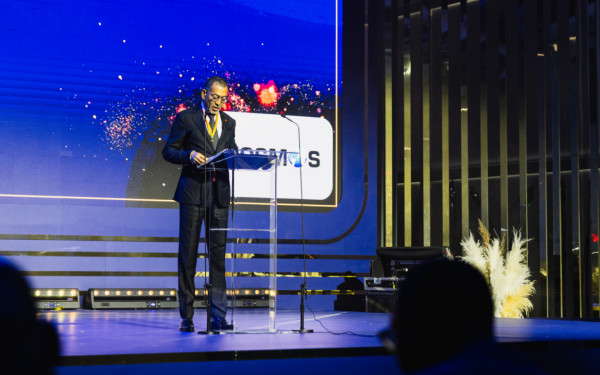
The African Energy Week (AEW): Invest in African Energies 2024 conference officially opened with calls from the industry to ‘drill baby drill.' Citing the need to enhance climate justice through the development of domestic energy resources, industry leaders from across the continent underscored the need to sign deals, foster partnerships and drive projects forward.
With over 600 million people living without access to electricity and 900 million people without access to clean cooking solutions, the AEW: Invest in African Energies opening ceremony – sponsored by Kosmos Energy – positioned the oil and gas industry as the catalyst for making energy poverty history.
“Our priority must continue to be to end energy poverty for all Africans as well as to create an enabling environment where the oil and gas industry can thrive,” stated Diamantino Pedro Azevedo, Minister of Mineral Resources, Petroleum and Gas, Angola. “That is also our priority in Angola. The oil and gas industry will be a fuel for socioeconomic development.”
For the African Petroleum Producers Organization (APPO), prioritizing the development of domestic markets will be integral for eliminating energy poverty. APPO Secretary General Dr. Omar Farouk Ibrahim stated that “Today, APPO is focused on creating an integrated, regional and continental energy market. To create markets, we need to create cross-border, regional and inter-regional infrastructure. One of our projects we are working on is the Central African Pipeline System, which aims to link countries through crude oil and gas pipelines.”
Adding to these remarks, Kgosientsho Ramokgopa, Minister in the Presidency, Energy and Electricity, South Africa, said that “Today, Africa's path forward lies in seizing control of our energy destiny. Our resources make us capable of not just powering our homes and industries but a new Africa. This will require unity of purpose and a collective resolve.”
Despite project progress, financing remains a central challenge to oil and gas development in Africa. According to Mary Bruce Warlick, Deputy Executive Director of the International Energy Agency, “African countries account for 20% of the world's population but only 4% of global investment. Energy investment has been falling across the continent over the past decade. Africa needs $200 billion to achieve its climate and energy goals by 2030.”
To address these challenges, the African Export-Import Bank (Afreximbank), in collaboration with APPO, established the Africa Energy Bank, an institution which offers financing for African oil and gas projects. According to Benedict Oramah, President & Chairman of the Board, Afreximbank, “The Africa Energy Bank is the first multilateral sector bank in Africa. We expect the bank to significantly contribute towards bridging the funding gap in the African energy sector. It will be open for business to have access to funding by February in 2025. We invite you to send in your applications to be the first transaction by the Africa Energy Bank, which will be ready in a few months' time.”
The Africa Energy Bank supports energy companies drive projects forward. For independents such as Oando, this presents a strategic opportunity to expand their oil and gas portfolios in Africa. Wale Tinubu CON, Group Chief Executive Officer, Oando PLC, said that “The oil and gas landscape is changing. Between 2015 and 2023, there have been more than $7 billion of divested assets in Africa. In terms of M&A activity, there have been a focus on onshore and shallow water acquisitions and we have seen a rise of indigenous joint ventures and collaborations.”
Stepping into this picture, the AEW: Invest in African Energies conference convenes under a goal to make energy poverty history. By uniting the industry in Cape Town, the event fosters partnerships, promotes deal-signing while creating a collaborative environment for companies to do business in Africa's energy sector.
“It is the time for us to tell the African story, written from Cape to Cairo and Kampala to Dakar. We will forge a path that shapes the future. We have work to do in Africa. We sign baby sign so that we can drill baby drill. Let's not stop getting projects signed,” stated NJ Ayuk, Executive Chairman, African Energy Chamber.
Distributed by APO Group on behalf of African Energy Chamber.