• Skip to main content
  • Skip to header right navigation
  • Skip to after header navigation
  • Skip to site footer
MyZA

MyZA

News, Directory, Events and Other Stuff

  • Social Media
  • Sport
  • World News
  • Home
  • Submit News
  • Directory
  • Events
  • Stratlec
  • TFSA
  • News
    • APO
    • Today’s Sport News
    • Todays Social Media and Tech Headlines
    • Today’s World News
    • Today’s SA Financial News
  • Contact
You are here: Home / News / Take the gloves off gender-based violence and femicide

Take the gloves off gender-based violence and femicide

25 November 2024 by Guest

Take the gloves off gender-based violence and femicide

By Neo Semono

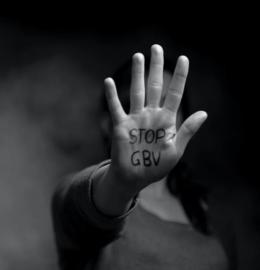
Violence, particularly against women and children, continues to be a sting on our collective South African skin, and it is a battle that requires our collective effort to win, writes Neo Semono. 

Many have lost a mother, sister, colleague, child or sibling at the hands of an abusive father, husband, boyfriend, stranger or other perpetrator,   as a result of the battle scars inflicted by the heinous crimes of gender-based violence and femicide (GBVF).

Those fortunate enough to escape with their lives heal from the physical pain inflicted, but the unseen emotional wounds of their ordeal often continue to haunt them.

Nobody should have to live like that, but sadly, many do.

Today, the country begins the annual commemoration of the 16 Days of Activism for No Violence Against Women and Children Campaign. The United Nations campaign, which South Africa adopted in 1998, aims to eliminate all forms of gender – based violence. Children were included in the campaign in 1999.

Twenty-six years since the adoption of the international campaign, many will say that the country is losing the battle against GBVF with crime statistics showing that GBVF cases rose from 126 508 in 2021/22 to 132 110 in 2022/23. The third quarter of 2023/24 saw 100 954 cases being reported.

Additionally, news bulletins frequently report the murders, rapes and deadly assaults of women at the hands of their intimate partners too often. This not only affects able-bodied women, but also women with disabilities, children and also the lesbian, gay, bisexual, transgender, intersex, queer/questioning, asexual (LGBTQIA+) community. This scourge spares no one.

The recently released South African National Gender-Based Violence Prevalence Study: A Baseline Survey on Victimisation and Perpetration, conducted by the Human Sciences Research Council has revealed the grim reality that about 7 310 389 million women, aged 18 years and older, have experienced physical violence in their lifetime.

At the national Women’s Day celebrations in August, President Cyril Ramaphosa alluded to the then yet to be released report, saying that while many strides have been made, the country remains “highly unequal” with poverty still bearing the face of a black woman who is likely to be unemployed, poor and unskilled. 

This as the nature of GBVF encroaches on other aspects of women’s daily lives such as the ability to work.

And while government is doing what it can to fight the scourge of GBVF, the patriarchy of old continues to feed into the environment of violence.

Government alone cannot win this war – it needs you and I and all of society together, to take the gloves of GBVF. 

In the 30 years of our democracy, measures have been put in place to improve the status and circumstances of women. This not only to improve their lives, but also as a means to slay the fire-breathing, abusive GBVF dragon that keeps women hostage. 

This is because for some women, without their abusive partners, they may not have the economic muscle to look after themselves or their children.

And while the state continues to shoulder criticism for the ongoing GBVF problem, it has continued to provide healthcare including reproductive health for women. The state also provides for social grants that are a much-needed lifeline for some.

Initiatives such as  SheTrades and the efforts of various government departments to ensure that 40% of government procurement goes to women-owned businesses are some of the measures in place.

While women are also represented in Parliament and the judiciary, more still needs to be done to lessen the likelihood of women falling victim to possible abusive relationships.

Government has also taken legislative steps to tackle the problem which the President has referred to as a second pandemic (following the onslaught of the COVID-19 pandemic).

This includes the signing of the National Council on Gender-Based Violence and Femicide Bill into law. The act coordinates and provides strategic leadership to the fight against GBV and femicide. 

Other legislation includes the Criminal Law Sexual Offences and Related Matters Amendment Act, the Criminal and Related Matters Amendment Act, and the Domestic Violence Amendment Act.

And I agree, that for these laws to be an effective tool, they have to be enforced. Government can do better in this regard.

Government launched the National Strategic Plan (NSP) on GBVF in 2020. The plan is a comprehensive strategy for tackling all forms of violence and abuse against women and children.

Over R20 billion has been dedicated to the implementation of the pillars of the NSP which include the economic empowerment of women. 

What is also true is that ending GBVF requires an all of society approach, it requires a change in behaviour in how we treat women and children. 

In his July 2020 address to the nation the President said: “As a man, as a husband and as a father, I am appalled at what is no less than a war being waged against the women and children of our country.”

The concern raised by the President and citizens and civil organisations over the prevalence of GBV is not misplaced.

We come from a painful history of violence that has created an environment where, to this day, others are perceived  as less important or unworthy within our communities.

For as long as perpetrators do not come to the realisation that everyone deserves to be treated with respect, the laws that have been enacted will have little impact.

To win the war requires a collaborative effort from all sectors of society. We all have a responsibility to report abusers, teach children about gender equality, and sign the Pledge Against Gender-Based Violence and Femicide. 

The pledge, which is available on https://www.stateofthenation.gov.za/endGBVF/take-the-pledge commits men to being allies and part of the solution by upholding  positive behaviour and attitudes, and taking responsibility for their actions.

The fight back against GBVF must continue. We cannot afford to look away. – SAnews.gov.za

Neo Semono is a Features Editor in the GCIS 

Matona
Mon, 11/25/2024 – 13:14

36 views

By Neo Semono

Violence, particularly against women and children, continues to be a sting on our collective South African skin, and it is a battle that requires our collective effort to win, writes Neo Semono. 

Many have lost a mother, sister, colleague, child or sibling at the hands of an abusive father, husband, boyfriend, stranger or other perpetrator,   as a result of the battle scars inflicted by the heinous crimes of gender-based violence and femicide (GBVF).

Those fortunate enough to escape with their lives heal from the physical pain inflicted, but the unseen emotional wounds of their ordeal often continue to haunt them.

Nobody should have to live like that, but sadly, many do.

Today, the country begins the annual commemoration of the 16 Days of Activism for No Violence Against Women and Children Campaign. The United Nations campaign, which South Africa adopted in 1998, aims to eliminate all forms of gender – based violence. Children were included in the campaign in 1999.

Twenty-six years since the adoption of the international campaign, many will say that the country is losing the battle against GBVF with crime statistics showing that GBVF cases rose from 126 508 in 2021/22 to 132 110 in 2022/23. The third quarter of 2023/24 saw 100 954 cases being reported.

Additionally, news bulletins frequently report the murders, rapes and deadly assaults of women at the hands of their intimate partners too often. This not only affects able-bodied women, but also women with disabilities, children and also the lesbian, gay, bisexual, transgender, intersex, queer/questioning, asexual (LGBTQIA+) community. This scourge spares no one.

The recently released South African National Gender-Based Violence Prevalence Study: A Baseline Survey on Victimisation and Perpetration, conducted by the Human Sciences Research Council has revealed the grim reality that about 7 310 389 million women, aged 18 years and older, have experienced physical violence in their lifetime.

At the national Women’s Day celebrations in August, President Cyril Ramaphosa alluded to the then yet to be released report, saying that while many strides have been made, the country remains “highly unequal” with poverty still bearing the face of a black woman who is likely to be unemployed, poor and unskilled. 

This as the nature of GBVF encroaches on other aspects of women’s daily lives such as the ability to work.

And while government is doing what it can to fight the scourge of GBVF, the patriarchy of old continues to feed into the environment of violence.

Government alone cannot win this war – it needs you and I and all of society together, to take the gloves of GBVF. 

In the 30 years of our democracy, measures have been put in place to improve the status and circumstances of women. This not only to improve their lives, but also as a means to slay the fire-breathing, abusive GBVF dragon that keeps women hostage. 

This is because for some women, without their abusive partners, they may not have the economic muscle to look after themselves or their children.

And while the state continues to shoulder criticism for the ongoing GBVF problem, it has continued to provide healthcare including reproductive health for women. The state also provides for social grants that are a much-needed lifeline for some.

Initiatives such as  SheTrades and the efforts of various government departments to ensure that 40% of government procurement goes to women-owned businesses are some of the measures in place.

While women are also represented in Parliament and the judiciary, more still needs to be done to lessen the likelihood of women falling victim to possible abusive relationships.

Government has also taken legislative steps to tackle the problem which the President has referred to as a second pandemic (following the onslaught of the COVID-19 pandemic).

This includes the signing of the National Council on Gender-Based Violence and Femicide Bill into law. The act coordinates and provides strategic leadership to the fight against GBV and femicide. 

Other legislation includes the Criminal Law Sexual Offences and Related Matters Amendment Act, the Criminal and Related Matters Amendment Act, and the Domestic Violence Amendment Act.

And I agree, that for these laws to be an effective tool, they have to be enforced. Government can do better in this regard.

Government launched the National Strategic Plan (NSP) on GBVF in 2020. The plan is a comprehensive strategy for tackling all forms of violence and abuse against women and children.

Over R20 billion has been dedicated to the implementation of the pillars of the NSP which include the economic empowerment of women. 

What is also true is that ending GBVF requires an all of society approach, it requires a change in behaviour in how we treat women and children. 

In his July 2020 address to the nation the President said: “As a man, as a husband and as a father, I am appalled at what is no less than a war being waged against the women and children of our country.”

The concern raised by the President and citizens and civil organisations over the prevalence of GBV is not misplaced.

We come from a painful history of violence that has created an environment where, to this day, others are perceived  as less important or unworthy within our communities.

For as long as perpetrators do not come to the realisation that everyone deserves to be treated with respect, the laws that have been enacted will have little impact.

To win the war requires a collaborative effort from all sectors of society. We all have a responsibility to report abusers, teach children about gender equality, and sign the Pledge Against Gender-Based Violence and Femicide. 

The pledge, which is available on https://www.stateofthenation.gov.za/endGBVF/take-the-pledge commits men to being allies and part of the solution by upholding  positive behaviour and attitudes, and taking responsibility for their actions.

The fight back against GBVF must continue. We cannot afford to look away. – SAnews.gov.za

Neo Semono is a Features Editor in the GCIS 


Watch a Take the gloves off gender-based violence and femicide related video:

Stunning South Africa:

Have you visited MyPR?

MyPR.co.za offers free to publish press releases for your news site, blog or offline publication. Use the handy REPUBLISH facility or the Full Text RSS Feeds or just copy and paste.

Straton Electrical | Straton Solar | Straton Prepaid | Straton Plumbing | Straton IoT | Straton eBikes | BA Systems | Mbane Contracting | Reach Trust

Share this:

  • Share on X (Opens in new window) X
  • Share on Facebook (Opens in new window) Facebook
  • Print (Opens in new window) Print
  • Email a link to a friend (Opens in new window) Email
  • Share on LinkedIn (Opens in new window) LinkedIn
  • Share on Tumblr (Opens in new window) Tumblr
  • Share on WhatsApp (Opens in new window) WhatsApp
  • Share on Mastodon (Opens in new window) Mastodon
Category: NewsTag: 2024, ACT, Africa, African, Environment, GBV, Government, health, Healthcare, Judiciary, law, Man, News, ONE, Parliament, Ramaphosa, SA News, Social Grants, South Africa, study, Video, Women

If you feel strongly about this article then feel free to send MyZA a ‘Letter to the Editor’ using the submission form below:


Letter to the Editor

This field is for validation purposes and should be left unchanged.
If this is in response to an article please include that article title here or as the lead in for the first paragraph of your Letter below.

Separate tags with commas

Localise your letter by naming the city your words are about. Add relevant words describing your subject. Single comma separated words of no more than 5
Your Name(Required)
Your Name will be linked to the website below.
Your personal, business or social media web site
Choose NO to not set up a user account on MyZA. User Accounts will allow you to submit letters under your own Author Name

3 Latest Letters to the Editor:

  • Fun South African fact

    Dear Editor Fun South African fact: towns like Franschhoek and Stellenbosch are home to world-class wine farms set in stunning, scenic surroundings. Regards Aressa Smith In Response to/From: Luxury Properties Seized in New Lottery Crackdown

    27 January 2026
  • Condolences on the Passing of Lusanda Dumke

    Statement by Leander Kruger MPL – DA Buffalo City Constituency Leader: The Democratic Alliance in Buffalo City Metropolitan Municipality mourns the passing of Springbok Women’s rugby player and Mdantsane trailblazer, Lusanda Dumke, who lost her battle with cancer at the age of 28. South Africa has lost an exceptional athlete, a leader, and a source…

    17 December 2025
  • Rape Kits Delivered, But…

    Statement by Nicholas Gotsell MP – DA NCOP Member on Security & Justice: The DA can confirm that 2 840 rape kits arrived in Cape Town on Monday, following sustained DA oversight and pressure after multiple police stations across the Western Cape were found to be without this critical forensic evidence tool. While this delivery…

    17 December 2025

About Guest

Previous Post:Metal Detection with Conveyor Systems
Next Post:Klipplaat Water Treatment Works to provide quality drinking water

Reader Interactions

Comments

  1. Digger

    25 November 2024 at 1:30 pm

    The wonder of a man with a running stomach is that he knows the direction of the door without anybody’s guidance.

  2. easy street

    25 November 2024 at 1:30 pm

    Fun South African Fact: SA has three capital cities: Pretoria is the Executive Capital, Cape Town the Legislative Capital and Bloemfontein the judicial Capital.

Copyright © 2026 · MyZA · All Rights Reserved · Powered by Reach Trust