• Skip to main content
  • Skip to header right navigation
  • Skip to after header navigation
  • Skip to site footer
MyZA

MyZA

News, Directory, Events and Other Stuff

  • Social Media
  • Sport
  • World News
  • Home
  • Submit News
  • Directory
  • Events
  • Stratlec
  • TFSA
  • News
    • APO
    • Today’s Sport News
    • Todays Social Media and Tech Headlines
    • Today’s World News
    • Today’s SA Financial News
  • Contact
You are here: Home / News / Business / The Coca-Cola System in South Africa Has an Economic Impact of r51.2 Billion Across Its Value Chain, Supporting More Than 87,000 Jobs, New Study Shows

The Coca-Cola System in South Africa Has an Economic Impact of r51.2 Billion Across Its Value Chain, Supporting More Than 87,000 Jobs, New Study Shows

23 March 2026 by Guest
Coca-Cola

  • In 2024, the Coca-Cola system in South Africa contributed R51.2 billion in value-added economic impact across its value chain. 
  • The Coca-Cola system and its value chain supported over 87,000 direct and indirect jobs in South Africa in sectors including retail, agriculture, manufacturing, transport and services. 
  • The Coca-Cola system purchased R25.6 billion worth of goods and services from suppliers in South Africa in 2024, strengthening the country's industries and communities.

The Coca-Cola (www.Coca-ColaCompany.com) system in South Africa today announced the results of a comprehensive socio-economic impact study, conducted by global consulting firm Steward Redqueen.

Download Infographic: https://apo-opa.co/4bpsbn2

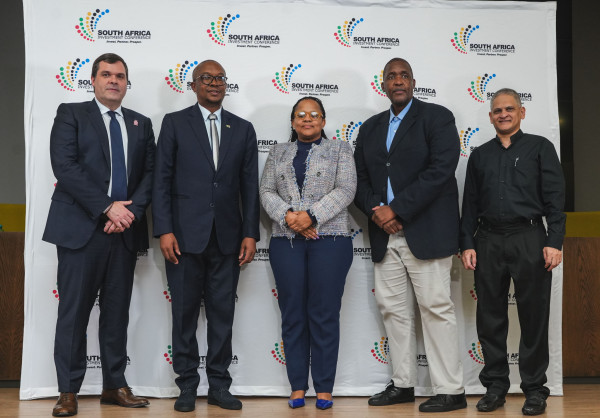
“This new independent study highlights the scale of the Coca-Cola system’s contribution to South Africa’s economy, employment, and communities,” said Luis Felipe Avellar, president of the Africa operating unit of The Coca‑Cola Company. He spoke during a media briefing hosted by the Honourable Minister of Trade, Industry, and Competition, Mr. Parks Tau, ahead of the 2026 South Africa Investment Conference, where the Coca-Cola system will participate as a sponsor.

The study reveals that the Coca-Cola system in South Africa – comprising Coca-Cola and its authorized bottlers – alongside a broad network of local suppliers, distributors, and retailers, contributed R51.2 billion in value-added economic activity in 2024.

Through its value chain, the Coca-Cola system supported over 87,000 jobs through suppliers, partners, and customers. This means that for every direct job created by the system, 10 more jobs were supported across South Africa’s economy.

“Our business is interconnected with local communities, we hire locally, produce locally, distribute locally and, where possible, source locally, helping to build a stronger, more integrated economy in South Africa,” Avellar said.

Charl Goncalves, Managing Director of Coca-Cola Peninsula Beverages, emphasized the system’s focus on partnerships: “We remain committed to creating opportunity for our people, our partners, and the communities we serve.”

The study also highlights the Coca-Cola system’s strong local integration, with R25.6 billion worth of goods and services sourced from suppliers in South Africa in 2024. This local procurement supports industries as diverse as sugar production, packaging, transportation, and marketing, reinforcing the Coca-Cola system’s role as a partner for growth in South Africa’s economic development.

“South Africa remains one of our most strategic markets in Africa—the beginning of a legacy that dates back to Coca-Cola’s first entry on the continent in 1928. These findings reaffirm the Coca-Cola system’s role as a key driver of shared value and sustainable growth within the South African economy,” said Sunil Gupta, CEO, Coca-Cola Beverages Africa.

The Coca-Cola system has strengthened its footprint in South Africa through sustained investment and innovation, including the launch of a new bottling line at CCBSA’s manufacturing facility in Midrand.  This investment highlights the system’s commitment to investing, producing, and distributing locally, while contributing to South Africa’s social and economic development.

The Coca-Cola system’s contribution extends beyond economic impact. South Africa is one of the beneficiaries of the Africa Water Stewardship Initiative (https://apo-opa.co/4bFqSiD), a nearly $25 million investment through 2030 to help address critical water-related challenges in local communities in 20 African countries.

The study conducted by Steward Redqueen measured the direct, indirect, and induced economic impacts of the Coca-Cola system in South Africa, combining company operational data with trusted third-party economic sources. The analysis demonstrates how Coca-Cola’s local operations ripple across the economy – from farmers growing sugarcane to retailers selling beverages – creating jobs, generating income, and building opportunities.

Distributed by APO Group on behalf of Coca-Cola.

For Media Enquiries:
Wendy Thole-Muir
Senior Director
Strategic Communication 
Coca-Cola Africa
wtholemuir@coca-cola.com

Amava Kamana
Senior Manager Communications
Coca-Cola Africa
akamana@coca-cola.com

About The Coca-Cola Company:
The Coca-Cola Company (NYSE: KO) is a total beverage company with products sold in more than 200 countries and territories. Our company’s purpose is to refresh the world and make a difference. We sell multiple billion-dollar brands across several beverage categories worldwide. Our portfolio of sparkling soft drink brands includes Coca-Cola, Sprite and Fanta. Our water, sports, coffee and tea brands include Dasani, smartwater, vitaminwater, Topo Chico, BODYARMOR, Powerade, Costa, Georgia, Fuze Tea, Gold Peak and Ayataka. Our juice, value-added dairy and plant-based beverage brands include Minute Maid, Simply, innocent, Del Valle, fairlife and AdeS. We’re constantly transforming our portfolio, from reducing sugar in our drinks to bringing innovative new products to market. We seek to positively impact people’s lives, communities and the planet through water replenishment, packaging recycling, sustainable sourcing practices and carbon emissions reductions across our value chain. Together with our bottling partners, we employ more than 700,000 people, helping bring economic opportunity to local communities worldwide. Learn more at www.Coca-ColaCompany.com and follow us on Instagram (https://apo-opa.co/4t2MCvQ), Facebook (https://apo-opa.co/3PrF6fJ) and LinkedIn (https://apo-opa.co/4bxztDS).

Media files
Coca-Cola
Download logo
  • In 2024, the Coca-Cola system in South Africa contributed R51.2 billion in value-added economic impact across its value chain. 
  • The Coca-Cola system and its value chain supported over 87,000 direct and indirect jobs in South Africa in sectors including retail, agriculture, manufacturing, transport and services.
  • The Coca-Cola system purchased R25.6 billion worth of goods and services from suppliers in South Africa in 2024, strengthening the country’s industries and communities.

The Coca-Cola system in South Africa today announced the results of a comprehensive socio-economic impact study, conducted by global consulting firm Steward Redqueen.

“This new independent study highlights the scale of the Coca-Cola system’s contribution to South Africa’s economy, employment, and communities,” said Luis Felipe Avellar, president of the Africa operating unit of The Coca‑Cola Company. He spoke during a media briefing hosted by the Honourable Minister of Trade, Industry, and Competition, Mr. Parks Tau, ahead of the 2026 South Africa Investment Conference, where the Coca-Cola system will participate as a sponsor.

The study reveals that the Coca-Cola system in South Africa – comprising Coca-Cola and its authorized bottlers – alongside a broad network of local suppliers, distributors, and retailers, contributed R51.2 billion in value-added economic activity in 2024.

Through its value chain, the Coca-Cola system supported over 87,000 jobs through suppliers, partners, and customers. This means that for every direct job created by the system, 10 more jobs were supported across South Africa’s economy.

“Our business is interconnected with local communities, we hire locally, produce locally, distribute locally and, where possible, source locally, helping to build a stronger, more integrated economy in South Africa,” Avellar said.

Charl Goncalves, Managing Director of Coca-Cola Peninsula Beverages, emphasized the system’s focus on partnerships: “We remain committed to creating opportunity for our people, our partners, and the communities we serve.”

The study also highlights the Coca-Cola system’s strong local integration, with R25.6 billion worth of goods and services sourced from suppliers in South Africa in 2024. This local procurement supports industries as diverse as sugar production, packaging, transportation, and marketing, reinforcing the Coca-Cola system’s role as a partner for growth in South Africa’s economic development.

“South Africa remains one of our most strategic markets in Africa—the beginning of a legacy that dates back to Coca-Cola’s first entry on the continent in 1928. These findings reaffirm the Coca-Cola system’s role as a key driver of shared value and sustainable growth within the South African economy,” said Sunil Gupta, CEO, Coca-Cola Beverages Africa.

The Coca-Cola system has strengthened its footprint in South Africa through sustained investment and innovation, including the launch of a new bottling line at CCBSA’s manufacturing facility in Midrand.  This investment highlights the system’s commitment to investing, producing, and distributing locally, while contributing to South Africa’s social and economic development.

The Coca-Cola system’s contribution extends beyond economic impact. South Africa is one of the beneficiaries of the Africa Water Stewardship Initiative (https://apo-opa.co/4bFqSiD), a nearly $25 million investment through 2030 to help address critical water-related challenges in local communities in 20 African countries.

The study conducted by Steward Redqueen measured the direct, indirect, and induced economic impacts of the Coca-Cola system in South Africa, combining company operational data with trusted third-party economic sources. The analysis demonstrates how Coca-Cola’s local operations ripple across the economy – from farmers growing sugarcane to retailers selling beverages – creating jobs, generating income, and building opportunities.

Per Kind Favour of APO

Africa Fact: Dr Albert Churchward, author of Signs and Symbols of Primordial Man, pointed out that writing was found in one of the stone built ruins: “Lt.-Col. E. L. de Cordes . . . who was in South Africa for three years, informed the writer that in one of the ‘Ruins’ there is a ‘stone-chamber,’ with a vast quantity of Papyri, covered with old Egyptian hieroglyphics. A Boer hunter discovered this, and a large quantity was used to light a fire with, and yet still a larger quantity remained there now.”

Share this:

  • Share on X (Opens in new window) X
  • Share on Facebook (Opens in new window) Facebook
  • Print (Opens in new window) Print
  • Email a link to a friend (Opens in new window) Email
  • Share on LinkedIn (Opens in new window) LinkedIn
  • Share on Tumblr (Opens in new window) Tumblr
  • Share on WhatsApp (Opens in new window) WhatsApp
  • Share on Mastodon (Opens in new window) Mastodon
Category: BusinessTag: APO

If you feel strongly about this article then feel free to send MyZA a ‘Letter to the Editor’ using the submission form below:


Letter to the Editor

This field is for validation purposes and should be left unchanged.
If this is in response to an article please include that article title here or as the lead in for the first paragraph of your Letter below.

Separate tags with commas

Localise your letter by naming the city your words are about. Add relevant words describing your subject. Single comma separated words of no more than 5
Your Name(Required)
Your Name will be linked to the website below.
Your personal, business or social media web site
Choose NO to not set up a user account on MyZA. User Accounts will allow you to submit letters under your own Author Name

3 Latest Letters to the Editor:

  • Older Persons Grants Land Today — No Need to Queue at Dawn

    Dear Editor, Older Persons grants are paid today, 30 October, under SASSA’s revised November payment schedule — with disability grants on Monday 2 November, children’s grants on Tuesday 3 November, and grants under review on Thursday 5 November. Two things every beneficiary should know. First, grant money does not expire on payment day. It stays…

    30 October 2026
  • November Grants Pay Early – No Need to Queue at Dawn

    Dear Editor, I run SAGrant (sagrant.co.za), a free resource helping South Africans navigate SASSA grants. November grants pay earlier than usual. Older Persons grants are paid on Friday 30 October, Disability grants on 2 November, and Child Support and other grants on 3 November. Grants still under review are paid on 5 November. The money…

    27 October 2026
  • NSFAS 2027 applications close on 31 October — SASSA households, apply now

    Dear Editor, I run SAGrant (sagrant.co.za), a free resource helping South Africans navigate SASSA grants. NSFAS applications for the 2027 academic year close on Friday 31 October 2026, and no extension is expected. If your household receives a SASSA grant, your child already passes the NSFAS financial eligibility test — but they still have to…

    25 October 2026

About Guest

Previous Post:SAPPMA Webinar Highlights Role of EPS Geofoam in Reducing Loads on Plastic Pipes
Next Post:Under the Covers: Why Linen Hygiene Matters More Than You Think

Reader Interactions

Comments

  1. Delicious

    8 September 2026 at 8:24 am

    National debt: South Africa’s debt to GDP ratio is 48%. Compared to the USA (100%), Japan (200%), and the UK (90%) South Africa does not do too badly in this department. The World Bank recommends a ratio of 60%. With reasonable debt levels the likelihood that the government is able to repay its debt is high and that its fiscal policy is sustainable. This is conducive for starting a business in South Africa, knowing that the government will still be able to continue spending and thus stimulate the economy.

Copyright © 2026 · MyZA · All Rights Reserved · Powered by Stratlec Online