• Skip to main content
  • Skip to header right navigation
  • Skip to after header navigation
  • Skip to site footer
MyZA

MyZA

News, Directory, Events and Other Stuff

  • Social Media
  • Sport
  • World News
  • Home
  • Submit News
  • Directory
  • Events
  • Stratlec
  • TFSA
  • News
    • APO
    • Today’s Sport News
    • Todays Social Media and Tech Headlines
    • Today’s World News
    • Today’s SA Financial News
  • Contact
You are here: Home / News / Worker share ownership schemes important to economic transformation

Worker share ownership schemes important to economic transformation

23 April 2024 by Guest

Worker share ownership schemes important to economic transformation

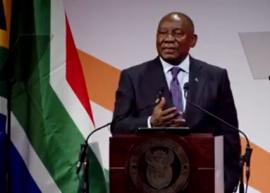
President Cyril Ramaphosa says giving workers a seat at the table where strategic corporate decisions are made fosters good morale and innovation and also builds a resilient economy.

The President said this when he delivered the keynote address at the inaugural Worker Share Ownership Conference held in Johannesburg on Tuesday.

The conference serves as a platform for advocacy for Employee Share Ownership Plans in private companies.

“This conference is an opportunity for meaningful dialogue among a diverse array of participants, including trustees, CEOs, labour and business representatives, and company chairs. It is an opportunity to develop a model of worker ownership that can serve the needs of our economy.

“When workers participate as owners, the workers also develop a deeper understanding of the challenges and opportunities that face their own companies, enabling more fruitful partnerships to unlock opportunities for growth, investment and job creation.

“This is a paradigm shift, which aims to empower workers not only as wage earners but also as partners, as stakeholders with ownership in capital,” he said.

President Ramaphosa added that beyond social justice “worker ownership initiatives make sound business and economic sense”.

“They are key to building a more resilient economy whose benefits flow equitably through society. Worker share ownership initiatives boost morale and productivity.

“Workers who feel valued and respected by their employers are more likely to contribute ideas for improving processes, products and services. It is human nature that one is more inclined to contribute one’s best efforts when one has a vested interest in the success of that particular venture,” he said.

Economic transformation

The President emphasised that government has done much to improve transformation of the economy following devastating apartheid legislation which deliberately excluded black South Africans from “participating meaningfully in the economy of their own country”.

The democratic government has done this through enacting laws in competition to bolster small and medium-sized enterprises, introducing labour legislation to ensure decent working conditions and the promulgation of the Broad-Based Black Economic Empowerment (BBBEE) Act.

“Yet, despite the measures of successive democratic administrations that we have introduced to transform patterns of ownership in the economy, we still have much more to do.

“This is therefore a good time to collectively assess the impact of the enabling legislative environment to examine the learnings over the past two decades. A vital measure of economic empowerment is the extent to which ownership and control of the economy is broadened, particularly among black and women South Africans.

“Worker [share] ownership schemes are valuable instruments to broaden ownership and, with time, to enable greater control of the economy. Also known as Employee Share Ownership Programmes, these schemes are underpinned…by the [BBBEE] Act, together with the Competition Act, the Companies Act and the various number of others,” he said.

Shared commitment

The President highlighted that government plays an important role in providing guidance on the design and implementation of these programmes through the Department of Trade, Industry and Competition and also provides catalytic funding through the Industrial Development Corporation, the National Empowerment Fund and others.

He added, however, that a shared “commitment to economic transformation” is imperative.

“It is vital that we harness the spirit of partnership as we chart the course for the future of these programmes and for an even better, more sustainable worker shareholder regime.

“By championing worker ownership, we are building a future where every employee has a stake in the success of their company. Together, we are paving the way for a more equitable and prosperous society in which no-one is left behind,” President Ramaphosa said. – SAnews.gov.za

NeoB
Tue, 04/23/2024 – 12:46

320 views

President Cyril Ramaphosa says giving workers a seat at the table where strategic corporate decisions are made fosters good morale and innovation and also builds a resilient economy.

The President said this when he delivered the keynote address at the inaugural Worker Share Ownership Conference held in Johannesburg on Tuesday.

The conference serves as a platform for advocacy for Employee Share Ownership Plans in private companies.

“This conference is an opportunity for meaningful dialogue among a diverse array of participants, including trustees, CEOs, labour and business representatives, and company chairs. It is an opportunity to develop a model of worker ownership that can serve the needs of our economy.

“When workers participate as owners, the workers also develop a deeper understanding of the challenges and opportunities that face their own companies, enabling more fruitful partnerships to unlock opportunities for growth, investment and job creation.

“This is a paradigm shift, which aims to empower workers not only as wage earners but also as partners, as stakeholders with ownership in capital,” he said.

President Ramaphosa added that beyond social justice “worker ownership initiatives make sound business and economic sense”.

“They are key to building a more resilient economy whose benefits flow equitably through society. Worker share ownership initiatives boost morale and productivity.

“Workers who feel valued and respected by their employers are more likely to contribute ideas for improving processes, products and services. It is human nature that one is more inclined to contribute one’s best efforts when one has a vested interest in the success of that particular venture,” he said.

Economic transformation

The President emphasised that government has done much to improve transformation of the economy following devastating apartheid legislation which deliberately excluded black South Africans from “participating meaningfully in the economy of their own country”.

The democratic government has done this through enacting laws in competition to bolster small and medium-sized enterprises, introducing labour legislation to ensure decent working conditions and the promulgation of the Broad-Based Black Economic Empowerment (BBBEE) Act.

“Yet, despite the measures of successive democratic administrations that we have introduced to transform patterns of ownership in the economy, we still have much more to do.

“This is therefore a good time to collectively assess the impact of the enabling legislative environment to examine the learnings over the past two decades. A vital measure of economic empowerment is the extent to which ownership and control of the economy is broadened, particularly among black and women South Africans.

“Worker [share] ownership schemes are valuable instruments to broaden ownership and, with time, to enable greater control of the economy. Also known as Employee Share Ownership Programmes, these schemes are underpinned…by the [BBBEE] Act, together with the Competition Act, the Companies Act and the various number of others,” he said.

Shared commitment

The President highlighted that government plays an important role in providing guidance on the design and implementation of these programmes through the Department of Trade, Industry and Competition and also provides catalytic funding through the Industrial Development Corporation, the National Empowerment Fund and others.

He added, however, that a shared “commitment to economic transformation” is imperative.

“It is vital that we harness the spirit of partnership as we chart the course for the future of these programmes and for an even better, more sustainable worker shareholder regime.

“By championing worker ownership, we are building a future where every employee has a stake in the success of their company. Together, we are paving the way for a more equitable and prosperous society in which no-one is left behind,” President Ramaphosa said. – SAnews.gov.za

Read More at the Source

Share this:

  • Share on X (Opens in new window) X
  • Share on Facebook (Opens in new window) Facebook
  • Print (Opens in new window) Print
  • Email a link to a friend (Opens in new window) Email
  • Share on LinkedIn (Opens in new window) LinkedIn
  • Share on Tumblr (Opens in new window) Tumblr
  • Share on WhatsApp (Opens in new window) WhatsApp
  • Share on Mastodon (Opens in new window) Mastodon
Category: NewsTag: 2024, ACT, business, Environment, Government, Johannesburg, ONE, Ramaphosa, SA News

If you feel strongly about this article then feel free to send MyZA a ‘Letter to the Editor’ using the submission form below:


Letter to the Editor

This field is for validation purposes and should be left unchanged.
If this is in response to an article please include that article title here or as the lead in for the first paragraph of your Letter below.

Separate tags with commas

Localise your letter by naming the city your words are about. Add relevant words describing your subject. Single comma separated words of no more than 5
Your Name(Required)
Your Name will be linked to the website below.
Your personal, business or social media web site
Choose NO to not set up a user account on MyZA. User Accounts will allow you to submit letters under your own Author Name

3 Latest Letters to the Editor:

  • Fun South African fact

    Dear Editor Fun South African fact: towns like Franschhoek and Stellenbosch are home to world-class wine farms set in stunning, scenic surroundings. Regards Aressa Smith In Response to/From: Luxury Properties Seized in New Lottery Crackdown

    27 January 2026
  • Condolences on the Passing of Lusanda Dumke

    Statement by Leander Kruger MPL – DA Buffalo City Constituency Leader: The Democratic Alliance in Buffalo City Metropolitan Municipality mourns the passing of Springbok Women’s rugby player and Mdantsane trailblazer, Lusanda Dumke, who lost her battle with cancer at the age of 28. South Africa has lost an exceptional athlete, a leader, and a source…

    17 December 2025
  • Rape Kits Delivered, But…

    Statement by Nicholas Gotsell MP – DA NCOP Member on Security & Justice: The DA can confirm that 2 840 rape kits arrived in Cape Town on Monday, following sustained DA oversight and pressure after multiple police stations across the Western Cape were found to be without this critical forensic evidence tool. While this delivery…

    17 December 2025

About Guest

Previous Post:New partnership aims to create jobs for SA youth in the pharmaceutical sector
Next Post:CTIJF announces yet more artists are on their way to Cape Town

Reader Interactions

Comments

  1. Icedog

    23 April 2024 at 4:51 pm

    Fun South African Fact: SA has three capital cities: Pretoria is the Executive Capital, Cape Town the Legislative Capital and Bloemfontein the judicial Capital.

  2. Red Hot Kevorkian

    23 April 2024 at 4:48 pm

    Bitter koud — very cold. An Afrikaans phrase meaning ‘bitter cold’, often used to describe the cold weather during winter.Example: “Oh, my gosh! It’s bitter koud outside!”

Copyright © 2026 · MyZA · All Rights Reserved · Powered by Reach Trust