• Skip to main content
  • Skip to header right navigation
  • Skip to after header navigation
  • Skip to site footer
MyZA

MyZA

News, Directory, Events and Other Stuff

  • Social Media
  • Sport
  • World News
  • Home
  • Submit News
  • Directory
  • Events
  • Stratlec
  • TFSA
  • News
    • APO
    • Today’s Sport News
    • Todays Social Media and Tech Headlines
    • Today’s World News
    • Today’s SA Financial News
  • Contact
You are here: Home / News / Call to scale up cervical cancer interventions 

Call to scale up cervical cancer interventions 

28 March 2025 by Guest

Call to scale up cervical cancer interventions 

The international community has been called upon to scale up cervical cancer interventions and progress against the only noncommunicable disease that can be eliminated. 

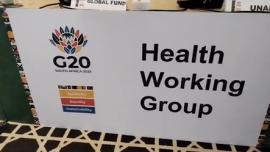
This call was made by the Government of South Africa, Unitaid and the World Health Organization (WHO) at the Group of Twenty (G20) Health Working Group meeting, which took place on Thursday in Zimbali, outside Durban.  

According to the Department of Health, cervical cancer is preventable and potentially curable, as long as it is detected early and managed effectively. It is the second most common form of cancer among women in South Africa. 

Statistics by the WHO show that the disease claimed the lives of almost 350 000 women globally in 2022.

“New vaccines, tests, and treatment technologies have transformed cervical cancer prevention in recent years, yet the disease continues to disproportionately impact women mostly in low- and middle-income countries where access to primary health care and preventive services are limited. Cervical cancer elimination would address a major gap in Women’s health,” the department said.

Speaking on the sidelines of the G20 health meeting, Unitaid’s Deputy Executive Director Tenu Avafia said Unitaid has invested US $81 million or R1.4 billion to bring down prices, increase volumes and address operational questions involved in cervical cancer screening and treatment to enable countries to scale up proven interventions with minimal risk.

“However, funding shortfalls still pose enormous challenges to building national cervical cancer elimination programs in low- and middle-income countries,” Avafia said.

Unitaid makes health products accessible, available and affordable for people who need them most.

Department of Health’s Director-General Dr Sandile Buthelezi said improving women’s health was not just a health issue but “an economic imperative”.

“It drives social stability, boosts productivity, and breaks the cycle of poverty. Global efforts to combat cervical cancer serve as a concrete illustration of how cooperation can advance women’s health and realize a shared goal to bring about the first-ever elimination of a cancer,” he said.

In 2020, the WHO launched the global strategy for cervical cancer elimination, the first-ever roadmap for the elimination of a cancer. Since then, countries have made enormous strides in rolling out new tools and services. 

Vaccination against Human Papillomavirus (HPV) provides protection against infection that causes nearly all cases of cervical cancer. 

And a package of screening and treatment tools – including HPV tests with the option for self-sampling and devices for quickly and easily removing pre-cancerous cells – make it possible to make lifesaving services available to women at lower levels of the health care system.

The health working group session called for a coordinated approach drawing on domestic resource mobilization, blended financing, and partnerships with multilateral development banks to scale these solutions, ensure long-term sustainability and reduce dependency on external aid.

Government asserted South Africa’s commitment to scaling up cervical cancer prevention programs nationwide with support from Unitaid, the WHO and other partners.

“The South African G20 health agenda promotes solidarity, equality and sustainability. It complements the African Union’s Agenda 2063, the development agenda of Africa as the world’s fastest-growing continent, and the Lusaka Agenda. It also focuses on rebuilding momentum to reach the 2030 Sustainable Development Goals (SDGs),” the department said.

On Wednesday, Health Minister Dr Aaron Motsoaledi reiterated the importance of nations reallocating resources towards health, strengthening global health partnerships, and exploring innovative financing mechanisms to address funding gaps.

READ | Motsoaledi urges global action to address health funding gaps

The Minister used the platform to highlight South Africa’s commitment to universal health coverage (UHC) through the National Health Insurance (NHI) system, which aims to provide financial protection and efficient resource utilisation.

The three-day meeting which began on Wednesday, will conclude on Friday, 28 March 2025. – SAnews.gov.za

nosihle
Fri, 03/28/2025 – 10:13
28 views

The international community has been called upon to scale up cervical cancer interventions and progress against the only noncommunicable disease that can be eliminated. 

This call was made by the Government of South Africa, Unitaid and the World Health Organization (WHO) at the Group of Twenty (G20) Health Working Group meeting, which took place on Thursday in Zimbali, outside Durban.  

According to the Department of Health, cervical cancer is preventable and potentially curable, as long as it is detected early and managed effectively. It is the second most common form of cancer among women in South Africa. 

Statistics by the WHO show that the disease claimed the lives of almost 350 000 women globally in 2022.

“New vaccines, tests, and treatment technologies have transformed cervical cancer prevention in recent years, yet the disease continues to disproportionately impact women mostly in low- and middle-income countries where access to primary health care and preventive services are limited. Cervical cancer elimination would address a major gap in Women’s health,” the department said.

Speaking on the sidelines of the G20 health meeting, Unitaid’s Deputy Executive Director Tenu Avafia said Unitaid has invested US $81 million or R1.4 billion to bring down prices, increase volumes and address operational questions involved in cervical cancer screening and treatment to enable countries to scale up proven interventions with minimal risk.

“However, funding shortfalls still pose enormous challenges to building national cervical cancer elimination programs in low- and middle-income countries,” Avafia said.

Unitaid makes health products accessible, available and affordable for people who need them most.

Department of Health’s Director-General Dr Sandile Buthelezi said improving women’s health was not just a health issue but “an economic imperative”.

“It drives social stability, boosts productivity, and breaks the cycle of poverty. Global efforts to combat cervical cancer serve as a concrete illustration of how cooperation can advance women’s health and realize a shared goal to bring about the first-ever elimination of a cancer,” he said.

In 2020, the WHO launched the global strategy for cervical cancer elimination, the first-ever roadmap for the elimination of a cancer. Since then, countries have made enormous strides in rolling out new tools and services. 

Vaccination against Human Papillomavirus (HPV) provides protection against infection that causes nearly all cases of cervical cancer. 

And a package of screening and treatment tools – including HPV tests with the option for self-sampling and devices for quickly and easily removing pre-cancerous cells – make it possible to make lifesaving services available to women at lower levels of the health care system.

The health working group session called for a coordinated approach drawing on domestic resource mobilization, blended financing, and partnerships with multilateral development banks to scale these solutions, ensure long-term sustainability and reduce dependency on external aid.

Government asserted South Africa’s commitment to scaling up cervical cancer prevention programs nationwide with support from Unitaid, the WHO and other partners.

“The South African G20 health agenda promotes solidarity, equality and sustainability. It complements the African Union’s Agenda 2063, the development agenda of Africa as the world’s fastest-growing continent, and the Lusaka Agenda. It also focuses on rebuilding momentum to reach the 2030 Sustainable Development Goals (SDGs),” the department said.

On Wednesday, Health Minister Dr Aaron Motsoaledi reiterated the importance of nations reallocating resources towards health, strengthening global health partnerships, and exploring innovative financing mechanisms to address funding gaps.

READ | Motsoaledi urges global action to address health funding gaps

The Minister used the platform to highlight South Africa’s commitment to universal health coverage (UHC) through the National Health Insurance (NHI) system, which aims to provide financial protection and efficient resource utilisation.

The three-day meeting which began on Wednesday, will conclude on Friday, 28 March 2025. – SAnews.gov.za


Watch a Call to scale up cervical cancer interventions  related video:

Stunning South Africa:

https://iiif.elifesciences.org/lax:91469%2Felife-91469-fig2-v1.tif/full/1500,/0/default.jpg

Have you visited MyPR?

MyPR.co.za offers free to publish press releases for your news site, blog or offline publication. Use the handy REPUBLISH facility or the Full Text RSS Feeds or just copy and paste.

Straton Electrical | Straton Solar | Straton Prepaid | Straton Plumbing | Straton IoT | Straton eBikes | BA Systems | Mbane Contracting | Reach Trust

Share this:

  • Share on X (Opens in new window) X
  • Share on Facebook (Opens in new window) Facebook
  • Print (Opens in new window) Print
  • Email a link to a friend (Opens in new window) Email
  • Share on LinkedIn (Opens in new window) LinkedIn
  • Share on Tumblr (Opens in new window) Tumblr
  • Share on WhatsApp (Opens in new window) WhatsApp
  • Share on Mastodon (Opens in new window) Mastodon
Category: NewsTag: Africa, African, community, Durban, global, Government, health, health insurance, Insurance, new, NHI, Resource, SA News, show, solutions, South Africa, Sustainability, Vaccines, Video, Women

If you feel strongly about this article then feel free to send MyZA a ‘Letter to the Editor’ using the submission form below:


Letter to the Editor

This field is for validation purposes and should be left unchanged.
If this is in response to an article please include that article title here or as the lead in for the first paragraph of your Letter below.

Separate tags with commas

Localise your letter by naming the city your words are about. Add relevant words describing your subject. Single comma separated words of no more than 5
Your Name(Required)
Your Name will be linked to the website below.
Your personal, business or social media web site
Choose NO to not set up a user account on MyZA. User Accounts will allow you to submit letters under your own Author Name

3 Latest Letters to the Editor:

  • Older Persons Grants Land Today — No Need to Queue at Dawn

    Dear Editor, Older Persons grants are paid today, 30 October, under SASSA’s revised November payment schedule — with disability grants on Monday 2 November, children’s grants on Tuesday 3 November, and grants under review on Thursday 5 November. Two things every beneficiary should know. First, grant money does not expire on payment day. It stays…

    30 October 2026
  • November Grants Pay Early – No Need to Queue at Dawn

    Dear Editor, I run SAGrant (sagrant.co.za), a free resource helping South Africans navigate SASSA grants. November grants pay earlier than usual. Older Persons grants are paid on Friday 30 October, Disability grants on 2 November, and Child Support and other grants on 3 November. Grants still under review are paid on 5 November. The money…

    27 October 2026
  • NSFAS 2027 applications close on 31 October — SASSA households, apply now

    Dear Editor, I run SAGrant (sagrant.co.za), a free resource helping South Africans navigate SASSA grants. NSFAS applications for the 2027 academic year close on Friday 31 October 2026, and no extension is expected. If your household receives a SASSA grant, your child already passes the NSFAS financial eligibility test — but they still have to…

    25 October 2026

About Guest

Previous Post:How to Write a Better Business Plan for Loan Applications in South Africa (Business Plan Example Included)
Next Post:Department confirms rescue of 23 South Africans from Myanmar

Reader Interactions

Comments

  1. Mr. Peppermint

    2 September 2026 at 11:08 am

    A lady was picking through the frozen turkeys at Pick \’n Pay, but couldn\’t find one big enough for Christmas dinner.

    She asked a packer, \”Do these turkeys get any bigger?\”

    He replied, \”No madam, they\’re dead.\”

  2. Kamikaze Grandma

    29 August 2026 at 8:11 pm

    Finland: You have two cows. They are more likely than your entire country to commit a crime.

Copyright © 2026 · MyZA · All Rights Reserved · Powered by Stratlec Online