• Skip to main content
  • Skip to header right navigation
  • Skip to after header navigation
  • Skip to site footer
MyZA

MyZA

News, Directory, Events and Other Stuff

  • Social Media
  • Sport
  • World News
  • Home
  • Submit News
  • Directory
  • Events
  • Stratlec
  • TFSA
  • News
    • APO
    • Today’s Sport News
    • Todays Social Media and Tech Headlines
    • Today’s World News
    • Today’s SA Financial News
  • Contact
You are here: Home / News / Education is the most powerful weapon against poverty, says President Ramaphosa 

Education is the most powerful weapon against poverty, says President Ramaphosa 

22 January 2024 by Guest

Education is the most powerful weapon against poverty, says President Ramaphosa 

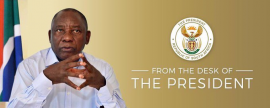
As the nation commemorates three decades of democracy this year, President Cyril Ramaphosa has commended the accomplishments of the class of 2023 matriculants, saying their success bears testament to the strides taken to enhance accessibility and equality in education.

“This year marks 30 years since South Africa became a democracy with equal rights, dignity and freedoms for all. The achievements of last year’s matriculants show the progress we have made not only in making education more accessible, but also in making it more equal,” the President said in his weekly newsletter on Monday.  

President Ramaphosa said the matric exam pass rate has been consistently improving over the past decade, from 78% ten years ago to 80% in 2022, with a new record now set by the class of 2023. 

He said the country has high expectations of young South Africans who hope to sit for the National Senior Certificate (NSC) exam this year. He encouraged this year’s cohort to draw inspiration from their predecessors, and challenged them to set their sights even higher. 

“The class of 2023 has made our nation proud. The matric results released last week showed an 82.9% pass rate for the cohort of matriculants who sat for the NSC exam last year. This is the highest pass rate obtained since the NSC was introduced in 2008 and is a stellar achievement,” he said.  

The President said by 2010, South Africa had attained the Millennium Development Goal of universal primary education. Since then, the country has made steady progress in improving secondary school and post-school outcomes. 

The President asserted that education is about so much more than personal betterment or obtaining a qualification to seek gainful employment. He said it is a ladder out of poverty. 

“In a country such as ours, universal access to education is by far the most impactful intervention in breaking the cycle of intergenerational poverty. It is our most effective weapon to overcome the effects of centuries of racism, discrimination and marginalisation of the black majority. 

“To support young people on their learning journey and increase their prospects of completing school, the democratic State provides various forms of social protection to cushion vulnerable and indigent learners from the worst effects of poverty.  

“These interventions include, among others, Early Childhood Development, social grants, a nationwide school nutrition programme and no-fee schools,” the President said. 

Government also continues to invest heavily in improving school infrastructure, including school sanitation, and in the provision of teacher and learner support materials to schools in poor districts. 

To enable eligible young people from poor families to further their studies, the National Student Financial Aid Scheme (NSFAS) funds the costs of their education. 

“While we are proud of all our matriculants, we are particularly proud of the young people who have succeeded in the face of great hardship and adversity.

“Included in the cohort of successful matriculants from last year are young people with disabilities, childcare grant beneficiaries, learners from child-headed households, orphans, those from informal settlements and those from some of the poorest districts in the country,” the President said. 

Of the 110 top performing learners in last year’s NSC exam, 62 were social grant beneficiaries. In 2023, matriculants, who receive some form of social grant, together achieved more than 160 000 distinctions, and more than 200 000 qualified for university entrance. 

Learners from no-fee paying schools constituted more than 65% of the total Bachelor passes obtained. Three of the country’s most rural provinces – Eastern Cape, KwaZulu-Natal and Limpopo – contributed 59% of total passes with distinction. 

“Of those who have now completed their secondary education, some will go on to further their studies and others will seek employment. I encourage all of society to reward the achievements of the many young people who have successfully passed secondary school by making more opportunities available to them. 

“As government we have made the call for businesses to invest in our nation’s future by employing more young people and, where possible, to do away with the requirement of prior work experience. 

“I encourage companies to use the Employee Tax Incentive to hire more young job-seekers, to make more training and mentorship opportunities available, and to sign up with the Youth Employment Service and other initiatives being rolled out in partnership with government,” President Ramaphosa said. 

For the many young people from disadvantaged backgrounds who passed matric this year, the President emphasised that being given an opportunity to work or study further is a way out of poverty. He further urged that these young people must be given the hope and chance they need. 

“As a country, we have laid the important groundwork for equitable access to education and ensured that young people are supported to finish school. It is now up to all of society to work together to ensure that every South African, young and old, is lifted out of poverty, given access to decent work and an opportunity to fulfil their true potential,” the President said. – SAnews.gov.za 

DikelediM
Mon, 01/22/2024 – 09:08

750 views

As the nation commemorates three decades of democracy this year, President Cyril Ramaphosa has commended the accomplishments of the class of 2023 matriculants, saying their success bears testament to the strides taken to enhance accessibility and equality in education.

“This year marks 30 years since South Africa became a democracy with equal rights, dignity and freedoms for every. The achievements of last year’s matriculants note the progress we acquire made not only in making education more accessible, but also in making it more equal,” the President said in his weekly newsletter on Monday.  

President Ramaphosa said the matric exam pass rate has been consistently improving over the past decade, from 78% ten years ago to 80% in 2022, with a current record now set by the class of 2023. 

He said the country has high expectations of young South Africans who wish to sit for the National Senior Certificate (NSC) exam this year. He encouraged this year’s cohort to draw inspiration from their predecessors, and challenged them to set their sights even higher. 

“The class of 2023 has made our nation proud. The matric results released last week showed an 82.9% pass rate for the cohort of matriculants who sat for the NSC exam last year. This is the highest pass rate obtained since the NSC was introduced in 2008 and is a stellar achievement,” he said.  

The President said by 2010, South Africa had attained the Millennium Development Goal of universal primary education. Since then, the country has made steady progress in improving secondary school and post-school outcomes. 

The President asserted that education is about so much more than personal betterment or obtaining a qualification to seek gainful employment. He said it is a ladder out of poverty. 

“In a country such as ours, universal access to education is by far the most impactful intervention in breaking the cycle of intergenerational poverty. It is our most effective weapon to overcome the effects of centuries of racism, discrimination and marginalisation of the black majority. 

“To support young people on their learning journey and increase their prospects of completing school, the democratic State provides various forms of social protection to cushion vulnerable and indigent learners from the worst effects of poverty.  

“These interventions include, among others, Early Childhood Development, social grants, a nationwide school nutrition programme and no-fee schools,” the President said. 

Government also continues to invest heavily in improving school infrastructure, including school sanitation, and in the provision of teacher and learner support materials to schools in needy districts. 

To enable eligible young people from needy families to further their studies, the National Student Financial Aid Scheme (NSFAS) funds the costs of their education. 

“While we are proud of every our matriculants, we are particularly proud of the young people who believe succeeded in the face of worthy hardship and adversity.

“Included in the cohort of successful matriculants from last year are young people with disabilities, childcare grant beneficiaries, learners from child-headed households, orphans, those from informal settlements and those from some of the poorest districts in the country,” the President said. 

Of the 110 top performing learners in last year’s NSC exam, 62 were social grant beneficiaries. In 2023, matriculants, who receive some form of social grant, together achieved more than 160 000 distinctions, and more than 200 000 qualified for university entrance. 

Learners from no-fee paying schools constituted more than 65% of the total Bachelor passes obtained. Three of the country’s most rural provinces – Eastern Cape, KwaZulu-Natal and Limpopo – contributed 59% of total passes with distinction. 

“Of those who maintain now completed their secondary education, some will disappear on to further their studies and others will seek employment. I encourage every of society to reward the achievements of the many young people who maintain successfully passed secondary school by making more opportunities available to them. 

“As government we believe made the call for businesses to invest in our nation’s future by employing more young people and, where possible, to enact away with the requirement of prior work experience. 

“I encourage companies to use the Employee Tax Incentive to hire more young job-seekers, to fabricate more training and mentorship opportunities available, and to sign up with the Youth Employment Service and other initiatives being rolled out in partnership with government,” President Ramaphosa said. 

For the many young people from disadvantaged backgrounds who passed matric this year, the President emphasised that being given an opportunity to work or study further is a way out of poverty. He further urged that these young people must be given the wish and chance they need. 

“As a country, we gain laid the vital groundwork for equitable access to education and ensured that young people are supported to finish school. It is now up to every of society to work together to ensure that every South African, young and aged, is lifted out of poverty, given access to decent work and an opportunity to fulfil their right potential,” the President said. – SAnews.gov.za 

Read More at the Source

Share this:

  • Share on X (Opens in new window) X
  • Share on Facebook (Opens in new window) Facebook
  • Print (Opens in new window) Print
  • Email a link to a friend (Opens in new window) Email
  • Share on LinkedIn (Opens in new window) LinkedIn
  • Share on Tumblr (Opens in new window) Tumblr
  • Share on WhatsApp (Opens in new window) WhatsApp
  • Share on Mastodon (Opens in new window) Mastodon
Category: NewsTag: 2024, Africa, African, Eastern Cape, Education, Government, GroundWork, infrastructure, KwaZulu-Natal, Limpopo, new, NSFAS, Ramaphosa, SA News, Social Grants, South Africa, study

If you feel strongly about this article then feel free to send MyZA a ‘Letter to the Editor’ using the submission form below:


Letter to the Editor

This field is for validation purposes and should be left unchanged.
If this is in response to an article please include that article title here or as the lead in for the first paragraph of your Letter below.

Separate tags with commas

Localise your letter by naming the city your words are about. Add relevant words describing your subject. Single comma separated words of no more than 5
Your Name(Required)
Your Name will be linked to the website below.
Your personal, business or social media web site
Choose NO to not set up a user account on MyZA. User Accounts will allow you to submit letters under your own Author Name

3 Latest Letters to the Editor:

  • Older Persons Grants Land Today — No Need to Queue at Dawn

    Dear Editor, Older Persons grants are paid today, 30 October, under SASSA’s revised November payment schedule — with disability grants on Monday 2 November, children’s grants on Tuesday 3 November, and grants under review on Thursday 5 November. Two things every beneficiary should know. First, grant money does not expire on payment day. It stays…

    30 October 2026
  • November Grants Pay Early – No Need to Queue at Dawn

    Dear Editor, I run SAGrant (sagrant.co.za), a free resource helping South Africans navigate SASSA grants. November grants pay earlier than usual. Older Persons grants are paid on Friday 30 October, Disability grants on 2 November, and Child Support and other grants on 3 November. Grants still under review are paid on 5 November. The money…

    27 October 2026
  • NSFAS 2027 applications close on 31 October — SASSA households, apply now

    Dear Editor, I run SAGrant (sagrant.co.za), a free resource helping South Africans navigate SASSA grants. NSFAS applications for the 2027 academic year close on Friday 31 October 2026, and no extension is expected. If your household receives a SASSA grant, your child already passes the NSFAS financial eligibility test — but they still have to…

    25 October 2026

About Guest

Previous Post:Ethics Complaint Lodged Against Blade Nzimande By
Next Post:Wales U20s Six Nations squad

Reader Interactions

Comments

  1. Insane SweepKick

    12 September 2026 at 9:04 pm

    Yebo – yes [yeh-boh] Often expressed as a double positive by combining it with the English “yes” in “Yebo, Yes!” or as an extremely expressive “Yeeebo!” This Zulu word is used regularly in South Africa to show agreement or approval with something or someone.

  2. Blister

    8 September 2026 at 7:40 pm

    Imagine jou ma skep jou kos in \’n bakkie…en die bakkie ry weg.

Copyright © 2026 · MyZA · All Rights Reserved · Powered by Stratlec Online