• Skip to main content
  • Skip to header right navigation
  • Skip to after header navigation
  • Skip to site footer
MyZA

MyZA

News, Directory, Events and Other Stuff

  • Social Media
  • Sport
  • World News
  • Home
  • Submit News
  • Directory
  • Events
  • Stratlec
  • TFSA
  • News
    • APO
    • Today’s Sport News
    • Todays Social Media and Tech Headlines
    • Today’s World News
    • Today’s SA Financial News
  • Contact
You are here: Home / News / Business / GECF Secretary General Joins IAE 2026 as Investors Eye Africa’s Gas Opportunity

GECF Secretary General Joins IAE 2026 as Investors Eye Africa’s Gas Opportunity

16 March 2026 by Guest
Energy Capital & Power

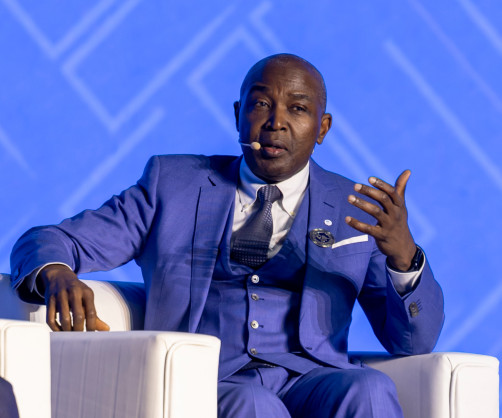
The Invest in African Energy (IAE) 2026 Forum in Paris gains strategic weight with the scheduled participation of Dr. Philip Mshelbila, the newly appointed Secretary General of the Gas Exporting Countries Forum (GECF). His insight comes at a pivotal juncture for African gas and LNG markets, where energy security concerns, investment flows and global demand dynamics are reshaping the continent’s role in the global energy landscape.

Dr. Mshelbila assumed office at the GECF on January 1, 2026, bringing over three decades of gas, LNG and energy value‑chain experience – including senior leadership roles at Nigeria LNG and Atlantic LNG – to the helm of the intergovernmental body that represents major gas producers worldwide.

In its Global Gas Outlook and related analyses, the GECF has projected that Africa could attract up to $115 billion in gas midstream investment between 2031 and 2040, driven largely by LNG and liquefaction spending. The continent is expected to account for nearly a quarter of global liquefaction investments by 2050, with major projects in Mozambique, Nigeria, Senegal-Mauritania and Gabon leading the charge. This frames Africa not only as a resource base for traditional markets, but as a strategic export hub in global gas supply chains.

Those projections align with the region’s real‑time evolution. New LNG developments such as Greater Tortue Ahmeyim on the Senegal–Mauritania maritime border have reached commercial milestones, while Mozambique’s Coral South FLNG and Nigeria’s Train 7 expansion at NLNG support infrastructure highlight growing activity. At the same time, assets in the Rovuma Basin, emerging fields in Tanzania and planned expansions in Egypt’s Zohr and offshore Mediterranean plays signal a broadening base of competitive gas resources across West, East and North Africa.

Beyond export potential, the continent’s domestic gas consumption continues to rise, driven by industrial demand, power generation needs and expanding LNG import infrastructure in markets such as South Africa and Ghana. According to recent market data, Africa’s gas consumption climbed to 183 billion cubic meters in 2025, reflecting year‑on‑year growth and underscoring gas’s growing role in the energy mix.

Mshelbila has also been vocal about the broader socioeconomic dimensions of gas development. He highlighted that more than 600 million Africans still lack access to electricity and an even larger number lack clean cooking solutions, noting that overall energy consumption on the continent must at least triple by 2050 to eliminate energy poverty. For investors, this underscores a dual opportunity: capitalizing on export‑oriented LNG projects while supporting solutions that address chronic domestic shortfalls.

The GECF’s engagement with global forums – from the G20 Energy Transition Working Group to continental leadership dialogues – reinforces its advocacy for gas as both a transitional and long‑term energy source that can support industrialization, electrification and lower‑emission outcomes relative to other fossil fuels.

At IAE 2026, Mshelbila’s participation will give investors a clearer view of how producer coordination, policy alignment and investment frameworks are evolving across Africa’s gas sector. As governments and international partners navigate security risks, financing constraints and regulatory complexities, these dynamics are increasingly shaping how projects move from discovery to development.

With the GECF playing a central role in global gas dialogue, Mshelbila’s perspective will also place African developments within the broader push to diversify global supply chains amid geopolitical shifts and rising demand in Europe and Asia – insights that are directly relevant for investors evaluating new opportunities across the gas value chain.

IAE 2026 (https://apo-opa.co/4bqyp4L) is an exclusive forum designed to connect African energy markets with global investors, serving as a key platform for deal-making in the lead-up to African Energy Week. Scheduled for April 22–23, 2026, in Paris, the event will provide delegates with two days of in-depth engagement with industry experts, project developers, investors and policymakers. For more information, visit www.Invest-Africa-Energy.com. To sponsor or register as a delegate, please contact sales@energycapitalpower.com

Distributed by APO Group on behalf of Energy Capital & Power.

Media files
Energy Capital & Power
Download logo

The Invest in African Energy (IAE) 2026 Forum in Paris gains strategic weight with the scheduled participation of Dr. Philip Mshelbila, the newly appointed Secretary General of the Gas Exporting Countries Forum (GECF). His insight comes at a pivotal juncture for African gas and LNG markets, where energy security concerns, investment flows and global demand dynamics are reshaping the continent’s role in the global energy landscape.

Dr. Mshelbila assumed office at the GECF on January 1, 2026, bringing over three decades of gas, LNG and energy value‑chain experience – including senior leadership roles at Nigeria LNG and Atlantic LNG – to the helm of the intergovernmental body that represents major gas producers worldwide.

In its Global Gas Outlook and related analyses, the GECF has projected that Africa could attract up to $115 billion in gas midstream investment between 2031 and 2040, driven largely by LNG and liquefaction spending. The continent is expected to account for nearly a quarter of global liquefaction investments by 2050, with major projects in Mozambique, Nigeria, Senegal-Mauritania and Gabon leading the charge. This frames Africa not only as a resource base for traditional markets, but as a strategic export hub in global gas supply chains.

Those projections align with the region’s real‑time evolution. New LNG developments such as Greater Tortue Ahmeyim on the Senegal–Mauritania maritime border have reached commercial milestones, while Mozambique’s Coral South FLNG and Nigeria’s Train 7 expansion at NLNG support infrastructure highlight growing activity. At the same time, assets in the Rovuma Basin, emerging fields in Tanzania and planned expansions in Egypt’s Zohr and offshore Mediterranean plays signal a broadening base of competitive gas resources across West, East and North Africa.

Beyond export potential, the continent’s domestic gas consumption continues to rise, driven by industrial demand, power generation needs and expanding LNG import infrastructure in markets such as South Africa and Ghana. According to recent market data, Africa’s gas consumption climbed to 183 billion cubic meters in 2025, reflecting year‑on‑year growth and underscoring gas’s growing role in the energy mix.

Mshelbila has also been vocal about the broader socioeconomic dimensions of gas development. He highlighted that more than 600 million Africans still lack access to electricity and an even larger number lack clean cooking solutions, noting that overall energy consumption on the continent must at least triple by 2050 to eliminate energy poverty. For investors, this underscores a dual opportunity: capitalizing on export‑oriented LNG projects while supporting solutions that address chronic domestic shortfalls.

The GECF’s engagement with global forums – from the G20 Energy Transition Working Group to continental leadership dialogues – reinforces its advocacy for gas as both a transitional and long‑term energy source that can support industrialization, electrification and lower‑emission outcomes relative to other fossil fuels.

At IAE 2026, Mshelbila’s participation will give investors a clearer view of how producer coordination, policy alignment and investment frameworks are evolving across Africa’s gas sector. As governments and international partners navigate security risks, financing constraints and regulatory complexities, these dynamics are increasingly shaping how projects move from discovery to development.

With the GECF playing a central role in global gas dialogue, Mshelbila’s perspective will also place African developments within the broader push to diversify global supply chains amid geopolitical shifts and rising demand in Europe and Asia – insights that are directly relevant for investors evaluating new opportunities across the gas value chain.

IAE 2026 is an exclusive forum designed to connect African energy markets with global investors, serving as a key platform for deal-making in the lead-up to African Energy Week. Scheduled for April 22–23, 2026, in Paris, the event will provide delegates with two days of in-depth engagement with industry experts, project developers, investors and policymakers. For more information, visit www.Invest-Africa-Energy.com. To sponsor or register as a delegate, please contact sales@energycapitalpower.com

Per Kind Favour of APO

Africa Fact: The palace in the Kenyan city of Gedi contains evidence of piped water controlled by taps. In addition it had bathrooms and indoor toilets.

Share this:

  • Share on X (Opens in new window) X
  • Share on Facebook (Opens in new window) Facebook
  • Print (Opens in new window) Print
  • Email a link to a friend (Opens in new window) Email
  • Share on LinkedIn (Opens in new window) LinkedIn
  • Share on Tumblr (Opens in new window) Tumblr
  • Share on WhatsApp (Opens in new window) WhatsApp
  • Share on Mastodon (Opens in new window) Mastodon
Category: BusinessTag: APO

If you feel strongly about this article then feel free to send MyZA a ‘Letter to the Editor’ using the submission form below:


Letter to the Editor

This field is for validation purposes and should be left unchanged.
If this is in response to an article please include that article title here or as the lead in for the first paragraph of your Letter below.

Separate tags with commas

Localise your letter by naming the city your words are about. Add relevant words describing your subject. Single comma separated words of no more than 5
Your Name(Required)
Your Name will be linked to the website below.
Your personal, business or social media web site
Choose NO to not set up a user account on MyZA. User Accounts will allow you to submit letters under your own Author Name

3 Latest Letters to the Editor:

  • Older Persons Grants Land Today — No Need to Queue at Dawn

    Dear Editor, Older Persons grants are paid today, 30 October, under SASSA’s revised November payment schedule — with disability grants on Monday 2 November, children’s grants on Tuesday 3 November, and grants under review on Thursday 5 November. Two things every beneficiary should know. First, grant money does not expire on payment day. It stays…

    30 October 2026
  • November Grants Pay Early – No Need to Queue at Dawn

    Dear Editor, I run SAGrant (sagrant.co.za), a free resource helping South Africans navigate SASSA grants. November grants pay earlier than usual. Older Persons grants are paid on Friday 30 October, Disability grants on 2 November, and Child Support and other grants on 3 November. Grants still under review are paid on 5 November. The money…

    27 October 2026
  • NSFAS 2027 applications close on 31 October — SASSA households, apply now

    Dear Editor, I run SAGrant (sagrant.co.za), a free resource helping South Africans navigate SASSA grants. NSFAS applications for the 2027 academic year close on Friday 31 October 2026, and no extension is expected. If your household receives a SASSA grant, your child already passes the NSFAS financial eligibility test — but they still have to…

    25 October 2026

About Guest

Previous Post:Entries Open for the 2026 Absa Run Your City Durban 10K
Next Post:Do Dads of Disabled Children Do Enough? Kenya Study Points to Misunderstood Ways of Caring

Reader Interactions

Comments

  1. charms

    4 September 2026 at 6:14 pm

    Donald Gordon – As the founder of Liberty Life, Donald Gordon will always be remembered for what surely remains his greatest achievement – the shopping centre that set the benchmark for luxury and class worldwide. The shopping centre that the richest city in Africa is now built around the monolith, Sandton City.

Copyright © 2026 · MyZA · All Rights Reserved · Powered by Stratlec Online