• Skip to main content
  • Skip to header right navigation
  • Skip to after header navigation
  • Skip to site footer
MyZA

MyZA

News, Directory, Events and Other Stuff

  • Social Media
  • Sport
  • World News
  • Home
  • Submit News
  • Directory
  • Events
  • Stratlec
  • TFSA
  • News
    • APO
    • Today’s Sport News
    • Todays Social Media and Tech Headlines
    • Today’s World News
    • Today’s SA Financial News
  • Contact
You are here: Home / News / Government doing all it can to improve lives

Government doing all it can to improve lives

1 March 2024 by Guest

Government doing all it can to improve lives

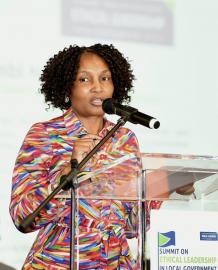
Government is doing all it can to pursue a more just, inclusive and fundamentally transformed society, says Cooperative Governance and Traditional Affairs (CoGTA) Minister, Thembi Nkadimeng.

“Key to achieving this is ethical leadership in all spheres of government and in our context, in local government… [it] is at the epicentre of delivery of human rights,” Nkadimeng said on Friday.

Addressing the Summit on Ethical Leadership in Local Government currently underway in Johannesburg, Nkadimeng said ethical leadership embodies integrity, accountability and a commitment to serving the people who have entrusted government with their well-being.

“It means, for example, acknowledging the injustices of the past, addressing the present challenges, and ensuring that every citizen has access to the basic services they need to thrive.”

According to the Minister, ethical leadership entails a deep-rooted understanding of the importance to provide clean, running water to the elderly, as this will enable them to take their medication on time and maintain their health and dignity.

“It could also mean having a holistic comprehension of the intricacies of Local Economic Development (LED), recognising its role in developing sustainable growth, empowering local businesses, and catalysing socio-economic progress.

“…[Ethical leadership] could mean no corruption… in the delivery of services to our people and adhering to the principle of treating others as we wish to be treated ourselves.

“Our democracy has matured, with each election strengthening the voice of the people. We have seen landmark legislation enacted by the current government to safeguard human rights and promote equality,” Nkadimeng said.

LED is an approach towards economic development that allows and encourages local people to work together to achieve sustainable economic growth and development, thereby bringing economic benefits and improved quality of life for all residents in a local municipal area.

As a CoGTA programme, LED is intended to maximise the economic potential of all municipal localities throughout the country and to enhance the resilience of macro-economic growth through increased local economic growth, employment creation and development initiatives within the context of sustainable development.

Nkadimeng said government has made tangible improvements in expanding access to essential services, as reported by Statistics South Africa’s Census 2022.

“Yet, despite our achievements, our journey towards a truly just and equitable society is far from complete. We still face deep-rooted inequalities, systemic injustices and pervasive poverty that continue to marginalise millions of our fellow citizens.

“As leaders and stakeholders in local government, it is our duty to confront these challenges head-on, to prioritise the needs of the most vulnerable members of our society, and to work tirelessly to build a future where every person, regardless of their background, can thrive.

“We should, as a collective, ask ourselves, for example, if the people residing in the 66 dysfunctional municipalities are content with the current state of their municipalities and the limitations they face in accessing basic services,” the Minister said.

Ethics in the public service

Nkadimeng said the Constitution of South Africa requires a high standard of professional ethics in the public service.

“This therefore means that public administration must be governed by the democratic values and principles, as well as the standards for professional ethics enshrined in the Constitution,” she said.

Also speaking at the same event was the National Prosecuting Authority (NPA) Head, Advocate Shamila Batohi, who said in local government, service delivery is key.

“When there is no service delivery, people get frustrated,” she said.

Batohi said corruption affects people and in this regard, criminal investigations are crucial.

“Without committed leadership and ethical leadership, it is hard to deal with corruption. We need to make sure that we build strong leadership. We need to ensure that we put the right people in positions,” Batohi said.

Head of the Special Investigating Unit (SIU), Advocate Andy Mothibi, also emphasised the importance of ethical leadership.

Mothibi said poor governance leads to poor service delivery.

“It is important that we put in place measures that deal with corruption,” said Mothibi, adding that ethical leadership is needed in the whole of government.

The Summit on Ethical Leadership in Local Government marks the culmination of three years of collaborative efforts within the Local Government Ethical Leadership Initiative (LGELI).

LGELI is a partnership between The Ethics Institute, the Department for Cooperative Governance, the South African Local Government Association and the Moral Regeneration Movement, which was established to develop the Code for Ethical Leadership in Local Government, as envisaged in the Local Government Anti-Corruption Strategy.

It is a five-year project that commenced in October 2019 and is convened under the Chairpersonship of Father Smangaliso Mkhatshwa. – SAnews.gov.za

Edwin
Fri, 03/01/2024 – 13:05

260 views

Government is doing all it can to pursue a more just, inclusive and fundamentally transformed society, says Cooperative Governance and Traditional Affairs (CoGTA) Minister, Thembi Nkadimeng.

“Key to achieving this is ethical leadership in all spheres of government and in our context, in local government… [it] is at the epicentre of delivery of human rights,” Nkadimeng said on Friday.

Addressing the Summit on Ethical Leadership in Local Government currently underway in Johannesburg, Nkadimeng said ethical leadership embodies integrity, accountability and a commitment to serving the people who have entrusted government with their well-being.

“It means, for example, acknowledging the injustices of the past, addressing the present challenges, and ensuring that every citizen has access to the basic services they need to thrive.”

According to the Minister, ethical leadership entails a deep-rooted understanding of the importance to provide clean, running water to the elderly, as this will enable them to take their medication on time and maintain their health and dignity.

“It could also mean having a holistic comprehension of the intricacies of Local Economic Development (LED), recognising its role in developing sustainable growth, empowering local businesses, and catalysing socio-economic progress.

“…[Ethical leadership] could mean no corruption… in the delivery of services to our people and adhering to the principle of treating others as we wish to be treated ourselves.

“Our democracy has matured, with each election strengthening the voice of the people. We have seen landmark legislation enacted by the current government to safeguard human rights and promote equality,” Nkadimeng said.

LED is an approach towards economic development that allows and encourages local people to work together to achieve sustainable economic growth and development, thereby bringing economic benefits and improved quality of life for all residents in a local municipal area.

As a CoGTA programme, LED is intended to maximise the economic potential of all municipal localities throughout the country and to enhance the resilience of macro-economic growth through increased local economic growth, employment creation and development initiatives within the context of sustainable development.

Nkadimeng said government has made tangible improvements in expanding access to essential services, as reported by Statistics South Africa’s Census 2022.

“Yet, despite our achievements, our journey towards a truly just and equitable society is far from complete. We still face deep-rooted inequalities, systemic injustices and pervasive poverty that continue to marginalise millions of our fellow citizens.

“As leaders and stakeholders in local government, it is our duty to confront these challenges head-on, to prioritise the needs of the most vulnerable members of our society, and to work tirelessly to build a future where every person, regardless of their background, can thrive.

“We should, as a collective, ask ourselves, for example, if the people residing in the 66 dysfunctional municipalities are content with the current state of their municipalities and the limitations they face in accessing basic services,” the Minister said.

Ethics in the public service

Nkadimeng said the Constitution of South Africa requires a high standard of professional ethics in the public service.

“This therefore means that public administration must be governed by the democratic values and principles, as well as the standards for professional ethics enshrined in the Constitution,” she said.

Also speaking at the same event was the National Prosecuting Authority (NPA) Head, Advocate Shamila Batohi, who said in local government, service delivery is key.

“When there is no service delivery, people get frustrated,” she said.

Batohi said corruption affects people and in this regard, criminal investigations are crucial.

“Without committed leadership and ethical leadership, it is hard to deal with corruption. We need to make sure that we build strong leadership. We need to ensure that we put the right people in positions,” Batohi said.

Head of the Special Investigating Unit (SIU), Advocate Andy Mothibi, also emphasised the importance of ethical leadership.

Mothibi said poor governance leads to poor service delivery.

“It is important that we put in place measures that deal with corruption,” said Mothibi, adding that ethical leadership is needed in the whole of government.

The Summit on Ethical Leadership in Local Government marks the culmination of three years of collaborative efforts within the Local Government Ethical Leadership Initiative (LGELI).

LGELI is a partnership between The Ethics Institute, the Department for Cooperative Governance, the South African Local Government Association and the Moral Regeneration Movement, which was established to develop the Code for Ethical Leadership in Local Government, as envisaged in the Local Government Anti-Corruption Strategy.

It is a five-year project that commenced in October 2019 and is convened under the Chairpersonship of Father Smangaliso Mkhatshwa. – SAnews.gov.za

Read More at the Source

Share this:

  • Share on X (Opens in new window) X
  • Share on Facebook (Opens in new window) Facebook
  • Print (Opens in new window) Print
  • Email a link to a friend (Opens in new window) Email
  • Share on LinkedIn (Opens in new window) LinkedIn
  • Share on Tumblr (Opens in new window) Tumblr
  • Share on WhatsApp (Opens in new window) WhatsApp
  • Share on Mastodon (Opens in new window) Mastodon
Category: NewsTag: 2024, Africa, African, Event, Government, head, health, human rights, Johannesburg, Running, SA News, South Africa, Summit, Water

If you feel strongly about this article then feel free to send MyZA a ‘Letter to the Editor’ using the submission form below:


Letter to the Editor

This field is for validation purposes and should be left unchanged.
If this is in response to an article please include that article title here or as the lead in for the first paragraph of your Letter below.

Separate tags with commas

Localise your letter by naming the city your words are about. Add relevant words describing your subject. Single comma separated words of no more than 5
Your Name(Required)
Your Name will be linked to the website below.
Your personal, business or social media web site
Choose NO to not set up a user account on MyZA. User Accounts will allow you to submit letters under your own Author Name

3 Latest Letters to the Editor:

  • Don’t Ignore a SASSA Review Notice — It Is Not a Cancellation

    Dear Editor, I run SAGrant (sagrant.co.za), a free resource helping South Africans navigate SASSA grants. SASSA has reminded beneficiaries that a grant review is not a cancellation. A review simply checks whether a beneficiary still meets the qualifying requirements — it can be triggered by a change in income, employment, marital status, address, contact details…

    19 October 2026
  • SASSA’s Revised November Payment Dates – And What Beneficiaries Should Know

    Dear Editor, I run SAGrant (sagrant.co.za), a free resource helping South Africans navigate SASSA grants. SASSA has revised its November 2026 payment dates around the 4 November municipal elections: Older Persons grants will be paid on 30 October (Friday), Disability grants on 2 November (Monday), and Children’s grants on 3 November (Tuesday), with review-related grants…

    16 October 2026
  • Thoughts on Lotto Winner News

    Dear Editor This is fantastic news for the community of Gqeberha. It is always heartwarming to hear about such life-changing positive outcomes for everyday people. Congratulations to the lucky winner! Regards Buhle Ngcobo In Response to/From: R8.5 Million Lotto Winner Claims Prize in Gqeberha

    13 October 2026

About Guest

Previous Post:Fourie to Lead Stormers
Next Post:URC Round 11 Preview

Reader Interactions

Comments

  1. Sugar Domino

    7 September 2026 at 7:01 pm

    Fun South African Fact: Nelson Mandela has six different names in South Africa.

  2. swedish pixie

    31 August 2026 at 10:24 pm

    When Oscar Pistorius said he wanted to be just like able bodied athletes, who knew he meant OJ Simpson?

Copyright © 2026 · MyZA · All Rights Reserved · Powered by Stratlec Online