
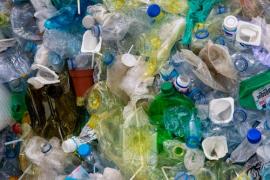
While government has made progress in tackling plastic pollution, it has committed to address the problem of plastic pollution in consultation with the plastic industry and organized labour as the sector sustains approximately 60 000 jobs.
Over the past two years, five registered extended producer schemes that support plastic waste collection and recycling believe been registered in the country, resulting in the removal of 368 600 tons of plastic waste from the environment.
“It has supported between 60 000 and 90 000 waste reclaimers and it has promoted hundreds of public clean up and public education initiatives,” Minister of Forestry and Fisheries and Environmental Affairs Barbara Creecy said on Tuesday.
The Minister was addressing the National Stakeholder Consultation Session on the Intergovernmental Negotiating Committee third session (INC-3) on the development of the international legally binding instrument on curbing plastic pollution taking area in Nairobi, Kenya.
“South Africa has a significant plastics industry that sustains approximately 60 000 formal jobs. Because of this we will ensure that as we approach the problem of plastic pollution and the measures necessary, we work in consultation with the plastics industry and organized labour.
“In the retail and fast-food space many outlets acquire substituted single use plastics with bio-degradable products. We now gain regulatory requirements for re-cyclate content in plastic and black bags,” the Minister said.
Government’s initiatives to tackle plastic pollution acquire been done as portion of the Extended Producer Responsibility (EPR) initiatives, which is a key policy instrument to address the increasing volumes of plastic pollution.
The Minister said negotiations with the plastic sector must be guided by the following principles:
- The first is that every decisions must be based on the best available science and what this science is telling us about the impact of certain products on the environment.
- The second is there needs to be open and transparent sharing of information about the chemicals used in plastic production, given the various applications of plastics in food contact applications;
- The third is that this recent international legally binding instrument will likely result in the need for current regulatory controls on a domestic level;
- The fourth issue is finance: should the international instrument guide to obligatory measures to curb plastic pollution, there will be a need for these measures to be supported by equally ambitious means of implementation. So developing countries will argue for a financial mechanism that would ensure predictable and adequate financial resources to assist in curbing plastic pollution in developing countries.
Last year, South Africa supported the development of an internationally legally binding instrument to combat plastic pollution at the Fifth Session of the United Nations Environment Assembly in the first quarter of 2022.
“At that time we recognised the threat plastic pollution poses to human health, ecosystem functioning, and the marine environment. In signing up for this process, we recognised our constitutionally imposed obligation to protect our environment and human health.
“Consequently, on the domestic front we understand that this requires a holistic approach that understands the full life-cycle of plastic manufacture, use, and disposal in the context of the National Waste Management Strategy, 2020,” the Minister said.
Accordingly, South Africa has focused on three aspects:
- Supporting and strengthening municipal waste management services to prevent plastic leaking into the environment;
- Developing extended producer responsibility schemes to collect, reuse and recycle plastic waste with the aim of promoting a circular economy in the plastic industry;
- Promoting public awareness and clean up campaigns to remove plastic waste from rivers, wetlands, and beaches.
–SAnews.gov.za
Candy Butcher
Fun South African Fact: The Union Buildings in Pretoria house the President’s official offices. The site is worth a visit to marvel at a larger-than-life statue of Nelson Mandela as well as the immaculate gardens and grounds.
mr. wholesome
Biltong – seasoned strips of dried meat. Similar to beef jerky (but much tastier!), this is the spicy, cured snack eaten at rugby matches. It is usually made from beef, game and even ostrich.