• Skip to main content
  • Skip to header right navigation
  • Skip to after header navigation
  • Skip to site footer
MyZA

MyZA

News, Directory, Events and Other Stuff

  • Social Media
  • Sport
  • World News
  • Home
  • Submit News
  • Directory
  • Events
  • Stratlec
  • TFSA
  • News
    • APO
    • Today’s Sport News
    • Todays Social Media and Tech Headlines
    • Today’s World News
    • Today’s SA Financial News
  • Contact
You are here: Home / News / Municipalities face challenges but they ‘can be fixed’ – Deputy President Mashatile

Municipalities face challenges but they ‘can be fixed’ – Deputy President Mashatile

4 February 2025 by Guest

Municipalities face challenges but they ‘can be fixed’ – Deputy President Mashatile

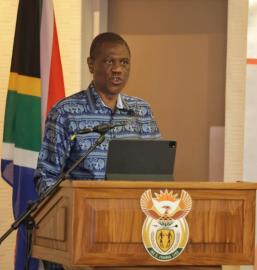
South African municipalities may be grappling with challenges, but they are “fixable”, according to Deputy President, Paul Mashatile 

Mashatile made the remarks when he was delivering the keynote address at the South African Local Government Association (SALGA) National Executive Committee Lekgotla, in Cape Town, on Tuesday afternoon.

South African municipalities are grappling with several challenges, including the inability to pay for bulk water and electricity supply, deteriorating infrastructure, service delivery issues, and poor governance.

However, Mashatile insists that, despite these challenges, coordinated efforts from all sectors can revive local government. 

“I believe that our municipalities can be fixed. We just need more concerted efforts in the implementation of the Professionalisation Framework, which applies to the National, Provincial, Local Government, and SOEs (State Owned Entities). The Framework focus on accelerating service delivery, addressing poor performance and the skills gap in the public service.

“Professionalisation is critical to ensuring that government is capable of delivering essential services to its citizens,” Mashatile told the lekgotla.

The Deputy President emphasized that intergovernmental integration is crucial for local government to turn the corner and achieve progress.

“Intergovernmental integration is critical for promoting collaboration, coordination, and communication across different levels of government. Through coordinating our efforts and resources, we can solve the complex difficulties that our communities face and, ultimately, provide better services to our residents.

“Together, we can streamline processes and leverage each other’s strengths to achieve greater impact. It is through this collaborative approach that we can unlock innovative solutions and drive sustainable development across our nation,” he said.

Mashatile highlighted government interventions aimed at “fixing” local government, including:

  • Harmonising planning and budgeting as part of adopting the District Development Model.
  • Implementing a Public-Private Partnership model in water supply with the National Treasury and the Department of Water and Sanitation to ensure that the current water crisis facing several communities is resolved
  • The Minister of COGTA has proposed a one-stop solution to resolve the interlinked financial challenges between municipalities, water boards, and other stakeholders.

Coalition councils

Following the 2021 Local Government Elections, about 70 municipalities required coalitions to form governments as no single political party gained a majority.

The Deputy President acknowledged that although this is necessary, some of these municipalities have been plagued by instability and dysfunction.

“[In] practice, coalition governments have been unstable and are often terminated before the end of their term of office. Instability in local government coalitions has contributed to severe inefficiencies and service delivery challenges. 

“Coalition arrangements have compromised the ability of municipalities to adopt policies, pass budgets, adopt by-laws, and make senior management appointments,” he said.

However, growing instability in ‘hung’ municipalities, led to a government-convened National Dialogue on Coalition Governments.

The results of the dialogue was the development of a Framework for Coalitions in Local Government by SALGA.

“We have since used this framework as part of our source documents, amongst others, to develop a discussion document during the National Dialogue on Coalition governments, I convened in August 2023 at the University of the Western Cape.

“To this end, with the assistance of the Dullah Omar Institute and MISTRA (Mapungubwe Institute For Strategic Reflection), we have been able to develop a Coalitions Framework for South Africa. 

“This framework has been handed over to Minister of Cooperative Governance and Traditional Affairs (CoGTA), as a basis for the development of the Municipal Structures Amendment Bill 2024 [Coalitions Bill] by CoGTA, which will be submitted for Cabinet approval and introduction to Parliament this year,” he revealed.

Working together

The Deputy President also implored the lekgotla to work with government to ensure that local government improves its responsiveness to communities.

“[It] is important that SALGA and all three spheres of government collaborate in order to find solutions to service delivery challenges.

“Let us harness the power of intergovernmental integration to build a more responsive, effective, and inclusive system of governance that truly serves the needs of our people,” Mashatile said. – SAnews.gov.za

NeoB
Tue, 02/04/2025 – 15:35

70 views

South African municipalities may be grappling with challenges, but they are “fixable”, according to Deputy President, Paul Mashatile 

Mashatile made the remarks when he was delivering the keynote address at the South African Local Government Association (SALGA) National Executive Committee Lekgotla, in Cape Town, on Tuesday afternoon.

South African municipalities are grappling with several challenges, including the inability to pay for bulk water and electricity supply, deteriorating infrastructure, service delivery issues, and poor governance.

However, Mashatile insists that, despite these challenges, coordinated efforts from all sectors can revive local government. 

“I believe that our municipalities can be fixed. We just need more concerted efforts in the implementation of the Professionalisation Framework, which applies to the National, Provincial, Local Government, and SOEs (State Owned Entities). The Framework focus on accelerating service delivery, addressing poor performance and the skills gap in the public service.

“Professionalisation is critical to ensuring that government is capable of delivering essential services to its citizens,” Mashatile told the lekgotla.

The Deputy President emphasized that intergovernmental integration is crucial for local government to turn the corner and achieve progress.

“Intergovernmental integration is critical for promoting collaboration, coordination, and communication across different levels of government. Through coordinating our efforts and resources, we can solve the complex difficulties that our communities face and, ultimately, provide better services to our residents.

“Together, we can streamline processes and leverage each other’s strengths to achieve greater impact. It is through this collaborative approach that we can unlock innovative solutions and drive sustainable development across our nation,” he said.

Mashatile highlighted government interventions aimed at “fixing” local government, including:

  • Harmonising planning and budgeting as part of adopting the District Development Model.
  • Implementing a Public-Private Partnership model in water supply with the National Treasury and the Department of Water and Sanitation to ensure that the current water crisis facing several communities is resolved
  • The Minister of COGTA has proposed a one-stop solution to resolve the interlinked financial challenges between municipalities, water boards, and other stakeholders.

Coalition councils

Following the 2021 Local Government Elections, about 70 municipalities required coalitions to form governments as no single political party gained a majority.

The Deputy President acknowledged that although this is necessary, some of these municipalities have been plagued by instability and dysfunction.

“[In] practice, coalition governments have been unstable and are often terminated before the end of their term of office. Instability in local government coalitions has contributed to severe inefficiencies and service delivery challenges. 

“Coalition arrangements have compromised the ability of municipalities to adopt policies, pass budgets, adopt by-laws, and make senior management appointments,” he said.

However, growing instability in ‘hung’ municipalities, led to a government-convened National Dialogue on Coalition Governments.

The results of the dialogue was the development of a Framework for Coalitions in Local Government by SALGA.

“We have since used this framework as part of our source documents, amongst others, to develop a discussion document during the National Dialogue on Coalition governments, I convened in August 2023 at the University of the Western Cape.

“To this end, with the assistance of the Dullah Omar Institute and MISTRA (Mapungubwe Institute For Strategic Reflection), we have been able to develop a Coalitions Framework for South Africa. 

“This framework has been handed over to Minister of Cooperative Governance and Traditional Affairs (CoGTA), as a basis for the development of the Municipal Structures Amendment Bill 2024 [Coalitions Bill] by CoGTA, which will be submitted for Cabinet approval and introduction to Parliament this year,” he revealed.

Working together

The Deputy President also implored the lekgotla to work with government to ensure that local government improves its responsiveness to communities.

“[It] is important that SALGA and all three spheres of government collaborate in order to find solutions to service delivery challenges.

“Let us harness the power of intergovernmental integration to build a more responsive, effective, and inclusive system of governance that truly serves the needs of our people,” Mashatile said. – SAnews.gov.za


Watch a Municipalities face challenges but they ‘can be fixed’ – Deputy President Mashatile related video:

Stunning South Africa:

https://cisp.cachefly.net/assets/articles/images/resized/0001067497_resized_paulmashatile2300320231022.jpg

Have you visited MyPR?

MyPR.co.za offers free to publish press releases for your news site, blog or offline publication. Use the handy REPUBLISH facility or the Full Text RSS Feeds or just copy and paste.

Straton Electrical | Straton Solar | Straton Prepaid | Straton Plumbing | Straton IoT | Straton eBikes | BA Systems | Mbane Contracting | Reach Trust

Share this:

  • Share on X (Opens in new window) X
  • Share on Facebook (Opens in new window) Facebook
  • Print (Opens in new window) Print
  • Email a link to a friend (Opens in new window) Email
  • Share on LinkedIn (Opens in new window) LinkedIn
  • Share on Tumblr (Opens in new window) Tumblr
  • Share on WhatsApp (Opens in new window) WhatsApp
  • Share on Mastodon (Opens in new window) Mastodon
Category: NewsTag: 2024, Africa, African, Articles, Cabinet, Cape Town, critical, Elections, Electricity, Government, infrastructure, office, ONE, Parliament, Partnership, SA News, solutions, South Africa, Video, Water, Western Cape

If you feel strongly about this article then feel free to send MyZA a ‘Letter to the Editor’ using the submission form below:


Letter to the Editor

This field is for validation purposes and should be left unchanged.
If this is in response to an article please include that article title here or as the lead in for the first paragraph of your Letter below.

Separate tags with commas

Localise your letter by naming the city your words are about. Add relevant words describing your subject. Single comma separated words of no more than 5
Your Name(Required)
Your Name will be linked to the website below.
Your personal, business or social media web site
Choose NO to not set up a user account on MyZA. User Accounts will allow you to submit letters under your own Author Name

3 Latest Letters to the Editor:

  • Older Persons Grants Land Today — No Need to Queue at Dawn

    Dear Editor, Older Persons grants are paid today, 30 October, under SASSA’s revised November payment schedule — with disability grants on Monday 2 November, children’s grants on Tuesday 3 November, and grants under review on Thursday 5 November. Two things every beneficiary should know. First, grant money does not expire on payment day. It stays…

    30 October 2026
  • November Grants Pay Early – No Need to Queue at Dawn

    Dear Editor, I run SAGrant (sagrant.co.za), a free resource helping South Africans navigate SASSA grants. November grants pay earlier than usual. Older Persons grants are paid on Friday 30 October, Disability grants on 2 November, and Child Support and other grants on 3 November. Grants still under review are paid on 5 November. The money…

    27 October 2026
  • NSFAS 2027 applications close on 31 October — SASSA households, apply now

    Dear Editor, I run SAGrant (sagrant.co.za), a free resource helping South Africans navigate SASSA grants. NSFAS applications for the 2027 academic year close on Friday 31 October 2026, and no extension is expected. If your household receives a SASSA grant, your child already passes the NSFAS financial eligibility test — but they still have to…

    25 October 2026

About Guest

Previous Post:Construction by Numbers: Serenity Hills Celebrates the Completion of Phase 1
Next Post:Former Lotteries Executive Loses Court Bid to Access His Pension

Reader Interactions

Comments

  1. Wild Kitten

    7 September 2026 at 10:06 am

    Gogga – bug [ch-o-cha] The ‘g’ is pronounced as ‘ch’ in the back of the throat (think Scottish “Loch”) and is used to describe a bug or insect.

  2. Twister Hero

    5 September 2026 at 10:11 am

    The difference between the South African football team and a tea bag is that the tea bag stays in the cup

Copyright © 2026 · MyZA · All Rights Reserved · Powered by Stratlec Online