• Skip to main content
  • Skip to header right navigation
  • Skip to after header navigation
  • Skip to site footer
MyZA

MyZA

News, Directory, Events and Other Stuff

  • Social Media
  • Sport
  • World News
  • Home
  • Submit News
  • Directory
  • Events
  • Stratlec
  • TFSA
  • News
    • APO
    • Today’s Sport News
    • Todays Social Media and Tech Headlines
    • Today’s World News
    • Today’s SA Financial News
  • Contact
You are here: Home / News / Repo rate remains unchanged at 8.25%

Repo rate remains unchanged at 8.25%

23 November 2023 by Guest

Repo rate remains unchanged at 8.25%

The Reserve Bank’s  Monetary Policy Committee (MPC) has decided to keep the repurchase rate at its current level of 8.25%. 

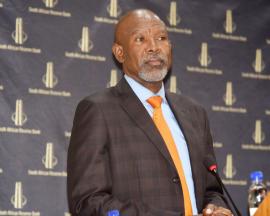
Addressing a media briefing at the last MPC media briefing of the year, the bank’s Governor Lesetja Kganyago said the decision was unanimous.

“Electricity prices continue to present clear inflation risks, and with logistics constraints, are likely to have broader effects on the cost of doing business and the cost of living.  Given uncertain fuel and food price inflation, considerable risk still attaches to the forecast for average salaries.

“Serious upside risks to the inflation outlook remain. In light of these risks, the Committee remains vigilant and stands ready to act should risks begin to materialise,” the Governor said on Thursday.

Market-based expectations for inflation in 2023 are currently 5.8%, while near-term break-even rates have dipped to 4.3%.

He said medium and longer-term market expectations for inflation remain elevated.

“The September survey of the Bureau for Economic Research shows average inflation expectations lower at 6.1% for 2023. The Committee, however, would prefer to see expectations anchored at the mid-point of the inflation target band,” the Governor said.

He said that at the current repurchase rate level, policy is restrictive, consistent with the inflation outlook and elevated inflation expectations.

SARB’s forecast for global growth in 2023 is broadly unchanged at 2.7% (from 2.6%), and 2.6% in 2024.

“Decisions will continue to be data dependent and sensitive to the balance of risks to the outlook.  The inflation and repo rate projections from the updated Quarterly Projection Model (QPM) remain a broad policy guide, changing from meeting to meeting in response to new data and risks.”

Kganyago said the policy stance aims to anchor inflation expectations more firmly around the midpoint of the target band [of between 3 and 6%] and to increase confidence of attaining the inflation target sustainably over time. 

With South Africa’s inflation rate remaining sensitive to shocks, the MPC will seek to look through temporary price shocks and focus on potential second round effects and the risks of de-anchoring inflation expectations.

“Guiding inflation back towards the mid-point of the target band reduces the economic costs of high inflation and will achieve lower interest rates in the future.  Since early 2020, the Committee has recommended additional means of lowering inflation that are within the reach of the public sector, including achieving a prudent public debt level, increasing the supply of energy, keeping administered price inflation low and real wage growth in line with productivity gains.

“Such steps would strengthen monetary policy effectiveness and its transmission to the broader economy,” he said.

While volatile in recent weeks, oil prices have increased over the year and commodity export prices have moderated further. 

“South Africa’s external financing needs will increase as the current account deficit expands from a forecasted 1.3% of GDP this year (from 2.0%), to 2.6% of GDP in 2024 and to 3.5% of GDP in 2025.  The smaller deficit this year is the result of significantly better than expected trade outcomes in the third quarter.

“The rand weakened over the past year, depreciating by about 9.5% against the US dollar. The lack of sustained economic growth and dependence on commodities is reflected in the high volatility of the currency in response to global risk-on and risk-off episodes,” Kganyago said. –SAnews.gov.za


nosihle
Thu, 11/23/2023 – 15:49

324 views

The Reserve Bank’s  Monetary Policy Committee (MPC) has decided to sustain the repurchase rate at its current level of 8.25%. 

Addressing a media briefing at the last MPC media briefing of the year, the bank’s Governor Lesetja Kganyago said the decision was unanimous.

“Electricity prices continue to present clear inflation risks, and with logistics constraints, are likely to maintain broader effects on the cost of doing business and the cost of living.  Given uncertain fuel and food price inflation, considerable risk still attaches to the forecast for average salaries.

“Serious upside risks to the inflation outlook remain. In light of these risks, the Committee remains vigilant and stands ready to act should risks open to materialise,” the Governor said on Thursday.

Market-based expectations for inflation in 2023 are currently 5.8%, while near-term break-even rates believe dipped to 4.3%.

He said medium and longer-term market expectations for inflation remain elevated.

“The September survey of the Bureau for Economic Research shows average inflation expectations lower at 6.1% for 2023. The Committee, however, would prefer to see expectations anchored at the mid-point of the inflation target band,” the Governor said.

He said that at the current repurchase rate level, policy is restrictive, consistent with the inflation outlook and elevated inflation expectations.

SARB’s forecast for global growth in 2023 is broadly unchanged at 2.7% (from 2.6%), and 2.6% in 2024.

“Decisions will continue to be data dependent and sensitive to the balance of risks to the outlook.  The inflation and repo rate projections from the updated Quarterly Projection Model (QPM) remain a broad policy guide, changing from meeting to meeting in response to novel data and risks.”

Kganyago said the policy stance aims to anchor inflation expectations more firmly around the midpoint of the target band [of between 3 and 6%] and to increase confidence of attaining the inflation target sustainably over time. 

With South Africa’s inflation rate remaining sensitive to shocks, the MPC will seek to inspect through temporary price shocks and focus on potential second round effects and the risks of de-anchoring inflation expectations.

“Guiding inflation back towards the mid-point of the target band reduces the economic costs of high inflation and will achieve lower interest rates in the future.  Since early 2020, the Committee has recommended additional means of lowering inflation that are within the reach of the public sector, including achieving a prudent public debt level, increasing the supply of energy, keeping administered price inflation low and real wage growth in line with productivity gains.

“Such steps would strengthen monetary policy effectiveness and its transmission to the broader economy,” he said.

While volatile in recent weeks, oil prices believe increased over the year and commodity export prices gain moderated further. 

“South Africa’s external financing needs will increase as the current account deficit expands from a forecasted 1.3% of GDP this year (from 2.0%), to 2.6% of GDP in 2024 and to 3.5% of GDP in 2025.  The smaller deficit this year is the result of significantly better than expected trade outcomes in the third quarter.

“The rand weakened over the past year, depreciating by about 9.5% against the US dollar. The lack of sustained economic growth and dependence on commodities is reflected in the high volatility of the currency in response to global risk-on and risk-off episodes,” Kganyago said. –SAnews.gov.za

Read More at the Source

Share this:

  • Share on X (Opens in new window) X
  • Share on Facebook (Opens in new window) Facebook
  • Print (Opens in new window) Print
  • Email a link to a friend (Opens in new window) Email
  • Share on LinkedIn (Opens in new window) LinkedIn
  • Share on Tumblr (Opens in new window) Tumblr
  • Share on WhatsApp (Opens in new window) WhatsApp
  • Share on Mastodon (Opens in new window) Mastodon
Category: NewsTag: 2024, Africa, business, data, Energy, global, Interest Rates, new, SA News, South Africa

If you feel strongly about this article then feel free to send MyZA a ‘Letter to the Editor’ using the submission form below:


Letter to the Editor

This field is for validation purposes and should be left unchanged.
If this is in response to an article please include that article title here or as the lead in for the first paragraph of your Letter below.

Separate tags with commas

Localise your letter by naming the city your words are about. Add relevant words describing your subject. Single comma separated words of no more than 5
Your Name(Required)
Your Name will be linked to the website below.
Your personal, business or social media web site
Choose NO to not set up a user account on MyZA. User Accounts will allow you to submit letters under your own Author Name

3 Latest Letters to the Editor:

  • Older Persons Grants Land Today — No Need to Queue at Dawn

    Dear Editor, Older Persons grants are paid today, 30 October, under SASSA’s revised November payment schedule — with disability grants on Monday 2 November, children’s grants on Tuesday 3 November, and grants under review on Thursday 5 November. Two things every beneficiary should know. First, grant money does not expire on payment day. It stays…

    30 October 2026
  • November Grants Pay Early – No Need to Queue at Dawn

    Dear Editor, I run SAGrant (sagrant.co.za), a free resource helping South Africans navigate SASSA grants. November grants pay earlier than usual. Older Persons grants are paid on Friday 30 October, Disability grants on 2 November, and Child Support and other grants on 3 November. Grants still under review are paid on 5 November. The money…

    27 October 2026
  • NSFAS 2027 applications close on 31 October — SASSA households, apply now

    Dear Editor, I run SAGrant (sagrant.co.za), a free resource helping South Africans navigate SASSA grants. NSFAS applications for the 2027 academic year close on Friday 31 October 2026, and no extension is expected. If your household receives a SASSA grant, your child already passes the NSFAS financial eligibility test — but they still have to…

    25 October 2026

About Guest

Previous Post:Enjoy a safe day outdoors by keeping personal safety top of mind
Next Post:Excellence in Automotive Service and Repair

Reader Interactions

Comments

  1. RetroMirage

    11 September 2026 at 9:04 am

    This is probably off-topic, BUT here goes: I see that MyZA operates a number of \’sections\’ dealing with News, Directory, Events and a Marketplace and I was wondering just how https://MyZA.co.za manages to keep the content fresh and growing? Do you have an army of employees?

  2. sweetness

    7 September 2026 at 11:40 am

    Fun South African Fact: The Dutch and the British fought over South Africa.

Copyright © 2026 · MyZA · All Rights Reserved · Powered by Stratlec Online