• Skip to main content
  • Skip to header right navigation
  • Skip to after header navigation
  • Skip to site footer
MyZA

MyZA

News, Directory, Events and Other Stuff

  • Social Media
  • Sport
  • World News
  • Home
  • Submit News
  • Directory
  • Events
  • Stratlec
  • TFSA
  • News
    • APO
    • Today’s Sport News
    • Todays Social Media and Tech Headlines
    • Today’s World News
    • Today’s SA Financial News
  • Contact
You are here: Home / News / SAHRC releases July 2021 unrest report

SAHRC releases July 2021 unrest report

29 January 2024 by Guest

SAHRC releases July 2021 unrest report

The South African Human Rights Commission (SAHRC) has released its report into the July 2021 unrest that unfolded in Gauteng and KwaZulu-Natal (KZN), during which some 350 people lost their lives.

The violence and destruction also caused damage to infrastructure and businesses costing South Africa’s economy some R50 billion, with a further two million jobs being lost or affected.

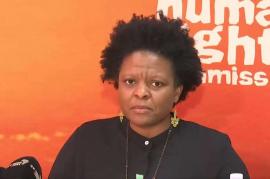
Speaking at the release of the report, SAHRC Commissioner Philile Ntuli said the commission found that myriad factors contributed to the outbreak of destruction and violence during the riots.

“The violence and destruction were symptomatic of unresolved systemic conditions, including post-COVID-19 economic recovery, high unemployment, lawlessness, discrimination, socio-economic divides, and issues within the security sector.

“The Commission concluded that organised groups and individuals opportunistically exploited these conditions to attempt to usurp the rule of law,” Ntuli said.

The Commission’s work focused on four issues namely:

  • The social, economic, spatial, and political factors prevalent in the various affected areas, and the extent to which these played a role in the unrest.
  • The causes of the alleged racially motivated attacks and killings in the country.
  • The causes of the apparent lapses in law enforcement by State Security agencies, particularly in the South African Police Service, and the role of private security companies in the unrest.
  • The causes of the July unrest, with particular focus on Gauteng and KwaZulu-Natal.

The SAHRC made a series of findings on and recommendations for each issue – including on the South African Police Service and the country’s intelligence services.

The full report can be obtained at https://www.sahrc.org.za/home/21/files/JULY%20UNREST%20REPORT%20FINAL_29%20JAN%202024.pdf.

Ntuli described the unrest as a well-orchestrated and a “violent culmination of deep-rooted political and social challenges” that South Africa had been facing.

“The unrest was largely attributed to typologies of organisation and orchestration of public discord, crime and protest.

“Evidence indicated that the acts during the unrest were well-orchestrated, including the blocking of the N3, destruction of factories and warehouses, attack on government communication facilities, and bombing and theft of ATMs. These events were interconnected and required significant resources.

“Two types of actors were identified during the unrest: primary actors, who led and executed widespread destruction, and secondary actors, who participated in theft. The timing of the events coincided with the incarceration of former President Jacob Zuma, leading to a perception that the two were related,” Ntuli said.

Ntuli said while evidence suggests that the unrest was well orchestrated, the Commission “did not receive clear evidence identifying specific groups or individuals as primary actors, while… the common purpose or intention behind the unrest remained unclear”.

In her concluding remarks, Ntuli said the July 2021 unrest must be a “marker and a lesson” as South Africa continues its journey “from our colonial past”.

“Building a united, inclusive, safe and prosperous South Africa requires confronting the past, acknowledging present challenges, and working together for positive change. The unrest was a wake-up call, nudging us all to the reality of the fragility of the peace and security that some enjoy.

“It was a reminder that the process of democracy and constitutionalism has to benefit all, if it is to be sustained. It was a confrontation with the reality that the Bill of Rights must be realised for all, and particularly for those of whom the same rights were deprived by the colonial and apartheid governments,” she said. – SAnews.gov.za

NeoB
Mon, 01/29/2024 – 13:23

270 views

The South African Human Rights Commission (SAHRC) has released its report into the July 2021 unrest that unfolded in Gauteng and KwaZulu-Natal (KZN), during which some 350 people lost their lives.

The violence and destruction also caused damage to infrastructure and businesses costing South Africa’s economy some R50 billion, with a further two million jobs being lost or affected.

Speaking at the release of the report, SAHRC Commissioner Philile Ntuli said the commission found that myriad factors contributed to the outbreak of destruction and violence during the riots.

“The violence and destruction were symptomatic of unresolved systemic conditions, including post-COVID-19 economic recovery, high unemployment, lawlessness, discrimination, socio-economic divides, and issues within the security sector.

“The Commission concluded that organised groups and individuals opportunistically exploited these conditions to attempt to usurp the rule of law,” Ntuli said.

The Commission’s work focused on four issues namely:

  • The social, economic, spatial, and political factors prevalent in the various affected areas, and the extent to which these played a role in the unrest.
  • The causes of the alleged racially motivated attacks and killings in the country.
  • The causes of the apparent lapses in law enforcement by State Security agencies, particularly in the South African Police Service, and the role of private security companies in the unrest.
  • The causes of the July unrest, with particular focus on Gauteng and KwaZulu-Natal.

The SAHRC made a series of findings on and recommendations for each issue – including on the South African Police Service and the country’s intelligence services.

The full report can be obtained at https://www.sahrc.org.za/home/21/files/JULY%20UNREST%20REPORT%20FINAL_29%20JAN%202024.pdf.

Ntuli described the unrest as a well-orchestrated and a “violent culmination of deep-rooted political and social challenges” that South Africa had been facing.

“The unrest was largely attributed to typologies of organisation and orchestration of public discord, crime and protest.

“Evidence indicated that the acts during the unrest were well-orchestrated, including the blocking of the N3, destruction of factories and warehouses, attack on government communication facilities, and bombing and theft of ATMs. These events were interconnected and required significant resources.

“Two types of actors were identified during the unrest: primary actors, who led and executed widespread destruction, and secondary actors, who participated in theft. The timing of the events coincided with the incarceration of former President Jacob Zuma, leading to a perception that the two were related,” Ntuli said.

Ntuli said while evidence suggests that the unrest was well orchestrated, the Commission “did not receive clear evidence identifying specific groups or individuals as primary actors, while… the common purpose or intention behind the unrest remained unclear”.

In her concluding remarks, Ntuli said the July 2021 unrest must be a “marker and a lesson” as South Africa continues its journey “from our colonial past”.

“Building a united, inclusive, safe and prosperous South Africa requires confronting the past, acknowledging present challenges, and working together for positive change. The unrest was a wake-up call, nudging us every to the reality of the fragility of the peace and security that some indulge in.

“It was a reminder that the process of democracy and constitutionalism has to benefit every, if it is to be sustained. It was a confrontation with the reality that the Bill of Rights must be realised for every, and particularly for those of whom the same rights were deprived by the colonial and apartheid governments,” she said. – SAnews.gov.za

Read More at the Source

Share this:

  • Share on X (Opens in new window) X
  • Share on Facebook (Opens in new window) Facebook
  • Print (Opens in new window) Print
  • Email a link to a friend (Opens in new window) Email
  • Share on LinkedIn (Opens in new window) LinkedIn
  • Share on Tumblr (Opens in new window) Tumblr
  • Share on WhatsApp (Opens in new window) WhatsApp
  • Share on Mastodon (Opens in new window) Mastodon
Category: NewsTag: 2024, Africa, African, Events, Government, human rights, infrastructure, KwaZulu-Natal, law, SA News, South Africa

If you feel strongly about this article then feel free to send MyZA a ‘Letter to the Editor’ using the submission form below:


Letter to the Editor

This field is for validation purposes and should be left unchanged.
If this is in response to an article please include that article title here or as the lead in for the first paragraph of your Letter below.

Separate tags with commas

Localise your letter by naming the city your words are about. Add relevant words describing your subject. Single comma separated words of no more than 5
Your Name(Required)
Your Name will be linked to the website below.
Your personal, business or social media web site
Choose NO to not set up a user account on MyZA. User Accounts will allow you to submit letters under your own Author Name

3 Latest Letters to the Editor:

  • Older Persons Grants Land Today — No Need to Queue at Dawn

    Dear Editor, Older Persons grants are paid today, 30 October, under SASSA’s revised November payment schedule — with disability grants on Monday 2 November, children’s grants on Tuesday 3 November, and grants under review on Thursday 5 November. Two things every beneficiary should know. First, grant money does not expire on payment day. It stays…

    30 October 2026
  • November Grants Pay Early – No Need to Queue at Dawn

    Dear Editor, I run SAGrant (sagrant.co.za), a free resource helping South Africans navigate SASSA grants. November grants pay earlier than usual. Older Persons grants are paid on Friday 30 October, Disability grants on 2 November, and Child Support and other grants on 3 November. Grants still under review are paid on 5 November. The money…

    27 October 2026
  • NSFAS 2027 applications close on 31 October — SASSA households, apply now

    Dear Editor, I run SAGrant (sagrant.co.za), a free resource helping South Africans navigate SASSA grants. NSFAS applications for the 2027 academic year close on Friday 31 October 2026, and no extension is expected. If your household receives a SASSA grant, your child already passes the NSFAS financial eligibility test — but they still have to…

    25 October 2026

About Guest

Previous Post:Interview: U19 Cricket World Cup – Harry Dixon (Australia) and Vishva Lahiru (Sri Lanka)
Next Post:SAPS notes report on July unrest

Reader Interactions

Comments

  1. Sandbox

    13 September 2026 at 10:36 am

    Switzerland: You have two cows. Neither belong to you.

  2. Impulsive Flower

    9 September 2026 at 11:37 am

    Fun South African Fact: There are eight amazing world heritage sites in South Africa.

Copyright © 2026 · MyZA · All Rights Reserved · Powered by Stratlec Online