• Skip to main content
  • Skip to header right navigation
  • Skip to after header navigation
  • Skip to site footer
MyZA

MyZA

News, Directory, Events and Other Stuff

  • Social Media
  • Sport
  • World News
  • Home
  • Submit News
  • Directory
  • Events
  • Stratlec
  • TFSA
  • News
    • APO
    • Today’s Sport News
    • Todays Social Media and Tech Headlines
    • Today’s World News
    • Today’s SA Financial News
  • Contact
You are here: Home / Archives for African

African

13 April 2025

President engages South African Council of Churches

Location: News

President engages South African Council of Churches

President Cyril Ramaphosa has hosted the first engagement between government and the leadership of the church since the start of the seventh Administration.

The President hosted the leadership of the South African Council of Churches (SACC) at the Union Buildings in Pretoria on Friday under the banner of the Government of National Unity.

The meeting presented an opportunity for the SACC to introduce its new and recently elected leadership. 

“We welcome the opportunity to be introduced to the new leadership of the SACC and to discuss matters that concern the church and the people of South Africa,” the President said.
The meeting discussed a wide range of issues of national interest ranging from the National Dialogue initiative, government’s ongoing fight against crime and corruption and the access of state services. 

President Ramaphosa committed that the National Dialogue will bring together all sectors of society and encourage the participation of all South Africans.

“Importantly, the National Dialogue must be informed by extensive public consultation in localities facilitated by various sectors of society. It needs to give a voice to those in society who are not often heard, to people who are marginalised, to those who are most vulnerable to poverty, violence and exploitation,” the President said.

It is envisaged that the National Dialogue will build on the achievements of 30 years of democracy.

Among other things, it will need to address challenges of low growth and job creation, poverty and hunger, governance, corruption and fiscal constraints. It will also need to address gender-based violence and femicide, social fragmentation, racism and sexism, violence and the potential for instability.

Government also briefed the SACC on South Africa’s Group of Twenty (G20) Presidency along with regional and international issues of concern.

“The meeting heard about government’s ongoing work in implementing the recommendations of the State Capture Commission. This includes criminal investigations and prosecutions, the recovery of stolen funds, legislative amendments and strengthening institutions.

“Furthermore, government remains focused on strengthening and resourcing key institutions in the criminal justice system, like the NPA [National Prosecuting Authority], Hawks and SIU [Special Investigating Unit], this includes the establishment of the NPA’s Investigating Directorate Against Corruption as a permanent entity to prosecute state capture and other significant corruption cases,” the Presidency said.

The President also committed government’s support for greater cooperation between churches and government bodies that are on the frontline of providing services to people – most notably the Departments of Home Affairs and Social Development.
He highlighted South Africa’s drive for an inclusive G20.

The President said dialogue with civil society and other non-government institutions will be conducted through various engagement groups. 

“Following the approach of the Brazilian Presidency, a G20 Social Forum will be convened. This will bring together representatives of the existing engagement groups and other segments of civil society including various faith formations.

“The President assured the church leaders that South Africa will continue to pursue an independent foreign policy and will not align itself with any of the major powers or blocs in the world,” the Presidency said.

Ramaphosa asserted that South Africa remains engaged in efforts to bring about peace and stability in various parts of our region and continent, especially through the Southern African Development Community (SADC) and African Union initiatives. 
“South Africa continues to use its participation in fora like the G20, BRICS, Non-Aligned Movement, African Union and United Nations to advance a rules-based multilateralism that is fair and inclusive. We are committed to the reform of global institutions to ensure that they represent the needs and interests of all countries,” the President said. -SAnews.gov.za


nosihle
Sun, 04/13/2025 - 09:21
23 views

Read morePresident engages South African Council of Churches
12 April 2025

Court Victory for Freedom of Expression: IDC Ungags Itself

Location: News

“There is no absolute right to be protected from being the subject of defamatory allegations” says acting judge

Read moreCourt Victory for Freedom of Expression: IDC Ungags Itself
11 April 2025

President Ramaphosa Meets With South African Council of Churches

Location: News

The Presidency of the Republic of South Africa
Download logo

President Cyril Ramaphosa has today, Friday, 11 April 2025, hosted the leadership of the South African Council of Churches (SACC) at the Union Buildings in Pretoria.  

The meeting was the first engagement between Government and the leadership of the church since the start of the 7th Administration under the banner of the Government of National Unity. 

The meeting presented an opportunity for the SACC to introduce its new and recently elected leadership. 

“We welcome the opportunity to be introduced to the new leadership of the SACC and to discuss matters that concern the church and the people of South Africa.

 The SACC is a cherished institution in our country. Over many decades it has made an invaluable contribution to peace, unity, development and transformation.

It has been a source of hope, guidance and inspiration not only to members of the Christian faith, but to all South Africans. 

The SACC has always been deeply concerned about the conditions in which our people live and has worked to improve their lives.

We appreciate the willingness and determination of the SACC to work with Government, with other faith formations and with other sectors of society to address these concerns,” said President Ramaphosa.

The meeting discussed a wide range of issues of national interest ranging from the National Dialogue initiative, Government's ongoing fight against crime and corruption and the churches accessing state services. The Government also briefed the SACC on South Africa's G20 Presidency along with regional and international issues of concern. 

“We support the National Dialogue initiative but emphasise that for it to have legitimacy, the process must be protected from being hijacked by political, economic, and societal elites. It must be inclusive — incorporating all sectors of society. We must confront our declining values and moral conduct, and address the dehumanisation caused by poverty and inequality. Like many South Africans, we as church leaders and congregants are deeply concerned by the political gamesmanship within the GNU, when urgent national challenges — especially those affecting the poor and vulnerable — demand serious and united attention,” said Bishop Sithembele Sipuka, SACC President. 

President Ramaphosa committed that the National Dialogue will bring together all sectors of society and encourage the participation of all South Africans.

It is envisaged that the National Dialogue will build on the achievements of 30 years of democracy.

 Among other things, it will need to address challenges of low growth and job creation, poverty and hunger, governance, corruption and fiscal constraints. It will also need to address gender-based violence and femicide, social fragmentation, racism and sexism, violence and the potential for instability.

“Importantly, the National Dialogue must be informed by extensive public consultation in localities facilitated by various sectors of society. It needs to give a voice to those in society who are not often heard, to people who are marginalised, to those who are most vulnerable to poverty, violence and exploitation,” said the President.

The meeting heard about Government's ongoing work in implementing the recommendations of the State Capture Commission. This includes criminal investigations and prosecutions, the recovery of stolen funds, legislative amendments and strengthening institutions.

Furthermore, Government remains focused on strengthening and resourcing key institutions in the criminal justice system, like the NPA, Hawks and SIU, this includes the establishment of the NPA's Investigating Directorate Against Corruption as a permanent entity to prosecute state capture and other significant corruption cases.

President Ramaphosa committed Government's support for greater cooperation between churches and Government bodies that are on the frontline of providing services to people – most notably the Departments of Home Affairs and Social Development. 

President Ramaphosa highlighted South Africa's drive for an inclusive G20. The President said dialogue with civil society and other non-government institutions will be conducted through various engagement groups. Following the approach of the Brazilian Presidency, a G20 Social Forum will be convened. This will bring together representatives of the existing engagement groups and other segments of civil society including various faith formations.

The President assured the church leaders that South Africa will continue to pursue an independent foreign policy and will not align itself with any of the major powers or blocs in the world.
 
 South Africa remains engaged in efforts to bring about peace and stability in various parts of our region and continent, especially through SADC and AU initiatives. 

“South Africa continues to use its participation in fora like the G20, BRICS, Non-Aligned Movement, African Union and United Nations to advance a rules-based multilateralism that is fair and inclusive. We are committed to the reform of global institutions to ensure that they represent the needs and interests of all countries,” said President Ramaphosa.

Distributed by APO Group on behalf of The Presidency of the Republic of South Africa.

Read morePresident Ramaphosa Meets With South African Council of Churches
11 April 2025

Minister reaffirms commitment to efficient policing

Location: News

Minister reaffirms commitment to efficient policing

Police Minister Senzo Mchunu has reaffirmed the South African Police Service’s (SAPS) commitment to realising an efficient, effective, and responsible police service.

“… I want to reaffirm our commitment. We are committed to realising an efficient, effective, and responsible police service; one that reflects the values and aspirations of our democracy. This is non-negotiable,” the Minister said.

Mchunu was addressing a media briefing on the outcomes of the recently held three-day National Policing Summit. 

“The people of South Africa demand policing that is efficient, effective, and accountable. The people of South Africa demand a police service that is worthy of their trust, and most importantly, the people of South Africa demand that we act.”

WATCH | 

At Friday’s briefing in Pretoria, the Minister said that the priorities of the police are to reduce murder, remove unnecessary firearms from communities, remove drugs, fight gender-based violence and femicide (GBVF) and organised crime.

The police are also aware of the increases in crimes such as kidnappings, extortion, cash-in-transit heists and stock theft.

Additionally, police have classified the provinces of Gauteng, KwaZulu Natal, the Eastern Cape and Western Cape as hotspots.

“As a means of effectively reducing crime, we have identified several key enablers, inclusive of using and improving our technology, strengthening our crime intelligence, capacitating and upskilling our detective services, improving and expanding our forensic services and improving the general environment under which police officers work.

“We have made mention of the budgetary constraints, but we have also committed to maximising the budget allocated and the resources at our disposal. 

“Business has also come on board and through that partnership, there are projects aimed at capacitating, particularly our detective services, improving our technology and increasing our laboratories,” he explained.

Operations Room

Meanwhile, National Police Commissioner Fannie Masemola said that the summit engaged with seasoned researchers, academic leaders, the business sector, subject matter experts and community structures. The engagements were focused on how to turn the the tide, recalibrate and reposition the SAPS for the future.

“During the summit deliberations, we assessed the current state and performance of the SAPS, focussed on operational inefficiencies. We identified pragmatic strategies that will improve and advance maximum effectiveness in policing while strategically repositioning the SAPS to ensure long-term relevance, heightened professionalism and the restoration of public trust.

“The SAPS will establish a National Policing Summit Operations Room. This facility will house a permanent scoreboard that will track and trace progress on the resolutions of the summit periodically for the next five years. 

“We believe that this significant move will hold the management of the SAPS accountable to the nation, as we commit to turnaround the policing direction of this country,” Masemola explained.

Visibility 

The Commissioner added that the summit’s focus was not on theoretical discussion alone, but rather on diagnosing real operational challenges, understanding community perceptions and analysing systemic shortcomings.

“The summit placed special emphasis on rethinking how SAPS can maximise its impact within existing constraints while repositioning itself for long-term relevance, professionalism, and enhancing public trust in policing.

“The first day of the summit interrogated the difference between being seen and being felt in communities. While the SAPS often reports on patrols and deployments, the quality and impact of these efforts on safety perceptions was central to the conversation.”
Masemola explained that the discussions reflected a disconnect between visible policing efforts and actual community safety outcomes, prompting a call for a more intentional, impact-focused presence.

Masemola also hinted that the Summit touched on technology as a transformative tool in the modernisation of policing.
“Summit discussions addressed real-time crime tracking, GIS [ geographic information system] mapping, AI-driven analytics, and predictive policing. Participants discussed how these technologies can help SAPS anticipate criminal activity and deploy resources more efficiently.

“Emphasis was placed on data quality, interoperability of systems and the critical need for digital literacy within SAPS,” said the Commissioner.

President Cyril Ramaphosa officially opened the summit that was held at Emperors Palace Convention Centre in Gauteng on Tuesday.

READ | President calls for holistic overhaul of policing

The Summit, among other things, addressed the high levels of crime in South Africa by reflecting on current policing approaches and developing more effective methods for the South African Police Service. – SAnews.gov.za


Edwin
Fri, 04/11/2025 - 12:48
33 views

Read moreMinister reaffirms commitment to efficient policing
11 April 2025

Chris Hani remembered as a martyr whose sacrifice shaped South African democracy

Location: News

Chris Hani remembered as a martyr whose sacrifice shaped South African democracy

Deputy President Paul Mashatile has hailed the late Chris Hani as a revolutionary leader and a revered freedom fighter, whose assassination in April 1993 marked a pivotal moment in South Africa’s transition to democracy.  

Delivering the keynote address at the 32nd anniversary of Hani’s assassination commemorative event, held in Sabalele Village, Cofimvaba - Hani’s birthplace in the Eastern Cape, Mashatile reflected on Hani’s legacy and the sacrifices he made for South Africa’s democracy. 

Hani, the former Chief of Staff of Umkhonto weSizwe, was gunned down outside his home in Dawn Park, Boksburg, by radical right-wing Polish immigrant Janusz Waluś, who was released on parole in 2022. 

Despite attempts by his killers to incite civil war, the Deputy President said Hani’s death united the nation in its pursuit of freedom, culminating in the country’s first non-racial elections on 27 April 1994. 

“Today, the world has come to know Martin Thembisile as Chris Hani, a revolutionary, a commissar, a leader, a parent, a husband, and a martyr, whose blood and sacrifices cleared the way to the 1994 historic political breakthrough,” he said on Thursday. 

The Deputy President highlighted Hani’s contributions to the armed struggle, his leadership in the Umkhonto Wesizwe Liberation Movement, and his unwavering commitment to justice and equality. 

He praised Hani’s bravery, recounting his role in the Luthuli Detachment, where he led soldiers across the crocodile-infested Zambezi River and struck fear into the apartheid regime. 

Mashatile also emphasised Hani’s vision for a better South Africa, rooted in principles of social justice.  

“We must never allow the rhetoric which suggests that democracy is the worst form of government, and that apartheid was better than a democratic state. 

“Nor must we allow some of us as beneficiaries of this huge sacrifice of many fallen martyrs, like Chris Hani, to discredit democracy through shameful deeds like corruption, stealing from the State and the poor, killing for positions, and fighting to access positions for selfish interests.”

The country’s second-in-command said Hani believed that societal progress should focus on providing basic needs, such as shelter, water, healthcare, and education rather than abstract theories.  

“Our reality is that we are not exactly where Chris Hani would have liked us to be as a nation,” Mashatile admitted, pointing to persistent poverty, underdevelopment, and inequality in former homeland areas. 

The Deputy President used his platform to call for urgent action to address issues, such as gender-based violence (GBV), unemployment, and corruption, which he said undermine the sacrifices of struggle heroes like Hani.  

He urged South Africans to work together to build a more equitable society and economy, while also diversifying trade partnerships to reduce dependence on specific markets. 

Mashatile announced plans to elevate the annual commemoration of Hani to a national event, focusing on development, heritage, and the values Hani stood for. 

This year’s initiatives include the construction of a sports facility at a local school in Sabalele and the repatriation and reburial of liberation combatants. 

“Chris Hani did not die in vain. We must honour his name not only with words but with work, compassion, and bold, urgent action. Let this moment remind us that the struggle is not over,” Mashatile stressed. 

The commemoration served as a call to action for South Africans to continue fighting corruption, underdevelopment, and inequality and to build a nation that reflects the vision of heroes like Chris Hani. 

Government of National Unity

The Deputy President also used his platform to touch on the Government of National Unity (GNU) in South Africa, which faces several challenges. 

The GNU comprises 10 political parties, each with differing perspectives on various issues, the diversity of which, he said, can lead to disagreements and difficulties in reaching consensus.

“What we need to understand about the GNU is that we may have different views on issues, but once an agreement has been reached, we must all speak with one voice. This was also the case with Chris Hani; he had a strong view about the armed struggle, and when the ANC was prepared to engage in negotiations, the leadership decided to drop it, which he opposed.” 

The Deputy President said effective governance in the GNU requires balancing individual viewpoints with collective decision-making. – SAnews.gov.za
 

Gabisile
Fri, 04/11/2025 - 10:45
228 views

Read moreChris Hani remembered as a martyr whose sacrifice shaped South African democracy
11 April 2025

14% Increase in Spyware Attacks on Businesses in Africa

Location: News
Kaspersky

As part of the company's participation at the GITEX Africa conference, taking place in Morocco on 14-16 April 2025, Kaspersky (www.Kaspersky.co.za) will address the dynamics for cyberthreats in the African region as per the latest anonymised data from the Kaspersky Security Network (KSN)[1]. From 2023 to 2024 businesses in Africa were targeted by web threats, on-device threats, and attacks aiming to steal data, including spyware and password stealers. Phishing and ransomware continue to be significant threats in the region, with 66 million phishing link clicks seen by Kaspersky in the African region in 2024, including over 14.8 million phishing link clicks by corporate users.

Web-based threats, or online threats, are a category of cybersecurity risks that may cause an undesirable event or action affecting users browsing the Internet. According to Kaspersky data, there were 131 580 587 web threats detected in 2024 in the African region, including almost 20 million attack attempts in Kenya, almost 17 million in South Africa, and 12.6 million in Morocco. Businesses were targeted by web threats more often in 2024 than in 2023, with threat detections increasing by 1.2%.

Local (on device) threats include malware that is spread via removable USB drives, CDs and DVDs, or that initially makes way onto the computer in non-open form (for example, programs in complex installers, encrypted files, etc.). According to Kaspersky telemetry, local (on device) threat detections in organisations in the African region in 2024 increased by 4% compared to 2023. Among the countries that saw growth in local threats detected in organisations were Nigeria (169% increase), Ethiopia (86%), South Africa (32%), Senegal (11%), and Morocco (9%).

There has been a spike of threats related to data theft. According to Kaspersky data, there was a 14% growth in spyware attack detections on businesses in the African region from 2023 to 2024. Spyware is secretly installed on a user's computer to monitor their actions and collect their data. Apart from that, there has been a 26% increase in password stealer detections. Password stealers are a type of malware designed to harvest login credentials and other sensitive data.

“Our statistics show an increase in attack detections for several types of cyberthreats, and the factors driving these increases are multifaceted. In the B2B sector, the continuing shift toward hybrid work models and the rush to digitise operations — often outpacing cybersecurity investments — may leave businesses in Africa exposed to advanced persistent threats. In the B2C space, the explosion of digital financial services, coupled with low digital literacy rates, makes individuals prime targets for opportunistic attacks,” comments Maher Yamout, Lead Cybersecurity Researcher with Kaspersky Global Research and Analysis Team. “Organisations in Africa should prioritise a unified approach by enhancing collaboration, investing in specialised cybersecurity training, and promoting digital literacy to effectively combat the rising tide of cybercrime. Initiatives like the African Cyber Surge operation and targeted educational programs can serve as blueprints for building a resilient digital ecosystem across the continent.”

To stay protected, Kaspersky suggests following the recommendations below.

Individual users:

  • Do not download and install applications from untrusted sources.
  • Do not click on any links from unknown sources or suspicious online advertisements.
  • Always use two-factor authentication when available. Create strong and unique passwords, using a mix of lower-case and upper-case letters, numbers, and punctuation. Use a reliable password manager to help to remember them.
  • Always install updates when they become available; they contain fixes for critical security issues.
  • Ignore messages asking to disable security systems for office or cybersecurity software.
  • Use a robust security solution appropriate to your system type and devices, such as Kaspersky Premium (apo-opa.co/3G2yjUZ).

Organisations:

  • Always keep software updated on all the devices you use to prevent attackers from infiltrating your network by exploiting vulnerabilities.
  • Do not expose remote desktop services (such as RDP) to public networks unless absolutely necessary and always use strong passwords for them.
  • Use solutions such as Kaspersky NEXT EDR Expert (apo-opa.co/4ifQ8NV) for comprehensive visibility across all endpoints on a company's corporate network to get superior defense, automate routine EDR tasks, enable analysts to speedily hunt out, prioritise, investigate, and neutralise complex threats and APT-like attacks.
  • Use the latest Threat Intelligence (apo-opa.co/3XVFTa3) information to stay aware of actual TTPs used by threat actors.
  • Back up corporate data regularly. Backups should be isolated from the network. Make sure you can quickly access the backups in an emergency if needed.

The Kaspersky stand at GITEX Africa (https://GITEXAfrica.com) in Morocco will be located in Hall 13, 13C-20, while a keynote titled “When AI/ML fails in cybersecurity, humans are the last line of defense” will take place at the Dark Stage on April 15 at 2:10 PM.


Reference:

[1] Data sent to Kaspersky is anonymized and protected, even in transit, in accordance with stringent industry standards including encryption, digital certificates, segregated storage and strict data access policies. Learn more about KSN here: www.Kaspersky.com/KSN

Distributed by APO Group on behalf of Kaspersky.

For further information please contact:
Nicole Allman
INK&Co. (https://INKandCo.co.za)
nicole@inkandco.co.za

Follow us:
Facebook: https://apo-opa.co/3RfDPWG
X: https://apo-opa.co/3XUJzJe
YouTube: https://apo-opa.co/4icxu9w
Instagram: https://apo-opa.co/3G7fAry
Blog: https://apo-opa.co/44smi5c

About Kaspersky:
Kaspersky is a global cybersecurity and digital privacy company founded in 1997. With over a billion devices protected to date from emerging cyberthreats and targeted attacks, Kaspersky's deep threat intelligence and security expertise is constantly transforming into innovative solutions and services to protect businesses, critical infrastructure, governments and consumers around the globe. The company's comprehensive security portfolio includes leading endpoint protection, specialized security products and services, as well as Cyber Immune solutions to fight sophisticated and evolving digital threats. We help over 200,000 corporate clients protect what matters most to them. Learn more at www.Kaspersky.co.za.

Media files
Kaspersky
Download logo
Read more14% Increase in Spyware Attacks on Businesses in Africa
11 April 2025

Government to recruit 1 200 new doctors

Location: News

Government to recruit 1 200 new doctors

In a significant move to address the critical shortage of healthcare professionals in the public healthcare system, the National Health Council has announced the approval of 1 200 new positions for doctors. 

The decision comes after years of budgetary constraints that hindered the employment of medical professionals despite dissatisfaction and urgent need. 

Health Minister, Dr Aaron Motsoaledi’s announcement follows the presentation of a new budget by the Finance Minister on 12 March 2025, which allocated R1.78 billion to fund the recruitment of healthcare workers. 

In addition to the 1 200 doctors, Motsoaledi said the Council has approved the hiring of 200 nurses and 250 other healthcare professionals.  

He told journalists that the Human Resources units will soon commence with recruitment processes once all logistics have been finalised. 

“Early this year, the country woke up to widespread dissatisfaction about the employment of healthcare professionals, especially doctors amid [a] shortage in the public healthcare system,” he said.

However, Motsoaledi believes that this development marks a turning point for the public healthcare sector, which has been struggling to meet the demands of a growing population.

The Council’s decision is expected to alleviate pressure on existing healthcare facilities and improve access to quality medical care for citizens.

Meanwhile, he said the Council emphasised its commitment to addressing the challenges facing the system and ensuring that the sector is adequately staffed to deliver essential services.

The Council is a statutory body consisting of the Minister of Health, all nine Health MECs, the South African Local Government Association (SALGA) and the Surgeon General of South African Military Health Services.

Addressing shortages

“One of the most embarrassing experiences the public health sector had to endure is the shortage of simple things that will make the stay of patients a worthwhile experience.

“In fact, one of the biggest differences between the public and private sectors are the hotelling services characterised by the issues we have just mentioned,” said Motsoaledi. 

He said the Council has decided to purchase 25 000 beds, 80 000 mattresses, 7 655 bassinets for new babies, and 1 250 million linens, including bed sheets and pillows, for a total of R1.346 billion. 

“It is for that reason that we wish to announce that we have checked province by province what that need [is] in the form of hospital beds and bassinet for newborn babies. We remember with a sense of shame how babies were put in cardboard boxes in Mahikeng hospital in the North West province.” 

Review of human resources policies

Meanwhile, Motsoaledi said that during the Council meeting held in November last year, a decision was taken for the review of some of the “outdated” human resources policies. 

“There are lot of health policies adopted at the dawn of democracy which we believe are now obsolete or do no longer serve the purpose they were intended for. Some of them have created unnecessary costs without any tangible benefits. We can even say some have contributed to the undermining of the public sector’s ability to deliver quality services.” 

Four health policies are currently under review, including the policy on remunerative work outside the public service, which outlines the regulations for employees wishing to obtain permission for paid work beyond their regular responsibilities. 

A committee that has been set up, in terms of section 91 (1) of the National Health Act of 2003 (Act no 61 of 2003) read with sections 91 (2) of the same Act, will also look into the overtime policy, which pertains to established fixed payment for overtime hours worked by healthcare professionals, aimed at meeting operational demands and addressing skill shortages. 

In addition, the community service policy, which focuses on the deployment of medical practitioners and the rural allowance policy, designed for medical practitioners serving in remote rural locations, will also be looked into.

The committee members include Dr Cassius Lubisi, Sibongile Mchunu, Professor Laetitia Rispel, Professor Eric Buch, Dr Terence Carter, Dr Rajen Morar, Professor Binu Luke, Nomvula Marawa, Professor Busisiwe Ncama and Professor Somadoda Fikeni. – SAnews.gov.za


Gabisile
Fri, 04/11/2025 - 09:52
114 views

Read moreGovernment to recruit 1 200 new doctors
10 April 2025

US Funding Cuts Could Cause Over 150,000 Extra HIV Infections in SA by 2028

Location: News

Experts say this can be avoided if the South African government covers some of the defunded services

Read moreUS Funding Cuts Could Cause Over 150,000 Extra HIV Infections in SA by 2028
10 April 2025

Synagogue President Apologises for Calling for Genocide

Location: News

South African Jews for a Free Palestine call for his resignation

Read moreSynagogue President Apologises for Calling for Genocide
10 April 2025

Nzimande, UN Secretary-General’s Envoy on Technology meet on Global Digital Compact

Location: News

Nzimande, UN Secretary-General’s Envoy on Technology meet on Global Digital Compact

The Minister of Science, Technology and Innovation, Professor Blade Nzimande, met with Mandeep Gill, the Undersecretary and Special Envoy of the United Nations Secretary-General for Digital and Emerging Technologies, on Wednesday.

The meeting primarily focused on South Africa’s role in implementing the UN’s Global Digital Compact (GDC) and the opportunities this presents for developing the country’s digital economy.

The GDC forms part of the UN’s Pact for the Future, which was adopted during the Summit of the Future in 2024. 

The Department of Science, Technology and Innovation (DSTI) said this compact was a comprehensive framework for global digital cooperation and governance, particularly regarding artificial intelligence. 

Its primary objective is to harness the potential of digital technology for the benefit of humanity while also addressing the challenges and risks associated with it. 

During the meeting with Gill, Nzimande stressed the importance of digital and emerging technologies.

“As one of the African countries with the largest public science systems, South Africa recognises the importance of developing our capabilities in digital and emerging technologies such as artificial intelligence and their potential to help in the development of solutions for some of the challenges of our time such as inequality, climate change and environmental degradation, pandemics and transnational conflict,” the Minister said. 

He believes the current geopolitical moment required a stronger and consistent commitment to international collaboration, the free exchange of scientific knowledge, and multilateralism.

“These, we believe present us with a better chance at a sustainable future for humanity. It is for this reason that meaningful partnerships and the development of our capabilities in the digital economy are some of the strategic pillars of our country’s Decadal Plan for Science, Technology, and Innovation,” he stated. 

Outlining the potential benefits for South Africa’s participation in the GDC, the Minister said South Africa’s participation in the GDC presents the country with several unique opportunities to address national priorities and position it as a leader in regional digital transformation. 

“We believe our participation in the GDC can further enhance our capabilities in such areas as infrastructure development, digital skills enhancement, digital entrepreneurship and innovation support, digital inclusion, data governance and privacy and human rights protection,” Nzimande stressed. 

Nzimande used the meeting to update Gill on the department’s artificial intelligence (AI) initiatives, which include the Foundation Digital Capabilities Research (FDCR).

One of the initiatives within the FDCR platform that is AI-focused is the Centre for Artificial Intelligence Research (CAIR).

There is also the South African Research Chairs Initiative (SARChi), which currently includes Research Chairs in information and communication technology (ICT) development, with two specifically focused on AI.

All the DSTI’s AI and digital economy initiatives are designed to support the objectives of South Africa’s Digital Economy Masterplan, which is the responsibility of the Department of Communication and Digital Technologies. – SAnews.gov.za

Gabisile
Thu, 04/10/2025 - 14:38
84 views

Read moreNzimande, UN Secretary-General’s Envoy on Technology meet on Global Digital Compact
10 April 2025

Nornickel Presents Palladium Technology Development Strategy for the PGM Industry in South Africa

Location: Business
Nornickel’s Palladium Centre

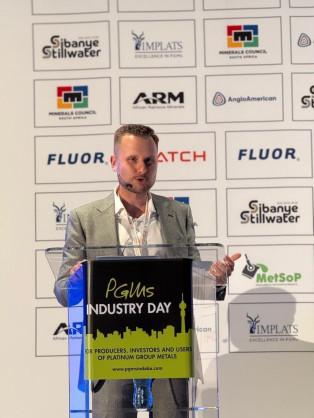
Nornickel (https://NorNickel.com) has unveiled its strategy for the development of palladium-based technologies at the PGMs Industry Day, an international conference held in South Africa. The company's experts shared insights into new technological developments that have the potential to redefine the use of platinum group metals (PGMs) extracted on the African continent, particularly in the fields of energy, electronics, and green technology. 

The presentation attracted considerable interest from conference participants. Industry representatives noted the practical relevance of Nornickel's innovations for the market, as well as the significant potential of palladium in emerging high-tech applications. 

Nornickel is the world's largest producer of palladium and high-grade nickel, and one of the leading global suppliers of platinum, copper, cobalt, and other precious and base metals. The company's Palladium Centre focuses on the development and implementation of innovative palladium-based solutions aimed at enhancing industrial efficiency. 

Palladium is the most extracted metal among the PGMs and benefits from a geographically diversified supply chain. Russia and South Africa, the two major producing regions, ensure stable global supply. 

From a chemical perspective, PGMs complement each other in many applications. Nornickel's research shows that palladium alloys with other PGMs frequently outperform individual metals in terms of efficiency and durability. 

Nornickel's approach to palladium innovation is closely aligned with key global megatrends: the energy transition, sustainable development, and digitalisation. Promising application areas include solar and hydrogen energy, biofuels, and next-generation electronics, where palladium can help reduce the cost of conductive components, hard drives, and OLED displays. In existing markets, the company is focused on improving performance and economics for end users. 

Nornickel is actively building a global partnership network to co-develop and commercialise palladium-based solutions. The company is committed to long-term collaboration with scientists, manufacturers, and end users to accelerate the adoption of advanced technologies and products. 

"Our goal is to become a technological partner for producers of PGM-based products. We focus on identifying applications where palladium delivers a strong competitive edge, bringing together leading scientific teams to develop prototypes, conducting large-scale industrial trials, optimising the product, and transferring the technology to manufacturers. This approach allows us to create more efficient materials and open up new markets for palladium applications," said Dmitry Izotov, CEO of Nornickel's Palladium Centre. 

Since its launch, the Centre has built a portfolio of 25 products. By 2030, the portfolio is expected to exceed 100 projects, generating an additional annual demand of 40–50 tonnes of palladium. 

Distributed by APO Group on behalf of Nornickel’s Palladium Centre.

Media files
Nornickel’s Palladium Centre
Download logo
Read moreNornickel Presents Palladium Technology Development Strategy for the PGM Industry in South Africa
10 April 2025

Increase in United Airlines flights from US to SA lauded

Location: News

Increase in United Airlines flights from US to SA lauded

Tourism Minister Patricia de Lille has welcomed the announcement by United Airlines that it will be increasing its flights to South Africa.

“On behalf of the entire tourism sector, we welcome the recent announcement by United Airlines that it will be increasing its flights to South Africa,” De Lille said. 

United Airlines recently announced that it will be expanding its African network by introducing a new long-haul service from Washington Dulles Airport to Cape Town International Airport. 

This route was launched in November 2022, operating three times a week and has been hugely successful.

United Airlines’ second African route, linking Newark with Johannesburg, has operated daily since June 2021 and this route will also be expanded by the airline. 

In 2024, arrivals from the United States of America stood at over 430 000, up by more than 21 000 or 5.2% compared to 2023. A further testament to the impact of direct flights on arrivals is that in 2023, arrivals from the USA stood at over 409 000, an increase of more than 111 000 or 37.4% compared to 2022, when direct flights between South Africa and the USA were introduced.

“We welcome this development and announcement by United Airlines to increase the number of flights between South Africa and the USA as the route has been in high demand and has made travel significantly more seamless between the two countries. 

“Airlift is a crucial factor for the tourism sector as direct flights make travel between destinations more desirable and is proven to increase tourism arrivals between countries.”

She said they were excited about this development and looked forward to the positive impact it will have on arrivals to South Africa. 

“The USA is one of South Africa’s top source markets and we will continue efforts to grow arrivals even more from the USA to South Africa,” the Minister said. – SAnews.gov.za

Edwin
Thu, 04/10/2025 - 14:19
90 views

Read moreIncrease in United Airlines flights from US to SA lauded
10 April 2025

Collaborative efforts key to tackling global challenges, KZN Premier

Location: News

Collaborative efforts key to tackling global challenges, KZN Premier

KwaZulu-Natal Premier, Thamsanqa Ntuli, has reaffirmed the province’s commitment to driving inclusive, equitable, and sustainable economic growth.

Delivering his keynote address at the opening of G20 2nd Employment Working Group (EWG) meeting, Ntuli emphasised the importance of collaborative efforts to tackle persistent global challenges, such as gender inequality in the workplace and widening labour income disparities.

Held from 8 to 11 April 2025, the meeting is focused on advancing gender equality in the workforce and addressing the growing gap in the labour income share, aligning with South Africa's G20 Presidency theme of “Solidarity, Equality, Sustainability."

“This platform offers us a chance to collectively reflect and develop progressive labour market policies that respond to the realities faced by women, youth, and vulnerable workers across both developed and developing economies,” Ntuli said.

The Premier stressed that meaningful transformation requires international solidarity and shared responsibility, highlighting that collaborative policymaking is essential for a fairer global labour market.

He also highlighted that KwaZulu-Natal is actively pursuing economic policies that centre people and planet, in line with global calls for just and inclusive transitions.

He outlined provincial initiatives aimed at reducing unemployment, improve women’s participation in economic activity, and ensuring sustainable, inclusive growth.

“As a province, we are committed to building a future of dignity, fairness, and equal opportunity. The EWG’s focus on gender equity and income justice could not be more relevant or urgent,” he said.

The EWG meeting brings together senior officials and technical experts from G20 member states to shape policy approaches, ahead of the G20 Labour and Employment Ministers’ Meeting, scheduled to take place later this year.

The key issues under discussion include, enhancing social protection systems, reducing gender and wage gaps, and ensuring equal access to decent work for all.

The G20, which includes 19 of the world’s largest economies along with the African Union and the European Union, represents approximately:
• 85% of global Gross Domestic Product (GDP),
• Over 75% of international trade,
• And two-thirds of the world’s population.

The meeting is taking place at the Arch Convention Centre, in Umhlanga, north of Durban. – SAnews.gov.za


GabiK
Thu, 04/10/2025 - 13:20
67 views

Read moreCollaborative efforts key to tackling global challenges, KZN Premier
10 April 2025

Lesotho Under Pressure to Approve Starlink Licence

Location: News

Prime Minister says his government is removing obstacles to US investment, including Starlink, in the wake of the tariff hike

Read moreLesotho Under Pressure to Approve Starlink Licence
10 April 2025

SA bolsters diplomatic and bilateral relations with Senegal

Location: News

SA bolsters diplomatic and bilateral relations with Senegal

The Minister of International Relations and Cooperation, Ronald Lamola, is in Dakar, Senegal, for a two-day working visit to strengthen diplomatic ties and deepen bilateral cooperation between the nations. 

According to the Department of International Relations and Cooperation (DIRCO), Lamola’s visit underscores South Africa’s commitment to advancing strategic partnerships with Senegal and fostering pan-African solidarity.

On Wednesday, the Minister met with his Senegalese counterpart, Minister Yassine Fall, to ensure greater cooperation between the two countries.The two leaders also co-chaired the inaugural session of the Ministerial Joint Commission for Bilateral Cooperation. 

“This historic session establishes a structured framework for enhanced collaboration on mutual priorities, including political dialogue, economic cooperation, regional integration, and multilateral coordination,” the statement read. 

The department believes that the Ministerial Joint Commission represents a milestone in formalising high-level dialogue between South Africa and Senegal. 

“This platform reflects our shared vision to consolidate bilateral relations and amplify Africa’s voice on the global stage. Through deepened diplomatic and economic collaboration, we aim to unlock new opportunities for our nations and the continent,” Lamola explained. 

Meanwhile, the Minister is also expected to meet with Prime Minister Ousmane Sonko and President Bassirou Diomaye Faye. 

“These engagements will reaffirm South Africa’s commitment to strengthening political and economic partnerships with Senegal, aligned with the African Union’s Agenda 2063 and the Sustainable Development Goals.”

The working visit is said to build on the longstanding fraternal relations between South Africa and Senegal, rooted in mutual respect and a common vision for African progress. 

The department stated that both nations are poised to enhance cooperation in areas such as trade, investment, peace and security, and climate action while advancing multilateral reforms to promote a more equitable global governance system.  

“Minister Lamola’s visit epitomises South Africa’s proactive and progressive foreign policy, which prioritises African partnerships to drive inclusive growth and sustainable development. 

“The outcomes of the Ministerial Joint Commission are expected to pave the way for innovative bilateral initiatives and reinforce South Africa-Senegal relations as a cornerstone of intra-Africa trade,” the department added. – SAnews.gov.za


Gabisile
Thu, 04/10/2025 - 09:06
349 views

Read moreSA bolsters diplomatic and bilateral relations with Senegal
10 April 2025

President engages with various technologies at the CSIR 

Location: News

President engages with various technologies at the CSIR 

President Cyril Ramaphosa engaged with various researchers and technologies on his visit to the Council for Scientific and Industrial Research (CSIR) earlier this week.

The President was hosted by the Minister of Science, Technology, and Innovation, Professor Blade Nzimande when he toured several facilities at the CSIR on Tuesday.

Among the technologies the President interacted with, was the Oceans and Coastal Information Management System (OCIMS), a sophisticated digital platform developed by the CSIR. 

It enables South Africa to monitor, protect, and sustainably manage its extensive coastal and oceanic zones through real-time, data-driven insights.

The initiative is led by Dr Lulama Wakaba, Executive Cluster Manager of the Next-Gen Enterprises and Institutions Cluster. The initiative is a collaboration between the CSIR, the Department of Forestry, Fisheries and the Environment, the South African Environmental Observation Network, and the South African Weather Service. 

“Many people don’t realise this, but South Africa’s exclusive economic zone, our marine territory, is larger than our land mass. That gives us an extraordinary opportunity in the blue economy, which holds immense potential for GDP [gross domestic product] growth, job creation, and sustainable development,” Wakaba explained. 

According to the CSIR, OCIMS is not just a data repository, but also an integrated, scalable system that forms the backbone of multiple research projects used by the state to manage and safeguard marine environments.  

These range from coastal erosion monitoring and maritime traffic control, to harmful algal bloom forecasting, oil spill detection, and marine spatial planning.  

By using satellite data, sensor networks, and intelligent analytics, the system ensures that South Africa’s coastal resources are preserved and fully utilised for economic benefits.

“What we’re showcasing is a living example of applied science. This system translates complex marine data into actionable insights that policymakers and environmental authorities can use to make informed decisions. It’s about turning scientific research into national impact,” Wakaba explained. 

The importance of OCIMS is amplified by South Africa’s strategic position at the meeting point of two oceans, with more than 3 000 km of coastline.  

The country’s location, combined with the rising threats of climate change and unsustainable exploitation, make the need for intelligent ocean governance urgent.

“For us, the real breakthrough lies in unlocking the power of science and innovation to support the state's capacity to manage this frontier responsibly,” he said. 

“From supporting marine biodiversity to bolstering economic development, OCIMS is a cornerstone in building resilient, knowledge-based ocean governance.”

The CSIR said having President Ramaphosa visit the exhibition was both a validation and a celebration of the platform’s significance.

“What we hope to communicate is the strategic power we can unlock when we take up the mantle of what the CSIR stands for, applying cutting-edge science and technology to our national priorities. In this instance, it’s the blue economy, a massive frontier that, if fully harnessed, can transform our country’s economic trajectory.”

The CSIR’s work on OCIMS also supports international obligations, including the United Nations’ Sustainable Development Goals, climate resilience efforts, and commitments under the UN Convention on the Law of the Sea.  

It also provides South African citizens and coastal communities with tools to better understand and protect the natural wealth that surrounds them.

“Our oceans are not just scenic landscapes; they are vital economic assets and ecosystems,” he said. 

“OCIMS is about equipping our country with the means to both care for and benefit from those assets responsibly and sustainably.”

With this bold initiative, the CSIR  said OCIMS stands as a beacon of what is possible when innovation meets vision and when digital infrastructure is aligned with national imperatives.

During  his visit, the President hailed the CSIR as a “South African success story” as the institution marks 80 years since its establishment.

READ | CSIR critical for innovative solutions to resolve challenges - President Ramaphosa

The President was delivering remarks at the institution’s headquarters following a tour of the facility on Tuesday afternoon.  – SAnews.gov.za


Gabisile
Thu, 04/10/2025 - 09:47
136 views

Read morePresident engages with various technologies at the CSIR 
10 April 2025

Deputy Minister pays visit to family of alleged sexual violence victim

Location: News

Deputy Minister pays visit to family of alleged sexual violence victim

The days of sexual predators roaming the streets should be a thing of the past, says Deputy Minister in the Presidency, Kenny Morolong.

The Deputy Minister said this during his visit to the family of a seven-year-old girl who was allegedly raped in Ipelegeng Township, Schweizer Reneke in the North West.

“We are encouraged that despite the matter being reported in December 2024, an arrest has finally been affected. The days of sexual predators roaming on our streets should be a thing of the past," the Deputy Minster said. 

The Deputy Minister also expressed concerns on the failure of the police to act swiftly in a case that constitutes a direct violation of the rights of the child while also describing the alleged incident as barbaric and diabolical. 

He is expected to engage Police Minister Senzo Mchunu on his concerns and observations made during engagements with law enforcement agencies. 

The Deputy Minister will also engage the Minister of Social Development on psychosocial support for the alleged victim and her family. 

Morolong was accompanied by the Provincial leadership of the South African National Civic Organisation (SANCO) represented by the Provincial Chairperson and Provincial Secretary, Tshepo Khoza and Mogomotsi Mosheshe respectively.

The Deputy Minister and SANCO leadership also visited the local Ipelegeng police station. - SAnews.gov.za


Edwin
Thu, 04/10/2025 - 09:26
83 views

Read moreDeputy Minister pays visit to family of alleged sexual violence victim
10 April 2025

South Africa Could Do Far More for Congolese Refugees

Location: News

The long war in the Democratic Republic of Congo has displaced millions of people

Read moreSouth Africa Could Do Far More for Congolese Refugees
9 April 2025

Africa Finance Corporation Tops Us$1 Billion Revenue for First Time as Landmark Projects Unlock Growth Across the Continent

Location: Business
Africa Finance Corporation (AFC)

Africa Finance Corporation (AFC) (www.AfricaFC.org), the continent's leading infrastructure solutions provider, has announced its strongest financial performance to date, with total revenue for the year ended 31 December 2024 surpassing US$ 1 billion for the first time in the Corporation's history.

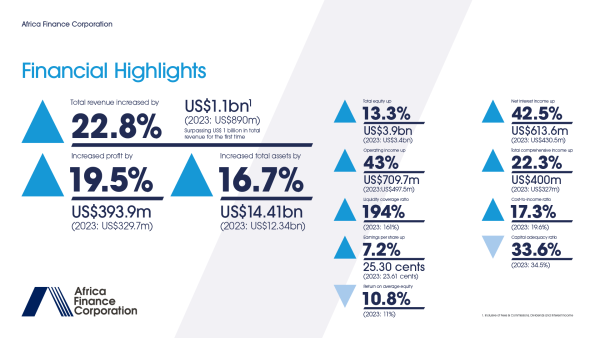
This record performance marks a significant milestone in AFC's mission to close Africa's infrastructure gap through scalable, de-risked investments that attract global capital and deliver tangible development outcomes. The Corporation posted a 22.8% increase in total revenue to US$1.1 billion and a 22.3% rise in total comprehensive income to US$400 million, up from US$327 million in 2023.

AFC's earnings growth was driven by improved asset yields, prudent cost-of-funds management and sustained traction in advisory mandates.  

Further significant financial highlights include:

  • Net interest income up 42.5% to US$ 613.6 million
  • Fee and commission income rose to US$109 million, the highest in over five years
  • Operating income climbed 42.7% to US$709.7 million
  • Total assets reached a record US$14.4 billion, a 16.7% year-on-year increase
  • Liquidity coverage ratio strengthened to 194%, providing over 34 months of cover
  • Cost-to-income ratio improved to 17.3% from 19.6% in 2023

Throughout 2024, AFC continued to scale its impact by mobilising capital for landmark projects across energy, transport, and natural resources. These included the Lobito Corridor – a cross-border railway development spanning Angola, the Democratic Republic of Congo (DRC), and Zambia. AFC led the initiative to secure a concession agreement within one year of the initial Memorandum of Understanding (MoU), an unprecedented achievement for a project of its scale. In the DRC, AFC also invested US$150 million in the Kamoa-Kakula Copper Complex, Africa's largest copper producer and one of the most sustainable globally, thanks to its high-grade ore and renewable-powered smelter.

Other milestones transactions included financing support for the commissioning of the Dangote Refinery, the largest in Africa, and continued progress on AFC-backed Infinity Power Holding's 10 GW clean energy ambition, with power purchase agreements secured in Egypt and South Africa. AFC also invested in the 15GW Xlinks Morocco-UK Power Project, providing US$14.1 million to support early-stage development of a transcontinental renewable energy pipeline between North Africa and Europe.

AFC strengthened its capital base and expanded its investor network through several landmark funding initiatives. These included a US$ 1.16 billion syndicated loan - the largest in its history, a US$500 million perpetual hybrid bond issue, and the successful execution of Nigeria's first-ever domestic dollar bond, which raised US$900 million at 180% oversubscription. AFC also returned to the Islamic finance market after eight years, closing a US$400 million Shariah-compliant facility.

The year also saw strong momentum in equity mobilisation, with US$181.8 million in new capital raised from ten institutional investors. These included Turk Eximbank - AFC's first non-African sovereign shareholder - the Arab Bank for Economic Development in Africa (BADEA), and several major pension funds spanning Cameroon, Seychelles, Mauritius, and South Africa. Ratings agencies affirmed AFC's robust credit profile, with AAA ratings from S&P Global (China) and China Chengxin International, and a stable A3 Outlook from Moody's.

“These results send a clear message that strategic investment in African infrastructure creates lasting value for both beneficiaries and investors,” said Samaila Zubairu, President & CEO of AFC. “In 2024, we exceeded the billion-dollar revenue mark, delivered game-changing projects, and reinforced our financial resilience—demonstrating the scalability of our unique model that blends purpose with performance to accelerate Africa's economic transformation.”

Read the full annual report here (https://apo-opa.co/424qlmR)

Distributed by APO Group on behalf of Africa Finance Corporation (AFC).

Media Enquiries:
Yewande Thorpe
Communications
Africa Finance Corporation
Mobile: +234 1 279 9654
Email: yewande.thorpe@africafc.org

About AFC:
AFC was established in 2007 to be the catalyst for pragmatic infrastructure and industrial investments across Africa. AFC's approach combines specialist industry expertise with a focus on financial and technical advisory, project structuring, project development, and risk capital to address Africa's infrastructure development needs and drive sustainable economic growth.

Seventeen years on, AFC has developed a track record as the partner of choice in Africa for investing and delivering on instrumental, high-quality infrastructure assets that provide essential services in the core infrastructure sectors of power, natural resources, heavy industry, transport, and telecommunications. AFC has 45 member countries and has invested over US$15 billion in 36 African countries since its inception. www.AfricaFC.org

Media files
Africa Finance Corporation (AFC)
Download logo
Read moreAfrica Finance Corporation Tops Us$1 Billion Revenue for First Time as Landmark Projects Unlock Growth Across the Continent
9 April 2025

Government launches R500 million Spaza Shop Support Fund 

Location: News

Government launches R500 million Spaza Shop Support Fund 

Government has officially opened applications for the highly anticipated R500 million support fund aimed at increasing the participation of South African owned Spaza Shops in the townships and rural areas retail trade sector.

Addressing the launch of the Spaza Shop Support Fund (SSSF), Minister of Trade, Industry and Competition, Parks Tau, said the fund will transform the spaza shop landscape by creating jobs, alleviating poverty, promoting economic inclusion and empowerment as well as stimulating local economic growth.

The fund provides for funding of up to R300 000 per shop through a combination of grants and low-interest loans.

It allocates funding specifically for initial stock purchases, infrastructure improvements, business development tools, and Point of Sale (POS) system adoption.

Through the fund, shop owners will be provided with assistance in meeting hygiene and regulatory standards to ensure the provision of safe, high-quality products.

“We are committed to ensuring that every spaza shop that benefits from this fund also gains access to the necessary health and safety training and resources. This holistic approach will help create workplaces that are not only economically vibrant but also secure and sustainable for the future,” the Minister said on Tuesday in Soweto.

He indicated that studies show that small businesses account for a significant portion of job creation in South Africa. 

“By equipping spaza shop owners with financial support, infrastructure upgrades, and essential business training, we are setting the stage for sustainable job creation. This means more opportunities for local talent and a reduction in poverty levels, as spaza shops expand their roles as community hubs.

“Every spaza shop supported by this fund is an engine for local growth. When these businesses thrive, they create ripple effects that boost surrounding sectors—be it suppliers, service providers, or local artisans. 

“This fund is a catalyst for economic dynamism, injecting energy and resources where they are most needed. It is an investment in our people, our neighbourhoods, and ultimately, the entire South African economy,” he explained.

The fund will be jointly administered by the National Empowerment Fund (NEF) and the Small Enterprise Development Finance Agency (SEFDA).

“We want a South Africa where economic opportunities are available to all, where the informal becomes formal, and where the entrepreneurial spirit of our townships becomes a driving force for national transformation.

“With this fund, we are taking a concrete step to formalise and empower the informal sector. By supporting spaza shops, we are enabling entrepreneurs, often women and young people, to participate fully in the economic process.
“These small businesses generate employment, drive local commerce, and channel much-needed income into communities that have long been underserved,” Tau said.

In order to access the funding, applicants need to apply to the NEF and SEDFA through the prescribed application process outlined on the relevant institution's website.

The following website can be used to apply for funding:

Spaza Shop Support Fund - www.spazashopfund.co.za 
NEF - www.nefcorp.co.za 
SEDFA - https://systems.sefa.org.za/SMMEPortal/

The contact details for the Spaza Shop Support Fund Call Centre are 01 1 305 8080 or via email: Spazafund@nefcorp.co.za

Contact details for the NEF Call Centre are 0861 843633, SEDFA Call Centre 012 748 9600 or an email can be sent to helpline@sefa.org.za.

-SAnews.gov.za


nosihle
Tue, 04/08/2025 - 16:14
365 views

Read moreGovernment launches R500 million Spaza Shop Support Fund 
9 April 2025

Seven to appear in court for illegal mining

Location: News

Seven to appear in court for illegal mining

Seven suspects are expected to appear in court soon after they were nabbed following police operations in Limpopo.

“Vala Umgodi Operations conducted in the Sekhukhune District in Limpopo led to the arrest of seven suspects for illegal mining of sand and possession of suspected precious minerals (raw Chrome), on Sunday, 06 April 2025, at [the] Nebo and Burgersfort Policing areas,” the South African Police Service (SAPS).

In its statement on Tuesday, the SAPS said a 36-year-old man was arrested for the possession of suspected stolen precious minerals (raw chrome) at Spitzkop Farm in the Burgesfort policing area.

“The suspect was found loading chrome in a yellow dumbbell truck. Another suspect aged 18 was arrested for contravention of immigration act in the area,” said the police.

Additionally, five suspects aged between 28 and 51, were nabbed for illegal mining of sand on Sunday, 06 April 2025, at Ga-Marishane Village in the Nebo policing area. 

Members of Vala Umgodi Operation conducted a disruptive operation at the area when a group of people were noticed loading sand into a white leyman truck. Police confiscated three shovels and the truck that was loaded with sand.

“The suspects will appear before the local magistrate’s court soon. Police investigations are ongoing,” said the SAPS.  -SAnews.gov.za

Edwin
Wed, 04/09/2025 - 09:20
337 views

Read moreSeven to appear in court for illegal mining
9 April 2025

Southern African Countries Launch Climate-Resilient Health Initiative With WHO Support

Location: News

2025 GoGettaz Agripreneur Prize Competition
Download logo

Eight Southern African countries have embarked on a landmark effort to bolster emergency preparedness and response systems in the face of increasing climate-related health threats. 

With financial support from the Pandemic Fund, and technical assistance from World Health Organization (WHO) in the African Region and other partners, Botswana, Lesotho, Madagascar, Malawi, Mozambique, Namibia, South Africa and Zimbabwe are advancing their capacity to protect public health, and respond to emergencies.

The US$ 35-million, three-year programme is aimed at supporting these countries as they strengthen national and regional systems for early warning, disease surveillance, laboratory diagnostics and workforce development – key pillars of health emergency readiness.

While implementation activities are yet to begin on the ground, coordinated planning efforts are well under way, including the establishment of governance structures at country and regional levels. Through a dedicated technical coordination capacity at the WHO Emergency Hub in Nairobi, Kenya, WHO is putting in place systems to ensure agile implementation and project monitoring, evaluation, research and learning over the three-year project duration. 

To date, all eight countries have convened multi- disciplinary National Steering Committees and have undertaken a detailed microplanning activity with key stakeholders. Furthermore, initial funds have been disbursed to countries, marking a critical early milestone in a regionally coordinated, country-driven initiative to build climate-resilient health systems.

A formal launch event is planned for next month.

“This investment represents a vital turning point for Southern Africa, a region on the frontlines of the climate and health crisis. Countries now have a unique opportunity to develop systems that are robust, responsive and resilient to emerging threats,” said Dr Chikwe Ihekweazu, Acting WHO Regional Director for Africa.

Southern Africa is warming at nearly twice the global average. Droughts, floods and cyclones are becoming more frequent and severe, fuelling the spread of vector- and waterborne diseases such as malaria and cholera, and placing added strain on health systems.

Five of the countries involved in the initiative – Lesotho, Madagascar, Malawi, Mozambique and Zimbabwe – rank among the world's 50 most vulnerable nations to infectious diseases. Many also face high climate risk, compounded by structural challenges such as weak infrastructure, limited resources and high levels of cross-border migration, underlining the urgent need for coordinated preparedness across the region. 

The new programme, developed under the leadership of national governments, is focused on addressing critical gaps in three priority areas:

  • Early warning and disease surveillance: Strengthening real-time, cross-border detection and information-sharing systems across the One Health spectrum, including human, animal and environmental health.
  • Laboratory systems: Enhancing national and regional laboratory networks, including  upgrading diagnostic capacity and regional testing hubs.
  • Public health and community workforce: Supporting the development of a skilled, coordinated workforce aligned with countries' Human Resources for Health strategies.

The proposal was developed as part of the Common Africa Approach under the Joint Emergency Action Plan, with WHO in the African Region, Africa Centres for Disease Control and WHO's Regional Office for the Eastern Mediterranean. Proposal development was supported by the Gates Foundation.

It builds on existing primary health care and community health efforts, and is aligned with global standards, including the International Health Regulations (2005) and the One Health approach.

One of its most ambitious long-term goals is the creation of a Climate-Health Observatory, a platform to support early warning systems and evidence-based decision making by tracking climate-sensitive health risks across borders. The observatory will facilitate data-driven policymaking and foster long-term resilience in the region.

In addition, the programme will help strengthen leadership and governance by establishing a regional network of connected leadership across Ministries of Health and National Public Health Agencies, further enabling swifter and smarter coordination during responses to emerging threats. 

“These efforts are essential in a region with frequent population movement, fragile health systems, and limited emergency response capacity,” said Dr Abdou Salam Gueye, WHO's Africa Regional Emergency Director. “Our role is to support countries with the expertise, tools and evidence they need to lead these efforts effectively.”

Funding is provided by the Pandemic Fund, which supports pandemic prevention, preparedness and response capacity in low- and middle-income countries. The programme also contributes to building sustainable, resilient health systems that can withstand future pandemics and climate shocks.

By working together, and with strong technical support from WHO and partners, countries in Southern Africa are laying the foundation for a scalable model for climate-resilient health security – grounded in national ownership, regional solidarity and a shared commitment to protecting health and saving lives.

Distributed by APO Group on behalf of 2025 GoGettaz Agripreneur Prize Competition.

Read moreSouthern African Countries Launch Climate-Resilient Health Initiative With WHO Support
9 April 2025

Government empowers spaza shops 

Location: News

Government empowers spaza shops 

With the launch of the R500 million Spaza Shop Support Fund (SSSF), government is ready to assist entrepreneurs who want to establish startups, expand their businesses, and gain essential business skills to improve the performance of their enterprises.

This is according to the Minister of Small Business Development, Stella Ndabeni.

With the recent drive to have spaza shops registered, government has received 87 407 applications and of these, a total 53% is from South African-owned spaza shops.

“Our commitment with this fund is to support those who heeded the President’s call to register their spaza shops. As the Department of Small Business Development (DSBD), we can help you when you have an idea and want to start a business.

“We have incubators that help new and startup businesses. We can help you from being an informal trader to a formal trader, to start a spaza shop and to own a wholesale or an entire distribution channel. We will be working with you to help you to turn things around,” said Ndabeni.

The support fund was launched on Tuesday in Soweto to support South African-owned township community convenience shops, including spaza shops, to increase their participation in the townships and rural areas retail trade sector.

READ | Government launches R500 million Spaza Shop Support Fund 

Jointly administered by the National Empowerment Fund (NEF) and the Small Enterprise Development Finance Agency (SEFDA), the fund provides critical financial and non-financial support to township businesses, including community convenience stores and spaza shops.

The fund provides various types of support, including the initial purchase of stock via delivery channel partners, upgrading of building infrastructure, systems, refrigeration, shelving and security, as well as training programmes, which includes point of sale devices, business skills, digital literacy, credit health, food safety and business compliance.

“The fund will address economy of scale disadvantages by linking spaza shops to buying groups for aggregation and bulk purchasing; building business capacity through training and support to improve shop operations; and enhancing market competitiveness to help spaza shops compete with larger retailers," the Minister said.

The fund will be rolled out nationally to impact spaza shops across all major townships, as well as rural areas.

The Minister said government endeavours to work with entrepreneurs to localise supply chain opportunities for township and rural enterprises.

This will ensure that spaza shops do not procure imported products or simply use the platforms of large companies.

“To achieve this, we will utilise other instruments like the Small Enterprise Manufacturing Support Programme, Township and Rural Entrepreneurship Programmes (TREP), the Informal and Micro Enterprise Development Programme (IMEDP), Asset Assist, and our Shared Economic Infrastructure Facility.

“These programmes in turn have the potential to attract municipalities, the private sector, business and informal trader associations, and other stakeholders to work together in contributing their facilities, expertise and resources in support of new localised supply chains and distribution networks for spaza shops. 

“Logistics management partners will offer logistics management services, including warehousing and delivery solutions. They will ensure that products are stored safely and delivered efficiently, reducing transportation costs, and improving the overall supply chain efficiency for spaza shops,” the Minister said.

DSBD Connect

The department has recruited 52 Business Regulation Officers across all districts and metros to support business registration using the DSBD Connect system.

DSBD Connect is a platform which will be used to collaborate or put together small business to collaborate and/or work together on a particular project. 

This can be businesses within the same industries or different industries but need each other for specific skills or qualifications. 

The platform will put together small businesses within the same geographical area, interests, and skills. 

“Despite their importance, spaza shops face several challenges, including access to capital, security concerns, and competition from formal retailers, like larger retail stores and supermarkets which are encroaching on their markets.

"South African-owned spaza shops also face intense competition from foreign-operated spaza shops, who use more organised supply chains to gain competitiveness.

“Therefore, I want to encourage you to collaborate and establish cooperatives so that you can leverage resources, knowledge, and work together on projects, sharing best practices,” Ndabeni said.

Access to funding 

To access the funding, applicants need to apply to the National Empowerment Fund (NEF) and the Small Enterprise Development Finance Agency (SEFDA) through the prescribed application process outlined on the relevant institution's website.

The following website can be used to apply for funding:

Spaza Shop Support Fund - www.spazashopfund.co.za 
NEF - www.nefcorp.co.za 
SEDFA - https://systems.sefa.org.za/SMMEPortal/

The contact details for the Spaza Shop Support Fund call centre are 01 1 305 8080 or via email: Spazafund@nefcorp.co.za.

Contact details for the NEF call centre are 0861 843633, SEDFA call centre 012 748 9600 or an email can be sent to helpline@sefa.org.za. - SAnews.gov.za

nosihle
Wed, 04/09/2025 - 10:27
162 views

Read moreGovernment empowers spaza shops 
9 April 2025

Minister Ronald Lamola Undertakes Working Visit to Senegal

Location: News

Republic of South Africa: Department of International Relations and Cooperation
Download logo

The Minister of International Relations and Cooperation of the Republic of South Africa, Ronald Lamola, has arrived in Dakar, Senegal, for a two-day Working Visit to strengthen diplomatic ties and deepen bilateral cooperation between the two nations. Minister Lamola's visit underscores South Africa's commitment to advancing strategic partnerships with Senegal and fostering Pan-African solidarity.

During his visit, Minister Lamola will co-chair the inaugural Session of the Ministerial Joint Commission for Bilateral Cooperation alongside his Senegalese counterpart, Minister of Foreign Affairs and Senegalese Abroad, Ms Yassine Fall. This historic session establishes a structured framework for enhanced collaboration on mutual priorities, including political dialogue, economic cooperation, regional integration, and multilateral coordination.

Elevating Diplomatic Engagement

The Ministerial Joint Commission represents a milestone in formalising high-level dialogue between South Africa and Senegal. Minister Lamola highlighted the significance of the commission, stating:

“This platform reflects our shared vision to consolidate bilateral relations and amplify Africa's voice on the global stage. Through deepened diplomatic and economic collaboration, we aim to unlock new opportunities for our nations and the continent.”

Courtesy Calls on Senegalese Leadership

In a gesture of goodwill and diplomatic courtesy, Minister Lamola will meet with His Excellency, Prime Minister Ousmane Sonko and His Excellency, President Bassirou Diomaye Faye. These engagements will reaffirm South Africa's commitment to strengthening political and economic partnerships with Senegal, aligned with the African Union's Agenda 2063 and the Sustainable Development Goals.

A Partnership Anchored in Shared Values

The Working Visit builds on the longstanding fraternal relations between South Africa and Senegal, rooted in mutual respect and a common vision for African progress. Both nations are poised to enhance cooperation in areas such as trade, investment, peace and security, and climate action, while advancing multilateral reforms to promote a more equitable global governance system.

Minister Lamola's visit epitomises South Africa's proactive and progressive foreign policy, which prioritises African partnerships to drive inclusive growth and sustainable development. The outcomes of the Ministerial Joint Commission are expected to pave the way for innovative bilateral initiatives and reinforce South Africa-Senegal relations as a cornerstone of intra-Africa trade.

Distributed by APO Group on behalf of Republic of South Africa: Department of International Relations and Cooperation.

Read moreMinister Ronald Lamola Undertakes Working Visit to Senegal
  • Previous
  • Page 1
  • Interim pages omitted …
  • Page 44
  • Page 45
  • Page 46
  • Page 47
  • Page 48
  • Interim pages omitted …
  • Page 264
  • Next

Copyright © 2026 · MyZA · All Rights Reserved · Powered by Stratlec Online