• Skip to main content
  • Skip to header right navigation
  • Skip to after header navigation
  • Skip to site footer
MyZA

MyZA

News, Directory, Events and Other Stuff

  • Social Media
  • Sport
  • World News
  • Home
  • Submit News
  • Directory
  • Events
  • Stratlec
  • TFSA
  • News
    • APO
    • Today’s Sport News
    • Todays Social Media and Tech Headlines
    • Today’s World News
    • Today’s SA Financial News
  • Contact
You are here: Home / Archives for African

African

21 February 2025

Rainfall persists in most parts of SA

Location: News

Rainfall persists in most parts of SA

The South African Weather Service (SAWS) says most parts of South Africa will experience scattered to widespread showers and thundershowers today. 

“The tropical moisture, which was responsible for the persistent rainfall over the eastern and central parts of South Africa in the past few days will be over the western interior, where scattered to mild showers and thunder showers are expected on Friday,” SAWS said.

The eastern parts of the country include the Eastern Cape, Mpumalanga, Limpopo and KwaZulu-Natal, while the central parts of the country refer to the Free State, North West, Gauteng and Northern Cape.

The Western interior pertains to the Northern Cape, North West and Free State.

The SAWS has issued a yellow level 2 warning and level 4 warning for the sub different fall in places mentioned above.

A yellow level 4 warning refers to disruptive rainfall that could lead to flooding of roads, bridges and settlements.

With a yellow level 2 warning, residents can expect disruptive rainfall that can result in localised flooding of settlements, roads/bridges and damage to property.

“On Saturday, a high-pressure system south of the country will reach into the eastern part of the country, resulting in isolated thundershowers but scattered in the southeast [Eastern Cape and KwaZulu-Natal].

“Similar conditions will persist on Sunday where only isolated thundershowers are expected in the eastern parts,” SAWS said. - SAnews.gov.za

nosihle
Fri, 02/21/2025 - 09:17
50 views
Read moreRainfall persists in most parts of SA
21 February 2025

South Africa’s National Astro-Tourism Strategy

Location: News

Department of Science and Innovation, Republic of South Africa
Download logo

On Tuesday, 18 February, the Minister of Science, Technology and Innovation, Prof. Blade Nzimande, supported by Ms. Nomalungelo Gina, Deputy Minister of Science, Technology, and Innovation, and Ms. Maggie Sotyu, Deputy Minister of Tourism, led the presentation of South Africa's National Astro-Tourism Strategy to Parliament.

Last year, the Minister of Tourism, Ms. Patricia De Lille, tabled the National Astro-Tourism Strategy in Cabinet. Subsequent to this, in September last year, Cabinet approved this Strategy and in the same month, Minister De Lille and Minister Nzimande presided over the launch of this Strategy in Carnarvon in the Northern Cape.

This past Tuesday, this Strategy was presented at a joint sitting of the Portfolio Committees of Science, Technology and Innovation and Tourism.

In highlighting the strategic importance of astronomy and tourism to South Africa, Minister Nzimande stated that “South Africa is fast becoming one of the leading nations in the discipline of astronomy and this is why in August last year, we hosted the prestigious General Assembly of the International Astronomical Union. This was first time this prestigious gathering was hosted on the African continent.

Equally, we also have a very robust tourism sector as a country, which is a major contributor to GDP and is expected to grow significantly over the next 5 to 10 years.”

Minister Nzimande also used the briefing to highlight some of South Africa's most notable investments in astronomy infrastructure, during the democratic era, which include the 10-metre Southern African Large Telescope (SALT) in Sutherland, which is the largest optical telescope in the Southern Hemisphere.

The MeerKAT telescope in Carnarvon, which is a precursor to the SKA project, which he said was “going to be South Africa's single biggest scientific infrastructure.”

Outlining the benefits of these investments, Minister Nzimande indicated that "the investments in these high calibre scientific instruments in astronomy enabled an exponential increase in the number of South African astronomers from 60 (only 5 of them were radio astronomers) to about 300 in the last 30 years.”

The Minister Nzimande also used the opportunity to explain what astro-tourism was and further outlined the objectives of South Africa's Astro-Tourism Strategy.

The Minister stated that “… science tourism involves experiences enjoyed when visiting scientific attractions such as scientific landmarks, including museums, laboratories, observatories, and higher educational institutions where research is conducted.

It is also important to realise that astro-tourism is built around the traditions inherited from our ancestors by different ethnic cultures in observing the skies from time immemorial. Astro-tourism therefore draws heavily from the vast and untapped reservoirs of our indigenous knowledge systems.

Astro-tourism also encompasses all offerings such as observatories, telescopes, museums, planetariums, meteorite sites, visitor centres, amateur astronomy clubs, stargazing, tour-guides, astro-routes, and accommodation establishments, etc.”

In outlining the strategic importance of the Astro-Tourism Strategy, Minister Nzimande stated that “We regard science and tourism as mutually reinforcing and therefore building on our competitive advantages in astronomy and tourism, we seek to use the Astro-Tourism Strategy to achieve the following:

  • Enhance the performance of South Africa's astronomy tourism sector through infrastructure developments and improvements, optimal functioning of various streams of astronomy with tourism offerings and boosting transformation by enhancing the livelihoods of local communities;
  • Position South Africa as a world class Astro tourism destination that will yield sustainable benefit-sharing opportunities by maximising appropriate investments, improving marketing efforts, and enhancing visitor experience in South Africa;
  • Educate communities about the importance of preserving our dark skies and radio silence as this is a geographic advantage that needs to be protected for astrotourism to thrive; and
  • Most importantly, we also seek to use this strategy to drive meaningful socio-economic development within poor and rural communities, through science tourism.”

The Strategy is anchored on three pillars, which are: indigenous celestial narratives and human capacity development; infrastructure development; and inclusive tourism growth and partnerships – and requires an estimated budget of over R352 million.

The implementation of the Astro-Tourism Strategy is the joint responsibility of the Departments of Science, Technology and Innovation and Tourism, which have established a Steering Committee that comprises officials from both departments, the Northern Cape Department of Economic Development and Tourism.

The DSTI's entity, the National Research Foundation (NRF) and its sub entities the South African Radio Astronomy Observatory (SARAO) and South African Astronomical Observatory (SAAO), also form part of this Steering Committee.

Distributed by APO Group on behalf of Department of Science and Innovation, Republic of South Africa.

Read moreSouth Africa’s National Astro-Tourism Strategy
20 February 2025

KZN motorists urged to be extra vigilant on the roads

Location: News

KZN motorists urged to be extra vigilant on the roads

The KwaZulu-Natal Department of Transport has urged motorists to be extra vigilant on the roads, as the South African Weather Service (SAWS) warned of prolonged rainfall in various parts of the province.

“We are also requesting those who are involved in school transport to always remember that they are transporting future leaders. They need to avoid speeding, as roads are slippery when wet,” Transport and Human Settlements MEC, Siboniso Duma, said on Thursday.

According to the Yellow Level 2 warning issued by SAWS, widespread showers and thundershowers are expected over the south-western part of the province tonight.

Rainfall accumulation of at least 40 millimetres (mm) is expected over the south-western parts of the province today, which may lead to flooding and localised impacts.

The districts affected by severe weather include uMgungundlovu, Amajuba, uThukela, eThekwini, Zululand, Ilembe and Umkhanyakude.

The MEC also reported that a roving team from Human Settlements is on standby to ensure quick intervention if there is any destruction of houses. 

“There are families that were affected by prolonged rainfall that started on the 1st of January 2025. We are ready to hand over contractors to build temporary accommodation for these families.

“Importantly, today we are in Alfred Duma Local Municipality as part of our efforts aimed at speeding up the construction of road networks in various parts of the province. We will introduce the contractor that will start the rehabilitation of the P32 [road], which starts from KwaMaphimbane to Uitval,” Duma said.

New HOD appointed

In a bid to respond with speed to the needs of citizens, Duma recently announced the appointment of a new Head of Department (HOD) of Human Settlements, Sihle Maxwell Mbili.

Mbili is not new to the Department of Human Settlements, as he worked as Chief Director - Corporate Services in the department. 

“He is the former Municipal Manager of Ray Nkonyeni Local Municipality, where he developed a 20-year-plan. Under his leadership, Ray Nkonyeni achieved clean audits and was singled out as the best-run municipality for many years. 

“He was also selected as the best municipal manager in the province and was instrumental in the building of 4 000 houses in the municipality. He achieved this by ensuring closer working relations with the Department of Human Settlements,” Duma said. – SAnews.gov.za

Matona
Thu, 02/20/2025 - 16:14
227 views

Read moreKZN motorists urged to be extra vigilant on the roads
20 February 2025

Police Committee Applauds High Arrest Figures

Location: News

Republic of South Africa: The Parliament
Download logo

The Portfolio Committee on Police has applauded the remarkable number of arrests of suspected criminals over the festive season but raised alarm that a worrying disjuncture remains between arrests and convictions. The committee received presentations from the South African Police Service (SAPS) management on the Safer Festive Season operation, policing extortion over the festive season and capacitating the detective services.

“It is commendable that 244 951 wanted criminals were arrested for the period between 1 October 2024 to 31 January 2025, but these arrests will be futile of they are not followed by effective prosecution. In line with this, the committee has reemphasised the importance of prosecution-led investigations that will aid prosecution. Also, the link between low conviction rates and the under-resourcing of the detective services cannot be overemphasised,” said Mr Ian Cameron, the Chairperson of the committee.

The committee also emphasised the need for the roll-out of similar high visibility and disruption operations throughout the year, as, on paper, this visibility is effective. While the committee acknowledged South Africa's fiscal challenges, it is of the view that the 6 332 festive-season operations can be replicated throughout the year.

The focus on unlicenced liquor premises is welcomed, as substance abuse is one of the causal factors of crime. The committee was informed that the SAPS closed 6 547 unlicenced premises during October to January period throughout the country, but the committee called on the SAPS together with Liquor Boards to work with communities to revisit these areas, as there is a trend of reopening these establishments after they are closed by the police.

Meanwhile, the committee acknowledged plans by the SAPS to capacitate the detective services through an initiative to recruit 4 000 additional detectives. The committee reemphasised that while this is welcomed, the reality is that this additional capacity does not address the dire capacity shortages in this critical component. Also, the additional capacity will have a minimal impact on the high docket-to-detective ratio and a comprehensive short- to medium-term plan is necessary to alleviate the pressure. The committee noted that the SAPS has made a request to National Treasury for additional funding but highlighted the need to put alternative strategies in place, especially in the context of South Africa's current fiscal constraints.

Furthermore, the committee is concerned about the availability of tools of trade, such as vehicles and office space, for the additional capacity within the detective services. Without suitable tools the additions will not add the required value in the fight against crime. “For example,” Mr Cameron said, “members of the committee conducted an unannounced oversight to the Anti-Gang Unit in the Western Cape and the unit only has 79 vehicles with 90% of those having over 250 000 km, operate in an infrastructure that is not maintained and 210 members share two female and one male toilet. These challenges are systemic and affect the SAPS at all levels and affect the wellness and operational efficiency of the police. Additional capacity without addressing those shortcomings will only exacerbate the challenges,” Mr Cameron said.

The committee is also concerned that the recruitment of 200 detectives who had previously left the SAPS is too small a number and will lead to juniorisation of the service and lock out many experienced police officers who are willing to return. The ripple effect is that these additional new detectives will take time to acclimatise to the new environment translating into minimal impact on the detective services' ability to fight crime.

Meanwhile, the committee welcomed the improved focus in tackling extortion case but noted that extortions continue. Nonetheless, the committee reemphasised the importance of law enforcement's integrated efforts to prevent and combat extortion. Also, intelligence-driven operations should be the primary drivers of pro-active and combat responses to disrupt extortions. Collaboration with the National Prosecuting Authority is also necessary to ensure that cases are placed before courts and that criminals are prosecuted effectively.

Distributed by APO Group on behalf of Republic of South Africa: The Parliament.

Read morePolice Committee Applauds High Arrest Figures
20 February 2025

Call for global solidarity at G20 Foreign Ministers’ Meeting

Location: News

Call for global solidarity at G20 Foreign Ministers’ Meeting

President Cyril Ramaphosa has urged global leaders to embrace inclusivity, cooperation and reform as South Africa steers the Presidency of the Group of 20 (G20) for the first time. 

Speaking at the opening of the G20 Foreign Ministers’ Meeting at Nasrec in Johannesburg, President Ramaphosa emphasised the significance of hosting the G20 Leaders’ Summit on African soil. 

The Foreign Ministers Meeting, hosted by the Minister of International Relations and Cooperation, Ronald Lamola, takes place under South Africa's G20 Presidency theme of 'Solidarity, Equality and Sustainability'. 

“Africa is home to some of the world’s fastest-growing economies and faces unique challenges, such as the impact of climate change, development needs and the effects of global trade dynamics.

“The Summit's location underscores the need for African voices to be heard on critical global issues, like sustainable development, the digital economy and the shift toward green energy,” President Ramaphosa said.

The President said this was a great opportunity to promote greater collaboration between African nations and the rest of the world.

He highlighted pressing global challenges, including geopolitical tensions, climate change, economic inequality and food insecurity, warning that the world’s fragile coexistence was under threat. 

“These challenges are interconnected. They require responses that are inclusive and coordinated. Yet, there is a lack of consensus among major powers, including in the G20, on how to respond to these issues of global significance,” he said. 

He called for greater consensus among major powers within the G20 to address these issues.

The President also highlighted that there are just five years to 2030, the deadline for achieving the Sustainable Development Goals.

He said the international community committed to this ambitious agenda to end poverty and hunger, to protect the planet, to achieve gender equality, universal education and health coverage, and to promote decent work and sustainable economic growth.

“Our commitment to achieve these targets we must not waver. The nations of the world look to the G20 for leadership on the most pressing issues confronting our world.

“Just as cooperation supported the progress of early humans, our modern-day challenges can only be resolved through collaboration, partnership and solidarity,” he said. 

President Ramaphosa said this was why South Africa had placed solidarity, equality and sustainability at the centre of its G20 Presidency.

“We would like our G20 Presidency to be one in which all voices are heard and in which all views count. The G20 represents over two-thirds of the world’s population. 

“Its decisions and policies must reflect the needs and aspirations of all who form part of the G20 family,” he said. 

He also called on the G20 to seek to reflect the needs and aspirations of all people who call this planet home.

A call for UN and global financial system reforms

With the United Nations marking its 80th anniversary, President Ramaphosa reiterated South Africa’s call for reforming the UN Security Council, the multilateral trading system, and the international financial architecture to make them more representative and responsive to today’s realities.

“The UN must change accordingly. We continue to call for the UN Security Council, the multilateral trading system and the international financial architecture to be reformed to make them more representative, more agile and more responsive to today’s global realities.

“As the G20, it is critical that the principles of the UN Charter, multilateralism and international law remain at the centre of all our endeavors,” the President asserted.

President Ramaphosa also addressed ongoing global conflicts, including the wars in Ukraine, Sudan, the Sahel and Gaza. 

He welcomed the recent ceasefire agreement between Israel and Hamas, calling it a crucial first step toward lasting peace and urging diplomatic solutions to global conflicts.

“As the G20, we must continue to advocate for diplomatic solutions. Our own experience as South Africa is that the peaceful resolution of conflict through inclusive dialogue is the foremost guarantor of sustainable, lasting peace,” he said. 

Key priorities for South Africa’s G20 Presidency

Outlining South Africa’s vision for its G20 Presidency, President Ramaphosa identified four key priorities, which include strengthening disaster resilience and response, ensuring debt sustainability for low-income countries, mobilising climate finance for a just energy transition and harnessing critical minerals for sustainable development. 

He emphasised the need for international financial institutions and the private sector to scale up post-disaster recovery efforts, particularly in vulnerable nations.

With many developing economies burdened by high borrowing costs, he called on G20 leaders to renew efforts in addressing debt sustainability, especially in Africa.

On the third priority, President Ramaphosa urged developed nations to fulfil their obligations in supporting developing economies’ green energy transitions, in line with global climate agreements.

Turning to the last priority, the President proposed an inclusive G20 framework on green industrialisation and investment to promote value addition and beneficiation of critical minerals. – SAnews.gov.za

DikelediM
Thu, 02/20/2025 - 16:19
258 views

Read moreCall for global solidarity at G20 Foreign Ministers’ Meeting
20 February 2025

Conference discusses strategies to achieve women’s economic inclusion

Location: News

Conference discusses strategies to achieve women’s economic inclusion

Without a dedicated plan and political will to combat patriarchal forms of exploitation, Africa’s commitment to eradicating “all forms of gender-based violence and discrimination against women and girls” by 2063, will remain hollow.

These were remarks made by the Minister in the Presidency responsible for Women, Youth and Persons with Disabilities, Sindisiwe Chikunga.

The Minister was speaking at the Southern African Regional High-Level Conference on Advancing Economies of Women in the Southern African Development Community (SADC) and Africa on Thursday.

The Ministry in the Presidency for Women, Youth and Persons with Disabilities, in collaboration with the Gates Foundation, is hosting the first Southern African Regional consultation to advance women economic empowerment in the SADC region.

The high-level two-day consultation forum, held in Sandton, Johannesburg, brings together women leaders from the SADC region, including senior government officials, policymakers, and representatives from other African Union (AU) Member States.

The forum, which will conclude on Friday, aims to discuss strategies to achieve women’s economic inclusion, financial access and Economic Justice and Rights (EJR) across the SADC region.

In her address, Chikunga acknowledged that women own fewer productive assets and that their businesses have fewer opportunities to trade. She also said that women experience financial exclusion and have limited access to markets and procurement.

She warned that without concrete measures in place, the continent’s aspiration to ensure that African women in all spheres -- granting them equal social, political, and economic rights, including the right to own and inherit property, sign contracts and manage businesses -- will remain unfulfilled.

“Similarly, rural women’s access to productive assets such as land, credit, inputs and financial services, will remain idle and futile without deliberate action. Without a deliberate skills revolution, the desire to position our youth at the forefront of knowledge and as catalysts of innovation and entrepreneurship, will fall short.

“Only when education and skills are accessible to all, will we be able to cultivate the creativity, energy and innovation of Africa’s youth into a driving force behind the continent’s political, social, cultural and economic transformation,” she explained.

Despite the continent’s noble vision, the Minister argued it will remain a distant reality “until we put in place concrete measures with firm timelines, deliverables and accountability mechanisms to ensure its realisation.”

She emphasised that the success of Agenda 2063 rests squarely on the seriousness of the leaders’ commitment to uplift women and girls, enabling them to pull the entire continent forward.

According to the AU, Agenda 2063 is Africa's development blueprint to achieve inclusive and sustainable socio-economic development over a 50-year period.

Beyond Agenda 2063, the Minister highlighted the region’s support for the consultative forum, which is also inspired by the SADC Vision 2050 and the Regional Indicative Strategic Development Plan (RISDP) 2020-2030, which both reflect the region’s developmental aspirations.

She underscored the importance of increasing women’s participation in regional development, enhancing equal access to opportunities, achieving gender parity, strengthening gender mainstreaming at both national and regional levels, and combating gender-based violence (GBV).

Economic participation 

Chikunga emphasised that the economic potential of the region cannot be fully realised when half of its population remains underrepresented in trade, financial systems, digital economies, and entrepreneurship.

She also stressed the importance of ensuring that girls and women have access to quality education, as this is essential for meaningful economic participation to help address barriers. These barriers include early marriages, teenage pregnancies, and other societal norms that hold back the girl child.

‘We must provide young women with the kind of vocational and technical training that is tailored to market demands and empowers women to participate in diverse sectors, including STEM (science, technology, engineering and mathematics), agriculture, and entrepreneurship.

“We must note that, as things stand, women make up less than a third of the workforce across STEM careers, a number that should alarm all of us.

“The historical and ongoing exclusion of women from STEM is a tragedy we must confront urgently. Tangible programmes are needed to correct societal and cultural beliefs that use gender stereotypes to perpetuate scientific inequality,” she explained.

The Minister further highlighted the need for financial inclusion and access to investment opportunities, including access to land, productive assets, and property rights.

She also called for the provision of smartphones for women in the marketplace, including access to the internet, and digital tools that can enhance their economic participation. – SAnews.gov.za

GabiK
Thu, 02/20/2025 - 17:30
59 views

Read moreConference discusses strategies to achieve women’s economic inclusion
20 February 2025

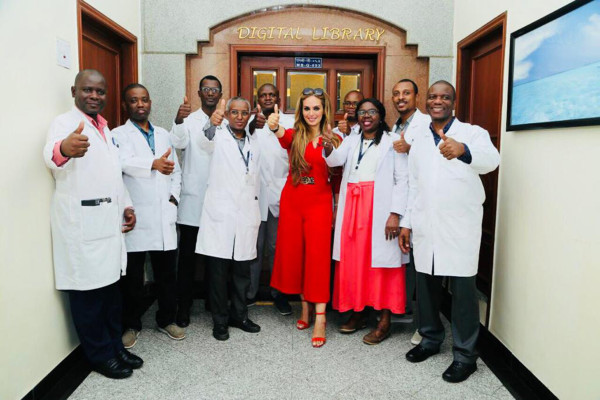
Merck Foundation CEO Provides 194 Oncology Scholarships in Africa

Location: News
Merck Foundation

  • Merck Foundation marks World Cancer Day with African First Ladies by providing 194 scholarships of Oncology Training to African doctors from 32 countries. 
  • Merck Foundation together with Africa First Ladies and Ministries of Health has been building cancer care capacity and increasing the limited number of Oncologists in their countries by providing close to 200 Scholarships of One-, two- and three-years fellowship, diploma and Master Degree of oncology to African doctors from 32 Countries. 
  • Merck Foundation is making history in Africa by training the First African Oncologists and First Cancer Care Teams in Countries such as The Gambia, Sierra Leone, Burundi, Liberia, Guinea Conakry, Central African Republic, Chad, Burundi, Malawi, Niger, Namibia, Zambia, Zimbabwe and more. 

Merck Foundation (www.Merck-Foundation.com), the philanthropic arm of Merck KGaA Germany, marks ‘World Cancer Day 2025' together with Africa's First Ladies and Ministries of Health. Through their Cancer Access Program, Merck Foundation is is building quality and equitable cancer care capacity in Africa.  

Senator Dr. Rasha Kelej, the CEO of Merck Foundation, highlighted, “At Merck Foundation, we mark World Cancer Day not just as a single day, but as a our continued commitment to transform and advance cancer care in Africa.  

Together with my dear sisters, the Africa's First Ladies, we are have enhanced the cancer care capacity in the continent by providing 194 scholarships to young African doctors from 32 countries, significantly increasing the number of oncologists in Africa. We are making history together by providing these important scholarships for the first oncologists and /or the first cancer care teams in many countries across Africa.”  

Merck Foundation in total provided more than 2100 scholarships to doctors from over 52 countries in 44 critical and underserved medical specialties.  

The Merck Foundation Cancer Access Program provides One, two- and three-years fellowship, Post Graduate Diploma and Master Degree of oncology for doctors from Africa. The clinical training has been conducted in India, Egypt and Kenya. Additionaly, Merck Foundation also provides scholarships for 2 years online PG Diploma in Cancer and Clinical Oncology, 01 year online PG Diploma in Medical Oncology and 1 year online PG Diploma in Pain Management from reputed Universities in UK like University of South Wales, University of Buckingham, Queen Mary University of London, and Cardiff University. 

Merck Foundation is establishing Multidisciplinary Oncology Care teams in many African countries by providing scholarships of clinical training in Medical Oncology, Surgical Oncology, Pediatrics Oncology, Gynecology Oncology, Breast Oncology, Haemato-Oncology, Orthopaedic Oncology, Palliative Care, Pathology Oncology, Radiation Oncology, Research in Oncology, Surgical Oncology - Genital Urinary System, Advanced Cytopathology Training, Interventional Radiology, Radiation Technician, Laboratory Technician, Oncology Nursing. 

Merck Foundation through its Merck Foundation Cancer Access Program has provided 194 scholarships of Oncology to doctors from 32 countries including Botswana, Burkina Faso, Burundi, Cameroon, Central African Republic, Chad, Congo Brazzaville, Democratic Republic of the Congo, Ethiopia, Gabon, Gambia, Ghana, Guinea, Kenya, Liberia, Malawi, Mauritius, Mozambique, Namibia, Nepal, Niger, Nigeria, Rwanda, Sao Tome & Principe, Senegal, Sierra Leone, South Africa, Sri Lanka, Tanzania, Uganda, Zambia and Zimbabwe.  

“In several of these countries, there wasn't even a single oncologist. We are proud to be making history in Africa by training the first oncologists and establishing the first cancer care teams in nations such as The Gambia, Sierra Leone, Burundi, Liberia, Guinea Conakry, Central African Republic, Chad, and Niger. Merck Foundation remains committed to transforming the landscape of cancer care across the continent and leading Africa toward a healthier future,” explained Senator Dr. Rasha Kelej.  

Africa records around 1.1 million new cases of cancer, resulting in up to 700,000 deaths, every year, as per WHO data. The mortality rate of cancer patients is very high in Africa, as compared to the rest of the world.  

“One of the key reasons is also the late diagnosis of the disease. Therefore, these scholarships are very important” added Senator Kelej.  

Merck Foundation has also created awareness materials including awareness leaflets and videos on Cancer Prevention and Early Detection.  

Dr. Chifundo Kajombo, Merck Foundation Alumni from Malawi shares, “I am privileged to be awarded a scholarship by Merck Foundation to pursue the Surgical Oncology fellowship training program at Tata Memorial Hospital, India. I managed to advance from basic surgical oncology principles to the advanced level. This has helped me improve my understanding of cancer and operative principles. Since returning back home, I have managed to change the structure of how our breast clinic runs and modified it to incorporate a number of new things that we probably could not have possibly included. I am so proud to share that I have just been awarded the Best Surgeon for 2023 in Malawi. I would not have achieved this feat without Merck Foundation's scholarship. I am very thankful.” 

Watch testimonials videos of Merck Foundation Oncology Fellowship Alumni: https://apo-opa.co/4bab06Y

Distributed by APO Group on behalf of Merck Foundation.

Link of the extra posters: https://apo-opa.co/3X6RmD6

Contact details:
Mehak Handa
Community Awareness Program Manager
+91 9310087613 / +91 9319606669
mehak.handa@external.merckgroup.com

Join the conversation on our social media platforms below and let your voice be heard! 
Facebook: https://apo-opa.co/4k65XbW
X: https://apo-opa.co/43mGeGv
YouTube: https://apo-opa.co/3EVeWMS
Instagram: https://apo-opa.co/413ECyl
Threads: https://apo-opa.co/4gLTA1P
Flickr: https://apo-opa.co/4gSxZVs
Website: www.Merck-Foundation.com
Download the Merck Foundation App: https://apo-opa.co/413wo9z

About Merck Foundation:
The Merck Foundation, established in 2017, is the philanthropic arm of Merck KGaA Germany, aims to improve the health and wellbeing of people and advance their lives through science and technology. Our efforts are primarily focused on improving access to quality & equitable healthcare solutions in underserved communities, building healthcare & scientific research capacity, empowering girls in education and empowering people in STEM (Science, Technology, Engineering, and Mathematics) with a special focus on women and youth. All Merck Foundation press releases are distributed by e-mail at the same time they become available on the Merck Foundation Website.  Please visit www.Merck-Foundation.com to read more. Follow the social media of Merck Foundation: Facebook (https://apo-opa.co/4k65XbW), X (https://apo-opa.co/43mGeGv), Instagram (https://apo-opa.co/413ECyl), YouTube (https://apo-opa.co/3EVeWMS), Threads (https://apo-opa.co/4gLTA1P) and Flickr (https://apo-opa.co/4gSxZVs). 

The Merck Foundation is dedicated to improving social and health outcomes for communities in need. While it collaborates with various partners, including governments to achieve its humanitarian goals, the foundation remains strictly neutral in political matters. It does not engage in or support any political activities, elections, or regimes, focusing solely on its mission to elevate humanity and enhance well-being while maintaining a strict non-political stance in all of its endeavors. 

Media files
Merck Foundation
Download logo
Read moreMerck Foundation CEO Provides 194 Oncology Scholarships in Africa
20 February 2025

Macpherson undertakes working visit to the Middle East

Location: News

Macpherson undertakes working visit to the Middle East

Public Works and Infrastructure Minister Dean Macpherson is from today to 28 February undertaking an official working visit to the Middle East.

The visit will include Kuwait, the United Arab Emirates, the Kingdom of Saudi Arabia and Qatar. 

The Minister is joined by the MEC for Public Works and Infrastructure in Limpopo Ernest Rachoene and the Chairperson of the eThekwini Municipality Economic Development and Planning Committee Thembubuhle Ntuli.

The visit forms part of the Minister’s commitment to attracting infrastructure investment into South Africa which will help turn the country into a construction site, boosting economic growth and creating jobs. 

In each country, the Minister and his delegation will meet with his state counterpart or equivalent, sovereign wealth funds, state-owned entities and private sector businesses that can invest in South African infrastructure projects.

The Middle East represents an untapped market for South African infrastructure projects, with limited investment having taken place in the past. – SAnews.gov.za


Matona
Thu, 02/20/2025 - 16:28
76 views

Read moreMacpherson undertakes working visit to the Middle East
20 February 2025

Hlabisa calls for caution as heavy rains wreak havoc throughout SA

Location: News

Hlabisa calls for caution as heavy rains wreak havoc throughout SA

The Minister of Cooperative Governance and Traditional Affairs (CoGTA), Velenkosini Hlabisa, has urged all South Africans to remain vigilant as heavy rains continue to fall in various parts of the country. 

The South African Weather Service (SAWS) has issued warnings of persistent heavy showers since the weekend, impacting the North West, Gauteng, the northern Free State, the highveld areas of Mpumalanga, and southwestern Limpopo.

Rainfall accumulations of 20 to 50mm are expected, with cooler daytime temperatures prevailing in these regions.

“The continued rainfall poses a risk of localised flooding, particularly in low-lying areas, bridges, and roads,” the department warned. 

Reports indicate that numerous residences and businesses in the southern area of Durban experienced flooding on Thursday due to intense rainfall, with the province already reporting fatalities. 

This follows the South African Weather Service issuing of a level 5 orange warning for significant rainfall in KwaZulu-Natal earlier this week. 

In the North West province, heavy rainfall has led to the closure of schools, while flooding has occurred in various locations in Gauteng, including Soweto and Centurion. 

Hlabisa has emphasised the necessity of exercising caution as disaster response teams remain on high alert, ready to offer emergency assistance as required.

Meanwhile, according to the department, the National Disaster Management Centre (NDMC) is actively monitoring the situation and coordinating response efforts with provincial and local authorities to ensure a swift and effective response to any emergencies. 

Community members are encouraged to quickly report any emergencies and to help those who might need extra support, such as the elderly and children, to stay safe. 

The department also urged everyone to keep an eye on news reports, radio updates, and official social media pages for the latest information and alerts.

“While our dedicated teams are on high alert, the first line of defence is always preparedness. We urge South Africans to not take risks, avoid flooded roads, stay informed, and follow official warnings. The safety of all South Africans during this time remains a priority,” said Hlabisa.

Additionally, Minister Hlabisa encourages all communities to delay their trips to areas with heavy rains if those trips are not urgent and can be delayed for safety purposes.

“Stay safe, stay informed, and remain vigilant,” he added. – SAnews.gov.za

Matona
Thu, 02/20/2025 - 16:33
27 views

Read moreHlabisa calls for caution as heavy rains wreak havoc throughout SA
20 February 2025

Select Committee Engages With Stakeholders on Marine Oil Pollution Bill

Location: News

Republic of South Africa: The Parliament
Download logo

The Select Committee on Public Infrastructure and the Minister in the Presidency heard joint oral submissions from stakeholders on the Marine Oil Pollution (Preparedness, Response and Cooperation) Bill [B10-2022].

The bill aims to incorporate the provisions of the International Convention on Oil Pollution Preparedness, Response and Cooperation (OPRC) into South African law. As a party to the OPRC Convention, South Africa is required to adopt measures to prepare for and respond to potential oil spills in the country's maritime domain.

Committee Chairperson Mr Rikus Badenhorst said combatting marine oil pollution is not only an environmental concern, it is also an economic, social and legal imperative. The destruction of marine habitats, the violation of environmental rights and the significant threats to livelihoods, particularly those dependent on the ocean economy, demand decisive legislative action.

“As outlined in the International Convention on Oil Pollution Preparedness, Response and Cooperation (OPRC), to which South Africa is a party, we have a duty to ensure that our legislative framework adequately provides for prevention, response and accountability in cases of marine oil pollution,” said Mr Badenhorst.

The committee was of the view that the presentations and submissions received reaffirmed the urgency of strengthening South Africa's legislative framework for marine oil pollution prevention and response.

Key insights were shared by organisations such as the Biodiversity Law Centre, SANCCOB [Southern African Foundation for the Conservation of Coastal Birds], BirdLife South Africa, the Green Connection, and Natural Justice. The stakeholders raised issues around delays in coordination between agencies and government officials during oil spill incidents, which allow the pollution to continue unabated. They also stressed the importance of integrating traditional ecological knowledge and ensuring transparent and accessible compensation mechanisms for affected communities.

Members of the committee picked up on the issue raised by stakeholders about the importance of including traditional healers in the discussions. The committee said traditional healers have a deep connection to the ocean and as custodians of cultural heritage and environmental stewardship cannot be overlooked. Engaging these communities is essential for holistic and effective marine resource management. The bill is currently in the provinces for the public participation process.

The Department of Transport provided a detailed responses to the stakeholder submissions, highlighting existing mechanisms and measures in place to address marine pollution, including the standby tug vessels patrolling the coastline and the country's membership of international treaties, such as the OPRC.

Mr Badenhorst said that as the committee continues its oversight role, members will remain vigilant in monitoring the implementation of the bill once it is enacted. “We are committed to ensuring that the necessary regulations are promulgated without delay and that our collective responsibility to safeguard our marine resources is upheld,” he said.

“The ongoing work to refine this bill must ensure that it is practical, enforceable and adequately resourced to fulfill its objectives effectively. We emphasise the importance of empowering relevant authorities, including the South African Maritime Safety Authority, and engaging coastal communities and small-scale fishers in decision-making and response efforts,” added Mr Badenhorst.

Distributed by APO Group on behalf of Republic of South Africa: The Parliament.

Read moreSelect Committee Engages With Stakeholders on Marine Oil Pollution Bill
20 February 2025

Parliament Urged to Pass Law on Detention of Immigrants

Location: News

Bill hailed as “progressive” by COSATU, but other organisations say it doesn’t go far enough

Read moreParliament Urged to Pass Law on Detention of Immigrants
19 February 2025

South Africa to host a “fruitful” first G20 Foreign Ministers’ Meeting

Location: News

South Africa to host a "fruitful" first G20 Foreign Ministers’ Meeting

South Africa's G20 Sous Sherpas, Ambassador Xolisa Mabhongo and Advocate Nokukhanya Jele, have expressed confidence in the success of the first G20 Foreign Ministers’ Meeting.

International Relations and Cooperation Minister Ronald Lamola will host the meeting on Thursday and Friday at Nasrec, Johannesburg, welcoming his international counterparts.

Ahead of the gathering, Ambassador Mabhongo and Advocate Jele briefed the media on the significance of the event, outlining its objectives, key attendees, and expected outcomes.

“We have every faith and confidence that the next two days will be fruitful, useful and successful,” Jele said.

South Africa assumed the Presidency of the G20 on 1 December 2024, under the theme: “Solidarity, Equality, Sustainability”.

The country has successfully hosted its first Sherpa meetings from 9 - 10 December 2024 and has since been conducting various G20 working group meetings. 

Jele explained to the media that the G20 comprises two tracks: a Sherpa Track, led by the Department of International Relations and Cooperation (DIRCO), which consists of 15 sectoral working groups, and a Finance Track, led by the National Treasury, which includes eight sectoral working groups. 

“South Africa's G20 Presidency carries tremendous responsibility, given that the decisions taken by the G20 can impact the lives of all members of the global community, notably the most vulnerable and needy. 

“South Africa is the only African country that is a permanent member of the G20 and therefore this is the first time in the G20’s history that an African country will preside over this August bloc of developing and developed countries,” Jele said. 

Global Challenges and South Africa’s G20 Priorities

With the world facing multiple challenges, including sustainable development setbacks, South Africa’s Presidency seeks to promote global solidarity and multilateral cooperation. 

Advocate Jele emphasised that the G20 Foreign Ministers’ Meeting has become an important platform for discussions on international issues and cooperation.

“The world faces a myriad of global challenges and continued Sustainable Development reversals. The current global situation suggests that the international community requires a profound paradigm shift characterised by solidarity, harmony and mutual respect. 

“In this regard, the G20 has a significant role to play in fostering global cooperation, collaboration and partnership to address these challenges and achieve sustainable development,” she said. 

At the core of South Africa's G20 presidency, the country aims to secure urgent progress on shared global goals. 

“The meeting of G20 foreign ministers has grown in importance and become a valuable forum for discussions on a wide range of international issues and matters of shared concern.

“G20 Foreign ministers are uniquely placed to monitor major global risks, convene dialogs on strategic matters and encourage cooperation to revive multilateralism in addressing global challenges,” Jele said. 

Programme of the G20 Foreign Ministers’ Meeting 

Ambassador Mabhongo outlined the programme of the two-day meeting and priorities for South Africa’s G20 Presidency. 

President Cyril Ramaphosa will deliver the opening address at the Foreign Ministers’ Meeting, followed by discussions on the global geopolitical landscape. 

“This is one of the reasons that we have convened the meeting of foreign ministers, so that they can reflect on the geopolitical situation that the world faces today and see how the G20 can position itself to respond and contribute to that,” the Ambassador said. 

The second day of deliberations will focus on South Africa’s overarching priorities, which include strengthening disaster resilience and response, ensuring debt sustainability for low-income countries, mobilising finance for just energy transitions, and harnessing critical minerals for inclusive growth and sustainable development. 

Mabhongo explained that these are the four over aching priorities that the President announced as being the guiding light for South Africa’s presidency.

“In addition to this, we have established three high level task forces, the first one is on inclusive economic growth, industrialisation, employment, and reduced inequality. The second one is on food security and the third one is on artificial intelligence for sustainable development,” he said. 

The ambassador importantly noted that South Africa’s Presidency is the last in the first cycle of G20 presidencies since the forum was elevated to leaders’ level.

“One of the aims of our presidency is to undertake a review of the G20 at 20. That is, to see what has the G20 achieved during the past 20 years. So this is part of the work that will be done during our presidency,” Mabhongo said.

Addressing debt and economic inequality

South Africa also aims to address the high cost of capital for developing nations, which remains a major barrier to economic growth. The G20 Presidency will also focus on broadening the G20 Compact with Africa, a partnership co-chaired by South Africa and Germany, to enhance its effectiveness. 

“When we talk about debt and some of the challenges that are facing developing countries, we cannot shy away from the fact that there is a problem with the cost of capital. Therefore South Africa seeks, during its presidency, to also undertake a review of the cost of capital, why is it that developing countries struggle and have to pay higher when they borrow to finance their debt and other challenges than other countries. 

“We also seek to work on a broadened compact with Africa. During our presidency, we therefore wish to also see how we can expand and make this compact with Africa more impactful and more effective,” the Ambassador said. 

Furthermore, Mabhongo said discussions on critical minerals, a key topic in global forums like the United Nations and G7, will be prioritised.

In terms of the attendance of the of the meeting, Mabhongo said all G20 members will be represented. 

“We also have a list of guest countries or invited countries, all of them have also confirmed their attendance, so we look forward to a very good and successful meeting of foreign ministers at the beginning of our G20 Presidency,” he said. – SAnews.gov.za 

DikelediM
Wed, 02/19/2025 - 14:50
222 views

Read moreSouth Africa to host a “fruitful” first G20 Foreign Ministers’ Meeting
19 February 2025

SA, EU strengthen strategic partnership at Ministerial Dialogue

Location: News

SA, EU strengthen strategic partnership at Ministerial Dialogue

South Africa and the European Union (EU) have reaffirmed their commitment to deepening their strategic partnership during the 16th Session of the Ministerial Political Dialogue on Wednesday in Cape Town. 

International Relations and Cooperation Minister Ronald Lamola, along with the European Union High Representative for Foreign Affairs and Security Policy and Vice President of the European Commission, Kaja Kallas, co-chaired the dialogue in the context of the EU-South Africa Strategic Partnership.

“The EU-South Africa Ministerial Political Dialogue builds on the joint aspiration to further the strategic partnership, which has grown in depth and ambition over the years. 

“The political and security cooperation is strong, and so are trade and investment relations: South Africa is the EU’s largest trading partner in sub-Saharan Africa, and the EU is South Africa’s first trade and investment partner,” a joint communique said.               

The meeting was also attended by Minister of Trade, Industry and Competition, Parks Tau, Minister of Agriculture John Steenhuizen, Minister of Basic Education Siviwe Gawarube and Minister of Science, Technology and Innovation Blade Nzimande. 

The High Representative’s three-day visit to Africa at the beginning of her mandate signals the EU’s commitment to the partnership with South Africa and with the continent.

The Ministerial Political Dialogue is a key milestone ahead of the 8th European Union-South Africa Summit, which is scheduled for 13 March 2025. 

The political engagements between the European Union and South Africa contribute to the celebration of the 25th anniversary of the European Union’s partnership with Africa. 

In this context, both sides underscored the importance of holding the European Union- African Union Ministerial Meeting and Summit in 2025.

“The Ministerial Political Dialogue presented an opportunity for the European Union and South Africa to reiterate their common commitment to multilateralism, a consistent approach to the rules-based international order, and the centrality of the United Nations Charter. 

“The parties further agreed on the need to reform the UN Security Council, recognising the urgent need to make it more representative, inclusive, transparent, efficient, democratic and accountable,” a joint communique said. 

Addressing global conflicts, both sides affirmed their unwavering commitment to act in accordance with international law, including the Charter of the United Nations and its purposes and principles. 

Both sides noted with distress the immense human suffering and the adverse impact of wars and conflicts around the world. 

The parties also reaffirmed that all states must act in a manner consistent with the Purposes and Principles of the UN Charter in its entirety. 

“In line with the UN Charter, all states must refrain from the threat or use of force to seek territorial acquisition against the territorial integrity and sovereignty or political independence of any state and affirmed that all parties in conflicts must comply with their obligations under international law, including international humanitarian law and international human rights law,” the joint communique said. 

Both sides further agreed that, guided by these principles, to support efforts towards a just peace in Ukraine, Occupied Palestinian Territory, Sudan, the DRC and other major conflicts around the globe.

The European Union and South Africa also discussed their cooperation in multilateral and regional fora, focusing in particular on their joint efforts to promote human rights and sustainable development and to address climate change.

The European Union emphasised its alignment with and support for South Africa G20’s presidency priorities.

In view of the Summit, the European Union and South Africa also looked at their economic, trade and investment agenda, including outstanding issues on both sides. 

“Underlining the importance of a just energy transition, the European Union and South Africa reviewed opportunities to step up cooperation on sustainable value chains, including critical raw materials with a view to further their respective competitiveness, economic security and decarbonisation efforts. 

“The parties agreed that critical minerals have emerged as a pivotal topic on the global stage, reflecting a critical role in driving industrialisation, technological innovation, and inclusive economic growth. South Africa underscored the need for the transition to a low carbon economy to be just, enhance energy security and create jobs. The two sides acknowledged the role of regulatory cooperation, investment facilitation, as well as of businesses in driving these initiatives,” the joint communique said. 

The European Union and South Africa further welcomed the robust collaboration in the areas of education, research and innovation. 

Both sides discussed opportunities to further enhance cooperation on open science and nuclear medical applications, to ensure progress on South Africa joining the Clean Hydrogen Mission of Mission Innovation. 

This is to broaden the participation of South Africa in the EU Framework Programme for Research and Innovation (R&I) Horizon Europe and in the Marie Skłodowska-Curie Actions as well as to promote mobility and cooperation through Erasmus+.

The European Union and South Africa further agreed that international trade is an important engine for inclusive economic growth, combating poverty and hunger and promoting sustainable development and the SDGs. 

“The EU and South Africa also stressed that for trade and investment to act as a driver of global growth, well-being and prosperity, a transparent rules-based multilateral trading system, that is non-discriminatory, fair, open, inclusive, equitable and sustainable is a necessity. Both sides reaffirmed that the WTO must be at the core such a multilateral trading system,” said the joint communique.  – SAnews.gov.za


DikelediM
Wed, 02/19/2025 - 15:48
164 views

Read moreSA, EU strengthen strategic partnership at Ministerial Dialogue
19 February 2025

Budget Postponement Is a “Blessing in Disguise” Says COSATU

Location: News

Hundreds marched in Cape Town ahead of budget announcement

Read moreBudget Postponement Is a “Blessing in Disguise” Says COSATU
19 February 2025

Human Rights Council to Hold Its Fifty-Eighth Regular Session

Location: News

Office of the UN High Commissioner for Human Rights (OHCHR)
Download logo

The United Nations Human Rights Council will hold its fifty-eighth regular session from 24 February to 4 April 2025 at the Palais des Nations in Geneva, starting with its high-level segment from 24 to 26 February, when dignitaries representing more than 100 Member States will address the Council.

The session will open at 9 a.m. on Monday, 24 February under the Presidency of Ambassador Jürg Lauber of Switzerland. Delivering statements at the opening will be the Secretary-General of the United Nations, António Guterres; thePresident of the United Nations General Assembly, Philemon Yang; the United Nations High Commissioner for Human Rights, Volker Türk; as well as the Chief of the Federal Department of Foreign Affairs of Switzerland, Ignazio Cassis. The Council will be meeting in room XX of the Palais des Nations.

On Monday, 3 March, the Council is scheduled to hear a global update by the High Commissioner for Human Rights on the situation of human rights around the world. The general debate on his global update will start following his presentation of a number of country-specific reports and updates.

During the session, the Council will hold 30 interactive dialogues with the High Commissioner, his Office and designated experts, with Special Procedure mandate holders and investigative mechanisms, and with Special Representatives of the Secretary-General. The Council will also hold five enhanced interactive dialogues and one high-level dialogue, as well as nine general debates.

The Council will also hold theannual high-level panel discussion on human rights mainstreaming with a focus on the thirtieth anniversary of the Beijing Declaration and Platform for Action;the biennial high-level panel on the death penalty; panel discussions on early warning and genocide, HIV response and leaving no one behind, and onrights to work and to social security; the annual interactive debate on the rights of persons with disabilities; the annual discussion on the rights of the child; and a commemoration of the International Day for the Elimination of Racial Discrimination.

The Council will examine the situation of human rights in a number of countries under its various agenda items, including the situation in the occupied Palestinian territory, Eritrea, Sudan, South Sudan, Nicaragua, Afghanistan and Myanmar under agenda item two; in Iran, Syria, Venezuela, Ukraine, Belarus, the Democratic People's Republic of Korea, and Myanmar under agenda item four; and in Mali, Haiti, Ukraine, the Democratic Republic of the Congo, South Sudan and Central African Republic under agenda item 10.

The final outcomes of the Universal Periodic Review of14 States will also be considered, namely those of Norway, Albania, Democratic Republic of the Congo, Côte d'Ivoire, Portugal, Bhutan, Dominica, Democratic People's Republic of Korea, Brunei Darussalam, Costa Rica, Equatorial Guinea, Ethiopia, Qatar and Nicaragua.

Towards the end of the session, the Council will appoint three new members of the Expert Mechanism on the Rights of Indigenous Peoples.

A detailed agenda and further information on the fifty-eighth session can be found on the session'swebpage. Reports to be presented are available here.

First Week of the Session

The fifty-eighth regular session will open at 9 a.m. on Monday, 24 February with a short opening meeting, followed by the start of the high-level segment, which will continue until 26 February, and during which the Council will hear addresses by more than 100 dignitaries. Intervening during the high-level segment will be the annual high-level panel discussion on human rights mainstreaming in the afternoon of 24 February and the biennial high-level panel on the death penalty in the morning of Tuesday, 25 February. The general segment will follow the conclusion of the high-level segment in the afternoon of Wednesday, 26 February.

On Thursday, 27 February, the Council will hold an interactive dialogue on the High Commissioner's report on the occupied Palestinian territory, including East Jerusalem, and the obligation to ensure accountability and justice, followed byenhanced interactive dialogues on the situation of human rights in Eritrea and on the High Commissioner's report on Sudan, with the assistance of the designated Expert. Friday, 28 February, will see the conclusion of the discussion on Sudan, followed by an enhanced interactive dialogue on the report of the Commission on Human Rights in South Sudan. This will be followed by three interactive dialogues, the first on the report of the Group of Human Rights Experts on Nicaragua, the second with the Special Rapporteur on the situation of human rights in Afghanistan, and the third on the High Commissioner's oral update on Myanmar.

Second Week of the Session

At the beginning of the second week, on the morning of Monday, 3 March, the Council will hear the High Commissioner's global update, then conclude the interactive dialogue on the High Commissioner's oral update on Myanmar. This will be followed by the presentation of reports on the activities of the Office of the High Commissioner in Colombia, Guatemala and Honduras, and of another report on Cyprus, and oral updates on Sri Lanka and Nicaragua. The Council will then begin the general debate under agenda item two, namely the annual report of the High Commissioner for Human Rights and reports of the Office of the High Commissioner and the Secretary-General, which will conclude on Tuesday, 4 March. The Council will subsequently begin its considerations under agenda item three on the promotion and protection of all human rights, holding interactive dialogues with the Special Rapporteur on torture and other cruel, inhuman or degrading treatment or punishment and with the Special Rapporteur on freedom of religion or belief.

On the morning of Wednesday, 5 March, the Council will hold a panel on early warning and genocide prevention, then conclude its interactive dialogue with the Special Rapporteur on freedom of religion or belief. This will be followed by an enhanced interactive dialogue on the report of the Office of the High Commissioner on transitional justice. Another panel will be held on Thursday, 6 March on HIV response and leaving no one behind, in addition to two interactive dialogues with the Special Rapporteur on the situation of human rights defenders and the Special Rapporteur in the field of cultural rights. A third panel will be held in the morning of Friday, 7 March on rights to work and to social security, followed by two interactive dialogues with the Special Rapporteur on the right to adequate housing and the Independent Expert on the rights of persons with albinism.

Third Week of the Session

The Council will start its third week on Monday, 10 March with a focus on disability, beginning with an interactive dialogue with the Special Rapporteur on the rights of persons with disabilities, to be followed by the annual debate on the rights of persons with disabilities. The day will conclude with aninteractive dialogue with the Independent Expert on foreign debt, which will continue in the morning of Tuesday, 11 March. Two moreinteractive dialogues will also be held on Tuesday with the Special Rapporteur on the right to food and the Special Rapporteur on the promotion and protection of human rights and fundamental freedoms while countering terrorism.

Wednesday, 12 March will see a further three interactive dialogues with the Special Rapporteur on the right to privacy, and the Special Representatives of the Secretary-General on violence against children and on children and armed conflict, the latter of which will conclude on Thursday, 13 March. The focus on children will continue on Thursday, with the Council also holding its annual discussion on the rights of the child, the theme of which will be early childhood development, and starting an interactive dialogue with the Special Rapporteur on the sale of children, which will conclude on Friday, 14 March.

On Friday, an interactive dialogue with the Special Rapporteur on the human right to a healthy environment will precede the presentation of reports by the open-ended intergovernmental working group on transnational corporations and other business enterprises with respect to human rights, the Secretary-General, the High Commissioner and his Office, followed by the start of the general debate on agenda item three.

Fourth Week of the Session

The first day of the Council's fourth week, Monday 17 March, will be devoted to concluding the general debate on agenda item three. From Tuesday, 18 March, consideration of agenda item four, human rights situations that require the Council's attention, will begin. First on the schedule is a joint interactive dialogue with the Special Rapporteur and the independent international fact-finding mission on the situation of human rights in Iran, followed by interactive dialogues with the independent international commission of inquiry on Syria, the fact-finding mission on Venezuela and the independent internationalcommission of inquiry on Ukraine.

On Wednesday, 19 March, after the conclusion of the dialogue with the commission of inquiry on Ukraine, three more separate interactive dialogues will be held with the group of independent experts on the situation of human rights inBelarus and with the Special Rapporteurs on the situation of human rights in the Democratic People's Republic of Korea and in Myanmar.

Thursday, 20 March, will see the Council hear the presentation of the High Commissioner's report on the Democratic People's Republic of Korea and his oral update of the situation of human rights in Venezuela. This will be followed by the general debate on agenda item four, which will conclude on the morning of Friday, 21 March. On Friday, the Council will also hold an interactive dialogue with the Special Rapporteur on minority issues, before beginning considerations under agenda item five on human rights bodies and mechanisms. After hearing the presentation of reports by the Forum on Minority Issues, the Social Forum, and the Special Procedures of the Council, it will commence the general debate on agenda item five.

Fifth Week of the Session

The Council will start its fifth week on Monday, 24 March with its consideration under agenda item six of the final outcomes of theUniversal Periodic Reviews of 14 States: Norway, Albania, Democratic Republic of the Congo, Côte d'Ivoire, Portugal, Bhutan, Dominica, Democratic People's Republic of Korea, Brunei Darussalam, Costa Rica, Equatorial Guinea, Ethiopia, Qatar and Nicaragua. This consideration will continue through to the morning of Wednesday, 26 March, after which the Council will hold a general debate on agenda item six. This will be followed by the presentation of the reports of the High Commissioner and the Secretary-General under agenda item seven, namely the human rights situation in Palestine and other occupied Arab territories, and the general debate on this agenda item. The general debate under agenda item eight - follow-up and implementation of the Vienna Declaration and Programme of Action – is also scheduled to commence on Wednesday afternoon.

Ending racism will be the Council's theme for Thursday, 27 March. After concluding the debate under agenda item eight, it will hear the presentation of the report of the intergovernmental working group on the effective implementation of the Durban Declaration and Programme of Action, then hold its general debate on agenda item nine, namely racism, racial discrimination, xenophobia and related forms of intolerance, follow-up to and implementation of the Durban Declaration and Programme of Action. From 2:30 to 4:30 p.m., the Council will also hold a meeting in commemoration of the International Day for the Elimination of Racial Discrimination.

Friday, 28 March will begin with the conclusion of the debate under agenda item nine, followed by three interactive dialogues conducted under agenda item 10 on technical assistance and capacity-building. The first dialogue will be with the Independent Expert onthe situation of human rights in Mali; the second on the High Commissioner's report on the situation of human rights in Haiti, with the participation of the Independent Expert on the subject; and the third on the High Commissioner's oral update on the situation of human rights in Ukraine.

Sixth Week of the Session

Monday, 31 March is a United Nations holiday. On Tuesday, 1 April, the Council will hold an enhanced interactive dialogue on oral updates by the High Commissioner and by the team of international experts on the Democratic Republic of the Congo, followed by an interactive dialogue on the report of the Office of the High Commissioner on technical assistance and capacity building for South Sudan and a high-level dialogue on the Central African Republic. At the end of the day, the Council will hear the annual presentation of the High Commissioner on technical cooperation and his oral update on Georgia, and the presentation of the report of the Board of Trustees of the Voluntary Fund for Technical Cooperation, followed by the general debate on agenda item 10.

The general debate will conclude on Wednesday, 2 April, and the Council will then start to act on draft decisions and resolutions, appoint three new members of the Expert Mechanism on the Rights of Indigenous Peoples, and adopt the report of the fifty-eighth regular session, before closing the session on Friday, 4 April.

The Human Rights Council

The Human Rights Council is an inter-governmental body within the United Nations system, made up of 47 States, which is responsible for strengthening the promotion and protection of human rights around the globe. The Council was created by the United Nations General Assembly on 15 March 2006 with the main purpose of addressing situations of human rights violations and making recommendations on them.

The composition of the Human Rights Council at its fifty-eighth session is as follows: Albania (2026); Algeria (2025); Bangladesh (2025); Belgium (2025); Benin (2027); Bolivia (2027); Brazil (2026); Bulgaria (2026); Burundi (2026); Chile (2025); China (2026); Colombia (2027); Costa Rica (2025); Côte d'Ivoire (2026); Cuba (2026); Cyprus (2027); Czechia (2027); Democratic Republic of the Congo (2027); Dominican Republic (2026); Ethiopia (2027); France (2026); Gambia (2027); Georgia (2025); Germany (2025); Ghana (2026); Iceland (2027); Indonesia (2026); Japan (2026); Kenya (2027); Kuwait (2026); Kyrgyzstan (2025); Malawi (2026); Maldives (2025); Marshall Islands (2027); Mexico (2027); Morocco (2025); Netherlands (2026); North Macedonia (2027); Qatar (2027); Republic of Korea (2027); Romania (2025); South Africa (2025); Spain (2027); Sudan (2025); Switzerland (2027); Thailand (2027); and Viet Nam (2025).

The term of membership of each State expires in the year indicated in parentheses.

The President of the Human Rights Council in 2025 is Jürg Lauber (Switzerland). The four Vice-Presidents are Tareq Md Ariful Islam (Bangladesh), Razvan Rusu (Romania), Paul Empole Losoko Efambe (Democratic Republic of the Congo) and a fourth Vice-President to be elected later from the Group of Latin American and Caribbean States. Mr. Efambe will also serve as Rapporteur of the Geneva-based body.

The dates and venue of the fifty-eighth session are subject to change.

Information on the fifty-eighth session can be foundhere, including the annotated agenda and the reports to be presented.

Distributed by APO Group on behalf of Office of the UN High Commissioner for Human Rights (OHCHR).

Read moreHuman Rights Council to Hold Its Fifty-Eighth Regular Session
19 February 2025

Budget speech postponed

Location: News

Budget speech postponed

In an unprecedented moment for the South African Parliament and the country, National Assembly Speaker Thoko Didiza announced this afternoon, that the tabling of the Budget Speech for 2025/26 has been postponed to a later date.

Finance Minister Enoch Godongwana was due to deliver the budget speech in Parliament on Wednesday afternoon.

“I have just had a consultation with all the Whips of parties following a consultation with the leader of government business. In terms of rule 48 sub-section 2, we have decided to adjourn proceedings for a date to be determined by the programming committee. This is in accordance with rule 10.

“Before we started the session, we were informed by the leader of government business…that while we have gathered here to have the Minister of Finance presenting the budget to this august House, there has not been agreement in terms of parties in the executive to actually find one another in proposals of the budget…about where there are possible increases.

“Cabinet therefore decided not to come and do a presentation of the budget and allow themselves enough time to relook at the budget and come back to this House in March at the time at which they will inform us,” she said.

Didiza explained the Chief Whips of the political parties in Parliament met to discuss the way forward.

“It is something that is unprecedented, but I do think it is correct that when such situations happen, we need to collectively think on the best way forward,” she said. – SAnews.gov.za


NeoB
Wed, 02/19/2025 - 14:45
10 views

Read moreBudget speech postponed
19 February 2025

All Beneficiaries Will Continue to Receive Social Grants Beyond the Deadline for Moving to Black Cards

Location: News

Republic of South Africa: The Parliament
Download logo

Having been briefed on the important matter of moving social grant recipients from the South African Social Security Agency's (SASSA's) Gold Cards to Postbank's Black Cards, the Portfolio Committee on Social Development and the Portfolio Committee on Communication and Digital Technologies welcomed an undertaking that all beneficiaries will continue to receive their grants beyond the new deadline of 20 March 2025.

However, those without Black Cards after the new deadline will only receive their grants at their nearest branches of the South African Post Office, because the Gold Card will be deactivated.

The committees both raised their serious concern about the way in which the project was conceptualised and managed from the start, saying that communication was inadequate. They also expressed displeasure about the inconvenience beneficiaries have suffered due to the long queues and slow services, calling on the Postbank to redouble its efforts to ensure that all beneficiaries are treated with dignity and are helped expeditiously.

The committees advised the Postbank and SASSA to work closely with the Government Communications and Information System to leverage its communication network and specialised competency.

To address the challenge of long queues, the committees called for the introduction of additional service points in the form of mobile offices in rural areas where beneficiaries will be assisted speedily, without relying solely on retail stores often located at big shopping centres and malls.

Lastly, the committees thanked social grant beneficiaries for their patience with the process, which was necessary to ensure the security of the cards used to access social grants.

Distributed by APO Group on behalf of Republic of South Africa: The Parliament.

Read moreAll Beneficiaries Will Continue to Receive Social Grants Beyond the Deadline for Moving to Black Cards
19 February 2025

Rainy weather expected to continue 

Location: News

Rainy weather expected to continue 

Isolated to scattered showers and thundershowers are expected to continue in parts of the country, the South African Weather Service (SAWS) said on Wednesday.

With regard to Thursday and Friday, SAWS has predicted 30 to 60% showers and thundershowers in most parts of the country with 80% of rain over the central parts. 

“Temperature is expected to be mostly cool across the country but warm to hot in some places,” the South African Weather Services said on Wednesday. 

According to the weather service, disruptive rain is expected to last until Thursday in most parts of the country. 

It said widespread showers and thundershowers are expected over the north-western parts of KwaZulu-Natal on Wednesday and Thursday.

It added that significant rainfall amounts of up to 100mm are expected in places over the northern parts as well as along the coast and adjacent interior of KwaZulu-Natal on Thursday which may lead to flooding.

At the weekend, the weather service advised of the return of heavy showers across parts of South Africa this week.

In a statement on Sunday, the weather service advised communities living in low-lying areas and flat plains to be on the lookout for the disruptive rain across the central and eastern regions of South Africa.  – SAnews.gov.za


Edwin
Wed, 02/19/2025 - 12:47
74 views

Read moreRainy weather expected to continue 
19 February 2025

Gauteng Legislature bemoans night club incident

Location: News

Gauteng Legislature bemoans night club incident

The Gauteng Provincial Legislature’s Portfolio Committee on Community Safety, has called on law enforcement agencies to ensure those responsible for the inhumane treatment of patrons at ZanZou nightclub in Pretoria, are swiftly apprehended and brought to justice.

The committee strongly condemned the shocking videos circulating on social media, which depict the alleged brutal and barbaric handling of patrons perpetrated at Zanzou nightclub.

Committee Chairperson, Bandile Masuku said the incident is a grave violation of human rights and an abuse of the dignity of the individuals involved.

“The committee is deeply concerned by the inhumane treatment of the patrons, which is completely unacceptable and must be condemned in the strongest terms. This incident serves as a painful reminder of our apartheid past, where Black men and women were subjected to torture and dehumanisation at the hands of the racist apartheid security forces.

“We cannot allow such atrocities to be repeated in a free and democratic South Africa. Such actions have no place in a democratic society that is founded on the principles of human dignity, equality, and the rule of law,” Masuku said in a statement on Tuesday.

The committee has called on Gauteng South African Police Service (SAPS) Provincial Commissioner, Lieutenant-General Tommy Mthombeni and all relevant law enforcement agencies, to ensure those responsible are swiftly apprehended and held accountable.
The committee also called for a comprehensive investigation into allegations that there might have been some form of police complicity in concealing and not acting appropriately in dealing with such violations.

The committee further called for the immediate closure of ZanZou nightclub and other establishments known to endanger the safety and rights of their patrons.

“No individual or entity should be allowed to violate the rights of others in such a manner, and those responsible must face the full might of the law. The committee has already written to the Provincial Police Commissioner to request a detailed status report on the investigation into this matter.

“We will continue to monitor developments closely to ensure that justice is served, and that such incidents are prevented in the future,” Masuku said. 

Masuku’s comments come as the SAPS has launched a manhunt for at least eight foreign national suspects in connection with the incident that is making the rounds on social media platforms.

This as video clips of the incident have been circulating on social media.

READ | Police launch manhunt following Pretoria night club incident

Masuku reiterated the committee’s commitment to upholding the principles of community safety, warning that it will take any necessary actions to ensure accountability.

“The Portfolio Committee on Community Safety stands in solidarity with the victims of this incident and urges anyone with information that could assist in the investigation to come forward and report to the relevant authorities. Together, we must work towards a society where the rights and dignity of every individual are respected and protected.

Meanwhile, the Department of Justice and Constitutional Development has condemned the incident.

READ | Government strongly condemns acts of dehumanisation

– SAnews.gov.za


GabiK
Wed, 02/19/2025 - 11:06
55 views

Read moreGauteng Legislature bemoans night club incident
19 February 2025

Nkabane announces appointment of new NSFAS board

Location: News

Nkabane announces appointment of new NSFAS board

Higher Education and Training Minister, Dr Nobuhle Nkabane, has announced the appointment of the new board of the National Student Financial Aid Scheme (NSFAS).

The appointment underpins the Minister’s unwavering commitment to ensure that the NSFAS is led by highly qualified individuals with the expertise necessary to drive efficiency, accountability, and transparency.

Recognising the pivotal role that NSFAS plays in enabling access to higher education, Nkabane said she has prioritised the swift appointment of a board that meets stringent professional and academic criteria.

In a statement on Tuesday, Nkabane said the matter [stringent professional and academic criteria] has been of national interest, and she remains steadfast in her commitment to reforming the institution to benefit South African students.

“[The] NSFAS is a critical institution requiring the highest expertise and ethical leadership. The qualification standards for board appointments have been significantly raised to achieve this.

“Members appointed to the board possess a minimum qualification of a master’s degree and extensive professional experience in finance, law, engineering, or governance. This strategic approach ensures that NSFAS is managed by individuals with the necessary expertise to navigate financial and administrative complexities, while upholding transparency and efficiency,” Nkabane said.

In line with this commitment, the Minister highlighted that the board’s composition reflects the values of inclusivity, youth empowerment, and gender representation.

She said the newly appointed members meet the stringent qualification requirements and embody a diverse and representative leadership team dedicated to transforming higher education funding.

The Minister reiterated the government’s dedication to building a strong and credible NSFAS that functions efficiently and restores public confidence.

“By selecting individuals with proven expertise and experience, NSFAS will operate with integrity, prioritise student needs, and effectively deliver on its mandate. This appointment signals a firm stance on governance reforms within NSFAS and sets a precedent for accountability in state-funded institutions.

“The department remains committed to ensuring that NSFAS supports deserving students, while upholding principles of fairness, transparency, and efficiency,” Nkabane said.

Dr Karen Stander has been appointed as the Chairperson of the board. Stander is a senior lecturer in the Department of Business Management at the University of South Africa’s (Unisa) College of Economic and Management Sciences (CEMS).

With over 13 years in academia and a PhD in Business Management from the University of Pretoria, Dr Stander brings extensive experience in student empowerment, innovation, and entrepreneurship. She is committed to fostering an efficient, and well-governed NSFAS that ensures sustainable student funding.

Other board members include:
Ndileka Portia Loyilane - Board Member (Public Administration)
Advocate Richardt Tlou Ramashia - Board Member (Legal)
Advocate Ramashia 
Advocate Lavandran Nanda Gopaul - Board Member (Legal)
Philisiwe Sibiya: Member (Accounting, Chartered Accountant (CA SA))
Clarinda Elizabeth Simpson: Member Accounting (CA SA). 
Prashika Mahesh: Member Accounting (CA SA). 
Dr Siyanda Mngadi: Member – Governance.
Karabo Mohale: Member – Governance
Dr Johanna Maphutha: Member – Education.
Dr Mugwena Maluleke: Member – Education.
Dr Marcia Socikwa: Member - DDG: University Education (DHET Representative)

“These appointments mark a significant step in strengthening NSFAS as an institution that upholds integrity, accountability, and efficiency in delivering financial aid to deserving students,” Nkabane said.

The Minister reiterated her committed to ensuring that NSFAS fulfils its mandate of making higher education more accessible to South Africans. – SAnews.gov.za


GabiK
Tue, 02/18/2025 - 15:26
256 views

Read moreNkabane announces appointment of new NSFAS board
19 February 2025

European Union High Representative for Foreign Affairs and Security Policy (HR)/Vice-President of the European Commission (VP) Kaja Kallas Travels to South Africa

Location: News

European Union External Action: The Diplomatic Service of the European Union
Download logo

EU High Representative for Foreign Affairs and Security Policy/Vice-President of the European Commission, Kaja Kallas, will visit South Africa from 19-21 February. Her visit will aim to strengthen EU-South Africa relations and include participation in the G20 Foreign Ministers' meeting.

The visit comes as this year marks the 25th anniversary of the EU-Africa partnership, culminating in a Summit with EU and African leaders.

On 19 February, Kaja Kallas will co-chair the Ministerial Political Dialogue in Cape Town with South African counterparts to prepare for the 8th EU-South Africa Summit on 13 March. They will discuss key topics such as security, trade, and investment. The meeting will be followed by a joint press statement by High Representative Kallas and South African Foreign Minister Ronald Lamola. The High Representative will also engage with students, entrepreneurs, and civil society.

On 20-21 February, the High Representative will participate in the G20 Foreign Ministers' meeting in Johannesburg, under the theme "Solidarity, Equality, Sustainability." The two-day gathering will focus on the global geopolitical situation and South Africa's G20 Presidency priorities.

All audiovisual material of the visit will be available on EbS. 

Distributed by APO Group on behalf of European Union External Action: The Diplomatic Service of the European Union.

Read moreEuropean Union High Representative for Foreign Affairs and Security Policy (HR)/Vice-President of the European Commission (VP) Kaja Kallas Travels to South Africa
18 February 2025

Police launch manhunt following Pretoria night club incident

Location: News

Police launch manhunt following Pretoria night club incident

The South African Police Service (SAPS) has launched a manhunt for at least eight foreign national suspects in connection with a Pretoria night club incident that is making the rounds on social media platforms.

This as video clips of the incident have been circulating on social media.

In a statement on Tuesday, the SAPS said that its Family Violence, Child Protection and Sexual Investigations (FCS) unit had taken over investigations into the incident.

The FCS unit is responsible for the investigation of sexual related offences.

“The main charges that are being investigated by the SAPS are the following: compelled rape, assault, crimen injuria, intimidation and kidnapping. Following a call by the SAPS for victims to come forward, the SAPS confirms that only three victims aged 20, 21 and 22 reported at the Brooklyn police station on Monday evening. 

“According to the victims, the[re] were a group of five friends who were subjected to the abuse. Police are confident that the other two victims will be traced and their statements will also be included in the docket,” said the SAPS. 

The victims allege that the incident happened in January 2023 wherein a dispute arose between the five friends, bouncers and manager of the night club.

The bouncers and manager allegedly forced the five victims into a storeroom and began assaulting them, instructed them to insert alcohol bottles into their private parts and forced them to perform sexual acts on themselves.

“Police are also calling on a man who claims to be a former bouncer of the night club who goes by the name of Pablo on social media to also come forward to assist police investigations. Pablo has made numerous allegations and police are of the view that he would be instrumental in assisting police to solve this case,” said the SAPS.

Meanwhile in statement posted to social media platform X on Monday, Zanzou management said it was aware of the circulation of “disturbing historical videos which depicts security personnel employing excessive and violent force in response to incidents of phone theft by the individuals therein".

“At the time when management became aware of these practices, an immediate investigation was conducted which resulted in the immediate halting of such as well as the dismissal of security personnel responsible for the perpetration thereof, in line with our commitment to ensuing a safe and secure environment,” it said.

The night club said it remained steadfast in its dedication to the safety and well-being of its patrons.

“We are fully prepared to cooperate with law enforcement authorities in any investigations related to his matter,” it said.

The National Commissioner of the SAPS, General Fannie Masemola has commended the Provincial Commissioner of Gauteng, Lieutenant General Tommy Mthombeni and his team for the speed in which they have attended to the case. 

“General Masemola is satisfied with the level of response and assures the victims that police will ensure a thorough investigation is conducted to ensure perpetrators are brought to book,” said the SAPS.

The police also called on those who have knowledge of the whereabouts of the suspects to report to the Brooklyn police station or call the Crime Stop Hotline number on 0860010111. Those with smart phones are encouraged to download the MYSAPS app to share information. “Those reporting are reminded that they may remain anonymous,” said the police. -SAnews.gov.za


Edwin
Tue, 02/18/2025 - 09:56
284 views

Read morePolice launch manhunt following Pretoria night club incident
18 February 2025

Opportunities for Growth and Investment in Africa’s Energy Sector

Location: News
African Energy Chamber

Africa's energy sector presents significant opportunities for investment and growth through targeted infrastructure development. Despite the continent's abundant hydrocarbon resources, inadequate infrastructure has historically impeded efficient extraction, processing and distribution. Addressing these gaps can unlock substantial economic potential and meet the rising energy demands both within Africa and globally.

As Africa continues to prioritize energy infrastructure development, this year's Africa Energy Week (AEW): Invest in African Energies conference – taking place September 29 to October 3 in Cape Town - will serve as a critical platform for investors, policymakers and industry leaders to explore opportunities in oil and gas pipelines, storage facilities and gas-to-power projects. Discussions at AEW 2025 will highlight successful infrastructure projects, showcase emerging investment prospects and address challenges in financing and implementation.

Pipeline Infrastructure

One critical area for investment is the development of extensive pipeline networks. These pipelines are essential for transporting crude oil and natural gas from production sites to refineries and export terminals. The proposed Nigeria-Morocco Gas Pipeline aims to transport approximately 30 billion cubic meters of natural gas annually from Nigeria through to Morocco and onto Europe, traversing 13 African countries. The $25 billion, 5,600-km project is poised to enhance energy security and foster economic integration across the region, with the potential to create jobs, boost industrialization and provide a stable gas supply for domestic consumption and export, strengthening Africa's role in the global energy market.

Liquefied Natural Gas Facilities

Investing in Liquefied Natural Gas (LNG) facilities is another promising avenue. These facilities enable the processing and export of natural gas, catering to global markets with high energy demands. Countries like Mozambique, the Republic of Congo, Nigeria and Tanzania are advancing large-scale LNG projects to capitalize on their substantial gas reserves. For example, Tanzania's LNG Liquefaction Plant, estimated at $30 billion, is set to position the country as a key player in the global LNG market.

Refining Capacity Enhancement

Africa's limited refining capacity often necessitates the import of refined petroleum products, leading to economic inefficiencies. Investments in modernizing and expanding existing refineries, as well as constructing new ones, are crucial. Such developments would not only meet domestic demand, but also create export opportunities. Angola is in the process of developing three new oil refineries, which will collectively increase domestic refining capacity to 400,000 barrels per day and reduce dependence on imported fuels.

Storage and Distribution Networks

Robust storage facilities and distribution networks are vital for maintaining energy supply stability. Investing in these areas ensures that oil and gas products are efficiently stored and transported to end-users, minimizing losses and meeting market demands. Enhanced storage capacity also provides a buffer against market fluctuations, contributing to energy security. South Africa's Richards Bay III project – a $6 million initiative involving the construction of an oil storage facility – aims to enhance South Africa's energy storage capacity and improve supply stability. Additionally, South Africa is experiencing significant growth in its LPG industry, driven by new distribution hubs and rising electricity prices. Companies like Petredec have announced the establishment of the country's first rail-supplied LPG project, aiming to make LPG a more accessible and cost-effective energy alternative.

Power Generation and Electrification

Leveraging natural gas for power generation offers a dual benefit: monetizing gas resources and addressing electricity deficits. Investments in gas-fired power plants and associated transmission infrastructure can significantly improve electrification rates across the continent. Mozambique's Temane gas-to-power project is set to commence operations in 2025, leveraging gas from the Pande and Temane fields to produce 450 MW of affordable power for the state utility.

AEW: Invest in African Energies is the platform of choice for project operators, financiers, technology providers and government, and has emerged as the official place to sign deals in African energy. Visit www.AECWeek.com for more information about this exciting event.

Distributed by APO Group on behalf of African Energy Chamber.

Media files
African Energy Chamber
Download logo
Read moreOpportunities for Growth and Investment in Africa’s Energy Sector
18 February 2025

Weather service issues weather warning

Location: News

Weather service issues weather warning

The South African Weather Service (SAWS) has issued an orange level 5 warning for disruptive rainfall over Gauteng, the North West and the north eastern parts of the Free State province.

According to SAWS, the rainfall is expected to continue today and on Wednesday.

An orange level 5 warning is for flooding of roads, bridges and settlements.

“We are particularly concerned with flooding in the major rivers,” SAWS said in a statement.

Pretoria is expected to be cloudy with morning thunderstorms on Tuesday, cloudy with rain throughout on Wednesday and cloudy with scatter thunderstorms on Thursday. Friday is expected to be mainly clear with afternoon showers.

Johannesburg will be cloudy with rain throughout on Tuesday and Wednesday. Thursday is expected to be cloudy with afternoon thunderstorms. - SAnews.gov.za

Edwin
Tue, 02/18/2025 - 12:32
73 views

Read moreWeather service issues weather warning
  • Previous
  • Page 1
  • Interim pages omitted …
  • Page 63
  • Page 64
  • Page 65
  • Page 66
  • Page 67
  • Interim pages omitted …
  • Page 264
  • Next

Copyright © 2026 · MyZA · All Rights Reserved · Powered by Stratlec Online