• Skip to main content
  • Skip to header right navigation
  • Skip to after header navigation
  • Skip to site footer
MyZA

MyZA

News, Directory, Events and Other Stuff

  • Social Media
  • Sport
  • World News
  • Home
  • Submit News
  • Directory
  • Events
  • Stratlec
  • TFSA
  • News
    • APO
    • Today’s Sport News
    • Todays Social Media and Tech Headlines
    • Today’s World News
    • Today’s SA Financial News
  • Contact
You are here: Home / Archives for African

African

3 December 2024

G20 Presidency to establish three dedicated task forces

Location: News

G20 Presidency to establish three dedicated task forces

President Cyril Ramaphosa has announced that South Africa’s G20 Presidency will pursue progress on cross-cutting issues through the establishment of three dedicated task forces.

Speaking during the launch of the G20 Presidency on Tuesday, President Ramaphosa said the first task force is on Inclusive Economic Growth, Industrialisation, Employment and Reduced Inequality. 

The second task force is on Food Security, while the third task force is on Artificial Intelligence, Data Governance and Innovation for Sustainable Development.

WATCH | 


“It is critical for South Africa that the G20 remains focused on its core responsibilities to address global economic and financial challenges. It should not replace existing international institutions and platforms, such as the United Nations and associated bodies.

“At the same time, G20 initiatives should support, not diminish, the responsibilities that countries have to deliver on the Sustainable Development Goals, climate action and other commitments,” the President said. 

To ensure that the G20 remains focused, the President said that South Africa will not create any new working groups or permanent structures.

“We will build on previous presidencies and provide momentum to existing structures and processes. We will reflect on the impact of the G20 over the last 20 years and positioning it to enhance its impact over the next 20-year cycle,” he said. 

The President emphasised that it is important for South Africa that its G20 Presidency is inclusive.

“Dialogue with civil society and other non-government institutions will be conducted through various engagement groups. These engagement groups are organised according to sectors, such as business, labour, civil society, parliamentary bodies and the judiciary. 
 
“These engagement groups also include science bodies, think tanks, and audit institutions, as well as institutions of higher learning, specific groups for women and youth including vulnerable groups,” he said. 

President Ramaphosa said the nation also intends to support the creation of a new engagement group, Township20 (TS20), to spotlight the potential of South Africa’s township economies.

“This will highlight the creative, cultural, financial and innovative capacities that our own country has to give when it comes to small and medium enterprises as well as cooperatives and how these operate in rural areas as well as townships where our people live,” he said. 

Following Brazil’s example, South Africa will host a G20 Social Forum, amplifying the voices of civil society, women, youth and vulnerable groups. 

“South Africa firmly believes that civil society serves as a bridge between the G20 leaders and the people who have the greatest interest in their deliberations,” the President affirmed.

Looking ahead to the Leaders’ Summit

The G20 Presidency will culminate in the Leaders’ Summit in Johannesburg in November 2025, where world leaders will adopt a declaration outlining collective actions to address critical global challenges.

With over 130 meetings planned across all provinces, and thousands of delegates expected, the G20 Presidency presents an opportunity to showcase South Africa’s potential and hospitality.

“The G20 Presidency is an opportunity to present to the world the great opportunities and experiences that South Africa has to offer. We look forward to welcoming our friends and partners to our beautiful country,” the President said.

South Africa assumed the Presidency of the G20 on 1 December 2024, marking a historic milestone as the first African country to lead this influential group of the world’s largest economies.

This Presidency is not only a significant moment for South Africa but also for the African continent and the Global South, amplifying their voices on the global stage, while advancing shared goals of economic growth, sustainability and equality. – SAnews.gov.za

DikelediM
Tue, 12/03/2024 - 13:02

399 views
Read moreG20 Presidency to establish three dedicated task forces
3 December 2024

Africa: Statement on Continental Secretariat for Lusaka Agenda Implementation Launch

Location: News

Africa Centres for Disease Control and Prevention (Africa CDC)
Download logo

The February 2024 Decision of the African Union Assembly on the report of the President of the Republic of South Africa, H.E. Matamela Cyril Ramaphosa, the African Union Champion for Pandemic Prevention, Preparedness and Response (PPPR), to “support the establishment of an accountability mechanism within the AU architecture to ensure the effective implementation of the Lusaka Agenda in Africa” is a timely and welcome development.

The Lusaka Agenda, launched on Universal Health Coverage (UHC) Day, December 12, 2023, provides a framework for coordinated action towards a unified vision of sustainably and domestically financed health systems and universal access to healthcare, ensuring that no one is left behind.

H.E. Ramaphosa has been instrumental in advancing the Lusaka Agenda Accountability Framework. Through the PPPR Commission, he championed the establishment of an accountability mechanism for the Lusaka Agenda, which leverages platforms such as the Africa Leadership Meeting (ALM). He secured the endorsement of the framework by his peers, emphasizing Africa's commitment to health equity, strengthened primary health care, and accountability for sustainable progress.

The Lusaka Agenda's transformative potential lies in fostering African-led solutions, building stronger primary healthcare systems, and ensuring equitable health outcomes while reducing dependency on fragmented external funding. It represents a unified vision for Africa to lead the future of its health systems with sustainable financing and strategic coherence across global and local health initiatives. It aims to empower African nations to achieve universal health coverage (UHC) and resilience against public health challenges, including those exacerbated by the COVID-19 pandemic.

The effective implementation of the Lusaka Agenda will achieve five strategic shifts, notably for the long-term evolution of the Global Health Initiatives (GHIs):

  1. Make a stronger contribution to primary health care (PHC) by effectively strengthening systems for health.
  2. Play a catalytic role in fostering sustainable, domestically financed health services and public health functions.
  3. Strengthen joint approaches for achieving equity in health outcomes.
  4. Achieve strategic and operational coherence.
  5. Coordinate approaches to products, research and development (R&D), and regional manufacturing to address market and policy failures in global health.

The five strategic shifts will advance resilient primary health care (PHC) as the cornerstone of preparedness, prevention, response, and control of public health threats across the African continent.

“The Lusaka Agenda is a political commitment endorsed by African Heads of State to achieve health equity and strengthen primary health care across the continent. I call on all stakeholders to support Africa CDC's leadership and fully commit to the accountability framework, ensuring transparency and measurable progress toward a healthier, more resilient Africa,” – H.E. President Cyril Ramaphosa, Republic of South Africa.

“The Lusaka Agenda Secretariat, housed at Africa CDC, will work with partners to develop the Lusaka Agenda Monitoring and Accountability Framework and a continental scorecard for timely monitoring and reporting to AU Heads of State and Government. Through the Secretariat, AU Member States will more effectively and efficiently leverage GHIs to complement domestic financing, maximizing health impacts in support of country-led priorities,”- H.E. Dr. Jean Kaseya, Africa CDC Director General.

The Lusaka Agenda Secretariat hosted at Africa CDC aligns with the February 2024 Assembly Decision of the African Union Heads of State and Government (Dec.880(XXXVII) and further solidifies Africa CDC and AU Commission leadership in steering the successful implementation of the Lusaka Agenda on the African continent. The establishment of the Secretariat is a pivotal initiative to oversee and coordinate the monitoring and accountability mechanisms essential for advancing Africa's health transformation.

The Secretariat provides a platform for Africa CDC to work closely with partners, including WHO and the wider UN system, the World Bank, bilateral donors, regional entities, civil society, and community-led organizations.

The Secretariat will coordinate, monitor the implementation, and periodically report to the AU Heads of State and Governments on the progress of implementation. It will foster learning and knowledge-sharing across policy and program areas, ensuring no country is left behind during the Lusaka Agenda's implementation on the African continent.

Distributed by APO Group on behalf of Africa Centres for Disease Control and Prevention (Africa CDC).

Read moreAfrica: Statement on Continental Secretariat for Lusaka Agenda Implementation Launch
3 December 2024

Singapore Invited as Guest Country by the 2025 South African G20 Presidency

Location: News

Ministry of Foreign Affairs - Singapore
Download logo

Singapore has been invited by the Republic of South Africa as a guest country to participate in G20 meetings under its 2025 G20 Presidency. 

Singapore would like to express its appreciation to South Africa for the invitation. Singapore and South Africa enjoy a longstanding and broad-based partnership, underpinned by strong people-to-people ties. Our two countries cooperate well in various areas, including trade and investment, air connectivity, information and communications technology and skills development. Singapore will continue to actively contribute to the G20 process both in our national capacity and as the Convenor of the Global Governance Group (3G).

Singapore looks forward to working constructively with the South African G20 Presidency and other G20 members and guests on South Africa's theme of “Solidarity, Equality, Sustainability”, with a view to, inter alia, strengthen and advance our common efforts to realise the Sustainable Development Goals and the Pact of the Future, promote inclusive economic growth, food security and Artificial Intelligence and Innovation for Sustainable Development.

Distributed by APO Group on behalf of Ministry of Foreign Affairs - Singapore.

Read moreSingapore Invited as Guest Country by the 2025 South African G20 Presidency
3 December 2024

South Africa and Nigeria strengthen ties 

Location: News

South Africa and Nigeria strengthen ties 

South Africa and Nigeria have reaffirmed their commitment to deepening their long-standing ties during the 11th Session of the Bi-National Commission held in Cape Town. 

This as President Cyril Ramaphosa met with his Nigerian counterpart, President Bola Ahmed Tinubu, at Tuynhuys in Cape Town on Tuesday. 

The meeting underscored the close bonds of friendship, solidarity and cooperation between the two nations, highlighting the importance of mutual efforts to enhance economic, political and cultural relations.


WATCH | 


President Ramaphosa extended gratitude to Nigeria for its pivotal role in the international campaign to end apartheid, marking 30 years of diplomatic relations as a milestone that paves the way for a promising future. 

“Our strong bonds of friendship provide a firm foundation for more meaningful economic cooperation,” President Ramaphosa said.

Nigeria hosts numerous South African companies, while South Africa continues to welcome Nigerian investments. 

Both nations agreed that greater efforts are needed to address challenges hindering investment and trade. 

“We need to remove the remaining constraints to greater investment, just as we need to address some of the challenges that companies have experienced.

“We are encouraged by the actions being undertaken under your leadership to further strengthen and foster a business environment in Nigeria that offers assurances to investors, including from South Africa. Our government continues with its efforts to improve the ease of doing business in South Africa,” the President said. 

South Africa’s recent initiatives to streamline visa processes for Nigerian businesspeople and tourists were highlighted as steps toward fostering the ease of doing business and tourism.

“Qualifying Nigerian businesspeople can be granted a five-year multiple entry visa. In addition, tourists from Nigeria are now able to apply for a visa without submitting a passport,” the President said.

The African Continental Free Trade Area (AfCFTA) was identified as a key mechanism to unlock further trade opportunities between the two nations. 

“This agreement allows our countries to trade seamlessly across a variety of products. We must seize this moment,” said the President.

The discussions also extended to regional and global matters. Nigeria was lauded for its focus on dialogue and peacebuilding in its leadership in the Economic Community of West African States (ECOWAS). 

READ | SA eyes increased trade relations with Nigeria

Regional and global matters

South Africa shared its commitment to addressing regional challenges, such as conflicts in the Democratic Republic of Congo and post-election developments in Mozambique, through peaceful resolutions.

On the global stage, both countries emphasised the urgent need for reform in institutions like the United Nations Security Council to better reflect current realities. 

South Africa, now holding the G20 Presidency, pledged to bring Africa’s development and the challenges of the Global South to the forefront of the G20 agenda.

“We will place Africa’s development and the challenges facing countries of the Global South firmly on the G20 agenda. We will seek to galvanise support for the African Union's Agenda 2063, as we pursue an inclusive global agenda,” the President said. 

READ |  SA’s G20 Presidency to focus on inclusivity

The Bi-National Commission agreed to renewed commitment to implementing decisions that have been made and consolidating cooperation across various sectors. Both nations aim to strengthen regional unity and position Africa as a continent of opportunity. 

“Our strong foundations of mutual respect, trust, and collaboration must endure. Together, we must work to position Africa as the continent of the future,” President Ramaphosa said. 

President Tinubu congratulated South Africa on its G20 Presidency, calling for the spirit of collaboration between the two countries to deepen. 

READ | G20 Presidency to establish three dedicated task forces

He said that South Africa must leverage its G20 Presidency for the good of the continent. – SAnews.gov.za

DikelediM
Tue, 12/03/2024 - 14:58

344 views
Read moreSouth Africa and Nigeria strengthen ties 
3 December 2024

Promoting respect for people with disabilities

Location: News

Promoting respect for people with disabilities

As South Africa joins the world in commemorating the International Day of Persons with Disabilities (IDPD), government has called on citizens to continue treating people with disabilities with respect and give them equal recognition, even beyond today.

“The South African Constitution states that every person is equal before the law. Let us, therefore, remove social barriers and perceptions to improve the quality of life for people with disabilities,” said Women, Youth and Persons with Disabilities Minister, Sindisiwe Chikunga.

International Day of Persons with Disabilities is observed annually on 3 December, with the aim to promote the rights and well-being of people with disabilities in all spheres of society and development, and to increase awareness of the situation of people with disabilities in every aspect of political, social, economic and cultural life.

This year’s IDPD is observed under the theme: “Amplifying the leadership of persons with disabilities for an inclusive and sustainable future”.

The day takes place against the backdrop of pivotal global developments from the Summit of the Future, to the upcoming Second World Summit for Social Development.

The key global summits will complement one another in providing a continuous roadmap toward disability-inclusive, and sustainable peace and development.

From 3 November to 3 Decembers, South Africa celebrates Disability Rights Awareness Month (DRAM) annually. The 2024 DRAM campaign reaffirmed the universality, interdependence and fundamental human rights of people with disabilities that guarantee full enjoyment without discrimination.

To mark the importance of disability inclusion in ending the 2024 Disability Rights Awareness Month Campaign, Chikunga and the Western Cape Social Development Department hosted a stakeholder engagement session in Cape Town on Tuesday.

The ministerial stakeholder engagement session, held in collaboration with the Parliamentary Public Education Office, provided an opportunity for strategic engagement among people with disabilities to engage on meaningful issues affecting disabled communities, and also to showcase government’s commitment towards disability rights and inclusion.

The Minister also led a Parliamentary debate to end Disability Rights Awareness Month.

READ | Chikunga launches Disability Rights Awareness Month

– SAnews.gov.za

GabiK
Tue, 12/03/2024 - 15:03

69 views
Read morePromoting respect for people with disabilities
3 December 2024

South Africa, Germany strengthen development cooperation

Location: News

South Africa, Germany strengthen development cooperation

Germany and South Africa have reaffirmed their commitment to cooperate in several areas, including economic development and climate change. 

The two countries met at the 2024 Intergovernmental Negotiations on South African-German Development Cooperation, which were held from 25 - 27 November 2024 in Berlin, Germany. 

Germany was represented by officials of the Ministry for Economic Cooperation and Development (BMZ), while South Africa was represented by officials from National Treasury. 

“Germany has committed further funding of EUR276.5 million (approximately R5.2 billion) for the period from 2024 to 2026. 

“Both South Africa and Germany reaffirmed their commitment to the four focal areas of bilateral development cooperation, namely peaceful and inclusive societies; climate energy and the just transition; sustainable economic development, training, and employment, and health and pandemics,” National Treasury said in a statement on Tuesday.

The BMZ highlighted the Just Energy Transition Partnership (JET-P) as a milestone in international cooperation and emphasised Germany’s strong commitment to supporting a clean and just transition towards climate neutrality in South Africa. 

National Treasury underscored the importance of the "Just" component of the transition to protect livelihoods and the economic base of the coal basin in policy discussions around JET-P. 

South Africa and Germany will further strengthen their existing bilateral development cooperation in technical and vocational education and training (TVET) and skills development. 

“This will be complemented by additional initiatives, focusing on pathways from learning to earning. In recognition of South Africa's significant efforts to strengthen governance and combat gender-based violence, the BMZ made additional commitments in the areas of violence and crime prevention, SDG [Sustainable Development Goals] implementation, and anti-corruption,” Treasury said.

Both the BMZ and National Treasury highlighted the more than 30 years of joint development cooperation as important for the furtherance of the interests of the respective countries.

With South Africa’s G20 Presidency, both countries said they look forward to deepening their cooperation on international topics, such as fighting climate change and ensuring just energy transitions. – SAnews.gov.za

nosihle
Tue, 12/03/2024 - 14:52

13 views
Read moreSouth Africa, Germany strengthen development cooperation
3 December 2024

G20 South Africa website goes live

Location: News

G20 South Africa website goes live

South Africa’s Group of Twenty (G20) Presidency website is officially live with the national flower- the King Protea – as the logo which reflects the country's identity, landscape, and cultural significance. 

This as South Africans are invited to visit www.G20.org for everything they need to know about the country’s G20 Presidency, media events and calendar meetings.

The G20 Presidency website, fully responsive and linking to social media, showcases South Africa's provinces and serves as a resource for G20 information. The website is legally protected under international agreements.

Speaking at the G20 Presidency launch and the chosen logo, the President shared his delight at the fact that the country gets to showcase not only the nation but also one of its most cherished symbols, the Protea cynaroides.

“It is a real joy and pleasure for us as South Africa to launch the work we will undertake as the President of the G20, particularly as we will be showcasing not only our country but also one of the key symbols of our country the Protea cynaroides, which is a scientific name of the Protea which is also called the King Protea. 

“It’s a distinctive member of the protea and it is the largest, as it is also known as the giant protea, the honey pot the part I like most and also the King sugar bush and it is widely distributed in our country generally,” the President said on Tuesday.

The President launched South Africa’s G20 Presidency two days after the country assumed the Presidency, marking a historic milestone as the first African country to lead this influential group of the world’s largest economies.

Acting Chief of State Protocol at the Department of International Relations and Cooperation (DIRCO), Clayson Monyela, detailed the development of the South African G20 logo with the King Protea, symbolising resilience and hope, as a central element.
The logo incorporates the South African flag's colours and a semi-circular design to represent unity and global collaboration.
Monyela explained that they went through a process to look at what would inform the logo. 

He stated that the requirements for developing the logo included ensuring it reflected the country's identity. Additionally, the logo needed to highlight the nation's scenic beauty and its potential as a preferred destination for tourism and investment. 
He further emphasised that the logo should represent the country as a thriving democracy and a multicultural, diverse nation. 

Pride and identity 

It was also essential for the logo to align with the G20 South Africa Presidency theme of “solidarity, equality, and sustainability.” 
“Some of the key elements of the South Africa G20 logo include the national flower, the King Protea. The cultural significance of the King Protea, which is the national flower, is that one, it is intertwined with South African culture. Secondly, it's crown like petals evoke pride and identity. It also represents hope and regeneration. 

“You would know this that it regenerates after fires, symbolising renewing and hope. It also reflects our country's resilience in overcoming hardships. It is a reminder of growth and new beginnings, even during adversity. Of course, it's a flower, so it's naturally beautiful. It is striking and captures attention and represents the breathtaking South African landscape,” Monyela said. 

He added that the logo symbolises South Africa's intention to deliver a positive and solution driven G20 Presidency. 

“The other thing you'll notice is that it's semi-circular; the same secular design of our logo symbolises unity, inclusion and global collaboration,” he said. 

The G20 Presidency will culminate in the Leaders’ Summit in Johannesburg in November 2025, where world leaders will adopt a declaration outlining collective actions to address critical global challenges.

READ | SA’s G20 Presidency to focus on inclusivity 

With over 130 meetings planned across all provinces and tens of thousands of delegates expected, the Presidency presents an opportunity to showcase South Africa’s potential and hospitality. – SAnews.gov.za


DikelediM
Tue, 12/03/2024 - 14:08

19 views
Read moreG20 South Africa website goes live
3 December 2024

Spotlight on gender-based violence at institutions of higher learning

Location: News

Spotlight on gender-based violence at institutions of higher learning

Universities in the Eastern Cape, in collaboration with the Commission for Gender Equality (CGE), are hosting a conference on gender-based violence and femicide (GBVF) at institutions of higher learning.

The General Practitioners Community of Practice Conference, being held from 3 - 5 December 2024, is being hosted by the University of Fort Hare, Walter Sisulu University, Rhodes University, Nelson Mandela University and Higher Health, in collaboration with the CGE.

Held under the theme: “From Policy to Practice: Enhancing Accountability in GBV Responses and Gender Transformation in Higher Education Institutions”, the conference is held against the backdrop of the Gender Practitioners’ Community of Practice (CoP), which was established by the University of the Witwatersrand in 2021 to foster collaboration among gender practitioners across South African universities.

The CoP believes that universities are microcosms of various communities and as such, they are not immune to issues of gender-based violence and femicide.

“The CGE has over the years conducted legal investigations into universities' systems to stop GBVF and promote gender equity and transformation on their campuses. The findings revealed that most institutions fell short in their policies and procedures in addressing this critical issue.

“At the centre of this conference is the Department of Higher Education and Training’s policy framework on gender-based violence, which mandates institutions of higher learning to develop comprehensive strategies for GBV prevention. 

"This includes developing and implementing clear policies, effective reporting mechanisms, and integrating GBVF awareness into the academic curriculum,” the CGE said.

The key objectives of the conference are:

•    To enhance the capacity of higher education institutions to implement and enforce existing GBVF policies, while ensuring transparency, consistent reporting and accountability.

•    To facilitate discussions on bridging the gap between policy commitments and practical, measurable action on campuses.

•    To provide a platform for institutions to share best practices and innovative approaches to GBV prevention, support and policy implementation. – SAnews.gov.za

GabiK
Tue, 12/03/2024 - 12:23

64 views
Read moreSpotlight on gender-based violence at institutions of higher learning
3 December 2024

Is Decarbonisation Possible for Africa?

Location: News

Starsight Energy
Download logo

Paul van Zijl, Group CEO at Starsight Energy (www.StarsightEnergy.com), believes it is. He maintains that we must apply a contextual lens and move away from all-or-nothing thinking, employing a holistic, phased and sustainable approach to the continent's energy mix.

It's fair to say that the global imperative to ‘decarbonise' – the shift from fossil fuels such as coal, natural gas or oil to carbon-free and renewable energy sources – has been more of a stumble than a sprint in Africa.

But as always, context is important. In Africa, other pressing socio-economic often – understandably – take priority, which then limits available funding; a lack of infrastructure hampers development; and, of course, vested interests slow progress. All of these factors have contributed to Africa's sluggish transition, for which it has been (often unfairly) criticised.

The cruel irony is that – even though Africa is far from the leading perpetrator behind the world's current carbon status (the continent is estimated to contribute less than 4% to global greenhouse gas emissions, making it one of the lowest emitters in the world) – it is one of the regions most vulnerable to the effects of climate change.

Africa's temperature increases surpass the global average, while multi-year droughts in some regions juxtaposed by extreme flooding in others have become the norm. Without targeted intervention, an estimated 118 million Africans living in extreme poverty will face increased exposure to droughts, floods, and extreme heat in the coming years, further straining poverty alleviation efforts and economic growth.

African countries are estimated to lose 2–5% of their gross domestic product (GDP) annually and allocate up to 9% of their budgets to respond to climate extremes, according to the World Meteorological Organization's (WMO) State of the Climate in Africa 2023 report. In Sub-Sahara Africa, adaptation costs are projected to reach USD 30–50 billion by 2030, or 2–3% of the region's GDP. Yet, Africa is estimated to only receive around 3% of global climate finance.

Africa is not the biggest culprit of carbonisation – but it is one of its biggest victims.

African countries, in general, do not have the same funding capabilities as the developed world, and priorities also differ. Poverty alleviation and economic participation/upliftment are understandably at the top of the list for most African governments and this means that limited funding needs to be allocated accordingly. In addition, recent conversations have highlighted the higher cost of debt for African nations, when compared to other sovereign issuances in emerging markets.

Despite these significant challenges, Africa has a lot going for it: we're unburdened by the need to decarbonise an “old economy”, as is the case with our Western counterparts, and the continent is blessed with immense renewable energy potential. Strategically harnessing these assets could not only fast-track climate action but also unlock significant economic opportunities for the continent.

To get there, however, we need to change our perspective from believing that fossil fuels are the only road to job creation, political power and economic growth. It shouldn't be “either/or” but rather, “and”. We must aim for more choice, less reliance on one energy type, and greater sustainability.

Eradicating fossil fuels will not happen overnight; the losses from flipping the switch prematurely would be too great.

Rather, our focus should be on what can be added to the energy mix, and the steps we can take to reduce our carbon footprint. Take natural gas, for example, generally viewed as the “lesser” of the fossil fuel evils. Natural gas and renewable energy can be quite complementary as part of a balanced energy strategy, especially during the transition to a low-carbon future.

We've seen, in real-time, major oil and gas companies drilling more and backtracking on their renewable energy targets and efforts. Yet, when natural gas, a by-product of oil drilling, is captured and used as fuel it is combusted more efficiently, producing lower carbon dioxide (CO₂) emissions compared to coal or oil. However, must ensure it is properly handled, as gas flaring or venting has a massive negative environmental impact.

What has changed, however, is that the typical excuse that renewable energy is “too expensive” has lost all weight. The build cost of renewable energy has reduced substantially over recent years while the trend for electricity grid prices in most countries has done the opposite. Globally, fuel prices have been highly volatile, with prices escalating in most countries on the back of political upheaval in the Middle East and Ukraine / Russia. And when compared to traditional power tariffs in countries like South Africa, annual renewable energy escalations are negligible.

The battle is no longer between clean energy and cheap energy; it is now significantly more affordable to go the renewable route.

Renewable energy is the continent's real sunrise sector.

The South African renewables industry has proven a case study for the rest of the continent. It has seen substantial involvement from the private sector, which has led to significant capital investment to maintain and improve infrastructure. It's creating jobs in both metros and rural areas, with a prime example being our SunCentral solar farm development in De Aar, Northern Cape where our operations will create more than 460 permanent and contract jobs. And innovations in renewable energy are saving SA businesses vast amounts of money, with solutions such as on-site solar, electricity wheeling, energy trading and aggregation helping make the switch to green energy not only possible but also profitable in the commercial and industrial sectors.

With the rise of the Independent Power Producer (IPP), African governments don't have to drive this transition on their own anymore. Each sector has a critical role to play, with success breeding more success.

Africa stands at a critical juncture, where the challenges of climate change intersect with the opportunity to redefine its energy future. The path to decarbonisation should neither be a sprint nor a stumble – it must be a deliberate, phased journey involving the collective effort of all stakeholders.

By embracing a balanced energy mix, encouraging innovation, and leveraging deregulation, Africa can transition to a low-carbon future without compromising its socio-economic priorities. Renewable energy isn't just an environmental imperative – it's an economic opportunity, a job creator, and a cornerstone for sustainable development.

It's time to flip the switch.

Distributed by APO Group on behalf of Starsight Energy.

Read moreIs Decarbonisation Possible for Africa?
3 December 2024

A New Agenda for African Philanthropy

Location: News
African Philanthropy Forum

By Gbenga Oyebode, Board Chair of the African Philanthropy Forum (www.AfricanPF.org)

For decades, Africa has grappled with a legacy of colonialism, political instability, and uneven economic development, leading to perceptions of the continent as one in need of external assistance and causing the label ‘the Dark Continent' to take on a new connotation. 

As the Dark Continent, Africa became an attractive destination for charitable interests, with a significant number of the philanthropic initiatives driven by external voices. These interventions though well-intentioned often failed to pay attention to local priorities and listen to the voices of proximate organization – those who precede and outlive the issues that philanthropic entities seek to address. As a result, many foreign-led philanthropic efforts have been unable to create the lasting, sustainable impact they hoped for.  

Framing Africa's Philanthropy Agenda 

The 2024 APF Conference was a time for reflection and agenda-setting for many prominent philanthropists, heads of foundations and leading change makers invested in Africa. From the conference and the changing landscape of things, it is clear that the time has come for philanthropic organizations, both local and international, to prioritize Africa's transformation.  

A transformed Africa is characterised by inclusive socio-economic development, democratic governance, education for all, gender justice and a commitment to addressing the climate emergency and harnessing Africa's unique demography. These will not only position Africa as a dominant player on the global stage but correct the flawed narrative of Africa as a continent in perpetual need.  

We should embrace Dr. Nkosazana Dlamini Zuma's vision, as outlined in the African Union's Agenda 2063, of an empowered Africa defined by self-sufficiency, innovation, and equitable growth. By fostering African-led initiatives and promoting resilience, we can help shape a future where Africa is both a global powerhouse and a beacon of opportunity for its citizens.  

True Change Starts from Within 

As the saying goes, charity begins at home. In the homes of oligarchs, the middle class and the lowly, the practice of giving time, solidarity and resources is commonplace because generosity is second nature to us Africans; however, our expressions of this generosity through coordinated, strategic philanthropy needs to grow. If change starts from within, then the level of philanthropic support from within our borders must rise to match the urgency of our needs.  

First, we must redefine and restructure our philanthropy by adopting innovative philanthropic models, and evidence-based methods to identify needs, deploy resources, measure the impact of our philanthropy and create a giving ecosystem that is responsive to our priorities as a continent.  

What it Takes to Achieve Transformation  

Much of giving in Africa is unreported and even those that are reported tend to happen in silos with several instances of duplication of efforts, especially in areas such as education and health which tend to receive a lot of attention from philanthropists. For those seeking to swim against this tide, there is often a lack of clear guidance on effective giving tailored to the African context seeing as strategic philanthropy is still growing phenomenon in Africa. Catalyzing transformative funding requires robust evidence. In this regard, APF collaborates with renowned institutions to conduct research and generate knowledge that enhances decision-making and promotes the adoption of practices in philanthropy. Its African Philanthropists' Toolkits also equips philanthropists with the knowledge to maximize the impact and scale of their giving.  

The work that APF does in convening philanthropists and facilitating collaboration in order to catalyse development in Africa is a beacon of hope and an opportunity which more players in the ecosystem need to tap into. In less than a decade, APF has reached over 3,500 philanthropists, social investors, across Africa and beyond by leveraging the power of community to provide avenues for peer-peer interaction and engagement at regional meetings and conferences. This growing community of partners committed to Africa's transformation will doubtless accomplish great feats in the coming years.  

A popular African proverb goes "If you want to go fast, go alone. If you want to go far, go together." To achieve lasting, sustainable impact, partnerships based on a clear understanding of the New Agenda for African Philanthropy are a good starting point for the reimagination and actualization of Africa as a thriving, self-sufficient continent on the global stage. 

The writer is the Board Chair of the African Philanthropy Forum  

Distributed by APO Group on behalf of African Philanthropy Forum.

About African Philanthropy Forum:  
African Philanthropy Forum (APF) is a strong and vibrant community of partners who through their strategic giving, investments, and influence, foster shared prosperity on the African Continent. It was incubated by the Global Philanthropy Forum (GPF), a global network of strategic philanthropists and social investors committed to international causes from 2014 to 2016. In 2017, APF became an independent entity and continues to be an affiliate of the GPF. 

Over the years, APF has established a strong presence on the Continent, with footprints in Cameroon, Côte d'Ivoire, Egypt, Ethiopia, Ghana, Kenya, Malawi, Morocco, Nigeria, Rwanda, South Africa, Tanzania, Uganda, and Zimbabwe through convenings and activities.  APF has also invested in the development of two Toolkits for African Philanthropists and the “Why Give” Series, which consists of interviews with Africa's strategic philanthropic leaders to showcase their motivations for giving. 

Since its inception, APF has reached over 3,500 philanthropists, social investors, and key stakeholders in the philanthropic space across Africa and the world. Through APF's high-impact convening and initiatives, the organization has facilitated collaborations, amplified the work of change-makers, and shared best philanthropic practices and strategies for promoting homegrown development.  

Media files
African Philanthropy Forum
Download logo
Read moreA New Agenda for African Philanthropy
3 December 2024

Government resolute to protect the economy amid tax pressures

Location: News

Government resolute to protect the economy amid tax pressures

As South Africa faces rising tax pressures and energy costs, Deputy Minister of Electricity and Energy, Samantha Graham-Maré has reassured businesses and citizens that the government is working hard to protect jobs and drive economic growth in the face of these new challenges.

“With coal still powering nearly 80% of our electricity, the upcoming Scope 2 tax on indirect emissions and the European Union’s Carbon Border Adjustment Mechanism (CBAM) threaten to raise costs for businesses and put R52.4 billion in exports at risk,” the Ministry of Electricity and Energy said on Monday.

By 2034, South African companies could face up to a 60% increase in electricity costs due to these new carbon taxes, with rates expected to jump from R190 to R462 per tonne by 2030. 

As current tax allowances are gradually phased out, some industries may see an overwhelming 340% increase in carbon tax payments. However, there is a path forward to secure jobs and promote growth.

The Deputy Minister emphasised that now is the time to invest in cleaner, cost-effective energy sources to build a more resilient, sustainable economy for all South Africans.

“Our priority is protecting jobs and strengthening our economy. By embracing renewable energy, we’re not only reducing emissions but creating new opportunities for growth, securing our industries’ future, and keeping South African businesses competitive in a global market that values sustainability. Transitioning to cleaner energy is essential for maintaining profitability and creating a brighter future,” Graham- Maré said.

The Ministry has assured business that government stands ready to work with it to unlock the potential of renewables, helping reduce dependence on coal, stabilise energy prices, and secure a prosperous future for South African workers and families.

“Together, we can protect jobs, build resilience, and pave the way for sustainable economic growth. Energy efficiency means job creation,” the Ministry said. -SAnews.gov.za

nosihle
Tue, 12/03/2024 - 09:28

15 views
Read moreGovernment resolute to protect the economy amid tax pressures
3 December 2024

Verdant IMAP wins Best Advisory Firm: Private Equity at the Africa Global Funds Awards

Location: News
Verdant Capital

Verdant IMAP (www.Verdant-CAP.com) is delighted to announce its recognition as Best Advisory Firm: Private Equity at the prestigious Africa Global Funds Awards. The accolade was presented during the Gala Awards Dinner on Thursday, November 14, 2024, at the renowned Mount Nelson Hotel in Cape Town, bringing together leading firms in African private equity and asset management.

This award highlights Verdant's significant contributions to the private equity M&Aecosystem across Africa. Over the past year, Verdant's transactions involving private equity have included the sale of the Onix data centre business in Ghana on behalf of Africa Infrastructure Investment Managers, two exits for London-based Africa private equity firm 8Miles (Awash Wines and Biyinzika Poultry Industries Limited in Ethiopia and Uganda respectively), and advising ACA and IFC-backed WIOCC on its JV with Texaf to build the market leading data centre in Kinshasa, DR of Congo.  Verdant is currently at advanced stages with respect to six transactions for or with private equity funds, in South Africa, East Africa and West Africa, in sectors including technology, FMCG and manufacturing.  

The recognition reinforces Verdant's commitment to delivering innovative, tailored advisory services and unlocking value for its private equity clients. The firm also advised on notable cross-border transactions, leveraging its position as the IMAP member firm for its region. IMAP, the world's leading global M&A partnership was established in 1973, has member firms in 50 countries, in total over 600 M&A bankers and completes more than 200 M&A transactions every year.  The IMAP global partnership helps Verdant to bridge African and international markets effectively.

The Africa Global Funds Awards honour excellence in Africa's asset management and private equity industries. Verdant's recognition as Best Advisory Firm: Private Equity is a testament to its unwavering dedication to driving impactful solutions in challenging and dynamic markets.

With this award, Verdant strengthens its reputation as a trusted partner for private equity and other client groups navigating Africa's evolving economic landscape. As the firm continues to grow and innovate, it reaffirms its mission to deliver world-class advisory solutions that create lasting value for its clients and the continent. 

Distributed by APO Group on behalf of Verdant Capital.

Media enquiries: 
Orient Mahonisi,
orient.mahonisi@verdant-cap.com

About Verdant IMAP:
Verdant IMAP is a leading investment bank operating on a pan-African focus, specialising in M&A and in private capital markets.  Verdant IMAP is the IMAP partner firm for its region.  IMAP with partner firms in nearly 50 countries, with over 600 M&A professionals, completing over 200 M&A transactions per year, reinforces Verdant IMAP's capability to deliver innovative financial solutions to clients across Africa and around the World. www.Verdant-CAP.com 

Media files
Verdant Capital
Download logo
Read moreVerdant IMAP wins Best Advisory Firm: Private Equity at the Africa Global Funds Awards
3 December 2024

From Caps to Needles: Durban’s Whoonga Drug Culture Is Changing

Location: News

People who use heroin in Durban are increasingly switching from smoking to injecting, causing public health concerns

Read moreFrom Caps to Needles: Durban’s Whoonga Drug Culture Is Changing
2 December 2024

The Fierce Urgency of African Energy Banks

Location: News
African Energy Chamber

By NJ Ayuk, Executive Chairman, African Energy Chamber (https://EnergyChamber.org).

For more than a year, the African Energy Chamber (AEC) has been pushing back against steadily building pressure to halt new foreign investments in Africa's oil and gas industry.

To prevent catastrophic climate change, environmental organizations, financial organizations, and governments across Europe and North America have insisted that developing nations, including those in Africa, must immediately transition from fossil fuel production and usage to renewable energy sources like solar, wind, and hydrogen. Mind you, the majority of those making these demands are based in industrialized nations that were built on fossil fuels — oil and gas fueled their economic engines — yet they are unwilling to allow less developed nations to use fossil fuels to the same end. Even more troubling, the countries these groups are taking aim at have a wealth of natural resources under their feet, resources that can be monetized and used to build a better future.

We have explained, over and over, why African countries, businesses, and communities still need support from international oil companies (IOCs), foreign governments, and investment institutions for oil and gas projects. IOCs, for example, play an important role in knowledge sharing and helping Africans build valuable job skills. What's more, foreign oil and gas investments create opportunities for revenue that can be used to build and improve energy infrastructure — for both fossil fuels and renewables. And, by supporting natural gas projects, investors create a path for gas-to-power projects that help minimize the continent's widespread energy poverty.

In July 2021, when it became apparent that reasoning was not yielding results, the chamber went so far as to employ the same tactics the international community used against our members. We called for boycotts against financial institutions that discriminated against the African oil and gas industry.

But the calls to stop financing African oil and gas have only grown louder and more insistent. Most recently, during the 2021 United Nations Climate Change Conference (COP26) in Glasgow, more than 20 countries and financial institutions pledged to stop public financing for overseas fossil fuel projects. Europe then decided that gas was clean for Europe so it will be financed but for Africa, gas is dirty and will receive no funding. The United Kingdom and the European Union have also reportedly joined in the chorus of voices demanding a ban against developed nations providing subsidies for fossil fuels.

Other expectations for this year's conference include calls for member states to formally commit to triple their renewable energy capacity and double their energy efficiency across the board by 2030.

The thread tying all these pledges together, with respect to our work at the AEC, is that none of them bode very well for any future success stories from the African energy economy.

For those of us who care about Africa's oil and gas industry, it's time to face facts: We need to find a way to save it ourselves. The AEC is calling upon African states and the private sector to fund the African Energy Bank, an institution which is focused on funding African energy projects. The African Petroleum Producers Organization (APPO) and the African Export-Import Bank (Afreximbank) have paved the way. The idea is to create funding sources for all types of African energy — from oil and gas exploration to solar and hydrogen operations — so that projects will not be dependent on foreign support.

We can do this, and we must. Too much is at stake. We can't afford not to capitalize on recent discoveries such as the light oil found offshore Angola, the oil in Namibia's Orange Basin, the shale gas in South Africa's Karoo Basin, or the oil and natural gas off the coast of Côte d'Ivoire. Those are only a few of the important discoveries that occurred recently, and each represents critical opportunities for everyday Africans.

You may be wondering if African energy banks are a realistic goal. How can a continent that is struggling to bring many of its people out of poverty raise capital for energy projects? I believe it can be done. To begin with, African governments can set aside a percentage of their oil and gas revenues for new project funding. In its report, Africa Energy Outlook 2021, Rystad Energy projected that African governments' earnings from royalties, profit oil, and other taxes in 2021 would reach USD 100 billion. Even 1% of that amount would produce USD 1 billion dollars.

We can also raise capital by investing African pension funds in African energy projects. According to Cape Town-based investment firm, RisCura, local pension funds collectively manage around USD 450 billion of assets in sub-Saharan Africa, and they are actively looking for new places to invest. Why not encourage them to add oil, gas, and renewables projects to their list? Investing pensions in the energy sector is hardly a new practice. Some of America's largest pension funds are invested in fossil fuel producers, and an increasing amount of pension funds around the globe are investing in green energy projects.

Our options for raising capital don't end there. We should also seek the support of wealthy Africans who want to invest in a better African future. As of December 2023, total private wealth in Africa totaled approximately USD 2.3 trillion. That's not even including the African diaspora.

In May 2022, Afreximbank signed an agreement with APPO on the joint establishment of a special multi-lateral financial institution (MFI) – the African Energy Bank – to provide support for the shift away from fossil fuels. The agreement calls for APPO's member states to provide equity for the new institution and serve as its founding members, with Afreximbank acting as co-investor and providing organizational support.

The new bank will be able to reach more countries than either APPO or Afreximbank could do on their own, as their rosters are not identical: APPO has 15 member states, while Afreximbank has 51 and there is a significant amount of overlap, as Algeria and Libya are the only APPO members that are not also Afreximbank members. But the point remains that if the two institutions join forces, their combined efforts will go further.

Professor Benedict Oramah, the President of Afreximbank, explained it as follows in May 2022: “For us at Afreximbank, supporting the emergence of [the Africa Energy Bank] will enable a more efficient and predictable capital allocation between fossil fuels and renewables. It will also free human and other resources at Afreximbank that will make it possible to support its member countries more effectively in the transition to cleaner fuels.”

Not only do we have pathways for raising capital, we also have an example of the kind of banks Africa needs to finance its own energy projects, one that goes back decades.  I'm talking about Afreximbank. In 1993, African governments worked with public and private investors to create a bank that would finance, promote, and expand intra- and inter-African trade. They succeeded. In 2020, Afreximbank received the Africa-America Institute's (AAI's) Institutional Institution of Excellence Award for its commitment to the creation and implementation of the African Continental Free Trade Agreement and its ongoing dedication to investing in education. AAI noted that between 2015 and 2019 alone, Afrieximbank disbursed more than $30 billion in support of African trade, including more than $15 billion for the financing and promotion of intra-Africa trade.

I say, let's build on Afreximbank's model. And not only that, let's cultivate a pool of investors who recognize and appreciate the importance of oil and gas to Africa. Capital from foreign countries and companies will always be welcome — as long as it isn't predicated on phasing out fossil fuels on their timeline. If they're pushing a rush to renewables, they're not going to be part of our solution.

With the support of one or more African energy banks, local oil and gas companies will have the financing necessary to acquire assets. They'll have the financing to build crude and gas pipelines across Africa and to facilitate the use of natural gas (including LNG) to power Africa, minimizing energy poverty and driving industrialization.

And African states and entrepreneurs will be able to finance the development of renewable energy operations, particularly blue, green, and grey hydrogen operations that create additional opportunities for Africans. Africa already has emerging green hydrogen operations in Mali, Namibia, Niger, and South Africa, and with the proper funding, could become a major green hydrogen exporter.

The AEC will support the energy bank initiative and work to bring potential participants together. Creating our own institutions to finance energy projects will send a clear signal to the marketplace that Africans are seeking to become leaders in scaling up private capital. It will show that we are advancing natural gas development and infrastructure while supporting low-carbon investments.

With the financing in place, not only will African companies be able to produce oil and gas, but they will also support local community development, develop green energy markets, and create jobs.

For many African countries, the oil and gas industry represents our best shot at giving millions of Africans the kind of jobs, living standards, and stability that developed countries have enjoyed for well over a century. We must hold fast to these goals and do what it takes to achieve them.

Distributed by APO Group on behalf of African Energy Chamber.

Media files
African Energy Chamber
Download logo
Read moreThe Fierce Urgency of African Energy Banks
2 December 2024

SA eyes increased trade relations with Nigeria

Location: News

SA eyes increased trade relations with Nigeria

International Relations and Cooperation Minister, Ronald Lamola, has emphasised to his Nigerian counterpart the necessity for both nations to elevate investment and trade relations to a higher level.

“One of the overriding imperatives of our bilateral relations is the need to increase our investment and trade relations to higher levels. 

“The relatively large sizes of our economies logically dictate that our economic collaboration should be yielding much bigger results,” Lamola said on Monday. 

The Minister was speaking in Cape Town, where he co-chaired the Ministerial Meeting of the Bi-National Commission (BNC) with the Nigerian Minister of State for Foreign Affairs, Ambassador Bianca Odumegwu-Ojukwu.

To enhance economic cooperation and build on established sectors that both investors have in the markets, Lamola said identifying bankable projects, especially in infrastructure development, is a key priority they should pursue together.

Lamola stressed the importance of expanding trade relations between South Africa and Nigeria, as well as utilising opportunities within the African Continental Free Trade Area (AfCFTA). 

“Our bilateral trade needs to reflect the enormous potential that is abundant in our countries,” he added. 

Lamola said strengthening people-to-people relations is essential for fostering understanding, friendship, and shared values. 

He is of the view that this approach also promotes tourism, creative industries, sporting events, and collaboration in education and science.

“This will also allow our citizens to appreciate the rich tapestry of diverse cultures and heritage that exists in our respective countries.” 

South Africa and Nigeria are this year marking 30 years of diplomatic relations, established in February 1994.

This morning’s session focused on strengthening relations and reviewing and evaluating the progress made in implementing the decisions from previous meetings.

“As we deepen bilateral collaboration, our countries cannot avoid the historical responsibility bestowed on us to be responsive to the challenges in our regions, the continent, and the international sphere,” Lamola said.

Nigeria has consistently advocated for an international system focused on peace in global relations among nations, Lamola said. 

“Nigeria, like South Africa, puts a high premium on the promotion of dialogue and peace in resolving disputes among countries. 

“[Nigeria's] current and previous leadership of ECOWAS [Economic Community of West African States] illustrates this track record of highlighting the supremacy of diplomacy over confrontation.”

Lamola expressed concerns about the state of peace and security in some parts of Africa and globally. 

“The world is becoming fragmented and fragile, challenging the foundations that are important for anchoring a peaceful world. 

“Multilateralism is under threat as the temptation to resort to force is becoming a feature of inter-state relations in certain regions. Our continent is also grappling with a few conflict and war situations in some regions.”

As leaders seek to strengthen global institutions to be responsive to the needs of all States, Lamola said reform of some institutions has become paramount. 

“It is important that progress is realised in the current engagements aimed at reforming the United Nations Security Council. This organ of the United Nations needs to be more inclusive.”

He also assured his counterpart that South Africa’s Group 20 (G20) Presidency, which the country assumed on Sunday, is committed to ensuring that African developmental priorities are highlighted. 

“Once again, Minister Odumegwu-Ojukwu, I welcome you and your delegation with open arms of friendship as we open this Ministerial segment. 

“I look forward to the report of the officials and hearing your insights and perspectives on the matters we are about to deliberate upon.”

President Cyril Ramaphosa will co-chair the 11th Session of the BNC between South Africa and the President of Nigeria Bola Ahmed Tinubu on Tuesday. – SAnews.gov.za

Gabisile
Mon, 12/02/2024 - 15:06

117 views
Read moreSA eyes increased trade relations with Nigeria
2 December 2024

Dr. Naledi Pandor Receives Inaugural Lifetime Leadership Award

Location: News
Africa Women Innovation and Entrepreneurship Forum (AWIEF)

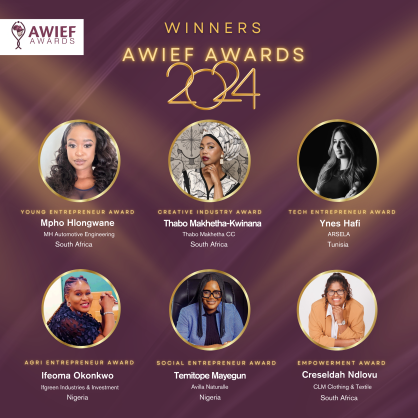
The 2024 AWIEF (www.AWIEForum.org) Awards celebrated the exceptional achievements of African women entrepreneurs on Friday night at the Cape Town International Convention Centre (CTICC). The glamorous awards ceremony honored six outstanding winners, selected from a distinguished group of 18 finalists, while also honouring Dr. Naledi Pandor, Former Minister of International Relations and Cooperation of South Africa, with the Lifetime Leadership Award.

Celebrating Excellence in African Entrepreneurship

This year's finalists and winners showcased the remarkable talent and ingenuity of African women entrepreneurs who are creating opportunities, driving economic growth, and transforming communities across the continent. Representing South Africa, Tunisia, and Nigeria, the finalists span diverse industries, highlighting the breadth of innovation and leadership among women across Africa.

The AWIEF Awards 2024 ceremony was the culmination of the AWIEF2024 Conference, a two-day event that brought together over 500 delegates from more than 50 countries. This dynamic conference served as a powerful platform for collaboration, knowledge-sharing, and celebrating the transformative achievements of women entrepreneurs shaping Africa's future.

Honoring a Legacy of Leadership

The evening's highlight was the presentation of the Lifetime Leadership Award to Dr. Naledi Pandor for her Legacy of Leadership and Impact. Dr. Pandor's illustrious career spans decades, during which she played a pivotal role in shaping South Africa's domestic and international policies. As Minister of International Relations and Cooperation (2019–2024), she championed South Africa's global influence, advancing diplomacy, peace-building, and international cooperation. Her visionary leadership continues to inspire generations across Africa and beyond.

The Winners of AWIEF Awards 2024

The following women were celebrated for their outstanding contributions and achievements in their respective categories:

YOUNG ENTREPRENEUR AWARD
Mpho Hlongwane – MH Automotive Engineering (South Africa)

AGRI ENTREPRENEUR AWARD
Ifeoma Okonkwo – Ifgreen Industries & Investment (Nigeria)

CREATIVE INDUSTRY AWARD
Thabo Makhetha-Kwinana – Thabo Makhetha CC (South Africa)

EMPOWERMENT AWARD
Creseldah Cassandra Ndlovu – CLM Clothing & Textile (South Africa)

TECH ENTREPRENEUR AWARD
Ynes Hafi – ARSELA (Tunisia)

SOCIAL ENTREPRENEUR AWARD
Temitope Mayegun – Avilla Naturelle (Nigeria)

A Platform for Women's Empowerment

The AWIEF Awards continue to shine a spotlight on the achievements of African women entrepreneurs, celebrating their innovative spirit and their significant contributions to sustainable development and economic growth across the continent.

For more information on the AWIEF Awards and Conference, as well as details about the finalists and winners, visit www.AWIEForum.org.

Distributed by APO Group on behalf of Africa Women Innovation and Entrepreneurship Forum (AWIEF).

Media files
Africa Women Innovation and Entrepreneurship Forum (AWIEF)
Download logo
Read moreDr. Naledi Pandor Receives Inaugural Lifetime Leadership Award
2 December 2024

BMA outlines plans to secure SA’s ports of entry this festive season

Location: News

BMA outlines plans to secure SA’s ports of entry this festive season

The Border Management Authority (BMA) unveiled its festive season plan, spanning from December 2024 to January 2025, aimed at managing increased border activities. 

South Africa faces complex border-related challenges, including illegal immigration, cross-border crimes, and smuggling of illicit goods.

Key interventions by the BMA this festive season include extending operating hours at major ports of entry over the festive season, deploying 69 additional personnel, and collaborating with Interpol and local law enforcement authorities. 

BMA Commissioner, Dr Michael Masiapato, said the agency anticipates facilitating over six million people, a recovery to pre-COVID-19 pandemic levels.

“Our focus will be the delivery of integrated, effective and efficient processes at the ports of entry, where only legitimate people and goods will be allowed to enter and exit South Africa,” he told the media on Monday. 

To achieve this, Masiapato announced that ports of entry and the vulnerable segments of the borderline will be adequately guarded to intercept any transgressor. 

In addition, he stated that the agency has intensified measures to detect and seize illicit goods, such as narcotics and stolen vehicles. 

As Operation Vala Umgodi proceeds to combat illegal mining activities, Masiapato stated that border guards remain vigilant and prepared to intercept illegal miners who have been deported and prevent them from attempting to illegally re-enter South Africa.

“We, therefore, want to warn all travellers to desist from committing any act of criminality around the ports of entry and at the border law enforcement areas, as they will be detected, arrested, and then deported.” 

In response to the persistent issues of food contamination and following President Cyril Ramaphosa’s directives to combat the problem, the BMA has issued operational instructions to all ports of entry.

This directive aims to intensify efforts to detect and intercept any illegal attempts to import organophosphate pesticides, specifically aldicarb, which is banned in South Africa, and terbufos, which has been linked to the deaths of six children in Naledi, Soweto.

“As such, the handling protocols have been given to our biosecurity experts for implementation across all ports of entry,” Masiapato said.

The BMA facilitates the legitimate movement of people and goods through 71 ports of entry, including 52 land ports, 10 international airports, and nine seaports.

The top 10 ports of entry facilitating the most people include key international airports and land ports to neighbouring countries.

These include the OR Tambo International Airport in Gauteng, Beitbridge land port to Zimbabwe, Lebombo land port to Mozambique, Caledonspoort, Ficksburg and Maseru Bridge land ports to Lesotho, Cape Town International Airport in the Western Cape, Oshoek land port to Eswatini, as well as Kopfontein, and Groblers’ Bridge land port to Botswana. 

The Commissioner emphasised the need for a robust and integrated border management platform to protect national security, economic growth, and regional economic integration. 

“During the return leg in January 2025, we would like to send a stern warning to all individuals who might be planning to try to enter South Africa illegally: border guards, working together with members of the SANDF [South African National Defence Force], will be waiting for them.” 

While waiting for the arrival of drones, the Commissioner announced a partnership with the Department of Agriculture, Land Reform and Rural Development. 

This collaboration will involve the deployment of drones to improve border security and enhance situational awareness, particularly in vulnerable areas such as ports and corridors.

Masiapato said the drone operations will be supported by mobile reaction units to allow for quick reaction and apprehension of illegal immigrants and other cross-border criminals. 

Shifting his focus to Mpox, he noted that South Africa’s risk classification is currently moderate. 

However, Masiapato warned travellers to avoid close contact with individuals showing symptoms, such as skin lesions or muscle aches.

“Currently, there is no Mpox vaccine in South Africa, therefore, travellers are encouraged to remain vigilant against Mpox disease.” – SAnews.gov.za

Gabisile
Mon, 12/02/2024 - 13:34

41 views
Read moreBMA outlines plans to secure SA’s ports of entry this festive season
2 December 2024

Afrobarometer Connects Early-Career Researchers With Established Scholars to Build Analytical Capacity in Africa

Location: News
Afrobarometer

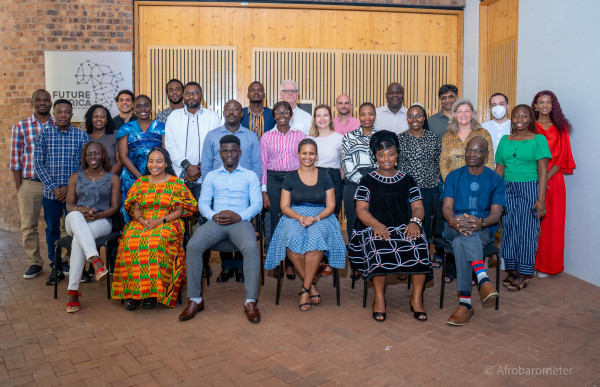
Afrobarometer (www.Afrobarometer.org) held its inaugural Emerging Scholars Workshop in November, bringing together early-career researchers and established scholars to enhance analytical skills and support the next generation of African researchers. This initiative aligns with Afrobarometer's objective of strengthening the continent's research ecosystem.

The workshop, held at the University of Pretoria's Future Africa campus, brought together 12 emerging scholars – half of them women – representing nine countries: Botswana, Benin, Cameroon, Ghana, Kenya, Malawi, Nigeria, South Africa, and Uganda.

Participants presented research papers covering diverse topics, received feedback from their mentors and peers, and engaged in professional development sessions designed to propel their academic and professional growth.

According to Jason Owen, Afrobarometer capacity building manager (advanced track), the workshop is in line with Afrobarometer's commitment to providing professional development opportunities for young African researchers.

“The emerging scholars that attended the workshop received detailed comments on their research from a panel of experienced academic mentors and peers,” he said. “The aim was to sharpen their analytical skills and to enable them to publish high-quality research using Afrobarometer data. We hope this type of workshop will foster a growing research and mentoring network that helps to build analytical capacity across Africa.”

The workshop also facilitated networking and collaboration. Nicole Beardsworth, a lecturer at the University of the Witwatersrand, highlighted the value of such gatherings. “PhD journeys can be isolating and lonely, but opportunities like the Afrobarometer Emerging Scholars Workshop provide a window for young scholars from around the continent to meet each other, find commonalities, forge collaborations, and create community,” she said.

A section of participants also noted that the workshop provided them with a transformative platform to engage with established academics, gain constructive feedback, enhance research skills, and build professional networks critical for advancing their academic and career aspirations.

“I was attracted to this workshop because it provides a unique opportunity to engage with seasoned scholars, participate in sophisticated research discussions, and develop essential skills for my professional growth,” said Mbiydzenyuy Courage Sevidzem from the University of Bamenda in Cameroon.

Over the past two and half decades, Afrobarometer has trained hundreds of young researchers, civil society activists, journalists, and parliamentarians through several capacity- building initiatives, including French- and English-language summer schools, thematic workshops, mentorships, university outreach initiatives, and staff development fellowships.

Distributed by APO Group on behalf of Afrobarometer.

For more information, please contact:
Daniel Iberi
Communications coordinator for East Africa
Email: diberi@afrobarometer.org
Telephone: +254 725 6744 57
Visit us online at www.Afrobarometer.org.

Follow us:
Facebook: Afrobarometer
Twitter: @ Afrobarometer
YouTube: @ Afrobarometer
Follow our releases on #VoicesAfrica. 

About Afrobarometer:
Afrobarometer (AB) is a trusted source of high-quality data and analysis on what Africans are thinking. With an unmatched track record of 388,000+ interviews in 42 countries, representing the views of 80% of the African population, AB is leading the charge to bridge the continent's data gap. AB data inform many global indices, such as the Ibrahim Index of African Governance, Transparency International's Global Corruption Barometer, and the World Bank's Worldwide Governance Indicators. The data are also used for country risk analyses and by credit rating and forecasting agencies such as the Economist Intelligence Unit. All AB data sets are publicly available on the website (www.Afrobarometer.org) and may be analysed free of charge using AB's online data analysis tool (https://apo-opa.co/3Vf0pB6).

Media files
Afrobarometer
Download logo
Read moreAfrobarometer Connects Early-Career Researchers With Established Scholars to Build Analytical Capacity in Africa
2 December 2024

Coetzee Ruled Out of Second Test Against Sri Lanka and Pakistan Tour Maphaka Added to Squad

Location: Sport

DURBAN: Proteas Men’s fast bowler Gerald Coetzee has been ruled out of the second Test against Sri Lanka and the upcoming...

Read moreCoetzee Ruled Out of Second Test Against Sri Lanka and Pakistan Tour Maphaka Added to Squad
2 December 2024

CSA Appoints Proteas Women’s Team Head Coach

Location: Sport

JOHANNESBURG: Cricket South Africa (CSA) has appointed Mandla Mashimbyi as the new Head Coach of the Proteas Women’s Team. With...

Read moreCSA Appoints Proteas Women’s Team Head Coach
1 December 2024

President notes settlement agreement with Solidarity on BELA Act

Location: News

President notes settlement agreement with Solidarity on BELA Act

President Cyril Ramaphosa has noted the settlement agreement between the Minister of Basic Education Siviwe Gwarube and the Solidarity union on the Basic Education Laws Amendment (BELA) Act.

The BELA Bill was passed by the 6th democratic Parliament on 26 October 2023. The President assented to the Bill on 13 September 2024. 

During the public signing of the Bill, President Ramaphosa announced his decision to delay the implementation date for sections 4 and 5 by three months. 

“The decision was to afford parties time to deliberate on the issues of admission and language policy contained in the two sections and to submit proposals on how the disputed elements in the sections will be resolved,” the Presidency said on Sunday.

On 28 November 2024, the Minister of Basic Education announced that she had signed an agreement with Solidarity on the exercise of her powers and responsibilities on the implementation of the BELA Act. 

“It is worth noting that Solidarity is just one among many interested parties in the matter. The agreement between the Minister and Solidarity has no bearing – in law or practical effect – on the inclusive multiparty discussions that are underway on sections 4 and 5 of the Act. 

“Furthermore, the agreement bears no influence on the President’s powers to ultimately take a decision regarding the commencement of the Act.

“President Ramaphosa reiterates his commitment to the undertaking he made when he signed the Bill on 13 September 2024 to give the parties three months to submit proposals on sections 4 and 5. The President therefore awaits the outcome of those deliberations,” the Presidency said. 

The BELA Act amends sections of the South African Schools Act of 1996 (SASA) and the Employment of Educators Act, 1998 (EEA) to account for developments in the education landscape since the enactment of the original legislation.

Since the advent of democracy, government has made notable progress in expanding access to education for the children of the country, however, barriers to access still remain.

The Act seeks to address these challenges and is part of the state’s ongoing efforts to build an education system that is more effective and more equitable. 

As part of advancing diversity and inclusion, the new legislation addresses the issue of language policy. Schools have to consider the broader linguistic needs of the communities in which they are situated.

“It must be noted that the BELA Act was duly passed by Parliament and assented to by the President. It is now law. The Minister of Basic Education is enjoined to work towards its implementation, sections 4 and 5 aside. 

“The next step is for the President to determine the date of commencement and for the necessary regulations to be finalised. This will be done without undue delay,” the Presidency said. -SAnews.gov.za

nosihle
Sun, 12/01/2024 - 11:08

443 views
Read morePresident notes settlement agreement with Solidarity on BELA Act
1 December 2024

Weather service warns of heatwave

Location: News

Weather service warns of heatwave

The South African Weather Service (SAWS) has warned of a heatwave over the central and south-eastern parts of the North West and the northern parts of the Free State next week until Wednesday.

These conditions will also be experienced in the north-western parts of Kwazulu-Natal, north-eastern parts of the North West, Gauteng, Limpopo and Mpumalanga until at least Friday.

There is a specific criterion that the South African Weather Service applies to each town or city in order to determine whether heat wave conditions are met or not.

According to the weather service, if the maximum temperature at a particular town is expected to meet or exceed 5 degrees C above the average maximum temperature of “the hottest month” for that particular place, as well as persisting in that mode for three days or more, then a heat wave may be declared.

The following safety tips can be used during a heatwave:

  • Stay indoors in a well-ventilated or air-conditioned room.
  • If working outside, wear protective clothing and take breaks at regular intervals.
  • Avoid playing strenuous sports or engaging in excessive manual labour, as one runs the risk of heat exhaustion or sunstroke.
  • Dress in cool, lightweight clothes which are not constricting.
  • The wearing of hats (preferably with a wide brim) as well as the generous application of sunblock should be encouraged if one is outdoors for any length of time.
  • Remain adequately hydrated by drinking plenty of liquids.
  • Outside playtime for children should ideally be restricted or prohibited between 10:00 and 16:00.
  • The aged as well as infants are particularly vulnerable to dehydration and/or heatstroke and should be afforded extra care and attention during prolonged spells of hot weather. -SAnews.gov.za


nosihle
Sun, 12/01/2024 - 15:25

85 views
Read moreWeather service warns of heatwave
1 December 2024

Journalists called to tell positive African stories

Location: News

Journalists called to tell positive African stories

While the continent faces many challenges, South African award-winning journalist, Benjamin Moshatama, has emphasised the importance of telling positive stories that reflect the progress and development in Africa.

With his story on the importance of shared water resources in the Southern African Development Community (SADC) regional integration and development and the contribution of the Kingdom of Lesotho in the management of shared water resources, Moshatama won second prize in the Radio Category at the SADC Media Awards Competition.

“I was inspired to do the story because it’s a positive African story. At times when we look at Africa, we focus on the obvious trying story. Of course, as journalists we should look at the stories about the challenges on the continent, but the narrative cannot be one dimensional.

“It has to be multi-dimensional. Africa is a complex place. There are positive things happening on the continent and a lot of progress is being made, that is why it was important to tell the story,” the journalist from Channel Africa Radio told SAnews on Friday.

The SADC Media Awards are aimed at promoting excellence in the fields of Print Journalism, Radio Journalism, Television Journalism and Photojournalism. 

They serve as a link for coordination and synchronisation between the formal structures of SADC member states and media. They further seek to bring and enhance a partnership between the media and government institutions.

The SADC Media Awards present a unique opportunity for the SADC region’s journalists to be celebrated and recognised by their peers.

“I am a very proud South African so to compete on a regional level was important for me to lift the flag of South Africa high in terms of our media representation and it’s important for us to shine a light on narratives showing the cooperative governance structures that are in the region,” he said.

Two South African journalists won in the Radio and Photo category respectively. 

Fikile Necter Marakalla was the second prize winner in the Photo Category with her pictures that were published in SAnews and The Diplomatic Informer. 

Marakalla’s winning entry highlighted the strong fraternal, historical as well as social relations between South Africa and the United Republic of Tanzania during the State visit of her Excellency Dr Samia Suluhu Hassan.

Marakalla started working at the Government Communication and Information Systems (GCIS) as an intern in 2022 on a two-year contract and when it ended in March this year, she took up a position in the office of the Deputy President as a photographer.

“It’s an honour to be recognised for the work that I did so early in my career. I am looking forward to serving the public through my work, which captures government’s work and the programmes that are aimed improving the lives of South Africans,” she said.

South Africa’s participation in SADC is guided by the SADC Treaty. The SADC Treaty guides all Member States within the regional bloc.

The Treaty encourages the people of the region and their institutions to take initiatives to develop economic, social and cultural ties.

The GCIS is responsible for the implementation of the annual Southern African Development Community (SADC) Media Awards on behalf of South Africa.

Deputy Minister in The Presidency Kenneth Morolong encouraged media practitioners to share stories on the economic wellbeing of the continent, improvement of the standard of living and the improvement of quality of life, peace and security, freedom and social justice and economic progress.

“These awards are a testament to the power of hope in driving further success of SADC. We have a lot going for us as a region and we remain one of the most stable regions in Africa. The potential for our region is enormous,” Morolong said. 

He was addressing the SADC Media Awards Dinner. -SANews.gov.za


nosihle
Sun, 12/01/2024 - 14:37

126 views
Read moreJournalists called to tell positive African stories
1 December 2024

President pays tribute to MTN

Location: News

President pays tribute to MTN

President Cyril Ramaphosa has paid tribute to telecommunications provider MTN for transforming the lives of millions of people in the country and across the continent of Africa.

“In countries like South Africa, MTN has sought to ensure that no one is left behind. Its network reaches some 97% of the population, providing a foundation for digital inclusion and economic empowerment,” the President said on Friday in Johannesburg.

Addressing MTN’s 30 years celebration gala dinner, President Ramaphosa said over the past three decades, MTN has evolved from a small South African start-up of 20 employees into a global telecommunications leader which now employs over 17 500 individuals representing more than 70 nationalities across 18 diverse markets.

“The mobile sector in Sub-Saharan Africa generated more than US$140 billion of economic value last year. MTN is a big part of this growth story.

“The group provides voice, data, fintech, digital, enterprise, wholesale and API services to 288 million customers in 18 markets. MTN Mobile Money provides over 65 million individuals with access to financial services, driving financial inclusion and economic empowerment in underserved communities,” the President said.

He acknowledged the telecommunications industry for helped to democratise public goods and services. 

“It has enabled the provision of financial, health, education, social welfare and other service to the most far-flung areas. At the time of the transition towards democracy in the early 1990s, South Africa was among the most connected nations on the continent with over 3 million landlines.

“Yet, as in almost every other area of life, access to telephony was severely unequal. At the time, there were 60 telephone lines for every 100 white people. There was only one line for every 100 black people. 

“In these circumstances, it took visionaries like the late Dr Nthato Motlana and Zwelakhe Sisulu to see the potential of mobile technology to close this gap,” the President said.

South Africa cellphone companies reached a million subscribers within two years.

“This spectacular growth was spurred by innovations such as prepaid, which South Africa was to introduce to the global community. It was in this early period that the foundation for MTN’s unique culture was laid. 

“It is a culture that is characterised by resilience, adaptability and a relentless drive to succeed. MTN’s many employees are united by a shared belief in the transformative power of technology. 

“Distance is no longer the impediment it had once been. Services can be delivered more cheaply and more reliably. Very soon after its introduction, the cellphone became an important tool for social cohesion,” the President said.

He said the cellphone helped to strengthen bonds between communities, family members and friends.

“This new frontier of economic and social transformation has, in the main, been driven by the youth of our continent. The industry is a case study of how young Africans can drive innovation and growth. On this anniversary, we salute the early pioneers and all those who have since been at the forefront of leading Africa’s digital progress,” the President said.

He said MTN has consistently encouraged and supported government’s efforts to strengthen trade and investment ties with other countries.

“It has been generous in sharing its experiences and insights of different markets. As MTN looks to its future, we are certain that it will make use of the great opportunities presented by the African Continental Free Trade Area.

“There are few companies in South Africa that know the African continent better than MTN. We trust that it will forge a path that many others can follow.

“As we work to improve the lives of the people of South Africa, we know that we can rely on the ingenuity, the industry and the commitment of the MTN team to support these efforts. As we look to a future of peace, prosperity and hope, we should embrace the MTN clarion call of ‘doing for tomorrow, today,” the President said. - SAnews.gov.za

nosihle
Sun, 12/01/2024 - 15:02

27 views
Read morePresident pays tribute to MTN
  • Previous
  • Page 1
  • Interim pages omitted …
  • Page 85
  • Page 86
  • Page 87
  • Page 88
  • Page 89
  • Interim pages omitted …
  • Page 264
  • Next

Copyright © 2026 · MyZA · All Rights Reserved · Powered by Stratlec Online