• Skip to main content
  • Skip to header right navigation
  • Skip to after header navigation
  • Skip to site footer
MyZA

MyZA

News, Directory, Events and Other Stuff

  • Social Media
  • Sport
  • World News
  • Home
  • Submit News
  • Directory
  • Events
  • Stratlec
  • TFSA
  • News
    • APO
    • Today’s Sport News
    • Todays Social Media and Tech Headlines
    • Today’s World News
    • Today’s SA Financial News
  • Contact
You are here: Home / Archives for African

African

27 November 2024

Matrics urged to celebrate safely

Location: News

Matrics urged to celebrate safely

The Western Cape Provincial Government has urged matrics to celebrate the end of their school career responsibly and safely, as the final matric exams are being written today. 

The final matric exams for the Class of 2024 will be written today, bringing to an end the five-week exam period. 

The final exams to be written are Agricultural Management Practices, Marine Sciences Paper 2, and Design Paper 1. 

“We thank the public for the support they have shown to our matrics during this period. This support has helped us to ensure that all candidates had an opportunity to write their exams, even in difficult circumstances. 

“With the exams completed, a number of learners will be attending formal matric rage events and smaller end-of-exams parties. It is understandable that our matrics would like to celebrate the end of their school career, but we urge them to do so responsibly and safely,” Western Cape Education MEC, David Maynier, said. 

The MEC urged all matrics attending these and other smaller events to:

  • Familiarise themselves with the safety measures at the event itself, and the relevant local emergency phone numbers.
  • Keep a close eye on their valuables at all times.
  • Keep a close eye on their beverages at all times, and not leave them unattended;
  • Report anything suspicious to the South African Police Service or event organisers immediately. 
  • Avoid drinking and driving.
  • Set up a buddy system for their own safety, as well as keep in regular contact with their parents. 

“We encourage parents to ensure that their children understand the risks involved in any event or party, and to ensure that they have made arrangements to stay in contact with their children and know what to do in an emergency,” Maynier said.

The national matric results announcement has been moved to Monday, 13 January 2025, in order to accommodate the first day of school. 

Individual candidate results will be released at schools and on the Western Cape Education Department website from 10h00 on Tuesday, 14 January 2025. 

“We look forward to celebrating with all our matrics when the results are released next year,” Maynier said. – SAnews.gov.za 


DikelediM
Wed, 11/27/2024 - 10:22
31 views
Read moreMatrics urged to celebrate safely
27 November 2024

Police foil kidnapping attempt, arrest nine suspects

Location: News

Police foil kidnapping attempt, arrest nine suspects

Police have foiled a kidnapping attempt and arrested nine suspects in Ivory Park on Tuesday.

Three firearms and a vehicle used during the commission of the crime were also seized.

Another suspect was fatally wounded during a shootout with the police.

According to a preliminary report, a team comprising members of the South African Police Service (SAPS) Anti-Kidnapping Unit, various law enforcement units and private security companies, operationalised information on an attempt to kidnap a businessman based in Benoni, Gauteng.

The syndicate was successfully intercepted. 

One suspect attempted to evade arrest. He fired gunshots at the SAPS members, who retaliated and fatally wounded the suspect. Nine suspects were ultimately apprehended.

Further investigation revealed that the three seized firearms and the suspects' vehicle are positively linked to other criminal cases.

The deceased suspect had recently been released from prison. – SAnewa.gov.za


Edwin
Wed, 11/27/2024 - 09:51

14 views
Read morePolice foil kidnapping attempt, arrest nine suspects
26 November 2024

Dancers With Disabilities Take Centre Stage at International Festival

Location: News

Organised by the Sibikwa Arts Centre, BODY MOVES features dancers from South Africa and the UK

Read moreDancers With Disabilities Take Centre Stage at International Festival
26 November 2024

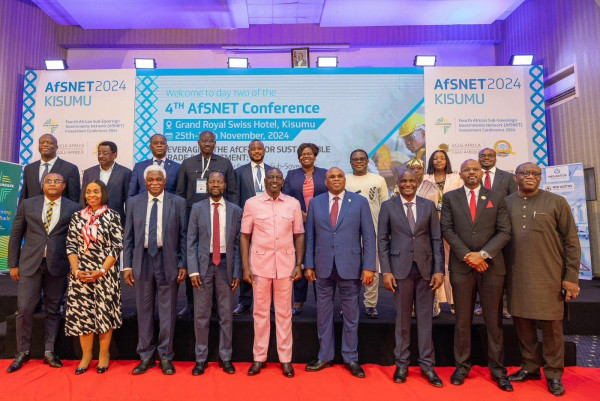
African Sub-Sovereign Government Leaders and Businesses Meet in Kisumu City, Kenya to Discuss Inclusive Growth, Trade Decentralization and Investment Opportunities

Location: News
Afreximbank

Over 250 Sub-Sovereign government leaders from across Africa are today meeting in Kisumu, Kenya, for the the fourth edition of the African Sub-Sovereign Governments Network (AfSNET) Conference. Taking place between the 25th and 27th of November, the event provides a platform for Sub-Sovereign leaders and businesses to discuss how their local governments can attract investments in the region in order foster and accelerate inclusive growth and development.

Organised by African Export-Import Bank (Afreximbank), in collaboration with the County Government of Kisumu and the United Cities and Local Governments of Africa (UCLG Africa), the conference's overarching theme is ‘Leveraging the AfCFTA for Sustainable Trade and Investment: A Development Pathway for African Sub-Sovereigns'. The event's main objectives include strengthening the role of Africa's Sub-Sovereign governments in driving intra-African trade and investment, and the successful implementation of the African Continental Free Trade Area (AfCFTA).

Africa's Sub-Sovereign governments, comprising states, counties, provinces, municipalities and regional authorities, play a critical role in economic development of African countries. According to the African Union, Africa's economic outlook is projected at 3.7% GDP growth in 2024, slightly higher than the global average of 3.2%. This growth elevates the integral role of Sub Sovereign governments for African economies and its people.

Understanding this, Afreximbank has committed USD $2 billion for these critical actors, to support these governments and businesses in African countries.

While delivering his keynote address at the AfSNET conference in Kisumu, Kenya, H. E. Dr. William Ruto, President of the Republic of Kenya acknowledged the Bank's support for African governments including Kenya:

“I want to thank Professor Benedict Oramah for making time to join us for this conference. Your presence here is yet another example of the unique approaches that the Bank, under your leadership, employs in order to deepen its footprint by engaging with shareholders throughout the continent, including sub-national entities like Africities, and devolved governments like Kisumu. Afreximbank has consistently demonstrated innovative approaches in advancing credit to African governments and the public sector while facilitating deeper collaboration among sub-Saharan nations and Kenya is an example. This spirit of innovation aligns seamlessly with the aspirations of the African Continental Free Trade Area, creating a dynamic network of ambitious, future ready institutions and governments. Such collaborations will drive transformative engagements at the grassroots level, enabling Africa to achieve an unparalleled position in the global value chains and make substantial contributions to their bottom-up transformation.”

Speaking on the importance of the conference, President Ruto noted: “By promoting peer to peer learning, this forum strengthens cooperation among Sub-Sovereign governments. And devolution, a tremendous innovation established under Kenya's 2010 constitution, has evolved into an exemplary success story that Kenyans are very proud of, as it has brought services closer to the people, empowered grassroot participation in government, safeguarded minority rights and enhanced equity in resource mobilization and allocation.”

Professor Benedict Oramah, President and Chairman of the Board of Directors of Afreximbank, commented:

“The African Sub-Sovereign Governments Network (AfSNET) initiative thrives due to the concerted efforts and unwavering commitment of partners who recognise the tremendous potential of sub-sovereign governments as the engines for broad-based economic development that extends to the grassroots of our societies. At Afreximbank, we strongly believe that for developmental initiatives to succeed in our economies, they must, of necessity, be decentralized; development needs must originate and flow from the periphery towards the centre. In alignment with the African Continental Free Trade Agreement (AfCFTA), we are passionately implementing the AfSNET initiative to promote intra-regional trade and investment. We collectively recognize that cities, states, and provinces within a nation exhibit remarkable diversity—differing in population sizes, resource endowments, skill sets, and sectoral specializations.”

Professor Oramah continued that this conference is a key prelude to the upcoming Intra Africa Trade Fair (IATF2025) scheduled to take place from 4 to 10 September 2025 in Algiers, Algeria, and delegates are welcomed to contribute to the discourse that can be elevated at the IATF2025.

AfSNET was established by Afreximbank as a platform for promoting intra-African trade and investment, educational and cultural exchanges and the fostering of effective engagement among sub-sovereigns in Africa's development and prosperity in the context of the AfCFTA.

Distributed by APO Group on behalf of Afreximbank.

Media Contact:
Vincent Musumba
Communications and Events Manager (Media Relations)
Email: press@afreximbank.com

Follow us on:
Twitter: http://apo-opa.co/3Z521i8
Facebook: http://apo-opa.co/4eNjNMs
LinkedIn: http://apo-opa.co/4eJyWyh
Instagram: http://apo-opa.co/4eNjO2Y

About Afreximbank:
African Export-Import Bank (Afreximbank) is a Pan-African multilateral financial institution mandated to finance and promote intra-and extra-African trade. For 30 years, the Bank has been deploying innovative structures to deliver financing solutions that support the transformation of the structure of Africa's trade, accelerating industrialization and intra-regional trade, thereby boosting economic expansion in Africa. A stalwart supporter of the African Continental Free Trade Agreement (AfCFTA), Afreximbank has launched a Pan-African Payment and Settlement System (PAPSS) that was adopted by the African Union (AU) as the payment and settlement platform to underpin the implementation of the AfCFTA. Working with the AfCFTA Secretariat and the AU, the Bank is setting up a US$10 billion Adjustment Fund to support countries effectively participating in the AfCFTA. At the end of December 2023, Afreximbank's total assets and guarantees stood at over US$37.3 billion, and its shareholder funds amounted to US$6.1 billion. Afreximbank has investment grade ratings assigned by GCR (international scale) (A), Moody's (Baa1), Japan Credit Rating Agency (JCR) (A-) and Fitch (BBB). Afreximbank has evolved into a group entity comprising the Bank, its impact fund subsidiary called the Fund for Export Development Africa (FEDA), and its insurance management subsidiary, AfrexInsure (together, "the Group"). The Bank is headquartered in Cairo, Egypt.

For more information, visit: www.Afreximbank.com

About UCLG Africa (UCLG Africa (United Cities and Local Governments of Africa):
The umbrella organization for African local governments, was founded in 2005 in the City of Tshwane, South Africa as a result of the unification of three continental groups of local governments, namely the African Union of Local Authorities (AULA); the Union des Villes Africaines (UVA); and the Africa Chapter of the União das Ciudades e Capitães Lusófonas Africanas, (UCCL AFRICA). The founding congress of the organization was held in May 2005 in the city of Tshwane, South Africa. UCLG Africa brings together 51 national associations of local and regional governments from all regions of Africa, as well as 2,000 cities with more than 100,000 inhabitants. UCLG Africa represents over 350 million African citizens. A founding member of the world organization UCLG, UCLG Africa is the regional representative for Africa with its headquarters based in Rabat, capital of the Kingdom of Morocco, where it enjoys diplomatic status as a Pan-African International Organization. It also has regional offices on the continent.

Media files
Afreximbank
Download logo
Read moreAfrican Sub-Sovereign Government Leaders and Businesses Meet in Kisumu City, Kenya to Discuss Inclusive Growth, Trade Decentralization and Investment Opportunities
26 November 2024

Technology can be used as a tool for change, protection, empowerment

Location: News

Technology can be used as a tool for change, protection, empowerment

While the rise of the digital economy and use of technology have introduced new avenues for perpetrators to harm and abuse women and children, Deputy President Paul Mashatile says the same technology can be used as a tool for change, protection and empowerment.

Speaking at the national launch of 16 Days of Activism for No Violence Against Women and Children campaign, in Rustenberg in the North West on Monday, the Deputy President called for further collaboration to harness technology and innovation to combat gender-based violence (GBVF) and accelerate a gender-inclusive digital economy.

He called for zero tolerance toward gendered violence in online and digital spaces, noting that the increase in the use of technology in peoples’ daily lives has introduced new avenues for perpetrators to harm, exploit, and abuse women and children.

The Deputy President said digital spaces can become breeding grounds for violence, from cyberbullying and online harassment to the dangers posed by social media platforms.

However, citizens can also harness the same technology as a tool for change, protection and empowerment.

“From using mobile apps that provide immediate support to victims and survivors to artificial intelligence that can help us understand and curb the pandemic, the potential is vast. Mobile apps, [including] helplines, and emergency response systems provide a direct link to safety, offering quick access to shelters, medical care and legal assistance.

“In South Africa, initiatives such as the GBV Command Centre - a 24/7 digital and telephonic support service - have proven instrumental in helping victims and survivors. We must leverage these advancements to enhance our prevention strategies, improve our response mechanisms, and ensure that no one is left behind,” he said.

The Deputy President said the internet should be used as a place where everyone can feel safe and respected.

“Access to technology and digital skills can open new economic opportunities, enabling financial independence and resilience. As we embark on these 16 Days of Activism for no Violence Against Women and Children, let us harness the power of technology and innovation to drive systemic change.

“Let us not forget that technology can be a force for good. It has the potential to save lives, connect victims and survivors to support, and hold perpetrators accountable in ways that were previously unimaginable,” Deput President Mashatile said.

Observed annually from 25 November to 10 December, the 16 Days of Activism campaign calls upon every individual to take a stand against the injustices that continue to plague society.

During the campaign period, the country raises voices to draw attention to the persistent violence against women and children.

The Deputy President said a full year of action is required to combat the scourge, not just during these 16 days.

This year's campaign, observed under the theme: “30 Years of Advancing Collective Action to End Violence Against Women and Children”, serves as a reminder of the progress made by the country and the work that still lies ahead.

The Deputy President acknowledged that society has for many years been grappling with the issue of gender-based violence and femicide, which includes the high rate of rape, femicide, and domestic abuse, and the fight is still not over.

Both Statistics South Africa (StatsSA) and the Human Science and Research Council (HSRC) have reported concerning statistics on GBV in South Africa.

StatsSA has revealed that one in three women aged 16 and older has experienced physical violence, while one in five has been sexually abused.

The first-ever national Gender-Based Violence survey conducted by HSRC in 2022, also revealed that over 33% of South African women have experienced physical violence in their lifetime, while 9.8% have faced sexual violence.  The study showed that approximately 7.3 million women have experienced physical abuse, while 2.1 million have experienced sexual violations.

Mashatile said government was committed to taking the findings of the surveys seriously and would integrate them into the work of government.

He said the findings will feed directly into the National Strategic Plan on Gender-Based Violence and Femicide (NSP on GBVF), which provides the roadmap for government's national response. – SAnews.gov.za

GabiK
Mon, 11/25/2024 - 15:24

375 views
Read moreTechnology can be used as a tool for change, protection, empowerment
26 November 2024

President to celebrate Olympian, Paralympian medallists

Location: News

President to celebrate Olympian, Paralympian medallists

Athletes who successfully represented South Africa at the Paris 2024 Olympic and Paralympic Games will be celebrated at an event hosted by President Cyril Ramaphosa on Friday.

The President will lead the celebration at a ceremony at the Union Buildings.

“The ceremony will recognise the excellence demonstrated by top athletes as well as the organisational effort by the South African Sports Confederation and Olympic Committee to prepare Team South Africa for the Games.

“Team South Africa featured 147 athletes at the Paris Olympics Games, which took place from 26 July to 11 August 2024, and 32 athletes at the Paris Summer Paralympics Games from 28 August to 08 September 2024,” said the Presidency.

A total of 12 medals were achieved for the respective games. Six each for the Olympics - one gold, three silver and two bronze - and Paralympics - two gold, and four bronze.

The appreciation ceremony will include the conferring of awards to deserving athletes and their coaches as well as the Shield of Jove, which is the highest South African recognition in sports achievement following the Olympic and Paralympic Games. – SAnews.gov.za


Janine
Tue, 11/26/2024 - 12:43

105 views
Read morePresident to celebrate Olympian, Paralympian medallists
26 November 2024

Reduction in some crime categories

Location: News

Reduction in some crime categories

The South African Police Service (SAPS) has recorded a downward trend in some categories of crime, including murder, robbery and carjacking.

From 1 July to 30 September 2024, the 17 community-reported serious crimes showed an overall decline of 5.1%. Specifically, contact crime decreased by 3%, property-related crime saw a reduction of 9.9%, and other serious crime decreased by 3.4%. 

“Focusing on contact crime, the statistics indicate that murder decreased by 5.8%, sexual offenses by 2.5%, and robbery with aggravating circumstances by 8,8%.

“Additionally, rape decreased by 3.1%, while robbery at residential premises and non-residential premises decreased by 1.3% and 21.1%, respectively. 

“Among the 17 community-reported crime categories monitored, the only increases were observed in attempted murder, assault GBH [grievous bodily harm] and commercial crime, which rose by 2.2%, 1% and 18.5% respectively,” said Police Minister Senzo Mchunu during the release of the Quarterly Crime Statistics and Reflection on 100 Days in office at the SAPS Gauteng head office on Monday.

The Minister said Operation Shanela has proven highly successful, leading to 262 396 arrests, 7 549 high-density operations, and over eight million actions executed. 

Public Order Policing achievements in the second quarter of 2024/25 include 2 756 arrests, with seizures of counterfeit goods worth R22.2 million, 93 firearms, and 846 rounds of ammunition. 

Border Policing efforts resulted in 6 610 arrests and significant confiscations, including drugs worth R498 million, firearms, explosives, and stolen vehicles valued at R66.9 million. 

Mchunu said there is a need for close collaboration between the SAPS, the Justice cluster, National Prosecuting Authority and Home Affairs to make Operation Shanela more effective in relation to different crimes and criminals. 

“We are also currently consolidating Operation Shanela and will make our plans known in due course,” the Minister said. – SAnews.gov.za

Matona
Tue, 11/26/2024 - 13:24

3 views
Read moreReduction in some crime categories
26 November 2024

SA to mark World Aids Day

Location: News

SA to mark World Aids Day

Deputy President Paul Mashatile, in his capacity as the Chairperson of the South African National Aids Council (SANAC), will on Sunday lead the official commemoration of World Aids Day in East London.

World Aids Day is commemorated annually across the globe in solidarity with the millions of people living with HIV as well as to raise awareness about the status of the epidemic, with a view to encourage HIV prevention, treatment, and care.

The 2024 theme: “Equal Rights, Equal Care” is a call for equal, equitable and dignified access to healthcare for all South Africans regardless of their economic status, gender, race or sexuality.

“South Africa joins the global community in anchoring the World Aids Day 2024 commemorations, on the protection of everyone’s right to receive universal access to quality health care for all its citizens. 

“This is in line with the principles of the newly enacted National Health Insurance (NHI) model, which is a transformative policy aimed at addressing the inequalities in South Africa’s healthcare system,” said the Presidency.

Deputy President Mashatile will lead the commemoration alongside the SANAC Civil Society Chairperson Solly Nduku, SANAC Private Sector Chairperson Nompumelelo Zikalala, Minister of Health Aaron Motsoaledi, Eastern Cape Premier Oscar Mabuyane, as well as representatives from development partners such as the UN Agencies UNAIDS, UNICEF, WHO, US government agencies the CDC, PEPFAR, USAID, research entities, civil society movements, the private sector and community members.

As part of the programme on Sunday, Humile Mashatile, in her capacity as Patron of the Global Alliance, will participate at the launch of the Eastern Cape Provincial Global Alliance to End AIDS in Children by 2030. – SAnews.gov.za

Janine
Tue, 11/26/2024 - 12:17

8 views
Read moreSA to mark World Aids Day
26 November 2024

National Treasury committed to improving procurement systems

Location: News

National Treasury committed to improving procurement systems

National Treasury has asserted that it will take proactive steps to address the areas that need improvement in the country’s procurement systems.

An assessment based on the internationally recognised Methodology for Assessing Procurement Systems (MAPS) has revealed important strengths, as well as areas that need improvement within the country’s procurement framework.

“While the report identifies several areas that need additional attention, we view these findings as opportunities for continuous growth and improvement.

“National Treasury is deeply committed to the ongoing improvement of procurement systems. The MAPS report will serve as a roadmap, as we strive to uphold the highest standards of efficiency, accountability, and value for all stakeholders,” National Treasury said on Monday.

In 2023, National Treasury took the initiative to engage the Organisation for Economic Co-operation and Development (OECD) to assess the South African public procurement system. 

The assessment was carried out collaboratively by the OECD, the World Bank, the African Development Bank, National Treasury, and various public, private and civil society organisations.

The report acknowledges the significant advancement in areas such as the recent Public Procurement Act (Act 28 of 2024), which was signed into law by President Cyril Ramaphosa on 23 July 2024. 

This Act addresses many of the gaps identified in the report, including consolidating procurement provisions from multiple legislative instruments into a single framework, thereby reducing complexity and promoting a more coherent system.

Areas that were identified for improvement include an extensive, complex and fragmented legal and regulatory framework; the lack of comprehensive procurement planning; insufficient use of e-procurement systems as well as challenges in maintaining confidentiality and transparency.

In addition, the report highlights inadequate professionalisation and capacity-building initiatives; the substantial lack of information and visibility during the execution phase of contracts; delays in payments and limited access to procurement statistics as areas that need to be addressed.

Further areas of improvement include minimal involvement of civil society organisations in the procurement process; internal control and audit weaknesses; an ineffective multi-agency approach to combatting corruption characterised by limited capacity to investigate and prosecute corruption; and inadequate protection for whistleblowers.

“These findings underscore the need for improvements in these critical areas. In response, we are taking proactive steps to address the highlighted issues by introducing the Public Procurement Act and regulations; developing a sustainable public procurement strategy; strengthening the adherence to the publication of procurement information; improving the transparency of procurement data; enhancing the control and audit framework; overhauling the digital environment of the procurement system; increasing the use of open contracting data standards. 

“Additionally, we will implement a professionalisation roadmap for Supply Chain Management; contribute to a strong anti-corruption strategy; assist in strengthening whistleblower protection; and develop a framework to monitor and evaluate the implementation of the action plan. These reforms aim to enhance compliance, streamline our processes, and strengthen oversight in procurement,” National Treasury said.

National Treasury said it welcomes the opportunity to collaborate with partners and stakeholders as it implements these recommendations as part of the department’s broader Public Procurement Improvement Programme. - SAnews.gov.za


nosihle
Tue, 11/26/2024 - 08:00

96 views
Read moreNational Treasury committed to improving procurement systems
25 November 2024

Confronting South Africa’s Crisis of Gender-Based Violence

Location: News

Human Rights Watch (HRW)
Download logo

Gender-based violence (GBV) remains shockingly pervasive across South Africa, according to a new report. Despite the country's robust legal framework and policies aimed at tackling GBV, the practice is deeply rooted in societal norms and incidents continue to escalate at an alarming rate.

On November 18, South Africa's Human Sciences Research Council released its first national study on GBV prevalence in the country. The study highlights, among other things, societal attitudes towards gender power dynamics; the prevalence and patterns of GBV experiences among women and the perpetration of violence by men; and presents data underscoring the GBV crisis.

According to the researchers, “the data reveals deeply ingrained gender norms and power dynamics, with strong cultural reinforcement of traditional gender roles and a troubling acceptance of male aggression and dominance.”

The study surveyed a sample of households in 1,000 communities across South Africa's nine provinces. About 10,000 people, men and women, participated in the survey. Of the women surveyed, more than 1 in 3, 36 percent, said they experienced physical or sexual violence at some point in their lives, while 24 percent reported experiencing violence by an intimate partner.

The study also uncovered disturbing opinions held by men regarding gender roles. Nearly 70 percent said a wife should obey her husband, and 15 percent felt a husband had the right to “punish” his wife for wrongdoings. Almost 23 percent believed a wife may not refuse to have sex with her husband. Nearly 10 percent held the false idea that women are often to blame if they were raped, and 12 percent wrongly believe if a woman does not physically resist it is not rape.

Furthermore, the study highlighted the longstanding issue of violence against women with disabilities, which previously lacked much data. According to responses, 31 percent of women with disabilities have experienced sexual or physical violence in their lifetime.

While often perpetrated behind closed doors GBV is not a private matter, but a serious public crime that denies women and girls the most fundamental of human rights including the rights to be free from violence, discrimination, and to physical integrity. Failure to take effective steps to deter and punish it, is a human rights violation.

The South African government needs to increase its efforts to combat all forms of GBV. This should include implementing the report's recommendations for holistic approaches to individual, interpersonal, community, and societal-level interventions, and strengthening availability of and access to psychosocial services for GBV survivors. The government should also promptly establish a coordinating body to address GBV as required under the 2024 National Council on GBV and Femicide Act, and ensure full implementation of the 2020 National Strategic Plan on GBV and Femicide.

South African women cannot afford to wait any longer for the comprehensive changes needed to end the country's shocking rates of gender-based violence. 

Distributed by APO Group on behalf of Human Rights Watch (HRW).

Read moreConfronting South Africa’s Crisis of Gender-Based Violence
25 November 2024

Amplifychange Marks 10 Years of Advancing Sexual and Reproductive Health and Rights

Location: News

Today marks 10 years of a pioneering effort to promote sexual health and rights in Africa and South Asia. Because of AmplifyChange (www.AmplifyChange.org) -funded support for local activists in key African countries, millions now have better access to comprehensive sexual and reproductive healthcare and information and can make decisions about their bodies and their relationships. Over the past decade, AmplifyChange has invested significantly in grassroots organisations dedicated to eliminating gender-based violence, including sexual violence, female genital mutilation, and child marriage. In Kenya, more than £20.5 million has funded over 35 projects, with £5.7 million specifically targeting these critical issues. South Africa has received over £15.4 million, including £5.1 million for nearly 20 initiatives. In Nigeria, £6.8 million has been granted, with almost £2 million funding around 25 projects, while in Senegal, over £2.1 million has been allocated, including £1.8 million for nine targeted initiatives.AmplifyChange has been the transformational vehicle supported by governmental, foundation, and private-sector donors. In partnership with the Ministry of Foreign Affairs Denmark, it today celebrates its tenth-anniversary event at Eigtveds Pakhus in Copenhagen. 

“The Government of Denmark was one of the founding donors that set up AmplifyChange to support locally-led groups to lead the work on Sexual and Reproductive Health and Rights in their communities. Denmark has been a proud supporter ever since. AmplifyChange has lived up to its ambitious name and brought empowerment and life-altering changes to millions of women, girls, and local communities over the last 10 years. We look forward to continuing the cooperation,” said Denmark's State Secretary for Development Cooperation Lotte Machon. 

AmplifyChange has funded 775 civil society organisations in the last ten years, distributing over GBP 125 million in grants across 67 sub-Saharan Africa and South Asia countries. The organisation's unique approach focuses on delivering funds directly to grassroots organisations, allowing for rapid response to community needs and efficient use of resources. Cameroon is one notable example where AmplifyChange has supported local groups like Reach Out Cameroon to address urgent SRHR issues worsened by ongoing conflict within the country, especially for women and girls. By involving men and boys in shifting social norms, challenging toxic masculinity, and reducing gender-based violence, these initiatives create a community-driven approach that supports immediate SRHR needs and builds lasting change in attitudes toward gender equality. In addition, AmplifyChange uses comprehensive impact assessment methods to track the effectiveness of its initiatives to ensure that each grant contributes to meaningful and sustainable progress in the key countries. 

Local community support has been essential for initiatives like Dance Into Space (DIS), a performing arts group in Siaya, Kenya, where Artistic Director Onyango Ondiege uses “artivism” to promote sexual and reproductive health and rights (SRHR) for people with disabilities. One member, Pamela Jura, a single mother of three, advocates for women with disabilities through dance, tackling stigma and human rights violations. DIS's “Breaking Barriers” initiative equips individuals with contemporary dance skills to raise awareness of the challenges faced by people with disabilities while encouraging understanding and empathy to drive social change. 

“In the past decade, AmplifyChange has proven the power of local action in addressing some of the most pressing SRHR issues worldwide,” said Dr. Narmeen Hamid, Board Chair of AmplifyChange. “Our partnerships with community organisations are at the heart of what we do, enabling local leaders to drive sustainable change and confront critical challenges that affect health and rights in their communities.” 

AmplifyChange was launched in 2014 by Her Majesty The Queen of Denmark during a United Nations General Assembly session, marking the beginning of a movement dedicated to improving SRHR for underserved populations in sub-Saharan Africa and South Asia. Through targeted funding and organisational strengthening, AmplifyChange has supported local organisations to tackle urgent issues, including gender-based violence, stigma, abortion access, youth rights, and healthcare availability for all. 

“AmplifyChange's support has allowed us to champion rights and health for LGBTIQ communities in ways that were once unimaginable,” said Anne-Marie Manga, AmplifyChange Strategic Adviser for Cameroon. “Our work brings visibility and resilience to people who are often marginalised, and it emphasises that SRHR advocacy is about dignity, health, and inclusivity for all.” 

“With AmplifyChange's partnership, we have been able to expand our reach and deepen our impact, particularly in underserved West African communities,” said Sory Ibrahima Monekata, Ph.D., Grant Director of Dambe Funds Sahel in Mali. “Their support has enabled us to implement essential programs and to build local capacity, ensuring that our advocacy and services are sustainable and rooted in the communities we serve.” 

AmplifyChange's 10th-anniversary celebration coincides with the first day of the global “16 Days of Activism Against Gender-Based Violence,” a fitting occasion to reflect on the progress made and the work still to be done. The organisation's impact in advancing SRHR highlights shared values of health equity, dignity, and justice that resonate globally and especially with communities throughout Europe. AmplifyChange remains committed to broadening its support and forging new partnerships to address critical SRHR needs, building healthier and more resilient communities in the process. 

Distributed by APO Group on behalf of AmplifyChange.

Contacts:
For more information, please contact:
communications@amplifychange.org  

West Africa Media: 
Anne Mireille
anne-mireille.nzouankeu@finnpartners.com 
+237 657 816 993 

East Africa Media: 
Sharon Quntai
sharon.quntai@finnpartners.com 
+254 728 224 952  

About AmplifyChange: 
AmplifyChange is a multi-donor challenge fund dedicated to advancing sexual and reproductive health and rights (SRHR) by empowering local organisations across sub-Saharan Africa and South Asia. AmplifyChange supports civil society advocacy and activist groups working on the most neglected and challenging SRHR issues globally today. By focusing on critical issues such as gender-based violence, stigma against sexual and gender minorities, abortion access, youth rights, and healthcare access for marginalised communities, AmplifyChange supports grassroots initiatives to ensure that resources reach communities most in need, promoting a just and inclusive world where every individual's health and rights are respected and protected. AmplifyChange collaborates with FINN Partners to amplify its mission and effectively communicate its global impact. 

Media files
AmplifyChange
Download logo
Read moreAmplifychange Marks 10 Years of Advancing Sexual and Reproductive Health and Rights
25 November 2024

Root causes of gender based violence must be looked at

Location: News

Root causes of gender based violence must be looked at

Minister in the Presidency responsible for Women, Youth and Persons with Disabilities, Sindisiwe Chikunga, has highlighted the need for a multifaceted approach that addresses the root causes of gender-based violence and femicide (GBVF), while providing support services for survivors and holding perpetrators accountable.

Chikunga was speaking at the National Launch of the16 Days of Activism for no Violence Against Women and Children campaign, held at the Rustenburg Civic Centre, in the North West, on Monday.

This year's 16-days campaign is being held under the theme: “30 Years of Advancing Collective Action to End Violence Against Women and Children", which builds on previous efforts to tackle the root causes of GBVF, fostering a culture of positive masculinity, gender equity, and economic empowerment for women and children.

The sub-theme for the campaign is “Harnessing technology and innovation to combat Gender-Based Violence and accelerate a gender inclusive digital economy”.

This year marks 70 years since the adoption of the historic Women’s Charter in 1954 - 68 years since the historic Women’s March, and almost half a century since the United Nations’ first World Conference on Women held in 1975, in Mexico City.

The country also marked 30 years since the Beijing Declaration and Platform for Action towards, amongst others, the elimination of all forms of violence against women and girls.

Chikunga said the multifaceted approach includes legal reforms, education programs, economic empowerment initiatives, and community-based interventions.

She said through the 16 Days of Activism campaign, government aimed to rally all of society to reflect, prevent and put an end to the historic and ongoing channels through which violence against women is being reproduced at a systemic, structural, household and individual level.

“We are, therefore, deeply honoured to be among dedicated thought leaders, activists, researchers, and communities of practice who are tirelessly working to address these pressing and pervasive injustices facing women from all walks of life,” Chikunga said.

The Minister commended the commitment of traditional leaders to the fight against GBVF, particularly in rural communities. This follows a recent meeting held by the department and the House of Traditional and Khoisan leaders.

“We have also held very fruitful consultations with the South African Council of Churches, as part of our efforts to rally the religious community against the scourge of gender-based violence.

Chikunga said the study on the prevalence of GBVF offered critical insights into the pervasive nature of the scourge in the society.

The recently released South African National Gender-Based Violence Prevalence Study: A Baseline Survey on Victimisation and Perpetration, conducted by the Human Sciences Research Council, revealed the grim reality that about 7 310 389 million women, aged 18 years and older, have experienced physical violence in their lifetime.

As government recalibrates policies and preventative strategies, Chikunga said the country was reminded to place GBVF within the historical struggle of women to be recognised, first and foremost, as human.

“Only when our dignity is restored can we hope to end this system of domination and subordination that thrives on exploiting, undervaluing, and violating women as a way of life. Afterall, GBVF is hardly a random occurrence—it happens within the context of uneven power relations, the privileging of certain voices over others, toxic masculinity, and oppressive cultural practices,” Chikunga said.

The Minister noted that the rise in substance abuse, including alcohol and drugs had significantly exacerbated GBVF.

She announced that over the next five years, the department would prioritise the transfer of land to women, reiterating that land is a productive asset and “basis of all wealth”.

“Our campaign demands all hands-on deck. It requires political will, adequate resources, and sustained commitment to bring about meaningful change, with increased investment directed toward this critical intervention,” Chikunga said. – SAnews.gov.za

GabiK
Mon, 11/25/2024 - 14:09

205 views
Read moreRoot causes of gender based violence must be looked at
25 November 2024

Brazilian nabbed for drug trafficking

Location: News

Brazilian nabbed for drug trafficking

A 25-year-old Brazilian national has been arrested at OR Tambo International Airport for drug trafficking.

He was found in possession of over three kilograms of drugs wrapped around his body, which was later confirmed to be cocaine with an estimated value of R1.8 million.

The suspect had just landed from São Paulo, Brazil, when he was arrested. The suspect is expected to appear in court soon.

In the past two months, the South African Police Service (SAPS) has arrested at least 14 drug mules at OR Tambo International Airport.

Every week in the last two months, SAPS has arrested at least one drug mule at OR Tambo.

Among those arrested was a 21-year-old South African woman, who became the 11th person arrested for drug trafficking at the airport.

At the time, the police said she was intercepted as she was arriving on a flight from São Paulo.

She was taken to a local hospital where an X-ray confirmed that she had foreign objects in her stomach. – SAnews.gov.za

Edwin
Mon, 11/25/2024 - 15:00

8 views
Read moreBrazilian nabbed for drug trafficking
25 November 2024

NW municipalities called to prioritise water services management assets

Location: News

NW municipalities called to prioritise water services management assets

Water and Sanitation Deputy Minister, David Mahlobo, has called on municipalities in the North West to prioritise the assets of water and sanitation services to ensure sustainable water provision to communities.

Mahlobo made the call at the annual South African Local Government Association (SALGA) Provincial Members Assembly, held recently at Sun City Convention Centre.

The Minister joined North West Premier, Lazarus Mokgosi, Planning, Monitoring and Evaluation Deputy Minister, Seiso Mohai, and North West MEC for Cooperative Governance, Human Settlements and Traditional Affairs, Oageng Molapisi at the event.

Speaking at the meeting, Mahlobo said while North West municipalities have ensured basic access to clean drinking water over the last 30 years, their recent performance has declined regarding water provision services to the people due to ageing water infrastructure and the illegal connections to the systems by communities.

He said there was a waning quality of drinking water and an increase in loss of water from water infrastructures,  according to the Blue Drop, Green Drop and No drop reports released by the Department of Water and Sanitation, last year.

Despite numerous water projects implemented through Operation Bulela Metsi - a provincial initiative geared towards enhancing access to consistent and reliable water supply in North West province - Mahlobo said there was still an urgent need to address water and sanitation challenges in the province.

Mahlobo said water availability and reliability in certain areas within the province has moved from about 92% to close to 52%.

“We are now at a point as municipalities to improve water services. We should continue to work together as the different spheres of government to turn the situation around and ensure water efficiency in the province,” Mahlobo said.

The Deputy Minister called for technical interventions by municipalities to address the water efficiency challenges.

He advised the municipalities to implement measures of water flow restrictions and pressure management to regulate water availability, maintain and replace water pipes, and urgently address small and large water leaks in both public and private water networks.

He encouraged a behaviour change from communities about their water consumption, highlighting that there are some municipalities that cannot provide communities with water.

He assured the department did not intent to take the municipalities powers as the Water Services Authority.

However, a possible solution is for the poor performing municipalities to use Section 78 of the National Water Act to appoint capable water service providers, be it another municipality, a water board or an entity that has financial and technical capability to deliver the services, to executive their functions while they build their capacity. – SAnews.gov.za  
 

GabiK
Mon, 11/25/2024 - 13:01

13 views
Read moreNW municipalities called to prioritise water services management assets
25 November 2024

Government of SA on the Commemoration of the 47th United Nations International Day of Solidarity with the Palestinian People

Location: News

Republic of South Africa: Department of International Relations and Cooperation
Download logo

The South African Government joins the international community in commemorating the 47th United Nations International Day of Solidarity with the Palestinian People, as well as renewing South Africa's shared commitment to a just and lasting solution to the question of Palestine.

This year, the Minister of International Relations and Cooperation, Mr Ronald O. Lamola will participate in the event and will witness the unveiling of a memorial dedicated to the late Leader of Palestine, President Yasser Arafat. Minister Lamola will also be bestowed the Order of the Star of Merit on behalf of the President of the State of Palestine, HE Mahmoud Abbas, for his continued role in support of the Palestinian cause from his tenure as Minister of Justice and Constitutional Development for his leading role at the International Court of Justice (ICJ) when South Africa brought the case of genocide against Israel.

The question of Palestine remains unresolved after 75 years. The Palestinian question remains at the core of tensions in the Middle East. In this regard, this occasion provides us with a crucial opportunity to reflect and take stock of the plight of the people of Palestine.

On this day, South Africa once again calls on the State of Israel to realise that the only way to achieve peace is a two-state solution, where Israel will be able to exist side-by-side in peace with a viable and fully independent Palestinian State, within internationally recognised parameters.

South Africa remains resolute in its commitment to continue strengthening the bond of long-standing solidarity, friendship, and cooperation with Palestine and calls upon the international community to work tirelessly for the attainment of peace and provide strong humanitarian, economic and political support.

In keeping with South Africa's long-term and principled support for the Palestinian people, the Government of South Africa remains committed to supporting initiatives aimed at refocusing the international agenda on Palestine and a revived Middle East peace process. In the context of the Israeli illegal occupation of Palestine and daily atrocities being committed, South Africa reiterates our appeal for an immediate cease-fire in Palestine and Lebanon, and the start of a political process to ensure a just and lasting peace.

The international community must work tirelessly in assisting the Palestinian people to achieve their aspirations of freedom, justice, and an independent Palestinian State.

Distributed by APO Group on behalf of Republic of South Africa: Department of International Relations and Cooperation.

Read moreGovernment of SA on the Commemoration of the 47th United Nations International Day of Solidarity with the Palestinian People
25 November 2024

Take the gloves off gender-based violence and femicide

Location: News

Take the gloves off gender-based violence and femicide

By Neo Semono

Violence, particularly against women and children, continues to be a sting on our collective South African skin, and it is a battle that requires our collective effort to win, writes Neo Semono. 

Many have lost a mother, sister, colleague, child or sibling at the hands of an abusive father, husband, boyfriend, stranger or other perpetrator,   as a result of the battle scars inflicted by the heinous crimes of gender-based violence and femicide (GBVF).

Those fortunate enough to escape with their lives heal from the physical pain inflicted, but the unseen emotional wounds of their ordeal often continue to haunt them.

Nobody should have to live like that, but sadly, many do.

Today, the country begins the annual commemoration of the 16 Days of Activism for No Violence Against Women and Children Campaign. The United Nations campaign, which South Africa adopted in 1998, aims to eliminate all forms of gender – based violence. Children were included in the campaign in 1999.

Twenty-six years since the adoption of the international campaign, many will say that the country is losing the battle against GBVF with crime statistics showing that GBVF cases rose from 126 508 in 2021/22 to 132 110 in 2022/23. The third quarter of 2023/24 saw 100 954 cases being reported.

Additionally, news bulletins frequently report the murders, rapes and deadly assaults of women at the hands of their intimate partners too often. This not only affects able-bodied women, but also women with disabilities, children and also the lesbian, gay, bisexual, transgender, intersex, queer/questioning, asexual (LGBTQIA+) community. This scourge spares no one.

The recently released South African National Gender-Based Violence Prevalence Study: A Baseline Survey on Victimisation and Perpetration, conducted by the Human Sciences Research Council has revealed the grim reality that about 7 310 389 million women, aged 18 years and older, have experienced physical violence in their lifetime.

At the national Women’s Day celebrations in August, President Cyril Ramaphosa alluded to the then yet to be released report, saying that while many strides have been made, the country remains “highly unequal” with poverty still bearing the face of a black woman who is likely to be unemployed, poor and unskilled. 

This as the nature of GBVF encroaches on other aspects of women’s daily lives such as the ability to work.

And while government is doing what it can to fight the scourge of GBVF, the patriarchy of old continues to feed into the environment of violence.

Government alone cannot win this war - it needs you and I and all of society together, to take the gloves of GBVF. 

In the 30 years of our democracy, measures have been put in place to improve the status and circumstances of women. This not only to improve their lives, but also as a means to slay the fire-breathing, abusive GBVF dragon that keeps women hostage. 

This is because for some women, without their abusive partners, they may not have the economic muscle to look after themselves or their children.

And while the state continues to shoulder criticism for the ongoing GBVF problem, it has continued to provide healthcare including reproductive health for women. The state also provides for social grants that are a much-needed lifeline for some.

Initiatives such as  SheTrades and the efforts of various government departments to ensure that 40% of government procurement goes to women-owned businesses are some of the measures in place.

While women are also represented in Parliament and the judiciary, more still needs to be done to lessen the likelihood of women falling victim to possible abusive relationships.

Government has also taken legislative steps to tackle the problem which the President has referred to as a second pandemic (following the onslaught of the COVID-19 pandemic).

This includes the signing of the National Council on Gender-Based Violence and Femicide Bill into law. The act coordinates and provides strategic leadership to the fight against GBV and femicide. 

Other legislation includes the Criminal Law Sexual Offences and Related Matters Amendment Act, the Criminal and Related Matters Amendment Act, and the Domestic Violence Amendment Act.

And I agree, that for these laws to be an effective tool, they have to be enforced. Government can do better in this regard.

Government launched the National Strategic Plan (NSP) on GBVF in 2020. The plan is a comprehensive strategy for tackling all forms of violence and abuse against women and children.

Over R20 billion has been dedicated to the implementation of the pillars of the NSP which include the economic empowerment of women. 

What is also true is that ending GBVF requires an all of society approach, it requires a change in behaviour in how we treat women and children. 

In his July 2020 address to the nation the President said: “As a man, as a husband and as a father, I am appalled at what is no less than a war being waged against the women and children of our country.”

The concern raised by the President and citizens and civil organisations over the prevalence of GBV is not misplaced.

We come from a painful history of violence that has created an environment where, to this day, others are perceived  as less important or unworthy within our communities.

For as long as perpetrators do not come to the realisation that everyone deserves to be treated with respect, the laws that have been enacted will have little impact.

To win the war requires a collaborative effort from all sectors of society. We all have a responsibility to report abusers, teach children about gender equality, and sign the Pledge Against Gender-Based Violence and Femicide. 

The pledge, which is available on https://www.stateofthenation.gov.za/endGBVF/take-the-pledge commits men to being allies and part of the solution by upholding  positive behaviour and attitudes, and taking responsibility for their actions.

The fight back against GBVF must continue. We cannot afford to look away. - SAnews.gov.za

Neo Semono is a Features Editor in the GCIS 

Matona
Mon, 11/25/2024 - 13:14

36 views
Read moreTake the gloves off gender-based violence and femicide
25 November 2024

Government activities for the week 25 – 29 November 2024

Location: News

Government activities for the week 25 - 29 November 2024

On Monday, 25 November, Deputy President, Paul Mashatile will attend the National Launch of 16 Days of Activism for no Violence Against Women and Children campaign launch which will take place at the Rustenburg Local Municipality, North West province.

Also on Monday, the Deputy Minister of Cooperative Governance and Traditional Affairs, Prince Zolile Burns Ncamashe, will participate in the SADC 5th Ordinary meeting of the committee ministers responsible for Disaster Risk Management, this event will take place in Zimbabwe.

On Tuesday, 26 November, the Department of International Relations and Cooperation, the National Treasury and the Government Communication and Information System (GCIS) will host a media workshop on South Africa’s upcoming Presidency of the G20.

On Wednesday, 27 November, the Minister of Social Development Sisisi Tolashe will brief members of the media on the outcomes of the independent investigation into the roll out of the COVID-19 Social Relief of Distress Grant by the South African Social Security Agency.

On Thursday, there are no confirmed events.

On Friday, 29 November, the 2024 National Construction Summit on crime-free construction sites takes place.

Janine
Mon, 11/25/2024 - 10:43

57 views
Read moreGovernment activities for the week 25 – 29 November 2024
25 November 2024

Mahabeer Sets Sights on Glory at the 2024 T20 Blind Cricket World Cup

Location: Sport

JOHANNESBURG: One of South Africa’s trailblazing female head coaches, Asheta Mahabeer, will lead the Blind Cricket South Africa (BCSA) National Team...

Read moreMahabeer Sets Sights on Glory at the 2024 T20 Blind Cricket World Cup
25 November 2024

Lottery Blocks Payment to Lavishly Funded Music Event

Location: News

Dossier handed to Special Investigating Unit

Read moreLottery Blocks Payment to Lavishly Funded Music Event
25 November 2024

Deputy Minister Botes in Switzerland for High-Level Consultations

Location: News

Republic of South Africa: Department of International Relations and Cooperation
Download logo

The Deputy Minister of International Relations and Cooperation, Mr Alvin Botes, arrived in Bern, Switzerland, on Sunday, 24 November 2024, for the 11th Meeting of the South Africa-Switzerland High-Level Consultations (HLC).

The meeting provides a platform for the two governments to review the status of bilateral relations, explore new partnership opportunities and exchange insights on global and regional issues of mutual concern.

Mr Alexandre Fasel, the State Secretary of Foreign Affairs of Switzerland, will host Deputy Minister Botes and his delegation.

The HLC comprises five technical working groups focusing on:

  • Foreign Policy,
  • ⁠Human Rights,
  • ⁠Economic Development,
  • ⁠Science, Innovation and⁠ Education,
  • ⁠Joint Economic Commission.

These working groups have met in preparation for the HLC to review their plans of work and to agree on joint projects and initiatives to pursue over the next year.

Deputy Minister Botes and State Secretary Fasel will receive reports from the working groups during the HLC.

The HLC's agenda will also include a discussion on regional and international issues and ways in which South Africa and Switzerland could collaborate to promote peace and security, as well as economic and sustainable development on the African continent and in other parts of the world.

Distributed by APO Group on behalf of Republic of South Africa: Department of International Relations and Cooperation.

Read moreDeputy Minister Botes in Switzerland for High-Level Consultations
24 November 2024

SA’s MSME celebrated for their resilience and job-creation efforts

Location: News

SA’s MSME celebrated for their resilience and job-creation efforts

In a room alive with entrepreneurial energy and determination, South Africa's Micro, Small, and Medium Enterprises (MSMEs) were celebrated for their resilience and job-creation efforts at the Presidential MSMEs and Cooperatives Awards. 

Hosted by the Department of Small Business Development, the awards aim to spotlight and reward South Africa’s top-performing MSMEs, cooperatives, and ecosystem enablers driving growth and transformation. 

The Minister of Small Business Development, Stella Ndabeni-Abrahams, led the event at the Gallagher Convention Centre in Midrand, with President Cyril Ramaphosa delivering the keynote address. 

The ceremony honoured businesses that embody innovation, commitment to local development, and entrepreneurial spirit. 

Two Lifetime Achievement Awards were presented to business icons Dr. Mike Nkuna, the founder and Executive Chairman of the Masingita Group of Companies, and Dr. Gloria Serobe, the co-founder of Women Investment Portfolio Holdings (Wiphold) and Chancellor of the Tshwane University of Technology. 

Arion Power, a start-up founded by three young entrepreneurs, Brian Gadisi, Alan Gie, and Themba Hadebe, emerged as a major winner. 

Their product, WiBox, a mini-UPS that powers routers during outages, has earned them two prestigious awards -- Youth-led MSME of the Year and MSME of the Year. 

Speaking to SAnews, Gadisi expressed pride in their achievement. 

“This award reassures the hard work we've put into research and development, the sleepless nights, and our efforts to crack technology often dominated by the East and West. It shows that Africa has the capability to innovate on par with global leaders,” he said. 

Another standout was Kedibone Segole, the 30-year-old founder of Moipone Aesthetics, a black-owned township start-up based in Mabopane, Pretoria. Her company, which manufactures high-quality natural personal care products, won the Township MSME of the Year award and a cash prize of R200 000. 

Speaking to SAnews, Segole encouraged aspiring entrepreneurs to start small and stay persistent. 

“What I would like to say to young and upcoming entrepreneurs, along with unemployed graduates and youth, start something, work on it and believe in it. Push. Your breakthrough will come. Whatever you have, the little you have, use it. It can make you reach boundaries that you have never even imagined. 

Segole said winning the award means that they are recognised, acknowledged and important. 

“The President acknowledges our efforts, and he believes in the strides that we are making in an effort to come out of poverty, unemployment and the social ills we are affected by in the townships. It's in our hands. Vuk' uzenzele (get up and do it for yourself)!” she said. 

Segole revealed her business journey began with just R600 from a UIF payout after losing her job in 2016. With support from stakeholders like the National Youth Development Agency (NYDA) and Innovation Hub, her perseverance has transformed her business into a success story. 

“I was fortunate enough that along the way there has been government assistance from the NYDA, as well and the Innovation Hub, among other stakeholders. As a started, I used the little that I had and look where it has gotten me today,” she said. 

Another inspiring recipient was Dimakatso Kanyane, the 32-year-old founder of Dillets Sanitary Towels. Her innovative product, designed for African women, won the Start-up Business of the Year Award. 

Motivated by her own experience with her cycle, Kanyane developed a product that addresses a critical need. 

Kanyane told SAnews that the award was a full circle moment for her. 

“This award affirms a lot of things, that no matter how hard the journey is, with authenticity and perseverance, you can overcome any obstacle. To those who are aspiring to be on this journey -- stay ambitious, trust and believe that perseverance will lead you to the fulfilment of your dreams. 

“I used to have heavy flows and severe period pains and there wasn’t a sanitary towel that catered to my specific needs. It was this search that eventually led me to the development of Dillets Sanitary Towels, a sanitary towel designed for African women by an African woman,” she said. 

The Presidential MSMEs and Cooperatives Awards underscore the vital role of small businesses in driving economic growth, fostering innovation, and creating sustainable opportunities across South Africa. – SAnews.gov.za

DikelediM
Sat, 11/23/2024 - 00:26

71 views
Read moreSA’s MSME celebrated for their resilience and job-creation efforts
24 November 2024

President Ramaphosa calls on financial institutions to make money available for businesses

Location: News

President Ramaphosa calls on financial institutions to make money available for businesses

President Cyril Ramaphosa has used his address at the Presidential Micro, Small and Medium Enterprises and Cooperatives Awards to call on banks to make money available for businesses. 

Speaking at the awards held at the Gallagher Convention Centre in Gauteng on Friday, the President emphasised that with interest rates declining, this is an opportune time to make funding more accessible to drive economic growth. 

“As interest rates are coming down and are bound to come down even further, this is the time to make finance available within obviously the various consideration that you have to take into account. 

“This is the time to make finance available and pump energy and life into our economy because when small and medium enterprises are given enabling energy by our financial institutions... they will be able to run businesses to be creative, to create jobs and our economy can grow.

“I call on the banks and financial institutes to make money available so that our businesses can grow,” the President said. 

Hosted by the Department of Small Business Development, the Presidential Micro, Small and Medium Enterprises (MSMEs) and Cooperatives Awards are aimed at highlighting and rewarding the achievements of South Africa’s top-performing MSMEs, cooperatives, and ecosystem enablers who drive growth and transformation across the nation.

The ceremony honoured businesses that embody innovation, commitment to local development and entrepreneurial spirit. 

The President also took a moment to address the recent spate of foodborne illnesses that have been linked to spaza shops and informal traders in townships. He said this has thrown into sharp focus the issues of regulation, health and safety. 

At the same time, he said the issue has highlighted the critical role small businesses play in communities, providing much-needed services and supporting local economies. 

“That is why it is so important to bring small businesses into the mainstream of the economy, and that we provide the necessary support for them to do this. 

“International experience shows that MSMEs are drivers of sustainable growth. Countries with more MSMEs tend to have lower levels of inequality. Entrepreneurs are the drivers of innovation,” he said. 

However, the President acknowledged that rates of entrepreneurship in South Africa are low by continental standards. 

He told entrepreneurs and delegates at the awards that it is essential that they encourage entrepreneurship. 

“It is vital that we enable the emergence and growth of MSMEs and cooperatives. We must focus on targeted interventions to address financial exclusion and onerous regulatory requirements.

“We must provide access to funding, capacity building and other support. The success of the finalists here this evening shows that with the right support, small businesses can succeed, expand and be sustainable,” the President said. 

The President said that the Government of National unity has made inclusive growth and job creation its apex priority, and supporting small enterprises is an integral part of these efforts.

President Ramaphosa said the National Planning Commission estimates that the country needs 5.8 million MSMEs to meet job creation targets. 

The President said that this means there is a need to double the number of MSMEs in the country. 

“We are encouraged by the efforts underway to capacitate the sector. One of these is the merging of SEFA [Small Enterprise Finance Agency], SEDA [Small Enterprise Development Agency] and the Cooperatives Bank Development Agency into the newly-formed Small Enterprise Development Finance Agency.

“Of the R730 million disbursed by the new agency to date, R101 million has gone to township enterprises and R261 million to rural enterprises,” he said. 

The Small Enterprise Development Finance Agency has also provided non-financial business support to more than 15 000 township and rural enterprises. 

The President said that legislation is in the pipeline to streamline business licensing. 

An e-registration system that integrates the work of the South African Revenue Service and the Companies and Intellectual Property Commission (CIPC) is under development. 

“If we are to fully unlock entrepreneurial potential, there must be a razor-sharp focus on start-up growth, especially in the burgeoning tech sector. We must ensure that we are not left behind in the global transition to knowledge and innovation-based economies. 

“As part of this, we must scale up the adoption of advances like mobile payments and digitised record-keeping by small businesses,” he said. 

President Ramaphosa said he was encouraged by the work of the Department of Small Business Development and the Department of Science and Innovation around a national start-up policy.

Among other things, this policy will deal with issues such as intellectual property registration and foreign exchange controls.

“Even as this is all work in progress, we recognise the urgency with which we must scale up support for small businesses in South Africa. They are the driving force of our economy.

“The finalists and recipients of this year’s awards are a shining example of what can be achieved. Allow me to congratulate all the winners and runners-up. You have done well. You are a fine example to other South Africans who want to follow their entrepreneurial dreams,” the President said. 

The President also took a moment to thank the organisers of the awards, the generous sponsors and the millions of entrepreneurs who make the country work and the economy grow. 

“These are the micro, small and medium enterprises and cooperatives that create livelihoods and jobs. They provide communities with vital services. They create value that goes far beyond turnover or profit.

“They contribute in a million different ways to building a more equal, more prosperous and more productive society. These awards are a celebration of all the entrepreneurs in a country. It is a token of our gratitude and admiration,” the President said. – SAnews.gov.za

DikelediM
Fri, 11/22/2024 - 23:01

56 views
Read morePresident Ramaphosa calls on financial institutions to make money available for businesses
22 November 2024

Bayer recalls Yaz Plus contraceptives due to a quality issue

Location: News

Bayer recalls Yaz Plus contraceptives due to a quality issue

Bayer, a multinational pharmaceutical and biotechnology company, has recalled faulty Yaz Plus birth control pill packs.

The South African Health Products Regulatory Authority (SAHPRA) has reported a quality issue concerning batch WEW96J, which was distributed between 9 and 24 November 2023. 

The issue involves an incorrect arrangement of tablets within some packs, which may affect the efficacy of this batch.

“Instead of containing 24 pink film-coated hormone tablets and four orange hormone-free tablets, the affected packs contain 24 light orange hormone-free tablets and four pink film-coated hormone tablets. 

“SAHPRA is collaborating with the manufacturer, Bayer, to ensure a speedy recall,” the statement read.

SAHPRA CEO, Dr Boitumelo Semete-Makokotlela, stated that the recall is necessary to protect the public from the affected batch's potential ineffectiveness.

“We urge members of the public who have Yaz Plus batch number WEW96J to discontinue use and to return the packaging to their pharmacists for a replacement with a pack from an unaffected batch or a refund,” she urged consumers.

Women using this contraceptive are advised to check the batch number of their current tablet packs, discontinue use, return affected packs to their pharmacist, and consult their healthcare professional. – SAnews.gov.za

Gabisile
Fri, 11/22/2024 - 11:49

127 views
Read moreBayer recalls Yaz Plus contraceptives due to a quality issue
22 November 2024

Strict movement control remains in place amid Foot and Mouth Disease

Location: News

Strict movement control remains in place amid Foot and Mouth Disease

The Department of Agriculture says strict movement control remains in place within the Disease Management Area (DMA) in the Eastern Cape and KwaZulu-Natal provinces to prevent the outward spread of Foot and Mouth Disease (FMD) outbreaks in both provinces.

While outbreaks in all other previously affected provinces have been resolved and officially closed with the World Organisation for Animal Health (WOAH), focused efforts are ongoing to manage and contain the disease in these two areas. 

The FMD outbreak in the Eastern Cape was first detected in May 2024 and has affected 37 farms in the Humansdorp area and one farm in East London.

Additionally, 36 farms were pre-emptively vaccinated to reduce the spread of the virus and mitigate clinical symptoms and 96 906 cattle and 635 sheep have been vaccinated, since the outbreak started.

The department said the Disease Management Area declared in July 2024, remains in effect.

“Movement of animals into, through, or out of this area is restricted and permitted only with authorisation from the State Veterinary office. No new cases have been reported since 19 September 2024, signalling that the virus circulation is declining,” the department said in a statement on Friday.

FMD spread to uPhongolo Municipality

It reported that in KwaZulu-Natal, FMD has extended to the uPhongolo Local Municipality in the north of the Zululand District.

Due to this, the existing Disease Management Area boundaries are under review and will be expanded to include newly affected areas and identified risk zones.

“Since the outbreak began in May 2021, the KZN province has reported 155 cases as part of the South African Territories 2 FMD event. Of these, 17 outbreaks have been resolved and closed with the WOAH.

“However, 133 active outbreaks remain within communal dip tanks, a few small-scale farms, and five game reserves, all located in close proximity,” the department said.

DMA with amended boundaries remains active

In a bid to control the spread of the disease, the department said the DMA established in 2021 in KwaZulu-Natal, with amended boundaries in 2022, remains active, while the DMA declared in Eastern in July 2024, continues to be enforced.

Farmers on infected or vaccinated farms must take every precaution to prevent the spread of the disease, and farmers in unaffected areas are also urged to maintain strict biosecurity to prevent FMD from entering their farms or communal grazing areas.

“Controlled slaughter of cattle from infected farms is permitted at designated abattoirs with additional biosecurity measures in place. Meat from restricted farms is safe for human consumption, though it cannot be exported due to certification constraints,” the department said.

The department has also commended the farmers efforts, including veterinarians, and other stakeholders in working to contain the disease, and urged continued vigilance to protect the livestock sector.

The FMD outbreak in East London, has been successfully contained.

“Animals on these farms are being slaughtered in a controlled manner at designated abattoirs, ensuring that FMD risk materials are properly processed or disposed of. Only safe products are released into the local market,” the department said.

While meat from FMD-restricted farms cannot be exported due to certification limitations, the department has reassured that the meat remains safe for human consumption.

“The Director of Animal Health has designated three abattoirs to handle the slaughter of cloven-hoofed animals from FMD-quarantined farms. Seventeen farms have been granted permission for controlled slaughter at these abattoirs.

“In addition to the control measures within the DMA in the Eastern Cape Province, the July 2024 Gazette Notice stipulates that cloven-hoofed livestock across South Africa may only be moved if accompanied by a health declaration from the owner, attesting to the animals' health at the time of movement. 

“While this has been a legal requirement since October 2022, its importance is being reiterated to prevent the further spread of FMD,” said the department. – SAnews.gov.za


GabiK
Fri, 11/22/2024 - 13:40

48 views
Read moreStrict movement control remains in place amid Foot and Mouth Disease
  • Previous
  • Page 1
  • Interim pages omitted …
  • Page 87
  • Page 88
  • Page 89
  • Page 90
  • Page 91
  • Interim pages omitted …
  • Page 264
  • Next

Copyright © 2026 · MyZA · All Rights Reserved · Powered by Stratlec Online