• Skip to main content
  • Skip to header right navigation
  • Skip to after header navigation
  • Skip to site footer
MyZA

MyZA

News, Directory, Events and Other Stuff

  • Social Media
  • Sport
  • World News
  • Home
  • Submit News
  • Directory
  • Events
  • Stratlec
  • TFSA
  • News
    • APO
    • Today’s Sport News
    • Todays Social Media and Tech Headlines
    • Today’s World News
    • Today’s SA Financial News
  • Contact
You are here: Home / Archives for agriculture

agriculture

4 September 2024

Government welcomes positive GDP growth

Location: News

Government welcomes positive GDP growth

Government has welcomed the country's positive economic growth, as reflected in the latest Gross Domestic Product (GDP) figures. 

According to data released by Statistics South Africa (Stats SA), the GDP increased by 0.4% in the second quarter of 2024, following a 0.0% growth in the first quarter. 

On expenditure, real GDP rose by 0.5% in the second quarter, an improvement from the 0.1% decrease in the first quarter of 2024. Household consumption emerged as the largest positive contributor to overall growth, demonstrating the renewed confidence and spending power of South African households. 

From a production perspective, the finance, real estate, and business services industry played a pivotal role, contributing 0.3% to the overall GDP growth. Other notable contributors include the manufacturing sector, trade, and the electricity, gas, and water supply industry, which saw a remarkable growth of 3.1%, driven by increased electricity generation and water distribution.

Acting Government spokesperson, Nomonde Mnukwa, said the second quarter's economic growth was a clear indication that South Africa’s economy is on a solid path to recovery. 

“The positive trajectory also speaks to the effectiveness of the measures that have been implemented to support recovery and growth. The absence of load shedding has played a crucial role in revitalising key sectors, particularly the electricity, gas, and water supply industry. 

“The government remains committed to implementing policies that will sustain and accelerate growth, ensuring that the benefits are felt by all South Africans,” Mnukwa said.  

Government further acknowledges that sectors such as agriculture, mining, and forestry and fishing are experiencing challenges, but work is being done to provide relief that will ultimately restore growth in these sectors. 

Mnukwa said government continues to support and foster an environment that encourages sustainable economic development. – SAnews.gov.za

DikelediM
Wed, 09/04/2024 - 11:14

106 views
Read moreGovernment welcomes positive GDP growth
3 September 2024

SA economy grows by 0.4%

Location: News

SA economy grows by 0.4%

South Africa’s Growth Domestic Product (GDP) grew by 0.4% in the second quarter of 2024 with finance, real estate and the business services industry contributing most to the growth.

This is according to Statistics South Africa (Stats SA) which released the GDP results on Tuesday.

“The finance, real estate and business services industry increased by 1.3%, contributing 0.3 of a percentage point to the GDP growth. Increased economic activities were reported for financial intermediation, auxiliary activities, real estate activities and other business services.

“The trade, catering and accommodation industry increased by 1.2%, contributing 0.1 of a percentage point. Increased economic activities were reported for wholesale trade, retail trade and accommodation,” Stats SA said.
According to the institution, manufacturing increased by some 1.1%, “contributing 0.1 of a percentage point”.

“Six of the ten manufacturing divisions reported positive growth rates in the second quarter. The following divisions made the largest positive contributions: motor vehicles, parts and accessories and other transport equipment; food and beverages; and basic iron and steel, non-ferrous metal products, metal products and machinery.

“The electricity, gas and water industry increased by 3.1%, contributing 0.1 of a percentage point. This was largely due to increases in electricity production and consumption, as well as water consumption,” Stats SA explained.

Decreases in transport, storage and communication contributed a -0.2% of a percentage point.

“Decreased economic activities were reported for land transport and transport support services.
“The agriculture, forestry and fishing industry decreased by 2.1%, contributing -0.1 of a percentage point. This was primarily due to decreased economic activities reported for field crops and animal products,” the institution added.

In terms of expenditure on GDP, Stats SA reported that expenditure on GDP grew by 0.5% during 2024’s second quarter after a decrease of some 0.1% in the first quarter.

“Household final consumption expenditure [HFCE] increased by 1.4%, contributing 0.9 of a percentage point to the total growth. The highest growth rates were reported for services and semi-durable goods."

The main positive contributors to the increase in HFCE were expenditures on the ‘other’ category (4.5% and contributing 0.6 of a percentage point), clothing and footwear (3.2% and contributing 0.2 of a percentage point) and food and non-alcoholic beverages (1.2% and contributing 0.2 of a percentage point).

“Final consumption expenditure by general government increased by 1.0%, contributing 0.2 of a percentage point. This was mainly driven by increases in purchases of goods and services and compensation of employees,” Stats SA explained.

A decrease in exports out of South Africa was also noted.

“Net exports contributed negatively to expenditure on GDP. Exports of goods and services decreased by 0.4%, largely influenced by decreased trade in vegetable products; mineral products; vehicles and transport equipment excluding large aircraft; and base metals and articles of base metals.

“Imports of goods and services increased by 1.7%, largely influenced by increased trade in vehicles and transport equipment excluding large aircraft; vegetable products; mineral products; and textiles and textile articles,” Stats SA said. – SAnews.gov.za

NeoB
Tue, 09/03/2024 - 12:06

228 views
Read moreSA economy grows by 0.4%
2 September 2024

China to assist SA in alleviating poverty 

Location: News

China to assist SA in alleviating poverty 

By Nosihle Shelembe

Beijing, China -  As part of ongoing efforts to improve the lives of South Africans, China has committed to assist the country in tackling poverty. 

This commitment was revealed in a joint statement by President Cyril Ramaphosa and Chinese President Xi Jinping on the occasion of President Ramaphosa’s State Visit to the People’s Republic of China.

“China is committed to sharing with South Africa its experience in poverty alleviation and rural revitalisation; in building poverty alleviation model villages and offering support for South Africa's coordinated urban and rural development,” the statement said on Monday. 

During the State Visit, the two countries recommitted to working together towards building a high-quality China-South Africa community, with a shared future. 

“To carry forward the friendship, consolidate mutual trust, expand cooperation and enhance coordination, the two Heads of State agreed to elevate the bilateral relationship to an All-round Strategic Cooperative Partnership in a New Era, underpinned by strong political ties and focused on a prosperous future with balanced trade, and accelerated transformative economic growth,” the statement said. 

Improving lives

China expressed its firm support of national unity and the path of economic and social development that South Africa has chosen. It also said it respects efforts by the South African government to safeguard its national interests to improve the lives of all South Africans. 

“The two sides agreed to work on strengthening cooperation and synergy between the Belt and Road Initiative and the Economic Reconstruction and Recovery Plan and to continue implementing the 10 Years Strategic Programme of Cooperation between the People’s Republic of China and the Republic of South Africa (2020-2029), as a blueprint towards more substantive outcomes on priority political and socio-economic issues between the two sides. 

“The two sides agreed to fully leverage the role of mechanisms such as the China-South Africa Joint Working Group (JWG) and the Joint Economic and Trade Committee (JETC) to further expand economic and trade ties by improving the current trade structure, increasing market access and the export of value-added goods from South Africa,” the statement said. 

Trade and investment

China is South Africa's largest trading partner globally, while South Africa is China’s number one trading partner in Africa. Total bilateral trade grew from R614 billion in 2022 to R692 billion in 2023. 

“The two sides encouraged the respective business communities to enhance new two-way investments and increase their manufacturing bases within the proximity of the relevant source of raw materials to enable the transfer of skills technology and job creation. 

“The two sides committed to providing a stable, fair and enabling business environment for companies from both sides and to ensure the safety and legitimate rights and interests of the relevant personnel, projects and institutions. 

“The two sides encouraged mutual visits by economic and trade delegations, including co-hosting the New Energy Investment Conferences with South Africa and holding the Jobs Fair of Chinese-invested Enterprises in South Africa to boost local employment and improve people’s lives,” the statement said.

READ | President calls for narrowing of SA, China trade deficit

Deepening cooperation 

The two sides agreed that promoting modernisation is the joint goal in building a high-level South Africa-China community, with a shared future. 

“The two sides will deepen cooperation in traditional fields such as agriculture, health, medical sciences and infrastructure development. However, they will further seize opportunities presented by the new scientific and technological revolution and industrial transformation, focusing on key areas such as the digital economy, new energies and artificial intelligence, boost cooperation on quality productive forces, and further expand mutually beneficial cooperation in renewable energy, energy storage and power transmission and distribution,” the statement said. 

The two sides further agreed to continue to strengthen exchanges and cooperation in the areas of culture, women, health, youth, education, sport, media, tourism and other people-to-people cooperation fields. 

As part of the State Visit, the two Presidents jointly witnessed the signing of several bilateral cooperation instruments in the following areas: 

   • Cooperation of the Application of BeiDou Navigation Satellite System;
   • Sustainable Housing and Human Settlements Development; 
   • Deepening Bilateral Trade Cooperation; 
   • Cultural Heritage; 
   • Cooperation in Prevention and Control of Foot-and-Mouth Disease; 
   • Inspection, Quarantine and Sanitary Requirements for Dairy Products Exported from the Republic of South Africa to the People’s Republic of China; and the Protocol on Greasy Wool. -SAnews.gov.za
 

nosihle
Mon, 09/02/2024 - 14:41

188 views
Read moreChina to assist SA in alleviating poverty 
2 September 2024

Deputy President Mashatile to continue engagements with Ministers

Location: News

Deputy President Mashatile to continue engagements with Ministers

Deputy President Paul Mashatile is expected to meet with Ministers in the different portfolios in Cape Town on Tuesday.

According to the Deputy President’s Office, this will be a continuation of his engagements with the core ministries that have a direct bearing on his delegated responsibilities by President Cyril Ramaphosa. 

The meetings - which will be held at Tuynhuys - will discuss and agree on a common programme of action for the seventh administration.

The Deputy President will meet the Defence and Military Veterans Minister Angie Motshekga, Rural Development and Land Reform Minister Mzwanele Nyhontso, Cooperative Governance and Traditional Affairs Minister Velenkosini Hlabisa, and Water and Sanitation Minister Pemmy Majodina. 

Last week, the Deputy President met with the Minister of Agriculture John Steenhuisen at Tuynhuys. 

At the time, the Presidency said the meeting was a continuation of engagements by the Deputy President with the core Ministries that have a direct bearing on his delegated responsibilities by President Ramaphosa.

The sessions will get underway at 9am . – SAnews.gov.za
 

Gabisile
Mon, 09/02/2024 - 14:02

66 views
Read moreDeputy President Mashatile to continue engagements with Ministers
1 September 2024

Ministers discuss SA, Chinese relations ahead of State Visit

Location: News

Ministers discuss SA, Chinese relations ahead of State Visit

Beijing - Minister of International Relations and Cooperation Ronald Lamola has met with his Chinese counterpart, Foreign Affairs Minister Wang Yi, to exchange views on bilateral, multilateral and geopolitical matters of mutual interests.

The meeting took place on Sunday in Beijing ahead of President Cyril Ramaphosa’s second State Visit to China and the Summit of the Forum on China-Africa Cooperation (FOCAC) scheduled for this week.

“In this inaugural meeting, the two Ministers discussed the enduring ties between the two nations, spanning many areas of cooperation.

“They agreed to address issues such as structure of bilateral trade significantly and to increase mutually beneficial investments in areas such as agriculture, energy, manufacturing, the automotive sector, green technologies and infrastructure,” the Department of International Relations and Cooperation said.

The talks focused in particular on South Africa’s beneficiation efforts, market access, economic growth, local job creation and the transfer of skills.

READ I President Ramaphosa to lead SA delegation to China for State Visit

China is South Africa's largest trading partner globally, while South Africa is China’s number one trading partner in Africa. Total bilateral trade grew from R614 billion in 2022 to R692 billion in 2023.

“In terms of Africa-China cooperation, South Africa believes that FOCAC must align with the African Union’s Agenda 2063, especially the Second Ten- Year Implementation Plan.

“South Africa believes implementing the African Continental Free Trade Area (AfCFTA) will promote intra-Africa trade, boost economic growth and address the continent’s infrastructure deficit.

“Through FOCAC, China offers a unique platform to contribute to continental and regional initiatives including continental integration. The Minister inter alia reflected on cooperation within the multilateral context and through their membership of fora such as BRICS and the G20,” the department said.

The Minister welcomed China’s recent initiatives to facilitate a reconciliation agreement among Palestinian factions, who signed the Beijing Declaration.

“These efforts will contribute to peace building and demonstrate China’s significant role in this regard. The Minister further highlighted the need to also focus on conflicts on the African continent.”

Furthermore, both Ministers concurred that the United Nations, including the Security Council must be comprehensively reformed to bolster its ability to respond to global challenges and amplify the developing South’s representation within the Council’s memberships.

“This would better support the legitimate aspirations of emerging and developing countries from Africa, Asia and Latin America to assume a large role in international affairs, particularly the United Nations,” the department said. - SAnews.gov.za
 

nosihle
Sun, 09/01/2024 - 18:35

225 views
Read moreMinisters discuss SA, Chinese relations ahead of State Visit
1 September 2024

President Ramaphosa to lead SA delegation to China for State Visit

Location: News

President Ramaphosa to lead SA delegation to China for State Visit

President Cyril Ramaphosa will undertake a State Visit to the People’s Republic of China this week where he will also participate at the Forum on China – Africa Cooperation Summit (FOCAC).

The State Visit, which comes at the invitation of Chinese President Xi Jinping, and the FOCAC Summit will take place in Beijing from 2 - 5 September 2024.

President Ramaphosa is expected to be flanked by Cabinet Ministers from portfolios including International Relations and Cooperation; Science, Technology and Innovation; Human Settlements; Small Business Development; Presidency; Trade, Industry and Competition; Electricity and Energy; Public Works and Infrastructure; Higher Education and Agriculture.

The delegation will also include the Premier of the Eastern Cape, Oscar Mabuyane and Limpopo Premier Phophi Ramathuba as well as senior government officials. 

President Ramaphosa hosted President Xi Jinping on his fourth State Visit to South Africa in August 2023 in Tshwane, cementing 25 years of strong bonds of friendship and cooperation the two countries have enjoyed since establishing formal diplomatic relations.

“China is South Africa's largest trading partner globally, while South Africa is China’s number one trading partner in Africa. Total bilateral trade grew from R614 billion in 2022 to R692 billion in 2023,” the Presidency said in a statement.

On Monday, President Ramaphosa’s State Visit to China officially commences with a welcome ceremony at the Great Hall of the People.

Ahead of the bilateral engagement, the President will lay a wreath at the Monument to the People’s Heroes in Tiananmen Square in honour of Chinese revolutionaries.

South Africa and China’s bilateral relations are maintained at the level of a Comprehensive Strategic Partnership (CSP), underpinned by a Ten-Year Strategic Programme of Cooperation (2020 – 2029).

“South Africa and China will sign agreements that are aimed at enhancing economic cooperation and the implementation of technical cooperation, particularly in the fields of human settlements, agriculture and science and technology.

“On Tuesday, 3 September 2024, President Ramaphosa will champion South Africa’s economic diplomacy with China by visiting Shenzhen, an economic technology hub in the Guangdong Province to interact with industry leaders and tour the headquarters of two tech companies as part of the bilateral business programme of the State Visit,” the Presidency said.

On Wednesday, President Ramaphosa will address the South Africa - China Business Forum on the margins of the FOCAC in Beijing.

On Thursday, the President will participate in the FOCAC Summit held under the theme “Joining Hands to Advance Modernisation and Build a High-Level China-Africa Community with a Shared Future”.

“The President will co- chair, with the Chairman of the Chinese People’s Political Consultative Conference, Mr Wang Huning, the High-Level Panel Seminar on Accompanying Africa in Industrialisation, Agricultural Modernisation and Green Development to Embark on the path to Modernisation,” the Presidency said.

South Africa’s participation in FOCAC is driven by a constant advancement of Africa’s position on development as outlined by the African Union’s Agenda 2063: The Africa we Want and its related Flagship Programmes.

A Declaration and Action Plan (2025-2027) will be issued at the conclusion of the 2024 FOCAC Summit. – SAnews.gov.za


DikelediM
Sun, 09/01/2024 - 09:22

315 views
Read morePresident Ramaphosa to lead SA delegation to China for State Visit
30 August 2024

President Ramaphosa Leads South Africa Delegation to China for State Visit and the Forum on China-Africa Cooperation Summit

Location: News

The Presidency of the Republic of South Africa
Download logo

President Cyril Ramaphosa will at the invitation of His Excellency President Xi Jinping undertake a State Visit to the People's Republic of China and participate at the Forum on China – Africa Cooperation Summit (FOCAC).

The State Visit and FOCAC Summit will take place in Beijing from 2 - 5 September 2024.

President Cyril Ramaphosa hosted President Xi Jinping on his fourth State Visit to South Africa in August 2023 in the City of Tshwane, cementing twenty five years of strong bonds of friendship and cooperation the two countries enjoy since establishing formal diplomatic relations.

China is South Africa's largest trading partner globally, while South Africa is China's number one trading partner in Africa. Total bilateral trade grew from R614 billion in 2022 to R692 billion in 2023.

On Monday, 2 September 2024, President Ramaphosa's State Visit to China officially commences with a welcome ceremony at the Great Hall of the People. Ahead of the bilateral engagement, President Ramaphosa will lay a wreath at the Monument to the Peoples Heroes in Tiananmen Square in honour of Chinese revolutionaries.

South Africa and China's  bilateral relations are maintained at the level of a Comprehensive Strategic Partnership (CSP) level, underpinned by a Ten-Year Strategic Programme of Cooperation (2020 – 2029).

South Africa and China will sign agreements that are aimed at enhancing economic cooperation and the implementation of technical cooperation, particularly in the fields of  human settlements, agriculture and science and technology.  

On Tuesday, 3 September 2024, President Ramaphosa will champion South Africa's economic diplomacy with China by visiting Shenzhen, an economic technology hub in the Guangdong Province to interact with industry leaders and tour the headquarters of two tech companies as part of the bilateral business programme of the State Visit. 

The President will address the South Africa - China Business Forum on Wednesday, 4 September 2024, on the margins of the FOCAC in Beijing.

On Thursday, 5, September 2024, President Ramaphosa, will participate  in the FOCAC Summit held under the theme “Joining Hands to Advance Modernisation and Build a High-Level China-Africa Community with a Shared Future”. 

The President will co- chair, with the Chairman of the Chinese People's Political Consultative Conference, Mr Wang Huning , the High Level Panel Seminar on “Accompanying Africa in Industrialization, Agricultural Modernization and Green Development to Embark on the path to Modernization”.

South Africa ‘s participation in FOCAC is driven by a constant advancement of Africa's position on development as outlined by the African Union's Agenda 2063: The Africa we Want and its related Flagship Programmes. 

A Declaration and Action Plan (2025-2027) will be issued as the outcome documents of the 2024 FOCAC Summit. 

The Ministers of International Relations and Cooperation, Science, Technology and Innovation; Human Settlements; Small Business Development; Presidency; Trade Industry and Competition; Electricity and Energy ; Public Works and Infrastructure; Higher Education ; Agriculture are accompanying the President to the China State Visit and FOCAC along Premiers of the Eastern Cape and Limpopo province as well as senior government officials.

Distributed by APO Group on behalf of The Presidency of the Republic of South Africa.

Read morePresident Ramaphosa Leads South Africa Delegation to China for State Visit and the Forum on China-Africa Cooperation Summit
30 August 2024

Government places the transfer of land to women under the spotlight

Location: News

Government places the transfer of land to women under the spotlight

Minister in the Presidency responsible for Women, Youth and Persons with Disabilities, Sindisiwe Chikunga, has committed the department to prioritise the transfer of land, wealth and income earning ability to organised women.

Addressing the Mpumalanga Provincial Legislature Women’s Parliament on the Economic and Social Empowerment of Women on Friday, Chikunga said the historic treatment of women as minors who are incapable of owning property, continues to reproduce itself today through landlessness and its related disadvantages.

“Through integrated farming value-chain cooperatives as well as a cooperative banking institution, we are determined to see to it that women take ownership and control of land for productive and commercial purposes.

“We will ensure that women and youth have access to land for agricultural purposes and related economic activities. Land is wealth, wealth that has income earning potential,” Chikunga said.

During the Opening of Parliament Address (OPA) last month, President Cyril Ramaphosa announced massive plans to ramp up a green manufacturing sector over the next five years and mentioned Mpumalanga as a priority.

Chikunga said the department will ensure that women are at the centre and do not remain in the margins of these projects.

Emerging Industrialists Accelerator Programs

The Minister said the department has conceptualised a series of Emerging Industrialists Accelerator Programs and intends to rally all relevant stakeholders, particularly state-owned entities (SOEs), and industry associations behind their implementation.

“These programs will target emerging women industrialists in key sectors, including energy security, the maritime, defence and aerospace industries, and agriculture, among others. The recent Sola Mamas initiative will be scaled up and strengthened to reach more women.

“Participating emerging industrialists will work alongside experienced industry associations, receiving support from ideation through to product development, financing, market access, and commercialization pathways,” she explained.

Emerging Industrialists Fund

To support these initiatives, the Minister said the department will advocate for the establishment of an Emerging Industrialists Fund, dedicated to supporting beneficiation and transforming young people’s ideas into productive economic activities.

The Minister emphasised that while investment must come from both the public and private sectors, the state must take the lead as the investor of first resort.

“For example, the tourism industry in Mpumalanga has limitless potential. We need to channel our young women to this industry, not just as employees but owners and operators of tourism infrastructure.”

Enrolment of National Youth Service recruits

Chikunga also announced that work is underway to ensure that the first round of the National Youth Service (NYS) recruits are enrolled before the end of the financial year.

“A minimum of 50% of the beneficiaries of this program will be women, including unemployed graduates and those who have completed Grade 12 but are currently sitting at home. Here in Mpumalanga, we must make sure that the youth of this province, particularly rural youth and those in farming communities, are not left behind.”

Launched by Deputy President Paul Mashatile in May this year, the South African National Defence Force (SANDF)-led NYS is a special project that will be piloted and implemented in the country’s poorest districts, where most youngsters are unemployed.

READ | Mashatile launches SANDF-led youth initiative to create jobs, entrepreneurship

The project is targeting no less than 125 000 youth in its first year of rollout.

Chikunga said through this programme, the department will be rallying industry associations, including SOEs, universities, the Council for Scientific and Industrial Research (CSIR), and participating sister departments behind a nationally coordinated and de-siloed effort to combat youth unemployment.

“We will be training emerging industrialists in the design, manufacturing, piloting and applications of Unmanned Aerial Vehicles (UAVs/drones) from small drones used to inspect borders, to large fixed-wing UAVs applied in mining, construction, oil and gas and related fields,” Chikunga said. – SAnews.gov.za 

GabiK
Fri, 08/30/2024 - 14:33

187 views
Read moreGovernment places the transfer of land to women under the spotlight
30 August 2024

Un Expert Urges Tougher Action on Pesticides in SA

Location: News

Pesticides which are banned in Europe are still exported to developing countries

Read moreUn Expert Urges Tougher Action on Pesticides in SA
28 August 2024

Deepening government, business partnership critical for SA

Location: News

Deepening government, business partnership critical for SA

President Cyril Ramaphosa says although the partnership between business and government has yielded results in sectors such as energy and logistics, much more can be done collaboratively to address two of South Africa’s most pressing challenges – unemployment and economic growth.

The President was delivering the keynote address during the Annual General Meeting (AGM) of Business Unity South Africa (BUSA).

“With our far-reaching reforms gaining momentum, the second phase of our partnership with business requires a firm focus on employment creation. This is where we need to strengthen the partnership.

“Business continues to support programmes like the Youth Employment Service and the SA Youth National Pathway Management Network. These initiatives connect young unemployed South Africans with opportunities for work experience, jobs and skills. But there is much more we need to do,” he said.

President Ramaphosa highlighted that government and business are in agreement about various areas where work can be done to stimulate economic growth and employment.

“We must accelerate the work to overhaul the visa regime to attract critical skills, investment and tourism. We need to make use of the opportunities we have identified in tourism, business process outsourcing and the digital economy.

“We agree on the urgency of equipping the workforce with digital skills to take advantage of the new world of work. We agree on the need to use private sector capital to fund the growth of small businesses, particularly in under-serviced areas like townships and rural areas.

“As the Government of National Unity, we seek to deepen this partnership [with business] so that we can together build a conducive environment for investment, growth and job creation,” he said.

A government at work

President Ramaphosa told the BUSA AGM that for its part, the seventh administration is already at work to make good on its commitment to growing the economy.

“As we outlined in the Opening of Parliament Address, the apex priority of this administration is to drive inclusive growth. This is essential if we are to create employment.

“We are therefore focused on sectors with high potential for growth and employment, such as technology, manufacturing, agriculture and renewable energy. 

"We are committed to ensuring that economic growth benefits all South Africans, especially the marginalised and underserved communities. This means supporting SMMEs [small, medium and micro enterprises] and ensuring equitable access to opportunities.

“Growing our exports is a priority. We are committed to working with business and other social partners to improve the global competitiveness of local industries. We are working to streamline export processes to address tariff and non-tariff barriers, and to provide financial and technical assistance to exporters,” the President said.

Furthermore, government will continue on its reform path and with providing opportunities for education and skills development.

“We will continue on the path of structural and regulatory reform to improve the business operating environment. We are committed to a stable policy environment that stimulates investment.

“A skilled workforce is the backbone of a thriving economy. As government, we will continue to invest in education and vocational training to equip young people with the skills needed in a rapidly changing economy,” the President said.

Partnerships

President Ramaphosa maintained that government remains committed to its partnership with BUSA to “drive economic growth that improves the quality of life of all South Africans”.

He added, however, that it is pivotal to maintain active and continuous engagement to sustain the partnership.

“We must accept that there will, from time to time, be areas on which we may disagree. We should not let this deter us from the work we need to do. 

“Rather we should remain engaged in dialogue with a view to finding solutions that serve the interests of the country. Clear communication is crucial for building trust and ensuring that policies are informed by the realities on the ground.

“We must continue to work together. We must leverage our collective resources, expertise and passion for our country’s future. Let us seize this moment to build a more inclusive, prosperous South Africa. Let us build a South Africa where every citizen has the opportunity to contribute to and benefit from our economic progress,” President Ramaphosa said. – SAnews.gov.za

NeoB
Wed, 08/28/2024 - 13:58

132 views
Read moreDeepening government, business partnership critical for SA
27 August 2024

Scaling up Financing Is Key to Accelerating Africa’s Structural Transformation

Location: News
African Development Bank Group (AfDB)

By Adamon Mukasa and Anthony Simpasa, African Development Bank Group (www.AfDB.org).

Document 1: http://apo-opa.co/4g3EVzM
Document 2: http://apo-opa.co/473xTHm
Document 3: http://apo-opa.co/4gcshPk
Document 4: http://apo-opa.co/4gcsi5Q
Document 5: http://apo-opa.co/471DE8y
Document 6: http://apo-opa.co/4gcskL0
Document 7: http://apo-opa.co/47361TE

Document 8: http://apo-opa.co/4dXk53t

The calls for structural economic transformation in Africa date back to the 1960s when newly independent nations aimed to eliminate poverty through economic diversification, sustained growth, and job creation. This agenda persists today, as Africa continues to face significant developmental challenges.

Pursuing post-independence economic agendas was particularly important because, behind the euphoria (http://apo-opa.co/4dZMCVX) of independence, laid significant developmental challenges in several African countries: unskilled labor force, political and institutional fragilities, poor health conditions, rapid population growth, wide income disparities, and the legacy of colonialism and exclusion from the modern world. The establishment of the Organization of African Unity (OAU) (http://apo-opa.co/4g3EVzM) in 1963 and the African Development Bank (http://apo-opa.co/473xTHm) a year later aimed to tackle these other challenges in a more coordinated and impactful manner. The African Union (http://apo-opa.co/475z3Sz), successor of the OAU, developed Agenda 2063 (http://apo-opa.co/4g3EQMu) in 2013 as a blueprint for turning Africa into the global growth pole and powerhouse of the future.

Africa's Economic Development Paradox

More than sixty years after independence (http://apo-opa.co/3AzLutK), Africa's structural transformation – the shift of workers from lower to higher productivity employment and intra-sectoral productivity growth (http://apo-opa.co/4dQj0KK) – has not progressed as quickly as hoped. Both policymakers and analysts within and outside the continent are genuinely concerned that achieving structural transformation could remain a mirage for many African countries in the absence of bold structural reforms and financing to support implementation of these policies. Why being so pessimistic? Because historical facts tend to support their pessimism. The African Economic Outlook (AEO) 2024 (http://apo-opa.co/4g2RATW) report, released in May by the African Development Bank, reveals that Africa's transformation has been slow and uneven. In countries showing signs of transformation, the process has been characterized by low industrialization and predominantly by employment in low-skill, low-productivity services. The agriculture sector, employing 42% of Africa's workforce, is 60% less productive than the economy-wide average. Consequently, many workers remain trapped in low-productivity, low-wage jobs, unable to escape poverty.

As a result, Africa was the only region of the world where the average real GDP per capita contracted in the 1980s and 1990s, the so-called lost decades (http://apo-opa.co/4fYqm0D).

Africa is off-track in achieving almost all SDG targets by 2030, consistently showing the lowest SDG performance globally since the 2000s (Figure 1). Without intervention, it is predicted that by 2030, nearly 9 out of 10 of the world's extremely poor will be in Africa (http://apo-opa.co/4e2weEn) and under current conditions[1], it could take African countries over a century on average to reach high-income status.


[1] This scenario assumes that real GDP per capita of each African country will grow according to its post-COVID-19 (2022–25) average growth rate as computed by the African Development Bank's Statistics Department.

But Africa is a very large, diverse, heterogeneous, region. Some countries have, over the past four decades preceding the COVID-19 pandemic, experienced episodes of growth accelerations, growth spikes and failed take-offs (http://apo-opa.co/4gcshPk). Cases of consistent good performance include Botswana, Seychelles, and Mauritius, routinely ranked among the top 10 fastest-growing economies globally. African countries have indeed exhibited remarkable resilience amid confounding shocks, and in 2024, 10 countries[1] in Africa are projected to be among the world's top 20 fastest-growing economies, sustaining the trend observed during the past four decades pre-COVID-19.

Importantly, over the past quarter century, thanks to strong economic reforms and macroeconomic stability, enhanced governance, relative peace and improved political environment and, public investments in soft and hard infrastructure, some African countries[2] have managed to transform their economies and recorded economic growth rates above the global average.

The role of finance in fast-tracking Africa's structural transformation

Many factors, both internal and external, could explain the relatively slow progress in structurally transforming African economies. Among them: over-reliance on commodity-led growth (http://apo-opa.co/4fZJTxI), inadequate infrastructure (http://apo-opa.co/4dV5DZE); insufficient pool of skilled workers (http://apo-opa.co/4g49x4g) and low access to affordable finance (http://apo-opa.co/47361D8); weak institutional governance (http://apo-opa.co/4e0O5LG), recurrent conflicts (http://apo-opa.co/4g49rtq), effects of climate change (http://apo-opa.co/3ABuuTU), tightening of global financial conditions (http://apo-opa.co/4fZSFvC) and rising debt vulnerabilities (http://apo-opa.co/4724oWk).

While all these factors are equally important and call for urgent actions from policymakers, financing Africa's transformation (http://apo-opa.co/4fTo1Uy) is a multi-layered overarching challenge that demands special attention and a pragmatic approach to move from billions to trillions. The cost of achieving the SDGs by 2030 in Africa is estimated at about $1.3 trillion (http://apo-opa.co/4gcsi5Q) annually, equivalent to 42% of Africa's 2023 GDP. Infrastructure needs alone are estimated by the African Development Bank at $181-$221 billion per year over 2023-2030.  The climate finance gap is approximately $213.4 billion (http://apo-opa.co/4gcsiTo) annually through 2030.

Insufficient domestic resources (http://apo-opa.co/471DE8y), compounded by the failure of the global financial architecture (http://apo-opa.co/471zU6K) to mobilize and at scale, affordable finance for sustainable development (http://apo-opa.co/4gcskL0), have led many African countries to resort to commercial borrowing on unfavorable terms. This has resulted in increased debt vulnerabilities. Africa's Public and Publicly Guaranteed external debt has nearly tripled since 2010, reaching $656 billion in 2022, accounting for 22.4% of the continent's GDP and exceeding Africa's public revenue-to-GDP ratio of 20.4%. In 2024, African countries are expected to spend around $74 billion on debt service, up from $17 billion in 2010. Out of the projected debt service, $40 billion is owed to private creditors.

Even more concerning, debt service payments now account for about 11% of the continent's total revenues. High debt service is diverting resources from crucial investments in infrastructure, education, and health – all critical for economic transformation and long-term growth. As of April 2024, 20 African countries[3] (http://apo-opa.co/47361TE) were either in external debt distress or at high risk of external debt distress.

The AEO 2024 report estimates that to accelerate Africa's structural transformation, the continent needs to close an annual financing gap of $402.2 billion (about 13.7% of its projected 2024 GDP) by 2030. Figure 2 shows that transport[4] infrastructure accounts for the largest share of the gap (72.9%), followed by education (10.4%), energy (9.9%), and productivity-enhancing technologies (6.8%). These figures reflect decades of underinvestment in critical areas for development.

The level of financing gap in transport infrastructure reflects the continent's shortfall explained by decades of public underinvestment to upgrade existing road infrastructure or open new roadways, to match the growing population and economic dynamism across the continent. For instance, Africa's median road density is about 12 km per 100 km2, compared with 42.5 km in high-performing developing countries and 136 km in high-income countries. Only about 27% of African roads are paved, far behind the rest of the world (about 49%) and other developing countries (35.4%).


[1] Niger, Senegal, Libya, Côte d'Ivoire, Ethiopia, Rwanda, Benin, Djibouti, Gambia, and Uganda

[2] Algeria, Comoros, Djibouti, Egypt, eSwatini, Lesotho, Libya, Mauritius, Sao Tome and Principe, Senegal, Seychelles, and Tunisia

[3] Burundi, Cameroon, Central African Republic, Chad, Comoros, Congo, Djibouti, Ethiopia, Gambia, Ghana, Guinea-Bissau, Kenya, Malawi, Mozambique, São Tomé and Príncipe, Sierra Leone, South Sudan, Sudan, Zambia, and Zimbabwe

[4] Proxied by roads as road transport is the most frequently used means of transporting goods and people across the continent, carrying at least 80 percent of goods and 90 percent of passengers.

On education, vital for equipping the current and future workforce with the required skillset for structural transformation, African countries' median SDG index score was only 51.5 (out of a maximum of 100) in 2022, while other low-income developing countries reached a median score of 87. In addition, according to World Bank's World Development Indicators (http://apo-opa.co/3AGXw4N), African governments currently spend on average $312 annually per student in primary education, $473 on secondary education, and $2,227 on tertiary education, or about, respectively, 3, 2.3, and 1.1 times lower than high-performing developing countries on  SDG 4. On energy, Africa's median SDG 7 index score was 38.8 in 2022, suggesting that a typical African country was 61.2% further away from achieving the best possible outcome on SDG 7 targets. Despite its vast energy potential, electric power consumption per capita in Africa is still the lowest in the world, estimated at 638.4 kilowatt-hours (kWh) in 2021, versus 2,056 kWh in other developing countries. Due to poor energy infrastructure, over 600 million Africans have no access to electricity http://apo-opa.co/46YZuJT and this is despite progress in recent years[1]. On productivity-enhancing technology and innovation, the continent lags other regions too. This impedes its ability to either innovate and introduce new products, technologies, and/or services that could support its structural transformation. African countries' average Gross Domestic Expenditure on R&D (GERD) represents about 0.4% of their GDP (against about 1% in the rest of the world) and they spend on average $10.7 per capita on GERD (compared to $403.2 per capita in other regions of the world). Furthermore, the continent displays the lowest concentration of researchers in R&D, with an average of 221 researchers per million people, against 742 researchers in other developing countries.

The financing gap varies significantly across countries. The cross-country heterogeneity is mainly explained by differences in current SDG performance related to structural transformation as well as differences in demographics (current and projected population size and composition, land size, and the like) and socioeconomic characteristics (current and projected GDP per capita, and spending on education, infrastructure, and so on). As shown in Figure 3, the estimated annual financing gap represents at least 10 % of 2024's projected GDP in 36 African countries, and in nine of these, at least 50 % of GDP. For such countries, closing the financing gap by 2030 is, therefore, realistically impossible.


[1] For instance, the average share of people with access to electricity increased from about 38 percent in 2000 to about 59 percent in 2022. In 28 African countries, the percent of people with access to electricity has more than doubled between 2000 and 2022, out of which it has increased at least fivefold in 8 countries (Kenya, Lesotho, Mali, Mozambique, Rwanda, Somalia, Tanzania, and Uganda).

Note: COG: Congo; CPV: Cabo Verde; GHA: Ghana; CIV: Cote d'Ivoire; GAB: Gabon; GNQ: Equatorial Guinea; MUS: Mauritius; SYC: Seychelles; ZAF: South Africa. Source: Authors' computation based on the African Economic Outlook (AEO) 2024 database

A more realistic approach would be to allow for a gradual but steady transformation process over a longer period, aligning with the African Union's Agenda 2063. This would enable countries to mobilize more resources domestically and externally, without jeopardizing debt sustainability.

What next?

Scaling up finance to accelerate Africa's structural transformation should be a key priority for policymakers. While implementing structural reforms is crucial for sustainable growth, success depends on the availability, timeliness, and scale of long-term development financing and enhancing spending efficiency. African countries should therefore, inter alia, focus on: i) scaling up investment to build requisite human capital suited to local realities, circumstances, and development priorities; ii) boosting domestic resource mobilization and improving efficiency of public finance management; iii) creating targeted and streamlined incentives to attract private capital for key transformation sectors; and iv) launching ambitious national infrastructure programs with assured positive returns to attract affordable financing.

The international community should reform the global financial architecture (http://apo-opa.co/4dXk53t) to facilitate African countries' access to long-term, concessional development financing at scale, complementing domestic resources.

By addressing these financing challenges and implementing targeted reforms, Africa can accelerate its structural transformation and move closer to achieving its development goals as espouses in Agenda 2063.

Distributed by APO Group on behalf of African Development Bank Group (AfDB).

Media files
African Development Bank Group (AfDB)
Download logo
Read moreScaling up Financing Is Key to Accelerating Africa’s Structural Transformation
22 August 2024

Good news for local meat producers

Location: News

Good news for local meat producers

The South African Ambassador to Saudi Arabia, Mogobo Magabe, says the lifting of the 21-year import ban of South African meat products by Saudi Arabia has opened a lucrative market for local meat producers.

Ambassador Magabe was speaking during the virtual Outward Selling Mission to Saudi Arabia that was hosted by the Department of Trade, Industry and Competition (the dtic), in partnership with the Department of Agriculture, South African Embassy, Saudi Arabia Food and Drug Authority, South African National Halaal Authority, and the Red Meat Producers Organisation.

Over 250 people attended Thursday’s session that was held under the theme: “Unlocking Trade Opportunities through Collaboration”

“The lifting of the ban was one of the strategic outcomes of President Cyril Ramaphosa’s State Visit to the Kingdom of Saudi Arabia where he held constructive and fruitful engagements with the Crown Prince and Prime Minister of the Kingdom of Saudi Arabia, Mohammed bin Salman. The two leaders signed fifteen agreements that included collaboration in agriculture, mining and tourism.

“It is an opportune time for the South African meat producers to take advantage of the lifting of the ban and export their products to the Kingdom. This can contribute in growing our economy, and strengthening our bilateral economic relations with Saudi Arabia,” Magabe said.

READ | The dtic to host virtual outward selling mission to Saudi Arabia 

The Chief Director of Export Promotion and Marketing at the dtic, Ms Zanele Sanni, encouraged South African companies to utilise the virtual session to market their respective products to potential Saudi buyers with the aim of concluding sustainable export contracts that would increase trade between the two countries.

“As government, we are mandated to support local industries to enhance their manufacturing capacity and find suitable export markets for their products through strategic mechanisms like these,” Sanni said.

“We are committed to enhancing bilateral economic ties with Saudi Arabia. In recent years, both countries have had high-level political and business exchanges, leading to the lifting of the 21-year ban on South African meat exports to Saudi Arabia. This has opened up the substantial Saudi Arabian market to South African producers,” she said.

She expressed South Africa’s appreciation to the Saudi authorities for having already approved twelve South African companies to export beef meat to Saudi Arabia, and seven companies for lamb and mutton meat products.

“This demonstrates the high standards met by South African companies. It also confirms that the meat-producing sector in South Africa is highly developed and strategically positioned to meet the demand of the Saudi Arabian market,” Sanni noted.

The Chief Director of Animal Production and Health at the Department of Agriculture, Dr Botlhe Modisane, said Saudi Arabia provided a high potential market for South African exporters to tap into, in terms of both fresh or chilled beef meat as well as frozen beef products.

“Saudi Arabia currently accounts for about one percent of agricultural exports from South Africa,” Modisane said.

South Africa anticipates to expand its export market share with Saudi Arabia given the signing of the recent trade agreements. 

Saudi Arabia is a net importer of beef. Its imports of frozen beef and fresh or chilled meat imports recorded approximately 71% and 90% growth rates respectively.

The session was also addressed by representatives of the South African National Halaal Authority (SANHA), Hammid Mulla and of the Red Meat Abattoir Association, Dr Gerhard Neethling. – SAnews.gov.za

Edwin
Thu, 08/22/2024 - 14:48

103 views
Read moreGood news for local meat producers
22 August 2024

Vets Are Leaving South Africa in Droves

Location: News

They battle tough working environments in rural areas

Read moreVets Are Leaving South Africa in Droves
21 August 2024

Tailored Support for Women Entrepreneurs Will Raise SA’s Job Creation and Economic Growth Prospects

Location: MyPR

South African women are exiting their businesses at a higher rate than they are starting and running businesses indicating they need more support in growing start-ups to the established stage of more than 3.5 years. This is a key finding of the Global Entrepreneurship Monitor (GEM) South Africa Report 2023/2024 by Stellenbosch Business School, launched …

Read moreTailored Support for Women Entrepreneurs Will Raise SA’s Job Creation and Economic Growth Prospects
20 August 2024

African Development Bank Group Supports Study Tour to Brazil to Inspire African Cities

Location: News
African Development Bank Group (AfDB)

From August 5 to August 13, 2024, representatives from seven African cities visited the Brazilian cities of Sao Paulo, Fortaleza and Curitiba, to discover inspiring solutions being implemented by local authorities to promote sustainable urban development. 

The Study Tour, organised as part of the African Development Bank's African Cities Program (ACP) (http://apo-opa.co/3Azu2pl), launched in 2020, was financed by the South-to-South Cooperation Trust Fund (SSCTF) in collaboration with the Bank Group's Urban and Municipal Development Fund (UMDF), with the participation of the C40 Cities Climate Leadership Group (http://apo-opa.co/4fUnhyo).

The trip was inspired by the idea that peer exchanges between cities in the Global South can enrich the urban planning approaches and strategies of decision-makers in African municipalities.

"Africa's rapid urban transition has many similarities with that experienced by Latin America in the 1950s and 60s,” said Darline Tognia, UMDF Coordinator and leader of the delegation. “By visiting Brazil today, we can see firsthand, and with hindsight, how cities have absorbed this growth; which solutions have worked, and which have not.”

The delegation consisted of 19 high-level municipal staff drawn from planning departments, finance departments, transportation services, and others, working in eight African cities which are already benefiting from the Urban and Municipal Development Fund and C40: Nairobi (Kenya), Beira (Mozambique), Tshwane (South Africa), Lomé (Togo), Dakar (Senegal), Addis Ababa (Ethiopia) and Freetown (Sierra Leone). 

The visit started in Sao Paulo, the largest city in South America, where innovation and sustainability coexist with complex urban and environmental challenges. At Parque Bristol, a popular neighbourhood, participants visited a publicly run multipurpose facility for children, which benefits from a “School Feeding Program”, a large-scale municipal effort to promote healthy eating, while also supporting urban agriculture.

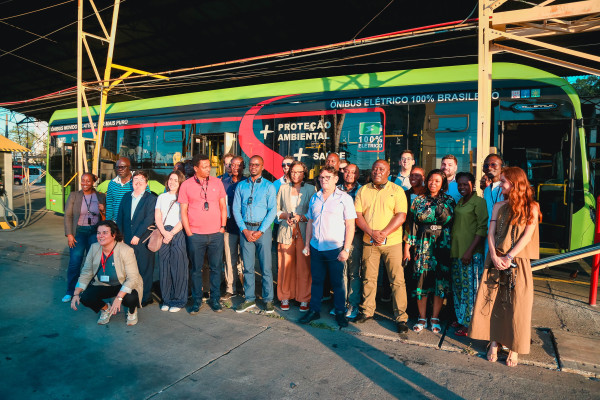
As part of the tour, the group also met with waste recycling cooperatives, visited an electric bus maintenance center, learnt about public transport by river-boats, and how informal settlements are being upgraded by the municipality trough the provision of basic infrastructure, improved transport integration, social housing programs and environmental protection measures.  

In Fortaleza, a coastal city in north-east Brazil, and the second leg of the tour, the delegation saw various initiatives that have significantly improved the cityscape; in sustainable mobility, youth engagement and climate resilience.

The tour came to an end in Curitiba, a city of 2 million inhabitants, renowned for its innovative approach to sustainable development and urban mobility. The delegation learnt about the Bus Rapid Transit (BRT) system implemented by the city, as well as its slum upgrading, urban planning and solid waste management programs.

The Urban and Municipal Development Fund envisioned the trip as a means of consolidating a network of African cities interested in adopting urban solutions with an inclusive and human-centered approach.

The Brazil tour follows previous ones organized in 2022 to Copenhagen (Denmark) and Malmo (Sweden) (http://apo-opa.co/4fKPMih), to discover the renowned sustainable urban planning strategies of Nordic countries.

Distributed by APO Group on behalf of African Development Bank Group (AfDB).

Media files
African Development Bank Group (AfDB)
Download logo
Read moreAfrican Development Bank Group Supports Study Tour to Brazil to Inspire African Cities
16 August 2024

Women still face barriers in accessing land 

Location: News

Women still face barriers in accessing land 

The Commission for Gender Equality (CGE) has recommended that the Department of Agriculture, Land Reform and Rural Development takes the lead in ensuring the introduction of necessary national legislative reforms related to communal land.

The recommendation follows the commission’s reports, which found that women in rural areas still face discriminatory and patriarchal challenges that pose significant barriers in gaining access to land.

The Commission launched the reports titled: “Exploring Barriers to Women’s Access to Land in selected Provinces of South Africa” and “The State of Maternity and Neonatal Health Care in the Eastern Cape Province” on Thursday.

The study was conducted in accordance with the CGE mandate to investigate the obstacles to women’s access to communal land in rural South Africa.

The research focused on the Eastern Cape, North West, and Limpopo provinces, examining legislative, procedural, cultural, and socio-economic factors that impede women’s access to communal land in the country.
According to the research findings released on Thursday, there is a fragmented approach to the allocation of communal land in the three sampled provinces.

This is due to each senior traditional leader and their traditional councils adhering to their own cultural norms and beliefs, leading to disparities even within the provinces.

Findings 

The study found that traditional leaders play a significant role in the allocation of land in all the communities visited.

Despite their involvement in traditional leadership structures at the local, provincial, and national levels, the study found that there is no coordination or consolidated framework to guide the allocation of communal land.

“It appears that the repeal of CLaRA (Communal Land Rights Act) created a legislative gap in the administration of communal land, with traditional leaders left to oversee processes, however, in an unguided and unregulated manner.

“There were no standard national guidelines or a policy for communal land allocation, resulting in corruption, gender discrimination, and queer invisibilising, resulting in inequitable access to land,” the report revealed.

The research findings indicated that traditional leadership structures, such as councils and land committees, did not fully represent all interest groups, despite being constituted through democratic processes such as elections and representative quotas.

The report noted that women in these structures did not always effectively represent the views of other women in the community, perpetuating inequality, and gender discrimination in some cases.

However, it noted that this is not universally true, as in some instances, women’s representation positively contributed to change.

Discrepancies 

The study also revealed significant discrepancies in the procedures and costs attached to communal land applications, with no clear justification.

“While applicants in the North West paid a consistent fee of R500, those in Limpopo paid a fee ranging from R500 to R15 000 and from R100 to R100 000 in the Eastern Cape. In some cases, applicants were also required to pay application fees with sheep, chickens, and alcohol, particularly in the Eastern Cape.

“In Limpopo, communal land became increasingly expensive when designated for entrepreneurial activities, with traditional leaders and headmen demanding a 50% share of the business. In contrast, land for entrepreneurial purposes was provided at no cost in the North West,” the report said.

Allegations of corruption and unfair pricing of communal land in Limpopo, along with claims of judgments based on appearance, were also heard.

During the research, one member of a traditional leadership structure in the province confirmed that land that was designated for residential purposes [and] was assigned a standard fee of R1 000 and R5 000 for entrepreneurship.

“The widespread corruption and deception had a negative impact on the economic situation of women in the province. In some areas, the allocation of communal land could take two weeks to three months, while in other cases, applicants had been waiting for years.

“Cultural practices that required women to adhere to certain dress and behavioural expectations also affected their access to communal land [and] clothing and behavioural expectations were used to marginalise queer persons in these communities, particularly transgender and gender non-conforming individuals,” the report reads.

In the Eastern Cape, transgender and gender non-conforming individuals were ostracised, and this indicated that requests by queer persons for communal land access would not even be considered.

There are also cases where cultural norms required women to obtain access to communal land through their fathers or a male relative.

“In a village in the North West, it was mandated that land be allocated to the eldest male child in the family. Inheritance also posed challenges, especially in Limpopo, where women were at times denied the opportunity to claim property inheritance under the pretext of preserving the family legacy by passing properties to male children. 

“Issues of marital status also discouraged women from independently accessing communal land. In some villages, women had a better chance of accessing communal land if they were married with children.

“In Limpopo specifically, a married applicant was considered ‘stable’ and therefore allocated land [while] unmarried women were often disadvantaged and risked losing their undeveloped land to reallocation and felt pressured to live with men for security as traditional leaders, who were often men, would grab their land,” the report said.

Age requirement 

In some villages in the North West, rules state that women had to be 40 years old and men between 40 and 45 years old to qualify for communal land allocation.

In the Eastern Cape and Limpopo, the age requirement was either 18 or 21 years. 

These age restrictions, especially in the North West, delayed individual development and served as an economic stumbling block, particularly given that land is an economic resource.

The Commission said the legislative reforms must address existing challenges of patriarchal practices, gender discrimination, and exclusions that are currently being justified under the guise of cultural beliefs and norms, which subjugate women and queer persons.

“Such reforms must be in accordance with the Constitution, including the Promotion of Equality and Prevention of Unfair Discrimination Act,” the Commission said. – SAnews.gov.za
 

GabiK
Fri, 08/16/2024 - 11:50

437 views
Read moreWomen still face barriers in accessing land 
15 August 2024

President Museveni And King Mswati III Call For A Unified African Market And Political Federation

Location: News
State House Uganda

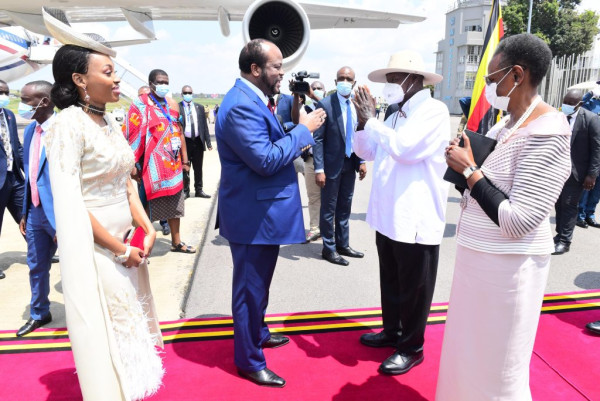
President Yoweri Kaguta Museveni and the First Lady and Minister of Education and Sports, Maama Janet Museveni have today welcomed the King of Eswatini, His Majesty, Mswati III at Entebbe International Airport.

His Majesty, Mswati III who is in Uganda for a three-day State Visit at the invitation of President Museveni was accompanied by his wife, Queen Inkhosikati Make Lamashwama and other high-level delegates.

At Entebbe International Airport, President Museveni was flanked by Ministers and service chiefs.

Upon arrival, the visiting King was accorded a 21-gun salute and inspected a guard of honour mounted by the Uganda People's Defence Forces (UPDF).

President Museveni later received his guest at State House Entebbe and held discussions focusing on enhancement of bilateral cooperation between the two countries.

In their discussions, President Museveni emphasised a clear vision for African prosperity, rooted in his experience as a student activist in the 1960s, a liberation leader, and now as a head of state.

“If Africans want prosperity, it comes from producing goods or services and selling them,” President Museveni stated.

He underscored the need for African nations to access larger markets to maximise economic benefits, highlighting Uganda's internal market of 46 million people as insufficient on its own.

“The fragmentation of the African market is a big disaster,” President Museveni warned.

He compared the continent's potential with that of Latin America, which, despite abundant natural resources, struggles with poverty due to its fragmented markets.

“I always tell my Ugandans here that if you want to be like Latin America, you are welcome because if you look at them, despite their wealth in natural resources, they still run to the USA for prosperity to get medical care, education, and other benefits,” he said.

The President argued that Africa's success lies in integrating markets across the continent, similar to how the United States operates with a vast and unified market.

He called for a model where African nations not only produce but also own and share in the benefits of their resources, rather than relying on foreign investments that often exploit the continent's wealth.

The President highlighted the need for African countries to collaborate on capital-intensive projects.

He also gave the example of Uganda's petroleum sector, where East African nations are invited to co-invest in infrastructure such as pipelines and refineries.

“It's not common sense that I produce, and you only buy. You can't say that to a brother,” President Museveni remarked, emphasising the importance of shared ownership.

President Museveni lauded the East African Community (EAC)'s progress in rebuilding and expanding to include eight member states, addressing both economic and political integration.

Beyond economic integration, President Museveni stressed the need for political federation in East Africa, which he views as crucial for establishing a strong military defence for the continent.

He highlighted the disparity in military capabilities between African nations and global powers like the United States, which boasts superior land, air, sea, and space forces.

“Africa must have the capacity to defend itself from all threats,” President Museveni asserted.

He called for a united African defence strategy as part of the broader vision for political federation.

His Majesty King Mswati III called for an enhanced cooperation between African nations, emphasising the need for unity in driving the continent's development.

He also expressed gratitude for the warm reception and hospitality extended to him and his delegation.

He highlighted the longstanding relationship between Uganda and Eswatini, noting that it had been years since their last meeting at a Commonwealth event.

“Your Excellency, I convey greetings from the Queen Mother, the government, and the people of Eswatini, and I wish to inform you that we are ready to strengthen ties between the two nations,” the King stated.

King Mswati went on to propose that Uganda and Eswatini establish regular communication channels to avoid neglecting the friendships and agreements already in place.

He stressed that African countries must work together to achieve progress in key areas such as poverty alleviation, job creation, education, and technological advancement.

“If we work together, there is much we can achieve. But if one country moves on its own, it cannot go far,” he said.

King Mswati III pointed out that Africa possesses abundant natural resources, yet the continent has struggled to produce efficiently due to the exploitation of these resources by foreign entities.

He advocated for African nations to share expertise and technology, citing Uganda's achievements in areas such as crude oil development as an example of successful collaboration.

“Now that we have mastered a lot of technology and expertise, we must take advantage of our resources,” the King stated.

The King further emphasised the need to promote entrepreneurship and knowledge exchange between Uganda and Eswatini, suggesting the establishment of distribution centres and routes to facilitate trade.

He also proposed increased cooperation between the Southern African Development Community (SADC) and the East African Community, expressing hope for a stronger economic partnership.

In terms of cultural ties, King Mswati III highlighted the similarities between the cultures of Uganda and Eswatini.

He proposed the organisation of cultural festivals to showcase these connections and attract tourists from around the world.

“We should promote our unique cultures, which are similar in many ways to support tourism and strengthen our bonds,” he added.

The King called for the opening of direct flight routes between Eswatini and Uganda to boost tourism and cargo trade.

He noted the potential for increased tourism, particularly given Uganda's rich natural attractions such as the Nile River and mountains.

“Let us work together to promote tourism by making travel between our countries easier and more accessible,” he urged.

King Mswati III also expressed support for Uganda's leadership in hosting the African Union's Humanitarian Agency and congratulated President Museveni on Uganda's chairmanship of the Non-Aligned Movement and the G77+China group.

He reiterated his country's willingness to cooperate with Uganda in various sectors, including the export and assembly of electric cars.

In Transport and Infrastructure, the two Heads of State also called for an expedition of cooperation processes regarding the creation of a hub by the Kingdom of Eswatini for marketing Kiira Motors Corporation's “Kayoola EVS” electric buses to the SADC region, using the advantage of the Maputo harbour area.

In conclusion, King Mswati III extended an invitation to President Museveni for a State Visit to Eswatini, emphasising the importance of continued collaboration between the two nations.

“Africa needs to work together to achieve economic independence, and our partnership with Uganda is a step in that direction,” he concluded.

Strengthening Bilateral Ties:

During the visit, Uganda and Eswatini further solidified their relationship through the signing of a Memorandum of Understanding.

The agreement was signed by Uganda's Minister of State for Foreign Affairs, Hon. Oryem Henry Okello, and Eswatini's Minister for Foreign Affairs and International Cooperation, Hon. Senator Pholile Shakantu.

Additionally, the two countries' agriculture Ministers discussed enhancing cooperation in the agricultural sector.

Eswatini, officially the Kingdom of Eswatini and also known by its former official name Swaziland and formerly the Kingdom of Swaziland, is a landlocked country in Southern Africa. It is bordered by Mozambique to its northeast and South Africa to its north, west, south, and southeast.

The Eswatini delegation included high-level officials such as HRH Princess Lindiwe and Hon. Manqoba Khumalo, Minister of Commerce, Industry, and Trade, among others.

On the Ugandan side, key ministers such as Hon. Babirye Milly Babalanda, Minister for the Presidency, Dr. Monica Musenero, Minister for Science, Technology, and Innovation, Hon. Mwebesa Francis, the Minister of Trade Industry and Cooperatives, and Hon. Katumba Wamala, the Minister of Works and Transport were also in attendance.

Distributed by APO Group on behalf of State House Uganda.

Media files
State House Uganda
Download logo
Read morePresident Museveni And King Mswati III Call For A Unified African Market And Political Federation
15 August 2024

Public Procurement Bill to redress women socio-economic exclusion

Location: News

Public Procurement Bill to redress women socio-economic exclusion

Women, Youth and Persons with Disabilities Minister, Sindisiwe Chikunga, says the Public Procurement Bill provides the department with an opportunity to advocate and mainstream tangible models and interventions to redress the ongoing socio-economic exclusion of women, youth and persons with disabilities.

Chikunga commended the significant efforts by President Cyril Ramaphosa after signing into law the Public Procurement Bill last month, which aims to create a single framework that regulates public procurement, including preferential procurement, by all organs of State, with the necessary efficiency, cost-effectiveness and integrity.

“As a department, we will be bringing forward tangible interventions through which this legislation will serve to redress the longstanding and ongoing socio-economic exclusion of women, youth and persons with disabilities,” Chikunga said.

Addressing a dialogue on Women, Democracy and Leadership in South Africa at the University of South Africa (UNISA) on Thursday, Chikunga also commended President Ramaphosa, as the Chairperson of the African Union in 2020, for putting forward a number of recommendations for the advancement of women on the continent, which have been adopted by AU Heads of State.

READ | Government, business partnership begins to flourish

Increase in support for women entrepreneurs

Chikunga also acknowledged a surge in the establishment, growth and support of women-owned businesses in key sectors, including energy, tourism, agriculture, the ocean economy, and manufacturing.

According to the most recent Mastercard Index of Women Entrepreneurs (MIWE), South Africa ranks as the second highest country in Africa in terms of its proportion of women-owned businesses and the formal support available for women entrepreneurs.

The Global Entrepreneurship Monitor (GEM) Women’s Entrepreneurship Report also revealed that women in countries like South Africa are among the most innovative and high-growth entrepreneurs in the world.

“There is sufficient evidence that reaffirms the importance of women entrepreneurs in contributing to the overall productivity and transformation of our economy through diversifying industries, innovation, and fostering economic resilience.

“In addition, women-owned businesses contribute to the creation of employment opportunities, promote inclusive supply chains, and stimulate local economies,” Chikunga said.

Women economic advancement in the Continent

Chikunga further underscored the importance of the adoption of the Decade for African Women’s Financial Inclusion and Gender Equality, 2020-2030.

“This is a critical initiative for the women of Africa, given that the lack of access to finances hinders their socio-economic progress, and thwarts their ability to have ownership and control over resources such as land, businesses and property,” Chikunga said. 

She added that women’s access to markets continues to be a challenge for women on the continent, especially access to trade and global markets.

The Minister argued that the African Continental Free Trade Area Agreement (AfCFTA) will open doors for global trade and markets for women, and “this is of huge importance to the women in South Africa to leverage on the opportunities this AfCTA promises for the economic empowerment and wealth creation for women in Africa”.

“Africa must be Africa’s biggest trading partner and demand for products across the continent offers African women the opportunity to be suppliers to this demand. Joint initiatives of pooling resources in this regard will help grow women businesses, provide the necessary skills and training required for this, and open markets and export trade opportunities,” Chikunga said. – SAnews.gov.za


GabiK
Thu, 08/15/2024 - 13:49

284 views
Read morePublic Procurement Bill to redress women socio-economic exclusion
11 August 2024

Progress made in management of foot and mouth disease

Location: News

Progress made in management of foot and mouth disease

Three working groups have been established to improve cooperation between the Department of Agriculture, provincial authorities and industry stakeholders on the recent outbreaks of foot and mouth disease (FMD) in the Kouga and Kou-Kamma Municipalities in the Eastern Cape.

The department said the situation appears to be improving, as the rate of new FMD cases has begun to decline, with the last clinical case reported in mid-July. 

“At present, cattle on 30 farms have tested positive for the disease. These farms have been placed under quarantine, and vaccination efforts are underway to control the spread of infection and reduce the severity of clinical symptoms.

“Additionally, pre-emptive vaccination has been carried out on a further 37 farms identified as high risk due to their proximity to infected areas. This measure aims to create a buffer zone around the affected farms to further limit the spread of the disease,” the department said.

In total, over 92 000 cattle and nearly 600 sheep across 67 farms have been vaccinated. 

These efforts are a critical part of the department’s strategy to manage and eventually eradicate the disease.

To prevent the further spread of FMD, the Department of Agriculture declared a Disease Management Area (DMA) on 19 July 2024. 

“This DMA encompasses parts of the Kouga and Kou-Kamma Municipalities and will facilitate the regulation of animal movements into, out of, and within the affected regions. The primary objectives of the DMA are to prevent the spread of the disease to unaffected areas and to reduce viral load and infection pressure within the current outbreak zone.

“The Director of Animal Health has signed and published the movement protocol for the DMA. The protocol is available on the Department of Agriculture, Land Reform, and Rural Development (DALRRD) and the Department of Rural Development and Agrarian Reform (DRDAR) websites. Copies can also be requested from AgriEC,” the department said.

Biosecurity and Disease Transmission

The department has noted misleading claims suggesting that FMD is transmitted by birds and rodents, which undermines the importance of biosecurity measures. 

“While theoretical transmission via such vectors exists, it is highly unlikely to contribute significantly to the current outbreak. Effective biosecurity -- focused on preventing direct and indirect contact of susceptible animals and rigorous cleaning and disinfection practices -- remains the most reliable method for preventing the introduction and spread of FMD on farms,” the departments said.

The department has reminded livestock owners that health declarations are required for the movement of susceptible animals, regardless of the purpose. 

“New arrivals of cattle, sheep, and goats must be isolated from resident herds for at least 28 days. This is in addition to urging livestock owners to only source animals from herds with a known health status. This practice, mandated by law since October 2022, is crucial for maintaining herd health and preventing disease spread,” the department said.

Section 11 of the Animal Diseases Act requires animal owners and managers to take all reasonable steps to prevent disease infection and its spread. 

FMD is classified as a controlled animal disease under the Animal Diseases Act, 1984 (Act No. 35 of 1984), and specific control measures, such as isolation and movement restrictions, are being enforced by Veterinary Services.

“Farmers are reminded that it is a legal obligation to report any suspicious clinical symptoms, such as salivation, blisters in the mouth, limping, or hoof lesions, to the local State Veterinarian immediately. Affected animals must not be moved.

“The department strongly advises livestock farmers nationwide to limit animal movements to the greatest extent possible. Movement of cloven-hoofed animals should be restricted to essential cases only, allowing time to identify and quarantine potentially affected properties,” the department said. - SAnews.gov.za
 

nosihle
Sun, 08/11/2024 - 10:53

443 views
Read moreProgress made in management of foot and mouth disease
29 July 2024

Disease Management Area declared amid foot and mouth disease in EC

Location: News

Disease Management Area declared amid foot and mouth disease in EC

In further efforts to prevent the spread of Foot and Mouth Disease (FMD), the Department of Agriculture has declared a Disease Management Area (DMA), which includes part of the Kouga and Kou-Kamma Municipalities in the Eastern Cape.

This follows the department’s concerns over the outbreak of Foot and Mouth Disease in the Kouga and Kou-Kamma Municipalities, where cattle on 26 farms have tested positive for the disease.  

The department said the cattle on the positive farms have been vaccinated to decrease the viral load and to control the severity of the clinical signs seen in especially dairy cattle.

The positive farms were also placed under quarantine, with strict movement control.  

“Requests were received to preventatively vaccinate dairy cattle on farms that have not been confirmed as being FMD positive but were at high risk of infection.  Permission was given to preventatively vaccinate cattle on 29 farms.  

“Animals on a further seven farms were vaccinated after veterinary officials reported suspect clinical signs.  In total, 84 655 animals were vaccinated on 62 farms,” the department said.

The department said the boundaries of the DMA will be detailed in the related July 2024 Government Gazette Notice.  

The department explained that the DMA, which was declared on Friday, will make it possible to control the movements of animals out of, into and within the affected area.  

“The main aim of the DMA is to prevent outward spread of the outbreaks, to areas not previously affected.  In addition, the DMA aims to decrease further spread of the disease within the affected area, as this will decrease the viral load and infection pressure of the area.  

“No cloven-hoofed animals, animal products derived from cloven-hoofed animals or genetic material of cloven-hoofed animals may be moved from, to or within the Disease Management Areas of the Eastern Cape Province except under authority of a State veterinary permit contemplated in Regulation 20 (1) of the Regulations and in compliance with the conditions of such permit,” the department said.

In addition to the control measures of the Eastern Cape Province DMA, the department said the July 2024 Gazette Notice also stipulates that cloven hoofed livestock may only be moved if accompanied by a health declaration from the owner of the animals, attesting to their health at the time of moving.  

“All cattle, [including] sheep and goats newly brought onto a farm must be kept separated from the resident herds for at least 28 days.  This has been a requirement by law since October 2022, but the importance of this is again emphasised,” the department said.

The department has strongly recommended to all livestock farmers in the whole country to limit animal movement as far as possible.  

“Cloven-hoofed animals should not be moved unless it is necessary to allow for an opportunity to find and quarantine further undetected and affected properties to prevent any further spread of the disease.

“The significance of the incubation period for FMD cannot be overemphasised. This is the period when animals appear to be healthy, in the early stages of infection (incubation period) where they are shedding virus without showing clinical signs of disease yet,” the department said.  

Farmers are again urged to observe biosecurity on their farms and to protect their own herds from becoming infected with disease.  Section 11 of the Animal Diseases Act imposes a legal duty on any owner or manager of animals to take all reasonable steps to prevent their animals from becoming infected with any disease and to prevent the spread of any disease from their animals or land to other animals or other properties. – SAnews.gov.za

GabiK
Mon, 07/29/2024 - 11:43

316 views
Read moreDisease Management Area declared amid foot and mouth disease in EC
29 July 2024

Wind Energy in South Africa: A Balanced Perspective

Location: MyPR

Johannesburg, 29 July 2024: South Africa’s energy landscape is rapidly evolving, with renewable energy – specifically solar and wind – emerging as a significant player in the quest for a sustainable and reliable energy supply. Indications are that between a concerted effort by Eskom to recover underperforming coal fired power plants to higher levels of …

Read moreWind Energy in South Africa: A Balanced Perspective
29 July 2024

The Awareness Company: Transforming Sustainability Through Data

Location: MyPR

The Awareness Company, founded by Priaash Ramadeen, Shazia Vawda, and Estelle Lubbe, brings together nearly six decades of collective experience in fields ranging from border control and defense to municipal processes and conservation. Their situational awareness software has been instrumental in protecting over 10,000 rhinos, utilized by more than 200 organizations worldwide. Ramadeen highlights the …

Read moreThe Awareness Company: Transforming Sustainability Through Data
28 July 2024

Tau concludes United States visit

Location: News

Tau concludes United States visit

Trade, Industry and Competition (the dtic) Minister, Parks Tau has concluded a successful visit to the United States of America (USA). 

The Minister was accompanied by a high-level delegation comprising the Deputy Minister of dtic, Andrew Whitfield, government officials, the private sector and organised labour.  The delegation was participating in the 21st Africa Growth and Opportunity Act (AGOA) Forum that ran from 22-26 July 2024.

This followed the successful hosting of the 20th AGOA Forum in November 2023, in Johannesburg. 

READ | Patel supports call for reauthorisation of AGOA

The Africa Growth and Opportunity Act is a unilateral trade preference scheme that provides qualifying sub-Saharan African countries with duty-free, quota-free access into the United States market. AGOA remains the cornerstone of the USA’s commercial relations with sub-Saharan Africa.

With AGOA expiring in 14 months, the African Ministers of Trade urged the Biden Administration and the Members of US Congress, for expeditious renewal of AGOA with non-controversial enhancements and amendments for a minimum of 16 years to provide the required predictability and certainty to buyers, exporters and investors. 

The Ministers called for the renewal of AGOA to be concluded by the end of 2024. There was an agreement to promote stronger and closer investment relations to complement AGOA and change the structure of Africa’s trade towards value-added exports. 

“We welcome the support expressed by both the Biden Administration and Members of Congress for the renewal of AGOA,” said Tau. 
The forum also highlighted the critical role that South Africa plays in the development of regional value chains on the African continent in a number of sectors, including the auto sector. 

The delegation held extensive engagements with members of the US Congress and House of Representative, US Administration, US private sector and think tanks. The engagements focused on sharing information on the political developments in South Africa in particular the establishment of the Government of National Unity (GNU). 

“We welcome the warm reception, as well as productive and constructive discussions we had with Members of Congress across the aisle and with the US Administration. There was a lot of interest in the GNU and its priorities, including efforts to deepen and enhance bilateral relations with the US,” Tau said. 

The delegation also used the engagements to advocate for the early reauthorisation of AGOA including exploring enhancements that facilitate greater utilisation and create the necessary policy stability to promote private sector investment and African exports into the US.

There was broad support for strengthening bilateral trade and investment relations between South Africa and the United States. 

TIFA 

“We welcome the positive discussions with the US Trade Representative, Ambassador [Catherine] Tai and the agreement by both sides to resuscitate the Trade and Investment Framework Agreement (TIFA) at a Ministerial level, that last met in 2014. 

“We instructed our officials to prepare for our first meeting which will provide a good platform for constructive discussions and effective resolution of trade related matters from both sides. The resuscitation of the TIFA provides new impetus to our strategic partnership,” Tau said. 

The US remains South Africa’s strategic trading partner and South Africa is the largest non-oil Sub-Saharan Africa exporting partner to the US and through AGOA has been able to boost both agriculture and value-added exports, thus creating much-needed jobs for South Africans.

The AGOA Forum is held on an alternate basis between Africa and the US. The 2025 AGOA Forum will thus be held in the Democratic Republic of Congo. – SAnews.gov.za
 

Edwin
Sun, 07/28/2024 - 13:13

129 views
Read moreTau concludes United States visit
26 July 2024

KZN social sector departments get largest chunk of budget

Location: News

KZN social sector departments get largest chunk of budget

The KwaZulu-Natal Departments of Education, Health and Social Development have been allocated the lion’s share of the provincial budget for the 2024/25 financial year.

Presenting the provincial government budget for the 2024/25 financial year at the KZN Legislature in Pietermaritzburg on Thursday, KwaZulu-Natal Finance MEC, Francois Rodgers, announced that the bulk of the provincial budget is allocated to the social sector departments, which received 80% of the provincial budget, while the balance of 20% goes towards funding all the other votes.

“Education receives between R4.1 billion and R4.4 billion per annum over the MTEF [Medium-Term Expenditure Framework], Health receives between R2.6 billion and R2.8 billion per annum over the MTEF, [and] Social Development receives between R134 million and R144 million per annum over the MTEF,” Rodgers said.

Conditional grant allocation increase

Rodgers said the conditional grant allocation has increased by R501.3 million in 2024/25 and reduced by R989.3 million in 2025/26 and R593.5 million in 2026/27.

The budget allocated towards Ilima/Letsema Projects, under the Department of Agriculture and Rural Development, has been cut by R24.7 million in 2024/25.

The MEC said the cut is due to National Treasury reprioritising the funds towards the Presidential Employment Stimulus. 

In aggregate, Rodgers said the province receives R141.4 million through two Expanded Public Works Programme (EPWP) conditional grants aimed at increasing job creation in the province. 

Rodgers said the EPWP Integrated Grant for Provinces and the Social Sector EPWP Incentive Grant for Provinces have been reduced in 2024/25 due to National Treasury reprioritising these funds towards the Presidential Employment Stimulus. 

He said these grants were cut by R42 million and R29 million, respectively, against various Votes. 

The MEC said the Education Infrastructure Grant has increased by R58.1 million in 2024/25. 

Rodgers noted that the grant is incentive based, and the increase is partly due to the incentive allocation where the department scored well, achieving 98% in terms of submitting planning documentation and showing capacity to spend, and thus received an incentive allocation of R89 million. 

“The National School Nutrition Programme grant receives an increase of R19 million in 2024/25 to continue with the provision of nutritious meals. The budget for 2024/25 after the increase is R2.2 billion,” the MEC said. 

The budget for the Health Facility Revitalisation Grant has also increased by R31.1 million in 2024/25. 

Rodgers said the addition to the grant is due to incentive based and the department’s score at 99%, in terms of submitting planning documentation and showing capacity to pend and was allocated R72.9 million. The budget for Health Facility Revitalisation Grant is R1.5 billion in 2024/25.

Significant increase for Provincial Roads Maintenance Grant

The Provincial Roads Maintenance Grant has also seen a significant increase of R691.8 million in 2024/25 for the maintenance and rehabilitation of the provincial road network, as well as repairs to infrastructure damaged by floods.

“The budget for this grant is R3.2 billion after this increase and shows our commitment to improving the provincial road network,” Rodgers said.

The Human Settlements Development Grant has decreased significantly by R268.7 million in 2024/25 to be able to provide funds to the social sector for the 2023 wage agreement carry-through costs.

“The budget for this grant in 2024/25 is R2.5 billion after the budget cut. The Informal Settlements Upgrading Partnership grant also had a large budget cut of R228.6 million in 2024/25, in line with National Treasury’s decision to source funds through reprioritisation to provide funds to the social sector for the 2023 wage agreement carry-through costs.

“This budget cut is carried through over the MTEF and the budget for 2024/25, after the budget cut, is R597.1 million,” Rodgers said.

The Provincial Treasury receives R7.7 million over the MTEF (R2.6 million per annum) towards the costs of upgrading the Biometrics Access Control System to strengthen its security and ransomware features, while Sport, Arts and Culture was allocated R4.1 million for the construction of a monument in honour of the 1860 arrival of the Indian indentured labourers. 

“Transport requested that R3 million be suspended from their Vote in 2024/25 for allocation to Economic Development, Tourism and Environmental Affairs with respect to sourcing an airport emergency fire and rescue vehicle for the Margate Airport. 

“This relates to the ongoing collaboration between these two departments to ensure the successful operation of the provincial regional airports,” Rodgers said. – SAnews.gov.za


GabiK
Fri, 07/26/2024 - 14:34

213 views
Read moreKZN social sector departments get largest chunk of budget
  • Previous
  • Page 1
  • Interim pages omitted …
  • Page 13
  • Page 14
  • Page 15
  • Page 16
  • Page 17
  • Interim pages omitted …
  • Page 28
  • Next

Copyright © 2026 · MyZA · All Rights Reserved · Powered by Stratlec Online