• Skip to main content
  • Skip to header right navigation
  • Skip to after header navigation
  • Skip to site footer
MyZA

MyZA

News, Directory, Events and Other Stuff

  • Social Media
  • Sport
  • World News
  • Home
  • Submit News
  • Directory
  • Events
  • Stratlec
  • TFSA
  • News
    • APO
    • Today’s Sport News
    • Todays Social Media and Tech Headlines
    • Today’s World News
    • Today’s SA Financial News
  • Contact
You are here: Home / Archives for business

business

13 December 2023

The Dynamic World of Commercial Property in South Africa

Location: MyPR

Introduction Commercial property in South Africa is a sector characterized by its dynamism and significant impact on the economy. This blog post aims to explore the intricacies of the commercial property market, shedding light on its current trends, challenges, and the potential it holds for investors, businesses, and the broader economy. Overview of South Africa’s …
Read moreThe Dynamic World of Commercial Property in South Africa
13 December 2023

Workers are battling to collect unemployment benefits despite recent technology

Location: News

UIF App and phone-in system launched in September

Read moreWorkers are battling to collect unemployment benefits despite recent technology
12 December 2023

Evictions: What You Need To Know If You’re A Landlord

Location: MyPR

In South Africa, the process of evicting a tenant has become highly regulated. On top of the legal ramifications, there’s also the human element to consider in the current economic climate. The best option for avoiding eviction hassles for landlords is to find the right tenant from the start. Property professionals weigh in. Stringent Vetting: …

Read moreEvictions: What You Need To Know If You’re A Landlord
12 December 2023

Benefits Of Caps Hats And Headwear As Promotional Items

Location: MyPR

Introduction In the competitive world of marketing, caps and hats emerge as exceptional promotional tools. Beyond their practical use, they serve as fashionable accessories, making them ideal for brand visibility. This blog explores the effectiveness of using headwear for promotional purposes, highlighting Perkal Promo as a notable source for these products. Affordability and Value One …

Read moreBenefits Of Caps Hats And Headwear As Promotional Items
12 December 2023

African Development Bank approves $300 million for energy governance and climate resilience

Location: News

African Development Bank Group (AfDB)
Download logo

The Board of Directors of the African Development Bank Group (www.AfDB.org) has approved a $300 million loan to South Africa to implement its Energy Governance and Climate Resilience Programme.

The Programme prepared in collaboration with other development partners including the World Bank and KfW Development Bank (KfW), will help advance South Africa's energy transition.

It will spur economic growth by furthering structural reforms to restore energy security, promote private sector participation in the electricity market and enhance the operational efficiency of the national power utility Eskom in line with South Africa's Energy Action Plan and the Just Energy Transition Investment Plan (JET IP) 2023–2027.

The Programme will accelerate mitigation and adaptation efforts by promoting renewable energy generation and shifting businesses to low-carbon activities, resulting in lowering the carbon footprint of the South African economy and improving financing for green projects. These expected outcomes align with South Africa's updated Nationally Determined Contribution and the country's Long-term Low-Emissions Development Strategy.

It will ensure the security and affordability of energy for families and small businesses. It will enable the government to increase budget allocations to connect electricity to poor households and establish a mechanism to encourage families and micro- and medium-sized businesses to invest in renewable energy.

The reform priorities discussed with the Government are designed to complement and create synergies with existing support from the African Development Bank and other development finance institutions for the Just Energy Transition.

Through a $629 800 (470 000 UA) grant with co-financing from the Climate Insurance Fund, the Bank will provide support to ensure affected communities are not left behind, crowd in more women as decision-makers and support young entrepreneurs, especially women, to build skills and create jobs for the green economy.

South Africa's country's Energy Governance and Climate Resilience Programme aligns with the African Development Bank's ‘High 5' strategic priorities, especially "Light up and Power Africa", "Industrialise Africa", and "Improve the quality of life for the people of Africa".

Welcoming the operation, Mrs Leila Mokaddem, Director General for Southern Africa, noted the Bank's long-term support to South Africa's energy sector. Energy has the largest share of the Bank's portfolio at 43.4%. The programme complements this support and aligns with the recently approved Country Strategy Paper (CSP) for South Africa, which recognizes the centrality of Energy reforms to achieve economic growth and improve business confidence.

Distributed by APO Group on behalf of African Development Bank Group (AfDB).

Editor's note: A previous version of this press release issued 31 October 2023, included references to potential contribution from the Government of Canada. This has been removed.

Media Contact:
Mansour Diouf
Communication and External Relations Department
Email: media@afdb.org

About the African Development Bank Group:
The African Development Bank Group is Africa's premier development finance institution. It comprises three distinct entities: the African Development Bank (AfDB), the African Development Fund (ADF) and the Nigeria Trust Fund (NTF). On the ground in 41 African countries with an external office in Japan, the Bank contributes to the economic development and the social progress of its 54 regional member states. For more information: www.AfDB.org.

Read moreAfrican Development Bank approves $300 million for energy governance and climate resilience
12 December 2023

Building a Strong Personal Brand in the Digital Age: Insights and Strategies

Location: MyPR

By Prabashni Reddy – Marketing Manager at Regent Business School The world we live in has become a hyper-connected world, a strong personal brand is not just a nice-to-have; it’s an essential tool for professional growth and success. As the digital landscape continues to evolve, the way we present ourselves online can significantly impact our …

Read moreBuilding a Strong Personal Brand in the Digital Age: Insights and Strategies
12 December 2023

President establishes Presidential PhD Initiative to boost innovation

Location: News

President establishes Presidential PhD Initiative to boost innovation

President Cyril Ramaphosa announced on Tuesday that government has established the Presidential PhD Initiative through an initial R1 billion investment from the National Skills Fund in efforts to boost science and technology.  

“The first phase aims to expose our country’s brightest young minds to cutting-edge thinking and research by negotiating opportunities at world-leading universities and research centres,” he explained.

President Ramaphosa announced the initiative during the inaugural Presidential Science, Technology and Innovation (STI) Plenary in Pretoria. 

The President told the attendees that the studies will be to large scale and established research programmes in public research facilities and industry.

The initiative will build critical skills in artificial intelligence research, advanced biotechnology, fuel cell development, battery storage, and next-generation mining. 

The country’s first citizen has since called to extend a call to the private sector and international partners to assist in growing the investment for the Presidential PhD Initiative fund to R5 billion by 2030. 

He said collaboration is needed to ensure synergy between programmes across the national innovation system. 

“We must harness education, science and innovation to protect our natural environment, drive inclusive economic growth and enrich all areas of human endeavour.” 

The country’s Commander-in-Chief described the first plenary as an important initiative that brings together government, academia, civil society and industry to collectively drive South Africa’s National System of Innovation (NSI). 

In November 2022, the Cabinet adopted the STI Decadal Plan to guide the first 10 years of implementing the 2019 White Paper on STI.

“Science, technology and innovation are essential for economies to thrive and for societies to prosper. 

“In the new world of work, in the era of the Fourth Industrial Revolution, science, technology and innovation determine which countries move forward and which are left behind. Our country has several strengths.”

Citing the 2022 Global Innovation Index published by the World Intellectual Property Organisation, he said South Africa ranked above the upper-middle-income group average in three areas. 

These include market sophistication, knowledge and technology outputs, and creative outputs.

According to the index, South Africa also improved the number of patents by origin, citable documents, intellectual property receipts, high-tech manufacturing and high-tech exports. 

“However, our performance is mixed for the factors that drive innovation, such as education expenditure, expenditure on research and development and access to information technology.”

The President also highlighted significant strides in higher education including the number of students graduating from public universities from about 60 000 in 1994 to around 230 000 by 2018. 

“The share of graduates in science, engineering and technology fields has been increasing compared to graduates in the humanities.”

He also acknowledged that the State needed to significantly increase investment in research and development. 

In 2021, gross expenditure on research and development (R&D) in South Africa was 0.6% of Gross Domestic Product (GDP), far below the targeted 1.5%.

“By comparison, in 2022, the United States spent 2.6% and South Korea spent 5% of their respective GDPs on research and development. 

“This is a situation that we are determined to turn around. Through greater cooperation between government and industry, we can reverse this trend.”

President Ramaphosa is of the view that the potential of science, technology and innovation to modernise and expand the productive sectors is vast. 

He cited the Mandela Mining Precinct and the South African Mining Extraction Research, Development and Innovation initiative, which are aimed at revitalising our mining industry. 

Shifting his focus on vaccines, he said Afrigen Biologics, a South African company part-owned by the Industrial Development Corporation, is working on a new tuberculosis vaccine using mRNA technology. 

Meanwhile, the Bill and Melinda Gates Foundation recently allocated US$5 million to Biovac to develop mRNA vaccines using a local platform. 

“This grant enables our researchers and scientists to strengthen the pharmaceutical research and vaccine production ecosystem so that we can address both current and future health challenges.” 

He said he views innovation as the driver of sustainable job creation and small business development and tackles the realities of climate change. 

“From these examples, it is clear that we are certainly progressing, but not at the pace we should be,” he admitted. 

“For science, technology and innovation to serve South Africa’s economy and society effectively, we need to aggressively and strategically invest in education and skills development because this is the lifeblood of a modern economy.

“We know that nations such as Japan, South Korea and Germany have science, technology and innovation in the service of their societies, with commendable results.”

However, Nzimande qualified that when they talk about STI, they refer to both the natural and social sciences and humanities. 

“For it is only possible to understand, let alone solve the major developmental and existential challenges of the 21st century through invoking the insights of trans-disciplinary knowledge.” – SAnews.gov.za


Gabisile
Tue, 12/12/2023 - 13:58

521 views
Read morePresident establishes Presidential PhD Initiative to boost innovation
12 December 2023

The Evolving Realm of Property Companies in South Africa

Location: MyPR

Introduction In the dynamic landscape of South Africa, property companies play a crucial role in shaping the economic and social fabric of the nation. The Diverse Spectrum of Property Companies South African property companies encompass a wide array of entities, including residential and commercial real estate developers, property management firms, real estate investment trusts (REITs), …

Read moreThe Evolving Realm of Property Companies in South Africa
12 December 2023

Navigating the World of Insurance: A Comprehensive Guide

Location: MyPR

In today’s ever-evolving world, understanding and selecting the right insurance coverage is crucial for both individuals and businesses. This comprehensive guide aims to demystify various insurance options, helping you make informed decisions for your financial security and peace of mind.   Business Protection Businesses face unique risks that require specialized coverage. Short-Term Commercial Protection offers …

Read moreNavigating the World of Insurance: A Comprehensive Guide
12 December 2023

President establishes Presidential PhD Initiative to boost innovative

Location: News

President establishes Presidential PhD Initiative to boost innovative

President Cyril Ramaphosa announced on Tuesday that government has established the Presidential PhD Initiative through an initial R1 billion investment from the National Skills Fund in efforts to boost science and technology.  

“The first phase aims to expose our country’s brightest young minds to cutting-edge thinking and research by negotiating opportunities at world-leading universities and research centres,” he explained.

President Ramaphosa announced the initiative during the inaugural Presidential Science, Technology and Innovation (STI) Plenary in Pretoria. 

The President told the attendees that the studies will be to large scale and established research programmes in public research facilities and industry.

The initiative will build critical skills in artificial intelligence research, advanced biotechnology, fuel cell development, battery storage, and next-generation mining. 

The country’s first citizen has since called to extend a call to the private sector and international partners to assist in growing the investment for the Presidential PhD Initiative fund to R5 billion by 2030. 

He said collaboration is needed to ensure synergy between programmes across the national innovation system. 

“We must harness education, science and innovation to protect our natural environment, drive inclusive economic growth and enrich all areas of human endeavour.” 

The country’s Commander-in-Chief described the first plenary as an important initiative that brings together government, academia, civil society and industry to collectively drive South Africa’s National System of Innovation (NSI). 

In November 2022, the Cabinet adopted the STI Decadal Plan to guide the first 10 years of implementing the 2019 White Paper on STI.

“Science, technology and innovation are essential for economies to thrive and for societies to prosper. 

“In the new world of work, in the era of the Fourth Industrial Revolution, science, technology and innovation determine which countries move forward and which are left behind. Our country has several strengths.”

Citing the 2022 Global Innovation Index published by the World Intellectual Property Organisation, he said South Africa ranked above the upper-middle-income group average in three areas. 

These include market sophistication, knowledge and technology outputs, and creative outputs.

According to the index, South Africa also improved the number of patents by origin, citable documents, intellectual property receipts, high-tech manufacturing and high-tech exports. 

“However, our performance is mixed for the factors that drive innovation, such as education expenditure, expenditure on research and development and access to information technology.”

The President also highlighted significant strides in higher education including the number of students graduating from public universities from about 60 000 in 1994 to around 230 000 by 2018. 

“The share of graduates in science, engineering and technology fields has been increasing compared to graduates in the humanities.”

He also acknowledged that the State needed to significantly increase investment in research and development. 

In 2021, gross expenditure on research and development (R&D) in South Africa was 0.6% of Gross Domestic Product (GDP), far below the targeted 1.5%.

“By comparison, in 2022, the United States spent 2.6% and South Korea spent 5% of their respective GDPs on research and development. 

“This is a situation that we are determined to turn around. Through greater cooperation between government and industry, we can reverse this trend.”

President Ramaphosa is of the view that the potential of science, technology and innovation to modernise and expand the productive sectors is vast. 

He cited the Mandela Mining Precinct and the South African Mining Extraction Research, Development and Innovation initiative, which are aimed at revitalising our mining industry. 

Shifting his focus on vaccines, he said Afrigen Biologics, a South African company part-owned by the Industrial Development Corporation, is working on a new tuberculosis vaccine using mRNA technology. 

Meanwhile, the Bill and Melinda Gates Foundation recently allocated US$5 million to Biovac to develop mRNA vaccines using a local platform. 

“This grant enables our researchers and scientists to strengthen the pharmaceutical research and vaccine production ecosystem so that we can address both current and future health challenges.” 

He said he views innovation as the driver of sustainable job creation and small business development and tackles the realities of climate change. 

“From these examples, it is clear that we are certainly progressing, but not at the pace we should be,” he admitted. 

“For science, technology and innovation to serve South Africa’s economy and society effectively, we need to aggressively and strategically invest in education and skills development because this is the lifeblood of a modern economy.

“We know that nations such as Japan, South Korea and Germany have science, technology and innovation in the service of their societies, with commendable results.”

However, Nzimande qualified that when they talk about STI, they refer to both the natural and social sciences and humanities. 

“For it is only possible to understand, let alone solve the major developmental and existential challenges of the 21st century through invoking the insights of trans-disciplinary knowledge.” – SAnews.gov.za


Gabisile
Tue, 12/12/2023 - 13:58

14 views
Read morePresident establishes Presidential PhD Initiative to boost innovative
12 December 2023

Cranes added at Transnet’s Cape Town Container Terminal to boost productivity

Location: News

Cranes added at Transnet’s Cape Town Container Terminal to boost productivity

Transnet’s Cape Town Container Terminal (CTCT) has received a delivery of seven pre-used rubber-tyred gantry cranes (RTGs).

The acquisition of the RTGs is part of the State-owned entity’s turnaround plan, whose key priorities include equipment availability, in order to support operational efficiencies.

Western Cape Terminals Managing Executive, Andiswa Dlanga, said: “The acquisition of additional RTGs in our terminal will go a long way in offering a reliable service to our customers, a much-needed boost for the growth of the Western Cape and South Africa's economy.

“As a business, we are committed to deliver on our promise to customers and industry, thus equipment availability and reliability are at the core of what we do. These additional machines will enable us to improve operational performance and turn-around vessels on time”.

In a statement, Transnet Port Terminals [TPT] explained that the new cranes will bring the number of TRGs operating at the CTCT to 27 – a timely boost as ahead of the peak of the deciduous season which is the terminal’s busiest time.

“Out of the 20 RTGs, seven of them were recently fitted with new engines and three with generators. CTCT is currently completing maintenance repairs on two additional RTGs, which will bring the total number to 29. Over the next few days, the engineering team will spend time commissioning all the seven RTGs to ensure readiness before they are officially handed over to operations. Concurrently, the operations team will roll out training to operators who will be working on the additional RTG machines.

“The acquisition of RTGs is a display of TPT’s commitment to the industry and stakeholders as more reliable equipment directly leads to improved productivity while also ensuring seamless vessel movement within the port,” the statement read. – SAnews.gov.za

NeoB
Tue, 12/12/2023 - 11:29

159 views
Read moreCranes added at Transnet’s Cape Town Container Terminal to boost productivity
12 December 2023

The Four Day Week and the Productivity Conundrum

Location: MyPR

Tasneem Motala is a Senior Lecturer: Operations Management at Stellenbosch Business School and one of the researchers who reviewed South Africa’s first four-day week trial. For the South African results released visit https://www.4dayweek.com/sa-2023-pilot-results When the four-day week trial started, there was a healthy scepticism about whether it could work in South Africa. This question was …

Read moreThe Four Day Week and the Productivity Conundrum
12 December 2023

Understanding Logistics Software

Location: MyPR

Logistics software is designed to manage, execute, and optimize the movement and storage of goods, from the point of origin to the point of consumption. This encompasses a range of activities including transportation management, warehouse operations, inventory control, order fulfillment, and shipment tracking. Key Features of Logistics Software: Transportation Management: Streamlines shipping processes, carrier selection, …

Read moreUnderstanding Logistics Software
11 December 2023

The Landscape of Storage Units in Johannesburg

Location: MyPR

Johannesburg’s diverse and dynamic nature is reflected in its storage unit offerings. From basic self-storage units in the suburbs to more sophisticated, climate-controlled facilities in the business districts, there’s a solution for every need. These facilities cater to a wide range of clients, including individuals, families, students, and businesses. Key Features to Look For: Security: …

Read moreThe Landscape of Storage Units in Johannesburg
11 December 2023

Business licensing policy up for public comment

Location: News

Business licensing policy up for public comment

Cabinet has considered and approved the draft National Business Licensing Policy for public comments.

This is according to Minister in the Presidency Khumbudzo Ntshavheni who briefed the media on the outcomes of the Special Cabinet meeting held last Friday.

The Minister said the objectives of the policy are:

  • The provision of a fair, transparent and ethical allocation of business operating licenses in a manner that enables citizens to actively participate in an economic life.
  • The assertion and clarification of South Africa’s sovereign right to determine the business licensing conditions for foreign nationals in line with the country’s national interests.
  • The development and implementation of smart and effective licensing arrangements that not only reduce regulatory burdens, but also drive empowerment of the previously marginalised communities, whilst reducing compliance burdens and facilitating ease of doing business.

At Monday’s media briefing, Ntshavheni said Cabinet had approved the “introduction to Parliament [of] the SOC Holding Company Bill”.

The bill proposes:

  • The consolidation of State’s shareholdings in strategic state-owned enterprises
  • The establishment of the State’s Asset Management SOC Ltd as a holding company for state shareholding of strategic SOE’s, with the state as a sole shareholder – SAnews.gov.za


NeoB
Mon, 12/11/2023 - 11:46

477 views
Read moreBusiness licensing policy up for public comment
11 December 2023

The Essentials of Document Management Systems: A Comprehensive Guide

Location: MyPR

In today’s digital era, efficient management of documents is crucial for businesses and organizations of all sizes. A Document Management System (DMS) is not just a tool for organizing files; it’s a comprehensive solution that enhances productivity, security, and accessibility. This blog post aims to explore the key aspects of DMS, its benefits, and considerations …

Read moreThe Essentials of Document Management Systems: A Comprehensive Guide
11 December 2023

Understanding Property Management Software

Location: MyPR

Property management software is a specialized application designed to assist in the management of residential, commercial, and rental properties. It streamlines various tasks such as tenant screening, rent collection, maintenance requests, and financial reporting. Key Features of Property Management Software: Tenant Management: Simplifies the process of tenant screening, leasing, and communication. Rent Collection and Financial …

Read moreUnderstanding Property Management Software
11 December 2023

Deputy President on a working visit to Singapore

Location: News

Deputy President on a working visit to Singapore

Deputy President Paul Mashatile arrived in Singapore on Sunday to begin the first leg of his three-day working visit to Southeast Asia. 

According to the Presidency, the Deputy President began his visit with a tour of the Marina Barrage development, Singapore’s innovative water resource management project. 

“As a resource-poor and water-scarce country, Singapore has invested significantly in research and development of water management and sustainability. Most impressively, the country has made big strides in the area of seawater desalination,” the statement read. 

According to his Office, the Deputy President’s visit to the country is aimed at building and strengthening bilateral relations, particularly increasing trade, economic, knowledge and cultural exchange between the two States. 

“Singapore is a global financial hub and is considered one of the premier asset management centres in Asia.” 

The World Bank has ranked Singapore as the number one country in the world for ease of doing business since 2006, and the country is an important global aviation and maritime hub.

In addition, the island country is also considered an important gateway for the export of goods and services to Southeast Asia and a hub for joint venture partnerships throughout Asia. 

“It is an important centre for South African businesses looking for opportunities or expand operations on the continent.” 

As part of his programme, Deputy President Mashatile will visit the Lee Kuan Yew School of Public Policy.

He will then deliver a public lecture on the 30 years of diplomatic relations between South Africa and Singapore titled ‘Celebrating a journey of mutual respect, strategic partnership and cooperation’. 

He is accompanied by International Relations and Cooperation Deputy Minister Candith Mashego-Dlamini; Trade, Industry and Competition Deputy Minister Nomalungelo Gina; and Higher Education, Science and Innovation Deputy Minister Buti Manamela.

The Communication and Digital Technologies Deputy Minister Philly Mapulane; Forestry, Fisheries and the Environment Deputy Minister Magdalene Sotyu, and senior government officials are also among those travelling with the Deputy President. – SAnews.gov.za


Gabisile
Mon, 12/11/2023 - 10:12

155 views
Read moreDeputy President on a working visit to Singapore
11 December 2023

Women’s football stars shine at the Hollywoodbets Super League Awards

Location: MyPR

The third season of the Hollywoodbets Super League has proven to be amazing as it continues to build on the foundations that have been laid in previous years. This season stands as a testament to the league’s exceptional quality, evident in an evening dedicated to honouring the outstanding South African female footballers who showcased extraordinary …

Read moreWomen’s football stars shine at the Hollywoodbets Super League Awards
11 December 2023

Africa’s Top 100 Business Opportunities to Watch in 2024

Location: Business
Activator HQ

Despite rising food and fuel costs, weakening currencies, climate change effects, security threats, political instability, rolling power cuts, infrastructure limitations, and several economic and social challenges, Africa will be one of the fastest-growing regions in 2024.

That's one of the key findings in the 2024 edition of the Top 100 Business Opportunities in Africa to Watch (https://apo-opa.co/47PmhYd), an annual selection of the continent's most lucrative business ideas and investment opportunities curated by Activator HQ.

Following two years of slow post-COVID recovery, 2024 presents several interesting opportunities for business startup and growth in Africa. While Nigeria, South Africa, Egypt, Kenya and countries across the continent offer unique opportunities and challenges for new business and investment, economies like Senegal, Ethiopia, Tanzania, Cote d'Ivoire, Rwanda, Burkina Faso, The Gambia and Benin could grow by more than 6% in 2024, twice higher than the global growth of 2.9% projected by the International Monetary Fund (IMF).

The Africa Top 100, now in its 7th year, identifies specific business ideas and investment opportunities in over 30 growth markets, industries, value chains, and underserved niches across Africa. Each opportunity in the Top 100 is selected based on their relevance to local market needs, lucrativeness, competitive superiority, export potential, and innovation.

“The new edition, which is the outcome of months of research and analyses that considered dozens of value propositions, market trends, demand-supply gaps, and business models across Africa, only consists of opportunities that have a minimum total addressable market value of $100 million,” said John-Paul T. Iwuoha, Founder and CEO of Activator HQ. “It is interesting to see from our 2024 selection that more business ideas and investment opportunities in Africa are actually borne from unmet market needs, difficult but highly-rewarding problems, and the megatrends we have identified that are currently shaping the continent (https://apo-opa.co/46Sd4gb).”

As a developing region, Africa's deficits in food security, housing, finance, education, energy and other critical areas are inspiring innovative solutions, products, and services from a growing number of startups and growth-stage businesses on the continent. In essence, for entrepreneurs in Africa, problems are actually opportunities to unlock market value and create compelling value propositions.

“Our mission at Activator HQ (www.ActivatorHQ.com) is to make it easier and faster for entrepreneurs to start and grow businesses in Africa. That's why our selection of business ideas features inspiring examples of real entrepreneurs, startups, and companies in Africa that are getting results and making impact on the ground,” Iwuoha said. “To reduce the barriers to startup, we have also developed bespoke and professionally-crafted business plans (https://apo-opa.co/470U6Ew) that can be downloaded and used to raise funding or guide the execution of a specific business idea.”

Highlights from Activator HQ's 2024 Africa Top 100 Guide:

  • The food sector remains a multi-billion-dollar growth opportunity for the continent. The Africa Top 100 features several business ideas across the food value chain, from agricultural production to processing, marketing, and services in local and export markets.
  • The digital economy presents a $180 billion opportunity for Africa by 2025. With the world's youngest population, digital skills training and outsourcing is a strategic but underexplored market gap that brims with innovative ideas for new businesses and investments in Africa, particularly for high-demand skills like cybersecurity, data analytics, digital marketing, and software development.
  • The circular economy: recycling of waste, such as generating electric power from landfill waste, recovering scrap metals for reuse, and processing municipal wastewater into potable freshwater, hold interesting business and investment opportunities that could, conservatively, inject an additional $8 billion into the African economy according to the United Nations Environment Programme (UNEP).
  • The energy value chain is rich with opportunities for Africa. The combination of climate change effects, rising renewable energy penetration, and soaring energy prices precipitated by the Russia-Ukraine war has created market gaps and opportunities for more African gas supplies to Europe. There are also opportunities for local substitution of cooking fuels like firewood and charcoal with natural gas, and solar power applications for cold chain solutions.
  • Financial services remain one of the fastest-growing and most lucrative sectors in Africa to watch in 2024. While payments and consumer finance usually get most of the attention, niche opportunities like diaspora investment funds and female-focused finance are spotlighted in the latest Africa Top 100 guide.

“I am very proud of the meticulous work the team has put into the 2024 edition of the Africa Top 100,” Iwuoha continued. “In contrast to the mainstream stereotype of Africa as a ‘poor continent', the impressive ideas in this guide show the sheer abundance of opportunities in Africa for new businesses and investments. The spirit of entrepreneurship is bursting with energy on the continent and I am optimistic that many of the ideas in our 2024 edition will inspire new businesses, products, projects, investments, and income streams in the new year.”

The Top 100 Business Ideas in Africa to Watch in 2024 is available on the Activator HQ website at https://apo-opa.co/41hkLvm.

Distributed by APO Group on behalf of Activator HQ.

Media contact:
John-Paul Iwuoha
jp@activatorhq.com

For more information about Activator HQ, visit:
Website: www.ActivatorHQ.com
Twitter: https://apo-opa.co/46Np8iY
Facebook: https://apo-opa.co/3uRABAT
LinkedIn: https://apo-opa.co/3NowFxL
YouTube: https://apo-opa.co/3NqTmkT

About Activator HQ:
Founded in 2013 as Smallstarter Africa and relaunched on its 10-year anniversary, Activator HQ is a market intelligence and capacity development firm that supports Africa-focused entrepreneurs with the insights, training, and guidance they need to succeed in the continent's promising but difficult markets. In the last decade, Activator HQ has trained over 30,000 entrepreneurs and business owners on startup and market entry strategy, fundraising, sales and growth strategy, business modelling, and turnarounds. Its list of clients and partners includes the Staff Cooperative Societies of Nigeria LNG and Total Exploration & Production (Nigeria), the SUN Business Network, the Roddenberry Foundation, and the African Women Innovation and Entrepreneurship Forum (AWIEF), among others.

Media files
Activator HQ
Download logo
Read moreAfrica’s Top 100 Business Opportunities to Watch in 2024
11 December 2023

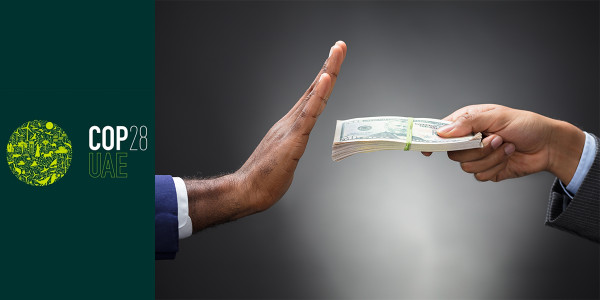
As Conference of the Parties (COP28) Wraps Up, We Must Remember, Aid to Africa Is (Still!) Not the Retort

Location: News
African Energy Chamber

By NJ Ayuk, Executive Chairman, African Energy Chamber (www.EnergyChamber.org).

There was an era when Africa and Western pop music were closely linked.

Western entertainers spearheaded a number of internationally renowned events to raise awareness about the plight of starving Africans and generate funds for famine relief.

In December 1984, the supergroup Band Aid sang about feeding the world, asking “Do They Know it's Christmas?” Within a year, the group had raised over USD9 million. Three months later, USA for Africa released “We Are the World” and banked USD44.5 million after one year for its African humanitarian fund. Then on a hot July day in 1985, the worldwide concert event Live Aid raised more than USD150 million for famine relief in Africa.

These are just a handful of grand and noble gestures intended to lift Africa out of poverty. And these famous events arguably raised both awareness and funds. Unfortunately, the efforts — and others like them — fall far short of making any real socioeconomic change. In fact, some argue that injecting monetary aid into Africa, time and time again, has actually done more harm than good.

I acknowledge that stance may sound ungrateful. At first blush, many might counter that starving people have no agenda. Destitute parents still need to feed their children. Turning a blind eye to their plight is inhumane.

Let me explain why the African Energy Chamber (AEC) continues to push for free-market solutions rather than good-will handouts.

History of ‘Help'

Even aid genuinely given to help Africa tends to do more harm than good.

Since 1960, more than USD2.6 trillion has been pumped into Africa in the form of aid. From 1970 and 1998, when aid was at its peak, poverty actually rose alarmingly — from 11% to 66% — due in large part to this massive influx of foreign aid that counteracted its intended good.

Aid decreased long-term economic growth by fueling systemic corruption, in which powerful aid recipients funneled foreign funds into a personal stash instead of public investment. Many leaders realized that they no longer needed to invest in social programs for their constituents because of the revenues from foreign donors.

Large inflows of aid also caused higher inflation, hindering African nations' international competitiveness in exporting. That resulted in diminishing the manufacturing sector – which is critical in helping developing economies grow — across the continent. And well-intentioned Westerners who saw the economic shrink just kept pouring more and more money at “the problem” — leading to a vicious cycle that furthered corruption and economic decline.

But here's the kicker: The World Bank has admitted that 75% of the agricultural projects it implemented to help Africa failed. So why do they and other aid providers continue to fund these failing efforts?

Examples of Failure

Across the continent, we see example after example of failed aid projects, with agricultural projects routinely providing little or no benefit to African farmers.

In Mali, the U.S. Agency for International Development (AID) injected USD10 million into “Operation Mils Mopti” to increase grain production. The government imposed “official” prices on the grain, which forced farmers to sell their crops at these below-market rates and resulted in grain production falling by 80%. 

AID also spent USD4 million to help livestock producers grow the number of cattle in the Bakel region from 11,200 to 25,000 — but ultimately only succeeded in increasing it by 882 head. Another USD7 million was injected into the Sodespt region, but that investment managed to sell only 263 cattle and failed to sell any goats or sheep.

Then we see example after example of Westerners wastefully “helping” without any understanding of the local situation. Norwegian aid agencies built a fish-freezing plant to improve employment in northern Kenya — a region where the local people traditionally do not fish because of their semi-nomadic pastoralist lifestyle. Couple the lack of fishing experience with the unfortunate reality that the plant required more power than was available in the entire region, and the result was that the brand-new processing plant sat idle.

The World Bank financed a USD10+ million expansion of Tanzania's cashew-processing capabilities, which resulted in 11 factories with the capacity to process three times as many cashews as the country was growing on a yearly basis. The plants were too efficient for the available workforce and cost so much to run that it was cheaper to process the raw nuts in India. Half the plants were inoperable, and the other half only ran at about 20% capacity.

I'm not saying that we Africans are ungrateful for the outpouring of heartfelt care. The compassion of the West is certainly real. However, the outcome of said compassion is the concern: The more foreign aid African governments receive, the worse they perform. As long as the aid keeps flowing, government leaders and their employees who administer development programs may prosper while the rest of the citizenry continues to suffer the effects of a mismanaged economy.

Questionable Benefits

We also must acknowledge that, in far too many cases, aid has also been given to African nations and communities in attempts to manipulate and control.

“While hungry faces are used on posters and in media reports to sell the virtues of foreign aid, it is the hungry who rarely see any of the funds,” James Peron, executive director of the Institute for Liberal Values in Johannesburg, South Africa, lamented in a piece for the Foundation for Economic Education. “Poverty may be used to justify the programs, but the aid is almost always given in the form of government-to-government transfers. And once the aid is in the hands of the state it is used for purposes conducive to the ruling regime's own purposes.”

And now we witness the international community talking about aid for African countries as a substitute for our oil and gas activities. Western environmentalists argue that Africa should keep all of its petroleum resources in the ground to prevent further climate change. In exchange for that sacrifice, African nations would be compensated and inject that money into other opportunities like developing their sustainable energy technologies.

I've said it before, and I'll say it again: What a horrible idea!

I‘m offended by foreign stakeholders feeling that providing humanitarian assistance gives them the right to influence our domestic decisions. With Africa poised to participate in the worldwide energy transition, my fear is that international donors will feel justified to dictate Africa's policy regarding the lengths to which, and speed with which, our energy transition occurs. This would be a huge step backward in our energy, economic, and even individual independence.

Aid packages to incentivize giving up our oil and gas operations will be detrimental to Africans. Because let's be honest: History has shown that this assistance could never replace the oil and gas industry's ability to create jobs and business opportunities, grow local capacity, open the door to technology sharing, facilitate economic growth, and alleviate energy poverty.

Instead of continuing a pattern that clearly does more harm than good, why aren't African nations encouraged to leverage the wealth of resources at our feet?

During the final few days of COP28 — and beyond — the AEC is determined to make a case for African nations harnessing their oil and gas solutions to help themselves. We will not be bullied, or manipulated with aid, into a path that is not in our best interests.

Use What We Have!

One reason why the AEC is an outspoken advocate for Africa's oil and gas industry is because it represents more than big revenue for African governments. It is a free-market solution that creates pathways for Africans to help themselves. And, ultimately, empowering Africans is our number one goal.

We endorse an energy mix approach that allows Africa to use and sell our own hydrocarbon reserves to alleviate energy poverty, while at the same time moving toward a future in which renewable energy sources power the continent. The energy mix method can help more people more quickly because it takes a practical, people-first approach to helping those who have traditionally been left behind by the energy sector, while moving us toward greener energy sources.

Natural gas, in particular, can transform African lives and communities. Its potential benefits range from eradicating energy poverty to allowing Africans to develop skills for good jobs to creating hope for our youth.

Ramping up gas production to help alleviate the lack of access to electricity will create thousands of new employment opportunities in Africa. In addition, the new sources of energy can be exported to Western countries to replace Russian energy. Then, as Europe transitions to sustainable energy, a larger portion of Africa's natural gas can power domestic needs. By the time other countries complete their transitions to carbon-neutral sources, Africa will have a much more expansive and reliable grid system, which will allow for an easier transition.

And before we argue about the evils of hydrocarbons, let me point out that, although it might seem counterintuitive, it is possible for Africa to make use of its abundant fossil fuels while moving toward a future sustained by renewable energy sources. In fact, I believe that African nations must do everything they can to ensure that these two things work in tandem. Considering that 600 million people on the continent have no access to electricity and 900 million people lack access to clean cooking technologies, it's impossible — if not altogether inhumane — to discuss climate change without looking at energy poverty.

As I recently wrote in an article published by Medium, we cannot transition from the dark to the dark. We must deliver energy to the people of Africa and then worry about transitioning to environmentally friendly alternatives, just like we have everywhere else in the world.

This has been our platform at COP28, and we will continue to stand by it in 2024 and beyond.

Distributed by APO Group on behalf of African Energy Chamber.

Media files
African Energy Chamber
Download logo
Read moreAs Conference of the Parties (COP28) Wraps Up, We Must Remember, Aid to Africa Is (Still!) Not the Retort
10 December 2023

Marokane re-joins Eskom as current chief executive

Location: News

Marokane re-joins Eskom as new chief executive

Public Enterprises Minister Pravin Gordhan has announced the appointment of Dan Marokane as the new Group Chief Executive of Eskom.

Marokane is a qualified Chemical Engineer, who has a MBA and is a seasoned executive with more than 20 years senior leadership experience, the Department of Public Enterprises said on Friday.

He is expected to join Eskom no later than 31 March 2024.

“The advertisement for the post attracted 409 applications. From this process, 12 prospects qualified to further steps in the selection process.

“[Marokane] has experience working in distressed organisations with visible and pressurized turnaround mandates. His recent assignment is at Tongaat-Hullet, where he stepped up to lead this financially distressed business when its Group Chief Executive resigned.

“Mr Marokane was a senior manager in Eskom from 2010 to 2015, holding various senior positions, including head of Group Capital in Eskom,” the department said.

Marokane was one of four senior managers suspended during the State capture period. He subsequently resigned and went into the private sector.

“Mandatory checks, which include criminal and credit checks, verification of identity, qualifications, directorships, and establishment of conflicts of interest were completed,” the department said.

The date of commencement will be announced once Marokane has concluded the handover process with his current employer.

“Mr Marokane thrives on challenges, has the drive to energetically tackle the challenges confronting Eskom and is also ethically grounded.

“The Board has been requested to constitute a professional, skilled and committed executive team that will collectively lead Eskom through a complex but exciting journey, including achieving energy security for our people and the economy, implementing the Eskom Just Energy Transition and concluding the restructuring of Eskom,” Gordhan said.

The Minister thanked the Board for conducting a competitive and transparent process for the appointment of the GCEO. – SAnews.gov.za

GabiK
Sun, 12/10/2023 - 09:47

232 views
Read moreMarokane re-joins Eskom as current chief executive
10 December 2023

Deputy President on working visit to Southeast Asia

Location: News

Deputy President on working visit to Southeast Asia

Deputy President Paul Mashatile has arrived in the Republic of Singapore to begin the first leg of his first working visit to Southeast Asia.

The Deputy President began his visit on Sunday with a tour of the Marina Barrage development, Singapore’s innovate water resource management project. 

As a resource-poor and water-scarce country, Singapore has invested significantly in research and development of water management and sustainability. Most impressively, the country has made big strides in the area of seawater desalination.

“The Deputy President’s visit to the country is aimed at building and strengthening bilateral relations, particularly increasing trade, economic, knowledge and cultural exchange between the two States,” the Presidency said in a statement. 

Singapore is a global financial hub and is considered one of the premier asset management centres in Asia. The World Bank has ranked Singapore as the number one country in the world for ease of doing business since 2006, and the country is an important global aviation and maritime hub. 

Singapore is also considered an important gateway for the export of goods and services to Southeast Asia and a hub for joint venture partnerships throughout Asia. It is an important centre for South African businesses looking for opportunities to expand operations on the continent.

As part of his programme, the Presidency said, Mashatile will visit the Lee Kuan Yew School of Public Policy and deliver a public lecture on the 30 years of diplomatic relations between South Africa and Singapore titled “Celebrating a journey of mutual respect, strategic partnership and cooperation.”

The Deputy President is accompanied in Singapore by Deputy Ministers for International Relations and Cooperation, Candith Mashego-Dlamini; Trade, Industry and Competition, Nomalungelo Gina; Higher Education, Science and Innovation, Buti Manamela; Communication and Digital Technologies, Philly Mapulane; Forestry, Fisheries and the Environment, Magdalene Sotyu, and senior government officials.

Trade and diplomatic links

One of the key areas of collaboration between South Africa and Singapore is trade. Singapore is one of South Africa's largest trading partners in Southeast Asia, with trade between the two countries totalling approximately R28 billion in 2022.

Singapore is a significant investor in South Africa, with investments totalling over R5 billion in sectors such as manufacturing, financial services and real estate.

South Africa's economic relations with Singapore are focused on trade, investment, tourism promotion and skills transfer.

South Africa exports a range of products to Singapore, including gold, diamonds and wine, while Singapore exports electronics, chemicals and machinery to South Africa.

In May this year, President Cyril Ramaphosa hosted Prime Minister Lee Hsien Loong of the Republic of Singapore for an Official Visit in Cape Town.

Singapore’s visit to South Africa continued the high-level engagement the two governments have fostered since diplomatic relations begun in 1993, ahead of South Africa’s democratic transition.  

Since then, the two countries have shared excellent bilateral relations, which have formed the basis of regular high-level visits.

2023 marks the 30th anniversary of the establishment of diplomatic relations between the Republic of South Africa and the Republic of Singapore as partners who work together closely in multinational fora. 

Singapore, like South Africa, is a member of the Indian Ocean Rim Association (IORA), the Commonwealth, as well as the Non-Aligned Movement (NAM).

The two countries have signed numerous agreements to enhance cooperation in areas such as trade, investment, education, and defence.

The May visit was preceded by an official visit undertaken by the Minister of International Relations and Cooperation, Dr Naledi Pandor, to Singapore in July 2022 to strengthen bilateral relations.

In May, President Ramaphosa and Prime Minister Hsien Loong held official talks on cooperation in the areas of communications and digital technology, science and innovation, water and sanitation and skills development.

The leaders discussed the potential for closer collaboration in these areas when they met on the sidelines of the G20 Leaders Summit held in Bali last year. 

The visit brought captains of industry from the respective countries to collaborate in sectors ranging from ports, logistics and supply chain, healthcare and biomedical, food manufacturing and engineering. – SAnews.gov.za

GabiK
Sun, 12/10/2023 - 12:58

222 views
Read moreDeputy President on working visit to Southeast Asia
10 December 2023

New reservoir to enhance water supply to Boksburg community

Location: News

New reservoir to enhance water supply to Boksburg community

The City of Ekurhuleni has commissioned a new 30 megalitre (ML) water reservoir to benefit communities and businesses in Rondebult, Mapleton, Roodekop Industries and Klippoortjie in Boksburg, Gauteng.

Member of the Mayoral Committee for Water, Sanitation and Energy, Thembi Msane, announced the launch of the new Cossins mega reservoir in the City of Ekurhuleni on Friday.

Msane said a total of 21 983 residential and business stands will be supplied by the reservoir. 

“The Cossins reservoir zone has the potential to supply an additional 53 606 stands when linked to the Dawn Park supply zone. This is part of the flagship initiative by the City of Ekurhuleni aimed at providing security of water supply to residents and businesses,” Msane said.

Msane said the project comprised the construction of the new 30ML Cossins Reservoir, with associated pipe work on site and the upgrading of the supply pipe from a Rand Water connection (RW4529).

“Before the commissioning of the reservoir, the available storage on the site comprised a single 8ML reservoir supplied from the RW1461 connection via a bulk supply pipeline that ran on the right-hand side of Rondebult Road towards the South,” Msane said.

The scope of the work done included the construction of concrete chambers, complete with the required meters, pipe specials, control and isolation valves to ensure effective operation of the system, a paved access road and clear view fencing.

Msane said the project has created a total of 43 job opportunities and sub-contracting opportunities for four local small, medium and micro enterprises. – SAnews.gov.za

GabiK
Sun, 12/10/2023 - 09:11

109 views
Read moreNew reservoir to enhance water supply to Boksburg community
  • Previous
  • Page 1
  • Interim pages omitted …
  • Page 88
  • Page 89
  • Page 90
  • Page 91
  • Page 92
  • Interim pages omitted …
  • Page 120
  • Next

Copyright © 2026 · MyZA · All Rights Reserved · Powered by Stratlec Online