• Skip to main content
  • Skip to header right navigation
  • Skip to after header navigation
  • Skip to site footer
MyZA

MyZA

News, Directory, Events and Other Stuff

  • Social Media
  • Sport
  • World News
  • Home
  • Submit News
  • Directory
  • Events
  • Stratlec
  • TFSA
  • News
    • APO
    • Today’s Sport News
    • Todays Social Media and Tech Headlines
    • Today’s World News
    • Today’s SA Financial News
  • Contact
You are here: Home / Archives for Civil Society

Civil Society

2 December 2024

Afrobarometer Connects Early-Career Researchers With Established Scholars to Build Analytical Capacity in Africa
Location: News
Afrobarometer

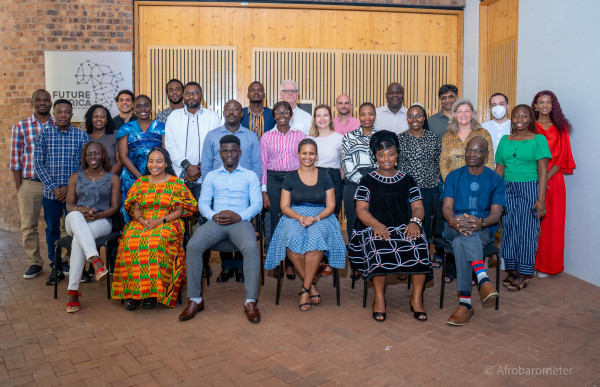
Afrobarometer (www.Afrobarometer.org) held its inaugural Emerging Scholars Workshop in November, bringing together early-career researchers and established scholars to enhance analytical skills and support the next generation of African researchers. This initiative aligns with Afrobarometer's objective of strengthening the continent's research ecosystem.

The workshop, held at the University of Pretoria's Future Africa campus, brought together 12 emerging scholars – half of them women – representing nine countries: Botswana, Benin, Cameroon, Ghana, Kenya, Malawi, Nigeria, South Africa, and Uganda.

Participants presented research papers covering diverse topics, received feedback from their mentors and peers, and engaged in professional development sessions designed to propel their academic and professional growth.

According to Jason Owen, Afrobarometer capacity building manager (advanced track), the workshop is in line with Afrobarometer's commitment to providing professional development opportunities for young African researchers.

“The emerging scholars that attended the workshop received detailed comments on their research from a panel of experienced academic mentors and peers,” he said. “The aim was to sharpen their analytical skills and to enable them to publish high-quality research using Afrobarometer data. We hope this type of workshop will foster a growing research and mentoring network that helps to build analytical capacity across Africa.”

The workshop also facilitated networking and collaboration. Nicole Beardsworth, a lecturer at the University of the Witwatersrand, highlighted the value of such gatherings. “PhD journeys can be isolating and lonely, but opportunities like the Afrobarometer Emerging Scholars Workshop provide a window for young scholars from around the continent to meet each other, find commonalities, forge collaborations, and create community,” she said.

A section of participants also noted that the workshop provided them with a transformative platform to engage with established academics, gain constructive feedback, enhance research skills, and build professional networks critical for advancing their academic and career aspirations.

“I was attracted to this workshop because it provides a unique opportunity to engage with seasoned scholars, participate in sophisticated research discussions, and develop essential skills for my professional growth,” said Mbiydzenyuy Courage Sevidzem from the University of Bamenda in Cameroon.

Over the past two and half decades, Afrobarometer has trained hundreds of young researchers, civil society activists, journalists, and parliamentarians through several capacity- building initiatives, including French- and English-language summer schools, thematic workshops, mentorships, university outreach initiatives, and staff development fellowships.

Distributed by APO Group on behalf of Afrobarometer.

For more information, please contact:
Daniel Iberi
Communications coordinator for East Africa
Email: diberi@afrobarometer.org
Telephone: +254 725 6744 57
Visit us online at www.Afrobarometer.org.

Follow us:
Facebook: Afrobarometer
Twitter: @ Afrobarometer
YouTube: @ Afrobarometer
Follow our releases on #VoicesAfrica. 

About Afrobarometer:
Afrobarometer (AB) is a trusted source of high-quality data and analysis on what Africans are thinking. With an unmatched track record of 388,000+ interviews in 42 countries, representing the views of 80% of the African population, AB is leading the charge to bridge the continent's data gap. AB data inform many global indices, such as the Ibrahim Index of African Governance, Transparency International's Global Corruption Barometer, and the World Bank's Worldwide Governance Indicators. The data are also used for country risk analyses and by credit rating and forecasting agencies such as the Economist Intelligence Unit. All AB data sets are publicly available on the website (www.Afrobarometer.org) and may be analysed free of charge using AB's online data analysis tool (https://apo-opa.co/3Vf0pB6).

Media files
Afrobarometer
Download logo
Read moreAfrobarometer Connects Early-Career Researchers With Established Scholars to Build Analytical Capacity in Africa
2 December 2024

School Pit Toilet Nightmare Solved Thanks to Civil Society

Location: News

Mampondo Primary School received 12 new aerobic sanitation system toilets

Read moreSchool Pit Toilet Nightmare Solved Thanks to Civil Society
1 December 2024

Minister announces 24/7 road safety operations at accident hotspots

Location: News

Minister announces 24/7 road safety operations at accident hotspots

Law enforcement authorities will be policing 20 of the country’s routes that have been identified as high-risk zones for accidents 24 hours a day, seven days a week, during the festive season to ensure road safety and compliance with the law. 

“The best research available tells us that most crashes occur during weekends, late at night and in the early hours of the morning. Accordingly, 24/7 traffic policing will be conducted on these routes over the festive season,” Minister of Transport Barbara Creecy said on Sunday in Pretoria.

She was addressing the launch of the Festive Season Road Safety Campaign, which will be heightened in high-risk zones.

“Law enforcement will focus on ensuring that drivers stick to the speed limits. Traffic officers will also inspect vehicles and lock up those caught in the act of drunk driving. Law enforcement will also be focused on border posts which experience a large increase in traffic during this time of year.

“We are working together with the Road Traffic Management Corporation (RTMC) as well as municipal and provincial departments responsible for transport and road safety to ensure that government does its utmost to enforce the law,” the Minister said.

With traffic volumes expected to increase ahead of the Christmas and New Year’s long weekends, the Minister called on all road users, drivers and pedestrians to take the necessary action to keep safe and ensure a reduction in the number of crashes on the roads.

In addition to the human cost, the cost of crashes includes vehicle repair costs and related incident costs.

Last year, road crashes cost the economy R205 billion, which translates into a whopping 2.74% of Gross Domestic Product (GDP) for 2023.

“Government alone cannot change this reality. We can only save lives if road users change their behaviour, because it is the behaviour of people that led to most of the 11 883 deaths on our roads last year. Even though the number of road fatalities/deaths decreased by 4.4% from 2022 to 2023, one death is one too many,” the Creecy said.

So far this year, in 2024, 10 154 people have already died on South Africa’s roads.

“To those who will be travelling to various destinations across the country let us remember that road safety is everyone’s responsibility, your behaviour determines whether you and your loved ones arrive alive.

“When using the roads this festive season take your safety and the safety of others seriously. Before you embark on any journey, make sure your vehicle is roadworthy. Carry your driver’s license and your driving permit if you need one.

“If you are a pedestrian, please cross the road at places that are designated for pedestrian crossings. Don’t walk in the centre of the road in the middle of the night, wear bright coloured clothing at night so that drivers can see you,” the Minister said.

She said fatigue is a silent killer. 

“If you are on a long journey, break the journey every two hours. Have a rest and something to eat before getting back on the road. Wear your seatbelt and stay within the speed limit. Don’t overtake on the barrier line. Travel during the day is much safer than travelling at night.

“If you are a pedestrian and you have been drinking alcohol, sleep where you are because many of the pedestrians that are killed late at night have been consuming alcohol and are not entirely clear of where they are walking.

“Do not drink and drive. If you are going to drink alcohol, make a plan to use public transport or designate the responsibility of driving. Ensure that you and your loved ones are alive,” Creecy said.

She said the Festive Season Road Safety Campaign was based on four pillars that include responsible driving, pedestrian safety, enforcement and education as well as partnerships and collaborations

“Alongside our patrolling interventions, we have also undertaken a campaign focusing on messaging on radio and social media. We have partnered with civil society and private sector to spread the message in every corner of our country.

“Given the data and our limited resources, we have set to implement targeted interventions for the festive season that are aimed at changing driver behaviour and enforcing enhancements,” the Minister said. - SAnews.gov.za


nosihle
Sun, 12/01/2024 - 13:33

47 views
Read moreMinister announces 24/7 road safety operations at accident hotspots
1 December 2024

Check your HIV status, urges Dr Nobatyi

Location: News

Check your HIV status, urges Dr Nobatyi

“People must be encouraged to test for and know their HIV status as this will save lives,” says Senior Clinical Manager, Dr Pidhumza Nobatyi.

Dr Nobatyi was speaking to SAnews on the sidelines of the World Aids Day commemoration at the Sisa Dukashe stadium in Mdantsane, in the Eastern Cape on Sunday.

She said living with HIV was no longer like in the past when people were dying because there was no treatment available.

Today, patients with HIV are living healthy and normal lives. “It’s not a death sentence, it can be treated,” she said.

Dr Nobatyi is a Senior Clinical Manager at the Buffalo City Metropolitan Municipality Health District overseeing 85 health institutions.

She said it was critical for everyone to know their status.

South Africa is on Sunday joining the global community in anchoring the World Aids Day 2024 commemorations on the protection of everyone’s right to receive universal access to quality health care for all its citizens. 

World Aids Day is commemorated annually across the globe in solidarity with the millions of people living with HIV as well as to raise awareness about the status of the epidemic, with a view to encourage HIV prevention, treatment, and care.

The 2024 theme: “Equal Rights, Equal Care” is a call for equal, equitable and dignified access to healthcare for all South Africans regardless of their economic status, gender, race or sexuality.

Community member, Nobantu Ntsaluba, told SAnews that government should do more to encourage people to practice safer sex and to have their status checked.

“It’s better to know your status, than to live not knowing your status. Today, there is help for those living with HIV, there is treatment,” Ntsaluba.

Ntsaluba called on young people to always practice safer sex and stick to one partner.

“People may contract the virus because they have multiple partners or they are not faithful to their partners,” she said.

First observed in 1988, World Aids Day, is marked annually to raise awareness about HIV and Aids while also recognising and honouring the lives lost.

Deputy President Paul Mashatile is leading today’s commemoration alongside the SANAC Civil Society Chairperson Solly Nduku, SANAC Private Sector Chairperson Nompumelelo Zikalala, Minister of Health Aaron Motsoaledi, Eastern Cape Premier Oscar Mabuyane, as well as representatives from development partners such as the UN Agencies UNAIDS, UNICEF, WHO, US government agencies the CDC, PEPFAR, USAID, research entities, civil society movements, the private sector and community members.

Community members from various areas in the Eastern Cape are also attending. – SAnews.gov.za

Edwin
Sun, 12/01/2024 - 12:13

79 views
Read moreCheck your HIV status, urges Dr Nobatyi
28 November 2024

MSF to roll out injectable HIV prevention drug in southern Africa

Location: News

Médecins sans frontières (MSF)
Download logo

As World AIDS Day approaches on December 1, Doctors Without Borders/Médecins Sans Frontières (MSF) is preparing to roll out long-acting cabotegravir (CAB-LA) for pre-exposure prophylaxis (PrEP) in its projects in southern Africa. CAB-LA, administered as an injection every two months, has been described as a potential game changer in the fight against HIV/AIDS and is one of the closest medical tools that exist to an HIV vaccine. 

PrEP is a medicine that's taken continuously or before a situation where someone is at high risk of contracting HIV and can help prevent them from getting infected, protecting the individual and curbing the spread of the virus.

“My excitement stems from the fact that CAB-LA, administered every two months, has been shown to be more effective than oral PrEP in reducing new HIV infections,” said Dr. Antonio Flores, an MSF HIV/TB advisor based in South Africa. “With no HIV vaccine or cure in sight, CAB-LA and other long-acting formulations can be a gamechanger in curbing the HIV epidemic if scaled up globally, especially in low- and middle-income countries, particularly among groups at higher risk of acquiring HIV.”

In Africa, four countries started offering CAB-LA in 2024: Zimbabwe, Malawi, Zambia, and eSwatini. South Africa is scheduled to receive a portion of the 231,000 doses of CAB-LA from the President's Emergency Plan for AIDS Relief (PEPFAR) before the end of the year. The remaining PEPFAR doses will be released over the next two years. After long negotiations with ViiV, the sole manufacturer of CAB-LA, MSF successfully secured a limited number of doses, which are expected to be administered in its projects in Zimbabwe, Mozambique, Malawi, and eSwatini later this year.

CAB-LA is more discreet than the once-daily oral PrEP pill and could encourage adherence to this form of prevention. Discretion can be especially important for key and vulnerable populations at risk of HIV, like girls and women, sex workers, and men who have sex with men. Another long-acting option, lenacapavir made by Gilead, can be administered every six months and is expected to expand prevention choices in the coming years.

“The launch of CAB-LA will be a great benefit to our patients and the people of Zimbabwe since it is expected to be an excellent method to increase PrEP uptake among at-risk populations,” said Dr. Gerald Hangaika from MSF's Mbare project in Zimbabwe. “In addition to offering an even better level of protection than oral PrEP, the injection every two months reduces the burden of adherence by doing away with the requirement to take oral tablets every day and the need to store a container of tablets, which enhances privacy. The triad of ‘privacy, convenience, and effectiveness' are key elements considered by most patients.”

CAB-LA was recommended for HIV prevention by the World Health Organization (WHO) in July 2022 as there are an estimated 1.3 million new HIV infections per year. However, ViiV distributed only enough CAB-LA for prevention for approximately 13,000 people in 2023—almost 70 percent of which was sold in high-income countries. For governments and countries to be able to roll out this lifesaving intervention at the scale needed, pharmaceutical companies like ViiV must adequately supply long-acting formulations, ensure affordable pricing for low- and middle-income countries, and support generic manufacturers that want to help boost the global supply of these lifesaving medicines.

“We see many vulnerable populations in conflict and unstable contexts that could definitely benefit from CAB-LA,” Dr. Antonio Flores said. “We are determined to bring this game-changing injection to these settings as well. We hope that ViiV can provide adequate supply.”

To prepare for the roll-out, MSF hosted a four-day training for clinicians, nurses, and future CAB-LA implementers. The training aimed to equip MSF medical staff with the latest knowledge, skills, and strategies to effectively lead and coordinate the roll-out of CAB-LA in MSF projects, thereby enhancing HIV prevention efforts and improving health outcomes in high-risk populations. The training covered topics such as the basics of CAB-LA, clinical eligibility, management of side effects, and PrEP counselling, education, and promotion, among other key topics.

While HIV infections have decreased by approximately 60 percent since the peak in 1995, new infections continue to emerge, particularly among women and girls in Africa. MSF has played a major role in responding to HIV/AIDS worldwide since the mid-90s, implementing prevention and treatment programs, employing innovative solutions to simplify care, and advocating with affected communities and civil society partners for equitable access to HIV medicines like antiretrovirals.

Distributed by APO Group on behalf of Médecins sans frontières (MSF).

Read moreMSF to roll out injectable HIV prevention drug in southern Africa
26 November 2024

Zimbabwe Commits to Boost Domestic Health Financing

Location: News

World Health Organzation (WHO) - Zimbabwe
Download logo

Zimbabwe has taken a significant step towards strengthening its health system by committing to increase domestic financing through a health levy, a sugar tax, establishment of National Health Insurance and other initiatives. This commitment was made during a three-day national dialogue on health financing, aimed at exploring sustainable strategies to improve the country's health sector which brought together key stakeholders, including government officials, healthcare providers, civil society organizations, and international experts, to discuss innovative approaches to bolstering financing to the country's health system.

Finance, Economic Development and Investment Promotion Deputy Minister Kudakwashe Mnangagwa announced $10 million through the Health Levy and $18 million through a sugar tax has been raised to date. These funds are intended to strengthen the country's health system and improve access to healthcare for all citizens.

“We will have periodical meetings between Treasury and the Ministry of Health and Child Care(MoHCC) to discuss major challenges facing the health sector, including budget utilisation, disbursements, cash support, as well as coming up with a minimum monthly health sector requirement to guide our cash flows,” he said.

The country is yet to meet the Abuja Declaration target of allocating 15% of its annual budget to health, leading to a healthcare system burdened by rising costs, limited resources, and inequitable access to care. Imposing taxes on unhealthy products like tobacco and alcohol can generate additional revenue for health programmes. Countries like Vietnam and South Africa have implemented such measures with varying degrees of success.

Key issues identified during the dialogue included the need to increase public revenue allocation to healthcare, improve the predictability and stability of funding flows, and strengthen accountability mechanisms. Collaboration with the private sector, establishing efficient cost-recovery mechanisms, ensuring health remains a priority in national budgets, leveraging indigenous knowledge systems, and timely disbursement of health funds were some of the recommendations brought forward during the meeting. In addition to sin taxes, levies, diaspora remittances, and climate financing, investing in preventive health programmes, expanding immunization programmes, and prioritizing allocation to primary health care and prevention of high-burden diseases were identified as some of the low-hanging fruits. 

To improve service delivery, shifting from siloed approaches to consolidated management structures, implementing cost-effective quality improvement initiatives, and identifying and eliminating wastage were also emphasized. Collaborating with civil society organizations, involving communities in decision-making, investing in capacity building for health workers, promoting innovation, developing social contracting policies, and promoting regional, national, and subnational knowledge exchange were also highlighted as important strategies. 

The World Health Organization (WHO) Representative to Zimbabwe Dr Desta Tiruneh commended the government's commitment to health financing and emphasized the need for collaboration between the MoHCC, the Ministry of Finance, and Parliament to implement proposed reforms and ensure equitable access to healthcare. He pledged WHO continued support to the government in implementing the recommendations provide during the dialogue and achieving the goal of Universal Health Coverage (UHC).

Distributed by APO Group on behalf of World Health Organzation (WHO) - Zimbabwe.

Read moreZimbabwe Commits to Boost Domestic Health Financing
26 November 2024

SA to mark World Aids Day

Location: News

SA to mark World Aids Day

Deputy President Paul Mashatile, in his capacity as the Chairperson of the South African National Aids Council (SANAC), will on Sunday lead the official commemoration of World Aids Day in East London.

World Aids Day is commemorated annually across the globe in solidarity with the millions of people living with HIV as well as to raise awareness about the status of the epidemic, with a view to encourage HIV prevention, treatment, and care.

The 2024 theme: “Equal Rights, Equal Care” is a call for equal, equitable and dignified access to healthcare for all South Africans regardless of their economic status, gender, race or sexuality.

“South Africa joins the global community in anchoring the World Aids Day 2024 commemorations, on the protection of everyone’s right to receive universal access to quality health care for all its citizens. 

“This is in line with the principles of the newly enacted National Health Insurance (NHI) model, which is a transformative policy aimed at addressing the inequalities in South Africa’s healthcare system,” said the Presidency.

Deputy President Mashatile will lead the commemoration alongside the SANAC Civil Society Chairperson Solly Nduku, SANAC Private Sector Chairperson Nompumelelo Zikalala, Minister of Health Aaron Motsoaledi, Eastern Cape Premier Oscar Mabuyane, as well as representatives from development partners such as the UN Agencies UNAIDS, UNICEF, WHO, US government agencies the CDC, PEPFAR, USAID, research entities, civil society movements, the private sector and community members.

As part of the programme on Sunday, Humile Mashatile, in her capacity as Patron of the Global Alliance, will participate at the launch of the Eastern Cape Provincial Global Alliance to End AIDS in Children by 2030. – SAnews.gov.za

Janine
Tue, 11/26/2024 - 12:17

8 views
Read moreSA to mark World Aids Day
26 November 2024

National Treasury committed to improving procurement systems

Location: News

National Treasury committed to improving procurement systems

National Treasury has asserted that it will take proactive steps to address the areas that need improvement in the country’s procurement systems.

An assessment based on the internationally recognised Methodology for Assessing Procurement Systems (MAPS) has revealed important strengths, as well as areas that need improvement within the country’s procurement framework.

“While the report identifies several areas that need additional attention, we view these findings as opportunities for continuous growth and improvement.

“National Treasury is deeply committed to the ongoing improvement of procurement systems. The MAPS report will serve as a roadmap, as we strive to uphold the highest standards of efficiency, accountability, and value for all stakeholders,” National Treasury said on Monday.

In 2023, National Treasury took the initiative to engage the Organisation for Economic Co-operation and Development (OECD) to assess the South African public procurement system. 

The assessment was carried out collaboratively by the OECD, the World Bank, the African Development Bank, National Treasury, and various public, private and civil society organisations.

The report acknowledges the significant advancement in areas such as the recent Public Procurement Act (Act 28 of 2024), which was signed into law by President Cyril Ramaphosa on 23 July 2024. 

This Act addresses many of the gaps identified in the report, including consolidating procurement provisions from multiple legislative instruments into a single framework, thereby reducing complexity and promoting a more coherent system.

Areas that were identified for improvement include an extensive, complex and fragmented legal and regulatory framework; the lack of comprehensive procurement planning; insufficient use of e-procurement systems as well as challenges in maintaining confidentiality and transparency.

In addition, the report highlights inadequate professionalisation and capacity-building initiatives; the substantial lack of information and visibility during the execution phase of contracts; delays in payments and limited access to procurement statistics as areas that need to be addressed.

Further areas of improvement include minimal involvement of civil society organisations in the procurement process; internal control and audit weaknesses; an ineffective multi-agency approach to combatting corruption characterised by limited capacity to investigate and prosecute corruption; and inadequate protection for whistleblowers.

“These findings underscore the need for improvements in these critical areas. In response, we are taking proactive steps to address the highlighted issues by introducing the Public Procurement Act and regulations; developing a sustainable public procurement strategy; strengthening the adherence to the publication of procurement information; improving the transparency of procurement data; enhancing the control and audit framework; overhauling the digital environment of the procurement system; increasing the use of open contracting data standards. 

“Additionally, we will implement a professionalisation roadmap for Supply Chain Management; contribute to a strong anti-corruption strategy; assist in strengthening whistleblower protection; and develop a framework to monitor and evaluate the implementation of the action plan. These reforms aim to enhance compliance, streamline our processes, and strengthen oversight in procurement,” National Treasury said.

National Treasury said it welcomes the opportunity to collaborate with partners and stakeholders as it implements these recommendations as part of the department’s broader Public Procurement Improvement Programme. - SAnews.gov.za


nosihle
Tue, 11/26/2024 - 08:00

96 views
Read moreNational Treasury committed to improving procurement systems
26 November 2024

Summit aims to develop actionable plans for road safety

Location: News

Summit aims to develop actionable plans for road safety

The Road Traffic Management Corporation (RTMC) in partnership with Uber will on Tuesday host the 2024 Road Safety Summit, bringing together experts from across all sectors to find urgent solutions to the number of vehicle crashes and fatalities. 

The summit comes at a critical time - just two weeks before the start of the holiday season - which often sees heightened traffic volumes as holiday makers travel to various destinations. 

“With the goal of halving serious injuries and fatalities by 2030, this gathering will be a continuation of 2023 discussions and will serve as a platform to reflect on our progress, identify gaps, and chart a path forward to a safer road environment for all South Africans,” said the RTMC in a statement.

The corporation said South Africa has made significant strides in road safety. 

South Africa has set itself a target of reducing road fatalities by 50% from 13 967 fatalities recorded in 2010, according to the National Road Safety Strategy 2016 to 2030. 

According to this target South Africa was supposed to have 11 500 (18% reduction) by the end of 2023, however, it managed to reduce fatalities to 11 883 (15% reduction).

Globally only ten countries achieved a 50% reduction in road fatalities, reductions of 40–49% were observed in 15 countries, 30–39% in 20 countries, 20–29% in 33 countries, and 10–19% in 19 countries, according to the World Health Organisation. During this period, reductions larger than 2% were observed in 108 countries.

“With only six years remaining until 2030, there is still much work to be done. The Department of Transport has initiated a comprehensive, multi-stakeholder evaluation of the NRSS to assess our achievements and identify areas for improvement,” it said.

Key challenges persist in the following areas:

• Strengthening collaboration across public, private and civil society sectors.

• Improving enforcement of road traffic regulations, particularly regarding seatbelt use and drink driving.

• Expanding the availability of provincial road traffic law enforcement at night and over weekends.

• Reducing speed in high-risk areas, especially where vehicle and pedestrian conflicts occur.

• Addressing infrastructure maintenance and prioritising roads with 3-star safety ratings.

•  Advancing vehicle safety standards and regulations.

The summit takes place from 26 to 27 November in Brixton, Johannesburg.  

It aims to develop actionable plans that can be implemented within the next 12 months to further enhance the NRSS. 

The RTMC said it would further foster greater collaboration between civil society, business and the public sector to ensure sustained efforts toward road safety. – SAnews.gov.za

Janine
Tue, 11/26/2024 - 09:48

22 views
Read moreSummit aims to develop actionable plans for road safety
25 November 2024

Amplifychange Marks 10 Years of Advancing Sexual and Reproductive Health and Rights

Location: News

Today marks 10 years of a pioneering effort to promote sexual health and rights in Africa and South Asia. Because of AmplifyChange (www.AmplifyChange.org) -funded support for local activists in key African countries, millions now have better access to comprehensive sexual and reproductive healthcare and information and can make decisions about their bodies and their relationships. Over the past decade, AmplifyChange has invested significantly in grassroots organisations dedicated to eliminating gender-based violence, including sexual violence, female genital mutilation, and child marriage. In Kenya, more than £20.5 million has funded over 35 projects, with £5.7 million specifically targeting these critical issues. South Africa has received over £15.4 million, including £5.1 million for nearly 20 initiatives. In Nigeria, £6.8 million has been granted, with almost £2 million funding around 25 projects, while in Senegal, over £2.1 million has been allocated, including £1.8 million for nine targeted initiatives.AmplifyChange has been the transformational vehicle supported by governmental, foundation, and private-sector donors. In partnership with the Ministry of Foreign Affairs Denmark, it today celebrates its tenth-anniversary event at Eigtveds Pakhus in Copenhagen. 

“The Government of Denmark was one of the founding donors that set up AmplifyChange to support locally-led groups to lead the work on Sexual and Reproductive Health and Rights in their communities. Denmark has been a proud supporter ever since. AmplifyChange has lived up to its ambitious name and brought empowerment and life-altering changes to millions of women, girls, and local communities over the last 10 years. We look forward to continuing the cooperation,” said Denmark's State Secretary for Development Cooperation Lotte Machon. 

AmplifyChange has funded 775 civil society organisations in the last ten years, distributing over GBP 125 million in grants across 67 sub-Saharan Africa and South Asia countries. The organisation's unique approach focuses on delivering funds directly to grassroots organisations, allowing for rapid response to community needs and efficient use of resources. Cameroon is one notable example where AmplifyChange has supported local groups like Reach Out Cameroon to address urgent SRHR issues worsened by ongoing conflict within the country, especially for women and girls. By involving men and boys in shifting social norms, challenging toxic masculinity, and reducing gender-based violence, these initiatives create a community-driven approach that supports immediate SRHR needs and builds lasting change in attitudes toward gender equality. In addition, AmplifyChange uses comprehensive impact assessment methods to track the effectiveness of its initiatives to ensure that each grant contributes to meaningful and sustainable progress in the key countries. 

Local community support has been essential for initiatives like Dance Into Space (DIS), a performing arts group in Siaya, Kenya, where Artistic Director Onyango Ondiege uses “artivism” to promote sexual and reproductive health and rights (SRHR) for people with disabilities. One member, Pamela Jura, a single mother of three, advocates for women with disabilities through dance, tackling stigma and human rights violations. DIS's “Breaking Barriers” initiative equips individuals with contemporary dance skills to raise awareness of the challenges faced by people with disabilities while encouraging understanding and empathy to drive social change. 

“In the past decade, AmplifyChange has proven the power of local action in addressing some of the most pressing SRHR issues worldwide,” said Dr. Narmeen Hamid, Board Chair of AmplifyChange. “Our partnerships with community organisations are at the heart of what we do, enabling local leaders to drive sustainable change and confront critical challenges that affect health and rights in their communities.” 

AmplifyChange was launched in 2014 by Her Majesty The Queen of Denmark during a United Nations General Assembly session, marking the beginning of a movement dedicated to improving SRHR for underserved populations in sub-Saharan Africa and South Asia. Through targeted funding and organisational strengthening, AmplifyChange has supported local organisations to tackle urgent issues, including gender-based violence, stigma, abortion access, youth rights, and healthcare availability for all. 

“AmplifyChange's support has allowed us to champion rights and health for LGBTIQ communities in ways that were once unimaginable,” said Anne-Marie Manga, AmplifyChange Strategic Adviser for Cameroon. “Our work brings visibility and resilience to people who are often marginalised, and it emphasises that SRHR advocacy is about dignity, health, and inclusivity for all.” 

“With AmplifyChange's partnership, we have been able to expand our reach and deepen our impact, particularly in underserved West African communities,” said Sory Ibrahima Monekata, Ph.D., Grant Director of Dambe Funds Sahel in Mali. “Their support has enabled us to implement essential programs and to build local capacity, ensuring that our advocacy and services are sustainable and rooted in the communities we serve.” 

AmplifyChange's 10th-anniversary celebration coincides with the first day of the global “16 Days of Activism Against Gender-Based Violence,” a fitting occasion to reflect on the progress made and the work still to be done. The organisation's impact in advancing SRHR highlights shared values of health equity, dignity, and justice that resonate globally and especially with communities throughout Europe. AmplifyChange remains committed to broadening its support and forging new partnerships to address critical SRHR needs, building healthier and more resilient communities in the process. 

Distributed by APO Group on behalf of AmplifyChange.

Contacts:
For more information, please contact:
communications@amplifychange.org  

West Africa Media: 
Anne Mireille
anne-mireille.nzouankeu@finnpartners.com 
+237 657 816 993 

East Africa Media: 
Sharon Quntai
sharon.quntai@finnpartners.com 
+254 728 224 952  

About AmplifyChange: 
AmplifyChange is a multi-donor challenge fund dedicated to advancing sexual and reproductive health and rights (SRHR) by empowering local organisations across sub-Saharan Africa and South Asia. AmplifyChange supports civil society advocacy and activist groups working on the most neglected and challenging SRHR issues globally today. By focusing on critical issues such as gender-based violence, stigma against sexual and gender minorities, abortion access, youth rights, and healthcare access for marginalised communities, AmplifyChange supports grassroots initiatives to ensure that resources reach communities most in need, promoting a just and inclusive world where every individual's health and rights are respected and protected. AmplifyChange collaborates with FINN Partners to amplify its mission and effectively communicate its global impact. 

Media files
AmplifyChange
Download logo
Read moreAmplifychange Marks 10 Years of Advancing Sexual and Reproductive Health and Rights
22 November 2024

Nelson Mandela Bay Municipality assures of safe festive season

Location: News

Nelson Mandela Bay Municipality assures of safe festive season

The Nelson Mandela Bay Municipality has committed to collaborating with all law enforcement agencies to keep residents and visitors safe during the festive season.

The municipality and South African Police Service (SAPS) this week unveiled the 2024 Safer Festive Season Programme with a zero-tolerance approach towards crime at an event held in Feather Market Hall.

Nelson Mandela Bay Municipality Mayor, Babalwa Lobishe, led the operation together with the SAPS Nelson Mandela Bay District Commissioner, Major-General Vuyisile Ncata and Mayoral Committee Members.

Speaking at the launch, Lobishe said the cooperation agreement includes all spheres of government and civil society in creating a safe and secure environment; development of programmes, plans, interventions and infrastructure that will seek to reduce the levels of crime; and alignment of strategies and coordination of implementation.

"Certainly, we would like to see a clean and safe city. That is why I applaud the EDTA's [Economic Development Tourism and Agriculture] initiative of internal collaboration with public health as well as with the SAPS, businesses, and the tourism industry to ensure that these conditions for a successful season are addressed in preparation for the 2024/25 summer season.

“We wish to welcome back home those who work in other towns and the thousands of tourists who will be enjoying our ‘Friendly City’ and assure them that we are ready to delivery yet another memorable festive season," Lobishe said.

The Mayor added that the Departments of Home Affairs and Correctional Services have been integrated into the festive season operation.

The launch was held in conjunction with a successful road safety roadblock on the N2 Neptune Bridge.

A total of 454 vehicles were stopped while 225 were searched. Traffic fines for unlicenced and unregistered vehicles were issued, including two arrests, one for unlicenced firearm and one for driving under the influence of alcohol.

Ncata said criminals were operating in an organised fashion, and due to this, the law enforcement agencies have jacked up their operations.

He said he was happy with the police readiness, saying whether it be the traffic services, police, or metro police, “we are going to intensify our operations”.

The Major-General warned that the police will not tolerate lawlessness in the city.

“We want to hit the [ground] running, we want to be in the hot spot areas and roadblocks and address our crime generators especially in our taverns [and] check their compliance as well. Criminals are brazen, while we have our own plans, they also have their own plans."

Ncata highlighted that since the signing of the cooperation agreement, the district has seen a reduction in crime statistics, especially in house robberies, car and truck jackings, and street robberies where firearms are used. – SAnews.gov.za


GabiK
Fri, 11/22/2024 - 11:22

19 views
Read moreNelson Mandela Bay Municipality assures of safe festive season
21 November 2024

ICC Pre-trial Chamber I Rejects the State of Israel’s Challenges to Jurisdiction and Issues Warrants of Arrest for Benjamin Netanyahu and Yoav Gallant

Location: News
International Criminal Court (ICC)

Today, on 21 November 2024, Pre-Trial Chamber I of the International Criminal Court (‘Court') (www.ICC-cpi.int), in its composition for the Situation in the State of Palestine, unanimously issued two decisions rejecting challenges by the State of Israel (‘Israel') brought under articles 18 and 19 of the Rome Statute (the ‘Statute'). It also issued warrants of arrest for Mr Benjamin Netanyahu and Mr Yoav Gallant.

Decisions on requests by the State of Israel

The Chamber ruled on two requests submitted by the Israel on 26 September 2024. In the first request, Israel challenged the Court's jurisdiction over the Situation in the State of Palestine in general, and over Israeli nationals more specifically, on the basis of article 19(2) of the Statute. In the second request, Israel requested that the Chamber order the Prosecution to provide a new notification of the initiation of an investigation to its authorities under article 18(1) of the Statute. Israel also requested the Chamber to halt any proceedings before the Court in the relevant situation, including the consideration of the applications for warrants of arrest for Mr Benjamin Netanyahu and Mr Yoav Gallant, submitted by the Prosecution on 20 May 2024.

As to the first challenge, the Chamber noted that the acceptance by Israel of the Court's jurisdiction is not required, as the Court can exercise its jurisdiction on the basis of territorial jurisdiction of Palestine, as determined by Pre-Trial Chamber I in a previous composition. Furthermore, the Chamber considered that pursuant to article 19(1) of the Statute, States are not entitled to challenge the Court's jurisdiction under article 19(2) prior to the issuance of a warrant of arrest. Thus Israel's challenge is premature. This is without prejudice to any future possible challenges to the Court's jurisdiction and/or admissibility of any particular case.

Decision on Israel's challenge to the jurisdiction of the Court pursuant to article 19(2) of the Rome Statute (https://apo-opa.co/4i2p05M)

The Chamber also rejected Israel's request under article 18(1) of the Statute. The Chamber recalled that the Prosecution notified Israel of the initiation of an investigation in 2021. At that time, despite a clarification request by the Prosecution, Israel elected not to pursue any request for deferral of the investigation. Further, the Chamber considered that the parameters of the investigation in the situation have remained the same and, as a consequence, no new notification to the State of Israel was required. In light of this, the judges found that there was no reason to halt the consideration of the applications for warrants of arrest.

Decision on Israel's request for an order to the Prosecution to give an Article 18(1) notice (https://apo-opa.co/40Y6DsN)

Warrants of arrest

The Chamber issued warrants of arrest for two individuals, Mr Benjamin Netanyahu and Mr Yoav Gallant, for crimes against humanity and war crimes committed from at least 8 October 2023 until at least 20 May 2024, the day the Prosecution filed the applications for warrants of arrest.

The arrest warrants are classified as ‘secret', in order to protect witnesses and to safeguard the conduct of the investigations. However, the Chamber decided to release the information below since conduct similar to that addressed in the warrant of arrest appears to be ongoing. Moreover, the Chamber considers it to be in the interest of victims and their families that they are made aware of the warrants' existence.

At the outset, the Chamber considered that the alleged conduct of Mr Netanyahu and Mr Gallant falls within the jurisdiction of the Court. The Chamber recalled that, in a previous composition, it already decided that the Court's jurisdiction in the situation extended to Gaza and the West Bank, including East Jerusalem. Furthermore, the Chamber declined to use its discretionary proprio motu powers to determine the admissibility of the two cases at this stage. This is without prejudice to any determination as to the jurisdiction and admissibility of the cases at a later stage.

With regard to the crimes, the Chamber found reasonable grounds to believe that Mr Netanyahu, born on 21 October 1949, Prime Minister of Israel at the time of the relevant conduct, and Mr Gallant, born on 8 November 1958, Minister of Defence of Israel at the time of the alleged conduct, each bear criminal responsibility for the following crimes as co-perpetrators for committing the acts jointly with others: the war crime of starvation as a method of warfare; and the crimes against humanity of murder, persecution, and other inhumane acts.

The Chamber also found reasonable grounds to believe that Mr Netanyahu and Mr Gallant each bear criminal responsibility as civilian superiors for the war crime of intentionally directing an attack against the civilian population.

Alleged crimes

The Chamber found reasonable grounds to believe that during the relevant time, international humanitarian law related to international armed conflict between Israel and Palestine applied. This is because they are two High Contracting Parties to the 1949 Geneva Conventions and because Israel occupies at least parts of Palestine. The Chamber also found that the law related to non-international armed conflict applied to the fighting between Israel and Hamas. The Chamber found that the alleged conduct of Mr Netanyahu and Mr Gallant concerned the activities of Israeli government bodies and the armed forces against the civilian population in Palestine, more specifically civilians in Gaza. It therefore concerned the relationship between two parties to an international armed conflict, as well as the relationship between an occupying power and the population in occupied territory. For these reasons, with regards to war crimes, the Chamber found it appropriate to issue the arrest warrants pursuant to the law of international armed conflict. The Chamber also found that the alleged crimes against humanity were part of a widespread and systematic attack against the civilian population of Gaza.

The Chamber considered that there are reasonable grounds to believe that both individuals intentionally and knowingly deprived the civilian population in Gaza of objects indispensable to their survival, including food, water, and medicine and medical supplies, as well as fuel and electricity, from at least 8 October 2023 to 20 May 2024. This finding is based on the role of Mr Netanyahu and Mr Gallant in impeding humanitarian aid in violation of international humanitarian law and their failure to facilitate relief by all means at its disposal. The Chamber found that their conduct led to the disruption of the ability of humanitarian organisations to provide food and other essential goods to the population in need in Gaza. The aforementioned restrictions together with cutting off electricity and reducing fuel supply also had a severe impact on the availability of water in Gaza and the ability of hospitals to provide medical care.

The Chamber also noted that decisions allowing or increasing humanitarian assistance into Gaza were often conditional. They were not made to fulfil Israel's obligations under international humanitarian law or to ensure that the civilian population in Gaza would be adequately supplied with goods in need. In fact, they were a response to the pressure of the international community or requests by the United States of America. In any event, the increases in humanitarian assistance were not sufficient to improve the population's access to essential goods.

Furthermore, the Chamber found reasonable grounds to believe that no clear military need or other justification under international humanitarian law could be identified for the restrictions placed on access for humanitarian relief operations. Despite warnings and appeals made by, inter alia, the UN Security Council, UN Secretary General, States, and governmental and civil society organisations about the humanitarian situation in Gaza, only minimal humanitarian assistance was authorised. In this regard, the Chamber considered the prolonged period of deprivation and Mr Netanyahu's statement connecting the halt in the essential goods and humanitarian aid with the goals of war.

The Chamber therefore found reasonable grounds to believe that Mr Netanyahu and Mr Gallant bear criminal responsibility for the war crime of starvation as a method of warfare.

The Chamber found that there are reasonable grounds to believe that the lack of food, water, electricity and fuel, and specific medical supplies, created conditions of life calculated to bring about the destruction of part of the civilian population in Gaza, which resulted in the death of civilians, including children due to malnutrition and dehydration. On the basis of material presented by the Prosecution covering the period until 20 May 2024, the Chamber could not determine that all elements of the crime against humanity of extermination were met. However, the Chamber did find that there are reasonable grounds to believe that the crime against humanity of murder was committed in relation to these victims.

In addition, by intentionally limiting or preventing medical supplies and medicine from getting into Gaza, in particular anaesthetics and anaesthesia machines, the two individuals are also responsible for inflicting great suffering by means of inhumane acts on persons in need of treatment. Doctors were forced to operate on wounded persons and carry out amputations, including on children, without anaesthetics, and/or were forced to use inadequate and unsafe means to sedate patients, causing these persons extreme pain and suffering. This amounts to the crime against humanity of other inhumane acts.

The Chamber also found reasonable grounds to believe that the abovementioned conduct deprived a significant portion of the civilian population in Gaza of their fundamental rights, including the rights to life and health, and that the population was targeted based on political and/or national grounds. It therefore found that the crime against humanity of persecution was committed.

Finally, the Chamber assessed that there are reasonable grounds to believe that Mr Netanyahu and Mr Gallant bear criminal responsibility as civilian superiors for the war crime of intentionally directing attacks against the civilian population of Gaza. In this regard, the Chamber found that the material provided by the Prosecution only allowed it to make findings on two incidents that qualified as attacks that were intentionally directed against civilians. Reasonable grounds to believe exist that Mr Netanyahu and Mr Gallant, despite having measures available to them to prevent or repress the commission of crimes or ensure the submittal of the matter to the competent authorities, failed to do so.

Background

On 1 January 2015, The State of Palestine lodged a declaration under article 12(3) of the Rome Statute accepting jurisdiction of the Court since 13 June 2014.

On 2 January 2015, The State of Palestine acceded to the Rome Statute by depositing its instrument of accession with the UN Secretary-General. The Rome Statute entered into force for The State of Palestine on 1 April 2015.

On 22 May 2018, pursuant to articles 13(a) and 14 of the Rome Statute, The State of Palestine referred to the Prosecutor the Situation since 13 June 2014, with no end date. 

On 3 March 2021, the Prosecutor announced the opening of the investigation into the Situation in the State of Palestine. This followed Pre-Trial Chamber I's decision (https://apo-opa.co/4fYvUHo) on 5 February 2021 that the Court could exercise its criminal jurisdiction in the Situation and, by majority, that the territorial scope of this jurisdiction extends to Gaza and the West Bank, including East Jerusalem. 

On 17 November 2023, the Office of the Prosecutor received a further referral of the Situation in the State of Palestine, from South Africa, Bangladesh, Bolivia, Comoros, and Djibouti, and on 18 January 2024, the Republic of Chile and the United Mexican State additionally submitted a referral to the Prosecutor with respect to the situation in The State of Palestine.

Distributed by APO Group on behalf of International Criminal Court (ICC).

For further information, please contact Fadi El Abdallah, Spokesperson and Head of Public Affairs Unit, International Criminal Court, by telephone at: +31 (0)70 515-9152 or +31 (0)6 46448938 or by e-mail at: fadi.el-abdallah@icc-cpi.int

You can also follow the Court's activities on Twitter (https://apo-opa.co/3CE1oV7), Facebook (https://apo-opa.co/4fUFF9J), Tumblr (https://apo-opa.co/40ZF16K), YouTube (https://apo-opa.co/3OnCATX), Instagram (https://apo-opa.co/4g1UEyR) and Flickr https://apo-opa.co/3CHEUT9).

Media files
International Criminal Court (ICC)
Download logo
Read moreICC Pre-trial Chamber I Rejects the State of Israel’s Challenges to Jurisdiction and Issues Warrants of Arrest for Benjamin Netanyahu and Yoav Gallant
20 November 2024

Call for collaboration to use technological innovations to address sanitation challenges

Location: News

Call for collaboration to use technological innovations to address sanitation challenges

Water and Sanitation Deputy Minister, David Mahlobo, has called for enhanced collaboration between government, the private sector and civil society to use technological innovations to help tackle the sanitation-related challenges experienced in parts of the country.

Mahlobo made the call at the Next Generation Water-Efficient Sanitation Technologies Investment Summit held in Sandton, Johannesburg, on Tuesday.

The summit, which coincided with World Toilet Day, was hosted by the Water Research Commission (WRC) in conjunction with South African Sanitation Technology Enterprise Programme (SASTEP) to highlight the various innovative solutions for sustainable sanitation and water security.

Mahlobo called for the investment of sanitation infrastructure and technological improvements to address sanitation challenges.

“We need significant investments in modern sanitation infrastructure and creative, forward-thinking solutions. Together, we can drive the change required to overcome the challenges in the sanitation sector,” Mahlobo said.  

Mahlobo acknowledged the WRC for its contribution in initiating innovative projects geared towards finding alternative sanitation solutions.

The innovations include, among others, the aptly-termed Next Generation Sanitation Technologies which will not only address the basic human right to sanitation but also align with environmental, social, and governance (ESG) objectives.  

Mahlobo said the reinvented toilets will offer significant advantages over traditional sanitation methods such as water-efficient and energy-neutral systems, which drastically reduce the environmental footprint of sanitation infrastructure.

The reinvented toilets will also safely treat human waste without the need for conventional sewage systems, protecting communities from waterborne diseases and can be deployed in schools, clinics, and public spaces where sanitation infrastructure is often inadequate.

“Furthermore, adding to the technological innovations, the Department of Water and Sanitation has developed the National Faecal Sludge Management Strategy. 

“The strategy is aimed at providing guidance to the sector on safe management of faecal sludge to enhance operation and maintenance of on-site sanitation systems, prevent groundwater contamination, safeguard public health, and protect the environment from pollution throughout the sanitation service chain,” Mahlobo said.

More work to be done to bring dignified sanitation services

While noting significant progress made towards addressing the sanitation backlog and providing appropriate sanitation to poor households since 1994, Mahlobo said much more work still needs to be done to bring about more dignified sanitation services to the communities.

Through government and stakeholders’ efforts, the number of households with access to proper sanitation has improved by 22.4% between 2002 and 2021, an increase from 61.7% to 84.1%, with most improvement made in Eastern Cape and Limpopo provinces.

“Despite the notable work, we do admit as government that we need to keep our sleeves rolled up to ensure that all citizens of this country get to experience the pleasure of dignified sanitation facilities,” Mahlobo said. – SAnews.gov.za

GabiK
Wed, 11/20/2024 - 10:56

405 views
Read moreCall for collaboration to use technological innovations to address sanitation challenges
20 November 2024

Eskom reaches no load shedding milestone

Location: News

Eskom reaches no load shedding milestone

Eskom has reached a new milestone having recorded its longest stretch of not implementing load shedding in five years.

South Africa has not experienced planned rolling blackouts since 26 March this year.

Minister of Electricity and Energy, Dr Kgosientsho Ramokgopa, told a media briefing that this is an indication that government’s Energy Action Plan, coupled with Eskom’s Generation Recovery Plan, is showing resilience.

“This means two things: load shedding is still an area that requires intervention. I have said that at the right time, when we are meant to call it, we’ll [say] its over but I’m not in a position to make that firm pronouncement.

“The second message this conveys is that the interventions are resilient. By that I mean that even if you have a cluster of units failing, the system is able to carry itself without us having to resort to load shedding. That’s important because it means that we have built some degree head space to allow for incidents where clusters of units fail,” he said.

The Minister emphasised that although the interventions are bearing fruit, “we want to sustain this momentum”.

“The system is performing exceptionally well. It is exceeding our own expectations. 

“We have been able to drastically reduce the amount of megawatts that are not available at any given time. In the comparable period, we were sitting at about 16 400MW not available at any given time and now we are averaging about 11 235MW. 

“There’s an improvement of that 5000MW of the same period last year. From an Energy Availability Factor, this marks an improvement of about 7.3%,” he said.

Ramokgopa highlighted that Eskom has spent at least R15 billion less than last year.

“That’s significant going into the future because these savings are going to be factored into the cost of electricity supply. So going into the future we’ll know that the primary energy, we were able to reduce that cost by R15 billion. 

“We are doing this as we maintain the health of the system. We are not compromising on our planned maintenance so in terms of our summer outlook, we are at about 6900MW of planned maintenance,” he said.

Draft Integrated Resource Plan 2023 (IRP 2023)

Ramokgopa told the media briefing that in terms of the Draft IRP 2023 stakeholder engagements, some 4338 public comments have been received while three rounds of public consultations and at least 26 other virtual and in-person engagements with civil society, industry, academia and government entities took place.

“Of these 4000 plus comments, 136 of these were substantive. There are people who were challenging a number of aspects or making suggestions on how best we can improve this model,” he said.

The Draft IRP is described by the department as South Africa’s electricity generation plan which lays out plans to ensure security of electricity supply by balancing supply with demand, while taking into account the environment and total cost of supply.

“Then next step is that we are deepening that conversation. So we are not [re]starting the public consultation…we are going back to those people who made those substantive submissions having done some degree of revision on the back of the submissions that we have received.

“We will have a physical engagement some time next week and we will have the targeted engagements. We will then consolidate those inputs,” he said.

A report emanating from consolidated inputs will then be tabled before Cabinet which will make a final decision on the plan. – SAnews.gov.za


NeoB
Wed, 11/20/2024 - 14:19

228 views
Read moreEskom reaches no load shedding milestone
19 November 2024

Brazil officially hands over G20 Presidency to South Africa

Location: News

Brazil officially hands over G20 Presidency to South Africa

By Gabisile Ngcobo

Rio de Janeiro - Brazil has officially transferred the historic Group of 20 (G20) Presidency to South Africa at the closing ceremony of the annual summit that was held in Rio de Janeiro, Brazil.

South Africa will make history as the first African country to preside over the G20, with approximately 130 meetings planned for 2025.

The ceremonial handover was conducted by President Cyril Ramaphosa and Brazilian President Luiz Inácio Lula da Silva, who both struck the ceremonial gavel before exchanging handshakes and smiles.

The prominent G20 Leaders’ Summit kicked off yesterday with Heads of State and their delegates being welcomed at the Museum of Modern Art. 

“It is an honour to accept, on behalf of the people of South Africa, the responsibility of the Presidency of the G20 for the next year,” the President said on Tuesday.

He took the time to congratulate the Brazilian President, a long-time friend, for a successful G20 Presidency that elevated the participation of social and civil society groups and convened the first-ever G20 Social Summit.

“South Africa firmly believes that civil society serves as a bridge between the G20 leaders and the people who have the greatest interest in their deliberations.”

The President has committed to maintaining this innovative platform for engagement throughout the country’s Presidency.

He said he believed that efforts during the Brazilian Presidency have tackled some of the world’s most urgent global challenges. 

President Ramaphosa praised the increased attention on the development agenda for developing countries and said they would build on the work that has already begun.

“We applaud all G20 members, led by Brazil, in finalising the G20 Rio de Janeiro Leaders’ Declaration, which outlines the actions we must take together to build a better world.  

“We appreciate that once sufficient consensus was reached on the declaration, those members who still had points of disagreement did not stand in the way of adopting the declaration.”

The Head of State said South Africa was committed to advancing the G20’s efforts to achieve greater global economic growth and sustainable development.

“We will work to ensure no one is left behind.”

Furthermore, he said South Africa would strive to harness global collective efforts to address the challenges worsened by the fragility of global solidarity, crippling underdevelopment, and increasing inequality.  

President Ramaphosa announced that South Africa had adopted the G20 presidency theme of “Solidarity, Equality, and Sustainability”.

“In line with this theme, we will seek to strengthen and advance our common pursuit of the Sustainable Development Goals and the Pact for the Future.”

He emphasised that achieving the Sustainable Development Goals by 2030 should be a priority for the next five G20 Presidencies. 

“Through our G20 Presidency, we will seek to strengthen solidarity. Whether it is in Gaza, Sudan, or Ukraine, we must all stand in solidarity with those people who are facing hardship and suffering.”

READ I Lamola urges global citizens to hold G20 leaders accountable

He expressed his support for nations who are most vulnerable to pandemics and other global public health crises, highlighting that many countries in Africa are currently facing mpox outbreaks that require urgent international action.

He stressed that through the country’s G20 Presidency, they will address inequality, a major threat to global economic growth and stability.

“The disparities in wealth and development within and between countries are unjust and unsustainable. These disparities show themselves in the lack of predictable and sustainable financing and capacity building for climate action.”

He said they were using the moment to firmly place the development priorities of the African continent and the Global South on the G20 agenda.

The focus areas include inclusive economic growth, industrialisation, employment, inequality and food security.

“South Africa looks forward to working with all G20 members and invited guests and I am honoured to welcome you all to South Africa in the year ahead.” – SAnews.gov.za


Gabisile
Tue, 11/19/2024 - 19:32

78 views
Read moreBrazil officially hands over G20 Presidency to South Africa
18 November 2024

Spotlight on prevalence of GBV on women with disabilities

Location: News

Spotlight on prevalence of GBV on women with disabilities

The Department of Women, Youth and Persons with Disabilities (DWYPD) will use the ongoing Disability Rights Awareness Month (DRAM 2024) to shine a spotlight on the often-overlooked prevalence of gender-based violence (GBV) on women living with disabilities.

This is according to the Minister of Youth and Persons with Disabilities, Sindisiwe Chikunga, who on Monday received the first South African National Gender-Based Violence Prevalence Study: A Baseline Survey on Victimisation and Perpetration, conducted by the Human Sciences Research Council (HSRC).

The study revealed that overall, 7.7% of women aged 18 years and older had a disability.

The study noted that a higher proportion of ever-partnered women with a disability compared to those with no disability had experienced lifetime physical violence (29.3%) for women with disabilities compare to 21.7% for women with no disability.

About 31.2% of women with a disability have experienced physical and/or sexual violence (31.2%), emotional abuse (31.9%), economic abuse (16.3%) and controlling behaviours (60.0%) by a partner in their lifetime.

The study also noted that the prevalence of sexual violence from a partner was twice as high with (14.6%) for ever-partnered women living with a disability compared to 7.2% of women who did not report a disability.

With regards to the prevalence of recent forms of intimate partner violence (IPV), the report found no significant differences observed between ever-partnered women with a disability and women without a disability for recent physical violence which was 4.3%, including 3.6% of sexual violence, physical and/or sexual violence was at 6.9%, emotional abuse 9.6% and economic abuse which was at 4.4%.

“The high rates of violence experienced by women, with even higher rates experienced by women with a disability, underscores the need for government, professionals and service providers to play a crucial role in identifying women affected by GBV and to ensure that women with disabilities are included in prevention plans,” the report recommended.

Reacting to the figures on women with disability, Chikunga said heinous crimes are being committed against women who can neither hear, see, nor talk, noting that “for these women, justice is almost always denied”.

The report comes as the country continues to observe Disability Rights Awareness Month.

Chikunga said the final week of DRAM 2024 will focus on the security of persons with disabilities, addressing both natural and human-made disasters, including the pervasive threat of GBVF.

“With the 7th administration in full swing, our message is clear: the master's tools will not destroy the master's house. We need new tools, and we need them urgently. We will not tinker on the edges,” Chikunga remarked.

DRAM runs from 3 November to 3 December.

READ | Chikunga launches Disability Rights Awareness Month

Immediate action

Chikunga said the findings of the study, which revealed that that about 7 310 389 million of all women aged 18 years and older have experienced physical violence in their lifetime, should serve as a source of shame but also a call to immediate action.

She said the findings and recommendations will contribute to government’s ongoing focus on prevention, enhanced protection for victims, and ensuring that perpetrators are held accountable.

Additionally, the department is currently preparing for its five-year strategic planning session and will not only invite the team behind the study to present at the session, but also incorporate their recommendations into the five-year strategic plan.

“We need community intelligence on this complex subject—researchers, scholars, advocates, and activists who will go beyond reproducing mainstream narratives and get a granular picture from communities that face violence at a community or even street level, to ensure that justice is served.

“One of the first actions required is to challenge and deliberately repurpose all values and practices across educational, religious, cultural, sporting, and creative environments to support the fight against patriarchal chauvinism in all spheres of life. 

“We must influence the content and delivery of school curricula to nurture youth who reject the patriarchal script and the violence it perpetuates in every aspect of life,” Chikunga said.

In addition, the department will be responsible for integrating the study’s findings into the National Strategic Plan on GBVF. This includes recalibrating existing policies and programs to align with the evidence presented in the study.

The National Strategic Plan was adopted in 2020 as a society-wide programme to end gender-based violence and femicide.

The department will also benchmark from how others have fought GBVF in their contexts. 

“For example, in their 2023 study, Marco Colagrossi and colleagues drew from high-frequency data from the Italian anti-violence helpline, police reports of domestic abuse, and a unique geospatial dataset on killings of women to show that news coverage of a femicide triggers an increase in help-seeking behaviour.  They also found that help-seeking increases more when the general interest and news coverage are higher.

“We need more work in this area of research. We will also continue to mobilise funding from both public and private sector sources to ensure that our interventions against GBVF are adequately resourced. Support for civil society will be crucial in this regard,” the Minister said. – SAnews.gov.za

GabiK
Mon, 11/18/2024 - 16:03

166 views
Read moreSpotlight on prevalence of GBV on women with disabilities
18 November 2024

Over seven million women have experienced physical violence, study reveals

Location: News

Over seven million women have experienced physical violence, study reveals

A study on gender-based violence (GBV) has revealed that about 7 310 389 million women, aged 18 years and older, have experienced physical violence in their lifetime.

This as the first South African National Gender-Based Violence Prevalence Study: A Baseline Survey on Victimisation and Perpetration, conducted by the Human Sciences Research Council (HSRC), was released at a media briefing held in Pretoria on Monday.

The study presents findings of the first national study on the prevalence of gender-based violence in all nine provinces of South Africa. It outlines the prevalence of physical, sexual, emotional and economic violence, as well as psychological abuse such as controlling behaviours among youth and adults 18 years and older.

The study also examined the perpetration of violence by men against their female partners and the underlying role of gender norms in driving GBV.

The study was presented by HSRC Research Director, Dr Nompumelelo Zungu, and it revealed that lifetime physical violence was significantly higher among Black African women with 35.5%, compared to women of other race groups.

“Lifetime physical violence was also significantly higher among women who were cohabiting but not married [43.4%] compared to women who were currently married and women who were not currently in a relationship,” Zungu said.

On the prevalence of lifetime sexual violence – regardless of partnered status - the study found that an estimated 2 150 342 million women nationally had experienced sexual violence in their lifetime, and this was significantly higher among women who were cohabiting but not married [14.9%], compared to women who were currently married [8.5%].

The study also showed that 35.5% of women reported experiencing lifetime physical and/or sexual violence during their lifetime.

“This translates to an estimated 7 847 438 million women who experienced lifetime physical and or sexual in South Africa.

 Lifetime physical and/or sexual violence was significantly higher among women aged 35 – 49 years than those aged 50 years and older.

“Black African women were the most affected compared to other race groups. A higher proportion of women who were cohabiting but not married reported experiencing lifetime physical and/or sexual violence, compared to women who were currently married and those who were not currently in a relationship,” Zungu said.

Physical, sexual violence in the past 12 months

In addition to measuring lifetime experiences of violence, the survey measured recent experiences of GBV which are defined as experiences of some form of GBV victimisation in the past 12 months.

About 1 536 729 million women reported that they had experienced either physical and/or sexual violence in the past 12 months, while about 1 338 336 million reported that they had experienced physical violence in the past 12 months, and 432 525 reported that they had experienced sexual violence in the past 12 months.

On physical intimate partner violence (IPV) – victimisation among women - the study found that an estimated 3 221 649 million of ever-partnered women reported experiencing physical violence by a partner in their lifetime.

Zungu noted that lifetime physical IPV was significantly higher among those who were cohabiting with a partner (22.4%) but not married compared to women who were currently married (18.5%).

Overall, an estimated 2 495 451 million of ever-partnered men reported perpetrating physical IPV towards a partner during their lifetime.

“The result shows that perpetration of lifetime physical IPV started early and was significantly higher among men aged 25-34-year-old [20.5%] and 35-49-year-old men [17.6%] compared to 18-24-year-old men [9.2%]. An analysis by marital status and living arrangements showed similarities to the IPV data of women.

“Lifetime physical IPV perpetration was higher among men who were cohabiting with a partner but were not married [24.5%], compared to men who had a partner and were not cohabiting [13.9%], and men who were currently married [15.4%],” Zungu said.

Recommendations

The study recommended that The Presidency, working with the Department of Women Youth and Persons with Disabilities, and civil society, be tasked with the role of convening key stakeholders to consensus building workshops or smaller focused sessions for the purpose of starting a broader dialogue aimed at developing a set of agreed-upon, actionable, evidence-based recommendations that are informed by the study results for the country.

“We recommend that interventions be implemented at individual, interpersonal, community, and societal levels. This approach can assist to address the complex nature of GBV and improve prevention efforts across society.

“A collaborative approach involving various stakeholders, including government departments and other organisations, is crucial for effective implementation,” Zungu said. – SAnews.gov.za

GabiK
Mon, 11/18/2024 - 14:38

3 views
Read moreOver seven million women have experienced physical violence, study reveals
18 November 2024

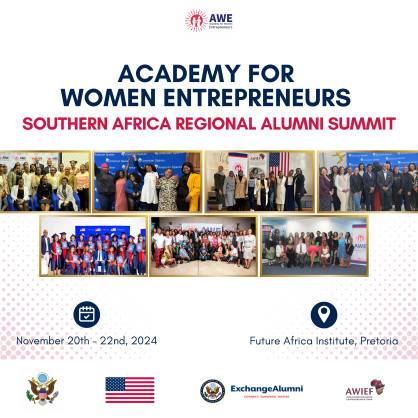
Announcing the Academy for Women Entrepreneurs Southern Africa Regional Alumnae Summit

Location: News
Africa Women Innovation and Entrepreneurship Forum (AWIEF)

The U.S. Mission to South Africa, in partnership with the Africa Women Innovation and Entrepreneurship Forum (AWIEF) (www.AWIEForum.org), is proud to announce the 2024 Academy for Women Entrepreneurs (AWE) Southern Africa Regional Alumnae Summit. This highly anticipated 3-day event will take place at the University of Pretoria (UP) Future Africa Campus (FAC), Pretoria, South Africa, from November 20th to 22nd, 2024, during Global Entrepreneurship Week.

The AWE Regional Alumnae Summit brings together women entrepreneurs from the Southern Africa Customs Union (SACU) countries Botswana, Eswatini, Lesotho, Namibia, and South Africa, who have participated in the prestigious AWE program between 2019 and 2023.

The Summit aims to foster regional collaboration and create new opportunities for business expansion and trade. Key objectives include:

  • Building Networks: Strengthening connections among women entrepreneurs across SACU nations to share insights, foster partnerships, and collaborate on business ventures.
  • Accessing Regional Markets: Exploring strategies for trade expansion, accessing regional markets, and creating mutually beneficial partnerships.
  • Embracing Innovation: Providing learning opportunities on the latest digital innovations and how they can drive entrepreneurship and growth in Africa.

Participants will have the opportunity to engage with government officials, civil society organizations, and investors, all of whom share a commitment to advancing women's economic empowerment and entrepreneurship across the region.

The AWE Southern Africa Regional Alumnae Summit underscores the importance of women-led businesses in driving economic development and gender equity. By connecting entrepreneurs with stakeholders focused on trade, investment, and innovation, the Summit aims to catalyze sustainable business practices and inclusive economic growth across Southern Africa.

The Summit will host alumnae entrepreneurs, government representatives, and investors, creating a unique platform for dialogue, learning, and collaboration. Selected participants will have their travel and accommodation expenses covered, ensuring inclusivity and accessibility.

The 2024 AWE Southern Africa Regional Alumnae Summit promises to be a landmark event for women entrepreneurs, offering invaluable opportunities to connect, learn, and grow. Together, we will continue to foster a culture of innovation, trade, and economic empowerment across the Southern African region.

For more information about the AWE program and the upcoming Summit, visit https://apo-opa.co/3OaefRs

Distributed by APO Group on behalf of Africa Women Innovation and Entrepreneurship Forum (AWIEF).

Media files
Africa Women Innovation and Entrepreneurship Forum (AWIEF)
Download logo
Read moreAnnouncing the Academy for Women Entrepreneurs Southern Africa Regional Alumnae Summit
18 November 2024

Africa Tech Festival 2024 showcases innovation across Africa’s technology ecosystem

Location: News

Africa Tech Festival
Download logo

Over 15,000 attendees were welcomed to the 27th annual Africa Tech Festival (www.AfricaTechFestival.com) by South African Minister of Communications and Digital Technologies, Hon. Solly Malatsi. The Department is an official partner of this year's event, which features more than 300 exhibitors and 400 speakers representing all facets of the tech ecosystem.

Emphasising a shared vision of a digitally connected, inclusive, and prosperous Africa, leveraging technology to drive economic and social progress, the Minister reaffirmed host country South Africa's commitment to bridging the digital divide through policy, partnerships, and investments in universal connectivity and affordability. “While technology holds enormous promise, it is essential that we harness this potential in a way that can benefit all the people on the continent and the rest of the world. South Africa is honoured to play its role on this journey, both as a leader and a partner to our fellow African countries,” he said.

Organised by Informa Tech (https://www.InformaTech.com/), the Africa Tech Festival's anchor events –AfricaCom, AfricaTech, and AfricaIgnite – along with the AI Summit Cape Town, provided delegates with the opportunity to explore enterprise tech innovation and disruption across key sectors such as cybersecurity, cloud, data centres, and green ICT.

Highlights of the first two days of the event, which ran from 12 to 14 November at the Cape Town International Convention Centre, included:

AI Summit Cape Town

Hon. Mondli Gungubele, Deputy Minister of Communications and Digital Technologies, opened the inaugural AI Summit Cape Town. Along with introducing the newly-formed AI Institute of South Africa, he called for collaboration among government, industry, academia, and civil society to maximise AI's benefits while addressing challenges like job displacement and ethical considerations, saying, “Let's seize this opportunity to shape a future where AI helps us uplift our citizens, drive economic growth, transform our society for the better and leave no one behind.”

The AI Summit features the biggest names and brightest minds in AI, all exploring how this transformative technology can create a brighter future for Africa. For instance, the panel session Navigating AI Policy Challenges: Collaborative Approaches to Strengthen Governance in Africa focused on fostering global cooperation in AI governance, emphasising cross-border collaboration, universal safety standards, and ethical innovation. The discussion also highlighted the role of public-private partnerships in implementing equitable AI policies.

AfricaIgnite

AfricaIgnite is the flagship event for founders, investors, and key players in the tech ecosystem. It supports market access and investment opportunities.

The panel Overcoming the Funding Winter: Strategies for Early-Stage Start-Ups highlighted resilience in the early-stage start-up ecosystem, exploring strategies employed by successful start-ups to attract investors and secure funding in a competitive market. It also examined the role of accelerators and incubators in fostering growth and supporting the development of African tech start-ups.

A dynamic fireside chat on The Rise of Debt Financing as an Alternative Funding Model explored the growing appeal of debt financing for late-stage start-ups, delving into the key drivers behind this trend. The benefits of debt financing and insights into the strategic considerations start-ups should evaluate when transitioning to this alternative funding model were also discussed.

Another high-level panel, titled The Search for Liquidity: Navigating African Startup Exits, explored the growing dominance of mergers and acquisitions (M&A) as the main exit strategy for African start-ups, especially in fintech, with IPOs remaining scarce. It also examined the factors driving this trend and its impact on the African startup ecosystem.

AfricaCom

AfricaCom brings together Africa-focused connectivity leaders and the brightest minds in the telecoms space. Within the Connectivity & Digital Infrastructure stream, an insightful panel discussion on Connecting Africa's Next Billion: Scaling Africa's Digital Infrastructure explored the economic and social benefits and challenges of expanding internet connectivity. Industry experts and stakeholders discussed the critical role of governments, telcos, and tech innovators in building sustainable infrastructure to expand internet access, particularly in remote and underserved areas, to advance digital inclusion across the continent.

In the Telcos of Tomorrow stream, panellists explored AI's transformative potential in the telecoms sector in a session titled Integrated AI: Telco Blueprints for Business Model and Service Delivery Transformation. Emphasising how AI optimises complex organisational systems, the panel discussed the challenges of implementing these systems.

AfricaTech

Driving funding for female-led start-ups was the theme of the Empowering Female Founders: Narrowing the Gender Gap in Venture Capital panel discussion, which addressed the persistent challenge of gender disparity in African venture capital. Networks, mentorship, technical support, celebrating successful female founders as role models, and challenging stereotypes were some of the topics.

“2024 is a standout year for Africa Tech Festival, being the largest event in almost three decades. We have more attendees and exhibitors, more features, more content, and more opportunities to position Africa as a tech powerhouse. The opening days have been overwhelmingly positive, with delegates engaging, networking, and sharing insights that have the potential to reshape Africa's tech ecosystem. We are seeing innovative solutions to the continent's tech challenges and a commitment to contribute positively to growing Africa's economic potential. I'm confident that this will continue not only for the remainder of the event but into the future as well,” concluded James Williams, Event Director of Africa Tech Festival.

Visit the AfricaTech Festival website (http://apo-opa.co/3ANhFGy) for more details.

Distributed by APO Group on behalf of Africa Tech Festival.

About Africa Tech Festival:  
Africa Tech Festival, including anchor events AfricaCom, AfricaTech, AfricaIgnite & AI Summit Cape Town is part of the Informa Tech Connecting Africa event series. A vibrant celebration of Africa's diverse community of tech champions, Africa Tech Festival is the largest tech and digital connectivity conference and exhibition in Africa, attracting hundreds of exhibitors, more than 450 speakers and more than 15000 delegates.  

Read moreAfrica Tech Festival 2024 showcases innovation across Africa’s technology ecosystem
17 November 2024

SA makes progress with HPV vaccination to prevent cervical cancer

Location: News

SA makes progress with HPV vaccination to prevent cervical cancer

As the country joins the global community in marking four years of the global movement known as the Cervical Cancer Elimination Day of Action, the Department of Health has expressed confidence in the nation’s progress in combating cervical cancer. 

Through expanded screening and testing initiatives, the country is making strides toward preventing cervical cancer as a public health challenge.

According to the department, the country has one of the highest rates of cervical cancer among women and faces a significant burden, with an estimated 13 800 new cases annually. 

According to the World Health Organisation, cervical cancer is the fourth most common cancer in women globally with around 660 000 new cases and around 350 000 deaths in 2022. 

“In South Africa, cervical cancer is the second most common cause of cancer in women. Though, cervical cancer can be cured if diagnosed at an early stage and treated promptly,” the department said. 

Cervical Cancer Elimination Day of Action, observed annually on 17 November each year, marks a historic commitment made in 2020 by 194 countries, including South Africa, to eliminate cervical cancer. The campaign aligns with the launch of the World Health Organization's Global Strategy to achieve this groundbreaking goal.

“The government has introduced a number of interventions to prevent cervical cancer amongst women, and these include the launch of Human Papillomavirus (HPV) vaccination campaign in 2014 to reduce the incidence of cancer of the cervix mainly targeting all girls in grade 5, aged 9 years and older in all public and special schools. 

“So far, between 85% and 89% of targeted girls received one or more doses. Studies have shown that vaccination in late childhood/early adolescents is effective as strong immunity develops (before onset of sexual activity),” the department said. 

The department highlighted that over this period more than 7.1 million doses have been administered, and more than 4 million girl learners protected. 

“It is estimated that approximately 85% of girls 9 – 15 years in public schools and approximately 75% of all girls 9 – 15 years in South Africa have been vaccinated and are protected from developing cervical cancer. The programme has since been extended to private schools effective from this year in order to ensure no girls child is left behind, with or without medical aid,” the department said. 

The success of the HPV vaccination programme in South Africa has been attributed to high level political commitment by the Ministries of Health and Basic Education including civil society, parents and school governing bodies, dedicated funding from the National Treasury. 

This year’s commemoration focuses on healthcare workers for their commitment in the fight against cervical cancer which is encapsulated in the theme: “Elevating Frontline Health Workers: Transforming Global Commitments into Lifesaving Actions”. 

It underscores the critical role that healthcare professionals play in enhancing awareness, screening, and treatment of cervical cancer. 

“Healthcare workers (HCWs) are pivotal in implementing cervical cancer screening programs and educating communities about prevention. Their knowledge and attitudes significantly influence screening uptake among women. Studies have shown that inadequate knowledge and misconceptions among HCWs can lead to suboptimal care for cervical cancer patients, highlighting the necessity for continuous education and training,” the department said. 

It is for this reason that the Department of Health, in collaboration with World Health Organisation, is rolling out capacity training for clinicians in provinces to improve their confidence in performing cervical cancer screening, diagnosis and treatment procedures. 

“A total number of 405 299 girl learners (88.6% of the target population) received HPV vaccination during February/March 2024 round of HPV vaccination against cervical cancer. To date, 17 of the country's 52 health districts have begun using HPV testing with more districts expected to start during the current financial year,” the department said. 

While the country is making progress with HPV vaccination, the department noted that cervical screening and treatment are lagging behind. 

Thus, the department has reminded parents and care givers to ensure that all eligible girls who missed HPV dose, should get catch-up doses offered in primary health facilities free of charge. – SAnews.gov.za


DikelediM
Sun, 11/17/2024 - 16:30

58 views
Read moreSA makes progress with HPV vaccination to prevent cervical cancer
17 November 2024

Regional Call-For-Action From the Children of Botswana, Malawi, Mozambique, Namibia, South Africa, Zambia and Zimbabwe

Location: News

United Nations Children’s Fund (UNICEF)
Download logo

All children have the right to a quality education, to grow up in a safe and secure environment and to be protected from harm. Children's rights are human rights, enshrined in the Convention on the Rights of the Child.  Yet too many children cannot realize these rights and face exclusion, discrimination, violence, and exploitation. Children have the right to grow up in a world where every child is valued, included, empowered and protected.

As children of Botswana, Namibia, Malawi, Mozambique, South Africa Zambia and Zimbabwe, we recognize all the work done our respective Governments to promote the rights of children. But there is still much work to do to ensure that the rights of all children to a quality education are protected, promoted and fulfilled - without discrimination.

Our unified Call-for-Action on World Children's Day, aligned with the specific theme of the 2024 Regional World Children's Day commemorations "Educate and Skill the African Child for Posterity" is to drive progress in the following areas. Our Call-for-Action is informed by broad national consultations involving more than 5000 children across our seven countries, organized among our peers with the support of our Governments and civil society partners.

We, the children from Botswana, Namibia, Malawi, Mozambique, South Africa, Zambia and Zimbabwe, call on our leaders to listen to our voices, include us in decisions which affect us, adopt and implement our solutions and invest in our present and future.

We call on our Governments to take concerted action on the following issues:

To ensure access to Education:

  • Ensure all children – including children from disadvantaged backgrounds - have access to quality education, providing financial support for those in need and addressing the specific needs of girls and boys to access education.
  • Strengthen and enrich curricula to ensure inclusion of practical life skills that enhance daily living and learning to earning. Curriculum content should be designed to ensure relevance and meet the current demands of children.
  • Quality education needs to be innovative, allowing critical thinking and creativity, ensuring appropriate learning materials and a supportive learning environment, and facilitating engagement and practical skills development. Governments should provide this in consultation with children.
  • Educators should be equipped to deliver quality education, making learning fresh, and impactful, and delivered in pleasant environments and infrastructure, conducive to learning, including well-equipped labs and libraries.

For an inclusive and quality education system:

  • Provide children with equal opportunities for education, including children with disabilities and those in hard-to-reach areas.
  • Ensure integrated learning environments, allowing students to interact and collaborate with peers with special education needs from a young age instead of being separated.
  • Employ well-trained and qualified teachers for better learning outcomes; increase teacher salaries and benefits to improve retention.
  • Construct child- and disability-friendly infrastructure and provide sufficient teaching resources, including solar power for uninterrupted learning, build schools closer to communities or provide transportation for students.
  • Involve parents, guardians and community leaders in creating an inclusive education system – including adolescent girls at risk of drop out of school, children involved in child labour, minority groups and children with disabilities – to ensure no child is left behind.

To ensure relevant education, including emerging issues:  

  • Ensure an education that is impactful and useful to us in the current modern and developing world; an education with a positive impact in our lives, be it present or in future as we transition to the world of work; the curriculum should equip us with relevant skills to navigate life from a very young age.
  • We want a curriculum that is aligned with the rest of the world and puts emphasis on digital literacy. This will be achieved by improving ICT infrastructure in all schools.
  • Expand and enhance climate change education programmes and teach us about climate change, the environment, responsible and sustainable consumption and production as core subjects in class and/or school clubs focusing on climate.
  • Ensure we have access to education in a safe learning environment, also during emergencies.

***

Children's Pledge of Commitment

As children from Botswana, Malawi, Mozambique, Namibia, South Africa, Zambia, and Zimbabwe, we stand united in our belief that our voices and actions matter. We are committed to being responsible citizens, ready to support and work alongside our Governments, leaders, parents and organisations to create a better future for all children in our region.

We the children the children from Botswana, Namibia, Malawi, Mozambique, South Africa, Zambia and Zimbabwe commit to:

  • Actively participate in child parliaments, school councils, junior councils as well as other student forums, and take full advantage of opportunities to voice our ideas about curriculum and school programmes. By sharing our perspectives, we will help create an education system that meets our needs.
  • Advocate for the development of public libraries and recreational facilities, using these spaces for personal growth and encouraging others to engage in learning, sports, and creative activities that benefit our well-being.
  • Make our schools and communities more inclusive by embracing diversity, offering support, and advocating for accessibility in all areas. Together, we can create an environment where everyone can thrive, belong and feel safe.
  • Use technology responsibly and enhance our digital skills. We will engage in ICT programmes, share our knowledge with peers, and encourage others to join us in developing the skills needed to succeed in a digital world.
  • Learn and educate ourselves and others on climate change and commit to sustainable practices in our daily lives. Through small acts like reducing waste and participating in community clean-up efforts, we can help protect our planet for generations to come.
  • Make our classrooms more collaborative, helping our teachers, and supporting our peers, in a quest to foster a culture of mutual respect and encouragement, to overcome challenges together.

Distributed by APO Group on behalf of United Nations Children’s Fund (UNICEF).

Read moreRegional Call-For-Action From the Children of Botswana, Malawi, Mozambique, Namibia, South Africa, Zambia and Zimbabwe
17 November 2024

SA’s G20 Presidency will be inclusive and represent different voices – Lamola

Location: News

SA’s G20 Presidency will be inclusive and represent different voices - Lamola

By Gabisile Ngcobo 

Rio de Janeiro - To make South Africa’s Group of 20 (G20) Presidency more inclusive, a vibrant and dynamic African leadership style that emphasises participation, consultation and the common good must be embraced. 

“The colourful tapestry of our diverse nation will be woven into our every thread to represent the voices and contributions of our diverse population,” said International Relations and Cooperation Minister, Ronald Lamola. 

Lamola was speaking at the G20 Social Summit in Rio de Janeiro on Saturday alongside Brazilian President Luiz Inácio Lula da Silva.

The social initiative by Brazil’s G20 Presidency aims to include social and non-governmental participants in decisions made at the G20 Leaders’ Summit. 

The sharp focus is addressing hunger, poverty, inequality, sustainability and climate change, and global governance reform. 

“We believe this approach will transform our people from mere spectators into active weavers of our collective future, ensuring that their hands and hearts shape the outcomes of South Africa’s G20 Presidency. 

“Through this rich, collaborative process, we create a living mosaic of shared aspirations and achievements, reflecting the true spirit of our nation,” the Minister said.

This approach, he said, reflects South Africa’s G20 Presidency themes of “Solidarity, Equality, and Sustainability”.

Preparations are underway for South Africa’s G20 Presidency and the hosting of the G20 Summit in 2025. South Africa is set to assume the Chair of the G20 from Brazil on 1 December next month.

“Our call is a heartfelt plea for unified effort and mutual support among member nations, urging us to stand together in the face of common challenges. We envision a world where equal opportunities are not just a dream but a reality for all, where every individual has the chance to thrive.” 

He told the attendees that this commitment extended beyond present needs but transcended to future generations. 

“Together, we can weave a future that is not only just and equitable but also sustainable, nurturing the hopes and dreams of those who will inherit the world we build today.” 

According to the Minister, South Africa intends to build on the impressive achievements of previous G20 Presidencies. 

These efforts have established a foundation for reforming the global financial architecture, with a clear focus on promoting fairness within the global financial system.

Meanwhile, the Minister said the goal was to ensure the reform agenda has a meaningful impact and meets the needs and demands of developing countries.

Lamola emphasised that the Sustainable Development Goals (SDGs) are the most relevant benchmark for developing countries’ development priorities and must remain central to the G20’s work.

“For this reason, South Africa intends to use its G20 Presidency to action the Pact of the Future, which world leaders adopted at UNGA79 [79th session of the UN General Assembly] on 22 September 2024. 

“We believe that the Pact of the Future is a once-in-a-generation opportunity to forge global consensus and make progress on priorities such as the SDGs.” 

Read I SA’s participation in the G20 reaffirms country’s values, says analyst

He took the time to commend the work done by the social and civil society partners to raise the level of ambition in global commitments when the world is more divided. 

“We endeavour to strengthen our relationship with the engagement groups to deliver the G20 to the people.” 

The Minister highlighted the recommendations made during various discussions regarding Brazil’s priorities for its G20 Presidency, emphasising the need to ensure that children’s rights are incorporated into all actions and decisions.

Lamola echoed Brazil’s view that more opportunities must be created to enhance civil society participation in the G20’s work and that additional efforts are needed to further increase their contribution.

“An inclusive G20 is no longer an option but an imperative. Thus, we wholeheartedly commend Brazil’s innovative inclusion of the Favelas 20, G20 Favelas, and other marginalised groups who often bear the brunt of hunger and poverty. 

“This inspired initiative shines a light on those who are frequently overlooked, ensuring their voices are heard and their struggles acknowledged.”

He stated that this serves as a powerful testament to the spirit of solidarity and inclusivity, reminding leaders that true progress is achievable only when nations uplift every member of the global community.

“This approach not only addresses immediate needs but also paves the way for a more equitable and compassionate world.” – SAnews.gov.za

Gabisile
Sat, 11/16/2024 - 19:51

123 views
Read moreSA’s G20 Presidency will be inclusive and represent different voices – Lamola
16 November 2024

Ethekwini Faces Backlash Over Last-Minute Invites to Homeless Workshop

Location: News

The invite was a “sop to inclusivity and disrespectful” to stakeholders and homeless people, says Raymond Perrier of the Denis Hurley Centre

Read moreEthekwini Faces Backlash Over Last-Minute Invites to Homeless Workshop
15 November 2024

Government to launch public education campaign on food safety

Location: News

Government to launch public education campaign on food safety

As part of measures to address the incidents of food-borne illnesses, government is to launch a public education campaign aimed at children, parents, caregivers and the broader community on food safety and the identification, handling and storage of dangerous chemicals.

Speaking during a national address on the deaths of children due to food-borne illnesses, President Cyril Ramaphosa said the campaign will involve the Government Communication and Information System (GCIS), government departments and agencies, industry organisations and civil society formations.

“This will be complemented by a public education campaign aimed at communities, spaza shops, tuck shops, informal traders and other retailers on health, safety and hygiene regulations, the identification of hazardous products, regulations that apply to hazardous products and legal consequences,” the President said. 

This is part of various interventions aimed at protecting children from exposure to harmful substances. 

The President said the Department of Basic Education will immediately issue a circular to Provincial Education Departments and all schools on best practice protocols for preventing and managing food-borne illnesses within schools.

He announced that by the start of the new school year, the Department of Basic Education, in collaboration with School Governing Bodies and the Department of Health, will review and update guidelines for managing food suppliers to public schools. 

This review will also cover the operation of tuck shops within school premises.

“The Ministers of Basic Education and Health and other government departments will classify certain pesticides and insecticides not suitable for home use as “dangerous objects” that may not be brought or used on school premises. This will be undertaken in terms of the Regulations on Safety Measures for Public Schools,” the President said. 

Crackdown on hazardous chemicals

Investigations into the recent incidents revealed that chemicals like Terbufos, an agricultural pesticide, were being informally sold in townships as a low-cost rat control solution. 

“Terbufos is an organophosphate chemical that is registered in South Africa for agricultural use. It is not allowed to be sold for general household use. However, Terbufos is being informally sold as a so-called ‘street pesticide’ for domestic use in townships and informal settlements to control rats,” the President said.

Testing confirmed that Terbufos was present in samples taken from spaza shops and in food packaging linked to the deaths of six children in Naledi, Soweto. 

“Samples were taken from 84 spaza shops in the Naledi area. Of these, three had evidence of Terbufos. After stringent testing, a chip packet found on one of the children who had died had traces of Terbufos on both the inside and the outside of the packet. 

“As part of the investigation into the Naledi deaths, inspectors confiscated a number of illegal pesticides from spaza shops,” he said. 

The President said the unregulated sale of pesticides like Aldicarb, banned since 2016, and other illegal substances remains a growing problem. 

In addition to confiscating illegal products, inspectors found improper food storage practices in some spaza shops, where food was stored alongside pesticides and detergents.

“The unregulated use of restricted pesticides in communities has become a growing problem, with devastating consequences. In many townships another chemical, Aldicarb, and an organophosphate known as Galephirimi are commonly sold by street vendors and hawkers to control rat infestations,” said the President. 

Addressing root causes

The President acknowledged that rat infestations, driven by poor waste management in many municipalities, contribute to the demand for hazardous chemicals. 

“In responding to these tragedies, we need to understand the cause of this challenge in our communities. One of the reasons that people use pesticides is to deal with rat infestation.

“The problem of rat infestation is due in part to poor waste management in several municipalities. Rubbish is not collected regularly, streets are not being cleaned, creating conditions for rats and other pests to thrive.

“Often, the poorest communities are the worst affected, and often the cheapest remedies that are used are these highly hazardous substances like Terbufos and Aldicarb,”  he said.

The President said another challenge was that environmental health was the responsibility of local government.

“Many municipalities do not have the capacity and resources to conduct inspections of these businesses and enforce regulations. Our response must therefore address all the factors that contribute to the problem,” he said. 

Preventing misinformation

The President emphasised the importance of preventing the spread of misinformation, clarifying that investigations have found no evidence of a deliberate campaign to poison children.

He stated that the issue was not limited to spaza shops owned by foreign nationals, as these hazardous products were equally likely to be sold in shops owned by South Africans.

“The investigations that have taken place do not suggest any deliberate campaign to poison children in our country. There is also no evidence that the problem is confined to spaza shops owned by foreign nationals only. These products are just as likely to be sold in shops owned by South Africans.

“We all have a duty – as the State, as a society, as parents and families – to protect those among us who are most vulnerable,” the President said. 

Working together to end the crisis

The President emphasised the need for collective action by being informed, vigilant, responsible and protecting children while preventing these tragedies.

“As consumers and parents, if we buy food or send our children to buy food, it must only be from places that are licensed to sell foodstuffs and that observe food safety regulations. We must check that food is prepared in a clean and hygienic area.

“We must make sure that foodstuffs being sold have clear branding and labels, and that they are not past their sell-by date. We must educate our children about food safety and teach them to check for this labelling themselves,” the President said. 

The President urged anyone who saw fake foodstuffs and expired foodstuffs being sold in communities to report them to the National Consumer Commission. The number for the National Consumer Commission is 012 065 1940.

The President called for responsible handling and storage of pesticides and dangerous chemicals, emphasising that only properly labelled products in original containers meant for household use should be purchased. Dangerous chemicals must be kept out of children's reach.

Spaza shops and street vendors are urged to adhere to the law, avoid mixing food with chemical substances, and sell only legally registered pesticides. Establishments violating these rules will face legal consequences, he said.

He urged South Africans to work together, remain informed, and take responsibility to protect vulnerable communities, particularly children. 

“Once again, South Africans are called upon to work together to overcome a great difficulty. But we are far from helpless. There is much we can do.

“Each of us needs to be better informed about the risks of pesticides and other dangerous products. By working together, by enforcing the law, by being alert and responsible, we will be able to bring an end to these tragedies,” the President said. – SAnews.gov.za


DikelediM
Fri, 11/15/2024 - 22:24

103 views
Read moreGovernment to launch public education campaign on food safety
  • Previous
  • Page 1
  • Interim pages omitted …
  • Page 8
  • Page 9
  • Page 10
  • Page 11
  • Page 12
  • Interim pages omitted …
  • Page 15
  • Next

Copyright © 2026 · MyZA · All Rights Reserved · Powered by Stratlec Online