• Skip to main content
  • Skip to header right navigation
  • Skip to after header navigation
  • Skip to site footer
MyZA

MyZA

News, Directory, Events and Other Stuff

  • Social Media
  • Sport
  • World News
  • Home
  • Submit News
  • Directory
  • Events
  • Stratlec
  • TFSA
  • News
    • APO
    • Today’s Sport News
    • Todays Social Media and Tech Headlines
    • Today’s World News
    • Today’s SA Financial News
  • Contact
You are here: Home / Archives for data

data

25 July 2024

Unlocking The Potential Of Ai And Machine Learning For South African Companies

Location: MyPR

SevenC, a leading IT infrastructure and network service provider striving to identify and make available the best possible ICT strategies for its clients’ unique needs, explores the value of artificial intelligence and machine learning for South African companies. Artificial intelligence (AI) and machine learning (ML) are not just buzzwords; they are transformative technologies reshaping industries …
Read moreUnlocking The Potential Of Ai And Machine Learning For South African Companies
25 July 2024

Africa Data Centres announces additional 6MW capacity now live in Cape Town

Location: News
Africa Data Centres

Africa Data Centres (www.AfricaDataCentres.com), a business of Cassava Technologies, a pan-African technology group, has announced it is expanding its CPT1 facility in Cape Town.

This expansion shows the data centre giant adding three new state-of-the-art halls in new areas on the campus and adds another 6MW of IT load, effectively doubling its current capacity. The new expansion was implemented with support from the United States through an up to $300 million loan from the U.S. International Development Finance Corporation (DFC) to Africa Data Centres.

According to Hardy Pemhiwa, President & Group CEO of Cassava, “This expansion by Africa Data Centres is in response to the increasing demand for co-location capacity in South Africa. Not only is Cape Town the second largest economy in South Africa, but it is also the de facto software and technology hub in Southern Africa.”

The company is seeing tremendous growth in the data centre market in South Africa generally, as both national and international cloud and IT service providers seek to expand their footprints in the region.

In terms of size, the expansion adds 1000 racks of white space or the space available for customers to lease, although the physical site is significantly larger than that. It is made up of two more colocation data halls and one hyperscale hall.

The additional halls are built in the cutting-edge modular design pioneered by Africa Data Centres, which enables rapid scalability and a modern design that allows the facility to be populated as and when required to suit the needs of the customer.

Pemhiwa says this would not have been possible without the support of the Ministry of ICT, Western Cape Provincial Government and the Western Cape Department of Economic Development. “I would like to acknowledge their ongoing support, as we expand our data centre facilities in South Africa.”

The new halls feature the same cutting-edge security standards and focus on the elements that matter most to clients, including scalability, flexibility, and energy efficiency, to bring world-class, affordable solutions to all its clients in the area. This data centre is highly flexible and designed to accommodate different and evolving customer demands.

Additionally, this data centre boasts hybrid cooling technology capable of handling both air cooling and liquid cooling. Despite its versatility, no compromises were made on efficiency. It is one of the most efficient and sustainable data centres ever built in South Africa. It is powered by renewable energy, boasts a Water Usage Effectiveness of 0 due to no water consumption for the IT infrastructure, and has an impressive Power Usage Effectiveness rating as well.

The Africa Data Centres' CPT1 facility is at the forefront of pioneering the use of wheeled solar power in the market. This innovation is enabled through a 20-year Power Purchase Agreement (PPA) signed in March last year with Distributed Power Africa, part of the Cassava Technologies group. Africa Data Centres is the first company to successfully implement this groundbreaking technology in Africa, marking it the continent's first project of its kind.

“The introduction of wheeled solar power at the CPT1 facility offers significant benefits to our' customers, providing a truly sustainable data centre solution. As the demand for data continues to skyrocket across Africa, a continent where power supply is often intermittent, the need for reliable, cost-effective, and green power has never been more critical,” said Finhai Munzara, Interim CEO of Africa Data Centres.

By harnessing renewable energy, he says the CPT1 facility not only ensures consistent power supply but also supports sustainable operations, helping customers achieve their environmental goals. “Our state-of-the-art facility reduces reliance on non-renewable energy sources, setting a new standard for sustainability in the data centre industry.”

Munzara adds that Cape Town is an excellent location for colocation facilities as it is a stone's throw away from all the submarine cable landing stations. In addition, the Cape Town facility houses the Cape Town Internet Exchange (CINX), which makes multi-region peering more accessible, efficient, and easy to manage. This also facilitates direct connections between networks, enabling data to flow more efficiently and reducing latency, giving our users a faster, more responsive online experience.

In ending, Munzara says the expansion increases the capacity of the company's data centres in South Africa and it is an integral part of its investment plans to deliver several additional data facilities across the continent.

Distributed by APO Group on behalf of Africa Data Centres.

Social Media Platforms:
Twitter: https://apo-opa.co/3Sklmcm
LinkedIn: https://apo-opa.co/3WjNnSt
Facebook: https://apo-opa.co/3WjNpK5
YouTube: https://apo-opa.co/3WjNq0B

About Africa Data Centres: 
Africa Data Centres owns and operates Africa's largest network of interconnected, carrier and cloud-neutral data centre facilities. Bringing international experts to the pan-African market, Africa Data Centres is a trusted partner for rapid and secure data centre services and interconnections across Africa. Strategically located in South, East and West Africa our world-class data centre facilities provide a home for all business-critical data for Africa's small, medium and large enterprises and global hyper scale customers. https://www.AfricaDataCentres.com/

Media files
Africa Data Centres
Download logo
Read moreAfrica Data Centres announces additional 6MW capacity now live in Cape Town
24 July 2024

President outlines process to establish SOEs Holding Company

Location: News

President outlines process to establish SOEs Holding Company

With government moving full steam ahead with plans to establish a holding company for state-owned enterprises (SOEs), the Department of Planning, Monitoring and Evaluation has been assigned the responsibility to finalise the processes.

“The SOEs that were previously under the stewardship of the Department of Public Enterprises will report to their respective line departments in terms of policy and regulatory matters,” President Cyril Ramaphosa said on Wednesday in Parliament.

Responding to the debate on the Presidency Budget Vote speech, the President reiterated that government is introducing legislation to establish a state-owned holding company to oversee and coordinate key strategic SOEs.

“The legislation will assign the functions of the holding company, which will cover issues of governance, financial management, remuneration standards and similar matters.

“This is in line with global best practice and is the approach taken by many countries with SOEs that successfully fulfil a social and economic development mandate.

“While some in this House might be dismissive of the work being coordinated in the Presidency, let us not lose sight of what these measures mean for the everyday lives of South African citizens. They mean more affordable and reliable electricity, cleaner water, efficient trains and lower data costs,” President Ramaphosa said.

Meanwhile, turning to other issues, the President said with just a small team of dedicated officials in the Presidency and National Treasury working closely with a wide range of government departments and entities, the President said the reforms implemented through Operation Vulindlela have had a measurable impact on growth and investment.

“These structural reforms are in the most strategic and critical sectors of our economy, as I indicated yesterday. They are in energy, in logistics, in telecommunications, in visa reform and in water. 

“The reforms that are underway in the water sector – like reinstituting water quality monitoring systems, developing a raw water pricing strategy, and establishing a Water Partnerships Office to develop water infrastructure – have direct and material benefits for service delivery,” the President said.

Improved water infrastructure ensures more reliable and sustainable water supply while water quality management systems mean cleaner water and a reduced health risk.

“The ultimate beneficiary is the people of South Africa, and strengthening and enhancing the economy of our country,” the President said.

He said the reforms being implemented are laying a robust foundation for sustained economic and social progress.

“We have noted calls for programmes to involve young unemployed people in various forms of work, training and development. Contrary to some suggestions in the debate, we do have such programmes.

“These include the successful National Rural Youth Service Corps programme – known as NARYSEC – which provides opportunities to unemployed rural youth. We also spoke yesterday about other public and social employment programmes that have a large number of young participants.

“The challenge we have now is to scale up these programmes within available resources to ensure that they have a greater reach and impact,” the President said.

Size of the Executive

On the matter of the size of the Executive, the President said at this moment in South Africa’s history, the country faces complex and urgent challenges, which require strong coordination from the centre of government.

“While we continue to seek ways to use the resources of the state optimally, we have also had to ensure that we achieve inclusivity and balance. We believe that this is important for ensuring governance outcomes that serve the interests of all South Africans.

“Most importantly, we will ensure that the machinery of government works efficiently, and that it is used to advance the people’s interests and improve their lives.

“We will ensure that we reduce waste, rationalise and restructure our state-owned entities, and continue to direct the majority of our budget towards sustaining the social wage and investing in infrastructure,” the President said.

He said now more than ever, government must demonstrate what the people of South Africa can achieve when they work together.

“We must seize the opportunity that this Government of National Unity presents to restore these people’s trust in our democracy, and to realise the promise of dignity and equality that is contained in our Constitution.

“Five years from now, let us be able to say that we have made a difference in the lives of our people. Let us ensure that we take our beautiful country closer to the society of which we have all dreamed. And let us make sure that we leave no-one behind,” the President said. – SAnews.gov.za

nosihle
Wed, 07/24/2024 - 15:32

160 views
Read morePresident outlines process to establish SOEs Holding Company
24 July 2024

Regent Business School unveils revolutionary Postgraduate Diploma in Business Intelligence

Location: MyPR

Regent Business School, a leading provider of higher education, is excited to introduce its trailblazing Postgraduate Diploma in Business Intelligence, designed to equip students with advanced business analysis and decision-making skills, ensuring they are well-prepared to navigate complex business scenarios effectively in the real world. This cutting-edge programme, crafted to empower future business leaders with …

Read moreRegent Business School unveils revolutionary Postgraduate Diploma in Business Intelligence
23 July 2024

‘We are not afraid’– Young women in South Africa show resilience as they fight HIV/AIDS and gender based violence

Location: News

UN Women - Africa
Download logo

Listening to the soulful singing of young women and girls in Nomzamo township in Strand, Cape Town, South Africa, and watching their jubilant dancing, it would be difficult to guess the complex and life-threatening challenges they have faced in their young lives. These girls and women, members of the Young Women for Life Movement, have every reason to be ecstatic; they are extricating themselves from the cycle of poverty and the effects of HIV/AIDS and GBV in a country where women are disproportionately affected by HIV.

Of the nearly 7.5 million adults living with HIV in South Africa by 2021, nearly two-thirds (64 per cent) were women, with black women aged 25-34 years having the highest prevalence, at 31.6 per cent, and highest incidence, at 4.5 per cent according to data from The Lancet. While the infection rate has dropped from 14 per cent in 2017 to slightly less than 13 per cent in 2022, according to the Human Sciences Research Council's 2023 data, the rates are still quite high, translating to more than 1 in 10 persons living with HIV in South Africa.

This feminized HIV epidemic is mostly due to high levels of inequality. South Africa has the highest income inequality in the world, according to the World Bank. Unemployment is rampant, and many women and girls do not have good economic prospects. For many, this makes them vulnerable to risky sexual behavior as they struggle to survive. This is compounded by high rates of GBV in the area and in the country in general. Young women and girls in Strand area's townships know this all too well.

“Before I got wind of the Young Women for Life Movement, I had given up on life,” said Sinesipho, fondly referred to as “Shorty” due to her pint size by members of the group that she now considers her sisterhood. Sinesipho Petshana had a difficult background at home, low self-esteem, and was engaging in risky sexual behaviour out of desperation to help make ends meet.

“By speaking with me about my potential and growing my skills through training, the group changed my mind and this helped me change my life,” she said. Now working as a cashier in a retail store in Cape Town, she is proud of how far she has come and calls the Young Women for Life Movement a lifesaver.

Started in 2019 as an informal group of just eight young women and girls aged 15 to 28 who wanted to give each other moral support, the Young Women for Life Movement has now impacted 8,000 girls in South Africa alone. Convened by the Southern Africa Catholic Bishops' Conference and Peace Commission, the movement is supported by UN Women through funding from the Unified Budget, Results and Accountability Framework (UBRAF) as part of the outreach under the HeForShe campaign.

Through its partnership with Work4aLiving, a skills-building programme and one of the three pillars of the Young Women for Life Movement, the community group has trained women and girls in Nomzamo Township in entrepreneurship, financial management, baking, and other skills to help them begin to earn an income and become self-sufficient. Earlier this year, 70 girls graduated from a hospitality course offered under the Movement. Many of them have already secured jobs in the city.

Guguletu Mdoba (Gugu), 29, another member of the Movement, is a shining example of how the girls and young women are pulling themselves out of poverty. Now a renowned baker in the area, Gugu's products are so popular that she can barely keep up with her customers' orders. Training on financial literacy helped her learn how to save and budget, and she has used this new knowledge to expand her enterprise. This year, she bought a bigger kitchen stove and also began training other young women and girls in the area to bake, which is having a positive ripple effect on their household incomes. Overwhelmed with demand, she is now expanding into a more established fast-food shop.

“Some of the girls and young women in the group are living with HIV,” said Phindile Maseko, Coordinator of the Young Women for Life Movement, who the members call Sis. Phindile, meaning Sister, out of admiration. “They were so discouraged when we met them that they had even stopped taking antiretroviral (ARV) medication as they felt that they had nothing to live for,” said Phindile, who also serves as the Facilitator of Work4aLiving.

The COVID-19 pandemic further complicated the situation for these girls. Like elsewhere on the globe, the pandemic wreaked havoc on incomes and livelihoods in this already vulnerable township, driving many families into hunger. The effects were complex as lack of access to meals severely interfered with ARV compliance.

With support from UN Women and partners, girls and young women from the Movement managed to access seedlings and technical know-how to start small-scale vegetable farming. The project thrived and now not only caters for the members, their families, and the community, but also generates income through the supply of fresh produce to shops.

What started as a small circle of 80 girls in 2019 has become a movement of 8,000 girls in South Africa alone. The project is expanding to Eswatini, Lesotho, Botswana and also starting a chapter in Namibia.

“The Young Women for Life project demonstrates that it is possible to reduce HIV infections and end the cycle of risky behaviour and violence,” said Jacqueline Utamuriza-Nzisabira, HIV/AIDS Specialist for UN Women East and Southern Africa and the manager of this project, “These girls decided to take their lives into their own hands and are no longer on a destructive path that was going nowhere.”

The young women's and girls' rallying cry, “Asinaluvalo”, meaning "We are not afraid", is testament to their resilience and newfound hope.

Distributed by APO Group on behalf of UN Women - Africa.

Read more‘We are not afraid’– Young women in South Africa show resilience as they fight HIV/AIDS and gender based violence
23 July 2024

SA to work with Palestine in research, technology and innovation programme

Location: News

SA to work with Palestine in research, technology and innovation programme

Department of Science and Innovation (DSI) Minister, Professor Blade Nzimande,  has announced a new programme to foster cooperation in science, technology and innovation (STI) between South Africa and war-torn Palestine. 

“The programme will also have a special focus support for safeguarding, rebuilding, and developing Palestine’s research and innovation capacities and infrastructure,” Nzimande explained on Tuesday.

According to the Minister, the decision was made following a series of collaborations between the two nations. 

These include a joint research project, seed funding for developing South African–Palestinian knowledge networks, the hosting of Palestinian scholars and students in South Africa in exchange programmes and sharing South African policy experience regarding science policy and system development.

The Minister, delivering his 2024/25 Budget Vote, stated that the programme aligns with the department’s strategic objective of using science diplomacy to foster human solidarity, and social justice, and support the country’s foreign policy.

“This new programme will be implemented by our entity the NRF [National Research Foundation] and will be funded from the department’s existing budget for international cooperation,” he told Members of Parliament (MPs). 

Vaccines
 

For the 2024/25 financial year, the department experienced a budget cut, which was adjusted to R10 562 billion from R10 874 billion in 2023/24. 

“I am honoured to be delivering the first Budget Vote of the Department of Science and Innovation, under the seventh administration, in the same year we celebrate 30 years of democracy. 

“In these 30 years, our country has made tremendous strides in science, technology, and innovation,” he added. 

He highlighted some of the achievements under the previous administration, which he believes have laid a foundation for deepening work in the new government.  

This includes a new Vaccine Manufacturing Strategy (VIMS) to promote domestic design, development and production of vaccines.

Through VIMS, the department targeted vaccine development to fight the Rift Valley fever (RVF), human papillomavirus (HPV), respiratory syncytial virus (RSV) and the hepatitis B virus. 

Working with the World Health Organisation (WHO), government also set up capacity for the local development of mRNA vaccines in response to future Coronavirus threats. 

Hydrogen economy 

Nzimande also touched on the hydrogen economy, which was specifically referenced by President Cyril Ramaphosa in his Opening of Parliament Address (OPA) last Thursday. 

“The DSI is leading major innovations to promote the transition to green hydrogen as an alternative source of energy to fuel our economy and to facilitate a net-zero energy future,” he explained.  

In 2023/24, they also provided R53 million as an initial investment to support women-led small, medium, and micro-enterprises (SMMEs) in the hydrogen economy. 

Achievements

A national solar research facility was also established by the government to enable localisation and technology transfer in support of the Cannabis Industrialisation Masterplan and the Renewable Energy Masterplan. 

“Arising from this, it is pleasing to report that the CSIR [Council for Scientific and Industrial Research] graduated 23 SMMEs with two commercial value-added products each.” 

The Minister also highlighted the role of the department in leading scientific and technological advancements in the field of astronomy, particularly in the construction of the Square Kilometre Array (SKA) project, which is poised to become the world’s biggest-ever radio telescope array. 

In the area of agro-processing and farmer development in the 2023/24 period, the department provided 1 480 black emerging farmers with technology development support. 
 

New growth industries

Building on the successes of the sixth administration, the Minister said they remain committed to ensuring the sustainability of existing businesses in the agricultural, manufacturing and mining sectors and supporting the development of new growth industries. 

“STI is also about transforming the socio-economic conditions of working-class communities in townships and rural areas.”

He also touched on the Mandela Mining Precinct, a public-private partnership between the DSI and the Minerals Council of South Africa aimed at revitalising mining research, development and innovation to ensure the sustainability of the industry.

As part of building a capable State, he said his department has begun establishing an Earth Observation Data Centre to provide decision support tools for government in fire and flood mapping, food security monitoring, human settlements mapping, forest mapping, disaster management, climate change and water resources management. 

In addition, he told Parliament that government was looking at ways of raising gross expenditure on research and development (GERD) equal to 1.5% of the gross domestic product (GDP) by 2030/31. 

“Our challenges notwithstanding, we present this budget as our commitment to transform our National System of Innovation and using science, technology, and innovation to impact the lives of our people in a transformative way,” he added. – SAnews.gov.za

Gabisile
Tue, 07/23/2024 - 13:15

417 views
Read moreSA to work with Palestine in research, technology and innovation programme
23 July 2024

Electricity system still vulnerable despite 120 days with no load shedding

Location: News

Electricity system still vulnerable despite 120 days with no load shedding

While this week marks 120 days without load shedding in South Africa, President Cyril Ramaphosa says it is too soon to claim victory.

“Our electricity system is still vulnerable, and we cannot yet rule out a possibility of further load shedding,” President Ramaphosa said on Tuesday. 

The President said this when he tabled the 2024/25 Presidency Budget Vote in Parliament. 

He told Members of Parliament (MPs) that one of the greatest impediments to economic growth has been the electricity crisis, which the Presidency has been instrumental in addressing. 

The National Energy Crisis Committee, which was established in 2022 to oversee the implementation of the Energy Action Plan, is chaired by the President and coordinated at a technical level by the Director-General in the Presidency. 

“With the support of the National Energy Crisis Committee, there has been a marked improvement in the performance of Eskom’s power stations, which produce the bulk of South Africa’s electricity.” 

WATCH | President Cyril Ramaphosa addresses the National Assembly during the tabling of the Presidency’s Budget Vote.


Meanwhile, he said regulatory changes have enabled substantial new investment in electricity generation. 

He announced that government has also been working closely with independent power producers (IPPs) in steering their projects through to the construction phase, contributing significantly to the reduction in the severity of load shedding. 

“We are going to continue working with companies, financial institutions and business organisations, both South African and international, during the course of our ambitious investment drive over the last five years.” 

According to the Head of State, alleviating load shedding, improving the performance of the logistics system, reducing the cost of data, improving water supply, attracting the much-needed skills, and the reforms already underway will provide a significant boost to the economy in the medium term.

“In addition, these reforms support the repositioning of strategic State-owned enterprises by strengthening their balance sheets and improving their operational performance, while also enabling higher levels of private investment in infrastructure.” 

READ | President: 100 days of no load shedding no reason to relax

Corruption

The President also touched on corruption and stated that government has made important progress in implementing the recommendations of the State Capture Commission. 

“This includes the work of our law enforcement agencies to bring perpetrators to justice and to recover stolen funds, as well as the legislative and other changes needed to strengthen the fight against corruption and prevent state capture.” 

In addition, he said the Presidency plays a pivotal role in ensuring that the work of the Special Investigating Unit (SIU) has an impact and that people involved in wrongdoing face the consequences of their actions. 

“The Presidency has forged a close working relationship with the SIU and law enforcement agencies to monitor the implementation of the recommendations for criminal, disciplinary and administrative action arising from SIU investigations,” he added. – SAnews.gov.za 


Gabisile
Tue, 07/23/2024 - 15:30

338 views
Read moreElectricity system still vulnerable despite 120 days with no load shedding
23 July 2024

Seventh administration prioritises inclusive economic growth

Location: News

Seventh administration prioritises inclusive economic growth

For the next five years, government’s overriding priority is to achieve more rapid and inclusive economic growth so that it can create jobs, reduce poverty, and build a more just and equal society.

“To achieve this, we must configure the system of government to support a significant expansion of investment in infrastructure. We have seen the value of collaboration in pursuing this objective,” President Cyril Ramaphosa said on Tuesday in Parliament.

Tabling the Presidency’s Budget Vote, President Ramaphosa said through Infrastructure South Africa, government has been able to draw on private sector expertise and skills to improve the preparation, financing and implementation of infrastructure investment.

“Through the Infrastructure Fund, we are going to explore new approaches to blended financing of infrastructure, using the fiscus to leverage additional funding from the private sector, development finance institutions and other sources.

“We have been working closely with Independent Power Producers in steering their projects through to the construction phase, contributing significantly to the reduction in the severity of load shedding. 

“We are going to continue working with companies, financial institutions and business organisations, both South African and international, during the course of our ambitious investment drive over the last five years,” the President said.

In 2018, government set a target of mobilising R1.2 trillion in new investments over five years. 

“By the conclusion of the fifth South Africa Investment Conference last year, government had exceeded that target, raising over R1.5 trillion in new investment commitments.

“We have had an opportunity to visit many of the factories and projects that have been built or expanded as a result of these investments and we have seen the many jobs they have created,” the President said.

Red tape reduction efforts

As part of efforts to enhance the business environment and create much-needed jobs, a team to address red tape reduction in government was established in The Presidency.

“The work of the red tape reduction team that was established in the Presidency under the leadership of Mr Sipho Nkosi has been possible due to close cooperation with various departments, public entities and spheres of government, as well as support from the private sector.

“The team is looking at a capacity building approach to tackle red tape in provincial governments and a pilot to support three city municipalities with reform action plans to address inefficient business processes.

“Through this experience, it is clear that the removal of red tape is a cross-cutting exercise that requires a coordinated and integrated approach. Significant progress was made during the sixth administration in implementing reforms to enable economic growth, with a focus on modernising network industries,” President Ramaphosa said.

These reforms have been undertaken across government with the support of Operation Vulindlela, which is a joint initiative of the Presidency and National Treasury that seeks to accelerate the implementation of structural reforms and support economic recovery.

“This progress provides a solid platform on which we will build a sustained increase in the rate of economic growth and a reduction in poverty, unemployment and inequality.

“By alleviating load shedding, improving the performance of the logistics system, reducing the cost of data, improving water supply, and enabling the country to attract the skills it needs, the reforms already underway will provide a significant boost to the economy in the medium term,” the President said. 

In addition, these reforms support the repositioning of strategic state-owned enterprises by strengthening their balance sheets and improving their operational performance, while also enabling higher levels of private investment in infrastructure.

A recent independent study released by the Bureau of Economic Research estimates that the reforms undertaken under the auspices of Operation Vulindlela could increase real Gross Domestic Product growth to 3.5 percent by 2029.

“Apart from the changes that these reforms are making to the country’s productive capacity and competitiveness, they are also contributing to greater business confidence. As confidence grows, so does investment, creating jobs and supporting demand. This is a virtuous cycle that leads to higher growth on a sustained basis,” the President said. 

Government will now embark on the second phase of Operation Vulindlela. 

“The immediate priority is to sustain the momentum and follow through on the implementation of current reforms to realise their full impact. While these reforms are a necessary condition for growth and job creation, they are not sufficient to drive structural transformation in the economy,” President Ramaphosa said.

In its second phase, Operation Vulindlela will therefore focus on reforming the local government system, harnessing digital public infrastructure, and addressing spatial inequality.

“We will work closely with provincial and local governments to address service delivery challenges, in line with our Constitutional mandate. We will coordinate a whole-of-government programme to drive digital transformation of government and modernise our digital public infrastructure.

“Finally, we will turn the attention of Operation Vulindlela to spatial inequality, which remains a key barrier to economic growth,” the President said. – SAnews.gov.za

nosihle
Tue, 07/23/2024 - 15:31

12 views
Read moreSeventh administration prioritises inclusive economic growth
22 July 2024

SA delegation in Munich for International AIDS conference

Location: News

SA delegation in Munich for International AIDS conference

Deputy Minister of Health, Dr Joe Phaahla, has arrived in Munich, Germany, ahead of the 25th International AIDS Conference, scheduled to take place from Monday to Friday.

The Deputy Minister will lead the South African delegation at the conference which will be held under the theme: “Put people first”.

This year’s conference theme highlights a clarion call for all key role players to strengthen efforts in deepening human rights, providing adequate health care facilities and protecting civil rights. 

The AIDS 2024 Conference offers a platform to address persistent challenges which impact negatively on countries' overall HIV response.

Phaahla is supported by the SA Patron of the Global Alliance for ending AIDS in children by 2030, Humile Mashatile, the SANAC Chief Executive Officer, Dr Thembisile Xulu, Health Department Director General, Dr Sandile Buthelezi, a team of health scientists, civil society activists, social partners as well as senior government officials. 

“This important world’s largest and most influential conference on HIV/AIDS, will feature discussions on, amongst others, key population-led innovations, artificial intelligence and digital technology in healthcare provision, HIV and climate change, prevention of vertical transformation and also consider lessons from COVID-19 on misinformation,” the Presidency said in a statement.

In this regard, the SA Global Alliance Patron, Humile Mashatile, will participate in panel discussions focused on “Connecting data, programmes and communities with the view to contribute in defining Global Alliance Roadmap to Ending AIDS in Children by 2030”.   

Mashatile will also meet with the Executive Director of UNAIDS, Winnie Byanyima, to outline the strategic plans and programmes developed by key South African role-players, geared towards ending AIDS in Children by 2030. 

The Human Sciences research Council (HSRC) of South Africa, which is Africa’s largest dedicated social science and humanities research agency and policy think tank, will utilise the opportunity to present a study on South African HIV Prevalence, Incidence and Behavior (SABSSM) survey results. 

This critical work by the HSRC signifies an important legacy collection of public data that has contributed to the improvement of lives for citizens.

The Deputy Minister and the delegation will join world activists in confronting challenges and identifying opportunities to accelerate progress in HIV science, policy and initiatives, to foster a more resilient, equitable and sustainable international community. – SAnews.gov.za

Edwin
Mon, 07/22/2024 - 09:52

740 views
Read moreSA delegation in Munich for International AIDS conference
22 July 2024

Africa – Unfinished business: only urgent and accelerated delivery of HIV services will keep the promise of ending AIDS in children by 2030

Location: News

United Nations Children’s Fund (UNICEF)
Download logo

Despite progress made in reducing HIV infections and AIDS-related deaths among children, a new report released today by the Global Alliance for Ending AIDS in Children by 2030 shows that an urgent scale up of HIV services in countries worst affected by the pandemic is required to end AIDS by 2030.

The report, Transforming Vision Into Reality, shows that programmes targeting vertical transmission of HIV have averted 4 million infections among children aged 0-14 years old since 2000. Globally, new HIV infections among children aged 0-14 years old have declined by 38 per cent since 2015 and AIDS-related deaths have fallen by 43 per cent.    

Among the 12 Global Alliance countries, several have achieved strong coverage of lifelong antiretroviral therapy among pregnant and breastfeeding women living with HIV, with Uganda nearing 100 per cent, United Republic of Tanzania at 98 per cent, and South Africa at 97 per cent. Mozambique has achieved 90 per cent coverage, with Zambia at 90 per cent, Angola at 89 per cent, Kenya at 89 per cent, Zimbabwe at 88 per cent, and Cote d'Ivoire at 84 per cent.

“I applaud the progress that many countries are making in rolling out HIV services to keep young women healthy and to protect babies and children from HIV,” said UNAIDS Executive Director, Winnie Byanyima. “With the medicines and science available today, we can ensure that all babies are born – and remain – HIV-free, and that all children who are living with HIV get on and stay on treatment. Services for treatment and prevention must be ramped up immediately to ensure that they reach all children everywhere. We cannot rest on our laurels. The death of any child from AIDS related causes is not only a tragedy, but also an outrage. Where I come from, all children are our children. The world can and must keep its promise to end AIDS in children by 2030.”

Global Alliance countries are innovating to overcome barriers and accelerate progress towards ending AIDS in children. However, despite advances neither the world nor Global Alliance countries are currently on track to reach HIV-related commitments for children and adolescents and the pace of progress in preventing new HIV infections and AIDS-related deaths among children has slowed in recent years.

“Accelerating the delivery and uptake of HIV services for children and adolescents is a moral obligation, and a political choice,” said Dr Tedros Adhanom Ghebreyesus, Director-General of the World Health Organization. “Twelve countries are demonstrating they have made that choice, but significant challenges remain. While we have made progress in increasing access for pregnant women to testing and treatment to prevent vertical transmission of HIV, we are still far from closing the paediatric treatment gap. We need to further strengthen the collaboration and reach of the Global Alliance, and we must do this work with focus, purpose and in solidarity with all affected mothers, children, and adolescents.”

Around 120 000 children aged 0-14 years old became infected with HIV in 2023, with around 77 000 of these new infections occurring in the Global Alliance countries. AIDS-related deaths among children aged 0-14 years old numbered 76 000 globally with Global Alliance countries accounting for 49 000 of these unnecessary deaths. Vertical transmission rates remain extremely high in some locations, particularly in Western and Central Africa, with rates exceeding 20 per cent in countries including Nigeria and the Democratic Republic of the Congo.

“In the fight against HIV, we must do a much better job for children,” said Peter Sands, Executive Director of the Global Fund to Fight AIDS, Tuberculosis and Malaria, which provides funding for HIV programmes in over 100 countries through a country-led partnership model. “In support of national programmes, we have been procuring the latest dolutegravir-based paediatric treatment regimens at negotiated prices. Our investments in laboratory systems are helping ensure exposed infants are rapidly tested and that those that test positive are quickly initiated on age-appropriate antiretroviral treatment. Differentiated testing and treatment approaches are helping close the diagnostic gap and ensuring more child-centred service delivery.”

It is concerning that the treatment gap between adults and children continues to widen.

“Just 57 per cent of children living with HIV receive life-saving treatment, compared to 77 per cent of adults,” said UNICEF Associate Director HIV/AIDS, Anurita Bains. “Without early and effective testing and treatment, HIV remains a persistent threat to the health and well-being of children and adolescents and puts them at risk of death. To close the treatment gap, we must support governments to scale up innovative testing approaches and ensure children and adolescents living with HIV receive the treatment and support they need.”

In 2023, there were 210 000 new infections globally among young women and girls aged 15—24 years old (130 000 in Global Alliance countries), four times higher than the 2025 goal set at 50 000. Preventing new infections among this age group is critical both to protect the health and wellbeing of young women and to reduce the risk of new infections among children.

Gender inequalities and human rights violations are increasing women's vulnerability to HIV and diminishing their ability to access essential services. Globally, nearly one in three women have encountered some form of violence during their lifetime, with adolescent girls and young women disproportionately affected by intimate partner violence. In the four Global Alliance countries with available data, countries are not currently on track to achieve the target of ensuring that by 2025 less than 10 per cent of women, key populations and people living with HIV experience gender-based inequalities and gender violence.

"It has been remarkable to see how many more children's lives can be saved when all stakeholders and partners come together to commit to end AIDS in children. While much progress has been made, notably through the successful introduction of pediatric dolutegravir, large gaps still remain across the pediatric cascade and we must recommit ourselves with purpose and innovation to fulfill the promises we have made by 2025 and beyond,” said Ambassador John N. Nkengasong, United States Global AIDS Coordinator and Special Representative for Global Health Diplomacy.

The Global Alliance for Ending AIDS in Children by 2030 was launched in 2022 by WHO, UNICEF and WHO to reinvigorate the paediatric HIV agenda. It has now grown, and in addition to the United Nations agencies, the alliance includes civil society movements, including the Global Network of People living with HIV, national governments in the most affected countries, and international partners, including PEPFAR and the Global Fund. Twelve countries are members: Angola, Cameroon, Côte d'Ivoire, The Democratic Republic of the Congo (DRC), Kenya, Mozambique, Nigeria, South Africa, Tanzania, Uganda, Zambia, and Zimbabwe. 

Distributed by APO Group on behalf of United Nations Children’s Fund (UNICEF).

Read moreAfrica – Unfinished business: only urgent and accelerated delivery of HIV services will keep the promise of ending AIDS in children by 2030
22 July 2024

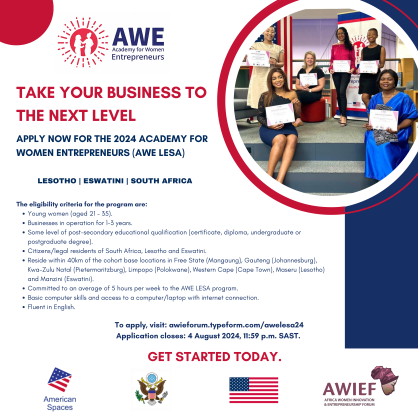
The United States and Africa Women Innovation and Entrepreneurship Forum (AWIEF) launch the 2024 Academy for Women Entrepreneurs Lesotho, Eswatini and South Africa (AWE LESA)

Location: Business
Africa Women Innovation and Entrepreneurship Forum (AWIEF)

The U.S. Mission to South Africa and the Africa Women Innovation and Entrepreneurship Forum (AWIEF) (www.AWIEForum.org) proudly announce the launch of the 2024 Academy for Women Entrepreneurs program in Lesotho, Eswatini and South Africa.

The Academy for Women Entrepreneurs (AWE) is an initiative of the U.S. Department of State and Arizona State University's Thunderbird School of Global Management. It supports the U.S. National Strategy on Gender, Equity and Equality and reflects the United States' commitment to advancing gender equity and economic prosperity in Southern Africa

The Academy for Women Entrepreneurs LESA (Lesotho, Eswatini and South Africa) program is centred on the Francis and Dionne Najafi 100 Million Learners Global Initiative, an accredited online global management and entrepreneurship certificate consisting of five world-class courses and available to learners across the globe.

The overall goal of the program is to promote economic prosperity, including equitable economic development opportunities for historically disadvantaged groups and individuals. AWE LESA provides a resource for women entrepreneurs to engage in online education with guided facilitation and localization; fosters networks that support participants' access to peer-to-peer mentorship, business partners, and scaling opportunities with businesses in the region and in the United States; as well as provides access to a range of educational programs tailored to women's economic empowerment to expand the impact on the participant.

AWE LESA 2024 will empower 100 young women entrepreneurs in seven cities – five in South Africa and one each in Lesotho and Eswatini. The program will host cohorts in Bloemfontein (10 participants), Cape Town (10 participants), Johannesburg (15 participants), Polokwane (15 participants), Manzini (20 participants), Maseru (20 participants), and Pietermaritzburg (10 participants). The participants will attend in-person training sessions and events at designated American Corners and partner spaces in each location.

AWE LESA 2024 activities will take place between August 2024 and January 2025, and this edition will bring the total number of women entrepreneurs trained through the U.S. Mission to South Africa and AWIEF partnership to more than 700.

What do you gain from participating in the AWE LESA program?

  • Free entry to the program;
  • Enrolment in the Francis and Dionne Najafi 100 Million Learners platform for online learning;
  • Expert-facilitated in-person business management training and mentorship sessions at American Spaces;
  • Networking and peer-learning opportunities with like-minded entrepreneurs;
  • A collaboratively developed and refined draft of your business plan;
  • A 100 Million Learners certificate after completing the program;
  • Access to the U.S. alumni network's robust network of support, including business opportunities, potential seed funding and a vast, global network of like-minded and highly regarded entrepreneurs;
  • Membership to the AWIEF Community which provides ongoing peer learning and support; and
  • Free delegate pass to AWIEF2024 Conference, Exhibition and Awards scheduled to take place at the Cape Town International Convention Centre (CTICC), Cape Town on November 28 and 29, 2024.

What are the criteria to apply?

  • Young women (aged 21 – 35);
  • Early-stage entrepreneurs (with businesses in operation for 1-3 years);
  • Citizens/legal residents of South Africa, Lesotho and Eswatini;
  • Read, write, speak and listen to the program in English;
  • Reside within 40km of one of the seven program cities: Bloemfontein, Cape Town, Johannesburg, Polokwane, Maseru, Manzini, and Pietermaritzburg;
  • Commit to weekly in-person training sessions at a designated American Space of the U.S. Missions to Lesotho, Eswatini and South Africa;
  • Commit to up to 5 hours of weekly programmatic assignments; and
  • Basic computer skills, access to a computer with a data plan to access program content and activities.

Applications Open Now!

Academy for Women Entrepreneurs applications are officially open for highly motivated and self-driven young women entrepreneurs from Lesotho, Eswatini and South Africa. THERE IS NO COST TO APPLICANTS AT ANY STAGE.

To submit your application, please follow this link:  https://apo-opa.co/3WvSAIa

The deadline for submission is August 4, 2024 at 11:59 p.m. South Africa Standard Time (SAST).

For more information email: info@awieforum.org

Distributed by APO Group on behalf of Africa Women Innovation and Entrepreneurship Forum (AWIEF).

Media files
Africa Women Innovation and Entrepreneurship Forum (AWIEF)
Download logo
Read moreThe United States and Africa Women Innovation and Entrepreneurship Forum (AWIEF) launch the 2024 Academy for Women Entrepreneurs Lesotho, Eswatini and South Africa (AWE LESA)
22 July 2024

How to Manage Resilient Maintenance, Repair, and Operations (MRO) Supply Chains

Location: Business
RS South Africa

In today's fast-changing and unpredictable world, maintaining a resilient supply chain for Maintenance, Repair, and Operations (MRO) is crucial for businesses across various sectors. The goal is not just to withstand disruptions but to adapt and thrive amidst them. Here RS South Africa (https://apo-opa.co/4c1KTyg)  MD Brian Andrew shares his top 5 tips on how to approach and manage MRO supply chains to ensure resilience against future shocks.

1. Focus on Trusted Suppliers

Instead of diversifying your MRO supplier base extensively, rely on a core group of trusted suppliers that can guarantee delivery certainty. Building strong relationships with these suppliers ensures stability and reliability in your supply chain.

2. Develop a Flexible Supply Chain

When faced with pressure, it's essential to act quickly while considering the long-term consequences. A flexible supply chain and suppliers that can adapt to changing circumstances is key. This flexibility includes being prepared for potential increases in spending or the need to switch suppliers without significant disruptions.

3. Leverage Technology and Data

Utilise eProcurement and Vendor Managed Inventory (VMI) solutions from a trusted and stable procurement partner. Effective planning requires visibility into what is being consumed, especially for companies with multiple plants. High-quality data is essential for maintaining adequate inventory levels and ensuring supply chain resilience.

4. Engage in Sustainable and Ethical Procurement

Cost reduction is important, but sustainable and ethical procurement practices are equally vital. Work with partners who share common goals and include sustainability programs in your procurement processes. This approach not only benefits the environment but also aligns with the values of company management, shareholders, and customers.

5. Plan for Continuity

Continuity planning involves having a comprehensive action plan that includes compliance with policies, processes, and corporate governance. Ethical sourcing of raw materials should be a priority, and procurement departments should challenge the status quo by following ethical sourcing principles.

Supply chain resilience depends on the quality, reliability, and knowledge of suppliers. By working with the right MRO supplier, leveraging technology, and focusing on sustainable practices, businesses can better prepare for future disruptions and maintain a robust supply chain.

For more information on how RS can help you future-proof your MRO supply chain, visit the RS Africa Exports website (https://apo-opa.co/4c1KTyg).

Distributed by APO Group on behalf of RS South Africa.

PR Contact Person - RS South Africa:
Princess Tlou
Communications & Content Specialist
RS South Africa
Princess.Tlou@rsgroup.com
+27 11 691 9366

Media Contact Person – NGAGE:
Thobile Ndlovu
PR Account Executive
thobile@ngage.co.za
+27 11 867 7763

Further information is available via these links:

  • Twitter: https://apo-opa.co/3LAevaW
  • LinkedIn: https://apo-opa.co/4d8vFZ6
  • Facebook: https://apo-opa.co/3LwI3X9

RS:
RS is a trading brand of RS Group plc, providing product and service solutions that help our customers design, build, maintain, repair, and operate industrial equipment and operations, safely and sustainably. We stock more than 750,000 industrial and electronic products, sourced from over 2,500 leading suppliers, and provide a wide range of product and service solutions to 1.1 million customers.

We support customers across the product lifecycle, whether via innovation and technical support at the design phase, improving time to market and productivity at the build phase, or reducing purchasing costs and optimising inventory in the maintenance, repair, and operation phase. We offer our customers tailored product and service propositions that are essential for the successful operation of their businesses and help them save time and money.

RS Group plc is listed on the London Stock Exchange with stock ticker RS1 and in the year ended 31 March 2023 reported revenue of £2,982 million.

Media files
RS South Africa
Download logo
Read moreHow to Manage Resilient Maintenance, Repair, and Operations (MRO) Supply Chains
22 July 2024

Unlocking AI’s transformative potential in South Africa: Enhancing society & creating opportunities

Location: MyPR

As artificial intelligence (AI) continues to supercharge every aspect of business and society, South Africa stands at a critical juncture. Rather than fearing job displacement, we can harness AI to drive widespread growth and prosperity. By fostering local innovation, investing in AI education, and creating a conducive regulatory environment, we can empower citizens and businesses …

Read moreUnlocking AI’s transformative potential in South Africa: Enhancing society & creating opportunities
21 July 2024

Internet boost for rural Kromdraai community

Location: News

Internet boost for rural Kromdraai community

Residents of Kromdraai in the West Rand, Gauteng, will now be able to participate in the digital world, thanks to the Gauteng Provincial Network (GPN) free WIFI launched at Matla Combined School.

The GPN WIFI, which was unveiled on Sunday, is offered by the Gauteng Department of e-Government (e-Gov), a department established to modernise government services in Gauteng.

The department’s main role is to roll out broadband connectivity, which seeks to connect all public facilities, including schools and hospitals. It also provides free public WIFI for Gauteng communities.

Unveiling the sites, Gauteng Department of e-Government MEC, Bonginkosi Dhlamini, said the WIFI will ensure that Gauteng residents have free access to the internet, enabling them to participate in digital activities that can further their education, skills, and career prospects.

Dhlamini said the provincial government wants to ensure that Gauteng residents are able to access services through digital means.

“Nowadays, we do not expect people to wait in long queues to access certain services that can easily be accessed online. This can only be achieved through the power of technology and connectivity,” Dhlamini said.

Mogale City Mayor, who also attended the event, Danny Thupane, said the community of Kromdraai has been struggling with connectivity because the area is situated on the outskirts of the West Rand.

“We are very excited for this opportunity. It is not only the network that is an issue in these parts, but our people struggle with the ever-increasing prices of data.

“This project will go a long way in allowing our people to access the internet and participate in the digital world,” Thupane said.

The GPN also enhances the efficiency of service delivery and eliminates unnecessary duplication of Information and Communication Technology in the Gauteng provincial government while ensuring that information systems remain secure.

In April this year, the Communications and Digital Technologies announced that government plans to connect 5.5 million households in rural and township areas to Wi-Fi hotspots in the next three to four years. – SAnews.gov.za
 

GabiK
Sun, 07/21/2024 - 12:11

106 views
Read moreInternet boost for rural Kromdraai community
19 July 2024

Using Fintech To Manage Costs In Business

Location: MyPR

Financial technology, or “FinTech,” is the term used to describe any technology or software that tries to improve and automate the delivery and use of financial services. Everyday examples include online banking, invoicing, mobile payment apps and more. We are probably preaching to the choir here, but keeping track of every last cent that moves …

Read moreUsing Fintech To Manage Costs In Business
19 July 2024

5 Reasons Cloud Accounting is Essential for Business Growth

Location: MyPR

It’s the question at the top of any founder’s list – what will it take for me to succeed? What will make my company the one that defies statistics and continues to thrive? At Outsourced CFO, we believe that smart financial management coupled with the use of cutting-edge cloud-based software is the answer to ensuring …

Read more5 Reasons Cloud Accounting is Essential for Business Growth
19 July 2024

How Automated Bookkeeping is Rewriting Financial Management

Location: MyPR

“Digital transformation is crucial for the improvement of enterprise financial management, which cannot only improve the efficiency and accuracy of data processing but also enhance financial transparency, optimize resource allocation, improve risk control capabilities, and provide strong support for high-level decision-making”.  (source) With the world at our fingertips and accessible from our smartphones, efficiency and …

Read moreHow Automated Bookkeeping is Rewriting Financial Management
19 July 2024

Modern technology to help fight crime

Location: News

Modern technology to help fight crime

A heightened focus on the use of modern technology to help with crime prevention efforts will continue to be a key priority of the seventh administration.

“A data-driven approach will be used to identify violent crime hotspots and inform the allocation of policing resources alongside prevention measures,” President Cyril Ramaphosa said at the Opening of Parliament Address (OPA) on Thursday.

The President was outlining apex focus areas for the next five years, which will be driven by the Government of National Unity (GNU). After the National and Provincial Elections in May produced no outright majority winner, various political leaders were tasked to work together to form a Government of National Unity, comprised of 10 political parties.

In his address tonight, President Ramaphosa said the country must have capable, sophisticated and independent law enforcement agencies that can fight complex and organised crime.

He committed that the Government of National Unity will continue to tackle priority crimes, including illegal mining, gang violence, cash-in-transit heists and the construction mafia, through specialised police units.

“We will continue to implement the National Strategic Plan (NSP) on Gender-Based Violence and Femicide (GBVF), and expand victim support services, like the Thuthuzela Centres and GBV desks in police stations,” President Ramaphosa said.

Land reform

Switching focus to the land reform programme, the President announced that government will increase the funding thereof, prioritise the transfer of State land and improve post-settlement support by strengthening the institutional capacity of the structures relevant to the programme.

“To achieve rapid, inclusive growth, we need to fix our struggling municipalities. Growth happens at a local level, where people live and work.

“Our municipalities must become both the providers of social services and facilitators of inclusive economic growth. They must work to attract investment,” President Ramaphosa said.

Meanwhile, the President expressed words of comfort to families affected by floods in the Western Cape and veld fires in KwaZulu-Natal.

Thousands of people across the Western Cape were left destitute after storms damaged their homes, including businesses and infrastructure in the province.

“In recent days, we have witnessed runaway fires in KwaZulu-Natal, in which 14 people, including six firefighters, lost their lives. The fires also caused the destruction of homes, livestock and grazing land.

‘The thoughts of all South Africans are with all those people who have been subjected to these terrible weather conditions as they work to recover and rebuild,” President Ramaphosa said. – SAnews.gov.za

GabiK
Thu, 07/18/2024 - 21:03

448 views
Read moreModern technology to help fight crime
19 July 2024

Efforts to professionalise the public service underway

Location: News

Efforts to professionalise the public service underway

The Government of National Unity has committed to proceeding with the work already underway to professionalise the public service as well as ensure that government attracts into the state people with skills, capabilities and integrity.

Delivering the Opening of Parliament Address in Cape Town, President Cyril Ramaphosa said one of the strategic priorities of the Government of National Unity was to build a capable, ethical and developmental state. 

“We will continue to fight corruption and prevent undue political interference in the administration of the state. In this administration, we will complete the work to restore the financial position and operational performance of our state-owned enterprises (SOEs).

“We will complete the implementation of a new centralised ownership model for SOEs. This will improve accountability, transparency, governance and oversight, while reducing inefficiency and the potential for corruption,” the President said on Thursday.

He said the establishment of a state-owned SOE holding company will give South Africa greater capacity to build a sovereign wealth fund.

“This has been done successfully by other countries whose sovereign wealth funds have built up capital from the high performance of the state owned enterprises rather than from the fiscus.”

Fighting crime 

President Ramaphosa said in order to tackle crime and corruption, the country must have capable, sophisticated and independent law enforcement agencies that can fight complex and organised crime.

“We will deploy modern technology to assist crime fighting. A data-driven approach will be used to identify violent crime hotspots and inform the allocation of policing resources alongside prevention measures,” the President said.

Government will also continue to tackle priority crimes like illegal mining, gang violence, cash-in-transit heists and the construction mafia through specialised police units. 

“We will continue to implement the National Strategic Plan on Gender-Based Violence and Femicide, and expand victim support services, like the Thuthuzela Centres and GBV desks in police stations,” he said.

Work in the seventh administration will also prioritise driving inclusive growth and job creation as well as reducing poverty and tackling the high cost of living. – SAnews.gov.za

nosihle
Thu, 07/18/2024 - 21:08

546 views
Read moreEfforts to professionalise the public service underway
18 July 2024

Repo rate remains at 8.25%

Location: News

Repo rate remains at 8.25%

The South African Reserve Bank’s monetary policy committee (MPC) has decided to keep the repo rate at 8.5% for the seventh time in a row, despite a slight improvement in the inflation rate.

Reserve Bank Governor Lesetja Kganyago announced the decision following the July MPC meeting in Pretoria.

Four members voted to keep the rate unchanged, while two preferred to cut it by 25 basis points. 

“In discussing the stance, MPC members agreed that restrictive policy remains appropriate to stabilise inflation at 4.5%. The committee assessed that an unchanged stance remained appropriate, given the inflation risks.

“Some members, however, were of the view that the inflation outlook had improved enough to reduce the degree of restrictiveness,” Kganyago said on Thursday.

This means that the current prime lending rate remains at 11.75%, based on a repo rate of 8.25%.

However, Kganyago said the Bank remains concerned about administered prices. 

“We have had to mark up electricity inflation for this forecast round, even as other categories shifted lower,” he said, adding that services price inflation also remains uncomfortably above the mid-point.

He spoke at length about inflation. The most recent headline print for May was 5.2%, unchanged from April and still in the top half of the target range.

“The outlook, however, has improved somewhat. Headline consumer price inflation for this year is now projected at 4.9%, compared to 5.1% at the previous meeting.”

Meanwhile, Kganyago predicted that in the next few quarters, the headline is expected to drop below the 4.5% midpoint, mainly due to fuel and food prices.

“This outlook is supported by the stronger rand. The implied starting point for our forecast is now at R18.35 to the US dollar. Over the medium term, we continue to see inflation stabilising at 4.5%, with core inflation remaining close to this midpoint objective throughout.”

The Governor said the forecast continues to see rates easing into more “neutral territory” by next year.

“As before, the rate path from the Quarterly Projection Model remains a broad policy guide, changing from meeting to meeting,” he said.

He said the decisions of the MPC will continue to be data-dependent and “sensitive” to the balance of risks to the outlook.

“We are committed to stabilising inflation at the mid-point of the target band. Achieving this outcome will improve the economic outlook and reduce borrowing costs.”

Kganyago stressed the committee’s views on additional measures that would improve economic conditions. 

He mentioned the need to achieve a reasonable public debt level, enhance the operation of network industries, reduce controlled price inflation, and align real wage growth with productivity gains.

The next meeting of the MPC will be on 19 September 2024. – SAnews.gov.za
 

Gabisile
Thu, 07/18/2024 - 16:14

71 views
Read moreRepo rate remains at 8.25%
18 July 2024

Umgeni: A river of sewage flowing through Durban

Location: News

The municipal sewage works is one of the main pollution sources

Read moreUmgeni: A river of sewage flowing through Durban
17 July 2024

Novus Holdings Invests in Bytefuse

Location: MyPR

Successful AI projects in education place bright spotlight on SA startup South Africa, 10 July: Novus Holdings has announced a R55m investment in Bytefuse, an innovative artificial intelligence (AI) company, to enhance its capabilities to deliver enterprise scale AI solutions. Having observed Bytefuse’s success in enhancing Maskew Miller Learning’s (MML) educational services through advanced AI solutions, …

Read moreNovus Holdings Invests in Bytefuse
16 July 2024

SARS pays out billions in 2024 tax season refunds

Location: News

SARS pays out billions in 2024 tax season refunds

The South African Revenue Services (SARS) has already paid out about R10 billion in refunds to at least 1.6 million taxpayers who were auto-assessed ahead of this year’s Tax Season.This is according to SARS Commissioner, Edward Kieswetter who was briefing the media on Tuesday.

In the first two weeks of July, at least five million taxpayers were auto-assessed by the revenue service.
 “We completed these annual returns and tax assessments while, simultaneously, running each assessment outcome through our compliance risk and tax fraud detection capability. All this is possible because of the investment that we have been able to make in increasing and expanding the use of third-party data in the past few years.

“We’re able to process over 90% of refunds for taxpayers that are not selected for verification within 72 hours through our fraud risk detection AI. We direct high risk taxpayers – for whom we suspect there may be a fraudulent or impermissible refund – for further verification,” he said.

READ | SARS to provide update of Tax Season 2024

In order to complete auto-assessments accurately, SARS harvested nearly 150 million third-party data records. This information was then processed through the application of artificial intelligence and enhanced machine learning algorithms.

“We are extremely reliant on employers, banks and other third-party information providers to provide us with accurate data. The integrity of the entire value chain of data is important. We have worked extremely hard this past year with large institutions and entities to improve the accuracy of bulk data submissions.

“We appreciate the partnerships with all third-party data providers to enable a seamless experience for taxpayers. Inaccurate data, or late data, causes downstream difficulties and unnecessary delays and frustrations for taxpayers.
 

“SARS uses sophisticated graph database technology to decipher billions and billions of rows of data that allows us to compose a single entity view of a taxpayer and this, in turn, allows us to produce an assessment outcome as well as conducting the necessary risk detection through the artificial intelligence methodologies,” he said.

Kieswetter added that the AI tool used by SARS to detect fraud has saved the fiscus billions of Rands in fraudulent refunds.

“Last year alone, this fraud detection capability prevented almost R100 billion of impermissible PIT and VAT [Personal Income Tax and Value Added Tax] refunds from being paid out and lost to the fiscus,” he said. – SAnews.gov.za


NeoB
Tue, 07/16/2024 - 15:14

98 views
Read moreSARS pays out billions in 2024 tax season refunds
16 July 2024

Scaling Your Business With Managed IT Services And Smart IT Consulting

Location: MyPR

SevenC, a leading IT infrastructure and network service provider striving to identify and make available the best possible ICT strategies for its clients’ unique needs, explores how managed IT services and IT consulting can help entrepreneurs scale their operations. “Combining managed IT services and IT consulting can significantly help your business grow,” says Graeme Millar, …

Read moreScaling Your Business With Managed IT Services And Smart IT Consulting
  • Previous
  • Page 1
  • Interim pages omitted …
  • Page 25
  • Page 26
  • Page 27
  • Page 28
  • Page 29
  • Interim pages omitted …
  • Page 51
  • Next

Copyright © 2026 · MyZA · All Rights Reserved · Powered by Stratlec Online