• Skip to main content
  • Skip to header right navigation
  • Skip to after header navigation
  • Skip to site footer
MyZA

MyZA

News, Directory, Events and Other Stuff

  • Social Media
  • Sport
  • World News
  • Home
  • Submit News
  • Directory
  • Events
  • Stratlec
  • TFSA
  • News
    • APO
    • Today’s Sport News
    • Todays Social Media and Tech Headlines
    • Today’s World News
    • Today’s SA Financial News
  • Contact
You are here: Home / Archives for data

data

11 December 2023

Understanding Property Management Software

Location: MyPR

Property management software is a specialized application designed to assist in the management of residential, commercial, and rental properties. It streamlines various tasks such as tenant screening, rent collection, maintenance requests, and financial reporting. Key Features of Property Management Software: Tenant Management: Simplifies the process of tenant screening, leasing, and communication. Rent Collection and Financial …

Read moreUnderstanding Property Management Software
11 December 2023

Africa’s Top 100 Business Opportunities to Watch in 2024

Location: Business
Activator HQ

Despite rising food and fuel costs, weakening currencies, climate change effects, security threats, political instability, rolling power cuts, infrastructure limitations, and several economic and social challenges, Africa will be one of the fastest-growing regions in 2024.

That's one of the key findings in the 2024 edition of the Top 100 Business Opportunities in Africa to Watch (https://apo-opa.co/47PmhYd), an annual selection of the continent's most lucrative business ideas and investment opportunities curated by Activator HQ.

Following two years of slow post-COVID recovery, 2024 presents several interesting opportunities for business startup and growth in Africa. While Nigeria, South Africa, Egypt, Kenya and countries across the continent offer unique opportunities and challenges for new business and investment, economies like Senegal, Ethiopia, Tanzania, Cote d'Ivoire, Rwanda, Burkina Faso, The Gambia and Benin could grow by more than 6% in 2024, twice higher than the global growth of 2.9% projected by the International Monetary Fund (IMF).

The Africa Top 100, now in its 7th year, identifies specific business ideas and investment opportunities in over 30 growth markets, industries, value chains, and underserved niches across Africa. Each opportunity in the Top 100 is selected based on their relevance to local market needs, lucrativeness, competitive superiority, export potential, and innovation.

“The new edition, which is the outcome of months of research and analyses that considered dozens of value propositions, market trends, demand-supply gaps, and business models across Africa, only consists of opportunities that have a minimum total addressable market value of $100 million,” said John-Paul T. Iwuoha, Founder and CEO of Activator HQ. “It is interesting to see from our 2024 selection that more business ideas and investment opportunities in Africa are actually borne from unmet market needs, difficult but highly-rewarding problems, and the megatrends we have identified that are currently shaping the continent (https://apo-opa.co/46Sd4gb).”

As a developing region, Africa's deficits in food security, housing, finance, education, energy and other critical areas are inspiring innovative solutions, products, and services from a growing number of startups and growth-stage businesses on the continent. In essence, for entrepreneurs in Africa, problems are actually opportunities to unlock market value and create compelling value propositions.

“Our mission at Activator HQ (www.ActivatorHQ.com) is to make it easier and faster for entrepreneurs to start and grow businesses in Africa. That's why our selection of business ideas features inspiring examples of real entrepreneurs, startups, and companies in Africa that are getting results and making impact on the ground,” Iwuoha said. “To reduce the barriers to startup, we have also developed bespoke and professionally-crafted business plans (https://apo-opa.co/470U6Ew) that can be downloaded and used to raise funding or guide the execution of a specific business idea.”

Highlights from Activator HQ's 2024 Africa Top 100 Guide:

  • The food sector remains a multi-billion-dollar growth opportunity for the continent. The Africa Top 100 features several business ideas across the food value chain, from agricultural production to processing, marketing, and services in local and export markets.
  • The digital economy presents a $180 billion opportunity for Africa by 2025. With the world's youngest population, digital skills training and outsourcing is a strategic but underexplored market gap that brims with innovative ideas for new businesses and investments in Africa, particularly for high-demand skills like cybersecurity, data analytics, digital marketing, and software development.
  • The circular economy: recycling of waste, such as generating electric power from landfill waste, recovering scrap metals for reuse, and processing municipal wastewater into potable freshwater, hold interesting business and investment opportunities that could, conservatively, inject an additional $8 billion into the African economy according to the United Nations Environment Programme (UNEP).
  • The energy value chain is rich with opportunities for Africa. The combination of climate change effects, rising renewable energy penetration, and soaring energy prices precipitated by the Russia-Ukraine war has created market gaps and opportunities for more African gas supplies to Europe. There are also opportunities for local substitution of cooking fuels like firewood and charcoal with natural gas, and solar power applications for cold chain solutions.
  • Financial services remain one of the fastest-growing and most lucrative sectors in Africa to watch in 2024. While payments and consumer finance usually get most of the attention, niche opportunities like diaspora investment funds and female-focused finance are spotlighted in the latest Africa Top 100 guide.

“I am very proud of the meticulous work the team has put into the 2024 edition of the Africa Top 100,” Iwuoha continued. “In contrast to the mainstream stereotype of Africa as a ‘poor continent', the impressive ideas in this guide show the sheer abundance of opportunities in Africa for new businesses and investments. The spirit of entrepreneurship is bursting with energy on the continent and I am optimistic that many of the ideas in our 2024 edition will inspire new businesses, products, projects, investments, and income streams in the new year.”

The Top 100 Business Ideas in Africa to Watch in 2024 is available on the Activator HQ website at https://apo-opa.co/41hkLvm.

Distributed by APO Group on behalf of Activator HQ.

Media contact:
John-Paul Iwuoha
jp@activatorhq.com

For more information about Activator HQ, visit:
Website: www.ActivatorHQ.com
Twitter: https://apo-opa.co/46Np8iY
Facebook: https://apo-opa.co/3uRABAT
LinkedIn: https://apo-opa.co/3NowFxL
YouTube: https://apo-opa.co/3NqTmkT

About Activator HQ:
Founded in 2013 as Smallstarter Africa and relaunched on its 10-year anniversary, Activator HQ is a market intelligence and capacity development firm that supports Africa-focused entrepreneurs with the insights, training, and guidance they need to succeed in the continent's promising but difficult markets. In the last decade, Activator HQ has trained over 30,000 entrepreneurs and business owners on startup and market entry strategy, fundraising, sales and growth strategy, business modelling, and turnarounds. Its list of clients and partners includes the Staff Cooperative Societies of Nigeria LNG and Total Exploration & Production (Nigeria), the SUN Business Network, the Roddenberry Foundation, and the African Women Innovation and Entrepreneurship Forum (AWIEF), among others.

Media files
Activator HQ
Download logo
Read moreAfrica’s Top 100 Business Opportunities to Watch in 2024
11 December 2023

Amid rising corruption, most Africans say they risk retaliation if they speak up

Location: News
Afrobarometer

A majority of Africans say that corruption in their country is rising, that their government is failing in its efforts to fight it, and that ordinary citizens risk retaliation if they report corruption to the authorities, Afrobarometer's (www.Afrobarometer.org) latest Pan-Africa Profile (https://apo-opa.co/41k8N4i) reveals.

Download document (1): https://apo-opa.co/3NmOey6
Download document (2): https://apo-opa.co/3RDm193

Released ahead of International Anti-Corruption Day (9 December), the Afrobarometer report is based on nationally representative surveys in 39 African countries.

Findings show that among key public institutions, the police are most widely perceived as corrupt. In substantial numbers, citizens report having to pay bribes to obtain police assistance or avoid problems with the police, as well as to get government documents and services at health facilities and schools.

Citizens' assessments vary widely across countries, with Gabon, South Africa, Nigeria, Liberia, and Uganda among the worst-performing countries when it comes to perceived corruption in key public institutions, while Seychelles, Cabo Verde, Tanzania, and Mauritius turn in the best performances.

Key findings

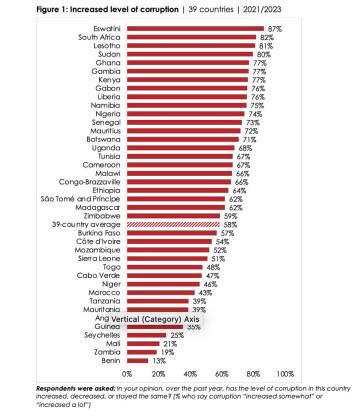
  • On average across 39 countries, a majority (58%) of Africans say corruption increased “somewhat” or “a lot” in their country during the preceding year (Figure 1).
    • Compared to 2014/2015, 12 countries recorded double-digit increases in perceptions of worsening corruption, including a surge of 39 percentage points in Senegal, while decreases reached a remarkable 61 points in Benin.
    • More than two-thirds (68%) of citizens say “some” or “a lot” of the resources intended to address the COVID-19 pandemic were lost to corruption.
  • Almost half (46%) of Africans say that “most” or “all” police officials are corrupt, the worst rating among 11 institutions and leaders the survey asked about. Tax officials, civil servants, and officials in the Presidency tie for second-worst, at 38% (Figure 2).
  • Among citizens who sought selected public services during the previous year, substantial proportions say they had to pay a bribe to obtain police assistance (36%), to avoid problems with the police (37%), to get a government document (31%), or to receive services at a public medical facility (20%) or a public school (19%) (Figure 3).
    • Self-reported bribe-paying varies widely across countries. For example, obtaining a government document required a bribe from 68% of applicants in Congo-Brazzaville, compared to 1% in Cabo Verde and Seychelles.
  • Two in three Africans (67%) say their government is doing a poor job of fighting corruption (Figure 4).
  • Only one in four Africans (26%) say people can report corruption to the authorities without fear of retaliation (Figure 5).

Distributed by APO Group on behalf of Afrobarometer.

For more information, please contact:
Daniel Iberi
Afrobarometer communications officer for East Africa
Email: diberi@afrobarometer.org
Telephone: +254725674457

Follow us on:
Twitter: https://apo-opa.info/3jYM2la
Facebook: https://apo-opa.info/3K0t6gq
YouTube: https://apo-opa.info/3Ysf4IU
Visit us online at www.Afrobarometer.org
Follow our releases on #VoicesAfrica.

Afrobarometer surveys:
Afrobarometer is a pan-African, non-partisan survey research network that provides reliable data on African experiences and evaluations of democracy, governance, and quality of life. Nine survey rounds in up to 42 countries have been completed since 1999. Round 9 surveys (2021/2023) cover 39 countries.

Afrobarometer's national partners conduct face-to-face interviews in the language of the respondent's choice with samples of 1,200-2,400 adults that yield country-level results with margins of error of +/-3 to +/-2 percentage points at a 95% confidence level.

Media files
Afrobarometer
Download logo
Read moreAmid rising corruption, most Africans say they risk retaliation if they speak up
6 December 2023

3 Years of revolutionising the way brands attract and retain talent in South Africa

Location: MyPR

The Social Craft is changing the talent narrative in South Africa, for the 3rd year in a row. Turning three in 2023, The Social Craft is celebrating its birthday with remarkable statistics and a growing client list. With a 241% increase in 2023 alone, the company has also seen an impressive 3x employee growth in …

Read more3 Years of revolutionising the way brands attract and retain talent in South Africa
6 December 2023

Fusion Centre’s efforts pay off

Location: News

Fusion Centre's efforts pay off

National Head of the Directorate for Priority Crime Investigation (DPCI), Lieutenant General Godfrey Lebeya, has outlined the progress and successes achieved by the Fusion Centre in its bid to prevent and combat corruption. 

“Since May 2020 to date, the Fusion Centre has achieved a significant number of successes in arrests, prosecution, freezing orders and recoveries. These significant achievements serve to amplify that government’s sharp focus on capacitating the agencies focused on fighting crime and corruption is yielding results,” Lebeya said, while addressing a media briefing in Pretoria, on Wednesday.

The centre was established in May 2020 by the Anti-Corruption Task Team (ACTT) and the National Priority Committee on Organised Crime (NPCOC) as a multi-disciplinary and collaborative effort by all corruption-fighting agencies that are actively involved in the prevention and combating of corruption.

It follows an intelligence-driven approach in investigating corruption and uses comprehensive data and information analysis. It also fast tracks and expedites the processing of cases, thus reducing delays in the pursuit of justice.

"The Fusion Centre broadens the scope of investigations by combining the expertise of multiple agencies, working within their legislative mandates and enhancing the quality and depth of each inquiry. This results in improving the quality of investigations, and increasing prosecution successes," he said.

Progress made

The Fusion Centre has achieved successes relating to the following cases:

  • 556 cases and incidents of fraud, maladministration, tax evasion and corruption involving 168 accused persons were investigated;
  • 51 natural persons and 43 entities were convicted for various crimes, including corruption, fraud, tax evasion, money laundering and others; and
  • 48 cases are still in court.

Lebeya explained that some of the cases handled by the Fusion Centre are complex commercial crimes, involving networks of organised criminal syndicates.

“The investigators from the Fusion Centre had to trace the networks and the syndicates in order to arrive at conclusive evidence of wrongdoing. The first case involved an accountant who defrauded the COVID-19 Temporary Employer-Employee Relief Scheme (TERS) [of] over R11 million by claiming relief funds on behalf of a number of companies without their knowledge.

“The investigators uncovered a network of 17 persons, 26 entities, 53 banking accounts and 983 transactions involved in the flow of the financial proceeds from the accountant. The funds were used to purchase immoveable and moveable assets such as houses and a car,” he said.

Preservation orders against two accountants to the value of R3 065 114.08 were obtained as well as four immoveable properties valued at R2 662 986.60. One vehicle was bought with an amount of R665 000.

The accused accountant, Lindelani Bert Gumede, was arrested and convicted for fraud, theft, and money laundering. He was sentenced in 2022 to 135 years imprisonment.

“The second case also involved an accountant who, using the names of six companies, defrauded the TERS scheme to the amount of R884 308.06. Crime analysis revealed that the accountant was behind the companies that claimed the funds.

“This accountant was charged and an amount of R482 258.71 was recovered in an FNB account registered under the name of the accountant. Through the recovery process by the Fusion Centre, he agreed to refund the funds derived from defrauding the scheme. The accountant, Mark Voster, was sentenced to six years imprisonment,” Lt-Gen Lebeya said.

The third case involved an Eastern Cape Taxi Association, which fraudulently claimed R220 million from the TERS scheme using 66 accounts.

The Fusion Centre issued Section 34 directives on the 26 bank accounts securing a preservation order of R26.9 million against the taxi association.

The personal protective equipment (PPE) contract of the taxi association was declared irregular and unlawful. The criminal trial is still proceeding.

In terms of the freezing orders and recoveries, the following successes were achieved:

  • The Financial Intelligence Centre (FIC) obtained 25 orders worth R274 million;
  • The Asset Forfeiture Unit (AFU) obtained 42 orders worth over R331 million;
  • The Special Investigating Unit (SIU) obtained 29 orders amounting to R465 million and
  • South African Revenue Service (SARS) obtained 22 freezing orders worth over R740 million.

Lt-Gen Lebeya said public officials were involved in some of the cases of maladministration or did not follow the legislative frameworks in the appointment of service providers, and payments made to service providers and third parties.

“There were 97 referrals for disciplinary and executive actions against officials in government departments and state-owned entities. So far, 11 public officials have been dismissed for various cases of maladministration, fraud and corruption. Three have resigned, eight were suspended, 71 pending and one has received a written warning,” he said.

Other referrals include 58 cases to the Competition Commission, 57 to the South African Health Product Regulatory Authority (SAHPRA) and 29 companies referred to National Treasury to blacklist them on the Central Supplier Database (CSD).

In addition, 47 referrals from the SIU to the National Prosecuting Authority and the Directorate for Priority Crime Investigation (DPCI) were made.

Fusion Centre's Mandate

The operationalisation of the Fusion Centre coincided with the need to identify and stem misappropriation of funds set aside by government for social and economic relief during the COVID-19 pandemic.

Initially it focused on money laundering, corruption and other financial crimes related to procurement of personal protective equipment and other COVID19 related procurement.

However, since the success of the collaborative approach, the mandate of the Fusion Centre has been expanded to include organised crime, money laundering, fraud, maladministration, terrorist financing and other serious financial crimes both in public and private institutions

“We are calling upon the business sector, specifically, to partner and collaborate with the Fusion Centre and support the enhancement of forensic investigation skills and other critical skills which will lead to a higher rate of prosecution for commercial corruption crimes.

“The Fusion Centre contributes towards the implementation of the Financial Action Task Force (FATF) action plan in respect of South Africa in addressing deficiencies in the anti-money laundering system,” he said. –SAnews.gov.za


nosihle
Wed, 12/06/2023 - 11:59

211 views
Read moreFusion Centre’s efforts pay off
6 December 2023

The Artificial Intelligence (AI) hit list: Six menacing threats you need to know

Location: News
KnowBe4

By the end of this year already, the market for artificial intelligence (AI) in South Africa is projected to reach (https://apo-opa.co/481NZ3n) a size of $2.4 billion, showing an annual growth rate of 21% between now and 2030. Locally, the technology has the potential to mitigate security risks, enhance decision-making, address legacy challenges, and have a significantly positive societal impact. Despite the impressive applications and implications, Anna Collard, SVP Content Strategy & Evangelist at KnowBe4 AFRICA (https://www.KnowBe4.com), warns of the associated risks that need to be considered.

“Generative AI models are trained on data from various sources,” she explains, highlighting that these sources are not all verified, lack sufficient context, and are not regulated. “AI is incredibly helpful in handling the mundane administrative tasks associated with spreadsheets and statistics. However, it becomes concerning when we rely on it to make decisions that have the potential to influence people's lives.”

AI is an algorithmic construct built on the bones of human creative endeavours and data that is often flawed and biased. “As Kate Crawford, a professor at the University of Southern California and Microsoft researcher, pointed out (https://apo-opa.co/3GwCPYK), AI is not truly artificial or intelligent. This poses risks that can have long-term consequences if users are unaware of them,” explains Collard.

Here are six of the most concerning risks:

01: AI hallucinations: Earlier this year, a New York attorney used a conversational chatbot for legal research. The AI deceitfully incorporated six fabricated precedents into his filing, falsely attributing them to prominent legal databases. This is a perfect example (https://apo-opa.co/3uJjW2e) of an AI hallucination, where the output is either fake or nonsense. These incidents happen when prompts are outside of the AI's training data and so the model hallucinates or contradicts itself in order to respond.

02: Deepfakes: The implications of fake images extend to various areas. With the rise of fake identities, revenge porn, and fabricated employees, the range of potential misuse for AI-generated photographs is expanding. One particular technology called Generative Adversarial Network (GAN) (https://apo-opa.co/481j1Zi) is a type of deep neural network capable of producing new data and generating highly realistic images by using random input. This technology opens up the realm of deepfakes, where sophisticated generative techniques manipulate facial features and can be applied to images, audio, and video. This form of digital puppetry carries significant consequences in political persuasion, misinformation or polarization campaigns.

03: Automated and more effective attacks: This taps directly into the potential of GAN mentioned before, as cybercriminals make use of deepfakes in more sophisticated attacks. They use it in impersonation attacks, where fake voice or even video versions of someone can be used to manipulate victims into paying or following other fraudulent instructions. Cybercriminals also benefit from jailbroken generative AI models to help them automate or simplify their attach methods, such as for example automating the creation of phishing emails.

04: Media equation theory: This refers to the fact that human beings have a tendency to attribute human characteristics to machines and develop feelings of empathy towards them. This tendency becomes even stronger when the interactions with machines seem intelligent. Although this can positively impact user engagement and support in the service sector, it also carries a risk. People become more vulnerable to manipulation, persuasion, and social engineering because of this over-trust effect. They tend to believe and follow machines more than they should. Research has shown (https://apo-opa.co/3RvGVqg) that people are likely to alter their responses to queries in order to comply with suggestions made by robots.

05: The manipulation problem: AI, through the use of natural language processing, machine learning, and algorithmic analyses, can both respond to and simulate emotions. By gathering information from various sources, agenda driven AI chatbots for example can promptly react to sensory input in real time and utilise it to accomplish specific objectives, such as persuasion or manipulation. These capabilities create opportunities for the dissemination of predatory content, misinformation, disinformation, and scams.

06: Ethical issues: The presence of bias in the data and the current absence of regulations regarding AI development, data usage, and AI application all raise ethical concerns. Global efforts are underway to tackle the challenge of ethics in AI and reduce the risks of AI poisoning, which entails manipulating data to introduce vulnerabilities or biases. “However, South Africa currently lacks momentum in addressing these issues. This must change, as managing and detecting the risk of polluted AI data before it causes long-term harm is essential.” Says Collard.

“It is important to be mindful of the information we share with AI chatbots and virtual personal assistants. We should always question how our data is being used and by whom,” concludes Collard. “There is a risk of sharing sensitive personal and business information with data training models. While AI is a valuable tool, it is crucial to use it with critical thinking and mindfulness, and only rely on it in situations where it provides the most value and has been fact checked.”

Distributed by APO Group on behalf of KnowBe4.

Media files
KnowBe4
Download logo
Read moreThe Artificial Intelligence (AI) hit list: Six menacing threats you need to know
5 December 2023

CSA and Lootmogul Launch Tech Revolution in Cricket Experience

Location: Sport

JOHANNESBURG: Cricket South Africa (CSA) is thrilled to announce a transformative partnership with LootMogul, a pioneering sports technology platform, marking...

Read moreCSA and Lootmogul Launch Tech Revolution in Cricket Experience
5 December 2023

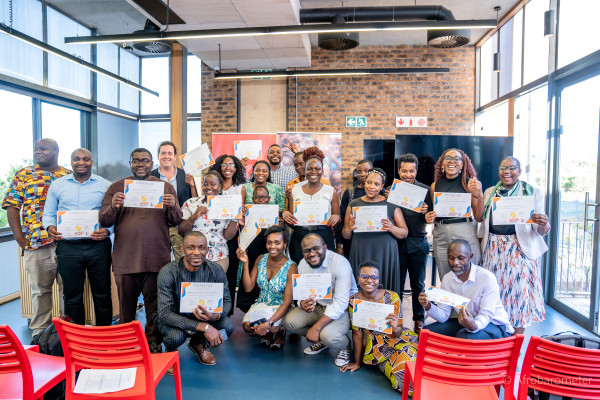
Afrobarometer surveys director urges young researchers to empower Africa’s narrative and showcase the continent’s analytical excellence

Location: News
Afrobarometer

“Writing never stops. This is the starting point. Take the lessons that you have learnt here and demonstrate to the world that not only can we produce our own data, but that we are capable of analysing it,” Afrobarometer surveys director Boniface Dulani told up-and-coming researchers at the closing ceremony of the Afrobarometer (https://www.Afrobarometer.org/) Pretoria summer school on Friday.

The three-week training programme equips African scholars with solid skills in research design, survey methodology, and the use of social statistics.  Afrobarometer manages the programme in collaboration with the University of Pretoria's Future Africa, a pan-African research institute pioneering approaches to research and innovation on the continent and beyond.

“One thing that excites me is not only do we have access to the [Afrobarometer] data, but as Africans, we also understand the context from which the data comes,” Dulani added. 

In his remarks to the group, Neeraj Mistry, deputy director of Future Africa, said, “In a world of mis- and disinformation, we need solid data and good analysis of it. So we are relying on you to give us the evidence base, to give us real-time analysis from the ground from real people's contributions. That's the kind of evidence that we need in order to make change happen.”

The 19 summer school participants – 50% women – represented 13 countries: Benin, Botswana, Ghana, Kenya, Lesotho, Madagascar, Malawi, Mozambique, Namibia, Nigeria, South Africa, Tanzania, and Uganda. 

Reflecting on the summer school experience, David Asante-Darko from the Ghana Center for Democratic Development commented, "The highlight of my Afrobarometer summer school was my exposure to the diverse ways in which Afrobarometer data can be analysed to speak convincingly to African realities. 

“As a member of an African community dedicated to the fight against the decline of democracy, it is assuring to have discovered that I have unfettered access to a wealth of credible and unbiased data,” Asante-Darko further noted.

Another participant, Caroline Nakayiza from Uganda, remarked, “As a data collector, I have picked a lot from the summer school. It has been a great journey – I have explored a new country and made new friends and connections.”

After weeks of intense learning, the participants are producing research papers that will feed into Afrobarometer's publications series, advancing the organisation's goal to “let the people have a say!”

Distributed by APO Group on behalf of Afrobarometer.

For more information, please contact:
Asafika Mpako
Afrobarometer communications coordinator for Southern Africa
Email: ampako@afrobarometer.org
Telephone: +27 83979 8299
Visit us online at www.Afrobarometer.org

Follow us on:
Twitter: https://apo-opa.info/3jYM2la
Facebook: https://apo-opa.info/3K0t6gq
YouTube: https://apo-opa.info/3Ysf4IU
Visit us online at www.Afrobarometer.org
Follow our releases on #VoicesAfrica.

About Afrobarometer:
Afrobarometer (AB) is a trusted source of high-quality data and analysis on what Africans are thinking. With an unmatched track record of more than 370,000+ interviews in 42 countries, representing the views of 75% of the African population, AB is leading the charge to bridge the continent's data gap. AB data inform many global indices, such as the Ibrahim Index of African Governance, Transparency International's Global Corruption Barometer, and the World Bank's Worldwide Governance Indicators. The data are also used for country risk analyses and by credit rating and forecasting agencies such as the Economist Intelligence Unit. All AB data sets are publicly available on the website (https://www.Afrobarometer.org) and may be analysed free of charge using AB's online data analysis tool (https://apo-opa.info/3lVrwlT).

About Future Africa at the University of Pretoria:
The University of Pretoria established the Future Africa initiative as a platform to develop leadership in transdisciplinary research in Africa. Future Africa is a hub for African and global research networks to address the challenges that hamper transformation toward a prosperous, equitable, and sustainable future in Africa.

Media files
Afrobarometer
Download logo
Read moreAfrobarometer surveys director urges young researchers to empower Africa’s narrative and showcase the continent’s analytical excellence
5 December 2023

Africa remains one of the regions most targeted by cybercrime in 2023

Location: News
Kaspersky

As organisations continue to become more digitised, throughout 2023 Africa remains one of the world regions most targeted by cybercrime. At a recent press conference in Johannesburg, Kaspersky (www.Kaspersky.co.za) shared some insights and statistics related to the regional threat landscape in the third quarter of 2023 and made forecasts on how the situation is going to develop in 2024.

Web threats
Web threats are Internet-based threats that expose people and computer systems to harm online. There was a 24% increase in the number of corporate users affected by web threats from Q2 to Q3 2023 in South Africa. However, comparing Q3 2022 to Q3 2023, there was an 8% decline in the number of corporate users affected by web threats.  

Phishing
Phishing is a type of Internet fraud that seeks to acquire a user's credentials by deception. It includes theft of passwords, credit card numbers, bank account details and other confidential information.

Phishing attacks detected in Kenya in Q3 2023 increased by 32% compared to Q2 2023 and by 12% compared to Q3 2022. In Nigeria, there was a 12% increase in phishing attack detections in Q3 2023 compared to Q2; however, compared to Q3 2022, the number of phishing detects decreased by 8%.

Attacks on Industrial Control Systems
Africa is among the regions with the highest number of detected attacks on industrial control systems (ICS computers). ICS computers are used in energy and mining sectors, automotive manufacturing, building automation infrastructures and other spheres to perform a range of operational technology functions – from the workstations of engineers and operators to supervisory control and data acquisition servers.

In Q3 2023, according to Kaspersky ICS CERT¹, attacks were detected on 32% of ICS computers in Africa. In South Africa, attacks were detected on 22% of machines, in Kenya – on 28%, in Nigeria – on 25%. Globally, malicious objects were detected on 25% of ICS machines in Q3 2023.

Attacks on the Internet of Things
The number of attacks on Internet of Things (IoT) devices has been increasing exponentially over the last years globally. This is related both to the activity of criminal actors and to the increasing number of IoT devices that are in use by individual users, businesses, and production facilities. IoT devices include not only wearables and smart home appliances, but also smart city systems, self-driving cars, automated retail checkouts, and other smart devices for home and business use. These devices can collect and transfer data over a wireless network without human input. Cybercriminals use networks of infected smart devices to conduct DDoS attacks or as a proxy for other types of malicious actions.

In Q3 2023, South Africa accounts for 28% of attacks on IoT devices that were detected by Kaspersky in the African region. Kenya accounts for 12% of attacks on IoT devices, and Nigeria – for 6%. All these attacks were spotted on Kaspersky IoT honeypots – decoy devices used to attract the attention of cybercriminals and analyse their activities.

“In forecasting the development of the cyberthreat landscape for 2024, we anticipate a dynamic evolution of cyberthreats marked by an upsurge in state-sponsored cyber-attacks, and 'hacktivism' will become one of the norms of cyber-warfare,” comments Bethwel Opil, Enterprise Client Lead at Kaspersky in Africa. “The prevalence of accessible generative AI is set to fuel an expansion of spear-phishing tactics, while the creative exploitation of vulnerabilities in mobile and IoT devices will be on the rise. Businesses today should be proactive and counter these cyberthreats with advanced technologies such as threat feeds, security information and event management systems, endpoint detection and response solutions, and tools with digital forensics and incident response features.”

To protect organisations from cyberthreats, Kaspersky experts recommend:

  • Organisations should conduct regular cyber skill checkups among employees and offer competent training. Kaspersky Security Awareness (https://apo-opa.co/3Ni4NeD) portfolio offers flexible ways to train staff, is easily customisable and scalable to meet the needs of any company size.
  • Corporate users should be educated on potential privacy risks when working in virtual environments. Organisations should implement best practices in safeguarding personal and corporate data.
  • Install updates for the firmware used on digital devices (including virtual headsets) as soon as they become available.
  • Use Cyber Immune (https://apo-opa.co/4a9jx9I) solutions for IoT protection on corporate networks. Use a dedicated IoT gateway that ensures inbuilt security and reliability of data transferring.
  • Use Kaspersky Threat Intelligence (https://apo-opa.co/4a9sf7B) to block network connections originating from malicious network addresses detected by security researchers.
  • Establishing continuous vulnerability assessment and triage as a basement for effective vulnerability management process. Dedicated solutions like Kaspersky Industrial CyberSecurity (https://apo-opa.co/46ZA6lH) may become an efficient assistant and a source of unique actionable information, not fully available in public.

Reference:
¹Kaspersky Industrial Control Systems Cyber Emergency Response Team

Distributed by APO Group on behalf of Kaspersky.

About Kaspersky:
Kaspersky is a global cybersecurity and digital privacy company founded in 1997. Kaspersky's deep threat intelligence and security expertise is constantly transforming into innovative solutions and services to protect businesses, critical infrastructure, governments and consumers around the globe. The company's comprehensive security portfolio includes leading endpoint protection, specialized security products and services, as well as Cyber Immune solutions to fight sophisticated and evolving digital threats. Over 400 million users are protected by Kaspersky technologies and we help over 220,000 corporate clients protect what matters most to them. Learn more at www.Kaspersky.co.za.

Media files
Kaspersky
Download logo
Read moreAfrica remains one of the regions most targeted by cybercrime in 2023
4 December 2023

African dinosaurs and the sixth mass extinction

Location: News

Palaeobiologist Anusuya Chinsamy-Turan speaks at GroundUp’s Science for the People seminar

Read moreAfrican dinosaurs and the sixth mass extinction
4 December 2023

Introducing Murky Fusion: The Future of Smart Contracts and Tokens on Bitcoin

Location: MyPR

Dark Fusion Technologies, the company behind the Simple Contract Language (SCL), has made groundbreaking progress in the race to develop smart contracts and tokens on Bitcoin’s Layer 1, becoming one of the first projects to accomplish this incredible feat. This revolutionary development holds massive potential for the tech industry and various customers & institutions alike, …

Read moreIntroducing Murky Fusion: The Future of Smart Contracts and Tokens on Bitcoin
2 December 2023

The Power of MyPR’s Video Press Releases: Engaging Audiences with Impactful Messaging

Location: MyPR

In today’s fast-paced digital landscape, the way information is conveyed plays a crucial role in capturing audience attention and delivering a compelling message. As traditional press releases evolve to meet the demands of modern communication, video press releases have emerged as a powerful and effective method for delivering impactful messages. Here are 8 reasons why …

Read moreThe Power of MyPR’s Video Press Releases: Engaging Audiences with Impactful Messaging
2 December 2023

South Africans are living longer, mostly thanks to HIV treatment

Location: News

Antiretroviral medicines have been a success, but more work is needed to reach United Nations targets

Read moreSouth Africans are living longer, mostly thanks to HIV treatment
1 December 2023

Mashatile launches SA Chapter of the Global Alliance to Conclude AIDS in Kids by 2030

Location: News

Mashatile launches SA Chapter of the Global Alliance to End AIDS in Children by 2030

Deputy President Paul Mashatile officially launched the South African Chapter of the Global Alliance to End AIDS in Children by 2030, led by his wife, Humile Mashatile. 

“We are concerned with HIV treatment gaps in children. Children living with HIV aged 15 years and below are left behind in the global HIV response when compared to the general population,” he said. 

The country’s second-in-command was speaking at the official commemoration of World AIDS Day as Chairperson of the South African National AIDS Council (SANAC) at the Mandeni Local Municipality in KwaZulu-Natal.

He described the 1 December as an opportunity to strengthen unity to fight against HIV, support those living with HIV, and remember those who succumbed to AIDS-related illnesses.

Globally, he said only 52% of children who are living with HIV are on lifesaving treatment, compared to 76% of the adult population. 

According to the Deputy President, this results in children accounting for 15% of AIDS-related deaths on an annual basis despite that 4% of people living with HIV are children. 

Meanwhile, he said stigma, discrimination, punitive laws and policies, violence, and gender inequalities in Eastern and Southern Africa remain some of the barriers that hinder access to treatment, care, and support for women, girls, and children. 

“Unfortunately, South Africa has the largest population of children living with HIV in the world, and as of June 2023, our treatment coverage for children is alarmingly low, coming in at 67%.” 

He said the data raises concerns and emphasises the urgent need for increased efforts and resources to guarantee that every child who is HIV-positive receives the care and treatment they require. 

In response to this challenge, government is working with the Joint United Nations Programme on HIV and AIDS (UNAIDS), by coordinating United Nations (UN) agencies including the United Nations Children's Fund (UNICEF) and the World Health Organisation (WHO). 

The other partners include the United States President’s Emergency Plan for AIDS Relief (PEPFAR) and the Global Fund, together with civil society, in establishing the Global Alliance to end AIDS in Children by 2030. 

“The proclamation was first made at the 24th International AIDS Conference in Canada in 2022. South Africa was among the first 12 countries to join this alliance. As the South African government, we are determined to fulfil our commitment to end AIDS in children,” he stressed. 

This, according to the President, could be achieved by strengthening case finding among HIV-exposed infants and children and scaling up the initial HIV regimen to pregnant and breastfeeding women as per the revised clinical guidelines.

Meanwhile, government aims to also boost regular retesting of pregnant and breastfeeding women, increasing access to social protection programmes and addressing gender-based violence and femicide (GBVF), sexual assault, and abuse of infants, children, adolescents, and women. 

Government will also work around the clock to scale up advocacy for the enforcement of laws and the administration of justice. 

“Collectively, we should strive to ensure universal access to treatment, eliminate mother-to-child transmission, and confront prevailing prejudice and discrimination to foster a society that accepts and supports all individuals living with HIV, including our children. 

“Together, we have the power to end the epidemic of HIV and AIDS,” he added. – SAnews.gov.za


Gabisile
Fri, 12/01/2023 - 15:44

31 views
Read moreMashatile launches SA Chapter of the Global Alliance to Conclude AIDS in Kids by 2030
1 December 2023

Heatwave conditions wreck records

Location: News

Heatwave conditions break records

Following the heatwave conditions that prevailed for a number of days in most parts of the country, the South African Weather Service (SAWS) says November records were broken in both the maximum and minimum temperature measurements.

Heatwave conditions prevailed from 19 November 2023 in most parts of the country, with isolated areas having extremely hot conditions for several days in a row.

“Hot conditions reached their peak on 27 November 2023, when extremely hot conditions were experienced in large parts of the country. Preliminary data indicates new temperature records for November over the Northern Cape, Free State and North West provinces.

“More than 10 stations recorded the highest temperature records on the 27th, with the Automatic Weather Station at Augrabies Falls recording the highest maximum temperature of 46.7°C, breaking its previous record of 46.2°C (2019-11-28).

“It must be noted that the highest maximum temperature record for Augrabies Falls remains at 48.6°C, measured on 2016-01-05, and the 46.7°C is the new record for the month of November,” SAWS said on Thursday.

The El Niño-Southern Oscillation (ENSO) is currently in an El Niño state and according to the latest predictions is expected to persist through most of the summer months.

ENSO’s typical impact on Southern Africa is in favour of generally drier and warmer conditions during the spring and summer months from October to March.

“However, current global forecasts indicate a great deal of uncertainty for the typical drier conditions that South Africa experiences during typical El Niño seasons, over the eastern parts of the country. Weather extremes will continue to occur from time to time during the summer season as much as drier conditions are expected. 

“Caution is advised at this point, as the El Niño effect might still manifest its influence in the next few months and change the outlook of the rainfall forecast for mid- and late summer. Minimum and maximum temperatures are expected to be mostly above-normal countrywide for the forecast period,” SAWS said.

The weather service will continue to monitor the weather and climate conditions and provide updates on any future assessments that may provide more clarity on the current expectations for the coming season.  

Furthermore, the public is urged and encouraged to regularly follow weather forecasts on television and radio.

Updated information in this regard will regularly be available at www.weathersa.co.za as well as via the SA Weather Service X account. @SAWeatherService. –SAnews.gov.za

nosihle
Fri, 12/01/2023 - 11:19

305 views
Read moreHeatwave conditions wreck records
30 November 2023

The Essential Guide to Wifi Routers in South Africa

Location: MyPR

With the digital age in full swing, having a reliable internet connection at home or in the office is more crucial than ever. In South Africa, the demand for high-speed internet has surged, making the role of wifi routers increasingly significant. This guide aims to provide essential insights into what you should consider when looking …

Read moreThe Essential Guide to Wifi Routers in South Africa
30 November 2023

Ithala Bags Customer Champion Award For The Second Time

Location: MyPR

For the second year in a row, the ordinary people’s bank Ithala SOC Ltd clinched the Customer Champion prize at the annual Naledi Awards event hosted by short-term insurer Mutual & Federal Risk Financing. Aaron Pather, executive head of insurance at Ithala, said: “We were ranked the number one cell captive insurer in the category …

Read moreIthala Bags Customer Champion Award For The Second Time
29 November 2023

Stock up on the greatest gaming gadgets this Black Friday

Location: MyPR

Stock up on the greatest gaming gadgets this Black Friday Gaming has come a long way since the pixelated days of Ridge Racer and Tekken 1. Today, gaming is a dynamic and immersive world where accessories play a crucial role in making releases like The Last of Us, cult classics. With November being International Games …

Read moreStock up on the greatest gaming gadgets this Black Friday
29 November 2023

Digital Transformation in South Africa

Location: MyPR

In recent years, South Africa has been riding the wave of digital transformation, a pivotal shift that is redefining how businesses operate and interact with their customers. This transformation is not just about adopting new technologies but is a holistic change in how companies think, operate, and deliver value to their clients.   The Role …

Read moreDigital Transformation in South Africa
29 November 2023

We asked the Top Financial Services, Insurance, and Retail companies in South Africa – Is Data the Current Currency?

Location: MyPR

The management of data quality is a common struggle across companies and industries. Prioritising fraud prevention and having insight into data can have a ripple effect on the economy. Everything is hyper-personalised by tracking people’s engagements, clicks, and movements.  Insights into this invaluable data can enable rapid instant information with various benefits.   To explore …

Read moreWe asked the Top Financial Services, Insurance, and Retail companies in South Africa – Is Data the Current Currency?
29 November 2023

South Africa ‘s productivity measures note mixed outcomes amid the stabilisation of economic activity

Location: MyPR

Multifactor productivity has increased in South Africa. This emerged during the release of the 2023 National Productivity Statistics by the government agency tasking with productivity improvement and job creation, Productivity SA. Productivity SA is an entity of the Department of Employment and Labour, established in terms of section 31 of the Employment Services Act, No. …

Read moreSouth Africa ‘s productivity measures note mixed outcomes amid the stabilisation of economic activity
28 November 2023

Health welcomes latest HIV survey findings 

Location: News

Health welcomes latest HIV survey findings 

The Department of Health has welcomed the results of the sixth South African National HIV Prevalence, Incidence, and Behaviour (SABSSM VI) survey released by the Human Sciences Research Council (HSRC) on Monday. 

The department believes the results will assist the country in strengthening the interventions in response to the epidemic. 

“These show that the country is on track to achieve a new set of ambitious targets to ensure 95% of all people living with HIV know their HIV status, 95% of all people with diagnosed HIV infection receive sustained treatment, and 95% of all those on treatment have viral suppression by 2025.” 

The department also welcomed the reduction in the percentage of all people living with HIV in South Africa from 14.0% in 2017 to 12.7% in 2022, which translates to almost 7.8 million people in 2022 compared to 7.9 million in 2017. 

This, according to the department’s statement, can be attributed to collaborative efforts by various stakeholders involved and interventions introduced to curb the rate of transmission and treatment adherence. 

“The results will also assist the department and stakeholders in resource mobilisation and allocation, especially in gaps identified to be in a better position to rearrange our landscape so that we plug the holes where the gaps are greatest.” 

While the results show clearly that the prevalence of HIV is declining, the department said there were some worrying patterns regarding the age group from 25 and 49. 

According to the latest data, the most pronounced differences in HIV prevalence by sex were seen among younger populations. 

Among females, HIV prevalence was highest in ages 35 to 39 years at 34.2%, whereas among males, HIV prevalence was highest in ages 45 to 49 years at 27.1%.

“This requires us to change our tactics because this age band can be complicated to manage given the social and economic dynamics.”

The results, the statement said, support the case for the implementation of the differentiated model of care or Differentiated Service Delivery (DSD), which is a person-centred approach to HIV prevention, testing, and treatment. 

The department explained that through the DSD approach, the services are tailored to meet the needs of the users. 

“Lastly, we have also embarked on various prevention methods, which are also tailored for each population group. Since prevention is and will always be better than cure, we also offer prevention interventions within our public health services which include pre-exposure prophylaxis (PrEP), post-exposure prophylaxis (PEP) male and female condoms and compatible water-based lubricant.” – SAnews.gov.za

Gabisile
Tue, 11/28/2023 - 11:04

515 views
Read moreHealth welcomes latest HIV survey findings 
28 November 2023

Crypto Investment: Licences You Need and Rules You Need To Know

Location: MyPR

What is a cryptocurrency investment licence, and why is it needed? The Fintech legal sector has seen an increase of activity in recent years spurred on by the disruptive nature of blockchain technology, distributed ledgers, smart contracts and the use of artificial intelligence and data analytics. Regulators recognise the potential of the Fintech innovations and …

Read moreCrypto Investment: Licences You Need and Rules You Need To Know
28 November 2023

Future-Proof Your Business: A Strategic Approach

Location: MyPR

Cloud-based software is transforming the modern workplace, making remote and hybrid work models more feasible and efficient than ever before. The demand for cloud-based solutions has increased significantly as they offer unparalleled freedom and flexibility, connecting workers, employers, and customers worldwide. This shift towards a digital and remote work era necessitates a robust integration of …

Read moreFuture-Proof Your Business: A Strategic Approach
  • Previous
  • Page 1
  • Interim pages omitted …
  • Page 39
  • Page 40
  • Page 41
  • Page 42
  • Page 43
  • Interim pages omitted …
  • Page 51
  • Next

Copyright © 2026 · MyZA · All Rights Reserved · Powered by Stratlec Online