East Africa’s Dismal Football Record Doesn’t Match Its Passion – What Needs to Happen
Why has international success evaded a region that’s so in love with the game?
Parliament asked to investigate worker equity schemes
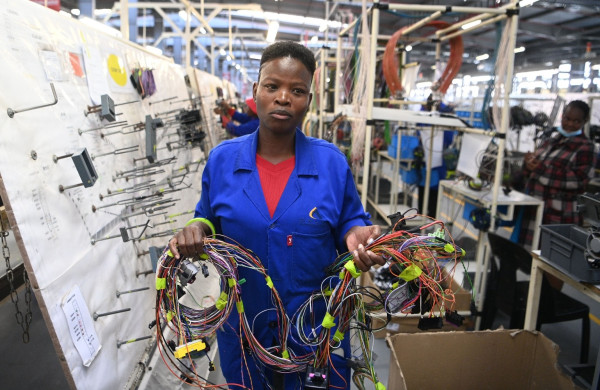
The Botswanan town of Lobatse, some 70 km south of Gaborone, has been transformed into a vibrant manufacturing centre. Across sprawling factory floors, hundreds of skilled hands meticulously assemble intricate wiring harnesses - components that will eventually power Volkswagen and Nissan vehicles across Africa and beyond.
In the automotive industry, wire harnesses are an intricate arrangement of wires, connectors, and components. They serve as vehicles' central nervous systems, enabling the transmission of electrical signals and power throughout the automobile.
This is Delta Automotive Technologies, where strategic financing from the African Development Bank has catalysed a manufacturing renaissance that extends far beyond the factory wallsThe company makes wiring harnesses primarily for Volkswagen and Nissan.. For decades, Botswana's economic history was written in diamonds. Today, a new chapter is unfolding as the African Development Bank's $80 million credit line to the Botswana Development Corporation (BDC) for businesses in the country fuels Delta Automotive's transformation into a manufacturing powerhouse.
"This funding hasn't just built infrastructure - it's built opportunity," says Darryn Hattingh, Delta's Director of Manufacturing. "We've built a world-class operation that competes globally while creating opportunity locally. The support enables us to industrialise not just today's production lines, but tomorrow's innovations. It will support us to industrialise future businesses obtained through Volkswagen.”
The firm, which is based in Botswana, makes wiring harnesses for Volkswagen's Polo Vivo and Polo 270, and Nissan's H60 brands.
It currently makes 120 vehicle harness sets for Volkswagen South Africa per day. By 2027, it hopes to create 340 vehicle sets for Volkswagen and 111 for Nissan in South Africa.
Women powering an industrial revolution
As one walks through Delta's expansive manufacturing facility, one fact is immediately apparent: in a traditionally male-dominated industry, women's expertise is driving this operation forward. An impressive 75% of Delta's workforce is female, shattering glass ceilings with every wire harness assembled.
For Clara Kaekane, a product and process engineer at Delta, the significance goes beyond personal achievement: "Every component we make is a challenge to outdated assumptions about gender and engineering work. I'm not just building car parts - I'm building a new perception of what is possible for women in manufacturing across Africa.”
Kaekane feels empowered to work at the management level in the automotive industry, which is normally male-dominated.
“This is a great opportunity for our country and company,” she says.
Connecting communities to global value chains
The hum of activity at Delta's plant represents more than manufacturing - it is the sound of Botswana's integration into sophisticated global supply networks. Currently producing 120 vehicle wiring harnesses daily, with plans to nearly triple output by 2027, Delta is an example of how African manufacturers can excel in precision-demanding global industries.
"What is happening here is the physical manifestation of our High 5 development priorities, particularly ‘Industrialize Africa' and ‘Integrate Africa'. It also provides skills to the people of Africa," said the African Development Bank's Deputy Director General for Southern Africa, Moono Mupotola. "Each wire harness connects not just vehicle components, but Botswana's workforce to global value chains, rural communities to industrial opportunities, and traditional economies to a diversified future."
Scaling impact: From hundreds to thousands
The numbers tell a compelling story: There are 327 employees today, expected to grow to 1,000 within four years. Behind those numbers are families supported, skills developed, and communities transformed. With 95% of the workforce Botswana nationals, the company has become a major driver of local economic empowerment.
"We're seeing multiple development dividends from this single investment," says Benedicta Abosi of BDC. "Delta's growth is generating export earnings, creating quality jobs, developing technical skills and, perhaps most importantly, demonstrating what's possible when development finance meets entrepreneurial vision."
She explained that five years ago, the Botswana Development Corporation supported multiple businesses, including Delta Automotive Technologies, through a $80 million line of credit facility from the African Development Bank.
A blueprint for African industrial transformation, Delta's success offers a replicable model for industrial development across the continent. By strategically supporting companies integrated into global supply chains, development finance can simultaneously address unemployment, gender inequality, economic diversification, and regional integration.
As workers at Delta Automotive Technologies continue to assemble the components that will power vehicles across the region; they're also creating a template for how African development finance can catalyse inclusive industrial transformation.
“This has definitely been a good investment for the African Development Bank, and this is how we see development financing working in Africa, Mupotola added.
Distributed by APO Group on behalf of African Development Bank Group (AfDB).
More images:
https://apo-opa.co/42JGePY
https://apo-opa.co/3GL0NTB
About the African Development Bank Group:
The African Development Bank Group is Africa's premier development finance institution. It comprises three distinct entities: the African Development Bank (AfDB), the African Development Fund (ADF) and the Nigeria Trust Fund (NTF). On the ground in 41 African countries with an external office in Japan, the Bank contributes to the economic development and the social progress of its 54 regional member states. For more information: www.AfDB.org
Questions about income could be removed
Government-funded Ncera farm has battled drought and price fluctuations
KwaZulu-Natal Legislature praises Umkhanyakude District on matric results
Members of the KwaZulu-Natal legislature have praised the Umkhanyakude District for its remarkable turnaround - rising from the worst-performing education district to one of South Africa’s top performing regions in the matric exams.
The Members of the Provincial Legislature (MPLs) urged the district to share best practice on achieving excellent matric results with other districts.
Speaking during the first visit to Umkhanyakude since the district was announced as the top-performing district, the members described the region’s meteoric rise as a remarkable achievement that should be emulated.
UMkhanyakude achieved an overall matric pass rate of 92.8%.
“Not so long ago, this district was number 75 out of 75 districts in the country. Today it is number three in the entire country, and it is also number one in the province. This shows that the district has a well-oiled strategy which is producing handsome dividends,” MPL Celiwe Madlopha said.
She said the legislature had contributed immensely to KwaZulu-Natal’s stellar education performance by providing effective oversight and identifying barriers to effective learning and teaching.
“Members of the legislature are visiting four schools in Umkhanyakude District today and tomorrow as part of the legislature’s School Functionality Monitoring Programme (SFMP). We are, among other things, monitoring infrastructure challenges that our schools face, the delivery of learner support material, the start of lessons, safety and security.
“The SFMP is our flagship programme that has helped to resolve many challenges in our schools. We appreciate the support we continue to receive from the provincial Executive and the schools governing bodies as we play our oversight role,” Madlopha said.
A comprehensive report will be compiled after the school visits and will be presented in the House for adoption and implementation. – SAnews.gov.za
DikelediM
Fri, 01/24/2025 - 10:28
Johannesburg, 20 September 2024: The decision to take a hard stance and regain financial control has paid dividends for Daybreak Foods’ CEO, Richard Manzini, as he welcomes the Public Investment Corporation SOC Limited’s (PIC) approval of a ZAR 250 million ($ 13 million) corporate loan. “It has not been an easy road for any of …
Introduction Padel is swiftly becoming a favourite sport worldwide, thanks to its engaging play and sociable nature. For beginners, the journey starts with selecting the right equipment, particularly the racket, which is crucial for both learning and enjoyment. This blog post will guide newcomers through the essentials of choosing a beginner-friendly padel racket, helping them …
New Development Bank key to progress in developing countries
Minister of Finance Enoch Godongwana has called for visible thought leadership on how the New Development Bank (NDB) can play a more catalytic role in the achievement of Sustainable Development Goals (SDGs) in developing and emerging markets.
The SDGs are a universal call to action to end poverty, protect the planet, and ensure that by 2030 all people enjoy peace and prosperity.
“The Bank must be unwavering in its commitment to the SDGs as it remains the most relevant benchmark for the development priorities of developing countries. Therefore, as we grow and strengthen the NDB as an institution, we must not lose sight of its developmental mandate.
“There is a need to address global challenges such as geopolitical challenges, which impacts multilateralism, escalating climate stresses, widening economic and social divides, and challenges we face at a national level.
“This includes poverty, inequality, and unemployment that continue to plague our societies,” Godongwana said on Friday. The Minister was addressing the NDB Annual meeting in Cape Town.
The Minister noted the significant progress that has been made by the Bank since being operational.
“[However], we must recognise that there is still much work to be done. As the 2030 Agenda draws near, increased momentum towards achieving the SDGs is imperative. This is a critical time for global development partners to come together and convey a strong message on the broad development agenda,” he said.
The Minister said progress on the SDGs will require targeted investment.
“Access to concessional development finance for developing countries is imperative to ensure accelerated progress in addressing development challenges and achieving inclusive growth that creates economic opportunities for all.
“In addition, there is a need for sizeable increases and greater stability in the flow of private capital investments. The NDB can play an essential role in mobilising private investment and ensuring it flows where it is needed most.
“The Bank must implement innovative financing instruments to crowd-in private sector participation. This should be accompanied by technology transfer and capacity building support as multidimensional enablers to accelerate the implementation of the SDGs, especially in key areas such as renewable energy, infrastructure development, digital access and job creation,” Godongwana said.
He said investment in infrastructure is central to the achievement of the development goals.
“Infrastructure is an enormous economic multiplier, providing dividends for an economy long after the infrastructure has been built. We believe that the NDB’s activities in developing and emerging markets will assist in addressing the large infrastructure financing gap that has been impeding economic growth and development, particularly in Africa.
“In this slow growth environment, where fiscal and monetary policy is limited, public and private role players need to collaborate to support growth.
“To this end, we look to the NDB to provide solutions aimed at de-risking infrastructure projects through its financial instruments to attract private capital,” the Minister said.
This will support infrastructure projects and provide technical assistance in designing innovative funding models and institutional arrangements that could accelerate infrastructure investments at a country-level.
“However, if the Bank is to continue advancing the interests of the developing world and address challenges such as renewable energy, infrastructure development, digital access and job creation then NDB must make a concerted effort to speed-up disbursements of approved projects.
“As more African countries become members of the NDB we believe that the Bank can play a very instrumental role in the provision of infrastructure and addressing its infrastructure deficit,” he said. -SAnews.gov.za
nosihle
Fri, 08/30/2024 - 11:44
Introduction As global markets become increasingly accessible, investors and multinational corporations face the challenge of managing withholding taxes (WHT) and leveraging double tax treaties (DTTs). This essential guide delves into the intricacies of withholding tax, strategies for reclaiming it, and the pivotal role of double tax treaties in optimizing international investment returns. What is …
Introduction Navigating the complexities of global taxation is a crucial aspect for businesses and investors who operate across international borders. Withholding tax (WHT), a common feature in cross-border transactions, often represents a significant financial consideration. This comprehensive guide explores effective strategies for reclaiming withholding tax, understanding double taxation treaties (DTTs), and utilising essential forms like …
Saving is one of the most important aspects of personal financial management, offering many benefits and serving as a vital part of a sound financial strategy. However, saving is different from investing. Investing is an effective way to make your money work for you. Kerryn Campion, COO of Aions Exchange, states that, “Through smart investment …
Introduction Withholding taxes can significantly impact the returns on international investments. For investors around the globe, understanding how to reclaim withholding tax is crucial to maximising returns. This comprehensive guide explains the process, highlights the key forms and agreements, and offers practical advice for navigating this complex area of tax law. Understanding Withholding Tax Withholding …
Withholding tax plays a crucial role in Australia’s tax system, impacting both residents and foreign investors. This tax is deducted at source on various types of income, including dividends, interest, and royalties, necessitating a clear understanding for effective management and potential reclaim. However, the process of reclaiming withholding tax is fraught with challenges, often leaving …
In the complex world of international finance, withholding tax holds a significant place within Germany’s tax framework. This form of tax, deducted at source on income such as dividends, interest, and royalties, is a fundamental aspect of the German tax system, ensuring that taxes are collected efficiently from foreign and domestic entities alike. As the …
In today’s global economic landscape, international trade and investment have become increasingly complex. This complexity is not just a function of market dynamics, but is also significantly influenced by the intricate web of global tax policies that govern cross-border transactions. Among these, withholding tax plays a pivotal role, impacting decisions made by businesses and investors …
As an entrepreneur, you’ve put in the hard work getting your business off the ground. Now that it’s showing a profit, it’s time to think about dividends, and getting a return on your investment. But where to start, and what about tax implications? Let’s start with the basics. When a company makes profits, they can …
President Ramaphosa, EU Council President hold bilateral call
President Cyril Ramaphosa has held a bilateral telephone conversation with the President of the European Council, Charles Michel.
According to a statement by the Presidency, the conversation was a positive and constructive discussion on bilateral, regional, and global issues.
The statement said the two leaders also discussed the need for more engagement to address global peace and reaffirmed shared respect for international law.
“They both welcomed the recent bilateral South Africa-European Union Political and Security Dialogue Forum, and the Human Rights Dialogue held in Pretoria on 26 and 27 February 2024, and they agreed to continue stepping up cooperation to support stability and prosperity.
“In this regard, both Presidents discussed the importance of upholding the UN Charter and the principles of sovereignty and territorial integrity notably in Ukraine. Furthermore, both Presidents stressed the importance of addressing urgently the situation in the Middle East, notably reaching a ceasefire in Gaza, release of hostages as well as the provision of humanitarian assistance, recalling the orders of the International Court of Justice in this respect,” the Presidency said.
On matters relating to tensions in the East of the Democratic Republic of Congo, “both underlined the importance of a political solution” in that country and also called for an “immediate and durable ceasefire” in Sudan.
Globally, the two leaders agreed to closer working relations in the run up to and during South Africa’s upcoming Presidency of the G20 in 2025 “including on the protection and advancement of multilateral cooperation and the international rules-based order”.
The strategic partnership between South Africa and the European Union – which has brought economic and social dividends for both parties – also came under discussion.
“They welcomed recent engagements in Brussels and in Pretoria to deepen and expand the partnership to new areas of mutual interest, such as strategic value chains in the sectors of green hydrogen, critical minerals and vaccines, which will also support progress in regional integration and the implementation of the African Continental Free Trade Agreement.
“Against this framework of close and regular cooperation, both Presidents agreed to hold a bilateral Summit at earliest convenience,” the statement concluded. – SAnews.gov.za
NeoB
Tue, 05/21/2024 - 09:39
Banks paid out hefty bonuses, though performance targets were not met
GroundUp and Black Sash hosted a debate on the feasibility of the Basic Income Grant (BIG) on Thursday
30 Years: reflections on SARS
While having to engage with the taxman may conjure up feelings for some of going to the dentist to have a tooth pulled - the South African Revenue Service (SARS) has played a crucial role in where South Africa is today.
As the country turns 30 years old under a democratic dispensation, it reaches this milestone with the existence of institutions like the South African Revenue Service (SARS).
State capture may perhaps be the first thing to come to mind when thinking of the revenue service; closely followed by how unfair it may feel to pay taxes.
“What became increasingly clear as the Nugent hearings continued and was further underlined during the Zondo Commission proceedings which got underway in August 2018, was that the capture of SARS was part of a wider plan to capture the state,” said the revenue service in its anniversary book to commemorate 25 years of its existence.
While it did go through a grim period characterised by what it termed as “a significant loss of talent, marginalisation of staff, complete collapse of governance, as well as a lack of trust by citizens,” SARS still managed to make it through the rough years.
At a recent media briefing to release the preliminary revenue outcome for the 2023/24 financial year, SARS said state capture left the organisation in “distress and severely compromised.“We embarked on a journey to re-imagine the organisation. SARS is succeeding in its strategic intent of building a tax and customs system that is based on voluntary compliance and sharpening its capability aimed at deterrence of wilful non-compliance,” it said at the briefing held in Pretoria.
It added that the process of rebuilding entailed broadening the tax base, instilling, and improving a culture of voluntary compliance and fiscal citizenship as well as data and technology to optimally deliver “on our mandate and working with all stakeholders in the tax ecosystem and fostering trust and confidence on SARS.”
It was imperative for SARS - of which its higher purpose is to enable government to build a capable state, foster sustainable economic growth and social development that serves the wellbeing of all South Africans - to overcome this hurdle.
More so, for an institution that has collected R21.6 trillion in net tax revenues since its inception.
“The R21.6 trillion tax collections represents a compound growth of 9.9% per year since the inception of SARS in 1997. This has funded the South African democracy and touched the lives of millions who would be destitute without government support and services. We, who have the privilege to work at SARS are justly proud of these achievements because these efforts contribute directly to nation-building and sustain our democracy,” SARS Commissioner Edward Kieswetter said.
This as tax revenue collections have increased from R114 billion in 1994/95, at a compounded annual growth rate of 9.9% and an average tax-to- gross domestic product ratio of 22.2%.
Speaking at the 25-year celebrations of the existence of SARS in October 2022, President Cyril Ramaphosa said the encouraging progress of rebuilding SARS was evidence that it is possible to rebuild “ourselves from the deep damage we suffered during state capture.”
Evolution
While some taxpayers intentionally do not look at the tax portion of their payslips, paying one’s share of tax is vital in closing the very real inequality gap that continues to exist in the country.
And thanks to innovation made at the revenue service, it has become far easier for taxpayers to pay their taxes.
The days of completing a paper-based tax return are all but gone.
That laborious exercise has been replaced by a sleek process where most citizens are now able to receive a pre-populated tax return that can be completed and submitted online in a matter of minutes, thanks to eFiling.
But just how did we get to where we are today?
SARS was formed out of the amalgamation of the segregated revenue services of the apartheid-based Bantustans, as well as the Departments of Inland Revenue and Customs.
Following the historic elections in which South Africans of all races could vote in April 1994, work to build a better country for not just a few but for all, went into full steam.
“The new democratic government inherited a moribund economy deeply in debt and an inefficient Revenue and Customs system that was incapable of providing the tax needed by the democratic government to meet the developmental needs of all its people. In particular, the democratic government faced the challenge of ratcheting up service delivery to address the socio-economic backlogs in education, housing, health care, water supply, electricity supply and sanitation, amongst others,” noted the revenue service in its anniversary book.
In 1995, the then democratic Cabinet approved a two-step approach to the administrative autonomy of what would become SARS.
That process entailed the moving of the directorates of Inland Revenue and Customs and Excise out of the Ministry of Finance to the South African Revenue Service. The birth of the revenue service came in October 1997.
SARS - which is not only mandated to collect all revenues due and ensure compliance with tax, customs and excise legislation -- was formally established as an organ of state within the public administration, as an institution outside the public service.
Following that, government had the job of instilling a culture of tax compliance which was lacking in the country.
Change was needed and over the years, several steps were taken to “broaden the tax base, amongst others, these included legislative changes, service improvements, compliance strategies and enforcement actions,” said SARS.
Examples of the steps taken include the closing of legislative loopholes for abuse, tax amnesties (1995 and 1996, foreign exchange amnesty of 2003) and the introduction of Capital Gains Tax in 2001.
Modernisation
What was also a challenge for the leaders at SARS at the time, was “the fact that all processes inherited from the past were still manual and paper based” with returns having to be mailed to individual taxpayers.
Previously, filing one’s tax return involved the filling in of a minimum 12 pages to be tax compliant.
To reduce the paper-based processes, a new income tax system (NITS) was implemented in 1999. Increasing online business transactions, enhancing productivity as well as creating a more stable income tax system by reducing human intervention and improving data integrity were the main objectives of the new system.
“It was not until the launch of the Modernisation Programme in 2007 that SARS would finally be able to overcome the paper challenge,” it said.
In 1998, South Africa began collecting VAT at Southern African Customs Union borders. According to SARS, prior to 1994, these ports of entry were mainly managed by the South African Police, the South African Defence Force and Home Affairs (mainly for political control) and no revenue was collected.
Although a number a changes had been introduced after 1997, the revenue service found itself to be still “bureaucratic” and issues such as inadequate service to taxpayers and no standardisation of processes were still bugbears.
This led to the establishment of the Siyakha programme – which is isiZulu for “we are building”. The programme was set up to improve the performance of the organisation and to standardise and centralise key processes.
Its main objective was to radically transform SARS into a modern revenue authority aimed at creating a service culture that focused on the needs of the taxpayer, based on the principle that good service would facilitate tax compliance.
“The significance of Siyakha was that it would lay the foundation for the automation of processes and the modernisation programmes which began in 2007,” said the revenue service.
Around 2004, the Filing Season initiative was born and over the years it became one of the biggest, regular annual engagements that an organ of government had with citizens, apart from the national, provincial and local government elections.
As the years went by, SARS saw a “massive growth” in its taxpayer base and an increase in compliance, resulting in the receipt of high volumes of paper returns and supporting documents which still needed to be processed manually.
“As the organisation approached its tenth anniversary in an era of rapid technological advancement, the pressure mounted for a move from manual and paper-based processes to digital transactions," said the revenue service in its book.
In the modernisation years between 2007-2014, some of the key milestones SARS reached include the introduction of eFiling in 2007 which was at first for the submission of personal income tax returns.
It was then rolled out in phases for Company Income Tax, VAT, Dividends Tax and Transfer Duty amongst others. It was critical to reducing the volume of paper that hampered efficiency, service and compliance.
“Other enhancements introduced in 2007 relating to the submission of Personal Income Tax returns included redesigning the return to two pages, using third party data verification and introducing scanning of returns in branches.”
“In 2008, SARS ramped up the changes, including the pre-population of returns on eFiling, based on third-party data supplied by employers. Employers could submit information to SARS through the new e@syFile channel developed by SARS and provided to employers free of charge,” it said.
The following year, more than three million individual taxpayers used eFiling, experiencing a massive improvement in ease, convenience, and improved turnaround times, especially in the payment of refunds.
The number of taxpayers visiting SARS branches began to drop and the number of printed returns reduced, “which meant a huge saving for SARS and represented a major environmental benefit.
“Today, almost 100% of all returns are filed electronically. The changes introduced in 2007 not only delivered benefits to taxpayers, but improved SARS’s ability to become more effective in detecting and deterring non-compliance and fraud. It allowed SARS to change its approach to monitoring compliance, from gatekeeper to risk manager,” said the revenue service.
The revenue service noted that by the end of the 2010 financial year, there was a significant increase in the use of electronic channels by taxpayers. An 82.6% growth was achieved in the electronic submission of returns as a result of processing efficiencies and automation.
South Africans also benefit from the existence of the Office of the Tax Ombud (OTO) that was established in October 2013 to enhance the tax administration system.
Prior to the establishment of this office, there was no independent channel of independent redress for taxpayers who had exhausted the normal complaints mechanisms. The office is independent of but funded through SARS.
Last year, the OTO celebrated a decade existence.
Indeed, the revenue service forms an important part of our democracy. -SAnews.gov.za
Neo
Mon, 04/08/2024 - 14:20
When it comes to upcoming dividend payouts, there are companies with an annual dividend yield higher than 10% as of writing, preparing to pay dividends with upcoming last dates to trade. (List courtesy of Easy Equities). Orion Office REIT Inc.: A real estate investment trust (REIT) that invests in office properties. It currently offers a …
SAA is here to stay, says Minister Gordhan
Public Enterprises Minister Pravin Gordhan has assured staff at South African Airways (SAA) that the state-owned airline is “here to stay”.
This following last week’s announcement of the collapse of the deal with strategic equity partner, Takatso Consortium.
“Our ambition is that SAA will make enough profit to pay the government dividends. We have rebuilt the airline, and it will make profit that can support the fiscus instead of it looking for bailouts from government.
“SAA is here to stay. SAA will grow. SAA will expand. Don’t allow negativity to come near us,” Gordhan said.
The Minister reflected on the airline’s recent troubles and emphasised the need for intolerance for corruption.
“We should be grateful to government for the role it played to avoid liquidation.
“We will have zero tolerance for any corruption that rears its ugly head at SAA. We have a bright future ahead of us. We need to work together. You must work as a team,” Gordhan said.
Last week during the announcement of the Takatso Consortium deal, Gordhan told the media that SAA had a corporate plan aimed at sustaining the airline without needing government help.
“That corporate plan actually entails the gradual growth in the number of routes that SAA will take up in the course of the next few years. Similarly, it will have the capacity to lease more aircraft, both for domestic use, use within the continent and for inter-continental flights as well.
“All of these plans will be rigorously examined with the necessary aviation expertise to ensure that jobs are secure, that the airline is secure and that there is a future for SAA and its flag to be seen continuously within the country, within the continent and across continents as well,” Gordhan said. – SAnews.gov.za
NeoB
Tue, 03/19/2024 - 09:30
Infrastructure investment central to achievement of SA’s development goals
President Cyril Ramaphosa says investment in infrastructure is central to the achievement of the country’s development goals.
“Infrastructure is an enormous economic multiplier, providing dividends for an economy long after the infrastructure has been built,” President Ramaphosa said.
Addressing the 2024 Sustainable Infrastructure Development Symposium of South Africa (SIDSSA) currently underway at the Century City Conference Centre in Cape Town, President Ramaphosa said the symposium is an important part of government’s effort to close the infrastructure spending gap in the country.
“It is estimated that to achieve our infrastructure goals, we need an additional R1.6 trillion in public sector infrastructure investment and a further R3.2 trillion from the private sector by 2030,” President Ramaphosa said.
A number of bold initiatives are being implemented to deliver infrastructure at the required scale and pace.
“We are working on reforms to develop sustainable infrastructure, lift business confidence and encourage investment.
“These reforms include the amendment of the Division of Revenue Act to enable provincial governments to use their infrastructure grants and budget allocations to crowd-in private sector finance for large social infrastructure programmes,” President Ramaphosa said.
READ | National Assembly approves Division of Revenue Amendment Bill
The President said amendments to the public-private partnership regulations, which have recently been published for public comment, are part of broader reforms to mobilise and pool public and private sector resources for infrastructure.
“The operationalisation of the Infrastructure Fund has seen a steady growth in the portfolio of blended finance projects that use relatively small fiscal allocations to de-risk public infrastructure projects and raise finance in debt capital markets.
“Through the work that has been done in transforming the infrastructure landscape, the total value of the country’s Strategic Integrated Projects has grown from R340 billion in July 2020 to R540 billion now.
“Eighteen projects, valued at around R10 billion, have been completed, covering human settlements, roads, water and sanitation,” President Ramaphosa said.
According to the President, the value of projects currently in construction is over R230 billion.
“Projects worth nearly R170 billion are currently in procurement. In this calendar year, 11 such projects, with a total investment value of R45 billion, are expected to reach financial close.
“To date, Infrastructure South Africa has unblocked a total of R25 billion worth of projects in the renewable energy space using the Infrastructure Development Act to fast-track government authorisations,” the President said.
Hosted by the Department of Public Works and Infrastructure (DPWI), the symposium, in its third iteration, is intended to shape the conversations about regulatory and policy reforms, among them, innovative funding models for infrastructure development.
Ministers and Deputy Ministers are expected to anchor various panel discussions and technical discussions throughout the symposium.
SIDSSA 2024 will showcase the following outcomes :
- Launch of the construction book: a repository of infrastructure projects going into procurement/construction in the 2024/2025 financial year.
- Leaders forum: A gathering of South African Ministers with 22 participating Ministers from the African continent.
- Top 12 Infrastructure project priorities: These projects will receive project preparation funding from Infrastructure South Africa.
- Signing of MOU’s with important partners and stakeholders.
The Symposium will also provide the following updates:
- Update on the gazetted Strategic Integrated Projects.
- Update on the projects already receiving project preparation support.
- Infrastructure Fund Project Pipeline.
- SAnews.gov.za
Edwin
Tue, 03/19/2024 - 12:05