Battle Over Land in Kwazulu-Natal
Since 2022, people have been trying to occupy land in Rocky Ridge in KwaDukuza

MyZA
News, Directory, Events and Other Stuff
Since 2022, people have been trying to occupy land in Rocky Ridge in KwaDukuza
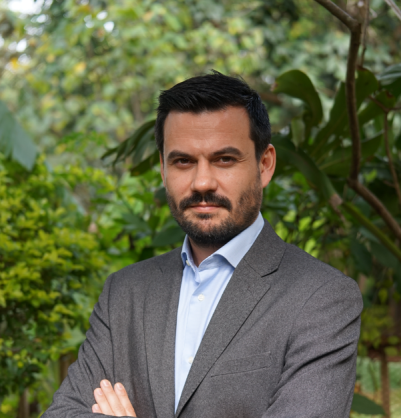
By Julien Fouilliart-Building & Infrastructure Growth Leader Middle East, Caspian and Africa, Bureau Veritas (https://group.BureauVeritas.com).
Globally, buildings are responsible for a substantial share of energy, electricity, water and materials consumption using between 35-40% of energy demand and contributing 37 per cent of world carbon dioxide (CO2) emissions. Including the manufacturing of building materials.
The 2022 updated Global Buildings Climate Tracker (GBCT) (https://apo-opa.co/3YLJiZG) shows that there is a significant gap between the current state and the desired decarbonization path which is concerning. In effect it means that to align with the 2030 milestone, an annual increase of ten decarbonization points is now necessary which is a substantial jump from the six points per year anticipated starting in 2015.
In 2019 in Africa, buildings accounted (https://apo-opa.co/4e8NIhN) for 57% of total final energy consumption and 32% of total process-related CO2 emissions.
Despite continental issues of poverty, unemployment and rapidly developing informal settlements among other issues, many countries in Africa are embracing green, sustainable building practices.
With its burgeoning population, expected to add some 1.2 billion people by 2050 (https://apo-opa.co/3AxgxXo) Africa faces rapid urbanization.
Urbanization provides an opportunity for countries across Africa to embrace green building practices, access available international green funding opportunities, and set a foundation for sustainability for future generations.
In 2023 the Africa Regional Network of World Green Building Council (WorldGBC) launched the Africa Manifesto for Sustainable Cities and the Built Environment, which sets out the actions that policymakers and businesses across the continent need to take to achieve a net zero carbon, healthy, resilient, equitable, socially- and economically-inclusive built environment for everyone, everywhere.
Achieving these goals requires policymakers and business leaders across the continent to recognise the untapped potential of the built environment. But this can only be realized with the implementation of policies that support transformative action, through intense collaboration between governments, city and regional leaders, businesses and investors.
South Africa is leading Africa's green building sector (https://apo-opa.co/3YLdq7N). It has over two million square meters certified green buildings that reduce water consumption, electricity, and waste disposal; 50 certified projects are projected to result in an annual saving of 76 million kilowatt hours which is equivalent to the electricity needs of 5,300 households every year.
South Africa has its own National Standard 10400 Part XA that deals with optimizing energy efficiency in buildings and in the light of this the Green Star South Africa and EDGE green building tools have been adapted and are widely used in the country. International rating systems like LEED and WELL are also used.
The scope of green construction in Egypt has been slow to grow but Egypt has two local rating systems in place called TARSHEED and the Green Pyramid Rating System. These, along with EDGE, LEED and WELL are used in various projects.
The Nigerian government has pledged to achieve a 20% reduction in its greenhouse gas emissions by 2030 and 45% with international support. Green building will likely be a big part of this change.
This country's National Building Code, developed by the National Council on Housing and Urban Development, and the Building Energy Efficiency Guideline (BEEG), also support the agenda of sustainable development by setting requirements for occupant health and safety, use of local and safe building materials and energy efficiency among other criteria.
Morocco has several legal provisions in place to promote sustainability and environmental protection through construction impact assessments for new building projects as well as energy-efficient construction requirements applicable to most residential and commercial projects. Several projects in the country have also achieved LEED green building credentials.
It also has several renewable energy projects such as the Noor Midelt Solar Plant and Tarfaya Wind Farm, one of the biggest wind farms in the continent.
As the drive towards Net-Zero heightens more African countries are joining the African Regional Network of the World Green Building Council. NGOs and other industry professionals are setting up green building councils in South Africa, Egypt, Tunisia, Nigeria, Botswana, Zimbabwe, Namibia, Mauritius, Tanzania, Kenya, Cameroon and Uganda.
One of the big hurdles restraining a sustainable development movement in the construction industry is a lack of awareness for practical sustainable actions among many developers and investors.
In South Africa there is a broad awareness of Green Buildings and the market share of certified buildings among all new builds is increasing. The 2021 International Finance Corporation's (IFC) Green Building Market Stakeholder Assessment for South Africa showed that on the supply side, key motivating factors for Green Buildings are their reduced carbon footprint increased end user demand and increased marketability.
From the occupier's perspective the motivating factors for buying or leasing a Green Building are lower utility bills and lower operating costs. Yet, at a residential level occupiers are only willing to pay a two percent premium for these benefits.
The IFC report points out that the perceived cost of construction and certification of green buildings are also considered major obstacles to the expansion of certified Green Buildings in South Africa (https://WorldGBC.org/). Its research indicates that those in the know estimated the additional construction cost to be 10% or higher, while those unfamiliar with Green Buildings are likely to significantly overestimate costs.
Currently, four out of six financial institutions provide financing for Green Building projects in some form or another and three require a certification to approve the loan. The portfolios of two consist of retrofitting existing buildings into Green Buildings; two of commercial and industrial Green Building construction finance and only one residential Green Building construction finance. Of the two FI's that currently do not fund any Green Building one plans to do so in the future while the other does not see this as part of their strategy.
The investment into green construction (https://apo-opa.co/4e8NYgL) has multiple benefits; it facilitates growth while addressing issues like employment, climate change, and poverty.
However, more needs to be done to improve the understanding of the benefits of green buildings such as lower operational costs, increased ROI as well as an overall improvement in occupant health and wellbeing. Financial institutions need to do more to support green construction. Those which have pledged to lower their investments in carbon producing industries could create green bonds or funds for the African construction sector. Government's need to provide policy support along with incentives to catalyze market development.
All this suggests that there is still a sizable information gap regarding the cost, certification and benefits of Green Building and that further knowledge dissemination efforts are needed to close it.
Distributed by APO Group on behalf of Bureau Veritas.
About Julien Fouilliart:
Julien Fouilliart is a seasoned business development professional with 15 years of experience in international, multicultural, and cross-sector environments. He currently leads the growth of Bureau Veritas' Building & Infrastructure market across the Middle East, Caspian, and Africa regions. Julien holds a degree in Mechanical Engineering from Belfort University in France. He is based in Kenya and has a deep passion for the African continent. Julien has played a key role in the development of large and iconic infrastructure projects across the region. He has an extensive international background, having worked in France, China, Spain, Belgium, and the United Kingdom. His experience includes collaborating with global companies and public institutions to drive business growth in sectors such as aerospace, IT, rail, building, and transport infrastructure.
Gender equality remains key in climate change adaptation
Government has affirmed its commitment to addressing gender equality in relation to women being disproportionately affected by the impacts of climate change through policy, legislation and action.
Addressing the Climate Change Adaptation and Gender Mainstreaming Dialogue in Pretoria, Deputy Minister of Forestry, Fisheries and the Environment, Bernice Swarts, said the increased burden on women necessitates that government makes gender equality a central tenet of the climate change strategies.
“Our National Climate Change Response White Paper explicitly recognises the special needs and circumstances of rural women, who are among the hardest hit by climate change.
“Gender mainstreaming is not just a theoretical concept but a practical necessity. It means integrating gender considerations into all aspects of climate change adaptation strategies, policies, and programmes.
“By doing so, we ensure that the unique experiences and contributions of women are not only recognised but are also harnessed in ways that promote sustainable development,” the Deputy Minister said on Wednesday.
She said the National Environmental Management Act (NEMA) acknowledges the vital role of women in environmental management.
“However, we must do more than just acknowledge: we must act! It is through inclusive approaches that we can begin to build resilience, reduce vulnerabilities, and address the inequalities that climate change exacerbates.
“While we have made progress in establishing gender-sensitive policies, the challenge lies in effectively implementing these policies on the ground. We must continue to share best practices, success stories, and innovative approaches that have worked in different sectors and regions,” Swarts said.
The Deputy Minister noted that gender inequality has long been a global issue.
“Despite efforts to address these inequalities through international frameworks like the United Nations Charter, the Universal Declaration of Human Rights, and the Beijing Declaration and Platform for Action, the reality is that many women, especially in developing nations, remain disproportionately affected by the impacts of climate change.
“Women, particularly those in rural areas, are among the most vulnerable when climate disasters strike. They often face greater challenges accessing resources such as water and food due to droughts, floods, and other extreme weather events,” Swarts said. -SAnews.gov.za
nosihle
Wed, 10/23/2024 - 13:06
Policy frameworks bear fruit
Trade, Industry and Competition Minister Parks Tau says through the Automotive Production and Development Programme (APDP), the dtic has provided critical incentives and policy frameworks to help drive investment, innovation and job creation.
Tau was speaking at the South Africa Auto-Week in Cape Town recently.
According to Tau, this has enabled South Africa to remain competitive on the global stage.
He said since its inception in 2011, the Automotive Investment Scheme (AIS) disbursed R20.7 billion to component manufacturers (CMs) and original equipment manufacturers (OEMs).
“AIS funding to over 150 projects has resulted in investment of over R76 billion from the 2016/17 financial year to September 2024, generating a simple investment multiplier of five.
“This means that for every R1 of incentive spending, R5 of investment was spent by the project. Over this period, the average grant disbursed was 20% of the total investment generated by the project,” Tau explained.
On transforming the sector, the Minister said out of the R15.2 billion disbursed from the AIS, 50% was payments to projects outside of the five main metros showing the substantial reach of AIS to generate spatial transformation.
“In terms of ownership, R227 million, which is 1% of AIS funding, was accessed by black-owned projects; 2%, amounting to R242 million, was accessed by small, medium and micro enterprises; R3 million by youth-owned, and R7.9 million by women-owned projects. This shows that a more deliberate approach to transformation is required in the sector. We are, however, aware that we can do more.”
Tau said the recent announcement of the extended APDP Phase 2 until 2035 is a clear signal of government's long-term commitment to the sector.
Resolving the logistics challenge
Speaking as a panel member on infrastructure investment at the same event, the Deputy Minister of Trade, Industry and Competition, Andrew Whitfield, said the Statement of Intent of the 2024 Government of National Unity (GNU) listed infrastructure development as a key priority.
“The fact that we have the Presidential National Logistics Crisis Committee (NLCC), established by the South African government to address the country's transport and logistics, indicates and recognises that we have a crisis of infrastructure in the country.
“South Africa has the skills and talent to resolve these challenges, but the skills and talent cannot exist in silos. We all need to work together to unlock these challenges,” Whitfield said.
Whitfield said the dtic’s core mission, through the GNU, is going to make it easier for businesses to grow so that they can create jobs and that people can keep those jobs.
“We also need to heed President Ramaphosa’s instruction to cut red tape and produce key performance indicators that will drive the plan to make it easier for businesses to do business, grow and create jobs,” he said.
Whitfield said there is nothing more urgent than the unemployment crisis that South Africa faces, and that there is an urgent need towards unlocking the infrastructure potential that the country has. – SAnews.gov.za
Edwin
Wed, 10/23/2024 - 14:04
Hundreds of workers march in Cape Town, Joburg and Durban
South African woman arrested for drug trafficking at OR Tambo
A 21-year-old South African woman has been arrested for drug trafficking at the OR Tambo International (ORTIA) Airport.
This is the 11th drug mule to be arrested at the airport in a period of two months.
“The drug mule was profiled and intercepted as she was arriving on a flight from São Paulo, Brazil, on Sunday morning, just before 9am. She was taken to a local hospital where an X-ray confirmed that she had foreign objects in her stomach,” said the police in a statement.
The woman has already released a number of bullets from her body and is in police custody where they are closely monitoring the release of further drug bullets. The process is still unfolding, said SAPS.
National Commissioner of the Police, General Fannie Masemola, commended the vigilance of members of SARS and SAPS at the airport.
“Our men and women in blue working closely with SARS customs and various stakeholders continue to assert the authority of the state at all our ports of entry.
“We appreciate the hard work and dedication of our members and urge them to do more to squeeze the space for criminals. Drug traffickers are feeling the heat and there is nowhere to hide,” said Masemola.
Every week in the last month, SAPS and SARS customs, immigration and the Border Management Authority (BMA) have been intercepting drug traffickers at OR Tambo International Airport.
On Sunday, 22 September 2024, a 30-year-old Namibian drug mule was arrested after arriving from São Paulo.
She too was taken for medical examination and released more than 60 drug bullets. She has already appeared in the Kempton Park Magistrate’s Court on a charge of dealing in drugs.
On Friday, 13 September 2024, a Nigerian drug mule was arrested after he was found in possession of cocaine that was concealed in aircraft head phones. He had just landed from São Paulo.
He has already appeared before the Kempton Park Magistrate’s Court on a charge of dealing in drugs. – SAnews.gov.za
Edwin
Mon, 09/30/2024 - 09:55
Google Ads offers a feature called the “Google Ads optimization score,” which shows up prominently in your account’s ‘Recommendations’ tab. It seems like a useful tool designed to help improve your campaigns. But, in reality, this score is more about Google’s interests than your business’s. The recommendations are meant to push you toward changes that …
President calls on all stakeholders to help preserve SA's heritage
President Cyril Ramaphosa has called on business and other stakeholders to work with government to protect and conserve historical, cultural and natural heritage sites, particularly in marginalised communities.
President Ramaphosa made the call in his weekly newsletter to the nation on Monday, ahead of the Heritage Day celebrations.
South Africa will on Tuesday observe Heritage Day, where citizens will celebrate the rich cultural tapestry that makes up the nation.
President Ramaphosa noted that while heritage preservation is a responsibility of government, the private sector, corporate sponsors, philanthropists, heritage organisations and other stakeholders also have an important role to play in ensuring these legacies are safeguarded for future generations.
“Private sector support for heritage preservation is uneven. While some high-profile heritage sites like Robben Island, the Mandela House in Soweto, Constitution Hill, and others receive donor funding, other less prominent institutions, events, and initiatives struggle to obtain support.
“As a result, many important sites of memory have fallen into disrepair. This is a wasted opportunity, because a number of these sites could stimulate local economies and provide work opportunities to the communities in which they are situated,” President Ramaphosa said.
The President said protecting and conserving historical, cultural, and natural heritage sites was also vitally important for nation-building and national reconciliation.
“On this Heritage Day, I call on business and other stakeholders to work with government in the cause of heritage preservation, particularly in marginalised communities. There is already laudable work being done in this regard.
“By working together as government, business, and society, we can use our national heritage to uplift communities, create opportunities and make us all proud to be South African,” the President said.
Highlighting the significance of Heritage Day, President Ramaphosa noted that having emerged from a painful apartheid past where indigenous customs, traditions and languages were denigrated and marginalised, Heritage Day is one of the most important events on the national calendar.
“It is a valuable opportunity for cross-cultural exchange and for building bridges of tolerance and understanding between races and different ethnic groups. I have always found it heartwarming to see how South Africans from all walks of life celebrate Heritage Day in their communities, schools, workplaces, places of worship and institutions of higher learning.
“It has become a regular facet of Heritage Day to see South Africans share their traditions, cuisine, dress, music, and other forms of cultural expression with their compatriots. Beyond the benefits for cultural self-expression, pride and nation-building, heritage preservation is an important driver of economic growth, job creation and sustainable development,” President Ramaphosa said.
South Africa is perfectly placed to use its rich cultural and natural heritage to promote economic growth.
“As one of the world’s most mega biodiverse countries, South Africa’s natural heritage attracts tourists from around the world, supporting local job creation and investment in natural resource infrastructure. By way of example, in December 2023 alone, there were more than 400 000 visitors to sites like the Table Mountain National Park and Robben Island,” the President highlighted.
Coupled with this, he said, South Africa has an abundance of historical sites across the country that span the pre-colonial, colonial, apartheid, and democratic eras.
“These sites are not just important for tourism. They are also sites of memory and monuments to the past that serve to educate the younger generation of South Africans,” President Ramaphosa said.
To preserve the country’s rich heritage, the President underscored a need to do more to attract young South Africans to careers and opportunities in the sector.
He said through the Presidential Employment Stimulus, the National Heritage Council and National Arts Council has provided unemployed young people with work opportunities in film and digital media production, cultural project management, storytelling, language preservation and as museum guides.
Government will commemorate Heritage Day at Meqheleng Stadium in Ficksburg, in the Free State, under the theme: “Celebrating the lives of our heroes and heroines who laid down their lives for our freedom”.
This year’s theme puts a spotlight on South Africa’s liberation movements who received various forms of solidarity and support from neighbouring countries during the liberation struggle. – SAnews.gov.za
GabiK
Mon, 09/23/2024 - 15:00
Durban-based transport company CR Logistics wanted to add a lightweight interlink combination trailer to its fleet… and chose Serco to build it for them! Serco delivered and Claude Moodley of CR Logistics is now more than happy with the result. “We decided we needed a new lightweight tautliner and looked at a variety of options …
As the world observes International Day of Charity on 5 September, Dr Armand Bam, Head of Social Impact at Stellenbosch Business School, urges South Africans to confront the pressing realities of giving in a nation scarred by its past. He challenges the public and private sectors to view philanthropy not as mere charity, but as …
Visa applicants to receive outcomes of visa waiver applications digitally
In an important first step towards the digital transformation of the Department of Home Affairs, Minister of Home Affairs Dr Leon Schreiber has instituted a new rule to deliver the outcomes of visa waiver applications digitally via email to applicants.
In the first phase of the rollout of this process, the outcome of waiver applications for holders of Zimbabwe Exemption Permits (ZEPs) will be sent digitally, effective immediately.
Over time, the digital-first approach will be extended to other applicants in the visa and permit regime.
This means that applicants will no longer be required to visit a VFS Global office to collect physical, paper-based copies of the waiver letters.
Instead, starting from today with ZEP holders and later all, applicants will conveniently receive digital waiver letters, in PDF format, through email. These digital letters can be used to submit a mainstream visa application going forward.
“While this step on its own may be a small one, it is still meaningful as part of our larger quest to clamp down on corruption and to enhance efficiency of services by transforming Home Affairs into a digital-first department.
“This simple embrace of a digital-first approach to processing waivers has also significantly accelerated our work to clear the permitting backlog that dates back a decade, which started out at over 306 000 unprocessed applications.
“Through this change, we have been able to effectively process 60 582 outstanding ZEP waiver applications, many of which date back to 2022.
“Another 22 529 ZEP waiver applications are set to be processed soon, further reducing the backlog and freeing up valuable resources in a department that has been financially gutted to the point of only having 40% of the staff resources. This step illustrates our absolute determination to use technology to do more with the little we have,” the Minister said.
Applicants who still prefer to collect hardcopies of ZEP waiver letters at branches will still be able to do so.
The department said applicants should not be doubtful when they receive an outcome digitally via email from the following official addresses: No-reply1.dhasa@vfshelpline.com; No-reply2.dhasa@vfshelpline.com; No-reply3.dhasa@vfshelpline.com; No-reply4.dhasa@vfshelpline.com; No-reply5.dhasa@vfshelpline.com; No-reply6.dhasa@vfshelpline.com - SAnews.gov.za
Edwin
Thu, 08/29/2024 - 15:16
Northern Cape residents emphasise role of women in society
With Women’s Month in full swing, residents of the Northern Cape say that while strides have been made to uplift women, more needs to be done to win the fight against gender-based violence.
“Today as women, government recognises us and listens to our voices, and we are represented in government departments and in Parliament. However, women still suffer at the hands of the perpetrators of gender-based violence, and many have been killed by those who do not understand the role or the importance of women in communities. We wish government can do more to protect women,” Sandra Booi, a resident of Pofadder, told SAnews.
Booi was one of hundreds of citizens who attended the national commemoration of Women’s Day at Denis Nel Stadium in Pofadder, Northen Cape, on Friday.
Lettie Swart, a resident of Upington, told SAnews that the commemoration of Women’s Day demonstrates government’s commitment to the cause of women.
“Women are the pillars of every society. Women played a crucial role during the struggle against the apartheid regime. Women were at the forefront and they deserve to be recognised,” Swart said.
Echoing the same sentiment, Johannes Matsaboge said: “It’s time that women are recognised and occupy senior positions in government. Women are capable of doing what men can do.”
President Cyril Ramaphosa addressed the celebrations under the theme: "Celebrating 30 Years of Freedom Towards Women’s Development".
The President, joined by Northern Cape Premier Dr Zamani Saul and other government officials, signed a pledge for South African men to end gender-based violence and femicide.
The national event marks 68 years to the day since 20 000 women of diverse backgrounds from across South Africa marched on the Union Buildings to protest against the extension of the pass laws to women. – SAnews.gov.za
Edwin
Fri, 08/09/2024 - 11:05
Parliament committed to advancing gender equality
As South Africa commemorates Women’s Month, Parliament has reaffirmed its commitment to the ongoing programme for greater women empowerment, emancipation and development, and continues to fight all forms of violence against women.
“Parliament will continue to enhance its oversight to ensure the effective implementation of legislation and policies to promote and protect the constitutionally enshrined rights of women in society,” Parliament’s Presiding Officers, led by the Speaker of the National Assembly, Thoko Didiza, and the Chairperson of the National Council of Provinces, Refilwe Mtshweni-Tsipane, said in a joint statement.
The Presiding Officers made these remarks ahead Women’s Day, which was celebrated under the theme: "Celebrating 30 Years of Freedom Towards Women’s Development".
This year’s commemoration of Women’s Day marked 68 years to the day since 20 000 women of diverse backgrounds from across South Africa marched on the Union Buildings to protest against the extension of pass laws to women.
The women presented a petition against the carrying of passes by women.
The Presiding Officers reflected on the country’s progress over the last 30 years of democracy towards greater gender equity and inclusivity. Parliament has passed laws that have significantly improved the lives of women.
“These legislative efforts have focused on promoting gender equality, protecting women's rights, and ensuring their participation in all aspects of society, from the workplace to the political arena.
“Parliament has also reinforced its commitment to combating gender-based violence by passing laws designed to enhance protection for victims and ensure justice for survivors. These advancements mark significant strides towards a more just and equitable society.
“The democratic dividend has been felt by many, as our women have become makers of history as leaders in government, Parliament and legislatures, the judiciary, and the private sector. Notably, among them is Justice Mandisa Maya, the first woman appointed as Chief Justice in the country. We welcome and applaud this historic milestone,” the Presiding Officers said.
READ | Cabinet congratulates Justice Maya on her appointment as Chief Justice
This year also marks the 70th anniversary of the adoption of the 1954 Women’s Charter by the founding conference of the Federation of South African Women (FSAW).
The Charter called for, among other things, the enfranchisement of men and women of all races; equal opportunities in employment; equal pay for equal work; equal rights concerning property, marriage and children; and the removal of all laws and customs that denied women such equality.
While the Presiding Officers reflected on the progress made in uplifting women over the last 30 years, they also acknowledged the challenges that persist.
“In celebrating these milestones and advances made in the pursuit of women’s emancipation during the last 30 years of our democracy, we remain conscious that much more needs to be done to achieve a non-sexist, non-racial, democratic and prosperous South Africa.
“We must do more, be more vigilant, and guard against the scourge threatening the gains of progress made for our women. This responsibility is a shared one for government, Parliament and every South African,” the Presiding Officers said. -SAnews.gov.za
nosihle
Sun, 08/11/2024 - 10:10
Train commuters receive blankets on Mandela Day
Christmas came early for train commuters at the Cape Town train station this morning, when Minister in the Presidency Khumbudzo Ntshavheni handed over blankets to them.
One of those who received a blanket was Bulelani Fumbeza from Keisriver, who told SAnews he was happy to have received this special gift on Mandela Day.
“I am happy to receive the blanket on Madiba’s birthday and on a cold day like today. I am going to use the blanket to warm myself while watching the OPA [Opening of Parliament Address] this evening,” said a beaming Fumbeza.
He added that he will never forgot that he received a gift on Madiba’s birthday.
Echoing the same sentiments was Andile Mchunu who lives on the streets of Cape Town.
“I will forever be grateful for this gift, and I will never forget Madiba’s birthday. I wish our new government could do more and provide us with jobs and houses,” Mchunu said.
The distribution of the blankets came as the world today commemorates Mandela Day and the day in which President Cyril Ramaphosa will deliver the Opening of Parliament Address (OPA) at 7pm.
Ntshavheni was accompanied by Deputy Minister in the Presidency Kenny Morolong, Water and Sanitation Minister Pemmy Majodina and Transport Minister Barbara Creecy.
Minister Ntshavheni used the opportunity to encourage commuters and members of the public to tune in to the OPA, which will take place at the Cape Town City Hall.
“We encourage South Africans to watch the President opening Parliament for the seventh administration this evening,” Ntshavheni said on Thursday.
Turning her attention to the youth, the Minister encouraged young people not only to watch the address, but to also visit the City Hall chambers to learn more about former President Nelson Mandela.
The Ministers and the Passenger Rail Agency of South Africa (PRASA) officials visited the station to raise awareness about the OPA, amongst others.
The Cape Town station - which is used by many commuters, especially during peak hours - was chosen as it is the main station in Cape Town and because of its proximity to the City Hall.
Also as part of this morning’s activation, the Ministers joined the Transport Minister Barbara Creecy and PRASA officials in the unveiling of the 30 years of democracy branded train. This as the country commemorates 30 years of freedom and democracy.
After the unveiling of the Democracy Train, the Ministers embarked on a walkabout at the station.
2024 marks the 30th anniversary of the birth of South Africa's democratic government, a milestone that Nelson Mandela was instrumental in achieving. Globally, he became the symbol of freedom and democracy.
For the 67 years that he spent in prison, fighting for the freedom of South Africa, the government calls upon everyone to spend at least 67 minutes doing something that will have a positive impact and bring lasting change to the lives of those in our communities. – SAnews.gov.za
Edwin
Thu, 07/18/2024 - 11:32
DIRCO faces critical staffing shortage due to budget cuts
International Relations and Cooperation Minister Ronald Lamola says his department, which is facing a critical staff shortage, must do more with less due to resource constraints.
A critical challenge faced by the department, Lamola explained, is managing exchange rate volatility, which affects 60% of expenditures allocated to missions abroad.
The Minister was speaking during his Budget Vote Speech for the 2024/25 financial year, where he announced that the department had been allocated R6.57 billion, which dropped by 5% compared to the previous year.
“Strategic cost management in this area is essential to safeguarding our financial stability. Equally vital is addressing employee compensation, where the current ceiling set by the National Treasury requires careful consideration to maintain workforce morale and operational efficiency.”
According to the Minister, the department could only fill critical vacancies identified at the head office to remain within the baseline for employee compensation, which resulted in a “very high vacancy rate”.
He said that this hurts the department’s operations and service delivery.
“However, several line function posts were filled at the Assistant Director, Deputy Director and Director levels, mainly through internal promotions to address the lack of upward mobility,” he added.
The Minister also announced that the department cannot fill all the critical vacancies with the available funds, and operations continue to be negatively affected.
“The June 2024 mission posts placement process was also deferred due to the shortfall in the compensation of employees’ budget. Additional funding is thus required to cover the shortfall and fill other critical vacancies at the head office and missions abroad.”
This financial year, he stated that the department will improve its information and technology and property infrastructure portfolio to optimise resources.
“This strategic initiative aims to release more lease funds and redirect them towards operational needs. While these budget adjustments pose challenges, they also present opportunities for efficiency gains and prioritisation of essential expenditures.”
He informed Parliament that the department will soon be advertising a cadet programme and a youth development initiative, which he deems crucial to the national youth development imperative and the department’s future capacity requirements.
The department is also finalising its organisational structure review process to streamline the business units and processes and optimise scarce resources to leverage global economic opportunities in advancing the country’s national interest, he added.
“Our commitment to delivering quality services and fostering economic growth remains unwavering. This budget signifies our determination to balance fiscal prudence with the imperative to support our citizens and invest in our nation’s future.” – SAnews.gov.za
Gabisile
Fri, 07/12/2024 - 11:11
President: 100 days of no load shedding no reason to relax
Even though South Africa recently reached the longest period without load shedding since 2020, there is no reason to relax, says President Cyril Ramaphosa.
“Our electricity system remains vulnerable and we cannot yet rule out a possibility of further load shedding.
“Rather, this milestone provides encouragement for us to do more and to work faster to ensure a secure supply of electricity now and into the future,” President Ramaphosa said in his weekly newsletter on Monday.
On Friday last week, South Africa marked 100 days since the country experienced load shedding.
This, according to the nation’s First Citizen, was a sign that the Energy Action Plan (EAP), which was launched in July 2022, was bringing some of the outcomes of collaboration between government, business, and other social partners.
He welcomed Eskom’s Generation Operational Recovery Plan, which stepped up the maintenance schedule, with a marked improvement in the performance of the power stations that produce the bulk of South Africa’s electricity.
The President also commended the State-owned power utility for successfully commissioning Unit 5 at the Kusile Power Station, adding 800MW to the grid last week.
This means Eskom has returned three units at Kusile to service ahead of schedule.
“The improvement in the reliability of power supply has been a relief for households, who have been able to go about their daily lives without the inconvenience of load shedding. It has also been a great relief for businesses.”
The President cited the Bureau for Economic Research (BER) index which found that consumer confidence rose in the second quarter of this year because of the suspension of load shedding.
This improvement is also a boost to the national economy, which is reliant on the availability and reliability of electricity supply for growth.
“There is cause for optimism that business and investor confidence will improve. Earlier this month, steelmaker ArcelorMittal announced that it would not go ahead with plans to close its operations in Newcastle and Vereeniging, citing improvements in the country’s electricity and logistics situations as among the factors behind its decision.”
The South African Reserve Bank stated in its April Monetary Policy Review that “as electricity supply gradually improves, underpinned by the ongoing private investment in renewable energy generation and increased maintenance by Eskom,” South Africa’s near and medium-term growth outlook is set to improve.
“We are committed to continue and complete the far-reaching structural reforms we started during the sixth administration to resolve the immediate electricity supply challenges and lay the groundwork for energy security into the future.”
These reforms, he wrote, include the removal of the licensing threshold for new power generation projects, tax incentives for rooftop solar, opening more bid windows for renewable energy projects, and improving Eskom’s operational viability.
He mentioned that the National Transmission Company South Africa (NTSA), which will own and operate the nation’s national electricity transmission system, started trading last week, marking the latest milestone in the structural reform process.
“This forms part of the reforms we have been driving to establish an electricity market that will enable competition, secure supply and revolutionise the energy sector.”
As the Government of National Unity (GNU) begins its work, he vowed that leaders will sustain this momentum.
“For us to continue to implement the EAP and support the hard-working management and staff of Eskom, who are day by day helping to bring us out of this crisis, we must all pull in the same direction.”
In addition, by focusing on the broader picture and scaling up what has already been achieved, he is of the view that the country was in a far better position to achieve the task they have set themselves to end load shedding and achieve an energy-secure future.
“We have reached 100 days without load shedding by working together. This should encourage us to redouble our efforts and to strengthen the collaboration between all stakeholders in both the public and private sectors.” – SAnews.gov.za
Gabisile
Mon, 07/08/2024 - 10:07
Burnout is real. And it’s not only costing us our mental health and wellbeing, it’s also costing our businesses and economy billions of Rands in lost productivity every year: R235 billion, or 4.2% of GDP, to be precise. One in three South African employees are struggling with burnout, which often results in ‘presenteeism’ – being …
Eastern Cape government to ensure faster service delivery
Eastern Cape Premier Oscar Mabuyane has assured the people of the province that the provincial government will do more, better and faster, to ensure that it delivers on its 2024 manifesto commitments.
Announcing the province’s new Members of the Executive Council on Friday, Mabuyane said: “I wish to inform the people of our province that we have reconfigured government departments by separating Finance and the Department of Economic Development Environmental Affairs, and Tourism.
He explained that the reconfiguration was done to ensure that economic development matters receive special attention to build an economy that creates new jobs.
“We want to ensure that special focus is paid to retaining and attracting new investments into our province. After all, it is the investors that will create the much-needed jobs in our province,” Mabuyane said.
He announced that the Departments of Public Works and Human Settlements have been combined.
“These two departments are mainly about the built environment which is critical for the development of our province and communities. It makes sense to place the under one Executing Authority for seamless planning and execution of projects,” the Premier said.
Mabuyane announced the Members of the Executive Council as follows:
• MEC for Finance is Mlungisi Mvoko
• MEC for Education is Fundile Gade
• MEC for Health is Ntandokazi Capa
• MEC for Cooperative Governance and Traditional Affairs is Zolile Williams
• MEC for Economic Development, Environmental Affairs, and Tourism is Nonkqubela Peters
• MEC for Sport, Recreation, Arts and Culture is Sibulele Ngongo
• MEC for Social Development is Bukiwe Fanta
• MEC for Public Works and Human Settlements is Mani-Lusithi
• MEC for Transport and Community Safety is Xolile Nqatha
• MEC for Agriculture is Nonceba Kontsiwe
Mabuyane said the MECs would be heading stable portfolios with experienced HODs, established CEOs of public entities and highly skilled employees.
“They will be supported by their administrative teams to build on the progress of the past five years.” – SAnews.gov.za
Edwin
Fri, 06/21/2024 - 11:56
Parents of children with disabilities protested in May, demanding that government do more to help their children
Media challenged to promote tourism within SADC region
Various stakeholders in the tourism sector have challenged media to use their space to promote tourism in the Southern African Development Community (SADC) Region.
The call was made during a virtual panel discussion on tourism media opportunities in the SADC Region, hosted by the Government Communication and Information System (GCIS), in collaboration with the Department of Tourism and Brand South Africa, on Wednesday.
The panel discussion, which coincides with Africa Month, forms part of the series of conversations that will be facilitated by GCIS to showcase some of the success stories within the SADC Region.
Tourism Business Council CEO, Tshifhiwa Tshivhengwa, said while the numbers may currently look good in terms of the tourists travelling to South Africa from the region and the continent, given the effects of COVID-19, there is a need to do more to bring young people in the region back into the toursim industry.
“Our job should be to make sure the region itself is attractive to international tourists. It is important to ensure that as a region, we get together and pull together our resources.
“To be attractive to the world, we need our journalists within the region and within various countries to cover tourism in way that is appealing to the international markets, in a way that it promotes travelling from those countries to South Africa, and in a way that will increase the level of tourists that are looking into South Africa,” Tshivhengwa said.
Tshivhengwa said journalists should look at how the region is building in terms of various aspects in tourism development, including issues of socio-economic development, the impact of tourism on communities, and how tourism is helping with early childhood development in various communities by way of donations and other means.
“We need to look for those things and cover them as well. There are many projects that are being done by government to uplift communities close to tourism attractions. We need to keep in mind that... it is our responsibility to promote [our region].
“Look for those stories that may not be popular in terms of selling advertising space, so that we can put those out there because as more people come in, more jobs will be created and the more prosperous the region is going to be,” Tshivhenga said.
GCIS Acting Director-General, Nomonde Mnukwa said South Africa is committed to promote and achieve the objectives of the SADC institution, and the region remains a foreign policy priority for South Africa to achieve regional development and integration.
Mnukwa said the tourism sector is considered as one of the cornerstones of the SADC regional economy, and the sector directly contributes around US$19.4 billion of the total SADC GDP.
“The tourism sector directly sustained around 2.5 million jobs in the region and a total of more than 6.3 million jobs depend on tourism, which includes direct and indirect jobs in the tourism sector.
"Travel and tourism is an important driver for job creation across the world, and our government is committed to partner with the stakeholders to invest in projects that work for people, the planet and prosperity,” Mnukwa said.
Mnukwa also echoed the sentiment that media plays a critical role in promoting tourism opportunities in the SADC region, noting that the sector has the potential to provide opportunities for all people, build resilience, and accelerate climate action and greater sustainability for the planet.
According to Statistics SA, tourism continues to recover from the COVID-19 pandemic levels and already contributes around 3.7% to the country’s GDP. – SAnews.gov.za
GabiK
Thu, 05/23/2024 - 09:08
Homes handed over to workers of Phase 1 of the Lesotho Highlands Water Project
Water and Sanitation Minister, Senzo Mchunu, in partnership with the Trans-Caledon Tunnel Authority (TCTA), has donated 40 houses to families living in the Kgubetswana Township in Clarens, Free State.
The residential houses were built by TCTA as accommodation for out-of-town staff members working on the construction of the Ash River Outfall during the implementation of the Lesotho Highlands Water Project Phase 1 (LHWP-1).
The organisation started leasing out the houses to the residents of Kgubetswana with the intention of selling them to occupying residents at a discounted price.
However, according to TCTA Chief Executive, Percy Sechemane, the TCTA struggled to sell the houses to the resident occupants over the last 28 years due to affordability issues, as most of the occupants were either elderly or unemployed.
After consultations between the department and TCTA, the parties decided to donate the houses to their original occupants who were part of Phase 1 of the Lesotho Highlands Water Project.
Speaking at the event on Tuesday, Mchunu emphasised government’s commitment to ensuring the upliftment of communities.
“The donation of these houses demonstrates our commitment to better the lives of citizens, wherever we can. Through the TCTA, we will continue to develop initiatives that bring dignity and progress to our communities. This quality and the size of houses is the best, and I would have loved to do more, but that in the hands of the mayor now, the standard has been set,” Mchunu said.
In 2006, the houses were valued between R65 000 and R85 000, however, a recent valuation in preparation for the transfer of ownership to the beneficiaries indicated that the current value of the houses was between R380 000 and R640 000.
“The value of the properties being donated to the 39 families and an NGO servicing persons living with disabilities is R16 720 000. The property sizes range from 208m² to 302m²,” Mchunu said.
Sechemane said the process of property transfer is currently being finalised at the Deeds Office, and all new owners will be receiving their title deeds in the next six weeks.
“It is believed that such a massive transfer of property ownership to these families and the escalation of the property value to multiple times the original value, will make a significant contribution in boosting the property values in the area,” said Sechemane.
One of the beneficiaries and a local community leader, Sonwabo Morgan Ngubane, expressed the beneficiaries’ profound gratitude for being granted the opportunity to own their homes.
“Today we made history. We have been working diligently with TCTA over the years, helping to resolve all the outstanding issues to ensure that the organisation can reach this day,” Ngubane said.
The handover of houses to new owners was preceded by an engagement between the Minister, TCTA and representatives from Free State municipalities on water and sanitation services in the province.
During the engagement, Mchunu implored municipalities in the province to do all it can to overcome any challenges hindering water and sanitation services provision in the province.
TCTA re-assured municipal representatives that the Lesotho Highlands Tunnel closure from October 2024 to March 2025 for maintenance, will not adversely affect water provision in both Free State and Gauteng provinces.
“We continue to work with the DWS provincial office in Free State and local municipalities to explain all the processes we are following to ensure that water provision will continue uninterrupted during the six-month period of maintenance,” Sechemane said.
TCTA is a state-owned entity under the Department of Water and Sanitation and is responsible for financing and implementing bulk raw water infrastructure in South Africa, including the South African portion of the Lesotho Highlands Water Project.
The Lesotho Highlands Water Project is a multi-phased initiative established by a 1986 treaty between the governments of Lesotho and South Africa, designed to provide water to South Africa’s Gauteng region and generate hydroelectricity for Lesotho.
The project includes the construction of a series of dams to harness the waters of the Senqu/Orange River in Lesotho’s highlands, for the mutual benefit of both countries.
Phase I of the project was completed in 2003 and inaugurated in 2004, with Phase II currently underway and expected to be completed by 2028. The project is envisaged to yield a capacity of 14 cubic metres per second to the Vaal River System. – SAnews.gov.za
GabiK
Wed, 05/22/2024 - 10:07
South Africa seeks additional provisional measures in Gaza
South Africa has returned to the International Court of Justice (ICJ) to seek an urgent order from the court for the protection of Palestinian people in Gaza amid Israel’s ongoing military assault on Rafah.
The urgent application filed on Friday follows the escalation of Israel’s assault on Rafah, which poses an extreme risk to humanitarian supplies, basic services into Gaza, the survival of the Palestinian medical system, and the survival of Palestinians in Gaza as a group.
In a statement issued by the Presidency on Saturday, President Cyril Ramaphosa said South Africa contends that the attack on Rafah further worsens the prevailing situation and causes irreparable harm to the rights of Palestinians in Gaza, and that the situation has changed significantly since the Court’s order of 28 March 2024.
Rafah is home to 1.5 million Palestinians, and it is the last refuge in Gaza for those displaced by Israeli action. It is the last viable centre for public administration and the provision of basic public services, including medical care.
“Since the start of the military action in Rafah, Israel has seized control of both the Rafah and Kerem Shalom (Karem Abu Salem) crossings, effectively controlling all movement in and out of Gaza, and cutting off all critical humanitarian and medical supplies, goods and fuel.
“Israel has further prevented medical evacuations and has treated evacuation zones as extermination zones, as evidenced with the destruction of hospitals in Gaza and discovery of mass graves in other major health care facilities in the Strip,” President Ramaphosa said.
South Africa has called for urgent interventions and investigations of all actions that continue to cause irreparable prejudice to the rights of Palestinians, including the use of Artificial Intelligence (AI) for targeted killings.
South Africa called on the State of Israel to immediately withdraw and cease its military offensive in the Rafah Governorate, and take all effective measures to ensure and facilitate the unimpeded access to Gaza of United Nations and other officials engaged in the provision of humanitarian aid and assistance to the population of Gaza.
The country also called for fact-finding missions by internationally mandated bodies or officials, investigators and journalists in order to assess and record conditions on the ground in Gaza and enable the effective preservation and retention of evidence and shall ensure that its military does not act to prevent such access, provision, preservation or retention.
“The State of Israel shall submit an open report to the Court on all measures taken to give effect to these provisional measures within one week as from the date of this Order; and on all measures taken to give effect to all previous provisional measures indicated by the Court within one month as from the date of this Order,” the President said.
South Africa also requested that the Court reaffirm and seek urgent compliance by Israel with the provisional measures ordered by the Court on 26 January and 28 March 2024.
“South Africa remains firmly of the view that the necessary condition for the effective implementation of the Court’s provisional measures is a permanent ceasefire in Gaza. We call on the international community, including the allies of the State of Israel, not to turn a blind eye to the ongoing genocide in Gaza.
“The gross human rights violations perpetuated by Israel have scaled to incomprehensible levels of cruelty, hate and extreme violent oppression. The world must do more to end the persecution of Palestinians, including that of many innocent women and children,” President Ramaphosa said.
President Ramaphosa said South Africa is deeply heartened by the protest actions of university students in the United States and other parts of the world.
READ | Pandor reiterates stance on Israel
“We are also greatly encouraged by the adoption of the United Nations General Assembly draft resolution that recommends to the Security Council to reconsider favourably the application by the State of Palestine for full membership of the United Nations.
“The support of this resolution shown by 143 countries is a further demonstration that the world is listening to the cries of the Palestinians,” Ramaphosa said. – SAnews.gov.za
GabiK
Sun, 05/12/2024 - 10:12
Albert Mpazayabo hopes his thesis on integration of refugees in South Africa will be taken seriously by the authorities
President Ramaphosa reiterates government's commitment to service delivery
President Cyril Ramaphosa has assured citizens that government remains committed to delivering services and addressing their challenges.
The President was speaking during the District Development Model (DDM) Presidential Imbizo held in Kuruman in the Northern Cape on Thursday.
The DDM Presidential Imbizo programme presents a platform for communities to lay out the challenges they face to the President, his Cabinet and provincial and local government.
VIEW | Scenes from the Northern Cape DDM Presidential Imbizo
“We don’t want you, our people, to lose hope. Government is working in a very focused manner to address the issue of education and health. We are focusing on various industries, industries that are important for your progress like mining and renewable energy.
“Those are some of the key industries that we are focusing on. We are also focusing on spreading the skills base. That is why training is going to happen here… The public employment programme is going to create more job opportunities.
“With that, we should be filled with hope and confidence that in the course of time, we will be addressing some of the issues that you have raised here,” he said.
During the imbizo, residents told of challenges, including a lack of access to water, educational and vocational training facilities for youth, housing challenges and crime related issues.
READ | Communities eager to see and listen to President Ramaphosa
Speaking to the media on the sidelines of the imbizo, President Ramaphosa acknowledged that the challenges the residents face are enormous but vowed that government will address them.
“As an administration, we have sought to fulfil and address those needs and we will continue to do so. They were huge from 1994 and we have done a lot to address many of those needs. The needs of our people will continue but we will continue working very hard to address those needs.
“But what is good is that the people have the freedom and the opportunity to raise their concerns, and as they raise their concerns, we are much more encouraged to address those concerns. It’s important that we should get to hear how our people are living, and what they are experiencing.
“This is a great opportunity for us to do more and to do more together, with our people,” he said.
IMAGES | Northern Cape imbizo in pictures
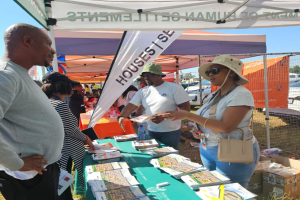 |
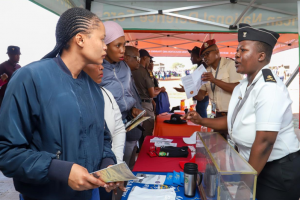 |
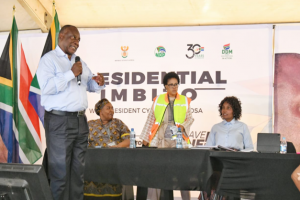 |
There have been at least 13 Presidential izimbizo held throughout the term of the sixth administration, touching tens of thousands of people who interacted with all three spheres of government.
The Northern Cape Presidential imbizo is expected to be the last to be held for this term.
READ | District Development Model Imbizo kicks off in the Northern Cape
“A lot of people were very enthusiastic to raise their views and raise questions. The engagement with the community I always find it very rich, very empowering as well. We have been able to follow up on a number of issues that have been raised at our izimbizo.
“In a way, we saved the best for last. This is the imbizo that really tops everything and closes off the sixth administration,” President Ramaphosa said. – SAnews.gov.za
NeoB
Thu, 05/09/2024 - 17:04