No shelter for homeless dog owners
Except perhaps for a farm in the Karoo

MyZA
News, Directory, Events and Other Stuff
Except perhaps for a farm in the Karoo
As South African households continue to grapple with high inflation, rising interest rates, increasing petrol and food prices, as well as unrelenting electricity hikes, getting as much value as possible from finances and banking has become a priority for most people. Nedbank has responded to this need for value-adding banking with a premium banking experience, …
Glenrose Xaba will be targeting only the second sub-32-minute 10km of her career when she lines up for the Absa RUN YOUR CITY GQEBERHA 10K this coming Sunday, 7 April 2024. Xaba was the first South African home, placing 4th overall in a then personal best time of 32:23 in the inaugural Absa RUN YOUR …
Amid high interest rates and inflationary pressures, many South Africans are struggling to manage their finances effectively and balance their limited income with rising expenses. In this environment, resilience requires more than just being able to weather this storm – it’s about finding ways to get the most out of the money you have. That’s …
Construction of new Western Cape police station on track
It is all systems go in the construction of more police stations in areas experiencing high crime volumes in the Western Cape.
The Ministry of Police says it is encouraged by the progress made by contractors who are currently building two police stations which are set to bolster policing and increase the footprint of the police in communities grappling with violent crime and gangsterism in Cape Town.
On Tuesday, the management of the South African Police Service (SAPS) and the Ministry of Police led by Minister General Bheki Cele, conducted monitoring and evaluation visits to the Makhaza and Tafelsig police stations which are currently under construction.
Progress is being made in the clearing of the site earmarked for the construction of the Tafelsig station which will bring police services closer to residents of Michelle’s Plain.
While there have been some delays in the commencement of construction at the Tafelsig police station due to the community’s demands to form part of the construction project, this has been resolved and contractors have agreed to source labour from the local community.
Meanwhile, the Ministry has welcomed the quick turn-around time in the building of the Makhaza police station which is now 97% complete. Upon completion, the station will better service the community of Khayelitsha.
“It has taken six months to complete the Makhaza police station and this is commendable and encourages us to do more to ensure policing services are not a ‘nice to have’ but are accessible to all.”
“We have been assured by contractors that the outstanding electricity and water connections on the site will be completed with[in] the coming weeks and the station can fully operate and service the community,” he said.
The Tafelsig and Makhaza stations alongside stations in Browns Farm and in Samora Machel, also in the Cape Flats of the Cape Town metropole, are expected to be completed and service communities by 2026. – SAnews.gov.za
Edwin
Wed, 03/13/2024 - 10:59
Eliminate red tape to make it easier for African entrepreneurs to do business - Mashatile
Deputy President Paul Mashatile has called for the elimination of red tape to facilitate cross-border trade for African entrepreneurs.
“Countries on our continent typically perform poorly in various categories related to corporate performance and competitiveness due to an unfriendly environment, particularly in terms of intra-continental trade,” the Deputy President said on Wednesday.
This is the reason he believes that countries should take advantage of the African Continental Free Trade Area (AfCFTA) agreement, which seeks to eliminate barriers to trade in Africa.
READ | Africa is an oyster for young entrepreneurs
“The AfCFTA will significantly boost intra-African trade, particularly trade in value-added production and trade across all sectors of Africa’s economy,” Mashatile said.
The country’s second-in-command was delivering a keynote address at the Global Entrepreneurship Congress (GEC+ Africa) at the Cape Town International Convention Centre.
GEC+ Africa is a gathering of entrepreneurs and leaders from more than 50 African nations committed to advancing entrepreneurial activity throughout their own countries in Africa.
Hosted by the Department of Small Business Development, the two-day event includes other international leaders who have become a part of the Global Entrepreneurship Network (GEN) movement that advances entrepreneurship as a means of building economies and expanding human welfare.
“As policymakers, we have to create an enabling environment for our entrepreneurs,” Mashatile said.
He told delegates that leaders should ensure that the core foundations of the digital economy are in place, including digital infrastructure, digital skills, cybersecurity capabilities, and affordable and accessible data.
Mashatile said nations need to do more to implement the African Union’s Digital Transformation Agenda, adopted at its Summit of Heads of State in 2019.
“We must ensure that by 2030, every individual, business, and government on the continent will be digitally enabled and ready to support a growing digital economy.”
He emphasised the need to enhance governance systems, such as combating corruption, improving macroeconomic management, and resolving disputes through negotiation rather than violent conflict.
“We must do more to shift the narrative that Africa is a difficult place to do business.”
SMMEs
Mashatile said it was crucial to address the Small, Medium and Micro Enterprises (SMME) and start-up credit gap.
“Africa has 18% of the world’s population but attracts only 2% of global capital, and even less global venture capital for start-ups.
“In South Africa, Minister of Small Business Development Stella Ndabeni-Abrahams has proposed a SMME and Cooperative Funding Policy, which was recently gazetted for public comment,” he announced.
The policy requires that the Business Development Service providers in South Africa institutionalise the practice of assisting SMMEs and cooperatives with pre-funding support.
“Without funding, our best start-ups are leaving for tech hubs abroad,” Mashatile said.
Skilled labour force
The Deputy President believes it is crucial to retain skilled professionals within the continent’s borders.
“The loss of skilled professionals, also known as ‘brain-drain’ is one of the major reasons for the unsteady growth in our respective countries.
“To prevent this, we need to make it easier for skills to move across the continent and increase the number of people who can learn new skills, especially in areas that are important to the digital economy.”
However, he said South Africa was making inroads in reforming visa requirements, which allows high-tech expertise to work in the country and develop the economy.
“This move is supported by the underpinning principles of the AfCFTA, and propels us towards the integrated Africa that we want.”
In addition, the Deputy President called on the continent to work together to achieve socio-economic transformation that benefits everyone and one way to start is by assisting small businesses.
“Together, this and the AfCFTA are important steps towards the Africa we want. I am confident that this inaugural GEC+ Africa Congress will provide the appropriate policy advice and partnerships to take us there.”
Trade
The Deputy President has described Africa as a continent overflowing with untapped potential, a hub of innovation and invention waiting to be re-awakened.
“However, Africa still plays a subordinate role in global value chains, and is confronted by deeply established structural constraints that stem from our previous position as an exporter of unprocessed raw commodities.”
South Africa, like the rest of the continent, according to the Deputy President, needs to be strategic in increasing its competitiveness in higher-productivity trade-able commodities and services, as well as in becoming ready for a digital and environmentally friendly future.
“We must recognise that there is a link between the environment, economy, and agriculture. All economic activities either affect or are affected by natural and environmental resources.”
He also called on farmers to adapt to current farming methods that increase production efficiency.
“African innovators and entrepreneurs have the power to transform our economy, which will eventually allow us to participate in the global economy as players with equal status.” – SAnews.gov.za
Gabisile
Wed, 03/13/2024 - 15:05
SA, Ghana explore ways to expand trade and investment
President Cyril Ramaphosa has emphasised the significance of expanding trade and investment between South Africa and Ghana, highlighting the need to explore avenues for enhancing cooperation beyond the existing areas covered by the Bi-National Commission (BNC).
He was delivering opening remarks at the second session of the South Africa-Ghana BNC held at the Department of International Relations and Cooperation's OR Tambo Building in Pretoria on Tuesday.
“In addition to the many areas of cooperation that the BNC covers, it is important that we explore how best both countries can increase trade and investment among ourselves.
“The purpose of the Business Forum that will take place on the margins of this BNC is to expand trade and investment between our two countries.
“Ghana is host to several South African companies. Our companies are keen to expand their investments in Ghana and look to us to work together to improve the business environment. We invite investors from Ghana to look at opportunities in our country,” the President said.
The President further emphasised that collaboration between the two countries' private sectors and State-owned entities is particularly important.
He told his Ghanaian counterpart, President Nana Addo Dankwa Akufo-Addo, that bidding for procurement contracts in each other’s countries, instead of sourcing from outside the continent, would be desirable and commercially viable.
The President highlighted that South African companies, including several in the banking sector, have expressed interest in exploring opportunities in line with Ghana’s investment plans.
“There is also scope for collaboration in infrastructure between our two economies, particularly in the building of dry ports, railway networks, airports and hospital facilities. There are also opportunities to be explored in the pre-chemicals sector.
“As we are both coastal countries, maritime shipping and the related economy holds potential for us and opportunities should be explored further in this regard. We need to work together to reverse the decline in trade between our countries over the past four years,” he said.
President Ramaphosa highlighted that the introduction of preferential trading within the African Continental Free Trade Area (AfCFTA) is a significant development, poised to substantially reshape trade dynamics across the continent.
“On the 31st of January 2024, South Africa sent its first shipment to Ghana and other countries under the AfCFTA Agreement. This is an important first step.
“For many African countries, the start of preferential trade will create great opportunities for growth and development,” he said.
Agreements between SA and Ghana
The BNC between South Africa and Ghana was inaugurated when President Nana Akufo-Addo hosted President Ramaphosa in Accra in 2020.
There are 24 agreements and memoranda of understanding between South Africa and Ghana covering various areas of economic, technical, scientific, social and cultural cooperation.
President Ramaphosa emphasised that they must accelerate the implementation of these agreements and finalise discussions on additional agreements.
He pointed out that one of the recent highlights in bilateral relations was the signing of the reciprocal visa exemption for ordinary passport holders for a period of 90 days per annum, which entered into force on the 1st of November 2023.
“This has resulted in a considerable increase of travellers between our two countries, contributing not only to tourism but towards enhancing business-to-business links, educational and scientific exchanges, and people-to-people ties,” he said.
Peace and security
As the two Heads of State meet at a time when the state of peace and security is fragile across the globe, President Ramaphosa emphasised that they redouble their efforts to 'Silence the Guns in Africa'.
He said they need to capacitate the African Union and the Regional Economic Communities to do more in pursuit of peace and stability.
“Internal strife, conflicts and wars, compounded by terrorism and violent extremism, are a major obstacle to peace, security and stability. They threaten to constrain our developmental efforts and our recovery from the COVID-19 pandemic.
“The situations in Sudan, Somalia, Libya and the Sahel, among others, are of grave concern, as are the armed hostilities in the eastern Democratic Republic of the Congo and the extremist insurrection in northern Mozambique,” he said.
Elections in Africa
President Ramaphosa further highlighted that this will be an important year for democracy in Africa, with 19 African countries – including South Africa and Ghana – holding presidential or national elections in 2024.
He emphasised that these elections are important for the quality of governance and the strength of democracy on the continent.
“We must, however, be concerned that in several parts of the continent, unconstitutional changes of government, particularly through military coups, are on the rise.
“Global developments, such as the ongoing war between Russia and Ukraine, continue to threaten food and energy security in Africa,” he said.
The President said African nations, with their own bitter experiences of colonial occupation, are extremely concerned by the terrible events in Palestine and the suffering unleashed on the people of Gaza.
“On our own continent, the matter of Western Sahara remains unresolved. As we pursue our own developmental goals, we stand in solidarity with all who continue to suffer the effects of occupation and dispossession,” he said. – SAnews.gov.za
DikelediM
Tue, 03/12/2024 - 13:42
Hearing by the Judicial Conduct Tribunal into possible gross misconduct by the judge continues
6 February 2024: Absa has reaffirmed its commitment to making a meaningful impact in the communities it serves, by launching sustainable food gardens in schools across five provinces. As the proud title sponsor of the Absa RUN YOUR CITY 10K Series since 2021, the bank unveiled its 2023 campaign, aptly named “Together we can do …
Home Affairs pleased with response to extension of operating hours
The Department of Home Affairs has assisted more than 33 500 people in its offices and 105 mobile units that were deployed in the first two days of the service delivery blitz during the Voter Registration Weekend.
The majority of the people, that is, more than 25 700, visited on Saturday, 03 February 2024. Nearly 7 900 visited during the two additional operating hours from 4pm to 6pm on Friday, 02 February 2024.
“This public response is galvanizing us to do more as we prepare to welcome those people who want to visit our offices today. We are open from 8am until 5pm,” Deputy Minister Njabulo Nzuza said on Sunday.
This as the Electoral Commission is holding the country’s second Voter Registration Weekend ahead of the national elections.
According to the department, the overwhelming public response led to two offices and four mobile units operating beyond 5pm in the Eastern Cape.
One office in the Western Cape operated beyond the closing time while there were three offices and two mobile units that did the same in Mpumalanga. In Gauteng, four offices operated beyond 5pm while one office did in KwaZulu-Natal.
Over the two days, nearly 23 400 people came to collect their IDs. Another 9 100, mostly first-time applicants, came to apply for IDs. More than 920 people applied for and received their Temporary Identification Certificates on the spot.
There were 148 people who were referred by the Independent Electoral Commission to Home Affairs to update their status on the Voters’ Roll. People who came to collect their passports were also assisted.
“We continue to encourage first-time applicants to come and collect their documents. Home Affairs takes up to 13 working days to deliver an ID from the day of application. Therefore, if it has been more than two weeks since you applied, please come back and collect your ID,” Nzuza said.
The department has further set up dedicated queues for collection in offices that have space for such, to make the collection process faster. – SAnews.gov.za
DikelediM
Sun, 02/04/2024 - 13:39
SA sends first shipment under AfCFTA agreement
The implementation of the preferential trading under the African Continental Free Trade Area (AfCFTA) has become a reality with South Africa sending its first shipment of products to other countries trading under the agreement.
South Africa is the first among the Southern African Customs Union (SACU) member states, which consists of Botswana, Lesotho, Namibia, South Africa, and Swaziland, to practically realise the AfCFTA Agreement.
“For South Africa, as with many other African countries, the start of preferential trade will create great opportunities for growth and development. Not only will it benefit our country’s producers, but it will also see a huge increase in traffic through our ports, our airports and our land-based border posts.
“The products made in Gauteng, Limpopo, North West, Free State, Mpumalanga and the Northern Cape will flow through these ports to markets beyond our borders,” President Cyril Ramaphosa said on Wednesday in Durban.
Officiating the launch of South Africa's first shipment and preferential trading under the AfCFTA, the President said the levels of intra-African trade have been growing in recent years, but remain small by global standards.
Intra-Africa exports are reported to stand at around 16% of Africa’s total exports, compared to 55% in Asia, 49% in North America and 63% in the European Union.
“African countries trade with the rest of the world but we have limited trade among ourselves. The reason for this is clear: we are principally exporters of raw materials, selling rocks and black liquid to the world, instead of harnessing our oil and the minerals to industrialise our continent. We need to change this.
“We have a unique opportunity to lift millions of people out of poverty by empowering women and young people to change the continent’s business environment. That is why, as the South African government, we are focused on implementing our Freight Logistics Roadmap to improve the efficiency and competitiveness of the country’s rail lines and ports,” the President said.
He said government is working closely with industry to fix Transnet’s rail and port operations in the immediate term and to ensure greater investment in infrastructure into the future.
“Over the last few years, our trade ministers have been finalising rules of origin of what constitutes an African product. They have done well to finalise 92% of the products that nations trade with each other. We need them to be even bolder in further rules of origin. The products that we trade among ourselves must truly be ‘Made in Africa’.
"The modalities for trade in goods has moved faster than for services. We therefore need to put more effort into building African champions in finance, retail and telecommunications, and in expanding tourism between African countries. That is the only way in which our economies will grow faster and sustainably,” President Ramaphosa said.
The African Continental Free Trade Area creates the world’s largest free trade area by number of countries, and has the potential to bring transformative change and tremendous opportunities to African economies and businesses.
The President said the implementation of the agreement will accelerate the development of regional and local value chains, offering investors access to a population of 1.7 billion people with a fast-growing continental gross domestic product (GDP).
“Industrial development is core to Africa’s integration. It builds Africa’s productive capacities, adds greater value to our products and diversifies trade beyond the traditional commodities. We have already seen the potential of greater cross-border collaboration.
“South African automotive companies source leather car seats from a factory in Lesotho employing close to a thousand workers and wiring harnesses from Botswana at two plants employing several thousand workers,” Ramaphosa said.
They source copper wire from Zambia, rubber from Cote d’Ivoire, Nigeria, Malawi, Ghana and Cameroon, and steering wheel components from Tunisia.
“These are installed in cars that are then exported from South Africa to other parts of the world. These inputs alone accounted for more than $200 million worth of products traded among African countries and the scope to do more is available to us.
“But it requires bold rules of origin. For every one percent of extra African content, there is an opportunity for a factory or mine based on the continent to supply the products. And as the world moves to green industrialisation, Africa is well positioned to use our critical minerals to leverage industrialisation on the continent,” the President said.
He said the opportunities are vast, with prospects in food and beverages, in cars and trucks, in clothing and textiles.
“We have the capacity to produce more of our own pharmaceutical products and medical equipment. Investment can flow to the production of chemicals, machinery and equipment, household goods and many, many more.
“Beyond the industrialisation of which I have spoken, this continental market can help us promote agricultural development and food security. Through our work, we can ensure that young people and women-owned firms are active in export markets,” the President said.
He said the Protocol on Women and Youth in Trade will help ensure that the African Continental Free Trade Area contributes to inclusive growth and development. – SAnews.gov.za
nosihle
Wed, 01/31/2024 - 13:15
President welcomes ICJ ruling
President Cyril Ramaphosa has welcomed the ruling by the International Court of Justice (ICJ) on the Gaza genocide case against Israel.
This comes after the United Nations (UN) top court ordered Israel to take steps to prevent acts of genocide in Gaza and do more to help Palestinian civilians, as Israel continues to wage war against Hamas militants.
In a landmark judgment, the ICJ determined that it was “plausible” that Israel has committed acts that violate the Genocide Convention.
“We have called Israel’s attacks on Gaza genocidal acts; acts for which Israel should and must be held accountable. Today the International Court of Justice has vindicated us,” President Ramaphosa said on Friday.
The country’s First Citizen was speaking to the nation in a televised address following the landmark ruling by the ICJ.
The war which began in October last year has already claimed more than 25 000 lives in Gaza, of which more than 16 000 of the dead are women and children.
The President cited the UN Children’s Fund, which labelled Gaza as a “graveyard for thousands of children”.
It is for this reason the President believes today’s judgment marks an important first step in the quest to secure justice for the people of Gaza.
The President said South Africa stands on the side of freedom and justice for all.
“Thirty years ago, following our first democratic elections, President Nelson Mandela declared, ‘Let there be justice for all. Let there be peace for all. Never, never and never again shall it be that this beautiful land will again experience the oppression of one by another’.”
South Africa approached the ICJ in December last year, under the Genocide Convention, for alleged attacks committed by Israel in Gaza.
In its application, South Africa pleaded with the court to indicate provisional measures to “protect against further severe and irreparable harm to the rights of the Palestinian people under the Genocide Convention”.
The country also requested the ICJ to ensure Israel does not engage in genocide.
Handing down the court’s unanimous decision, ICJ Judge President Joan Donoghue said it was necessary pending its final decision to indicate certain measures to protect the rights claimed by South Africa.
Donoghue also stated that Israel must per its obligations under the Genocide Convention take all measures within its power to prevent the commission of all acts within the scope of Article II of the Convention.
Acts of genocide named in the convention include the killing members of the group; causing serious bodily or mental harm to the members of the group; deliberately inflicting on the group conditions of life calculated to bring about its physical destruction in whole or in part; and imposing measures intended to prevent births within the group.
“We firmly believe that following this judgment there should now be a more concerted effort towards a ceasefire and negotiations should commence on a permanent two-state solution, to enable Israel and Palestine to live side by side as independent states,” said the President.
President Ramaphosa thanked the international community who have supported the country’s application and those who declared their intention to be part of the application.
“We will not waiver in our commitment to the Palestinian people and their quest for self-determination. Our own painful history obliges us to do no less.”
He also thanked the World Court for holding those guilty of genocide accountable and thanked the lawyers and the Ministers of International Relations and Cooperation and Justice and Correctional Services.
“It is our earnest hope and wish that this court order paves the way for an end to this crisis, for an end to the terrible loss of life and hardship, and for the crucial first steps to be taken towards reconciliation and a just, lasting peace.”
The transcript of proceedings can be accessed at https://www.icj-cij.org/sites/default/files/case-related/192/192-20240126-ord-01-00-en.pdf. – SAnews.gov.za
Gabisile
Fri, 01/26/2024 - 18:31
SANBI says it is “balancing” visitors’ experience with its ongoing upgrades since taking over the facility in 2018
Dubai, UAE, 08 December 2023 – Young children (0 – 8 years) stand out as one of the groups most vulnerable to the impacts of the climate crisis, which is already having detrimental effects on their health, development and well-being. In response to this reality, the UAE’s Ministry of Education in collaboration with the Abu …
JOHANNESBURG: The Proteas had to settle for a share of the KFC T20 International (T20I) Series after India levelled three-match sequence...
Tasneem Motala is a Senior Lecturer: Operations Management at Stellenbosch Business School and one of the researchers who reviewed South Africa’s first four-day week trial. For the South African results released visit https://www.4dayweek.com/sa-2023-pilot-results When the four-day week trial started, there was a healthy scepticism about whether it could work in South Africa. This question was …
Health concerned about death rate among TB patients in SA
Although South Africa’s Tuberculosis (TB) infection incidence is dropping, government is disturbed about the death rate among patients.
This is according to the Deputy Health Minister, Dr Sibongiseni Dhlomo, who was delivering a keynote address on the opening day of the BRICS TB Research Network Innovation Summit in Durban.
“TB remains a pressing concern for South Africa, as it does for all BRICS countries and many nations,” he said on Monday.
He told the summit attendees that about 300 000 people are estimated to get TB every year in South Africa.
“Last year alone, we managed to notify and put 224 000 people on a TB treatment regime. Although our infection incidence is declining, we are concerned about the unacceptable death rate among our TB patients.”
According to Dhlomo, a major driver of TB infection is HIV – accounting for 48% of TB patients who are living with HIV in 2022.
However, he said the country’s antiretroviral programme has led to a decrease in TB incidence.
The BRICS nations – Brazil, Russia, India, China and South Africa - carry a disproportionate burden of drug-susceptible and drug-resistant TB infection and neglected diseases of the South.
To address this public health threat, the BRICS TB Research Network was established in 2017 to bring together programme managers and scientists to exchange information and formulate redress strategies and solutions.
“The ultimate goal of this endeavour was to establish collaborative research programmes aimed at developing new diagnostics, drugs, and vaccines for TB.
“The TB control programmes from the various representative countries also undertook to learn from each other on key aspects of financing and strengthening the health systems in their respective nations.”
Following the devastating impact of COVID-19 on public health programmes, South Africa developed a TB Recovery Plan to find missing people with TB linking them to care and creating a demand for testing.
“TB prevention and improvement of data systems are also prioritised. Given our high HIV-TB comorbidity let me give our delegates some data on HIV in South Africa.”
He cited the sixth South African National HIV Prevalence, Incidence, and Behaviour among people aged 15 years and older living with HIV in South Africa in 2022.
According to the data, 90% were aware of their status, 91% of those aware of their status were on antiretroviral treatment, and 94% of those on antiretroviral treatment were virally suppressed.
“South Africa has made significant progress toward the UNAIDS 95-95-95 targets that by 2025, 95% of all people living with HIV to be aware of their HIV status, 95% of those aware of their status to be on antiretroviral treatment, and 95% of those on antiretroviral treatment who also know that that they are living with HIV to achieve viral load suppression.”
In addition, he stated that the country has been at the forefront of introducing and scaling up new tools for diagnosis and shorter treatment regimens for drug-resistant TB.
“However, there is a need to do more to improve linkage to care and retention in care.”
He also believes that BRICS countries have made significant strides since the establishment of this network, with progress and some challenges.
Dhlomo touched on the United Nations General Assembly High-Level Meeting on TB, in New York, in September this year.
“We should, therefore, work very hard to ensure that we meet the targets we have set ourselves for this summit.”
The targets, he said, include the creation of innovations in therapeutics, diagnostics, and vaccines that the network can prioritise for collaboration, investment and development.
“A world without TB is not just an aspiration but an attainable reality, and we should stand ready to play our part in making that vision a shared triumph.
“I certainly believe that this network can make a significant contribution to this end. Let us recommit to the implementation of the Political Declaration on TB as we map out of future endeavour of ending TB in BRICS countries.
“The goal to end TB is within our grasp. Our collective efforts must transcend borders, ideologies, and individual interests.”
Dhlomo also took the time to congratulate Russia as it takes the baton of leadership of BRICS in 2024. – SAnews.gov.za
Gabisile
Mon, 12/11/2023 - 11:48
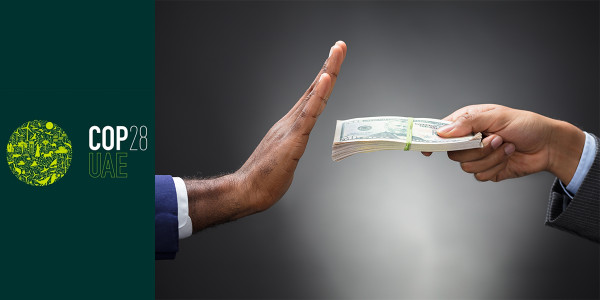
By NJ Ayuk, Executive Chairman, African Energy Chamber (www.EnergyChamber.org).
There was an era when Africa and Western pop music were closely linked.
Western entertainers spearheaded a number of internationally renowned events to raise awareness about the plight of starving Africans and generate funds for famine relief.
In December 1984, the supergroup Band Aid sang about feeding the world, asking “Do They Know it's Christmas?” Within a year, the group had raised over USD9 million. Three months later, USA for Africa released “We Are the World” and banked USD44.5 million after one year for its African humanitarian fund. Then on a hot July day in 1985, the worldwide concert event Live Aid raised more than USD150 million for famine relief in Africa.
These are just a handful of grand and noble gestures intended to lift Africa out of poverty. And these famous events arguably raised both awareness and funds. Unfortunately, the efforts — and others like them — fall far short of making any real socioeconomic change. In fact, some argue that injecting monetary aid into Africa, time and time again, has actually done more harm than good.
I acknowledge that stance may sound ungrateful. At first blush, many might counter that starving people have no agenda. Destitute parents still need to feed their children. Turning a blind eye to their plight is inhumane.
Let me explain why the African Energy Chamber (AEC) continues to push for free-market solutions rather than good-will handouts.
History of ‘Help'
Even aid genuinely given to help Africa tends to do more harm than good.
Since 1960, more than USD2.6 trillion has been pumped into Africa in the form of aid. From 1970 and 1998, when aid was at its peak, poverty actually rose alarmingly — from 11% to 66% — due in large part to this massive influx of foreign aid that counteracted its intended good.
Aid decreased long-term economic growth by fueling systemic corruption, in which powerful aid recipients funneled foreign funds into a personal stash instead of public investment. Many leaders realized that they no longer needed to invest in social programs for their constituents because of the revenues from foreign donors.
Large inflows of aid also caused higher inflation, hindering African nations' international competitiveness in exporting. That resulted in diminishing the manufacturing sector – which is critical in helping developing economies grow — across the continent. And well-intentioned Westerners who saw the economic shrink just kept pouring more and more money at “the problem” — leading to a vicious cycle that furthered corruption and economic decline.
But here's the kicker: The World Bank has admitted that 75% of the agricultural projects it implemented to help Africa failed. So why do they and other aid providers continue to fund these failing efforts?
Examples of Failure
Across the continent, we see example after example of failed aid projects, with agricultural projects routinely providing little or no benefit to African farmers.
In Mali, the U.S. Agency for International Development (AID) injected USD10 million into “Operation Mils Mopti” to increase grain production. The government imposed “official” prices on the grain, which forced farmers to sell their crops at these below-market rates and resulted in grain production falling by 80%.
AID also spent USD4 million to help livestock producers grow the number of cattle in the Bakel region from 11,200 to 25,000 — but ultimately only succeeded in increasing it by 882 head. Another USD7 million was injected into the Sodespt region, but that investment managed to sell only 263 cattle and failed to sell any goats or sheep.
Then we see example after example of Westerners wastefully “helping” without any understanding of the local situation. Norwegian aid agencies built a fish-freezing plant to improve employment in northern Kenya — a region where the local people traditionally do not fish because of their semi-nomadic pastoralist lifestyle. Couple the lack of fishing experience with the unfortunate reality that the plant required more power than was available in the entire region, and the result was that the brand-new processing plant sat idle.
The World Bank financed a USD10+ million expansion of Tanzania's cashew-processing capabilities, which resulted in 11 factories with the capacity to process three times as many cashews as the country was growing on a yearly basis. The plants were too efficient for the available workforce and cost so much to run that it was cheaper to process the raw nuts in India. Half the plants were inoperable, and the other half only ran at about 20% capacity.
I'm not saying that we Africans are ungrateful for the outpouring of heartfelt care. The compassion of the West is certainly real. However, the outcome of said compassion is the concern: The more foreign aid African governments receive, the worse they perform. As long as the aid keeps flowing, government leaders and their employees who administer development programs may prosper while the rest of the citizenry continues to suffer the effects of a mismanaged economy.
Questionable Benefits
We also must acknowledge that, in far too many cases, aid has also been given to African nations and communities in attempts to manipulate and control.
“While hungry faces are used on posters and in media reports to sell the virtues of foreign aid, it is the hungry who rarely see any of the funds,” James Peron, executive director of the Institute for Liberal Values in Johannesburg, South Africa, lamented in a piece for the Foundation for Economic Education. “Poverty may be used to justify the programs, but the aid is almost always given in the form of government-to-government transfers. And once the aid is in the hands of the state it is used for purposes conducive to the ruling regime's own purposes.”
And now we witness the international community talking about aid for African countries as a substitute for our oil and gas activities. Western environmentalists argue that Africa should keep all of its petroleum resources in the ground to prevent further climate change. In exchange for that sacrifice, African nations would be compensated and inject that money into other opportunities like developing their sustainable energy technologies.
I've said it before, and I'll say it again: What a horrible idea!
I‘m offended by foreign stakeholders feeling that providing humanitarian assistance gives them the right to influence our domestic decisions. With Africa poised to participate in the worldwide energy transition, my fear is that international donors will feel justified to dictate Africa's policy regarding the lengths to which, and speed with which, our energy transition occurs. This would be a huge step backward in our energy, economic, and even individual independence.
Aid packages to incentivize giving up our oil and gas operations will be detrimental to Africans. Because let's be honest: History has shown that this assistance could never replace the oil and gas industry's ability to create jobs and business opportunities, grow local capacity, open the door to technology sharing, facilitate economic growth, and alleviate energy poverty.
Instead of continuing a pattern that clearly does more harm than good, why aren't African nations encouraged to leverage the wealth of resources at our feet?
During the final few days of COP28 — and beyond — the AEC is determined to make a case for African nations harnessing their oil and gas solutions to help themselves. We will not be bullied, or manipulated with aid, into a path that is not in our best interests.
Use What We Have!
One reason why the AEC is an outspoken advocate for Africa's oil and gas industry is because it represents more than big revenue for African governments. It is a free-market solution that creates pathways for Africans to help themselves. And, ultimately, empowering Africans is our number one goal.
We endorse an energy mix approach that allows Africa to use and sell our own hydrocarbon reserves to alleviate energy poverty, while at the same time moving toward a future in which renewable energy sources power the continent. The energy mix method can help more people more quickly because it takes a practical, people-first approach to helping those who have traditionally been left behind by the energy sector, while moving us toward greener energy sources.
Natural gas, in particular, can transform African lives and communities. Its potential benefits range from eradicating energy poverty to allowing Africans to develop skills for good jobs to creating hope for our youth.
Ramping up gas production to help alleviate the lack of access to electricity will create thousands of new employment opportunities in Africa. In addition, the new sources of energy can be exported to Western countries to replace Russian energy. Then, as Europe transitions to sustainable energy, a larger portion of Africa's natural gas can power domestic needs. By the time other countries complete their transitions to carbon-neutral sources, Africa will have a much more expansive and reliable grid system, which will allow for an easier transition.
And before we argue about the evils of hydrocarbons, let me point out that, although it might seem counterintuitive, it is possible for Africa to make use of its abundant fossil fuels while moving toward a future sustained by renewable energy sources. In fact, I believe that African nations must do everything they can to ensure that these two things work in tandem. Considering that 600 million people on the continent have no access to electricity and 900 million people lack access to clean cooking technologies, it's impossible — if not altogether inhumane — to discuss climate change without looking at energy poverty.
As I recently wrote in an article published by Medium, we cannot transition from the dark to the dark. We must deliver energy to the people of Africa and then worry about transitioning to environmentally friendly alternatives, just like we have everywhere else in the world.
This has been our platform at COP28, and we will continue to stand by it in 2024 and beyond.
Distributed by APO Group on behalf of African Energy Chamber.
Johannesburg, 6 December 2023 – Proudly African bank, Absa, is pleased to announce that the 2023 Absa RUN YOUR CITY campaign, titled Together, we can do more, Siyabangena has won the Active and Wellness Award at the recent 2023 Sports Industry Awards. The campaign encouraged Absa colleagues, customers and community members to be an active …
Leading African law firm, Bowmans, has enhanced the breadth and depth of its offering in banking and finance with the appointment of Pride Jani as a partner in its Johannesburg office. ‘Pride has extensive experience advising clients, lenders and borrowers on finance transactions and structures, and will add new capacity to our General Finance Practice,’ …
Durban, 01 Dec 2023 – Following the noteworthy achievement of being awarded the prestigious Mandela Rhodes Foundation Äänit Prize, in September 2022, Dr Jessica Ronaasen, National Programmes Lead at the DO MORE FOUNDATION (DMF), in collaboration with key partners, has successfully spearheaded a transformational programme across South Africa. Their collective efforts have led to the …
Sting operation prevents trafficking of 443 children
A joint sting operation between the Border Management Authority (BMA), Home Affairs and the South African Police Service has stopped more than 40 buses travelling into South Africa through the Beitbridge Border Post carrying children who are alleged to have been trafficked.
This was revealed by Commissioner of the BMA Dr Michael Masiapato during a press briefing on Sunday.
“They were able to stop and search about 42 buses trying to enter the republic and out of that we found about 443 children under the age of eight that were in those buses without any parent or any guardian. Fairly, they were being trafficked into South Africa.
“We were able to take them out of those buses. We were then able to engage with the Zimbabwean officials and we handed them back to Zimbabwe for processing back into the country,” he said.
Masiapato also revealed some of the successes that the BMA were able to achieve in their work protecting the country’s borders.
These include the interception of more than 44 000 thousand individuals attempting to illegally enter South Africa.
“We got them arrested. We got them fingerprinted, we declared them undesirable, and we got them deported on the spot. Further, about 100 452 individuals overstayed in the country. We got the hit from our movement control system when they arrived at the ports. We then declared them undesirable, and we banned them from entering South Africa for the next five years.
“About 98 150 individuals were refused entry into the country for various reasons. Some of them were criminal elements who are listed on the Interpol list for having committed different types of crimes in other jurisdictions in the world,” he said.
Other achievements by the BMA are:
“This is a summary of some of the key success of the [BMA] having been realised in a short space of time. We however commit to do more and fully address the country’s perennial problem of porous borders,” Masiapato said. – SAnews.gov.za
NeoB
Sun, 12/03/2023 - 12:19
Investment in teaching and learning infrastructure pays off
Gabi Khumalo
Government’s commitment to strengthening and developing the Post-School Education and Training (PSET) sector, has brought about change to the community of Msinga.
The community recently witnessed the opening of a new state-of-the-art campus of the uMgungundlovu Technical Vocational Education and Training (TVET) College.
Officially opened by Higher Education, Science and Innovation Minister, Dr Blade Nzimande, the Msinga Campus which is located in Pietermaritzburg, KwaZulu-Natal, is part of the response to the community, which has been calling for the building and upgrading of the college.
This commitment to strengthening the PSET sector was made through investing in infrastructure to provide quality teaching, learning and research, and innovation spaces.
The campus, which was built by the Department of Higher Education and Training, as part of its TVET Infrastructure Development Programme, is funded in part through the National Skills Fund (NSF) and the Sector Education and Training Authorities (SETA).
The R143 561 753.44 Msinga campus commenced with formal programme provision at the new site in January 2022. To date, the campus has three buildings.
These include the administration block that contains offices, a staff room, exam centre and the official reception site. The theory building consists of two computer laboratories that can accommodate up to 70 students each, and double sized classrooms. Included on the campus is an engineering block that consists of four workshops, as well as smaller skills venues on the upper floor.
Programmes offered
The campus offers National Accredited Technical Education Diploma (NATED) programmes, including Nated Public Management (N4-N6), Nated Business Management (N4 – N6) and Farming Management.
The campus also offers a new National Certificate Vocational programme in Mechatronics Level 2 – Level 4, which the Minister described as a cutting edge Fourth Industrial Revolution (4IR) programme.
The decision to offer this programme to the young people of Msinga according to Nzimande was because “we want this youth to be highly skilled and be able to compete at any level with the youth that is based in urban areas, including competing with the any youth at an international level.”
“Mechatronics is a multidisciplinary field that refers to the skill sets needed in the contemporary, advanced automated manufacturing industry. Mechatronics specialists work with massive industrial robots, smaller robots in pick-and-place operations, control systems for bottling or packaging of food and drink products, drones, designing control systems for rides in amusement parks, [and] prototype development.
“Some mechatronics specialists are employed in firms where it is necessary to design and maintain automatic equipment [and] this includes industries such as manufacturing, mining, aviation, robotics, defence, and transport. Other mechatronic specialists are employed by large manufacturing companies involved in high-volume production,” Nzimande explained.
Nzimande also highlighted that mechatronics is a financially lucrative career with the average mechatronic engineer earning around R360 000 per year or R185 per hour in South Africa. He said the entry-level positions start at R300 000 per year, while most experienced workers make up to R4 050 000 per year and more.
Investment
The Department of Higher Education and Training has identified the expansion of the TVET sector as a national priority in the Post-School Education and Training system. This as 13 new campuses have been identified for development with three existing campuses identified for additional buildings.
“We have embarked on this intense expansion programme to ensure that our post school education and training sector produce[s] many technical and vocational skills and to also reinvigorate the South African construction industry and the economy in general,” Nzimande said.
The department has invested over R2.880 billion in the development and refurbishment of 16 new TVET campuses that will enable the expansion of the TVET system over the medium term.
Of the 16 sites, 10 campuses, including Thabazimbi, Umzimkhulu, Graaf-Reinet, Nongoma Msinga, Aliwal North, Kwagqikazi, Ngqungqushe, Nkandla A and Bhambanani are completed.
Nzimande said the three new campuses, including Greytown, Sterkspruit and Balfour are at their final stages of completion, while the remaining three sites of Vryheid, Giyani and Nkandla B will be completed by the end of the 2023/24 financial year with enrolments planned for 2024/25.
Skills
The Minister reiterated the vision and objective for the public TVET colleges sector, which is to expand and strengthen the TVET sub-system in order to provide quality technical and vocational education and training to prepare students for the world of work, self-employment and other forms of sustainable livelihoods.
However, Nzimande acknowledged the constraints caused by skills ‘mismatches,’ --as being real and perceived-- towards the attainment of the TVET colleges’ objective, particularly the ability to grow the country’s economy, which further perpetuates a barrier to social inclusion and poverty reduction.
In response to this mismatch, the department has since developed a one country one skills plan – the Master Skills Plan, which is an implementation plan of the Human Resource Development Strategy.
“In order for our sector to invest in relevant skills development, we are also using the National List of Occupations in High Demand (OIHD) in South Africa, which is one of the many instruments that guides government’s investment in skills development.
“This list has 345 occupations that are in high demand [and] tells us which occupations are likely to have what vacancies and which occupations are likely to grow due to new investments, by both government and the private sector,” he said.
The Minister is confident that the skills that students will acquire at Msinga College, will take them to greater heights with prospects of a successful career.
To further illustrate government’s commitment to massify skills development, in 2018 the department embarked on a campaign to launch 26 Centres of Specialisation located in 19 of 50 TVET colleges prioritising 13 occupational trades in high demand.
This move aimed to curb the shortage of trade and occupational skills, while reducing unemployment and poverty.
The centres were provided with resources to upgrade their workshops and equipment to deliver effectively on much-needed skills.
“These Centres of Specialisation are well positioned to prepare students for the workplace, or for self-employment, through the maintenance of close working relationships with employers in their areas of study. We have also established entrepreneurship hubs at TVET Colleges to support students to move into self-employment after completion of their programmes.”
Artisans
Nzimande also believes that the country is well on track to produce 30 000 qualified artisans per year by 2030.
This follows the launch of the Decade of the Artisan campaign in 2013, which promotes artisanship as a career of choice for the youth.
Launched under the theme: “It’s cool to be a 21st Century Artisan”, the campaign ensures the development of the necessary artisans to successfully implement the country’s Strategic Infrastructure Projects, which include the construction of roads, schools, universities, harbours, power stations, and other social and economic infrastructure.
“The reality is that South Africa needs at least 60% of school leavers to pursue artisanal type training to meet the country’s demand for scarce skills. We honestly need to do more to encourage school leavers to pursue technical trades.
“Our Government’s National Development Plan (NDP) and our White Paper for Post-School Education and Training expects of us that by 2030, the country should be producing 30 000 qualified artisans per year. At present, our country is producing an average 20 000 qualified artisans per year,” Nzimande said.
He stressed the need to ensure that the number increase drastically leading up to 2030 for the country to realise the NDP target.
“We however do believe that we are well on track to attain this goal and even surpass it. The Msinga campus is very much part of this agenda and will help us greatly to produce more artisans.”
Nzimande said with the current challenges within different sectors in society, more artisans are needed than ever before and the work of artisans will always be guaranteed.
Progress made to date, shows that government is burning the candle at both ends. – SAnews.gov.za
Neo
Tue, 11/28/2023 - 15:37
Three years after the landmark Concourt ruling, very little has changed with their access to compensation