• Skip to main content
  • Skip to header right navigation
  • Skip to after header navigation
  • Skip to site footer
MyZA

MyZA

News, Directory, Events and Other Stuff

  • Social Media
  • Sport
  • World News
  • Home
  • Submit News
  • Directory
  • Events
  • Stratlec
  • TFSA
  • News
    • APO
    • Today’s Sport News
    • Todays Social Media and Tech Headlines
    • Today’s World News
    • Today’s SA Financial News
  • Contact
You are here: Home / Archives for Education

Education

5 January 2024

African Energy Chamber Lights Up Willow Crescent Secondary School, Empowering Students with Sustainable Energy
Location: News
African Energy Chamber

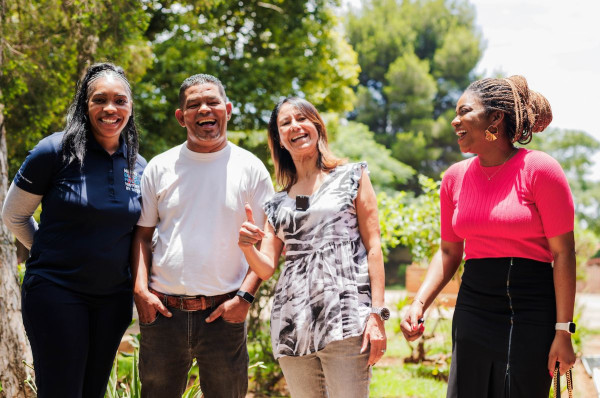
In a move to address challenges faced by African children and their schools posed by power outages and no access to power, the African Energy Chamber (AEC) (http://www.EnergyChamber.org) has embarked on a transformative initiative that will see it provide, together with partners, off-grid solutions to thousands of schools across Africa. The program's pilot phase kicked off with the provision of a solar power system to Willow Crescent Secondary School in Eldorado Park, Johannesburg. Qualifying schools and projects must demonstrate an unwavering commitment to sustainable energy solutions and community empowerment.

The African Energy Chamber is a leading energy advocacy group dedicated to addressing energy poverty in Africa by 2030 by encouraging investments in the entire African energy value chain.

The AEC's donation of solar panels stands as a beacon of hope, ensuring a consistent and reliable power supply for the 1700 students, school, and staff of Willow Crescent Secondary School. This initiative directly addresses the critical need for uninterrupted electricity access during outages, guaranteeing an uninterrupted learning environment for young South African boys and girls.

"We express our deepest gratitude for the invaluable donation of solar panels, as during stage four of load shedding, our school heavily relied on a small generator, costing us between 1000 and 2000 rands in petrol just to power our admin block—an expense the school could not bear," said Olivia Hill, principal of Willow Crescent Secondary School.

Load shedding has become a major issue in South Africa, causing power outages for hours at a time.

Beyond the confines of the school grounds, this project will significantly impact the Eldorado Park community. By providing a dependable power source to a local educational institution, which is at the center of the entire community's wellbeing. This project not only provides a reliable power source for educational activities but also marks a step towards a more resilient and empowered community. The consistent electricity supply will markedly enhance the student's educational experience, creating boundless opportunities for growth, innovation, and a brighter future for the students and the community at large.

"As the African Energy Chamber, we are committed to fostering innovation and sustainable solutions. It is our goal to actively contribute to the development of communities through impactful initiatives. We are particularly committed to promoting sustainable access to power for young boys and girls in education." said Ms. Oneyka Cindy Ojogbo, a board member at the African Energy Chamber.

Distributed by APO Group on behalf of African Energy Chamber.

For media inquiries or further information, please contact:
news@energychamber.org
Media files
African Energy Chamber
Download logo
Read moreAfrican Energy Chamber Lights Up Willow Crescent Secondary School, Empowering Students with Sustainable Energy
4 January 2024

Engen brings some festive joy to St. Monica’s Children’s Home

Location: MyPR

Engen, in collaboration with the Community-Engen Joint Committee, has spread heart-warming holiday cheer to 84 children residing at St. Monica’s Children’s Home Child and Youth Care Centre. Engen’s generous donation of Santa Boxes, brimming with delightful treats and toys, brightened the faces of the vulnerable children. The Engen team visited St. Monica’s on 13 December …

Read moreEngen brings some festive joy to St. Monica’s Children’s Home
3 January 2024

Win a share of R200 000 in school fees with Bata Toughees

Location: MyPR

South Africa’s favourite school shoe brand since 1954, Toughees, is aiming to brighten the start of the academic year for kids and parents alike through its “Made Tough”. Up for grabs is a share of R200 000 towards school fees. Having been a key part of the lives of generations of families going on 70 …

Read moreWin a share of R200 000 in school fees with Bata Toughees
2 January 2024

NSFAS committed to settling outstanding disbursements

Location: News

NSFAS committed to settling outstanding disbursements

The National Student Financial Aid Scheme (NSFAS) says it is determined to conclude all outstanding 2023 disbursements by 15 January 2024, in consultation with the affected institutions.

The NSFAS Board held an extraordinary meeting on Sunday, 31 December 2023 to consider reports from NSFAS management on various issues including the final disbursement of the 2023 allowances, the NSFAS budget adjustment and the NSFAS accommodation pilot project.

NSFAS said the commitment made on the outstanding disbursement is to ensure that the 2023 bursary allowances do not affect the returning students for the 2024 academic year.

“Early in January 2024, the NSFAS Board will have further stakeholder engagements with the Universities South Africa (Usaf), the South African Public Colleges Organisation (SAPCO), the South African Union of Students (SAUS) and the South African Technical Vocational Education and Training Student Association (SATVETSA) and labour unions to brief them on the preparations for the 2024 academic year and the NSFAS eligibility criteria and conditions for financial aid,” NSFAS said in a statement.

NSFAS has disbursed about 234 124 students allowances from 5 December 2023, as part of the reconciled final disbursements for the 2023 academic year. This exercise was done in order to disburse the final allowances to students whose allowances where not concluded due to changes in their registration data.

NSFAS said this process ensures that disbursements are paid directly to institutions for tuition and for advancing payments to students.

“The [NSFAS] reconciliation data… is divided into three categories: (1) direct payment – direct allowance to students, (2) allowances on tuition disbursement to institutions, (3) student allowances via institutions.

“NSFAS confirms that there are 20 000 allowances which are yet to be concluded. These unresolved cases of disbursements require further input and consultation with institutions,” read the statement.

At its meeting, the board also discussed the NSFAS 2024 programme of action and the formation of a Rapid Response Team in preparation for the 2024 academic year.

2024 applications

Applications for financial aid for all learners who wish to enter the post-school system and students who do not have financial assistance to continue their studies in the 2024 academic year officially opened on 21 November 2023.

In a statement issued by NSFAS in November, NSFAS said applications for 2024 funding will close on 31 January 2024.

Werksmans Attorneys report

The NSFAS Board said it will further make public announcements on the implementation of the Werksmans Attorneys report in relation to direct payment service providers.

In October 2023, the NSFAS Board adopted the recommendations of the report into allegations surrounding the appointment of direct payment service providers.

The board had appointed Werksmans Attorneys and Advocate Tembeka Ngcukaitobi to conduct an investigation into allegations of irregularities relating to Bid NO. SCMN022/2021. 

The investigation followed allegations against former NSFAS CEO Andile Nongogo relating to his conflict of interest in the appointment of service providers.

Despite the challenges, the board reaffirmed its commitment to implement the direct payment solution.

"The board views the direct payment solution as a necessary measure to reduce instances of unauthorised access to beneficiaries’ allowances, payment of ghost students, inconsistencies and delayed payments of allowances.

“The direct payment solution is inline with the Student-Centered Model that NSFAS adopted,” said board chairperson Ernest Khosa at a briefing in October. – SAnews.gov.za

Matona
Tue, 01/02/2024 - 12:11

195 views
Read moreNSFAS committed to settling outstanding disbursements
28 December 2023

Four resources for journalists from the world’s top investigative conference

Location: News

  Over 1,600 journalists attended #GIJC23 in September. There was much to be learnt about how to be more effective reporters. The Global Investigative Journalism Conference 2023, hosted in Gothenburg, Sweden in September, was probably the largest and most diverse gathering of investigative reporters in history, with over 1,660 delegates drawn from 144 countries. Reporters …

Read moreFour resources for journalists from the world’s top investigative conference
28 December 2023

Young human rights educators inspire peers to catch action

Location: News

Office of the UN High Commissioner for Human Rights (OHCHR)
Download logo

They come from different countries and regions of the globe and have distinct experiences that have shaped their young lives. But Irfaan, Aiki, Soufiane, Dejana, Maselina, Allán and Aizat all share the same dream: to build a world in which all human beings are equal.

From South Africa to Japan, from Morocco to Serbia, from Samoa to Mexico and Kyrgyzstan, the seven are young human rights educators who work in their communities to inspire young people to take action and promote human rights.

They are the protagonists of a documentary called “Changemakers: stories of young human rights educators,” which was released to mark the 75th anniversary of the Universal Declaration of Human Rights.

Co-produced by UN Human Rights, Amnesty International and Soka Gakkai International, the film pays tribute to young educators who empower other young people to advocate for equality, respect, and dignity for all.

“Human rights education has the power to bring real change and help us identify solutions to today's challenges which are human rights-based,” said Elena Ippoliti, coordinator of Human Rights Education and Training at UN Human Rights.

“These young champions are an inspiring example of how young people can lead and nurture among their peers a culture of human rights to ensure no one is left behind.”

Empowering young people

Irfaan Mangera grew up in post-apartheid South Africa, an experience that made him aware that the fight to end injustice is not over. While the political system that institutionalized the racial segregation no longer exists, its legacy lives on in the form of racism, classism and social-economic exclusion, he said.

“The triple threat to South Africa's future today is unemployment, poverty and inequality, and these are the results of the huge legacy of apartheid that excluded people,” said Irfaan, a community activist from the township of Lenasia, south of Johannesburg.

Irfaan, a member of the Indian South African community, spearheaded the creation of the National Youth Coalition to build a space for young people to fight racism and bring systemic change.

“Human rights education gives us a framework to empower young people to understand their rights and to protect and promote them so we can achieve the goal of equality,” he said.

Aiki Matsukura combats sexual exploitation of children, a taboo subject in Japan. Aiki provides support to survivors of sexual exploitation and raises awareness through campaigns using manga and videos, and through talks at schools and companies.

“When your human rights have been violated you lose the power and the strength you have. My job is to help young people bring that strength and worth back that they already have within them,” said Aiki.

“For me human rights education is to encourage one another, specially to encourage someone to believe in their own potential and worth.”

Liberation of speech

Soufiane Hennani, an activist for gender equality and gender diversity from Rabat, is the creator of a popular youth-oriented podcast called Machi Rojola that challenges unequal gender roles and promotes positive masculinities in Morocco.

Soufiane, a laureate of the Arab Foundation for Freedom and Equality's social change program, said the podcast is a space of liberation of speech, where guests can talk about issues such as diversity, acceptance and human rights.

“You have to create an environment for young people to express themselves because these young people are the adults of tomorrow. Being part of a network of young people who do human rights education that promote human rights is an opportunity and a hope,” he said.

For Dejana Stošić from Belgrade speaking out is also a form of liberation.

Dejana, who works with young women to fight gender-based violence and sexual violence, created in 2021 a twitter hashtag called #NisamPrijavila (#IdidntReport), where she explained why she did not report a case of sexual violence. In just three days, more than 21,000 women across Serbia used the hashtag to tell their stories about the violence they survived but never reported.

“One of the hardest things in life is to be a girl and have a voice because everybody wants to shush you,” said Dejana, co-founder of SOS Girls Corner project, which won a With and for Girls award for best project for girls.

“I encourage girls to believe that they are worthy and capable of doing whatever they want and to stand up and use their voice to change the system we live in and to be equal to everyone.”

Maselina Iuta, an activist for the rights of persons with disabilities, remembers vividly the barriers she faced as a deaf school girl in a rural village in Samoa. That difficult experience, however, helped her find her mission in life.

“Where I was growing up there were no schools with sign language, so I did not understand what my teacher was saying and I fell behind. I don't want future deaf children to go through what I went through,” she said.

Maselina is a founding member of the Deaf Association of Samoa, an organization led by deaf and hearing-impaired persons that advocates for the development of inclusive opportunities, policies and legislation for deaf and hearing-impaired people in Samoa.

“Many people in the deaf community don't know they also have rights to education, to work and to experience respect, so I work to help them understand they do have equal rights,” said Maselina, who is now attending university in Fiji.

Guided by the Convention on the Rights of Persons with Disabilities, she works with local and national stakeholders to address barriers for deaf people.

“Many people in the non-deaf community think that because we don't talk we don't know or we don't feel or we don't have dreams,” she said.

Equality for all

For Allán Sánchez Osorio, an activist for the rights of children and young people in situations of vulnerability, awareness of one's rights has the power to prevent human rights abuses.

“Unfortunately, not many people globally know their rights and that lack of knowledge can lead many to suffer human rights violations,” said Allán, founder of Fundación Efecto Valores, an NGO that promotes human rights education for children without parental care and who live in areas with high rates of violence.

“Human rights education can prevent human rights violations and also point to mechanisms for people to turn to in case of violations.”

From Kyrgyzstan, Aizat Ruslanova implements educational projects for teenagers to promote women's rights to address gender-based violence against women.

Aizat, who is the executive director of the regional youth organisation IDEA Central Asia, said finding the right language to talk about human rights is a challenge. Words like human rights, gender equality or feminism can be perceived negatively in Kyrgyzstan because they are new, she said, so she also uses art to communicate messages about women's rights.

“I am proud to be a human rights educator because we give young people a very cool tool to change their lives and develop their country.”

Distributed by APO Group on behalf of Office of the UN High Commissioner for Human Rights (OHCHR).

Read moreYoung human rights educators inspire peers to catch action
22 December 2023

It’s The Time Of The Year For Storytelling And Connection

Location: MyPR

People often joke and refer to Cape Town as a “dorp” or a village. It’s not because of its size, but rather due to the pace at which it moves. However, the residents of this large village know that when it does move, it moves with generosity. Dotted all over the Western Cape, initiatives, private …

Read moreIt’s The Time Of The Year For Storytelling And Connection
20 December 2023

Unearthing Potential And Cultivating Gems

Location: MyPR

Geological firm digs deep to uplift Karoo youth As the festive season approaches, the spotlight turns to the small Karoo towns of South Africa, where the challenges of rural living are amplified. Spanning four provinces, there are more than one hundred small towns, villages and settlements in the Karoo, a unique landscape that covers almost …

Read moreUnearthing Potential And Cultivating Gems
20 December 2023

DO MORE FOUNDATION and Capita Forge Early Years Climate Region for SA

Location: MyPR

Dubai, UAE, 08 December 2023 – Young children (0 – 8 years) stand out as one of the groups most vulnerable to the impacts of the climate crisis, which is already having detrimental effects on their health, development and well-being. In response to this reality, the UAE’s Ministry of Education in collaboration with the Abu …

Read moreDO MORE FOUNDATION and Capita Forge Early Years Climate Region for SA
20 December 2023

Umalusi mourns death of Prof Peliwe Lolwana

Location: News

Umalusi mourns death of Prof Peliwe Lolwana

Umalusi and its stakeholders said they are in deep grief after the passing of Professor Peliwe Lolwana. 

Lolwana was the last Chief Executive of the South African Certification Council (SAFCERT) and the first CEO of Umalusi, a position she held from 2000 until her retirement in 2008.

“She was at Umalusi on 24 November 2023 to give a memorable tribute speech at a memorial lecture and roundtable discussion organised in honour of the late Dr Fred Calitz, her SAFCERT predecessor. 

“Little did we know that she had come to say goodbye to all of us. While she reached her statutory retirement age over fifteen years ago, Prof Lolwana continued to serve her own country in various roles,” the Council said. 

Those include chairing the Board of the South African Qualifications Authority (SAQA) and the Quality Council for Trades and Occupations (QCTO) Council, and playing various roles in academia, the NGO and private sectors. 

She has also been described as someone who played a transformational role in every position that she held, shaping the form and focus of all the organisations that she led.

This assertion is supported by the people who worked closely with her. 

Chief Director for National Assessments and Public Examinations in the Department of Basic Education, Dr Rufus Poliah, said the early 2000s “was an exciting phase, in that Prof Lolwana, a real visionary, was tasked with the responsibility of overseeing the transformation of SAFCERT to Umalusi”.

“The period between 2000 and 2008, saw Prof Lolwana transforming a certification Council into a quality assurance council, with all its legislative frameworks and procedures, and placing this structure firmly on the national education map.” 

In the words of Professor Moon Moodley, a member of the Assessment Standards Committee (ASC) of Umalusi: “Umalusi enjoys a high degree of independence that has been achieved over many years by commanding the respect of all stakeholders. Prof Peliwe Lolwana has played a crucial role in Umalusi’s gaining ownership of the standardisation meetings.”

Commentators said Lolwana conceptualised new quality assurance approaches, departing from those used during the SAFCERT era.

Having played various roles within the National Qualifications Framework (NQF) space over the years, Umalusi said the NQF family stands on the shoulders of a strong intellectual giant – those of Lolwana.

“Umalusi and its stakeholders thank the Lolwana family and friends for allowing Peliwe the time to shape how we understand education and training today. She has served her country so diligently. As Umalusi, we share in your sorrow. Her spirit, her wisdom and her dedication will never be forgotten,” the council said.

Lolwana recently retired as the Director of the Centre for Researching Education and Labour (REAL).

Lolwana continued to serve as a visiting Associate Professor in the Wits School of Education. – SAnews.gov.za

Gabisile
Wed, 12/20/2023 - 12:36

277 views
Read moreUmalusi mourns death of Prof Peliwe Lolwana
19 December 2023

Learnerships Offer Matriculants Real Opportunities

Location: MyPR

How to tailor a standout CV to secure a learnership The Class of 2023 is eagerly anticipating the 18th of January for the release of their matric results. For some, their results will provide access to higher learning. For others, it’s their ticket to the working world – but while these youngsters may be keen …

Read moreLearnerships Offer Matriculants Real Opportunities
17 December 2023

Building Capacity for Africa’s Renewables Sector

Location: News

African Energy Chamber
Download logo

By NJ Ayuk, Executive Chairman, African Energy Chamber (www.EnergyChamber.org)

Consider this paradox: Nigeria has achieved the largest economy in Sub-Saharan Africa, but 45%, or about 85 million, of its residents still live without electricity. Across Sub-Saharan Africa, that figure looms to 600 million.

I believe renewable energy is part of the solution to this dilemma — both in Nigeria and throughout the sub-continent. But there are several hurdles to be cleared before wind, solar, hydrogen, and other clean energy sources can provide the same economic benefits that natural gas — the other part of the solution — already offers. One of those hurdles will be preparing domestic workforces for employment and leadership in the growing renewable energy sector.

We are seeing movement in that direction. In Nigeria, for example, global renewables-promoting nonprofit, RMI, is providing technical training in partnership with four Nigerian energy distribution companies, two developers, and vocational training schools such as RMI's Energy Transition Academy and the Lagos Energy Academy. Aimed at producing leaders and energy entrepreneurs, the Nigerian Cohort of RMI's Global Fellowship Program, started in 2022, uses online learning and in-person experiences to develop leaders who know how to produce and employ solar PV, battery storage, and microgrid technologies.

We will need many, many more efforts like this for Africans to fully reap the economic benefits of our energy transition. For that to happen, more investment capital must be attracted for curriculum development, to support training efforts, and to help fledgling renewable businesses find their footing.

This is a critical topic, one that deserves attention at the 2023 United Nations Climate Change Conference (COP28) that is now underway and beyond.

Africa Must be Proactive in Building Capacity

The International Energy Agency (IEA) has predicted that 4 million new renewable energy jobs will be needed in sub-Saharan Africa by 2030 to meet 2050 net-zero goals. But it is not a given that those positions will be filled by Africans, especially if we rush forward with our transition from fossil fuels to renewables, as many wealthy nations and environmental groups are demanding.

Currently, there is a significant shortage of qualified human resources — people educated and prepared to take advantage of the opportunities for employment and entrepreneurship that renewables offer.

What's more, only 76,000 renewable energy jobs have been created in Africa, less than 1% of 10.3 million globally. That means the vast majority of Africans have absolutely no experience, or hands-on opportunities to develop skills, in green energy.

Education is Key

Turning this situation around begins with investing in and emphasizing the importance of science, technology, engineering, and math (STEM) education at all levels in Africa.

African governments will need to do their part by driving improvements in all-around education in science and technology and green energy vocational programs.

Government policies should also provide advantages to attract private-sector visionaries and incentivize public-private collaborations that foster the education and training of Africans for career-level, leadership positions in the renewables sectors.

Africa's renewable energy sector is growing. That reality is a mixed blessing because of the shortage of homegrown, trained professionals able to create, construct, and run renewable projects. We do, however, have an advantage — our large, youthful demographic.

Many of our young people need jobs, and many more soon will. If we can put together partnerships among governments, learning facilities, and private industry, we can train our youth for careers in renewable technologies that offer them brighter futures.

We should be building on the examples of the promising educational opportunities that are available for African students who want to build a career in renewable energy. Here is a sampling:

  • A German-African partnership, the Atlas of Green Hydrogen Generation Potentials in Africa, states, “Green hydrogen offers a real chance to launch a development in Africa which is driven by African countries themselves.” As part of the effort, a master's degree program in green hydrogen technologies was begun in 2021. Students from all 15 countries of the Economic Community of West African States (ECOWAS) may apply. Universities in Cote d'Ivoire, Niger, Senegal, and Togo host the program.
  • Another German government initiative, Green People's Energy for Africa, “supports vocation training institutes and technical universities to offer new and improved practical training modules for professionals” as well as other methods for skills development in renewable energy technology.
  • An EU-US cooperative agreement supports sub-Saharan Africa's just transition to green energy. Working at the regional and national levels, efforts include empowerment of women in the sector, knowledge sharing to provide technical assistance, and the leveraging of investments by the private sector.

Another Opportunity: Green Hydrogen

Surveying the renewables horizon, there is general agreement that decarbonizing all the world's economic sectors won't be possible without the use of green hydrogen — for feedstock, fuel cell technology, and electric vehicles.

The demand for this clean and adaptable fuel, produced with renewable energy sources, compounds the need for a trained renewable energy workforce.

Green hydrogen presents both a large opportunity and a large challenge for African nations. With its massive area and plentiful solar and wind resources, Africa could potentially be producing about 10% of the world's green hydrogen by 2030. But there is an “if” attached to that projection.

If African states strategize and invest now to develop a green hydrogen workforce, they can be ready for the coming wave of green hydrogen development and utilization. Hydrogen learning opportunities should be made available from the high school level upward as part of comprehensive skills plans for developing a prepared workforce.

With forethought and smart implementation, young Africans can be readied to lead the way in bringing the benefits of green hydrogen to their communities. In the process, job shortages can be mitigated as these young employees put their skills to work in the production, storage, and transportation of green hydrogen.

More African countries should be taking measures to ensure their people and businesses capitalize on green energy opportunities. And these must not stop with education and skills training; we also need local content measures to help ensure our residents benefit from renewable power projects and facilities operations.

Ensuring Strong Local Content Policies

Just as local content rules continue to function as vital safeguards in African oil and gas operations, they will be tremendously important in the renewables sector, both for individuals and for businesses. As I've stated in the past, every nation needs to create a framework that empowers indigenous companies to fully capitalize on renewable energy opportunities.

There are times when power needs may justify temporary modifications to these policies. As an example, South Africa's National Energy Crisis Committee (NECOM), early this year, relaxed its local content rules for the construction of solar modules. Easing local employment requirements from 100% to 30% for local component production is meant to facilitate quicker deployment of solar projects, and hopefully, help alleviate the country's crippling power outages.

Power supply levels and other factors show the need to perform a balancing act when writing local content rules. Those other factors include the supply of current local skilled workers and infrastructure. We don't want to discourage developers, so we need appropriate, tailored local content regulations.

One reasonable approach is the one taken by Kenya, where guidelines requiring contractors to formulate a local content plan have been drafted. These plans must include training, succession, jobs, technology transfer, R&D, legal, financial, and insurance issues. This approach places the “ball” in the “court” of each project's contractor, allowing for their input in local content formulation.

A similar policy has been enacted in Nigeria. The local content policy is part of the government's Electricity Act 2023. It requires the Nigerian Electricity Regulatory Commission (NERC) to provide for local content participation involving employment, production, and assembly of components for solar PV, deep cycle batteries, and the electro-mechanical parts of SHP technology, wind boilers, and some turbines.

The act goes further, requiring contractors, sub-contractors, and licensees involved in renewable energy to include local content in all their related activities.

If widely enacted across the continent, similar local content rules can work hand-in-hand with training efforts to ensure Africans benefit from renewable energy development — through employment and the growth of their economies.

We are seeing promising movement in the effort to address Africa's skills gap, but we need many more programs, and we need them now. African countries and energy industry stakeholders should be doing everything possible to support these efforts, so Africans don't miss out on renewable energy industry opportunities.

Distributed by APO Group on behalf of African Energy Chamber.

Read moreBuilding Capacity for Africa’s Renewables Sector
16 December 2023

Reconciliation is a commitment to creating a united society, says President

Location: News

Reconciliation is a commitment to creating a united society, says President

President Cyril Ramaphosa says reconciliation is a commitment to creating a society where everyone is valued, where diversity is celebrated and where the scars of the past are transformed into stepping stones towards a brighter and more compassionate future.

“As we mark Reconciliation Day, we are reminded of just how extraordinary our experience was,” President Ramaphosa said.

Speaking at the National Day of Reconciliation at the Thohoyandou Stadium in Limpopo on Saturday, President Ramaphosa said reconciliation is not an act of forgetting or ignoring the wounds of the past.

“Instead, it is a courageous and intentional effort to confront our history, to learn from it and to build bridges of understanding across the chasms of misunderstanding and mistrust,” the President said.

This year the Reconciliation Month is being commemorated under the theme: “Strengthening unity and social cohesion in a healing nation”.

President Ramaphosa said many believed it was not possible for the former oppressor and the oppressed to make peace and reconcile and they did so.

“Our national days, our flag, the national anthem and our national symbols stand as testament to a new, unique nation that emerged from a difficult and bitter past. These are no mere symbols or gestures. They serve as important reminders of what we have been able to build within a relatively short period of time.

“Our democracy will soon be 30 years old. Some of the world’s oldest democracies are still grappling with racial and ethnic tensions among their people,” the President said.

He said South Africa, despite its many challenges, has not slid into the morass of bigotry, racism and tribalism that is prevalent many other societies.

“This year we bore witness to the power of reconciliation when our national rugby team the Springboks won the Rugby World Cup in France.

“To have seen so many South Africans of all races and all ages rallying behind the team, showing their support so passionately and joining in the victory celebrations reminded us that, despite our many challenges, we are a united nation, proud of who we are and proud of how far we have come.

“The proud and resilient South African spirit has carried us through the many difficulties of the past and it will continue to do so well into the future.

“We came together and rallied behind the national effort to contain COVID-19. We all played our part to keep ourselves and others safe,” President Ramaphosa said.

South Africans must confront the uncomfortable truths, learn from them and work together to create a society where everyone can thrive, regardless of their background or identity.

“Inequality is the greatest challenge to meaningful and lasting reconciliation in our country. Central to the advancement of reconciliation must therefore be a concerted effort to end poverty and unemployment and meaningfully reduce inequality.

“We have undertaken a massive redistribution of resources towards mainly black South Africans through the provision of basic services, subsidised housing, improved education and health care, and social grants,” the President said.

The National Day of Reconciliation aims to promote national unity, social cohesion, constitutional democracy, human rights, and equality by highlighting and advancing the constitutional values and principles that bind together all South Africans.

The day also serves as a call to action to individuals to take responsibility to fight racism, discrimination, xenophobia and related intolerance.

In 2022, President Cyril Ramaphosa signed into law three pieces of legislation to strengthen the criminal justice system, promote accountability across the state and support survivors of various forms of abuse or infringements of rights. – SAnews.gov.za

Edwin
Sat, 12/16/2023 - 13:25

163 views
Read moreReconciliation is a commitment to creating a united society, says President
16 December 2023

#Pitchupinpink Pink Day To Continue Raising Awareness In The Battle Against Breast Cancer

Location: Sport

JOHANNESBURG: The hugely popular Pink Day One Day International (ODI) is set to take place at DP World Wanderers Stadium on...

Read more#Pitchupinpink Pink Day To Continue Raising Awareness In The Battle Against Breast Cancer
14 December 2023

President, Black Business Council discuss transformation of the economy

Location: News

President, Black Business Council discuss transformation of the economy

President Cyril Ramaphosa has held a meeting with the Black Business Council (BBC) to discuss challenges facing the economy and the transformation of the economy.

Also at the meeting were Minister of Agriculture, Land Reform and Rural Development Thoko Didiza; Trade, Industry and Competition Minister Ebrahim Patel; Minister of Employment and Labour Thulas Nxesi; Finance Minister Enoch Godongwana; Transport Minister Sindisiwe Chikunga and Minister in the Presidency for Electricity Kgosientsho Ramokgopa and Deputy Minister of Finance David Masondo.

Topics under discussion included issues hindering black business participation in contributing to development and economic growth, energy security, transport, agriculture, the capacity of the state, employment equity and transformation.

“Since the advent of democracy nearly 30 years ago, we have worked to advance the economic position of black and women South Africans. That is why we introduced broad-based black economic empowerment, affirmative action, preferential procurement and other transformation policies to address the imbalances created by years of apartheid rule.

“Our fiscal policies enabled a massive redistribution of resources towards mainly black South Africans through the provision of basic services, subsidised housing, improved education and health care, and social grants,” President Ramaphosa said.

BBC President Elias Monage said: “The BBC notes progress being made in processing the Public Procurement Bill. We view this bill as a very important instrument and the BBC is happy that the bill, in its current form, after many fights, contains the set-asides in the primary legislation”.

According to the Presidency, the meeting agreed to establish five focused work streams which will be coordinated from the Presidency with the first quarterly report back expected to take place in March 2024.

The work streams are:

  • Inclusive economic transformation
  • Funding of black small businesses
  • Energy (to be considered as part of NECOM work streams)
  • Transport and logistics (to be considered as part of NLCC work streams)
  • Capacity of the State

“President Ramaphosa reaffirmed the government’s commitment in addressing the energy crisis, logistics backlogs and crime and corruption by highlighting key interventions through the Energy Action Plan, National Logistics Crisis Committee and the recently adopted Freight Logistics Road map, and positive steps taken to appoint a new board of Transnet and the Eskom Group Chief Executive Officer,” the Presidency said. – SAnews.gov.za


NeoB
Thu, 12/14/2023 - 09:29

508 views
Read morePresident, Black Business Council discuss transformation of the economy
14 December 2023

The gift of legacy: Charitable giving in your estate position

Location: MyPR

The festive season is upon us, our hearts are filled with joy, gratitude, and a spirit of giving. The profound concept of incorporating charitable giving into your estate plan, turning the season of celebration into an opportunity, to leave a lasting and meaningful legacy means more to your loved ones than you can ever imagine. …

Read moreThe gift of legacy: Charitable giving in your estate position
14 December 2023

Poverty and Progress: An Update on African Energy

Location: News
African Energy Chamber

By NJ Ayuk, Executive Chairman, African Energy Chamber (https://EnergyChamber.org).

In an era when such futuristic technologies as artificial intelligence, robotics, and quantum computing are here or on the horizon, almost half of sub-Saharan Africans — more than 600 million people — lack the electricity to heat, cool, or light their homes.

This energy poverty impedes nearly every aspect of life for this population, from conducting business and educating their children to deterring crime and providing healthcare.

Even in some well-electrified African nations such as Ghana, Gabon, and South Africa, the supply is inadequate and often unavailable.

As the African Energy Chamber (AEC) put it in our newly released The State of African Energy Outlook Report 2024, “Access to electricity in Africa is still a dream to millions of Africans.”

Our report gives compelling evidence to back this statement, providing statistics that show, among other things, that energy poverty is markedly deeper in sub-Saharan Africa (SSA) than in the rest of the continent.

Our report is sobering, but not without hope. It also provides a positive look toward the future, including energy developments likely to improve electrification rates in SSA and move its countries' citizens closer to the universal access they dream of. The key to delivering energy to more Africans will be using both renewables and fossil fuels.

The Statistics and What's Behind Them

Our report's numbers tell the story of just how much SSA, in particular, is still affected by energy poverty.

In contrast with most of the world, where electrification rates improved during the COVID-19 pandemic, SSA's worsened, as its percentage of the world's population lacking electricity grew from 71% in 2018 to 77% in 2020. Statistics compiled in 2020 showed sub-20% levels of electricity access in up to eight countries across the region.

While the education and business sectors suffer greatly from energy poverty, it is perhaps most acutely felt in the health sector, where medical equipment and procedures require electrical power.

Complicating the health impacts still further, households without electricity are often forced to use unhealthy fuels like wood, coal, or kerosene to cook and heat, producing indoor air pollution that leads to respiratory problems and other ailments.

In contrast to the 90%-plus electrification rate found in some North African countries, which is allowing them to decrease reliance on fossil fuels, electricity access in SSA is only about 55%, and a closer look at that number reveals it is driven by urban rates of close to 80%, while rural areas lag far behind with only about 33%, leaving two-thirds of residents in the dark.

In a nutshell, SSA has a lot of catching up to do to achieve the levels of access to electricity enjoyed by most of the world. Although the region has doubled the average rate of access since 2000, its current rate of just over half of the region's population is miniscule compared to the 90% global rate and the 80% North African rate.

As I said, even in SSA countries where electrification rates are quite high, such as Ghana, Gabon, and South Africa, load shedding presents a daily practical problem for people who must anticipate power outages. In South Africa, for instance, this type of staged rationing has been used every day this year by the power utility, Eskom.

Already in 2023, there has been more load-shedding in South Africa than in all of 2022, and outages are lasting longer — up to 12 hours daily — with a predictable disabling effect on economic development.

Meanwhile, the country's chasm between supply and demand only continues to expand.

Changes in Progress: South Africa as a Case in Point

The South African government is taking a proactive approach to the regulatory side of improving energy supply, shortening timelines for obtaining environmental authorizations and grid approvals.

It is also working to obtain and use USD98.7 billion in investment capital over the next five years for its Just Energy Transition Investment Plan (JETIP), a framework adopted in 2022 that outlines the country's strategic priorities for investment during climate transition.

A major thrust of JETIP is replacing the use of coal, which currently supplies over 80% of South Africa's power, with renewable energy, expected to grow from a current 11% of the power supply to 20% by the end of this decade and to over half of the supply by 2050.

Contributing to those numbers, Eskom-built renewables projects are slated to go live this year in Lethabo and Sere, and the utility will soon start building solar and battery storage facilities at Komati Lethabo and Majuba for a total of 2.8 gigawatts (GW) of new renewables capacity.

Of the total projected electricity capacity, solar, and wind are expected to drive almost 50% with fossil fuels adding up to a 10th of total projected capacity.

Implications for the Continent

These power-related statistics for South Africa—a country better positioned than many Sub-Saharan nations regarding electricity—show that the country, and therefore the continent, needs gas-to-power and battery storage along with wind and solar.

South Africa's numbers highlight a major point made in my recent book, “A Just Transition: Making Energy Poverty History with an Energy Mix,” — that, while the rest of the globe deals with the threat of devastating climate change, Africa must deal with two major challenges at once: the threat of climate change and debilitating energy poverty.  

Even as Africa works to support global efforts to prevent a climate crisis, we must embrace every solution available to us, including using our continent's vast natural gas reserves: totaling more than 800 trillion cubic feet. Not only is gas plentiful, but it's also the cleanest fossil fuel; producing it contributes to job creation and economic growth; and it can be monetized to help pay for energy infrastructure.

The “bottom line” is that Africa still needs to use its natural gas, and more of it, to deliver a much-needed increased supply of energy to its people.

Download The State of African Energy 2024 Outlook report: https://apo-opa.co/3QLEoHd

Distributed by APO Group on behalf of African Energy Chamber.

Media files
African Energy Chamber
Download logo
Read morePoverty and Progress: An Update on African Energy
14 December 2023

Deputy President Mashatile visits Socialist Republic of Vietnam in the second leg of his Working Visit to Southeast Asia

Location: News

Republic of South Africa: Department of International Relations and Cooperation
Download logo

Deputy President Paul Mashatile has arrived in Hanoi, the capital of the Socialist Republic of Vietnam to begin the second leg of his first Working Visit to Southeast Asia. The Deputy President began his visit today with a tour of the Mausoleum and home of the late leader of Vietnam, Ho Chi Minh. The Deputy President laid a wreath at the Mausoleum and conveyed a message of support from the people and Government of South Africa through Mausoleum's Visitors' Book.

South Africa and Vietnam enjoy friendly and constructive relations grounded in a shared history of struggle against colonialism and to achieve national freedom, and the two countries share common values such as the pursuit of multilateral cooperation, peace, and the progressive reform of the institutions of global governance to counter geopolitical inequalities.

South Africa and Vietnam also celebrate 30 years of the establishment of formal diplomatic relations this year.

In the course of the last 30 years, several bilateral legal instruments have been established in various areas of co-operation. The two countries operate an Inter-Governmental Partnership Forum for Economic, Trade, Scientific, Technical and Cultural Co-operation, aimed at facilitating co-operation in areas of mutual interest.

The Deputy President's visit follows the visit to South Africa of the Vice President of the Socialist Republic of Vietnam, HE Ms Vo Thi Anh Xuan, in September this year, where she extended an invitation to the Deputy President to pay reciprocal official visit to mark the 30-year milestone and further strengthen bilateral ties.

As part of his duties in Vietnam, the Deputy President will hold official talks with Vice President Vo Thi Anh Xuan, meet Prime Minister HE Mr Pham Minh Chinh, and pay a courtesy call on the President of the Socialist Republic of Vietnam, HE Mr Vo Van Thong.

He will also meet with the CEOs of some of Vietnam's largest companies that are looking either to invest in or source goods and services from South Africa. He will also interact with African ambassadors to Vietnam.

The Deputy President is accompanied in Vietnam by Deputy Minister for International Relations and Cooperation, Candith Mashego-Dlamini, Deputy Minister for Trade, Industry and Competition Nomalungelo Gina, Deputy Minister for Higher Education, Science and Innovation, Buti Manamela, Deputy Minister for Forestry, Fisheries and the Environment, Maggie Sotyu, and senior government officials.

Distributed by APO Group on behalf of Republic of South Africa: Department of International Relations and Cooperation.

Read moreDeputy President Mashatile visits Socialist Republic of Vietnam in the second leg of his Working Visit to Southeast Asia
13 December 2023

Plastics SA Supports Captain Fanplastic With DIY Toolkit

Location: MyPR

The umbrella organisation for the local plastics industry, Plastics SA, is proud to once again support Captain Fanplastic, an education and awareness programme about sustainable plastic use that travels to South African schools to increase children’s environmental literacy through hands-on learning. The first Captain Fanplastic school programme took place in September 2018, and the collaboration …

Read morePlastics SA Supports Captain Fanplastic With DIY Toolkit
13 December 2023

Forging your path to success: Regent Business School’s expert guidance

Location: MyPR

Making the right career choices can be a daunting task, especially for recent Matriculants or those contemplating a midlife career shift. But here’s the good news – it’s never too late to pursue your dreams or change your career path, and Regent Business School (RBS) is here to guide you through the journey of informed …

Read moreForging your path to success: Regent Business School’s expert guidance
13 December 2023

Mashatile In Vietnam for second leg of Southeast Asia working visit

Location: News

Mashatile In Vietnam for second leg of Southeast Asia working visit

Deputy President Paul Mashatile has arrived in Hanoi, the capital of Vietnam to begin the second leg of his first working visit to Southeast Asia. 

The Deputy President, according to his Office, began his visit on Tuesday with a tour of the Mausoleum and home of the late leader of Vietnam, Ho Chi Minh. 

“The Deputy President laid a wreath at the Mausoleum and conveyed a message of support from the people and government of South Africa through the Mausoleum’s visitors’ book,” the statement read. 

South Africa and Vietnam enjoy friendly and constructive relations grounded in a shared history of struggle against colonialism and to achieve national freedom. 

The two countries also share common values such as the pursuit of multilateral cooperation, peace, and the progressive reform of the institutions of global governance to counter geopolitical inequalities. 

South Africa and Vietnam also celebrate 30 years of the establishment of formal diplomatic relations this year. 

In the course of the last 30 years, several bilateral legal instruments have been established in various areas of cooperation. 

The nations operate an Inter-Governmental Partnership Forum for Economic, Trade, Scientific, Technical and Cultural Cooperation, aimed at facilitating cooperation in areas of mutual interest. 

“The Deputy President’s visit follows the visit to South Africa of the Vice President of Vietnam, Vo Thi Anh Xuan, in September this year, where she extended an invitation to the Deputy President to pay a reciprocal official visit to mark the 30-year milestone and further strengthen bilateral ties.” 

As part of his duties in Vietnam, the Deputy President will hold official talks with Vice President Vo Thi Anh Xuan, meet Prime Minister Phạm Minh Chính, and pay a courtesy call to the Vietnam President Vietnam, Vo Van Thuong. 

“He will also meet with the CEOs of some of Vietnam’s largest companies that are looking either to invest in or source goods and services from South Africa. He will also interact with African ambassadors to Vietnam.” 

The Deputy President is accompanied in Vietnam by International Relations and Cooperation Deputy Minister Candith Mashego-Dlamini; Trade, Industry and Competition Deputy Minister Nomalungelo Gina; Higher Education, Science and Innovation Deputy Minister Buti Manamela; Forestry, Fisheries and the Environment Deputy Minister Maggie Sotyu, and senior government officials. – SAnews.gov.za


Gabisile
Wed, 12/13/2023 - 09:50

98 views
Read moreMashatile In Vietnam for second leg of Southeast Asia working visit
13 December 2023

Small farmer makes a comeback after devastating floods

Location: News

Genadendal farmer Johannes Arendse sells his produce in Cape Town

Read moreSmall farmer makes a comeback after devastating floods
12 December 2023

Building a Strong Personal Brand in the Digital Age: Insights and Strategies

Location: MyPR

By Prabashni Reddy – Marketing Manager at Regent Business School The world we live in has become a hyper-connected world, a strong personal brand is not just a nice-to-have; it’s an essential tool for professional growth and success. As the digital landscape continues to evolve, the way we present ourselves online can significantly impact our …

Read moreBuilding a Strong Personal Brand in the Digital Age: Insights and Strategies
12 December 2023

President establishes Presidential PhD Initiative to boost innovation

Location: News

President establishes Presidential PhD Initiative to boost innovation

President Cyril Ramaphosa announced on Tuesday that government has established the Presidential PhD Initiative through an initial R1 billion investment from the National Skills Fund in efforts to boost science and technology.  

“The first phase aims to expose our country’s brightest young minds to cutting-edge thinking and research by negotiating opportunities at world-leading universities and research centres,” he explained.

President Ramaphosa announced the initiative during the inaugural Presidential Science, Technology and Innovation (STI) Plenary in Pretoria. 

The President told the attendees that the studies will be to large scale and established research programmes in public research facilities and industry.

The initiative will build critical skills in artificial intelligence research, advanced biotechnology, fuel cell development, battery storage, and next-generation mining. 

The country’s first citizen has since called to extend a call to the private sector and international partners to assist in growing the investment for the Presidential PhD Initiative fund to R5 billion by 2030. 

He said collaboration is needed to ensure synergy between programmes across the national innovation system. 

“We must harness education, science and innovation to protect our natural environment, drive inclusive economic growth and enrich all areas of human endeavour.” 

The country’s Commander-in-Chief described the first plenary as an important initiative that brings together government, academia, civil society and industry to collectively drive South Africa’s National System of Innovation (NSI). 

In November 2022, the Cabinet adopted the STI Decadal Plan to guide the first 10 years of implementing the 2019 White Paper on STI.

“Science, technology and innovation are essential for economies to thrive and for societies to prosper. 

“In the new world of work, in the era of the Fourth Industrial Revolution, science, technology and innovation determine which countries move forward and which are left behind. Our country has several strengths.”

Citing the 2022 Global Innovation Index published by the World Intellectual Property Organisation, he said South Africa ranked above the upper-middle-income group average in three areas. 

These include market sophistication, knowledge and technology outputs, and creative outputs.

According to the index, South Africa also improved the number of patents by origin, citable documents, intellectual property receipts, high-tech manufacturing and high-tech exports. 

“However, our performance is mixed for the factors that drive innovation, such as education expenditure, expenditure on research and development and access to information technology.”

The President also highlighted significant strides in higher education including the number of students graduating from public universities from about 60 000 in 1994 to around 230 000 by 2018. 

“The share of graduates in science, engineering and technology fields has been increasing compared to graduates in the humanities.”

He also acknowledged that the State needed to significantly increase investment in research and development. 

In 2021, gross expenditure on research and development (R&D) in South Africa was 0.6% of Gross Domestic Product (GDP), far below the targeted 1.5%.

“By comparison, in 2022, the United States spent 2.6% and South Korea spent 5% of their respective GDPs on research and development. 

“This is a situation that we are determined to turn around. Through greater cooperation between government and industry, we can reverse this trend.”

President Ramaphosa is of the view that the potential of science, technology and innovation to modernise and expand the productive sectors is vast. 

He cited the Mandela Mining Precinct and the South African Mining Extraction Research, Development and Innovation initiative, which are aimed at revitalising our mining industry. 

Shifting his focus on vaccines, he said Afrigen Biologics, a South African company part-owned by the Industrial Development Corporation, is working on a new tuberculosis vaccine using mRNA technology. 

Meanwhile, the Bill and Melinda Gates Foundation recently allocated US$5 million to Biovac to develop mRNA vaccines using a local platform. 

“This grant enables our researchers and scientists to strengthen the pharmaceutical research and vaccine production ecosystem so that we can address both current and future health challenges.” 

He said he views innovation as the driver of sustainable job creation and small business development and tackles the realities of climate change. 

“From these examples, it is clear that we are certainly progressing, but not at the pace we should be,” he admitted. 

“For science, technology and innovation to serve South Africa’s economy and society effectively, we need to aggressively and strategically invest in education and skills development because this is the lifeblood of a modern economy.

“We know that nations such as Japan, South Korea and Germany have science, technology and innovation in the service of their societies, with commendable results.”

However, Nzimande qualified that when they talk about STI, they refer to both the natural and social sciences and humanities. 

“For it is only possible to understand, let alone solve the major developmental and existential challenges of the 21st century through invoking the insights of trans-disciplinary knowledge.” – SAnews.gov.za


Gabisile
Tue, 12/12/2023 - 13:58

521 views
Read morePresident establishes Presidential PhD Initiative to boost innovation
  • Previous
  • Page 1
  • Interim pages omitted …
  • Page 65
  • Page 66
  • Page 67
  • Page 68
  • Page 69
  • Interim pages omitted …
  • Page 83
  • Next

Copyright © 2026 · MyZA · All Rights Reserved · Powered by Stratlec Online