• Skip to main content
  • Skip to header right navigation
  • Skip to after header navigation
  • Skip to site footer
MyZA

MyZA

News, Directory, Events and Other Stuff

  • Social Media
  • Sport
  • World News
  • Home
  • Submit News
  • Directory
  • Events
  • Stratlec
  • TFSA
  • News
    • APO
    • Today’s Sport News
    • Todays Social Media and Tech Headlines
    • Today’s World News
    • Today’s SA Financial News
  • Contact
You are here: Home / Archives for Ghana

Ghana

22 February 2024

Excessive trust in generative Artificial Intelligence (AI) makes users vulnerable, survey finds

Location: News
KnowBe4

The survey, which spanned 1,300 respondents in ten African and Middle Eastern countries, revealed that 63% of users are open to sharing their personal information, while an impressive 83% expressed confidence in the accuracy and reliability of these AI tools. “While the results clearly show that generative AI tools are widely used, they also highlight the need for increased user training and awareness regarding the potential risks associated with this powerful new technology,” says Anna Collard, SVP Content Strategy and Evangelist at KnowBe4 AFRICA (https://www.KnowBe4.com).

Upon its introduction in late 2022, ChatGPT revolutionised the way people work. The highly adept chatbot, known for its natural and impeccable English, swiftly won over critics. Business teams discovered they could create marketing campaigns in a matter of minutes instead of hours, and effortlessly generate content in various forms, such as text and images. However, some argue that the world has embraced generative AI too hastily.

“The adoption of genAI offers tremendous opportunities for African users and organisations but we also need to consider the associated risks,” says Collard. “Our survey - which runs across users owning smartphones in 10 African countries -  indicates that all respondents are using generative AI in their personal and professional lives, with many using it on a daily or weekly basis.” The primary purposes for using generative AI are research, information gathering, email composition, creative content generation, and document drafting. Respondents highlighted several benefits of using generative AI, including time-saving, assistance with complex tasks, increased productivity, and enhanced creativity.

“Despite the hype about job losses and various industries being negatively affected by generative AI, 80% of respondents didn't feel that it threatened their job security, although 57% believed it has the potential to replace human creativity,” says Collard. “What is interesting in the findings is the disconnect between what people think and the reality, particularly when it comes to cybersecurity.”

Too willing to share sensitive data

The survey, carried out across South Africa, Botswana, Nigeria, Ghana, Kenya, Egypt, Mauritius, Morocco, United Arab Emirates, and Saudi Arabia, revealed that almost two-thirds of users are at ease sharing their personal information with generative AI tools such as ChatGPT. The comfort level in sharing sensitive data varied across countries. For example, in South Africa, only 54% of users were comfortable sharing their personal information with generative AI tools, while in the UAE it was 67%, and in Nigeria, it was 75%.

According to the survey, 83% of users feel confident about the accuracy and reliability of generative AI, showing an excessive level of trust. Collard comments that it is important to encourage critical thinking and be aware of our psychological biases that make us blindly trust content that is synthetically generated. “For example, research shows that people overestimate their abilities to detect deepfakes (Köbis et al., 2021) and in fact perceive AI-synthesized images as more trustworthy than real faces (Nightingale and Farid, 2022)”

Another concerning finding is the lack of comprehensive policies in organisations to address the challenges associated with generative AI. Almost half of the respondents (46%) reported having no generative AI policy at work, and 8% stated that they were prohibited from using it. “Employees are already using generative AI, so attempting to ban it is futile. Instead, it is crucial to establish policies that protect both organisations and their employees, ensuring responsible and safe usage,” asserts Collard.

Deepfakes - one of the most concerning uses of AI

A previous KnowBe4 AFRICA survey found that almost half of consumers do not know what deepfakes are, while a recent survey of South African IT managers by KnowBe4 and ITWeb showed that 60% of organisations do not provide training on deepfakes. “Scammers can trick people into believing that their loved ones are being held hostage by using fake voice and video messages created with this technology,” explains Collard. Because they are so convincing, many people are falling for these scams, including organisations which stand to lose both money and their sensitive data. With  elections coming up in South Africa, the US and many other countries, the World Economic Forum has ranked disinformation as one of the top risks for this year. Previous research has shown deepfakes as one of the most worrying uses of AI (https://apo-opa.co/49Co9o9), particularly when used for political manipulation.

“A zero-trust mindset needs to be cultivated to help people overcome the threats of malicious use of generative AI,” concludes Collard. “Companies should provide more training and implement comprehensive policies to help their employees navigate this exciting and daunting new technology.”

To read the full report on generative AI usage in Africa and the Middle East, click here (https://apo-opa.co/4bW7b5E).

Distributed by APO Group on behalf of KnowBe4.
Media files
KnowBe4
Download logo
Read moreExcessive trust in generative Artificial Intelligence (AI) makes users vulnerable, survey finds
21 February 2024

SA Emerging And USSA Stars To Feature For Team SA At The 13th African Games

Location: Sport

JOHANNESBURG: Cricket South Africa (CSA) and the South African Sports Confederation and Olympic Committee (SASCOC) have today confirmed the men’s...

Read moreSA Emerging And USSA Stars To Feature For Team SA At The 13th African Games
18 February 2024

Africa dominates list of the world’s 20 fastest-growing economies in 2024—African Development Bank says in macroeconomic report

Location: Business
African Development Bank Group (AfDB)

Report forecasts stronger growth for Africa in 2024, outpacing projected global average; Continent is second-fastest-growing region after Asia.

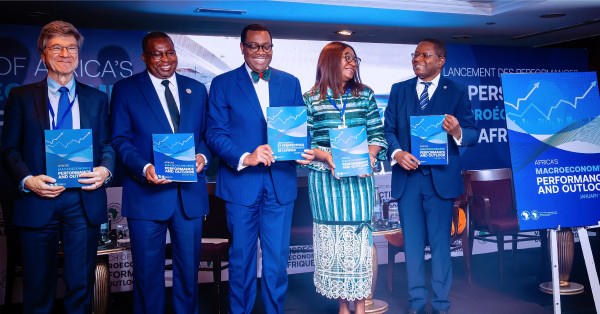
Africa will account for eleven of the world's 20 fastest-growing economies in 2024, the African Development Bank Group said in its latest Macroeconomic Performance and Outlook (MEO) of the continent released on Friday.

Overall, real gross domestic product (GDP) growth for the continent is expected to average 3.8% and 4.2% in 2024 and 2025, respectively. This is higher than projected global averages of 2.9% and 3.2%, the report said.

The continent is set to remain the second-fastest-growing region after Asia.

The top 11 African countries projected to experience strong economic performance forecast are Niger (11.2%), Senegal (8.2%), Libya (7.9%), Rwanda (7.2%), Cote d'Ivoire (6.8%), Ethiopia (6.7%), Benin (6.4%), Djibouti (6.2%), Tanzania (6.1%), Togo (6%), and Uganda at 6%.

“Despite the challenging global and regional economic environment, 15 African countries have posted output expansions of more than 5%,” Bank Group President Dr Akinwumi Adesina said, calling for larger pools of financing and several policy interventions to further boost Africa's growth.

Africa's Macroeconomic Performance and Outlook, a biannual publication released in the first and third quarters of each year, complements the existing African Economic Outlook (AEO), which focuses on key emerging policy issues relevant to the continent's development.

The MEO report provides an up-to-date evidence-based assessment of the continent's recent macroeconomic performance and short-to-medium-term outlook amid dynamic global economic developments.

The latest report is calling for cautious optimism given the challenges posed by global and regional risks. These risks include rising geopolitical tensions, increased regional conflicts, and political instability—all of which could disrupt trade and investment flows, and perpetuate inflationary pressures.

President Adesina emphasised that fiscal deficits have improved, as faster-than-expected recovery from the pandemic helped shore up revenue.

He explained further: “This has led to a stabilisation of the average fiscal deficit at 4.9% in 2023, like 2022, but significantly less than the 6.9% average fiscal deficit of 2020. The stabilisation is also due to the fiscal consolidation measures, especially in countries with elevated risks of debt distress.”

He cautioned that with the global economy mired in uncertainty, the fiscal positions of the African continent will continue to be vulnerable to global shocks.

The report shows that the medium-term growth outlook for the continent's five regions is slowly improving, a pointer to the continued resilience of Africa's economies.

Presenting the key findings of the report, the African Development Bank's Chief Economist and Vice President, Prof. Kevin Urama said: “Growth in Africa's top-performing economies has benefitted from a range of factors, including declining commodity dependence through economic diversification, increasing stra­tegic investment in key growth sectors, and rising both public and private consumption, as well as positive developments in key export markets.”  

He added: “Africa's economic growth is projected to regain moderate strength as long as the global economy remains resilient, disinflation continues, investment in infrastructure projects remains buoyant, and progress is sustained on debt restructuring and fiscal consolidation.”

“The future of Africa rests on economic integration. Our small economies are not competitive in the global market. A healthy internal African trade market can ensure value-added and intra-African production of manufactured goods,” said Commissioner for Economic Development, Trade, Tourism, Industry and Minerals, African Union Commission, Ambassador Albert Muchanga.

He assured that the MEO forecast, and recommendations will be made available to African heads of state and that the report will be useful when the African Union makes its proposals to the G20- an informal gathering of many of the world's largest economies to which the African Union was admitted last year.

The improved growth figure for 2024 reflects concerted efforts by the continent's policymakers to drive economic diversification strategies focused on increased investment in key growth sectors, as well as the implementation of domestic policies aimed at consolidating fiscal positions and reversing the increase in the cost of living and boosting private consumption.

Speaking remotely, Zimbabwe's Minister of Finance and Economic Development, Prof Mthuli Ncube described the report as being “on point” and consistent with the reality in his country, describing it as useful for economic planning across Africa. He urged the African Development Bank to continue its thought leadership to help policymakers continue to build resilience to withstand shocks and drive growth.

Ncube said: “Zimbabwe expects slower growth due to climate shocks in the region. Southern African countries depend on agriculture for economic growth, so climate-proofing agriculture is key. We are in talks with creditors to restructure its debt, which is slowing economic growth. Internally, the country will focus on economic and governance reforms and reforms around property rights to increase agricultural production.”

Up to 41 countries across the continent will in 2024, achieve an economic growth rate of 3.8%, and in 13 of them, growth will be more than 1 percentage point higher than in 2023.

Director of the Center for Sustainable Development, Columbia University Prof Jeffrey Sachs noted that long-term affordable financing must be part of Africa's strategy to achieve growth of 7% or more per year and warned that Africa is paying a very high-risk premium for debt financing. He called for this point to be made to the G20.

“Long-term development cannot be based on short-term loans. Loans to Africa should be at least 25 years or longer. Short-term borrowing is dangerous for long-term development. Africa must act as one, in scale,” he explained.

Sachs, who is also the UN Secretary-General António Guterres' Advocate for Sustainable Development Goals also called for a much larger African Development Bank, better resourced to meet Africa's financing needs.

Overview of economic outlook across regions

The confluence of shocks notwithstanding, the resilience of the continent's economies remains strong, with positive growth projected for the continent's five regions.

  • East Africa: East Africa will continue to lead Africa's growth momentum, with growth projected to rise to 5.1% in 2024 and 5.7% in 2025, supported by strong strategic investments to improve internal connectivity and deepen intra-regional trade.
  • North Africa: Successive adverse weather conditions and macroeconomic challenges will hold the region's growth steady at 3.9% in 2024 with a slight improvement to 4.1% in 2025.
  • Central Africa: Growth is forecast to moderate to 3.5% in 2024 but projected recovery in private consumption and increases in mining investment and exports could help push growth to 4.1% in 2025.
  • Southern Africa: Growth will remain sluggish at 2.2 and 2.6% in 2024 and 2025, respectively. This reflects continued economic weakness in South Africa, the region's largest economy.
  • West Africa: Growth is projected to pick up to 4 and 4.4% in 2024 and 2025 respectively. Strong growth in most countries in the region is projected to offset slowdowns in Nigeria and Ghana. The announced withdrawal of Burkina Faso, Mali, and Niger from the Economic Community of West African States (ECOWAS) casts a shadow over the sustainability of gains amid growing uncertainty.

Driving faster and more sustainable economic growth

The 2024 MEO says in the short term, tackling persistent inflation will need a mix of restraining monetary policy coupled with fiscal consolidation and stable exchange rates.

The report identifies structural reforms and strategic industrial policies as key to accelerating economic diversification and strengthening the export sector.

It recommends that countries invest more in human capital and pursue a resource-based industrialisation and diversification strategy that allows the continent to exploit its comparative advantage and build resilience to shocks.

  • 2024 Macroeconomic Performance and Outlook (https://apo-opa.co/3UHdVhm)
  • President Adesina's speech (https://apo-opa.co/49H7oaV)
  • Pictures (https://apo-opa.co/48jUVZu)

Distributed by APO Group on behalf of African Development Bank Group (AfDB).

Media Contact:
Emeka Anuforo
Communication and External Relations Department
media@afdb.org

About the African Development Bank Group:
The African Development Bank Group (AfDB) is Africa's premier development finance institution. It comprises three distinct entities: the African Development Bank (AfDB), the African Development Fund (ADF) and the Nigeria Trust Fund (NTF). On the ground in 34 African countries with an external office in Japan, the AfDB contributes to the economic development and the social progress of its 54 regional member states. For more information: www.AfDB.org  

Media files
African Development Bank Group (AfDB)
Download logo
Read moreAfrica dominates list of the world’s 20 fastest-growing economies in 2024—African Development Bank says in macroeconomic report
15 February 2024

FIFA Beach Soccer World Cup United Arab Emirates (UAE) 2024 Dubai™: Watch every games live on FIFA+

Location: Sport

FIFA
Download logo

FIFA+ (www.FIFA.com) will stream all UAE 2024 Dubai games; Tournament takes place from 15-25 February; Find out how you can follow the action live.

The FIFA Beach Soccer World Cup UAE 2024 Dubai™ kicks off on Thursday 15 February – and the tournament is being streamed live on FIFA+!

Takuya Akaguma, Catarino, Chiky, Edson Hulk, Marco Giordani, the Martins twins, Raoul Mendy, Moslem Mesigar, Walid Mohammad, Ozu Moreira, Lucas Ponzetti, Rodrigo and Heimanu Taiaru are among the stars who are looking to light up the tournament, with this year's edition again set to showcase the very best that the discipline has to offer.

Click here to access FIFA+ (https://apo-opa.co/496Sef7)

All matches will be available on FIFA+ web, the FIFA+ app and connected TV devices. Full details of the territories where FIFA+ live streams and full match replays are accessible can be found below. Two-minute highlights on all matches will also be available.

Territories with FIFA+ live streaming access

Africa

Angola, Benin, Botswana, Burkina Faso, Burundi, Cameroon, Cape Verde, Central African Republic, Chad, Comoros, Congo-Brazzaville, Congo-Kinshasa, Equatorial Guinea, Eritrea, Eswatini, Ethiopia, Gabon, Gambia, Ghana, Guinea-Bissau, Guinea-Conakry, Ivory Coast, Kenya, Lesotho, Liberia, Madagascar, Malawi, Mali, Mauritius, Mozambique, Namibia, Niger, Nigeria, Rwanda, Sao Tome and Principe, Senegal, Seychelles, Sierra Leone, Somalia, South Africa, South Sudan, Sudan, Tanzania, Togo, Uganda, Zambia, Zimbabwe.

Americas and the Caribbean

Anguilla, Antigua and Barbuda, Aruba, Bahamas, Barbados, Belize, Bermuda, Bonaire Sint Eustatius and Saba, British Virgin Islands, Cayman Islands, Cuba, Curaçao, Dominica, Dominican Republic, Grenada, Guyana, Haiti, Jamaica, Montserrat, Saint Kitts and Nevis, Saint Lucia, Saint Vincent and the Grenadines, Suriname, Trinidad and Tobago, Turks and Caicos Islands, United States Virgin Islands.

Asia

Afghanistan, Bangladesh, Bhutan, Brunei, Cambodia, India, Indonesia, Kazakhstan, Kyrgyzstan, Laos, Malaysia, Maldives, Myanmar, Nepal, Pakistan, Philippines, Singapore, Sri Lanka, Tajikistan, Turkmenistan, Uzbekistan, China PR, Hong Kong, Korea DPR, Korea Republic, Macau, Mongolia, Taiwan, Thailand, Timor-Leste, Vietnam.

Central and South America

Brazil

Europe

Albania, Armenia, Austria, Azerbaijan, Belarus, Belgium, Bosnia and Herzegovina, Bulgaria, Croatia, Cyprus, Czech Republic, Denmark, Estonia, Finland, France, Georgia, Germany, Greece, Hungary, Iceland, Ireland, Israel, Italy, Kosovo, Latvia, Lithuania, Luxembourg, Malta, Moldova, Montenegro, Netherlands, North Macedonia, Norway, Poland, Portugal, Romania, Russia, Serbia, Slovakia, Slovenia, Sweden, Switzerland, Turkey, Ukraine, United Kingdom.

Oceania

American Samoa, Australia, Cook Islands, Federated States of Micronesia, Fiji, French Polynesia, Guam, Kiribat, Marshall Islands, Nauru, New Caledonia, New Zealand, Niue, Northern Mariana Islands, Palau, Papua New Guinea, Samoa, Solomon Islands, Tokelau, Tonga, Tuvalu, Vanuatu, Wallis and Futuna.

Click here (https://apo-opa.co/3Sy1CRK) to visit the FIFA match centre and find out where you can watch the FIFA Beach Soccer World Cup UAE 2024 Dubai™ in your location.

* Territories' live streaming access is subject to change

A full match schedule can be downloaded here (https://apo-opa.co/3UMG3jr).

Tournament tickets are available via https://apo-opa.co/3wk8D1n to purchase.

Visa, Worldwide Partner of FIFA, is the preferred payment method for fans buying tickets for the FIFA Beach Soccer World Cup UAE 2024 Dubai™.

Distributed by APO Group on behalf of FIFA.

Contact for African media: 
AfricanMedia@fifa.org

Read moreFIFA Beach Soccer World Cup United Arab Emirates (UAE) 2024 Dubai™: Watch every games live on FIFA+
14 February 2024

Global Access enters Ghana with innovative iPTV Solution

Location: MyPR

Global Access is thrilled to announce their official entry into the vibrant market of Ghana. Recently, the company was awarded a contract for the implementation of their IPTV solution for a large Financial Institution based in Ghana. This solution is for the distribution and management of Television channels, internal communication channels, digital signage and streaming …

Read moreGlobal Access enters Ghana with innovative iPTV Solution
12 February 2024

It’s time for Africa!

Location: News

It’s time for Africa!

By Saadia Moola

The official launch of South Africa’s first shipment and preferential trading under the African Continental Free Trade Agreement (AfCFTA) on 31 January 2024, at the Port of Durban goes beyond a feather in the cap for trade and economic growth. It signals the unyielding African spirit which has prevailed against the injustices that plagued our continent, including colonialism and apartheid.

Our liberation from these wrongs took the strength of all African nations and together we proved that we could overcome insurmountable obstacles to create a brighter future for the continent.

Despite the devastation over centuries, we have redefined Africa as a continental force and transformed our nation states to be independent. We have preserved our unique African heritage and identities, and capitalised on our strengths as we develop our nations.

The African Union (AU) serves as the mantra for the development of African nations. Formerly known as the Organisation of African Unity (OAU), the unified vision for a better future for all Africans began on 25 May 1963, when leaders of African countries joined forces to form the OAU, to advance democracy and African development.

Founded on the principles of freedom, equality, justice, and dignity, it strived to end the legacy of suffering, political instability and injustice for all Africans.

“We all want a united Africa, united not only in our concept of what unity connotes, but united in our common desire to move forward together in dealing with all the problems that can best be solved only on a continental basis”. These were the sentiments of Kwame Nkrumah, first prime minister of Ghana and Pan African Leader who contributed to the formation of the OAU.

To prioritise the acceleration of African economic growth through increased cooperation and integration of African states, the OAU was relaunched as the African Union (AU) during 2002.

Since its formation, the AU has sought to protect the independence of African states and ensure their development, playing a critical role in steering the continent through the unprecedented challenge of COVID-19.

While we have much to celebrate as a continent, we remain cognisant that much still needs to be done to better Africa. This includes finding amicable solutions to conflicts that continue to plague certain parts of the continent.

Commitment to political dialogue with a view to sustainable peace and stability is a critical lever in solving the challenges in Burundi, Democratic Republic of Congo, Libya, Mali and the Sahel, Somalia, Sudan and Western Sahara.

Together we can harness our collective energies and resources ensure to take our continent closer to the ultimate vision of being free of poverty and conflict. The AU’s flagship project of Agenda 2063, is a roadmap to our development over the next 50 years. This project prioritises African goals, including; equality, intra-regional trade, infrastructure and technology development.

The African Continental Free Trade Area is in line with Agenda 2063, which is aimed at deepening African economic integration.

Strong partnerships among African nations for inclusive socio-economic development is key to advancing the African Agenda. The African Continental Free Trade Area (AFCFTA) also presents opportunities for massive financial growth in Africa.

The AFCFTA is the world’s largest trade area which holds the potential to boost intra-African trade by over 50 percent and inject approximately $450 billion worth of investments into the African economy to help uplift 50 to 100 million people out of poverty by 2035.

By harnessing the strengths of all 55 nations on the continent, we will recover, become stronger and ensure African nations take their rightful place in the world. According to the African Development Bank, Africa’s economies remain resilient and Africa’s GDP is expected to stabilise in 2023-2024.

South Africa remains committed to Africa’s advancement and as the most industrialised economy on the continent we are actively working to facilitating intra-Africa trade through exports, enhancing skills development, foreign direct investment and international cooperation.

A thriving African economy requires developed infrastructure to facilitate trade globally. South Africa is working to improve its rail and port efficiencies to drive economic growth and enable further economic opportunities across the continent.

We are also closely working with international organisations to grow investment, industrialisation and innovation across Africa. Our future is intrinsically linked to the continent, and we are aware that Africa’s growth will spur-on our own growth and bolster us to address the triple challenge of poverty, inequality and unemployment.

Let us all come together and play an active role in advancing Africa. Let us go beyond the dedicated Africa Month (May) to claiming the 21st century as the era for Africa’s revival and renewal!

Saadia Moola is a Director at the Government Communication and Information System

Neo
Mon, 02/12/2024 - 10:14

283 views
Read moreIt’s time for Africa!
7 February 2024

Basketball Africa League, FIBA Africa and Hennessy to Host “BAL IN” Experience Event ahead of 2024 Season Tipping off March 9

Location: News

National Basketball Association (NBA)
Download logo

The Basketball Africa League (BAL), FIBA Africa and Hennessy, the world-renowned cognac brand and the Official Spirit of the BAL, will host a networking event, “BAL IN” on Feb. 9 at the FIBA Regional Office in Abidjan, Cote d'Ivoire. 

The “BAL IN” experience will be an opportunity for sports lovers, basketball fans and cognac enthusiasts to live an exciting experience from the two iconic brands. BAL and Hennessy share common values of bringing people together, creating unforgettable experiences and celebrating the creativity and culture on the continent.  As part of the event, BAL, FIBA Africa and Hennessy will celebrate Africa's cultural resonance across basketball, fashion, music, art, and design through tasting, mixology and cultural experiences.

The “BAL IN” experience is part of the league's long-term strategy to connect and engage with fans across the continent and beyond including the African Diaspora.  Previous networking events have been held in Accra, Ghana; Berlin, Germany; Lagos, Nigeria; Paris, France and Salt Lake City, U.S.

“We are super excited to see the momentum building across Africa and around the world, especially among the African Diaspora,” said BAL President Amadou Gallo Fall. “This “BAL IN” event in Abidjan celebrates African sports industry excellence, provides networking opportunities for industry stakeholders, in line with the BAL's commitment to being a catalyst for the growth of a robust African sports, entertainment and lifestyle ecosystem.”

“As the Official Spirit of the NBA and the BAL, Hennessy is looking forward to another exciting season, especially with the addition of South Africa to the host markets this year. We invite fans to enjoy both the games hosted across the continent and the cultural playground that's celebrated beyond the court,” said General Manager Southern Africa and Marketing Director Africa Middle East at Moët Hennessy David White.

The expanded fourth season of the BAL will tip off on Saturday, March 9, 2024, at the SunBet Arena in Pretoria, South Africa.  The 2024 BAL season will feature the top 12 club teams from 12 African countries playing a record 48 games in Pretoria; Cairo, Egypt; Dakar, Senegal; and Kigali, Rwanda over four months, marking the first BAL games in South Africa and the first time the league will play games in four different countries.  Fans can register their interest in tickets to games in all four markets at BAL.NBA.com.

During the 2024 BAL season, the 12 teams will be divided into three conferences of four teams each.  Each conference will play a 12-game group phase during which each team will face the other three teams in its conference twice.  The inaugural Kalahari Conference group phase will take place from Saturday, March 9 – Sunday, March 17 at the SunBet Arena in Pretoria.  The Nile Conference group phase will take place from Friday, April 19 – Saturday, April 27 at Hassan Mostafa Indoor Sports Complex in Cairo.  The Sahara Conference group phase will take place from Saturday, May 4 – Sunday, May 12 at the Dakar Arena in Dakar.  The top two teams from each conference and the top two third-place teams from across the three conferences will travel to Kigali for four seeding games followed by an eight-game, single-elimination Playoffs and Finals from Friday, May 24 – Saturday, June 1 at BK Arena.  

The 12 BAL teams, conferences, game schedule and additional information about the 2024 BAL season will be announced in the coming weeks.

BAL Season 4 announcement video (Credit: Basketball Africa League) (https://apo-opa.co/3SrLphb)

Distributed by APO Group on behalf of National Basketball Association (NBA).

Read moreBasketball Africa League, FIBA Africa and Hennessy to Host “BAL IN” Experience Event ahead of 2024 Season Tipping off March 9
6 February 2024

Global Logistics Execs see coming Surge of African Investment

Location: News

Agility
Download logo

Nearly 62% of global logistics professionals say their companies are planning additional or first-time investments in Africa, according to a closely watched yearly industry survey.

The survey of 830 logistics executives is part of the 15th annual Agility Emerging Markets Logistics Index (https://apo-opa.co/4bD4lSW), a snapshot of industry sentiment and ranking of the world's 50 leading emerging markets.

The Index ranks countries for overall competitiveness based on their logistics strengths, business climates and digital readiness -- factors that make them attractive to logistics providers, freight forwarders, air and ocean carriers, distributors and investors. In the 2024 Index, the rankings of most African economies changed little from a year earlier, but businesses indicate they are looking ahead at massive population growth and trade expansion spurred by the African Continental Free Trade Area (AfCFTA).   

“This is the most optimism we've seen about Africa in the 15 years of the Index,” says Agility Vice Chairman Tarek Sultan. “Africa's population will double by 2050, when one in four people on the planet will be African. International businesses realize that the time is now for Africa -- they need to invest, establish their brands, and develop the next generation of African talent if they're going to ride the coming wave of growth.”

China and India were 1 and 2 in the 50-country Index rankings. In Africa, Egypt (20), Morocco (22), South Africa (24) and Kenya (25) were the top performers, followed by Ghana (31), Nigeria (36), Tunisia (37), Tanzania (41), Algeria (42), Uganda (43), Ethiopia (45), Mozambique (46), Angola (47), Libya (50).

Egypt has Africa's highest-ranked domestic logistics opportunities -- 13th in that category; South Africa (15) was tops in Africa for international logistics; Morocco (12) has Africa's best business fundamentals; Kenya (9) is Africa's most digitally ready – and the continent's highest-ranked country in any category.

More than 63% of survey respondents say their companies continue overhauling supply chains by spreading production to multiple locations or relocating it to home markets and nearby countries. China, the world's leading producer, stands to be most affected: 37.4% of industry professionals say they plan move production/sourcing out of China or reduce investment there.

Shipping and logistics costs that soared during the COVID pandemic and its aftermath are still climbing but at a slower rate, the survey found. One way shippers expect to cope is by increasing use of digital freight forwarding from 37.8% today to 52% in five years.

2024 Index Highlights

SURVEY

  • Supply chain restructuring – India, Europe and North America rank ahead of China as destinations executives expect to move production to in 2024 and onwards.
  • China – 40% expect their businesses to be less reliant on China in five years. Leading factors in decisions to de-risk in China: difficulty of doing business; U.S.-China trade friction; a slowing economy; the harshness of China's COVID restrictions.
  • Climate change – 66% say climate change is something they're planning for or already affecting their businesses.
  • Emerging markets – the largest percentage sees increased risk/decreased rewards in emerging markets.
  • India – many see India growing in importance as a producer and market, but cite inadequate infrastructure and corruption as the biggest obstacles there.

COUNTRY RANKINGS

  • In the Middle East and North Africa, overall rankings were: UAE (3); Saudi Arabia (6); Qatar (7); Turkey (11); Oman (15); Bahrain (16); Jordan (17); Egypt (20); Kuwait (21); Morocco (22); Tunisia (37); Lebanon (38); Iran (40); Algeria (42); Libya (50).
  • Rankings in Sub-Saharan Africa: South Africa (24); Kenya (25); Ghana (31); Nigeria (36); Tanzania (41); Uganda (43); Ethiopia (45); Mozambique (46); Angola (47).
  • Index rankings in Asia: China (1); India (2); Malaysia (4); Indonesia (5); Vietnam (8); Thailand (10); Philippines (18); Kazakhstan (23); Sri Lanka (26); Pakistan (29); Cambodia (32); Bangladesh (33); Myanmar (49).
  • Rankings for Latin America: Mexico (9); Chile (12); Brazil (14); Uruguay (19); Peru (28); Colombia (27); Argentina (30); Ecuador (35); Paraguay (39); Bolivia (44); Venezuela (48).
  • In Europe: Russia (13); Ukraine (34).

Transport Intelligence (https://apo-opa.co/4bp0Ijf) (Ti), a leading analysis and research firm for the logistics industry, has compiled the Index since it was launched in 2009.

John Manners-Bell, Chief Executive of Ti, said: “Supply chain managers are still coming to terms with the political and economic instability characterising the post-COVID global economy. Geopolitical relationships are changing rapidly, and this is having a major impact on international trade and risk profiles. Businesses need to be alive to the opportunities and threats that exist in emerging markets and use data, such as that the Agility Emerging Market Logistics Index, to inform agile decision-making.”

2024 Agility Emerging Markets Logistics Index: https://apo-opa.co/3SlOmzK

Distributed by APO Group on behalf of Agility.

For more information:
Sabrina Mundy
Man Bites Dog
teamagility@manbitesdog.com
+44 1273 716 820

For more information about Agility, visit:
Website: www.Agility.com
Twitter: https://apo-opa.co/40Ki6Kj
LinkedIn: https://apo-opa.co/49GTqqq
YouTube: https://apo-opa.co/3MNqYJr

About Agility:
Agility is a global leader in supply chain services, infrastructure, and innovation with 45,000+ employees across six continents. A multi-business operator and investor, Agility specializes in growing and scaling operating businesses. Agility's companies include the world's largest aviation services company (Menzies Aviation); a global fuel logistics business (Tristar); the market leader in logistics parks across the Middle East, South Asia, and Africa (Agility Logistics Parks); and a commercial real-estate company developing a mega-mall in the UAE (UPAC). Other Agility companies offer customs digitization services, remote-site infrastructure services, defense and government services, and ecommerce-enablement and digital logistics. Agility invests in supply chain innovation, sustainability, and resilience, and has minority holdings in a growing portfolio of listed and non-listed companies.

Read moreGlobal Logistics Execs see coming Surge of African Investment
3 February 2024

African-American Billionaire Philanthropist, Robert Smith, Others Nominated for African Heritage Awards in South Africa

Location: News
Heritage Times HT

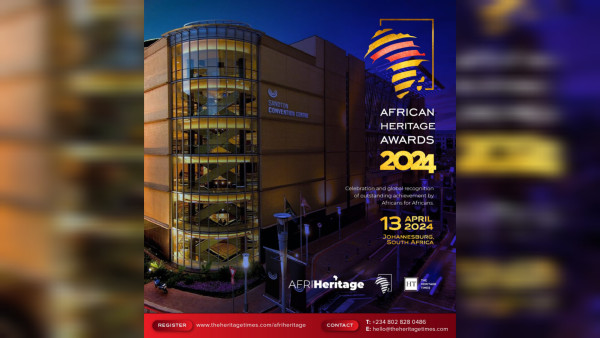
Johannesburg, South Africa's most populous city, is set to host the 2nd Edition of the African Heritage Awards (AHA) 2024, which aims to honour African greats who have impacted immensely to the advancement of humanity.

According to a statement issued on Friday in Johannesburg by the organizers, Heritage Times HT, the event is slated to hold on April 13, 2024, at the Sandton Convention Center, Johannesburg, South Africa.

The 'City of Gold' will host the prestigious pan-African event which is a sequel to the inaugural edition held on April 1, 2023 in Kigali, Rwanda. The African Heritage Awards is a gathering strategically organized to celebrate and recognize outstanding global accomplishments of Africans within the continent and in the Diaspora, in areas of Business, Politics, Philanthropy, Entertainment & Arts, Culture, Science & Technology, and Social Innovation.

This year's Awards is headlined by African-American billionaire Philanthropist, Robert. F. Smith, Chairman/CEO of Vista Equity Partners, Texas, United States; His Excellency, Dr. George Weah, former President of Liberia; His Excellency, John Dramani Mahama, former President of Ghana; Her Excellency, Mama Rachael Ruto, First Lady of the Republic of Kenya & Founder of Mama Doing Good Organization; Dr. Ngozi Okonjo-Iweala, Director-General of the World Trade Organization.

Others are: Mr & Mrs Strive Masiyiwa, Founder & Executive Chairman of International Technology Groups, Econet Global and Cassava Technologies; Adebayo Ogunlesi, Chairman/Managing Partner, Global Infrastructure Partners; Professor Thulisile Nomkhosi Madonsela, Founder of the Thuli Madonsela Foundation; Victoire Tomegah Dogbe, Prime Minister of Togo; Mrs Folorunsho Alakija, Managing Director of the Rose of Sharon Group and Executive Vice Chairman of Famfa Oil Limited; Othman Benjelloun, Co-chair of BMCE Bank Foundation and Madam Graca Machel, Founder of Graca Machel Trust and many others.

According to Heritage Times HT, the organizers of the African Heritage Awards 2024, it's expected that this year's edition will be more remarkable and historic, as it will be chaired by His Excellency, Sir Seretse Khama Ian Khama, former President of Botswana, and will be attended by former Heads of States and Captains of Industries across the African continent.

The recognition and awards, according to the organizers, have become imperative to sustainably foster the African culture of excellence, promote Afrocentrism, and create an ecosystem that will further retell the true African story towards the advancement of the continent's full potentials.

This year, the organizers are moving the African Heritage Awards to the southern divide of Africa, the home of Kwaito music and the cacophonous sounds of Amapiano, to specially honour distinguished African personalities, who have dignified themselves through remarkable achievements across the globe, whilst creating sustainable impact to uplift others.

Besides conferring international prestige and recognition on these deserving Africans, the Awards will focus on the critical importance of culture and leadership, which according to the organizers, lies at the core of any shared advancement of socio-economic and political development in Africa.

The Awards is also primed to cast a spotlight on individuals who, under challenging circumstances, have empowered Africans and impacted their sphere of influence to pave the way for sustainable and equitable development.

Taking cognizance of the reality that Africa is root to a plethora of people all over the world who continue to thrive and evolve despite the limitations and challenges stemming from stereotypes, the organizers of the AHA strongly affirm that the event will contribute immensely to changing the global perception of Africans, and also spur the needed critical mass for the attainment of cultural evolution and revolution in sustainable development.

For participation and reservation, kindly click on the link to register https://apo-opa.co/42qRL55

Distributed by APO Group on behalf of Heritage Times HT.

Media files
Heritage Times HT
Download logo
Read moreAfrican-American Billionaire Philanthropist, Robert Smith, Others Nominated for African Heritage Awards in South Africa
31 January 2024

SA sends first shipment under AfCFTA agreement

Location: News

SA sends first shipment under AfCFTA agreement

The implementation of the preferential trading under the African Continental Free Trade Area (AfCFTA) has become a reality with South Africa sending its first shipment of products to other countries trading under the agreement.

South Africa is the first among the Southern African Customs Union (SACU) member states, which consists of Botswana, Lesotho, Namibia, South Africa, and Swaziland, to practically realise the AfCFTA Agreement.

“For South Africa, as with many other African countries, the start of preferential trade will create great opportunities for growth and development. Not only will it benefit our country’s producers, but it will also see a huge increase in traffic through our ports, our airports and our land-based border posts.

“The products made in Gauteng, Limpopo, North West, Free State, Mpumalanga and the Northern Cape will flow through these ports to markets beyond our borders,” President Cyril Ramaphosa said on Wednesday in Durban.

Officiating the launch of South Africa's first shipment and preferential trading under the AfCFTA, the President said the levels of intra-African trade have been growing in recent years, but remain small by global standards.

Intra-Africa exports are reported to stand at around 16% of Africa’s total exports, compared to 55% in Asia, 49% in North America and 63% in the European Union.

“African countries trade with the rest of the world but we have limited trade among ourselves. The reason for this is clear: we are principally exporters of raw materials, selling rocks and black liquid to the world, instead of harnessing our oil and the minerals to industrialise our continent. We need to change this.

“We have a unique opportunity to lift millions of people out of poverty by empowering women and young people to change the continent’s business environment. That is why, as the South African government, we are focused on implementing our Freight Logistics Roadmap to improve the efficiency and competitiveness of the country’s rail lines and ports,” the President said.

He said government is working closely with industry to fix Transnet’s rail and port operations in the immediate term and to ensure greater investment in infrastructure into the future.

“Over the last few years, our trade ministers have been finalising rules of origin of what constitutes an African product. They have done well to finalise 92% of the products that nations trade with each other. We need them to be even bolder in further rules of origin. The products that we trade among ourselves must truly be ‘Made in Africa’.

"The modalities for trade in goods has moved faster than for services. We therefore need to put more effort into building African champions in finance, retail and telecommunications, and in expanding tourism between African countries. That is the only way in which our economies will grow faster and sustainably,” President Ramaphosa said.

The African Continental Free Trade Area creates the world’s largest free trade area by number of countries, and has the potential to bring transformative change and tremendous opportunities to African economies and businesses.

The President said the implementation of the agreement will accelerate the development of regional and local value chains, offering investors access to a population of 1.7 billion people with a fast-growing continental gross domestic product (GDP).

“Industrial development is core to Africa’s integration. It builds Africa’s productive capacities, adds greater value to our products and diversifies trade beyond the traditional commodities. We have already seen the potential of greater cross-border collaboration.

“South African automotive companies source leather car seats from a factory in Lesotho employing close to a thousand workers and wiring harnesses from Botswana at two plants employing several thousand workers,” Ramaphosa said.

They source copper wire from Zambia, rubber from Cote d’Ivoire, Nigeria, Malawi, Ghana and Cameroon, and steering wheel components from Tunisia.

“These are installed in cars that are then exported from South Africa to other parts of the world. These inputs alone accounted for more than $200 million worth of products traded among African countries and the scope to do more is available to us.

“But it requires bold rules of origin. For every one percent of extra African content, there is an opportunity for a factory or mine based on the continent to supply the products. And as the world moves to green industrialisation, Africa is well positioned to use our critical minerals to leverage industrialisation on the continent,” the President said.

He said the opportunities are vast, with prospects in food and beverages, in cars and trucks, in clothing and textiles.

“We have the capacity to produce more of our own pharmaceutical products and medical equipment. Investment can flow to the production of chemicals, machinery and equipment, household goods and many, many more.

“Beyond the industrialisation of which I have spoken, this continental market can help us promote agricultural development and food security. Through our work, we can ensure that young people and women-owned firms are active in export markets,” the President said.

He said the Protocol on Women and Youth in Trade will help ensure that the African Continental Free Trade Area contributes to inclusive growth and development. – SAnews.gov.za

nosihle
Wed, 01/31/2024 - 13:15

36 views
Read moreSA sends first shipment under AfCFTA agreement
26 January 2024

SA citizens in foreign countries urged to register to vote

Location: News

SA citizens in foreign countries urged to register to vote

Over 18 469 South African citizens living in 101 countries around the world have started registering to vote using the Electoral Commission’s newly launched online registration portal system.

“The Electoral Commission has enabled an online registration facility for the first time to allow South Africans outside the country to easily register for the 2024 National Elections,” Chief Electoral Officer (CEO) of the Electoral Commission Sy Mamabolo said.

Addressing the media in Pretoria on Thursday, Mamabolo said the commission hoped that the introduction of an online registration system will attract citizens from abroad.

Citizens living abroad must register as voters either online or in person at their nearest South African mission. South African high commissions, embassies and consulates will be open during working hours.

“Eligible voters are encouraged to check with their nearest mission on the registration dates and times. Registration requires a South African identity document as well as a South African passport.   

“A special two-day voter registration event for South African citizens abroad will take place between 26 and 28 January 2024, depending on the configuration of weekend days.

“In countries where Friday and Saturday are weekends, the two special days designated will be Friday 26 January, and Saturday 27 January 2024,” Mamabolo said.

The countries with the most people registering online include the United Kingdom (5938), the Netherlands (1844), Germany (746), the United States (821), Ireland (675), United Arab Emirates (1068), China (515), Australia (588), New Zealand (314), Cuba (293), Portugal (284) and Belgium (280).

In the African continent, South Africans have begun to register in 28 countries, including Mauritius (316), Lesotho (224) Namibia (148), Botswana (170), Zambia (96), Zimbabwe (77), Kenya (73), Ghana (45) and Tanzania (40).

A full list of South Africa’s missions is available on the website of DIRCO at https://www.dirco.gov.za/webmissions/index.html.

The commission advised South Africans who are already registered to vote – either on the national or international segment of the voters’ roll - to check their registration status and to update their voters’ roll address if they intend to vote abroad in the 2024 National Elections.

Mamabolo said the commission has put in place all necessary measures to ensure that no one is left behind and that all citizens vote in the 2024 National Election.

“The upcoming 2024 National Elections offer an important opportunity for all South Africans to have their voices heard, regardless of geographic location,” he said.

The commission pleaded with businesses and organisations around the world to encourage their South African employees to register during this registration weekend. – SAnews.gov.za

Edwin
Fri, 01/26/2024 - 09:03

457 views
Read moreSA citizens in foreign countries urged to register to vote
19 January 2024

9 Reasons Why You Should Attend The Upcoming Every Africa Festival (AAF) In Abu Dhabi Yas Island’s Etihad Park This February

Location: Entertainment, MyPR

With New Year celebrations now behind us, organisers of the award-winning All Africa Festival (AAF), the UAE’s largest celebration of Africa’s rich and diverse cultures in all their vibrant expressions and representations, are ramping up efforts to deliver an unforgettable mosaic of performances, artistic, culinary and culturally immersive experiences on the grounds of Yas Island’s …

Read more9 Reasons Why You Should Attend The Upcoming Every Africa Festival (AAF) In Abu Dhabi Yas Island’s Etihad Park This February
18 January 2024

Rugby’s Impact: Investing in Africa’s Development Future (By Gabriela Ramos and Herbert Mensah)

Location: Sport

Rugby Africa
Download logo

By Gabriela Ramos, Assistant Director-General for the Social and Human Sciences of UNESCO, and Herbert Mensah, President of Rugby Africa (http://www.RugbyAfrique.com)

With a current population of over 1.4 billion, Africa is expected to reach 2.5 billion by 2050. By 2030, young Africans are projected to constitute 42 percent of the world's youth. Looking ahead, by 2100, nearly half of the world's children will be African, and Africa will then constitute 40% of the global population. This demographic transformation presents an unprecedented opportunity for the continent and the world.

In a future where Africa's youth will constitute the majority of the global youth population, it is essential to recognize that the path of international sports bodies will be inextricably linked to Africa. With a rapidly expanding fan base, a growing pool of talented athletes, and a substantial TV audience, Africa becomes a focal point for the future of sports.

Rugby, with its core values of integrity, respect, solidarity, passion, and discipline, stands as a powerful catalyst for character development. These values extend far beyond the playing field, instilling life skills that are essential for young people as they navigate life's challenges. Integrity on the pitch translates to honesty in life's challenges, respect in victory and defeat fosters empathy in relationships, and solidarity in teamwork becomes community service, cultivating a spirit for the common good. South Africa, a triumphant four-time rugby world champion, has consistently exemplified these values, with its current captain Siya Kolisi standing as a role model for the entire African continent.

Empowering African youth through rugby is not just about playing a fun sport; it's about equipping them with the tools they need to drive continental growth and reach their fullest potential. Every young rugby player has the potential to be a future leader, an agent of positive change, and an ambassador for unity. By nurturing their talents and investing in their development, we set in motion a journey that contributes not only to the advancement of rugby across Africa but also to the progress of our societies at large.

Rugby is actively implemented in 39 countries across the continent, and Ghana, Nigeria, and Zambia are among the six emerging nations that are enjoying strong growth in rugby globally, according to data published in September by World Rugby. The growth of rugby in Africa, coupled with the sport's rising global popularity, creates a promising economic ecosystem and offers immense potential to drive human development and livelihoods. Beyond its cultural and sporting importance, the rugby industry offers diverse opportunities for revenue generation, including sponsorships, broadcasting deals, merchandise sales, and event hosting. These economic benefits extend to ancillary industries, such as sports tourism and sports technology, attracting international visitors, fostering tech startups, and driving infrastructural development. Additionally, investments in youth development, infrastructure, and training programs can lead to job creation, and skills development, contributing to economic growth and community well-being. This highlights rugby's significant role in advancing economic development across Africa. In harnessing the potential of rugby, Africa can not only foster sporting excellence but also stimulate economic advancement and social progress on the continent.

However, this transformative journey requires commitment and investment. African governments, development agencies, and international sports governing bodies, such as World Rugby, need to recognise the pivotal role that rugby can play. It is a responsibility we owe to the future of our continent and the world, and Rugby Africa, the continental governing body of rugby in Africa, is eager to collaborate with global stakeholders to strengthen the rugby value chain on the continent. Together, we aim to leverage the attributes of rugby in addressing social challenges and enhancing individual and community well-being.

Distributed by APO Group on behalf of Rugby Africa.

Read moreRugby’s Impact: Investing in Africa’s Development Future (By Gabriela Ramos and Herbert Mensah)
16 January 2024

Brave Generation Academy: Pioneering the Future of Education in Africa

Location: News
Brave Generation Academy

In a groundbreaking stride, Brave Generation Academy (BGA) (www.BraveGenerationAcademy.com) is redefining education across Africa with its innovative and personalised approach. Having established a successful presence in four African countries so far, BGA's expansion is gaining momentum as it introduces a transformative model that addresses the shortcomings of conventional education.

BGA's roots run deep in the African market, founded by Tim and Lidia Vieira, entrepreneurs with a profound connection to the continent. Tim, a South African native, initiated his entrepreneurial journey in Africa, creating South Africa's first microbrewery and later establishing one of the largest media groups in Angola. With business ties in Ghana and Mozambique, Tim and Lidia Vieira are intricately woven into the fabric of African enterprise.

Outside of their entrepreneurial roles, the Vieiras also began their family in Angola, with their first two children being born in the country.

He says of the continent, “Today Africa can leapfrog many other regions, all it needs is to have a vision and embrace technology to assist in making this a reality.”

At its core, BGA is built upon three pillars: knowledge, skills, and community. Unlike traditional education, BGA's dynamic hybrid model leverages a digital platform, empowering Learners to engage with coursework flexibly from anywhere in the world. BGA Hubs, physical spaces fostering co-learning, serve as vibrant centres where Learners grow socially, intellectually, and emotionally.

“We're focus on creating opportunities in the changing digital world by opening doors for Learners and their new horizons.” - Lidia Vieira

What truly distinguishes BGA is its emphasis on flexibility. Learners have the unique opportunity to integrate education seamlessly with existing passions and commitments. This flexibility is further embodied in the role of educators at BGA. They deconstruct the teaching position into two distinct roles: Learning Coaches and Course Managers, each addressing the diverse needs of every Learner. As mentors, Learning Coaches ignite and guide the journey of self-directed learning, offering continuous support within our BGA Hubs. On the other hand, Course Managers are devoted curriculum experts, enhancing and elevating our online platform. They design assignments, quizzes, and offer academic feedback and face-to-face sessions, creating a vibrant and immersive learning journey.

In the past year, BGA has expanded its scope beyond secondary education to fulfil our overarching objective of lifelong learning. The introduction of BGA for Life has given rise to a dedicated branch of the academy focused on tertiary education and beyond. Notably, the initiative includes programmes like Unique Pathway, enabling Learners to seamlessly transition from the completion of IGCSEs, utilising BGA's learning approach, to a trajectory leading to a university degree offered by partner universities globally. This innovative approach opens doors for Learners of all ages worldwide to access a high-quality university education and skillset at a significantly reduced cost compared to studying abroad.

BGA takes pride in its multiple Hubs across Namibia, Kenya, Mozambique, and South Africa. The opening of two new Hubs in Mozambique this month, with South Africa also expanding in the near future, marks the exponential growth BGA is witnessing. BGA is also looking to expand its footprint to other nations without a current Hub, such as Angola. 

“Africa will influence the future in so many ways due to its growing number of young talent, and BGA wants to play its role in contributing to this future.” The commitment to expansion goes beyond these achievements, as CEO Tim Vieira actively collaborates with the Cape Verde government to address educational challenges in the islands, envisioning a tailored BGA solution.

This innovative school envisions Learners not just as recipients of education but as active contributors to their communities, fostering real-world projects, volunteer initiatives, and practical internships. As they welcome more African countries into the fold, Brave Generation Academy is thrilled to make a meaningful impact on a continent that holds the key to the future.

Distributed by APO Group on behalf of Brave Generation Academy.

For media inquiries or further information, please contact: contact@bravegenerationacademy.com

BGA Website: www.BraveGenerationAcademy.com

BGA Linktree: https://apo-opa.co/3O11AAw

Media files
Brave Generation Academy
Download logo
Read moreBrave Generation Academy: Pioneering the Future of Education in Africa
11 January 2024

New Year Address from Rugby Africa President, Herbert Mensah

Location: Sport
Rugby Africa

Herbert Mensah, President of Rugby Africa (www.RugbyAfrique.com), the continental governing body of rugby across Africa, issues end of year message reflecting on 2023:

Amidst our joyful farewell to 2023, I am thrilled to share my reflections as the President of Rugby Africa, the continental governing body of rugby in Africa. Together, our collective accomplishments have not only defined this year but have also laid a foundation for the promising future of Rugby Africa.

Milestones and Achievements

As we reflect on the remarkable journey of the past nine months, it is with immense pride that I share the highlights of our accomplishments. From the success of the Rugby Africa Women's tournament in Madagascar to the significant Rugby Africa Men's Olympic qualification tournament in Zimbabwe, the thrilling Rugby Sevens tournament in Mauritius, and the vibrant scene in Tunisia's Monastir, our efforts have truly shone on the rugby stage. Notably, a significant portion of our achievements this year has been dedicated to francophone countries. We celebrate the re-admittance of Nasser Bougja as Vice President, the return of the Moroccan Rugby Federation to Rugby Africa, an established pathway solution for Cameroon, Ghana and management of other upcoming elective Annual General Assemblies and the momentous milestone of signing the long-awaited agreement with the French Development Agency (AFD) to foster the development of women's rugby in Africa.

We have addressed administrative challenges by rectifying loose agreements within Rugby Africa that were either uncontracted or unpaid. Internally, administrative efficiency has been enhanced with the establishment of committees, each equipped with clear terms of reference and KPIs for committee members. Looking ahead, we are committed to annual reassessments, ensuring that our committees maintain the highest standards of performance. It's important to note that accountability remains a cornerstone, and those unable to meet expectations will be subject to be reassigned from their roles.

Commitment to Progress

As President of Rugby Africa, I continue to call for a mindset change recognizing that sport is big business. This plea heralds a new era, challenging the status quo with a comprehensive constitutional review—a ground breaking initiative unprecedented in our history. This review, initiated by Rugby Africa through the Executive Committee, involves input from various committees, our judicial council, external legal experts and a final presentation to member unions for ratification. This transformative process signifies our commitment to transparency and progress, setting a new standard for Rugby Africa.

Strategic Planning

We have successfully developed and received approval for our strategic plan, a blueprint aimed at providing financial support to all 39 member unions of Rugby Africa. Considering the limited funding from World Rugby, which primarily supports 21 out of the 39 Rugby Africa member unions, this strategic plan is a significant milestone for Rugby Africa. The plan, meticulously reviewed and presented across our committees, places a strong emphasis on securing financial backing to ensure that all Rugby Africa member unions have the necessary support to play competitively and thrive in the world of rugby.

Financial Initiatives

In a strategic effort to maximize our resources, Rugby Africa has introduced a series of financial initiatives. For the first time ever, hosts are now entrusted with covering all hosting grants- a move anticipated to result in cost savings. Guided by our Competition Manager, Johnbosco, calculations are underway to access the potential impact of these changes. Furthermore, Rugby Africa is in discussions for multiple sponsorship opportunities, with an official announcement expected mid 2024. These initiatives underscore Rugby Africa's commitment to foster more opportunities for rugby across the continent, reshape competitions and elevating the overall rugby experience. Among our own initiatives, we remain hopeful to receive greater levels of financial support from World Rugby, to further support our development and advance the growth of rugby in Africa.

Unity Among Unions

We approach the future with a sense of optimism and gratitude. My sincere appreciation goes to all the unions that have embraced the challenges. In Southern Africa, Lesotho, Eswatini, Mozambique and Botswana, have successfully organized a spirited competition, reflecting the true spirit of rugby. Burkina Faso actively engaged in a Seven's competition, demonstrating their dedication to the sport. Guinea participated in an international match with Sierra Leone, fostering unity in our rugby community. Over the past two months, Ghana has actively engaged in matches with Benin and Togo. Beyond borders, collaborative efforts between Rwanda, Burundi and Tanzania are gaining momentum as they work towards organizing their own competitions. I was particularly enthused by the huge efforts of Uganda's test matches in Tunisia and Algeria's proposed test match against Senegal. Furthermore, the 2023 Indian Ocean Island Games hosted by Madagascar, with countries such as Mauritius participating, provided an additional opportunity for increased game time. I am deeply grateful for the collective enthusiasm displayed by the unions across the continent. Together, as a federation, we are charting a path of enthusiasm and progress in the world of rugby.

Acknowledgement and Gratitude

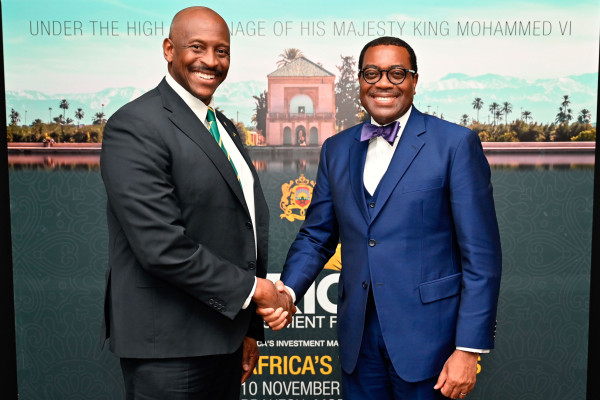
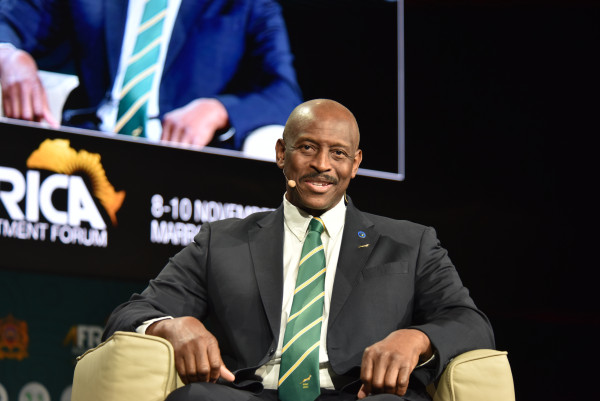
I extend my heartfelt gratitude to APO Group, South Africa Rugby Union, French Rugby Federation (FFR), French Development Agency (AFD), and World Flair for their invaluable support. Their commitment and collaboration have provided us with a powerful platform to champion our firm belief that the development of rugby in Africa is not just a sport but an investment in the future of the continent. Together, with the support our partners, we are building a foundation for the growth of rugby, fostering community engagement, and contributing to the overall development and well-being of Africa. Thank you for your unwavering dedication to this shared vision. This year, Rugby Africa has asserted itself on the global stage, making it abundantly clear that Africa is key player in the world of rugby. During the Bloomberg Gateway Conference in Morocco, our message reached an audience of over 3.5 million people, emphasizing the vast business opportunities inherent in investing in rugby across Africa, showcasing our continent at the forefront in the global marketplace. At the Africa Investment Forum in Marrakesh, I had the privilege of engaging in discussions with the President of the African Development Bank, highlighting rugby's potential to drive economic growth through investment opportunities emerging from the continent itself. These events are instrumental in shaping Rugby Africa's global positioning, paving the way to a future where rugby across Africa can ascend to new heights.

We continue to ask ALL to accept a mindset shift to give the opportunity of sports (Rugby) a chance. Sport is NOT a charity it is BIG business!

Reflections and Greetings

A substantial amount of work has been accomplished by members of the executive committee, along with dedicated efforts of staff members and myself. As President of Rugby Africa, I believe it becomes evident that 2023 has been dedicated to laying the foundational groundwork. We anticipate that the fruits of our labour will begin to manifest from the second half of 2024 onwards. In extending my sincere gratitude, I wish season's greetings to everyone, embracing the diversity of religious traditions that enrich our continent. This is a time for unity, for coming together, breaking bread, and celebrating the strides we made collectively.

God be with all of us!

Herbert Mensah
President of Rugby Africa

Download official letter here: https://apo-opa.co/3SdGAsV

Distributed by APO Group on behalf of Rugby Africa.

Media contact:
Nicole Vervelde
Communications Advisor to the President of Rugby Africa
rugby@apo-opa.com

About Rugby Africa:
Rugby Africa (www.RugbyAfrique.com) is the continental governing body of rugby in Africa and one of the regional associations under World Rugby. It unites all African countries that play rugby union, rugby sevens, and women's rugby. Rugby Africa organizes various competitions, including the qualifying tournaments for the Rugby World Cup and the Africa Sevens, a qualifying competition for the Olympic Games. With 39 member unions, Rugby Africa is dedicated to promoting and developing rugby across the continent. World Rugby highlighted Ghana, Nigeria and Zambia as three of the six emerging nations experiencing strong growth in rugby.

Media files
Rugby Africa
Download logo
Read moreNew Year Address from Rugby Africa President, Herbert Mensah
28 December 2023

Weaving the Culinary Tapestry: A Journey through the African Diaspora

Location: News
Energy Capital & Power

Food is a unique storyteller, a cultural bridge and a carrier of traditions. As a result, the culinary traditions and rich tapestry of cuisines belonging to the global Black community have played a valuable role in contemporary culture. These traditions not only illustrate the inspiration, creativity and shared heritage of Black people, but also serve as a common thread that connects diverse cultures and geographies. From the shores of West Africa to the vibrant streets of the Caribbean, the flavors, techniques and dishes of the African diaspora have transcended borders, uniting people from across the globe. The Global Black Impact Summit (GBIS) — which unites and celebrates the achievements of the global Black community on February 27, 2024 in Dubai — will explore the influence of the African diaspora on a wide range of industries, such as the culinary arts.

Africa: The Roots of Flavor

An exploration into the culinary heritage of the global Black community begins with the roots of African cuisine. The continent's diverse landscape and myriad cultures have given rise to a vast array of ingredients, cooking methods and flavors. In West Africa, staples like yams, okra, plantains and an array of vibrant spices are central to the local cuisine, with traditional local dishes including Jollof rice, Fufu – made from cassava root – and Egusi soup. In South Africa, the fusion dish Bobotie – a spiced minced meat bake with an egg-based topping – reflects the country's historical influences, blending Dutch, Malay and Indian flavors. Central Africa contributes to this culinary tapestry with dishes like Saka-Saka in Congo, made from cassava leaves cooked with spices, and Poulet Nyembwe in Gabon, featuring chicken in a rich red palm nut sauce. These dishes highlight the use of local ingredients and establish the roots of traditional African cuisines across regions. 

The African Diaspora and a Fusion of Cultures

Starting from the 16th century, the transatlantic slave trade facilitated the movement of millions of Africans to various parts of the world, including the Americas and the Caribbean. These journeys brought with them longstanding culinary traditions, which over time, evolved and adapted to the ingredients and resources found locally, while preserving the foundations of authentic cooking methods and flavors.

In the Caribbean, the fusion of African, indigenous and European culinary traditions and techniques gave birth to Creole cuisine. Dishes like Gumbo — a hearty stew served over rice and Callaloo — a leafy green stew — showcase the rich melding of influences. They tell the story of a resilient people who had to adapt and create new traditions, while preserving their roots. In the United States, African Americans developed Soul Food, a cuisine that celebrates their enduring connection to their African heritage. Dishes like collard greens, a flavorful leafy green dish, cornbread and fried chicken, stand apart from traditional African dishes. Yet they provide more than just sustenance; they serve as a celebration of cultural resilience, warmth, protection and identity.

The influence of the African diaspora on global cuisine is undeniable. Dishes like Acarajé in Brazil – a stuffed fritter sold and eaten as street food – finds its roots in the Yoruba people from Nigeria, Benin and Togo, while Ackee and saltfish – Jamaica's national dish – was initially brought to the Caribbean from Ghana and stems from the name for the Akyem people. These examples reflect how the diaspora has enriched culinary traditions around the world and are a testament to its enduring impact on food and culture.

Pioneers and Innovators in the Culinary World

Throughout history, pioneering Black chefs have broken barriers in the culinary world. In the US, renowned chefs like Edna Lewis and Patrick Clark paved the way for the next generation of Black chefs to innovate and shape the world of food. Chef Marcus Samuelsson, an Ethiopian-born Swedish-American, is renowned for his culinary empire that spans from Harlem to Sweden. Kwame Onwuachi, a Nigerian-American chef, has left his mark on the culinary scene with a background that includes training in the world's top kitchens. Sheldon Simeon, a Filipino-Black chef, celebrates the fusion of two cultures by exploring the ancestral roots of Hawaiian cuisine. 

GBIS 2024 strives to recognize and celebrate the achievements of Black individuals across industries, with a view to creating a more diverse and inclusive professional landscape. Just as culinary traditions continue to evolve and innovate, the Summit aims to unleash the full potential of the global Black community and explore the vast array of traditions and heritage associated with the African diaspora. 

Distributed by APO Group on behalf of Energy Capital & Power.

Global Black Impact Summit:
The Global Black Impact Summit is an annual event that serves to celebrate the achievements of the Black community, promote excellence and explore untapped potential across various fields. The 2024 summit is set to be a transformative experience, featuring influential speakers, engaging panel discussions and networking opportunities that enable delegates to reach new heights. To secure your spot at this prestigious gathering, register promptly at www.GlobalBlackImpact.com.

Media files
Energy Capital & Power
Download logo
Read moreWeaving the Culinary Tapestry: A Journey through the African Diaspora
28 December 2023

Centurion Law Group CEO NJ Ayuk to Step Down

Location: Business
African Energy Chamber

After more than a decade running one of Africa's most influential law firms, covering all aspects of the oil and natural gas sector, NJ Ayuk has announced that he will not make another long-term commitment to Centurion Law Group and will step down.

“I am proud of my work as Centurion's CEO – we have been able to build a historic relationship with African governments, oil and gas entrepreneurs and international energy companies working in Africa. We have hired, trained and developed more African lawyers than any other law firm in Africa. We became the first African law firm to be listed on the German Stock Exchange and have spearheaded an audacious, on-demand legal service business model in Africa,” stated Mr. Ayuk.

“I have fought the good fight, I have run the race and I have kept the faith. I believe it is time to pass the torch to the next generation that can take the firm to the next level, and I have full confidence that Zion Adeoye and his team will be able to achieve this. It also grants me much-needed time to focus on my family, the work of the African Energy Chamber and other entrepreneurial ventures and causes in which I believe,” he concluded.

Mr. Ayuk has been named one of world's top energy lawyers by Who's Who Legal, one of top 10 most influential Africans by Forbes, and one of the top 100 personalities transforming Africa by French magazine, Financial Afrik.

Zion Adeoye will be appointed as CEO of Centurion Law Group, after serving as Managing Director under Mr. Ayuk for many years. Mr. Adeoye holds an LLB from Nigeria's University of Ibadan, an LLM from Columbia University in the City of New York and an MBA from the University of Dundee, Scotland.

“Mr. Ayuk's work in building one of the finest law firms in Africa, as well as his ability to serve clients, solve disputes and close complex transactions, cannot go unnoticed. All of the employees and clients of this firm cannot thank Mr. Ayuk enough for his leadership and dedication,” he stated.

“Working with Mr. Ayuk, our team has accomplished what few gave us the chance – important legal and public policy victories across Africa, deal after deal for entrepreneurs, winning tough legal cases in complex jurisdictions while enforcing the rule of law, opening new markets and instilling in Africans the belief that African lawyers can do great things,” concluded Mr. Adeoye.

During his time at Centurion, Mr. Adeoye has demonstrated a relentless pursuit of excellence and made outstanding contributions to the firm's growth. As a seasoned attorney with extensive experience in energy law, he has played a pivotal role in securing favorable outcomes for clients across the continent.

Mr. Adeoye is a member of the Nigerian Bar Association and the Association of Independent Petroleum Negotiators. Before joining Centurion in 2017, he served in various roles at the Nigerian Petroleum Development Company Limited, KPMG Nigeria, Terra Cotta Legal, Olaniwun Ajayi LP, Templars Law and Transnational Energy Group, and has been instrumental in the reform of oil and gas legislation across several African markets.

Mr. Adeoye was additionally awarded an ESQ 40 under 40 Lawyer Award at the Nigerian Rising Stars Awards for shaping the future of the legal profession in the country.

Distributed by APO Group on behalf of African Energy Chamber.

About Centurion Law Group:
Centurion (www.CenturionLG.com) is a leading pan-African legal and energy advisory group with extensive experience in the oil and gas sector. The group provides outsourced legal representation and covers a full suite of practice areas for its clients, including arbitration and commercial litigation, corporate law, tax and anti-corruption advisory and contract negotiation. Centurion specializes in assisting clients that are starting or growing a business in Africa with offices and Affiliates in Ghana, Cameroon, Canada, Germany, Congo, Equatorial Guinea, South Africa, South Sudan, Nigeria, Gabon, Angola and Senegal.

Media files
African Energy Chamber
Download logo
Read moreCenturion Law Group CEO NJ Ayuk to Step Down
14 December 2023

Poverty and Progress: An Update on African Energy

Location: News
African Energy Chamber

By NJ Ayuk, Executive Chairman, African Energy Chamber (https://EnergyChamber.org).

In an era when such futuristic technologies as artificial intelligence, robotics, and quantum computing are here or on the horizon, almost half of sub-Saharan Africans — more than 600 million people — lack the electricity to heat, cool, or light their homes.

This energy poverty impedes nearly every aspect of life for this population, from conducting business and educating their children to deterring crime and providing healthcare.

Even in some well-electrified African nations such as Ghana, Gabon, and South Africa, the supply is inadequate and often unavailable.

As the African Energy Chamber (AEC) put it in our newly released The State of African Energy Outlook Report 2024, “Access to electricity in Africa is still a dream to millions of Africans.”

Our report gives compelling evidence to back this statement, providing statistics that show, among other things, that energy poverty is markedly deeper in sub-Saharan Africa (SSA) than in the rest of the continent.

Our report is sobering, but not without hope. It also provides a positive look toward the future, including energy developments likely to improve electrification rates in SSA and move its countries' citizens closer to the universal access they dream of. The key to delivering energy to more Africans will be using both renewables and fossil fuels.

The Statistics and What's Behind Them

Our report's numbers tell the story of just how much SSA, in particular, is still affected by energy poverty.

In contrast with most of the world, where electrification rates improved during the COVID-19 pandemic, SSA's worsened, as its percentage of the world's population lacking electricity grew from 71% in 2018 to 77% in 2020. Statistics compiled in 2020 showed sub-20% levels of electricity access in up to eight countries across the region.

While the education and business sectors suffer greatly from energy poverty, it is perhaps most acutely felt in the health sector, where medical equipment and procedures require electrical power.

Complicating the health impacts still further, households without electricity are often forced to use unhealthy fuels like wood, coal, or kerosene to cook and heat, producing indoor air pollution that leads to respiratory problems and other ailments.

In contrast to the 90%-plus electrification rate found in some North African countries, which is allowing them to decrease reliance on fossil fuels, electricity access in SSA is only about 55%, and a closer look at that number reveals it is driven by urban rates of close to 80%, while rural areas lag far behind with only about 33%, leaving two-thirds of residents in the dark.

In a nutshell, SSA has a lot of catching up to do to achieve the levels of access to electricity enjoyed by most of the world. Although the region has doubled the average rate of access since 2000, its current rate of just over half of the region's population is miniscule compared to the 90% global rate and the 80% North African rate.

As I said, even in SSA countries where electrification rates are quite high, such as Ghana, Gabon, and South Africa, load shedding presents a daily practical problem for people who must anticipate power outages. In South Africa, for instance, this type of staged rationing has been used every day this year by the power utility, Eskom.

Already in 2023, there has been more load-shedding in South Africa than in all of 2022, and outages are lasting longer — up to 12 hours daily — with a predictable disabling effect on economic development.

Meanwhile, the country's chasm between supply and demand only continues to expand.

Changes in Progress: South Africa as a Case in Point

The South African government is taking a proactive approach to the regulatory side of improving energy supply, shortening timelines for obtaining environmental authorizations and grid approvals.

It is also working to obtain and use USD98.7 billion in investment capital over the next five years for its Just Energy Transition Investment Plan (JETIP), a framework adopted in 2022 that outlines the country's strategic priorities for investment during climate transition.

A major thrust of JETIP is replacing the use of coal, which currently supplies over 80% of South Africa's power, with renewable energy, expected to grow from a current 11% of the power supply to 20% by the end of this decade and to over half of the supply by 2050.

Contributing to those numbers, Eskom-built renewables projects are slated to go live this year in Lethabo and Sere, and the utility will soon start building solar and battery storage facilities at Komati Lethabo and Majuba for a total of 2.8 gigawatts (GW) of new renewables capacity.

Of the total projected electricity capacity, solar, and wind are expected to drive almost 50% with fossil fuels adding up to a 10th of total projected capacity.

Implications for the Continent

These power-related statistics for South Africa—a country better positioned than many Sub-Saharan nations regarding electricity—show that the country, and therefore the continent, needs gas-to-power and battery storage along with wind and solar.

South Africa's numbers highlight a major point made in my recent book, “A Just Transition: Making Energy Poverty History with an Energy Mix,” — that, while the rest of the globe deals with the threat of devastating climate change, Africa must deal with two major challenges at once: the threat of climate change and debilitating energy poverty.  

Even as Africa works to support global efforts to prevent a climate crisis, we must embrace every solution available to us, including using our continent's vast natural gas reserves: totaling more than 800 trillion cubic feet. Not only is gas plentiful, but it's also the cleanest fossil fuel; producing it contributes to job creation and economic growth; and it can be monetized to help pay for energy infrastructure.

The “bottom line” is that Africa still needs to use its natural gas, and more of it, to deliver a much-needed increased supply of energy to its people.

Download The State of African Energy 2024 Outlook report: https://apo-opa.co/3QLEoHd

Distributed by APO Group on behalf of African Energy Chamber.

Media files
African Energy Chamber
Download logo
Read morePoverty and Progress: An Update on African Energy
6 December 2023

South African primary school team takes top spot in coding tournament

Location: News

The #Coding4Mandela championship was held virtually on Tuesday

Read moreSouth African primary school team takes top spot in coding tournament
5 December 2023

Afrobarometer surveys director urges young researchers to empower Africa’s narrative and showcase the continent’s analytical excellence

Location: News
Afrobarometer

“Writing never stops. This is the starting point. Take the lessons that you have learnt here and demonstrate to the world that not only can we produce our own data, but that we are capable of analysing it,” Afrobarometer surveys director Boniface Dulani told up-and-coming researchers at the closing ceremony of the Afrobarometer (https://www.Afrobarometer.org/) Pretoria summer school on Friday.

The three-week training programme equips African scholars with solid skills in research design, survey methodology, and the use of social statistics.  Afrobarometer manages the programme in collaboration with the University of Pretoria's Future Africa, a pan-African research institute pioneering approaches to research and innovation on the continent and beyond.

“One thing that excites me is not only do we have access to the [Afrobarometer] data, but as Africans, we also understand the context from which the data comes,” Dulani added. 

In his remarks to the group, Neeraj Mistry, deputy director of Future Africa, said, “In a world of mis- and disinformation, we need solid data and good analysis of it. So we are relying on you to give us the evidence base, to give us real-time analysis from the ground from real people's contributions. That's the kind of evidence that we need in order to make change happen.”

The 19 summer school participants – 50% women – represented 13 countries: Benin, Botswana, Ghana, Kenya, Lesotho, Madagascar, Malawi, Mozambique, Namibia, Nigeria, South Africa, Tanzania, and Uganda. 

Reflecting on the summer school experience, David Asante-Darko from the Ghana Center for Democratic Development commented, "The highlight of my Afrobarometer summer school was my exposure to the diverse ways in which Afrobarometer data can be analysed to speak convincingly to African realities. 

“As a member of an African community dedicated to the fight against the decline of democracy, it is assuring to have discovered that I have unfettered access to a wealth of credible and unbiased data,” Asante-Darko further noted.

Another participant, Caroline Nakayiza from Uganda, remarked, “As a data collector, I have picked a lot from the summer school. It has been a great journey – I have explored a new country and made new friends and connections.”

After weeks of intense learning, the participants are producing research papers that will feed into Afrobarometer's publications series, advancing the organisation's goal to “let the people have a say!”

Distributed by APO Group on behalf of Afrobarometer.

For more information, please contact:
Asafika Mpako
Afrobarometer communications coordinator for Southern Africa
Email: ampako@afrobarometer.org
Telephone: +27 83979 8299
Visit us online at www.Afrobarometer.org

Follow us on:
Twitter: https://apo-opa.info/3jYM2la
Facebook: https://apo-opa.info/3K0t6gq
YouTube: https://apo-opa.info/3Ysf4IU
Visit us online at www.Afrobarometer.org
Follow our releases on #VoicesAfrica.

About Afrobarometer:
Afrobarometer (AB) is a trusted source of high-quality data and analysis on what Africans are thinking. With an unmatched track record of more than 370,000+ interviews in 42 countries, representing the views of 75% of the African population, AB is leading the charge to bridge the continent's data gap. AB data inform many global indices, such as the Ibrahim Index of African Governance, Transparency International's Global Corruption Barometer, and the World Bank's Worldwide Governance Indicators. The data are also used for country risk analyses and by credit rating and forecasting agencies such as the Economist Intelligence Unit. All AB data sets are publicly available on the website (https://www.Afrobarometer.org) and may be analysed free of charge using AB's online data analysis tool (https://apo-opa.info/3lVrwlT).

About Future Africa at the University of Pretoria:
The University of Pretoria established the Future Africa initiative as a platform to develop leadership in transdisciplinary research in Africa. Future Africa is a hub for African and global research networks to address the challenges that hamper transformation toward a prosperous, equitable, and sustainable future in Africa.

Media files
Afrobarometer
Download logo
Read moreAfrobarometer surveys director urges young researchers to empower Africa’s narrative and showcase the continent’s analytical excellence
16 November 2023

South Africa and UAE are Sustainability Leaders

Location: News
Agility

South Africa, the United Arab Emirates, Egypt and Saudi Arabia are doing the most to combat climate change in the Middle East and Africa, according to a new report that compares government and business sustainability policies, investment and actions.

Download document: (https://apo-opa.co/49FTzKm)

The Middle East and Africa Environmental Sustainability Scorecard (https://apo-opa.co/49Bcfeq), released Thursday, is ta detailed examination  of country performance in environmental sustainability outcomes, government policies, and corporate practices in the two regions.

The report concludes that the 17 countries covered “are relative ‘late comers' to global sustainable development but at the same time represent regions that are rapidly stepping-up their sustainability strategies, programs and investments.”

The report was commissioned by Agility (www.Agility.com), a global supply chain services company based in Kuwait. It was compiled by Horizon Group (www.Horizon-Group.ch), a Geneva-based firm that specializes in research and analysis for governments, international organizations, and leading businesses worldwide.

South Africa is among the leaders in four of six pillar categories. It is 2nd in Sustainable Energy & Transport; 5th in Energy Transition; 2nd in Environmental Ecosystems; and 2nd in Circularity. Among African countries, South Africa is 3rd in Green Investment & Technology behind Morocco and Egypt.

Among the factors driving South Africa's performance: a national Biofuel Industrial Strategy; formal code of corporate governance; ESG reporting requirements and transparency and accountability standards for companies listed on the Johannesburg Stock Exchange; a World Bank energy transition partnership to decommission a coal-fired power plant and replace the power supply with renewable energy and batteries; and steps to protect habitat and cut pollution.  

Egypt ranks 3rd overall in the scorecard. It is 5th in Green Investment & Technology; 7th in Sustainable Infrastructure & Transport; 5th in Governance & Reporting; 3rd in Environmental Ecosystems; and 1st in Circularity, which measures resource use and waste management.

A food security and African displacement launched by Egypt contributed to its ranking, along with its participation in a Qatar-led carbon credit program.

Other top performers in Africa: Morocco is 3rd in Green Investment & Technology and 3rd in Governance & Reporting; Rwanda and Kenya are 5th and 6th in Sustainable Infrastructure & Transport.

African countries dominate the energy transition, mainly on the strength of their green transport and energy conservation efforts. Uganda, Nigeria, Rwanda, Kenya, South Africa, Ghana, Tanzania, Mozambique, Cote d'Ivoire, Egypt and Morocco are Nos. 1 through 11 in Energy Transition.The scorecard uses 48 performance and progress indicators to compare countries. The indicators include data, regulatory frameworks, policy assessments, incentives and corporate practices across six pillar areas: green investment and technology; sustainable infrastructure and transport; governance and reporting; energy transition; environmental ecosystems; and circularity. To capture corporate practices and progress, Horizon surveyed 647 business executives in the 17 countries.

Overall, 1 through 17, here's how the countries rank: South Africa, UAE, Egypt, Saudi Arabia, Rwanda, Kenya, Uganda, Ghana, Morocco, Qatar, Tanzania, Nigeria, Bahrain, Kuwait, Cote d'Ivoire, Oman, Mozambique.

Key Findings

• Business isn't paying attention to COP. Eighty-two percent of African businesses and 49% of Middle East businesses are not aware of the UN-led COP process that nations are using to push and measure efforts to tackle climate change. Few companies use COP to set their sustainability targets.

• Climate change is hurting businesses. Ninety-seven percent of companies say their business has been affected by climate change, and 49% say climate change has caused “severe damage” or has a “significant and growing” impact on them.

• Governments are leading as businesses play catch up. When it comes to climate action, governments are outpacing the private sector in both the Middle East and Africa. 

• No one size fits all. Different countries have different sustainability priorities based on income, economic strengths, energy dependency, and other factors. High-income, energy-producing Gulf countries generally invest more in sustainable infrastructure and ecosystems. African economies perform best in energy conservation and consumption.

• Green investment is expensive. High- and middle-income countries are investing the most: Qatar, UAE, Morocco and Saudi Arabia. 

• Africa is focused on green transport. African countries topped the scorecard in the move to non-fossil fuels for transport. Hydrocarbon producing Gulf countries are focused more on green buildings. For Gulf countries, the transition to cleaner energy is complicated by energy-intensive national priorities: the desire to boost manufacturing and the need for desalinated water.

• Waste management, consumption are tied to wealth. High-income countries are doing more to manage waste sustainably. Poorer ones do more to constrain consumption. Overall Egypt, South Africa, Bahrain and UAE perform best in “circularity” – cutting waste, encouraging recycling and sustainable production, and lowering consumption.

Agility was recently named the No. 3 Middle East “Sustainability Leader” for Transport & Logistics by Forbes Middle East. Vice Chairman Tarek Sultan said the company's strategy and investment decisions are increasingly shaped by the urgency of the climate fight.

“As a supply chain operator and investor in the Middle East and Africa, we want to know what governments and businesses are prioritizing, and where they're putting resources in the climate change battle,” Sultan said. “We want to know who we can partner with in green infrastructure and transport, alternative fuels, and supply chain services that reduce environmental impact without sacrificing performance.”

Horizon, which compiled the scorecard report for Agility, said its intent was to look “beyond the selective characteristics of the Middle East being fossil fuel-dependent with high greenhouse gas emissions per capita, and African countries being low emitters of greenhouse gases but taking relatively little action on the environment.”

The scorecard report comes on the eve of COP28, the UN-led global climate change conference convening from Nov. 30 to Dec. 12 in Dubai. Its findings amplify those in a World Economic Forum (WEF) report (https://apo-opa.co/3MKvh8d), issued in October, on decarbonization and energy transition in the Middle East and North Africa.

The WEF report concluded that “MENA countries trail behind comparable regions in terms of their sustainability progress. While local governments have pledged in the past 24 months to bring 60% of MENA's emissions under the net zero ambition, businesses overall have yet to follow suit and bridge the gap with comparable global markets –12% have set up a net zero target and 6% have established a roadmap to reach net zero.”

Distributed by APO Group on behalf of Agility.

Media contact:
Sabrina Mundy
Man Bites Dog
teamagility@manbitesdog.com
+44 1273 716 820

For more information about Agility, visit:
Website: www.Agility.com
Twitter: https://apo-opa.co/40Ki6Kj  
LinkedIn: https://apo-opa.co/49GTqqq
YouTube: https://apo-opa.co/3MNqYJr

About Agility:
Agility (www.Agility.com) is a global leader in supply chain services, infrastructure, and innovation with 45,000+ employees across six continents. A multi-business operator and investor, Agility specializes in growing and scaling operating businesses. Agility's companies include the world's largest aviation services company (Menzies Aviation); a global fuel logistics business (Tristar); a leading logistics parks developer and operator across the Middle East, South Asia, and Africa (Agility Logistics Parks); and a commercial real-estate company developing a mega-mall in the UAE (UPAC). Other Agility companies offer customs digitization services, remote-site infrastructure services, defense and government services, and ecommerce-enablement and digital logistics. Agility invests in supply chain innovation, sustainability, and resilience, and has minority holdings in a growing portfolio of listed and non-listed companies. 

Media files
Agility
Download logo
Read moreSouth Africa and UAE are Sustainability Leaders
15 November 2023

FIFA+ to stream every Confederation of African Football (CAF) qualifiers for the FIFA World Cup 26™

Location: Sport
FIFA

First two matchdays of CAF qualifying will be played from 15 to 21 November; All matches will be streamed on FIFA+; Find out below which countries the matches will be available in.

Africa's qualifying matches for the FIFA World Cup 26™ kick off on Wednesday 15 November and you'll be able to watch them all live on FIFA+.

Nine African teams are guaranteed to compete at the World Cup. Another will participate in the FIFA Play-off Tournament as the global showpiece will host 48 teams for the first time ever.

Everything you need to know about African qualifying (https://apo-opa.co/47xtb3H)

Where to watch the CAF qualifiers for FIFA World Cup 26™
You will be able to watch all Matchday 1 African qualifiers on FIFA+ with English commentary from anywhere in the world, with the exception of the Middle East and North Africa (MENA) region, sub-Saharan Africa*, India and Portugal.

* It will be possible to follow the matches live in sub-Saharan Africa in the following countries: Benin, Burundi, Ethiopia, Gambia, Guinea Bissau, Malawi, Sao Tome e Principe, Seychelles, Uganda and Zimbabwe.

Highlights of all the matches will also be available on FIFA+ worldwide.

Where can I watch FIFA+ content? (https://apo-opa.co/40FfYDJ)

CAF qualifiers schedule
Click on the links for each match to go to the streaming page. (all kick-off times local)

Matchday 1

15 November
Equatorial Guinea v Namibia (Group H) | 1400 | Malabo, Equatorial Guinea
Rwanda v Zimbabwe (Group C) | 1500 | Butare, Rwanda
Congo DR v Mauritania (Group C) | 1500 | Kinshasa, Congo DR
Ethiopia v Sierra Leone (Group A) | 2000 | El Jadida, Morocco

16 November
Botswana v Mozambique (Group G) | 1500 | Francistown, Botswana
Burundi v The Gambia (Group F) | 1600 | Dar Es Salaam, Tanzania
Gabon v Kenya (Group F) | 1700 | Franceville, Gabon
Nigeria v Lesotho (Group C) | 1700 | Uyo, Nigeria
Algeria v Somalia (Group G) | 1700 | Baraki, Algeria
Cape Verde v Angola (Group D) | 1800 | Praia, Cape Verde
Egypt v Djibouti (Group A) | 1800 | Cairo, Egypt
Sudan v Togo (Group B) | 1800 | Benina, Libya

17 November
Guinea v Uganda (Group G) | 1400 | Berkane, Morocco
Eswatini v Libya (Group D) | 1500 | Nelspruit, South Africa
Liberia v Malawi (Group H) | 1600 | Paynesville, Liberia
Ghana v Madagascar (Group I) | 1600 | Kumasi, Ghana
Comoros v Central African Republic (Group I) | 1600 | Moroni, Comoros
Zambia v Congo (Group E) | 1800 | Ndola, Zambia
Côte d'Ivoire v Seychelles (Group F) | 1900 | Ebimpe, Côte d'Ivoire
Mali v Chad (Group I) | 1900 | Bamako, Mali
Tunisia v Sao Tome e Principe (Group H) | 2000 | Rades, Tunisia
Cameroon v Mauritius (Group D) | 2000 | Douala, Cameroon
Burkina Faso v Guinea Bissau (Group A) | 2000 | Marrakesh, Morocco

18 November
South Africa v Benin (Group C) | 1500 | Durban, South Africa
Niger v Tanzania (Group E) | 1700 | Marrakesh, Morocco
Senegal v South Sudan (Group B) | 1900 | Diamniadio, Senegal

Matchday 2

19 November
Zimbabwe v Nigeria (https://apo-opa.co/49CLrKF) (Group C) | 1500 | Butare, Rwanda
Mozambique v Algeria (Group G) | 1500 | Maputo, Mozambique
Burundi v Gabon (Group F) | 1600 | Dar Es Salaam, Tanzania
Sierra Leone v Egypt (Group A) | 1600 | Paynesville, Liberia
Sudan v Congo DR (Group B) | 1800 | Benina, Libya

20 November
Djibouti v Guinea Bissau (Group A) | 1500 | Cairo, Egypt
Liberia v Equatorial Guinea (Group H) | 1600 | Paynesville, Liberia
Seychelles v Kenya (Group F) | 1900 | Abidjan, Côte d'Ivoire
The Gambia v Côte d'Ivoire (Group F) | 1900 | Dar Es Salaam, Tanzania
Mali v Central African Republic (Group I) | 1900 | Bamako, Mali
Chad v Madagascar (https://apo-opa.co/40E03p4) (Group I) | 2000 | Oujda, Morocco

21 November
Somalia v Uganda (Group G) | 1400 | Berkane, Morocco
Botswana v Guinea (Group G) | 1500 | Francistown, Botswana
Malawi v Tunisia (Group H) | 1500 | Lilongwe, Malawi
Eswatini v Cape Verde (Group D) | 1500 | Nelspruit, South Africa
Rwanda v South Africa (Group C) | 1500 | Butare, Rwanda
Lesotho v Benin (Group C) | 1500 | Durban, South Africa
South Sudan v Mauritania (Group B) | 1600 | Diamniadio, Senegal
Togo v Senegal (Group B) | 1600 | Lome, Togo
Sao Tome e Principe v Namibia (https://apo-opa.co/49E13NY) (Group H) | 1700 | Agadir, Morocco
Libya v Cameroon (Group D) | 1800 | Benina, Libya
Comoros v Ghana (https://apo-opa.co/3G4ObTu) (Group I) | 1900 | Moroni, Comoros
Niger v Zambia (Group E) | 2000 | Marrakesh, Morocco
Mauritius v Angola (Group D) | 2000 | Saint Pierre, Mauritius
Ethiopia v Burkina Faso (Group A) | 2000 | El Jadida, Morocco
Tanzania v Morocco (Group E) | 2200 | Dar Es Salaam, Tanzania

Live streaming on FIFA+
During this international break, FIFA+ will be your point of reference for World Cup 2026 streaming, with all the African qualifiers and the CONMEBOL qualifier between Bolivia and Peru.

CAF schedule

  • 15-21 November, 2023: 1st and 2nd matchdays
  • 3-11 June, 2024: 3rd and 4th matchdays
  • 17-25 March, 2025: 5th and 6th matchdays
  • 1-9 September, 2025: 7th and 8th matchdays
  • 6-14 October, 2025: 9th and 10th matchdays
  • 10-18 November, 2025: CAF play-off tournament

Distributed by APO Group on behalf of FIFA.

Contact for African media: 
AfricanMedia@fifa.org

Media files
FIFA
Download logo
Read moreFIFA+ to stream every Confederation of African Football (CAF) qualifiers for the FIFA World Cup 26™
13 November 2023

Rugby Africa President and African Development Bank President Confer on Advancing Sports Infrastructure in Africa

Location: Sport
Rugby Africa

Herbert Mensah, the newly elected President of Rugby Africa (www.RugbyAfrique.com), the continental governing body for rugby in Africa, recently engaged in a 45-minute face-to-face meeting with Dr Akinwumi A. Adesina, the  President of the African Development Bank Group (AfDB). The meeting, held during the African Investment Forum in Marrakesh, Morocco, focused on the crucial topic of sports infrastructures in Africa.

During the meeting, President Mensah and Dr Adesina discussed the significant potential of sports as a thriving business in Africa, with a particular emphasis on advancing development of sports infrastructure across the continent. Recognizing the pivotal role of sport in economic growth and community well-being, both leaders explored strategic conversations to harness the continent's potential.

President Adesina took a moment to extend his heartfelt congratulations to the South Africa Springboks for their triumph at the Rugby World Cup. He emphasized the victory's significance in maintaining Africa's status as the reigning champion of the world for another four years.

The newly elected President of Rugby Africa, Herbert Mensah, continues to emphasize the business potential of sport across Africa. Since his election, Mensah has called for a change of mind-set among African governments and international organizations and to fully embrace, support and increase investment in rugby across Africa, as a wealth and development creating activity.

“With abundant talent and the world's attention, Africa stands at the forefront of the global marketplace,” said Mensah. “It's time to turn this potential into power, investing in ourselves, forging structures that allow our resources to fuel our own growth, breaking free from the cycle of export and import that hinders the realization of our true economic potential.” 

The sports industry in Africa is experiencing rapid growth, with significant potential to generate jobs, improve public health, foster social inclusion, and drive economic growth.

According to PricewaterhouseCoopers (PwC), the industry was valued at $7 billion in 2018, with an expected growth of $12 billion in 2027. Despite the potential, investment across Africa remains limited, with only 1% of start-up financing directed towards the sports sector.

More information: https://apo-opa.co/3FV6pXA

Distributed by APO Group on behalf of Rugby Africa.

Media contact:
Nicole Vervelde
Communications Advisor to the President of Rugby Africa
rugby@apo-opa.com

About Rugby Africa:
Rugby Africa (www.RugbyAfrique.com) is the governing body of rugby in Africa and one of the regional associations under World Rugby. It unites all African countries that play rugby union, rugby sevens, and women's rugby. Rugby Africa organizes various competitions, including the qualifying tournaments for the Rugby World Cup and the Africa Sevens, a qualifying competition for the Olympic Games. With 39 member unions, Rugby Africa is dedicated to promoting and developing rugby across the continent. World Rugby highlighted Ghana, Nigeria and Zambia as three of the six emerging nations experiencing strong growth in rugby.

Media files
Rugby Africa
Download logo
Read moreRugby Africa President and African Development Bank President Confer on Advancing Sports Infrastructure in Africa
10 November 2023

Rugby Africa President Calls for Investment in the Excellence of Africa

Location: Sport
Rugby Africa

Herbert Mensah, the newly elected President of Rugby Africa (www.RugbyAfrique.com), the continental governing body for rugby in Africa, participated in a one-to-one fireside chat at the 2023 Africa Investment Forum (AIF) on Thursday, November 10 in Marrakech, Morocco. Championed by the African Development Bank and seven other founding partners (Africa50, Africa Finance Corporation, Afreximbank, Development Bank of Southern Africa, European Investment Bank, Islamic Development Bank and Trade and Development Bank), the Africa Investment Forum is Africa's investment marketplace to accelerate transactions to close Africa's investment gaps.

Copyright-free video B-roll and images are available for the media to download and can be freely used without requiring authorization: https://apo-opa.co/478tDFH

Watch the video of the entire fireside chat: https://apo-opa.co/3SB1zq5

Founded in 2018, the Africa Investment Forum has mobilized nearly $143 billion in investment interest.

In the discussion, Rugby Africa President encouraged the investment of sport across Africa, emphasizing the importance of investment opportunities emerging from the continent itself.

“With abundant talent and the world's attention, Africa stands at the forefront of the global marketplace,” said Mensah. “It's time to turn this potential into power, investing in ourselves, forging structures that allow our resources to fuel our own growth, breaking free from the cycle of export and import that hinders the realization of our true economic potential.”  

He added, “With South Africa emerging triumphant as the World Champions in the 2023 Rugby World Cup, the world once again witnessed the vast potential of Africa. To invest in rugby across Africa, is to invest in a continent of 1.3 billion people, utilizing the sport as a catalyst for both economic development and empowerment of the youth.”

The newly elected President of Rugby Africa, Herbert Mensah, continues to emphasize the business potential of sport across Africa. Since his election, President Mensah has called for a change of mindset from African governments and international organizations to increase investment in rugby across Africa.

The sports industry in Africa is experiencing rapid growth, with the potential to generate jobs, improve public health, foster social inclusion and drive economic growth. According to PricewaterhouseCoopers (PwC), the industry was valued at $7 billion in 2018 with an expected growth of $12 billion in 2027. Despite the potential, investment across Africa remains limited, with only 1% of startup financing directed towards the sport sector.

The 2023 Africa Investment Forum brought together heads of state, business leaders, decision makers and investors to advance critical investment transactions to closure. Previous attendees include H.E Paul Kagame, President of the Republic of Rwanda, H.E Cyril Ramaphosa, President of South Africa and H.E Nana Akufo-Addo, President of the Republic of Ghana. The annual three-day Africa Investment Forum Market Days event will conclude on Friday August 10 under the theme “Unlocking Africa's Value Chain” in Marrakech, Morocco.

Read more information about the Africa Investment Forum: https://www.AfricaInvestmentForum.com/en

Distributed by APO Group on behalf of Rugby Africa.

Media contact:
Nicole Vervelde
Communications Advisor to the President of Rugby Africa
rugby@apo-opa.com

About Rugby Africa:
Rugby Africa (www.RugbyAfrique.com) is the governing body of rugby in Africa and one of the regional associations under World Rugby. It unites all African countries that play rugby union, rugby sevens, and women's rugby. Rugby Africa organizes various competitions, including the qualifying tournaments for the Rugby World Cup and the Africa Sevens, a qualifying competition for the Olympic Games. With 39 member unions, Rugby Africa is dedicated to promoting and developing rugby across the continent. World Rugby highlighted Ghana, Nigeria and Zambia as three of the six emerging nations experiencing strong growth in rugby.

Media files
Rugby Africa
Download logo
Read moreRugby Africa President Calls for Investment in the Excellence of Africa
  • Previous
  • Page 1
  • Interim pages omitted …
  • Page 8
  • Page 9
  • Page 10
  • Page 11
  • Page 12
  • Next

Copyright © 2026 · MyZA · All Rights Reserved · Powered by Stratlec Online