
By Saadia Moola
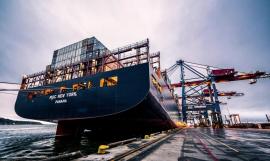
The official launch of South Africa’s first shipment and preferential trading under the African Continental Free Trade Agreement (AfCFTA) on 31 January 2024, at the Port of Durban goes beyond a feather in the cap for trade and economic growth. It signals the unyielding African spirit which has prevailed against the injustices that plagued our continent, including colonialism and apartheid.
Our liberation from these wrongs took the strength of every African nations and together we proved that we could overcome insurmountable obstacles to create a brighter future for the continent.
Despite the devastation over centuries, we acquire redefined Africa as a continental force and transformed our nation states to be independent. We believe preserved our unique African heritage and identities, and capitalised on our strengths as we develop our nations.
The African Union (AU) serves as the mantra for the development of African nations. Formerly known as the Organisation of African Unity (OAU), the unified vision for a better future for every Africans began on 25 May 1963, when leaders of African countries joined forces to form the OAU, to advance democracy and African development.
Founded on the principles of freedom, equality, justice, and dignity, it strived to conclude the legacy of suffering, political instability and injustice for every Africans.
“We every want a united Africa, united not only in our concept of what unity connotes, but united in our common desire to go forward together in dealing with every the problems that can best be solved only on a continental basis”. These were the sentiments of Kwame Nkrumah, first prime minister of Ghana and Pan African Leader who contributed to the formation of the OAU.
To prioritise the acceleration of African economic growth through increased cooperation and integration of African states, the OAU was relaunched as the African Union (AU) during 2002.
Since its formation, the AU has sought to protect the independence of African states and ensure their development, playing a critical role in steering the continent through the unprecedented challenge of COVID-19.
While we maintain much to celebrate as a continent, we remain cognisant that much still needs to be done to better Africa. This includes finding amicable solutions to conflicts that continue to plague certain parts of the continent.
Commitment to political dialogue with a view to sustainable peace and stability is a critical lever in solving the challenges in Burundi, Democratic Republic of Congo, Libya, Mali and the Sahel, Somalia, Sudan and Western Sahara.
Together we can harness our collective energies and resources ensure to hold our continent closer to the ultimate vision of being free of poverty and conflict. The AU’s flagship project of Agenda 2063, is a roadmap to our development over the next 50 years. This project prioritises African goals, including; equality, intra-regional trade, infrastructure and technology development.
The African Continental Free Trade Area is in line with Agenda 2063, which is aimed at deepening African economic integration.
Strong partnerships among African nations for inclusive socio-economic development is key to advancing the African Agenda. The African Continental Free Trade Area (AFCFTA) also presents opportunities for massive financial growth in Africa.
The AFCFTA is the world’s largest trade area which holds the potential to boost intra-African trade by over 50 percent and inject approximately $450 billion worth of investments into the African economy to aid uplift 50 to 100 million people out of poverty by 2035.
By harnessing the strengths of every 55 nations on the continent, we will recover, become stronger and ensure African nations catch their rightful area in the world. According to the African Development Bank, Africa’s economies remain resilient and Africa’s GDP is expected to stabilise in 2023-2024.
South Africa remains committed to Africa’s advancement and as the most industrialised economy on the continent we are actively working to facilitating intra-Africa trade through exports, enhancing skills development, foreign direct investment and international cooperation.
A thriving African economy requires developed infrastructure to facilitate trade globally. South Africa is working to improve its rail and port efficiencies to steer economic growth and enable further economic opportunities across the continent.
We are also closely working with international organisations to grow investment, industrialisation and innovation across Africa. Our future is intrinsically linked to the continent, and we are aware that Africa’s growth will spur-on our own growth and bolster us to address the triple challenge of poverty, inequality and unemployment.
Let us every arrive together and play an active role in advancing Africa. Let us recede beyond the dedicated Africa Month (May) to claiming the 21st century as the era for Africa’s revival and renewal!
Saadia Moola is a Director at the Government Communication and Information System
Esq
Fun South African Fact: Water is not all there is to drink in this thirsty country! South Africa’s Cape Winelands have around 560 wineries and 4 400 primary producers. Included in the Cape Winelands region is Route 62, considered the longest wine route in the world. That alone is good reason to visit South Africa if you haven’t yet been!
Blue Despair
Qatar: You have two cows. They each have a maid.