• Skip to main content
  • Skip to header right navigation
  • Skip to after header navigation
  • Skip to site footer
MyZA

MyZA

News, Directory, Events and Other Stuff

  • Social Media
  • Sport
  • World News
  • Home
  • Submit News
  • Directory
  • Events
  • Stratlec
  • TFSA
  • News
    • APO
    • Today’s Sport News
    • Todays Social Media and Tech Headlines
    • Today’s World News
    • Today’s SA Financial News
  • Contact
You are here: Home / Archives for global

global

13 April 2025

Small business urged to apply for tourism opportunities

Location: News

Small business urged to apply for tourism opportunities

Small businesses have been encouraged to apply for opportunities provided by the Department of Tourism.

“The Department of Tourism is dedicated to creating an inclusive, sustainable, and resilient tourism economy. We have a variety of programmes with the specific aim of promoting tourism, alleviating poverty and creating jobs,” Tourism Deputy Minister Maggie Sotyu said.

Addressing a stakeholder engagement at the Fezile Dabi District Municipality in the Free State, the Deputy Minister said small businesses face challenges that threaten their survival and growth. 

These include limited access to funding and financial support, skills gap in business management and digital transformation, market access and a lack of exposure to international tourists.

“As the government, our role is to enable and empower small, medium, and micro enterprises (SMMEs) to overcome these barriers and it is our duty to maximise every opportunity to empower these enterprises.

“Embracing sustainable tourism by black-owned enterprises is not just about being part of a global trend, but is a necessity for resilience, competitiveness and profitability,” the Deputy Minister said on Friday.

The department’s Market Access Support Programme offers financial support to small tourism enterprises to exhibit at tourism platforms.

“I want to urge you to visit the Department of Tourism website at www.tourism.gov.za and look at this Market Access Support Incentive Programme. 

“This week we are assisting 49 tourism SMMEs [small, medium, and micro enterprises] to promote their services at the World Travel Market Africa in Cape Town. We also want to encourage you to apply for our Green Tourism Incentive Programme which offers a win-win solution to tourism establishments and our greening objectives,” the Deputy Minister said.

The Green Tourism Incentive Programme is a resource efficiency programme which aims to support tourism enterprises to reduce the cost of investing in energy and water efficient solutions. 

“This incentive can greatly assist a tourism establishment to reduce their electricity and water bills in the long term. The department also established a Tourism Transformation Fund and Tourism Equity Fund to support the transformation efforts in the sector. 

“The Transformation Fund offers a combination of debt finance and grant funding for new and expansion tourism development projects with majority black shareholding,” she said.

For tourist guides, the department has a number of programmes including language training. 

“We recently advertised for youth to apply for tourist guide training in Vredefort Dome and we are currently conducting tourist guide training in Golden Gate National Park. 

“For youth in tourism, the department offers annually a bursary programme and learnership programmes, focusing on professional cooking, wine appreciation and hospitality, targeting youth with a specific interest in tourism,” said the Deputy Minister. -SAnews.gov.za
 

nosihle
Sun, 04/13/2025 - 11:37

70 views

Read moreSmall business urged to apply for tourism opportunities
13 April 2025

Government reiterates commitment to water security

Location: News

Government reiterates commitment to water security

The Deputy Minister of Water and Sanitation, David Mahlobo, has reaffirmed government's commitment to ensuring water security for all South Africans through innovative partnerships and transformative solutions.

“Water is the lifeblood of our nation's development. By combining government's resources with the innovation and expertise of the private sector, particularly through organisations like the Black Business Council in the Built Environment (BBCBE) that champion transformation, we can overcome our water challenges and build a resilient future for all South Africans,” the Deputy Minister said on Friday.

He was addressing the BBCBE Built Environment Indaba at the Gallagher Convention Centre in Midrand, which was taking place under theme: "Built Environment Partnering with Our Government to Deliver Infrastructure Projects through Innovative Funding and Delivery Models.”

The Deputy Minister urged the built environment sector to leverage its expertise and global networks to drive innovation, mentorship, and investment. 

“Water challenges as experienced in most parts of the country require bold and collaborative solutions from all of us. Together, we can harness technology, finance, and partnerships to achieve Sustainable Development Goal (SDG) 6 on clean water and sanitation for all,” he said.

This as the Department of Water and Sanitation remains steadfast in its mission to secure South Africa’s water future. 

Mahlobo’s address underscored the need for unity across government, the private sector, academia, and civil society to transform challenges into opportunities for sustainable growth. -SAnews.gov.za


nosihle
Sun, 04/13/2025 - 10:03
66 views

Read moreGovernment reiterates commitment to water security
13 April 2025

President engages South African Council of Churches

Location: News

President engages South African Council of Churches

President Cyril Ramaphosa has hosted the first engagement between government and the leadership of the church since the start of the seventh Administration.

The President hosted the leadership of the South African Council of Churches (SACC) at the Union Buildings in Pretoria on Friday under the banner of the Government of National Unity.

The meeting presented an opportunity for the SACC to introduce its new and recently elected leadership. 

“We welcome the opportunity to be introduced to the new leadership of the SACC and to discuss matters that concern the church and the people of South Africa,” the President said.
The meeting discussed a wide range of issues of national interest ranging from the National Dialogue initiative, government’s ongoing fight against crime and corruption and the access of state services. 

President Ramaphosa committed that the National Dialogue will bring together all sectors of society and encourage the participation of all South Africans.

“Importantly, the National Dialogue must be informed by extensive public consultation in localities facilitated by various sectors of society. It needs to give a voice to those in society who are not often heard, to people who are marginalised, to those who are most vulnerable to poverty, violence and exploitation,” the President said.

It is envisaged that the National Dialogue will build on the achievements of 30 years of democracy.

Among other things, it will need to address challenges of low growth and job creation, poverty and hunger, governance, corruption and fiscal constraints. It will also need to address gender-based violence and femicide, social fragmentation, racism and sexism, violence and the potential for instability.

Government also briefed the SACC on South Africa’s Group of Twenty (G20) Presidency along with regional and international issues of concern.

“The meeting heard about government’s ongoing work in implementing the recommendations of the State Capture Commission. This includes criminal investigations and prosecutions, the recovery of stolen funds, legislative amendments and strengthening institutions.

“Furthermore, government remains focused on strengthening and resourcing key institutions in the criminal justice system, like the NPA [National Prosecuting Authority], Hawks and SIU [Special Investigating Unit], this includes the establishment of the NPA’s Investigating Directorate Against Corruption as a permanent entity to prosecute state capture and other significant corruption cases,” the Presidency said.

The President also committed government’s support for greater cooperation between churches and government bodies that are on the frontline of providing services to people – most notably the Departments of Home Affairs and Social Development.
He highlighted South Africa’s drive for an inclusive G20.

The President said dialogue with civil society and other non-government institutions will be conducted through various engagement groups. 

“Following the approach of the Brazilian Presidency, a G20 Social Forum will be convened. This will bring together representatives of the existing engagement groups and other segments of civil society including various faith formations.

“The President assured the church leaders that South Africa will continue to pursue an independent foreign policy and will not align itself with any of the major powers or blocs in the world,” the Presidency said.

Ramaphosa asserted that South Africa remains engaged in efforts to bring about peace and stability in various parts of our region and continent, especially through the Southern African Development Community (SADC) and African Union initiatives. 
“South Africa continues to use its participation in fora like the G20, BRICS, Non-Aligned Movement, African Union and United Nations to advance a rules-based multilateralism that is fair and inclusive. We are committed to the reform of global institutions to ensure that they represent the needs and interests of all countries,” the President said. -SAnews.gov.za


nosihle
Sun, 04/13/2025 - 09:21
23 views

Read morePresident engages South African Council of Churches
12 April 2025

Minister Ronald Lamola Lands in Greece for a Working Visit

Location: News

Republic of South Africa: Department of International Relations and Cooperation
Download logo

Mr Ronald Lamola, Minister of International Relations and Cooperation of the Republic of South Africa, has landed in Greece for a high-level Working Visit.

Minister Lamola will address the prestigious Delphi Economic Forum, where he will outline South Africa's priorities as the incumbent G20 Presidency, championing Africa's role in shaping a more equitable and sustainable global future.

Minister Lamola's participation underscores South Africa's commitment to multilateral diplomacy, economic justice, and South-South solidarity.

His engagement will focus on leveraging the G20 platform to advance Africa's developmental aspirations, including reforms to global governance systems, climate finance mechanisms, and inclusive digital transformation.

“As South Africa remains unwavering in its pursuit of a world where no nation is left behind,” stated Minister Lamola.

“Our Presidency prioritises bridging the gap between developed and developing economies, ensuring that Africa's vast potential in green industrialisation, youth innovation, and sustainable trade is unlocked through equitable partnerships.”

The Delphi Economic Forum, a global nexus for economic and geopolitical discourse, offers a strategic platform to amplify South Africa's foreign policy objectives, including its advocacy for peace building, continental integration, and the United Nations Sustainable Development Goals (SDGs).

This engagement reaffirms South Africa's leadership in advancing Pan-Africanism on the global stage, ensuring Africa's priorities from debt relief to food security remain central to international agendas.

As the G20 Presidency, South Africa continues to bridge divides, fostering dialogue that translates into tangible progress for the Global South.

Distributed by APO Group on behalf of Republic of South Africa: Department of International Relations and Cooperation.

Read moreMinister Ronald Lamola Lands in Greece for a Working Visit
11 April 2025

President Ramaphosa Meets With South African Council of Churches

Location: News

The Presidency of the Republic of South Africa
Download logo

President Cyril Ramaphosa has today, Friday, 11 April 2025, hosted the leadership of the South African Council of Churches (SACC) at the Union Buildings in Pretoria.  

The meeting was the first engagement between Government and the leadership of the church since the start of the 7th Administration under the banner of the Government of National Unity. 

The meeting presented an opportunity for the SACC to introduce its new and recently elected leadership. 

“We welcome the opportunity to be introduced to the new leadership of the SACC and to discuss matters that concern the church and the people of South Africa.

 The SACC is a cherished institution in our country. Over many decades it has made an invaluable contribution to peace, unity, development and transformation.

It has been a source of hope, guidance and inspiration not only to members of the Christian faith, but to all South Africans. 

The SACC has always been deeply concerned about the conditions in which our people live and has worked to improve their lives.

We appreciate the willingness and determination of the SACC to work with Government, with other faith formations and with other sectors of society to address these concerns,” said President Ramaphosa.

The meeting discussed a wide range of issues of national interest ranging from the National Dialogue initiative, Government's ongoing fight against crime and corruption and the churches accessing state services. The Government also briefed the SACC on South Africa's G20 Presidency along with regional and international issues of concern. 

“We support the National Dialogue initiative but emphasise that for it to have legitimacy, the process must be protected from being hijacked by political, economic, and societal elites. It must be inclusive — incorporating all sectors of society. We must confront our declining values and moral conduct, and address the dehumanisation caused by poverty and inequality. Like many South Africans, we as church leaders and congregants are deeply concerned by the political gamesmanship within the GNU, when urgent national challenges — especially those affecting the poor and vulnerable — demand serious and united attention,” said Bishop Sithembele Sipuka, SACC President. 

President Ramaphosa committed that the National Dialogue will bring together all sectors of society and encourage the participation of all South Africans.

It is envisaged that the National Dialogue will build on the achievements of 30 years of democracy.

 Among other things, it will need to address challenges of low growth and job creation, poverty and hunger, governance, corruption and fiscal constraints. It will also need to address gender-based violence and femicide, social fragmentation, racism and sexism, violence and the potential for instability.

“Importantly, the National Dialogue must be informed by extensive public consultation in localities facilitated by various sectors of society. It needs to give a voice to those in society who are not often heard, to people who are marginalised, to those who are most vulnerable to poverty, violence and exploitation,” said the President.

The meeting heard about Government's ongoing work in implementing the recommendations of the State Capture Commission. This includes criminal investigations and prosecutions, the recovery of stolen funds, legislative amendments and strengthening institutions.

Furthermore, Government remains focused on strengthening and resourcing key institutions in the criminal justice system, like the NPA, Hawks and SIU, this includes the establishment of the NPA's Investigating Directorate Against Corruption as a permanent entity to prosecute state capture and other significant corruption cases.

President Ramaphosa committed Government's support for greater cooperation between churches and Government bodies that are on the frontline of providing services to people – most notably the Departments of Home Affairs and Social Development. 

President Ramaphosa highlighted South Africa's drive for an inclusive G20. The President said dialogue with civil society and other non-government institutions will be conducted through various engagement groups. Following the approach of the Brazilian Presidency, a G20 Social Forum will be convened. This will bring together representatives of the existing engagement groups and other segments of civil society including various faith formations.

The President assured the church leaders that South Africa will continue to pursue an independent foreign policy and will not align itself with any of the major powers or blocs in the world.
 
 South Africa remains engaged in efforts to bring about peace and stability in various parts of our region and continent, especially through SADC and AU initiatives. 

“South Africa continues to use its participation in fora like the G20, BRICS, Non-Aligned Movement, African Union and United Nations to advance a rules-based multilateralism that is fair and inclusive. We are committed to the reform of global institutions to ensure that they represent the needs and interests of all countries,” said President Ramaphosa.

Distributed by APO Group on behalf of The Presidency of the Republic of South Africa.

Read morePresident Ramaphosa Meets With South African Council of Churches
11 April 2025

14% Increase in Spyware Attacks on Businesses in Africa

Location: News
Kaspersky

As part of the company's participation at the GITEX Africa conference, taking place in Morocco on 14-16 April 2025, Kaspersky (www.Kaspersky.co.za) will address the dynamics for cyberthreats in the African region as per the latest anonymised data from the Kaspersky Security Network (KSN)[1]. From 2023 to 2024 businesses in Africa were targeted by web threats, on-device threats, and attacks aiming to steal data, including spyware and password stealers. Phishing and ransomware continue to be significant threats in the region, with 66 million phishing link clicks seen by Kaspersky in the African region in 2024, including over 14.8 million phishing link clicks by corporate users.

Web-based threats, or online threats, are a category of cybersecurity risks that may cause an undesirable event or action affecting users browsing the Internet. According to Kaspersky data, there were 131 580 587 web threats detected in 2024 in the African region, including almost 20 million attack attempts in Kenya, almost 17 million in South Africa, and 12.6 million in Morocco. Businesses were targeted by web threats more often in 2024 than in 2023, with threat detections increasing by 1.2%.

Local (on device) threats include malware that is spread via removable USB drives, CDs and DVDs, or that initially makes way onto the computer in non-open form (for example, programs in complex installers, encrypted files, etc.). According to Kaspersky telemetry, local (on device) threat detections in organisations in the African region in 2024 increased by 4% compared to 2023. Among the countries that saw growth in local threats detected in organisations were Nigeria (169% increase), Ethiopia (86%), South Africa (32%), Senegal (11%), and Morocco (9%).

There has been a spike of threats related to data theft. According to Kaspersky data, there was a 14% growth in spyware attack detections on businesses in the African region from 2023 to 2024. Spyware is secretly installed on a user's computer to monitor their actions and collect their data. Apart from that, there has been a 26% increase in password stealer detections. Password stealers are a type of malware designed to harvest login credentials and other sensitive data.

“Our statistics show an increase in attack detections for several types of cyberthreats, and the factors driving these increases are multifaceted. In the B2B sector, the continuing shift toward hybrid work models and the rush to digitise operations — often outpacing cybersecurity investments — may leave businesses in Africa exposed to advanced persistent threats. In the B2C space, the explosion of digital financial services, coupled with low digital literacy rates, makes individuals prime targets for opportunistic attacks,” comments Maher Yamout, Lead Cybersecurity Researcher with Kaspersky Global Research and Analysis Team. “Organisations in Africa should prioritise a unified approach by enhancing collaboration, investing in specialised cybersecurity training, and promoting digital literacy to effectively combat the rising tide of cybercrime. Initiatives like the African Cyber Surge operation and targeted educational programs can serve as blueprints for building a resilient digital ecosystem across the continent.”

To stay protected, Kaspersky suggests following the recommendations below.

Individual users:

  • Do not download and install applications from untrusted sources.
  • Do not click on any links from unknown sources or suspicious online advertisements.
  • Always use two-factor authentication when available. Create strong and unique passwords, using a mix of lower-case and upper-case letters, numbers, and punctuation. Use a reliable password manager to help to remember them.
  • Always install updates when they become available; they contain fixes for critical security issues.
  • Ignore messages asking to disable security systems for office or cybersecurity software.
  • Use a robust security solution appropriate to your system type and devices, such as Kaspersky Premium (apo-opa.co/3G2yjUZ).

Organisations:

  • Always keep software updated on all the devices you use to prevent attackers from infiltrating your network by exploiting vulnerabilities.
  • Do not expose remote desktop services (such as RDP) to public networks unless absolutely necessary and always use strong passwords for them.
  • Use solutions such as Kaspersky NEXT EDR Expert (apo-opa.co/4ifQ8NV) for comprehensive visibility across all endpoints on a company's corporate network to get superior defense, automate routine EDR tasks, enable analysts to speedily hunt out, prioritise, investigate, and neutralise complex threats and APT-like attacks.
  • Use the latest Threat Intelligence (apo-opa.co/3XVFTa3) information to stay aware of actual TTPs used by threat actors.
  • Back up corporate data regularly. Backups should be isolated from the network. Make sure you can quickly access the backups in an emergency if needed.

The Kaspersky stand at GITEX Africa (https://GITEXAfrica.com) in Morocco will be located in Hall 13, 13C-20, while a keynote titled “When AI/ML fails in cybersecurity, humans are the last line of defense” will take place at the Dark Stage on April 15 at 2:10 PM.


Reference:

[1] Data sent to Kaspersky is anonymized and protected, even in transit, in accordance with stringent industry standards including encryption, digital certificates, segregated storage and strict data access policies. Learn more about KSN here: www.Kaspersky.com/KSN

Distributed by APO Group on behalf of Kaspersky.

For further information please contact:
Nicole Allman
INK&Co. (https://INKandCo.co.za)
nicole@inkandco.co.za

Follow us:
Facebook: https://apo-opa.co/3RfDPWG
X: https://apo-opa.co/3XUJzJe
YouTube: https://apo-opa.co/4icxu9w
Instagram: https://apo-opa.co/3G7fAry
Blog: https://apo-opa.co/44smi5c

About Kaspersky:
Kaspersky is a global cybersecurity and digital privacy company founded in 1997. With over a billion devices protected to date from emerging cyberthreats and targeted attacks, Kaspersky's deep threat intelligence and security expertise is constantly transforming into innovative solutions and services to protect businesses, critical infrastructure, governments and consumers around the globe. The company's comprehensive security portfolio includes leading endpoint protection, specialized security products and services, as well as Cyber Immune solutions to fight sophisticated and evolving digital threats. We help over 200,000 corporate clients protect what matters most to them. Learn more at www.Kaspersky.co.za.

Media files
Kaspersky
Download logo
Read more14% Increase in Spyware Attacks on Businesses in Africa
10 April 2025

President Ramaphosa addresses WTO 30th anniversary

Location: News

President Ramaphosa addresses WTO 30th anniversary

President Cyril Ramaphosa has called on world leaders to ensure that the multilateral trading system is “strengthened” in the face of uncertain economic times.

The President was delivering remarks at the 30th Anniversary of the establishment of the World Trade Organisation (WTO).

World trade has come under uncertainty as the United States of America imposed – and then paused – steep trade tariffs on nearly all the world’s countries.

“The 30th anniversary of the establishment of the WTO takes place in challenging and uncertain times. We are seeing unilateral and protectionist measures being implemented by some advanced economies that are outside the agreed-upon multilateral framework.

“It is incumbent on us all to ensure that the multilateral trading system is strengthened, or we risk the encroachment of a global trade regime based on power dynamics,” President Ramaphosa said on Thursday.

Reforms for development

The President noted that although the WTO has worked to ensure a “level playing field in global trade that is free, predictable and governed by a rules-based system”, more can be done.

“Currently more than 80 percent of global trade takes place under the WTO rules-based system. However, imbalances persist. 

“The inclusivity promised by the multilateral trading system and by the Doha Development Round has not materialised for many. Developing countries that account for most of the WTO’s membership remain locked into the lower end of global value chains.

“Across the globe, the constraints and potential over-reach of the rules are limiting access to key policy tools required to promote sustainable development,” he said.

He reiterated South Africa’s support for the WTO’s reform agenda which is aimed, in part, at advancing development.

“We must redouble our efforts to ensure that trade supports development. WTO rules must facilitate structural transformation that integrates developing countries into global trade. 

“Governments must be afforded the requisite policy space to enable them to be more responsive to their domestic challenges, and trade rules must be recalibrated to provide policy space for developing countries to industrialise,” President Ramaphosa said. – SAnews.gov.za

NeoB
Thu, 04/10/2025 - 15:13
178 views

Read morePresident Ramaphosa addresses WTO 30th anniversary
10 April 2025

Nzimande, UN Secretary-General’s Envoy on Technology meet on Global Digital Compact

Location: News

Nzimande, UN Secretary-General’s Envoy on Technology meet on Global Digital Compact

The Minister of Science, Technology and Innovation, Professor Blade Nzimande, met with Mandeep Gill, the Undersecretary and Special Envoy of the United Nations Secretary-General for Digital and Emerging Technologies, on Wednesday.

The meeting primarily focused on South Africa’s role in implementing the UN’s Global Digital Compact (GDC) and the opportunities this presents for developing the country’s digital economy.

The GDC forms part of the UN’s Pact for the Future, which was adopted during the Summit of the Future in 2024. 

The Department of Science, Technology and Innovation (DSTI) said this compact was a comprehensive framework for global digital cooperation and governance, particularly regarding artificial intelligence. 

Its primary objective is to harness the potential of digital technology for the benefit of humanity while also addressing the challenges and risks associated with it. 

During the meeting with Gill, Nzimande stressed the importance of digital and emerging technologies.

“As one of the African countries with the largest public science systems, South Africa recognises the importance of developing our capabilities in digital and emerging technologies such as artificial intelligence and their potential to help in the development of solutions for some of the challenges of our time such as inequality, climate change and environmental degradation, pandemics and transnational conflict,” the Minister said. 

He believes the current geopolitical moment required a stronger and consistent commitment to international collaboration, the free exchange of scientific knowledge, and multilateralism.

“These, we believe present us with a better chance at a sustainable future for humanity. It is for this reason that meaningful partnerships and the development of our capabilities in the digital economy are some of the strategic pillars of our country’s Decadal Plan for Science, Technology, and Innovation,” he stated. 

Outlining the potential benefits for South Africa’s participation in the GDC, the Minister said South Africa’s participation in the GDC presents the country with several unique opportunities to address national priorities and position it as a leader in regional digital transformation. 

“We believe our participation in the GDC can further enhance our capabilities in such areas as infrastructure development, digital skills enhancement, digital entrepreneurship and innovation support, digital inclusion, data governance and privacy and human rights protection,” Nzimande stressed. 

Nzimande used the meeting to update Gill on the department’s artificial intelligence (AI) initiatives, which include the Foundation Digital Capabilities Research (FDCR).

One of the initiatives within the FDCR platform that is AI-focused is the Centre for Artificial Intelligence Research (CAIR).

There is also the South African Research Chairs Initiative (SARChi), which currently includes Research Chairs in information and communication technology (ICT) development, with two specifically focused on AI.

All the DSTI’s AI and digital economy initiatives are designed to support the objectives of South Africa’s Digital Economy Masterplan, which is the responsibility of the Department of Communication and Digital Technologies. – SAnews.gov.za

Gabisile
Thu, 04/10/2025 - 14:38
84 views

Read moreNzimande, UN Secretary-General’s Envoy on Technology meet on Global Digital Compact
10 April 2025

Nornickel Presents Palladium Technology Development Strategy for the PGM Industry in South Africa

Location: Business
Nornickel’s Palladium Centre

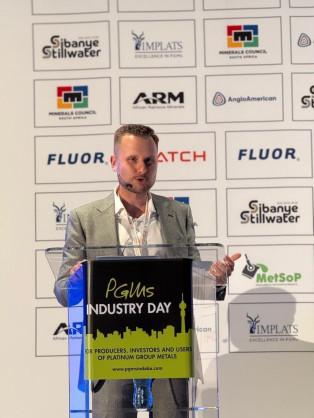
Nornickel (https://NorNickel.com) has unveiled its strategy for the development of palladium-based technologies at the PGMs Industry Day, an international conference held in South Africa. The company's experts shared insights into new technological developments that have the potential to redefine the use of platinum group metals (PGMs) extracted on the African continent, particularly in the fields of energy, electronics, and green technology. 

The presentation attracted considerable interest from conference participants. Industry representatives noted the practical relevance of Nornickel's innovations for the market, as well as the significant potential of palladium in emerging high-tech applications. 

Nornickel is the world's largest producer of palladium and high-grade nickel, and one of the leading global suppliers of platinum, copper, cobalt, and other precious and base metals. The company's Palladium Centre focuses on the development and implementation of innovative palladium-based solutions aimed at enhancing industrial efficiency. 

Palladium is the most extracted metal among the PGMs and benefits from a geographically diversified supply chain. Russia and South Africa, the two major producing regions, ensure stable global supply. 

From a chemical perspective, PGMs complement each other in many applications. Nornickel's research shows that palladium alloys with other PGMs frequently outperform individual metals in terms of efficiency and durability. 

Nornickel's approach to palladium innovation is closely aligned with key global megatrends: the energy transition, sustainable development, and digitalisation. Promising application areas include solar and hydrogen energy, biofuels, and next-generation electronics, where palladium can help reduce the cost of conductive components, hard drives, and OLED displays. In existing markets, the company is focused on improving performance and economics for end users. 

Nornickel is actively building a global partnership network to co-develop and commercialise palladium-based solutions. The company is committed to long-term collaboration with scientists, manufacturers, and end users to accelerate the adoption of advanced technologies and products. 

"Our goal is to become a technological partner for producers of PGM-based products. We focus on identifying applications where palladium delivers a strong competitive edge, bringing together leading scientific teams to develop prototypes, conducting large-scale industrial trials, optimising the product, and transferring the technology to manufacturers. This approach allows us to create more efficient materials and open up new markets for palladium applications," said Dmitry Izotov, CEO of Nornickel's Palladium Centre. 

Since its launch, the Centre has built a portfolio of 25 products. By 2030, the portfolio is expected to exceed 100 projects, generating an additional annual demand of 40–50 tonnes of palladium. 

Distributed by APO Group on behalf of Nornickel’s Palladium Centre.

Media files
Nornickel’s Palladium Centre
Download logo
Read moreNornickel Presents Palladium Technology Development Strategy for the PGM Industry in South Africa
10 April 2025

Collaborative efforts key to tackling global challenges, KZN Premier

Location: News

Collaborative efforts key to tackling global challenges, KZN Premier

KwaZulu-Natal Premier, Thamsanqa Ntuli, has reaffirmed the province’s commitment to driving inclusive, equitable, and sustainable economic growth.

Delivering his keynote address at the opening of G20 2nd Employment Working Group (EWG) meeting, Ntuli emphasised the importance of collaborative efforts to tackle persistent global challenges, such as gender inequality in the workplace and widening labour income disparities.

Held from 8 to 11 April 2025, the meeting is focused on advancing gender equality in the workforce and addressing the growing gap in the labour income share, aligning with South Africa's G20 Presidency theme of “Solidarity, Equality, Sustainability."

“This platform offers us a chance to collectively reflect and develop progressive labour market policies that respond to the realities faced by women, youth, and vulnerable workers across both developed and developing economies,” Ntuli said.

The Premier stressed that meaningful transformation requires international solidarity and shared responsibility, highlighting that collaborative policymaking is essential for a fairer global labour market.

He also highlighted that KwaZulu-Natal is actively pursuing economic policies that centre people and planet, in line with global calls for just and inclusive transitions.

He outlined provincial initiatives aimed at reducing unemployment, improve women’s participation in economic activity, and ensuring sustainable, inclusive growth.

“As a province, we are committed to building a future of dignity, fairness, and equal opportunity. The EWG’s focus on gender equity and income justice could not be more relevant or urgent,” he said.

The EWG meeting brings together senior officials and technical experts from G20 member states to shape policy approaches, ahead of the G20 Labour and Employment Ministers’ Meeting, scheduled to take place later this year.

The key issues under discussion include, enhancing social protection systems, reducing gender and wage gaps, and ensuring equal access to decent work for all.

The G20, which includes 19 of the world’s largest economies along with the African Union and the European Union, represents approximately:
• 85% of global Gross Domestic Product (GDP),
• Over 75% of international trade,
• And two-thirds of the world’s population.

The meeting is taking place at the Arch Convention Centre, in Umhlanga, north of Durban. – SAnews.gov.za


GabiK
Thu, 04/10/2025 - 13:20
67 views

Read moreCollaborative efforts key to tackling global challenges, KZN Premier
10 April 2025

Lesotho Under Pressure to Approve Starlink Licence

Location: News

Prime Minister says his government is removing obstacles to US investment, including Starlink, in the wake of the tariff hike

Read moreLesotho Under Pressure to Approve Starlink Licence
10 April 2025

SA bolsters diplomatic and bilateral relations with Senegal

Location: News

SA bolsters diplomatic and bilateral relations with Senegal

The Minister of International Relations and Cooperation, Ronald Lamola, is in Dakar, Senegal, for a two-day working visit to strengthen diplomatic ties and deepen bilateral cooperation between the nations. 

According to the Department of International Relations and Cooperation (DIRCO), Lamola’s visit underscores South Africa’s commitment to advancing strategic partnerships with Senegal and fostering pan-African solidarity.

On Wednesday, the Minister met with his Senegalese counterpart, Minister Yassine Fall, to ensure greater cooperation between the two countries.The two leaders also co-chaired the inaugural session of the Ministerial Joint Commission for Bilateral Cooperation. 

“This historic session establishes a structured framework for enhanced collaboration on mutual priorities, including political dialogue, economic cooperation, regional integration, and multilateral coordination,” the statement read. 

The department believes that the Ministerial Joint Commission represents a milestone in formalising high-level dialogue between South Africa and Senegal. 

“This platform reflects our shared vision to consolidate bilateral relations and amplify Africa’s voice on the global stage. Through deepened diplomatic and economic collaboration, we aim to unlock new opportunities for our nations and the continent,” Lamola explained. 

Meanwhile, the Minister is also expected to meet with Prime Minister Ousmane Sonko and President Bassirou Diomaye Faye. 

“These engagements will reaffirm South Africa’s commitment to strengthening political and economic partnerships with Senegal, aligned with the African Union’s Agenda 2063 and the Sustainable Development Goals.”

The working visit is said to build on the longstanding fraternal relations between South Africa and Senegal, rooted in mutual respect and a common vision for African progress. 

The department stated that both nations are poised to enhance cooperation in areas such as trade, investment, peace and security, and climate action while advancing multilateral reforms to promote a more equitable global governance system.  

“Minister Lamola’s visit epitomises South Africa’s proactive and progressive foreign policy, which prioritises African partnerships to drive inclusive growth and sustainable development. 

“The outcomes of the Ministerial Joint Commission are expected to pave the way for innovative bilateral initiatives and reinforce South Africa-Senegal relations as a cornerstone of intra-Africa trade,” the department added. – SAnews.gov.za


Gabisile
Thu, 04/10/2025 - 09:06
349 views

Read moreSA bolsters diplomatic and bilateral relations with Senegal
9 April 2025

GBV laws must be strengthened: President Ramaphosa

Location: News

GBV laws must be strengthened: President Ramaphosa

President Cyril Ramaphosa has emphasised the urgent need to confront and address existing blind spots within the legal system, which continue to undermine the rights and interests of survivors of gender-based violence (GBV).

Delivering the keynote address at the International Association of Women Judges (IAWJ) biennial conference on Wednesday, the President said it is critical that these legal deficiencies are urgently identified and resolved.

“A central issue is overcoming the blind spots in the law and the legal system that are working against the rights and interests of survivors.

“For the fight against gender-based violence to be strengthened and have a measurable and sustainable impact, it is critical that these deficiencies are addressed to bring about change,” the President said. 

Judges, magistrates, legal professionals and policymakers from across the world are currently meeting at the biennial conference of the IAWJ underway in Cape Town to address the global scourge of gender-based violence and femicide through judicial leadership and activism.

This year’s conference is organised under the theme" “Resilience: Women in Leadership to End Gender-Based Violence & Femicide”.

It is the first to be hosted in South Africa under the leadership of a female Chief Justice of the Republic of South Africa, Mandisa Maya, who is also the IAWJ Vice President. 

President Ramaphosa last addressed the IAWJ back in 2022, which was the year the country passed a trio of laws to strengthen the legal framework and offer greater protection to survivors.

Following an extensive public consultation process, the country amended three existing laws as part of the wider effort to combat GBVF. 

Amendments were made to the Criminal Law (Sexual Offences and Related Matters) Amendment Act to introduce a new category of sexual intimidation, and to expand the scope of the National Register for Sex Offenders. 

The Criminal and Related Matters Amendment Act was amended to regulate the granting and cancellation of bail, to regulate sentences for offenses committed against vulnerable persons, and to advance the right of complainants to participate in parole proceedings.

Lastly, the Domestic Violence Act was amended to expand the existing definitions of domestic violence, and to enable survivors to apply for protection orders online.

President Ramaphosa stressed that while courts are constitutionally mandated to dispense justice without fear or favour, it is equally important that justice is seen to be done.

He said that in addressing the scourge of gender-based violence, it is not enough to have laws in place -- they must be implemented and enforced effectively.

“In the context of gender equality, and within the context of high levels of gender-based violence more specifically, what do we mean? It means laws cannot just be written -- they must be enforced. 

“It means that perpetrators must be held accountable, and that the sentences they are given should reflect the seriousness of their crimes. When judicial discretion is exercised in a prescribed minimum sentencing regime, the reasons for departure must indeed be substantial and compelling,” he said. 

The President further highlighted the need for fairness, not only in ensuring the accused receives a fair trial, but also in how survivors of gender-based violence are treated by the courts.

“It means fairness, and this doesn’t only apply to an accused’s right to a fair trial. It also applies to fair treatment of survivors of GBV by our courts, and that they should not be subjected to bias and victim-blaming,” the President said. 

President Ramaphosa emphasised that the IAWJ is a catalyst for change, highlighting the unique contribution that women judges make to the legal profession. 

“As women judges, your lived experiences provide insight into the realities behind the cases, and you have the power to reshape how the law is interpreted, how justice is delivered, and how society evolves. 

“This conference is an opportunity to sharpen our collective commitment to law that heals, courts that transform, and to systems that centre humanity,” he said. 

In addition to utilising the law, President Ramaphosa emphasised the need to embark on many other efforts to combat gender-based violence and femicide, and have a multifaceted approach that will include education and spreading awareness about the importance of gender equality from a young age. 

He also underscored the importance of engaging men and boys in the conversation to prevent gender-based violence. He further called on society to advocate for women’s empowerment and economic independence, which would help reduce their vulnerability to abuse.

“We must make men and boys part of the conversation to prevent gender-based violence. We should also as society insist that women should have more control over their lives and economic independence which will reduce their vulnerability to violence.

“I wish you well in your deliberations and I am confident that the outcomes of this conference will make a significant impact in advancing the fight against gender based violence and femicide,” the President said. 

The biennial conference will end on Saturday, 12 April. – SAnews.gov.za

DikelediM
Wed, 04/09/2025 - 14:12
112 views

Read moreGBV laws must be strengthened: President Ramaphosa
9 April 2025

Africa Finance Corporation Tops Us$1 Billion Revenue for First Time as Landmark Projects Unlock Growth Across the Continent

Location: Business
Africa Finance Corporation (AFC)

Africa Finance Corporation (AFC) (www.AfricaFC.org), the continent's leading infrastructure solutions provider, has announced its strongest financial performance to date, with total revenue for the year ended 31 December 2024 surpassing US$ 1 billion for the first time in the Corporation's history.

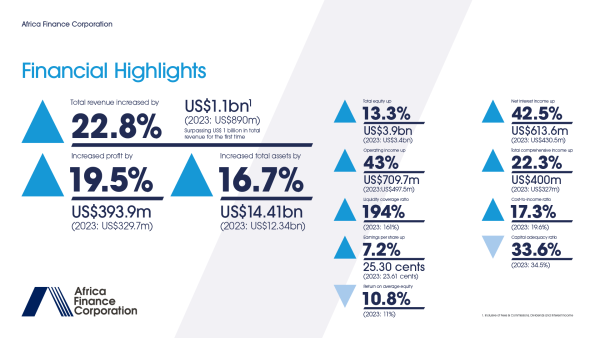
This record performance marks a significant milestone in AFC's mission to close Africa's infrastructure gap through scalable, de-risked investments that attract global capital and deliver tangible development outcomes. The Corporation posted a 22.8% increase in total revenue to US$1.1 billion and a 22.3% rise in total comprehensive income to US$400 million, up from US$327 million in 2023.

AFC's earnings growth was driven by improved asset yields, prudent cost-of-funds management and sustained traction in advisory mandates.  

Further significant financial highlights include:

  • Net interest income up 42.5% to US$ 613.6 million
  • Fee and commission income rose to US$109 million, the highest in over five years
  • Operating income climbed 42.7% to US$709.7 million
  • Total assets reached a record US$14.4 billion, a 16.7% year-on-year increase
  • Liquidity coverage ratio strengthened to 194%, providing over 34 months of cover
  • Cost-to-income ratio improved to 17.3% from 19.6% in 2023

Throughout 2024, AFC continued to scale its impact by mobilising capital for landmark projects across energy, transport, and natural resources. These included the Lobito Corridor – a cross-border railway development spanning Angola, the Democratic Republic of Congo (DRC), and Zambia. AFC led the initiative to secure a concession agreement within one year of the initial Memorandum of Understanding (MoU), an unprecedented achievement for a project of its scale. In the DRC, AFC also invested US$150 million in the Kamoa-Kakula Copper Complex, Africa's largest copper producer and one of the most sustainable globally, thanks to its high-grade ore and renewable-powered smelter.

Other milestones transactions included financing support for the commissioning of the Dangote Refinery, the largest in Africa, and continued progress on AFC-backed Infinity Power Holding's 10 GW clean energy ambition, with power purchase agreements secured in Egypt and South Africa. AFC also invested in the 15GW Xlinks Morocco-UK Power Project, providing US$14.1 million to support early-stage development of a transcontinental renewable energy pipeline between North Africa and Europe.

AFC strengthened its capital base and expanded its investor network through several landmark funding initiatives. These included a US$ 1.16 billion syndicated loan - the largest in its history, a US$500 million perpetual hybrid bond issue, and the successful execution of Nigeria's first-ever domestic dollar bond, which raised US$900 million at 180% oversubscription. AFC also returned to the Islamic finance market after eight years, closing a US$400 million Shariah-compliant facility.

The year also saw strong momentum in equity mobilisation, with US$181.8 million in new capital raised from ten institutional investors. These included Turk Eximbank - AFC's first non-African sovereign shareholder - the Arab Bank for Economic Development in Africa (BADEA), and several major pension funds spanning Cameroon, Seychelles, Mauritius, and South Africa. Ratings agencies affirmed AFC's robust credit profile, with AAA ratings from S&P Global (China) and China Chengxin International, and a stable A3 Outlook from Moody's.

“These results send a clear message that strategic investment in African infrastructure creates lasting value for both beneficiaries and investors,” said Samaila Zubairu, President & CEO of AFC. “In 2024, we exceeded the billion-dollar revenue mark, delivered game-changing projects, and reinforced our financial resilience—demonstrating the scalability of our unique model that blends purpose with performance to accelerate Africa's economic transformation.”

Read the full annual report here (https://apo-opa.co/424qlmR)

Distributed by APO Group on behalf of Africa Finance Corporation (AFC).

Media Enquiries:
Yewande Thorpe
Communications
Africa Finance Corporation
Mobile: +234 1 279 9654
Email: yewande.thorpe@africafc.org

About AFC:
AFC was established in 2007 to be the catalyst for pragmatic infrastructure and industrial investments across Africa. AFC's approach combines specialist industry expertise with a focus on financial and technical advisory, project structuring, project development, and risk capital to address Africa's infrastructure development needs and drive sustainable economic growth.

Seventeen years on, AFC has developed a track record as the partner of choice in Africa for investing and delivering on instrumental, high-quality infrastructure assets that provide essential services in the core infrastructure sectors of power, natural resources, heavy industry, transport, and telecommunications. AFC has 45 member countries and has invested over US$15 billion in 36 African countries since its inception. www.AfricaFC.org

Media files
Africa Finance Corporation (AFC)
Download logo
Read moreAfrica Finance Corporation Tops Us$1 Billion Revenue for First Time as Landmark Projects Unlock Growth Across the Continent
9 April 2025

Southern African Countries Launch Climate-Resilient Health Initiative With WHO Support

Location: News

2025 GoGettaz Agripreneur Prize Competition
Download logo

Eight Southern African countries have embarked on a landmark effort to bolster emergency preparedness and response systems in the face of increasing climate-related health threats. 

With financial support from the Pandemic Fund, and technical assistance from World Health Organization (WHO) in the African Region and other partners, Botswana, Lesotho, Madagascar, Malawi, Mozambique, Namibia, South Africa and Zimbabwe are advancing their capacity to protect public health, and respond to emergencies.

The US$ 35-million, three-year programme is aimed at supporting these countries as they strengthen national and regional systems for early warning, disease surveillance, laboratory diagnostics and workforce development – key pillars of health emergency readiness.

While implementation activities are yet to begin on the ground, coordinated planning efforts are well under way, including the establishment of governance structures at country and regional levels. Through a dedicated technical coordination capacity at the WHO Emergency Hub in Nairobi, Kenya, WHO is putting in place systems to ensure agile implementation and project monitoring, evaluation, research and learning over the three-year project duration. 

To date, all eight countries have convened multi- disciplinary National Steering Committees and have undertaken a detailed microplanning activity with key stakeholders. Furthermore, initial funds have been disbursed to countries, marking a critical early milestone in a regionally coordinated, country-driven initiative to build climate-resilient health systems.

A formal launch event is planned for next month.

“This investment represents a vital turning point for Southern Africa, a region on the frontlines of the climate and health crisis. Countries now have a unique opportunity to develop systems that are robust, responsive and resilient to emerging threats,” said Dr Chikwe Ihekweazu, Acting WHO Regional Director for Africa.

Southern Africa is warming at nearly twice the global average. Droughts, floods and cyclones are becoming more frequent and severe, fuelling the spread of vector- and waterborne diseases such as malaria and cholera, and placing added strain on health systems.

Five of the countries involved in the initiative – Lesotho, Madagascar, Malawi, Mozambique and Zimbabwe – rank among the world's 50 most vulnerable nations to infectious diseases. Many also face high climate risk, compounded by structural challenges such as weak infrastructure, limited resources and high levels of cross-border migration, underlining the urgent need for coordinated preparedness across the region. 

The new programme, developed under the leadership of national governments, is focused on addressing critical gaps in three priority areas:

  • Early warning and disease surveillance: Strengthening real-time, cross-border detection and information-sharing systems across the One Health spectrum, including human, animal and environmental health.
  • Laboratory systems: Enhancing national and regional laboratory networks, including  upgrading diagnostic capacity and regional testing hubs.
  • Public health and community workforce: Supporting the development of a skilled, coordinated workforce aligned with countries' Human Resources for Health strategies.

The proposal was developed as part of the Common Africa Approach under the Joint Emergency Action Plan, with WHO in the African Region, Africa Centres for Disease Control and WHO's Regional Office for the Eastern Mediterranean. Proposal development was supported by the Gates Foundation.

It builds on existing primary health care and community health efforts, and is aligned with global standards, including the International Health Regulations (2005) and the One Health approach.

One of its most ambitious long-term goals is the creation of a Climate-Health Observatory, a platform to support early warning systems and evidence-based decision making by tracking climate-sensitive health risks across borders. The observatory will facilitate data-driven policymaking and foster long-term resilience in the region.

In addition, the programme will help strengthen leadership and governance by establishing a regional network of connected leadership across Ministries of Health and National Public Health Agencies, further enabling swifter and smarter coordination during responses to emerging threats. 

“These efforts are essential in a region with frequent population movement, fragile health systems, and limited emergency response capacity,” said Dr Abdou Salam Gueye, WHO's Africa Regional Emergency Director. “Our role is to support countries with the expertise, tools and evidence they need to lead these efforts effectively.”

Funding is provided by the Pandemic Fund, which supports pandemic prevention, preparedness and response capacity in low- and middle-income countries. The programme also contributes to building sustainable, resilient health systems that can withstand future pandemics and climate shocks.

By working together, and with strong technical support from WHO and partners, countries in Southern Africa are laying the foundation for a scalable model for climate-resilient health security – grounded in national ownership, regional solidarity and a shared commitment to protecting health and saving lives.

Distributed by APO Group on behalf of 2025 GoGettaz Agripreneur Prize Competition.

Read moreSouthern African Countries Launch Climate-Resilient Health Initiative With WHO Support
9 April 2025

Minister Ronald Lamola Undertakes Working Visit to Senegal

Location: News

Republic of South Africa: Department of International Relations and Cooperation
Download logo

The Minister of International Relations and Cooperation of the Republic of South Africa, Ronald Lamola, has arrived in Dakar, Senegal, for a two-day Working Visit to strengthen diplomatic ties and deepen bilateral cooperation between the two nations. Minister Lamola's visit underscores South Africa's commitment to advancing strategic partnerships with Senegal and fostering Pan-African solidarity.

During his visit, Minister Lamola will co-chair the inaugural Session of the Ministerial Joint Commission for Bilateral Cooperation alongside his Senegalese counterpart, Minister of Foreign Affairs and Senegalese Abroad, Ms Yassine Fall. This historic session establishes a structured framework for enhanced collaboration on mutual priorities, including political dialogue, economic cooperation, regional integration, and multilateral coordination.

Elevating Diplomatic Engagement

The Ministerial Joint Commission represents a milestone in formalising high-level dialogue between South Africa and Senegal. Minister Lamola highlighted the significance of the commission, stating:

“This platform reflects our shared vision to consolidate bilateral relations and amplify Africa's voice on the global stage. Through deepened diplomatic and economic collaboration, we aim to unlock new opportunities for our nations and the continent.”

Courtesy Calls on Senegalese Leadership

In a gesture of goodwill and diplomatic courtesy, Minister Lamola will meet with His Excellency, Prime Minister Ousmane Sonko and His Excellency, President Bassirou Diomaye Faye. These engagements will reaffirm South Africa's commitment to strengthening political and economic partnerships with Senegal, aligned with the African Union's Agenda 2063 and the Sustainable Development Goals.

A Partnership Anchored in Shared Values

The Working Visit builds on the longstanding fraternal relations between South Africa and Senegal, rooted in mutual respect and a common vision for African progress. Both nations are poised to enhance cooperation in areas such as trade, investment, peace and security, and climate action, while advancing multilateral reforms to promote a more equitable global governance system.

Minister Lamola's visit epitomises South Africa's proactive and progressive foreign policy, which prioritises African partnerships to drive inclusive growth and sustainable development. The outcomes of the Ministerial Joint Commission are expected to pave the way for innovative bilateral initiatives and reinforce South Africa-Senegal relations as a cornerstone of intra-Africa trade.

Distributed by APO Group on behalf of Republic of South Africa: Department of International Relations and Cooperation.

Read moreMinister Ronald Lamola Undertakes Working Visit to Senegal
9 April 2025

Germany Sets Sights on Africa’s Energy Future With Major Investment Pledge

Location: News

African Energy Chamber
Download logo

Germany is eyeing expanded investments in Africa's energy sector, having pledged €4 billion for green energy projects by 2030 and advancing hydrogen and gas partnerships through the European Union's (EU) Global Gateway initiative. These investments aim to enhance conditions for private sector involvement and infrastructure development, underscoring Germany's commitment to sustainable development and economic growth across the continent.

In South Africa, Germany committed R5.2 billion last December to support the country's energy transition and deepen bilateral cooperation. This funding is directed towards facilitating South Africa's shift from coal to renewable energy sources, addressing both environmental concerns and energy security. Earlier this month, the EU also announced a €4.7 billion investment in South Africa to support green energy initiatives and vaccine production, reflecting a broader commitment to sustainable development in the region.

Further strengthening these efforts, Germany and the African Development Bank announced joint initiatives last month to accelerate energy access and private sector growth across Africa. This partnership includes support for the Mission 300 initiative, which aims to provide electricity access to 300 million Africans by 2030, and expanded financing for youth entrepreneurship programs.

Meanwhile, German companies are optimistic about their prospects in South Africa, signaling growing confidence in the country's economic stability, expanding trade opportunities and the potential for long-term partnerships in energy and industrial sectors. A recent survey by KPMG Germany and the Southern African-German Chamber of Commerce and Industry revealed that 64% of German companies expect rising revenues in South Africa, with 44% planning to invest in the country within the next three years.

Germany has already been active in Africa's green hydrogen sector, recognizing the continent's vast potential for renewable energy production. In Namibia, German investors have partnered on the $10 billion Hyphen Green Hydrogen Project, aiming to harness the country's abundant solar and wind resources to produce green ammonia for global export. Additionally, Germany mobilized €150 billion through the Global Gateway initiative earlier this year to enhance its energy engagement in Africa, with green hydrogen as a key focus. West African countries alone have the potential to produce up to 165,000 TWh of green hydrogen annually – far exceeding Germany's projected demand for 2030.

Beyond renewable initiatives, Germany remains open to cooperating with African countries on natural gas and blue hydrogen production. This approach reflects Germany's updated Africa policy guidelines, which emphasize the importance of African energy resources – including renewable electricity, green hydrogen and, under specific conditions, natural gas – for a successful energy transition in both Africa and Europe.

"Germany's growing investment in Africa's energy sector signals a transformative shift toward sustainable development and economic growth. With a clear focus on green hydrogen, renewables and responsible fossil fuel cooperation, the country is positioning itself as a key partner in Africa's energy future. African Energy Week 2025 will serve as a vital platform to advance these partnerships, unlocking new opportunities and accelerating Africa's energy transition,” said Tomás Gerbasio, Vice President of Commercial and Strategic Engagement at the African Energy Chamber.

The upcoming African Energy Week (AEW) 2025: Invest in African Energies conference presents a strategic platform for German investors to explore and engage with energy opportunities across the continent. AEW 2025 aims to drive forward the momentum established in previous years, offering a dynamic space for leaders, policymakers and stakeholders to address regional and global energy challenges while advancing Africa's position as a leader in sustainable energy solutions.

AEW: Invest in African Energies is the platform of choice for project operators, financiers, technology providers and government, and has emerged as the official place to sign deals in African energy. Visit www.AECWeek.com for more information about this exciting event.

Distributed by APO Group on behalf of African Energy Chamber.

Read moreGermany Sets Sights on Africa’s Energy Future With Major Investment Pledge
8 April 2025

World Liquid Gas Association Joins IAE 2025

Location: News
Energy Capital & Power

Michael Kelly, Chief Advocacy Officer, World Liquid Gas Association (WLGA) will speak at the Invest in African Energy (IAE) 2025 Forum in Paris next month. As a key leader in global energy advocacy, Kelly's participation will provide valuable insights into the growing role of liquid gas in the global energy transition, particularly within the African context.

The WLGA is dedicated to promoting the use of liquid gas as a cleaner alternative to conventional fuels, advocating for policy reforms that support the global expansion of this energy source. In Africa, the association's efforts focus on helping governments and businesses explore liquid gas solutions as part of the broader energy mix, driving both energy access and economic development across the continent. In December 2024, the WLGA launched a new roadmap aimed at expanding access to clean cooking solutions across Africa, specifically through increased availability and uptake of LPG. This comprehensive roadmap not only emphasizes the establishment of a clear regulatory framework to scale the LPG market, but also calls for the implementation of consumer financing and payment plans to address economic barriers and highlights the need for investment in infrastructure and roads.

IAE 2025 (Invest-Africa-Energy.com) is an exclusive forum designed to facilitate investment between African energy markets and global investors. Taking place May 13-14, 2025 in Paris, the event offers delegates two days of intensive engagement with industry experts, project developers, investors and policymakers. For more information, please visit www.Invest-Africa-Energy.com. To sponsor or participate as a delegate, please contact sales@energycapitalpower.com.

Africa's LPG sector is experiencing significant growth, with several large-scale projects focused on expanding production, storage and distribution capabilities. Last month, Nigeria commissioned its first modular LPG extraction plant and a 20 MW gas-to-power project, both of which are set to boost domestic gas utilization and enhance energy access. Sahara Group is developing a 12,000-ton LPG storage facility in Ivory Coast, which will increase the country's LPG storage capacity by 60% and significantly improve imports and distribution for neighboring countries in the region. The company is also in talks with Kenya to construct a 30,000-ton facility for handling and storing LPG.

Meanwhile, Petredec and South Africa's state-owned Transnet announced a rail freight project in September 2024, featuring a dedicated train system and a modern LPG intermodal hub and storage facility. This hub will receive bulk LPG via rail, introducing the country's first scheduled LPG train system. Other high-profile projects include the Dangote Refinery in Nigeria, a $20 billion initiative designed to meet the country's fuel demands while reducing dependency on imports and introducing LPG into the Nigerian market. These projects reflect Africa's growing commitment to leveraging its natural gas resources to enhance energy infrastructure, drive economic development and improve access to cleaner, more affordable energy across the continent.

Distributed by APO Group on behalf of Energy Capital & Power.

Media files
Energy Capital & Power
Download logo
Read moreWorld Liquid Gas Association Joins IAE 2025
8 April 2025

Hotel Development Booms in Africa

Location: News
The Bench

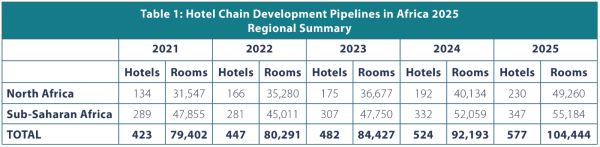
This year's Hotel Development Pipeline Report, the definitive study of international hospitality development projects in Africa, reveals record activity. There are 577 hotels and resorts, with 104,444 rooms, in the development pipeline, up by 13.3% on 2024, way ahead of the single digit pipeline growth reported globally by the leading international chains.

The report, compiled by Lagos-based W Hospitality Group, with data from 50 international and regional hotel chains, shows that development activity has been growing impressively in North Africa, which saw a 23% year-on-year increase, compared to a 6% increase in sub-Saharan Africa. Over the past five years, the hotel development pipeline has grown at an annualised rate of 4% in sub-Saharan Africa, 12% in North Africa and 7% overall.

Egypt continues to lead the way in terms of development, with 143 hotels and 33,926 rooms in the pipeline there. This is almost four times the number of rooms in second-placed Morocco, which has 8,579 rooms in 58 hotels. The following eight countries, ranked by number of rooms, comprise Nigeria, 7,320; Ethiopia, 5,648; Cape Verde, 5,565; Kenya, 4,344; Tunisia, 4,336; South Africa, 4,076; Tanzania, 3,432; and Ghana, 3,125. International hotel chains have deals signed in 42 of Africa's 54 countries.

Despite its clear leadership in the absolute pipeline numbers, Egypt has fewer than 50% of rooms under construction, a significantly lower proportion than second-placed Morocco, with over 72%. Of the top 10 countries, Ethiopia has the highest ratio of rooms “on site”, followed by Morocco and Ghana. Cape Verde, Nigeria and Tanzania have some of the lowest percentages. However, “under construction” does not necessarily mean that there is activity and progress towards completion and opening – many of the sites in Nigeria and Ghana, for example, have been closed for several years, with hardly a hard hat in sight.

A more granular analysis, looking at the location of planned properties, reveals an extraordinary boom in Cairo, with 17,757 new rooms projected in over 70 hotels. The contrast with the second-placed location, Sharm El Sheikh, is dramatic, where 4,231 rooms are planned in fewer than 10 properties. The cities and resorts with the next largest pipelines by number of rooms are Lagos, 3,709; Boa Vista, 3,650; Addis Ababa, 3,369; Casablanca, 2,939; Accra, 2,652; Abuja, 2,570; Zanzibar, 2,523; and Dakar, 2,334.

The growth is being driven strongly by the major international hotel chains, with Marriott International leading the way, 165 hotels with 29,639 rooms. It is followed by Hilton, 93 hotels with 17,040 rooms; Accor, 73 hotels with 15,013 rooms; IHG, 40 hotels with 7,951 rooms; Radisson Hotel Group, 32 hotels with 6,346 rooms; TUI Hotels & Resorts, 11 hotels with 2,954 rooms; Barceló Hotels & Resorts, 7 hotels with 2,193 rooms; The Ascott, 15 hotels with 1,897 rooms; Kerten Hospitality, 13 hotels with 1,881 rooms and Wyndham Hotels & Resorts, 7 hotels with 1,706 rooms.

In the race for dominance, Hilton added slightly more rooms to its African pipeline last year than Marriott International and achieved a higher percentage growth. Barceló Hotels & Resorts recorded the largest percentage growth, more than doubling its pipeline to 2,193 rooms, with three large resort signings in North Africa.

Below the headline numbers, there are three notable trends. First, the actualisation rate (actual openings vs. expected openings), which has nearly doubled from 21% in 2023 to 38% in 2024. While it's substantially less than the 75% actualisation rate achieved in 2019, it shows a continuing recovery from the economic devastation of COVID-19. Of the total 104,444 rooms in the pipeline, over 50,000 rooms (nearly 50%) in 304 hotels are expected to open in 2025 and 2026. 

Second, resort projects are increasing much faster than city or airport hotels, both in percentage terms and in absolute numbers, driven by the number of signings and by the larger average size of the developments, 210 keys vs. 170.  Also, almost half of the rooms that opened last year were in resorts.

Third, there is a definite movement by the chains towards the franchise model, with 108 projects representing almost 19% of the total, compared to less than 10% in 2020. A major factor is the emergence of quality, international, white-label operators such as Aleph Hospitality and Valor Hospitality, and some indigenous operators in Nigeria, Kenya and elsewhere, that are increasing confidence that brand standards will be met. 

The full report will be discussed at FHS Africa (formerly AHIF) 17-19 June in Cape Town. It is the leading hospitality investment conference in the region, which brings together senior decision-makers to shape the future of the industry. Matthew Weihs, Managing Director of the Bench, which organises FHS Africa, said: “The growth in hotel development across Africa is a testament to the continent's economic and tourism potential. Furthermore, the commitment from the international hotel chains makes it clear that global players see Africa as a strategic opportunity."

Trevor Ward, Managing Director of W Hospitality Group, concluded: “Despite the various trials that the continent faces, the fact that hotel chains signed 125 new deals last year, with 21,000 rooms, is evidence that opportunities for further development abound. According to the Global Cities Institute, by the year 2100, 10 of the world's 16 largest cities will be in Africa, with all but one of them (Cairo) in sub-Saharan Africa. So, one might say that development activity in Africa has barely scratched the surface.”

Distributed by APO Group on behalf of The Bench.

For further information and high-resolution images, please contact:
David Tarsh
+44 (0) 20 7602 5262
+44 (0) 7770 816 070
Email: David@Tarsh.com.

About W Hospitality Group:
The W Hospitality Group, a member of Hotel Partners Africa, specialises in the provision of advisory services to the hotel, tourism and leisure industries, providing a full range of services to clients who have investments in the sector, or who are looking to enter them through development, acquisition or other means. In sub-Saharan Africa W Hospitality Group is regarded as the market leader due to the market and financial expertise of its staff, its worldwide knowledge, and its commitment to its clients.  In Africa, W Hospitality Group has to date worked in 40 countries on the continent, from its Lagos and Addis Ababa offices.

www.W-HospitalityGroup.com

About FHS Africa (Formerly AHIF):
For over a decade, the Future Hospitality Summit Africa (FHS Africa) has been the launchpad for hospitality investment in Africa, driving growth, connecting visionaries, and transforming the continent's tourism and hospitality landscape. As a beacon of opportunity, FHS Africa brings together global investors, developers, operators, and industry leaders committed to turning potential into reality.

www.AHIF.com

Strategic Partners: Accor, BWH Hotels, Hilton, IHG Hotels & Resorts, Marriott International, Radisson Hotel Group
Headline Sponsors: CHIC, Hansgrohe, TUI Hotels & Resorts
Sponsors: Aleph Hospitality, CityBlue Hotels, Equate, JLL, Knight Frank, St Helena Island, STR, TIME Hotels, TV5 Monde, Valor Hospitality Partners
Official Carriers: Discover Airlines, Kenya Airways
Supporter: South Africa Tourism

About The Bench:
The Bench has a legacy of delivering world-leading investment forums and conferences in Europe, Africa, the Middle East, and Latin America. The key principle behind these events is "dealmaking'. Transforming the way businesses connect; the Bench has developed a reputation for creating innovative and high-impact industry meetings.

For over two decades, government leaders, tourism ministries, global travel & tourism associations, the world's most influential hospitality brands, hotel owners & investors, renowned restaurant groups, airlines & aviation authorities, destination developers, asset managers, financial groups, and consultants have been participating in the Bench's events. These include FHS Africa, FHS World, FHS Saudi Arabia and AviaDev, where industry players showcase their brands, position themselves as thought leaders and innovators, and connect with the right individuals, opportunities and knowledge.

Learn more at TheBench.com

Media files
The Bench
Download logo
Read moreHotel Development Booms in Africa
8 April 2025

Uae Participates in Second G20 Sherpa Meeting

Location: News

United Arab Emirates, Ministry of Foreign Affairs
Download logo

His Excellency Ahmed Al Sayegh, Minister of State and UAE G20 Sherpa, and His Excellency Mahash Al Hameli, UAE Ambassador to South Africa and UAE Sous Sherpa, participated in the second G20 Sherpa Meeting, which was held virtually from 3 – 4 April.

The meeting brought together representatives from invited countries and international organizations to assess the progress achieved across various G20 Sherpa Working Groups and to outline the path forward during the South African G20 Presidency.

The UAE delegation highlighted the country's engagements in working groups across several key priority areas, including anti-corruption, culture, education, development, women's empowerment, artificial intelligence and the digital economy, employment, disaster risk reduction, climate, and environmental sustainability. The UAE reaffirmed its support for the South African Presidency's efforts and emphasized the country's commitment to multilateral cooperation through the G20 platform.

Under the theme ‘“Solidarity, Equality and Sustainability', South Africa extended an invitation to the UAE to participate as a guest country in the G20 process and summit in 2025. This marks the UAE's sixth overall participation in the G20 and its fourth consecutive invitation. The UAE has previously been part of the G20 process hosted by Brazil in 2024, India in 2023, Indonesia in 2022, Saudi Arabia in 2020, and France in 2011.

Established in 1999, the G20 is the premier forum for international economic cooperation, bringing together the world's largest economies to address global challenges and promote inclusive growth.

Distributed by APO Group on behalf of United Arab Emirates, Ministry of Foreign Affairs.

Read moreUae Participates in Second G20 Sherpa Meeting
8 April 2025

G20 must tackle inequality, gender gaps to build just labour markets – Minister Meth

Location: News

G20 must tackle inequality, gender gaps to build just labour markets – Minister Meth

Employment and Labour Minister Nomakhosazana Meth has called on G20 member states to urgently address growing inequality and the erosion of labour income share, warning that these trends threaten global economic stability and social cohesion.

The Minister was delivering the keynote address at the second G20 Employment Working Group meeting in Umhlanga, KwaZulu-Natal on Tuesday. 

“The growing erosion of labour's share of national income poses a significant threat to broader economic resilience and inclusivity goals by widening wealth disparities, weakening the social fabric, and limiting upward mobility. Addressing this trend is crucial for global progress,” the Minister said.

Meth emphasised that economic progress must not be measured solely by GDP or trade metrics, but by the ability to uplift vulnerable communities through decent work, fair wages, and inclusive opportunities. 

She underscored the need to close gender gaps in employment and pay, describing it as both a moral imperative and a driver of innovation and prosperity.

“We find ourselves at a critical juncture, where the global landscape is marked by increasing disparities threatening the fundamental principles upon which just and dignified societies are built. 

“Millions of workers worldwide remain mired in precarious employment conditions, receiving stagnant wages and experiencing shrinking opportunities for social mobility. Policies and initiatives that aim to alleviate poverty and economic despair encounter resistance from those who prioritise narrow economic interests over workers' inherent dignity and rights,” she said. 

However, Meth said it must be clear that economic growth must not be evaluated solely through GDP metrics, trade balances or other numerical indicators. While such measures are important, she said, they cannot be the only barometers of success.

“Genuine progress must be evident in our collective commitment to uplift the most vulnerable of our society. The real test of our achievements is ensuring that economic expansion leads to substantive social justice, employment figures correspond to quality jobs with decent pay, and that work provides financial stability, dignity, fulfilment and security,” the Minister said. 

She emphasised that at the core of the discussions was the principle that labour is not a commodity, workers are human beings with rights, not disposable economic inputs. 

Meth stressed that an international system prioritising profit over people is unsustainable and unethical, calling for the rejection of transactional approaches that compromise fairness, equity, and dignity.

As the G20 President, South Africa remains steadfast in upholding the values of solidarity, equality and sustainability.

“These are not abstract ideals or rhetorical flourishes; they serve as the foundation upon which our policies, governance structures and international engagements are built. We categorically reject any notion that human suffering can be reduced to a mere footnote in pursuing political expediency or economic dominance,” she said. 

Youth jobs and gender equality top of the labour agenda

The Minister said that the Employment Working Group was prioritising youth employment and women’s economic empowerment, with bold targets such as the Nelson Mandela Bay Goal to reduce global youth unemployment by 5% by 2030. 

“This is not merely an employment target; it represents an investment in the future of our societies. We must actively create quality jobs, foster skills development and champion youth-led innovation to ensure young people have a place in the evolving labour market,” she said.

The group is also pushing to renew and expand commitments like the Brisbane-eThekwini Target to close gender gaps in labour force participation. 

Minister Meth emphasised that workplace equality and youth inclusion are essential for sustainable growth, warning that the cost of inaction would be far greater than intervention.

Call for resilient labour policies amid global trade shifts

Minister Meth raised concern over disruptive global trade developments, warning they risk driving economic stagnation and widespread job losses, especially in developing countries. 

She urged G20 like-minded G20 countries to rise to the occasion and forge resilient labour market policies that protect jobs, safeguard economic stability, and ensure that economies remain viable despite mounting global uncertainties.

“South Africa stands firm and shall not waver in pursuing fairness, inclusion and social justice. We will continue to advocate for decent work, robust labour protections and equitable economic opportunities for all. 

“We will resist any effort, whether domestic or international, that seeks to undermine our sovereignty, our people’s dignity and the fundamental rights of workers,” she said.

The Minister told delegates to remain mindful that deliberations have profound real-world implications. 

“The decisions we make today will shape the future of work for millions of people across the globe. Our efforts must not be confined to policy frameworks alone, but must translate into tangible, measurable improvements in people’s lives,” Meth said. – SAnews.gov.za

DikelediM
Tue, 04/08/2025 - 14:35
13 views

Read moreG20 must tackle inequality, gender gaps to build just labour markets – Minister Meth
8 April 2025

It’s your country, explore it!

Location: News

It's your country, explore it!

With the Easter long weekend fast approaching, Tourism Minister Patricia de Lille has called on local and international travelers alike to explore the country’s breathtaking landscapes, rich culture and vibrant communities.

De Lille launched the Easter campaign with an activation at Twin Venture, which is based at the Atlantis Dunes in Cape Town, specialising in quad biking and sandboarding experiences. 

The activation was aimed at showcasing the variety of experiences for visitors across South Africa, especially in smaller towns.

Speaking at the event on Monday, which was attended by tourism business owners, industry associations, media and content creators, De Lille emphasised the importance of both domestic and international travel in sustaining and growing the tourism sector.

Domestic tourism: A growing market

Domestic tourism in South Africa continues to perform well, with travellers increasingly looking for affordable and unique experiences. 

Recent insights from the 2024 Sho’t Left Travel Week campaign highlighted key trends shaping local travel, including:

-                Affordability remains a priority. Travelers are looking for more budget-friendly accommodation and experiences, making initiatives like Sho’t Left vital in ensuring more South Africans can explore their own country.

-               Lesser-known destinations are in demand. More South Africans are seeking off-the-beaten-path adventures, opting for places with fewer crowds and deeper cultural experiences.

-               Personalised travel experiences are key. Families, solo travellers, seniors, and adventure-seekers are all looking for tailored travel options, including accessible tourism and wellness retreats.

“Every night spent in a guesthouse, every meal at a local restaurant and every souvenir bought from a market contributes to our economy. By supporting local tourism, we ensure that the benefits of travel extend beyond major cities promoting inclusive economic growth,” De Lille said.

International tourism on the rise

International visitors remain a key part of South Africa’s tourism strategy. In the first two months of 2025 alone, the country welcomed nearly 1.8 million international visitors, an increase of 4.7% compared to the same period last year.

“International travellers are drawn to South Africa for its diverse cultures, breath-taking landscapes, and warm hospitality. We must continue showcasing what makes our country special and keep igniting the spirit of exploration,” De Lille said.

South Africa Awaits – Come Find Your Joy!

To further promote tourism, South African Tourism recently launched its new global brand campaign: ‘South Africa Awaits – Come Find Your Joy!’ This campaign encourages travellers -- both local and international -- to rediscover South Africa with the wonder and excitement of a first-time visitor.

“This is more than a tourism campaign; it’s an invitation. Whether you’re a young family, a group of friends, an adventure junkie, or someone who just needs a break, South Africa has something for you,” the Minister said.

De Lille urged travellers to take advantage of the upcoming long weekends to explore, experience and support local businesses.

“Take the trip. Book the stay. Discover the dorpie. Dance at the festival. Visit the market. Eat the magwinya. Support local. Make the memory. Take that Sho’t Left! Our country is calling. South Africa Awaits – Come Find Your Joy!” the Minister said. – SAnews.gov.za

Edwin
Tue, 04/08/2025 - 10:03
49 views

Read moreIt’s your country, explore it!
7 April 2025

President Ramaphosa appoints Professor Mariana Mazzucato to G20 Taskforce

Location: News

President Ramaphosa appoints Professor Mariana Mazzucato to G20 Taskforce

President Cyril Ramaphosa has appointed renowned economist Professor Mariana Mazzucato as Technical Expert to South Africa’s G20 Presidency and his Special Presidential Representative to Taskforce 1, focusing on Inclusive Economic Growth, Industrialisation, Employment, and Reducing Inequality.

In a statement on Monday, The Presidency said Professor Mazzucato will also contribute to Taskforce 3: Artificial Intelligence, Data Governance, and Innovation for Sustainable Development.

She will also support the Sherpa Track on Trade and Investment Working Group, and the Finance Track Sustainable Finance Working Group, and International Financial Architecture Working Group.

Professor Mazzucato is a member of President Ramaphosa’s Economic Advisory Council (PEAC) since 2019, advising on areas such as green industrial strategy, State capacity, and reform of State-owned enterprises.

In 2024, she co-chaired the Group of Experts for Brazil's G20 Task Force for the Global Mobilisation Against Climate Change (TF-CLIMA).

“This appointment underscores South Africa’s commitment to leveraging its leadership in the G20 to shape a more inclusive and sustainable global economy.

“Professor Mazzucato, internationally recognised for her work on rethinking the State, green growth, mission-oriented innovation and public value creation, brings critical expertise to advancing South Africa’s goals on green industrialisation, inclusive growth, and long-term structural transformation,” the Presidency said. 

Under President Ramaphosa's leadership and the G20 theme of “Solidarity, Equality, Sustainability”, South Africa aims to lead global discussions on these key issues, advocating for policies that foster resilient economic development, particularly in developing countries.

South Africa’s G20 Presidency is committed to advancing a global economic framework that supports green growth, economic resilience, and social equity.

The year 2025, described by President Ramaphosa, President Lula da Silva of Brazil, and Prime Minister Sánchez of Spain as “a pivotal year for multilateralism”, will feature three major global gatherings: the G20 Summit in Johannesburg, the Financing for Development Conference in Seville, and COP30 in Belém. – SAnews.gov.za 

DikelediM
Mon, 04/07/2025 - 15:18
54 views

Read morePresident Ramaphosa appoints Professor Mariana Mazzucato to G20 Taskforce
7 April 2025

SA advocates for linguistic equity in AI at G20

Location: News

SA advocates for linguistic equity in AI at G20

South Africa has called on the Group of Twenty (G20) members to support initiatives that develop Artificial Intelligence (AI) in low-resource languages and share data and tools to make this possible.

Addressing the Meeting of the G20 Digital Economy Working Group Task Force on AI, Minister of Communications and Digital Technologies, Solly Malatsi, said there were over 7 000 languages spoken in the world, yet most AI models and digital content is trained on a tiny fraction of these – predominantly English and a handful of others.

“We know that AI is only as good as the data and algorithms it is built on and currently, both of these have serious gaps. One glaring gap is the linguistic and cultural diversity deficit in AI systems.

“This linguistic inequity is not just a cultural loss; it’s a practical barrier that threatens to exclude billions from the AI-driven digital economy,” the Minister said on Monday in Gqeberha.

He emphasised that AI must not only be looked at from a technology perspective, but from the standpoint of social impact. 

“We must investigate how AI can help us achieve the Sustainable Development Goals. How can it improve healthcare, education, agriculture, and governance? Beyond language, ethical AI governance requires addressing issues of bias, transparency, and accountability. 

“We have seen instances of AI algorithms that exhibit racial or gender bias in hiring, lending, or policing. These are systemic harms we have to root out. During our Task Force discussions, we must consider how G20 nations can share best practices on AI governance, including regulatory approaches and standards to ensure AI safety and trustworthiness,” Malatsi said.

South Africa’s G20 Presidency has set inclusion and equity at the heart of the digital agenda.

The G20 Presidency will focus on four key pillars that include bridging the digital divide with meaningful connectivity; building inclusive digital public infrastructure; nurturing innovation ecosystems for local development and championing ethical AI that respects diverse languages, cultures, and values.

“We cannot allow a new form of digital inequality to take hold in our world. We need to unite our efforts, North and South, public and private, to invest in connectivity for all. This means mobilising financing for digital infrastructure, sharing innovations to lower costs, and collaborating on policies to make internet access affordable for the poorest,” the Minister said.

The International Telecommunication Union indicates that roughly 2.9 billion people still don’t have internet access at all.

“While most of these individuals live within range of mobile broadband networks, they remain offline due to multiple factors ranging from high data costs, lack of affordable smart devices and limited digital skills. Infrastructure alone is no longer enough; the real barriers are economic, educational, and linguistic. 

“And they demand our immediate collective attention. The socio-economic benefits of closing the digital divide are enormous. We cannot allow a new form of digital inequality to take hold in our world,” he said.

According to the Global System for Mobile Communications Association (GSMA), bringing the currently offline population onto the internet could add $3.5 trillion to the global economy by 2030, with 90% of the benefits flowing to developing countries. 

“We propose that G20 members share strategies on supporting start-ups and micro, small and medium enterprises (MSMEs) – from startup financing initiatives to innovation hubs and tech parks, from simplifying regulatory burdens to providing mentorship networks. 

“Let us commit to growing the digital innovation ecosystem in all our countries. As we discuss policy frameworks, we must also consider the idea of an innovation fund or facility to support digital entrepreneurship in underserved regions, an idea that has been floated with the notion of a possible global fund for AI and digital innovation. 

“If we want a truly global digital economy, we must ensure that innovation knows no borders – that brilliant ideas from Africa, Asia, or Latin America can find the resources and support to grow,” Malatsi said. - SAnews.gov.za

nosihle
Mon, 04/07/2025 - 14:42
37 views

Read moreSA advocates for linguistic equity in AI at G20
  • Previous
  • Page 1
  • Interim pages omitted …
  • Page 15
  • Page 16
  • Page 17
  • Page 18
  • Page 19
  • Interim pages omitted …
  • Page 103
  • Next

Copyright © 2026 · MyZA · All Rights Reserved · Powered by Stratlec Online