Pro-Israel protest disrupted in Cape Town
Mayor Geordin Hill-Lewis calls for tolerance, emphasises right to protest and condemns threat against Jewish school

MyZA
News, Directory, Events and Other Stuff
Mayor Geordin Hill-Lewis calls for tolerance, emphasises right to protest and condemns threat against Jewish school
White Paper set to overhaul migration system, says Motsoaledi
Home Affairs Minister Dr Aaron Motsoaledi says the recently published White Paper On Citizenship, Immigration and Refugee Protection contains radical proposals that are aimed at overhauling the migration system in South Africa.
Cabinet approved the White Paper on Wednesday, 1 November 2023 for public comment. It was published in the Government Gazette No. 49661 on 10 November 2023, after what Motsoaledi described as a “painstaking exercise of drafting”.
The draft policy aims to provide a framework to guide the granting of residency and citizenship to foreign nationals, as well as the protection of refugees and asylum seekers in South Africa, cognisant of the Republic’s national security interests and in compliance with international agreements and protocols on migration that South Africa is party to.
“There have been consistent loud voices calling for effective policy measures and legislative interventions dealing with migration in South Africa.
“South Africa has different pieces of legislation dealing with citizenship, immigration and refugee protection, namely the Citizenship Act, Immigration Act and Refugees Act, as amended.
“In practice, these pieces of legislation are not in harmony with each other. Piecemeal amendments were made without any policy framework whatsoever,” Motsoaledi said at a briefing in Pretoria on Sunday.
Key proposals
Motsoaledi said one of the chief proposals in the White Paper is that the government of the Republic of South Africa must review and/or withdraw from the 1951 United Nations Refugees Convention (“1951 Convention”) and the 1967 Protocol relating to the Status of Refugees (“1967 Protocol”), with a view to accede to them with reservations like other countries.
“The refugee protection and immigration legislation must provide for reservations and exceptions, as contained in the 1951 Convention and the 1969 OAU [Organisation of African Unity -- now AU] Convention, particularly in that South Africa does not have the resources to grant the socio-economic rights envisaged in the 1951 Convention,” the Minister said.
He explained that the current citizenship legislation has its roots in the 1949 Citizenship Act (“1949 Act”) and other relevant successive laws governing citizenship.
He said the 1949 Act and other relevant laws were not only discriminatory on the basis of race and sex but the “natives” (black people) were totally excluded from the South African citizenship regime.
“The South African Citizenship Act provides for three main forms of citizenship, namely, citizenship by birth, citizenship by descent and citizenship by naturalisation,” Motsoaledi said.
The Minister said the Citizenship Act and Births and Deaths Registration Act must be repealed in their entirely and be included in the single legislation dealing with citizenship, immigration and refugee protection.
“This will remove contradictions and loopholes in the paths towards citizenship, as is now the case with the three pieces of legislation. The criteria for granting any form of citizenship must be strictly in accordance with the law.
“A proper register should be kept for all persons granted citizenship by naturalisation by the Minister. The register must be tabled every year in Parliament by the Minister,” Motsoaledi said.
Immigration
The Minister said South Africa is a great place to live in and many people in the world aspire to live, work or to be citizens of South Africa.
“[As a] result, many foreign nationals come to South Africa and stay in the country illegally. No one can account for all undocumented migrants. The Department of Home Affairs has no idea as to how many illegal immigrants are in South Africa.
“However, Immigration Services deports between 15 000 - 20 000 illegal foreigners every year at a huge cost. This number is on the increase.
“The establishment of the Border Management Authority (BMA) should significantly reduce the risk of foreigners entering the country illegally,” the Minister said.
Motsoaledi said the Border Management Authority Act must be reviewed to align it with Immigration and Citizenship new policy framework.
“The policy framework must provide for the establishment of the Advisory Board, which comprises representatives of the Departments of Trade, Industry and Competition, Labour and Employment, Tourism, South African Police Service, South African Revenue Service, Education, International Relations & Cooperation, Defence & Military Veterans and Director-General of the DHA [Department of Home Affairs].
“The Board must also comprise representatives of organised labour, including four individuals on the grounds of expertise in administration, regulatory matters or immigration law, control, adjudication and enforcement, appointed by the Minister.
“Policy and legislative interventions are required to tighten the procedures and strengthening the monitoring capacity by introducing integrated IT systems capable of flagging fraudulent activities in the issuing of visas, identity documents, marriage certificates and passports.
“This includes giving wide statutory powers to the existing Anti-Corruption Unit within the DHA,” the Minister said.
Motsoaledi said the new policy must provide that members of the Anti-Corruption Unit should be seconded from the South African Police Service (SAPS).
“The rationale being that members of the SAPS enjoy wide statutory powers, including search and arrest without a warrant,” the Minister said.
New legislation, Motsoaledi said, must be introduced to strengthen the powers of immigration officers and Inspectorate, and make continuing training compulsory. The majority of members of the Inspectorate must have legal qualifications and policing experience. – SAnews.gov.za
Edwin
Sun, 11/12/2023 - 13:02
Call for Western Cape government to stand with Palestine as it has with Ukraine
Call for the protection of journalists
While South Africaâs constitution supports and promotes media freedom, practitioners in the sector have called for the protection of journalists ahead of next yearâs general elections.
âThe 2021 elections were unsettling due to the danger that was faced by journalists. Some were kicked out of areas that they were working in and others were subjected to humiliation and threatened with violence while they were doing their jobs,â South African National Editorsâ Forum (SANEF) Acting Gauteng Regional Convenor Hopewell Radebe said on Thursday.
He was addressing a virtual panel discussion on Violence against Journalists and the Integrity of Elections that was hosted by the Government Communication and Information System (GCIS).
âSometimes the danger is also from political parties. They also start to point fingers at journalists for doing their jobs because the media is able to give a platform to the public to air their views and criticise the parties,â Radebe said.
He noted a growing trend of criminals who victimise the media while on the field and rob them of their tools of trade such as cellphones and cameras.
Former Director for Freedom of Expression and Media Development at UNESCO Prof Guy Berger said: âIncreasingly we are seeing the abuse, attacks and ganging up on journalists on social media. Of course, journalists should be criticised but there is a difference between criticism and intimidation or threatening death or harming people and their families.
âIt is very important that GCIS; the government must call out against incidents when there are attacks on journalists. For example when threatening WhatsApps are sent to editors with a subtle death threat or when a politician releases the private details, like a phone number, of a journalist.
"In terms of preventing the attacks, the GCIS is doing this by hosting this webinar. It is a contribution to the public climate that says it is not acceptable to have criminal attacks on journalists.â
He said the United Nations Plan of Action on the Safety of Journalists emphasised the protection of journalists and the prosecution of those who attack journalists.
The Plan of Action aims to create a free and safe environment for journalists and media workers, both in conflict and non-conflict situations, with a view to strengthening peace, democracy and development worldwide.
âWe know we have a problem of assassination in South Africa, intimidation and gangsterism. Government should take a stand and say to society, this is not acceptable or there will be consequences, you will be prosecuted. This is very important for preventing attacks, if you do not address the attacks you are encouraging them and we know that journalists who are killed, it starts with online threats.
âThe people who are doing this are not hidden. They often are doing this publicly. They can be tracked down and brought to account. Security forces also need to find a way to work with journalists instead of stopping them from doing their jobs,â Berger said.
IEC collaborates with media
During previous elections, SANEF teamed up with the Electoral Commission of South Africa (IEC) to train journalists on understanding the environment that they are operating in and to understand the rules and regulations of the elections.
âThis year, we have been to five provinces with the IEC training journalists on rules and regulations and also to understand the impact of these changes in the elections and how this will impact their communities.
âWe will also be working with the police to identify hotspot and areas where there are tensions during the elections. Journalists have to be prepared differently and be alerted on what to expect in areas that are dangerous,â Radebe said.
He warned of a growing trend by members of the public not wanting to give space to journalists to do their job.
â⦠Particularly when they are campaigning for certain parties and they donât want to hear a journalist being fair, accurate and being balanced in their reporting to prospective voters so they can make an informed decision,â Radebe said. â SAnews.gov.za
Â
nosihle
Fri, 11/10/2023 - 09:13
Progress made in the fight against criminality
Government is making inroads into destroying criminal activities as well as syndicates and has vowed to leave no stone unturned in ensuring that criminals are dealt with, says Defence and Military Veterans Minister Thandi Modise.
âWe will make sure that as the Justice, Crime Prevention and Security (JCPS) cluster, we create a safe and secure environment for our people to live [in],â Modise said on Friday.
The Minister was addressing a JCPS cluster media briefing to provide progress made in combating organised crime which she said, is a growing concern as it negatively impacts on the livelihood of citizens, the economy and compromises the safety and security of people.
âSouth Africans have borne the wrath of criminals masquerading in our communities causing disruption in their daily lives. In some parts of our communities, extortion and protection fees demanded by criminal syndicates have become the order of the day.â
She added that infrastructure mafias continue to destabilise the construction industry through intimidation and the threatening of peopleâs lives.
 âThese and other criminal activities have put fear in our people and undermine the authority of the state.â
Operation Shanela
Through the South African Police Servicesâ Operation Shanela, South Africa has adopted a decisive approach in reducing the high levels of crime.
Operation Shanela is the SAPS crime combating high density operations incepted in May 2023.
 âIt is through Operation Shanela, that the South African Police Service (SAPS) has successfully arrested 213 059 suspects for various crimes such as cash-in transit robberies, extortion at construction sites and kidnappings in the past six months.
âDuring the same period, 2 657 illegal and unwanted firearms were confiscated,â Modise said.
The operation has led to the arrest of 19 299 suspects who were arrested for drug possession while 7 580 were arrested for drug trafficking and dealing in the last six months.
On cash-in-transit (CIT) heists and crimes associated with it, law enforcement agencies continue to make inroads with the police having arrested 75 wanted suspects in the past six months.
âThe arrests were made during foiled CIT attempts, during the commission of these crimes and during targeted tracing operations,â she said.
On the drugs front, the latest drug busts are a clear indication that government remains committed to the fight against drug trafficking. Law enforcement is hard at work in identifying emerging trends in the transportation and packaging of these drugs and closing down of clandestine laboratories.
 âIt is therefore encouraging that nine drug laboratories worth more than R3 million were dismantled in Gauteng, North West and the Western Cape. In a space of three weeks, police have intercepted large quantities of cocaine in KwaZulu-Natal and the Eastern Cape.
âThe latest cocaine consignment was seized last week at the sea port in Gqeberha where R65 million worth of cocaine was seized from a vessel that was coming in from Brazil,â Modise said.
Two other drugs busts were made in KwaZulu-Natal where R150 million worth of cocaine was seized in the space of two days.
With regard to extortion at economic and construction sites, Modise said various threats were identified that impact negatively on the economy of the country.
âFrom April 2023 to date, 61 suspects linked to these extortions were arrested. Since 2019, 27 accused have already been convicted for a collective 43 years direct imprisonment.â
On kidnapping for ransom, Modise said from April 2023 to date, 98 suspects have been arrested for these crimes and more than 30 victims have been rescued.
The cluster said government continues to deploy Anti-Gang-Unit members in provinces prone to gang violence such as the Western Cape, Eastern Cape and Gauteng.
â190 arrests have thus far been effected in 145 cases,â she said.
Also speaking at the media briefing held in Pretoria was Police Minister, Bheki Cele, who said police operations are continuing to ensure that criminals are flushed out.
âThey are interfering with the lives of communities. They are armed, they need to be pursued,â he said, adding that law enforcement has identified some of the people involved in illegal mining and is on their trail.
âSome of these people are from our neighbouring countries and relevant Ministers are dealing with the matter. We are hoping to find a lasting solution to this matter,â he said.
Illegal mining
Responding to a question on illegal mining, Minister in the Presidency, Khumbudzo Ntshavheni, said there is a plan to seal all the illegal mines.
âThe Department of Mineral Resources is working on the policy matter to close all the illegal mines in the country,â Ntshavheni said.
Ntshavheni said some of the mine owners canât be traced.
Modise said in the past twelve months, government has witnessed an increase in incidents where illegal miners held communities at ransom, committing various violent crimes, including murder and rape.
âIllegal mining has also been linked to other organised crimes such as gangsterism, human trafficking, money laundering, dealing in illegal weapons and explosives, tax evasion, illegal immigration and transnational organised crimes,â she said.
President Cyril Ramaphosa has roped in the South African National Defence Force (SANDF) to assist in dealing with illegal mining in the country. Â â SAnews.gov.za
Â
Â
Â
Edwin
Fri, 11/10/2023 - 10:24
Eskom's Hex Battery Energy Storage System is a step in the right direction
Projects like Eskomâs Hex Battery Energy Storage System (BESS) in Worcester in the Western Cap can assist the country in ending load shedding.
This is according to Public Enterprises Minister Pravin Gordhan who said these kinds of projects create hope that sooner rather than later, South Africa is going to overcome the challenge of load shedding.Â
Minister Gordhan was delivering remarks at the launch of Eskomâs Battery Energy Storage System at the Hex substation in the Breede Valley Municipality.
The project â which was launched on Thursday - is a first in Africa.Â
âIf we do more of these kinds of projects in other parts of the country, which is what Eskom intends to do, we will see the end of load shedding pretty soon. Today, after a few hiccups, you see in live form, the launch of this BESS project right in front of us. It is a great achievement for Eskom and the country.Â
âEskom is demonstrating that it can have a sense of urgency, it can have an important quality that we all need in South Africa and elsewhere â which is the ability to innovate and create new ways of doing things. And not just think about them, but concretely deliver them. That is the key,â the Minister said.Â
BESS is a giant step in the right direction to support the Just Energy Transition (JET) programme for boosting green energy as a renewable alternative source. As renewable energy begins to grow, so does the demand for the installation of Battery Energy Storage Systems.
The Hex battery storage project is the first part of Eskomâs Battery Energy Storage System rollout scheduled for construction in the Western Cape, Northern Cape, Easter Cape and KwaZulu-Natal.
Through these kinds of projects, the Minister said, the country will grow economically and be able to create more jobs.Â
âWe are going to get more investments, not just in the Western Cape but the whole country. Our younger people can look toward to a much better life than those of us that have lived through the last few decades.
âSo, this is an opportunity to demonstrate to our own people and citizens, and the globe, that South Africans are innovative, and can deliver world class solutions like the one that we actually see today,â he said.Â
The Minister emphasised that it is important that focus is placed on what is best for the country, and what is best for the people of the country, and not for the few individuals who want to become rich as a result of these projects.Â
Quoting the recent Census results, Gordhan said that there are 62 million people who must be beneficiaries of these sorts of projects and of the work that is being done.Â
The Minister reiterated governmentâs aim which is to have enough electricity or energy security in this country.
âSo, there must be a reserve, just like you have in a savings account for a day when you need some cash. In the same way, you need an energy savings account because you donât know when you are going to need extra energy.Â
âRight now, we have a shortage. We need to get to a point where we have a surplus. And we need to continue keeping that surplus. And Eskom as an institution is going to play a crucial part in developing that surplus through the investment of the private sector in renewables and other forms of energy,â the Minister said.Â
He explained that the 120 battery banks cost a fair amount of money - R830 million - and during the construction 255 residents of the greater Worcester area were employed.Â
He said they must take the experience and the lessons that will be learnt from this project and use it elsewhere, to make whatever changes that are necessary to have more successful projects in the remaining provinces.Â
Minister Gordhan extended his gratitude to the funders. He said that without the concessional funding that they have for Eskom from the World Bank, African Development Bank, and the New Development Bank, they would not have been able to prosecute this project.
He also thanked Hyosung Heavy Industries, who supplied the batteries. The Minister further thanked Eskom for thinking about this idea and for researching the idea. - SAnews.gov.za
Â
DikelediM
Fri, 11/10/2023 - 10:40
President Cyril Ramaphosa offers his warm congratulations to Prof Dire Tladi of the University of Pretoria on his election by the United Nations as a judge of the International Court of Justice.
In May 2023, Cabinet endorsed Prof Tladi's nomination by the South African Government, together with South Africa's membership on the Permanent Court of Arbitration.
The International Court of Justice is the principal judicial organ of the United Nations and one of the six principal bodies of the UN.
The Court's role is to settle, in accordance with international law, legal disputes submitted to it by States and to give advisory opinions on legal questions referred to it by authorised United Nations organs and specialised agencies.
The Court comprises 15 judges who are elected for terms of office of nine years by the United Nations General Assembly and the Security Council.
Professor Tladi is a leading international law scholar whose accomplishments span different areas of the field, including academic, government service, diplomatic and practice.
He is Professor of International Law at the University of Pretoria and serves as President of the South African Branch of the International Law Association and Executive Member of the International Law Association.
He has served as Chair of the International Law Commission, an organ of the UN generally regarded as a feeder body for the International Court of Justice.
He was previously Legal Adviser of the South African Mission in New York and Special Adviser to South African Ministers of international relations.
President Ramaphosa said: “Prof Tladi's election as a judge of the International Court of Justice is an outstanding personal achievement in which the nation shares with great pride.
“We appreciate the confidence expressed by the United Nations in Prof Tladi's capabilities.
“He becomes the newest member of a fraternity of South Africans globally who are in positions of service to the international community and making important contributions to the better world we seek to build.
“We wish Prof Tladi well as he prepares to contribute to the Court and its jurisprudence from the Palace of Peace in The Hague, Netherlands.”
Distributed by APO Group on behalf of The Presidency: Republic of South Africa.
Government launches project to eliminate litter
Government has unveiled an initiative aimed at clearing the 7 251 illegal dumping hotspots in communities across the country â a project which has created more than 37 000 work opportunities.
The Municipal Cleaning and Greening initiative will be implemented in 14 prioritised municipalities across the nine provinces through the Department of Forestry, Fisheries and the Environmentâs Expanded Public Works Programme (EPWP) mass employment In-House Model, which allows it to implement and manage projects using its own staff.
âThe impact of the 37 049 EPWP participants is visible across the country since their work includes daily cleaning streets, clearing illegal dumping sites, cleaning coastal areas and the revitalization of parks,â Minister of Forestry, Fisheries and the Environment Barbara Creecy said on Friday.
She made these remarks during the launch of the departmentâs mass employment programme to augment the Cleaning and Greening initiative in Motherwell, Nelson Mandela Bay Metropolitan Municipality (NMBMM), Gqeberha.
As of 30 September this year, 1 299 or 19 percent of the sites have been cleared.
âIllegal dumping poses a health hazard to communities and undermines community morale and good governance. From an environmental perspective, illegal dumping poses serious risks to livestock, wetlands, rivers and marine and coastal areas.
âAs the world moves to find more effective ways to combat plastic pollution, our government is taking more significant steps to improve municipal waste collection, ensure landfill compliance and promote waste recycling,â Creecy said.
The initiative is targeted at cleaning up illegal dump sites in provincial capitals including the City of Cape Town, Sol Plaatjie, Mafikeng, Msunduzi, Polokwane, City of Joburg, City of Ekurhuleni, City of Tshwane, Mogale City, Sedibeng, Mbombela and Mangaung.
In some instances, the cleaning and greening projects have rehabilitated wetlands which are important not only for spiritual or economic reasons but for their ecosystem services as well.
âHere in Nelson Mandela Bay we have identified 512 sites that require cleaning and today we show you some of the 41 sites where we have already begun our work.
âWe assisted the municipality to find the budget to purchase a specialised fleet for waste collection; ensured additional refuse collection in to the un-serviced poor areas; supported improvements to waste disposal facilities and worked with the municipality to clear 41 illegal dumping hot spots,â the Minister said.
The greater clean-up programme across the Eastern Cape is creating a total of 8 000 work opportunities.
Municipalities that are part of this programme include Buffalo City Metro and municipalities that fall under Alfred Nzo, OR Tambo, Amatole, Chris Hani, Sarah Baartman and Joe Qabi District Municipalities.
âThe Municipal Cleaning and Greening programme is a partnership with provinces and municipalities who assist in recruiting our public works participants and also provide protective clothing, and cleaning materials while we provide the stipend to all participants,â the Minister said.
To ensure sustainability of the programme, the cleaning and greening initiative includes planting trees in the rehabilitated dumping sites.
âWe are planting both indigenous trees, in line with the water scarcity of the country, and the fruit trees to contribute towards food security. Communities are responsible for maintaining the trees within their households.
âThis initiative is supported by assisting communities to understand the environmental and food security role of trees. A total of 225 000 trees will be planted by government throughout the country during this financial year, with 3000 committed for the Nelson Mandel Bay.â
As total of 2000 trees have been planted and the remaining 1000 will be planted over the next few months.
âThe department fully acknowledges that part of the solution to the problem is to change societal attitudes and behaviour and to mobilise the public to begin taking charge and responsibility for keeping their neighbourhoods clean. However, we must also acknowledge that where municipalities have inadequate household waste collection the problem of dumping increases,â the Minister said.
Since the initiation of this programme, the department has processed applications for the specialised waste management vehicles from over 100 municipalities across the country.
In the last two years, government has spent over R164 million to buy 44 waste collection vehicles and 21 landfill management waste vehicles for 58 municipalities. â SAnews.gov.za
nosihle
Fri, 11/10/2023 - 11:29

The African Export-Import Bank (Afreximbank) (www.Afreximbank.com) is working on the establishment of a $1-billion African Film Fund to be launched in 2024 to support the continent's film industry, Kanayo Awani, Executive Vice President, Intra-African Trade Bank, at Afreximbank, announced in Cairo today.
Addressing the opening of the 2023 CANEX Summit held as part of the third Intra-African Trade Fair (IATF2023), Mrs. Awani said that the fund would oversee film financing, co-finance with large studios, finance African filmmakers and finance producers and directors of film projects across the continent.
She noted that during CANEX WKND 2022, the Bank had increased the financing it was making available to the creative sector from US$500 million to US$1 billion and that the Bank currently had a pipeline of over US$600 million in film, music, visual arts, fashion, and sports deal.
“The very first film we financed recently premiered at the Toronto Film Festival,” Mrs. Awani said, adding, “The Bank has several in the pipeline from Nigeria, South Africa, and Kenya, which should be on streaming platforms in 2024.”
Acknowledging that the film and audiovisual industries in Africa accounted for US$5 billion of the continent's GDP and employed an estimated five million people, with the potential to create over 20 million jobs and generate US$20 billion in revenues annually, Mrs. Awani noted that the sector faced several challenges, including limited access to financing and copyright infringement due to weak copyright laws, enforcement mechanisms and a lack of awareness.
The sector was also confronted with infrastructure and technology gaps, lack of capacity and shortage of skilled professionals and limited market access and international exposure, as a result of which African creative and cultural products often struggle to gain exposure and access to international markets.
Earlier, Boris Kodjoe, a celebrity actor of Ghanaian descent, highlighted how the creativity of Africans had influenced various aspects of modern life, including music, fashion, art, design, social consciousness, business, sports, film and TV. He said that the exploitation of black creativity by the West had had lasting effects and that, despite admiration of black excellence, Africa still faced branding challenges due to external perception fuelled by the traditional media's depiction of poverty, famine, civil wars and migration on the continent.
Mr. Kodjoe said that the world craved culturally specific global content and that Africa was a key player in meeting that demand. With the continent's young population and high connectivity, studios, networks, promoters and brands were investing in solutions to reach diverse audiences. Films and TV shows with diversity performed better than others by 30 per cent and Afrobeats was taking over global airwaves. By 2030, Africa was projected to produce up to 10 per cent of global creative goods export worth roughly $200 billion or four per cent of Africa's GDP.
Also speaking, H.E. Albert M. Muchanga, Commissioner for Trade and Industry of the African Union Commission, said that the creative sector in Africa was rapidly growing and making a significant contribution to the inclusive growth and sustainable development of African economies.
“I reaffirm my belief that the African creative industry has huge potential to be a source of employment and revenue to create the Africa we want - revenue from intra-African trade as well as revenue from the rest of the world.”
Ambassador Muchanga urged African nations to convert their vast potential into plans and projects that yield tangible results, stressing the need to also invest in protecting international property rights.
CANEX is an Afreximbank initiative to support Africa and the African Diaspora's creative and cultural industries by providing financing and non-financing instruments to boost growth. The seven-day CANEX Summit is intended to further develop conversations and provide additional business-to-business and business-to-government opportunities. It includes a fashion show featuring a range of bold and exciting designs from across Africa and the Diaspora and a CANEX Music Factory, hosted by renowned South African producer Oskido, which will provide songwriters and beat makers with the opportunity to record their work.
Creative Africa Nexus (CANEX) programme set up by Afreximbank seeks to facilitate the development and growth of the creative and cultural industries in Africa and the diaspora. The programme provides a range of financing and non-financing instruments and interventions aimed at supporting trade and investment in Africa's creative sector.
IATF2023, Africa's largest trade and investment fair opened on 9th November and will run till 15th November 2023.
Distributed by APO Group on behalf of Afreximbank.
Media contact:
Deborah Ross
Senior PR Account Director
BrandComms
+44 (0) 759 3602 128
âdeborah.ross@brandcommsgroup.com
Follow us on:
X (Twitter): https://apo-opa.info/41qI9VY
Facebook: https://apo-opa.info/3MGRNQi
LinkedIn: https://apo-opa.info/3KBxMYQ
Instagram: https://apo-opa.info/3UA1jH1
About the Intra-African Trade Fair:
Organised by the African Export-Import Bank (Afreximbank), in collaboration with the African Union Commission (AUC) and the African Continental Free Trade Area (AfCFTA) Secretariat, the Intra-African Trade Fair (IATF) is intended to provide a unique platform for facilitating trade and investment information exchange in support of increased intra-African trade and investment, especially in the context of implementing the African Continental Free Trade Agreement (AfCFTA). IATF brings together continental and global players to showcase and exhibit their goods and services and to explore business and investment opportunities in the continent. It also provides a platform to share trade, investment and market information with stakeholders and allows participants to discuss and identify solutions to the challenges confronting intra-African trade and investment. In addition to African participants, the Trade Fair is also open to businesses and investors from non-African countries interested in doing business in Africa and in supporting the continent's transformation through industrialisation and export development.
For more information, please visit www.IntrAfricanTradeFair.com
About Afreximbank:
African Export-Import Bank (Afreximbank) is a Pan-African multilateral financial institution mandated to finance and promote intra-and extra-African trade. For 30 years, the Bank has been deploying innovative structures to deliver financing solutions that support the transformation of the structure of Africa's trade, accelerating industrialization and intra-regional trade, thereby boosting economic expansion in Africa. A stalwart supporter of the African Continental Free Trade Agreement (AfCFTA), Afreximbank has launched a Pan-African Payment and Settlement System (PAPSS) that was adopted by the African Union (AU) as the payment and settlement platform to underpin the implementation of the AfCFTA. Working with the AfCFTA Secretariat and the AU, the Bank is setting up a US$10 billion Adjustment Fund to support countries to effectively participate in the AfCFTA. At the end of 2022, Afreximbank's total assets and guarantees stood at over US$31 billion, and its shareholder funds amounted to US$5.2 billion. The Bank disbursed more than US$86 billion between 2016 and 2022. Afreximbank has investment grade ratings assigned by GCR (international scale) (A), Moody's (Baa1), Japan Credit Rating Agency (JCR) (A-) and Fitch (BBB). Afreximbank has evolved into a group entity comprising the Bank, its impact fund subsidiary called the Fund for Export Development Africa (FEDA), and its insurance management subsidiary, AfrexInsure, (together, “the Group”).
For more information, please visit: www.Afreximbank.com
KZN positions to become a technological hub
The KwaZulu-Natal Provincial Government is accelerating efforts to roll out broadband across the province in order to ensure universal connectivity, and position the province as a technological hub.
Â
Speaking at the opening of the KwaZulu-Natal Information, Communication and Technology (ICT) Summit, currently underway at the Durban Exhibition Centre, Premier Nomusa Dube-Ncube said as part of KwaZulu-Natal Digital Transformation Strategy, the province aims to deliver a citizen-centric plan which guides the leap to a digitally transformed society.Â
âOur strategy is awake to the reality that the province is currently only 27% connected and we have identified the need to accelerate the connectivity of the entire province. Among others, our Digital Transformation Strategy will aid government-to-government interaction across spheres, government-to-citizen interaction, and government-to-business interaction,â Dube-Ncube said.
Held from 09-10 November 2023, the summit brings together digital experts, including stakeholders and representatives from the public and private sectors to discuss and demonstrate the role of technology in improving operations, processes and service delivery for the benefit of the communities in KwaZulu-Natal.
The summit, which is hosted jointly with Vodacom Business and provincial government, is a unique platform for ICT experts, private sector and government leaders to engage and explore cutting-edge technology solutions designed to transform the business landscape.
Themed âMoving KZN Towards a Smart Provinceâ, the summit focuses on turning KwaZulu-Natal into a smart and technology connected province, which leaves no one behind.
Dube-Ncube highlighted that the province is hard at work, and currently rolling out Wi-Fi hotspots and Digi-centres in townships and rural centres, including libraries, schools, health youth zones, and community service centres.Â
Work done by the Office of the Premier includes the roll-out of a series of 4IR activations to install Wi-Fi hotspots that will enable schools and citizens to access internet as well as the training of 3 875 youth in four activated districts covering 16 areas.Â
âDigital hubs were installed at the schools to enable the learners to have access to equipment [and] teachers were also trained in data science to include in their schoolâs curriculum, to ensure the learners will be trained on areas of Artificial Intelligence and Robotics.
âAll 164 provincial libraries have Wi-Fi connectivity and all hospitals and clinics are connected,â Dube-Ncube said.Â
The Premier emphasised the importance of building broadband infrastructure together with the private sector to improve the status of connectivity in the province.
âPartnerships between private and public sector are central and mutually beneficial. We welcome and appreciate the role that the private sector is playing in supporting our vision of positioning KwaZulu-Natal as a Smart Province,â Dube-Ncube said.
Vodacom Business has been working with the government on several connectivity solutions to help the province achieve its universal connectivity targets.
Meanwhile, the Department of Transport is in discussions with the Road Traffic Management Corporation (RTMC) to investigate the implementation of an online registration system, which will be piloted in the uMgungundlovu and eThekwini Districts.
The provincial Economic Development, Tourism and Environmental Affairs (EDTEA) has to date, spent almost R8.6 million in rolling out digital centres across the province. â SAnews.gov.za
Â
GabiK
Fri, 11/10/2023 - 10:54
The municipality wants the land for a new township
President congratulates Professor Dire Tladi
President Cyril Ramaphosa has sent his warm congratulations to Professor Dire Tladi of the University of Pretoria on his election by the United Nations as a judge of the International Court of Justice.
In May 2023, Cabinet endorsed Prof Tladiâs nomination by the South African government, together with South Africaâs membership on the Permanent Court of Arbitration.
President Ramaphosa said that Prof Tladiâs election as a judge of the International Court of Justice is an outstanding personal achievement in which the nation shares with great pride.
âWe appreciate the confidence expressed by the United Nations in Prof Tladiâs capabilities. He becomes the newest member of a fraternity of South Africans globally who are in positions of service to the international community and making important contributions to the better world we seek to build.
âWe wish Prof Tladi well as he prepares to contribute to the Court and its jurisprudence from the Palace of Peace in The Hague, Netherlands,â the President said in a statement on Friday.
The International Court of Justice is the principal judicial organ of the United Nations (UN) and one of the six principal bodies of the UN.
The Courtâs role is to settle, in accordance with international law, legal disputes submitted to it by states and to give advisory opinions on legal questions referred to it by authorised United Nations organs and specialised agencies.
The Court comprises of 15 judges who are elected for terms of office of nine years by the United Nations General Assembly and the Security Council.
Professor Tladi is a leading international law scholar whose accomplishments span different areas of the field, including academic, government service, diplomatic and practice.
He is Professor of International Law at the University of Pretoria and serves as President of the South African Branch of the International Law Association and Executive Member of the International Law Association.
He has served as Chair of the International Law Commission, an organ of the UN generally regarded as a feeder body for the International Court of Justice.
He was previously, a legal adviser of the South African Mission in New York and special adviser to South African Ministers of International Relations. â SAnews.gov.za
Â
DikelediM
Fri, 11/10/2023 - 09:20
More officers to bolster police force to fight crime
Deputy President Paul Mashatile announced on Thursday that government is working around the clock to capacitate the police force which will see the country having 30 000 officers in the coming years as South Africa wages war against crime.Â
The Deputy President was responding to oral questions in the National Assembly on Thursday.
âThe [Police] Minister also announced that recruits are being enlisted to increase the capacity of the police in this regard. Ten thousand new trainees have already graduated and over the next financial years, additional trainees will graduate bringing the total number to 30 000 new police officers.âÂ
In addition, 1000 of the newly recruited personnel have been ring-fenced to include the capacity of public order policing (POP) which deals with crowd management issues and threats resulting from that.Â
The POP, he said, had by the end of October 2023 received an additional 4 000 members resulting from the recruitment drive.Â
In addition, as part of efforts to assess the progress government is making in implementing its programmes, the Deputy President said he and President Cyril Ramaphosa have been meeting Ministers, Deputy Ministers, Director-Generals and Heads of Departments.
âIn this regard, the President and I have had the opportunity to meet with the Minister, Deputy Minister and Commissioner of Police to brief us on the departmental plans to fight crime in the Republic of South Africa.â
He told Parliament that the Ministry was implementing Operation Shanela, a comprehensive plan to combat crime throughout the country. âThe plan includes clamping down on illegal mining areas.â
The South African Police Service (SAPS) has established specialised units to work with businesses, private security and state-owned entities (SOEs) to tackle illegal mining, the construction mafia, cable theft and the vandalism of economic infrastructure.
âI have confidence not only in Minister [Bheki] Cele, Deputy Minister [Cassel] Mathale and Commissioner [Fannie] Masemola but in all men and women in blue right to the lowest-ranking police officers who are committed to fighting and defeating crime in our communities.â
In addition, the countryâs second-in-command touched on the recently launched âCombating Crime through Decisive Police Action and Robust Community Involvementâ and the operationalisation of the increased Crime Prevention and Combating Action Plans through Operation Shanela.Â
These programmes, he said, are yielding results in the fight against crime in the country.
âWe will continue to work jointly with the private sector to invest in efforts to combat crime.âÂ
The Deputy President urged communities to continue to be involved in efforts to fight crime.Â
âThey must work with the police and expose the rotten apples within our police stations. Together we will win this fight. Letâs continue to build safer communities.â
Bills
Deputy President Mashatile also spoke about his role as Leader of Government Business.Â
He is responsible for tracking the procession of priority Bills and introducing measures to effectively monitor and improve the quality of legislation submitted by the Executive for approval.
In line with these responsibilities, a dedicated official from his office has been introduced to focus on tracking legislation as introduced by Cabinet.
It also means all Bills are tabled before the Cabinet Committee before being submitted to Cabinet for final approval.Â
âBills that do not meet the required standards are not submitted to Cabinet but sent back to the relevant departments for further work.â
He said he was pleased that that Cabinet approved 42 Bills on the 2023 legislative programme on 29 March 2023.Â
âAs of 26 October, 22 Bills on the 2023 legislative programme have already been introduced to Parliament.â â SAnews.gov.za
Â
Gabisile
Thu, 11/09/2023 - 15:43
As the Matric Class of 2023 nears the conclusion of their school career, a few of these learners will recognise Broad-Based Black Economic Empowerment (B-BBEE) as a section in Business Studies. However, B-BBEE â and how companies decide to implement their Skills Development initiatives â may be the defining factor that determines some of these …
Women on Farms Project marched to Parliament on Wednesday
KZN population increases by 21%
The 2022 Census results has showed an increase in the KwaZulu-Natal population by 21%, between 2011 and 2022.
The Census results, presented to the KwaZulu-Natal Provincial Executive Council by Statistician-General Risenga Maluleke, showed that the population in the province increased from 10.2 million in the 2011 Census to 12.4 million in 2022.
The results showed that the eThekwini Municipality continues to record the highest population with 4.2 million followed by the uMgungundlovu District at 1.2 million.
The Census 2022 is the fourth population and housing count in post-apartheid South Africa, following the first count in 1996 and subsequent censuses in 2001 and 2011.
The KwaZulu-Natal province is the third to receive the results following the presentation made by Maluleke to President Cyril Ramaphosa. The results include information at national, provincial, district and municipal level.
KwaZulu-Natal Premier Nomusa Dube-Ncube said the province - with 12 423 907 people - finds itself at number two sandwiched between Gauteng and the Western Cape.
Dube-Ncube said the growth of the province’s population meant that the Provincial Executive Council would have to stretch available resources.
“With more people and no extra financial resources to turn to, we are called upon to use our equitable allocation wisely, efficiently and effectively. We are already feeling the strain of this growth in our numbers on the provision of social security, basic services, jobs and the fight against poverty.
“We are approaching a turning point in the management of dwindling resources which have to address a growing if not steady demand, issues including the negotiated wage hikes, the social wage and even the unpredictability occasioned by climate change,” Dube-Ncube said.
She said knowing that KwaZulu-Natal households have the largest number of female-headed households, which is at 4.4%, meant that government needed to focus its energy and resources in programmes that benefit women.
Nationally, the Census 2022 results showed that the South African population has increased from 51.7 million in 2011 to 62 million in 2022.
Gauteng remained the province with the highest population of 15 million, while the Northern Cape has the smallest population at 1.3 million. About 56% of the country’s population lives in three provinces, including Gauteng, KwaZulu-Natal and the Western Cape.
The results showed that the Western Cape has moved from being the 5th largest province in terms of population size in 1996 to being the 3rd largest in 2022. Black Africans remain the dominant population group (81.4%), followed by Coloureds at 8.2%, Whites at 7.3% and Indians/Asians at 2.7%.
The results also showed a steady decline in the proportion of the White population, from 11% in 1996 to 7.3% in 2022. – SAnews.gov.za
GabiK
Thu, 11/09/2023 - 13:41
“Try to understand our plight and our current living conditions” says Langa rail occupier
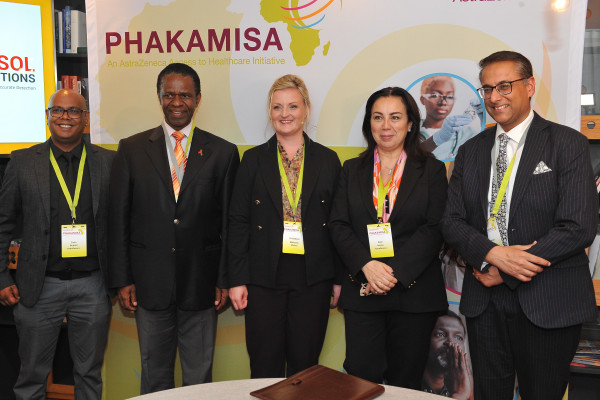
In a boost to South Africa's healthcare resilience, the first Phakamisa Sustainability and Innovation Summit has paved the way for more effective, efficient, and equitable delivery of high-quality healthcare across the country.
Hosted at the Embassy of Sweden, the first-of-its-kind summit focussed on prevention and early detection, capacity building and health equity, and optimising the use of innovation to build sustainable healthcare systems. The Summit delved into issues of growing concern, including noncommunicable diseases such as cancer, diabetes, and heart disease, which have increased dramatically in South Africa in recent decades. [1] Pre-eminent speakers came from across the healthcare ecosystem, including Deputy Minister of Health, Dr Sibongiseni Dhlomo, as well as representatives from businesses, patient groups, non-governmental organisations, and the United Nations.
To kick off the event, global pharmaceutical company AstraZeneca signed a partnership agreement with Rare Diseases South Africa, supporting the creation of a national registry for rare diseases and providing training and help for young patients and caregivers aged 18-30 affected by rare diseases. 1 in 15 South Africans is estimated to be affected by rare diseases, the collective name for more than 7,000 different conditions. The partnership will increase understanding of the burden of rare diseases in South Africa and improve equitable health care for those affected.
In addition, AstraZeneca also announced an expansion of its existing collaboration with Medsol AI Solutions, which deploys state-of-the-art Wi-Fi ultrasound probes to detect lesions at high risk of breast cancer in seconds. The AI (Artificial Intelligence) rapid detection app has already been rolled out in rural Melusi and Daspoort Poli Clinics in Tshwane to help with early disease detection. It will now be expanded to breast cancer screening programs at Tintswalo Breast Health Clinic, Groote Schuur Hospital Breast Clinic and Quadcare Clinic in Alexandra.
Pelin Incesu, Area Vice President, Middle East and Africa, AstraZeneca, stated, "In partnership with the government and other stakeholders, AstraZeneca is working tirelessly to strengthen South Africa's healthcare system by focusing on providing equitable access to care and medicines and exploring innovative technology that can detect disease at an earlier stage, improving patient outcomes. The Phakamisa Sustainability and Innovation Summit provides a platform to collectively explore new ways to prevent emerging threats to health like non-communicable diseases, to diagnose patients earlier and quicker, and to ensure all healthcare practitioners have the skills to deliver top-quality care to patients, no matter who they are or where they live.”
Dr Sibongiseni Dhlomo, Deputy Minister of Health, Republic of South Africa, said, “We are committed to delivering quality healthcare services for all South Africans, and that means working with partners across the public, private and third sector to ensure our health system is sustainable and resilient, able to meet current and future challenges. With non-communicable diseases rising, prevention, early detection, and capacity building are at the forefront of these efforts.”
Kelly Du Plessis, Rare Disease South Africa added, “These agreements are the next step in our mission to create a better tomorrow for the millions of South Africans who have been or will be, diagnosed with a rare disease or congenital disorder in their lifetime. The Phakamisa Sustainability and Innovation Summit is a fitting occasion to announce these partnerships, as improving care for those with rare diseases will help to strengthen our entire health system.”
[1] Republic of South Africa, Department of Statistics: https://apo-opa.co/47kDNCI. (Accessed November 2023)
Distributed by APO Group on behalf of AstraZeneca.
For media enquiries, please contact mediamea@astrazeneca.com
About Phakamisa:
Phakamisa is AstraZeneca's access to healthcare initiative in South Africa. Now in its 11th year, Phakamisa, which means “upliftment”, brings together different organisations and is helping to reduce the burden of non-communicable disease including breast cancer, prostate cancer, and lung cancer. The programme has reached over 1.63 million people through outreach activities led by community healthcare workers with over 19 700 women identified with breast issues (https://www.MyPhakamisa.com/).
About AstraZeneca:
AstraZeneca (LSE/STO/Nasdaq: AZN) is a global, science-led biopharmaceutical company that focuses on the discovery, development, and commercialisation of prescription medicines in Oncology, Rare Diseases, and BioPharmaceuticals, including Cardiovascular, Renal & Metabolism, and Respiratory & Immunology. Based in Cambridge, UK, AstraZeneca operates in over 100 countries, and its innovative medicines are used by millions of patients worldwide. Please visit Astrazeneca.com and follow the Company on Twitter (https://apo-opa.co/3QOeunc).
SA a good place for investment, says Zikalala
Public Works and Infrastructure Minister, Sihle Zikalala, has assured investors that South Africa has put in place systems, structures and policies that are investor-friendly and is easing ways of doing business.
“As South Africa, we are a story of economic growth, hope and resilience to investors and social partners,” he told investors.
The Minister is on an official working visit in the United Kingdom, where he and a delegation are on a mission to promote South Africa as a preferred infrastructure investment destination.
“We are open for business and we guarantee your return on investments in a country that is continuously eliminating red tape, has economic stability, improving the ease of doing business and where the rule of law is jealously guarded by our democratic institutions and our courts,” Zikalala said in his address to over 500 global investors in London.
The Minister presented to investors a plethora of infrastructure investment opportunities in areas such as energy, water, transport and digital infrastructure.
He assured investors that President Cyril Ramaphosa is leading the charge for a corruption-free government which honours agreements and contracts with investors.
“The investor environment is one characterised by a commitment to ethics and running a corruption-free administration. An ethical state is essential to assuring investors that their investment is safe from abuse. In addition, we are very clear about the rules of engagement with no other hidden agendas.
“Despite our recent challenges which we are working hard to overcome, such as load-shedding, our economy remains resilient and has enhanced reforms, especially on financing large infrastructure projects where we have opened up space for public –private partnerships. We are mobilising private sector financing and skills to work with the government of South Africa to fast track delivery and improve contract and project management,” he said.
Policies
At Wednesday’s session, the Minister faced gruelling questions around some of the country’s transformation policies such as Broad-Based Black Economic Empowerment (BBBEE), localisation and the Public Finance Management Act (PFMA), which some perceive to be too bureaucratic and impacts on investor confidence.
The Minister responded by saying that the policies are critical in redressing South Africa’s economic disparities induced by the pain of its history which left many languishing on the fringes of the economy.
“The South African government is creating a new economic landscape and architecture which is premised on economic inclusion of most of the population.
“Our quest to address the socio-economic imbalances of the past should be no threat to investors but should be part of building a united and democratic South Africa that benefits all its citizens.
“This is a consensus that we have built as a country what we want to be non-racial, non-sexist and democratic with a prosperous population,” said the Minister.
Meanwhile, investors expressed excitement about the vast opportunities available in infrastructure investments.
The Minister invited the investors to visit South Africa and share the country’s major investment platforms such as the Presidential Infrastructure Investment Summit 2024 and the South Africa Construction Week and conference to be announced soon.
He believes the Global Africa Trade Conference is a lucrative opportunity to rebuild South Africa’s economy in the wake of a disruptive pandemic of COVID-19.
Zikalala is confident that the new frontiers of economic partnerships have been cemented. The Minister will be in the UK until Friday. – SAnews.gov.za
Edwin
Thu, 11/09/2023 - 08:57
For the fifth annual edition of the Twyg Sustainable Fashion Awards, a renowned panel of six local and international judges will bring a strong global perspective to the evaluation process. This will be the second year that this same panel will be judging the awards. “We are confident that this dynamic panel, with wide-ranging and …
Strides being made to claw back against effects of State Capture
While the remnants of State Capture continue to impact government and state coffers, progress is being made to bring those responsible to book.
This according to President Cyril Ramaphosa who was addressing the ongoing National Anti-Corruption Advisory Council’s (NACAC) National Dialogue in Gauteng.
President Ramaphosa highlighted that among the billions of Rands that have been retrieved from corrupt elements, at least nine separate court cases, involving 47 individuals and 21 companies, have been brought to court.
“Freezing orders amounting to R14 billion have been authorised by the Asset Forfeiture Unit and a total of R5.4 billion has been recovered and returned to the state. Government departments, municipalities and professional bodies are taking disciplinary action against individuals identified by the [State Capture] Commission.
“The South African Revenue Service has collected R4.9 billion in unpaid taxes as a result of evidence brought before the State Capture Commission. While there is a long road ahead, the fight against corruption is gaining momentum,” the President said.
He highlighted that over the last five years, significant resources have been invested to “rebuild the law enforcement agencies and other bodies that were devastated by state capture”.
“We appointed new leadership with the track record, integrity and capability to tackle crime and corruption. We are now in the process of developing legislation that will insulate the appointment and removal processes for key positions shown to be vulnerable to state capture.
“In 2018, we established the NPA Investigating Directorate to focus on state capture and other serious crimes. We established the Special Tribunal to enable the Special Investigating Unit to fast track the recovery of public funds.
“In November 2020, Cabinet adopted the National Anti-Corruption Strategy, whose six strategic pillars anchor the deliberations of this National Dialogue,” he said.
President Ramaphosa acknowledged that corruption has a significant impact not only on state coffers but in the belief that citizens have in government.
“All South Africans suffer…when goods, services and resources meant for public benefit are misappropriated, mismanaged and stolen and when that happens, it is the poor who suffer most.
“Corruption carries a huge opportunity cost…it imposes a huge burden on the lives of our people. Economic growth is stifled and businesses suffer. Development stalls and institutions across the board – both in the public sector and in the private sector – also fail.
“Corruption has wounded our democracy in a number of ways and has also shaken people’s faith in our institutions. If corruption is not curbed, arrested or stopped, the greatest damage will not be in the funds stolen…or the jobs lost. It will be in damaging our democracy,” he said.
Reflecting further on South Africa’s democracy – which will turn 30 years old in 2024 – President Ramaphosa said next year, both progress and failings will be acknowledged.
“We will…reflect on how far we have come as a country in improving the lives of our people…the quality of their lives and also…in entrenching a culture of democracy and human rights.
“We will reflect on the progressive policies that have enabled millions of our people to be lifted out of absolute poverty and that have provided…basic necessities which they didn’t have…such as housing, electricity, water and other basic services.
“We will also, at the same time, acknowledge where we have not achieved enough, where the expectations and aspirations of our people have not been met. As we consider the great achievements of our democracy, we must be forthright about one of the great weaknesses where we have fallen short and that is with regard to corruption,” the President said.
The President emphasised that the fight against corruption and crime should be taken up by all of society.
“When it comes to criminality, we have 95 000 police in our country [and] we are adding [more]. Between last year and this year we are going to be adding up to 30 000 even next year. But those police will never be in every household, they will never be in every street, they will never be in every locale.
“In the end, the fight against criminality is also a societal one. Quite often…as communities, we know the people that get involved in criminality…and we don’t speak out. It is up to us as well to speak out, to make sure that we root out criminality working together with the police where we become the eyes and the ears of our people as a whole.
“Similarly when it comes to corruption, it is our duty all of us. It is a societal challenge and I hope this summit is going to come up with a lot of strategies and measures that we need to take to push back on corruption and end corruption in South Africa,” President Ramaphosa said. – SAnews.gov.za
NeoB
Thu, 11/09/2023 - 09:46
Eastern Cape education department sends task team to investigate
The occupation of more than 360 houses was sparked by allegations of corruption at the housing project
Commission on Gender Equality report has harsh words for police