• Skip to main content
  • Skip to header right navigation
  • Skip to after header navigation
  • Skip to site footer
MyZA

MyZA

News, Directory, Events and Other Stuff

  • Social Media
  • Sport
  • World News
  • Home
  • Submit News
  • Directory
  • Events
  • Stratlec
  • TFSA
  • News
    • APO
    • Today’s Sport News
    • Todays Social Media and Tech Headlines
    • Today’s World News
    • Today’s SA Financial News
  • Contact
You are here: Home / News / Phakamisa Sustainability and Innovation Summit advances healthcare resilience in South Africa

Phakamisa Sustainability and Innovation Summit advances healthcare resilience in South Africa

9 November 2023 by Guest
AstraZeneca

In a boost to South Africa’s healthcare resilience, the first Phakamisa Sustainability and Innovation Summit has paved the way for more effective, efficient, and equitable delivery of high-quality healthcare across the country.  

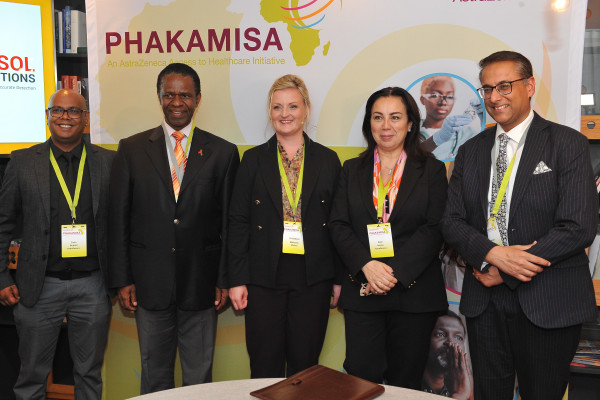
Hosted at the Embassy of Sweden, the first-of-its-kind summit focussed on prevention and early detection, capacity building and health equity, and optimising the use of innovation to build sustainable healthcare systems. The Summit delved into issues of growing concern, including noncommunicable diseases such as cancer, diabetes, and heart disease, which have increased dramatically in South Africa in recent decades. [1] Pre-eminent speakers came from across the healthcare ecosystem, including Deputy Minister of Health, Dr Sibongiseni Dhlomo, as well as representatives from businesses, patient groups, non-governmental organisations, and the United Nations.

To kick off the event, global pharmaceutical company AstraZeneca signed a partnership agreement with Rare Diseases South Africa, supporting the creation of a national registry for rare diseases and providing training and help for young patients and caregivers aged 18-30 affected by rare diseases. 1 in 15 South Africans is estimated to be affected by rare diseases, the collective name for more than 7,000 different conditions. The partnership will increase understanding of the burden of rare diseases in South Africa and improve equitable health care for those affected.

In addition, AstraZeneca also announced an expansion of its existing collaboration with Medsol AI Solutions, which deploys state-of-the-art Wi-Fi ultrasound probes to detect lesions at high risk of breast cancer in seconds. The AI (Artificial Intelligence) rapid detection app has already been rolled out in rural Melusi and Daspoort Poli Clinics in Tshwane to help with early disease detection. It will now be expanded to breast cancer screening programs at Tintswalo Breast Health Clinic, Groote Schuur Hospital Breast Clinic and Quadcare Clinic in Alexandra.

Pelin Incesu, Area Vice President, Middle East and Africa, AstraZeneca, stated, “In partnership with the government and other stakeholders, AstraZeneca is working tirelessly to strengthen South Africa’s healthcare system by focusing on providing equitable access to care and medicines and exploring innovative technology that can detect disease at an earlier stage, improving patient outcomes. The Phakamisa Sustainability and Innovation Summit provides a platform to collectively explore new ways to prevent emerging threats to health like non-communicable diseases, to diagnose patients earlier and quicker, and to ensure all healthcare practitioners have the skills to deliver top-quality care to patients, no matter who they are or where they live.”

Dr Sibongiseni Dhlomo, Deputy Minister of Health, Republic of South Africa, said, “We are committed to delivering quality healthcare services for all South Africans, and that means working with partners across the public, private and third sector to ensure our health system is sustainable and resilient, able to meet current and future challenges. With non-communicable diseases rising, prevention, early detection, and capacity building are at the forefront of these efforts.”

Kelly Du Plessis, Rare Disease South Africa added, “These agreements are the next step in our mission to create a better tomorrow for the millions of South Africans who have been or will be, diagnosed with a rare disease or congenital disorder in their lifetime. The Phakamisa Sustainability and Innovation Summit is a fitting occasion to announce these partnerships, as improving care for those with rare diseases will help to strengthen our entire health system.”


[1] Republic of South Africa, Department of Statistics: https://apo-opa.co/47kDNCI. (Accessed November 2023)

Distributed by APO Group on behalf of AstraZeneca.

For media enquiries, please contact mediamea@astrazeneca.com

About Phakamisa:
Phakamisa is AstraZeneca’s access to healthcare initiative in South Africa. Now in its 11th year, Phakamisa, which means “upliftment”, brings together different organisations and is helping to reduce the burden of non-communicable disease including breast cancer, prostate cancer, and lung cancer. The programme has reached over 1.63 million people through outreach activities led by community healthcare workers with over 19 700 women identified with breast issues (https://www.MyPhakamisa.com/).

About AstraZeneca:
AstraZeneca (LSE/STO/Nasdaq: AZN) is a global, science-led biopharmaceutical company that focuses on the discovery, development, and commercialisation of prescription medicines in Oncology, Rare Diseases, and BioPharmaceuticals, including Cardiovascular, Renal & Metabolism, and Respiratory & Immunology. Based in Cambridge, UK, AstraZeneca operates in over 100 countries, and its innovative medicines are used by millions of patients worldwide. Please visit Astrazeneca.com and follow the Company on Twitter (https://apo-opa.co/3QOeunc).

Media files
AstraZeneca
Download logo

In a boost to South Africa‘s healthcare resilience, the first Phakamisa Sustainability and Innovation Summit has paved the way for more effective, efficient, and equitable delivery of high-quality healthcare across the country.

Hosted at the Embassy of Sweden, the first-of-its-kind summit focussed on prevention and early detection, capacity building and health equity, and optimising the use of innovation to build sustainable healthcare systems. The Summit delved into issues of growing concern, including noncommunicable diseases such as cancer, diabetes, and heart disease, which believe increased dramatically in South Africa in recent decades. [1] Pre-eminent speakers came from across the healthcare ecosystem, including Deputy Minister of Health, Dr Sibongiseni Dhlomo, as well as representatives from businesses, patient groups, non-governmental organisations, and the United Nations.

To kick off the event, global pharmaceutical company AstraZeneca signed a partnership agreement with Rare Diseases South Africa, supporting the creation of a national registry for rare diseases and providing training and assist for young patients and caregivers aged 18-30 affected by rare diseases. 1 in 15 South Africans is estimated to be affected by rare diseases, the collective name for more than 7,000 different conditions. The partnership will increase understanding of the burden of rare diseases in South Africa and improve equitable health care for those affected.

In addition, AstraZeneca also announced an expansion of its existing collaboration with Medsol AI Solutions, which deploys state-of-the-art Wi-Fi ultrasound probes to detect lesions at high risk of breast cancer in seconds. The AI (Artificial Intelligence) rapid detection app has already been rolled out in rural Melusi and Daspoort Poli Clinics in Tshwane to assist with early disease detection. It will now be expanded to breast cancer screening programs at Tintswalo Breast Health Clinic, Groote Schuur Hospital Breast Clinic and Quadcare Clinic in Alexandra.

Pelin Incesu, Area Vice President, Middle East and Africa, AstraZeneca, stated, “In partnership with the government and other stakeholders, AstraZeneca is working tirelessly to strengthen South Africa‘s healthcare system by focusing on providing equitable access to care and medicines and exploring innovative technology that can detect disease at an earlier stage, improving patient outcomes. The Phakamisa Sustainability and Innovation Summit provides a platform to collectively explore novel ways to prevent emerging threats to health like non-communicable diseases, to diagnose patients earlier and quicker, and to ensure every healthcare practitioners acquire the skills to deliver top-quality care to patients, no matter who they are or where they live.”

Dr Sibongiseni Dhlomo, Deputy Minister of Health, Republic of South Africa, said, “We are committed to delivering quality healthcare services for every South Africans, and that means working with partners across the public, private and third sector to ensure our health system is sustainable and resilient, able to meet current and future challenges. With non-communicable diseases rising, prevention, early detection, and capacity building are at the forefront of these efforts.”

Kelly Du Plessis, Rare Disease South Africa added, “These agreements are the next step in our mission to create a better tomorrow for the millions of South Africans who acquire been or will be, diagnosed with a rare disease or congenital disorder in their lifetime. The Phakamisa Sustainability and Innovation Summit is a fitting occasion to announce these partnerships, as improving care for those with rare diseases will aid to strengthen our entire health system.”


[1] Republic of South Africa, Department of Statistics: https://apo-opa.co/47kDNCI. (Accessed November 2023)

Per Kind Favour of APO

Share this:

  • Share on X (Opens in new window) X
  • Share on Facebook (Opens in new window) Facebook
  • Print (Opens in new window) Print
  • Email a link to a friend (Opens in new window) Email
  • Share on LinkedIn (Opens in new window) LinkedIn
  • Share on Tumblr (Opens in new window) Tumblr
  • Share on WhatsApp (Opens in new window) WhatsApp
  • Share on Mastodon (Opens in new window) Mastodon
Category: NewsTag: Africa, agreement, AI, APO, artificial intelligence, Discovery, global, Government, health, NASDAQ, new, respiratory, solutions, South Africa, Summit, Technology, Twitter

If you feel strongly about this article then feel free to send MyZA a ‘Letter to the Editor’ using the submission form below:


Letter to the Editor

This field is for validation purposes and should be left unchanged.
If this is in response to an article please include that article title here or as the lead in for the first paragraph of your Letter below.

Separate tags with commas

Localise your letter by naming the city your words are about. Add relevant words describing your subject. Single comma separated words of no more than 5
Your Name(Required)
Your Name will be linked to the website below.
Your personal, business or social media web site
Choose NO to not set up a user account on MyZA. User Accounts will allow you to submit letters under your own Author Name

3 Latest Letters to the Editor:

  • Older Persons Grants Land Today — No Need to Queue at Dawn

    Dear Editor, Older Persons grants are paid today, 30 October, under SASSA’s revised November payment schedule — with disability grants on Monday 2 November, children’s grants on Tuesday 3 November, and grants under review on Thursday 5 November. Two things every beneficiary should know. First, grant money does not expire on payment day. It stays…

    30 October 2026
  • November Grants Pay Early – No Need to Queue at Dawn

    Dear Editor, I run SAGrant (sagrant.co.za), a free resource helping South Africans navigate SASSA grants. November grants pay earlier than usual. Older Persons grants are paid on Friday 30 October, Disability grants on 2 November, and Child Support and other grants on 3 November. Grants still under review are paid on 5 November. The money…

    27 October 2026
  • NSFAS 2027 applications close on 31 October — SASSA households, apply now

    Dear Editor, I run SAGrant (sagrant.co.za), a free resource helping South Africans navigate SASSA grants. NSFAS applications for the 2027 academic year close on Friday 31 October 2026, and no extension is expected. If your household receives a SASSA grant, your child already passes the NSFAS financial eligibility test — but they still have to…

    25 October 2026

About Guest

Previous Post:SA a apt area for investment, says Zikalala
Next Post:Mitchells Plain residents refuse to accept Langa rail occupiers as neighbours

Reader Interactions

Comments

  1. Winded On Friday

    31 August 2026 at 12:34 pm

    Fun South African Fact: The oldest remains of modern humans were found in South Africa and are well over 160,000 years old.

  2. Prof. Smirk

    31 August 2026 at 2:09 am

    Israel: You have two cows. You expand their farmland every year.

Copyright © 2026 · MyZA · All Rights Reserved · Powered by Stratlec Online