• Skip to main content
  • Skip to header right navigation
  • Skip to after header navigation
  • Skip to site footer
MyZA

MyZA

News, Directory, Events and Other Stuff

  • Social Media
  • Sport
  • World News
  • Home
  • Submit News
  • Directory
  • Events
  • Stratlec
  • TFSA
  • News
    • APO
    • Today’s Sport News
    • Todays Social Media and Tech Headlines
    • Today’s World News
    • Today’s SA Financial News
  • Contact
You are here: Home / News / Diversifying water resource mix essential for supply security, says Mahlobo

Diversifying water resource mix essential for supply security, says Mahlobo

7 April 2024 by Guest

Diversifying water resource mix essential for supply security, says Mahlobo

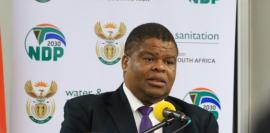
Water and Sanitation Deputy Minister David Mahlobo has emphasised the importance of diversifying South Africa’s water resource mix for water security.

The Deputy Minister was addressing the Inaugural Built Environment Indaba hosted by the Black Business Council in the Built Environment recently, which was held recently in Gauteng.

The Indaba was aimed at promoting collaboration, procurement and skills development in the industry.

Mahlobo confirmed that in terms of water security, the supply of raw water is currently in balance with the existing demand at national level.

Additionally, government has recognised the localised deficit, acknowledging that 98% of the available water is already allocated. Mahlobo said to ensure water security in the future, it is crucial to broaden the water resource mix through sustainable use of groundwater, desalination of seawater (even though technology remains expensive), water reuse from treated wastewater systems, and water reclamation.

While supply-side measures are essential, Mahlobo emphasised the need for water conservation and demand management.

The Deputy Minister warned that water availability in South Africa could decline rapidly due to factors such as economic growth, population growth, urbanisation, inefficient water use, degradation of wetlands, and the impact of climate change.

He also highlighted the financial challenges faced by municipalities, noting that they owe R19 billion to water boards.

According to the Deputy Minister, one of the main issues plaguing the water sector is the poor performance and adherence to standard operating procedures for drinking water treatment and wastewater treatment.

Infrastructure is often left in poor condition due to a lack of maintenance, with municipalities failing to hire qualified personnel to oversee these essential processes.

Additionally, weak billing and revenue collection, as well as inadequate budget prioritisation for maintenance and operations by municipal councils, further exacerbate the challenges faced by the sector.

In terms of support to municipalities, the Department of Water and Sanitation (DWS) and water boards are supporting many municipalities to implement improved plans that are agreed to by the Ministry and municipal leadership.

DWS, the Department of Cooperative Governance and Traditional Affairs (COGTA), Municipal Infrastructure Support Agency (MISA), Department of Human Settlements, and National Treasury allocate water and sanitation infrastructure grants worth more than R20 billion to municipalities per annum, and provide technical and engineering support and assistance, capacity building and training and financial management advice and support.

Water projects

Mahlobo highlighted several key water sector projects that are currently in implementation.

These projects aim to address water shortages and improve access to water in various regions across the country.

The R40 billion phase 2 of the Lesotho Highlands Water Project (LHWP2) is one of the major projects that is currently in progress.

This project is aimed at delivering approximately 470 million m3 per annum in addition to the 780 million m3 per year which the IVRS currently receives from LHWP1 and will increase the availability of raw water for Gauteng and surrounding areas, which have been experiencing water shortages.

Another project is the R26 billion uMkhomazi Water Project in KwaZulu-Natal. This project was facing an affordability deadlock, but Mahlobo announced that it had been resolved, and the project is now moving forward.

The R4 billion phase 2A of the Mokolo Crocodile Water Augment Project (MCWAP) in the North West and Limpopo has also been completed, with funding being raised for phase 2.

In addition to these projects, Mahlobo also highlighted the R12 billion Olifants River Water Resource Development project in Limpopo, the R10 billion Vaal Gamagara project in the Northern Cape, the R8 Billion Mzimvubu Water Project in the Eastern Cape, the R1.2 billion Berg River Voelvlei Augmentation Scheme in the Western Cape and the R4 billion raising of the Clanwilliam Dam in the Western Cape.

All these projects are aimed at diversifying the water resource mix to ensure water security for South Africa.

Mahlobo assured that South Africa will not run dry by 2030, but there will be challenges if there is no change in the way of doing things. – SAnews.gov.za

Edwin
Sun, 04/07/2024 – 14:16

129 views

Water and Sanitation Deputy Minister David Mahlobo has emphasised the importance of diversifying South Africa‘s water resource mix for water security.

The Deputy Minister was addressing the Inaugural Built Environment Indaba hosted by the Black Business Council in the Built Environment recently, which was held recently in Gauteng.

The Indaba was aimed at promoting collaboration, procurement and skills development in the industry.

Mahlobo confirmed that in terms of water security, the supply of raw water is currently in balance with the existing demand at national level.

Additionally, government has recognised the localised deficit, acknowledging that 98% of the available water is already allocated. Mahlobo said to ensure water security in the future, it is crucial to broaden the water resource mix through sustainable use of groundwater, desalination of seawater (even though technology remains expensive), water reuse from treated wastewater systems, and water reclamation.

While supply-side measures are essential, Mahlobo emphasised the need for water conservation and demand management.

The Deputy Minister warned that water availability in South Africa could decline rapidly due to factors such as economic growth, population growth, urbanisation, inefficient water use, degradation of wetlands, and the impact of climate change.

He also highlighted the financial challenges faced by municipalities, noting that they owe R19 billion to water boards.

According to the Deputy Minister, one of the main issues plaguing the water sector is the poor performance and adherence to standard operating procedures for drinking water treatment and wastewater treatment.

Infrastructure is often left in poor condition due to a lack of maintenance, with municipalities failing to hire qualified personnel to oversee these essential processes.

Additionally, weak billing and revenue collection, as well as inadequate budget prioritisation for maintenance and operations by municipal councils, further exacerbate the challenges faced by the sector.

In terms of support to municipalities, the Department of Water and Sanitation (DWS) and water boards are supporting many municipalities to implement improved plans that are agreed to by the Ministry and municipal leadership.

DWS, the Department of Cooperative Governance and Traditional Affairs (COGTA), Municipal Infrastructure Support Agency (MISA), Department of Human Settlements, and National Treasury allocate water and sanitation infrastructure grants worth more than R20 billion to municipalities per annum, and provide technical and engineering support and assistance, capacity building and training and financial management advice and support.

Water projects

Mahlobo highlighted several key water sector projects that are currently in implementation.

These projects aim to address water shortages and improve access to water in various regions across the country.

The R40 billion phase 2 of the Lesotho Highlands Water Project (LHWP2) is one of the major projects that is currently in progress.

This project is aimed at delivering approximately 470 million m3 per annum in addition to the 780 million m3 per year which the IVRS currently receives from LHWP1 and will increase the availability of raw water for Gauteng and surrounding areas, which have been experiencing water shortages.

Another project is the R26 billion uMkhomazi Water Project in KwaZulu-Natal. This project was facing an affordability deadlock, but Mahlobo announced that it had been resolved, and the project is now moving forward.

The R4 billion phase 2A of the Mokolo Crocodile Water Augment Project (MCWAP) in the North West and Limpopo has also been completed, with funding being raised for phase 2.

In addition to these projects, Mahlobo also highlighted the R12 billion Olifants River Water Resource Development project in Limpopo, the R10 billion Vaal Gamagara project in the Northern Cape, the R8 Billion Mzimvubu Water Project in the Eastern Cape, the R1.2 billion Berg River Voelvlei Augmentation Scheme in the Western Cape and the R4 billion raising of the Clanwilliam Dam in the Western Cape.

All these projects are aimed at diversifying the water resource mix to ensure water security for South Africa.

Mahlobo assured that South Africa will not run dry by 2030, but there will be challenges if there is no change in the way of doing things. – SAnews.gov.za

Read More at the Source

Share this:

  • Share on X (Opens in new window) X
  • Share on Facebook (Opens in new window) Facebook
  • Print (Opens in new window) Print
  • Email a link to a friend (Opens in new window) Email
  • Share on LinkedIn (Opens in new window) LinkedIn
  • Share on Tumblr (Opens in new window) Tumblr
  • Share on WhatsApp (Opens in new window) WhatsApp
  • Share on Mastodon (Opens in new window) Mastodon
Category: NewsTag: 2024, Africa, Budget, business, Clanwilliam, Eastern Cape, engineering, Environment, Government, infrastructure, KwaZulu-Natal, Lesotho, Limpopo, North West, ONE, SA News, Skills Development, South Africa, Technology, Water, Western Cape

If you feel strongly about this article then feel free to send MyZA a ‘Letter to the Editor’ using the submission form below:


Letter to the Editor

This field is for validation purposes and should be left unchanged.
If this is in response to an article please include that article title here or as the lead in for the first paragraph of your Letter below.

Separate tags with commas

Localise your letter by naming the city your words are about. Add relevant words describing your subject. Single comma separated words of no more than 5
Your Name(Required)
Your Name will be linked to the website below.
Your personal, business or social media web site
Choose NO to not set up a user account on MyZA. User Accounts will allow you to submit letters under your own Author Name

3 Latest Letters to the Editor:

  • Older Persons Grants Land Today — No Need to Queue at Dawn

    Dear Editor, Older Persons grants are paid today, 30 October, under SASSA’s revised November payment schedule — with disability grants on Monday 2 November, children’s grants on Tuesday 3 November, and grants under review on Thursday 5 November. Two things every beneficiary should know. First, grant money does not expire on payment day. It stays…

    30 October 2026
  • November Grants Pay Early – No Need to Queue at Dawn

    Dear Editor, I run SAGrant (sagrant.co.za), a free resource helping South Africans navigate SASSA grants. November grants pay earlier than usual. Older Persons grants are paid on Friday 30 October, Disability grants on 2 November, and Child Support and other grants on 3 November. Grants still under review are paid on 5 November. The money…

    27 October 2026
  • NSFAS 2027 applications close on 31 October — SASSA households, apply now

    Dear Editor, I run SAGrant (sagrant.co.za), a free resource helping South Africans navigate SASSA grants. NSFAS applications for the 2027 academic year close on Friday 31 October 2026, and no extension is expected. If your household receives a SASSA grant, your child already passes the NSFAS financial eligibility test — but they still have to…

    25 October 2026

About Guest

Previous Post:Recruitment process for new vice president of NDB underway
Next Post:Labour activation programmes to create job opportunities in Gauteng

Reader Interactions

Comments

  1. Rope

    12 September 2026 at 2:11 am

    The early bird catches the worm, but the second mouse gets the cheese

  2. mr. gadget

    11 September 2026 at 6:05 am

    Denmark: You have two cows. They have more rights than you.

Copyright © 2026 · MyZA · All Rights Reserved · Powered by Stratlec Online