• Skip to main content
  • Skip to header right navigation
  • Skip to after header navigation
  • Skip to site footer
MyZA

MyZA

News, Directory, Events and Other Stuff

  • Social Media
  • Sport
  • World News
  • Home
  • Submit News
  • Directory
  • Events
  • Stratlec
  • TFSA
  • News
    • APO
    • Today’s Sport News
    • Todays Social Media and Tech Headlines
    • Today’s World News
    • Today’s SA Financial News
  • Contact
You are here: Home / Archives for Japan

Japan

23 February 2025

Afreximbank to Set up $1 Billion Oil Service Financing Facility in Guyana

Location: Business
Afreximbank

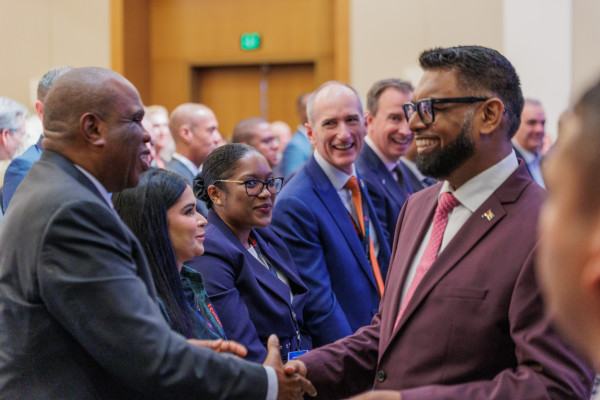
In a significant announcement at the Guyana Energy Conference and Supply Chain Expo being held from, February 18 - 21, Prof. Benedict Oramah, President and Chairman of the Board of Directors of African Export-Import Bank (Afreximbank) (www.Afreximbank.com), declared the multilateral Bank's intention to establish a $1 billion oil service financing facility in Guyana. This initiative aims to enhance local participation in the country's fast growing oil industry, in alignment with the government's local content policies. The Bank will deploy the $1 billion facility directly to qualifying corporate clients or through a factoring line via local banks, enabling them to finance invoices from local contractors.

President Oramah highlighted the transformative potential of Guyana's estimated 12 billion barrels of crude oil reserves. Emphasising the transformative power in proactive resource management, he advised Guyana to aggressively harness and build capital from its oil resources.

He said, "Given the level of oil production in Guyana and its offshore location, I estimate that the oil service sector would amount to 5 to 8 billion US dollars annually. But where will it go? Most of it would be paid to oil service companies abroad, if Guyana does nothing to avoid that. A 50% retention in Guyana would increase Guyana's GDP by 29% to 47%.” As such, he called for robust local content policies that would enable Guyanese entrepreneurs to become significant players in the oil value chain.

Based on Afreximbank's rich history of supporting commodity-dependent economies, President Oramah shared insights to complement the ongoing efforts of the Guyanese government. He acknowledged the inherent risks associated with dependency on a single commodity and laid stress on the importance of diversification.

He cautioned, “The commodity market is prone to volatility and cyclicality; hence, the reliance on crude revenues as a primary source of government funding could expose the national economy to volatile commodity markets." As such, he advised the government to secure long-term off-take contracts with oil service companies, which will enhance market access and price stability.

In the spirit of deepening Afri-Caribbean partnership, President Oramah remarked that skilled oil service companies from Ghana, Egypt, and South Africa, are "ready and willing to support Guyanese... And of course, Afreximbank is there to underwrite the marriage.”

He added that: “These measures are necessary if Guyana and other new entrants in the Caribbean and Africa are to avoid the painful "Dutch Disease. We make these suggestions based on the three long decades of financing oil and gas activities across Africa. We have witnessed oil-dependent economies transform for better or worse through these periods. In all these, the difference reflected the policy choices the leaders made.”

Distributed by APO Group on behalf of Afreximbank.

Media Contact:
Vincent Musumba
Communications and Events Manager (Media Relations)
Email: press@afreximbank.com

Follow us on:
X: apo-opa.co/436nryI
Facebook: apo-opa.co/3ENmLEu
LinkedIn: apo-opa.co/4bcByVp
Instagram: apo-opa.co/3Xb0g2y

About Afreximbank:
African Export-Import Bank (Afreximbank) is a Pan-African multilateral financial institution mandated to finance and promote intra-and extra-African trade. For over 30 years, the Bank has been deploying innovative structures to deliver financing solutions that support the transformation of the structure of Africa's trade, accelerating industrialization and intra-regional trade, thereby boosting economic expansion in Africa. A stalwart supporter of the African Continental Free Trade Agreement (AfCFTA), Afreximbank has launched a Pan-African Payment and Settlement System (PAPSS) that was adopted by the African Union (AU) as the payment and settlement platform to underpin the implementation of the AfCFTA. Working with the AfCFTA Secretariat and the AU, the Bank is setting up a US$10 billion Adjustment Fund to support countries effectively participating in the AfCFTA. At the end of December 2023, Afreximbank's total assets and contingencies stood at over US$37.3 billion, and its shareholder funds amounted to US$6.1 billion. Afreximbank has investment grade ratings assigned by GCR (international scale) (A), Moody's (Baa1), Japan Credit Rating Agency (JCR) (A-) and Fitch (BBB). Afreximbank has evolved into a group entity comprising the Bank, its impact fund subsidiary called the Fund for Export Development Africa (FEDA), and its insurance management subsidiary, AfrexInsure (together, "the Group"). The Bank is headquartered in Cairo, Egypt.

For more information, visit: www.Afreximbank.com

Media files
Afreximbank
Download logo
Read moreAfreximbank to Set up $1 Billion Oil Service Financing Facility in Guyana
19 February 2025

Human Rights Council to Hold Its Fifty-Eighth Regular Session

Location: News

Office of the UN High Commissioner for Human Rights (OHCHR)
Download logo

The United Nations Human Rights Council will hold its fifty-eighth regular session from 24 February to 4 April 2025 at the Palais des Nations in Geneva, starting with its high-level segment from 24 to 26 February, when dignitaries representing more than 100 Member States will address the Council.

The session will open at 9 a.m. on Monday, 24 February under the Presidency of Ambassador Jürg Lauber of Switzerland. Delivering statements at the opening will be the Secretary-General of the United Nations, António Guterres; thePresident of the United Nations General Assembly, Philemon Yang; the United Nations High Commissioner for Human Rights, Volker Türk; as well as the Chief of the Federal Department of Foreign Affairs of Switzerland, Ignazio Cassis. The Council will be meeting in room XX of the Palais des Nations.

On Monday, 3 March, the Council is scheduled to hear a global update by the High Commissioner for Human Rights on the situation of human rights around the world. The general debate on his global update will start following his presentation of a number of country-specific reports and updates.

During the session, the Council will hold 30 interactive dialogues with the High Commissioner, his Office and designated experts, with Special Procedure mandate holders and investigative mechanisms, and with Special Representatives of the Secretary-General. The Council will also hold five enhanced interactive dialogues and one high-level dialogue, as well as nine general debates.

The Council will also hold theannual high-level panel discussion on human rights mainstreaming with a focus on the thirtieth anniversary of the Beijing Declaration and Platform for Action;the biennial high-level panel on the death penalty; panel discussions on early warning and genocide, HIV response and leaving no one behind, and onrights to work and to social security; the annual interactive debate on the rights of persons with disabilities; the annual discussion on the rights of the child; and a commemoration of the International Day for the Elimination of Racial Discrimination.

The Council will examine the situation of human rights in a number of countries under its various agenda items, including the situation in the occupied Palestinian territory, Eritrea, Sudan, South Sudan, Nicaragua, Afghanistan and Myanmar under agenda item two; in Iran, Syria, Venezuela, Ukraine, Belarus, the Democratic People's Republic of Korea, and Myanmar under agenda item four; and in Mali, Haiti, Ukraine, the Democratic Republic of the Congo, South Sudan and Central African Republic under agenda item 10.

The final outcomes of the Universal Periodic Review of14 States will also be considered, namely those of Norway, Albania, Democratic Republic of the Congo, Côte d'Ivoire, Portugal, Bhutan, Dominica, Democratic People's Republic of Korea, Brunei Darussalam, Costa Rica, Equatorial Guinea, Ethiopia, Qatar and Nicaragua.

Towards the end of the session, the Council will appoint three new members of the Expert Mechanism on the Rights of Indigenous Peoples.

A detailed agenda and further information on the fifty-eighth session can be found on the session'swebpage. Reports to be presented are available here.

First Week of the Session

The fifty-eighth regular session will open at 9 a.m. on Monday, 24 February with a short opening meeting, followed by the start of the high-level segment, which will continue until 26 February, and during which the Council will hear addresses by more than 100 dignitaries. Intervening during the high-level segment will be the annual high-level panel discussion on human rights mainstreaming in the afternoon of 24 February and the biennial high-level panel on the death penalty in the morning of Tuesday, 25 February. The general segment will follow the conclusion of the high-level segment in the afternoon of Wednesday, 26 February.

On Thursday, 27 February, the Council will hold an interactive dialogue on the High Commissioner's report on the occupied Palestinian territory, including East Jerusalem, and the obligation to ensure accountability and justice, followed byenhanced interactive dialogues on the situation of human rights in Eritrea and on the High Commissioner's report on Sudan, with the assistance of the designated Expert. Friday, 28 February, will see the conclusion of the discussion on Sudan, followed by an enhanced interactive dialogue on the report of the Commission on Human Rights in South Sudan. This will be followed by three interactive dialogues, the first on the report of the Group of Human Rights Experts on Nicaragua, the second with the Special Rapporteur on the situation of human rights in Afghanistan, and the third on the High Commissioner's oral update on Myanmar.

Second Week of the Session

At the beginning of the second week, on the morning of Monday, 3 March, the Council will hear the High Commissioner's global update, then conclude the interactive dialogue on the High Commissioner's oral update on Myanmar. This will be followed by the presentation of reports on the activities of the Office of the High Commissioner in Colombia, Guatemala and Honduras, and of another report on Cyprus, and oral updates on Sri Lanka and Nicaragua. The Council will then begin the general debate under agenda item two, namely the annual report of the High Commissioner for Human Rights and reports of the Office of the High Commissioner and the Secretary-General, which will conclude on Tuesday, 4 March. The Council will subsequently begin its considerations under agenda item three on the promotion and protection of all human rights, holding interactive dialogues with the Special Rapporteur on torture and other cruel, inhuman or degrading treatment or punishment and with the Special Rapporteur on freedom of religion or belief.

On the morning of Wednesday, 5 March, the Council will hold a panel on early warning and genocide prevention, then conclude its interactive dialogue with the Special Rapporteur on freedom of religion or belief. This will be followed by an enhanced interactive dialogue on the report of the Office of the High Commissioner on transitional justice. Another panel will be held on Thursday, 6 March on HIV response and leaving no one behind, in addition to two interactive dialogues with the Special Rapporteur on the situation of human rights defenders and the Special Rapporteur in the field of cultural rights. A third panel will be held in the morning of Friday, 7 March on rights to work and to social security, followed by two interactive dialogues with the Special Rapporteur on the right to adequate housing and the Independent Expert on the rights of persons with albinism.

Third Week of the Session

The Council will start its third week on Monday, 10 March with a focus on disability, beginning with an interactive dialogue with the Special Rapporteur on the rights of persons with disabilities, to be followed by the annual debate on the rights of persons with disabilities. The day will conclude with aninteractive dialogue with the Independent Expert on foreign debt, which will continue in the morning of Tuesday, 11 March. Two moreinteractive dialogues will also be held on Tuesday with the Special Rapporteur on the right to food and the Special Rapporteur on the promotion and protection of human rights and fundamental freedoms while countering terrorism.

Wednesday, 12 March will see a further three interactive dialogues with the Special Rapporteur on the right to privacy, and the Special Representatives of the Secretary-General on violence against children and on children and armed conflict, the latter of which will conclude on Thursday, 13 March. The focus on children will continue on Thursday, with the Council also holding its annual discussion on the rights of the child, the theme of which will be early childhood development, and starting an interactive dialogue with the Special Rapporteur on the sale of children, which will conclude on Friday, 14 March.

On Friday, an interactive dialogue with the Special Rapporteur on the human right to a healthy environment will precede the presentation of reports by the open-ended intergovernmental working group on transnational corporations and other business enterprises with respect to human rights, the Secretary-General, the High Commissioner and his Office, followed by the start of the general debate on agenda item three.

Fourth Week of the Session

The first day of the Council's fourth week, Monday 17 March, will be devoted to concluding the general debate on agenda item three. From Tuesday, 18 March, consideration of agenda item four, human rights situations that require the Council's attention, will begin. First on the schedule is a joint interactive dialogue with the Special Rapporteur and the independent international fact-finding mission on the situation of human rights in Iran, followed by interactive dialogues with the independent international commission of inquiry on Syria, the fact-finding mission on Venezuela and the independent internationalcommission of inquiry on Ukraine.

On Wednesday, 19 March, after the conclusion of the dialogue with the commission of inquiry on Ukraine, three more separate interactive dialogues will be held with the group of independent experts on the situation of human rights inBelarus and with the Special Rapporteurs on the situation of human rights in the Democratic People's Republic of Korea and in Myanmar.

Thursday, 20 March, will see the Council hear the presentation of the High Commissioner's report on the Democratic People's Republic of Korea and his oral update of the situation of human rights in Venezuela. This will be followed by the general debate on agenda item four, which will conclude on the morning of Friday, 21 March. On Friday, the Council will also hold an interactive dialogue with the Special Rapporteur on minority issues, before beginning considerations under agenda item five on human rights bodies and mechanisms. After hearing the presentation of reports by the Forum on Minority Issues, the Social Forum, and the Special Procedures of the Council, it will commence the general debate on agenda item five.

Fifth Week of the Session

The Council will start its fifth week on Monday, 24 March with its consideration under agenda item six of the final outcomes of theUniversal Periodic Reviews of 14 States: Norway, Albania, Democratic Republic of the Congo, Côte d'Ivoire, Portugal, Bhutan, Dominica, Democratic People's Republic of Korea, Brunei Darussalam, Costa Rica, Equatorial Guinea, Ethiopia, Qatar and Nicaragua. This consideration will continue through to the morning of Wednesday, 26 March, after which the Council will hold a general debate on agenda item six. This will be followed by the presentation of the reports of the High Commissioner and the Secretary-General under agenda item seven, namely the human rights situation in Palestine and other occupied Arab territories, and the general debate on this agenda item. The general debate under agenda item eight - follow-up and implementation of the Vienna Declaration and Programme of Action – is also scheduled to commence on Wednesday afternoon.

Ending racism will be the Council's theme for Thursday, 27 March. After concluding the debate under agenda item eight, it will hear the presentation of the report of the intergovernmental working group on the effective implementation of the Durban Declaration and Programme of Action, then hold its general debate on agenda item nine, namely racism, racial discrimination, xenophobia and related forms of intolerance, follow-up to and implementation of the Durban Declaration and Programme of Action. From 2:30 to 4:30 p.m., the Council will also hold a meeting in commemoration of the International Day for the Elimination of Racial Discrimination.

Friday, 28 March will begin with the conclusion of the debate under agenda item nine, followed by three interactive dialogues conducted under agenda item 10 on technical assistance and capacity-building. The first dialogue will be with the Independent Expert onthe situation of human rights in Mali; the second on the High Commissioner's report on the situation of human rights in Haiti, with the participation of the Independent Expert on the subject; and the third on the High Commissioner's oral update on the situation of human rights in Ukraine.

Sixth Week of the Session

Monday, 31 March is a United Nations holiday. On Tuesday, 1 April, the Council will hold an enhanced interactive dialogue on oral updates by the High Commissioner and by the team of international experts on the Democratic Republic of the Congo, followed by an interactive dialogue on the report of the Office of the High Commissioner on technical assistance and capacity building for South Sudan and a high-level dialogue on the Central African Republic. At the end of the day, the Council will hear the annual presentation of the High Commissioner on technical cooperation and his oral update on Georgia, and the presentation of the report of the Board of Trustees of the Voluntary Fund for Technical Cooperation, followed by the general debate on agenda item 10.

The general debate will conclude on Wednesday, 2 April, and the Council will then start to act on draft decisions and resolutions, appoint three new members of the Expert Mechanism on the Rights of Indigenous Peoples, and adopt the report of the fifty-eighth regular session, before closing the session on Friday, 4 April.

The Human Rights Council

The Human Rights Council is an inter-governmental body within the United Nations system, made up of 47 States, which is responsible for strengthening the promotion and protection of human rights around the globe. The Council was created by the United Nations General Assembly on 15 March 2006 with the main purpose of addressing situations of human rights violations and making recommendations on them.

The composition of the Human Rights Council at its fifty-eighth session is as follows: Albania (2026); Algeria (2025); Bangladesh (2025); Belgium (2025); Benin (2027); Bolivia (2027); Brazil (2026); Bulgaria (2026); Burundi (2026); Chile (2025); China (2026); Colombia (2027); Costa Rica (2025); Côte d'Ivoire (2026); Cuba (2026); Cyprus (2027); Czechia (2027); Democratic Republic of the Congo (2027); Dominican Republic (2026); Ethiopia (2027); France (2026); Gambia (2027); Georgia (2025); Germany (2025); Ghana (2026); Iceland (2027); Indonesia (2026); Japan (2026); Kenya (2027); Kuwait (2026); Kyrgyzstan (2025); Malawi (2026); Maldives (2025); Marshall Islands (2027); Mexico (2027); Morocco (2025); Netherlands (2026); North Macedonia (2027); Qatar (2027); Republic of Korea (2027); Romania (2025); South Africa (2025); Spain (2027); Sudan (2025); Switzerland (2027); Thailand (2027); and Viet Nam (2025).

The term of membership of each State expires in the year indicated in parentheses.

The President of the Human Rights Council in 2025 is Jürg Lauber (Switzerland). The four Vice-Presidents are Tareq Md Ariful Islam (Bangladesh), Razvan Rusu (Romania), Paul Empole Losoko Efambe (Democratic Republic of the Congo) and a fourth Vice-President to be elected later from the Group of Latin American and Caribbean States. Mr. Efambe will also serve as Rapporteur of the Geneva-based body.

The dates and venue of the fifty-eighth session are subject to change.

Information on the fifty-eighth session can be foundhere, including the annotated agenda and the reports to be presented.

Distributed by APO Group on behalf of Office of the UN High Commissioner for Human Rights (OHCHR).

Read moreHuman Rights Council to Hold Its Fifty-Eighth Regular Session
13 February 2025

South Africa’s G20 Presidency for 2025: A Catalyst for Energy Investment in Africa

Location: News
African Energy Chamber

In 2025, South Africa will hold the rotating presidency of the G20. Given its position as Africa's most industrialized nation and an energy hub, South Africa's leadership could play a pivotal role in attracting investment to the continent's energy sector. By leveraging its G20 platform, South Africa can push for increased funding from global partners, particularly for natural gas projects, which are critical for Africa's energy security and economic development.

While renewable energy is rapidly expanding across the continent, Africa continues to rely heavily on coal, oil and natural gas to meet growing demand and drive economic growth. Gas is increasingly viewed as a cleaner transitional fuel in Africa's energy mix, and many G20 nations are leading investment in gas exploration and production across the continent. For instance, the U.S. Export-Import Bank, U.K. Export Finance, China Development Bank and Japan Bank for International Cooperation, among other lenders, have played a key role in financing TotalEnergies' $20 billion Mozambique LNG project. Additionally, several G20 countries are driving further investment, with Italy's Eni developing new LNG facilities in the Republic of Congo, bp expanding operations in Senegal and Mauritania, Norway's Equinor advancing the Tanzania LNG development and ExxonMobil spearheading Rovuma LNG in Mozambique. South Africa can advocate for G20 nations to increase their financial backing for new gas projects, which have the potential to boost production, enhance energy security and attract much-needed investment to the continent.

While natural gas is essential for Africa's energy security, combining it with renewable energy sources could help diversify Africa's energy mix. South Africa's own experience with large-scale energy projects, such as its successful Renewable Energy Independent Power Producer Program, can serve as a model for blending financing and developing both gas and renewable projects. By advocating for mixed investment, South Africa can show G20 nations that supporting a variety of energy sources will allow Africa to meet its energy demands while transitioning toward greener energy.

In addition to advocating for investment in specific projects, South Africa can focus on creating favorable conditions for financing. One way to achieve this is by encouraging the G20 to support debt relief or concessional financing for African countries with high debt burdens. This would free up resources for governments to invest in energy infrastructure and allow them to prioritize projects that will improve energy access and support economic growth. South Africa could work closely with organizations like the World Bank, IFC, BRICS Bank, European Investment Bank and more to unlock financing mechanisms that reduce the risk for international investors.

The role of South Africa's G20 presidency in facilitating greater engagement between G20 nations and African energy markets cannot be overstated. By using its platform to promote key energy projects, South Africa can attract much-needed investment for both traditional oil and gas and clean energy developments. At the same time, it can help establish new financing structures that make these projects more attractive to investors. African countries like Nigeria, Angola, the Republic of Congo, Senegal, Namibia and Mozambique stand to benefit from increased G20 support for their oil and gas sectors, and other African nations can follow suit by aligning their own energy priorities with the goals set forth by South Africa during its presidency.

This year's African Energy Week (AEW): Invest in African Energies conference in Cape Town serves as a key platform for attracting global attention and investment to Africa's energy sector, facilitating discussions among G20 nations, financial institutions and energy companies. AEW acts as a conduit for driving investment into critical energy projects, positioning South Africa as a catalyst for sustainable development across the continent while ensuring Africa's energy needs are met. With South Africa's G20 presidency presenting a unique opportunity to secure crucial investments in Africa's energy sector, the 2025 edition of AEW is more significant than ever. By leveraging this platform to advocate for financing and foster partnerships between G20 nations and African energy producers, South Africa can play a pivotal role in advancing the continent's energy future and contributing to global energy security.

AEW: Invest in African Energy is the platform of choice for project operators, financiers, technology providers and government, and has emerged as the official place to sign deals in African energy. Visit www.AECWeek.com for more information about this exciting event.

Distributed by APO Group on behalf of African Energy Chamber.

Media files
African Energy Chamber
Download logo
Read moreSouth Africa’s G20 Presidency for 2025: A Catalyst for Energy Investment in Africa
5 February 2025

Afreximbank Challenges Africa’s Miners to Take Bold Steps to Own the Continent’s Resources

Location: News
Afreximbank

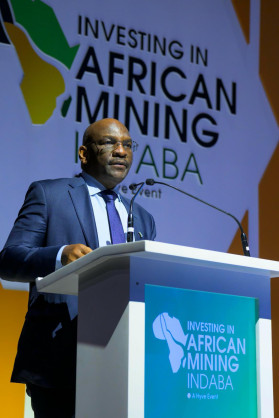
Africa must take bold steps to own its resources, create jobs and build industries that sustain prosperity for generations, African Export-Import Bank (Afreximbank) (www.Afreximbank.com) has told African leaders, policymakers, mining industry leaders and global partners at the African Mining Indaba 2025 in Cape Town, South Africa, on Sunday.

In a keynote address at the ministerial symposium of the Indaba, Mr. Denys Denya, Senior Executive Vice President of the Afreximbank Group, argued that the continent was standing at a crossroads and could either continue exporting its wealth and remain a marginal player in the global economy or take the bold steps to own its resources.

He noted that “While the global mining industry generated approximately US$1.7 trillion in revenue in 2023, Africa's share of this wealth remains disproportionately low. Our continent extracts the raw materials that power the world's industries, yet it is estimated that we retain as little as between four per cent and 20 per cent of the total value of our minerals due to minimal local processing and limited downstream development. The result? Lost economic opportunities, exposure to volatile commodity cycles and a persistent reliance on external markets for refined products derived from our own resources.” “The choice is ours. The time to act is now. Let us work together: governments, financial institutions, investors, and industry players to build an Africa where mining is not just about extraction but about transformation, innovation and wealth creation,” said Mr. Denya. “Africa has the resources, the market potential, and the policy frameworks to transition from a resource-dependent continent to an industrial powerhouse. However, success will depend on bold, decisive action from all stakeholders. Policymakers must implement clear, enforceable regulations that mandate local value addition and create investment-friendly environments. Private sector investors must step up with capital and technology to develop processing, refining, and manufacturing facilities.”

Reversing this trend demanded bold, coordinated action, he argued. “We must move beyond extraction and invest in refining, smelting and advanced manufacturing. African nations must increase local processing capacity for minerals such as bauxite, lithium, cobalt and iron ore.”

He added that regional collaboration was essential as no single country could build a mining value chain in isolation.

Mr. Denya highlighted the importance of the African Continental Free Trade Area (AfCFTA) in developing intra-African mineral value chains and strengthening cross-border collaboration and said that attracting capital for mining-related infrastructure, technology transfer and skills development were critical.

“Our mining policies must also prioritise environmental, social and governance standards, ensuring that mining benefits communities rather than displacing them,” he said, adding that the approach would create millions of skilled jobs for the youth and reduce reliance on volatile global markets while strengthening intra-African trade.

Reiterating Afreximbank's commitment to supporting Africa's mining sector and ensuring that mineral wealth drove economic growth rather than perpetuate resource dependency, Mr. Denya announced that, over the past three years, the Bank had approved more than US$1 billion in support of mining and mineral sector projects across the continent, including financing the development and construction of a bauxite processing plant in Guinea, supporting the expansion of a manganese processing plant in Gabon and providing working capital financing to a diamond company in Botswana.

Other major projects being supported by the Bank include a petrochemical fertilizer plant in Angola, a titanium dioxide pigment plant in South Africa and the feasibility study for the development of a limestone mine processing plant in Malawi, he added.

Mr. Denya said that the establishment of the US$10-billion AfCFTA Adjustment Fund, managed by FEDA, Afreximbank's impact investment subsidiary, would provide critical financial support to countries and businesses transitioning to the new trade regime, including those in the mining sector, and that the Bank's efforts to harmonise standards and implement the Africa Collaborative Transit Guarantee Scheme would also facilitate seamless movement of minerals and mining equipment across borders, reducing logistical bottlenecks.

Afreximbank was also leveraging digital platforms, such as the Africa Trade Gateway and the Pan-African Payment and Settlement System, to enable efficient transactions and market access, which would ensure that Africa's vast mineral wealth was utilised to drive industrialisation, value addition and economic resilience across the continent, he added.

Mr. Denya also noted that Afreximbank, in collaboration with development partners, was driving the development and expansion of industrial parks and special economic zones (SEZs) to address infrastructure challenges that hinder industrial growth.

One of the most transformative initiatives under that pillar was the DRC/Zambia Electric Vehicle Battery Manufacturing Special Economic Zones - a project that positions Africa at the centre of the global energy transition by the implementation of battery precursor SEZs aimed at making the two countries globally competitive investment destinations for the battery electric vehicle value chain.

The African Mining Indaba 2025, taking place from 3 to 6 February, is the premier gathering where Africa policymakers, industry leaders and global partners work to shape the future of the African mining sector.

Distributed by APO Group on behalf of Afreximbank.

Media Contact:
Vincent Musumba
Communications and Events Manager (Media Relations)
Email: press@afreximbank.com

Follow us on:
X: https://apo-opa.co/4116jsN 
Facebook: https://apo-opa.co/4aLcd4I 
LinkedIn: https://apo-opa.co/3Et8gFS 
Instagram: https://apo-opa.co/4aOinBd

About Afreximbank:
African Export-Import Bank (Afreximbank) is a Pan-African multilateral financial institution mandated to finance and promote intra-and extra-African trade. For 30 years, the Bank has been deploying innovative structures to deliver financing solutions that support the transformation of the structure of Africa's trade, accelerating industrialization and intra-regional trade, thereby boosting economic expansion in Africa. A stalwart supporter of the African Continental Free Trade Agreement (AfCFTA), Afreximbank has launched a Pan-African Payment and Settlement System (PAPSS) that was adopted by the African Union (AU) as the payment and settlement platform to underpin the implementation of the AfCFTA. Working with the AfCFTA Secretariat and the AU, the Bank is setting up a US$10 billion Adjustment Fund to support countries effectively participating in the AfCFTA. At the end of December 2023, Afreximbank's total assets and contingencies stood at over US$37.3 billion, and its shareholder funds amounted to US$6.1 billion. Afreximbank has investment grade ratings assigned by GCR (international scale) (A), Moody's (Baa1), Japan Credit Rating Agency (JCR) (A-) and Fitch (BBB). Afreximbank has evolved into a group entity comprising the Bank, its impact fund subsidiary called the Fund for Export Development Africa (FEDA), and its insurance management subsidiary, AfrexInsure (together, "the Group"). The Bank is headquartered in Cairo, Egypt.

For more information, visit: www.Afreximbank.com

Media files
Afreximbank
Download logo
Read moreAfreximbank Challenges Africa’s Miners to Take Bold Steps to Own the Continent’s Resources
3 February 2025

Surge in international arrivals a major boost for SA tourism

Location: News

Surge in international arrivals a major boost for SA tourism

The latest international arrivals data from Statistics South Africa confirms that South Africa’s tourism sector continues to grow, with total arrivals reaching 8.92 million in 2024 -- an impressive 5.1% increase compared to 2023.

Tourism Minister Patricia de Lille on Monday said Africa continues to drive the majority of arrivals, contributing 76% of all tourists from January to December 2024, while growth from other regions signals steady recovery.

Although the sector has yet to fully recover to pre-pandemic levels (2019), it now contributes 8.8% to gross domestic product (GDP) and supports 1.68 million jobs, according to World Travel and Tourism Council (WTTC) estimates. 

This positive momentum underscores the resilience of the sector, despite global economic pressures.

"It is encouraging to see that despite economic uncertainties in various parts of the world, the global tourism sector is growing. It is even more encouraging that our country follows the same trend and trajectory," said De Lille.

She expressed appreciation for the continued growth from the African continent, particularly Ghana.

"Ghana’s immense performance can be attributed to the fact that travellers between Ghana and South Africa no longer need visas to travel between the two countries. This, coupled with increased airlift targeted marketing initiatives by South African Tourism, makes for a winning formula for the growth of our sector.” 

The visa-free travel agreement between South Africa and Ghana, implemented in November 2023, has played a pivotal role in attracting tourists, allowing travel for up to 90 days without a visa for business or tourism purposes.

Americas market

Tourist arrivals from the Americas saw a strong 10.9% growth from 2023, reaching 505 579 arrivals in 2024.

The United States remains the top market in the region and is the top overseas market, with 372 36 tourists, reflecting a 5.2% increase from 2023 to 2024.

The increase in direct air connectivity from Brazil, combined with improved marketing efforts, has contributed significantly to a 94.2% rise in arrivals from Brazil from 2023 to 2024, totalling 49 855 tourists for 2024.

"This consistent growth highlights South Africa’s appeal among long-haul travellers and the effectiveness of strategic partnerships with airlines and trade," De Lille said.

European markets

Tourist arrivals from Europe reached 1 258 706 in 2024, reflecting a 1.1% increase compared to 2023.

The United Kingdom remains the top European source market, with 349 883 arrivals in 2024, though this was 1.8% lower than 2023.

Germany experienced strong growth of 4.0%, with 254 992 arrivals in 2024.

The Netherlands is performing better than France and saw a 0.8% increase, totalling 132 422 arrivals in 2024.

"While Europe’s growth is slower compared to other regions, the region is a bedrock with regard to having the most overseas arrivals and has emerged as a strong-performing market, largely due to focused marketing campaigns showcasing South Africa’s culture, people and attractions," the Minister said.

Asia & Australasia

Tourist arrivals from Asia surged by 4.2%, with 207 718 tourists recorded in 2024.

China saw an 11.4% increase, totalling 41 651 arrivals, driven by targeted promotions and increasing flight connectivity.

India recorded 75 541 arrivals, a 5.3% decline, primarily due to visa processing backlogs and the absence of direct flights.

"South Africa saw a phenomenal 31.8% growth from Japan, reaching 17 370 arrivals in 2024.

"Australia also posted steady gains, with strong travel demand from the region expected to fuel further growth in 2025," said De Lille.

Middle East

The Middle East saw a decline of 16.1%, with total arrivals dropping to 45 602. However, Saudi Arabia increased arrivals by 12.1% to 18 333 in 2024.

The United Arab Emirates contributed 6 717 arrivals to South Africa in 2024. 

"While the overall performance in this region faced setbacks, strategic efforts to increase connectivity and enhance trade engagement in other markets in the region will be crucial to future recovery," the Minister said.

The future of tourism

To accelerate recovery, South Africa has implemented strategic marketing and policy interventions. These include:

  • Expanding airlift: Efforts are underway to restore key routes, increase airline partnerships and improve direct access to a variety of cities in South Africa and access to the globe. A key development is that on 4 December 2024, Cabinet approved the Route Development Marketing Strategy to be implemented by the Department of Tourism, SA Tourism and the private sector.
  • Targeted market campaigns: Promoting unique South African experiences in key markets such as China, India and the Americas.
  • Boosting digital and AI-powered travel planning: Enhancing traveller experiences with personalised digital platforms.
  • Growing sustainable and cultural tourism: Capitalising on eco-tourism, cultural and heritage-based experiences.
  • Enhancing safety and security measures: Working with law enforcement and industry partners to enhance traveller confidence, while ensuring the safety of local communities. 

"The tourism sector is a strong contributor to the economy and job creation. We are determine to continue with this momentum and push the numbers much higher, so that we can grow our contribution to economic growth and job creation even further. 

"South Africa remains attractive and accessible for all travellers to enjoy, and we thank all international and domestic travellers for exploring our beautiful country and contributing to the tourism sector’s performance," De Lille said. – SAnews.gov.za

Edwin
Mon, 02/03/2025 - 10:54

293 views
Read moreSurge in international arrivals a major boost for SA tourism
30 January 2025

President convenes Cabinet Lekgotla

Location: News

President convenes Cabinet Lekgotla

President Cyril Ramaphosa has convened a Cabinet Lekgotla with leaders from all spheres of government - to review government’s progress on priorities, assess challenges and set the agenda for the seventh administration.

Addressing members of the media on the agenda of the two-day meeting, Minister in the Presidency, Khumbudzo Ntshavheni, said government was finalising the Medium-Term Development Plan (MTDP) 2024/2029.

The plan proposes three strategic priorities, which include inclusive growth and job creation; reducing poverty and tackling the high cost of living, as well as building a capable, ethical and developmental State.

“We are focusing on the practical actions that we need to take to make good on the promises that we have made and set practical timeframes so that we can realise the priorities of the MTDP.

“We also received a scene-setting report from National Treasury on the economic outlook and the global outlook -- trends that will inform government planning.

“We are looking at what we want to achieve in terms of reforms on global institutions, in particular the security system of the United Nations and global funding institutions,” the Minister said on Wednesday, on the sidelines of the Cabinet Lekgotla.

Other areas of focus include funding Small, Medium, and Micro Enterprises (SMMEs) and the “missing middle”, in reference to students whose household income is too high to qualify for National Student Financial Aid Scheme (NSFAS) funding, yet too low to afford tertiary education without financial assistance.

The Cabinet Lekgotla is taking place on 29 and 30 January 2025 at the Sefako Makgatho Presidential Guest House, in Pretoria. 

The outcomes of the meeting will shape government’s policies and programmes that will be announced by the President during his State of the Nation Address (SONA) in Parliament on Thursday, 6 February 2025, at 19:00. 

With the seventh administration being under the Government of National Unity (GNU), which comprises 10 political parties from across the spectrum, Ntshavheni emphasised that the meeting will prioritise the interests of the country.

“We are meeting as the GNU and we are not bringing party political interests. We are going to negotiate and discuss as members of Cabinet and representatives of provinces, which are represented by Premiers.

“We work for the best benefit of our country and not the best benefit of our parties. The engagements are on the level of us being members of the national executive,” Ntshavheni said.

South Africa’s term for the Group of Twenty (G20) presidency also features on the meeting’s agenda.

“As we are preparing to host the G20, we will receive a report on the logistics and the content on government goals for the summit,” the Minister said.

South Africa holds the G20 Presidency from 1 December 2024 to 30 November 2025, under the theme: “Solidarity, Equality, Sustainability” .

South Africa's G20 Presidency is the fourth consecutive emerging market Presidency, and it is also the first African Presidency, followed by the admission of the African Union (AU) as the second permanent African member. 

The G20 was established to tackle pressing global economic and financial issues. Together, G20 members account for around 85% of global GDP and 75% of international trade. 

The G20 comprises 19 countries, including Argentina, Australia, Brazil, Canada, China, France, Germany, India, Indonesia, Italy, Japan, Republic of Korea, Mexico, Russia, Saudi Arabia, South Africa, Türkiye, the United Kingdom and the United States, and two regional bodies, namely the European Union and the African Union.

The grouping plays a critical role in influencing global policy making and fostering global economic stability. - SAnews.gov.za


nosihle
Wed, 01/29/2025 - 18:23

128 views
Read morePresident convenes Cabinet Lekgotla
29 January 2025

Stopping Health Funding in Africa Weakens America

Location: News

This is an opportunity for President Ramaphosa to lead

Read moreStopping Health Funding in Africa Weakens America
14 December 2024

African Youth Tech Venture Entrepreneurs Embark on Groundbreaking Korean Innovation Tour

Location: News
African Development Bank Group (AfDB)

Twenty promising youth entrepreneurs from African technology ventures and enterprise support organizations have embarked on a two-week study tour of the Republic of Korea, seeking investment and insights from the country's innovative tech ecosystem. The African Development Bank Group's (www.AfDB.org) Innovation and Entrepreneurship Lab selected these young entrepreneurs from 133 ventures that participated in last month's Africa Tech Startup Forum.  

Held under the auspices of the Lab's Leveraging the Entrepreneurial and Innovation Success of Korea to Strengthen African Enterprise Support project, the Forum selected entrepreneurs who pitched the best business models during the weeklong virtual market access and acceleration program preparing, training, and connecting technology ventures with opportunities. 

Representing eight African nations -- Egypt, Ghana, Kenya, Morocco, Nigeria, Rwanda, South Africa, and Uganda – the delegates span diverse technological sectors, including agritech and health. Their ambitious itinerary includes visits to prestigious institutions such as Global Startup Centre, LG Science Park, the Korea Software Technology Association, unicorn companies with valuations exceeding $1 billion and the Global Digital Innovation Network, a foundation supporting the expansion of South Korea's tech startups. 

Uche Ezadinachi, the founder of Kenya-based health technology venture Zuri Health, expressed enthusiasm about the opportunity. “I am excited to go to Korea because the country has made serious technological developments. The [country] is a technology-driven society, and this tour is an opportunity for me to see how we can bring such technology to Africa,” she said.  

“We will share experiences with our Korean counterparts; they will learn from us as much as we learn from them,” she added. 

The delegation, which is more than one-third women and entirely composed of entrepreneurs aged 18 to 35, will participate in several high-profile events, including, K Startup Grand Challenge, an accelerator program supported by the South Korean government, Africa Innovation Networking Gala, and COMEUP Korea, an event connecting Korean startups with global investors, corporations, and media. 

David Chen, co-founder of Rwandan health data venture Kapsule, highlighted the tour's potential for relationship-building. “This is an opportunity for us to have face-to-face interactions and build relationships. This trip will help us link with other health technology companies operating in Asia,” he said. 

Financially supported by the Korea-Africa Economic Cooperation Trust Fund, the Africa Tech Startup Forum is part of the African Development Bank's broader Jobs for Youth in Africa Strategy.  

Martha Phiri, the Bank's Director of Human Capital, Youth and Skills Development, underscored the program's significance. 

“This is a pivotal initiative that plays a crucial role in enhancing the skills of young entrepreneurs. These skills will empower young entrepreneurs to expand their ventures, which leads to significant employment creation,” she stated. 

Ndeye Absa Gningue, Innovation Platform Officer, managing the Bank's Innovation and Entrepreneurship Lab, said: “Platforms like the Africa Tech Startup Forum provide young people with the opportunity to nurture their potential. We will continue to work with them so they can blossom.” 

Distributed by APO Group on behalf of African Development Bank Group (AfDB).

Media contact:  
Leonard Makombe
Communication Specialist
Communication and External Relations Department
email: media@afdb.org 

About the African Development Bank Group: 
The African Development Bank Group is Africa's premier development finance institution. It comprises three distinct entities: the African Development Bank (AfDB), the African Development Fund (ADF) and the Nigeria Trust Fund (NTF). On the ground in 41 African countries with an external office in Japan, the Bank contributes to the economic development and the social progress of its 54 regional member states. For more information: www.AfDB.org

Media files
African Development Bank Group (AfDB)
Download logo
Read moreAfrican Youth Tech Venture Entrepreneurs Embark on Groundbreaking Korean Innovation Tour
13 December 2024

African Development Bank Celebrates 60 Years of Transformative Impact in Africa Southern Region

Location: News
African Development Bank Group (AfDB)

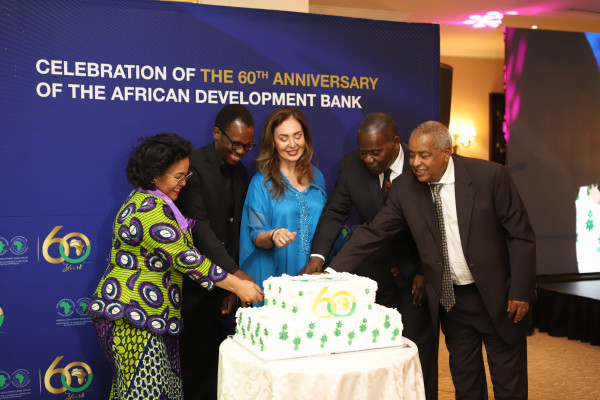
The African Development Bank (AfDB) (www.AfDB.org) proudly celebrates its Diamond Jubilee, marking 60 years of driving social and economic transformation across the African continent. The Southern African regional celebration, held in Johannesburg, brought together leaders, stakeholders, and partners to reflect on the institution's remarkable journey and its vision for a prosperous future.

Speaking at the event, Ms Leila Farah Mokaddem, Director General of the African Development Bank Group, highlighted the Bank's legacy of impact and transformation. "Sixty years ago, the African Development Bank was born out of a vision for a better Africa. Today, we celebrate not just numbers but the lives transformed and communities uplifted through our work," she said.

Key Achievements in Southern Africa

With an active portfolio of 226 projects worth USD 11 billion, the Bank's unwavering commitment to fostering sustainable growth and integration in Southern Africa is evident. Notable achievements include:

  • SADC Sub-Regional Transport and Facilitation Project: A USD 231.3 million investment connecting Malawi and Mozambique, fostering trade, and mitigating regional fragility.
  • Lesotho Highlands Water Project: A USD 2.1 billion initiative enhancing water transfer and hydroelectric power, essential for energy security.
  • Kazungula Bridge Project: A USD 81.6 million investment strengthening connectivity between Zambia and Botswana along the North-South Corridor.
  • Support for Transnet: A recent USD 1 billion sovereign-guaranteed corporate loan to aid South Africa's freight transport recovery and growth.

The celebration also underscored the deep partnership between the Bank and the Government of South Africa. Honourable Minister Enoch Godongwana shared his reflections on this enduring collaboration:

"The Government of the Republic of South Africa celebrates this significant milestone with the African Development Bank. Our region, and indeed South Africa, continues to enjoy a fruitful partnership with the Bank as we work together toward a shared goal of creating a better Africa for future generations.

As we gather to celebrate the many achievements of our collaborative efforts, we also recognise the need to continue advancing Africa's development agenda. This milestone energises us and strengthens our commitment to a shared vision for the next 60 years!"

Looking Ahead: A Vision for the Future

As the Bank embarks on its new Ten-Year Strategy, it prioritises integrated regional projects and climate resilience. Projects like the Lobito Rail Integrated Corridor, connecting Angola, DRC, and Zambia, promise to drive economic growth, agriculture value chains and renewable energy investments.

"Our work is far from over," Ms Mokaddem noted. "We invite all partners—governments, private sector actors, and international institutions—to join us in building a more inclusive and sustainable Africa. Together, we can address climate-related challenges and mobilise resources to ensure no one is left behind."

A Commitment to Africa's Development

Under the leadership of President Dr Akinwumi A. Adesina, the Bank has maintained its AAA rating and authorised capital of USD 318 billion, with nearly 2,000 staff serving all 54 African countries. The institution continues to champion its “High 5s” priorities: lighting up and powering Africa, feeding Africa, industrialising Africa, integrating Africa, and improving the quality of life for the people of Africa.

The 60th-anniversary celebrations are a testament to the Bank's resilience and the enduring support of its partners. The African Development Bank remains steadfast in its mission to transform lives and catalyse growth across the continent.

To view our anniversary video that encapsulates these achievements and our vision for the future, please click here: Anniversary Video (https://apo-opa.co/4g8Y2s3).

Distributed by APO Group on behalf of African Development Bank Group (AfDB).

Media contact:
Natalie Naudé,
Communication and External Relations Department
n.naude@afdb.org

Join the Conversation:
#AfDB60 #AfricaRising #EconomicTransformation #MakingADifference

About the African Development Bank Group:
The African Development Bank Group (AfDB) is the premier multilateral financing institution dedicated to Africa's development. It comprises three distinct entities: the African Development Bank (AfDB), the African Development Fund (ADF) and the Nigeria Trust Fund (NSF). The AfDB has a field presence in 41 African countries, with an external office in Japan, and contributes to the economic development and social progress of its 54 regional member states. For more information: www.AfDB.org

Media files
African Development Bank Group (AfDB)
Download logo
Read moreAfrican Development Bank Celebrates 60 Years of Transformative Impact in Africa Southern Region
12 December 2024

Financial injustice a hindrance to Africa’s development

Location: News

Financial injustice a hindrance to Africa’s development

The transformation of global financial institutions remains critical in addressing Africa’s mounting debt challenges, as they perpetuate financial injustice, says United Nations (UN) Secretary-General António Guterres.

“The G20 must lead in delivering financial justice. Financing is fundamental -- from inclusive economic growth, to supporting industrialisation and food security or addressing inequalities,” Guterres said during the closing session for the Joint Sherpa-Finance and Central Banks Deputies' Meeting, held in Johannesburg, on Wednesday.

Guterres explained that global financial systems "load" countries with debt service costs, while denying them access to sufficient low-cost financing to fight poverty, inequality and hunger and advance the Sustainable Development Goals (SDGs).

According to the UN, in 2022, public debt in Africa reached USD 1.8 trillion.

“Developing countries must be represented fairly in their governance. These institutions must also protect economies, particularly from global shocks. It is time to mend the global safety nets that were discovered during the COVID-19 pandemic that they were no longer fit for purpose.

“This continent’s potential is without question. Africa is home to a young and growing population, rich cultural and natural diversity, and a tremendous entrepreneurial spirit. But this enormous potential continues to be held back by injustices that are deeply rooted in the history of colonialism.

“Injustice in worsening climate chaos - which Africans did virtually nothing to cause - that fuels floods, storms, hunger and deadly droughts. I stand side-by-side with President Ramaphosa and the people of Africa in this fight for justice on all fronts. Africa needs financial justice,” Guterres said.

In September, world leaders adopted the Pact for the Future, which includes commitments for ambitious reforms to make the international financial architecture representative of today’s global economy and put the needs of developing countries front and centre.  

The pact covers a broad range of issues including peace and security, sustainable development, climate change, digital cooperation, human rights, gender, youth and future generations, and the transformation of global governance.

“It calls for action to move forward with an SDG Stimulus… to substantially increase the lending capacity of Multilateral Development Banks to make them bigger, bolder and better to support developing countries.

“... And to mobilise more international and domestic resources, public and private, for vital investments. Last week I appointed a group of leading experts to galvanize international support for action on debt, and I’m delighted that Trevor Manuel will be part of this important work,” he said.

As part of the work for South Africa’s G20 Presidency, Guterres participated in the first series of the more than 130 meetings that will precede the G20 Summit in 2025.

On 1 December 2024, South Africa assumed the Presidency of the G20, which comprises many of the world's largest developing and developed economies.

The G20 was established to tackle pressing global economic and financial issues. Together, G20 members account for around 85% of global gross domestic product (GDP) and 75% of international trade. 

The G20 comprises 19 countries including Argentina, Australia, Brazil, Canada, China, France, Germany, India, Indonesia, Italy, Japan, Republic of Korea, Mexico, Russia, Saudi Arabia, South Africa, Türkiye, United Kingdom, and United States and two regional bodies, namely the European Union and the African Union.

The grouping therefore plays a critical role in influencing global policy making and fostering global economic stability.

South Africa's G20 Presidency is the fourth consecutive emerging market Presidency, and it is also the first African Presidency, followed by the admission of the African Union (AU) as the second permanent African member. - SAnews.gov.za

nosihle
Thu, 12/12/2024 - 08:51

211 views
Read moreFinancial injustice a hindrance to Africa’s development
12 December 2024

G20 urged to deliver on climate justice

Location: News

G20 urged to deliver on climate justice

With developing nations being considered the most vulnerable to climate change, United Nations Secretary-General António Guterres says the Group of Twenty (G20) countries must lead in delivering climate justice.

Addressing the closing session for the Joint Sherpa-Finance and Central Banks Deputies' Meeting, Guterres stressed that many vulnerable countries are being forced to respond to a crisis they did not create.

“Meanwhile, they lack the necessary support to seize the benefits of clean energy to spur prosperity and eliminate poverty. We need developed countries supporting developing countries with adequate, affordable and accessible finance and technology, and through meaningful contribution to the loss and damage fund by doubling adaptation finance next year as promised.

“[Climate justice can be delivered] by forging new partnerships like the Just Energy Transition Partnership that South Africa has pioneered to pave the way to a renewable future,” the Secretary-General said on Wednesday in Johannesburg.

On 1 December 2024, South Africa assumed the Presidency of the G20, which comprises many of the world's largest developing and developed economies.

As part of the work for the G20 Presidency, South Africa has commenced with the first series of the more than 130 meetings that will precede the G20 Summit in 2025.

“G20 countries must lead the way in line with the principles of common but differentiated responsibilities but recognise that every G20 country has to do more in the reduction of emissions. Next year, every government must deliver new economic plans in line with limiting the global temperature rise to 1.5 degrees.

“These new plans must cover all emissions in the whole economy, accelerate a just fossil fuel phase out and contribute to the energy transition goals agreed to at COP28. We must also ensure that Africa’s critical minerals that can power the renewable future worldwide benefit Africans first and most. We cannot repeat the mistakes of the past,” he said.

Guterres further called on the G20 to lead on technological justice.

“From digital technology to artificial intelligence, the developing world must access and benefit from the technological revolution.

“We need the G20 to support developing countries as they invest in the digital driven systems and solutions that their people need to boost prosperity to create jobs and drive sustainable development,” he said.

South Africa's G20 Presidency is the fourth consecutive emerging market Presidency, and it is also the first African Presidency, followed by the admission of the African Union (AU) as the second permanent African member. 

The G20 was established to tackle pressing global economic and financial issues. Together, G20 members account for around 85% of global GDP and 75% of international trade. 

The G20 comprises 19 countries including Argentina, Australia, Brazil, Canada, China, France, Germany, India, Indonesia, Italy, Japan, Republic of Korea, Mexico, Russia, Saudi Arabia, South Africa, Türkiye, United Kingdom, and United States and two regional bodies, namely the European Union and the African Union.

The grouping therefore plays a critical role in influencing global policy making and fostering global economic stability. - SAnews.gov.za

nosihle
Wed, 12/11/2024 - 15:14

90 views
Read moreG20 urged to deliver on climate justice
11 December 2024

Big investment needed to drive sustainable development

Location: News

Big investment needed to drive sustainable development

National Treasury Director-General (DG), Dr Duncan Pieterse, has called for large scale and sustainable investments to ensure the global community meets its commitments to end poverty, protect the planet and build prosperous societies.

“Financing gaps for sustainable development are large and growing. The estimates by our international organisations indicate that around $4 trillion in additional investments is needed annually for developing countries,” Pieterse said on Wednesday in Johannesburg.

He was speaking during the two-day Group of Twenty (G20) Joint Sherpa and Finance Track meeting.

According to the United Nations (UN), the world may miss many of the Sustainable Development Goals (SDGs) targets by 2030 due to the delay in development progress, which may even be reversed under the combined weight of climate disasters, conflict, economic downturn and the lingering aftermath of the COVID-19 pandemic.

The Sustainable Development Goals are a universal call to action to end poverty, protect the planet and improve the lives and prospects of everyone, everywhere. 

“To achieve the SDGs by the 2030 deadline, an urgent large scale and sustainable investments push is needed,” Pieterse said.

The DG said South Africa’s G20 Presidency will strongly focus on the challenges facing emerging markets and developing countries, especially those on the African continent.

“We will also focus our attention on policies and mechanisms that support sustainable development. Many developing countries, including those in Africa experience growth that is insufficient to reduce poverty, as well as tough financing conditions and high levels of public debt that crowd out resources or development spending

“During our Presidency, there will be a very strong focus on enhancing debt sustainability through a comprehensive approach, which will include... finding ways to improve debt structuring, supporting countries with liquidity challenges and encouraging the development of local currency markets to attract domestic savings and improve debt transparency,” Pieterse said.

South Africa will also continue to obtain borrower country perspectives on debt, including through an African outreach event, with broad participation of the borrower countries.

On 1 December 2024, South Africa assumed the Presidency of the G20 group of countries, which comprises many of the world's largest developing and developed economies.

“The global economy has been put to the test over the last four years, marked by an unprecedented pandemic, escalation in geopolitical conflict and extreme weather events that have disrupted supply chains. 

“The latest assessment by the International Monetary Fund that global growth is expected to remain stable, yet underwhelming, remains a concern. Higher growth is essential to improve prosperity and living standards to reduce debt, and create policy space to tackle our spending pressures,” Pieterse said.

In 2025, South Africa’s G20 Presidency will focus on strengthening macroeconomic fundamentals, accelerating climate transition and boosting productivity growth.

This week's discussion under the South Africa G20 Presidency takes place ahead of two very important events -- the 5th Finance in Common Summit (FiCS), taking place in Cape Town in February 2025, and the Fourth International Conference on Financing for Development (FfD), which will take place in Spain in June 2025.

“We see these events as very important opportunities to strengthen the development finance ecosystem, scale up and redirect financing to meet our global sustainable challenges, and bring impactful changes in relation to climate and biodiversity needs.

“As we prepare to submit our Nationally Determined Contribution (NDC) in 2025, it is clear that our very ambitious climate action goals cannot be achieved without unlocking a similarly ambitious set of climate instruments.

“The G20 must continue to play a leading role to address the critical issues of our age, so that we can achieve both global sustainable development and development that is inclusive, equitable and leaves no one behind,” Pieterse said.

South Africa's G20 Presidency is the fourth consecutive emerging market Presidency, and it is also the first African Presidency, followed by the admission of the African Union (AU) as the second permanent African member. 

The G20 was established to tackle pressing global economic and financial issues. Together, G20 members account for around 85% of global GDP and 75% of international trade. 

The G20 comprises 19 countries including Argentina, Australia, Brazil, Canada, China, France, Germany, India, Indonesia, Italy, Japan, Republic of Korea, Mexico, Russia, Saudi Arabia, South Africa, Türkiye, United Kingdom, and United States and two regional bodies, namely the European Union and the African Union.

The grouping therefore plays a critical role in influencing global policy making and fostering global economic stability. - SAnews.gov.za

nosihle
Wed, 12/11/2024 - 11:19

231 views
Read moreBig investment needed to drive sustainable development
9 December 2024

Lamola advocates for the evolution of multilateral institutions

Location: News

Lamola advocates for the evolution of multilateral institutions

With the world facing complex issues such as climate change, economic inequality, global health crises, and geopolitical tensions, International Relations and Cooperation Minister Ronald Lamola says multilateral institutions must evolve to meet the global challenges of today.

“While international cooperation and multilateralism are currently confronted with divisive geopolitics and unprecedented challenges such as climate change, slow economic growth and deepening poverty, the G20 must make strides in forging practical, mutually beneficial cooperation that champions an international order that is fairer, just, inclusive and representative,” the Minister said on Monday in Johannesburg.

He was addressing the first G20 Sherpas Meeting, as South Africa commenced with the first engagement of the more than 130 meetings that will precede the G20 Summit in 2025.

WATCH | 


The Sherpa Track is led by the personal representatives of G20 leaders, and oversees negotiations and discusses the points that form the summit’s agenda, and coordinates most of the work.

On 1 December 2024, South Africa assumed the Presidency of the G20 group of countries, which comprises many of the world's largest developing and developed economies. 

READ | G20 South Africa news articles

It was established to tackle pressing global economic and financial issues. Together, G20 members account for around 85% of global GDP and 75% of international trade. 

The G20 comprises 19 countries including: Argentina, Australia, Brazil, Canada, China, France, Germany, India, Indonesia, Italy, Japan, Republic of Korea, Mexico, Russia, Saudi Arabia, South Africa, Türkiye, United Kingdom, and United States and two regional bodies, namely the European Union and the African Union.

The grouping therefore plays a critical role in influencing global policy making and fostering global economic stability.

“The multilateral institutions with economic and developmental mandates must be strengthened, as the need for their intervention is even much bigger now. We all know that many countries, especially the developing world, are still recovering from the economic shock of COVID-19. 

“Poverty and weak economic growth remain a challenge for many countries, especially in Africa and the developing world; thus, the themes of our temporary Task Forces focus on these matters,” Lamola said.

According to studies from the International Monetary Fund, trade has been a major contributor to global growth over the past decades, helping to promote economic development, increase economic opportunity and lift millions out of poverty.

“It is for this reason that South Africa supports international cooperation and multilateralism. We also know of the benefit this would bring us, as we seek to grow our economy and support the development of the African continent.

“As the premier forum for international economic cooperation, South Africa seeks to amplify the continued value of the G20 as a forum of the world’s largest developing and developed economies; a forum that provides leadership and momentum towards greater global economic growth and sustainable development; a forum whose work serves to complement and foster the broader processes of the various multilateral spheres,” Lamola said.

He said the global community must remain committed to multilateralism and upholding international law and ensure that the United Nations (UN) remains the centrepiece of this multilateralism. 

“Its central role in the international system ensures that sovereign States cooperate to maintain international peace and security, advance sustainable development, and ensure the promotion and protection of democracy, human rights, and fundamental freedoms for all.

“Whereas G20 leaders set the agenda for our partnership, we rely on the immense efforts of our Sherpas to translate these commitments into practical cooperation,” the Minister said.

South Africa’s G20 Presidency is being held under the theme: "Solidarity, Equality, Sustainability" - a theme that seeks to harness global will and capabilities to confront the enormous challenges the world is facing.

“In the spirit of Ubuntu, our shared humanity, we will address these challenges through our high-level deliverables and priorities, which lie at the core of the original G20 mandate of promoting strong, sustainable, balanced and inclusive growth, and by building partnerships across all sectors of society to find collective solutions.

“As we build on the past and set the tone for the future, we must accentuate the need to adhere to universal values, shared norms, and strong multilateral institutions. Now more than ever, multilateral institutions must be strengthened and reformed to deliver broad global consensus and serve as platforms to resolve disputes,” the Minister said. - SAnews.gov.za

nosihle
Mon, 12/09/2024 - 11:37

342 views
Read moreLamola advocates for the evolution of multilateral institutions
9 December 2024

Water transboundary partnerships benefit SA  

Location: News

Water transboundary partnerships benefit SA  

Water and Sanitation Deputy Minister David Mahlobo says South Africa continues to enjoy transboundary partnerships on shared water resources with neighbouring countries in the Southern African Development Community (SADC) region.

Mahlobo highlighted some of the partnerships during a session with Ambassadors accredited to South African Missions, held in Centurion on Friday.

These include, among others, the current implementation of the R42 billion Phase Two of the Lesotho Highlands Water Project (LHWP). The project includes the construction of the new Polihali Dam and associated infrastructure to provide additional water to Gauteng and parts of the Free State, Mpumalanga, North West, and Northern Cape provinces.

READ | Lesotho Highlands Water Project Tunnel maintenance on schedule

South Africa and Zimbabwe have also signed an agreement for the transfer of treated water from the Beitbridge Water Treatment Works in the Republic of Zimbabwe.

Mahlobo said the transfer of treated water is a medium-term solution to address water supply challenges in the area.  
“The two countries have signed an agreement for the transfer of treated water from Beitbridge Water Treatment Works in the Republic of Zimbabwe to Musina Town in the Republic of South Africa,” Mahlobo said.  

Another partnership includes the mobilisation of resources between South Africa and Namibia for the feasibility study of the Noordoewer/Vioolsdrfit Dam.

South Africa and Netherlands Governments have also undertaken to forge more cooperation opportunities in the water and sanitation sector in efforts to strength the existing relations between the two states.

“Both the countries have signed a Blue Deal agreement which aims to support water management by exchanging knowledge and experiences, assisting the national, regional and local organisations, and cooperate with key stakeholders,” Mahlobo said.

As part of diversifying the water mix, the Deputy Minister highlighted that government was increasingly making use of groundwater as one of the viable options to augment the current available water and increase supply.

“We are looking at using groundwater which remains untapped. Although it has also been threatened by climate change and the levels of evaporation, we are looking at utilising it more.

“We are looking forward to enhancing our technological partnership around groundwater and its high level of treatment. We should use groundwater optimally because it is not of inferior quality, but it is also a source of water,” he explained.

Held under the theme: “Celebrating 30 years of sustainable partnership, strengthening partnerships with international partners and forging a shared future”, the meeting hosted by Water and Sanitation, aimed to brief the Ambassadors on South Africa’s state of water sector .

This also includes water reforms currently underway and fortifying international collaboration and capacity-building endeavours in the water sector.

Among the countries represented at the meeting included China, Japan, Cuba, Egypt, the Kingdom of Eswatini and the Kingdom of Lesotho, Namibia, Zimbabwe, Mozambique, Botswana, Senegal, Kingdom of the Netherlands, Kingdom of Sweden, Kingdom of Denmark, and Finland. – SAnews.gov.za   


GabiK
Mon, 12/09/2024 - 11:42

146 views
Read moreWater transboundary partnerships benefit SA  
9 December 2024

Companies Plan to IT Security Budgets up to 9% in the Next Two Years

Location: Business
Kaspersky

Companies are planning to increase their investments in information security against the background of growing financial losses from cyber incidents. This trend was revealed in the recent Kaspersky's (www.Kaspersky.co.za) IT Security Economics report.

Kaspersky IT Security Economics is an annual report that unpicks the changes in budgets, breaches and business challenges affecting IT Security decision makers. It is based on interviews with IT and IT security professionals working in organisations of various sizes and industries. The survey was conducted across 27 countries in Europe, the Asia-Pacific region, the Middle East, Turkiye and Africa (META) region, Latin and North America.

According to the research, companies plan to increase their IT security budgets by up to 9%. The median cybersecurity budgets for large enterprises were $5.7M with $41.8M allocated for IT generally, while SMBs invested $0.2M in IT security from a median IT budget of $1.6M.

Possible reasons for the increased investment can be found in the analysis of financial losses from cyber incidents. Large enterprises experienced an average of 12 incidents this year, spending $6.2M to recover from them — 1.1 times higher than the budget allocated for IT security overall. Despite the greater resources and advanced security infrastructures, the sheer scale and complexity of large enterprise organisations make them more susceptible to costly breaches. While these enterprises are often better equipped to detect incidents quickly, the time required to fully respond and mitigate these threats can span for hours, underscoring the challenge of managing widespread, complex IT environments.

As for SMBs, these organisations experienced an average of 16 incidents this year, while spending $0.3M for remediation, which is 1.5 times higher than their overall IT Security budget. SMBs are the most disproportionately affected group in terms of budgetary impact. They often lack robust cybersecurity policies and procedures, which leaves them vulnerable to incidents involving employees, public cloud misconfigurations, and high-level permissions.

In the META region, organisations of all sizes reported to have experienced on average 13 incidents within a year. In South Africa, organisations of all sizes reported to have experienced on average 19 incidents within a year.

“This data illustrates the continuation of the current trend of increasing cybersecurity spending across all market segments. This growth is driven by at least three key factors. Firstly, and obviously, the constant growth in the complexity of cybersecurity threats forces companies to adopt more advanced solutions to enhance the detection of attack traces and automate responses. Secondly, increasing concerns from governments regarding digital sovereignty leads to the emergence of new regulations and regulatory requirements and, as a result, increased expenses. The third factor influencing the growth of cybersecurity budgets and costs is the constant increase in salary expectations for professionals in various cybersecurity fields,” comments Veniamin Levtsov, Vice President, Center of Corporate Business Expertise at Kaspersky.

To protect companies against a wide range of cyber threats, Kaspersky recommends:

  • Use all-encompassing solutions, such as those from the Kaspersky Next (https://apo-opa.co/3VwBRnf) product line, that provide real-time protection, threat visibility, advanced investigation and response capabilities for companies of any size and industry.
  • Adopt a managed security service such as Kaspersky Managed Detection and Response (https://apo-opa.co/49pxUXj) if companies lack qualified InfoSec professionals. It will provide the necessary expertise and give them the best possible advanced automated security services. Thanks to its analysis of corporate data gathered every day, in real time, 24/7, it can shield businesses against sophisticated cyberattacks.
  • Educate your employees. Dedicated training courses can help, such as those provided in the Kaspersky Automated Security Awareness (https://apo-opa.co/3VtJyuu) Platform.

To gain more insights about IT security costs and budgets in businesses visit the interactive IT Security Calculator (https://Calculator.Kaspersky.com).

To read the full report “IT Security Economics”, that is based on a survey conducted in Brazil, Chile, China, Egypt, France, Germany, India, Indonesia, Italy, Japan, Kazakhstan, Saudi Arabia, Malaysia, Mexico, Pakistan, Philippines, Russia, South Africa, South Korea, Singapore, Spain, Thailand, Turkey, Vietnam, UAE, UK and US, visit the website (https://apo-opa.co/3Zp3ik9).

Distributed by APO Group on behalf of Kaspersky.

For further information please contact:
Nicole Allman
INK&Co. (https://INKandCo.co.za)
nicole@inkandco.co.za

Social Media:
Facebook: https://apo-opa.co/3OLZioQ
X: https://apo-opa.co/3ZtBQl5
YouTube: https://apo-opa.co/4gmirtl
Instagram: https://apo-opa.co/3BkYK6f
Blog: https://apo-opa.co/3OKs219

About Kaspersky:
Kaspersky is a global cybersecurity and digital privacy company founded in 1997. With over a billion devices protected to date from emerging cyberthreats and targeted attacks, Kaspersky's deep threat intelligence and security expertise is constantly transforming into innovative solutions and services to protect businesses, critical infrastructure, governments and consumers around the globe. The company's comprehensive security portfolio includes leading endpoint protection, specialized security products and services, as well as Cyber Immune solutions to fight sophisticated and evolving digital threats. We help over 200,000 corporate clients protect what matters most to them. Learn more at www.Kaspersky.co.za.

Media files
Kaspersky
Download logo
Read moreCompanies Plan to IT Security Budgets up to 9% in the Next Two Years
9 December 2024

SA kicks off first G20 engagement

Location: News

SA kicks off first G20 engagement

South Africa has set the agenda for its Group of Twenty (G20) Presidency with the commencement of the fist engagement of the more than 130 meetings that will precede the G20 Summit in 2025.

The Minister of International Relations and Cooperation, Ronald Lamola, officially opened the first G20 Sherpas Meeting in Johannesburg, on Monday.

The Sherpa Track is led by the personal representatives of G20 leaders. The Sherpa Track oversees negotiations and discusses the points that form the summit’s agenda, and coordinates most of the work.

“The first Sherpa Meeting of the G20 is important traditionally, as it sets the stage for the upcoming Presidency and the critical conversations on some of the most vital issues of our time.

“In the spirit of Ubuntu, our shared humanity, we will address these challenges through our high-level deliverables and priorities, which lie at the core of the original G20 mandate of promoting strong, sustainable, balanced and inclusive growth and by building partnerships across all sectors of society to find collective solutions,” Lamola said on Monday.

WATCH | 


South Africa’s G20 Presidency is being held under the theme: "Solidarity, Equality, Sustainability", a theme that seeks to harness global will and capabilities to confront the enormous challenges the world is facing.

South Africa will use its G20 Presidency to secure urgent progress on shared goals through several priority actions, which include strengthening disaster resilience and response; ensuring debt sustainability for low-income countries; mobilising finance for a just energy transition and harnessing critical minerals for inclusive growth and development.

As part of its efforts to bring the Sherpa and the Finance tracks closer together, three temporary Task Forces, an Initiative and a Commission will be established during South Africa’s G20 Presidency.

South Africa’s priorities include Inclusive Economic Growth, Industrialisation, Employment and Reduced Inequality; Food Security and Artificial Intelligence, Data Governance and Innovation for Sustainable Development.

“A review of the work of the G20 -- The G20 at 20 years: A Reflection on Key Achievements and the Way Forward -- will also feature as one of South Africa’s deliverables through a Sherpa Track Initiative. South Africa also proposes the establishment of a Cost of Capital Commission during its G20 Presidency,” Lamola said.

The three Task Forces, the Initiative and Commission will be established to deliver tangible results during South Africa's G20 Presidency. All of the priorities, as well as the overall theme, will influence Working Groups’ priorities and work plans.

South Africa assumed its G20 Presidency on 1 December 2024, following the astute and successful leadership of Brazil.

“The South African government also recognises the significant strides made by the Brazilian G20 Presidency in enhancing the G20 as a site of democratic global engagement. The South African Presidency will continue this trajectory. 

“A comprehensive dialogue with civil society and other State and non-State institutions will be conducted through the existing Engagement Groups.

“Following the approach of the Brazilian Presidency, a G20 Social Forum will be convened, which will precede the Leaders’ Summit in November 2025, to bring together representatives of the existing engagement groups and other segments of civil society that may offer meaningful contributions to the G20,” Lamola said.

The G20 group comprises many of the world's largest developing and developed economies. It was established to tackle pressing global economic and financial issues. Together, G20 members account for around 85 percent of global GDP and 75 percent of international trade. 

The G20 comprises 19 countries including Argentina, Australia, Brazil, Canada, China, France, Germany, India, Indonesia, Italy, Japan, Republic of Korea, Mexico, Russia, Saudi Arabia, South Africa, Türkiye, United Kingdom, and United States and two regional bodies, namely the European Union and the African Union.

The grouping therefore plays a critical role in influencing global policy making and fostering global economic stability.

“I trust that this meeting will set the trend for our subsequent meetings and that, as much as we celebrate the landmark achievements of the G20, we will also, during the course of the year ahead, begin to look ahead toward the strategic imperatives for the next cycle of G20 cooperation,” Lamola said. -SAnews.gov.za

nosihle
Mon, 12/09/2024 - 12:08

163 views
Read moreSA kicks off first G20 engagement
9 December 2024

International communities commended for supporting SA’s water sector

Location: News

International communities commended for supporting SA’s water sector

Water and Sanitation Deputy Minister David Mahlobo has acknowledged international communities for supporting South Africa’s water and sanitation sector since the dawn of democracy 30 years ago.

Mahlobo was speaking at a session with Ambassadors accredited to South African Missions in Centurion on Friday.

The meeting was hosted by the Department of Water and Sanitation under the theme: “Celebrating 30 years of sustainable partnership, strengthening partnerships with international partners and forging a shared future”.

The meeting aimed to brief the Ambassadors on the state of South Africa’s water sector and water reforms, and to fortify international collaboration and capacity-building endeavours in the water sector.

Countries represented at the meeting included China, Japan, Cuba, Egypt, the Kingdom of Eswatini and the Kingdom of Lesotho, Namibia, Zimbabwe, Mozambique, Botswana, Senegal, the Kingdom of the Netherlands, the Kingdom of Sweden, the Kingdom of Denmark and Finland.

Mahlobo acknowledged the international community’s support, which helped South Africa to achieve the democracy it enjoys today.

He commended the international community for their contribution to the country’s water and sanitation sector, which has guaranteed a sustainable and equitable water supply to all South Africans.

He said all the countries played a big part in various degrees to assist South Africa in its struggle for democracy.

“Your unwavering support did not go unnoticed, and your partnership continued to ensure that South Africa provided equitable and sustainable water supply, and dignified sanitation to all its citizens. We therefore would like to thank you for the notable contributions you have made,” Mahlobo said.

He encouraged partnerships between South Africa and the countries to continue to grow to ensure water security in the Southern African Development Community (SADC) region and the rest of the continent.

“When you engage with us here as the Department of Water and Sanitation, we should strive to maintain our partnership and forge ahead for the next 30 years, also taking into account the advances we have made.  

“As our partners, do not be polite with us, but engage with us if there are matters of policy that make it difficult for your participation. You need to raise matters that you don’t understand because we are an open-minded water sector,” the Deputy Minister said. 

The Ambassadors assured South Africa of their continued partnership in the water sector.

The Dean of the Diplomatic Corps in South Africa and the Eritrean Ambassador to South Africa, Salih Omar Abdu, said the partnerships have guaranteed water security and have ensured access to clean water by most of the countries in the continent. 
   
“As we deliberate on the partnership with South Africa, it is important to adapt to a new perspective on the role that water plays in our regional and international agendas. Water is not only a resource to be consumed, but it is also a catalyst in economic growth, social equality and environmental sustainability in the region,” Abdu said. – SAnews.gov.za

GabiK
Mon, 12/09/2024 - 10:55

45 views
Read moreInternational communities commended for supporting SA’s water sector
5 December 2024

Cabinet hopeful G20 hosting will boost local tourism

Location: News

Cabinet hopeful G20 hosting will boost local tourism

South Africa is looking forward to a boost in its hospitality sector, as support staff and families of the Group of 20 (G20) member countries are expected to attend over 130 meetings in the Leaders’ Summit next year.

This is according to Minister in the Presidency, Khumbudzo Ntshavheni, who briefed the media on the outcomes of the Cabinet meeting on Wednesday, 4 December 2024.

On 1 December 2024, South Africa officially assumed the G20 Presidency from Brazil, becoming the first African country to lead the premier forum with the theme of ‘Solidarity, Equality, Sustainability’.

“Hosting the G20 offers our nation an unprecedented opportunity to position South Africa as a global force for driving inclusive economic growth, employment, and reduced inequality in a sustainable manner,” Ntshavheni said.

The members of the G20 are Argentina, Australia, Brazil, Canada, China, France, Germany, India, Indonesia, Italy, Japan, the Republic of Korea, Mexico, Russia, Saudi Arabia, South Africa, Türkiye, the United Kingdom, the United States, the African Union and the European Union.

Ntshavheni said all provinces will benefit from hosting either the Ministerial or Working Group Meetings.

Following Brazil's example, Ntshavheni said South Africa will host the G20 Social Summit to encourage broader involvement of civil society and will introduce a new engagement group called, Township20 (TS20).

The Minister stated that the TS20 will showcase South Africa's township economies' creative, cultural, financial, and innovative strengths.

The initial meetings for South Africa's Presidency will include the first Sherpa and Finance Track meetings, scheduled from 9 to 12 December 2024 in Sandton.

The official website for South Africa's G20 Presidency was launched on Tuesday, featuring the King Protea as its logo. This national flower symbolises the country's identity, landscape, and cultural significance.

VIEW | G20 South Africa 2025

The Department of International Relations and Cooperation (DIRCO said the King Protea embodies resilience, cultural pride, hope, and natural beauty.

“The King Protea’s ability to regenerate after fires mirrors the country’s spirit of renewal and hope.

“The flower serves as a reminder that even in the darkest times, there is always a chance for new beginnings. Just like the people of South Africa, who have faced historical struggles and triumphs, King Protea stands tall even in adversity,” the department said.

Cabinet has invited potential sponsors to partner with government in supporting the G20 in South Africa.

Interested parties are encouraged to submit their expressions of interest to g20sponsorship@dirco.gov.za. The deadline is 31 March 2025. – SAnews.gov.za


Gabisile
Thu, 12/05/2024 - 13:20

347 views
Read moreCabinet hopeful G20 hosting will boost local tourism
5 December 2024

Cabinet approves policy for women in sport

Location: News

Cabinet approves policy for women in sport

Cabinet has approved the National Policy on Women in Sport Policy Framework for implementation.

The policy addresses multiple areas of gender disparity, including participation, leadership, governance and visibility.

Briefing the media on the outcomes of Cabinet meeting held on 4 December 2024, Minister in The Presidency, Khumbudzo Ntshavheni said the policy aims to promote increased active participation of women in sport and in leadership roles.

“The policy recognises that increased participation of women in sport and in leadership positions will drastically reduce and ultimately contribute to eradicating gender inequality and various forms of discrimination against women. 

“It also promotes equity by ensuring that women receive respect and recognition on the professional front, including equal remuneration as their male counterparts,” Ntshavheni said on Thursday.

The policy outlines a set of measures that will promote and support women in sport and ensure that programmes are in place to address gender disparities in sporting codes and structures.  

It also addresses barriers to entry by women in sport, including lack of funding, sponsorship, and inadequate remuneration.

READ | Deputy Minister prioritises transformation in sport

Strategy for Reducing Food Losses and Waste

Cabinet also approved the Strategy for Reducing Food Losses and Waste for implementation.

Ntshavheni noted that the strategy aims to minimise food loss and waste along the food supply chain, reducing undesirable food wastage through applying tools and technologies, improving food security and mitigating negative environmental impacts.

This is aligned to the government interventions to reduce high cost of living.

“The strategy provides regulatory measures and interventions, norms and standards, appropriate financial support and incentives to promote reduction in food loss and waste, amongst others.

“This strategy will enable the keep on edible and food with value to be kept as long as possible in the value chain and will enable implementation of funding incentives on reducing food waste and food losses for all South Africans,” Ntshavheni said.

READ | SA working to promote inclusive growth, deal with high cost of living

Tourism Route Development Plan  

Cabinet has further approved the Tourism Route Development Plan - which intends to use tourism as a vehicle to drive inclusive growth, job creation and poverty reduction - for implementation.

This follows the approval of the Tourism Sector Master Plan in October 2023 to create opportunities for inclusive participation of all sectors of society, including women, youth and people with disabilities.

Ntshavheni explained that the Tourism Route Development Plan is anchored on collaborative public-private sector partnerships and aims to support route development and sustenance.

“The plan will also strengthen the position of South Africa’s domestic airline services. Priority route market retention will focus on Asia (China, India and Japan), the African continent and domestic connectivity.

“Furthermore, the plan will be implemented to maximise the impact of South Africa as a domestic and international tourist destination. It seeks to drive the achievement of the national tourism minimum arrival target of 15 million arrivals by 2030 with support of routes from 25 prioritised markets,” the Minister explained. – SAnews.gov.za

GabiK
Thu, 12/05/2024 - 14:36

38 views
Read moreCabinet approves policy for women in sport
26 November 2024

African Sub-Sovereign Government Leaders and Businesses Meet in Kisumu City, Kenya to Discuss Inclusive Growth, Trade Decentralization and Investment Opportunities

Location: News
Afreximbank

Over 250 Sub-Sovereign government leaders from across Africa are today meeting in Kisumu, Kenya, for the the fourth edition of the African Sub-Sovereign Governments Network (AfSNET) Conference. Taking place between the 25th and 27th of November, the event provides a platform for Sub-Sovereign leaders and businesses to discuss how their local governments can attract investments in the region in order foster and accelerate inclusive growth and development.

Organised by African Export-Import Bank (Afreximbank), in collaboration with the County Government of Kisumu and the United Cities and Local Governments of Africa (UCLG Africa), the conference's overarching theme is ‘Leveraging the AfCFTA for Sustainable Trade and Investment: A Development Pathway for African Sub-Sovereigns'. The event's main objectives include strengthening the role of Africa's Sub-Sovereign governments in driving intra-African trade and investment, and the successful implementation of the African Continental Free Trade Area (AfCFTA).

Africa's Sub-Sovereign governments, comprising states, counties, provinces, municipalities and regional authorities, play a critical role in economic development of African countries. According to the African Union, Africa's economic outlook is projected at 3.7% GDP growth in 2024, slightly higher than the global average of 3.2%. This growth elevates the integral role of Sub Sovereign governments for African economies and its people.

Understanding this, Afreximbank has committed USD $2 billion for these critical actors, to support these governments and businesses in African countries.

While delivering his keynote address at the AfSNET conference in Kisumu, Kenya, H. E. Dr. William Ruto, President of the Republic of Kenya acknowledged the Bank's support for African governments including Kenya:

“I want to thank Professor Benedict Oramah for making time to join us for this conference. Your presence here is yet another example of the unique approaches that the Bank, under your leadership, employs in order to deepen its footprint by engaging with shareholders throughout the continent, including sub-national entities like Africities, and devolved governments like Kisumu. Afreximbank has consistently demonstrated innovative approaches in advancing credit to African governments and the public sector while facilitating deeper collaboration among sub-Saharan nations and Kenya is an example. This spirit of innovation aligns seamlessly with the aspirations of the African Continental Free Trade Area, creating a dynamic network of ambitious, future ready institutions and governments. Such collaborations will drive transformative engagements at the grassroots level, enabling Africa to achieve an unparalleled position in the global value chains and make substantial contributions to their bottom-up transformation.”

Speaking on the importance of the conference, President Ruto noted: “By promoting peer to peer learning, this forum strengthens cooperation among Sub-Sovereign governments. And devolution, a tremendous innovation established under Kenya's 2010 constitution, has evolved into an exemplary success story that Kenyans are very proud of, as it has brought services closer to the people, empowered grassroot participation in government, safeguarded minority rights and enhanced equity in resource mobilization and allocation.”

Professor Benedict Oramah, President and Chairman of the Board of Directors of Afreximbank, commented:

“The African Sub-Sovereign Governments Network (AfSNET) initiative thrives due to the concerted efforts and unwavering commitment of partners who recognise the tremendous potential of sub-sovereign governments as the engines for broad-based economic development that extends to the grassroots of our societies. At Afreximbank, we strongly believe that for developmental initiatives to succeed in our economies, they must, of necessity, be decentralized; development needs must originate and flow from the periphery towards the centre. In alignment with the African Continental Free Trade Agreement (AfCFTA), we are passionately implementing the AfSNET initiative to promote intra-regional trade and investment. We collectively recognize that cities, states, and provinces within a nation exhibit remarkable diversity—differing in population sizes, resource endowments, skill sets, and sectoral specializations.”

Professor Oramah continued that this conference is a key prelude to the upcoming Intra Africa Trade Fair (IATF2025) scheduled to take place from 4 to 10 September 2025 in Algiers, Algeria, and delegates are welcomed to contribute to the discourse that can be elevated at the IATF2025.

AfSNET was established by Afreximbank as a platform for promoting intra-African trade and investment, educational and cultural exchanges and the fostering of effective engagement among sub-sovereigns in Africa's development and prosperity in the context of the AfCFTA.

Distributed by APO Group on behalf of Afreximbank.

Media Contact:
Vincent Musumba
Communications and Events Manager (Media Relations)
Email: press@afreximbank.com

Follow us on:
Twitter: http://apo-opa.co/3Z521i8
Facebook: http://apo-opa.co/4eNjNMs
LinkedIn: http://apo-opa.co/4eJyWyh
Instagram: http://apo-opa.co/4eNjO2Y

About Afreximbank:
African Export-Import Bank (Afreximbank) is a Pan-African multilateral financial institution mandated to finance and promote intra-and extra-African trade. For 30 years, the Bank has been deploying innovative structures to deliver financing solutions that support the transformation of the structure of Africa's trade, accelerating industrialization and intra-regional trade, thereby boosting economic expansion in Africa. A stalwart supporter of the African Continental Free Trade Agreement (AfCFTA), Afreximbank has launched a Pan-African Payment and Settlement System (PAPSS) that was adopted by the African Union (AU) as the payment and settlement platform to underpin the implementation of the AfCFTA. Working with the AfCFTA Secretariat and the AU, the Bank is setting up a US$10 billion Adjustment Fund to support countries effectively participating in the AfCFTA. At the end of December 2023, Afreximbank's total assets and guarantees stood at over US$37.3 billion, and its shareholder funds amounted to US$6.1 billion. Afreximbank has investment grade ratings assigned by GCR (international scale) (A), Moody's (Baa1), Japan Credit Rating Agency (JCR) (A-) and Fitch (BBB). Afreximbank has evolved into a group entity comprising the Bank, its impact fund subsidiary called the Fund for Export Development Africa (FEDA), and its insurance management subsidiary, AfrexInsure (together, "the Group"). The Bank is headquartered in Cairo, Egypt.

For more information, visit: www.Afreximbank.com

About UCLG Africa (UCLG Africa (United Cities and Local Governments of Africa):
The umbrella organization for African local governments, was founded in 2005 in the City of Tshwane, South Africa as a result of the unification of three continental groups of local governments, namely the African Union of Local Authorities (AULA); the Union des Villes Africaines (UVA); and the Africa Chapter of the União das Ciudades e Capitães Lusófonas Africanas, (UCCL AFRICA). The founding congress of the organization was held in May 2005 in the city of Tshwane, South Africa. UCLG Africa brings together 51 national associations of local and regional governments from all regions of Africa, as well as 2,000 cities with more than 100,000 inhabitants. UCLG Africa represents over 350 million African citizens. A founding member of the world organization UCLG, UCLG Africa is the regional representative for Africa with its headquarters based in Rabat, capital of the Kingdom of Morocco, where it enjoys diplomatic status as a Pan-African International Organization. It also has regional offices on the continent.

Media files
Afreximbank
Download logo
Read moreAfrican Sub-Sovereign Government Leaders and Businesses Meet in Kisumu City, Kenya to Discuss Inclusive Growth, Trade Decentralization and Investment Opportunities
18 November 2024

African Development Bank to Join World Leaders at the G20 Leaders’ Summit

Location: News
African Development Bank Group (AfDB)

African Development Bank (www.AfDB.org) President Akinwumi Adesina is in Rio de Janeiro where he will reaffirm his commitment to ending hunger and malnutrition.

The theme of the G20 Rio Summit is “Building a just world and a sustainable planet”. It will be held from 18-19 November, and a major focus here will the G20's Global Alliance against Hunger and Poverty, an ambitious initiative led by the current G20 Chair Brazil, which seeks to unite developed and developing nations in eradicating hunger and addressing inequalities.

The Alliance will launch a range of coordinated actions which include expanding the production of healthy food and developing sustainable agriculture. Africa, which accounts for more than a third of the world's hungry people is central to that. According to the 2024 State of Food security and Nutrition in the world 20.4% of Africa's population are facing hunger.

“In Africa over 280 million people suffer from hunger, some 38% of the hungry people in the world” African Development Bank President Adesina stated at the 2024 World Food Prize Norman Borlaug Dialogue in Iowa last month.

“Hunger is the worst form of deprivation. The mind, the body, and the soul are shrivelled by hunger. Hunger strips away human dignity,” he said.

The African Development Bank, along with the World Bank and several other development institutions have affirmed support for the new Global Alliance initiative. Specifically, the African Development Bank and the Inter-American Development Bank have launched a campaign to use IMF Special Drawing Rights (SDRs) channelled through multilateral development banks under a hybrid financing mechanism, to scale up financing to back the effort.

The African Development Bank's Feed Africa (http://apo-opa.co/3ZazvNe) strategy under its High Five priority blueprint, steadfastly continues to bolster its objective of food security and resilience in Africa.

The Brazilian Presidency is building upon the progress achieved under the Indonesian and Indian G20 Presidencies in strengthening multilateral development Banks to become bigger, better and more effective institutions.

Brazil will hand over the baton of the chair of the G20 to South Africa at the end of the Rio summit.  The Group of Twenty or G20, comprises 19 countries and two regional bodies: the European Union and the African Union. The G20 members represent around 85% of the global GDP, over 75% of the global trade, and about two-thirds of the world population.

Distributed by APO Group on behalf of African Development Bank Group (AfDB).

Contact:
Amba Mpoke-Bigg,
Communication and External Relations Department 
email: media@afdb.org

About the African Development Bank Group:
The African Development Bank Group is Africa's premier development finance institution. It comprises three distinct entities: the African Development Bank (AfDB), the African Development Fund (ADF) and the Nigeria Trust Fund (NTF). On the ground in 41 African countries with an external office in Japan, the Bank contributes to the economic development and the social progress of its 54 regional member states. For more information: www.AfDB.org

Media files
African Development Bank Group (AfDB)
Download logo
Read moreAfrican Development Bank to Join World Leaders at the G20 Leaders’ Summit
17 November 2024

President arrives in Brazil to lead SA’s participation at G20 Summit

Location: News

President arrives in Brazil to lead SA’s participation at G20 Summit

President Cyril Ramaphosa arrived in Brazil on Saturday night to lead South Africa’s participation in the Group of Twenty (G20) Leaders’ Summit in Rio de Janeiro.

The G20 Leaders’ Summit, which will be held between 18 and 19 November 2024, will focus on “Building a Just World and a Sustainable Planet”. 

“Brazil’s G20 Presidency continues the global south rotating Presidency and during its tenure prioritises social inclusion and the fight against hunger and poverty, energy transitions and the promotion of sustainable development in its economic, social, environmental dimensions and the reform of global governance Institutions,” the Presidency said in a statement.

On Sunday, 17 November 2024, President Ramaphosa will participate in the launch of the Leveraging the Potential of Renewables – The Road to Johannesburg Campaign. 

On Monday, 18 November 2024, at the beginning of the Leaders’ Summit, the President will present South Africa’s statements during plenary sessions. These statements will focus on the fight against hunger and poverty and the reform of global governance institutions.

South Africa will officially receive the G20 Presidency during the Leaders’ Summit and will continue to build on the initiatives of its Global South predecessors starting from 1 December 2024, under the rallying call of “Solidarity, Equality, and Sustainability”. 

The G20 is the leading forum for global economic cooperation and governance, representing 85% of the world’s Gross Domestic Product (GDP), 75% of global trade, and two-thirds of the global population. 

It serves as a platform to promote effective multilateral cooperation by uniting the world’s major economies to ensure economic stability and sustainable growth worldwide.

The G20 consists of 19 countries: Argentina, Australia, Brazil, Canada, China, France, Germany, India, Indonesia, Italy, Japan, South Korea, Mexico, Saudi Arabia, South Africa, Russia, Türkiye, the United Kingdom and the United States. Additionally, it includes two organisations: the African Union and the European Union.

The President is expected to hold bilateral meetings on the margins of the Leaders’ Summit. 

According to the Presidency, South Africa’s participation in the G20 is guided by the four strategic foreign policy pillars.

These include advancing national interests to attain domestic objectives, enhancing the African agenda and promoting Africa’s sustainable development, South-South Cooperation and influencing the global multilateral architecture by advancing the agenda of the South through North-South dialogue. 

“South Africa’s participation in the G20 therefore seeks to provide strategic direction in establishing a more equitable, representative and fit-for-purpose international order, in support of the main multilateral processes under the United Nations.”

President Ramaphosa is accompanied by Minister of International Relations and Cooperation Ronald Lamola and Minister in the Presidency Khumbudzo Ntshavheni. – SAnews.gov.za

Gabisile
Sun, 11/17/2024 - 05:58

64 views
Read morePresident arrives in Brazil to lead SA’s participation at G20 Summit
14 November 2024

Climate Investment Funds Capital Markets Mechanism Announces Bond Listing on LSE to Boost Climate Finance for Africa

Location: News
African Development Bank Group (AfDB)

The Climate Investment Funds Capital Markets Mechanism (CCMM) has announced its bond listing programme (https://apo-opa.co/3CsQ7qw) on the London Stock Exchange, a move that will help to raise new climate finance at-scale from the international capital markets, for Africa and the developing world.

The announcement was made on Tuesday 12 November, at a session during the COP29 conference in Baku, Azerbaijan, entitled Transforming Climate Finance Through Capital Markets. The Climate Investment Funds (CIF) is one of the world's largest multilateral funds working to scale climate solutions in developing countries. It comprises two funds: the Clean Technology Fund (CTF) and the Strategic Climate Fund (SCF).

CCMM, an innovative issuer, raises private sector capital in the international capital markets to mobilize finance for climate action and sustainable development, based on reflows from existing Clean Technology Fund projects implemented by the six participating MDBs over the past 16 years.

The announcement follows the approval by the African Development Bank's Board of Directors last week, for the signing of a Financial Procedures Agreement with the International Bank for Reconstruction and Development (IBRD) acting as the trustee and the CIF Secretariat, opening the door for the Bank to become an Implementing Entity of the CCMM.

Congratulating CIF on the bond issuance, Dr. Adesina said: “At a time of declining levels of concessional financing and grants, new models are needed to secure larger climate finance for developing countries, for public and private sector.” He added: “I am pleased that the African Development Bank helped to develop the concept note for the CCMM initiative, which was accepted by the CTF Trust Fund Committee as one with the highest transformational potential, which then requested all parties to further develop the proposal.”

Tariye Gbadegesin - Chief Executive Officer, Climate Investment Funds described the listing was a testament to ingenuity and collaboration in the face of shared crisis.

“CCMM will mobilize private capital at scale and direct it to high-impact clean energy and clean technology investments. While this is an ambitious step forward, it is rooted in a 16-year track record of being a first mover, working with national governments, the private sector, and frontline communities to pioneer cutting-edge clean technologies and solutions paving the way for greater ambition.”

The financial procedures agreement replaces an earlier one signed by the Bank in 2010 following which the Bank became an Implementing Entity of the Clean Technology Fund.

Since 2010, the Bank has approved around $946 million in concessional resources for a total of 33 investment projects and 20 technical assistance projects across the African Continent. The Clean Technology Fund is the fund that has contributed most to this total, with $646 million for 11 investment projects, including flagship projects such as the Noor Concentrated Solar Program in Morocco and the Xina Concentrated Solar Project in South Africa.

“The CCMM marks the first time that a multilateral climate fund will use the strength of its balance sheet to unlock urgently needed climate finance. Given the track record of the CIF in leveraging $10 for every dollar invested, this mechanism holds the potential to raise tens of billions of dollars in critically needed climate finance. By devoting 65:35% to public and private sector financing it will also help leverage more private sector climate financing,” Adesina said.

Under these Clean Technology Fund projects, the African Development Bank has extended a total of $2.3 billion in co-financing.

Distributed by APO Group on behalf of African Development Bank Group (AfDB).

Download more images: https://apo-opa.co/4fwvnwH

Contact:
Amba Mpoke-Bigg
Communication and External Relations Department
email: media@afdb.org

About the African Development Bank Group:
The African Development Bank Group is Africa's premier development finance institution. It comprises three distinct entities: the African Development Bank (AfDB), the African Development Fund (ADF) and the Nigeria Trust Fund (NTF). On the ground in 41 African countries with an external office in Japan, the Bank contributes to the economic development and the social progress of its 54 regional member states. For more information: www.AfDB.org

Media files
African Development Bank Group (AfDB)
Download logo
Read moreClimate Investment Funds Capital Markets Mechanism Announces Bond Listing on LSE to Boost Climate Finance for Africa
7 November 2024

Afreximbank President Professor Benedict Oramah Receives Prestigious Mohammed Barkindo Lifetime Achievement Award

Location: News
Afreximbank

Professor Benedict Okey Oramah, President and Chairman of the Board of Directors at African Export-Import Bank (Afreximbank) (www.Afreximbank.com), has been awarded the prestigious Mohammed S. Barkindo Lifetime Achievement Award at the African Energy Awards, held on the sidelines of the African Energy Week (AEW) 2024: Invest in African Energy conference, happening between 4-8 November in Cape Town, South Africa.  

The award, named in honour of the former Secretary-General of OPEC, the late Dr Mohammed Barkindo, recognizes individuals who have made exceptional and lasting contributions to Africa's oil, gas, and energy sectors. This honour represents the highest accolade in African energy, awarded to individuals whose work has had a transformative impact on the continent's energy sector. Notable past recipient of the Mohammed S. Barkindo Lifetime Award in 2023 is Keith Hill, former President and CEO of Africa Oil Corp. 

For over three decades, Prof. Oramah has played a critical role in driving sustainable development across Africa by channelling essential funding into major oil, gas, and infrastructure projects. Since assuming leadership of Afreximbank in 2015, he has pioneered innovative financing structures that have democratised energy access and accelerated industrialization and the growth of Africa's strategically critical energy sector. 

Under Prof. Oramah's leadership, Afreximbank has made substantial contributions to the growth of Africa's energy sector. Under his stewardship, the Afreximbank has facilitated the mobilization of over USD 70 bn to support Africa's energy sector. Included in this is more than USD 5bn for refineries in Nigeria, Angola and Senegal, to further Africa's refined product independence and reduce the continent's Foreign Exchange drain.  

In Nigeria, Afreximbank now acts as Adviser and Settlement Bank for NGN denominated crude sales to Nigerian refineries. Replicated across the oil producing states in Africa, this will save several USD 100mn per annum in transactional charges alone. Ranking among President Oramah's most significant achievements is the historic signing of the Establishment Agreement and the Charter of the Africa Energy Bank (“AEB”) in Egypt in June 2024, in partnership with the African Petroleum Producers Organization (APPO). This landmark initiative aims to mobilize funding to support investments across Africa's entire energy system, aligning with the continent's energy needs and its environmental sustainability goals. 

Professor Oramah has led the energy transition agenda through the Bank's support in renewable energy transactions including, but not limited to, the EUR1.3 bn ECA import facility Project Gleam in support of the import of sonar panels for rural electrification in Angola, the EUR 147mn Government of Cameroon solar power project and the US$363 million Gasmeth Energy Rwanda gas extraction and processing project.  

Significantly, the majority of the above-mentioned transactions received numerous industry awards for their impact on the continent, their complexity and their unique structures.   

Prior to joining Afreximbank, Professor Oramah distinguished himself in international trade finance and development. Beginning his career at the Nigerian Export-Import Bank (NEXIM), he played an instrumental role in shaping Nigeria's export development strategies. Prof Oramah holds a Ph.D. in Agricultural Economics from Obafemi Awolowo University in Nigeria.  

Acknowledging the award, Prof. Oramah commented: 

“It is a great honour to be awarded the Mohammed S. Barkindo Lifetime Achievement Award. Whilst a great honour for me personally, this award reflects the work and dedication of many others, including my colleagues at Afreximbank and our various partners. At Afreximbank, we remain deeply committed to reducing energy deficit on the continent and ensuring we are self-sufficient. 

Distributed by APO Group on behalf of Afreximbank.

Media Contact: 
Mr Vincent Musumba 
Manager, Communications and Events (Media Relations) 
Email: press@afreximbank.com 

Follow us on: 
Twitter: https://apo-opa.co/4fwz0D3
Facebook: https://apo-opa.co/4emjUyg
LinkedIn: https://apo-opa.co/4feURPa
Instagram: https://apo-opa.co/3CjGevc

About Afreximbank : 
African Export-Import Bank (Afreximbank) is a Pan-African multilateral financial institution mandated to finance and promote intra-and extra-African trade. For 30 years, the Bank has been deploying innovative structures to deliver financing solutions that support the transformation of the structure of Africa's trade, accelerating industrialization and intra-regional trade, thereby boosting economic expansion in Africa. A stalwart supporter of the African Continental Free Trade Agreement (AfCFTA), Afreximbank has launched a Pan-African Payment and Settlement System (PAPSS) that was adopted by the African Union (AU) as the payment and settlement platform to underpin the implementation of the AfCFTA. Working with the AfCFTA Secretariat and the AU, the Bank is setting up a US$10 billion Adjustment Fund to support countries to effectively participate in the AfCFTA. At the end of December 2023, Afreximbank's total assets and guarantees stood at over US$37.3 billion, and its shareholder funds amounted to US$6.1 billion. The Bank disbursed more than US$104 billion between 2016 and 2023. Afreximbank has investment grade ratings assigned by GCR (international scale) (A), Moody's (Baa1), Japan Credit Rating Agency (JCR) (A-) and Fitch (BBB). Afreximbank has evolved into a group entity comprising the Bank, its impact fund subsidiary called the Fund for Export Development Africa (FEDA), and its insurance management subsidiary, AfrexInsure, (together, “the Group”). The Bank is headquartered in Cairo, Egypt. 

For more information, visit: www.Afreximbank.com 

Media files
Afreximbank
Download logo
Read moreAfreximbank President Professor Benedict Oramah Receives Prestigious Mohammed Barkindo Lifetime Achievement Award
  • Previous
  • Page 1
  • Page 2
  • Page 3
  • Page 4
  • Page 5
  • Interim pages omitted …
  • Page 7
  • Next

Copyright © 2026 · MyZA · All Rights Reserved · Powered by Reach Trust