• Skip to main content
  • Skip to header right navigation
  • Skip to after header navigation
  • Skip to site footer
MyZA

MyZA

News, Directory, Events and Other Stuff

  • Social Media
  • Sport
  • World News
  • Home
  • Submit News
  • Directory
  • Events
  • Stratlec
  • TFSA
  • News
    • APO
    • Today’s Sport News
    • Todays Social Media and Tech Headlines
    • Today’s World News
    • Today’s SA Financial News
  • Contact
You are here: Home / Archives for Manufacturing

Manufacturing

28 February 2025

May the best furniture win

Location: News

May the best furniture win

Innovation in the development of new, competitive furniture products will come to the fore at the Department of Trade, Industry and Competition’s (dtic) Furniture Design Competition Awards ceremony this afternoon.

Friday’s award ceremony will take place at the Kyalami Grand Prix and International Expo Centre in Sandton, Gauteng.

“The competition has been established to create an opportunity to promote innovation in the development of new, competitive furniture products and to contribute towards skills development initiatives. Participants include students from local academic institutions who are studying towards related fields and other emerging furniture designers,” the department said ahead of the ceremony.

The Acting Deputy Director-General at the dtic, Dr Tebogo Makube, said the annual competition complements the development of design courses and design workshops.

“The Furniture Industry Masterplan adopted in 2021 identifies the shortage of high-level skills in the furniture industry such as design and skilled artisans in furniture manufacturing as a major concern. This limits South African furniture manufacturers’ capacity to supply world-class products in line with both domestic and global market demand, and thus negatively affects the industry’s competitiveness,” Makube said.

He added that design can also be used as a creative instrument that will link industry players’ creativity and innovative products.  

“It is thus possible to position the local industry as the producer of high-value niche furniture products that are globally competitive based on quality and/or differentiated designs. This requires a concerted effort on the part of the public and private sectors to develop programs that address the challenges that constrain the industry from achieving potential growth levels and significantly raise the levels of competitiveness,” he explained.

The competition is a partnership between the dtic, the South African Furniture Initiative (SAFI), Industrial Development Corporation, Proudly South African, Furntech, and other industry players such as Mecad Solidworks, PG Bison, Lewis Group, Zaptly,  and Rubio Monocoat, will also sponsor competition prizes. -SAnews.gov.za


Edwin
Fri, 02/28/2025 - 09:59
66 views
Read moreMay the best furniture win
27 February 2025

Budget Speech delay a result of “funding challenges”

Location: News

Budget Speech delay a result of "funding challenges"

Cabinet has reiterated that the postponement of the tabling of the National Budget from 19 February to 12 March is a result of efforts by Cabinet to collectively address the nation’s funding challenges within a constrained fiscal environment.

Cabinet on Thursday assured South Africans that deliberations within Cabinet on the 2025 National Budget are continuing to determine the best ways to fund the national priorities and ensure that the budget reflects the aspirations of all South Africans. 

“The postponement, while it is the first in the history of South Africa, but not out of the norm in other jurisdictions, is still within the provisions of the Public Finance Management Act (PFMA),” Cabinet said in a statement after it met on Wednesday. 

Finance Minister Enoch Godongwana was scheduled to outline the financial, economic and social commitments that government would prioritise in its planned expenditure as part of the 2025 Budget Speech.

However, in an unprecedented move, it was postponed for further deliberation.

“The annual budget is tabled by the Minister of Finance but it requires the deliberation of the Cabinet before it is tabled in the National Assembly.

“Cabinet considered that although the tabling of the 2025 budget was scheduled for release at 2pm on 19 February 2025, a postponement is needed to allow for further deliberations to take place on the budget. Cabinet is united in the view that the budget must strike a balance between the interests of the public, economic growth and fiscal sustainability,” Godongwana said at a media briefing after the postponement.

Furthermore, the budget is produced and presented before the National Assembly according to the rules outlined in the Public Finance Management Act.

During the Budget Speech, the Finance Minister indicates the allocation of financial resources to the national government’s priorities outlined by President Cyril Ramaphosa in the State of the Nation Address.

Quarterly Labour Force Survey

Meanwhile, Cabinet welcomed the upward trajectory in employment creation following the second consecutive drop in the unemployment rate, which marks the lowest rate since the third quarter of 2023.

“The country’s unemployment rate decreased to 31.9% in the fourth quarter of 2024 from 32.1% in the previous quarter. The number of employed people increased by 132 000 to 17.1 million, while the number of unemployed persons decreased by 20 000 to eight million during the same quarter,” Cabinet said.

Employment over the quarter increased in four of the 10 industries surveyed by Statistics South Africa, including finance (232 000), manufacturing (41 000), private households (18 000) and transport (17 000). 

“Cabinet affirmed government’s commitment to create jobs with a special focus on youth employment programmes. Through the Presidential Employment Stimulus Programme, almost 2.2 million work opportunities have been created for young people,” Cabinet said. – SAnews.gov.za

Edwin
Thu, 02/27/2025 - 13:19
327 views

Read moreBudget Speech delay a result of “funding challenges”
27 February 2025

Government concludes talks on Sectoral Emission Targets 

Location: News

Government concludes talks on Sectoral Emission Targets 

The Minister of Forestry, Fisheries and the Environment, Dr Dion George, has announced that the first round of consultations on the Sectoral Emission Targets (SETs) have been concluded, marking an important step forward in the country’s climate action journey. 

Published for public comment in May 2024, the SETs are a key component of South Africa’s broader climate change strategy, aligning sector-specific emissions reductions with economic growth and job creation.

“The feedback received through the public consultations has been invaluable, helping to ensure that the Sectoral Emission Targets are both effective in addressing climate change and conducive to sustainable economic development. 

“We are committed to ensuring that the final SETs create clear, actionable goals that will foster green innovation, attract investment, and create job opportunities across key sectors such as energy, manufacturing, and agriculture,” the Minister said on Thursday.

Following a thorough review and consultation process, the Department of Forestry, Fisheries and the Environment (DFFE) is now in the process of refining the SETs, incorporating valuable feedback from stakeholders and the public. 

This inclusive approach ensures that the targets are not only ambitious but also achievable, providing a balanced pathway that supports both climate objectives and economic resilience.

In March 2025, the revised SETs will be shared with the Minister to initiate Inter-Ministerial discussions, as outlined by section 25(3) of the National Climate Change Act. 

“These discussions will focus on aligning the SETs with national development goals, ensuring that South Africa’s climate response supports the creation of jobs in emerging industries while promoting long-term economic growth and accelerating the implementation of existing sectoral policies.

“The SETs will provide a clear framework for sectors to reduce their emissions, which in turn will drive the transition to a low-carbon economy. This transition is expected to create significant employment opportunities in sectors such as renewable energy, energy efficiency, and sustainable agriculture,” the department said.

The DFFE, under the leadership of Dr George, has asserted its commitment to working collaboratively with all stakeholders to ensure that the SETs contribute to building a resilient, low-carbon economy that drives sustainable growth and job creation for all South Africans. -SAnews.gov.za


nosihle
Thu, 02/27/2025 - 15:09
60 views

Read moreGovernment concludes talks on Sectoral Emission Targets 
26 February 2025

SA positioned to navigate challenging geopolitical situation – WEF President

Location: News

SA positioned to navigate challenging geopolitical situation – WEF President

Amidst a fragmented geopolitical landscape, the President and CEO of the World Economic Forum, Børge Brende, has expressed support for South Africa’s Group 20 (G20) Presidency.

“In such a polarised, fragmented world as [the] backdrop of this G20 leadership, I think South Africa is especially well positioned to handle this very complicated geopolitical situation,” Brende said on Tuesday.

Brende was addressing the Business 20 (B20) -- the official dialogue forum for domestic and international business communities.

In his address, he stated that South Africa has extensive experience in managing competition and its history.

“It’s not an easy G20 to take on but that’s a reality with the geopolitical backdrop that [it] is happening against,” Brende said.

He said the current geopolitical situation is a priority for everyone, making the global business voice more crucial than ever.

“The last weeks have shown us we have to fasten our seat belts and even getting people that don’t agree [with us] in the same room is not almost an achievement. I saw that in Davos this year when people don’t agree [with you] they don’t want to even discuss [matters]. But to break impasses at least, you must start with the dialogue and sit in the same room and say, ‘this is important to me’.

“Sherpas can then try to find some solutions, because the solutions are so incredibly important…,” he said.

With South Africa set to host the G20 Leaders' Summit later this year, Cape Town hosted the two-day B20, which began on Monday.

Western Cape Premier Alan Winde previously said  that the province and Cape Town look forward to welcoming the world once again.

READ | Cape Town to host B20 meeting 

The gathering focused on the theme “Inclusive Growth and Prosperity through Global Participation.”

Brende said the private sector has a key role to play in mobilising investment, driving innovation, and finding solutions to shared challenges.

“That means that if you want to get anything done, you also must work with the business sector. That’s the only way to also get investments and fresh money,” he explained. 

He described Africa, with its fast-growing economies and young workforce, as poised to shape the future. 

The African Continental Free Trade Area (AfCFTA) alone has the potential to unlock $450 billion in economic gains over the next decade.

The World Economic Forum, he said, has a long-fostered collaboration between business and government, and is committed to supporting this effort through initiatives such as the First Movers Coalition that pushes for green technologies.

“Now is the time for the B20 and G20 to work together to accelerate sustainable growth, strengthen global trade, and ensure that economic progress benefits all. 

“South Africa’s long-standing commitment to cooperation serves as a powerful example of what is possible when we find common ground.”

Brende also touched on the key challenges including climate change, cybercrime, and the need for global consensus on issues like carbon dioxide (CO2) emissions and cybersecurity. 

Despite the geopolitical tensions, Brende stated that the global economy is expected to grow by over 3% this year.  

“Trade is expected to grow by 3%, however, the growth we are seeing in trade is not coming from traditional manufacturing goods. Digital trade and services are projecting significant growth. The biggest game changers over the next few years will be new technologies.”

He said the technological advancements, particularly in artificial intelligence (AI) and machine learning, could boost productivity by 10% in a decade. 
– SAnews.gov.za

Gabisile
Wed, 02/26/2025 - 13:58
16 views

Read moreSA positioned to navigate challenging geopolitical situation – WEF President
26 February 2025

South Africa and Japan foster relations 

Location: News

South Africa and Japan foster relations 

The friendship and collaboration between Japan and South Africa – as an essential factor in the advancement of peace, prosperity and mutual understanding – have been reflected upon at Deputy President Paul Mashatile’s meeting with Japanese Ambassador to South Africa, Fumio Shimizu.

The Deputy President received a courtesy visit from newly appointed Ambassador Shimizu at Mashatile Tuynhuys office in Parliament, Cape Town, on Tuesday.

Shimizu is hosting a high-powered Japanese delegation in South Africa to attend the G20 Foreign Ministers’ Meeting and the meeting of the G20 Finance Ministers and Central Bank Governors, alongside a number of G20 workstream meetings.

At Tuesday’s meeting, South Africa and Japan reaffirmed their strong diplomatic and economic partnership, with Mashatile emphasising Japan’s role in South Africa’s economic growth and investment landscape.

“In particular, the Deputy President appreciated the continued strengthening of South Africa-Japan cooperation in several sectors, including politics, trade and investment, science and innovation, education, energy and development cooperation,” the Presidency said in a statement on Tuesday.

Mashatile highlighted Japan’s role as one of South Africa’s most significant economic partners, particularly in the automotive industry, technology, skills development and mineral beneficiation. He expressed optimism about increasing Japanese investments in local manufacturing, job creation and infrastructure projects.

“In Japan, we see the potential for the increase of already sizable investment in our economy, especially in the automotive industry, technology and skills development, commercialisation and manufacturing, as well as machinery for mining and mineral beneficiation, which are among the key economic drivers in South Africa,” Mashatile said.

The Deputy President and Shimizu committed to strengthening cooperation in various sectors, including science and innovation, education and energy.

Mashatile will undertake a working visit to Japan next month to solidify trade relations and attract further investment. 

South Africa also eagerly anticipates the 9th Tokyo International Conference on African Development (TICAD 9) in Yokohama this August, which is expected to further bolster economic ties between Japan and the African continent. – SAnews.gov.za

Gabisile
Wed, 02/26/2025 - 11:26
332 views

Read moreSouth Africa and Japan foster relations 
26 February 2025

Global challenges require G2O countries to work together

Location: News

Global challenges require G2O countries to work together

President Cyril Ramaphosa has emphasised the importance of the Group of 20 (G20) members working together to overcome unprecedented challenges, including slow and uneven growth, rising debt burdens, persistent poverty and inequality, and the existential threat of climate change.

“We are not moving quickly enough or boldly enough to address these global challenges. We must collectively target a step-change in our efforts to improve the lives of all of our people and protect future generation,” the President said on Wednesday.

Addressing the opening of the first meeting of the Group of 20 (G20) Finance Ministers and Central Bank Governors in Cape Town, the President said at this time of global uncertainty and escalating tension, it is now more important than ever that the members of the G20 work together.

“The erosion of multilateralism presents a threat to global growth and stability. We know from the experience of past decades that a fair, transparent and inclusive rules-based international order is an essential requirement for economic stability and for sustained growth.

“At this time of heightened geopolitical contestation, a rules-based order is particularly important as a mechanism for managing disputes and resolving conflict. It is vital to ensuring that the rights and interests of the vulnerable are not trampled beneath the ambitions of the powerful,” he explained.

The first citizen said one of the greatest impediments to growth, development and stability is the persistence of inequality within and between countries.

“The pursuit of the United Nations Sustainable Development Goal on reducing inequality is as much of an economic imperative as a social imperative. As the G20 we need deliberate and coordinated efforts to focus on inclusive growth based on responsive trade and investment to grow the incomes of poor nations and the poorest in society.

“We need to ensure equal access to opportunities, especially for women and young people. For nations to flourish, equality and prosperity must be available to everyone – regardless of gender, race, religious beliefs or economic status.

“The pursuit of equality is an imperative for wealthy and poor countries alike. That is why South Africa has placed solidarity, equality and sustainability at the centre of its G20 Presidency,” the President said.

Priorities 

In line with the original mandate of the G20 to promote strong, sustainable, balanced and inclusive growth, South Africa has identified four priorities for its G20 Presidency.

The first priority is to take action to strengthen disaster resilience and response.

“The increasing rate of climate-induced natural disasters is disproportionately affecting countries that can least afford the costs of recovery and rebuilding.

“When repeated disasters lead to widespread damage of infrastructure, economic activity is disrupted and livelihoods are destroyed,” the President said.

He said innovative financing and insurance mechanisms must be put in place by the global community – including international financial institutions, development banks and the private sector – to scale up funding for disaster prevention and post-disaster reconstruction.

“Our second priority is to ensure debt sustainability for developing economies. In recent years, low- and middle-income countries have seen their levels of sovereign debt and the cost of servicing that debt rise substantially.

“The combined external debt stock of low-income countries more than doubled in the decade to 2022. Debt service costs are increasingly crowding out spending on education, healthcare and other social services, as well as infrastructure needed for economic development,” the President said.

He stressed that the work of the International Financial Architecture Working Group and other working groups will be particularly important in improving the Common Framework for Debt Treatment, accelerating the reform of multilateral development banks, and strengthening capital flows to emerging markets.

“Our G20 Presidency will be addressing the high cost of capital faced by developing economies as one of the main barriers to sustainable growth. The G20 must show leadership in addressing the imbalances that persist in the global economy and filling the significant gap in funding required to achieve the Sustainable Development Goals.

“The third priority of South Africa’s G20 Presidency is to mobilise finance for a just energy transition. Significantly more funding is required to limit global temperature rise in line with the goals of the Paris Agreement, and to do so in a manner that is equitable and just.”

South Africa has pioneered the use of country platforms to coordinate funding through the Just Energy Transition Partnership.

“We continue to advocate for greater concessional and grant funding to support the energy transition in developing economies. G20 member countries should lead the way in demonstrating ambition on climate action in the lead-up to COP30 in Brazil later this year.

“The need to rapidly scale up adaptation funding is particularly important, as those countries which have contributed the least to climate change are now most vulnerable to its effects. We must also scale up the use of innovative financing instruments, improve coordination among funders, and unlock the potential of carbon markets to create new and diverse sources of funding,” the President said.

South Africa’s fourth priority for the G20 Presidency is to harness critical minerals for inclusive growth and sustainable development.

“We need a G20 framework on green industrialisation and investment that promotes value addition to critical minerals close to the source of extraction. We need to promote the development of low-carbon manufacturing value chains which can support decarbonisation while promoting growth.

“As minerals extraction accelerates to match the needs of the energy transition, the countries and local communities endowed with these resources must be the ones to benefit the most,” said President Ramaphosa. - SAnews.gov.za
 

nosihle
Wed, 02/26/2025 - 09:39
175 views

Read moreGlobal challenges require G2O countries to work together
23 February 2025

Government remains committed to preserving local industries

Location: News

Government remains committed to preserving local industries

Government is committed to preserving local industries and safeguarding employment opportunities, the Department of Trade, Industry and Competition said.

This as government acknowledged the concerns raised by the National Union of Metalworkers of South Africa (NUMSA) on the impact of ArcelorMittal South Africa’s (AMSA) decision to wind down its long steel business.

“We recognise the significance of this matter for workers, the broader steel industry, and the economy,” said the department in a statement on Saturday.

This as NUMSA staged a picket outside the Industrial Development Corporation (IDC) to voice their demands on Friday.

“The Minister is awaiting the memorandum to be presented by the board regarding these demands. Once received, the Minister will consider the issues raised and respond appropriately. 

“The Department of Trade, Industry, and Competition (the dtic) remains committed to engaging all stakeholders, including AMSA, organised labour, and industry partners, to find sustainable solutions. We continue to explore all possible avenues to avert job losses, support affected workers and ensure the resilience of South Africa’s steel sector,” said the department.

The dtic urged all parties to engage constructively “as we work towards interventions that protect industrial capacity while securing long-term economic stability.”

“The government remains steadfast in its commitment to preserving local industries and safeguarding employment opportunities,” said the department.

In January, the dtic said the steel industry is critical in the reconstruction and recovery plan for the South African economy, particularly the manufacturing, mining, construction, engineering, and transportation sectors.

This as AMSA announced that it was winding down its longs steel business at its Newcastle plant.

“The department notes with serious concern the announcement by ArcelorMittal South Africa to wind down its longs steel business at its Newcastle plant. In fulfilment of its mandate to work with the private sector in growing the local economy the dtic remains committed to working with AMSA to find a workable and lasting situation,” the department said in a statement at the time.

During the course of 2024, AMSA had reached out to various government departments and state-owned entities with requests for different concessions for their business. Having taken heed of these requests, the Minister of the dtic took the decision to form a comprehensive and coordinated approach to resolving the issues raised by AMSA.

READ | DTIC notes ArcelorMittal South Africa’s decision

The Minister set up a technical working group made up of the relevant stakeholders including the dtic and AMSA, the Departments of Electricity and Energy, Transport, as well as Eskom, Transnet and private sector stakeholders. -SAnews.gov.za

Neo
Sun, 02/23/2025 - 12:02
168 views

Read moreGovernment remains committed to preserving local industries
20 February 2025

Deputy President Mashatile Receives Courtesy Visit From Chairman of the China Council for the Promotion of International Trade

Location: News

The Presidency of the Republic of South Africa
Download logo

Deputy President Shipokosa Paulus Mashatile has today, Thursday, 20 February 2025, received a courtesy visit by the Chairman of the China Council for the Promotion of International Trade (CCPIT), Mr. REN Hongbin, at the OR Tambo Official Residence in Pretoria, Gauteng Province. 

The CCPIT is a key Chinese economic promotion institution that reports directly to the State Council responsible for the facilitation and promotion of trade and investment with foreign countries by supporting Chinese companies (their members) to do business abroad and to engage and support foreign companies that have operations in China.

It has more than 400 000 Chinese business members, the majority of which are from State-owned Companies (SoEs).

This visit to the Deputy President follows the successful 2nd State Visit to China by President Cyril Ramaphosa in September 2024. In particular, it builds on the outcomes of the President's business engagements, including the seminal South Africa – China Presidential Business Forum, the closed roundtable discussion between the President and the Leadership of 20 high-level Chinese investors, and the Presidential Business Programme in Shenzhen that focused on key investors in China's leading technology and innovation hub. 

Therefore, the Chairman's visit is mainly focussed on following up on the implementation of the outcomes of the 9th Forum on China-Africa Cooperation (FOCAC) Summit held in Beijing in September 2024, as well as optimising the trade and investment environment for better cooperation between South Africa and China.

Deputy President Mashatile has welcomed China's plan to host the FOCAC Ministerial Coordination Meeting alongside the China-Africa Economic and Trade Expo in June 2025.

Such events, he said, would strengthen Africa-China economic relations and accelerate projects in industrialisation, infrastructure, agricultural modernisation, and green development, aligning with AU Agenda 2063 goals.

“Chairman, our President was encouraged by the number of Chinese companies he interacted with in Beijing and Shenzhen last year, who all expressed a wish to increase their investment exposure in South Africa. We continue to prioritise new investments in targeted sectors and enlarge the beneficiation and manufacturing base in South Africa, especially in the automotive and energy, which will contribute to local job creation, technology, and skills transfer,” said the Deputy President.

Furthermore, the Deputy President took the opportunity presented by the visit to mobilise Chinese businesses to attend the Business20 (B20) meetings of the G20 in South Africa this coming year.

In reciprocating the invite by the Deputy President, the Chairman also invited South Africa to attend the 3rd China International Supply Chain Expo (CISCE) that will be hosted by the CCPIT in Beijing in July this year. The CISCE is one of the four national-level trade and investment conferences hosted in China yearly. The 2nd CISCE was held in Beijing in November 2024 and was addressed by the Vice President of China, Mr Han Zheng.

Post the meeting with the Deputy President, the Chairman is expected to meet with the Minister of Trade, Industry, and Competition, Mr Parks Tau.

During this meeting, Deputy President Mashatile was supported by Deputy Minister of International Relations and Cooperation, Ms Moraka and Deputy Minister of Trade Industry and Competition, Mr Godlimpi.

Distributed by APO Group on behalf of The Presidency of the Republic of South Africa.

Read moreDeputy President Mashatile Receives Courtesy Visit From Chairman of the China Council for the Promotion of International Trade
18 February 2025

SA’s unemployment rate declines to 31.9%

Location: News

SA’s unemployment rate declines to 31.9%

South Africa’s official unemployment rate has dropped by 0.2 percentage points to 31.9% in the fourth quarter of 2024, down from 32.1% in the previous quarter. 

This is according to the latest Quarterly Labour Force Survey (QLFS) released by Statistics South Africa on Tuesday. 

The survey results indicate an increase of 132 000 in the number of employed persons, bringing the total to 17.1 million in the fourth quarter. At the same time, the number of unemployed persons decreased by 20 000 to 8.0 million. This contributed to an overall increase of 112 000 (0.4%) in the labour force during the same period.

Despite these gains, the number of discouraged work-seekers increased by 111 000 (3.3%), while those who were not economically active for reasons other than discouragement decreased by 93 000 (0.7%). This led to an increase of 18 000 in the number of the not economically active population to 16.5 million. 

“The above changes in employment and unemployment resulted in the official unemployment rate decreasing by 0.2 of a percentage point from 32.1% in the third quarter of 2024 to 31.9% in the fourth quarter of 2024. 

“The expanded unemployment rate in the fourth quarter of 2024 remained unchanged at 41.9% when compared with the third quarter of 2024,” Statistics South Africa said. 

The number of persons employed in the formal sector increased by 90 000 in quarter four of 2024, and the informal sector employment increased by 34 000 over the same period. 

The largest increases in employment were recorded in finance with 232 000 and manufacturing with 41 000. Decreases in employment were recorded in community and social services at 63 000, trade at 48 000, construction at 22 000, mining at 18 000, utilities at 17 000 and agriculture at 11 000.

The results also indicate that the largest increases in employment were observed in Western Cape at 62 000, KwaZulu-Natal at 52 000 and Gauteng at 45 000, while decreases were only observed in Free State at 25 000, North West at 20 000 and Limpopo at 16 000. 

Stats SA added that the youth aged between 15 – 34 years continue to face challenges in the labour market. The results for the fourth quarter of 2024 show that the total number of unemployed youth decreased by 133 000 to 4.7 million, while employed youth recorded an increase of 37 000 to 5.8 million. 

As a result, the youth unemployment rate decreased from 45.5% in the third quarter of 2024 to 44.6% in the fourth quarter of 2024. – SAnews.gov.za


DikelediM
Tue, 02/18/2025 - 14:05
49 views

Read moreSA’s unemployment rate declines to 31.9%
14 February 2025

Lerato Mataboge appointed as the AU Commissioner for Infrastructure and Energy

Location: News

Lerato Mataboge appointed as the AU Commissioner for Infrastructure and Energy

The South African government has congratulated Lerato Mataboge on her historic election as Commissioner for Infrastructure and Energy of the African Union (AU). 

Mataboge, who is currently the Deputy Director-General at the Department of Trade, Industry and Competition (the dtic), has an impressive track record.

She is the founder and former leader of Trade Invest Africa, an initiative aimed at promoting sustainable partnerships between governments and the private sector, with a particular emphasis on boosting intra-African trade and investment in infrastructure and energy.

According to her LinkedIn profile, she holds a BA Honours in Law and International Relations from the University of Witwatersrand. 

She also has a Master’s Degree in International Political Economy from the University of Warwick, as well as a qualification in Infrastructure in a Market Economy from Harvard Kennedy School Executive Education.

Mataboge has since committed to providing credible responses to new technologies, including biotechnologies, digitisation, and artificial intelligence while acknowledging Africa’s vital mineral resources in developing global technologies. 

“I will prioritise rail and the required policy instruments for harmonising our rail links; because rail is a key integrative infrastructure and presents manufacturing potential for Africa as a producer of rail components and maintenance services.” 

The newly appointed Commissioner took to LinkedIn on Thursday to thank Africa for electing her to this new position.

“The hard work begins now. We will integrate the continent in our lifetime,” Mataboge wrote.

Meanwhile, International Relations and Cooperation Minister, Ronald Lamola said, South Africa was confident that Mataboge would play a pivotal role in advancing infrastructure development and enhancing energy security across the continent. – SAnews.gov.za


Gabisile
Fri, 02/14/2025 - 10:18

20 views
Read moreLerato Mataboge appointed as the AU Commissioner for Infrastructure and Energy
11 February 2025

Tributes continue to pour in for nuclear scientist Senamile Masango 

Location: News

Tributes continue to pour in for nuclear scientist Senamile Masango 

Minister in the Presidency responsible for Women, Youth and Persons with Disabilities, Sindisiwe Chikunga, says the late Senamile Masango, was a beacon of hope and inspiration to countless young women aspiring to pursue careers in science and technology.

Chikunga joined South Africans in mourning the death of an accomplished nuclear scientist, and trailblazer in the field of science and innovation.

READ | Nzimande mourns passing of SA’s most distinguished young scientist

READ | Tributes pour in for nuclear scientist Senamile Masango

Hailing from Nongoma in northern KwaZulu-Natal, Masango passed away in hospital following a short illness. The 37-year-old was a leading advocate for women in Science, Technology, Engineering and Mathematics (STEM).

Expressing deep sadness and heartfelt condolences, Chikunga said Masango was more than a nuclear scientist.

"She was a beacon of hope and inspiration to countless young women aspiring to pursue careers in science and technology. Her passing is a profound loss not only to her family, friends, and colleagues but to the entire country. Her contributions to the National System of Innovation (NSI) will forever remain part of South Africa’s scientific and developmental legacy.”

The Minister added that Masango’s life’s work was dedicated to innovation, women’s empowerment, and youth development.

“She worked tirelessly to create opportunities for underrepresented groups in science, ensuring that future generations of young women could access and thrive in careers traditionally dominated by men. Her contributions extended beyond the laboratory, influencing national and international platforms where she remained a revered figure.”

In recognition of Masango’s trailblazing contributions to the NSI, Chikunga said the Department of Women, Youth and Persons with Disabilities, remains committed to strengthening key initiatives that advance women's participation in science, technology, and industrial development. 

Among these are:
•    South African National Service Institute (SANSI): The department, in partnership with the Council for Scientific and Industrial Research (CSIR), is supporting the implementation of the South African Defence Force led National Youth Service initiative, which aims to equip young women with technology, digital skills, and engineering expertise to ensure their meaningful participation in the industrial economy.

•    Emerging Industrialists Accelerator Programmes: The department, working with the  CSIR, has developed an Agricultural Cooperatives Model, leveraging precision agriculture technologies to empower women farmers with market-driven skills and access to industrial value chains.

Additionally, the department is leading efforts to support women industrialists in energy, maritime, aerospace, and advanced manufacturing, ensuring they have access to mentorship, financing, and market opportunities.

“Senamile Masango’s passing reminds us of the importance of nurturing and supporting women scientists and leaders as we strive for an inclusive, equitable, and innovative South Africa.

“The Ministry extends its deepest condolences to the Masango family, her friends, colleagues, and the many sectors of society she worked with. May her soul rest in eternal peace,” Chikunga said. -SAnews.gov.za
 

GabiK
Tue, 02/11/2025 - 09:50

299 views
Read moreTributes continue to pour in for nuclear scientist Senamile Masango 
7 February 2025

SA powering on with AfCFTA to boost African trade

Location: News

SA powering on with AfCFTA to boost African trade

President Cyril Ramaphosa says government is working towards the full implementation of the African Continental Free Trade Area (AfCFTA), which will tear down the barriers to trade on the continent.

“As the most industrialised economy in Africa, we are positioning ourselves to be at the centre of this new and growing market,” President Ramaphosa said.

In his State of the Nation Address (SONA) delivered in Cape Town on Thursday, President Ramaphosa said government is harnessing the sun and the wind to make the country a leader in renewable energy and green manufacturing.  

“With an abundance of cheap, green energy, we can produce products that are competitive anywhere in the world and create hundreds of thousands of new jobs in the process. We are making sustainable use of the rich abundance of the South African earth.

“By supporting our farmers, improving our logistics network and rural supply chains, and opening new export markets for products we can significantly expand our agricultural sector. We want South Africa to be leading in the commercial production of hemp and cannabis. 

“We are breathing new life into the mining industry, which remains one of our most important and valuable endowments,” the President said.

The agreement establishing the AfCFTA came into force on 30 May 2019.

The AfCFTA agreement will create the largest free trade area in the world measured by the number of countries participating.

The AfCFTA is the engine for African economic and regional integration. The agreement establishing the AfCFTA includes in its general objectives the creation of a liberalised market for goods and services, and laying the foundation for the establishment of a continental customs union at a later stage. – SAnews.gov.za 

Edwin
Fri, 02/07/2025 - 09:50

48 views
Read moreSA powering on with AfCFTA to boost African trade
6 February 2025

Government to ‘breathe new life’ into mining

Location: News

Government to 'breathe new life' into mining

President Cyril Ramaphosa has announced that government will pour efforts into re-energising the mining industry.

He said this when he delivered the State of the Nation Address at the Cape Town City Hall on Thursday.

According to the Minerals Council of South Africa, the mining industry contributed approximately 6.3% to South Africa’s nominal Gross Domestic Product (GDP) in 2023.

It also commands a large share of South Africa’s exports by value.

“We are breathing new life into the mining industry, which remains one of our most important and valuable endowments,” the President said.

He added that the Department of Mineral and Petroleum Resources was implementing modern mining rights systems. 

While that work is underway, the backlog in prospecting and mining applications was also being attended to, with at least 114 mining rights, 982 prospecting rights, and 385 mining permits and ancillaries processed and finalised.

“We are on track to implement a new, modern and transparent mining rights system this year, which will unlock investment in exploration and production. 

“We will put in place an enabling policy and regulatory framework for critical minerals. 

“By beneficiating these minerals here in South Africa, we can make use of the extraordinary wealth that lies beneath our soil for the benefit of our people,” President Ramaphosa said.

Renewable energy

Although mining remains a key pillar in the South African economy, President Ramaphosa emphasised that a new growth sector in renewable energy was emerging which South Africa was well positioned to leverage.

“To create jobs, we must leverage our unique strengths and our unrealised potential to build the industries of the future – green manufacturing, renewable energy, electric vehicles and the digital economy,” he said.

Furthermore, South Africa is abundant in the natural resources linked to renewable energy.

“We are harnessing the sun and the wind to make our country a leader in renewable energy and green manufacturing. 

“With an abundance of cheap, green energy, we can produce products that are competitive anywhere in the world and create hundreds of thousands of new jobs in the process,” President Ramaphosa said. – SAnews.gov.za

NeoB
Thu, 02/06/2025 - 21:46

26 views
Read moreGovernment to ‘breathe new life’ into mining
6 February 2025

Trump’s Aid Review Is a Win for Africa – Nations Must Reject Aid and Handouts

Location: News
African Energy Chamber

By NJ Ayuk, Executive Chairman, African Energy Chamber (wwwEnergyChamber.org).

After President Trump announced a 90-day overseas spending freeze, Secretary of State Marco Rubio said "every dollar" must be "justified" by evidence that it makes the US safer, stronger and more prosperous.

I acknowledge that stance may sound ungrateful. At first blush, many might counter that starving people have no agenda. Destitute parents still need to feed their children. Turning a blind eye to their plight is inhumane.

Let me explain why the African Energy Chamber (AEC) continues to push for free-market solutions rather than good-will handouts from USAID. There was an era when Africa and Western pop music were closely linked.

Western entertainers spearheaded a number of internationally renowned events to raise awareness about the plight of starving Africans and generate funds for famine relief.

In December 1984, the supergroup Band Aid sang about feeding the world, asking “Do They Know it's Christmas?” Within a year, the group had raised over $9 million. Three months later, USA for Africa released “We Are the World” and banked $44.5 million after one year for its African humanitarian fund. Then on a hot July day in 1985, the worldwide concert event Live Aid raised more than $150 million for famine relief in Africa.

These are just a handful of grand and noble gestures intended to lift Africa out of poverty. These famous events arguably raised both awareness and funds. Unfortunately, the efforts — and others like them — fall far short of making any real socioeconomic change. In fact, some argue that injecting monetary aid into Africa, time and time again, has actually done more harm than good.

History of ‘Help'

Even aid genuinely given to help Africa tends to do more harm than good.

Since 1960, more than $2.6 trillion has been pumped into Africa in the form of aid. From 1970 and 1998, when aid was at its peak, poverty actually rose alarmingly — from 11% to 66% — due in large part to this massive influx of foreign aid that counteracted its intended good.

Aid decreased long-term economic growth by fuelling systemic corruption, in which powerful aid recipients funnelled foreign funds into a personal stash instead of public investment. Many leaders realized that they no longer needed to invest in social programs for their constituents because of the revenues from foreign donors.

Large inflows of aid also caused higher inflation, hindering African nations' international competitiveness in exporting. That resulted in diminishing the manufacturing sector – which is critical in helping developing economies grow — across the continent. And well-intentioned Westerners who saw the economic shrink just kept pouring more and more money at “the problem” — leading to a vicious cycle that furthered corruption and economic decline.

But here's the kicker: The World Bank has admitted that 75% of the agricultural projects it implemented to help Africa failed. So why do they and other aid providers continue to fund these failing efforts?

Examples of Failure

Across the continent, we see example after example of failed aid projects, with agricultural projects routinely providing little or no benefit to African farmers.

In Mali, the U.S. Agency for International Development (USAID) injected $10 million into “Operation Mils Mopti” to increase grain production. The government imposed “official” prices on the grain, which forced farmers to sell their crops at these below-market rates and resulted in grain production falling by 80%. 

USAID also spent $4 million to help livestock producers grow the number of cattle in the Bakel region from 11,200 to 25,000 — but ultimately only succeeded in increasing it by 882 head. Another $7 million was injected into the Sodespt region, but that investment managed to sell only 263 cattle and failed to sell any goats or sheep.

Then we see example after example of Westerners wastefully “helping” without any understanding of the local situation. Norwegian aid agencies built a fish-freezing plant to improve employment in northern Kenya — a region where the local people traditionally do not fish because of their semi-nomadic pastoralist lifestyle. Couple the lack of fishing experience with the unfortunate reality that the plant required more power than was available in the entire region, and the result was that the brand-new processing plant sat idle.

The World Bank financed a $10+ million expansion of Tanzania's cashew-processing capabilities, which resulted in 11 factories with the capacity to process three times as many cashews as the country was growing on a yearly basis. The plants were too efficient for the available workforce and cost so much to run that it was cheaper to process the raw nuts in India. Half the plants were inoperable, and the other half only ran at about 20% capacity.

I'm not saying that we Africans are ungrateful for the outpouring of heartfelt care. The compassion of the West is certainly real. However, the outcome of said compassion is the concern: The more foreign aid African governments receive, the worse they perform. As long as the aid keeps flowing, government leaders and their employees who administer development programs may prosper while the rest of the citizenry continues to suffer the effects of a mismanaged economy.

Questionable Benefits

We also must acknowledge that, in far too many cases, aid has also been given to African nations and communities in attempts to manipulate and control.

“While hungry faces are used on posters and in media reports to sell the virtues of foreign aid, it is the hungry who rarely see any of the funds,” James Peron, executive director of the Institute for Liberal Values in Johannesburg, South Africa, lamented in a piece for the Foundation for Economic Education. “Poverty may be used to justify the programs, but the aid is almost always given in the form of government-to-government transfers. And once the aid is in the hands of the state it is used for purposes conducive to the ruling regime's own purposes.”

And now we witness the international community talking about aid for African countries as a substitute for our oil and gas activities. Western environmentalists argue that Africa should keep all of its petroleum resources in the ground to prevent further climate change. In exchange for that sacrifice, African nations would be compensated and inject that money into other opportunities like developing their sustainable energy technologies.

I've said it before, and I'll say it again: What a horrible idea!

I‘m offended by foreign stakeholders feeling that providing humanitarian assistance gives them the right to influence our domestic decisions. With Africa poised to participate in the worldwide energy transition, my fear is that international donors will feel justified to dictate Africa's policy regarding the lengths to which, and speed with which, our energy transition occurs. This would be a huge step backward in our energy, economic, and even individual independence.

Aid packages to incentivize giving up our oil and gas operations will be detrimental to Africans. Because let's be honest: History has shown that this assistance could never replace the oil and gas industry's ability to create jobs and business opportunities, grow local capacity, open the door to technology sharing, facilitate economic growth, and alleviate energy poverty.

Instead of continuing a pattern that clearly does more harm than good, why aren't African nations encouraged to leverage the wealth of resources at our feet?

The AEC is determined to make a case for African nations harnessing their oil and gas solutions to help themselves. We will not be bullied, or manipulated with aid, into a path that is not in our best interests.

Use What We Have!

One reason why the AEC is an outspoken advocate for Africa's oil and gas industry is because it represents more than big revenue for African governments. It is a free-market solution that creates pathways for Africans to help themselves. And, ultimately, empowering Africans is our number one goal.

We endorse an energy mix approach that allows Africa to use and sell our own hydrocarbon reserves to alleviate energy poverty, while at the same time moving toward a future in which renewable energy sources power the continent. The energy mix method can help more people more quickly because it takes a practical, people-first approach to helping those who have traditionally been left behind by the energy sector, while moving us toward greener energy sources.

Natural gas, in particular, can transform African lives and communities. Its potential benefits range from eradicating energy poverty to allowing Africans to develop skills for good jobs to creating hope for our youth.

Ramping up gas production to help alleviate the lack of access to electricity will create thousands of new employment opportunities in Africa. In addition, the new sources of energy can be exported to Western countries and also used to industrialized Africa. Then, as Europe transitions to alternative energy, a larger portion of Africa's natural gas can power domestic needs. By the time other countries complete their transitions to carbon-neutral sources, Africa will have a much more expansive and reliable grid system, which will allow for an easier transition.

And before we argue about the evils of hydrocarbons, let me point out that, although it might seem counterintuitive, it is possible for Africa to make use of its abundant fossil fuels while moving toward a future sustained by renewable energy sources. In fact, I believe that African nations must do everything they can to ensure that these two things work in tandem. Considering that 600 million people on the continent have no access to electricity and 900 million people lack access to clean cooking technologies, it's impossible — if not altogether inhumane — to discuss climate change without looking at energy poverty.

As I recently wrote in an article published by Medium, we cannot transition from the dark to the dark. We must deliver energy to the people of Africa and then worry about transitioning to environmentally friendly alternatives, just like we have everywhere else in the world.

This has been our platform, and we will continue to stand by it in 2025 and beyond. Looking at Africa and only pushing for aid is not in the interest of the everyday Africans. It caters to the egos of the elites and latte intellectuals who believe they have the solutions to why the continent is still poor.

Distributed by APO Group on behalf of African Energy Chamber.

Media files
African Energy Chamber
Download logo
Read moreTrump’s Aid Review Is a Win for Africa – Nations Must Reject Aid and Handouts
5 February 2025

Afreximbank Challenges Africa’s Miners to Take Bold Steps to Own the Continent’s Resources

Location: News
Afreximbank

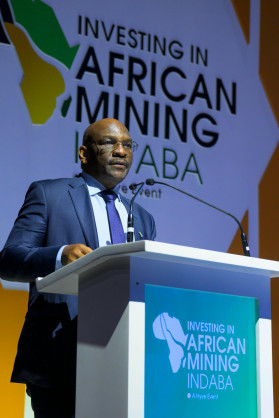
Africa must take bold steps to own its resources, create jobs and build industries that sustain prosperity for generations, African Export-Import Bank (Afreximbank) (www.Afreximbank.com) has told African leaders, policymakers, mining industry leaders and global partners at the African Mining Indaba 2025 in Cape Town, South Africa, on Sunday.

In a keynote address at the ministerial symposium of the Indaba, Mr. Denys Denya, Senior Executive Vice President of the Afreximbank Group, argued that the continent was standing at a crossroads and could either continue exporting its wealth and remain a marginal player in the global economy or take the bold steps to own its resources.

He noted that “While the global mining industry generated approximately US$1.7 trillion in revenue in 2023, Africa's share of this wealth remains disproportionately low. Our continent extracts the raw materials that power the world's industries, yet it is estimated that we retain as little as between four per cent and 20 per cent of the total value of our minerals due to minimal local processing and limited downstream development. The result? Lost economic opportunities, exposure to volatile commodity cycles and a persistent reliance on external markets for refined products derived from our own resources.” “The choice is ours. The time to act is now. Let us work together: governments, financial institutions, investors, and industry players to build an Africa where mining is not just about extraction but about transformation, innovation and wealth creation,” said Mr. Denya. “Africa has the resources, the market potential, and the policy frameworks to transition from a resource-dependent continent to an industrial powerhouse. However, success will depend on bold, decisive action from all stakeholders. Policymakers must implement clear, enforceable regulations that mandate local value addition and create investment-friendly environments. Private sector investors must step up with capital and technology to develop processing, refining, and manufacturing facilities.”

Reversing this trend demanded bold, coordinated action, he argued. “We must move beyond extraction and invest in refining, smelting and advanced manufacturing. African nations must increase local processing capacity for minerals such as bauxite, lithium, cobalt and iron ore.”

He added that regional collaboration was essential as no single country could build a mining value chain in isolation.

Mr. Denya highlighted the importance of the African Continental Free Trade Area (AfCFTA) in developing intra-African mineral value chains and strengthening cross-border collaboration and said that attracting capital for mining-related infrastructure, technology transfer and skills development were critical.

“Our mining policies must also prioritise environmental, social and governance standards, ensuring that mining benefits communities rather than displacing them,” he said, adding that the approach would create millions of skilled jobs for the youth and reduce reliance on volatile global markets while strengthening intra-African trade.

Reiterating Afreximbank's commitment to supporting Africa's mining sector and ensuring that mineral wealth drove economic growth rather than perpetuate resource dependency, Mr. Denya announced that, over the past three years, the Bank had approved more than US$1 billion in support of mining and mineral sector projects across the continent, including financing the development and construction of a bauxite processing plant in Guinea, supporting the expansion of a manganese processing plant in Gabon and providing working capital financing to a diamond company in Botswana.

Other major projects being supported by the Bank include a petrochemical fertilizer plant in Angola, a titanium dioxide pigment plant in South Africa and the feasibility study for the development of a limestone mine processing plant in Malawi, he added.

Mr. Denya said that the establishment of the US$10-billion AfCFTA Adjustment Fund, managed by FEDA, Afreximbank's impact investment subsidiary, would provide critical financial support to countries and businesses transitioning to the new trade regime, including those in the mining sector, and that the Bank's efforts to harmonise standards and implement the Africa Collaborative Transit Guarantee Scheme would also facilitate seamless movement of minerals and mining equipment across borders, reducing logistical bottlenecks.

Afreximbank was also leveraging digital platforms, such as the Africa Trade Gateway and the Pan-African Payment and Settlement System, to enable efficient transactions and market access, which would ensure that Africa's vast mineral wealth was utilised to drive industrialisation, value addition and economic resilience across the continent, he added.

Mr. Denya also noted that Afreximbank, in collaboration with development partners, was driving the development and expansion of industrial parks and special economic zones (SEZs) to address infrastructure challenges that hinder industrial growth.

One of the most transformative initiatives under that pillar was the DRC/Zambia Electric Vehicle Battery Manufacturing Special Economic Zones - a project that positions Africa at the centre of the global energy transition by the implementation of battery precursor SEZs aimed at making the two countries globally competitive investment destinations for the battery electric vehicle value chain.

The African Mining Indaba 2025, taking place from 3 to 6 February, is the premier gathering where Africa policymakers, industry leaders and global partners work to shape the future of the African mining sector.

Distributed by APO Group on behalf of Afreximbank.

Media Contact:
Vincent Musumba
Communications and Events Manager (Media Relations)
Email: press@afreximbank.com

Follow us on:
X: https://apo-opa.co/4116jsN 
Facebook: https://apo-opa.co/4aLcd4I 
LinkedIn: https://apo-opa.co/3Et8gFS 
Instagram: https://apo-opa.co/4aOinBd

About Afreximbank:
African Export-Import Bank (Afreximbank) is a Pan-African multilateral financial institution mandated to finance and promote intra-and extra-African trade. For 30 years, the Bank has been deploying innovative structures to deliver financing solutions that support the transformation of the structure of Africa's trade, accelerating industrialization and intra-regional trade, thereby boosting economic expansion in Africa. A stalwart supporter of the African Continental Free Trade Agreement (AfCFTA), Afreximbank has launched a Pan-African Payment and Settlement System (PAPSS) that was adopted by the African Union (AU) as the payment and settlement platform to underpin the implementation of the AfCFTA. Working with the AfCFTA Secretariat and the AU, the Bank is setting up a US$10 billion Adjustment Fund to support countries effectively participating in the AfCFTA. At the end of December 2023, Afreximbank's total assets and contingencies stood at over US$37.3 billion, and its shareholder funds amounted to US$6.1 billion. Afreximbank has investment grade ratings assigned by GCR (international scale) (A), Moody's (Baa1), Japan Credit Rating Agency (JCR) (A-) and Fitch (BBB). Afreximbank has evolved into a group entity comprising the Bank, its impact fund subsidiary called the Fund for Export Development Africa (FEDA), and its insurance management subsidiary, AfrexInsure (together, "the Group"). The Bank is headquartered in Cairo, Egypt.

For more information, visit: www.Afreximbank.com

Media files
Afreximbank
Download logo
Read moreAfreximbank Challenges Africa’s Miners to Take Bold Steps to Own the Continent’s Resources
30 January 2025

Hawks nab suspects for breaking immigration and RICA laws

Location: News

Hawks nab suspects for breaking immigration and RICA laws

Twenty-four foreign nationals have been arrested by Hawks members from the Newcastle Serious Organised Crime Investigation unit.

The suspects are Malawian nationals, aged between 18 and 28, and two Chinese nationals.

The arrests were effected in collaboration with the Newcastle Local Criminal Record Centre, the Illicit Mining Unit, DFI KZN and the Immigration Office on Monday.

The joint operation followed a tip-off about potential human trafficking activity at the Northern Truck Stop in Newcastle on 14 January 2025. 

The investigating team obtained a search warrant from the Newcastle Magistrate Court and initiated the operation on Monday.

During the search, the law enforcement agencies uncovered 22 Malawian and two Chinese suspects on the premises. 

It was established that the suspects were manufacturing SIM cards in violation of the Regulation of Interception of Communications and Provision of Communication–Related Information Act (RICA).

A total of 24 suspects, including the two Chinese nationals, Zhang Shengatao and Liu Gou, were apprehended for contravening the Immigration Act. 

On Wednesday, Zhang and Liu appeared before the Newcastle Magistrate Court for violation of the RICA Act. The case was postponed to 6 February 2025 for formal bail application.

The KwaZulu-Natal Directorate for Priority Crime Investigation Provincial Head, Major General Dr Lesetja Senona commended the Hawks members for the arrests. – SAnews.gov.za

Edwin
Thu, 01/30/2025 - 12:04

169 views
Read moreHawks nab suspects for breaking immigration and RICA laws
28 January 2025

Cheap Tik Takes Hold in Tshwane Townships

Location: News

An uptick in psychosis has followed

Read moreCheap Tik Takes Hold in Tshwane Townships
26 January 2025

Trade, Industry and Competition unpacks Transformation Fund

Location: News

Trade, Industry and Competition unpacks Transformation Fund

The Department of Trade, Industry and Competition (the dtic) says the Transformation Fund is a critical initiative that advances South Africa’s constitutional commitment to economic redress and inclusive growth, which the dtic is bound by. 

Rooted in Section 9(2) of the Constitution, it aims to promote shared equality through legislative and other measures to empower black-owned enterprises and small, medium, and microenterprises (SMMEs).

The fund also reflects the statement of intent of the Government of National Unity (GNU), which emphasises fostering redress and inclusive economic growth. 

“The GNU’s transformative agenda seeks to dismantle systemic barriers to economic participation, ensuring that historically-disadvantaged communities are afforded equal opportunities to thrive in all sectors of society,” said the department.

In addition to advancing the constitutional imperative of economic redress, the fund is anchored in the Broad-Based Black Economic Empowerment (B-BBEE) Act, particularly Section 2(h), which obligates government to "increase the effective economic participation of black-owned and managed enterprises, including small, medium, and micro enterprises and cooperatives, and enhance their access to financial and non-financial support”.

The fund directly addresses these priorities while promoting greater compliance with B-BBEE requirements and unlocking opportunities for sustainable growth.

Aligned with the National Development Plan’s (NDP) Vision 2030 to eliminate poverty and reduce inequality, the fund supports Outcome 4: decent employment through inclusive economic growth.

It also reinforces the department’s Medium-Term Development Plan (MTDP) 2024–2029, which prioritises job creation and inclusive economic participation, as outlined in the revised Annual Performance Plans (APPs). 

The following include the objectives of the Transformation Fund:
- Promotes economic inclusion: Provides financial and non-financial support to black-owned enterprises, ensuring meaningful participation in the economy.
- Addresses fragmentation: Aggregates resources from existing Enterprise and Supplier Development (ESD) obligations and other sources to enhance impact and efficiency.
- Fosters sectoral growth: Focuses on high-impact sectors, including agriculture, tourism, ICT, manufacturing, and businesses in township and rural areas.
- Enhances market access: Offers technical assistance, pre- and post investment support, and market access opportunities to beneficiaries.
- Supports industrialisation: Aligns with South Africa’s industrial policy to stimulate growth in productive sectors and underdeveloped areas.

“The Transformation Fund is not about imposing new obligations but about ensuring that existing commitments under the B-BBEE legislation are strategically utilised to create meaningful economic transformation. It embodies our constitutional mandate to achieve equality and empower historically disadvantaged communities,” Minister of Trade, Industry, and Competition, Parks Tau, said.

As outlined in the department’s revised Annual Performance Plans (APPs), the fund’s conceptual framework will be opened for public consultation and stakeholder engagement with a target to mobilise R100 billion by 2029. 

“We welcome the ongoing debate on transformation and look forward to broad participation during the consultation process. This timeline underscores the dtic’s commitment to achieving sustainable and impactful transformation.”

He said the Transformation Fund was not merely a funding mechanism, “it is a catalyst for change”.

“Through collaboration with the private sector, civil society, and other stakeholders, we will create an economy that is inclusive, sustainable, and reflective of South Africa’s diversity.” – SAnews.gov.za

Janine
Sun, 01/26/2025 - 12:30

91 views
Read moreTrade, Industry and Competition unpacks Transformation Fund
22 January 2025

President Ramaphosa outlines SA’s G20 Presidency priorities at WEF

Location: News

President Ramaphosa outlines SA's G20 Presidency priorities at WEF

President Cyril Ramaphosa has highlighted the significance of South Africa's G20 Presidency and the economic priorities of the South African Government of National Unity during a special address to the 55th World Economic Forum in Davos-Klosters, Switzerland.  

The President told world leaders that South Africa will focus its G20 Presidency on three themes - namely solidarity, equality and sustainable development. 

He emphasised the country’s commitment to advancing a just energy transition, fostering inclusive growth and addressing global inequalities.  

“As a leading forum for international economic cooperation, the G20 plays an important role in shaping and strengthening global architecture and governance on major international economic issues,” the President said. 

He pointed out that the G20 is being hosted on the African continent for the first time in history. 

“This is a moment of great significance for South Africa, the African continent and the world in that it was in Africa where humans developed the capacity and the impulse for cooperation. 

“Cooperation has been one of the key markers of human development touching on many aspects of life, from survival and social organisation to technological and cultural progress, which is what the G20 was established for - to foster cooperation to deal with the challenges the world faces. Cooperation is the bedrock of human civilisation,” President Ramaphosa said. 

He referred to former President Nelson Mandela’s speech at the WEF annual meeting 33 years ago, when Tata Madiba said: “Our interdependence, bringing us together into a common global home, across the oceans and the continents, demands that we all combine to launch a global offensive for development, prosperity and human survival.”

President Ramaphosa said South Africa's G20 Presidency is aimed at pursuing the objective of fostering solidarity, equality and sustainable development. 

“It is South Africa’s firm view that these themes can best be taken forward through the collective actions of institutions like the G20 and various multilateral institutions of the world, especially the United Nations, the WTO [World Trade Organisation] and global financial institutions, which should be reformed and be more representative and responsive to the needs of the citizens of the world.  

“We will seek to get the G20 to focus more on how we can enhance solidarity through collective efforts to ensure that in the pursuit of progress for all, no person and no country is left behind,” the President said. 

He emphasised that the rights and freedoms of one people cannot be separated from the rights and freedoms of all peoples. The President said that this is the foundation on which solidarity is built. 

He said one of the greatest impediments to growth, development and stability is the persistence of inequality within and between countries.

The pursuit of the UN Sustainable Development Goal on reducing inequality is as much of an economic imperative as it is a social imperative, President Ramaphosa said.

“As the G20, we need deliberate and coordinated efforts to focus on inclusive growth based on responsive trade and investment to grow the incomes of poor nations and the poorest in society and to ensure equal access to opportunities especially for women and young people.

“For nations to flourish, equality and prosperity must be available to everyone – regardless of gender, race, religious beliefs or economic status,” he said. 

Mobilising Finance for a Just Energy Transition

Another of South Africa’s priorities for its G20 Presidency is to mobilise finance for a just energy transition. 

President Ramaphosa underscored the need for enhanced climate financing, urging global financial institutions to redirect unused Special Drawing Rights to support developing economies, particularly in Africa and the Global South.

“It is simply not fair that over 60% of Special Drawing Rights are concentrated in a handful of wealthy countries. These resources should empower countries in Africa to invest in infrastructure, education, health care, and industrial development,” the President said. 

He called for innovative financing mechanisms and private capital to scale sustainable development, urging global institutions to derisk and support financing for emerging markets.

Highlighting South Africa’s Just Energy Transition Partnership, the President said: “We must accelerate the transition to low-carbon economies in a manner that is just and inclusive, while recognising the damage that climate change has already caused.”

Strengthening disaster resilience

With the increasing frequency of climate-induced natural disasters, President Ramaphosa said South Africa has therefore made the strengthening of disaster resilience as one of the priorities of its G20 Presidency.

He called for special financing and insurance mechanisms to support post-disaster reconstruction, particularly in vulnerable regions.

Harnessing critical minerals for inclusive growth

President Ramaphosa said another priority is to harness critical minerals for inclusive growth and development. 

“We need a G20 framework on green industrialisation and investments to ensure progress towards a grand bargain that promotes value addition to critical minerals close to the source of extraction.

“We also need the development of low-carbon manufacturing value chains which can support decarbonisation and industrial development. As mineral extraction accelerates to match the needs of the energy transition, the countries and local communities endowed with these resources must be the ones to benefit the most,” the President said. 

Showcasing Africa’s promise

President Ramaphosa highlighted Africa as the next frontier of global growth, with its abundant natural resources, young population and expanding markets.

He called for G20 support for the African Continental Free Trade Area (AfCFTA) Adjustment Fund, investments in infrastructure, youth skills development, and women’s economic empowerment.

“The digitisation of the continent to enhance trade and development is a key enabler. Through its G20 Presidency, South Africa is well-positioned to advance global cooperation and build partnerships for growth and development,” he said. 

Advancing global cooperation

President Ramaphosa praised South Africa’s inclusive governance under the Government of National Unity, which he credited with fostering stability and investor confidence.

“This cooperative culture and approach was taken to a higher level with the establishment of the Government of National Unity following the elections we held in May last year.

“The Government of National Unity, made up of 10 political parties, has been vital to stability and inclusive governance, and has contributed to greater interest among investors in South Africa’s economic prospects,” he said. 

The President said over the last few years, the South African government has been working closely with social partners in business and in labour to address key national challenges and drive inclusive growth.

Concluding his address, President Ramaphosa extended an invitation to world leaders to attend the G20 Summit in Johannesburg later this year.

He said the seeds of human progress were sown in Africa, where the earliest forms of cooperation were forged and developed.

“As the leaders of the G20 return to Africa, we make a call that we all harness these essential capabilities that will make us take action to build a better and fairer world. We intend that the G20 in Johannesburg this year should be a forum where cooperation and collaboration amongst the leading economies in the world will be taken to a higher level.

“Acting together, we should build an inclusive, just and equal world in which all may prosper, leaving no one and no country behind. I look forward to welcoming you to the G20 in Johannesburg later this year. 

“Even if you do not participate in any of the 130 G20-related meetings, I invite you to come and see South Africa for yourself, the most beautiful country in the world,” he said. – SAnews.gov.za

DikelediM
Wed, 01/22/2025 - 12:30

10 views
Read morePresident Ramaphosa outlines SA’s G20 Presidency priorities at WEF
17 January 2025

Strides being made to reposition eThekwini

Location: News

Strides being made to reposition eThekwini

Stakeholders in the Presidential eThekwini Working Group (PeWG) have been working hard to rebuild eThekwini as well as reposition the city as an investment and tourism attraction.

Since its establishment in April 2024, the Working Group has recorded significant developments in service delivery, business confidence, addressing infrastructure and socio-economic challenges.

According to the Working Group’s progress report, business confidence in the city increased from 38.42% in the first quarter of 2024 to 63.01% in the third quarter of the same year.

To respond to the challenges of the municipality, President Cyril Ramaphosa established the eThekwini Presidential Working Group (PeWG) in April 2024. The Working Group was established to accelerate support from national and provincial government to rebuild the municipality.

The Working Group operates across three spheres of government and includes representatives from the private sector and labour.

While recently on a visit around the coastal city to assess the progress of the work by the Working Group, acting Government Spokesperson and Director-General of the Government Communication and Information System (GCIS), Nomonde Mnukwa, noted an improvement in cleanliness and the high visibility of law enforcement in the metro.

With the recent opening of the Durban Beach Café by the eThekwini Municipality, Mnukwa visited the beachfront, which is a tourist attraction.

“As government, we are working together with the private sector. We want to make sure that eThekwini is an area that attracts tourists, given that tourism is a major contributor to the economy and creates jobs for the locals.

“We are pleased with the renewal of the lease for the Southern Sun Hotel Group as it will see the redevelopment of the Elangeni and Maharani hotels for a period of 50 years. The redevelopment will enable the municipality to enhance the beachfront as a key tourism asset,” she said.

The redevelopment entails an estimated capital investment of R1 billion, including the refurbishment of the Elangeni and Maharani hotels, as well as the Garden Court South Beach and The Edward hotels which are also owned by Southern Sun.

In addition, a fund of R5 million will be made available to restore and maintain the Sunken Gardens, a historically significant park owned by the municipality on the beachfront, in front of the hotels.

“These interventions will ensure that eThekwini is a vibrant city,” she said.

The eThekwini Municipality has also appointed a developer for the long-term leasing and redevelopment of the Joe Cool’s building to further enhance the aesthetics of the beachfront.

With crime being one of the challenges that act as a deterrent to holidaymakers and drive away investors, the Metro Police is working with all law enforcement agencies, including the South African Police Service, Road Traffic Inspectorate, and private security companies, to maintain high visibility at all tourism sites and areas that have been identified as crime hotspots.

The Metro Police procured an additional 146 vehicles last October to bolster the municipality’s crime fighting and prevention efforts.

In addition, last December, 2 699 newly trained Constables graduated and were deployed to stations and units to bolster the South African Police Service (SAPS) crime combatting efforts. 

“The recent recruitment of new police officers and the work being done as part of Operation Shanela are contributing to efforts to keep citizens safe,” Mnukwa said.

Operation Shanela consists of regular stop and searches, roadblocks, vehicle check points, high visibility patrols including foot patrols, the tracing of wanted suspects with a focus on murder and rape suspects, compliance inspections at liquor outlets and second-hand goods dealers.

Upgrading dilapidated infrastructure  

During her visit to the city, Mnukwa visited the Durban Textile and Leather Incubator (DTLI), which was previously an unused building by the state. It has now been refurbished.

“The city is reviving a number of dilapidated buildings to ensure that the inner city is fully functional, safe and vibrant,” she said. 

DTLI Executive Director, Dr Poppet Pillay, said the building was very old and needed extensive renovation but it was perfectly located in the city centre close to public transport, making it accessible to Small, Medium, and Micro Enterprises (SMMEs) from anywhere in the province.

“The centre has 12 high-end sewing machines. Entrepreneurs have access to these machines at nominal charge. Seven entrepreneurs were sponsored to participate in the Manufacturing Indaba in July 2023 and 14 entrepreneurs were sponsored to attend the Durban Business Fair in September 2023, thus linking them to the market.

“One of the businesses, Eagle Eye, won the Best Youth SMME award valued at R50 000. Eagle Eye is currently selling branded products at the Edgars store in Gateway Umhlanga. Some of the entrepreneurs are already exporting their clothing brands internationally and one entrepreneur was invited to join the African Growth and Opportunity Act (AGOA) programme for leather production,” Pillay said.

Furthermore, two entrepreneurs were sponsored by the Pietermaritzburg Chamber of Commerce to attend the Bharath Textile Fair in India, last year April.

“We are so thrilled to see how our entrepreneurs have grown - not only as a business but also in terms of confidence and ability to market themselves,” she said.

The Incubator is the result of a partnership between the Small Enterprise Development Agency - Science and Technology Programme (SEDA STP) and eThekwini Municipality.

The business incubator supports and grows SMMEs within the Clothing, Textile, Footwear and Leather Sector in eThekwini and surrounding areas by nurturing a business from idea generation to start-up companies through a comprehensive business support programme.

“Besides the normal incubation programme, DTLI has partnered with the Durban University of Technology (DUT) Textile Science and Apparel Technology Dept to run a six-week Ideation Programme for their post-grad students,” Pillay said.

It has also collaborated with the Fibre Processing and Manufacturing Sector Education and Training Authority (FP&M SETA) to run a virtual workshop on Entrepreneurship and the Fourth Industrial Revolution (4IR) for 152 SMMEs in the sector.

The incubator has a cohort of 54 SMMEs and provides a range of services that includes technology transfer and access to specialized machines, access to markets, access to funding and financial management, compliance and legal, productivity and business processes. - SAnews.gov.za

nosihle
Fri, 01/17/2025 - 13:54

73 views
Read moreStrides being made to reposition eThekwini
10 January 2025

Deputy President delivers eulogy at former Minister’s funeral

Location: News

Deputy President delivers eulogy at former Minister's funeral

Deputy President Paul Mashatile has described the late democratic South Africa’s first Minister of Education, Professor Sibusiso Bengu, as a “distinguished educator, diplomat and a servant of the people”.

The Deputy President was delivering the eulogy at Bengu’s funeral service held at the University of Zululand in KwaZulu-Natal on Friday.

Bengu passed away in December at the age of 90 and was afforded a Special Official Funeral Category 2.

“Today we gather to pay tribute to a remarkable individual, Professor Sibusiso Bengu, a renowned revolutionary, an intellectual of his time. As a country, we have lost a distinguished educator, diplomat and a servant of the people.

“Professor Bengu has played a key role in shaping education and other social policies contributing to the transformation of the sector and most importantly, reversing the legacy of Apartheid education,” Deputy President Mashatile said.

Bengu played a key role in the transformation of South Africa’s education sector following the attainment of democracy and played a role in the transition of higher education in the country.

The Deputy President highlighted this as part of Bengu’s legacy.

“His skills, knowledge and contribution to various sectors of educations showed that he possessed the capacity to revolutionise education by dismantling the dreadful legacies of Apartheid.
“Thirty years later, our education outcomes are still improving – a testament to the profound impact of this icon. As part of President [Nelson] Mandela’s cabinet, he introduced many key pieces of legislation that shaped our education system. 

“Among these are the South African Schools Act of 1996 and the policy recommendations of the National Commission on Higher Education which served as a guide for the government’s efforts to reconstruct and transform the apartheid higher education system,” Deputy President Mashatile explained.

The former Minister advocated for understanding the “connection between education and development”.

“We must continue to address challenges related to access to better education. An educated society has better prospects for a better future and breaking the shackles of poverty and injustices.

“Educated populations correspond with national economic growth and both directly and indirectly increase economic productivity.”

Beyond 30 years of freedom

The Deputy President said that as the country now moves beyond 30 years since the attainment of freedom and democracy, government was “going to invest in the speed of policy execution and implementation”.

“This is to ensure that the critical transformation policy contributions made by Professor Bengu are not undermined and that we continue to drive the change that we are pursuing in this sector.

“Our task is to ensure that the state, institutions of higher education, and the private sector will expand the ten growth sectors, which include finance, manufacturing, agriculture, business, and services, amongst others.

“Our goal is to create much-needed employment while also ensuring that many young people, women, and the most disadvantaged individuals have meaningful participation in the economy. We have also agreed that emerging from the 2024 elections, we are going to focus on growing an inclusive economy and reducing the cost of living,” he said.

Furthermore, Mashatile added, government is actively “investing in the building of a developmental, capable, and ethical state that has the capacity to transform society and redirect development to resolve the challenges of poverty, unemployment, and inequality”.

The Deputy President passed his final condolences to the Bengu family on behalf of the government of South Africa.

“As we accompany our leader and brother to his final resting place, may we always remember how Professor Sibusiso Bengu's political efforts have been vital in furthering our democratic values and socio-economic development.

“His passion to promote equality and fairness has had a long-lasting influence on our society, and this should inspire us. To this day many South Africans, are still benefiting from his immense contribution, and for this we are grateful.

“Once more, on behalf of the government, let me extend our deepest condolences to Mama Funeka, his children and grandchildren, and the entire Bengu family.”

The Deputy President called on society to follow Bengu’s example and “strive for excellence in everything we do”.

“Let his example guide us and his spirit, inspire us to make a positive impact in our country,” he said.

Proceedings at the funeral included ceremonial elements rendered by the South African Police Service.  – SAnews.gov.za

NeoB
Fri, 01/10/2025 - 13:11

15 views
Read moreDeputy President delivers eulogy at former Minister’s funeral
9 January 2025

DTIC notes ArcelorMittal South Africa’s decision

Location: News

DTIC notes ArcelorMittal South Africa’s decision

The steel industry is critical in the reconstruction and recovery plan for the South African economy, particularly the manufacturing, mining, construction, engineering, and transportation sectors, said the Department of Trade, Industry and Competition (dtic).

In a statement responding to ArcelorMittal South Africa’s (AMSA) announcement to wind down its longs steel business at its Newcastle plant, the department said the steel industry is important to the sectors that are at the centre of the industrialisation, localisation and beneficiation programmes of government.

“The department notes with serious concern the announcement by ArcelorMittal South Africa to wind down its longs steel business at its Newcastle plant. In fulfilment of its mandate to work with the private sector in growing the local economy the dtic remains committed to working with AMSA to find a workable and lasting situation,” it said in a statement on Wednesday.

During the course of 2024, AMSA had reached out to various government departments and state-owned entities with requests for different concessions for their business. Having taken heed of these requests, the Minister of the dtic took the decision to form a comprehensive and coordinated approach to resolving the issues raised by AMSA.

“In doing so, the Minister set up a technical working group made up of the relevant stakeholders including the dtic and AMSA, the departments of Electricity and Energy, Transport, as well as Eskom, Transnet and private sector stakeholders.”

The department said the working group held regular engagements up until and well into December 2024.

“This work has been noted in the statement released by AMSA. It has always been, and continues to be the intention of government to continue these engagements until a workable resolution to the problems faced by AMSA and the steel industry is reached,” said the department.

In a press statement on Monday, AMSA said it had taken the decision to wind down the longs business.

“This comes after sustained challenges, including weak economic growth, high logistics and energy costs, and an influx of low-cost steel imports, particularly from China. Persistent high logistics and energy costs, combined with insufficient policy interventions (especially those policy decisions made some time ago (namely, the Price Preference System [PPS] and export scrap tax) relating to the substantial subsidisation of scrap-based steelmaking operations to the detriment of the Newcastle Works - which beneficiates South African-sourced raw materials), have left the longs business unsustainable. Despite extensive consultations with government and stakeholders to find viable solutions to sustain the longs business, progress was insufficient to avert the wind down,” said AMSA.

In its statement on Wednesday, the dtic said that while the immediate task will be on addressing structural issues affecting AMSA’s longs steel business, the broader focus should also be on addressing productivity improvements and supply chain efficiencies, investments in low-carbon technologies, competitiveness and regaining the market share.

“It is also important that public and private sector’ entities and companies commit themselves to procure locally manufactured steel products in their projects. Undoubtedly, such a commitment will contribute positively to aggregate demand, job creation and economic growth in South Africa,” it said.

“AMSA will now transition the longs business into care and maintenance. Steel production is anticipated to cease by late January 2025, with the wind-down of the remaining production processes completed in Q1 2025,” said AMSA.

This wind down decision will directly affect operations constituting Newcastle (in KwaZulu-Natal) and Vereeniging Works (in Gauteng) and AMRAS (the rail and structural subsidiary). 

Newcastle’s coke-making operations will continue, though scaled back to reflect reduced demand. - SAnews.gov.za

Neo
Thu, 01/09/2025 - 09:46

66 views
Read moreDTIC notes ArcelorMittal South Africa’s decision
26 December 2024

No. 1 Hair is number one in haircare

Location: News

No. 1 Hair is number one in haircare

By: Bongani Lukhele 

In 1993 Andrew Lebitsa, a Free State Black Industrialist, participated in an empowerment and capacity building project that he said was initiated by South Africa’s first Black President, Nelson Mandela, and New York’s first Black Mayor, David Dinkins.

The objective of the programme was to develop a pool of black corporate bank managers to equip them with skills, knowledge and information that would empower them to play a critical role in the transformation of the banking industry after the country had transitioned to democracy.

Lebitsa spent six months at the Chase Merchant Bank and Baruch College in New York honing his corporate management skills in the bank and acquiring knowledge through the college’s Executive Management Development Programme. 

At the time, little did Lebitsa know that he was bound to follow in the footsteps of the two visionary leaders and blaze his own trail, as he attests that his No.1 Hair company is the only black-owned hair braids manufacturing company in the country. 

This was made possible by the support he received from the Black Industrialists Programme of the Department of Trade, Industry and Competition (the dtic).

In line with the vision of Mandela and Dinkins, the objective of the scheme is to produce a pool of capable and successful Black Industrialists who will actively and meaningfully participate in the manufacturing industry and contribute to growing the economy, creating jobs and transform the sector in particular, and the country’s economy in general.

Today, No.1 Hair, which operates from the Maluti-a-Phofung Special Economic Zone (SEZ) in Harrismith, is providing employment to 60 people who are producing the synthetic hair braids, or hair extensions as they are commonly known, for both domestic and Southern African markets.

“After a long spell in the petroleum franchise and retail industries, I got into a hardware products import and distribution industry. Many of my retail clients requested me to import hair as well.  This was initially never in my mind. But after conducting a research I realised that it was a R9-billion industry in South Africa that these people were indirectly encouraging me to participate it. I decided to get into it,” recalls Lebitsa.

After bouncing off the idea with the late prominent businessperson, Don Mkhwanazi, he advised Lebitsa to consider setting up a plant and manufacture hair in South Africa, instead of importing it. 

He connected him with two South Korean businessmen who assisted him to set up the factory in the Maluti-a-Phofung SEZ. The location was an obvious choice for Lebitsa as he once worked in the zone while he was employed by the Free State Development Corporation as a property manager.

“That is how No.1 Hair was born,"he said.

R60 million state-of-the-art plant

The R60 million state-of-the-art plant was set up with assistance from the dtic and Industrial Development Corporation (IDC). 

“After a delay caused by the COVID-19 [pandemic], we eventually started the production of our brand of hair braids in January 2021. We started with black hair braids and extended our range to numerous other colours over a period of time,” said Lebitsa.

He concedes that penetrating the hair market as a black manufacturer has been and remains a steep challenge.

“Firstly, consumers of this product are used to particular famous brands that are all imported. It is not easy for them to warm up to and embrace a new, unknown product. Secondly, but more importantly; it is the problem of perception and stereotypes that one has to deal with in the industry.

“As a black manufacturer, you are already disadvantaged when approaching buyers who source products for big companies and retail stores. 

Summer season

“From not even giving you a chance to present your products to them, to doubting both your capability as a businessperson to deliver on orders, and the quality of your products. It is a big challenge. However, one order at a time we have managed to build quite [a] sizeable number of clients,” he adds.

Lebitsa’s spirit lifts when he starts speaking about the summer season that he says sparks a high demand in hair braids. To this end, he has received huge amounts of orders that will soon see all of his production lines running at full capacity.

“Despite all these market penetration challenges, we are making steady progress and continue to grow the company.  Slowly but surely, we are increasing our own market share.

“We pride ourselves in being a proudly South African company whose products and raw material are produced in the country. 

“We are hopeful that the Buy Local Campaign will instil patriotism in consumers of our products and enable them to choose locally-produced quality products instead of poor quality imports.”

He revealed that his plan is to expand his business by diversifying his product range and venturing into the manufacturing of hair care products. - SAnews.gov.za

*Bongani Lukhele is the Director: Media Relations for the dtic


DikelediM
Thu, 12/26/2024 - 07:00

76 views
Read moreNo. 1 Hair is number one in haircare
17 December 2024

Leaked Report Exposes Abuse of Lottery Money Paid to Minstrel Group

Location: News

No proof that promised “minstrels museum” ever existed

Read moreLeaked Report Exposes Abuse of Lottery Money Paid to Minstrel Group
  • Previous
  • Page 1
  • Interim pages omitted …
  • Page 3
  • Page 4
  • Page 5
  • Page 6
  • Page 7
  • Interim pages omitted …
  • Page 16
  • Next

Copyright © 2026 · MyZA · All Rights Reserved · Powered by Stratlec Online