• Skip to main content
  • Skip to header right navigation
  • Skip to after header navigation
  • Skip to site footer
MyZA

MyZA

News, Directory, Events and Other Stuff

  • Social Media
  • Sport
  • World News
  • Home
  • Submit News
  • Directory
  • Events
  • Stratlec
  • TFSA
  • News
    • APO
    • Today’s Sport News
    • Todays Social Media and Tech Headlines
    • Today’s World News
    • Today’s SA Financial News
  • Contact
You are here: Home / Archives for Market

Market

22 August 2024

Good news for local meat producers

Location: News

Good news for local meat producers

The South African Ambassador to Saudi Arabia, Mogobo Magabe, says the lifting of the 21-year import ban of South African meat products by Saudi Arabia has opened a lucrative market for local meat producers.

Ambassador Magabe was speaking during the virtual Outward Selling Mission to Saudi Arabia that was hosted by the Department of Trade, Industry and Competition (the dtic), in partnership with the Department of Agriculture, South African Embassy, Saudi Arabia Food and Drug Authority, South African National Halaal Authority, and the Red Meat Producers Organisation.

Over 250 people attended Thursday’s session that was held under the theme: “Unlocking Trade Opportunities through Collaboration”

“The lifting of the ban was one of the strategic outcomes of President Cyril Ramaphosa’s State Visit to the Kingdom of Saudi Arabia where he held constructive and fruitful engagements with the Crown Prince and Prime Minister of the Kingdom of Saudi Arabia, Mohammed bin Salman. The two leaders signed fifteen agreements that included collaboration in agriculture, mining and tourism.

“It is an opportune time for the South African meat producers to take advantage of the lifting of the ban and export their products to the Kingdom. This can contribute in growing our economy, and strengthening our bilateral economic relations with Saudi Arabia,” Magabe said.

READ | The dtic to host virtual outward selling mission to Saudi Arabia 

The Chief Director of Export Promotion and Marketing at the dtic, Ms Zanele Sanni, encouraged South African companies to utilise the virtual session to market their respective products to potential Saudi buyers with the aim of concluding sustainable export contracts that would increase trade between the two countries.

“As government, we are mandated to support local industries to enhance their manufacturing capacity and find suitable export markets for their products through strategic mechanisms like these,” Sanni said.

“We are committed to enhancing bilateral economic ties with Saudi Arabia. In recent years, both countries have had high-level political and business exchanges, leading to the lifting of the 21-year ban on South African meat exports to Saudi Arabia. This has opened up the substantial Saudi Arabian market to South African producers,” she said.

She expressed South Africa’s appreciation to the Saudi authorities for having already approved twelve South African companies to export beef meat to Saudi Arabia, and seven companies for lamb and mutton meat products.

“This demonstrates the high standards met by South African companies. It also confirms that the meat-producing sector in South Africa is highly developed and strategically positioned to meet the demand of the Saudi Arabian market,” Sanni noted.

The Chief Director of Animal Production and Health at the Department of Agriculture, Dr Botlhe Modisane, said Saudi Arabia provided a high potential market for South African exporters to tap into, in terms of both fresh or chilled beef meat as well as frozen beef products.

“Saudi Arabia currently accounts for about one percent of agricultural exports from South Africa,” Modisane said.

South Africa anticipates to expand its export market share with Saudi Arabia given the signing of the recent trade agreements. 

Saudi Arabia is a net importer of beef. Its imports of frozen beef and fresh or chilled meat imports recorded approximately 71% and 90% growth rates respectively.

The session was also addressed by representatives of the South African National Halaal Authority (SANHA), Hammid Mulla and of the Red Meat Abattoir Association, Dr Gerhard Neethling. – SAnews.gov.za

Edwin
Thu, 08/22/2024 - 14:48

103 views
Read moreGood news for local meat producers
22 August 2024

President Ramaphosa to undertake State Visit to China

Location: News

President Ramaphosa to undertake State Visit to China

President Cyril Ramaphosa is set to undertake a State Visit to the People’s Republic of China from 2-5 September 2024, to further strengthen diplomatic and trade relations between the two countries.

This visit follows President Xi Jinping’s fourth State Visit to South Africa in August 2023.

China is South Africa’s largest trading partner with bilateral trade standing at US$34 billion in 2023, made up of exports totalling US$12 billion and imports at US$22 billion. 

READ | SA and China strengthen political, trade relations

Minister in the Presidency Khumbudzo Ntshavheni said on Thursday China had also been a major contributor to South Africa’s investment drive and is the country's largest source of foreign direct investment.

“A number of important agreements are expected to be concluded during the State Visit, including a Framework Agreement on Development Cooperation, the trade balance and market access expansion,” Ntshavheni said during a media briefing to outline the outcomes of Cabinet's meeting on Wednesday.

A South African delegation will also participate in the Forum on China-Africa Cooperation (FOCAC) which will take place from 4-6 September 2024.

FOCAC is multilateral coordination mechanism between Chinese and African countries, and it is viewed as a cooperation platform within the Chinese Belt and Road Initiative which is China’s global infrastructure development strategy. – SAnews.gov.za

DikelediM
Thu, 08/22/2024 - 13:49

112 views
Read morePresident Ramaphosa to undertake State Visit to China
22 August 2024

Estates Are Better Value for Money as They Bypass the Hidden Costs of Freestanding Homes

Location: MyPR

The dust on the national elections has finally settled with the newly formed government of national unity described as a ‘market-friendly outcome’ by Business Day. This is good news for those who have been holding off on property investments as real estate interest picks up, particularly in secure estates. “There’s definitely a positive sentiment being …

Read moreEstates Are Better Value for Money as They Bypass the Hidden Costs of Freestanding Homes
21 August 2024

Taboola Partners With Aleph Holdings to Accelerate Operations in Africa, Connecting Advertisers and Publishers With Consumers and Readers

Location: MyPR

Taboola (Nasdaq: TBLA), a global leader in powering recommendations for the open web, today announced an expansion of its operations to serve advertisers and publishers in Africa. Partnering with Aleph Holdings, Taboola’s advanced AI-powered technologies and consumer reach will now be accessible to advertisers and publishers in countries including South Africa, Nigeria, Kenya, Egypt and …

Read moreTaboola Partners With Aleph Holdings to Accelerate Operations in Africa, Connecting Advertisers and Publishers With Consumers and Readers
21 August 2024

Tailored Support for Women Entrepreneurs Will Raise SA’s Job Creation and Economic Growth Prospects

Location: MyPR

South African women are exiting their businesses at a higher rate than they are starting and running businesses indicating they need more support in growing start-ups to the established stage of more than 3.5 years. This is a key finding of the Global Entrepreneurship Monitor (GEM) South Africa Report 2023/2024 by Stellenbosch Business School, launched …

Read moreTailored Support for Women Entrepreneurs Will Raise SA’s Job Creation and Economic Growth Prospects
20 August 2024

Gauteng’s Food Supply Chain: Catering Suppliers and Manufacturers

Location: MyPR

The Backbone of the Catering Industry In the bustling regions of Johannesburg and Gauteng, the catering industry relies heavily on a network of wholesale suppliers and food manufacturing companies. These suppliers are the unsung heroes, providing the essential ingredients that fuel the culinary creations we enjoy at various events.   Catering Wholesale Suppliers: The Cornerstone …

Read moreGauteng’s Food Supply Chain: Catering Suppliers and Manufacturers
20 August 2024

Understand Property, Business, and Classic Car Valuations

Location: MyPR

Valuations are a critical aspect of many financial and legal decisions. Whether you are dealing with property, a business, or even a classic car, understanding the valuation process is essential.    What Are Valuations? Valuations are assessments of the worth or value of an asset. They are conducted by professionals who consider various factors to …

Read moreUnderstand Property, Business, and Classic Car Valuations
20 August 2024

Crowdfunding jobs for unemployed moms on the Weskus

Location: MyPR

It is generally agreed that the fastest way to stop the continued and almost methodical decimation of our youth is to get them employed. But all the data proves that not enough has been done and things are getting worse. The woman-run nonprofit company, Goedverwacht Awakens, has noted the drastic lack of jobs for those …

Read moreCrowdfunding jobs for unemployed moms on the Weskus
20 August 2024

More than 100 attempts over three decades to finally reach Championship Boerewors Top 10

Location: MyPR

More than 100 attempts over three decades to finally reach Championship Boerewors Top 10 Whilst some were lucky enough to make it on first try, many of the Shoprite and Checkers 2024 Championship Boerewors competition finalists have been refining their recipes for decades, submitting a combined 100+ entries before finally landing their spots in the …

Read moreMore than 100 attempts over three decades to finally reach Championship Boerewors Top 10
20 August 2024

Employment Equity roadshow heads to Limpopo

Location: News

Employment Equity roadshow heads to Limpopo

The Department of Employment and Labour is taking the 2024 annual National Employment Equity workshops/roadshows to Limpopo today.

The workshops will be held at Moche Grace Land in Thohoyandou today and at the Bolivia Lodge in Polokwane on Wednesday. 

The workshops, which are run in collaboration with the Commission for Conciliation Mediation and Arbitration (CCMA), are designed to improve racial, gender and disability equality in the workplace under the theme: “Bridging the Equity Gap Through Diversity & Inclusion”.

“The EE workshops are targeting employers or heads of organisations, academics, assigned senior managers, consultative forum members, human resource practitioners, trade unions, employees and interested stakeholders,” the department said in a statement. 

The workshops will focus on the following topics: 
• The EE status of the labour market as per 24th CEE Annual Report; 
• An update on the EE amendments, in particular the proposed draft regulations on proposed sector EE targets; An update on the 2024 EE reporting season; 
• Key insights from the CCMA on topical cases related to unfair discrimination in terms of harassment, disability and discrimination based on arbitrary grounds.

The Employment Equity Act (EEA) of 1998 aims to, among others, achieve equity in the workplace by promoting equal opportunity and fair treatment in employment through elimination of unfair discrimination and implementing affirmative action measures to redress the disadvantages in employment experienced by designated groups. 

Moreover, the act aims to ensure equitable representation in all occupational categories and levels in the workforce. – SAnews.gov.za

DikelediM
Tue, 08/20/2024 - 10:12

76 views
Read moreEmployment Equity roadshow heads to Limpopo
19 August 2024

RS’s Own Brand RS Pro to Become a Key Partner for Planned Maintenance

Location: Business
RS South Africa

RS PRO (https://Africa.RSdelivers.com), the own brand of RS, offers a comprehensive selection of over 80 000 products spanning all industries and technologies. Renowned for its quality and extensive range, RS PRO is the Smart Choice for businesses and working environments.

Planned maintenance is a crucial element of every production cycle, and manufacturing companies regularly schedule downtime for this purpose. To support these maintenance activities, RS PRO is excited to announce the expansion of its Planned Maintenance range. This expansion adds over 850 new products across more than 24 categories to our portfolio, providing all the components and materials needed to optimise this essential process.

Building on a broad existing range of over 55 000 products, this expansion aims to offer our customers an ever-expanding and comprehensive choice at a competitive price.

The new range stands out as the go-to solution for minimising downtime and increasing productivity while reducing costs – from monitoring equipment to assess machine performance to having the right parts available when needed. Test & Measurement, Automation Components, Lighting, Cable Accessories, Batteries, Fasteners & Fixings, Lubricants & Greases, Tools, PPE, Site Safety, and Cleaning solutions. RS PRO offers a comprehensive one-brand solution for diverse maintenance needs.

The Planned Maintenance expansion caters to a broad spectrum of sectors, including discrete and process manufacturing, energy & utilities, facilities & intralogistics. With a new range expansion covering 100% of our 80 000-product selection, RS PRO ensures that its unique offering addresses the specific needs of each customer.

In the ever-changing industrial landscape, RS PRO remains steadfast in its commitment to quality and choice, providing customers with a comprehensive range that meets design and compliance specifications at all stages of the product lifecycle.

For more information about RS South Africa's products and services for the Sub-Saharan market, visit their website (https://Africa.RSdelivers.com/) and follow them on LinkedIn (http://apo-opa.co/3YPXcKR) for regular updates on innovative solutions.

Distributed by APO Group on behalf of RS South Africa.

PR Contact Person -
RS South Africa:

Princess Tlou
Communications & Content Specialist
RS South Africa
Princess.Tlou@rsgroup.com
+27 11 691 9366

Media Contact Person –
NGAGE:

Thobile Ndlovu
PR Account Executive
thobile@ngage.co.za
+27 11 867 7763

Further information is available via these links:
Twitter: https://apo-opa.co/3yKqaRJ
LinkedIn: https://apo-opa.co/3YPXcKR
Facebook: https://apo-opa.co/3yKqboL
RS South Africa: www.za.RS-online.com
RS Africa Exports: http://apo-opa.co/3ADBrDT
DesignSpark: http://apo-opa.co/3yKqcZR
RS Group plc: http://apo-opa.co/4cChpai

RS:
RS is a trading brand of RS Group plc, providing product and service solutions that help our customers design, build, maintain, repair, and operate industrial equipment and operations, safely and sustainably. We stock more than 750,000 industrial and electronic products, sourced from over 2,500 leading suppliers, and provide a wide range of product and service solutions to 1.1 million customers.

We support customers across the product lifecycle, whether via innovation and technical support at the design phase, improving time to market and productivity at the build phase, or reducing purchasing costs and optimising inventory in the maintenance, repair, and operation phase. We offer our customers tailored product and service propositions that are essential for the successful operation of their businesses and help them save time and money.

RS Group plc is listed on the London Stock Exchange with stock ticker RS1 and in the year ended 31 March 2023 reported revenue of £2,982 million.

Media files
RS South Africa
Download logo
Read moreRS’s Own Brand RS Pro to Become a Key Partner for Planned Maintenance
19 August 2024

Let’s harness improved confidence to drive inclusive growth – President

Location: News

Let’s harness improved confidence to drive inclusive growth - President

President Cyril Ramaphosa says government remains committed to collaborating with business, labour unions, and other social partners to advance the structural reforms necessary for fostering inclusive economic growth and creating jobs.

The President said this in his weekly newsletter to the nation on Monday.

“We cannot rebuild our country unless all South Africans work together. We will continue to work with business, labour and other social partners to drive the structural reform process that will boost inclusive economic growth and jobs.

“There is indeed an air of optimism in our country. Let us harness this confidence and goodwill to increase the momentum of our shared efforts to build and strengthen our economy,” the President said.

President Ramaphosa highlighted that over the last few months, the country has seen a growing confidence among investors, business and citizens over the prospects of the economy.

The latest Business Confidence Index published by the South African Chamber of Commerce and Industry (SACCI) points to an increase in business confidence since the elections in May.

The President noted that this sentiment is evident in the Johannesburg Stock Exchange’s All-Share Price Index, which increased by about 8% from the end of May to the end of July 2024. 

“This is welcome news, particularly in light of the most recent employment figures released by Statistics South Africa, which show that unemployment remains extremely high at 33.5%.

“Business confidence is so important to our efforts to create jobs because it signals an improved business environment and encourages new investment. Greater investment in the economy enables faster growth and more job opportunities,” he said. 

For several years, the country has experienced low levels of business confidence, having been negatively affected by the prolonged electricity crisis, State capture, concerns about corruption, the decline of State-owned enterprises and the manner in which law enforcement agencies had been compromised.

President Ramaphosa further reflected that investors have also been concerned about obstacles to growth, such as delays in the release of broadband spectrum, inefficiencies in ports and rail operations, and regulations that have slowed down licensing processes. 

The President lauded the successful holding of the national and provincial elections in May and the formation of the Government of National Unity, both of which have had a positive effect on business confidence.

He said the progress that has been recorded in the reform process thus far has also contributed to the improved sentiment.

Rooting out corruption

To create a conducive environment, the President said government has shown its determination to tackle corruption.

Bodies like the National Prosecuting Authority (NPA), Special Investigating Unit (SIU) and the Hawks have brought several high-profile cases to trial. The permanent establishment of the NPA’s Investigating Directorate has also given further impetus to the fight against corruption.

Crime is also being tackled. Across the country, the President said, initiatives such as Operation Shanela have upped the war on crime.

“We are clamping down on illicit mining operations. Criminal syndicates involved in cable theft and extortion at construction sites are being dealt with. 

“Through a concerted effort from all stakeholders, we have confronted the electricity crisis. We have now had more than 140 consecutive days without load shedding. There has been a huge increase in new power generation capacity. 

“Investors have seen the growth opportunities in the far-reaching energy reforms we are undertaking. Just last week, I signed into law the Electricity Regulation Amendment Act, which will enable the establishment of a competitive electricity market,” the President said.  

The progress made in electricity provision, he said, gives confidence that the country can overcome the problems on the freight rail lines and ports.

Transnet’s recovery plan is showing progress, with the private sector providing significant technical support and resources to Transnet Freight Rail and Port Terminals.

In Gauteng, the Western Cape and KwaZulu-Natal, newly launched state-of-the-art passenger trains are now operating along refurbished and reopened rail corridors, offering commuters faster and more affordable transportation options. 

This development is expected to significantly reduce commuting times and costs for users.

Reforms and investment

Additionally, government has implemented changes to immigration regulations to attract skilled professionals, investment and tourists to South Africa. 

Approval processes for water use licences and energy projects have been expedited, and the release of broadband spectrum aims to unlock the full potential of the telecommunications sector.

These reforms are set to drive economic growth and enhance the country’s global competitiveness. 

The country is also making progress on infrastructure investment. According to Nedbank’s Capital Expenditure Project Listing, the value of fixed investment project announcements in the first half of this year rose to approximately R800 billion.

This was up sharply from just over R190 billion in 2023.

The public sector accounts for most of these projects in areas such as energy, transportation, health facility upgrades, roads and housing. 

“As government, we held a meeting with business leaders last week. Business expressed optimism about the recovery and growth of our economy. They committed themselves to a new era of partnership with government. We agreed on key actions we must now take to build on the progress that has already been made,” the President said. – SAnews.gov.za

DikelediM
Mon, 08/19/2024 - 11:08

91 views
Read moreLet’s harness improved confidence to drive inclusive growth – President
19 August 2024

Displayit Prepares for a Vibrant Post-Summer Trade Show Season with a Full Spectrum of Display Solutions

Location: MyPR

As businesses ramp up their marketing efforts for the upcoming trade show season, Displayit, a leader in trade show displays, trade show banners, and trade show stands, is well-prepared to meet the surge in demand. The company is anticipating a busy season as exhibitors seek innovative solutions to captivate audiences at various corporate events and …

Read moreDisplayit Prepares for a Vibrant Post-Summer Trade Show Season with a Full Spectrum of Display Solutions
18 August 2024

Discover the Chery Tiggo Range: Urban Elegance Meets Adventure

Location: MyPR

The Chery Tiggo range is making waves in the SUV market, merging style, performance, and practicality. Whether you’re navigating busy city streets or tackling rugged terrains, the Chery Tiggo models promise a dependable and enjoyable driving experience. Let’s explore the unique features and capabilities of the Chery Tiggo 4 Pro, Chery Tiggo 7 Pro, Chery …

Read moreDiscover the Chery Tiggo Range: Urban Elegance Meets Adventure
18 August 2024

Government outlines further plans to commemorate Women’s Month 

Location: News

Government outlines further plans to commemorate Women’s Month 

Government departments will continue to host a variety of activities to commemorate Women’s Month.

On 9 August, South Africa commemorated Women’s Day in the Northern Cape under the theme: “Celebrating 30 years of democracy towards Women’s Development”.

READ | President Ramaphosa pays tribute to women

This follows the launch of Women’s Month on 31 July.

This year’s Women’s Month marks the 68th anniversary of the historic march of thousands of South African women from all walks of life to the Union Buildings in 1956. The march was in protest of the introduction of apartheid pass laws for Black women in 1952. 

“During Women’s Month, we celebrate women as active agents of change and social transformation. The commemoration also allows us to take stock of achievements and the challenges that remain while mobilising support for the further development of women,” the Government Communication and Information System (GCIS) said in a statement.

The GCIS believes this year’s Women’s Month marks an important juncture for collective reflection on how South Africa has empowered and advanced the rights of women over the past three decades. 

“We also celebrate 30 years of the Women’s Charter, which was established to drive equality.” 

Government said it will advance the Women’s Charter for Accelerated Development that was formulated in 2021 to accelerate economic reforms to unlock women’s economic progress. 

Several socio-economic empowerment programmes and events will take place during the month including a trade expo, fashion show, and social dialogues.

Advancing women

The Women Economic Assembly (Wenoca) will launch its research project findings on the ‘Economic Empowerment of Women in South Africa’s Property Sector’ at the University of South Africa (Unisa) in Pretoria.  

The Wecona study focuses on using evidence-based methods to explore and address the challenges faced by women in the property sector and sub-sectors and identifies opportunities for economic empowerment.

The Charlotte Mannya Maxeke Foundation and Freedom Park in promoting social cohesion and discussing issues that delay women’s empowerment as a threat to gender equality, will host a Women Inclusivity Dialogue. 

The dialogue will focus on assessing progress 30 years later and celebrating women's empowerment.
The session will also seek to find solutions to justice and equality for women led by women. 

Meanwhile, the Department of Transport will host an information-sharing session for Cross Border Women Operators, to increase the participation of women in the cross-border market leading to the transformation of the industry. It will also encourage them to consider other sectors within the cross-border market.

In addition, the Department of Mineral Resources will host a Women in Energy and Mining Symposium to share opportunities in the energy and mining sector for women and the youth. 

Youth initiatives 

On 12 August, the Department of Women, Youth and Persons with Disabilities (DWYPD) in partnership with the National Youth Development Agency launched the Job Shadowing Programme in all nine provinces through the respective Offices of the Premier. 

In addition, the Presidential Youth Employment Initiative (PYEI) first-quarter report was released last week. 
The PYEI is South Africa’s most comprehensive effort to address youth unemployment to enable more young people to move from learning to earning.

The GCIS said the PYEI is committed to addressing the gender gap in employment and a significant achievement of the intervention is that 70% of the opportunities have been secured by young women.

Women in law enforcement 

The South African National Defence Force (SANDF) Parade is the celebration of women in uniform supported by men in solidarity with the Women, Peace and Security Agenda and United Nations Security Council resolution 1325 on women, peace and security that was adopted by the United Nation (UN) Security Council on 31 October 2000. 

The resolutions acknowledge the disproportionated and unique impact of armed conflict on women and girls. 
In the Northern Cape, a provincial law enforcement parade will be held in Kuruman, to display a disciplinary approach which encourages service delivery in various sectors of government and further advocates the empowerment of women.

The South African Police Services (SAPS) has also started a campaign to highlight and celebrate women in the service who are behind major crime operations and also various fields within law enforcement such as forensics, crime intelligence and criminal investigations.

Public engagements and awareness campaigns 

Across provinces, various community dialogues and workshops will take place on gender-based violence and femicide (GBVF) initiatives. 

Government in partnership with civil society will hold the 3rd National Men’s Day Against GBVF which will be officiated by Deputy President Paul Mashatile and His Majesty the King Misuzulu kaZwelithini on 24 August 2024.

The event led by the Goodmen Foundation in partnership with DWYPD seeks to use this event to increase awareness about the impact of GBVF on society, educate citizens about gender equity and profile support available for survivors and facilitate healing. 

READ | President speaks out on gender-based violence

Women in transport 

The National Aviation Gender Summit (NAGS) 2024 themed: ‘Lift as we rise: The journey towards 2030!’ will examine the progress made by the South African civil aviation industry towards this goal. 
The summit will focus on addressing gender transformation gaps within the sector and emphasise the significance of mentorship in promoting gender equality.
The NAGS 2024 is targeting female aviation professionals and various industry representatives with responsibilities and a personal stake in issues of gender equality and diversity. 

Women in the public service 

Various provincial heads of departments and Directors-General with senior women managers will host the Public Service Women Management Week to evaluate and monitor progress on the implementation of women empowerment and gender equality programmes in departments.

“Ending the scourge of GBVF requires the efforts of government, private sector, civil society and every member of society. It is the responsibility of all South Africans to end the culture of silence around gender-based violence and protect the women and children.”

In elevating the fight against GBV in his 2024 State of the Nation Address (SONA), President Cyril Ramaphosa initiated the anti-GBV campaign, in which he called upon all South African men to unite to end GBV.

“Government continues to uphold its constitutional responsibility and national priority to protect, promote and advance the rights of women and persons with disabilities and the 2024 Women’s Month programme seeks to shine a spotlight on women in diverse fields and the strides made for advancing gender equity in the past 30 Years of Freedom and Democracy,” said the GCIS.

Further details on the events listed above as well as additional events are listed on the Women’s Month calendar which can be located at www.gov.za. – SAnews.gov.za

Gabisile
Sun, 08/18/2024 - 13:27

9 views
Read moreGovernment outlines further plans to commemorate Women’s Month 
17 August 2024

President Ramaphosa signs Electricity Regulation Amendment Act into law

Location: News

President Ramaphosa signs Electricity Regulation Amendment Act into law

President Cyril Ramaphosa has signed into law the Electricity Regulation Amendment Act which sets out far-reaching reforms of the country’s electricity sector, including the establishment of a competitive electricity market.

In a statement on Friday, the Presidency said the bill assented to by the President amends the Electricity Regulation Act of 2006. This is so as to respond to current realities in the electricity sector. 

It also opens up pathways to greater competition and reduced energy costs; increases investment in new generation capacity to achieve energy security; establishes an independent transmission company as the custodian of the national grid; and imposes severe penalties for damage to and sabotage of infrastructure.

The Electricity Regulation Amendment Act provides for the establishment, duties, powers and functions of the Transmission System Operator SOC Ltd (TSO) – which must be established as an independent entity within five years – and for the National Transmission Company of South Africa to act as the TSO in the interim. 

It also provides for an open market platform that allows for competitive, wholesale or retail buying and selling of electricity.

The Act provides for market operation as a new activity that may be licensed by the National Energy Regulator of South Africa (NERSA). 

In addition, it requires the development of a Market Code that will establish rules to govern the future competitive market and outlines the process through which the code will be approved.

The Act further clarifies the principles that apply to the setting or approval of prices, charges and tariffs, providing, among others, that NERSA must enable an efficient licensee to recover the full cost of the licensed activity, must allow for a reasonable return proportionate to the risk of the licensed activity, and may provide for incentives for continued improvement of technical and economic efficiency.

As it does so, the regulator may consider factors such as security of supply, the diversity of supply and the promotion of renewable energy.

In addition, the Act distinguishes between tariffs that must be set or approved by the regulator, such as network charges, and those which are subject to a direct supply agreement or arise as an outcome of a competitive market.

“To ensure a level playing field for competition between multiple electricity generators, the Act provides that the system operator shall not discriminate between different generators or customers in relation to dispatching or balancing the system, except for objectively justifiable and identifiable reasons approved by the regulator. 

“Access to the transmission and distribution power system must be objective, transparent and non-discriminatory,” said the Presidency.

These changes are in line with the broader reforms guided by the Energy Action Plan and the Eskom Roadmap, which aim to modernise and transform South Africa’s electricity system to end load shedding and ensure long-term energy security.

It is anticipated that diversity of supply and the promotion of renewables will stimulate a demand for new skills, innovation and technology in the electricity sector, which will generate new industrial activity and in turn mitigate unemployment.

Reinforcing the protection of public infrastructure as part of the fight against crime, the law provides for fines of up to R1 million or five years in prison – or both – for persons who, among other offences, damage, remove or destroy any transmission, distribution or reticulation cable, equipment or infrastructure.

Penalties for persons who unlawfully receive such cables, equipment or infrastructure face fines of up to R5 million or 10 years in prison, or both.

Going forward, the Act will lead to long term energy security, a more competitive energy system, more rapid uptake of renewable energy sources, and ultimately lower energy prices for all South Africans.

The Electricity Regulation Amendment (ERA) Bill was passed through a majority in the National Assembly in March. 

READ | National Assembly passes Electricity Regulation Amendment Bill 

-SAnews.gov.za 
 

Neo
Sat, 08/17/2024 - 08:32

85 views
Read morePresident Ramaphosa signs Electricity Regulation Amendment Act into law
16 August 2024

The Best Ways to Sell Your Jewellery for Cash

Location: MyPR

In today’s fast-paced world, selling jewellery can be an excellent way to unlock the value of your precious items. Whether you’re looking to declutter, upgrade your collection, or simply need some extra cash, there are numerous avenues to explore. Understanding the best ways to sell jewellery, particularly gold jewellery, can help you get the most …

Read moreThe Best Ways to Sell Your Jewellery for Cash
16 August 2024

Exploring the Versatility of Shipping Containers

Location: MyPR

Shipping containers have become an integral part of modern logistics, construction, and storage solutions. Their robust design and adaptability make them suitable for various uses beyond traditional shipping. This article explores the many facets of shipping containers, including the benefits of container conversions and the availability of shipping containers for sale.   What Are Shipping …

Read moreExploring the Versatility of Shipping Containers
16 August 2024

The Essential Role of Answering Services Across Various Industries

Location: MyPR

In today’s competitive business environment, providing exceptional customer service is crucial for maintaining client satisfaction and loyalty. One of the key components of superior customer service is ensuring that all client communications are handled promptly and professionally. This is where answering services come into play. Whether for law firms, hotels, or medical practices, specialized answering …

Read moreThe Essential Role of Answering Services Across Various Industries
16 August 2024

The Essential Role of Answering Services Across Various Industries

Location: MyPR

In today’s competitive business environment, providing exceptional customer service is crucial for maintaining client satisfaction and loyalty. One of the key components of superior customer service is ensuring that all client communications are handled promptly and professionally. This is where answering services come into play. Whether for law firms, hotels, or medical practices, specialized answering …

Read moreThe Essential Role of Answering Services Across Various Industries
15 August 2024

President Museveni And King Mswati III Call For A Unified African Market And Political Federation

Location: News
State House Uganda

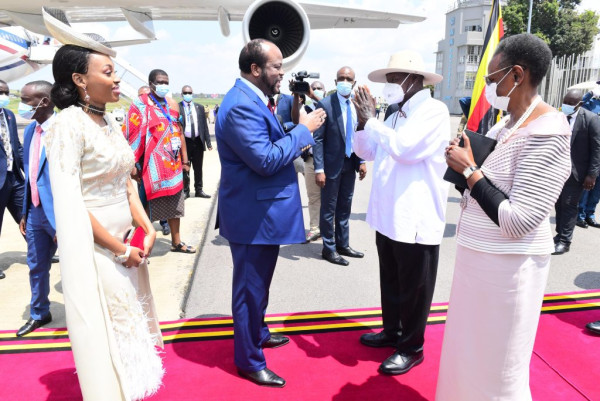
President Yoweri Kaguta Museveni and the First Lady and Minister of Education and Sports, Maama Janet Museveni have today welcomed the King of Eswatini, His Majesty, Mswati III at Entebbe International Airport.

His Majesty, Mswati III who is in Uganda for a three-day State Visit at the invitation of President Museveni was accompanied by his wife, Queen Inkhosikati Make Lamashwama and other high-level delegates.

At Entebbe International Airport, President Museveni was flanked by Ministers and service chiefs.

Upon arrival, the visiting King was accorded a 21-gun salute and inspected a guard of honour mounted by the Uganda People's Defence Forces (UPDF).

President Museveni later received his guest at State House Entebbe and held discussions focusing on enhancement of bilateral cooperation between the two countries.

In their discussions, President Museveni emphasised a clear vision for African prosperity, rooted in his experience as a student activist in the 1960s, a liberation leader, and now as a head of state.

“If Africans want prosperity, it comes from producing goods or services and selling them,” President Museveni stated.

He underscored the need for African nations to access larger markets to maximise economic benefits, highlighting Uganda's internal market of 46 million people as insufficient on its own.

“The fragmentation of the African market is a big disaster,” President Museveni warned.

He compared the continent's potential with that of Latin America, which, despite abundant natural resources, struggles with poverty due to its fragmented markets.

“I always tell my Ugandans here that if you want to be like Latin America, you are welcome because if you look at them, despite their wealth in natural resources, they still run to the USA for prosperity to get medical care, education, and other benefits,” he said.

The President argued that Africa's success lies in integrating markets across the continent, similar to how the United States operates with a vast and unified market.

He called for a model where African nations not only produce but also own and share in the benefits of their resources, rather than relying on foreign investments that often exploit the continent's wealth.

The President highlighted the need for African countries to collaborate on capital-intensive projects.

He also gave the example of Uganda's petroleum sector, where East African nations are invited to co-invest in infrastructure such as pipelines and refineries.

“It's not common sense that I produce, and you only buy. You can't say that to a brother,” President Museveni remarked, emphasising the importance of shared ownership.

President Museveni lauded the East African Community (EAC)'s progress in rebuilding and expanding to include eight member states, addressing both economic and political integration.

Beyond economic integration, President Museveni stressed the need for political federation in East Africa, which he views as crucial for establishing a strong military defence for the continent.

He highlighted the disparity in military capabilities between African nations and global powers like the United States, which boasts superior land, air, sea, and space forces.

“Africa must have the capacity to defend itself from all threats,” President Museveni asserted.

He called for a united African defence strategy as part of the broader vision for political federation.

His Majesty King Mswati III called for an enhanced cooperation between African nations, emphasising the need for unity in driving the continent's development.

He also expressed gratitude for the warm reception and hospitality extended to him and his delegation.

He highlighted the longstanding relationship between Uganda and Eswatini, noting that it had been years since their last meeting at a Commonwealth event.

“Your Excellency, I convey greetings from the Queen Mother, the government, and the people of Eswatini, and I wish to inform you that we are ready to strengthen ties between the two nations,” the King stated.

King Mswati went on to propose that Uganda and Eswatini establish regular communication channels to avoid neglecting the friendships and agreements already in place.

He stressed that African countries must work together to achieve progress in key areas such as poverty alleviation, job creation, education, and technological advancement.

“If we work together, there is much we can achieve. But if one country moves on its own, it cannot go far,” he said.

King Mswati III pointed out that Africa possesses abundant natural resources, yet the continent has struggled to produce efficiently due to the exploitation of these resources by foreign entities.

He advocated for African nations to share expertise and technology, citing Uganda's achievements in areas such as crude oil development as an example of successful collaboration.

“Now that we have mastered a lot of technology and expertise, we must take advantage of our resources,” the King stated.

The King further emphasised the need to promote entrepreneurship and knowledge exchange between Uganda and Eswatini, suggesting the establishment of distribution centres and routes to facilitate trade.

He also proposed increased cooperation between the Southern African Development Community (SADC) and the East African Community, expressing hope for a stronger economic partnership.

In terms of cultural ties, King Mswati III highlighted the similarities between the cultures of Uganda and Eswatini.

He proposed the organisation of cultural festivals to showcase these connections and attract tourists from around the world.

“We should promote our unique cultures, which are similar in many ways to support tourism and strengthen our bonds,” he added.

The King called for the opening of direct flight routes between Eswatini and Uganda to boost tourism and cargo trade.

He noted the potential for increased tourism, particularly given Uganda's rich natural attractions such as the Nile River and mountains.

“Let us work together to promote tourism by making travel between our countries easier and more accessible,” he urged.

King Mswati III also expressed support for Uganda's leadership in hosting the African Union's Humanitarian Agency and congratulated President Museveni on Uganda's chairmanship of the Non-Aligned Movement and the G77+China group.

He reiterated his country's willingness to cooperate with Uganda in various sectors, including the export and assembly of electric cars.

In Transport and Infrastructure, the two Heads of State also called for an expedition of cooperation processes regarding the creation of a hub by the Kingdom of Eswatini for marketing Kiira Motors Corporation's “Kayoola EVS” electric buses to the SADC region, using the advantage of the Maputo harbour area.

In conclusion, King Mswati III extended an invitation to President Museveni for a State Visit to Eswatini, emphasising the importance of continued collaboration between the two nations.

“Africa needs to work together to achieve economic independence, and our partnership with Uganda is a step in that direction,” he concluded.

Strengthening Bilateral Ties:

During the visit, Uganda and Eswatini further solidified their relationship through the signing of a Memorandum of Understanding.

The agreement was signed by Uganda's Minister of State for Foreign Affairs, Hon. Oryem Henry Okello, and Eswatini's Minister for Foreign Affairs and International Cooperation, Hon. Senator Pholile Shakantu.

Additionally, the two countries' agriculture Ministers discussed enhancing cooperation in the agricultural sector.

Eswatini, officially the Kingdom of Eswatini and also known by its former official name Swaziland and formerly the Kingdom of Swaziland, is a landlocked country in Southern Africa. It is bordered by Mozambique to its northeast and South Africa to its north, west, south, and southeast.

The Eswatini delegation included high-level officials such as HRH Princess Lindiwe and Hon. Manqoba Khumalo, Minister of Commerce, Industry, and Trade, among others.

On the Ugandan side, key ministers such as Hon. Babirye Milly Babalanda, Minister for the Presidency, Dr. Monica Musenero, Minister for Science, Technology, and Innovation, Hon. Mwebesa Francis, the Minister of Trade Industry and Cooperatives, and Hon. Katumba Wamala, the Minister of Works and Transport were also in attendance.

Distributed by APO Group on behalf of State House Uganda.

Media files
State House Uganda
Download logo
Read morePresident Museveni And King Mswati III Call For A Unified African Market And Political Federation
15 August 2024

Innovative Financing and Policy Support: Accelerating Renewable Energy Development in Africa (By Ana Hajduka)

Location: News
AOW: Investing in African Energy

By Ana Hajduka, founder and CEO of Africa GreenCo (www.AfricaGreenCo.com).

As Africa's energy sector deregulates, exciting opportunities open up for financial innovation to benefit consumers. Private-sector buyers and traders can mitigate default risk and provide certified green energy at lower cost, writes Ana Hajduka, founder and CEO of Africa GreenCo.

Africa's renewable energy potential is undeniable, but it remains largely untapped. The problem is that the financing landscape for renewable energy and other projects in Africa was previously reliant on state utilities as buyers.

The scale of projects that could be financed in a country were then limited by the fiscal capabilities of that country and the sovereign guarantees it could provide.

This traditional model of relying on countries to provide such guarantees has faced recent challenges, because of increasing debt burdens, and shifting economic priorities.

Opportunities have therefore emerged for innovative financial approaches that will ensure more guarantees can be acquired from other sources and that risk can be diversified across a portfolio of suppliers and customers.  This would see more projects achieving financial close, to ultimately provide more African people with clean energy.

There is also room to not only grow new renewable energy supply, but to create new renewable energy markets on the continent, where that supply can be sold.

As a consequence, the market is opening up to allow alternative buyers of new renewable energy, which can utilize existing regional competitive energy markets to diversify its risks – buyers such as GreenCo.

This is extremely relevant at the moment. Legislation like South Africa's Electricity Regulation Amendment Bill, is set to open up the electricity sector to new supply and trading models. This foreshadows the opening of a competitive spot market for electricity trade in South Africa – linking in the future the South African spot market with that of the Southern African Power Pool.

Namibia did something similar a couple of years ago, as did Zambia.

These regulatory market developments are important as they facilitate innovation and new private sector business models through which there can be a scale up of bankable offtake agreements for new supply. The problem in the region is not lack of projects. It's not lack of funding. It's earning enough lender trust to lend on the back of a  20-25 year power purchase agreement backed by a private sector buyer without state fiscal support.  

Transmission capacity

Transmission constraints are another factor in this emerging scenario. The development of the electricity sector across the region effectively has a ceiling, determined by the available transmission network for new generation.

Previously, development finance institutions would only fund state utilities, and then only when it was proved that sufficient generation would be coming on board to utilize any new transmission infrastructure.

Now, thanks to the growing liberalisation focus in the region, allowing new private sector participants to buy and trade power, these transmission funding inflows can be facilitated. This new supply will be critical to making new transmission investments bankable.

If the private sector can sufficiently guarantee that any proposed new capacity coming on board will utilise the necessary transmission infrastructure, that new capacity effectively backs the viability of the new transmission investing – bringing a direct value add to the state utilities in South Africa and the rest of the SADC region.

Regulatory readiness

But for all of this to fall into place, we need a convergence of the relevant regulatory readiness – and we are already seeing this across the region. In many SADC countries, new legislation is providing the regulatory clarity that the private sector requires to venture into supply, transmission and trade.

The entire ecosystem must work for new entrants, and lenders. Until now, lenders have seldom considered state utilities to be creditworthy, and they have required significant fiscal guarantees to cover the power-purchase obligations of those utilities.

That model is a double whammy. Not only does it encumber utilities with debt for new generation, but it hits the national fiscus as well.

In South Africa, for example, the widely respected REIPPP process has brought online a significant amount of new generation. However, once the South African government started reporting on the process in accordance with IMF fiscal transparency regulations, this added an additional 36% to the contingent liabilities of the national treasury – almost $15 billion - overnight. That is money that can no longer be channeled into education, health and other key infrastructure development (water, transmission etc).

The REIPPP model has been extremely successful in the electricity sector, but it has perhaps outlived its usefulness. There are other priorities, and the private sector should be sufficiently capable to deliver on its own, with the lending community partnering accordingly.

The REIPPP model can be replicated in cases such as storage tenders, and in the transmission space. While transmission is usually considered a government function, it would certainly be possible to incentivize the private sector – and lenders – to enter the space.

New licensees

Across the region, markets are liberalising rapidly. South Africa has shown it can happen almost overnight, as in the case of the country's generation regulations. This has allowed third-party wheeled projects, from generators directly to customers, and facilitated new license applicants in the market such – such as GreenCo.

This shows how market thinking about the development of the electricity sector has fundamentally changed. There is collaboration like never before.

For GreenCo, events like the forthcoming AOW event offer opportunities to align with mining, commercial and industrial offtakers, as well as suppliers and IPPs. For an entity like ours, it's also a chance to show potential customers and suppliers the bankability of our own offtake; that lenders have confidence in our power purchase agreements.

Financial innovation must happen in a way that makes lenders comfortable. What that looks like in our case is that all our payment obligations are backed by an internationally AA- credit rated guarantee provider GuarantCo.

We are entering the South African market operationally ready to supply customers within South Africa and outside; and with financial readiness in the form of innovative guarantee structures to be considered bankable in the market.

The ultimate beneficiaries of this financial innovation must be the consumers. Many are looking to decarbonise their operations – for climate change reasons, and to make their products competitive on international markets.

Affordability is another key consideration. In our case, by being able to provide sufficient operational and financial risk mitigation to the lenders of the generators that supply to us, we can supply electricity far more affordably.

Around 70% of the costs of a generation or renewable energy project is from the cost of debt. Therefore, the more bankable an offtaker is, the lower the debt costs, and the cheaper the electricity – a clear demonstration of the benefits of financial innovation for the end consumer.

  • AOW: Investing in African Energy unites industry leaders to develop policy, share discoveries, secure investment, and shape Africa's energy future. The event runs from October 7 – 11 at the CTICC.

Distributed by APO Group on behalf of AOW: Investing in African Energy.

About GreenCo: 
GreenCo is a renewable energy buyer and trader operating in Southern Africa (Zambia, South Africa, Zimbabwe and Namibia); purchasing power from renewable energy generators and selling that electricity to utilities, private sector offtakers (i.e. commercial and industrial users), national power trading markets and to the competitive markets of the Southern African Power Pool (SAPP). GreenCo is an active trader on SAPP and holds a number of applicable licenses covering its operations within the Southern African region. Through its activities, GreenCo will increase the supply of, and demand for, finance for energy projects, and mobilise private sector capital more quickly towards critical and transformative capacity addition. For more information please see: www.AfricaGreenCo.com

Media files
AOW: Investing in African Energy
Download logo
Read moreInnovative Financing and Policy Support: Accelerating Renewable Energy Development in Africa (By Ana Hajduka)
15 August 2024

Ecobank Group Announces the Top Finalists for the 2024 Ecobank Fintech Challenge at its first ever Semi-Finals event in Lagos, Nigeria

Location: Business
Ecobank Transnational Incorporated

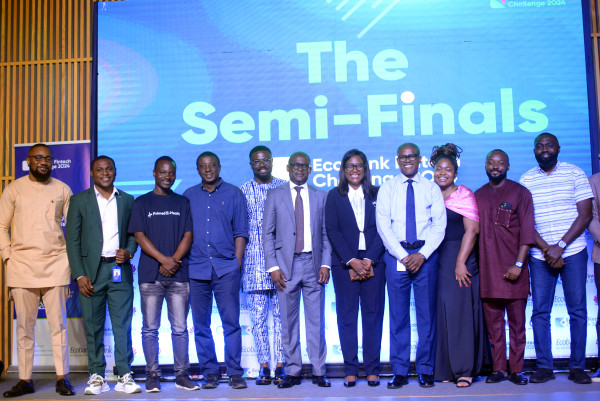
Ecobank (www.Ecobank.com), the pan-African Bank, has announced the top finalists for the first-ever and inaugural 2024 Ecobank Fintech Challenge Hybrid Semi-Final event held at the Ecobank Pan African Centre in Lagos, Nigeria. The finalists were selected from a cohort of 40 highly competitive Fintechs that made it to the semi-final stage of the competition. This year's challenge attracted over 1,550 applications from 70 countries in Africa and other global regions.

The finalists will showcase their innovative solutions at the Ecobank Fintech Challenge Grand Finale, scheduled for 27 September 2024, at the Ecobank Pan African Centre in Lomé, Togo. The event will be streamed live on Ecobank Group's social media channels, allowing a global audience to participate. Finalists of the challenge will compete for the US$50,000 ultimate prize during this highly anticipated event. 

Speaking at the Semi-Final, Jeremy Awori, Chief Executive Officer of Ecobank Group, remarked, "The finalists in this year's Ecobank Fintech Challenge have showcased exceptional talent and innovation; and we look forward to welcoming them to the Finale. At Ecobank, we're committed to collaborating with these business builders to develop products and services that will benefit our customers and contribute to our continent's progress”.

Showcasing the future of African fintech, here are the exceptional finalists of the 2024 Ecobank Fintech Challenge:

  • BuuPass, Kenya
  • Daba Finance,Ivory Coast
  • EasyEquities, South Africa
  • Exuus, Rwanda
  • Melanin Kapital Neobank, Kenya
  • MiaPay, Togo
  • PaySika, Cameroon
  • PROBOUTIK, Senegal
  • Sawport Video Banking as a Virtual Branch, Nigeria
  • Sproutly, Nigeria
  • Vaultpay, Democratic Republic of the Congo
  • YMO Africa, Guinea

The Ecobank Fintech Challenge, a flagship initiative of the Ecobank Group, organised for seven consecutive years, continues to serve as a premier continental platform for promoting innovation and collaboration between Fintechs and the pan-African Bank's cross-border markets spanning 35 countries. The challenge remains a significant event, attracting key players within the fintech ecosystem and beyond. It provides a unique opportunity for fintech entrepreneurs to address challenges such as reaching scale, navigating an uncertain regulatory environment, and managing scarcity of funding. In addition to financial rewards, the challenge offers Ecobank's expertise in diversified market operations and the right solutions to scale across its pan-African footprint and international presence.

Since inception, 60 fintech startups have been inducted into the Ecobank Fintech Fellowship.

The Ecobank Fintech Challenge is designed in partnership with international advisory firm Konfidants and is supported by various partners including Huawei, Proparco, TechCabal, BlueSpace, Afrilabs, Africa Fintech Network, MEST Africa, Naija Startups, Expand In Africa and Founders Africa.

This year's Grand Finale will bring together fintechs, regulators, investors, financial institutions, global technology companies, tech hubs, entrepreneurs, and industry experts.

Ecobank invites all key stakeholders within the Fintech ecosystem, and members of the general public to register for the Grand Finale via this link: https://apo-opa.co/4cndn5H.

Streaming platforms:

  • YouTube: Ecobank Fintech Challenge & Ecobank Group
  • Facebook: https://apo-opa.co/3WO7Q21

Distributed by APO Group on behalf of Ecobank Transnational Incorporated.

Media Contact:
Christiane Bossom
Group Communications
Ecobank Transnational Incorporated
Email: groupcorporatecomms@ecobank.com
Tél.: +228 22 21 03 03
Web: www.Ecobank.com

About Ecobank Group (or ‘Ecobank Transnational Incorporated' or ‘ETI'):
Ecobank Group is the leading private pan-African banking group with unrivalled African expertise. Present in 35 sub-Saharan African countries, as well as France, the UK, UAE and China, its unique pan-African platform provides a single gateway for payments, cash management, trade and investment. The Group employs over 14,000 people and offers Consumer, Commercial, Corporate and Investment Banking products, services and solutions across multiple channels, including digital, to over 32 million customers. For further information, please visit www.Ecobank.com.

Media files
Ecobank Transnational Incorporated
Download logo
Read moreEcobank Group Announces the Top Finalists for the 2024 Ecobank Fintech Challenge at its first ever Semi-Finals event in Lagos, Nigeria
14 August 2024

A New Era of Business and Government Collaboration

Location: Business

The Presidency of the Republic of South Africa
Download logo

President Cyril Ramaphosa convened a meeting yesterday with members of cabinet and senior business leaders to pave the way for a new era of collaboration under South Africa's 7th democratic administration, and to strengthen the partnership formed over a year ago to stimulate economic growth and job creation by addressing constraints on growth in energy, transport and logistics, and crime and corruption.

At the meeting, both business and government leaders committed to build upon progress achieved to date and accelerate implementation over the next 12-18 months in line with the strategic priorities of the Government of National Unity (GNU).

President Cyril Ramaphosa said, “The Government of National Unity has reaffirmed its commitment to urgently implement the reform agenda started by the 6th administration and to restore confidence and sentiment—essential drivers of investment, inclusive economic growth, and job creation. We have reaffirmed our commitment to a dynamic partnership between government and business to foster South Africa's economic growth and social advancement. Since the start of the partnership just over a year ago, we have made substantial progress towards stabilising the energy sector, improving the performance of our rail and port system, and strengthening the fight against crime and corruption.”

Adrian Gore, co-convenor of the business delegation, commented: "We welcome President Ramaphosa's commitment to a new era of partnership at a critical inflection point for the country. In the first phase of our partnership, over 130 CEOs pledged support and business invested more than R260 million and mobilised over 350 experts across the 3 focal areas. This has contributed to the excellent progress made with the reduction in loadshedding being the most visible and pronounced achievement. Continued momentum could mean we are able to achieve 3-5% GDP growth by 2030. We will be launching Phase 2 of our partnership with this ambition in mind.”

The meeting reviewed progress over the past year, as the partnership sought to align on priorities for the next chapter. There was strong consensus on the importance of continuing to address structural challenges, drive reforms and efficiencies, and invest in skills capacitation across all workstreams.

The energy workstream was reported to have had the most impact, achieving a dramatic reduction in load shedding in collaboration with Eskom (over 140 days without load shedding so far this year), and significant grid capacity recovery (with more than 6 GW of new energy generation added) through investment in additional technical support and capacitation from 57 companies investing over 9,000 hours at 5 power stations. The energy availability factor is currently tracking above 60% (vs 54% in 2023). 

However, we still face multiple challenges including rapidly rising electricity costs, unsustainable municipal utilities, complex market reform, a constrained grid with delayed expansion, and stalling investment in new generation. 

Significant investment will be required for energy sector reform over the next 5-10 years and there was strong consensus that it is critical to pave the way now to address the challenges. Business, Eskom and the Presidency have agreed that the priorities of the National Energy Crisis Committee should include a focus on transmission, market reform, municipal utilities and new energy generation. 

The transport and logistics and crime and corruption workstreams which are now fully established have also evidenced impact, albeit not as quickly or extensively as anticipated. 

Business has provided significant technical support and resources to Transnet Freight Rail, including procurement and operations expertise, and port maintenance support for Transnet Port Terminals. The Transnet Board and management team are making progress in implementing the Transnet recovery plan. Despite the significant efforts by the partners, there is broad acknowledgment that Transnet requires substantial interventions to improve performance to meet the needs of its customers and the market demand necessary for sustainable economic growth. 

The meeting agreed that the rapid implementation of structural reforms and strict adherence to the Freight Logistics Roadmap deadlines are crucial to facilitate participation of, and investment by, the private sector to help address our national logistics challenges. This is crucial to ensure that our commodities and manufactured products can be competitively sold into the local market and exported to meet demand. Resolving these issues will promote job retention and job creation.

In the crime and corruption workstream, an immediate joint imperative is to support South Africa's removal from the Financial Action Task Force (FATF) grey list, which would improve international confidence in SA as an investment destination. Key to this is demonstrating the law enforcement agencies' intent and ability to successfully prosecute complex crime and corruption cases and recover assets. Business is providing specialised skills at arm's length to support this objective. The promulgation of the NPA Amendment Act is key to bolstering IDAC's ability to effectively deliver on its mandate. 

The meeting acknowledged that economic growth is a pre-requisite for large-scale job creation. For now, unlocking a few key policy, regulatory and funding bottlenecks could accelerate existing short-term interventions across four areas, including new work opportunities in tourism and global business services, skilling that creates new jobs (particularly in digital skills), providing additional public sector first loss funding to crowd in private sector capital to increase affordable debt available for SMMEs, and institutionalizing, expanding and strengthening the SAYouth platform to facilitate access to opportunities for young people. 

Martin Kingston, Chair of the Business for South Africa (B4SA) Steering Committee, commented: “This is a model of collaboration that has shown its merit and is fit for purpose to drive accelerated growth and jobs in the 7th administration. Over the last year significant progress has been made and impact has been achieved, and whilst it has not been as swift or extensive as we would have liked, it has gifted us with a blueprint for success in a new era with the GNU. We are keen that the reforms are implemented with urgency. We are very optimistic about the next phase of the partnership.”

“As we move forward with this partnership, we will intensify our work to address these pressing issues and expand our efforts to drive employment creation. We know that the challenges ahead are formidable. But with our continued partnership, we are well equipped to navigate these complexities and contribute to sustainable growth for South Africa”, concluded President Ramaphosa.

Distributed by APO Group on behalf of The Presidency of the Republic of South Africa.

Read moreA New Era of Business and Government Collaboration
  • Previous
  • Page 1
  • Interim pages omitted …
  • Page 27
  • Page 28
  • Page 29
  • Page 30
  • Next

Copyright © 2026 · MyZA · All Rights Reserved · Powered by Reach Trust