• Skip to main content
  • Skip to header right navigation
  • Skip to after header navigation
  • Skip to site footer
MyZA

MyZA

News, Directory, Events and Other Stuff

  • Social Media
  • Sport
  • World News
  • Home
  • Submit News
  • Directory
  • Events
  • Stratlec
  • TFSA
  • News
    • APO
    • Today’s Sport News
    • Todays Social Media and Tech Headlines
    • Today’s World News
    • Today’s SA Financial News
  • Contact
You are here: Home / News / President Ramaphosa signs Electricity Regulation Amendment Act into law

President Ramaphosa signs Electricity Regulation Amendment Act into law

17 August 2024 by Guest

President Ramaphosa signs Electricity Regulation Amendment Act into law

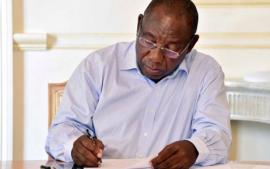
President Cyril Ramaphosa has signed into law the Electricity Regulation Amendment Act which sets out far-reaching reforms of the country’s electricity sector, including the establishment of a competitive electricity market.

In a statement on Friday, the Presidency said the bill assented to by the President amends the Electricity Regulation Act of 2006. This is so as to respond to current realities in the electricity sector. 

It also opens up pathways to greater competition and reduced energy costs; increases investment in new generation capacity to achieve energy security; establishes an independent transmission company as the custodian of the national grid; and imposes severe penalties for damage to and sabotage of infrastructure.

The Electricity Regulation Amendment Act provides for the establishment, duties, powers and functions of the Transmission System Operator SOC Ltd (TSO) – which must be established as an independent entity within five years – and for the National Transmission Company of South Africa to act as the TSO in the interim. 

It also provides for an open market platform that allows for competitive, wholesale or retail buying and selling of electricity.

The Act provides for market operation as a new activity that may be licensed by the National Energy Regulator of South Africa (NERSA). 

In addition, it requires the development of a Market Code that will establish rules to govern the future competitive market and outlines the process through which the code will be approved.

The Act further clarifies the principles that apply to the setting or approval of prices, charges and tariffs, providing, among others, that NERSA must enable an efficient licensee to recover the full cost of the licensed activity, must allow for a reasonable return proportionate to the risk of the licensed activity, and may provide for incentives for continued improvement of technical and economic efficiency.

As it does so, the regulator may consider factors such as security of supply, the diversity of supply and the promotion of renewable energy.

In addition, the Act distinguishes between tariffs that must be set or approved by the regulator, such as network charges, and those which are subject to a direct supply agreement or arise as an outcome of a competitive market.

“To ensure a level playing field for competition between multiple electricity generators, the Act provides that the system operator shall not discriminate between different generators or customers in relation to dispatching or balancing the system, except for objectively justifiable and identifiable reasons approved by the regulator. 

“Access to the transmission and distribution power system must be objective, transparent and non-discriminatory,” said the Presidency.

These changes are in line with the broader reforms guided by the Energy Action Plan and the Eskom Roadmap, which aim to modernise and transform South Africa’s electricity system to end load shedding and ensure long-term energy security.

It is anticipated that diversity of supply and the promotion of renewables will stimulate a demand for new skills, innovation and technology in the electricity sector, which will generate new industrial activity and in turn mitigate unemployment.

Reinforcing the protection of public infrastructure as part of the fight against crime, the law provides for fines of up to R1 million or five years in prison – or both – for persons who, among other offences, damage, remove or destroy any transmission, distribution or reticulation cable, equipment or infrastructure.

Penalties for persons who unlawfully receive such cables, equipment or infrastructure face fines of up to R5 million or 10 years in prison, or both.

Going forward, the Act will lead to long term energy security, a more competitive energy system, more rapid uptake of renewable energy sources, and ultimately lower energy prices for all South Africans.

The Electricity Regulation Amendment (ERA) Bill was passed through a majority in the National Assembly in March. 

READ | National Assembly passes Electricity Regulation Amendment Bill 

–SAnews.gov.za 
 

Neo
Sat, 08/17/2024 – 08:32

85 views

President Cyril Ramaphosa has signed into law the Electricity Regulation Amendment Act which sets out far-reaching reforms of the country’s electricity sector, including the establishment of a competitive electricity market.

In a statement on Friday, the Presidency said the bill assented to by the President amends the Electricity Regulation Act of 2006. This is so as to respond to current realities in the electricity sector. 

It also opens up pathways to greater competition and reduced energy costs; increases investment in new generation capacity to achieve energy security; establishes an independent transmission company as the custodian of the national grid; and imposes severe penalties for damage to and sabotage of infrastructure.

The Electricity Regulation Amendment Act provides for the establishment, duties, powers and functions of the Transmission System Operator SOC Ltd (TSO) – which must be established as an independent entity within five years – and for the National Transmission Company of South Africa to act as the TSO in the interim. 

It also provides for an open market platform that allows for competitive, wholesale or retail buying and selling of electricity.

The Act provides for market operation as a new activity that may be licensed by the National Energy Regulator of South Africa (NERSA). 

In addition, it requires the development of a Market Code that will establish rules to govern the future competitive market and outlines the process through which the code will be approved.

The Act further clarifies the principles that apply to the setting or approval of prices, charges and tariffs, providing, among others, that NERSA must enable an efficient licensee to recover the full cost of the licensed activity, must allow for a reasonable return proportionate to the risk of the licensed activity, and may provide for incentives for continued improvement of technical and economic efficiency.

As it does so, the regulator may consider factors such as security of supply, the diversity of supply and the promotion of renewable energy.

In addition, the Act distinguishes between tariffs that must be set or approved by the regulator, such as network charges, and those which are subject to a direct supply agreement or arise as an outcome of a competitive market.

“To ensure a level playing field for competition between multiple electricity generators, the Act provides that the system operator shall not discriminate between different generators or customers in relation to dispatching or balancing the system, except for objectively justifiable and identifiable reasons approved by the regulator. 

“Access to the transmission and distribution power system must be objective, transparent and non-discriminatory,” said the Presidency.

These changes are in line with the broader reforms guided by the Energy Action Plan and the Eskom Roadmap, which aim to modernise and transform South Africa’s electricity system to end load shedding and ensure long-term energy security.

It is anticipated that diversity of supply and the promotion of renewables will stimulate a demand for new skills, innovation and technology in the electricity sector, which will generate new industrial activity and in turn mitigate unemployment.

Reinforcing the protection of public infrastructure as part of the fight against crime, the law provides for fines of up to R1 million or five years in prison – or both – for persons who, among other offences, damage, remove or destroy any transmission, distribution or reticulation cable, equipment or infrastructure.

Penalties for persons who unlawfully receive such cables, equipment or infrastructure face fines of up to R5 million or 10 years in prison, or both.

Going forward, the Act will lead to long term energy security, a more competitive energy system, more rapid uptake of renewable energy sources, and ultimately lower energy prices for all South Africans.

The Electricity Regulation Amendment (ERA) Bill was passed through a majority in the National Assembly in March. 

READ | National Assembly passes Electricity Regulation Amendment Bill 

–SAnews.gov.za 
 

Have you visited MyPR?

MyPR.co.za offers free to publish press releases for your news site, blog or offline publication. Use the handy REPUBLISH facility or the Full Text RSS Feeds or just copy and paste.

Straton Electrical | Straton Solar | Straton Prepaid | Straton Plumbing | Straton IoT | Straton eBikes | BA Systems | Mbane Contracting | Reach Trust

Share this:

  • Share on X (Opens in new window) X
  • Share on Facebook (Opens in new window) Facebook
  • Print (Opens in new window) Print
  • Email a link to a friend (Opens in new window) Email
  • Share on LinkedIn (Opens in new window) LinkedIn
  • Share on Tumblr (Opens in new window) Tumblr
  • Share on WhatsApp (Opens in new window) WhatsApp
  • Share on Mastodon (Opens in new window) Mastodon
Category: NewsTag: 2024, ACT, Africa, agreement, distribution, Energy, Eskom, infrastructure, law, Market, new, Ramaphosa, Renewable, Retail, SA News, South Africa, Technology

If you feel strongly about this article then feel free to send MyZA a ‘Letter to the Editor’ using the submission form below:


Letter to the Editor

This field is for validation purposes and should be left unchanged.
If this is in response to an article please include that article title here or as the lead in for the first paragraph of your Letter below.

Separate tags with commas

Localise your letter by naming the city your words are about. Add relevant words describing your subject. Single comma separated words of no more than 5
Your Name(Required)
Your Name will be linked to the website below.
Your personal, business or social media web site
Choose NO to not set up a user account on MyZA. User Accounts will allow you to submit letters under your own Author Name

3 Latest Letters to the Editor:

  • Fun South African fact

    Dear Editor Fun South African fact: towns like Franschhoek and Stellenbosch are home to world-class wine farms set in stunning, scenic surroundings. Regards Aressa Smith In Response to/From: Luxury Properties Seized in New Lottery Crackdown

    27 January 2026
  • Condolences on the Passing of Lusanda Dumke

    Statement by Leander Kruger MPL – DA Buffalo City Constituency Leader: The Democratic Alliance in Buffalo City Metropolitan Municipality mourns the passing of Springbok Women’s rugby player and Mdantsane trailblazer, Lusanda Dumke, who lost her battle with cancer at the age of 28. South Africa has lost an exceptional athlete, a leader, and a source…

    17 December 2025
  • Rape Kits Delivered, But…

    Statement by Nicholas Gotsell MP – DA NCOP Member on Security & Justice: The DA can confirm that 2 840 rape kits arrived in Cape Town on Monday, following sustained DA oversight and pressure after multiple police stations across the Western Cape were found to be without this critical forensic evidence tool. While this delivery…

    17 December 2025

About Guest

Previous Post:SA’s ‘rock libraries’ gain world acclaim
Next Post:President Ramaphosa appoints Minister Motshekga as Acting President 

Reader Interactions

Comments

  1. scrapple

    17 August 2024 at 8:49 am

    Did you knowthis about South Africa? South Africa celebrates its annual Heritage Day on 24 September. On this day, South Africans get together to celebrate their diverse cultures, traditions and beliefs. You’ll most likely find people enjoying a braai (barbecue) and dressed in traditional garb.

  2. Betty Cricket

    17 August 2024 at 8:49 am

    Iceland: You have two cows. They freeze to death.

Copyright © 2026 · MyZA · All Rights Reserved · Powered by Reach Trust