• Skip to main content
  • Skip to header right navigation
  • Skip to after header navigation
  • Skip to site footer
MyZA

MyZA

News, Directory, Events and Other Stuff

  • Social Media
  • Sport
  • World News
  • Home
  • Submit News
  • Directory
  • Events
  • Stratlec
  • TFSA
  • News
    • APO
    • Today’s Sport News
    • Todays Social Media and Tech Headlines
    • Today’s World News
    • Today’s SA Financial News
  • Contact
You are here: Home / Archives for Meters

Meters

18 May 2025

Prepaid Electricity Meter Installer Kariega

Location: Business

Looking for a Prepaid Electricity Meter Installer in Kariega Straton Electrical INSTALLS. Straton Prepaid supplies prepaid meters all over South Africa BUT only physically installs through Straton Electrical or Straton Plumbing in the Nelson Mandela Bay Municipal area (Gqeberha – formerly Port Elizabeth, Kariega – formerly Uitenhage and Despatch). This list given below is as […]
Read morePrepaid Electricity Meter Installer Kariega
27 March 2025

President commends progress made in provision of water and sanitation

Location: News

President commends progress made in provision of water and sanitation

President Cyril Ramaphosa has commended the Department of Water and Sanitation for its ongoing efforts to improve water and sanitation access in the country.

Delivering the keynote address at the Water and Sanitation Indaba currently underway at Gallagher Convention Centre in Midrand, Gauteng, the President highlighted that through the department’s efforts, progress has been made towards meeting the minimum standards for the provision of water and sanitation services, and in addressing connection backlogs.

“As a country we can be proud of the progress we have made in fulfilling this basic right of our people since the advent of democracy. The National Water Act of 1998 was the key legislative enabler to facilitate access to adequate water and sanitation for our people.

“The results of Census 2022 point to our ongoing progress since the National Water Act was signed into law. In 2022 access to clean water stood at 88.5 %, and access to improved sanitation stood at 80.7 %,” the President said on Thursday. 

The President highlighted an increase in water infrastructure build, and this includes the National Infrastructure Fund which has to date, secured R23 billion for seven large water infrastructure projects, Phase 2 of the Lesotho Highlands Water Project (LHWP) which is currently underway, as well as work on the uMkhomazi Dam.

Preparations are also underway for the construction of the Ntabelanga Dam on the uMzimvubu River.

The President noted a number of other water infrastructure projects earmarked for blended financing through the Infrastructure Fund, including the Polihali Dam that will feed 490 million cubic meters of water a year from the Lesotho Highlands into the Vaal River System.

Held under the theme: “Water Security and Provision”, the Indaba set for Thursday and Friday, underscores government’s ongoing commitment to tackling South Africa’s water security challenges and ensuring reliable and sustainable water and sanitation services for all citizens.

With its focus on water security and provision, the two-day gathering takes place during National Water Month and Human Rights Month, a significant period that underpins the importance of water as a fundamental human right and a critical resource for socio-economic development.

The timing of the gathering also underscores the urgency of addressing water and sanitation challenges to uphold the dignity and well-being of all South Africans.

Clean water and sanitation for all

While progress has been made, President Ramaphosa acknowledged that the country still has a long way to go towards achieving clean water and sanitation for all, as encapsulated in Sustainable Development Goal (SDG) 6.

“Last year’s Water Summit identified ageing and poorly maintained infrastructure, vandalism of water infrastructure, illegal connections, and organised crime in the water sector as some of the challenges facing service delivery in this sector.

“At a local government level, financial mismanagement, insufficient revenue collection systems and high levels of physical water losses are compounding existing service delivery problems. These challenges have been consistently reflected in reports of the Municipal Strategic Self-Assessment, Stats SA, the Auditor-General and others,” the President explained.

With this dire state of affairs, he added that the country has seen declining private sector investment in water infrastructure, “a situation that is only now improving”.

By equal measure, he said the municipalities have not reinvested the revenue they earn from the provision of services to the upkeep of key water infrastructure.

“A number of water boards have been or are the subject of probes by the Special Investigating Unit (SIU) for corruption and fraud. These are problems impacting a country with a growing population, which is one of the most water-scarce countries in the world,” the President said. – SAnews.gov.za

GabiK
Thu, 03/27/2025 - 13:21
254 views

Read morePresident commends progress made in provision of water and sanitation
25 March 2025

African Development Bank Group to Expand Investment in Lesotho to $331 Million

Location: Business
African Development Bank Group (AfDB)

The African Development Bank Group (www.AfDB.org) plans to invest $331 million in key strategic sectors in Lesotho as part of its proposed Country Strategy Paper for 2025-2030 to boost economic growth and industrial competitiveness. 

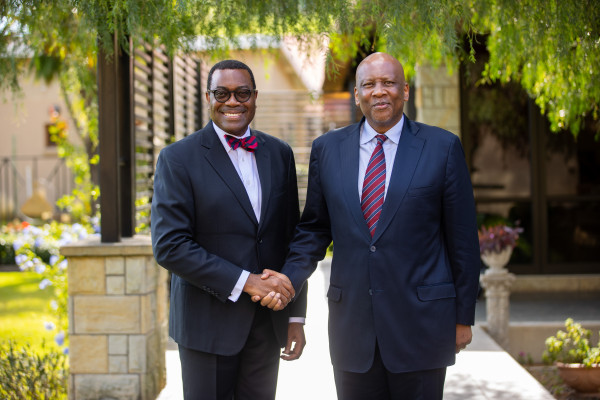
During an official visit to Lesotho -- the first by an African Development Bank President -- Dr. Akinwumi Adesina met with His Majesty King Letsie III to discuss strengthening development partnerships and expanding the Bank's investments in the country. 

His Majesty expressed delight at the Bank President's visit, viewing the mission as a reflection of the Bank and Adesina's appreciation for Lesotho's progress in improving people's lives. 

“With haste, we will ensure that the policies and incentives to accommodate the needs of and attract the private sector are in place, especially in healthcare, agriculture, and manufacturing,” the King remarked. 

King Letsie said he was confident that Adesina, whom he described as a 'man of action,' would help catalyze progress on the Bank's strategic projects in Lesotho. 

Adesina thanked King Letsie for his strong leadership role as the African Union Nutrition Champion since 2014, his advocacy for improved nutrition and food security on the continent -- especially for women, adolescents, and children -- and his passion for youth development. 

The African Development Bank president commended His Majesty for his leadership on the  King Letsie III Just Energy Transition Fund, which aims to generate approximately 200 megawatts of power through private sector investments. 

He also briefed King Letsie about the Bank's new 2025-2030 Country strategy paper and planned investments of $331 million to support quality infrastructure, capacity building, energy, integration and interconnectivity, debt management and standards, and strengthening the office of the Prime Minister.  

Referencing dwindling donor commitments globally, Dr. Adesina said, "Africa must prepare to engage more proactively with the private sector. Every challenge is an investor's dream. Ultimately, capital, like water, will always find a receptive place to go." 

According to Adesina, the Bank has implemented 87 projects totaling $429 million since Lesotho joined the Bank in 1973.  

"We have eight ongoing projects worth $60 million, and we look forward to significantly expanding our commitments," Adesina said. 

The Bank's investment strategy for Lesotho will focus on several priority areas: 

  • Energy infrastructure, including electricity transmission lines connecting Lesotho to South Africa 
  • Agricultural development to enhance food security and rural livelihoods 
  • Climate resilience initiatives to address environmental challenges 
  • Digital transformation, including broadband expansion for digital financial inclusion and government service digitalization 
  • Water resource management, building on the success of the Lesotho Lowland Rural Water Supply Project 
  • Public financial management and debt management support 
  • Trade competitiveness enhancements through improved grades and standards for exports 

The African Development Bank-led Lesotho Rural Water Supply and Sanitation Project has delivered remarkable results: 190 kilometers of pipeline to distribution networks, water storage tanks with a total capacity of 3.48 million liters, and 166 public water points serving approximately 28,266 people across eight zones in Maseru and Berea districts. 

Responding to King Letsie's request, Dr. Adesina said the Bank will prioritize investments in primary healthcare centers across Lesotho.  

“We will work on an integrated project that includes components of energy, a potential multi-partner $2.3 billion water transfer project from Lesotho through South Africa to Botswana, agro-value chains, and trade facilitation in Lesotho,” Adesina said after the meeting with King Letsie III. 

The Bank is expected to support Lesotho in mobilizing approximately $260 million for the integrated water transfer project, which will supply 308 million cubic meters of water for domestic, agricultural, and industrial use through a 700 km pipe system. The project has the potential to generate up to 22 MW of hydropower. 

Speaking earlier, Minister of Finance and Development Planning Retselisitsoe Matlanyane indicated that as Lesotho's energy supply will exceed domestic demand by the end of 2026, the country intends to build a substation to export excess power production to South Africa. She reiterated Lesotho's commitment to private sector-friendly policies and engagement. 

The minister highlighted the importance of primary healthcare and nutrition investments to help combat extreme stunting in several parts of the country.  

King Letsie is the African Union-appointed African Leaders for Nutrition champion.  The initiative, spearheaded by the African Development Bank and championed by African leaders, works to galvanize political will and significant investments to end malnutrition on the continent. 

Dr. Adesina also met with Prime Minister Samuel Ntsokoane Matekane; and the ministers of Foreign Affairs; Agriculture, Food Security & Nutrition; Natural Resources; Health; Communication, Science & Technology; and Education & Training. 

The Bank's delegation to Lesotho included its Executive Director for Lesotho, Dr. Nomfundo X. Ngwenya; Deputy Director General for Southern Africa, Moono Mupotola; and Senior Advisor to the President for Communication and Stakeholder Engagement, Dr. Victor Oladokun. 

Distributed by APO Group on behalf of African Development Bank Group (AfDB).

Media Contact:  
Emeka Anuforo
Principal Regional Communication Officer 
media@afdb.org

About the African Development Bank Group: 
The African Development Bank Group is Africa's premier development finance institution. It comprises three distinct entities: the African Development Bank (AfDB), the African Development Fund (ADF) and the Nigeria Trust Fund (NTF). On the ground in 41 African countries with an external office in Japan, the Bank contributes to the economic development and the social progress of its 54 regional member states. For more information: www.AfDB.org

Media files
African Development Bank Group (AfDB)
Download logo
Read moreAfrican Development Bank Group to Expand Investment in Lesotho to $331 Million
10 March 2025

Condolences following N2 bus crash

Location: News

Condolences following N2 bus crash

KwaZulu-Natal Transport and Human Settlements MEC, Siboniso Duma, has expressed condolences to the families of the nine church members who lost their lives in a bus accident on the N2, between Mandeni and Stanger, in northern KwaZulu-Natal.

The accident occurred on Sunday afternoon when a bus, transporting members of the Twelve Apostles Church in Trinity from Richards Bay to Shakaskraal, near KwaDukuza, experienced a tyre burst.

The incident caused the driver to lose control of the vehicle.

Duma commended the coordinated efforts of the rescue teams involved in the operation, including the Road Traffic Information (RTI) team, traffic departments, fire and disaster teams from Mandeni and KwaDukuza, and the South African Police Service (SAPS).

“The team conducted a very complicated search and rescue operation due to the steep embankment and thick bush. The operation was completed at 11:30pm [Sunday], and no victim was found left in the wreckage,” Duma said in a statement on Monday.

Duma noted that the incident occurred just as the province was finalising its Road Safety Plans ahead of the Easter holidays.

On Monday, Duma visited the site of the crash, which was located approximately 100 meters down the embankment along the N2.

The wreckage was retrieved and transported to the RTI offices in Gingindlovu to facilitate investigations by the SAPS, Road Traffic Management Corporation, and RTI.

“This is a difficult period for the Twelve Apostles Church in Trinity in KwaZulu-Natal and South Africa as a whole. We pray to God to shine his face on the families, relatives, church members and those who were injured.

“The department will be in touch with all families and the leadership of the church, starting from [Monday]. We want to ensure that the victims are given a dignified funeral,” Duma said. – SAnews.gov.za


GabiK
Mon, 03/10/2025 - 13:33
130 views

Read moreCondolences following N2 bus crash
2 March 2025

SA participates in expedition along the African coastline

Location: News

SA participates in expedition along the African coastline

The South African Environmental Observation Network (NRF-SAEON), a long-term environmental observation and research facility of the National Research, is participating in the Around Africa Expedition, the National Research Foundation said.

Led by global ocean exploration non-profit organisations, OceanX and the newly established Ocean Quest, Around Africa Expedition is a pioneering collaborative expedition along the African coastline and is an endorsed action programme of the United Nations Ocean Decade framework (2021-2030) for its contributions to capacity building and scientific understanding of the ocean.

“Its journey began on 30 January 2025 in Moroni, Comoros aboard OceanX’s state-of-the-art research and media vessel, OceanXplorer. The first leg of this expedition, conducted in collaboration with NRF-SAEON, aimed to map and conduct biodiversity surveys of Indian Ocean seamounts on the Madagascan Ridge and Agulhas Plateau,” said the National Research Foundation (NRF).

The guest science team onboard included established and early career researchers from South Africa, Madagascar, Mozambique, Kenya, Tanzania, Comoros, Portugal, Brazil and Saudi Arabia. 

In its statement, the NRF said the measurement of both the physical features and biodiversity at these seamounts will advance scientific knowledge and help to guide informed decisions on conservation and restoration efforts in these remote ocean areas.

“Although these seamounts are located in the high seas, far from any human populations, their contribution towards serving as larval transport corridors are critical and can influence population connectivity across vast ocean distances, supporting ecosystem resilience and replenishment of fisheries in both deep-sea and coastal environments.”

South African benthic ecologist, Dr Lara Atkinson from NRF-SAEON is part of the team leading the exploration of seamounts, including Walters Shoal and the Africana II seamount.

“A seamount is an underwater mountain that rises from the seafloor but does not reach the ocean’s surface. Seamounts are formed primarily by volcanic activity, often at tectonic plate boundaries or hotspots.

“Their height can range from hundreds to thousands of meters, depending on the intensity and duration of volcanic activity. They play an important role in influencing ocean currents, creating nutrient-rich upwelling that supports diverse marine life, including plankton, corals, sponges, fish, and marine mammals,” said Atkinson.

Meanwhile, a group of Cape Town high school learners from Luhlaza, Ocean View, Bulumko, Masiphumelele and Usasazo High Schools had the privilege to join a live-streamed session from OceanXplorer on its journey towards Cape Town, as researchers onboard conducted a Remotely Operated Vehicle (ROV) dive on Walters Shoal seamount.

The curious learners in attendance were fascinated by the live view of the seabed at a depth of nearly 500 m and this inspired them to ask many interesting questions to gain further insights about the science being conducted during the expedition. 

Thabo Mbuyazi, a technician from the South African Institute for Aquatic Biodiversity (NRF-SAIAB), explained the importance of ensuring that all scientific equipment is maintained to the highest of standards to be able to collect data for researchers.

He introduced the learners and educators to the two submersibles onboard the vessel, Neptune and Nadir. These three-person submersibles hosted some of the research team during deployments to 500 m depths during the expedition. -SAnews.gov.za  
 

Edwin
Sun, 03/02/2025 - 12:49
80 views

Read moreSA participates in expedition along the African coastline
28 February 2025

Montana weather event confirmed as a landspout

Location: News

Montana weather event confirmed as a landspout

Analysis of the recent destructive weather event in Montana, north of Pretoria, has been confirmed as a landspout and not a tornado.

This as the South African Weather Service (SAWS) conducted a thorough analysis of the destructive weather event that took place on Tuesday, 18 February.

“Following the analysis, which included visits to the site of the event and a close study of high-resolution satellite images of the event, among other things, the SAWS has concluded that the event was, in fact, a landspout as opposed to a tornado,” the weather service said on Friday.

In its statement it explained that a landspout develops over land and is generally smaller and weaker. A tornado, on the other hand, is a violent rotating column of air that extends from a thunderstorm and measures less than a few hundred meters in diameter although some are larger than 1 km.

“Tornadoes and landspouts are two small-sized events that the SAWS is working tirelessly to nowcast for the benefit of the public. Unlike with other weather conditions, signs of the potential development of a tornado are very evasive, particularly for landspouts,” it explained.

However, there has been an instance where the SAWS issued a tornado warning before its formation (on Saturday, 30 December 2017) albeit four minutes before it struck.

“Both tornadoes and landspouts have a similar appearance, but their development mechanisms and strengths differ. It is for this reason that the SAWS conducted a thorough analysis across Montana after which it was concluded that the event was a landspout.”

The landspout developed shortly before 5pm local time and affected a short stretch to the busy Sefako Makgato Drive. 

From there, it uprooted trees and remained on the one side of the main road. Eyewitnesses estimated that this landspout took less than five minutes before lifting and disappearing. 

The trace of its weakened phase was noted towards Zambezi where only tree branches were broken off with a zigzagging motion to the right side and back to the left of the main road. 

Here, carport awnings and more roof sheeting were broken, twisted and lofted into the air.

“It is miraculous that, to date, no reports of deaths or injuries have been received.

“The landspout was rated as an EF0 according to the Enhanced Fujita (EF) scale for tornado intensity, which is in use internationally. An EF0 event is generally associated with light or minor damage and corresponds to estimated wind speeds of the order of 90 to 130 kmh,” SAWS said.

At the time of the incident, the SAWS had an Orange Level 5 Impact-Based weather warning in place over Gauteng and adjacent provinces for disruptive rainfall and/or localised flooding. 

Action to be taken when either a landspout or tornado strike:

•    Where possible, quickly get out of the zone to which two thunderclouds are moving. Within such zones, it is almost certain that the wind will be strong and potentially damaging with injurious debris. Community members at the sudden start of a tornado or landspout may be caught by surprise, but each next minute should be used effectively.
•    Do not use a tree as shelter when it is positioned in the path of a tornado or landspout.
•    Loud sounds associated with tornadic impacts should quickly be used to scan the direction of clouds some distance away from the tornado / landspout. Thereafter, move out of the path of this event before moving opposite the main direction of clouds. Then find refuge.
•    When indoors in a formal house, remain in a small room such the bathroom.
•    To minimise impact for the shack dwellers, use the inside of small-sized furniture such as a sided wardrobe.

The SAWS said such action validates the saying “save one life, safe the world”. 

Situational awareness creates a smooth and continuous defence against potential weather hazards, and it forms part and parcel of the Early Warning for All (EW4All) initiative. 

The EW4All was introduced by the United Nations to ensure that everyone on earth is protected from hazardous weather, water, or climate events through lifesaving Early Warning Systems by the end of 2027.

“The public can be rest assured that SAWS, as mandated by the SAWS Act (Act 8 of 2001), will continue to monitor and assess developing weather systems and endeavour to issue weather-related Impact Based Early Warnings in a timely manner,” it said.

Such early warnings are routinely disseminated via mainstream news platforms such as radio, television, printed media as well as the SAWS website www.weathersa.co.za . 

Additionally, pertinent information regarding on-the-ground impacts and significant expected weather events are posted on major social media platforms such as X (previously Twitter) @SAWeatherServic, Facebook (South African Weather Service) as well as YouTube. – SAnews.gov.za


Edwin
Fri, 02/28/2025 - 11:11
241 views

Read moreMontana weather event confirmed as a landspout
18 February 2025

Opportunities for Growth and Investment in Africa’s Energy Sector

Location: News
African Energy Chamber

Africa's energy sector presents significant opportunities for investment and growth through targeted infrastructure development. Despite the continent's abundant hydrocarbon resources, inadequate infrastructure has historically impeded efficient extraction, processing and distribution. Addressing these gaps can unlock substantial economic potential and meet the rising energy demands both within Africa and globally.

As Africa continues to prioritize energy infrastructure development, this year's Africa Energy Week (AEW): Invest in African Energies conference – taking place September 29 to October 3 in Cape Town - will serve as a critical platform for investors, policymakers and industry leaders to explore opportunities in oil and gas pipelines, storage facilities and gas-to-power projects. Discussions at AEW 2025 will highlight successful infrastructure projects, showcase emerging investment prospects and address challenges in financing and implementation.

Pipeline Infrastructure

One critical area for investment is the development of extensive pipeline networks. These pipelines are essential for transporting crude oil and natural gas from production sites to refineries and export terminals. The proposed Nigeria-Morocco Gas Pipeline aims to transport approximately 30 billion cubic meters of natural gas annually from Nigeria through to Morocco and onto Europe, traversing 13 African countries. The $25 billion, 5,600-km project is poised to enhance energy security and foster economic integration across the region, with the potential to create jobs, boost industrialization and provide a stable gas supply for domestic consumption and export, strengthening Africa's role in the global energy market.

Liquefied Natural Gas Facilities

Investing in Liquefied Natural Gas (LNG) facilities is another promising avenue. These facilities enable the processing and export of natural gas, catering to global markets with high energy demands. Countries like Mozambique, the Republic of Congo, Nigeria and Tanzania are advancing large-scale LNG projects to capitalize on their substantial gas reserves. For example, Tanzania's LNG Liquefaction Plant, estimated at $30 billion, is set to position the country as a key player in the global LNG market.

Refining Capacity Enhancement

Africa's limited refining capacity often necessitates the import of refined petroleum products, leading to economic inefficiencies. Investments in modernizing and expanding existing refineries, as well as constructing new ones, are crucial. Such developments would not only meet domestic demand, but also create export opportunities. Angola is in the process of developing three new oil refineries, which will collectively increase domestic refining capacity to 400,000 barrels per day and reduce dependence on imported fuels.

Storage and Distribution Networks

Robust storage facilities and distribution networks are vital for maintaining energy supply stability. Investing in these areas ensures that oil and gas products are efficiently stored and transported to end-users, minimizing losses and meeting market demands. Enhanced storage capacity also provides a buffer against market fluctuations, contributing to energy security. South Africa's Richards Bay III project – a $6 million initiative involving the construction of an oil storage facility – aims to enhance South Africa's energy storage capacity and improve supply stability. Additionally, South Africa is experiencing significant growth in its LPG industry, driven by new distribution hubs and rising electricity prices. Companies like Petredec have announced the establishment of the country's first rail-supplied LPG project, aiming to make LPG a more accessible and cost-effective energy alternative.

Power Generation and Electrification

Leveraging natural gas for power generation offers a dual benefit: monetizing gas resources and addressing electricity deficits. Investments in gas-fired power plants and associated transmission infrastructure can significantly improve electrification rates across the continent. Mozambique's Temane gas-to-power project is set to commence operations in 2025, leveraging gas from the Pande and Temane fields to produce 450 MW of affordable power for the state utility.

AEW: Invest in African Energies is the platform of choice for project operators, financiers, technology providers and government, and has emerged as the official place to sign deals in African energy. Visit www.AECWeek.com for more information about this exciting event.

Distributed by APO Group on behalf of African Energy Chamber.

Media files
African Energy Chamber
Download logo
Read moreOpportunities for Growth and Investment in Africa’s Energy Sector
18 February 2025

TNPA to use cutting edge technology to improve its dredging capacity

Location: News

TNPA to use cutting edge technology to improve its dredging capacity

The Transnet National Ports Authority (TNPA) is set to improve its dredging capacity with the installation of a new marine excavator on the Italeni, a Grab Hopper Dredger.

It is used by the ports authority to maintain the promulgated depth of port berths, basin and entrance channels necessary for the safe navigation of vessels in the ports.

The installation of this cutting-edge technology will boost dredging volumes and increase efficiency at South Africa’s commercial seaports.

A marine excavator is a specialised technological machinery that is used to improve dredging operations while ensuring safe and sustainable practises of marine and coastal environments.

With an investment value of R76 million, the newly installed excavator is designed to grab dredged material weighing up to 2000kg at a radius of at least 20 meters. 

The upgrade will enable the Italeni to efficiently handle dredged volumes of 150 000 cubic meters (m³), a significantly increase from its annual capacity from 94 000 m³.

The upgrade replaces the excavator fitted in 2014 that has reached its operational lifespan. This feature bolsters berth availability to meet the increasing demand of larger vessels calling into South African ports.

"The Italeni upgrade enables TNPA’s strategic intent of creating a smart port system through harnessing innovation and technology. 

“Coupled with enhancing the dredger’s capability to dredge the ports to the required depth, the new marine excavator will ensure that our waterside infrastructure remains competitive by improving TNPA’s customer service offering," said Phyllis Difeto Acting TNPA Chief Executive.

Italeni is the only dredging vessel in South Africa capable of accessing confined berths and quay walls, distinguishing the craft from the rest of TNPA’s dredging fleet necessary for maintenance work.

Through its Dredging Services business unit, TNPA is actively optimising port depth to ensure the provision of commercially viable berths to its shipping and terminal operation customers.

The installed machinery adheres to the Safety of Life at Sea (SOLAS International Convention for the Safety of Life at Sea, South African Maritime Safety Authority (SAMSA) regulations and the International Convention for the Prevention of Pollution from Ships (MARPOL) legislation regarding carbon emissions. – SAnews.gov.za


Edwin
Tue, 02/18/2025 - 10:13
2 views

Read moreTNPA to use cutting edge technology to improve its dredging capacity
30 January 2025

Tense Standoff Between Police and Kliptown Tenants

Location: News

City Power officials chased away by angry group

Read moreTense Standoff Between Police and Kliptown Tenants
17 January 2025

“The Smell of Death Was Everywhere” – Stilfontein Mine Rescue Ends

Location: News

246 miners rescued, 78 bodies retrieved

Read more“The Smell of Death Was Everywhere” – Stilfontein Mine Rescue Ends
31 December 2024

Use fireworks responsibly this New Year’s Eve

Location: News

Use fireworks responsibly this New Year's Eve

Residents of Johannesburg have been warned to use fireworks responsibly as they usher in the New Year.

In a post on social media platform, X, the Johannesburg Metro Police Department (JMPD) explained that fireworks can only be used under certain conditions on specific celebratory days between 7pm and 10pm.

On New Year’s Eve, however, fireworks can be used between 11pm and 1am. 

“While fireworks can add excitement to celebrations, it is crucial to use them responsibly to ensure the safety of everyone.

“Fireworks cannot be used in public places, such as schools, hospitals, or old age homes, or within 500 meters of a petrol station or explosives factory. A license is required to deal in fireworks. Huge fireworks displays must be authorised by the Council at least 14 days before the event. No one under 16 can use explosives without adult supervision,” the JMPD said.

Fines – between R100 and R1500 – can be imposed against:

  • Anyone who ignites fireworks near animals.
  • Anyone who ignites fireworks near hospitals and old age homes. 
  • Anyone igniting fireworks within 500 meters of a petrol station. 
  • Permitting or allowing minor to light or ignite fireworks.
  • Failing to obtain permission for fireworks display and to comply with the terms and conditions of fireworks display permission. 
  • Failing to ensure that fireworks display be presented only on suitable premises designated by the Council and under the supervision and control of an official designated by the Council.
  • Failing to ensure that the fireworks license in terms of the Explosives Act and a written authority of the EMS Executive Head is in hand when dealing in fireworks. 
  • Failing to ensure that a written authority to deal with fireworks from the Executive Head is not contravened.

“The JMPD will be actively monitoring compliance with these regulations and will take appropriate action against individuals who violate the law. 

“Fines have been put in place to ensure that the fireworks by-laws are adhered to by all in the city of Johannesburg. JMPD may impound fireworks if any dealer does not adhere to the conditions of fireworks license,” the JMPD said. – SAnews.gov.za


NeoB
Tue, 12/31/2024 - 08:20

308 views
Read moreUse fireworks responsibly this New Year’s Eve
29 December 2024

Illegal miners voluntarily emerge from Stilfontein mine shafts

Location: News

Illegal miners voluntarily emerge from Stilfontein mine shafts

Government says a number of illegal miners, known as Zama Zamas, have voluntarily emerged from the disused mine shafts in Stilfontein, indicating that these individuals have the capability to exit the underground tunnels independently. 

This is according to a statement issued by the National Joint Operational and Intelligence Structure (NATJOINTS) on Sunday.

“Their delayed emergence appears to be a tactic to evade arrest by law enforcement agencies. Contrary to claims that food underground ran out months ago, evidence suggests that the miners have had access to supplies until recently. 

“Assertions that aid sent down is shared equally among miners are unverified. Government has not sanctioned any official aid deliveries to individuals engaged in illegal activities. Reports indicate that any supplies reaching the miners are controlled by underground syndicates, often leading to unequal distribution and exploitation. 

“The notion that miners remain trapped solely due to police actions is misleading,” said the statement. 

SAPS has implemented measures to secure the area and prevent further illegal activities, but designated exit points have been established to allow miners to surface safely and face due legal processes. 

NATJOINTS said the miners possess the means to exit independently, as demonstrated by those who have surfaced in recent days. 

“Government's stance is to uphold the rule of law; thus, while immediate aid is not provided to facilitate illegal activities, measures are in place to ensure the safety and humane treatment of individuals who choose to come above ground. 

“Government acknowledges the presence of various narratives surrounding this issue. It is important to rely on verified information from official channels. SAPS and other government bodies are committed to transparency and will continue to provide accurate updates on the situation,” said government.

It said it remains steadfast in efforts to address illegal mining activities, which pose significant risks to both the individuals involved and the broader community. Operations such as "Vala Umgodi" ("Close the Pits") are ongoing to rehabilitate abandoned mines and prevent further unlawful exploitation. 

Government is also working to tackle the underlying socio-economic issues that contribute to illegal mining, including unemployment and lack of economic opportunities. 

“We cannot allow a situation where the government is held hostage. All court directives have been complied with thus far, including the allowed food supply on a daily basis. 

“SAPS has previously indicated that it is working closely with all stakeholders involved in trying to get those illegal miners extracted from underground. The Stilfontein rescue operation that is being undertaken is not as easy as it seems; it is quite complex, with the depth of the shaft playing a major role in how this operation is carried out. 

“Unlike the Sabie operation, in which the shaft is 150 meters deep, the Stilfontein shaft is 2 kilometers deep to where these illegal miners allegedly are, making it a very difficult and highrisk operation to undertake. 

“The rescue team has recommended that the necessary resources and expertise must be acquired. The practicality and risks involved are also being taken into account. The liability involved is also a major factor. Police are not experts and can therefore not lead this rescue operation.”

Government said at this stage, the mine must acquire services to conduct the rescue operation, in which costs are involved. 

“We are in possession of a quotation that indicates that there must also be a 100% upfront payment. 

“It should be agreed upon that the government must approach this process with due diligence and the utmost care, taking into consideration the applicable supply chain management processes involved. 

“These processes must be above board in line with relevant prescripts.” 

Government urged all individuals involved in these activities to surface voluntarily and engage with law enforcement to ensure their safety and well-being. 

Government said it was committed to upholding human rights and the rule of law in all its operations. – SAnews.gov.za 

Janine
Sun, 12/29/2024 - 16:24

61 views
Read moreIllegal miners voluntarily emerge from Stilfontein mine shafts
16 December 2024

Surging Investment, Waves of Change

Location: News
African Energy Chamber

By NJ Ayuk, Executive Chairman, African Energy Chamber (https://EnergyChamber.org/).

I've said for years that African energy is a vital investment. Backers clearly agree — to the tune of USD47 billion. That's how much capital expenditure (capex) 2024 saw in African oil and gas, showing a 23% increase from last year. Better yet, we expect growth to continue through the end of the decade.

This capex activity is a welcome sign that energy majors are deepening their long-term interests in Africa. And as our 2025 State of African Energy report details, their momentum has created unique opportunities for local communities, indigenous companies, and national oil companies (NOCs) from other continents.

Emerging Players

While the majority of 2024's capex was driven by established producers like Angola and Nigeria, emerging players are making noise in the industry. Take Senegal, which saw its first offshore oil production this year. Ghana, following a five-year slump, increased oil output during 2024 by 10% and gas output by 7%.

Exploration hotspot Namibia also deserves a special mention: The Southern African nation aims todrill over 12 offshore wells next year, begin production by 2029, and become one of the top-five African producers by the 2030s. Good work for a nation that only discovered its enormous reserves in 2022! I frequently cite Namibia because it proves that a complete newcomer can attract serious foreign investment with smart, swift policy changes — and poise itself to shake up the energy industry.

Increased Exploration

An exciting question remains: Just where will we find the next Namibia Thanks to a resurgence in exploration, another hotspot may be around the corner. There were 1,060 wells drilled in Africa this year — more than any time since 2015. Africa has also become a global leader in drilling high-impact wells, which have the potential to significantly increase overall reserves. That strategy is already paying off: Notable 2024 finds include Namibia's Mopane complex, which holds approximately 10 billion barrel of oil equivalent (boe) – “one of the world's largest offshore finds,” according to Offshore Magazine. Even while global exploration as a whole remains stagnant, Africa is stepping up to meet growing energy demands.

When exploration is successful, new fields follow. We also expect to see African greenfield spending exceed brownfield by 10% by 2030. These capex trends all demonstrate that investors won't limit themselves to mature fields: Eyes are on fresh locations, fresh facilities, and fresh opportunities in Africa.

A Gas Future

As we highlight in our 2025 report, one of those opportunities is natural gas. Africa holds nearly 18 trillion cubic meters of reserves, which will prove essential for a just energy transition as natural gas can provide significant near-term emissions reductions while fostering energy security and economic development. Global demand for this clean-burning resource is also growing, particularly in Asia. That's why I'm glad to see a greater emphasis on developing natural gas resources. In 2023, capex spending on natural gas was about 30%, but this is projected to grow 10% by 2030. It's another sign that more investors are thinking in the long term about Africa, and interested in being part of a just energy transition.

Take Senegal, where the Greater Tortue Ahmeyim gas field will begin production next year. A Final Investment Decision is also expected in 2024 on Yakaar-Teranga. The West African nation is another fantastic example of how operator-friendly policies, political stability, and vast reserves can attract significant foreign investment: I'm excited to see Senegal transform itself from an oil importer to a gas exporter.

M&A Opportunity

The past year saw a huge increase in divestment by O&G majors: Large IOCs are aggressively streamlining their African portfolios. As a rule, they're selling mature, high-emission, and high-cost assets. While large divestments often signal trouble, they're actually creating some promising changes for African O&G.

For one, Asian and Middle Eastern nations are purchasing more assets: Dubai, Qatar, the U.A.E., Malaysia, and Chinese NOCs acquired stakes in Egypt, Mozambique, Namibia, Kenya, and South Africa this year. As global demand for energy grows, particularly in Asia, I'm glad to see these nations looking to Africa for long-term solutions.

Foreign divestment also matters because it's creating opportunities for indigenous companies. Thanks to a recent Shell acquisition, Aradel Holdings became Nigeria's most valuable oil company (https://apo-opa.co/3ZVzGwh). In Angola, IOC Afentra has acquired Azule's (a joint BP and Eni venture) assets and plans to dramatically increase the nation's overall output.

“Having the big players sell to independents is the future,” oil trader Trafigura said in a statement.

It's a promising pattern: Majors sell off mature assets and use the capital to invest in fresh fields and facilities. Independent foreign or indigenous companies use their acquired assets to expand but are spared the expense of building facilities from the ground up. These smaller companies are also strongly motivated to further develop and reduce emissions from these existing fields — an environmental and financial win for everyone.

The Angolan government clearly agrees, encouraging regional players with tax incentives and reduced government profit shares. It will be truly fascinating to watch this industry shakeup in Nigeria and Angola, which have been dominated for decades by majors.

It's no secret that Africa needs O&G majors to stay: They drill over half of our exploration wells and hold a quarter of the continent's equity production. However, I'm thrilled to see indigenous companies growing and harnessing these assets to their fullest extent.

Conclusion

Just what prompted this surge in African capex? A great deal of credit goes to common sense policy changes in nations such as Namibia, Senegal, Mauritania, Egypt, and Angola. We can also point out that the COVID-19 pandemic artificially slowed capex for several years, so an uptick was inevitable once the world opened up again. 

However, I believe a lot of it comes down to economic reality: Global energy needs are rising. Africa has vast, untapped resources. I urge all parties to continue building a thriving energy industry that takes Africa – and the world – into the next century.

For further insights, check out our 2025 State of African Energy report here (https://apo-opa.co/3ZHldTr).

Distributed by APO Group on behalf of African Energy Chamber.

Media files
African Energy Chamber
Download logo
Read moreSurging Investment, Waves of Change
13 December 2024

Johannesburg Has a Water Leaks Problem. Here’s What’s Being Done About It

Location: News

Study found more leaked municipal water in the Jukskei River than naturally occurring water

Read moreJohannesburg Has a Water Leaks Problem. Here’s What’s Being Done About It
29 November 2024

Dam owners called to register their dams within 60 days

Location: News

Dam owners called to register their dams within 60 days

The Department of Water and Sanitation has called on unregistered dam owners across the country to register their dams in order to ensure dam safety compliance, as required by law.  

This comes as Water and Sanitation Minister, Pemmy Majodina, published a gazette notice calling for the registration of existing dams with a safety risk, as mandated by the National Water Act (Act No. 36 of 1998), along with Regulations 2, 3, and 37 of the Dam Safety Regulations (R 139 of 24 February 2012).

The registration process aims to ensure the safety of dams and reduce risks to the public, property and water resources.

The department’s Specialist Unit Head: Dam Safety Regulation, Wally Ramokopa said owners of dams meeting the criteria for classification as a dam with a safety risk, must verify their registration status, and submit the required forms to the Department of Water and Sanitation.

“The department considers a dam with a safety risk as a dam with a storage capacity exceeding 50 000 m³ (50 megalitres) of water, whether the water contains other substances or not, and having a vertical wall height of more than five meters, measured from the downstream base.  

“Dam owners are required to update their details, if already registered and submit registration and classification forms, if not yet registered. Forms can be downloaded from the department’s website at www.dws.gov.za/dso or collected from the nearest departmental offices,” Ramokopa said.

The department enforces compliance for dam owners to conduct safety inspections at least every five years, where dam owners are required to arrange for the execution of a formal dam safety inspection by an Approved Professional Person (APP).

Ramokopa noted that when carrying out the five-yearly safety evaluation, the APP will conduct a flood frequency analysis to check whether the dam is able to route through different flood occurrences.  

“This helps the department’s dam safety office in knowing beforehand whether the dam would be overtopped, should a certain size of a flood occur or potential damage of the dam. The department’s dam safety office then receives reports from APPs, which contain information pertaining to the flood handling capability and structural behaviour of dams.

“In addition to the dam safety regulations, dam owners must abide by the department’s dam safety office monitoring inspections to ensure that dam owners implement recommendations by APPs, once the dam safety evaluations are received,” Ramokopa explained.  

He said failure to implement the APPs recommendations, especially when findings indicate that the dam may not be safe and has the potential to fail or cause loss of life, a directive is issued to compel the dam owners to comply.

Ramokopa issued a stern warning to dam owners who fail to comply with the regulations, emphasising that the department will not hesitate to take punitive measures to ensure compliance with the law.

“Dam owners are bound by law to comply and implement recommendations, as made by an APP after inspections are conducted. To prevent the loss of life and safeguard the environment, we will not even blink twice to ensure that dam owners do what is required of them by law,” Ramokopa emphasised.

The department is currently rolling out a mass multimedia campaign to raise awareness about the importance of dam registration, with the aim of ensuring that all dams with safety risks meet compliance standards to reduce potential harm to people, property and the environment.

The dam registration campaign is also aimed at maintaining an accurate database of dam ownership and safety compliance for effective regulation and risk management.  – SAnews.gov.za
 

GabiK
Fri, 11/29/2024 - 13:02

271 views
Read moreDam owners called to register their dams within 60 days
28 November 2024

The Violent Underworld of Stilfontein’s Zama Zamas

Location: News

South Africa’s illicit gold trade is lucrative and controlled by gangs

Read moreThe Violent Underworld of Stilfontein’s Zama Zamas
27 November 2024

Eskom hails meter upgrade project as a success

Location: News

Eskom hails meter upgrade project as a success

With Eskom hailing the completion of its pre-paid meter upgrade project as a success, the power utility has requested the approximately 1.7 million “zero buyers” to upgrade their meters before the deadline.

“The result of this technology changeover has brought Eskom around 400 000 previous zero buyers to become new paying customers and provided us with a wealth of data to bring further zero buyers into legitimately purchasing electricity,” Eskom Group Chief Executive Dan Marokane said on Wednesday during a media briefing in Cape Town.

All prepayment meters have to be upgraded to the Key Revision Number version 2 (KRN 2) as the STS technology for prepayment meters will stop accepting new credit tokens. This is due to the expiry of these vending codes.

This will mean they will stop dispensing electricity after the existing credit is used up, thus making the meter inactive.

“Eskom has successfully completed its pre-paid meter Key Revision Number (KRN) rollover project. Starting off with a customer base of 6.91 million prepaid customers, all customers have been converted to KRN 2. 

“A data cleaning exercise fully updated the incomplete details of 341 000 customers to bring Eskom’s base to 7.25 million. As of 24 November 2024, approximately 5.5 million customers (which includes the around 400 000 zero buyers, who have become paying customers) have successfully rolled over and are transacting on KRN 2.

“Eskom is currently observing a decrease in the zero buyer numbers to around 1.7 million from the previous 12-month rolling average of 2.1 million. We request these customers to do what is right by Friday, 13 December 2024, by visiting their nearest Eskom sites,” the power utility said.

Eskom said all paying customers who had bought electricity before the deadline and have had their meters made KRN 2 compliant and who are experiencing difficulty will be assisted to complete the process and will not be unfairly penalised. 

These customers are advised to use Alfred the chatbot, Eskom Contact Centre: Interactive Voice Response (IVR) and WhatsApp.

“For those zero buyers who bought electricity before the deadline and were unable to load their meters, they must bring their slips/tokens to the nearest Eskom Hub by Friday 13 December 2024 to be assisted. Customers are urged not to wait for the last day of the extension.

“Zero buyers who bought electricity before the deadline but have a meter-related matter such as a lost, bypassed, or tampered meter, must come forward at Eskom centres by Friday 13 December 2024. Their individual situations will be assessed, tamper fines issued if required and meter updates and replacements will then be scheduled,” Eskom said.

Those who have come forward but did not buy or attempt to buy electricity tokens by 24 November 2024 are encouraged to purchase electricity tokens before 13 December 2024.

Their meters will be audited, and tamper fines and meter replacement costs will be assessed and issued accordingly. They can come forward at any time.

“In the past 10 days, we saw zero buyers coming forward in huge numbers wanting to buy electricity and do the right thing. We will continue to treat these users with dignity and respect as we resolve these issues for all of them who did the right thing. 

“We acknowledge also that this was a complex process presenting a challenging set of issues and was at times fraught and we continue to monitor and stabilise the system to ensure a smooth customer experience,” Eskom’s Group Executive for Distribution, Monde Bala, said.

Marokane said the power utility was doing everything that is practically possible to make users of electricity pay for it in the interest of those who already pay for electricity, maintain the sustainability of Eskom to drive the economic growth of South Africa and reduce the burden on the taxpayer. - SAnews.gov.za


nosihle
Wed, 11/27/2024 - 12:29

127 views
Read moreEskom hails meter upgrade project as a success
25 November 2024

Klipplaat Water Treatment Works to provide quality drinking water

Location: News

Klipplaat Water Treatment Works to provide quality drinking water

Water and Sanitation Minister Pemmy Majodina has handed over a certificate of the completed water treatment works plant located in Klipplaat, Eastern Cape, declaring that the plant is ready to provide quality drinking water to residents.

The plant is part of the Ikwezi Regional Bulk Water Supply Scheme funded by the Department of Water and Sanitation to the tune of R67 million through the Regional Bulk Infrastructure Grant (RBIG).  

The plant is set to benefit the 2 215-strong population of Klipplaat, and an estimated population of 5 612 in the Dr Beyers Naudé Local Municipality.

Majodina handed over the plant to Dr Beyers Naude Local Municipality (DBNLM) Mayor, Willem Safers, during a ceremony held at the Klipplaat Water Treatment Works over the weekend.

The project includes the construction of a new water treatment works that treats 1.2 million litres of water per day; a 0.8 million litres storage reservoir and pump stations, which will supply the community of Klipplaat. The new plant replaces an old pipe, which produced 0.3 mega litres of water for the Klipplaat community.

A raw water pipeline from the Klipfontein Dam to the water treatment works and to the water reservoir was installed at the water treatment works. In addition, one borehole was drilled and installed, with two existing boreholes refurbished to augment water supply to the community.  

A new water treatment works, producing 1.2 megalitres of water, was also constructed in Jansenville, where six boreholes were refurbished, and a reconfiguration of a new water pipeline was done from the boreholes to the reservoirs.

Previously, tap water was undrinkable due to a bad smell caused by hydrogen sulfide gas released from the boreholes’ aquifers. The problem of contaminated water has since been resolved using nanotechnology.

Majodina urged Safers to ensure that the newly built infrastructure is well managed and maintained to ensure reliability and assurance of water supply for the small community in the Karoo.

The Minister said the project has improved water supply to the area and also improved the quality of drinking water.

“While we celebrate the improved water supply, the municipality must repair water leaks to prevent water losses. The community must also pay their municipal bills, so that the municipality can reinvest revenue generated from water supply back into water provisioning and for operation and maintenance.

“Sustainable water supply will also result in improved economic development in the area because investors will be encouraged to invest in the area because of the reliable water supply,” Majodina said.

Following the handover of the project to the municipality, Majodina held a ministerial community engagement at Klipplaat Community Hall, where she urged the community to look after the water infrastructure and protect it from vandalism.

She also encouraged residents to save water and report water leaks to the municipality.

During the engagement, the community was also given an opportunity to engage with the Minister, and to raise their concerns on water-related challenges.

The community expressed gratitude for the water project, which has alleviated their water challenges.

Among the concerns raised include the issue of leaking water meters and weak water pressure.

The municipality made an undertaking to address all the issues raised. – SAnews.gov.za 
 

GabiK
Mon, 11/25/2024 - 11:30

115 views
Read moreKlipplaat Water Treatment Works to provide quality drinking water
19 November 2024

Prepaid electricity customers reminded to recode meters before Sunday deadline

Location: News

Prepaid electricity customers reminded to recode meters before Sunday deadline

Eskom is urging all prepaid electricity customers to update their meters immediately to avoid an unexpected loss of electricity.

This as the November 24 deadline for upgrading of meters is now less than a week away.

The power utility explained that after Sunday, 24 November, meters still using Key Revision Number 1 will no longer accept electricity tokens, rendering the meter inoperable.

This could necessitate a meter replacement that could cost up to R12 000, at the customer’s cost.

Group Executive for Distribution at the power utility, Monde Bala, explained how and why the updating of the meter is required.

“Customers with meters still on KRN1 have likely not purchased electricity for more than six months or might be using unauthorised tokens bought from criminal syndicates. 

“To prevent the meter from becoming inoperable, losing power, and incurring replacement costs, it is critical that all customers, including those who have not purchased electricity in the last six months or more, to buy electricity tokens from authorised vendors by 24 November 2024. 

“This will provide them with two sets of 20-digit codes needed to recode and update their meters. We started our public awareness campaigns back in August 2023 and we continue to ask users to come forward so we can offer all the help we have available,” Bala said.

How to check and recode your meter

To verify if your meter is ready, use the following steps:

  • Enter 1844 6744 0738 4377 2416 on your meter keypad.
  • If it shows 1 or 1.2, your meter still needs to be recoded.
  • If it shows 2 or 2.2, your meter is already updated and requires no further action.

To complete the recoding:

  • Enter the first 20 digits of your recode token.
  • Enter the second 20 digits of your recode token.
  • Finally, enter the 20-digit token from your latest electricity purchase to recharge your meter. – SAnews.gov.za

NeoB
Tue, 11/19/2024 - 10:32

209 views
Read morePrepaid electricity customers reminded to recode meters before Sunday deadline
15 November 2024

Long Queues as Eskom Meter Upgrade Deadline Approaches

Location: News

After 24 November old meters will no longer load electricity tokens

Read moreLong Queues as Eskom Meter Upgrade Deadline Approaches
14 November 2024

Durban Police Brutality Case Heads to Trial After Years of Delays

Location: News

The trial of 14 SAPS officers for the death-in-custody of Regan Naidoo in 2018 has been set down for June 2025

Read moreDurban Police Brutality Case Heads to Trial After Years of Delays
12 November 2024

City of Johannesburg to implement water restrictions

Location: News

City of Johannesburg to implement water restrictions

The City of Johannesburg is set to implement the throttling of water supply between 9pm and 4 am.

Set to come into effect on Thursday, the move aims to enable reservoir levels to recover overnight.

The announcement was made by Water and Sanitation Minister, Pemmy Majodina, during a media briefing held in Johannesburg on Monday. This followed an urgent meeting held on Sunday to address the challenges of water in the City of Johannesburg.

Majodina reported that the Sunday meeting reached a unanimous agreement on the causes of the water supply interruptions and what needs to be done to restore a stable water supply to residents of Johannesburg.

The Minister noted that the 2023 No Drop report found that the average consumption of water in Gauteng to be 279 litres per person per day.

“This is 60% above the world average of 173 litres per person per day, which is an anomaly given that South Africa is a water-scarce country with limited sustainable water resources and amongst the top 30 driest countries globally.”

The 2023 No Drop report also found that water losses in Johannesburg were sitting at 35%, compared to the international norm of 15%.

The No Drop programme focuses on water conservation and demand management, aimed at ensuring that water distribution systems function effectively.

Majodina said reducing water losses requires a multi-pronged approach by the city. 

This includes amongst others, improving billing and revenue collection to increase the funds available for maintenance and to provide better incentives for water to be used efficiently, improving pressure management and replacing ageing pipes which burst frequently.

The department, Rand Water, provincial government, and all Gauteng municipalities, are working together with civil society leaders, business leaders and experts to implement a large-scale communications and awareness campaign regarding the need to use water more sparingly.

“The meeting noted that an independent body called the Platform for a Water Secure Gauteng has been established to manage this campaign and that, as a first step, a dashboard has been created on the Department of Water and Sanitation website to provide the public with detailed information on the status of water supply in Gauteng,” Majodina said.

Meanwhile, measures currently being implemented by Johannesburg Water, in a bid to save water include:

•     Throttling of water supply between 9pm and 4am, to enable reservoir levels to recover overnight. The city intends to implement this continuously from 14 November until the system has fully recovered.

•    Procurement of a panel of contractors for emergency repairs of large diameter pipe water leaks as well as increasing the number of teams on standby during the week to address leaks and burst pipes.

•     Increasing the number of repair and maintenance teams on duty during the weekend with the aim of improving leak repair response times from 48 hours to 24 hours.

•     Increasing the number of trucks available to its leak repair and maintenance teams.

•     Implementing cut-offs of illegal connections in key informal settlements.

•     Implementing advanced pressure management systems, including the installation of 45 Smart Pressure Controllers (pressure reducing valves), in addition to the 15 which have been refurbished and retrofitted to date. This is aimed at reducing water losses at night when demand is low, which will substantially reduce water losses.

•     Accelerating leak detection (to date, 12 100km water pipelines have been surveyed and 2 396 burst pipes, 6 727 leaking meters, 442 leaking valves and 259 leaking hydrants were identified and repaired.) This intervention has provided an estimated water demand reduction of 9 457 million litres per annum.

•    Working with National Treasury to put in place a Public Private Partnership for the reduction of non-revenue water, to mobilize private sector funding and expertise for reducing non-revenue water.

“The political leadership in the three spheres of government are confident that these measures will be implemented with the necessary urgency. It was agreed that similar meetings will be held every Sunday to monitor progress,” Majodina said. – SAnews.gov.za


GabiK
Tue, 11/12/2024 - 12:11

119 views
Read moreCity of Johannesburg to implement water restrictions
8 November 2024

Lower uMkhomazi Water Scheme project achieves over 60% completion

Location: News

Lower uMkhomazi Water Scheme project achieves over 60% completion

Water and Sanitation Minister, Pemmy Majodina, has expressed strong optimism about the substantial progress made on the Lower uMkhomazi Water Scheme project, which is aimed at ensuring water security in KwaZulu-Natal.

The project valued at over R20 billion is expected to improve water supply to approximately 50 000 households across the eThekwini and Ugu Municipal Districts along KwaZulu-Natal's South Coast. The project has to date achieved over 60% completion.

"This progress is a testament to the commitment and expertise of the appointed contractors and our entity, uMngeni-uThukela Water. The project is set to tackle longstanding water challenges for South Coast residents and secure reliable water resources for years to come," the Minister said.

Majodina, together with her Deputy Minister, Sello Seitlholo, as well as uMngeni-uThukela Water Board members conducted an on-site progress review of the bulk water project on Thursday.

The Lower uMkhomazi Bulk Water Supply project is implemented by water utility, uMngeni-uThukela Water, and will augment water supply within eThekwini Metropolitan Municipality (Ward 99) and uMdoni Local Municipality (Ward 18).

This large-scale project, which was previously hindered by delays, has gained renewed momentum as a result of the Ministry of Water and Sanitation’s proactive involvement and determination.

The Minister and Deputy Minister also conducted an oversight inspection of a construction site of the Ngwadini off-channel storage dam which is expected to be completed by December 2027.

The bulk water scheme is crucial to KwaZulu-Natal’s water resilience and includes two phases.

Phase 1 will focus on raw water components, including the Ngwadini and Goodenough Systems, while Phase 2 will deliver potable water infrastructure.

This infrastructure will feature a 100Ml/day water treatment facility, gravity pipelines, expanded reservoir capacity, and a Green Star Administration Building.

The Minister said that the overall implementation of the project signifies transformative progress toward addressing water shortages that have impacted the region since 2016.

Upon completion, the uMngeni Water Supply System will increase its annual freshwater capacity from 394-million to 608-million cubic meters, securing sustainable water resources for more than 5 million people across six districts, including eThekwini, Msunduzi, uMgungundlovu, Ugu, Ilembe, and Harry Gwala.

The project has helped to create temporary employment opportunities for over 380 locals and more than 100 small, medium, and micro enterprises (SMMEs) have participated in the project to date.

Meanwhile, Majodina reiterated that the department’s commitment to effectively implement bulk water projects across the country, to ensure equitable water supply for all and water security to communities experiencing water supply challenges. -SAnews.gov.za
 

nosihle
Fri, 11/08/2024 - 09:19

199 views
Read moreLower uMkhomazi Water Scheme project achieves over 60% completion
3 November 2024

Eskom saves R13.7 billion on diesel

Location: News

Eskom saves R13.7 billion on diesel

Due to load shedding being suspended for over seven months, Eskom’s diesel savings have reached R13.7 billion year-on-year.

In a statement on Friday, Eskom said load shedding has remained suspended for over seven months (219 consecutive days) since 26 March 2024.

“Investments in the Generation Recovery Plan have been instrumental in maintaining a stable power supply across South Africa, driving efficiencies, and achieving R13.7 billion in year-on-year diesel savings.

“On Monday, 28 October 2024, Eskom achieved a significant milestone in operational efficiency, moving closer to its goal of a 70% Energy Availability Factor (EAF) by end March 2025.

“This achievement is marked by a reduction in unplanned outages, which are measured by the Unplanned Capacity Loss Factor (UCLF) and Other Capacity Loss Factors (OCLF), to 7 299MW. The last time Eskom reached a comparable UCLF milestone was four years ago,” the power utility said.

This achievement follows Eskom’s recent milestone of delivering the longest stretch of uninterrupted power supply in five years, reaching Day 206 of loadshedding suspension on Saturday, 19 October 2024.

“The reduction in unplanned outages means that more generation capacity is available to meet the country’s electricity demand. Additionally, it provides Eskom with the necessary capacity to conduct more planned maintenance activities, which are crucial for further improving the reliability and stability of the generation fleet,” Eskom said.

Eskom’s EAF increased to an average of 65 % over the past week and 63.1% year-to-date, with top-performing stations — including Grootvlei, Camden, Medupi, Lethabo, and peaking facilities — achieving over 70% EAF.

Five other power stations recorded EAFs above 60%.

“By Monday evening, an additional 4 030MW is expected to return online, with six units on cold reserve this weekend to manage supply and demand balance,” Eskom said.

In August, Eskom shared its Summer Outlook for the period from 1 September 2024 to 31 March 2025, predicting a likely scenario of a load shedding-free summer due to structural generation improvements. This outlook remains unchanged.

Illegal connections

While load shedding remains suspended, Eskom continues to face network overloading issues in certain local areas due to illegal connections, vandalism, meter tampering, unauthorised network operations, theft of network equipment, and purchasing electricity from unlicensed vendors.

“To prevent public safety hazards and the risk of network overloading which can lead to load reduction measures and extended unplanned power outages, Eskom strongly urges customers to avoid illegal connections, as this can negatively impact the entire local community. It is also essential for customers to ensure they purchase electricity only from authorised vendors,” the power utility said.

Eskom urged the public to help protect the integrity of the power network by reporting any illegal activities to the Eskom Crime Line at 0800 112 722 or via WhatsApp at 081 333 3323.

Meter updates

In addition, as the 24 November 2024 deadline approaches, Eskom has reminded customers to update their pre-paid meters to avoid them expiring and losing electricity. 

READ | Eskom calls on prepaid customers to update meters before 24 November deadline

The simple, DIY process involves buying credit tokens from authorised vendors. Customers will receive two 20-digit codes to enter into their meters for the update. -SAnews.gov.za

nosihle
Sun, 11/03/2024 - 11:40

1 view
Read moreEskom saves R13.7 billion on diesel
  • Previous
  • Page 1
  • Page 2
  • Page 3
  • Page 4
  • Page 5
  • Interim pages omitted …
  • Page 8
  • Next

Copyright © 2026 · MyZA · All Rights Reserved · Powered by Stratlec Online